yellow face/white washing.

Beaten to the punch by Doug.

In my defense, I’ll say it’s an east coast/west coast thing.

The movie races to try and cover the entire first season (Book One: Water) adding narration to try to pick up the slack, and sacrifices the humor and character development. M. Night Shyamalan has been struggling to produce a mcgguffin on the level of Sixth Sense, but Airbender has no mcgguffin really, so there’s just nothing. It really suffers from not being called Avatar. It’s budget is 280 million, but it will be devoured by vampires this weekend, and I predict it will join the ranks of unfinished attempts to make a new kid franchise, the Harry Potter wannabes, like Golden Compass, City of Ember and Narnia.

On the upside, the wushu looks good. Was that Li Jing giving the foot massage? Obviously I’ve been doing my forms all wrong as I can’t bend nothing.

NOTE: I am not a fan of the cartoon series, mostly because I’ve just never had the time to watch it. Also, as for all the complaints about whitewashing, Avatar has always been western for me as the elements are western: air, water, earth, fire. If it was Asian, it would be water, wood, fire, earth, metal. The fact that the fire nation all looked middle eastern, well, that’s another issue entirely.

We’ll have an interview up on our e-zine tomorrow.

NOTE: I am not a fan of the cartoon series, mostly because I’ve just never had the time to watch it. Also, as for all the complaints about whitewashing, Avatar has always been western for me as the elements are western: air, water, earth, fire. If it was Asian, it would be water, wood, fire, earth, metal. The fact that the fire nation all looked middle eastern, well, that’s another issue entirely.

If I recall, the elements being 4 is an indian thing, not western.
Earth covers all the earth elements like metal and wood.

echoes of #oscarssowhite?

There’s been plenty of backlash for sure. Here’s just a taste for posterity’s sake.

I don’t really know the character very well so the white vs. Asian doesn’t bum me out as much as the lack of martial arts background.

Marvel Commits To White Iron Fist Despite Racist Roots
We could’ve had it all, Marvel.
BY DONNA ****ENS @MILDLYAMUSED | THURSDAY, FEB 25, 2016 5:09 PM

Here we go again. Entertainment Weekly just announced that Marvel and Netflix have found their Iron Fist. Finn Jones (Game of Thrones) has been tapped to play Danny Rand in the upcoming series Iron Fist. I enjoy Jones take on Loras Tyrell but Id be lying if I said I wasn’t disappointed by this choice.
Disappointed, but not surprised.
Marvel has made a stab at diversified casting when it comes to black characters including changing Nick Fury (Samuel L. Jackson), Heimdall (Idris Elba), and Baron Mordos (Chiwetel Ejiofor) race, adding Falcon to the line-up and the introduction of Luke Cage. Theyve even made attempts to include Latino culture with Luis (Michael Peña) and Claire Temple (Rosario Dawson). But for some reason, they keep fumbling at the one-yard line when it comes to representation of Asian cultures. We have Skye (Chloe Bennet), Agent May (Ming-Na Wen) and Madame Gao (Wai Ching Ho). But there have been several opportunities for Marvel to not only cast an Asian actor in a major role but to do so in a way that begins to repair some of the racist damage caused by the source materials 1960s and 1970s Yellow Peril.
Ive talked at length before about how casting Tilda Swinton as the Ancient One in Doctor Strange was the easy way out for Marvel. Casting an Asian actor in that role would mean having to find a way write the character without crossing over into a racist stereotype. Now the same thing has been done again by casting a white actor as Iron Fist. Yes, Iron Fist has always been a white character. But looking back at both his origin and history through a modern lens, Danny Rand becomes a poster child for appropriation.
Created in 1974, Iron Fist first appeared in MARVEL PREMIERE #15. Co-creator Roy Thomas even attributed watching Bruce Lee movies as inspiration for Iron Fists inception. So straight out of the gate, you have a white character standing on the shoulders of a person of color. Then in his origin story, Danny Rand is the son of a wealthy American named Wendell Rand and Rands socialite wife, Heather Duncan. During a vacation when Danny is a child, shenanigans happened, and Danny was left orphaned in the Himalayas. The mystical Kun-Lun found and trained Danny, eventually bestowing upon him the title of the Iron Fist. Danny was 66th Iron Fistand the first white person to claim the title. To recap: an ostensibly Asian and alien culture gifts a white boy with power. Thats the Mighty Whitey trope all over. Other than the standard operating procedure of defaulting stories to being about straight white men, there is no reason for Danny Rand to be white. But lots of reasons for him NOT to be.
You could dedicate whole articles to dissecting Marvels Asian-Land amalgamation from the mid-20th century, and the racism underlying many Asian comic book characters and settings. The source material definitely puts Marvel in a tough spot. Cast an Asian actor and risk being seen as racistor cast a white actor and risk being seen as racist.
One would hope Marvel would err on the side of progress and find a way to simply write Asian characters that arent inherently racist. This was the idea behind #AsianAmericanIronFist movement on social media. Yes, Danny Rand has always been a white character, so casting Finn Jones isnt whitewashing. But it IS a missed opportunity. Ive been helping beat the drum to cast an Asian character as Iron Fist, not because the character is a martial artist, but because the character is steeped in Asian culture.
From Daredevil to Shatterstar, Marvel has a history of white martial artists. Which is fine. But imagine how much more layered Iron Fist would be had, say, Alex Wong, had been cast. He could still be the son of a wealthy American. Exploring the dissonance between a 2nd or 3rd generation Asian-American and their cultural ancestry wouldve added both a narrative angle and finally given Marvel an Asian superhero. And its not like Disney hasnt dabbled in this plot structure before. Just take American Dragon: Jake Long and turn it into an adult show. Boom! Iron Fist. But no. Instead, we get another white guy.
Boring.

DONNA ****ENS
Mom. Wife. Geek. Gamer. Feminist. Writer. Sarcastic. Succinct. Donna has been writing snark for the Internet in one form or another for almost a decade. She has a lot of opinions, mostly on science-fiction, fantasy, feminism, and Sailor Moon. Follow her on Twitter (@MildlyAmused) for more of all these things.

I just copied a bunch of whitewashing posts into this thread

I forgot this was here. This has been a hot button topic of late, so it has come up in several other film threads.

‘Flower vases’ is a great term.

Hollywood Under Pressure to Put More Chinese Actors in the Spotlight
Chinese audiences cheer homegrown performers who secure meaningful roles; cameos tend to fall flat as ‘flower vases’


Using Chinese actors in films is Hollywood’s plan to appeal to audiences in China; however, it doesn’t always have the expected results. Chinese moviegoers have a derogatory term to describe actresses who serve as little more than props in Western films: “flower vases.”
By ERICH SCHWARTZEL
Sept. 19, 2016 12:59 p.m. ET

LOS ANGELES—Earlier this summer, the producers of a coming “Jumanji” remake put out a call to talent agencies: They wanted a Chinese actor in their movie.

Male or female? It didn’t matter. And what was the role, exactly? That wasn’t clear, either.

“They want to have a Chinese component. They don’t necessarily know what it is,” said one talent agent.

It was yet another example of a new Hollywood ritual—finding Chinese actors to cast in U.S. films to try to appeal to audiences in China, which is on track to become the world’s largest box office in the next couple of years.

The tactic has yielded mixed results.

Chinese audiences cheer homegrown actors who secure meaningful roles in Hollywood blockbusters, such as Shanghai-born actress and pop singer Angelababy did when she played a fighter pilot in “Independence Day: Resurgence” this summer. But quick cameos that come across as a ploy to win Chinese fans tend to fall flat.

[QUOTE]‘If you’re famous in America, you’re famous all over the world. If you’re famous in China, you’re only famous in China.’
—Darren Boghosian, an agent at United Talent Agency

When Chinese superstar Fan Bingbing starred in 2014’s “X-Men: Days of Future Past,” she had one line: “Time’s up.”

Beijing Daily, a state-run local newspaper, said in a 2014 article that her earlier cameo in the Chinese version of “Iron Man 3” was “quite embarrassing.” Though her part in “X-Men” was more significant, it still “triggered controversy after it is released here.”

“X-Men” studio Twentieth Century Fox declined to comment.

Chinese moviegoers even have a term to describe actresses who serve as little more than props in Western films: “flower vases.”

“That’s where people have struggled a bit—not acting like the person is product placement, like the way you would find a beer can in a movie,” said Rob Moore, vice chairman at Viacom Inc.’s Paramount Pictures.

China is the world’s second-largest movie market, with $5 billion worth of tickets sold so far this year, according to EntGroup Inc., compared with $8.1 billion in the U.S. After years of strong growth, ticket sales in China have stalled this year, though it is still expected to overtake the U.S. in the next few years.

So far this year, nearly 57% of China’s total box-office receipts were from Chinese films. But ticket sales for the first half of 2016 show a trend that has Hollywood worried: Imported movies accounted for 46.9% of ticket sales for those six months, compared with last year’s 53.5%. More Chinese movies are driving Chinese consumers to the multiplex, ratcheting up the need for Hollywood to find new ways to get them into seats.

Tina Yu, a Beijing-based consultant, said she wouldn’t watch a film just because it featured a Chinese actor. “Most of these Chinese stars, especially actresses, simply feature in a film as a ‘flower vase’ or just as a bystander,” she said. “For me, I watch a film for its story.”


Lions Gate Entertainment, which produced ‘Now You See Me 2,’ began having conversations about finding a role for Jay Chou, a singer popular in China, in the movie before the script was developed. PHOTO: SUMMIT ENTERTAINMENT/EVERETT COLLECTION

Several forthcoming titles such as “God Particle” and the next Star Wars film, “Rogue One,” feature actors who are relatively unknown to Western audiences but command massive fan bases in China.

For the actors, securing the right role in a Hollywood film “opens the door to fame in the Western world,” said Darren Boghosian, an agent at United Talent Agency who represents Chinese stars including Angelababy and Li Bingbing, who had a small role in “Transformers: Age of Extinction” and took English classes to become more appealing to U.S. casting directors.

“If you’re famous in America, you’re famous all over the world. If you’re famous in China, you’re only famous in China,” said Mr. Boghosian. UTA and other major Hollywood talent agencies have built China divisions to represent local talent.

Lions Gate Entertainment Corp., which produced “Now You See Me 2,” began having conversations about finding a role for Jay Chou, a singer popular in China, in the movie before the script was developed. Qiu Jie, chief executive of Beijing-based Leomus Pictures International, released the movie in mainland China and suggested Mr. Chou to the studio.

“We emphasized that the added Chinese actor in this film should be meaningful and proper,” said Mr. Qiu. “We understand that a Chinese character will not be a lead role in the film. But if you can at least do that, the local audiences will not criticize it.”

The original “Now You See Me” grossed $23 million in China when it was released in 2013; the sequel collected $97 million, making it Lions Gate’s highest-grossing movie in the market.

Executives say the roles must naturally fit into the plot or else audiences in every country become disillusioned. Angelababy fends off aliens as part of a global-fighter brigade in “Independence Day.” Mr. Chou’s character in “Now You See Me 2” runs a magic shop that the main characters visit in Macau.

“If you can work it into the story line organically, it makes the movie bigger and more global,” said Lora Kennedy, executive vice president of casting at Time Warner Inc.’s Warner Bros., which is releasing “Kong: Skull Island” with Chinese actress Jing Tian next year.

Chinese stars also can help Hollywood navigate China’s restrictive regulations.

U.S. studios face restrictions in how they can market their movies in China that scale back the frequency of traditional methods such as billboards and television commercials. One tactic taking hold: Hiring Chinese pop stars with large social-media followings to record theme songs to the movies that play on local radio and serve as de facto advertisements.

“It gives you another way in,” said Mr. Moore at Paramount, which released “Transformers.”

The theme song for “Now You See Me 2,” sung by the film’s Mr. Chou, had a chorus that called out the film: “Now you see me ‘cause I let it be / Wanna find the key you gotta follow my beat.”

—Lilian Lin in Beijing contributed to this article.

Write to Erich Schwartzel at erich.schwartzel@wsj.com[/QUOTE]

Continued from previous post

Alas, at least Jason is a fictional character; which can’t be said for 21, another movie with ramifications in the Asian American community. Based on Ben Mezrich’s 2003 book Bringing Down the House, the movie follows a group of MIT students as they use their indomitable math skills to take Vegas casinos for millions. In Mezrich’s book, the students were a multicultural bunch whose leader was revealed to be an Asian American named Jeff Ma. In fact, one of the plot points in the book dealt with how the group used ethnic stereotypes as part of their cover when suckering dealers at the blackjack tables. Apparently, the studio thought a true story about Asian American MIT students would not appeal to mainstream (read: Caucasian) audiences unless the leads were white. Therefore, rather than find a hot, young Asian American actor to portray Jeff’s character, Columbia Pictures cast British Across the Universe star Jim Sturgess. In an article published in 2005, Mezrich discussed the studio’s thought process when casting the movie:

[QUOTE]During the talk, Mezrich mentioned the stereotypical Hollywood casting process — though most of the actual blackjack team was composed of Asian males, a studio executive involved in the casting process said that most of the film’s actors would be white, with perhaps an Asian female. Even as Asian actors are entering more mainstream films, such as Better Luck Tomorrow and the upcoming Memoirs of a Geisha, these stereotypes still exist, Mezrich said.

Like the casting of Forbidden Kingdom, Hollywood’s conventional wisdom is that Asians — and more specifically Asian Americans — cannot open big at the box office. This self-fulfilling prophecy, in a strange way, is reinforced by 21’s actual success at the box office (opening at #1 and so far earning over $70 million). Due to the movie’s success, star Jim Sturgess is Hollywood’s latest it-boy and is seeing his star on the rise. Even Jeff Ma, the basis for Sturgess’ character, sees nothing inherently wrong with his story being trans-racialized for the movies. In an interview with AICN, Ma revealed:

For me it wasn’t a big deal, because for about three years people had been asking me who I wanted to play me in a movie and I never was saying like “John Cho” or “Chow Yun-Fat” or “Jackie Chan…” I really wasn’t and I mean if I asked you who you would want to play you in a movie, you wouldn’t be thinking “I want the most similar person,” but you would be thinking ”Who’s cool?” or who do you think would personify your personality or who is a good actor or who is talented, so as much as I think people like to look at it at face value like that, the reality is if you ask anyone who they wanted to play you, it wouldn’t necessarily be “Who’s the most ethnically tied to me?”

It’s telling that Ma, as many Hollywood execs are wont to do, conflates Asian actors (Chow and Chan) with an Asian American actor (Cho). Since 21 is designed to be a star-making vehicle for its leads, it makes sense that Columbia would want a “cool” actor for the role. The assumption, though, is that there isn’t any “cool” Asian American actor (other than John Cho, of course) capable of playing Jeff on screen. Never mind actors such as Masi Oka, Parry Shen, Dante Basco, Roger Fan, Sung Kang, Ken Leung, or James Kyson Lee, just to name a few. Not to mention the thousands of up and coming actors of Asian descent who are still waiting for that big break. (It must be said, though, that 21 features two Asian Americans — Aaron Yoo and Lisa Lapira — in the cast. However, their parts are minor at best, and according to EW.com’s Youyoung Lee, “buffoonish” at worst.) If any of the above mentioned actors had been cast as the lead in 21, it’d be safe to say that the myth of Asian Americans being unable to open a movie would be officially rendered moot; which brings me to Harold & Kumar.

The 2004 stoner flick, Harold & Kumar Go to White Castle, was a modest success in theaters. Grossing over $23 million worldwide, more than doubling its production budget, White Castle went on to make millions more on DVD, in the process, becoming an instant cult hit and ultimately leading to the buzzed-about sequel that’s set to open on April 25. The revolutionary thing about Harold & Kumar was its ability to portray its Asian American leads as real, complex individuals — who happen to really love pot. John Cho, in an interview with Angry Asian Man, summed it up thusly:

I think there’s something, from a racial standpoint, an attitude that feels accurate… And I think it might be the fact that it addresses race as we do — as people of color do — that we’re aware of it, that we live with it, but it doesn’t consume us. And sometimes, white media thinks that we’re obsessed with it, and then Asian American films… we make films that obsess over her our race. It’s an hour and a half of people talking about what it means to be Asian.

But Harold and Kumar addresses it, then doesn’t, then addresses it, then kind of addresses it, then laughs at it… and then somebody smokes pot.

To New Line Cinema’s credit, the studio bet against Hollywood conventional wisdom and backed the movie with a significant marketing push and theater saturation. And while the stoner comedy as a genre is known for featuring people of color (see Up in Smoke and Friday), Harold & Kumar proved a major motion picture starring charismatic Asian American leads could be successful. Thanks in large part to the film’s success, which by all accounts entered the pop cultural zeitgeist on a speeding cheetah, Cho and co-star Kal Penn became household names able to translate their popularity into mainstream success. Since White Castle, Penn has starred on the TV hit House M.D. and Cho recently landed the coveted role of Sulu in J.J. Abrams’ Star Trek reboot.

All three of these films demonstrate in different ways where mainstream Hollywood is in regards to Asian Americans, and where it still needs to go. With Harold and Kumar Escape from Guantanamo Bay poised to out-gross (in more ways than one, natch) its predecessor, the hope remains that Hollywood’s ill-conceived perception about Asian Americans will change. Though I’m not holding my breath.[/QUOTE]

Heck, I hope this gives our monk robe sales a boost.

Nice overview from The Atlantic

Always the Sidekick
East Asian actors are still stuck in supporting roles in big-budget action movies, even as Hollywood tries to court the Chinese box office.


Karen Fukuhara as Katana in 'Suicide Squad’Warner Bros.

LILIAN MIN SEP 8, 2016 CULTURE

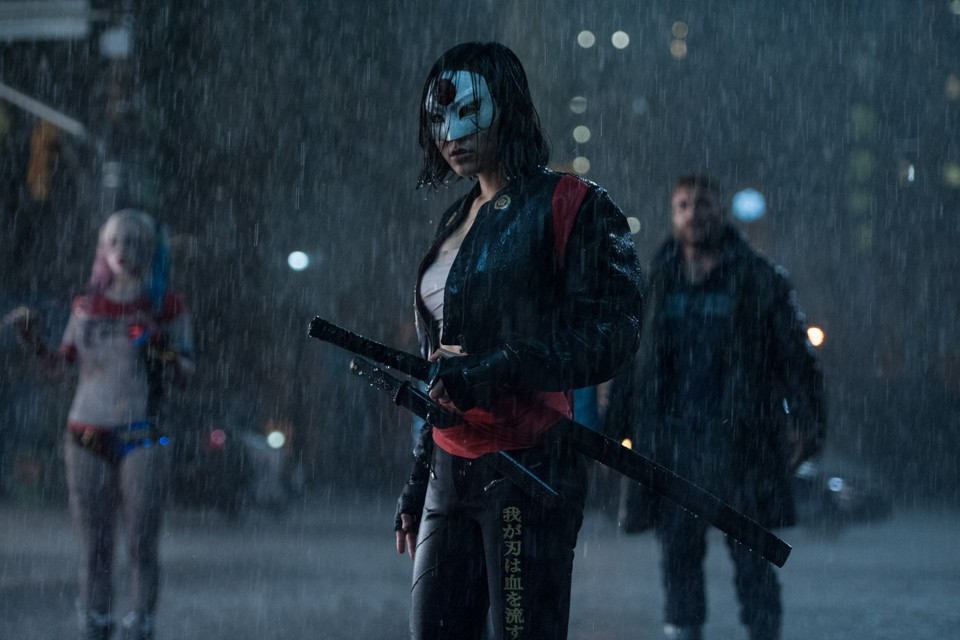
Ahead of the release of the DC Comics film Suicide Squad, potential viewers were bombarded with ads featuring comic-book names both familiar (Harley Quinn, the Joker) and unfamiliar (El Diablo, Enchantress). Falling into the latter category was the superheroine Katana, played by the newcomer Karen Fukuhara. Dressed in a Rising Sun mask and wielding her namesake weapon, she appeared in promos featuring images of Hokusai’s Great Wave and whooshing sword sounds. But in the film itself, Katana isn’t actually a member of the titular group: She’s the almost entirely wordless accomplice to Joel Kinnaman’s Rick Flag, who’s in charge of keeping the villains in line. Except for a soupçon of lines delivered in terse Japanese, she’s a ripple in the background.

Others in Suicide Squad also suffered from a lack of screen time, but Katana represents the norm for Hollywood’s East Asian characters, who are almost exclusively sidekicks or underwritten rivals. The action genre, and especially franchises, is rife with examples. In the last 5 years, there’s been Elektra (Élodie Yung) in Netflix’s series Daredevil; Kato (Jay Chou) in The Green Hornet; several characters in the X-Men films; Sulu (John Cho) in the newest Star Trek movie; Dr. Helen Cho (Claudia Kim) in The Avengers: Age of Ultron; Mercy Graves (Tao Okamoto) in Batman v Superman: Dawn of Justice; Su Yueming (Bingbing Li) in Transformers: Age of Extinction; and many others.

Having performers of Asian descent play Asian characters in blockbuster films is certainly an improvement over straight-out whitewashing—where Caucasian performers play historically nonwhite parts. (Though instances are still rife in Hollywood, with Tilda Swinton’s casting in November’s Doctor Strange, Emma Stone in Aloha, and Scarlett Johansson in the upcoming remake of the anime Ghost in the Shell.) Meanwhile, not a single lead or co-lead in the top 100 highest-grossing domestic films last year was Asian, according to USC’s 2016 report on representation in Hollywood. In response to criticism of whitewashing, producers, screenwriters, and directors regularly defend their choices as smart business moves meant to give their films global appeal. (This, of course, ignores the massive international box-office numbers of action franchises with diverse casts like the Fast and Furious series and Star Wars VII: The Force Awakens.)

Money is, ironically, also a reason why many big-budget films are casting East Asian actors in the first place. With the Chinese box office projected to surpass North America’s by the end of 2017, more tentpole franchises are featuring Asian faces, locales, and storylines. But characters such as Katana obscure the fact that if Hollywood is so eager to expand its box-office appeal in East Asian countries, it could start with writing characters and casting actors of East Asian descent in more leading action roles.

Practically speaking, doing so should be a relatively easy feat, considering the vast pool of stories, aesthetic styles, and cinematic talent the region offers both behind and in front of the camera. That Hollywood still minimizes the Asian roles and performers that do exist—while trying to profit off their limited presence—seems to reflect the industry’s deep-seated resistance to change. As a result, casting East Asian actors as supporting characters comes off as a bid for good optics and an attempt to appease critics without actually telling diverse stories.


Action cinema should be fertile common ground for American studios, since the genre is an indelible part of the East Asian film industry, both regionally and as a cultural export. The ’70s and ’80s were the heyday of Hong Kong action films, which fueled the rise of crossover stars like Bruce Lee, Jet Li, and Jackie Chan. More recently, actors like Andy Lau (Infernal Affairs), Song Kang-ho (The Host, Snowpiercer), and Rinko Kikuchi (Babel, Pacific Rim) all rose to prominence in their home industries before moving into English-language cinema. Both Lau and Kang-ho have performed in action films that have since been remade or optioned to be remade into fully “American” productions, often with a majority white cast and crew (e.g. adapting the Hong Kong film Infernal Affairs into the Boston cop drama The Departed).
continued next post

Continued from previous post

[QUOTE]China-set, Chinese-staffed films continue to rely on white faces to front and sell the project.

While American studios are indeed interested in replicating the successes of East Asian films, they’re less invested in cultural context or in giving opportunities to actors of Asian descent. Hollywood’s reboot and remake culture can pay off, such as with The Ring, The Magnificent Seven, and the aforementioned The Departed. But re-casting stories with specific cultural ties (Oldboy’s obsession with honor and revenge, Ghost in the Shell’s post-World War II technological anxieties) only to prioritize white leads is not a sure box-office bet, and can even backfire for studios. The original Oldboy made $15 million on a $3 million budget and is considered a classic action film, whereas the new Oldboy, starring Josh Brolin, made $4.9 million on a $30 million budget.

When Hollywood does include breakout stars in adaptations of East Asian storylines, the roles tend to be fairly stereotypical. The Oldboy star Choi Min-sik recently appeared in the 2014 film Lucy—as a villain. Lee Byung-hun, another Korean cinema stalwart, was in Terminator: Genysis—as a villain. Zhang Ziyi, who dazzled in Crouching Tiger, Hidden Dragon and House of Flying Daggers (and also starred in Rob Marshall’s Memoirs of a Geisha), was last in a Hollywood action film in 2007’s TMNT—voicing a villainous ninja. Despite being successful and even celebrated in their home countries, East Asian actors still pursue Hollywood work because it’s a broader standard of fame and visibility. Yet, instead of capitalizing on the talent and followings these actors bring to the table, these films offer them up as one-way incentives, a way to engage overseas audiences without having to concede the industry’s white icons.

If East Asian actors aren’t playing villains, then they’re often serving as sidekicks to heroic protagonists. The Last Samurai memorably positioned Tom Cruise as the eponymous warrior, with Ken Watanabe taking a supporting role. And in the acclaimed Chinese director Zhang Yimou’s upcoming The Great Wall, Matt Damon is playing the only non-Chinese character in the film’s five central roles, but he was the most prominent face in the film’s promotional rollout. For Chinese filmmakers seeking to break into Hollywood, The Great Wall’s East-West formula could be a stepping stone for other collaborations. But the end result is often that China-set, Chinese-staffed films continue to rely on white faces to front and sell the project. Catherine Hardwicke’s upcoming film Loulan will be a Chinese co-production set in western China in 200 B.C. but the epic romance will be based on the true story of a “Caucasian mummy with European features” that was discovered in the region, meaning it will likely star a white actress.

Casting more mainland Asian actors does not “solve” the issue of East Asian representation, and does in fact have its own challenges—including the language barrier. But a piece in The Hollywood Reporter notes that the career trajectories of the Asian-American stars Maggie Q and Daniel Wu show that it’s possible for actors to have dual appeal: Both are American citizens who went abroad in order to break into Asian cinema markets, and then found crossover success in America, with the CW show Nikita and the Divergent film series (for Q) and AMC’s Into the Badlands (for Wu).

While sidekick (and villain) roles can be highly visible, fandoms are primarily built around heroes.

Recognizing that Hollywood regularly passes over Asian American actors in the industry for bigger roles, social-media users have taken it upon themselves to highlight promising, popular candidates. Two hashtags in particular have championed John Cho and the Fresh Off the Boat actress Constance Wu: #StarringJohnCho and #StarringConstanceWu. Centered around Photoshopping both actors into movie posters for films, especially big action franchises like the Hunger Game films and The Avengers, these movements challenge executives’ lack of imagination when it comes to who they cast.

Follow
Jigme @JigmeUgen
I’m replacing every EmmaStone film w/ @ConstanceWu since #StarringConstanceWu is way amazing! #whitewashedOUT #API
11:19 PM - 29 May 2016


44 44 Retweets 59 59 likes

It’s not as though audiences overseas aren’t paying the same attention to casting that critics in the U.S. are: At a recent screening of Star Wars: Rogue One, which includes the homeland stars Donnie Yen and Jiang Wen in the central cast, some Chinese viewers felt that Yen and Wen were tokenized, with their characters largely irrelevant to the central plot. You can imagine that a Japanese audience member might feel the same fatigue at seeing a wordless Katana flash her sword on screen. It’s one thing for studios to create a character of Asian descent to pander to viewers—it’s another entirely to incorporate that character into the story in a meaningful way.

While sidekick (and villain) roles can be highly visible and even rewarding, fandoms are primarily built around heroes; how these lead roles, versus bit parts, are marketed to the global audience and impact pop culture are vastly different. The issue isn’t that underrepresented communities aren’t seeking out opportunities, but that, as Viola Davis remarked in her 2015 Emmys speech, many of them are never considered for these opportunities in the first place. For East Asian and East Asian-American actors alike, holding an ensemble part offers up exposure. But until Hollywood actually decides to make them core parts of the action franchise films it so desperately seeks to sell overseas, they’ll remain on the margins—of their own stories, and the ones that are shared by the world.[/QUOTE]

Honestly, I’m happy just to be a sidekick. :o

I don’t think that it is just Asians of course but yes, Hollywood has issues with being able to write non-whites into good roles.
Probably because they don’t know how and think that it needs to be different somehow.

The easiest thing for Hollywood to do is ignore they are Asian and just write them as they would anyone.

I can understand if a popular actor has a language barrier and he/she becomes a supporting character but that is about it.

I think TV shows tend to do a better job, Marvel’s Agents of Shield for example.

Race Card

https://www.census.gov/quickfacts/table/PST045215/00

See above to see why characters are written in the way they are written.

I don’t get it…

[QUOTE=sanjuro_ronin;1296770]I don’t get it…[/QUOTE]

Hollywood is all about not taking risks that’s why you see so many reboots and remakes. They write white because audience and demographic surveys have told them to write white. When US census results show you that 77% of your potential audience is white and your marketing strategy is mass appeal, then you write white.

Slightly OT, but,
Analysts have actually came up with some surprising results stating that if you were to look at racial representation on TV, African Americans are actually over-represented.
http://newsroom.ucla.edu/releases/African-Americans-Remain-Overrepresented-3250

We’ll see when it comes out.

Here’s the direct link to Shannon’s facebook post (gaoshou’s Film Combat Syndicate article post derives from this). It’s a little ironic because the family endorsed both Dragon: The Bruce Lee Story and that CCTV Legend of Bruce Lee mini-series, and both of those were also highly fictionalized. That part is really all about estate royalties it seems.

Bruce Lee
Like This Page · 22 hrs ·

A great number of you have written to me with your concerns about Birth of the Dragon. I share your concerns and want to make it clear that Birth of the Dragon was made without my familys consent or involvement. I have seen the film (out of necessity alone) and, in my opinion and the opinions of many (see link), this film is a travesty on many levels. I think this film is a step backward for Asians in film not to mention that the portrayal of Bruce Lee is inaccurate and insulting. I am disappointed that such a project would be funded and produced. Shannon

Article: http://www.asamnews.com/2016/09/29/birth-of-the-dragon-biopic-enrages-bruce-lee-fans-buries-asians-in-favor-of-a-white-guy/

Image posted contains highlights from the article referenced above.

Ironic too that Quartz’s coverage would run a pic with Betty Ting Pei.

WHITEWASH
A new Bruce Lee biopic portrays the martial arts legend as little more than a white guys sidekick


Former Hong Kong actress Betty Ting poses in front of the statue of Hong Kong martial arts movie star Bruce Lee during the statue’s unveiling ceremony, on Lee’s 65th birthday, in Hong Kong November 27, 2005. Lee died in Ting’s home in 1973. Ting will publish a book on the story of Bruce Lee, in future.
Whitewashed. (REUTERS/Paul Yeung)

WRITTEN BY Echo Huang Yinyin
OBSESSION Glass
October 07, 2016

Fans of Bruce Lee are slamming an upcoming biopic of the martial arts legend. His daughter Shannon Lee calls the film a travesty on many levels.
Birth of the Dragon, which premiered recently at the Toronto Film Festival, tells the story of Lees fight against kung fu master Wong Jack Man in Oakland in 1964. It was a formative event that has received minimal attention in the mythology surrounding Lee, as Charles Russo wrote on Vicebut the film is not entirely historically accurate. Deadline calls it a mashup of fact and fable.
American actor Billy Magnussen, who plays Lees fictional friend Steve McKee, dominates the film. McKees character shares equal time with Lee in the trailer, and Lee doesnt appear until 30 seconds into the trailer.

//youtu.be/nrFhIz1GLMo

Shannon Lee said the movie was made without consent from her family, and that the portrayal of her father was inaccurate and insulting.
Fans are livid. You turned a biopic about Bruce Lee (a real Asian person) into a ridiculous story about a fictional White guy, wrote Reddit user Killingzoo. Hollywood social engineering trash. Again with the White man save the world trope. This movie is so cliché. Even Bruce Lee is sidelined to make way for a White guy, wrote another commenter.
Its the latest racial controversy in Hollywood, which has come under fire for whitewashing movies by casting white actors in non-white roles, such as Leonardo DiCaprio as Persian poet Rumi and Scarlett Johansson in a Japanese role in an anime adaptation.
While Hollywood is getting the blame, Birth of the Dragon was financed by a Chinese company, Kylin Pictures. And even though Lees importance is diminished, some fans of the Asian actors in the filmHong Kong actor Philip Ng, who plays Bruce Lee, and Chinese actor Yu Xia who plays Wong Jack Manhave expressed admiration for them on Weibo, Chinas Twitter-esque social media platform.
This is more Bruce Lee than the real Bruce Lee, commented Weibo user Winnie under Ngs Weibo post. Another wrote, Oh Yu Xia is so cool and I didnt anticipate that Bruce Lee would look like a street gangster (links in Chinese, registration required).

The trailer has well over a million views now, mostly due to this controversy. :wink:

The title of the Great Wall is becoming very ironic

Here is the other side of the whitewashing wall.

Asian Films Looking to Cast More Hollywood Names
Vivienne Chow


Matt Damon The Great Wall UNIVERSAL
OCTOBER 7, 2016 | 02:00AM PT

As China is eager to export its soft power to the world, more Hollywood faces have been cast in Chinese blockbusters in the hope of scoring global releases and winning the hearts of international audiences.

Despite China’s box office slowing down by 21% in the first half of 2016, the country’s film market saw a staggering rise over the past five years on its way to challenge the North America’s position as the world’s No. 1 movie market.

Chinese money is also set to reshape Hollywood through various acquisitions, such as Dalian Wanda Group’s 2012 buy of the AMC theater chain and purchase of Legendary Entertainment in January.

But there is only so much that money can buy. Chinese productions earned little recognition abroad in recent years. The only Chinese-language film that has ever won a foreign-language Oscar was 2000’s “Crouching Tiger, Hidden Dragon,” but the Ang Lee film was billed as a Taiwanese film. The last mainland production that earned a nomination in the race was Zhang Yimou’s “Hero” in 2002.

“China wants to export its films to the world — especially the U.S. — as an achievement of its soft power, but no one wants to watch its films,” says producer and director Peter Tsi, who has helmed projects in Hong Kong, Taiwan and mainland China. “On the other hand, Hollywood is excited about getting into the China market, but the only way to achieve that is through co-production, and they must find subject matter that can resonate with the Chinese audience.”

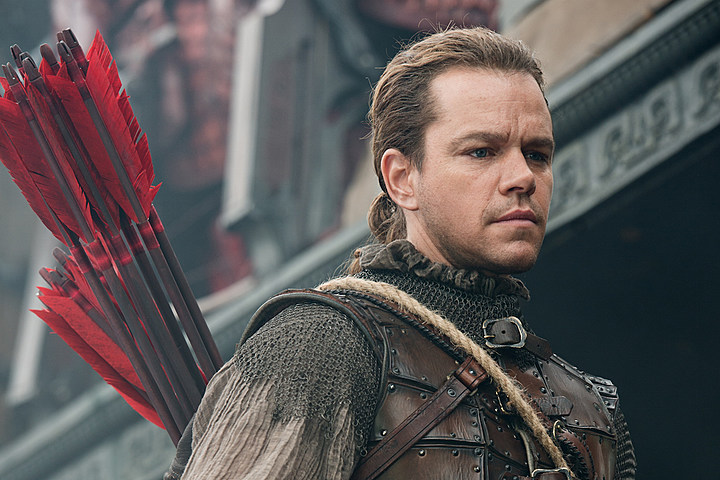
The controversy surrounding the casting of Matt Damon as the lead in “The Great Wall” is the latest example. Helmer Zhang Yimou had to defend the decision to cast the Hollywood star in his first English-language production — also the first project emerged from Legendary Entertainment’s Legendary East and which cost $135 million — against “whitewashing” criticisms.

Tsi says in order to get Chinese productions distributed in North America and elsewhere, Hollywood faces are needed. “The only way to make it work is to arbitrarily cast a Hollywood actor or two so that U.S. distributors and exhibitors might consider screening them,” he says.

Even though it is China’s first film to reach the $500 million B.O. benchmark and the all-time highest-grossing film in the country, Stephen Chow’s fantasy blockbuster “The Mermaid,” which has a primarily Chinese cast, only had a limited release of 35 screens in the U.S. under Sony’s distribution.

Nevertheless, “The Great Wall” isn’t the first time a Western star has turned up in a Chinese movie. In fact the “Americanization” of Asian productions could be traced back to a 20-minute segment starring Raymond Burr that was edited into the original Japanese “Godzilla” (1954) before it was introduced to American audiences as “Godzilla: King of Monsters!” (1956).

Hong Kong led the trend in the early 2000s as partnerships with U.S. players began. Paul Rudd played an FBI agent in Hong Kong action blockbuster “Gen-Y Cops” (2000), which was produced by Hong Kong’s Media Asia and Regent Entertainment. The film was released in the U.S. in 2002 as “Metal Mayhem.” The 2000 action thriller “China Strike Force,” which had American company Astoria Films on board as one of the production companies alongside Asia’s Golden Harvest, starred Grammy-winning musician Coolio as a drug dealer.

Hong Kong-based Australian actor Gregory Rivers says many Western characters look arbitrary in Asian stories. “Sometimes [the story] doesn’t make sense,” says Rivers, who’s been working on Hong Kong films and TV for nearly 30 years. “Writers [in Asia] were not used to writing Western characters into their stories.”

But when it came to breaking into more and bigger markets, it became inevitable that characters of various nationalities had to be included in Chinese films. As mainland China began to cultivate its commercial cinema more than a decade ago, Donald Sutherland starred in Feng Xiaogang’s comedy “Big Shot’s Funeral” (2001), a collaboration between Columbia Pictures’ Asia arm, based in Hong Kong, and a string of Chinese companies including Huayi Bros.

More Hollywood faces appeared in Chinese productions over the past few years. Christian Bale starred in Zhang’s “The Flowers of War” in 2011. Adrien Brody was cast in Feng’s “Back to 1942” (2012), a Huayi Bros. production that got a U.S. release. Brody returned to China to join Jackie Chan and John Cusack in “Dragon Blade” (2015). Boxing legend Mike Tyson was cast as a crooked property developer in “Ip Man 3” (2015) and had fight scenes with Donnie Yen, who played the title wing chun master.

But before any conclusion can be drawn about “The Great Wall,” which will be released in China in December and in the U.S. by Universal in February, the casting of Bruce Willis in WWII epic “The Bombing” will get attention first. Jointly backed by the state-operated China Film Group and private investors, “The Bombing” has a reportedly $90 million budget. Willis is joined by Brody and an ensemble Asian cast including Korean star Song Seung-heon, Hong Kong actor-singer Nicholas Tse and mainland actor Liu Ye. It was scheduled for release on Sept. 30 in China.

“You want a movie that hits all markets at the same time and so you want to add a Korean or an American in the cast,” Rivers says. “But sometimes it doesn’t work like that.”

[QUOTE=MightyB;1296778]Hollywood is all about not taking risks that’s why you see so many reboots and remakes. They write white because audience and demographic surveys have told them to write white. When US census results show you that 77% of your potential audience is white and your marketing strategy is mass appeal, then you write white.

Slightly OT, but,
Analysts have actually came up with some surprising results stating that if you were to look at racial representation on TV, African Americans are actually over-represented.
http://newsroom.ucla.edu/releases/African-Americans-Remain-Overrepresented-3250[/QUOTE]

Ah, yes, I would agree with all points.

[QUOTE=GeneChing;1296871]Here’s the direct link to Shannon’s facebook post (gaoshou’s Film Combat Syndicate article post derives from this). It’s a little ironic because the family endorsed both Dragon: The Bruce Lee Story and that CCTV Bruce Lee mini-series, and both of those were also highly fictionalized. That part is really all about estate royalties it seems.

Ironic too that Quartz’s coverage would run a pic with Betty Ting Pei.

The trailer has well over a million views now, mostly due to this controversy. ;)[/QUOTE]

A controversial movie over a controverisal fight with controversial people.
Who would have thunk it !

Talk about much-a-do-about-nothing ( the actual fight).

white male lead?

#MakeMulanRight :rolleyes:

10.10.2016

AN OPEN LETTER TO THE CREATORS OF DISNEY’S LIVE-ACTION FEATURE FILM ‘THE LEGEND OF MULAN’
Guest Post by ConcernedForMulan

A white merchant’s business brings him to the heart of a legendary Asian conflict – he unwittingly helps save the day while winning the heart of the Asian female. Am I describing the plotline of the Netflix series Marco Polo? No. I’m describing the spec script that Disney bought for its live-action feature film, The Legend of Mulan, which is projected for release in 2018.

As an Asian American person in the industry, I am furious after reading this script. I am writing this letter anonymously so all the fans anticipating this remake will know how problematic it is in its current form. We must urge the creators of Disney’s live-action Mulan to reconsider the story before the film goes into production.

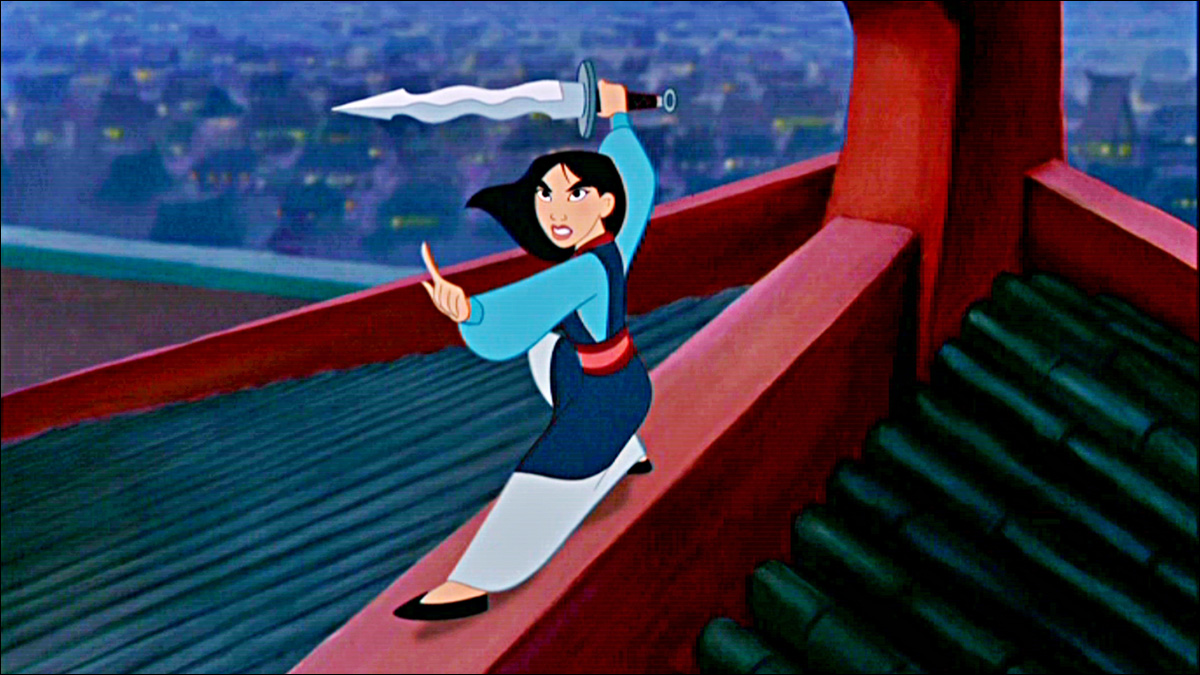
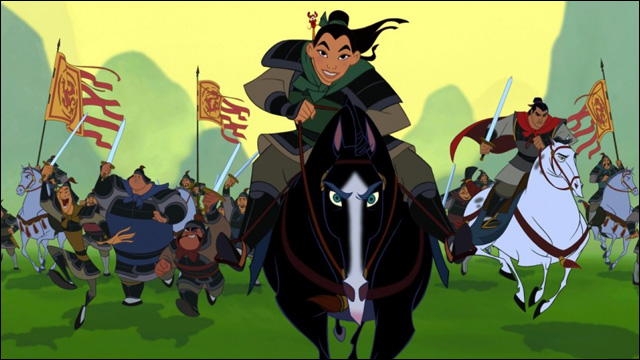
The 1998 Disney animated classic focused on Mulan’s transition from being a young girl failing to fit the mold of a perfect daughter and wife to a heroine whose brave acts ultimately save ancient China. Her determination allows her to rise above the gender expectations of her culture and become the one who brings “honor to us all.” Hers is essentially an Asian American tale because it fused Asian characters and culture with a coming-of-age hero’s journey that resonated with American audiences.

So why does the script for the live-action remake feature a white male lead?

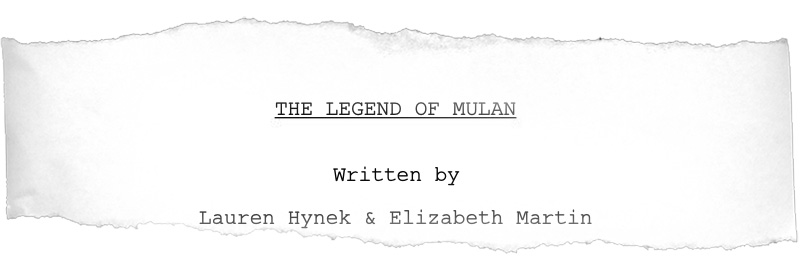
The man is a 30-something European trader who initially cares only for the pleasure of women and money. The only reason why he and his entourage decide to help the Chinese Imperial Army is because he sets eyes on Mulan. That’s right. Our white savior has come to the aid of Ancient China due to a classic case of Yellow Fever. In this script written by Lauren Hynek and Elizabeth Martin, more than half of its pages are dedicated to this merchant who develops a mutual attraction with Mulan and fights to protect her in the ensuing battles. To top it all off, this man gets the honor of defeating the primary enemy of China, not Mulan. Way to steal a girl’s thunder.

I am deeply disturbed that a remake of the beloved Disney classic rejects the cultural consciousness of its predecessor by featuring a white male lead, once again perpetuating the myth that cultural stories are not worth telling without a western lens or star. Instead of seizing the opportunity to highlight a tenacious, complex female warrior, this remake diminishes her agency. But what I find equally troubling is the fact that Disney plans to cast a 16-17 year old established Chinese actress as Mulan, and will not be casting an Asian American.

Let’s set aside the clear pedophilic implications that arise when you cast a teenage girl alongside a 30-something romantic interest. That one is self-explanatory. I want to address the missed opportunity of tapping into the Asian-American actor populace who grew up watching the animated Mulan, eyes glittering to see themselves finally featured on-screen. The fact that Mulan resonated so strongly with American audiences with its all-Asian character lineup and Asian American voice actors is a testament to what this live-action film could accomplish if it would simply trust the successful 1998 form. Even though this spec script references the original “Ballad of Mulan,” its cultural landscape becomes a mere backdrop to its tired Blockbuster-style romantic and fantastical storyline – as such, Mulan’s resonance as an Asian-American retelling is lost.

Let’s be real. Casting a Chinese actress as Mulan is a ploy to appeal to a Chinese market, which honestly will not be as enthusiastic as our American audience to see our retelling of a tale they know best. The animated film made $120 million in the U.S. and Canada combined, and completely flopped in Chinese markets because her character was so different from what the Chinese recognized. If this live-action film tries to cater to both the Chinese and American markets without understanding the cultural implications of its creative choices, this film will fall short of both. If the film splits focus from Mulan to a white male lead and is more interested in targeting a Chinese market with its casting, it will estrange its immensely devoted American audience.

The Mulan we know and love from 1998 is the main reason for the huge anticipation for this film. We expect it to be a thoroughly respectful homage to that Mulan. That Mulan had intricacy and depth as she struggled between honoring her father and finding her place in the world. And most certain of all, that Mulan did not need a white man to help fight her battles and give her a kiss at the end.

If this is the rendition of Mulan that is released, Disney will face an avalanche of backlash. This remake 20 years in the making would ethically set us back 40 years. But there is still time during this pre-production phase to really rethink the way we want to represent Asians and Asian culture in our media. There is time to hear the American fans of this story explain why Mulan of 1998 resonated with them so strongly. We can encourage the script’s new writers, Rick Jaffa and Amanda Silver of Jurassic World, to take these factors into account. I cannot emphasize enough how important it is, from both a producing and ethical standpoint, to do justice to this time-honored character.

Mulan is the heroine that we want. Not some white dude. Please do not disappoint us, Disney.

#MakeMulanRight

Lewis Tan

Lewis Tan Fought to Play Iron Fist Hero Instead of Villain
Beth Elderkin
Saturday 10:20am Filed to: IRON FIST


Credit: Lewis Tan / Instagram

Actor Lewis Tan will soon be hitting TV screens as one of the main villains in Iron Fist, but he actually fought to make the hero of the story Asian, instead of yet another bad guy.

Tan shared on Twitter that he almost played Danny Rand, but the role ultimately went to Game of Thrones actor Finn Jones. Instead, Tan was cast as Zhou Cheng, a servant of Chi-Lin whos tasked with killing every iteration of the Iron Fist. Tan said hes happy playing Zhou, even showing off some of his stunt choreography in an online video, but added that we need more Asian heroes in our media.

[QUOTE]Lewis Tan @TheLewisTan
I would have loved to of played Danny but I gave #Marvel everything I have for Zhou. I can’t wait for you guys to see the show. #IronFist
10:41 PM - 7 Oct 2016 · West Hollywood, CA, United States
155 155 Retweets 279 279 likes

Tan has long been advocating for better roles for Asian actors. In an interview with His Style Diary, he talked about how Asian actors (especially Asian men) are rarely cast as lead charactersinstead, getting stuck playing the computer geek or faceless ninja. He added Asian actors are pretty much required to know martial arts, because, otherwise they wont get parts.

The thing is, I want to be the lead, the hero, the love interest character, Tan said. I know kung fu, Ive been doing martial arts for 15 years, and I love it. But I think there are these expectations. These are the roles they are comfortable with Asians doing. They arent comfortable in seeing you in lead roles the ones I want.

Lewis Tan @TheLewisTan
There’s a lot of work to be done to see more ethnic actors as the heroes in major Films/TV but the wall is coming down. We all have a voice
10:51 PM - 7 Oct 2016 · West Hollywood, CA, United States
99 99 Retweets 187 187 likes

Tan is not alone. Asian-American actors have been fighting for visibility for years, culminating in several hashtag campaigns over the past several months. In the case of Iron Fist, several people were upset when the role of the latest Marvel hero went to a white actor instead of someone of Asian descent.

They argued that, while Danny Rand is white in the comics, the character isnt famous enough where a change in ethnicity wouldve been widely noticed. After all, weve already seen Marvel change the ethnicities of different characters in its movie and TV properties, for better and worse. They cast Idris Elba as Heimdall, a Norse god, in the Thor series, but they also turned Doctor Stranges The Ancient One into a Celtic character so they could justify hiring Tilda Swinton.

Plus, casting Tan (or another Asian actor) wouldve further demonstrated Marvels push for diversity, as showcased in the Marvel NOW! initiative and the Luke Cage Netflix series. The way it stands now, Danny Rand is basically Tom Cruise in The Last Samurai or Matt Damon in The Great Wall. The role may be written that way on paper, but that doesnt mean its the best portrayal for 2016.[/QUOTE]

“I know kung fu, Ive been doing martial arts for 15 years, and I love it.” Good on Lewis. :slight_smile:

Matt Damon comments

‘a f–king bummer’

Matt Damon Responds to ‘The Great Wall’ Whitewashing Controversy
Erin Whitney | 2 days ago


Universal Pictures

When the first teaser trailer for The Great Wall debuted this summer, much of the internet responded in a collective thinking face emoji, wondering, why is a white dude the hero of an action movie set in China?

It’s an criticism that’s circulated a lot this year Hollywood, especially around the the casting of Tilda Swinton in Doctor Strange, Scarlett Johansson in Ghost in the Shell, and Finn Jones in Iron Fist. The Great Wall, from Chinese director Zhang Yimou, is the most expensive movie ever made in China and follows Matt Damon defending the 13,000-mile wall against a monster attack. The Atlantic called out the film for whitewashing, while actress Constance Wu tweeted that the films need to “stop perpetuating the racist myth” of the white savior narrative.

During the press conference for The Great Wall following the film’s New York Comic-Con panel on Saturday, Damon was asked about his response the controversy. “It was a f–king bummer,” he said. But Damon wasn’t expecting the backlash, which he says he and the cast felt “wounded” by. “To me, whitewashing, I think of Chuck Connors when he played Geronimo.” The actor went on to defend the teaser, saying it’s too brief of a look to speak for the entire movie and shouldn’t be subjected to the same level of criticism:

[QUOTE]They’re trying to establish a number of things in 30 seconds or a minute or whatever they have; it’s not a full length trailer, it’s a teaser. They’re trying to tease A, the monster. […] They’re trying to speak to a bigger audience. ‘You probably don’t know who this director is in Middle America, the Steven Spielberg of China. Don’t worry, they speak English in this movie’ – you hear my voice speaking English. ‘Don’t worry, Matt’s in the movie, you’ve seen this guy before.’ So they’re trying to establish all these things. And by the way, there are monsters. So there’s a lot of pipe they’re trying to lay in that 30 seconds.

Besides the limited footage in the teaser, Damon emphasized that the movie isn’t based on actual history, but on folklore. He said his co-star Pedro Pascal, (Narcos, Game of Thrones) called him after the backlash joking, “Yeah, we are guilty of whitewashing. We all know that only the Chinese defended the wall against the monsters when they attacked.” Pedro chimed in at the press conference to say that The Great Wall is still a film made from the perspective of a Chinese filmmaker:

We don’t want people to be kept from work that they wouldn’t have the opportunity otherwise, to see that it is very, very specifically Chinese. It’s Zhang Yimou’s lens. It is a creature feature. It’s a big, fantastical popcorn entertainment movie. But it has a visual style that is very very much his and his only.

By the look of the first full The Great Wall trailer that debuted at Comic-Con today, the movie certainly looks like Yimou’s work, with a use of color and stylistic visuals similar to the director’s Hero and House of Flying Daggers. Yimou, through a translator, mentioned earlier in the press conference that the film is based on an ancient Chinese fairy tale about a monster even older than dragons. Yimou responded to the controversy earlier this year telling Entertainment Weekly that Damon plays one of five heroes in the movie, four of which are Chinese characters. “Our film is not about the construction of the Great Wall. Matt Damon is not playing a role that was originally conceived for a Chinese actor,” Yimou said.

But while The Great Wall may be based on a made up story, does that disqualify it from criticisms of playing into the white savior trope? Damon added that he’s still open to criticism, but that he wants audiences to see the movie first:

Look, if people see this movie and feel like there’s some how whitewashing involved in a creature feature that we made up, I will listen to that with my whole heart. I will think about that and I will try to learn from that. I will be surprised if people see this movie and have that reaction, I will be genuinely shocked. It’s a perspective that, as a progressive person I really do agree with and try to listen to and try to be sensitive to, but ultimately I feel like you are undermining your own credibility when you attack something without seeing it. I think you have to educate yourself about what it is, and then make your attack, or your argument and then it’s easier to listen to just from our sides.

The Great Wall also stars Jing Tian, Willem Dafoe, Andy Lau and Chinese boy band member Junkai Wang. The film hits theaters February 17, 2017.

[/QUOTE]

Greetings,

I sense a change coming within 3 years. There is just too much money for film companies to lose by alienating it’s audiences, whether it be on TV or in the movies. People are ready to move forward.

mickey