Shang-Chi and the Legend of the Ten Rings

This will need its own thread when a title is announced. For now, I’m just posting this on SHANG-CHI “MASTER of KUNG FU” & Which actors would do justice to Shang Chi in a movie?

DECEMBER 03, 2018 10:04am PT by Mia Galuppo , Graeme McMillan
Marvel Developing Shang-Chi Movie with ‘Wonder Woman 1984’ Writer


Matt Winkelmeyer/Getty Images
Dave Callaham

Dave Callaham is penning the film, which would be the studio’s first to focus on a superhero of Asian descent.

Marvel Studios is developing a new feature that will center on hero Shang-Chi in a project that would act as the superhero studio’s first stand-alone movie with an Asian lead.

Dave Callaham will pen the screenplay, The Hollywood Reporter has confirmed. A director is not yet attached.

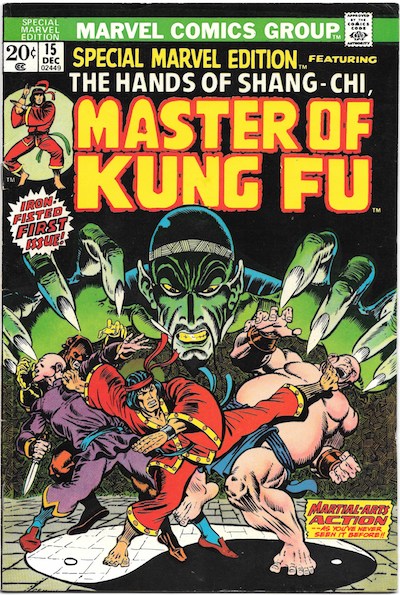
Shang-Chi — or, as Marvel refers to him, the Master of Kung Fu — debuted in 1973’s Special Marvel Edition No. 15, created by Steve Englehart and Thanos creator Jim Starlin after an attempt to acquire the comic book rights to the television series Kung Fu fell through. The son of infamous pulp villain Fu Manchu, Shang-Chi was trained as a martial artist assassin by his father, only to rebel against him and become a superhero instead. The character was a massive success through the 1970s, and was recently revived as a member of the Avengers during 2012’s Marvel Now! Publishing event.

Callaham is no stranger to the superhero genre, having helped to pen Warner Bros. and DC’s upcoming Wonder Woman sequel, Wonder Woman 1984. His credits also include The Expendables franchise and Sony’s upcoming Zombieland 2. He is repped by UTA and Kaplan Perrone.

The Shang-Chi news comes as Hollywood is embracing projects with Asian leads following the success of Warner Bros.’ Crazy Rich Asians, which pulled in more than $236 million at the global box office. Warners’ film arm New Line has picked up China-set romantic comedy Singles Day, based on a spec by Lillian Yu. Last week it was announced that Crazy Rich star Awkwafina created and will star in a Comedy Central series based on her own life.

Next BP?

Like I said on the Black Panther thread “Because all minorities are the same?” Why does Shang-Chi gotta be in the Wakanda wake? Why can’t it just be the first in a new franchise?

DECEMBER 04, 2018 11:33am PT by Richard Newby
How ‘Shang-Chi’ Could Be Marvel’s Next ‘Black Panther’


Bryanston Distributing/Photofest; Courtesy of Marvel
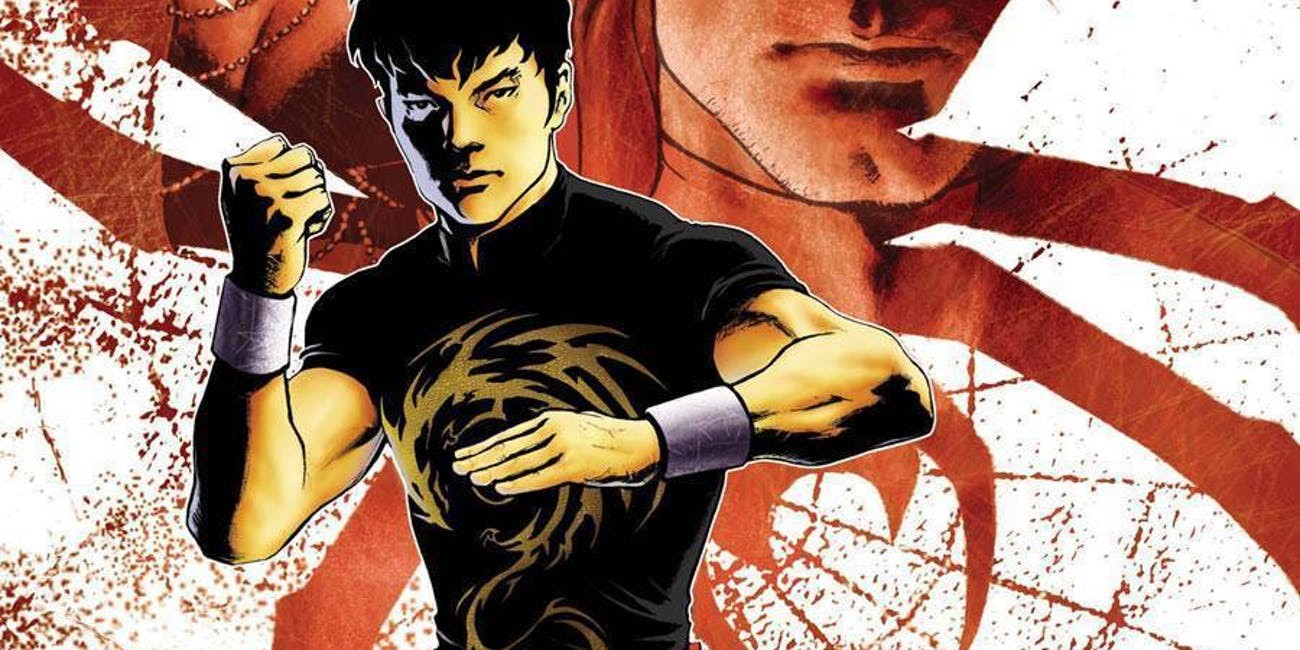
Marvel’s Shang-Chi (right) was modeled after Bruce Lee.

The studio is focusing on increased representation as its mysterious post-‘Avengers 4’ plans come into focus.
Even though we may still be waiting on the title and first footage for Avengers 4, Marvel Studios’ plans for its future are becoming increasingly clear. Phase 4, or whatever this next iteration of the Marvel Cinematic Universe ends up being called, is shaping up to run quite the gamut of characters, locations, and time periods with Black Widow and The Eternals set for their own films, while sequels featuring characters Spider-Man and Black Panther are also in development. Monday, an unexpected but welcome addition was added to the roster: Shang-Chi, the oft-labeled Master of Kung-Fu.

Marvel Studios head Kevin Feige has discussed his desire for increased representation in Marvel’s films going forward, not just in front of the camera but behind it as well. With Anna Boden co-directing Captain Marvel alongside partner Ryan Fleck, Chloe Zhao taking on The Eternals, Cate Shortland delving into Black Widow’s past, and Ryan Coogler returning to direct the sequel to Black Panther, the future of the Marvel Cinematic Universe is shaping up to be a space for voices and visions the industry desperately needs more of. Coupled with the Peter Ramsey co-directed, Spider-Man: Into the Spider-Verse at Sony, James Wan’s Aquaman and Cathy Yan’s upcoming Birds of Prey (And the Fantabulous Emancipation of One Harley Quinn) at Warner Bros., it’s clear that the future of superhero movies will no longer be dominated by white male voices. This doesn’t just mean new opportunities for filmmakers, but new stories that can change how we perceive the ever-popular mythology of superheroes.


Photofest
Michael B. Jordan in Black Panther.

The news broke Monday that the character Shang-Chi is on the fast-track for a film with Chinese-American screenwriter Dave Callaham (Wonder Woman 1984, Spider-Man: Into the Spider-Verse 2 ) on script duties. While Shang-Chi might be largely unknown, even amongst comic readers, the character is primed to break out in a way similar to Black Panther earlier this year. Marvel is searching for Asian and Asian-American filmmakers to helm the feature in the effort to make sure the film offers a perspective on Asian identity, something Hollywood is coming to realize the importance of and desire for, following this summer’s breakout hit Crazy Rich Asians. Despite his lack of recognition, Shang-Chi has been a key player in Marvel Comics with a rich, though often trope-defined history, that is ready to receive a new perspective just as illuminating and unique as any to come out of Wakanda.

Created by Steve Englehart and Jim Starlin, Shang-Chi first debuted in Special Marvel Edition No. 15 in 1973. His existence actually came about because Marvel Comics couldn’t get their hands on another popular property: the Warner Bros.-owned television show Kung Fu starring David Carradine. Ultimately, this ended up for the better as Marvel was able to create an original Chinese character, rather than utilizing a white dude playing at being Asian. Shang-Chi proved to be popular, largely because of the increased distribution of kung fu movies in American cinemas. Modeled after Bruce Lee, Shang-Chi became an unofficial means to continue the legacy of the martial arts icon. In 1974, Special Marvel Edition changed its name to The Hands of Shang-Chi: Master of Kung Fu to capitalize on the increased appeal of the character. While Shang-Chi’s reign was short, and his series ended in 1983, his team-ups with Iron Fist, Daughters of the Dragon, Heroes for Hire, Man-Thing, and Spider-Man cemented his place in Marvel’s history.

Despite good intentions and attempts to honor the legacy of martial arts films like The Big Boss (1971) and Enter the Dragon (1973), Shang-Chi’s appearances in the '70s and '80s relied on archetypes and troubling depictions. When Marvel couldn’t acquire the rights to Kung Fu, they instead bought the rights to Sax Rohmer’s pulp villain Dr. Fu Manchu and made Shang-Chi his honorable son. As a result, the history of Shang-Chi is also a history of one of pop-culture’s most controversial figures, one that relies on “Yellow Peril” and Asian-centric xenophobia spurned by World War II. Recent Shang-Chi appearances in the 21st century have retconned the Fu Manchu connection, possibly due to a loss of rights, and have instead made Shang-Chi the son of an ancient Chinese sorcerer Zheng Zu. As to whether this change was any better is a discussion best left to Asian-American voices.

Despite a dated history, Shang-Chi has evolved over the decades, though intermittently used and his evolution hasn’t taken him as far as it should have. While his powers have evolved beyond kung fu mastery to the ability to create duplicates of himself, and he’s helped heroes like Spider-Man refine their skillsets, and even joined the Avengers for a time, he still feels like something of a relic belonging to just a screen over from Blaxploitation films. Marvel was able to re-envision a character with a similar dated appeal with Luke Cage on Netflix. Thanks to Brian Michael Bendis’ Alias and New Avengers run, Luke Cage had once again returned to prominence among comic readers. But the series further eliminated some of the thug-life tropes that made him a black folk hero for our modern times, placing him within the context of contemporary race relations rather than the fantasy just outside of it. Shang-Chi felt deserving of a similar chance to shine on Netflix, especially following the controversy of Iron Fist, until it became clear Netflix and Marvel’s relationship is winding down. But, it speaks volumes about Marvel’s plans for the character given that it is perusing a feature film for Shang-Chi, rather than a series on Disney+. Marvel wants to get as many eyes on Shang-Chi as possible, and that can only be a good thing.


Courtesy of Netflix
Mike Colter in Luke Cage.

With Monday’s news came a number of social media opinions that the film should be Marvel’s PG-13 take on The Raid (2011) or The Night Comes for Us (2018). As awesome as those films are, and as important as fight scenes will inevitably be to the film, we’ve had plenty of Asian action heroes who are cooler than cool, but few we’ve gotten to know as characters in the same way we know the plights of white action heroes like John McClane, Rambo, or Ethan Hunt. Shang-Chi is an opportunity to depart from the Asian martial artist as the sleek, unphased fighting machine, and instead our chance to get to know a distinct and highly-skilled character faced with challenging the perception pop-culture has so often attached to the Asian hero. Shang-Chi can be so much more than Marvel’s Bruce Lee.

There are Asian-American writers who can better speak to their hopes for the Shang-Chi movie and the kinds of trials and triumphs they’d love to see reflected from their own experiences. But as a black writer, I can speak to the fact that Black Panther illuminated concepts I never thought I’d see in a superhero film. From the feeling of being separate from Africa, to the importance of black women, and Killmonger’s plight, Black Panther is so clearly a film driven from the black perspective. It’s a film that allowed its titular character to become more than a stoic paladin, and instead become an actual character faced with authentic challenges and a place in the world that all audiences could learn from if they listened. I want Shang-Chi to be that for Asian and Asian-American audiences. I want Shang-Chi to be that for all audiences who are willing to listen to a story that offers more than kung fu – a story that will undoubtedly shape our next decade of comic book films and the people hired to tell them.

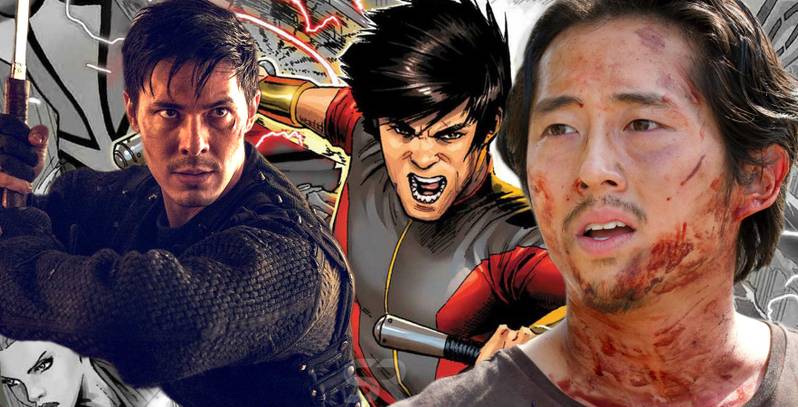
I’m hoping for Lewis Tan

“Shang-Chi movie in the works!” needs its own indie thread, distinct from our general SHANG-CHI “MASTER of KUNG FU” thread, which is already 5 pages deep.

Casting Shang-Chi In The MCU
BY COOPER HOOD ON DEC 04, 2018 IN SR ORIGINALS

Marvel Studios will soon be in the casting process for Shang-Chi, so here are some names they should consider. Kevin Feige is pulling the Master of Kung Fu out of development and is now fast-tracking what could be the first Asian-led superhero movie. The Shang-Chi movie just took a major step forward with David Callaham writing the script.

Shang-Chi was created by Steve Englehart and Jim Starlin in the early 1970s as one of the greatest martial artists in the world. Commonly known as the Master of Kung Fu, Shang-Chi was modeled after Bruce Lee. Shang-Chi isn’t a stern warrior though, with his humor and playfulness also being a main component to his character. But, this doesn’t mean he’s totally lighthearted either, as he was raised to be a deadly assassin by his super villain father Fu Manchu. The character was originally set to be introduced on the big screen much earlier on, as Shang-Chi was among a variety of projects initially announced by Marvel Studios in 2005. There has been no movement on the character since the MCU has formed and grown to what it is now, but it appears he never completely was forgotten about by the executives crafting the universe.

Word of a Shang-Chi movie being back in-development is exciting news, with Marvel potentially getting an action-heavy franchise that once again adds diversity to the universe and reaches another community that hasn’t been targeted by superhero films. But, since they are moving quickly with the project, it may not be too long before the kung fu master is cast. Marvel Studios and Callaham’s take on the martial artist will “modernize the hero to avoid stereotypes that many comic characters of that era were saddled with.” In order to do this, they’ll need to properly cast the role soon - unless Remy Hii’s already playing Shang-Chi in Spider-Man: Far From Home.

Before the potential candidates are laid out, some general ground rules should be implemented. Although Shang-Chi is specifically Chinese in the comics, it’s possible Marvel will look at actors from all across Asia to fill the role. Additionally, Shang-Chi’s martial arts experience is a major part to who he is, but that doesn’t mean Marvel must or will cast someone who is previously trained. Without a character breakdown, it’s impossible to know how much of an emphasis the studio will put on the action element, but Marvel’s casting process is different compared to other studios. There’s several different directions in terms of age, experience, and background for them to go when making their choice, so here are some options to help.

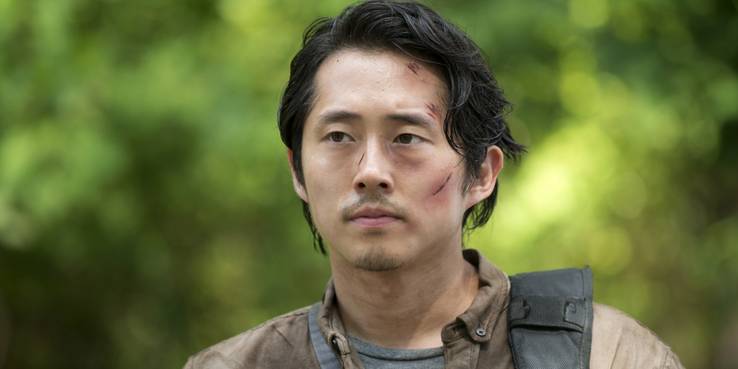
STEVEN YEUN

One actor Marvel Studios can look at for Shang-Chi is Steven Yeun, who’s most well-known for his role as Glenn on The Walking Dead, a role that truly established him as a major TV star. In The Walking Dead series, Yeun proved that he not only has leading man potential but also can perform action-heavy scenes as well. Even though he isn’t a trained martial artist, it’s easy to imagine Yeun picking up enough in training to do some of his own stunts. Outside of his Walking Dead performance, Yeun has starred in Okja, Mayhem, and Sorry to Bother You. With plenty of fans already, which apparently includes Feige (who recently met Yeun at an awards ceremony, via Twitter), the 34-year-old actor could already be on Marvel’s radar.

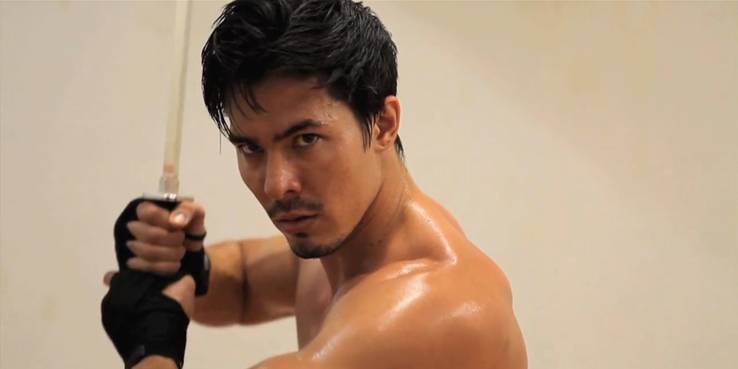
LEWIS TAN

A fan-favorite choice for any martial arts-related superhero role is Lewis Tan, and he’s another person Marvel Studios should be looking at for Shang-Chi. Tan first gained attention for played the drunken kung fu master in Iron Fist season 1, after also publicly lobbying to be cast as an Asian version of Danny Rand. He then followed this up by briefly playing Shatterstar in Deadpool 2, but that role could be short lived due to Disney’s upcoming acquisition of 20th Century Fox. He has gone on to land roles in Into the Badlands and Wu Assassins, but his leading role many want to see is still needed. If Marvel does wind up prioritizing casting someone who can do most of their own stunt work, then this role could swing in Tan’s favor. After all, he’s a rising talent at only 31 years old who could really breakout as Shang-Chi.

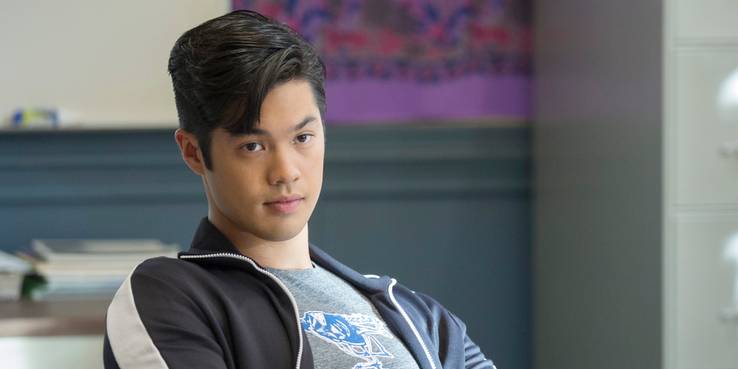
ROSS BUTLER

Now, if Marvel wants to go for someone with the leading man stature that can stand tall with the MCU’s various other heroes, then Ross Butler could be a nice choice as well for Shang-Chi. Butler has primarily stayed with TV as of late and has left a good impression. Roles in The CW’s Riverdale and Netflix’s 13 Reasons Why helped solidify his place in the industry, but he’s also secretly joined the cast of DC’s Shazam!. That role is likely a small one as another member of the Marvel family, yet it may be joining the Marvel Cinematic Universe that can launch his career even further. Butler has the charisma that Shang-Chi could use and 6’3" build to become a powerful fighter. With a bit of training and a chance, Butler could be Marvel’s next star. (Plus, it’s worth mentioning that Marvel is already starting to mine 13 Reasons Why’s cast for talent, as they recently cast Katherine Langford in Avengers 4.)

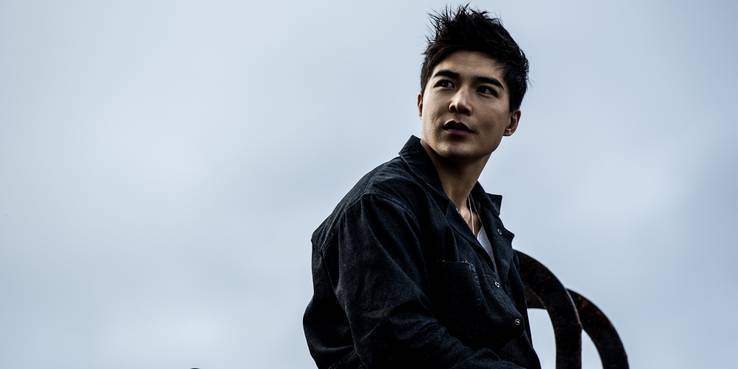
LUDI LIN

If plucking someone from a small DC role isn’t off limits, though, Ludi Lin may prove to be an excellent choice for Shang-Chi. The Chinese-Canadian actor got his breakout role as Zack the Black Ranger in 2017’s Power Rangers movie; he also plays Murk in James Wan’s Aquaman. Even though his role is small in DC’s first Aquaman movie, it’s not something that’s expected to turn into a bigger role down the line. The 31-year-old actor could instead join the MCU to bring the Master of Kung Fu to life. (After all, it wouldn’t be the first time that an actor or actress has appeared in both franchises.) Additional evidence that he’s the perfect fit for Shang-Chi is the fact that he’s studied Muay Thai, Jiu-Jitsu, and Olympic style wrestling, and still trains today. Lin isn’t a household name right now, but there’s the potential for him to truly embody everything that makes Shang-Chi unique - and for years to come should Marvel look his way.

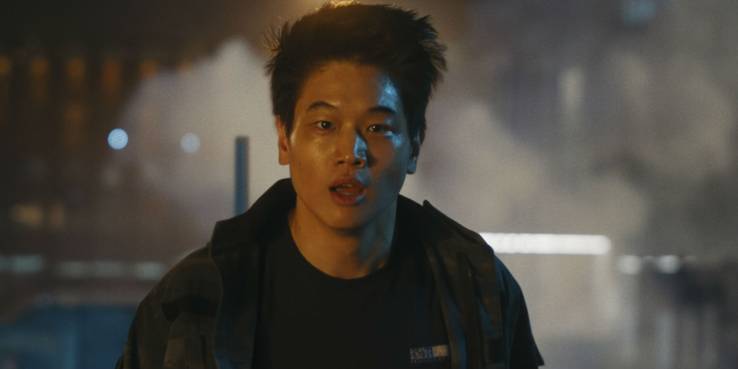
KI HONG LEE

Another Asian actor who could easily become Marvel’s next action star is Ki Hong Lee. Best known for his role as Minho in The Maze Runner movie trilogy, Lee’s role continued to become more prominent as the franchise continued. By the end of the action-heavy series, Lee’s ability in an action-heavy role is unquestioned. Beyond just the physical side of the role, Lee has also demonstrated his acting range in The Maze Runner trilogy and The Stanford Experiment, not to mention showing his comedic chops on Unbreakable Kimmy Schmidt. Considering the tone the MCU has established, Lee can bring a full personality to Shang-Chi.

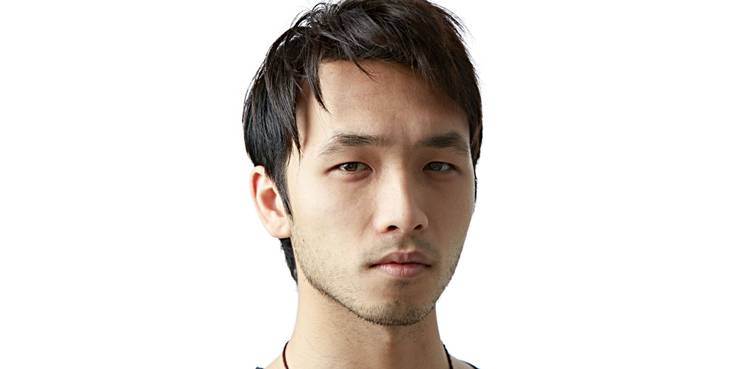
YOSON AN

Likely the least-known actor on this list for many people, Yoson An is not a stranger to Disney - and that’s a significant factor in him being a possible candidate for Shang-Chi in the MCU. The up-and-coming actor is appearing in Disney’s live-action Mulan movie. Yoson will play Mulan’s love-interest, but the war setting of the live-action remake could provide him with plenty of opportunities to show off his acting skills, including possible action capabilities. Disney likes to stay in business with people they enjoy working with, and even though audiences have yet to see Yoson in Mulan, he impressed the studio enough to cast him in a big role. If word from Mulan’s set is positive, then Yoson could once again find himself as part of a major Disney release.

What? Are you kidding? No mention at all of Philip Ng?

Philip is a friend but I’m still rooting for Lewis.

[QUOTE=Jimbo;1311804]What? Are you kidding? No mention at all of Philip Ng?[/QUOTE]

Good point.

[QUOTE=GeneChing;1311805]Good point.[/QUOTE]

I agree with you that of the lot mentioned, Lewis Tan is the best candidate BY FAR.

On the fast track

‘Shang-Chi’ Marvel’s First Asian Film Superhero Franchise; Dave Callaham Scripting, Search On For Director Of Asian Descent
by Mike Fleming Jr
December 3, 2018 9:30am


Marvel Comics

EXCLUSIVE: Marvel Studios is fast-tracking Shang-Chi to be its first superhero movie tentpole franchise with an Asian protagonist. The studio has set Chinese-American scribe Dave Callaham to write the screenplay, and Deadline hears Marvel is already looking at a number of Asian and Asian-American directors who want to do something as potentially monumental as was accomplished in Marvel’s first viable Best Picture candidate, Black Panther. That film tied into African and African American cultures and the sensibilities of its nearly all-black cast, with a black director in Ryan Coogler and writer in Joe Robert Cole. The goal here is to do a similar thing: introduce a new hero who blends Asian and Asian American themes, crafted by Asian and Asian American filmmakers.

After Marvel Studios’ unparalleled decade of success following Iron Man, many have wondered how Kevin Feige’s next iterations of superhero franchises will distinguish themselves. Clearly an important theme will be ethnic diversity and inclusion, in front of and behind the camera.


Kaplan Perrone

Callaham has strong credentials in the superhero and franchise-building realms and his own experiences as a Chinese-American will inform the Shang-Chi movie mythology, sources said. His recent work includes co-writing with Patty Jenkins and Geoff Johns the upcoming DC Warner Bros sequel Wonder Woman 1984, and he is writing Sony’s animated Spider-Man: Into the Spider-Verse 2. He also wrote initial drafts of Zombieland 2, which begins production in January, and created and produced Amazon’s recent action comedy series Jean-Claude Van Johnson, starring Jean- Claude Van Damme. Callaham also created the Expendables franchise as well as the story for the Legendary’s Godzilla reboot.

He’s got two comedies at Netflix: Callaham wrote the Black List-ed dark comedy caper script Jackpot, which Will Gluck will direct; and he wrote and is producing with Channing Tatum, Phil Lord & Christopher Miller, and Archer’s Adam Reed and Matt Thompson, the animated comedy America: The Motion Picture. Thompson is directing.

Shang-Chi first appeared in Special Marvel Edition #15 in December 1973, hatched by Steve Englehart and Jim Starlin. The script will modernize the hero to avoid stereotypes that many comic characters of that era were saddled with. The comic launched around the time that Enter the Dragon became a global sensation and martial arts films raged. In the comics, Shang-Chi is the son of China-based globalist who raised and educated his progeny in his reclusive China compound, closed off to the outside world. The son trained in the martial arts and developed unsurpassed skills. He is eventually introduced to the outside world to do his father’s bidding, and then has to come to grips with the fact his revered father might not be the humanitarian he has claimed to be and is closer to what others call him: The Devil’s Doctor. He also might be centuries old. The deceit makes them bitter enemies.

Marvel Studios has worked with a stable of talented filmmakers from diverse backgrounds including Anna Boden and Ryan Fleck, directing next year’s Captain Marvel with Brie Larson; Coogler, directing the Black Panther sequel; Taika Waititi, who directed Thor: Ragnarok; Chloé Zhao, who will direct The Eternals; and Cate Shortland, who will direct a stand-alone film for Marvel staple Black Widow starring Scarlett Johansson.

Callaham is represented by UTA, Kaplan Perrone Entertainment, and Gretchen Rush & Dan Fox at Hanson, Jacobson.

[QUOTE=Jimbo;1311807]I agree with you that of the lot mentioned, Lewis Tan is the best candidate BY FAR.[/QUOTE] Don’t get me wrong. I would totally support Phillip in the role too. It’s just I’ve always thought of Shang-Chi as a bigger dude. Phil is 5’9" and wirey. Lewis is 6’2" and has more muscle mass. Of course, I’d support either of them.

[QUOTE=GeneChing;1311814]Don’t get me wrong. I would totally support Phillip in the role too. It’s just I’ve always thought of Shang-Chi as a bigger dude. Phil is 5’9" and wirey. Lewis is 6’2" and has more muscle mass. Of course, I’d support either of them.[/QUOTE]

Yes, either would be great.

None of the other actors on the list in that article look even remotely like Shang Chi material. Just being as Asian or Asian-American actor isn’t enough.

I’ve been waiting for Marvel to get the go-ahead for a Sub-Mariner movie, and IMO an Asian-American actor would be perfect to play Prince Namor who, for whatever reason, always had Asiatic-looking features, even way back in the '40s. Unfortunately, with DC’s Aquaman already a franchise, I find it doubtful that Marvel will ever make a Sub-Mariner movie.

Then there’s this…

Marvel ‘insults China’ by making its first Asian superhero film about Shang-Chi, a son of Fu Manchu
First Asian superhero planned for the big screen is son of notorious fictional villain
Fu Manchu is regarded as an offensive symbol of anti-Chinese discrimination
PUBLISHED : Thursday, 06 December, 2018, 2:58pm
UPDATED : Thursday, 06 December, 2018, 10:55pm
Phoebe Zhang
https://twitter.com/dustguest

An angry Chinese public is accusing Marvel Studios of insulting China after learning that its first Asian superhero on the big screen will be the son of Fu Manchu, the offensive fictional character who has become a shorthand for racial stereotyping.

Chinese-American screenwriter Dave Callaham, whose movie credits include the upcoming sequels Wonder Woman 1984 and Spider-Man: Into the Spider-Verse 2, is working on a script for a film showcasing Shang-Chi, who first appeared in Marvel’s comics in the 1970s.

According to The Hollywood Reporter, Marvel is expecting Shang-Chi, also known as the heroic Master of Kung Fu in the Marvel universe, to “break out in a way similar to Black Panther earlier this year”.

Hollywood, the online publication said, was coming to realise the importance of Asian identity following this summer’s box office hit Crazy Rich Asians.


Shang-Chi, often called the Master of Kung Fu, was created by writer Steve Englehart and artist Jim Starlin for Marvel comics in the 1970s.

However, when translated reports of the news reached Weibo, China’s Twitter-like service, the online community was unimpressed.

“You used Fu Manchu to insult China back in the day, now you are using Fu’s son to earn Chinese people’s money, how smart,” one internet user wrote.

Fu is a fictional villain who first appeared in a series of novels by British author Sax Rohmer during the early 20th century.

The character sparked accusations of Western racism and orientalism, with protesting Asian-Americans describing the depiction as offensive, in its reliance on “yellow peril” and Asia-centric xenophobia.

Another commenter on Weibo wrote: “It’s common in American comics that a superhero is the son or daughter of an evil villain, but the problem is Fu Manchu has already become a symbol of discrimination against the Chinese.

“There are many other Asian characters they could choose from but they had to choose this, it’s no wonder they are being criticised.”


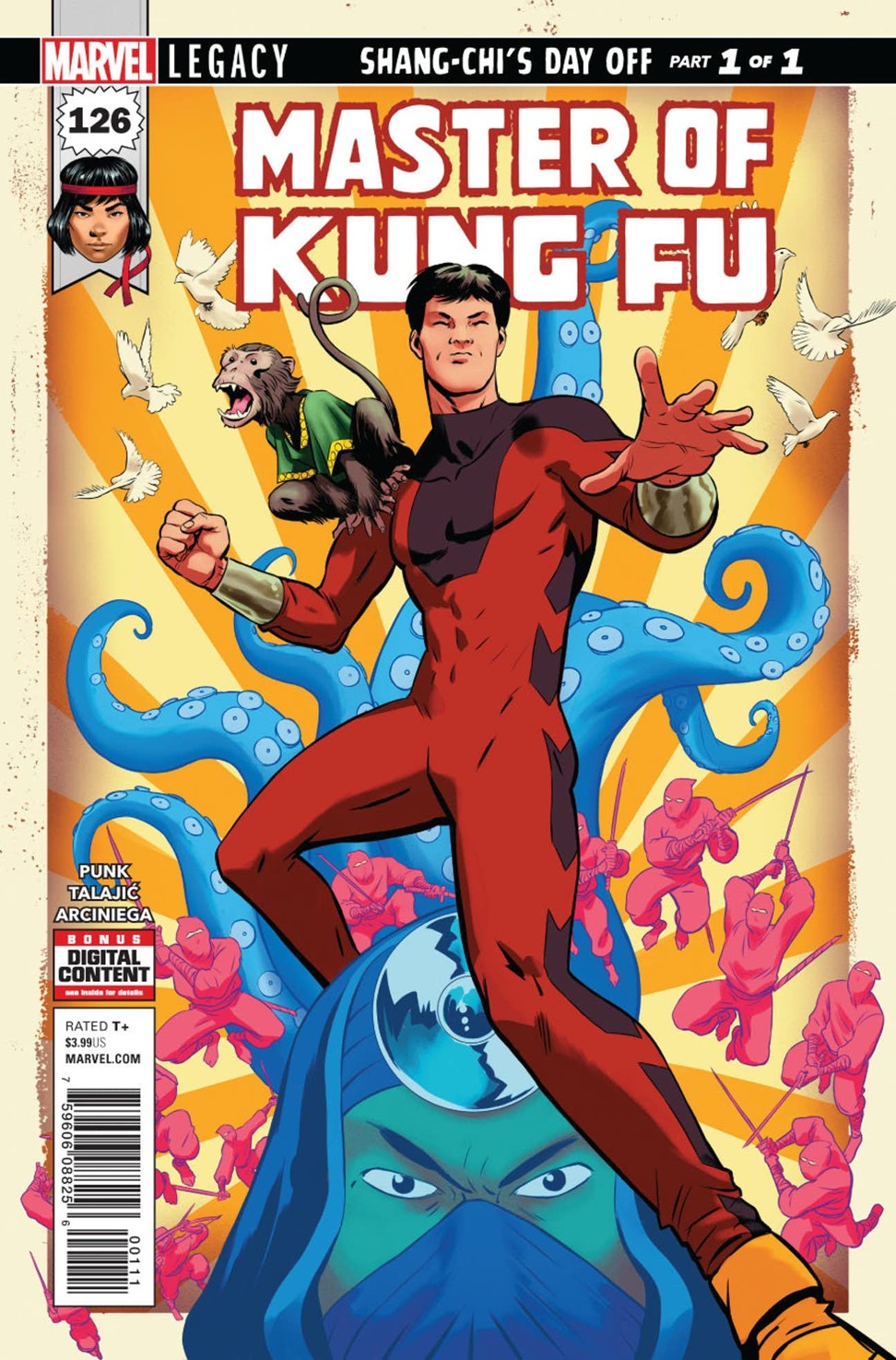
Marvel comic featuring Shang-Chi, Master of Kung Fu, whose origin story has caused online fury in China. Photo: Handout

Some people expressed understanding, saying, “in many movies, even the American president can be the villain, why can’t we tolerate a bad Chinese?”

Ironically, Marvel originally tried to acquire the rights to Kung Fu, the popular 1970s martial arts television drama. When it failed in its bid, it instead bought the rights to Fu Manchu, as part of its ambition to create a superhero based on martial arts legend Bruce Lee.

Lee missed out on the leading role in Kung Fu in favour of a non-Chinese actor named David Carradine.

[QUOTE=Jimbo;1311831]
None of the other actors on the list in that article look even remotely like Shang Chi material. Just being as Asian or Asian-American actor isn’t enough.
[/QUOTE] I totally agree. Not sure about the Sub-Mariner tho. :stuck_out_tongue:

[QUOTE=Jimbo;1311831]I’ve been waiting for Marvel to get the go-ahead for a Sub-Mariner movie, and IMO an Asian-American actor would be perfect to play Prince Namor who, for whatever reason, always had Asiatic-looking features, even way back in the '40s. Unfortunately, with DC’s Aquaman already a franchise, I find it doubtful that Marvel will ever make a Sub-Mariner movie.[/QUOTE]

WAIT A FREAKIN’ MINUTE!!!

I said it first! I suggested an Asian for the part of Sub Mariner several years ago. The person I suggested was Jet Li. If Donnie Yen is still in good shape at this time, I will have to suggest him. Russell Wong really had the Sub Mariner look under lock. I do not know how healthy he looks now days.

mickey

[QUOTE=mickey;1311840]WAIT A FREAKIN’ MINUTE!!!

I said it first! I suggested an Asian for the part of Sub Mariner several years ago. The person I suggested was Jet Li. If Donnie Yen is still in good shape at this time, I will have to suggest him. Russell Wong really had the Sub Mariner look under lock. I do not know how healthy he looks now days.

mickey[/QUOTE]

Hi, mickey.

For years I’ve advocated for Russell Wong to be considered for the role of Namor, but IMO the time has passed, as he would be too old now. Unfortunate, because he would have been perfect. If we wait 'til Marvel gets the go-ahead (assuming they care to do it), Russell would probably be 60 by then.

Brian Tee (Chicago Med, No Tears for the Dead, and a brief appearance in Jurassic World, among others) says he wants to play Namor. He would probably do well, if he can bulk up a bit.

More racist fears

I actually have faith that the MCU will do this right. We worried about the Mandarin in Iron Man 3, but they spun it well. And despite the whitewashing accusations for the Ancient One in Doctor Strange, I felt Tilda was excellent in that role. And Wong was great - he stole every scene he was in - luv Benedict Wong (he’s actually the first MCU Asian superhero, when you think about it).

Our Senior Graphic artist Patrick Lugo touched on the racial issues with the SubMariner in his last review - AQUAMAN: DC’s most MARVELous movie (he actually had more to say about this but didn’t want to get too off topic).


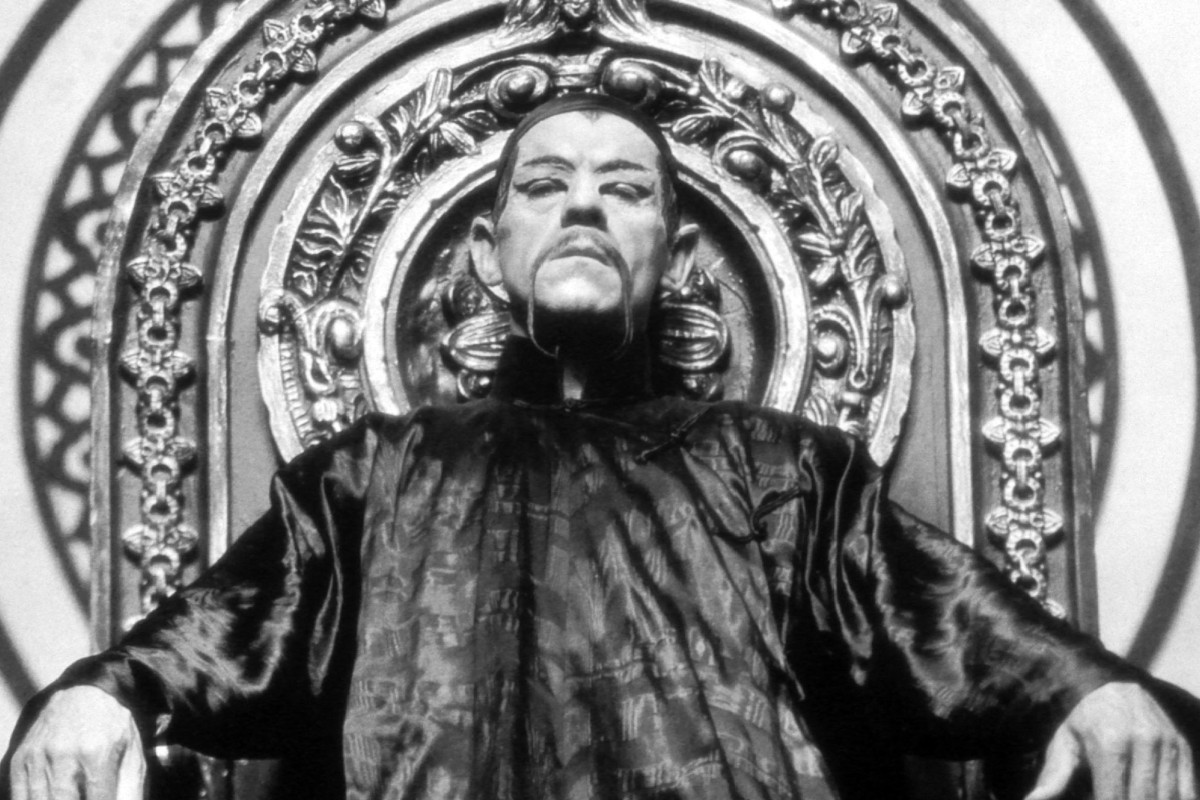
Boris Karloff in “The Mask of Fu Manchu” (1932).

CULTURE
Marvel wants to do an Asian superhero movie, but it has to reckon with his racist past
Venus Wu
DEC 10, 2018

An Asian superhero is finally going to kick some ass in the Marvel Cinematic Universe.

The latest news that Marvel Studios is fast-tracking a film centered on Shang-Chi, a Bruce Lee-inspired kung fu master, comes on the heels of Black Panther and Crazy Rich Asians blowing up at the box office.

It also comes as China has grown to become Marvel’s No. 1 overseas market.

But before the studio can make cinematic history with Shang-Chi, it must reckon with the character’s origin story—and tackle an Asian supervillain first.

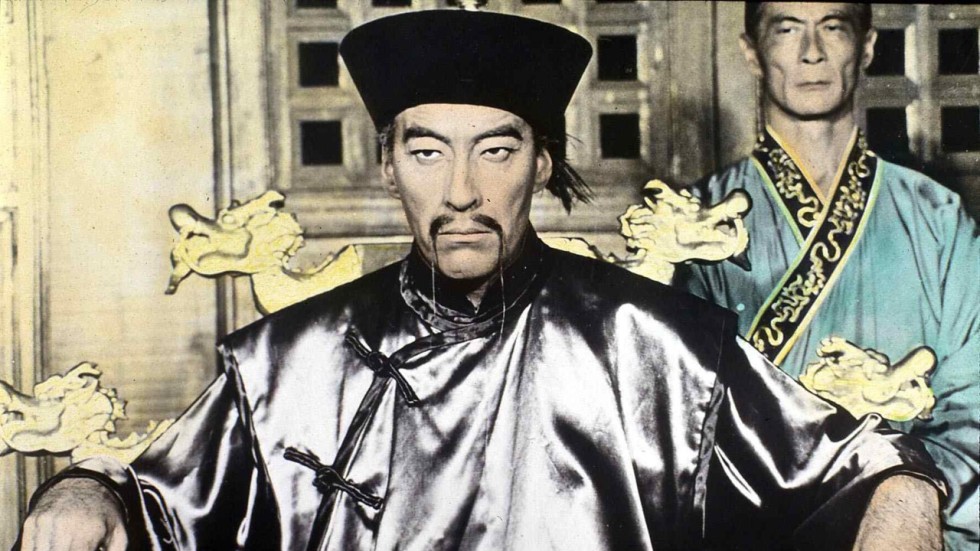
That’s because in the old comics, Shang-Chi is the son of Fu Manchu.

Yes, that Fu Manchu, the supervillain with squinty eyes and a tentacle-like mustache whose name is synonymous with racism, orientalism, and pretty awful facial hair.


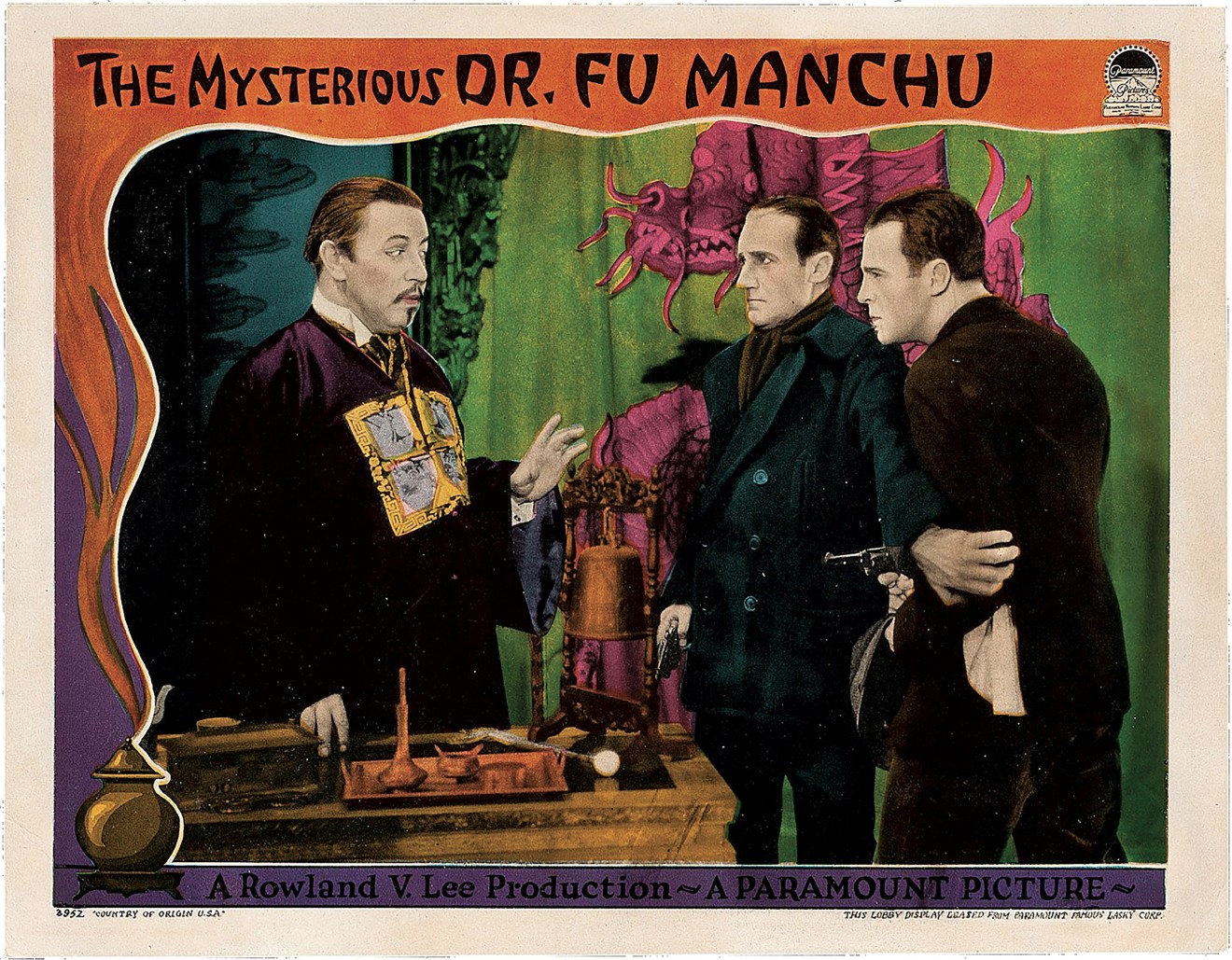
A poster for “The Mysterious Dr. Fu Manchu” (1929). / Photo: Paramount Pictures

The fictional character was created by an English novelist in the early 20th century against the backdrop of yellow peril, a racist ideology that casts Asians as real-life villains in the Western world.

In fact, this is how the novelist, Sax Rohmer, described Fu Manchu:

“Imagine a person tall, lean and feline, high-shouldered, with a brow like Shakespeare and a face like Satan…invest him with all the cruel cunning of an entire Eastern race…imagine that awful being, and you have a mental picture of Dr. Fu Manchu, the Yellow Peril incarnate in one man.”

It’s no wonder that Chinese commentators are already up in arms, questioning whether Marvel’s move is a “suicidal” one.

Other online comments also point out how Shang-Chi and Fu Manchu’s backstory mirrors a white savior narrative.

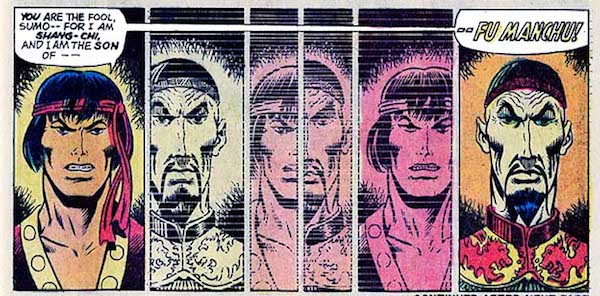
The kung fu warrior was raised by an evil Asian overlord to become an assassin, only to be “shown the way” by white people.

No longer evil, Shang-Chi returned to kill his father for the greater good.


In the old comics, Shang-Chi turns on his father, Fu Manchu. / Photo: Marvel Comics

Putting the original Fu Manchu on the big screen in this day and age would be unimaginable without provoking outcry. Marvel would either have to scrub him out or reinvent the character.

And Hollywood is no stranger to altering scripts that could “hurt the feelings of Chinese people,” to cite a common refrain in Chinese state media.

This is especially the case when Chinese money increasingly helps finance big productions, including Marvel’s Venom, which has already grossed more in China than in the United States and Canada combined.

Marvel had experience with this when it made Doctor Strange (2016).

In the original comics, Doctor Strange’s mentor, the Ancient One, is a Tibetan sorcerer who is said to be 500 years old.

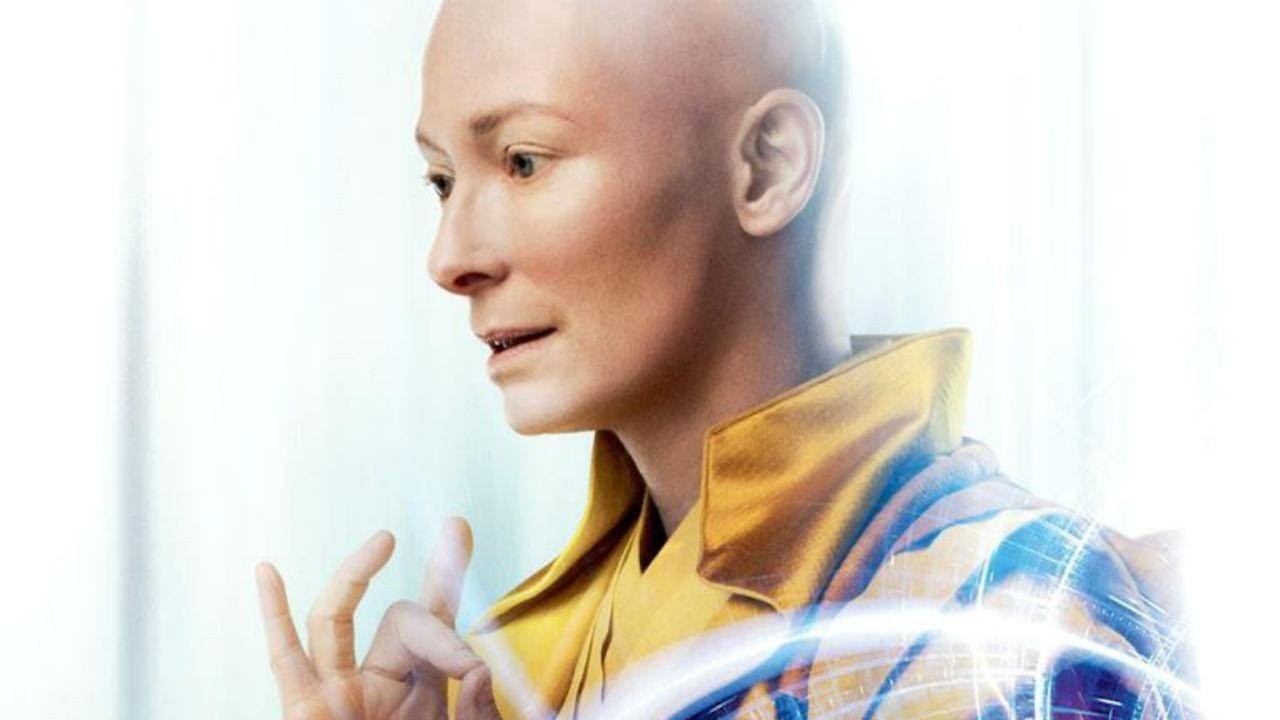
Instead of casting an Asian or Tibetan actor to play the role, the movie reinvented the character and gave it to Tilda Swinton.


Tilda Swinton as the Ancient One in “Doctor Strange” (2016). / Photo: Disney/Marvel Studios

Director Scott Derrickson said he didn’t want to reinforce “a very old American stereotype of what Eastern characters and people are like,” but added that the film couldn’t afford to weigh in on Tibet and risk getting banned by one of the biggest markets in the world. (He later backtracked on his comments.)

Fu Manchu’s reinvention could prove to be much more difficult than the Ancient One, given the size of his baggage.

Even Shang-Chi himself will probably need some updating. The character is an American invention born out of the 1970s kung fu movie craze, which is arguably out of date.

There are signs that Marvel is already working on it. Shang-Chi used to have no superpowers beyond his kung fu prowess, but in recent years, he’s gained the ability to replicate himself.

Both Shang-Chi and Fu Manchu are products of their time, but as a globalized world grapples with more sensitive approaches to cultural nuances, what do you do with one-sided, stereotypical characters who do not age well with time?

This essay was originally published in the Goldthread newsletter. To get this and other great content first, subscribe here.

Venus Wu
Venus Wu is a senior reporter at Goldthread. Born and raised in Hong Kong, she wielded a video camera at Reuters for five years before swapping it for a pen.

It shouldn’t be that hard for Marvel to delete the Fu Manchu character and update Shang Chi. In fact, it should be fairly easy. They’ve already altered old characters, some substantially, for the big screen.

Even though I liked the Shang Chi comics way back when I was a kid, the Fu Manchu angle bothered me even then. And that was WAY before the days of political correctness.

More racist fears

SHANG-CHI, FU MANCHU, AND MARVEL’S ASIAN PROBLEM
JESSICA PLUMMER
01-02-19

Recently, Deadline reported that Marvel Studios is fast-tracking a Shang-Chi movie, based on the comic book character of the same name. In an effort to recapture the lightning in a bottle that was Black Panther, they’re seeking to hire Asian and Asian American filmmakers to give it the cultural authenticity that has been lacking in their meager Asian representation thus far. They’ve already hired Chinese American screenwriter Dave Callaham for the script, and are on the hunt for a director of Asian descent.

With so many superhero movies and TV shows in the works these days, it would be easy to let this one slide by as just another project that may or may not materialize in the next decade. But I’ve been fascinated by Shang-Chi as a character for a while, and there’s a lot more going on here than bringing one of Marvel’s most prominent Asian characters to live action.


The first issue of Shang-Chi’s long-running solo series. Note the monstrous Fu Manchu behind him.

Shang-Chi was created by Steve Englehart and Jim Starlin in 1973 to capitalize on the then-current kung fu craze—in fact, Marvel’s original intention was to adapt the David Carradine show Kung Fu. When they couldn’t get the rights, they settled on Fu Manchu instead, the infamous villain created in 1913 by Sax Rohmer for a long-running series of pulp novels.

Marvel’s new hero Shang-Chi was Fu Manchu’s son, trained to be the greatest martial artist alive, who discovered to his horror that his father was actually an evil mastermind and dedicated his life to opposing him. Rounding out the cast was an assortment of characters both borrowed from the Fu Manchu franchise (notably British secret service agent Sir Nayland Smith, his associate Dr. Petrie, and Fu’s daughter Fa Lo Suee) and Marvel originals. The series, Master of Kung Fu, ran for a decade, and Shang-Chi was also prominently featured in Marvel’s black and white martial arts magazine The Deadly Hands of Kung Fu alongside similarly kung fu–based characters like Iron Fist and White Tiger.


Shang-Chi’s first appearance. He was originally designed to resemble the then recently deceased Bruce Lee.

In the mid-’80s, with the kung fu craze well past over, Shang-Chi faded from the limelight, and has appeared only sporadically since. Somewhere in there, the Marvel license to Fu Manchu and associated characters expired, but since Shang-Chi was an original creation, Marvel can still tell stories about him, as long as they don’t call his father “Fu Manchu.” It’s kind of like getting a temporary license to publish stories about James Bond’s son, Tim Bond, but then the Fleming estate takes the rights back so you can still publish the Tim Bond stories but you have to call him Tim Frond now. (Fun fact: one of the supporting characters in Master of Kung Fu, Clive Reston, is heavily implied to be both James Bond’s son and Sherlock Holmes’s grand-nephew. It’s actually super annoying in execution.)

The problem is, even though Shang-Chi is no longer canonically Fu Manchu’s son, he’s still essentially, well…Fu Manchu’s son.

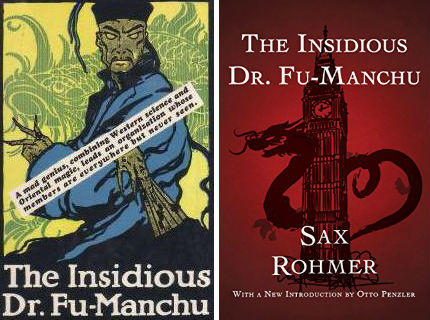
I had only a vague sense of who Fu Manchu was before I stumbled down a Deadly Hands of Kung Fu rabbit hole about a year ago, since the character is thankfully no longer omnipresent, but holy crap, you guys. Here’s how Rohmer describes him in his first appearance, The Insidious Dr. Fu Manchu:

“Imagine a person, tall, lean and feline, high-shouldered, with a brow like Shakespeare and a face like Satan, a close-shaven skull, and long, magnetic eyes of the true cat-green. Invest him with all the cruel cunning of an entire Eastern race, accumulated in one giant intellect, with all the resources of science past and present, with all the resources, if you will, of a wealthy government— which, however, already has denied all knowledge of his existence. Imagine that awful being, and you have a mental picture of Dr. Fu-Manchu, the yellow peril incarnate in one man.”

As long as we’re imagining, imagine reading that fully 60 years later and thinking, “Yeah, this sounds like a great franchise to get into bed with!” I mean, Rohmer allegedly created Fu Manchu when he asked his ouija board what the greatest threat to the white man was (!!!) and it spelled out “C-H-I-N-A-M-A-N.” (In another version of this story, Rohmer claimed he’d asked the board how he could make his fortune.) Come on, Marvel!


The original cover for Fu Manchu’s first appearance, and a contemporary one.

Fu Manchu, with his imperial costuming and iconic mustache, is a poisoner and a torturer, a manipulator seeking world domination. He exhorts his followers to “kill the white man and take his women” (in the 1932 film The Mask of Fu Manchu, which led to a formal complaint by the Chinese embassy), and, alongside his more fantastic plots, runs complex webs of drug trafficking and “white slavery.” Between the Elixir of Life that has made him nearly immortal and just plain Otherness, he’s usually portrayed as barely human.

And his reach extended everywhere. He starred in 14 books written by Rohmer (one posthumously) between 1913 and 1973, plus 4 authorized continuations, one published as recently as 2012. He’s been in over a dozen movies, a TV show, and several radio serials (always played by a white man), comic strips, and comic books from DC and other publishers as well as Marvel. There was even a candy called Fu Man Chews (not to be confused with the fake cereal by the same name from Nightmare on Elm Street 2).

continued next post

Continued from previous post
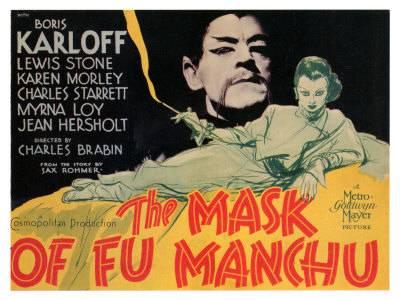

Boris Karloff and Myrna Loy donned yellowface for 1932’s The Mask of Fu Manchu.

That’s just the authorized stuff, of course. Plenty of properties have done what Marvel did after they lost the license and used the character without referring to him by name, like “the Doctor” in Alan Moore’s League of Extraordinary Gentlemen. Both the Mandarin and the Yellow Claw from other Marvel comics are Fu Manchu copies, as is Flash Gordon’s Ming the Merciless and James Bond’s Dr. No, particularly the animated version. And of course, the mustache that he eventually wound up sporting (though he was originally clean-shaven) is today known simply as a Fu Manchu.

What’s more important than Fu Manchu’s omnipresence, though, is his effect. Rohmer was writing while completely ignorant about Chinese people and culture, for an audience equally ignorant, and played on xenophobic fears to create his villain. He depicted the tiny Chinese section of London’s Limehouse district as a nest of vice when those two blocks were in fact some of the most law-abiding in the city during the World War I and interwar periods. Anti-Chinese and anti-Asian sentiment had been prevalent in the West since the late 19th century (see, for example, the Chinese Exclusion Act of 1882, which prohibited the immigration of Chinese laborers to the U.S., and the earlier Page Act of 1875, which prohibited “undesirable” immigrants but in practice mostly barred entry to Chinese women in order to prevent Chinese population growth), but Rohmer’s creation shamelessly stoked the fires of those fears, portraying the East as sinister, unknowable, and ever-encroaching.

We haven’t gotten as far away from these pulp stereotypes as we’d like to think. In 2012, both How I Met Your Mother and the children’s show Big Time Rush depicted white actors in Fu Manchu mustaches for laughs. A year later, General Motors pulled a commercial from airwaves after public outcry over its use of the mind-bogglingly racist 1938 song “Oriental Swing” and its reference to “the land of Fu Manchu.” (Content warning: that link goes to a CNN clip that also discusses car commercials featuring suicide attempts, sexual assault, and human trafficking; the song’s lyrics also contain racial slurs.)

And comic books, given their love of nostalgia, are even less removed than other genres. Just the fact that Marvel continued to use their Fu Manchu obliquely after the rights lapsed, eventually renaming him “Zheng Zu,” is proof enough, but they’re still churning out new iterations of the trope, too. Check out Charles Soule and Ron Garney’s creation Tenfingers, a Chinatown crime boss who harvests body parts for power, from a 2016 Daredevil storyline:
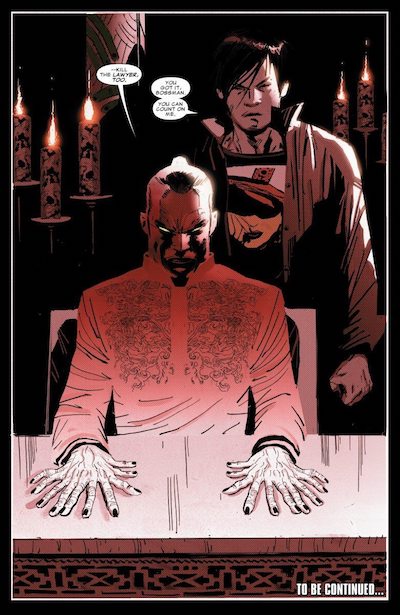

Yikes.

Which, of course, brings us to the MCU and their portrayal of Asian and Asian American characters up to now. As Asian characters are nearly completely absent from the films (an issue in its own right, of course, especially when they’re absent because they’re being played by Tilda Swinton instead), criticism has mainly focused on Marvel’s Netflix offerings, particularly Iron Fist and Daredevil. Many critics, especially those of Asian descent, have detailed the issues with Daredevil, Iron Fist, and Defenders better than I can, but the short version is: every single Asian character is a ninja; all of them are evil except for Elektra and Colleen, who start out evil but are redeemed by the love of good white men; numerous characters who speak English perfectly well don’t, in order to more effectively Other them on screen; all of these Asian characters tie into a vast immortal conspiracy to destroy New York and K’un-Lun (that is ultimately led by a white lady because of course Asian people couldn’t really have agency); Daredevil, who refuses to kill, kills the Japanese villain Nobu not once but twice and doesn’t seem to think it counts; even though all Asian characters are ninjas, they are not as good at being ninjas as white guys like Daredevil, Iron Fist, and Stick; and the Defenders writers 100% cannot tell the difference between China and Japan.
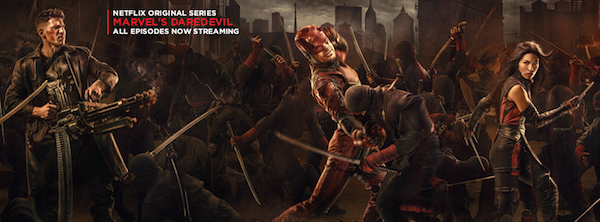

The Punisher, Daredevil, and Elektra fight a sea of faceless ninjas, clearly lethally, in this Netflix ad for Season 2.

This mindless regurgitating of stereotype after stereotype isn’t all that shocking when you consider that Marvel TV’s executive producer, Jeph Loeb, after ignoring the widespread campaign to cast an Asian American actor as Danny Rand, decided it would be a great and funny idea to show up to the Iron Fist panel at this year’s SDCC wearing a kimono. (This was apparently for a bit where he talked about Karate Kid for a bit and then Jessica Henwick, who plays Colleen, told him to take the headband and kimono off, so the joke was…that it was offensive to Asian people? Ha ha? Making Henwick play along feels especially icky.) And even though he has no control over their multimedia properties, it’s worth pointing out once more that Marvel Comics’s editor-in-chief C.B. Cebulski wrote for several years under the pen name “Akira Yoshida.”
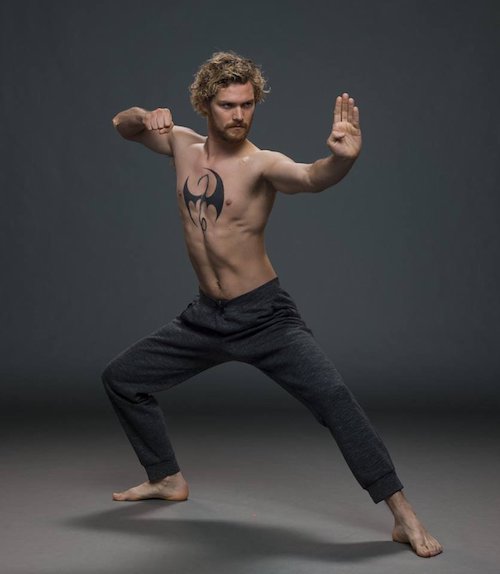

And then there’s…whatever this is.

At best, then, we’re looking at a company obsessed with both fetishizing and vilifying the whole of East Asia—one that continually appropriates its stories, culture, artistry, and even names, but refuses to treat it or its diaspora with human dignity. Which begs the question: Is this a company that can tell a non-offensive story about Fu Manchu, even if Fu Manchu is never named as such? Can any company tell that story?

Right now it’s hard to say. On the one hand, it’s certainly a step in the right direction that Marvel has hired a Chinese American screenwriter and is planning to continue hiring Asians and Asian Americans. On the other hand, not!Fu Manchu has apparently been reimagined as a “China-based globalist,” which is about as dog whistle-y as you can get. The South China Morning Post reports that there’s already been pushback on the Chinese social media network Weibo. One user was quoted as saying: “You used Fu Manchu to insult China back in the day, now you are using Fu’s son to earn Chinese people’s money, how smart.”

Obviously China is a massive country and not every Weibo user is opposed to the film (or, presumably, even cares about it), but it will be interesting to see Marvel’s response if Chinese pushback grows. Especially since Chinese audience’s deep pockets and presumed narrow-mindedness are so often held up as an excuse for whitewashing, as with Tilda Swinton in Doctor Strange. In the face of actual feedback from China, will Marvel listen?
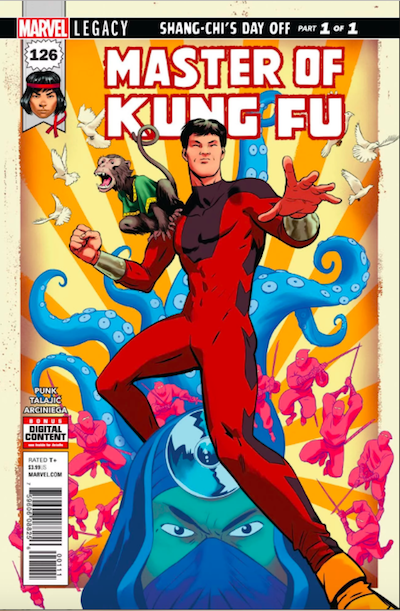

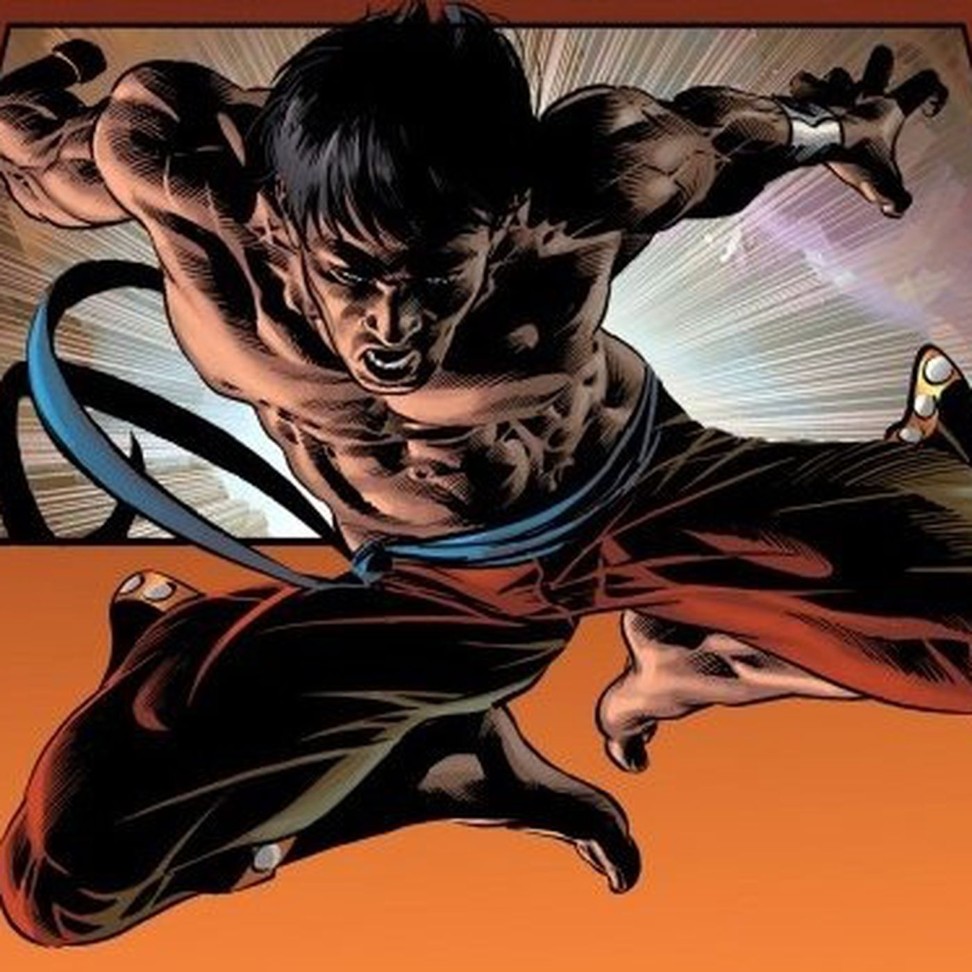
Shang-Chi in his most recent lead role. I dig his new costume.

I’ll be honest: I actually really like Shang-Chi as a character. As much as he emerged from stock Orientalist character types of the last century, I enjoy his quiet thoughtfulness, his compassion, and his subtle sense of humor. He’d be refreshingly different from the Marvel heroes we’ve been getting lately (i.e. not a variation on the Tony Stark Template), and it’s potentially a tremendous, star-making role. I plan to see the movie, if and when it releases, and I hope it’s everything to Asian audiences that Black Panther was to black audiences.

But Marvel has a lot of making up for past mistakes to do before they can get there. Let’s just hope they’re up to the task.

“tall, lean and feline, high-shouldered, with a brow like Shakespeare and a face like Satan, a close-shaven skull, and long, magnetic eyes of the true cat-green. Invest him with all the cruel cunning of an entire Eastern race, accumulated in one giant intellect, with all the resources of science past and present” Ya know, if I had green eyes and shaved, I could totally fit this description. They just missed ‘sexy AF’ :stuck_out_tongue:

More ruminations on racist roots

MARCH 13, 2019 5:01pm PT by Graeme McMillan[URL=“https://www.hollywoodreporter.com/heat-vision/can-marvels-shang-chi-movie-escape-a-cliched-comic-book-past-1194673”]
How Marvel’s ‘Shang-Chi’ Can Escape a Cliched Comic Book Past


Ron Wilson/Marvel Entertainment

Director Destin Daniel Cretton and screenwriter Dave Callaham have the opportunity to take what works about the character and reimagine what doesn’t.

The news that Short Term 12 director Destin Daniel Cretton has signed on to direct Marvel’s Shang-Chi is something to be welcomed for multiple reasons, not the least of which is that Cretton’s resume is an impressive one (and, perhaps not coincidentally, features collaborations with Marvel stars Brie Larson and Michael B. Jordan). More importantly, perhaps, is the fact that bringing an Asian-American director onto the project brings the likelihood that the movie will be able to sidestep some of the character’s more… troublesome elements.

Shang-Chi debuted in 1973’s Special Marvel Edition No. 15, a series that would be retitled The Hands of Shang-Chi, Master of Kung Fu two issues later (and, later still, retitled simply Master of Kung Fu). The character was intended less as a push for greater diversity and more as a consolation prize; creators Steve Englehart and Jim Starlin had hoped to make a comic book version of the television series, Kung Fu; when that failed due to rights issues, Shang-Chi was created to — in the words of Englehart in the book Marvel Comics: The Untold Story — “do the Eastern mystical philosophy.” His name was chosen, apparently, by “throwing the I Ching and mixing and matching hexagrams.”

Things got arguably worse with the decision by then-editor-in-chief Roy Thomas to tie the character to Sax Rohmer’s racist pulp character Fu Manchu, which Marvel had the comic book license to at the time; as a result, Shang-Chi became the son of Fu Manchu, dedicated to fighting his father once he discovered how evil his parent actually was. (While this predated Star Wars and the relationship between Luke Skywalker and Darth Vader, it came after Jack Kirby’s New Gods, where the heroic Orion fought against his villainous father Darkseid; given that Englehart would take on the writing of sibling title Mister Miracle soon after, he was likely aware of the Orion/Darkseid similarity.)

Adding insult to injury, Marvel Comics: The Untold Story also revealed that the character’s design was the result of Starlin drawing a “generic [Asian] face” in early designs as a placeholder, only for Stan Lee to insist that it be kept, topped by simplistic color separations meaning Asian characters were given cartoonishly yellow faces in the series, something especially true of Fu Manchu. It was something so noticeable that letter writers to the series commented upon it, provoking apologies and explanations from editors.

Shang-Chi, then, was originally the result of recycled ideas, racist pulp characters, limitations of technology at the time and editorial mandates that made the character… less than he could have been, perhaps. (To illustrate the idea that the character deserved — and could be — better, the Master of Kung Fu series stuck around until 1983, becoming a critical hit under the pen of writer Doug Moench and artists Paul Gulacy, Mike Zeck and Gene Day as the series moved away from cliche — and Fu Manchu — and towards a more film noir-inspired take.)

A Shang-Chi movie offers Marvel a chance to basically reinvent the character and keep little beyond the name and the martial arts theme — something that, ironically, offers Marvel a second do-over, as the chance to redeem itself after accusations of cultural appropriation and insensitivity over the Marvel TV/Netflix series Iron Fist arose. Cretton has the opportunity and, as his past work demonstrates, the sensitivity, to ditch everything that doesn’t work about Shang-Chi’s past and, taking lessons from Marvel Studios’ treatment of characters like Hawkeye, the Falcon and Star-Lord, basically start afresh from all-but-scratch. Insiders say this is the approach screenwriter Dave Callaham is taking with the character.

Sure, it might upset the hardcore fanboys, but if the success of Black Panther and Captain Marvel should have taught Marvel executives, there’s significant financial upside in offering powerful representation to under-served audiences in the MCU. Let Cretton rebuild Shang-Chi into the hero Asian and Asian-American audiences want to see. There’s no worthwhile argument against it.

Just make the movie already. Or at least cast the lead…:rolleyes:

Destin Daniel Cretton

MARCH 13, 2019 11:25am PT by Aaron Couch, Borys Kit
Marvel’s ‘Shang-Chi’ Sets Director Destin Daniel Cretton


Getty Images; Courtesy of Marvel
Destin Daniel Cretton, Shang-Chi

The ‘Short Term 12’ filmmaker will tackle the studio’s first project starring an Asian lead.

Marvel Studios has hired its director for Shang-Chi, the project that will feature the studio’s first Asian lead.

Destin Daniel Cretton will direct the feature, based on the classic character known for his martial arts prowess. Cretton broke out with the 2013 indie favorite Short Term 12, which starred Brie Larson as a woman working in a group home for teenagers. Cretton reteamed with Larson for 2017’s The Glass Castle, and he is currently directing the Captain Marvel star and Black Panther’s Michael B. Jordan in Just Mercy, based on the memoir of Equal Justice Initiative founder Bryan Stevenson.

Other filmmakers who were in the running to helm Shang-Chi included Dear White People’s Justin Tipping; Master of None’s Alan Yang, who is behind the upcoming John Cho movie Tigertail; and Deborah Chow, whose credits include episodes of Reign, Jessica Jones and the upcoming Disney+ Star Wars series The Mandalorian.

Shang-Chi, who in the comics was born in China to a Chinese father and a white American mother, first appeared in 1973’s Special Marvel Edition No. 15 and was created by Steve Englehart and Jim Starlin after Marvel failed to acquire the comic book rights to the television series Kung Fu. Shang-Chi was trained as a martial artist assassin by his father, the infamous pulp villain Fu Manchu, but later became a hero after rebelling against his father’s ways. Shang-Chi was a hit character in the '70s, and recently saw a revival as a member of the Avengers during 2012’s Marvel Now! Publishing event.

Wonder Woman 1984 screenwriter Dave Callaham is penning the script for Shang-Chi and will update the character for modern audiences. Marvel is said to be planning on assembling a largely Asian-American and Asian cast for the feature.

Marvel head Kevin Feige is producing, with Marvel’s Louis D’Esposito, Victoria Alonso and Jonathan Schwartz executive producing. The studio is coming off of last week’s successful opening of Captain Marvel, which has already passed the $500 million mark at the box office and is the studio’s first female-led outing.

News of Shang-Chi comes as Marvel eyes an end to the 11-year journey it began with 2008’s Iron Man and will in some ways conclude with next month’s Avengers: Endgame. Aside from Spider-Man: Far From Home (due out July 5), the studio has not revealed its post-Endgame plans, though films it has in the works include sequels to Black Panther and Doctor Strange, a Black Widow prequel and The Eternals.

Cretton is repped by WME and attorney Chad Christopher of Stone, Genow, Smelkinson, Binder & Christopher.

Anyone seen Short Term 12 or The Glass Castle?

I keep wondering when (or if) the superhero movie genre will begin to tank (i.e., superhero burnout). Especially the Marvel Studios ones. They keep coming out with so many, I don’t even follow most of them anymore, especially the Avengers/Thor/Iron Man/ Spider-Man, etc. I haven’t followed any of the Avengers or related movies since Captain America: Civil War. After awhile, there is a sameness to it all.

The genre is red hot right now, but will it experience the same fate as the old-school kung fu and spaghetti western genres? They made literally hundreds of movies in each of those genres for years and years, but now it’s all in the past. One might argue that the kung fu genre is still alive, but in reality it’s been on life support for at least two decades, and it has nowhere near the variety, creativity, attitude, excitement and fun factor of the golden age of KF cinema.

All Marvel Studios has to do with Shang Chi is delete the stupid Sax Rohmer/Fu Manchu/Sir Nayland Smith angle, which should be easy to do. They should also make Shang Chi full Chinese, as opposed to requiring him to have a European mother like in the comic. That mix was to make him (like Kwai Chang Caine) acceptable to Western audiences, and added nothing to the Shang Chi character.

Feige comments

Kevin Feige Teases ‘Shang-Chi’ on ‘Avengers: Endgame’ Press Tour
By ADAM BARNHARDT - April 21, 2019 09:55 pm

//youtu.be/ANI2otCPhqI

Come July, Marvel Studios’ Phase 3 will wrap up with Spider-Man: Far From Home but beyond that, the future is still uncertain. Sure, there have been reports of various movies heading into production but the studio has yet to confirm a single film past Far From Home. One of those rumored projects is Shang-Chi, a movie featuring Marvel’s martial arts maestro.

On a press tour stop for Avengers: Endgame in China, Marvel Studios president Kevin Feige teased the introduction of a Chinese Avenger in the coming years, boosting hope that the Shang-Chi film will be one of the projects announced for a post-Avengers: Endgame world.

“This is not an Endgame question, this is a question about the future,” Feige said in response to a fan question. “I’m not supposed to answer questions about the future but in this case, I will because the answer is yes.”

In a separate interview earlier in the week, Feige called the prospects of a Shang-Chi film “very intriguing” to the studio, saying the film will be very different than anything that’s come before it.

“I think every movie that we do is a risk. We only want to do movies that people seem to think are risks. Doing the story of an Asian-American hero of Chinese heritage is something that is very intriguing to us. It will be really different and special,” Feige said when asked if Shang-Chi is viewed as a risky project.

“I hope audiences around the world respond to it in the same way they did to Steve Rogers… whether they have [an] American flag or not. It’s about the individual storyline, spectacle and adventure that come with Marvel Studios movies.”

Captain Marvel is now in theaters. Other upcoming Marvel Studios films include Avengers: Endgame on April 26th and Spider-Man: Far From Home on July 2nd.

It’s all about who they cast for the role to me.

Donnie & Ludi

SHANG-CHI Shortlist Reportedly Includes AQUAMAN’s Ludi Lin; Donnie Yen Also Said To Be Up For Role

Reports indicate that Marvel Studios is looking at a November shoot for the Shang-Chi movie, and we now have word on two actors that may be on the shortlist for lead roles.

Mark Cassidy | 6/17/2019

All signs point to Marvel Studios getting Shang-Chi into production later this year, and we now have word on two actors who may be in line for lead roles in the film.

According to That Hashtag Show, Ludi Lin (Aquaman, Black Mirror, Power Rangers) is a top choice to play the titular martial arts expert - although there’s no indication that he has met with the studio about the role just yet. Apparently, 13 Reasons Why actor Ross Butler is also on Kevin Feige’s radar.

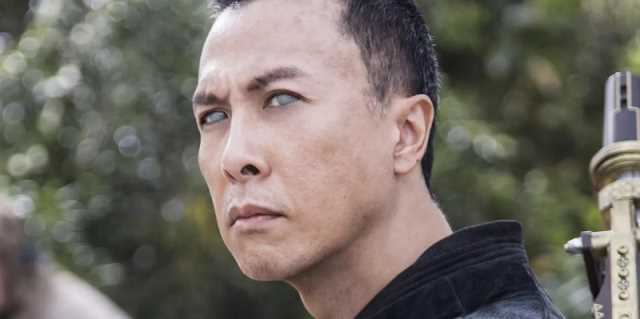
In addition, Marvel reportedly “hopes to meet” with the legendary Donnie Yen (Rogue One: A Star Wars Story) for another lead role. While there is a chance it’s Shang-Chi himself, it’s far more likely to be the mysterious “wise old statesman” character we heard about last month.

While THS has brkle plenty of scoops in the past, we’ll have to take this as a rumor for the time being. If there’s anything to it, expect the trades to weigh in sooner rather than later.

Shang-Chi will be directed by Destin Cretton from a acrip by David Callaham

Ludi would work for me. I just saw him in Black Mirror S5:E1 and thought he was good in that. Donnie is too old for the lead, but would make a good supporting character.

What this needs is Awkwafina or Ali Wong… :stuck_out_tongue: