Shifu Patterson Quotes

[QUOTE=Hardwork108;1130938]As for secrets in kung fu, then yes there are. Many of the internal development gongs are secret.
There are attacking techniques and defensive techniques that are also secret.[/QUOTE]
yes and no; there may b specific information that certain people have that they r not sharing with most others; however, it does not mean that the information itself is secret; there are no secrets, per se, only things waiting to be discovered / rediscovered;

[QUOTE=Hardwork108;1130938]So the secret is not only in hard training, because there are things that will need to be shown for one to learn and practice.
Kung fu training, specially the Internals have many subtlities. If the student is not shown or made aware of them then they will not develop in the necessary manner.[/QUOTE]
disagree; no matter what, fundamentaly, all “internal” skill / gong is something that is doable by someone - as such, every single person has the capacity to spontaneously discover on their own these practices (and there r many ways to do this, not just one path); I mean, somewhere, somehow at sometime someone had to come up with these “secret gungs” without having been shown them by someone else - there had to be at one point an origin; and as such, because at least one person was able to come up w them independently, so can someone else; of course, most people won’t, but enough will so as to demonstrate that if 'internal" is a natural practice, based on universal body principles, then spontaneous discovery is not only possible, but inevitable; for example, if u spend 10 minutes lying on the floor and allow the breath to truly manifest spontaneously without any conscious direction, u will learn a great deal about “internal” practice, moreso perhaps than someone spending 10 years adhereing to a “system” of breathing…

[QUOTE=Hardwork108;1130938]Again, I speak based on what I have seen and have been shown.[/QUOTE]
you have been shown how to do certain things that you yourself may not have been able to come up with independently; that doesn’t mean others are not able to do so; IMPE, this occurs after ~8-9 years into a given practice;

IME, internal practice is about self-discovery; the sifu is there to guide, verify and make corrections, but ultimately, it is the task of the student to manifest the art uniquely in and of themselves;

Dear Ballsack,

Thanks for continuing what I thought to be one of the best threads I’ve read in a while. Its interesting to see the respect that Sifu Patterson commands on here, I had two friends who were long time students of his when he had his school here in La Mesa, Ca. They loved it. I was actually able to come by and observe a sparring session, his students went at it hard, no pads, no head gear, just intense application of their style. Having wrested in High School, my friend Bill (who was one of Sifu’s students) wanted to test his grappling skills against a wrestler and we tussled using wrestling ‘rules’…I didn’t understand or appreciate how progressive that attitude was at the time but I do now. Needless to say I had about 40lbs on my friend Bill and it didn’t go well for him but he learned from it and came back for more.

Then as I am now, I don’t know much about Hsing I and I chose to dabble in Kenpo at that time of my life instead of taking advantage of what Sifu Patterson had to offer. I do believe Kung Fu has some very well rounded and effective (complete) styles, my only experience was with CLF which I have no doubt is effective street martial art. Where I think American Martial Arts schools of many flavors miss the boat, is their lack of sparring and application. I’ve spoken with Instructors of various arts when shopping for schools and many are afraid losing students, because its too hard or because of injury and potential financial loss. So they only offer a sparring class once a week or only to senior students.

All this crap about having a to be in MMA or having a ground game to be effective on the street is BS. I’ve seen quite a few fights in my time and have yet to see one break out in a BJJ match. They almost always involve drugs, alcohol, and or some woman at a bar or sporting event. If they do end up on the ground its because someone got knocked out and or 4-5 guys are kicking the crap out of one dude. So if you really want to train for a street fight, have a few drinks put a a rolled taco in your hand and have two or three people come at you from different directions. Don’t spill the guac on the training mat.

I do like MMA, the UFC, and can appreciate good grappling, you should train in it and for it…its just not the end all be all of martial arts period. My two cents, I just had to get this off my chest. It’s very therapeutic.

Now back to your regularly scheduled Sifu Patterson discussion.

Have a nice day.

Good stuff. I like this Mr. Patterson.

[QUOTE=Ray Pina;1130948]Good stuff. I like this Mr. Patterson.[/QUOTE]

True dat - he was putting out fighters way back when so called TCMAists considered fighting blase .

[QUOTE=taai gihk yahn;1130944]yes and no; there may b specific information that certain people have that they r not sharing with most others; however, it does not mean that the information itself is secret; there are no secrets, per se, only things waiting to be discovered / rediscovered;

disagree; no matter what, fundamentaly, all “internal” skill / gong is something that is doable by someone - as such, every single person has the capacity to spontaneously discover on their own these practices (and there r many ways to do this, not just one path); I mean, somewhere, somehow at sometime someone had to come up with these “secret gungs” without having been shown them by someone else - there had to be at one point an origin; and as such, because at least one person was able to come up w them independently, so can someone else; of course, most people won’t, but enough will so as to demonstrate that if 'internal" is a natural practice, based on universal body principles, then spontaneous discovery is not only possible, but inevitable; for example, if u spend 10 minutes lying on the floor and allow the breath to truly manifest spontaneously without any conscious direction, u will learn a great deal about “internal” practice, moreso perhaps than someone spending 10 years adhereing to a “system” of breathing…

you have been shown how to do certain things that you yourself may not have been able to come up with independently; that doesn’t mean others are not able to do so; IMPE, this occurs after ~8-9 years into a given practice;

IME, internal practice is about self-discovery; the sifu is there to guide, verify and make corrections, but ultimately, it is the task of the student to manifest the art uniquely in and of themselves;[/QUOTE]

I have seen many things taught as “secret” that I said, “really?”
I think that sometimes that bubble we live in is a lot smaller than we think and that getting out of it and seeing that what we do isn’t that special is very, very important.
I have been shown “gungs” that were high level that were basic plyometric exercises ( style specific of course, but the core was obvious) and others that were simply “isokinetic”.
I recall when I showed my sifu some literature on “dynamic tension”, “reverse breathing” and the “valsva manuver” , he picked up right away the similarities to the Iron wire and was suprised that such “advanced” knowledge was so well known.

[QUOTE=Hebrew Hammer;1130946] I had two friends who were long time students of his when he had his school here in La Mesa, Ca. They loved it. I was actually able to come by and observe a sparring session, his students went at it hard, no pads, no head gear, just intense application of their style. Having wrested in High School, my friend Bill (who was one of Sifu’s students) wanted to test his grappling skills against a wrestler and we tussled using wrestling ‘rules’…I didn’t understand or appreciate how progressive that attitude was at the time but I do now. Needless to say I had about 40lbs on my friend Bill and it didn’t go well for him but he learned from it and came back for more.
[/QUOTE]

Yes. This is how were were in those days, how it was in my teacher’s school when I trained and how I still am today.

We always welcomed outsiders to come by and train with us, fight with us, or do whatever they wanted to do at their comfort zone with us to invest in the learning process.

We have always been game to do such things. This is what I find sorely lacking in many schools in this country today (and not only kung fu schools), and have mentioned consistently since my beginning post in the first thread.

Just because you have not seen other kung fu schools that do train the way we do, does not mean they’re not out there. They are. Unfortunately, just not many of them.

I do not feel this to be the shortcoming of the respective style, however, but instead it is the shortcoming of the transmission of the style that should be blamed.

Open and sincere exploration will always lead to the deepest awareness. This is true of anything and not just kung fu training. A closed mind or a mind that says “I am already there” is a mind that will cease to grow.

Now I’m off to enjoy my labor day weekend with my lovely wife. So you all enjoy yours, too. :slight_smile:

[QUOTE=sanjuro_ronin;1130959] , he picked up right away the similarities to the Iron wire and was suprised that such “advanced” knowledge was so well known.[/QUOTE]

You know what it took for my sifu to teach the “secret” Iron Wire?

A few dedicate students to ask for it, and to be willing to practise it.

I go out for a few hours, and I come back and you guys got a perfectly good thread locked :rolleyes:

[QUOTE=taai gihk yahn;1130944]yes and no; there may b specific information that certain people have that they r not sharing with most others; however, it does not mean that the information itself is secret; there are no secrets, per se, only things waiting to be discovered / rediscovered; [/QUOTE]
I respectfully disagree. There ARE secrets in the TCMAs. People, even in this “scientific” age have to accept that no matter what effect this may have on their egos.

However, I agree with you that there are certain information and training modes that may be secrets waiting to be discovered and one can discover them through regular and dedicted training, one way or the other.

[QUOTE=taai gihk yahn;1130944]disagree; no matter what, fundamentaly, all “internal” skill / gong is something that is doable by someone - as such, every single person has the capacity to spontaneously discover on their own these practices (and there r many ways to do this, not just one path); [/QUOTE]
I disagree. Some things one can discover on his own, but other things not. That is why we seek qualified teachers for an specialized discipline, otherwise books and dvds would do fine…

[QUOTE=taai gihk yahn;1130944]I mean, somewhere, somehow at sometime someone had to come up with these “secret gungs” without having been shown them by someone else - there had to be at one point an origin; and as such, because at least one person was able to come up w them independently, so can someone else; [/QUOTE]

That one person may is likely to have been born into TCMA practice and hence an every day practitioner of kung fu within a system that was in his family for generations. We are talking about a lot of accumulated specialist knowledge. The evolution of such discoveries is very different then some John Dough discovering some Internal methodology.

[QUOTE=taai gihk yahn;1130944]of course, most people won’t, [/QUOTE]
That means that at least for them it will be a secret and secrets are usually applicable to most people, not everyone, because then no one would know it.

[QUOTE=taai gihk yahn;1130944]but enough will so as to demonstrate that if 'internal" is a natural practice, based on universal body principles, then spontaneous discovery is not only possible, but inevitable;[/QUOTE]
I see your logic, but I disagree. One can say that eating is a “natural practice” therefore, everyone can learn to cook to be able to nourish themselves, but what are everyone’s chances of becoming master gourmet chef?

There is a lot of accumulated knowledge contained within the TCMAs, centuries of trial and error, so it would be very difficult to some guy come up with an internal tendon developing exercise on his own, specially in “blinded by science” world where many don’t believe that the Internal exist! Do you see what I am getting at?

[QUOTE=taai gihk yahn;1130944]for example, if u spend 10 minutes lying on the floor and allow the breath to truly manifest spontaneously without any conscious direction, u will learn a great deal about “internal” practice, moreso perhaps than someone spending 10 years adhereing to a “system” of breathing…[/QUOTE]
I would say that it will all depend on who is doing the teaching. :wink:

Some of the most amazing Internal exercises that I have seen did not even involve any specialist breathing methodologies.

[QUOTE=taai gihk yahn;1130944]you have been shown how to do certain things that you yourself may not have been able to come up with independently; that doesn’t mean others are not able to do so; IMPE, this occurs after ~8-9 years into a given practice;[/QUOTE]
Believe me, there is stuff out there that you could not come up with on your own in a lifetime.

I have seen things in the Chow Gar school that I have not seen anyone mention here. I have even tried to test people’s possible knowledge here by subtle clues and asking certain questions about given practices(as these are methodologies that are not discussed outside of one’s schools), yet no one ever came close to the descriptions or assemssments I was looking for ABSOLUTELY NO ONE!

I have watched the way certain Chow Gar forms were performed by various schools, on video clips, yet again, they were missing elements. In a very, very few cased, the performing sifu would be hiding things, but mostly and including even the real sifus students did not have a clue, when performing the form.

[QUOTE=taai gihk yahn;1130944]IME, internal practice is about self-discovery; the sifu is there to guide, verify and make corrections, but ultimately, it is the task of the student to manifest the art uniquely in and of themselves;[/QUOTE]

I agree on one level but on another I believe that you and I have been exposed to very different Internal methodolgies. There is NOT just one internal methodology, there are many otu there. Of course, they will share common ground regarding certain aspects.

However, I will say again, there is a lot out there that no one has any clue about (no matter what their ego dictates to them) and that includes you and I.

[QUOTE=sanjuro_ronin;1130959]I have seen many things taught as “secret” that I said, “really?”
I think that sometimes that bubble we live in is a lot smaller than we think and that getting out of it and seeing that what we do isn’t that special is very, very important.
I have been shown “gungs” that were high level that were basic plyometric exercises ( style specific of course, but the core was obvious) and others that were simply “isokinetic”.
I recall when I showed my sifu some literature on “dynamic tension”, “reverse breathing” and the “valsva manuver” , he picked up right away the similarities to the Iron wire and was suprised that such “advanced” knowledge was so well known.[/QUOTE]

I see what you are getting at and I am sure that what you say is true, but there are other gungs. Not having been exposed to them does not mean that they do not exist, or if they exist, then they must be well known, under another name.

Let me give you an example. When I first mentioned that the strength training in my Wing Chun practice did not involve weight training, all of the “experts” including a few “sifus” (sometimes they seem to be dropping out of the sky in this forum..LOL) on that particular thread, gave me the usual “troll”, “fantasy-fu” etc, treatment, calling me a weak “stick man” and other words of ridicule.

Then on another thread a few years later I mentioned that there was no weight training in my Chow Gar school that the strength and power came from what are generally known as “development” forms, gungs and two man exercises. Then the same thing ensued…I was again a “weakling”, “stick man”, “fantasy internalist”, “chi blaster”, etc.

Then the same people who had no clue about two different strength development methodologies from two different Internaly practiced TCMAs, come up and say that there are “no secrets” in the TCMAs and that everything is in the public arena…LOL!

The fact that people did not contemplate the idea of gaining strength and power without weight training (one wise guy, with the usual “decades of experience” even suggested or hinted at Olympic Weight training practice for my Internals…LOL!), suggests that the methodologies in question were not know to them.

I humbly suggest that people come off their high horses and continue learning and researching the TCMAs.

Some years ago I read an interview with Chan See Meng, reputadely the most advanced disciple of the late Great Grand Master Chee Kim Thong (declared a Chinese National Treasure), who was lamenting the passing of his master and the fact that he was still learining the most advanced aspects of the Internals which he did not manage to complete, because of his master’s death.

This stuff goes deep, VERY deep, and to suggest that there are no secrets or suprises as regards the highe level TCMA methodologies points more to our human ego than any actual facts. Just my take…

[QUOTE=Hardwork108;1131033] gaining strength and power without weight training.[/QUOTE]
I have searched for such method all my life. So far, I still have not found it yet. If you can write a book about it, I’ll be the 1st person to buy your book.

[QUOTE=YouKnowWho;1131038]I have searched for such method all my life. So far, I still have not found it yet. If you can write a book about it, I’ll be the 1st person to buy your book.[/QUOTE]

You can research the Hakka arts, as regards the Chow Gar training - including the so called “development” forms, two man resistance exercises and the specialised gungs, which work together to unify the body.

The problem with the Hakka systems is that a lot of the training is not in the public domain, no matter how many schools you see teaching “openly”, but it is a fascinating area of research. :slight_smile:

As for Wing Chun, there was plenty of resistance training, such as chin ups (8 types), animal walking and seat ups/ leg raises, as well as exercises such as supporting one’s own weight on one’s hands/arms for long periods.

As for the legs there would be the traditional horse stance training (that also has other purposes) and squat type exercises.

Basically, working with one’s own body weight replaced the need for weights.

[QUOTE=YouKnowWho;1131038]I have searched for such method all my life. So far, I still have not found it yet. If you can write a book about it, I’ll be the 1st person to buy your book.[/QUOTE]

There you go!

[QUOTE=MightyB;1131041]

There you go![/QUOTE]
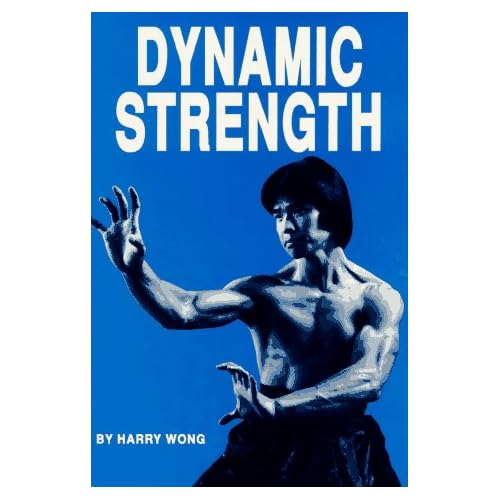
There is a limitation by using the dymantic training method.

[QUOTE=Hardwork108;1131040]resistance training … working with one’s own body weight replaced the need for weights.[/QUOTE]

Both resist training (use your opponent’s body weight) and horse stance training (use your own body weight) are weight training by my definition.

Weight doesn’t have to be “iron”.

http://www.esnips.com/doc/e8760c01-af97-4344-a457-b58e1e9e20e3/.jpg

[QUOTE=MightyB;1131041]

There you go![/QUOTE]

I have that book, but it does not come close to the stuff I have seen in Chow Gar, and please believe me, what I have seen in that style is relatively very little.

[QUOTE=YouKnowWho;1131042]There is a limitation by using the dymantic training method.[/QUOTE]
Perhaps. I just know that at least one or two of the most powerful hitters I have ever met relied exclusively on that sort of training.

I once sent a guy to check out Chris Chan. I was already training with YC Wong so I didn’t go myself but based on his personality I thought Chan would be a good fit for him. So after watching the class he asks Chris, “So tell me why I should train with you.” He said that Christ bust out laughing and then turned to the firedoor next to him, one of those big metal doors, and he punched it… left 4 dents in it, one for each knuckle and said, “I can teach you how to punch like that.”

I met another one of his students who was “scary strong” and his method was to use his stance to lean into a wall as hard as he could and use his punches or crane hand etc. to slowly push himself away from the wall while using his legs to push himself into the wall.

And then there’s the infamous “39 grinds”. . .

Maybe they didn’t get powerlifter strength but the strength that was directly relevant to their art was f’ing intense.

[QUOTE=YouKnowWho;1131042]There is a limitation by using the dymantic training method.[/QUOTE]

Believe me that Chow Gar goes far beyond that.

The two man exercises involve resistance, but not really lifting or carrying of each others’ bodies as in many other martial arts.

Here is an example:
http://www.youtube.com/watch?v=UYD8Iz7rgwM

I need to open my kung fu horizons much more, it seems. :smiley:

[QUOTE=omarthefish;1131051] powerful hitters …[/QUOTE]

I’m not just looking at this from a “striker” point of view. Can you develop the ability such as to pick up your 300 lb opponent over your head by dynamic training method only?

I have question for Sifu Patterson.

Sifu, is Zhan Zhuang training part of the curriculum you teach? If so, how significant a role does this methodology play in your teachings?

.

Let’s throw this here

http://www.hsing-i.com/hsing-i_journal/RSPCT.html

(should be fun)