Kali/escrima - filipino

you know thats not all I have but as far as weapon defence goes, I was looking at the mar/april kfm article on gm Chen and cord use in relation to some o-mei techs…pls see pics …so i stepped back and thought about executing the same, and I was nearly sold until i realised that ninjitsu has a similar empty - hand tech that would be more effective again…

I think you missed the posts where I said, I really have defended myself in real situations against various weapons and knives were just one them…

because I 'm still alive, i have to assume that my weapon defence skill is sufficient

thx

'because I ‘m still alive, i have to assume that my weapon defence skill is sufficient’

perhaps this should read

'because I ‘m still alive, i have to assume that my weapon defence skill was sufficient in that specific instance against a person with that specific level of weapon attack skill.’

perhaps…

I’m still learning right

you’re right, I did miss it - props to you for doing so. I stand by what I said though - you don’t wanna play with someone who knows how to use a knife, especially if it’s knife vs. dim mak…

"pekiti tersia " means something like “cut you up into little pieces.”

Im convinced that wing chun is/was primarily a weapons/blade style/art and has many, many simularitys with many styles of “kali.”

“If you can touch me, I can cut you. If you cant touch me, I can cut you.”

:eek:

Originally posted by yenhoi

Im convinced that wing chun is/was primarily a weapons/blade style/art

why?

Mainly because of the simularitys with kali, the hand work, the footwork, the similar training methods. WCK is “tighter” and kali is “looser.”

Historically, as far as CMA goes, you dont train a Revolutionary army (or any army for that matter) for empty hand combat.

Just my opinion, I have yet to “complete” my training in either “art.”

:eek:

Filipino Frankenstein

I saw a post on Diana’s fb page mentioning her involvement with this. If I had known earlier, I might have pursued a review. Then again, this wasn’t high on my list of films to see. I don’t think we were even offered a screener, which usually bodes poorly for a film.

This Frankenstein monster is a Filipino martial arts expert
By Ruben V. Nepales
Philippine Daily Inquirer
January 30, 2014 | 11:29 pm


LOS ANGELES—What do you know—in his latest incarnation, Frankenstein’s monster is an expert in kali, the Filipino martial arts that uses rattan sticks as weapons. “I didn’t know anything about kali,” admitted Aaron Eckhart who plays Adam, the present-day creature in “I, Frankenstein,” directed by Stuart Beattie.

“I never heard of it before. Stuart is a martial artist. At one point in his martial arts exploits, he trained with kali sticks. He said, “That would be great to put in a movie one day because of its sound, and how fast the sticks are.’”

Six months before he reported on the set of “I, Frankenstein,” Aaron underwent crash kali training with martial artists Ron Balicki and his wife, Diana Lee Inosanto, daughter of Dan Inosanto, renowned Filipino martial arts instructor.

Aaron, memorable as Harvey Dent in “The Dark Knight,” Nick Naylor in “Thank You for Smoking” and George in “Erin Brockovich,” said, “When I read the script, I looked at all the emotional content—Adam is rejected by his father, he’s cast out, called names, unloved—and that’s what I gravitate toward as an actor because I can grab onto that.”


ACTING is like fishing, he says during this interview. “I still haven’t found what I am looking for.” ruben nepales

Flashing a smile, Aaron added, “Then afterward, you go, so what’s this stick stuff? So I went from one day, knowing nothing about kali, to meeting and being taught by Ron and Diana Balicki. Diana’s father trained Bruce Lee throughout his career. Ron goes over to the Philippines. He also does knife fighting, which is crazy. I learned the whole art of it and I did it for six months.”

“Every day, for three hours, we trained,” he said of learning from the Balickis, who also act and perform stunts. (Diana also directed a film, “The Sensei.”) “Then I went to my trainer to get in shape, run and do all the weights. Because this incarnation of Frankenstein is much more active, dynamic. He’s a fighter. I really got in good shape.”

Self-defense

On what he learned about kali (which also uses knives), Aaron said, “The key to this whole fighting thing is not only where to hit the sticks and how to defend yourself but it’s how to turn and take on multiple opponents at the same time, which is a lifelong pursuit if you really want to become good at it. It is very beautiful and effective.”

As Frankenstein’s creature, Aaron’s character is caught in the age-old battle between angels and demons in the adaptation of Kevin Grevioux’s graphic novel of the same name. Bill Nighy, Miranda Otto and Yvonne Strahovski costar.

Aaron, who said he believes in angels, explained why Frankenstein’s monster finally has a name. “Stuart is a religious man. This movie is full of religious references. The name (Adam) denotes the first man as in Genesis. He was named by Queen Leonore and she is the representative of good, or God, on earth.”

Dangerous

“This was the hardest movie I ever made physically because I did all the fighting and the stunts myself,” Aaron pointed out. “There were just a few falling stunts that I didn’t do.”

On whether there were accidents, Aaron answered, “We hit each other all the time. It was very dangerous because if you are off [by a few inches], if somebody can’t remember the dance, then you could get hit in the face. I got hit in the back of my neck one time. I thought I had broken it. I fell to the ground, knocked unconscious. They were like, ‘Okay, take two.’”

Will Aaron continue to practice kali? “Yeah, I would definitely,” he remarked. “I have sticks in my house.” Breaking into a chuckle, he quipped, “I have them strategically placed throughout my house so if anybody comes over…”

“It’s interesting because you have to learn physical skills from movies,” Aaron said. “What you learn—mixed martial arts, boxing or kali, it’s all the same footwork—it comes in handy. So I always say to young actors, ‘You should know how to ride a horse, shoot a gun and play poker.’

“My fourth thing now is, ‘You have to throw a punch.’ Because so often in movies, you have to fight. And young actors, in general, don’t know how to throw a punch… I am so grateful that when I was doing ‘Erin Brockovich,’ I decided to start boxing. I have been boxing since then. It has helped me immeasurably in kali fighting or whatever.”

Still on “Erin Brockovich,” which marks its 14th year since it was released to acclaim, Aaron shared his memories: “The first thing that comes to my mind is my beard and the babies because when I was doing ‘Erin Brockovich,’ they were afraid to give me the twin babies because of the way I looked. One baby would sleep while the other worked. I said, ‘Give me the baby.’ The baby was asleep on my shoulders for three or four hours that whole time and never made a sound. It was the most beautiful baby.”

Career choices

He added, “I remember somebody trying to talk me out of doing that movie. I asked, ‘What do you think about this ‘Erin Brockovich’ with Julia Roberts?’ They said, ‘I would never do it.’ I am glad I did the movie because it was a big movie in my life.”

At 45, Aaron candidly assessed his career: “It’s been hit and miss. I am still trying to figure it all out. I am trying to find my place, continually searching. There are some actors who have found their niche, what they are supposed to do in Hollywood and their type of movie. I have never found it. Maybe one day, I will find it. Or maybe, I will never find it. So my career is like going fishing, every single time. I still haven’t found what I am looking for.” Cue the U2 song to that last line, Aaron.

(E-mail the columnist at rvnepales_5585@yahoo.com. Follow him at http://twitter.com/nepalesruben.)

Kali with a K

//youtu.be/ybtVdTl0yZI

Roland Isla

Fil-Canadian ‘brings back’ native martial art to PH
By: Eunice Barbara C. Novio - @inquirerdotnet INQUIRER.net US Bureau / 01:06 AM November 21, 2018
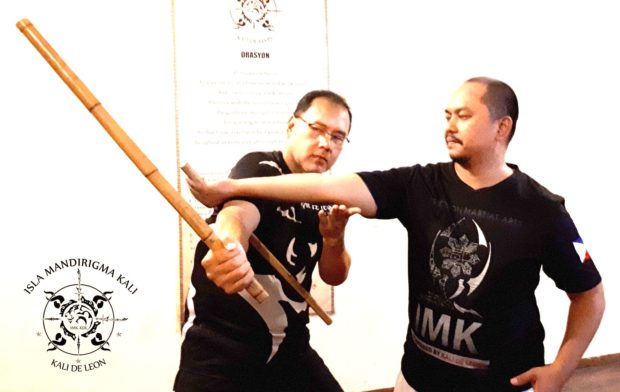

Roland Isla (in eyeglasses) and a student showing the KDL using arnis. CONTRIBUTED

To most immigrant Filipinos in North America, going home “for good” to the Philippines may not be on top of the agenda. Career, family, culture and political stability are just a few of the considerations one has to make before making the big move. Roland Isla, a Filipino Canadian, did make the biggest decision in his life — moving back to the Philippines.

He left his lucrative job as a quantity surveyor to build a life in the country that his parents had left. Eventually, he established the Isla Kali Mandirigma Martial Art School in Manila.

“I felt a sense of affinity that made me believe that I belong here not in Canada. Completely irrational (to some). I moved to the Philippines in August 2001,” Isla, now 54, says.

Always different

In the early ‘60s, Filipinos began immigrating to Canada to work in the garments, sales and manufacturing fields. Later in the ‘70s, more Filipinos came under the family reunification program. In the ‘80s, the recruitment of caregivers paved the way for more Filipino immigrants. Presently, there are 851,410 Filipino Canadians. Most immigrants settle in Ontario, but many are scattered in the different regions.

According to the Vancouver Sun, Canada is attractive because it ranks highly by objective measurements — economic opportunity, pollution levels, health care, tolerance, access to education, low corruption, the rule of law, personal freedom and government stability.

In 1970, the Isla family immigrated in search of a better life. Isla recalls that in the ‘70s there was hardly a Filipino community. Oftentimes, they were the only Filipinos in places they moved to. Canadian society then was not as open to diverse cultures as today.

“My parents were transitioning to an often shockingly different culture as much as we kids were. This meant trying to fit into that new society as best we could,” he says.

At home, they taught their parents to speak English, instead of the other way around.“My siblings and I understand Tagalog, but the ability to speak it fluently is tenuous at best,” Isla explains.

Isla also admits that like most Filipino Canadians, he found aspects of Filipino culture, history and politics embarrassing.

“I didn’t have any Filipino friends. My best friend jokingly referred to me as The White Guy because I acted ‘whiter’ than he was,” he says.

Yet, the Isla family remains Filipino in many ways, like showing respect and deference to elders. The family is still their safe place when the going gets rough in larger society.

Food also connects Isla to the Philippines. “What we ate was a good 90 percent traditional Filipino cuisine. We had rice with every meal every day. Our family’s favorite meals included adobo, longtganisa, kare kare, baked ham and lumpiang toge,” Isla says.

Epiphany

Isla was a junior at The University of Toronto,studying the politics and history of African and Latin American countries, when the EDSA People Power that toppled the Marcos dictatorship took place in February 1986. It eventually changed his outlook on life.
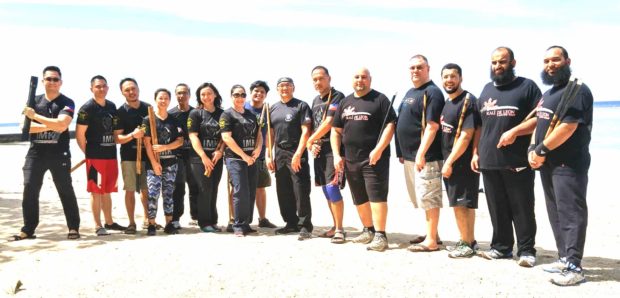

Ama Guro Jun De Leon, founder of KDL (center, ninth from left) beside Roland Isla with the KDL practitioners. CONTRIBUTED

“I felt like I had to know something about what was happening because all of my classmates were fascinated by it and kept asking me questions about it. All of a sudden I saw the heroism of everyday Filipinos who put their lives on the line to defend an election,” Isla recalls.

Strangers congratulated him, patting him on the back, telling him that Marcos left the Philippines and the good guys won. It was then that he wanted to be a Filipino again.

And to become a Filipino again, he discovered an ancient Filipino self-defense martial art.

‘Guro of KDL Filipino Martial Art’

As an athlete throughout his school years, Isla wanted an activity to keep him physically fit after graduation. He did Kung fu and was already an instructor when he discovered Kali.

Kali is an indigenous Philippine martial art focusing on the use of sticks, knives and hand combat. Kali is interchangebly used for eskrima and arnis. Guro Jun de Leon is the founder of Kali de Leon (KDL) martial arts in Toronto. In Filipino, guro means teacher.

“I heard about a Kali teacher not too far from where I lived and that’s how I found Ama (father)Guro Jun DeLeon,” Isla says.

Known for its selectivity, KDL has students from various ethnicities who are able to comply with the skills requirements and the demand “to demonstrate humility, openness, and compassion.”

Isla studied KDL in Toronto until he moved to the Philippines. It took him 20 years of study and training before he was officially made a “guro” or teacher.

Isla Kali Mandirigma

In 2003, Isla put up Isla Kali Mandirigma in San Andres, Bukid in Manila. It is the Philippine branch of KDL Toronto. Presently, the school has students from the Philippines and overseas. He frequently travels abroad to conduct workshops and trainings on KDL.

Isla says that anyone can start martial arts training at almost any age, from 5 years old and above, as long as the person is relatively healthy.

“I think martial arts allow us to communicate with others on a personal level without necessarily talking and more importantly without need of a computer screen or internet. It facilitates that human connection we all want,” Isla explains.

The logo of Isla Kali Mandirigma. CONTRIBUTED

Isla also explains that martial arts are inherently dangerous, hence, learning to control physical strength and emotions is important when dealing with training partners. Trust is also important because during training each has to allow himself or herself to become vulnerable. Respect and self-respect are gained through these interactions.

Stereotypes

Asian practitioners of martial arts are often stereotyped as Bruce Lees or Mr. Miyages of “The Karate Kid” movie – equal parts fighter, philosopher and saint.

Isla believes that the characters in Asian martial arts films are good role models in terms of ethical and moral make-up as well as their skills.

“But we’re just human beings like anyone else. We can lose fights as easily as we lose our tempers. We have to work as hard as anyone else in maintaining our moral compass. Our advantage is that our practice reminds us of this all the time and we’re probably more self- aware than most people,” he explains

Embracing the Philippines

Living in the Philippines, for 17 years now, has its advantages and disadvantages, Isla finds. Getting accustomed to crowds, noise, traffic, the weather and some customs was not easy. It took Isla two years before he found the courage to drive in Manila. But his desire to embrace the Philippines was stronger than any second thoughts, especially when he got married and his children were born.

During school vacation, his family travels to Canada to maintain their kinship with their second country.

“Filipino migrants should come to visit the Philippines and see as much of the different parts of it as they can. So that they can see for themselves what the country and people are like. Appreciate the country the way non-Filipinos do and don’t have preconceived notions or judgments,” Isla advises.

Nice story.

Balintawak Eskrima

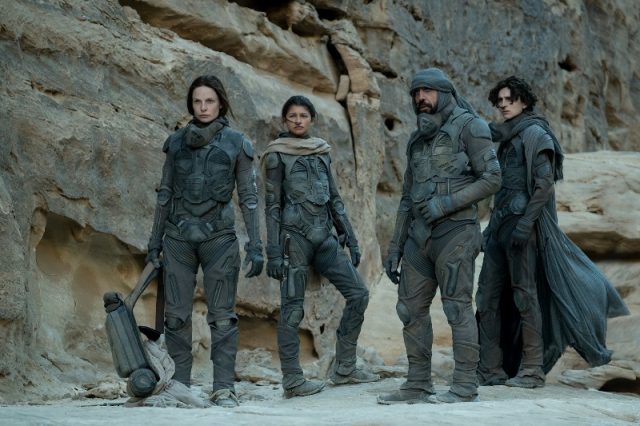
Sci-fi film ‘Dune’ features Filipino martial art Balintawak Eskrima, director says
By Catalina Ricci S. Madarang - October 26, 2021 - 4:42 PM

Science fiction film “Dune” featured a combat style based on a Philippines’ martial art, according to its director.

The director mentioned this in a video released by The New York Times on October 23, ahead the movie’s theatrical release in the country on November 10.

“Dune” had already premiered overseas last September.

The movie was adapted from the 1965 science fiction novel of the same title written by Frank Herbert.

The epic follows a boy named Paul Atreides (Timothée Chalamet), son of a noble family, who was destined to lead the fictional planet Arrakis and gain control over its powerful spice.

Balintawak Eskrima in ‘Dune’

The two-minute video showcased a scene where a character named Gurney Halleck (Josh Brolin) was training Paul on a particular fighting style.

//youtu.be/yMCmlTkzlhM

In a voice over, French-Canadian director Denis Villeneuve credited fight coordinator Roger Yuan for the choreography shown in the scene.

Villeneuve added that Yuan developed the “Atreides fighting style” by borrowing from a martial art technique called Balintawak Eskrima or Balintawak Arnis.

Balintawak Arnis is a Filipino martial art that was developed in in Cebu during the 1950s.

This fighting style became popular overseas, particularly in Hollywood films like “Dune.”

Villeneuve also briefly explained the technique in the NYT video.

“It’s a style that involves blocking the opponent’s attach with both a weapon and the free hand,” he said.

Villeneuve then described how the technique was applied to Paul’s training in the movie.

“Each opponent is trying to distract his adversary by doing very fast moves in order to create an opportunity to insert slowly a blade inside the opponent’s shield,” he said.

The filmmaker also shared that he and cinematographer Greig Fraser shot the scene in a combat training room similar to how they do it with a dance performance.

“The goal was to embrace the complexity of the movements with objective camera angles. We tried to make sure that the audience will understand the nature of this new way of fighting,” Villeneuve said.

‘Teach arnis to kids’

A Reddit user posted the video on Tuesday, October 26.

In the comments section, some Reddit users expressed hopes that FMA, especially arnis, would be taught in schools again.

“Bring back Filipino martial arts in PE classes please,” one user said.

“It’s one of those arts that can be flashy or simple, depending on how you want it. People thinks it’s all flares and sticks but it really isn’t. I hope more Filipino kids learn it because it’s one of those rare things that we can actually be proud of,” another user said.

One Reddit user, meanwhile, cited the popularity of arnis in superhero movies and shows.

“DC loves Eskrima. Nightwing, Batgirl/Oracle and Deathstroke all use it as their primary martial art. Almost everyone in the TV Arrowverse as you’ve mentioned, study/use eskrima. Marvel doesn’t have its shortage of users too, you have Mockingbird, Deadpool, Nightcrawler, Daredevil being the most popular ones,” the user wrote.

Villeneuve’s view on the book

In a statement, Villeneuve said that he had read “Dune,” the book, when he was a teenager.

He said that he was “mesmerized” by Herbert’s view of nature.

“Frank Herbert’s view of nature was absolutely mesmerizing—all those beautiful ecosystems he created. His exploration of the impact and chaos caused by colonialism was a portrait of the 20th century that is still relevant today,” Villeneuve said.

“And through all of this was a young man struggling with his identity, trying to find his way in the world, as I was doing myself. The way Paul discovers his identity through another culture was, for me, amazing,” he added.

Aside from Chalamet and Brolin, Dune’s star-studded cast include Rebecca Ferguson, Oscar Isaac, Zendaya and Jason Mamoa.

threads
Dune
Kali-escrima-filipino

FMA rising?

More in the wake of Dune, et.al.

Filipino martial arts isn’t as widely known, but that could be changing
“By training, we’re evoking and connecting with our ancestry that go back centuries,” one martial artist said.

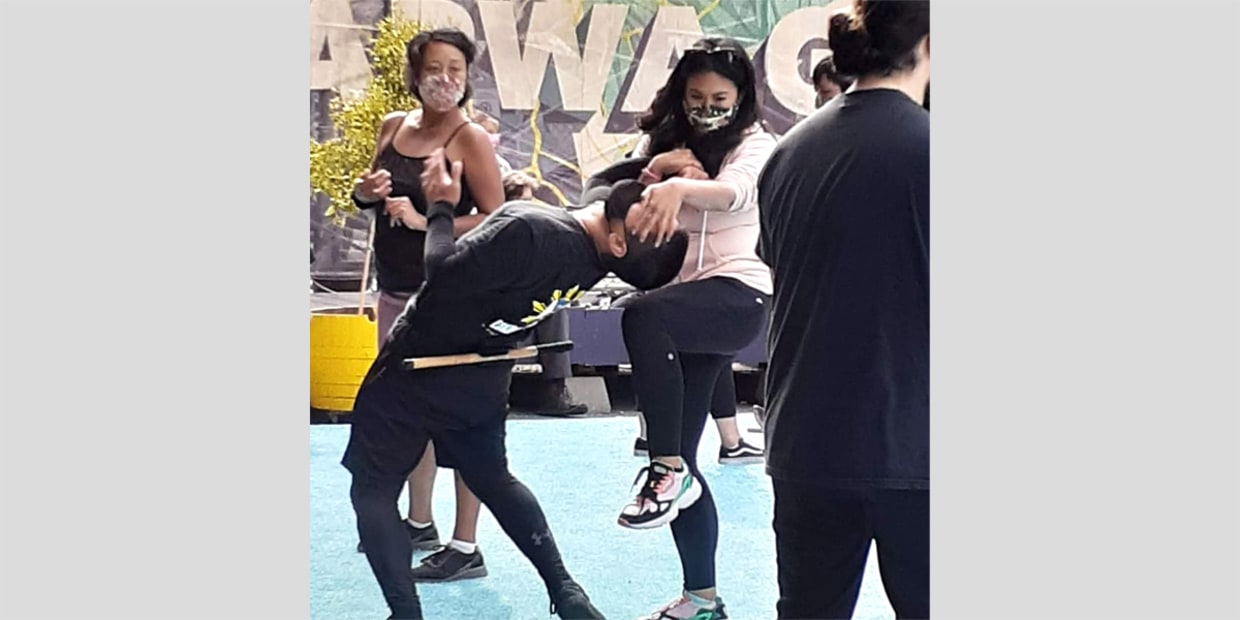
Camille Sibucao showing a lock with a knee strike.Baylan Megino / Global Dream Makers
Oct. 30, 2021, 1:30 AM PDT
By Agnes Constante
Gregory Manalo was in the midst of a personal renaissance in the late 1990s when he discovered Filipino martial arts (FMA).

“I didn’t find eskrima,” he told NBC Asian America, referring to a style of Filipino martial arts. “Eskrima found me.”

For Manalo, who has been training in FMA for about 25 years and teaches it in the San Francisco Bay Area, FMA was an entry point into learning more about his identity as a Filipino American that allowed him to tap into his culture and ancestry. He said performing moves makes him feel meditative and empowered.

“By training, we’re evoking and connecting with our ancestry that go back centuries,” Manalo said. “And just knowing that I can be directly tapped in by doing these movements is real meaningful for me.”

Filipino martial arts aren’t as widely known as other Asian martial arts such as karate and kung fu, but they’ve been practiced in the United States for decades. Yet even with less visibility than other martial arts, some practitioners say they see signs of FMA gaining popularity and are hopeful that it will continue to become more widely known.

FMA instructors who spoke with NBC Asian America all pointed out that the martial art can be seen in Hollywood films including the Bourne films, “The Book of Eli,” “Daredevil,” “Dune” and the Star Wars series “The Mandalorian.”

“I think in the last 10 to 20 years, we realized that in order for Filipino martial arts to grow and to proliferate, we all need to work together and learn from each other and share our arts,” said Mel Orpilla, a historian and martial artist who has been practicing FMA for more than two decades.

Joseph Bautista, a Filipino martial arts instructor at Eskabo Daan in San Francisco and practitioner for more than 30 years, said the changes he’s seen in FMA throughout the last 20 years, including more instructors willing to teach it more widely, makes him hopeful about its future. Orpilla said the featuring of FMA in Hollywood, the ability to share it more widely through social media, and the increase of FMA seminars and tournaments in Northern California have also been helpful.

Orpilla said that Filipino American martial artist Dan Inosanto, known for being one of Bruce Lee’s training partners, is a critical figure in FMA. He added that Inosanto taught Lee the FMA used in a dungeon scene of the 1974 film “Enter the Dragon.”

“The teaching methodology of Filipino martial arts is the basis for teaching choreography when it comes to weapons, or stand up punching and kicking,” said Elrik Jundis, who has trained in FMA for more than 30 years and has done extensive research on it. “That’s the bread and butter of all Hollywood action movies.”

There are three main styles of FMA: eskrima, arnis and kali. While there are nuances among the three, they’re often used interchangeably, said Elrik Jundis, who has trained in FMA for more than 30 years and has done extensive research on it. It’s a martial art that’s unique from others because training immediately begins with weapons, whereas others such as karate and taekwondo start out empty handed, Orpilla said.

“[A] Filipino martial artist’s main purpose in a fight is to end it as quickly and efficiently as possible using offensive, defensive and counterattack movements depending on the weapons being used and their fighting distance to each other,” he said.

Despite its presence in Hollywood, FMA isn’t more popularly known for a number of reasons. Orpilla said that practicing the martial art was banned in the Philippines during Spanish colonial rule from 1521 to 1898 because they did not want Filipinos to use it to revolt.

Jundis also noted that more popular Asian martial arts have roots in countries that have had a longstanding national identity.

Meanwhile, the concept of what it means to be Filipino is still forming, he said. The Philippines has been an independent country for less than a century. It gained independence in 1946 after nearly 400 years of colonial rule under Spain and the United States.

Bautista said that the Philippine islands operated separately rather than as a single country prior to Spanish colonization. Orpilla said that the islands were vulnerable to invasion from other countries and had to fight to protect themselves, their tribes and families.

Jundis added that FMA isn’t as big of an organized sport the way martial arts like taekwondo and judo are — both of which are categories at the Olympics.

He also said that specifics about the history and origins of FMA vary depending on who is asked due to a lack of documentation.

The popularity of FMA occurred in the United States rather than in the Philippines, practitioners and historians told NBC Asian America. It’s not clear exactly where or when in the U.S. it started, but they said its presence in the U.S. is linked to the immigration of Filipino plantation workers in the early 20th century. They also said that FMA was first taught publicly in Stockton, a city in California’s Central Valley, which birthed a number of grandmasters of the martial art, including Inosanto.

Orpilla said that another reason knowledge of FMA isn’t so widespread is because it historically has been kept within families, and people did not want to teach it to others.

“I don’t know about Filipino martial arts in the mainstream in my lifetime, but [there’s] been a good push towards Filipino martial arts,” Bautista said.

FMA is also gaining traction beyond the United States. Manalo said one of his instructors has held seminars on it in Europe, where he said it has been well received.

For Manalo, FMA has not only been a way to protect himself, but a fulfilling practice and a source of pride for his culture.

“To know that we have something and say this was ours made me feel proud because a lot of people all over the world at this point valued Filipino martial arts, specifically the knife fighting and sword fighting,” he said. “It was something that people recognize in a world where people don’t even know who Filipinos are. It was a good entry point to really just dive deep into history, culture, arts and practice.”