[QUOTE=MightyB;1286621]this is what I was talking about - real history is interesting and paints a better picture of how the weapons would be used than the myths. I can picture a force of men wielding giant axes and hammers smashing the heck out of things and that’s really cool. That would make for a better movie than wire worked flying swordsmen IMO.[/QUOTE]
song dynasty was the golden age of chinese cold weapon warfare. i agree that a realistic movie about it would be ossum
[QUOTE=B.Tunks;1286673]All due respect, that was from Qing onwards (though definitely started to decline in the Yuan, for obvious reasons).[/QUOTE]
“Chinese Martial Arts from Antiquity to the Twenty-First Century” by Peter Lorge, Cambridge University Press, Pages 69-70, The Han Dynasty Hundred Events and Martial Arts
A new form of the long sword (Jian) appeared about this time. The Ring Pommel or Round Grip Sword, originally a cavalry weapon, came into widespread use during the early Han dynasty. This was a single-edged, straight sword, very similar in overall form to the long sword. There was no hilt to protect the hand or separate the grip from the blade. Archaeological finds of this form of weapon have lengths between 85 and 114 centimeters. The advantage of the single-edged sword was that the back, or dull side, of the sword could be thickened to strengthen the weapon as a whole. It was a much sturdier weapon than the long sword (jian), and much less prone to breaking. The sword retained its point but improved its ability to hack or cut. The heavier back also added weight to hacking swings. This form of sword spread to the rest of east and southeast Asia.
The sword began to displace the long sword (jian) on the battlefield, particularly when paired with a square or rectangular shield. Depictions of battles toward the end of the Han dynasty show bows and arrows, and swords and shields among the combatants. This is true of both the cavalry and infantry. The growing ubiquity of the sword within the military was a tribute to its greater durability - and probably its improved hacking ability as well.
The author described earlier in the book that when he refers to “long sword”, he’s referring to a double-edged jian weapon, and “sword” refers to the single edged sword, or dao.
from the above mentioned book, page 78 The Six Dynasties
Battlefield weapon use was changing in the third century, continuing trends begun during the Han dynasty. Two particular trends are clearly visible in the Three Kingdoms period: the rise of the spear over the halberd, and the identification of horse archery with steppe martial practice. A third change, to the near exclusive use of the single-edged sword on the battlefield, occurred near the end or shortly after the Three Kingdoms period.
continuing the above post, from pages 82 through 84
The third trend in weapons use that had begun during the Han and became fixed in Chinese martial arts soon after the Three Kingdoms period was the use of the single-edged sword as virtually the only close combat weapon. The sword could be used alone or, as it was most often used on the battlefield, paired with a shield. Straight, double-edged swords, or long swords (as I have designated them in this book), remained in limited use as personal weapons of self-defense or performance weapons. They were generally lighter weight and less durable than single-edged, curved swords. The long sword was a more elegant weapon, and the weapon of choice for female sword dance performers, officials, and some expert warriors.
so basically the jian became a status symbol, and, like I said, it wasn’t used on the battlefield. The book goes on to describe how some court officials actually wore wooden jian with decorated jade pommels because the jian was a status symbol, not a weapon of war.
one of my favorite passages from the book is this on page 86…
The ruler of Wu, Sun Quan, during the Three Kingdoms period, was always nervous when he visited his wife because she had over a hundred female attendants all armed with swords. These weapons were not for show alone, and the fact that these women carried swords (dao), not long swords (jian), in the Three Kingdoms Period alerts us to the martial atmosphere Sun Quan’s wife established for her boudoir.
[QUOTE=MightyB;1286678]continuing the above post, from pages 82 through 84
so basically the jian became a status symbol, and, like I said, it wasn’t used on the battlefield. The book goes on to describe how some court officials actually wore wooden jian with decorated jade pommels because the jian was a status symbol, not a weapon of war.
one of my favorite passages from the book is this on page 86…[/QUOTE]
you are right. the jian became obsolete very early in the han dynasty. short jian was sometimes used later as an extra fancy dagger.
Thanks MB. To be specific I was referring mainly to the short jian - still commonly used at the time of the introduction of straight single edge blade in the Han, rather than the modern form. But yeah, maybe I should rephrase to ‘predominant for half of Chinese history’ rather than until Song/Yuan.
[QUOTE=B.Tunks;1286795]Thanks MB. To be specific I was referring mainly to the short jian - still commonly used at the time of the introduction of straight single edge blade in the Han, rather than the modern form. But yeah, maybe I should rephrase to ‘predominant for half of Chinese history’ rather than until Song/Yuan.[/QUOTE]
I should clarify that you’re not wrong about the long jian - because some expert martial artists would have still used the jian because long sword fencing was regarded as a mark of the elite. There are descriptions in history of what the author called “the knight errant” who specialized in the jian that gave rise to the popular image of the wandering warrior.
The dao became the primary weapon of the regular military because it required less training time and they were durable.
[QUOTE=MightyB;1286806]I should clarify that you’re not wrong about the long jian - because some expert martial artists would have still used the jian because long sword fencing was regarded as a mark of the elite. There are descriptions in history of what the author called “the knight errant” who specialized in the jian that gave rise to the popular image of the wandering warrior.
The dao became the primary weapon of the regular military because it required less training time and they were durable.[/QUOTE]
True. Also worked well against horses and heavy armour and complimented use of the shield. Definitely became the most effective blade for the battlefield (as you’ve said all along). Prob the heyday was intro and development of variants of turk/mongol sabre which were far more effective than the earlier straight backed dao. Those early dao were really just smashers/hackers with stabbing tip - unless I’m mistaken. Bawang would know.
[QUOTE=B.Tunks;1286843]True. Also worked well against horses and heavy armour and complimented use of the shield. Definitely became the most effective blade for the battlefield (as you’ve said all along). Prob the heyday was intro and development of variants of turk/mongol sabre which were far more effective than the earlier straight backed dao. Those early dao were really just smashers/hackers with stabbing tip - unless I’m mistaken. Bawang would know.[/QUOTE]
generally both mongol and chinese cavalry used more curved dao for ride by slashing and straighter dao for prolonged combat. chinese infantry use less curved dao
If you’ve ever watched a wuxia movie and wished you, too, could make a sword, maybe even several of them, hover by your side and pounce on your enemies upon a whim, well, sorry, but that’s simply never going to happen.
Unless…
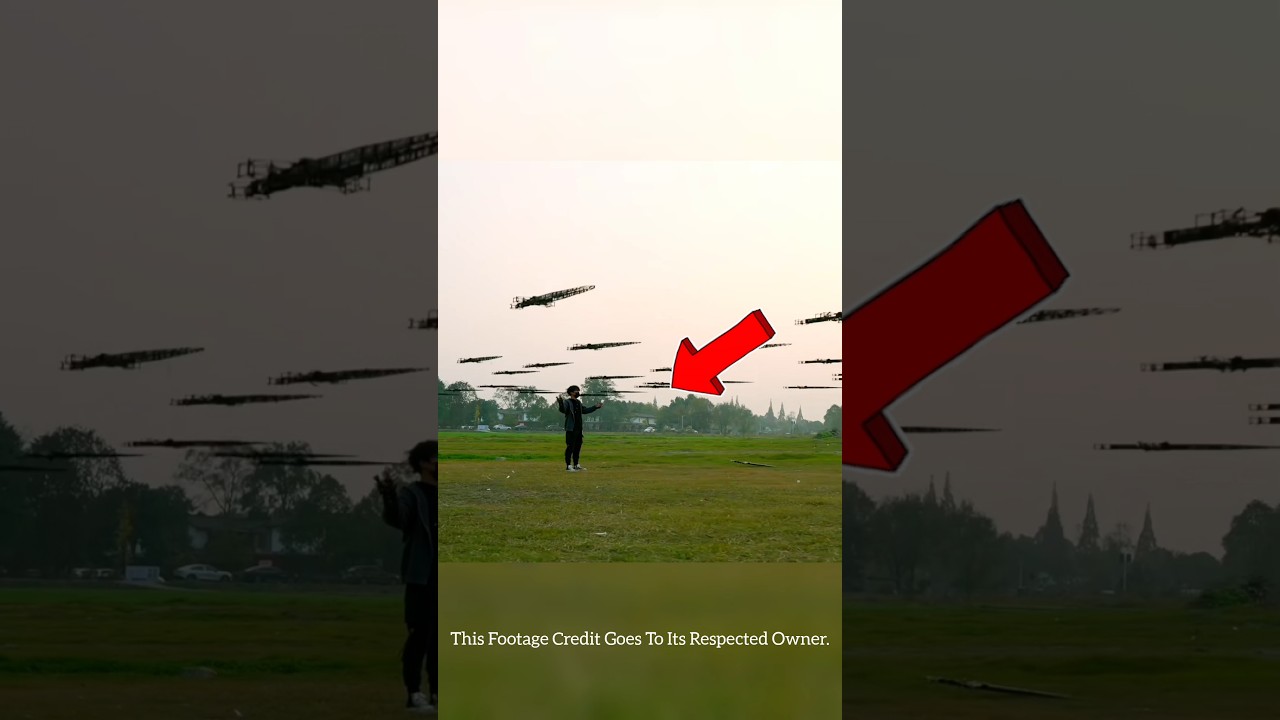
Unless you’re Fan Shisan, a Sichuan-based tech blogger and influencer who unleashed a squadron of quadcopter swords that rise into the sky, acting as his sword army. To be clear, the swords are not real. They’re drones shaped like swords.
Each blade is outfitted with propellers at the tip, pommel, and cross-guard, along with motion controls that respond to his hand movements, allowing Fan to push and pull the airborne sword army around him.
MORE FLYING SWORDS, BUT THIS ONE IS RIDABLE
This isn’t the first time Fan has combined drones and swords. Earlier this year, he went viral after creating a giant rideable sword drone. The man has carved out a hell of a niche few others would ever dare encroach upon lest they be run through by a flying blade, or perhaps dozens of them.
“Initially, we used 20 ducted fans, but the thrust wasn’t enough. We added four more, which gave us the power we needed, and that’s how the ‘flying sword’ you see in the video became a reality,” Fan told People’s Daily, per Futurism.
Fan is a sword guy, as you can tell. He holds two sword-related Guinness World Records: fastest time to slice five pieces of A4 paper in midair (7.46 seconds), and fastest time to carve through ten watermelons with a martial-arts blade.
Up next on his checklist of wild-ass sword stuff to pull off, Fan says he’s working toward a grand vision of a synchronized swarm of “ten thousand swords as one.”
This is a video of acrobatic conceptor Dave Locke kicking swords at a dummy strapped to a wheel of death (at least I hope it’s a dummy). I couldn’t tell if Dave was trying to hit the dummy, or just hit around it. Because he only succeeds in hitting around it, which now that I think about it was probably the goal. Me? I would have pinned that dummy to the wheel with my swords like a taxidermied beetle. “In a shadowbox with legs missing?” Exactly.
Thanks to Alyssa, who agrees why kick rocks when you can kick swords?