yellow face/white washing.

Continued from previous post


CBS considered Kim and Park supporting actors to the show’s two white leading men, Scott Caan, left, and Alex O’Loughlin. (CBS Photo Archive / CBS via Getty Images)

Contract renegotiations stalled this spring when the television studio, CBS Productions, tried to lock in deals to bring the actors back for the show’s eighth season, which begins production next week. Both refused after being offered less money per episode than O’Loughlin and Caan.

This week, CBS and producers rejected the notion that Kim and Park were treated unfairly. Kim, for example, was offered a huge jump in salary — to about $195,000 an episode, which was $5,000 an episode less than what Caan and O’Loughlin receive, according to a person close to the production who was not authorized to divulge details of the sensitive negotiations. Kim also was offered a new production deal on CBS’ lot in Studio City. His pay before the offer is not known.

“Daniel and Grace have been important and valued members of ‘Hawaii Five-0’ for seven seasons,” CBS said in a statement. “We did not want to lose them and tried very hard to keep them with offers for large and significant salary increases.”

Kim and Park declined to comment.

Peter Lenkov, co-creator and executive producer of “Hawaii Five-0,” on Thursday stressed that the show was proud of its large and inclusive cast.

“The truth is this: Both actors chose not to extend their contracts,” he said. “CBS was extremely generous and proactive in their renegotiation talks. So much so, the actors were getting unprecedented raises, but in the end, they chose to move on. No one wanted to see them go — they are irreplaceable.”

Park, who lives in Vancouver when not shooting the show in Hawaii, had asked to dramatically reduce the number of episodes she appeared in, according to the knowledgeable source. “After being away from her family for seven years, I understood Grace’s decision to leave,” Lenkov said.

Critics on social media said the studio’s insistence it had offered the actors significant raises illustrates they had been underpaid for years.

There is little hard data proving Asian Americans in Hollywood are systematically underpaid. The Screen Actors Guild and American Federation of Television and Radio Artists said it doesn’t track compensation beyond union minimums because the information is often kept under wraps by the studios, agents and individual actors.

Experts said this week’s furor over the “Hawaii Five-0” salary gap, and Kim’s taking a stand on the issue, could mark a turning point.

“Five years ago, this wouldn’t have gotten this kind of attention,” said Janet Yang, producer of “The People vs. Larry Flynt” and “The Joy Luck Club.” She and others credited the #OscarsSoWhite controversy for encouraging Asian Americans to stand up for their rights.

“More people are emboldened now,” Yang said. “The African American community has led the conversation for so long, and now it’s expanded to other minorities.”

Social media and the rise of niche entertainment channels, YouTube and streaming services such as Netflix also have spurred traditional Hollywood players to be more inclusive.

“Because you have so many platforms where people can tell stories from underrepresented faces and voices, audiences are driving all these decision-makers to reevaluate all the things they greenlight,” said Adam Moore, SAG-AFTRA’s national director of equal employment opportunity and diversity.

Johnson, the actress, couldn’t recall auditioning for a lead in any pilot in the 20 years before “Fresh Off the Boat.” “That tells me a lot about where we are,” said Johnson, though she says there’s still room for improvement.

Tashima, the Oscar-winning filmmaker, agreed. “Growing up, I always felt second-rate because I wasn’t like the kids you saw on TV,” he said. “I’m seeing a lot of change now. It’s not as much as we want.”

What bugs me the most about this is that it’s Hawaii, which is so Asian. Imagine if this were a show about Chinatown. It’s kind of like that.

[QUOTE=GeneChing;1303815]What bugs me the most about this is that it’s Hawaii, which is so Asian. Imagine if this were a show about Chinatown. It’s kind of like that.[/QUOTE]

I’ve read some of the online articles about this, and in the comments sections, the vast majority of comments by whites and/or non-Asians reflect the same mentality that creates this inequality in the first place:

“They should have taken the raises CBS offered to them and shut up.”

“If this were in Asia, could a white person get equal billing?”

The first type of comment is idiotic and full of condescension. The second is idiotic and ignorant. There is NO Asian country that claims to be as much of a multi-cultural ‘melting pot’ as the U.S. does. Not even Malaysia or Indonesia. Not to mention that Asian-Americans are AMERICANS, not Chinese, Japanese, or Korean, etc., nationals. BIG difference.

Gene, Hollywood could set a cop drama in freaking Tokyo and it would star white actors.

Even though they’ve headlined Hawaii Five-0 for so many years, there is still absolutely nothing about Scott Caan and Alex O’Loughlin that screams ‘star material’.

I feel ya, Jimbo

[QUOTE=Jimbo;1303828]
Gene, Hollywood could set a cop drama in freaking Tokyo and it would star white actors.
[/QUOTE]

Isn’t that what Ghost in the Shell is? :stuck_out_tongue:

Daniel Dae Kim Responds

AUGUST 06, 2017 11:23am PT by Lesley Goldberg
Daniel Dae Kim Responds to ‘Hawaii Five-0’ Controversy


Courtesy of CBS
Grace Park and Daniel Dae Kim on ‘Hawaii Five-0’

“It’s possible to be grateful and respectful of colleagues and still maintain a steadfast sense of your self-worth,” the actor told reporters at TCA, where he was supporting ABC’s ‘The Good Doctor.’

Daniel Dae Kim made his first public remarks about his exit from CBS’ Hawaii Five-0 and the controversy that arose after the network declined to offer salary parity for the actor and co-star Grace Park.

Kim and Park, who were both series regulars on the procedural’s first seven seasons, made the decision to leave the series ahead of its upcoming eighth season after the network and producers CBS Television Studios did not offer them the same deals as white co-stars Alex O’Loughlin and Scott Caan.

“That was a really important part of my life for seven years, and I’m really grateful to CBS and everyone involved with the show for giving me the opportunity. I’ve known [CBS Entertainment president Kelly] Kelly and [CBS’ senior exec vp programming] Thom Sherman for a while, I met Thom all the way back from the days on Lost. I know them and I like them, and I’m grateful to them for the words that they said on the panel the other day. That said, it’s possible to be grateful for the opportunity and respectful of the colleagues and the people that I work with and still maintain a steadfast sense of your self-worth,” Kim told reporters Sunday at the Television Critics Association’s summer press tour, where he was supporting ABC’s The Good Doctor (which he executive produces). “All good things come to an end. I close that chapter on Hawaii Five-0 and I begin this new chapter on The Good Doctor. And I couldn’t be more excited to be back at ABC where I started my career in earnest and to be working with such incredible people. This is the start of something new, and I’m really grateful for that, too.”

A CBS insider in July stressed that Kim and Park’s contract dispute had nothing to do with race. Kim, the source asserted, was offered a raise to come within 2 percent of what Caan and O’Loughlin make — minus the duo’s lucrative points of the show’s backend. Negotiations with Park, meanwhile, were complicated by the actress’ desire to only do a handful of episodes and be written out of the show. But the CBS source noted a substantial increase was still offered to her.

“Not going to talk specifics of the deal or the negotiation. We love both those actors and did not want to lose them. We made very, very strong attempts to keep them and offered them a lot of money to stick around,” Kahl told reporters earlier this week at TCA. “We wanted them to stick around. It’s an unfortunate byproduct of having a successful, long-running show, that sometimes you lose castmembers. We didn’t want it to happen, but it’s happened on CSI. It’s happened on Grey’s Anatomy, Law & Order: SVU. Pretty much any network who’s had a successful, long-running show, at some point there’s some cast turnover. We didn’t want it to happen. We tried our darnedest to keep them.”

In a heartfelt post on his Facebook page shortly after the news went viral, Kim revealed that he wanted to return for Hawaii Five-0’s upcoming eighth season, but after he asked for salary parity with co-stars O’Loughlin and Caan, CBS and CBSTVS could not come to terms that worked for both stars. Sources note the duo’s offer came in less than that of O’Loughlin and Caan, who both have a cut of the show’s lucrative backend.

In a note on his Facebook page, Kim thanked fans, the cast, crew and creative team and singled out how important playing Chin Ho was to him: “As an Asian-American actor, I know first-hand how difficult it is to find opportunities at all, let alone play a well-developed, three-dimensional character like Chin Ho. I will miss him sincerely. … [T]hough transitions can be difficult, I encourage us all to look beyond the disappointment of this moment to the bigger picture. The path to equality is rarely easy.”

CBS’ Kahl and his top lieutenant Sherman were hammered on the network’s lack of inclusive casting and male-dominated lineup issues during their time before the press at TCA. “We are absolutely moving in the right direction,” Kahl said, citing a 60 percent lift in non-white series regulars and ongoing efforts to include more people of color behind the scenes. “We are making progress.”

To make up for Kim and Park’s departures, Hawaii Five-0 has enlisted Meaghan Rath, Beulah Koale and Ian Anthony Dale for season eight. Dale has recurred on Hawaii Five-0 since season two as Adam Noshimuri, the husband of Park’s Kono and a trusted confidant and resource for the team who will now be recruited by McGarrett (O’Loughlin) to work for Five-0.

Meanwhile, Kim told reporters he is content serving as an exec producer on The Good Doctor but has had talks with producers about a potential onscreen role as well. “I’m really content being behind the scenes on this show,” Kim said. “At some point, I’d love to play with them. It’d be a nice opportunity. [Showrunner] David [Shore] and I have talked about it … but right now were working on the first few episodes.”

Following the panel, Kim was asked two pointed questions about how close CBS’ offer was and if he’d ever return to Hawaii Five-0 and declined comment on both before he was rushed offstage and away from a pack of reporters.

‘We tried our darnedest…’ :rolleyes:

Oh Hell

Here we go again. :roll eyes:

‘Hellboy’ Casting Of Ed Skrein As Japanese Character Draws Whitewashing Backlash
by Dino-Ray Ramos
August 23, 2017 6:13pm


REX/Shutterstock

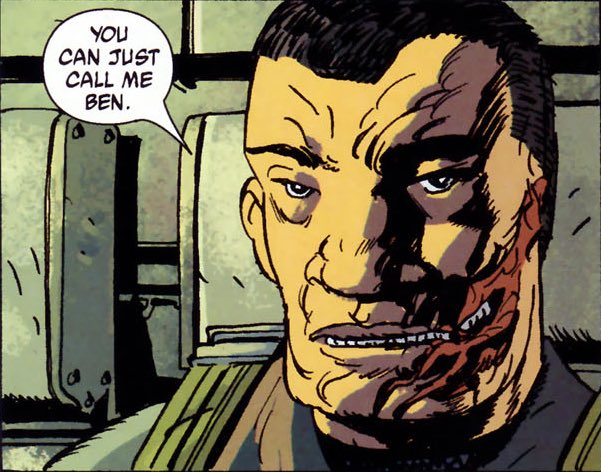
The latest casting of Ed Skrein in the upcoming Hellboy: Rise of the Blood Queen has raised a lot of eyebrows — specifically in the Asian American community. The British actor is set to play the role of Ben Daimio, who, in the Mike Mignola comic books, is a Japanese American whose heritage has a heavy influence on his character.

Skrein took to Twitter to express his excitement in the role in the Hellboy reboot of an Asian character, whose grandmother was a Japanese Imperial assassin in World War II. True to Internet form, a backlash ignited and it wasn’t long until a flood of comments filled his feed.

One commenter said, “You’re a talented actor; why would you take away a role from an Asian colleague?” Asian actor Simu Liu (Taken, Kim’s Convenience) chimed in saying “Hey Hollywood, how many box office flops does it take for you to learn how to cast properly? #hellboy #whitewashedout” while Stephanie Sheh, an actress who does voiceover work in anime, said “Here we go again. Why Hollywood do you keep forcing me to boycott your films. #whitewash #hellboy.” Amidst the backlash, Hellboy creator Mignola chimed in saying, “Thanks and happy you’ve signed on.” Lionsgate declined to comment about the casting when contacted by Deadline.

[QUOTE]

Ed Skrein Verified account @edskrein Aug 21
Excited to join the #Hellboy cast as Ben Daimio. All praise due to the creator @artofmmignola #BPRD

There was less of a concern of dragging Skrein and more of focus on why something like this would happen again after Hollywood’s recent track record of casting white actors as Asian and Asian American characters — which hasn’t gone over to well. Most recently Netflix’s adaptation of the manga Death Note was under fire for whitewashing, using white actors as a replacement for characters of color. The original source material follows a Japanese teen named Light Yagami, but in the reboot, he is played by a white teen in Seattle named Light Turner, played by Nat Wolff. In addition, his love interest is named Mia Sutton who is played by Margaret Qualley. In the manga, her name is Misa Amane — who is also portrayed as Japanese.


Netflix

Previous to Death Note, there has been numerous amount of “whitewashing” of Asian roles that have lit a fire under the Asian American community. Emma Stone portrayed Allison Ng in Cameron Crowe’s Aloha. With a last name like “Ng” it is obvious that the character is Asian. Her heritage in the movie is revealed as one-quarter Hawaiian, with a half-Asian father. The casting of Tilda Swinton as “The Ancient One” in Doctor Strange was appreciated for its gender-swapping but was frowned upon because the character is traditionally Asian.

Other “whitewashing” controversies that have been hovering over Hollywood include Scarlett Johansson in the starring role in the live-adaptation of Ghost in the Shell as the Major, who, in the original source material has the Japanese name Major Motoko Kusanagi. Matt Damon in The Great Wall was another source of controversy as well as the announcement of Black Sails actor Zach McGowan as the star of Ni’ihau, a film based on a true story set during WWII when Shigenori Nishikaichi, an Imperial Japanese Navy Air Service pilot, crash-landed his Zero on the eponymous Hawaiian island after participating in the attack on Pearl Harbor. McGowan will play Ben Kanahele, an island leader who saves Nishikaichi before learning his part in the attack. Kanahele is Pacific Islander and McGowan is of Jewish and Irish descent.[/QUOTE]

Color blindness?

I never watched this as an anime so I don’t plan to tune into it as a Netflix live action. Anyone else here into Death Note?

AUGUST 26, 2017 9:00am PT by Rebecca Sun
‘Death Note’ Is What Happens When Filmmakers Don’t See Race
American adaptations need to realize that multiculturalism, not high production value, is its greatest strength.


Courtesy of Netflix
Lakeith Stanfield in ‘Death Note’

American adaptations need to realize that multiculturalism, not high production value, is its greatest strength.
[Warning: This story contains minor spoilers for Netflix’s Death Note.]

Like fellow manga adaptation Ghost in the Shell, Netflix’s Death Note has been dogged by whitewashing criticism since castings were first announced. In translating Japanese source material for an English-language audience, Hollywood renditions have unfailingly employed white protagonists, despite the existence of English-speaking Americans of Japanese or other descents.

Unlike Paramount’s Scarlett Johansson-starring flop, though, director Adam Wingard’s Death Note transplants the setting from Japan to the U.S. (specifically, Seattle — where, it must be said, Asians are the second-biggest racial demographic in real life). Still, the casual Netflix surfer who watches Death Note unaware of its history is unlikely to notice the absence of Asians; other than a white American cop’s inexplicable decision to name his son “Light,” Wingard successfully erases all traces of cultural context from his film. Unfortunately, he does too good a job with it, because Death Note takes place in a country wholly unlike our own.

In Death Note, teen serial killer Light (Nat Wolff) is pursued by the mysterious private detective L, a fellow teen genius as defined by his behavioral quirks as he is by his staggering intellect. It’s hard to imagine a more fitting actor for the American L than Lakeith Stanfield, a breakout for his eccentric performance as Darius on FX’s Atlanta and surely one of the most idiosyncratic and gifted talents of his generation. And the prospect of seeing a young black L lead an international coalition of law enforcement and intelligence officers on a manhunt for a global mass murderer is full of rich dramatic promise and adds potential layers of commentary to the original mono-cultural Japanese version.

But L’s blackness is never addressed, often distractingly so. When Light’s father Detective Turner (Shea Whigham) meets the great L, masked by a pulled-up turtleneck, he says, “I figured you’d be older … and that I could see more of your face.” Turner the character may have refrained from noting L’s race out of a sense of politeness, but Death Note’s curious color-blindness is to its own detriment. The film offers several visuals seemingly without awareness of their resonance in the real world: a hooded L appearing on the national news, L brandishing a gun as he chases Light through the streets, Det. Turner putting L in a chokehold. It’s not that those images are offensive to include; on the contrary, they are startling and fascinating and could have elevated Death Note, if only the filmmakers understood their import. As Indiewire’s David Erlich wrote in his Death Note review, “Why go through all the trouble of setting Death Note in America if you’re not going to set it in the real one?”

Obviously, Death Note is supernatural fantasy. But great speculative fiction bends physical circumstances and rules while reflecting real-world truths about the human condition and how we interact with one another. That’s why audiences can easily suspend disbelief about rich white people who hypnotize and hijack black bodies through neurosurgery, and yet the most terrifying part of Get Out is near the end, when a police cruiser comes upon the bloodied black male protagonist on a lonely road. Director Jordan Peele understood that we don’t watch movies and TV shows in a vacuum.

Wingard ambitiously compared Death Note to Martin Scorsese’s Oscar-winning The Departed, based on Hong Kong’s Infernal Affairs. But The Departed succeeds because its characters don’t just happen to be white. They are specifically white: The film uses Infernal Affairs’ cops-and-gangsters premise to tell a story steeped in Boston’s Irish-American community. It has the ring of authenticity.

Death Note is what happens when filmmakers are color-blind but not color-conscious. In many cases, color-blind casting has been used to justify certain decisions, such as when Hellboy executive producer Christa Campbell explained that film’s recent decision to cast white Brit Ed Skrein as Japanese-American comic-book character Ben Daimio. “Someone comes and does a great audition [to] get the role,” she wrote in a now-deleted tweet. “Stop projecting your own **** onto us. We are all one. We don’t see colors or race.”

And that’s a shame, because America’s greatest storytelling strength isn’t high production values. It’s multiculturalism — access to an array of backgrounds and identities, and an ability to find out what happens when they collide. It’s a huge advantage that multicultural nations have over more culturally ****genous ones. Death Note, like all the manga adaptations that have come before it, fails to make use of this tool, reducing its primary task to linguistic shifts and superficial face swaps.

It’s actually quite funny, regarding Hellboy producer Christa Campbell’s remarks. Since it’s primarily Asian-Americans complaining about whitewashing a definitely Asian character, she’s essentially giving the typical white person’s response: “STFU and know your place.”

OTOH, if it were African-Americans complaining about a whitewashed character, she’s have said, “We sincerely apologize to the African-American community for our insensitivity and stupidity at miscasting such an incredible black character with a white actor, and promise from the depths of our hearts to never do it again. There is no excuse for our ignorance, and we are doing everything in our power to change and give African-American actors the opportunities they richly deserve.”

The difference between a condescending response and full-out a$$-kissing is in the general perception of a specific group/demographic, and the perceived amount of public backlash and media outrage they are likely to receive from it.

Back to Hell

Good play for Ed. He now becomes a hero. Let’s see if they recast Daimio as Asian.

Ed Skrein Leaves ‘Hellboy’ Reboot After Whitewashing Backlash; Lionsgate & Millennium Respond
by Dino-Ray Ramos
August 28, 2017 12:42pm


REX/Shutterstock

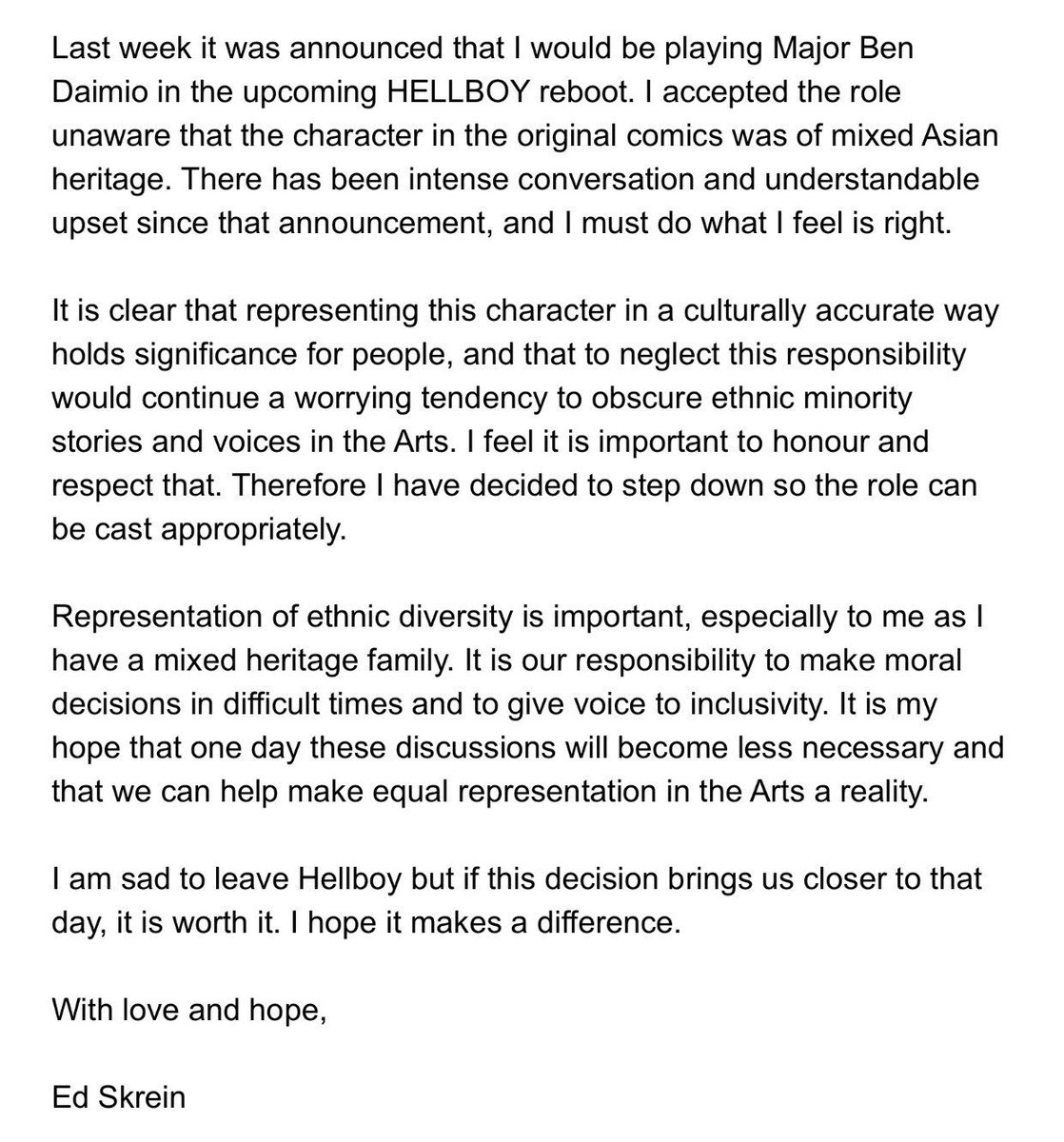
Last week, Ed Skrein was excited to announce he would be playing the character of Major Ben Daimio in the upcoming Hellboy: Rise Of The Blood Queen. In the comics, the character is of Asian heritage, and the news prompted immediate backlash from the Asian Pacific American community. Today, Skrein took to Twitter responding to the public outcry, saying he is stepping down from the role and that, “I must do what I feel is right.”

In a statement to Deadline, Hellboy producers Larry Gordon and Lloyd Levin, Lionsgate and Millennium said: “Ed came to us and felt very strongly about this. We fully support his unselfish decision. It was not our intent to be insensitive to issues of authenticity and ethnicity, and we will look to recast the part with an actor more consistent with the character in the source material.”

Read Skrein’s full statement:

[QUOTE]View image on Twitter

Follow
Ed Skrein @edskrein
12:02 PM - Aug 28, 2017
3,962 3,962 Replies 36,514 36,514 Retweets 120,612 120,612 likes
Twitter Ads info and privacy

Ending his tweet with “I hope it makes a difference,” Skrein made it clear he was listening to the APA community and is aware of the importance of inclusion and proper representation in the arts. His thoughtful response and decision to leave the project may be the start of more projects to follow suit when casting roles meant for people of color.[/QUOTE]

Great decision by Ed Skrein. And he did it quickly, too.

Chloe Bennet


RISING STAR
http://www.thedailybeast.com/agents-of-shields-chloe-bennet-why-i-stopped-using-my-chinese-last-name
TV’s only Asian-American superhero opens up about the need for representation onscreen—and why her band of SHIELD agents totally belong in Marvel’s movies.
MELISSA LEON
04.05.16 1:34 AM ET

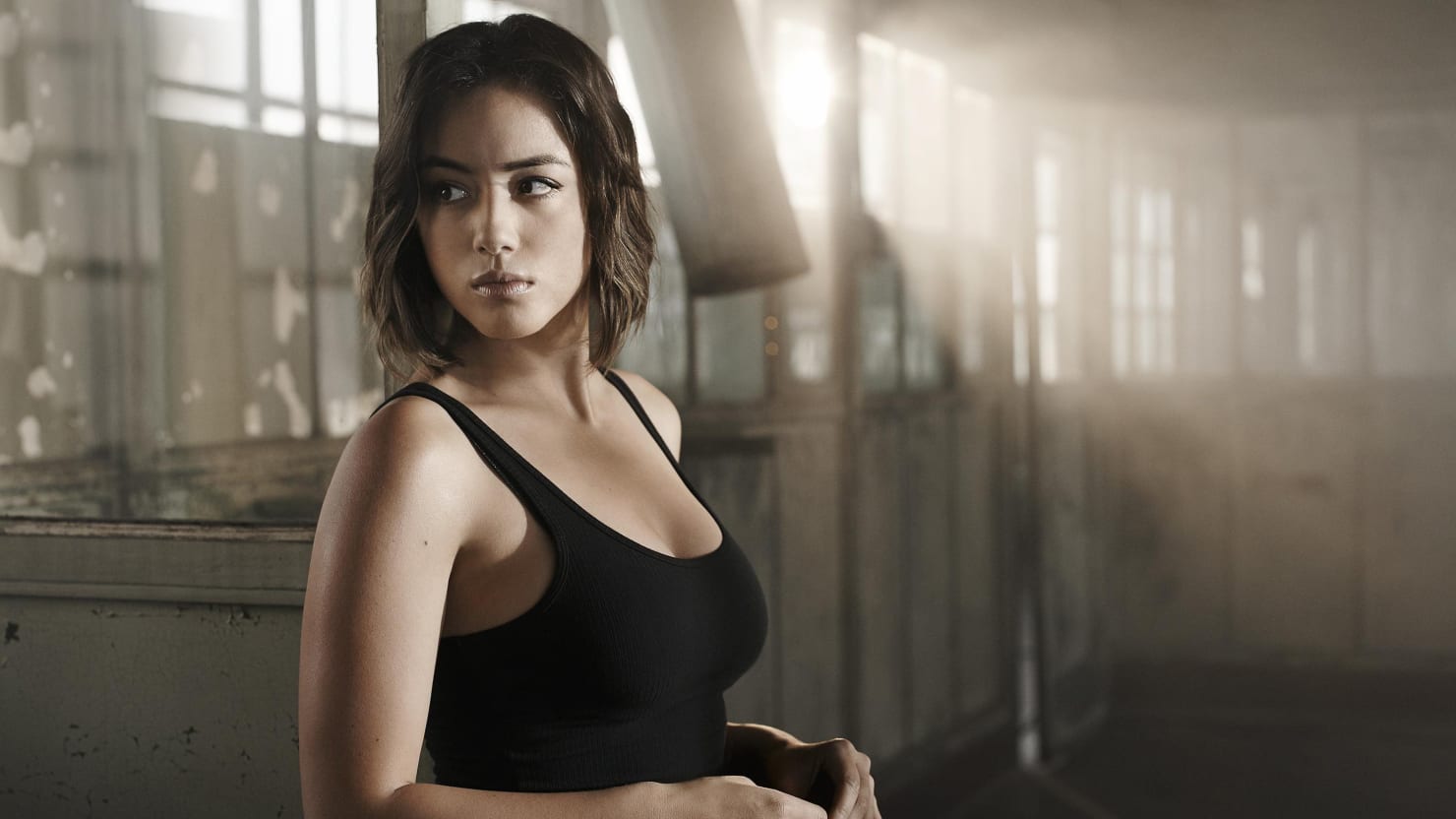
Four years ago, Marvel’s Agents of SHIELD star Chloe Bennet was known professionally as Chloe Wang, aspiring actress and teenage dabbler in Shanghai pop stardom. In the states, however, Hollywood casting agents were less than welcoming.
At least until she changed her last name.

“Oh, the first audition I went on after I changed my name, I got booked,” Bennet tells The Daily Beast, in an interview timed to Marvel’s Women of Power month. “So that’s a pretty clear little snippet of how Hollywood works.”
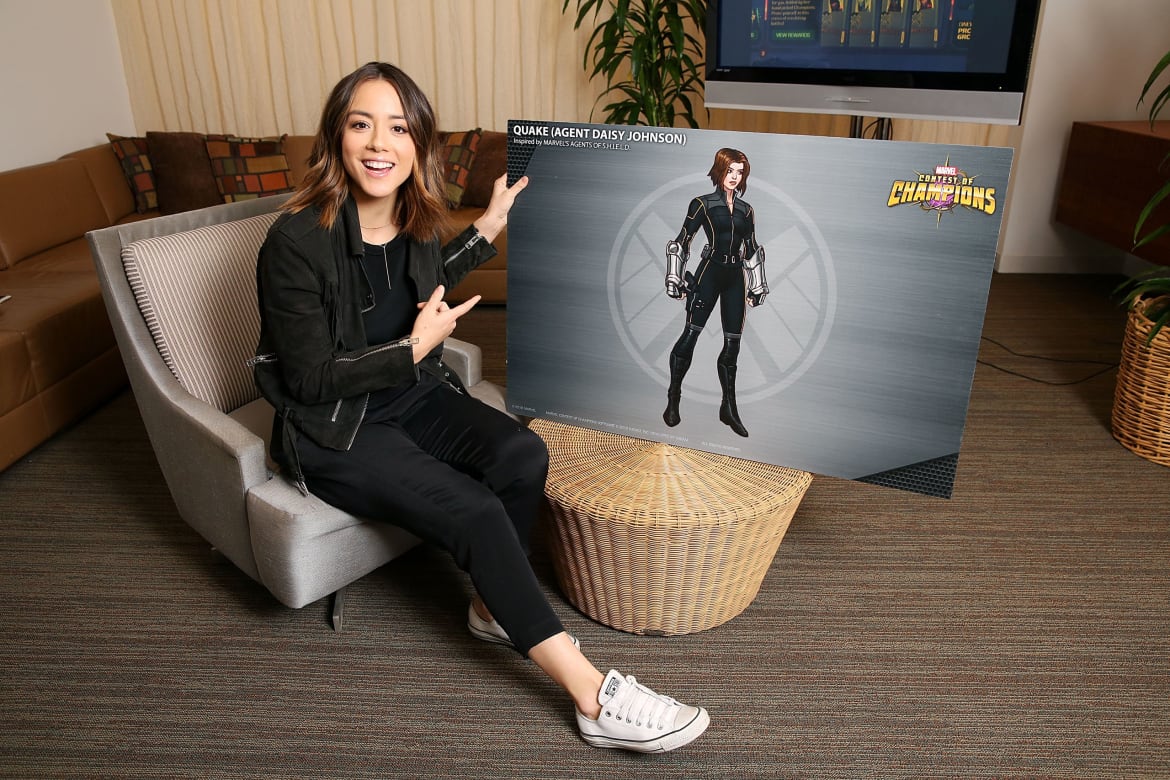
That audition was for the role of Hailey, an office assistant on ABC’s Nashville. That same year, Bennet was cast as the lead in Marvel’s first cinematic universe TV show, the Joss Whedon-created SHIELD. Over three seasons, Skye, a headstrong young “hacktivist” who gets recruited by SHIELD and eventually discovers her real identity, the half-Inhuman Daisy Johnson (aka Quake), has evolved into what is still a rarity on TV: a superhero who happens to be both female and Asian-American.

“I wish people talked about that more,” Bennet says. “I don’t know if it’s good or bad, but when Supergirl came out, people were like, ‘This is the only superhero on TV that’s a female!’ And I was like, ‘Hold on! I’m pretty sure Daisy’s been here.’ And I also happen to be half-Chinese and I’m so proud of that.”

“I want to be clear because some of my Asian-American fans seem to think I did that [changed last names] because I didn’t want to known as Chinese, but it’s so the opposite,” she adds. “I just wanted to be known as me and let my personality define who I was, rather than my ethnicity.”

Bennet—who is loud and funny and blunt in conversation—then launches into her SHIELD audition story, told with a mixture of endearing self-loathing and pride.

//youtu.be/ffDrn62AWYk

“When we were down to seven girls [up for the role of Skye], it was this completely diverse group of girls I was up against. And it was really about who was right for the part,” she says. “We were testing and we came out of the room and I was up next and Joss Whedon was there and said, ‘Hi.’ I got kind of nervous and looked at him. He just looked really tired. And I was like, ‘You look like ****’—this right before I went in for my last audition.
“He started laughing and was like, ‘Well, I am tired,’” she says, groaning at the memory. “And I was like, ‘I mean, you look tired in a good way, like you’re really busy! And accomplished!’ It was so Skye Season 1 that I think he was like, ‘Yup, that’s her.’”
Because of Marvel’s “cinematic universe” design, SHIELD takes place during the events of the comic book movie franchise’s big-screen exploits—meaning that whatever havoc the Avengers wreak in their city-smashing adventures has real-world consequences for the show’s on-the-ground SHIELD agents.

When Captain America: The Winter Soldier revealed that the evil Nazi organization HYDRA had been embedded within SHIELD since shortly after World War II, the show, whose entire first season built up to the events of Winter Soldier, took that and ran with it, spinning out two seasons of intrigue.
But while Marvel’s movies often affect the show, SHIELD’s narrative rarely bears weight on the big-budget blockbusters—even when the stories it’s telling should. In the upcoming Captain America: Civil War, for example, Marvel’s superheroes choose whether to submit to official government oversight, a measure (called the Sokovia Accords, the onscreen version of the comic books’ Superhero Registration Act) pushed on them by a United Nations panel.
Incorporating SHIELD’s ongoing Inhumans storyline would actually raise the stakes of the movie: The presence of hundreds if not thousands of undiscovered Inhumans (people with the ability to develop superpowers) would give governments extra incentive to push the Sokovia Accords on all superhumans. Recent interviews with Civil War directors Joe and Anthony Russo, however, indicate the directing duo are entirely unconcerned with what’s going on in the world of SHIELD.

“I think we’re all on the same page besides them,” Bennet says, sighing at the missed opportunity. “But they’re gonna do what they’re gonna do, and I’m really happy with our little show. We’ve been dealing with the topic of Civil War for a while now—at least, Daisy has. She’s a SHIELD agent but also a human and she’s completely torn.”
If Bennet had her way, of course, Civil War would bring certain SHIELD-specific changes to the Marvel universe: “I would like us to be put in the movie,” she laughs. “That would make sense. I would like the Avengers to find out that Agent Coulson’s still alive. And Daisy’s incredibly powerful. I think you’ll see toward the end of the season her strength as a character and a leader, and her power as a superhero really expands—I’m just saying, the Avengers could use our help, if they just asked.”
Marvel’s TV universe, in the meantime, continues to expand, with street-level heroes like Daredevil, Jessica Jones, Luke Cage, and Iron Fist getting their own Netflix shows. With the latter series’s casting announcement—revealing that Game of Thrones actor Finn Jones will be taking on the role of Danny Rand—a familiar refrain decrying the MCU’s lack of diversity reverberated across the Internet again.
When asked if she was among the thousands calling for the traditionally white Danny Rand—a kung fu master—to be played by an Asian actor, Bennet answers without missing a beat.

“One hundred percent. I actually saw that [casting] news and I can’t lie, I was a little [disappointed],” she says, before breaking into laughter again. “I love Marvel, but…”
“I know they want to stay true to their characters but, you know, every female character in Marvel comics also has, like, triple-Z-sized boobs,” she reasons. “So if they cast actors based on the way characters look on the page, I don’t think even Scarlett Johansson—well, maybe Scarlett Johansson—would be in the movies.”
As for Marvel’s ever-expanding movie arm—which will feature its first character of color in a stand-alone film in 2018’s Black Panther—Bennet maintains there’s room for improvement there as well.
“I think they could do better,” she says. “You know, there are a lot of white guys named Chris. But I think they will, because it’s important. It’s the right thing to do. Marvel’s a smart company and I think they will represent their fans from around the world. They can take note from the way we’re going on the show, ’cause we’re doing a pretty good job.”
In terms of gender dynamics, Bennet points out that “90 percent of the rescuing” done in SHIELD is by female characters and “90 percent” of the stunts are performed by women actors as well, including herself. Still, she’s anxiously awaiting her character Daisy’s introduction as a playable character in the Marvel mobile game Contest of Champions in the fall, for the sake of watching Quake in action minus the actual stunt work.
“I’m so stoked. My brother is so jealous,” she laughs. “I’m really excited to get to do all these stunts without actually getting hurt. I’m currently covered in bruises.”
Bruises never stopped a badass lady from rescuing those in need, of course. “[Our characters] don’t need any rescuing from men,” Bennet says. “We can handle ourselves very well, thank you.”

Agents of S.H.I.E.L.D. & whitewashing

This would be a great play

If this happens, I’d make an effort to support this film and I’m not that into Hellboy. It’s like the Star Wars cantina scene on steroids. :stuck_out_tongue:

SEPTEMBER 11, 2017 2:29pm PT by Borys Kit
Daniel Dae Kim in Talks to Replace Ed Skrein in ‘Hellboy’ Reboot (Exclusive)


Slaven Vlasic/Getty Images
Daniel Dae Kim

Skrein left the project after an outcry over whitewashing an Asian-American character.

Daniel Dae Kim, who recently left CBS’ Hawaii Five-0, is in negotiations to join the cast of Lionsgate and Millennium’s Hellboy reboot.

Kim will step into the role left vacant by Ed Skrein after an outcry over whitewashing a Asian-American character.

Kim will play Major Ben Daimio, a rugged military member of the Bureau for Paranormal Research and Defense who, due to a supernatural encounter, can turn into a jaguar when angered or in pain. The character is Japanese-American in the Hellboy comics by creator Mike Mignola.

Skrein had nabbed the role in August but, after a social media protest, made the unprecedented move to step down later that month.

“It is clear that representing this character in a culturally accurate way holds significance for people, and that to neglect this responsibility would continue a worrying tendency to obscure ethnic minority stories and voice in the Arts. I feel it is important to honor and respect that,” he said in a statement.

Lionsgate concurred, saying, “It was not our intent to be insensitive to issues of authenticity and ethnicity, and we will look to recast the part with an actor more consistent with the character in the source material."

Kim is Korean-American, and the actor is no stranger to standing up for his beliefs. In June, he quit Hawaii Five-0 after a salary dispute with CBS, as he had been seeking equal pay to the show’s stars, Alex O’Loughlin and Scott Caan. His departure, along with co-star Grace Park, left the show temporarily without Asian regulars.

David Harbour (Stranger Things) is starring in Hellboy, which reboots the franchise centered on the demonic hero from the Mignola comic books. Game of Thrones director Neil Marshall is helming the project.

Kim has been acting since the early 1990s and has appeared on shows such as ER and Angel. He became a known quantity and star thanks to his breakout work on ABC’s Lost, and co-starred on Five-O since it launched in 2010.

Kim is repped by UTA.

I think very few people remember, or are even aware, that Daniel Dae Kim played a Shaolin monk in the 1991 film American Shaolin, by HK’s Seasonal Film Corp. Corey Yuen and Yuen Tak did the fight choreography. It was one of the Seasonal Film’s designed specifically to bring HK-style action to the American market. That role was the very first time I had ever seen Daniel Dae Kim, and I only remembered him much later when I recognized him in other stuff.

Ddk

[QUOTE=GeneChing;1304872]If this happens, I’d make an effort to support this film and I’m not that into Hellboy. [/QUOTE] Well, I guess I’m committed now.

SEPTEMBER 13, 2017 12:08pm PT by Borys Kit
Daniel Dae Kim Applauds Ed Skrein for Bowing Out of ‘Hellboy’ Amid Whitewashing Outcry (Exclusive)


Getty Images
Daniel Dae Kim, Ed Skrein

In his statement to THR, Kim confirms his casting and applauds Skrein and the producers for “championing the notion that Asian characters should be played by Asian or Asian American actors.”

Daniel Dae Kim, officially confirming he has joined the cast of Lionsgate and Millennium’s Hellboy reboot, issued a statement thanking the movie’s producers and Ed Skrein, the actor who stepped aside so that a culturally appropriate person could take the role.

“I applaud the producers and, in particular, Ed Skrein for championing the notion that Asian characters should be played by Asian or Asian American actors,” said Kim. “He could not have addressed the issue more elegantly and I remain indebted to him for his strength of character."

Kim is playing Major Ben Daimio, a rugged military member of the Bureau for Paranormal Research and Defense who, due to a supernatural encounter, can turn into a jaguar when angered or in pain. The character is Japanese-American in the Hellboy comics by creator Mike Mignola.

In August, Skrein was cast in the part but, after an outcry over whitewashing an Asian-American character, made the unprecedented move to step down later that month.

“It is clear that representing this character in a culturally accurate way holds significance for people, and that to neglect this responsibility would continue a worrying tendency to obscure ethnic minority stories and voice in the Arts. I feel it is important to honor and respect that,” Skrein said in a statement at the time.

In his statement, Kim now says, “I’m excited to confirm that I’ve officially joined the cast of Hellboy. We start shooting today and I’ll be playing Ben Daimio, alongside our very talented cast, headed by David Harbour, and director, Neil Marshall. Thank you for all the supportive tweets and comments, especially in light of the recent events surrounding its original casting.”

[QUOTE=Jimbo;1304881]I think very few people remember, or are even aware, that Daniel Dae Kim played a Shaolin monk in the 1991 film American Shaolin, by HK’s Seasonal Film Corp. [/QUOTE] You know, I’m not sure I ever saw this. I was thinking about taht film when my Shixiong Matt Polly came out with his book American Shaolin, and I honestly can’t remember anything about it, so maybe I never saw it. I suppose I should, huh?

[QUOTE=GeneChing;1304905]You know, I’m not sure I ever saw this. I was thinking about taht film when my Shixiong Matt Polly came out with his book American Shaolin, and I honestly can’t remember anything about it, so maybe I never saw it. I suppose I should, huh?[/QUOTE]

It’s a low-budget Shaolin ripoff of Karate Kid, but IMO it’s more entertaining than KK. It’s one of those ‘so bad it’s good’ types of movies (like all of those American Seasonal Film productions). The fight scenes are certainly better. It IS a stereotypical white savior movie, and unfortunately Daniel Dae Kim only has a supporting role, but he looked good in the fight scenes he had.

Overall, American Shaolin’s target audience seems to be Caucasian-American nerds with yellow fever and fantasies of glory who were picked on by the jocks in high school, lol. The main bad guy/bully’s name is ‘Trevor Gotitall’ (get it?). :rolleyes:

//youtu.be/0zdzUupoGJc

Fullmetal Alchemist = too Japanese?

Well, that’s a twist.

Fullmetal Alchemist Anime Director Criticizes The Live-Action Movie’s All-Japanese Cast
Brian Ashcraft
9/20/17 5:00am

The live-action Fullmetal Alchemist movie cast is all-Japanese, even if the characters are not. The anime’s director says this was “a bad idea.”

While speaking at a recent stage show in Tokyo, Fullmetal Alchemist anime director Seiji Mizushima is quoted by ANN as saying, “It was a bad idea to only use Japanese actors.”

Continuing, Mizushima added, “If you asked me whether I think the cast could pull it off, I’d say that no, they can’t.” He also said, “It’s hard for actors to capture the look and feel of the original manga.”

He didn’t have kind words for the recent live-action Gintama adaptation, saying that it “just looked stupid.”

That doesn’t mean Mizushima hopes the live-action Fullmetal Alchemist movie will fail. On the contrary, while he mentioned the merits of anime adaptations, he did say he was “rooting” for the Fullmetal Alchemist movie. Bad ideas and all, I guess.

Sometimes it feels that people have forgotten that TRUE equality means the best people for the job REGARDLESS of race.

Our ‘token’ race thread…I’m glad it’s civil

[QUOTE=Jimbo;1304998] The main bad guy/bully’s name is ‘Trevor Gotitall’ (get it?). :rolleyes:
[/QUOTE] Thanks for the link. Now I’ll have to check it out sometime. :stuck_out_tongue:

[QUOTE=sanjuro_ronin;1305095]Sometimes it feels that people have forgotten that TRUE equality means the best people for the job REGARDLESS of race.[/QUOTE] True but when the job has a race element intrinsic to the role, that gets complicated. There’s a double standard for sure, but that’s exactly the point. For example, you can’t cast a white Othello, but you could cast a multi-racial Hamlet. Did you ever see the Peter Brook’s The Mahabharata (1989)? It’s the Indian classic, but Brook assembled a very diverse cast and it was amazing. It gave the tale a much more universal feel like it should have.

Gavin Polone on Race, Business and the Real Cost of Hollywood Whitewashing
6:30 AM PDT 9/21/2017 by Gavin Polone


Illustration by: Lars Leetaru

Should Arab Princess Jasmine be played by an Indian actress? No way, but when a ‘Hellboy’ actor gives up a role that had been reconceived for him, it sets a dangerous creative precedent that impacts Hollywood and could even stunt efforts toward inclusion.
When I was 9, my mother took me to a production of The King and I that starred Ricardo Montalban as the King of Siam. This was prior to Montalban premiering in Fantasy Island and pitching the “fine Corinthian leather” of the Chrysler Cordoba in TV commercials, so my familiarity with him came from the original Planet of the Apes movies, where he played Senor Armando, a circus owner who is sympathetic to the cause of talking apes. As I watched the musical, I remember thinking it was disturbing that a man I knew to be Mexican was playing the king of an Asian nation. By that time, most people knew that white actors donning blackface was wrong, but I was in the minority with my discomfort with the idea that brown actors were thought to be like Type O blood and could play any ethnicity. The L.A. Times, writing about King and I, lauded Moltanban’s racial pliability by noting, without irony, how he “has kept his name above the title for more than a quarter century by stamping his own interpretation on roles, playing Japanese, Greeks, Italians, Armenians, French, Indians, Germans and Turks.”

That a Mexican actor playing a Thai or Japanese character drew no further comment in 1974 isn’t remarkable. That we’re still trying to figure out, 43 years later, when a person of one race or distinct ethnicity should be cast as a character of another, is. The answer is pretty black and white: They shouldn’t. Joseph Fiennes shouldn’t have played Michael Jackson, even for a comedic TV anthology; Jake Gyllenhaal shouldn’t have played the prince of Persia; Rooney Mara shouldn’t have played a Native American in Pan; and the con*troversy surrounding the casting of Naomi Scott as Jasmine, an Arab, in Disney’s remake of Aladdin is fully warranted. Maybe there aren’t any Arab actresses as good as Scott, or maybe those in charge found her look more “appealing,” but casting an Indian-British woman as an Arab can only come off as another example of “brown is brown,” and that is unacceptable.

While those examples are clearly improper, other cases of “whitewashing” land in the gray zone. As important as it is to call out obviously racist or insensitive casting choices, it is just as important to define what should be permissible when representing ethnicity onscreen and what isn’t really a problem and should not be dragged into this discussion.


From left: Zhang, Yeoh and Gong in Memoirs of a Geisha.
David James/Columbia/Dreamworks/Spyglass/Kobal/REX/Shutterstock

In 2005, there was outrage in Japan for the casting of Chinese actresses Zhang Ziyi and Gong Li, as well as Malaysian actress Michelle Yeoh, as leads in Memoirs of a Geisha. Given the historical tensions that have remained since World War II, the obtuseness of these choices was clear (as was changing the eye color to blue of the Asian woman on the poster). But even without political tensions, is it OK that Randall Park, a Korean-American, plays a Taiwanese-American on Fresh Off the Boat? I could see that go either way. Can any Latino play the part of any Latin American? Can a Spaniard play a Peruvian? I’m not sure. Many Latin Americans are partly or wholly of Spanish heritage, just as most white Americans have European ancestors. What about a Brazilian playing a Chilean? I think the answer to all of those questions is, “It depends.”

Where the “whitewashing” label is misapplied is when a character is changed from an ethnicity in the source material to another to accommodate a specific actor. This is not the same as casting someone of one race to play a character of another. Much has been made of Scarlett Johansson’s starring role in Ghost in the Shell, whose character in the original Japanese anime was, of course, Japanese; and Tilda Swinton being cast in Doctor Strange as the Ancient One, a character who was Tibetan in the comic. Neither of these examples was evidence of the distasteful racism of white actors playing a race other than their own, but rather the common business choice of adapting a property for a wider audience. The Ghost in the Shell filmmakers changed the location from Japan to a nonspecific future world, with the intent of making the premise more accessible to a global audience. In moving the location from Japan, the film didn’t need its heroine to be any specific ethnicity (not to mention that she was a robot); what she did have to be was a big star capable of justifying a huge budget, and Johansson is that.

Remaking a foreign property for a larger audience always involves changes. In 1960, when Yul Brynner, a Russian who won an Oscar for The King and I, remade Akira Kurosawa’s Seven Samurai, he didn’t develop it as an English-language version of a Japanese samurai movie but rather as a Western, which was a more popular genre throughout the world. This wasn’t “whitewashing,” just smart business. Casting Eli Wallach, a Jew from Brooklyn, as a Mexican in the film was egregious “whitewashing,” though.

Marvel Studios claimed that it changed the Ancient One in Doctor Strange from a Tibetan monk to a Celtic woman to avoid the stereotype of an old Asian wise man. Of course, it could have changed that stereotype by keeping the character as Tibetan and not writing him stereotypically. My guess is that Marvel wanted to run from any connection to a Tibetan character, given the conflict between Tibet and the Chinese government. China is the second largest film market in the world, and Disney’s theme parks there are visited by 17 million people a year. There is no reason to believe that this was anything other than a one-time instance of “greenwashing,” rather than “whitewashing,” and it is unrealistic to think that the world’s largest media company should risk a huge financial hit to preserve the cultural integrity of a secondary character in a movie.


Eric McCandless/ABC; Jay Maidment/Marvel; Courtesy of Photofest
Park in Fresh Off the Boat, Swinton in Doctor Strange and Gyllenhaal in Prince of Persia.

It is unfortunate, though, that actor Ed Skrein felt he had to drop out of the new Hellboy movie because some disagreed with him being cast in a part that is Japanese-American in the comic. It’s not as though Skrein would have been a better economic choice than Daniel Dae Kim, the Korean-American who replaced him. Actually, I think Kim is better from a marketing perspective. The filmmakers were making a creative choice in going with Skrein, and the outside pressure to change creative decisions because a fictional character was one race or another is a double-edged sword. After all, a similar creative decision led Marvel to change Nick Fury, who is white in the Avengers comic, and cast Samuel L. Jackson, which was an inspired move and led to greater diversity in the franchise. And if those who protested Skrein wanted true ethnic alignment with the comics, they should still be upset that a Japanese-American wasn’t cast.

Those who identify and protest “whitewashing” and push for realistic change are helping, for the most part, to move the industry forward in depictions of ethnicity. Studios and filmmakers need to listen for these cues from the community and make changes. And when it is unclear if it will be acceptable to cast an actor outside of the ethnicity of the character in question, there are always two possible alternatives: 1) cast the best actor available who is of the same ethnicity as the character; or 2) cast Lou Diamond Phillips. Phillips has played more ethnicities than almost anyone, from the Mexican-American singer Ritchie Valens in La Bamba to, yes, King Mongkut in The King and I. Phillips can do this because he was born in the Philippines to a Filipina mother of Chinese, Japanese, Hawaiian and Spanish heritage and to an American father who was one-quarter Cherokee. So, when in doubt, LDP’s got you covered.

People should just stick to what was written.
If its a bald asian man, it should be the best bald asian actor you can get.
If its a blonde skinny girl with bog boobs it should be the best blonde skinny big boobed actor you can get.
I saw the Death Note Netflex movie and it suck compared to the anime and not because it was whitewashed but because it wasn’t very good, period.
The obvious white/black washing made it worse for those that saw the anime,but only because the writers weren’t smart enough to make the movie different, yet based on the premise, of the anime.
Bad writing.

An insightful interview with Jake Choi on the emasculation/desexualization of Asian males in Hollywood:

https://www.salon.com/2016/06/01/asian_men_in_media_are_so_desexualized_rising_star_jake_choi_fights_the_hollywood_odds_against_asian_american_actors/

This interview is relatively brief, and really only discusses the tip of the iceberg.

The Outsider

The Last Samurai, Shogun, this…Do we need an indie thread for Gaijin movies? :rolleyes:

2.23.2018
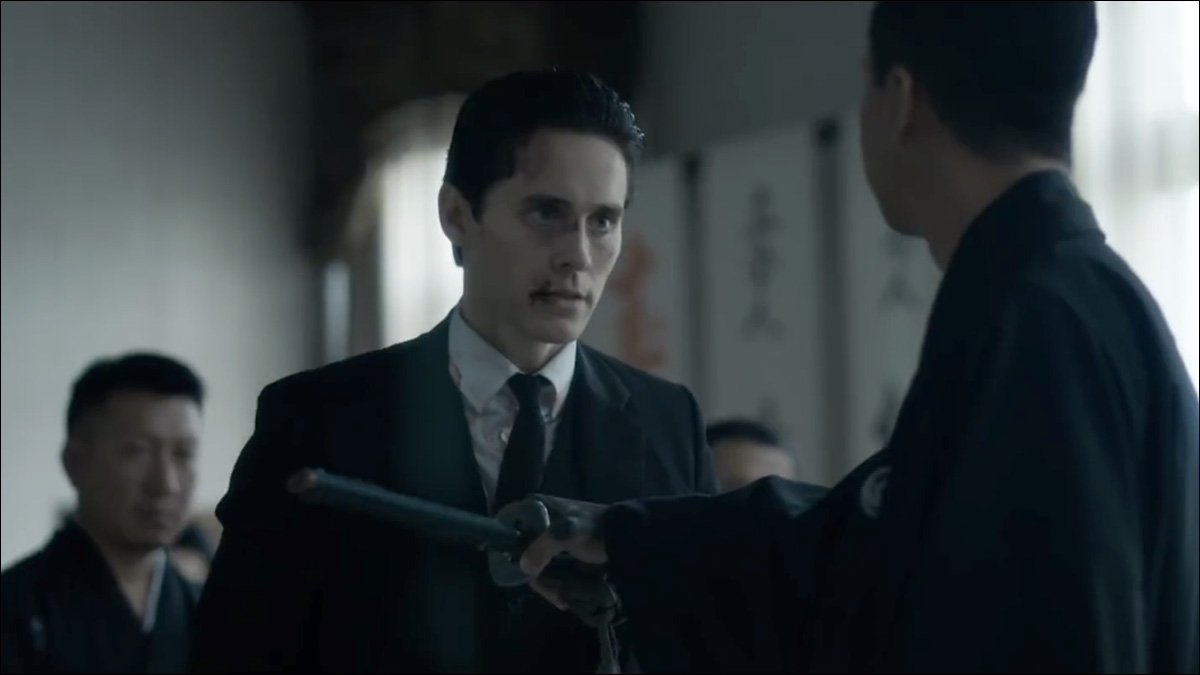
JARED LETO STARS AS A JAPANESE GANGSTER IN ‘THE OUTSIDER’
Wait, what?

In the illustrious Hollywood tradition of movies about white dudes who are better at being Asian than actual Asians, here’s your first look at the Yakuza period thriller The Outsider, in which Jared Leto becomes a Japanese gangster. Wait, whaaat? Yup. The Netflix original movie follows a white guy who works his way up the ranks to become a rare non-Japanese member of the fearsome Yakuza.

The official synopsis reads: “Set in post-WWII Japan, an imprisoned American soldier (Leto) is released with the help of his Yakuza cellmate. Now free, he sets out to earn their respect and repay his debt while navigating the dangerous criminal underworld.” I assume this means that the white guy will do a lot of way crazier **** than any of the Japanese guys, to prove his worth. And romance some Japanese ladies along the way, of course.

Here’s the trailer:

//youtu.be/QNNcl2mEHzQ

Oh, brother.

Directed by Martin Zandvliet, The Outsider also stars Tadanobu Asano, Kippei Shiina and Shioli Kutsuna. You know, in another grand Hollywood tradition of really great Asian actors playing supporting roles to white stars.

We actually first heard about this movie back in 2011, when Warner Bros. originally acquired the script. I said this back then, as I’ve said many times before and since, and I’ll say it again: Hollywood can make a movie set anywhere in the world, in any era of history… and always somehow find a way for the movie to star a white guy.

The Outsider premieres on Netflix on March 9.