The streamer Hasan Piker on his trip to China.Photo: Courtesy of HasanAbi on Twitch
# Why Internet Stars Are Chinamaxxing
On the other side of the Great Firewall, there is no YouTube, but there are more than half a billion people who watch streamers. What happens when America’s top creators introduce themselves?
February 12, 2026
For the American traveler who imagines he has a borderline healthy relationship with his phone, a trip to China is instructive. First, the Great Firewall cuts you off from the social feeds and algorithms that govern your media consumption back home. Without resorting to a VPN to bypass the blocks, there’s no access to Facebook, Instagram, YouTube, Gmail, X, or TikTok. As your digital world goes quiet, you realize just how much of your daily intake is noise.
But just as you’re starting to appreciate the silence, new portals open up. More than anywhere else on earth, to get by in China, you have to live through your phone. You pay for almost everything with QR codes on super-apps; public transit tickets come in blocky patterns in the same apps; and ordering at restaurants, that time-honored respite for the lonely, is via QR-accessed mini-programs in the apps. Living through Chinese apps, you start to get sucked into their social layers, which automatically translate into English. The hostel has a group chat that buzzes constantly. The guy who sold you spicy rabbit head keeps sending you memes. Even on the far side of the Great Firewall, there’s no escaping the noise. After two-and-a-half months in China last year, I started to fantasize about throwing my phone into a gutter.
At least one group of Americans is more intrigued than repelled by this thoroughly digitized world: streamers. To the biggest Western content creators and their managers, the business logic of building a Chinese following has long been apparent. There are over a billion internet users in China, and unlike anywhere else in the world, livestreams have already been popular entertainment for a decade. In 2016, it was recorded that more than half of those billion were regularly consuming the format. Because all American platforms are blocked in the country, it represents a massive untapped market for creators. In January 2024, MrBeast, the most subscribed creator on YouTube, dipped his toe behind the Great Firewall by posting his first video on the Chinese platform Bilibili. “Ni hao,” he greeted Chinese viewers.
Influencers’ excitement over the Chinese market runs against America’s abiding policy on China, which involves stoking a trade war and raising fears about a war-war. But a countervailing tendency was already emerging among left-liberal pundits who envy China’s solar panels, widespread electric car use, and high-speed trains, and among younger Americans, who’d started moving closer to their Chinese counterparts online. In January 2025, as their government threatened to ban TikTok, masses of Americans preemptively joined the Chinese social network RedNote. “Our generation and younger are so tapped into China in ways that an older person cannot comprehend because of RedNote and TikTok,” the leftist streamer Hasan Piker tells me. “There are spots that they want to go to.”
Last March, 20-year-old Darren Watkins Jr.—who broadcasts to more than 45 million YouTube subscribers under the moniker IShowSpeed, or Speed for short—became the first massive Western creator to go on a highly publicized tour of the country. He acted as another catalyst, changing attitudes on both sides, and inspiring boiling envy among fellow livestreamers. Piker was so jealous—so sour—over Speed’s trip that Chinese internet users started calling him “Lemon Bro.” “I’ve been wanting to go to China for many, many years now, but I think it was much easier to convince people,” he says. “Speed going was huge for a lot of people in our industry, because they saw how sick it was.”
Speed had dreamed of visiting China since he was a little kid. More recently, he’d seen snapshots of the country’s fast-blooming cyberpunk landscapes populating his feeds and sought out Chinese anime. So the People’s Republic wasn’t entirely unknown to him, and he in turn wasn’t entirely unknown there. His content had slipped through the Great Firewall, clipped from his accounts on the blocked international platforms and reposted on Chinese apps. Even before he launched his own Chinese profiles, Speed had gained so much traction on China’s siloed internet that fans had bestowed on him the nickname “Hyperthyroid Bro,” because of an expression he makes frequently, which features bulging eyes and neck, superficially resembling symptoms of the condition.
In Shanghai, Speed met his first Chinese fan within five minutes of turning on the camera. Within 20 minutes, a mob had formed around him. He spent the next seven hours dodging the swarm while trying to discover the city. “Every stream is gonna be like this. I think Shanghai is gonna be the worst, though, because there’s so many people here that know me,” he predicted. “I think other cities will be more calm.”
He couldn’t have been more wrong. In Chengdu, a crowd surrounded him before he’d even emerged from the van in which he recorded his introduction. “Oh my God, China is crazy,” he said. As he moved through the city, his bodyguards formed a protective circle, but fans—teenagers and middle-aged men alike—flung themselves through the gaps, grabbing at him and screaming that they loved him. Members of the renowned local rap group Higher Brothers, who were meant to accompany him during the stream, bailed partway through because of the pandemonium. “I want to keep streaming, but you have to calm down,” Speed shouted to the crowd. “I can’t do what I got to do if everybody is ‘Ahrahrahrah.’”
“You break the rules on Chinese social media, your accounts are just gone,” says streamer Jake’n’Bake. “It’s really annoying.”
In Chongqing, drone footage showed an entire block of people churning behind him. I asked Jackson Lu, a local content creator who guided Speed through the city, what those moments had been like. “Have you seen The Walking Dead, World War Z, or 28 Days Later?” Lu said. “It felt like that.” For the local influencers who joined him, the experience was totally unprecedented. “That kind of situation, I’ve never seen before,” Ryan Chen, a Chongqing native who’s built a following both in China and abroad as “Chinese Trump,” tells me. “Of course, he’s got bodyguards, but the bodyguards cannot completely shelter him.”
Many of the people who showed up weren’t longtime Speed obsessives. They’d simply caught the virus and taken to the streets. “The majority of people who are going up to him to yell his name or take a picture, they don’t really know who he is. They just saw him trending in China—insanely trending—so they wanted to be a part of that,” says Jake Abramson, an American who’s been streaming from China as Jake’n’Bake since 2018 and joined Speed on a cable car ride through Chongqing. “He created those fans.”
The pioneering nature of Speed’s trip was part of the reason fans flocked to him, but his extraordinary ability to orchestrate a crowd—to interact meaningfully on a mass level—must have been part of it too. “It was a Western influencer really interacting with Chinese people in a way that hasn’t necessarily been done before,” said Olivia Plotnick, the founder of Wai Social, a Shanghai social media marketing agency. “You have celebrities and pop stars visit, but those tours are very out of reach of the public, whereas IShowSpeed was going to all these different cities and interacting with people on the streets very freely.”
Other influencers have hesitated to venture in because of the arcane rules of Chinese social media, which is highly censored in ways that are rarely publicly spelled out and far from intuitive to outsiders. “Creators love to do what they do because they get to be who they are,” says Zach Katz, the CEO of Fixated, a content creator representation firm. “If all of a sudden there’s this lens of moderation on your self-expression, does that make you want to do it more? No.” For creators who decide to invest time and effort into building a presence on Chinese platforms, a small blunder can be disastrous. “You break the rules on Chinese social media, your accounts are just gone,” Abramson says. “It’s really annoying.” The Shaolin Soccer actor Zhao Wei, for instance, not only had her accounts deleted, for reasons that were never explained, but her name was scrubbed from the Chinese internet. Those are the most extreme cases. Sometimes banned keywords, like “Tibet” or “Taiwan,” are simply starred out.
To clear these hurdles, Speed worked with East Goes Global, an agency that has helped NBA stars enter the Chinese market. They helped launch him on Chinese platforms and initially connected him with local creators like Lu. But the partnership broke down shortly after Speed’s first stream in Shanghai. “My personal guess is that they think it’s a little too risky,” says Lu. “They worried that Speed was going to do something stupid on the livestream and offend Chinese culture or society.” Plus, Lu recalls, “Speed hated the first agency. I would have reacted the same, like, ‘How can you abandon us and drop us after our first livestream?’” With support from the Asian-American record label 88Rising, Speed regrouped and pressed on. (Neither East Goes Global nor Speed responded to requests for comment.)
The Chinese embassy in Washington, DC, praised Speed’s work as “bridging cultural gaps.” The country’s government sponsored influencer visits in 2025, but Speed’s team insisted he hadn’t accepted any state funding, and his broadcasts showed sides of the country that state media has resolutely ignored. “I’m racist,” one woman dressed in anime cosplay in Chengdu told him. “Wait, I don’t think you understand what you’re saying. Do you speak English?” Speed asked her. “Yes. I am racist,” the woman reiterated. “Bro, hell no,” Speed said. “What the fuck is she saying?” Another time, in Shanghai, a man shoved a KFC bag at him through his car window. When Speed opened it and found a banana, the man started hooting like a monkey. These weren’t the only times Speed encountered such attitudes during his trip, but they didn’t seem to be the norm either.
On a tourist boat, under the lights of Hong Kong’s skyline filtering through a foggy evening, Speed met a young woman from Shaoxing. It was the longest he’d been away from the ravenous crowds, and in the stream it seems as if time was contracting for him. He asked if 10 minutes had passed and was informed that it was more like 40. The woman told him she followed him on Douyin, TikTok’s Chinese sister app. Her timbre was high and childish. He called it an “anime voice” and asked her to say Pikachu a few times, cracking up each time she squeaked it out. She told him she’d been made fun of for her voice all her life. “I’m 25 years old, but my voice is like 10 years old,” she said. “Some people don’t like this voice. They always laugh at me.” “Don’t listen to them,” he said. “You just have to stay strong and be you, at the end of the day. People gonna hate you all the time. It don’t matter if you’re the best or the most perfect person in the world. People gonna hate. You know what I’m saying? You have a nice voice.” She seemed moved. “I believe you,” she said. They fist bumped. “People talk about me all the time. People say I’ve got a big nose, I’m musty, I’m Black, I’m trash at football. Like, I’m one of the best football players in the world. You’re telling me?” Speed said. “They don’t understand you,” she told him. “But we can grow up, we can get stronger.” They’d reached across the divide with a touch of vulnerability. “That’s right,” he said. “W speech, bro.”
Speed’s trip launched an armada of influencers on their own China journeys. Gaming streamer Pokimane went twice in 2025. Standing across an intersection from a Loewe store in Shanghai, she joked about the resolution of the city compared to her home, “It looks 4K. LA, hmm, 720p.” Over Peking duck a few days later, she mused, “I worry that it’s really great now, and in three years it’ll be ruined by tourism.” On his first day in the country, Agent00 met Jackie Chan. Lacy and JasontheWeen, formerly of FaZe Clan, swung through too. Even the Nelk Boys, who’d aligned themselves with Trump in the last election, were enchanted. They were nervous when they first got off the plane, afflicted by the unfamiliar feeling of encountering the unknown in a superficially hyper-connected world. “The last feeling like this was, I think, Russia,” said Kyle Forgeard. “This is one step closer to North Korea.” But after a few days, he declared, “China’s kind of like America, except everything’s in Chinese. This is not what I expected.” Later he concluded, “China is lit.” According to OJ Liu, a businessman from Kunming who helped plan their trip and partied with them across the country, they’ve discussed plans to return in 2026.
For Hasan Piker, China represented more than an untapped market or a shiny backdrop for new content. As a socialist, he looked to the achievements of the Chinese Communist Party, which has run the country since 1949, to see what his values and ideals looked like when put into practice. He wanted to experience a country where leftists are in charge rather than outliers on niche entertainment platforms.
In the lead-up to his trip in November, Piker could hardly contain his excitement. When Joe Biden’s former FTC Commissioner Lina Khan approached him in a hallway at the Ronald Reagan Building and International Trade Center in DC, he bubbled over. “I’m flying to China, and then I’m going to be there for a month,” he told her. “I’m going to start distributing videos on Chinese platforms. I’ve been saying for a while that that is the next frontier of reaching a huge number of people that are like-minded with ourselves.” He believed American leftists and people living in socialist China would have a natural affinity akin to the solidarity postcolonial countries often express for Palestine. “It’s like when you speak with an Irish person—from Ireland, not from America—and automatically they get it on certain issues. I don’t need to convince you on anything. You already understand it. And in China, there is a similar attitude towards having your government work for you. We hyperfocus on the social repression, or the civil liberties, or not even civil liberties, necessarily, but free speech and things like that. But in terms of good governance, there’s a lot that we can learn from the way they perform out there. At least they get results.”
“Honestly, fair,” Khan said.
Looking back on this meeting, Piker tells me he might have overdone it. “You know when you say something to someone, and you think about it afterwards, and you’re like, ‘What did I do there?’” Piker says. “She was so shocked that I was talking positively about Chinese governance.” That reinforced how unusual his position was in America. “I love Lina, but I forget that she is a capitalist through and through,” he says. “That’s why her response actually stuck with me.”
Piker isn’t entirely starry-eyed about the Chinese system. “I’m a political commentator, right? I would not be able to do what I do to the same degree in China, make no mistake,” he says. “I probably could do what I do in China, with respect to every other country. But if I had the same gripes that I do with Donald Trump, for example, with Xi Jinping, that would not work.”
“Ask anyone who’s under the age of 35 in the Western world, ‘Hey, do you have issues with affordability?’ They go, ‘Of course, what do you mean?’’” Hasan Piker said. “Ask any Chinese person under the age of 35, they look at you like you’ve got three noses and eight eyeballs. They’re like, ‘What do you mean?’”
Luckily, that wasn’t among his problems. On his second day in Beijing, Piker woke before sunrise to stream the same sort of commentary he delivered from his home in LA. “In my heart, in my soul, in my mind, in my conscience, I have already become Chinese,” he told viewers, before turning to his first impressions of the country. “It’s fucking sick, okay? You have abundance-style consumption paired up with a centrally controlled economy and economic system that has yielded tremendous development. You have 1950s Soviet-era building blocks next to the Gucci store. If there was ever a country that represented the synthesis of the things that I enjoy so much personally, if ever such a country existed, I do not know.”
When he wrapped the commentary portion of the stream, he and his 10-strong crew of influencers and facilitators made their way to Tiananmen Square to witness the flag-raising ceremony. It was just above freezing out. His friends were bleary-eyed and cranky. “I’m somewhat of a vampire, where I stay up super late, and we had to get up at 5 a.m. to do that,” recalled Will Neff. “All the pomp and circumstance aside, I was already like, ‘Fuck this. I would never do this fucking shit in any country, let alone China.’” Piker, on the other hand, was visibly buzzing. His excitement was momentarily checked when a policeman approached them and asked to see their phone. The sound cut out, and the screen went black. They turned the camera back on a few minutes later and watched the rest of the ceremony unimpeded, alongside Chinese people who’d traveled from all over the country to see it.
“It wasn’t really a big moment for us, but it was a big moment for Newsweek and all these other outlets that covered it, where they were like, ‘Hasan Piker, communist, detained and killed and arrested and thrown into prison,’ for having a brief two-minute conversation with a cop at Tiananmen Square who thought we were fucking around, that we were white Westerners who came to make a mockery of this place that’s very important,” Piker tells me. “I’ve had far worse physical altercations with American cops. I mean, I’ve been tear-gassed by French police. I’ve been tear-gassed by American police. I’ve been pushed around by American police. I’ve been arrested, handcuffed, had guns pointed at me, lethal weapons pointed at me, less than lethal weapons used on me. So obviously, if I’m ranking those experiences, it doesn’t crack the top 10 worst.”
As he traveled around China, Piker found that he had trouble convincing locals that he was really a leftist. “When I talked to Chinese people about Mao Zedong or Xi Jinping, it would take them a while to believe that I was being sincere,” he tells me. “Their first assumption is that, as a white guy in the West, I’m making fun of them.” And even when he did convince them, he found locals had trouble understanding the concerns he was responding to back in the US. “Ask anyone who’s under the age of 35 in the Western world, ‘Hey, do you have issues with affordability?’ They go, ‘Of course, what do you mean? Everything is so fucking expensive, rent is so expensive, regular goods are so expensive.’ Ask any Chinese person under the age of 35,” he said during a stream from China, “they look at you like you’ve got three noses and eight eyeballs. They’re like, ‘What do you mean?’”
Like MrBeast, Piker started broadcasting on Bilibili while in China. “It wasn’t a sponsored thing or anything like that. We paid for everything,” he hastens to clarify. “If the Chinese government is reading this article when it comes out, please sponsor me next time.” His streams while in the country seemed to be a modest hit, though they didn’t arouse anything like the madness that followed Speed. While Piker and crew were getting measured for Mandarin suits at a tailoring shop in Shanghai, their first self-identified Bilibili fan walked in. Wearing a black leather jacket and a crisp white collared shirt, he looked sharper than your average American Piker fan. And he came bearing an extravagant gift, $100 worth of alcohol. “Do you also watch on Twitch?” Piker asked him. “No, I’m not a VPN fan,” the man said.
After they took a photo with the fan outside the shop, Piker looked at his phone and noted, “We’re the number one Bilibili livestream right now, apparently. The thing is, there’s not that many people watching.” He asked a representative of the local agency helping him with Chinese platforms how that was possible, and was told that people work during the day. “I want to rip a Bilibili livestream at night so we can really see the motion in the aura,” he said. Still, China seemed receptive to his American brand of socialism. Piker was riding high.
One morning in Chengdu, Piker woke up at four, showered, and sat down in front of his camera. “I’ve been so happy. The only time where I’m not happy is, honestly, at 5 a.m.,” he told his viewers. “I get started on the stream and immediately am inundated with the biggest micro managers, even though I love all of you.” His frustrations went beyond a few surly comments from his chat. Despite his globe-spanning efforts, he felt his message wasn’t traveling fast enough. “Let’s do a little inside baseball. I am currently trapped in an ecosystem where I’m basically an island. Okay? I have a lot of friends, and it’s great. And that island is big—very big. It’s one of the biggest islands in the streaming world, right? It’s one of the top 10 largest islands, but it’s an island nonetheless,” he said. “In order for this community to just not stay the same fucking size and consistently expand and spread the good gospel of socialism, I have to expand. Right now, I’m not doing enough on that front.”
Though he had plenty of fans coming up to him in China, thanking him for speaking in support of Palestine or for pulling them out of the alt-right pipeline, he wasn’t having the same sort of seismic impact as Speed. The optimistic vision of conquering a new market he’d laid out for Khan hadn’t panned out. The following month, he told me the reason influencers visit China wasn’t about attracting Chinese eyeballs but about showing their viewers something they hadn’t seen before. After one failed attempt on returning home, he gave up broadcasting on Bilibili. “I tried to do a live multicast from America and do my regular American commentary on there, and because of the terms of service stuff on Bilibli, I wasn’t able to do it,” he tells me. “They took it down.”
Getting big in China was harder than it seemed. “Unless you’re being active on Chinese social media and posting content that is digestible by the Chinese audience,” Abramson says, “the hype will slowly die down.” Even if a creator’s content catches, making it pay in the Chinese market can be extremely difficult. “What we know on YouTube as AdSense, where you can create content and monetize, is very different in China,” says Flywheel founder Eyal Baumel, who has worked with MrBeast on his China strategy. “MrBeast is the best because he creates content that is across every age and every gender and every culture. People like him are people that can break through in China, but many just cannot.” Creators on the scale of Speed can pick up sponsorships or start e-commerce businesses, selling everything from branded hats to instant ramen, which makes their presence in China financially viable. “You see others doing that without much success,” Baumel says. “I don’t think that he created a playbook that people can copy.”
But Piker’s trip wasn’t just about money. He’d hoped to complicate the narrow picture Americans have of China. “Even for my audience, whenever I bring up China, immediately, everyone’s like, ‘Tiananmen Square,’” he tells me. “I often joke, if I say something positive about America, like, ‘America is one of the most diverse nations on the planet,’ imagine if everyone in the chat was like, ‘Well, what about chattel slavery? George Washington was a slaver! He stole his slaves’ teeth! And the MOVE bombing and all this stuff! David Miscavige and the CIA! MKUltra!’ It would be ridiculous. But, because people’s immediate attitude is they’re so primed and so conditioned to analyze China from that lens, I wanted to also show the regular day-to-day existence of regular Chinese folk.” The closest Piker and his friends got to that regular existence was a pickup basketball game in Chengdu.
The lack of pretense on the court struck them powerfully. “There was not really any animosity towards Americans whatsoever. If they’re willing to bring you on to a pick-up basketball court and play basketball with you and have a good time and dap you up, I think any preconceived notion that anybody has that Chinese citizens have some kind of axe to grind, or they are our American opponent,” says Neff, “that all certainly dissipated. They’re just people, we’re just people. You don’t have to be on guard.” Perhaps Piker and Neff let their guard down a little too much because their opponents on the court handed their asses to them. “Nothing will make you feel more like a local than getting your ankles broken and having 100 Chinese men shouting in jubilation that the white guy got crossed up by the Chinese basketball player. That was me,” says Neff. “It was like an international incident, but it was so fun.”
Despite their defeat, it felt like they’d won. “I know that at its core, streaming is somewhat limited in the way that it’s produced, in the way that it’s consumed, but I was really proud of how we were able to give a clear, unbiased, unproduced, naked look at life in China,” Neff says.
With their preternaturally high tolerance for screen time, the streamers found themselves perfectly at home in China. Their encounters with locals no longer spoke to political preconceptions, their own or their audience’s, and the high stakes of geopolitical discourse boiled away. Now, there was nothing left between them but a little friendly competition. And despite the many hours of content they’ve produced, most American streamers have only scratched the surface of the country. “There’s still room for a part two, bro,” Speed said in his last China stream, from Changsha, noting that there were 113 cities with over a million people across the country. “For me to do every city in China, it would take me three months and a half.”
Piker too hungered to experience the China that lay beyond the marquee cities he’d encountered on his first trip. “I do want to visit and see different parts,” he tells me. “It’s hard to get a good read on everything because China is so vast.”

interesting, maybe this could lead to renewed interest in kung fu in the future.
1 Like
# Young Americans are embracing ‘Chinamaxxing’. That’s a soft power boost for Beijing
By Jessie Yeung
UPDATED FEB 24, 2026
Domestic and foreign tourists in Chinese traditional costume visit the Palace Museum in Beijing, China, on January 10, 2025.
Wang Xin/VCG/Getty Images
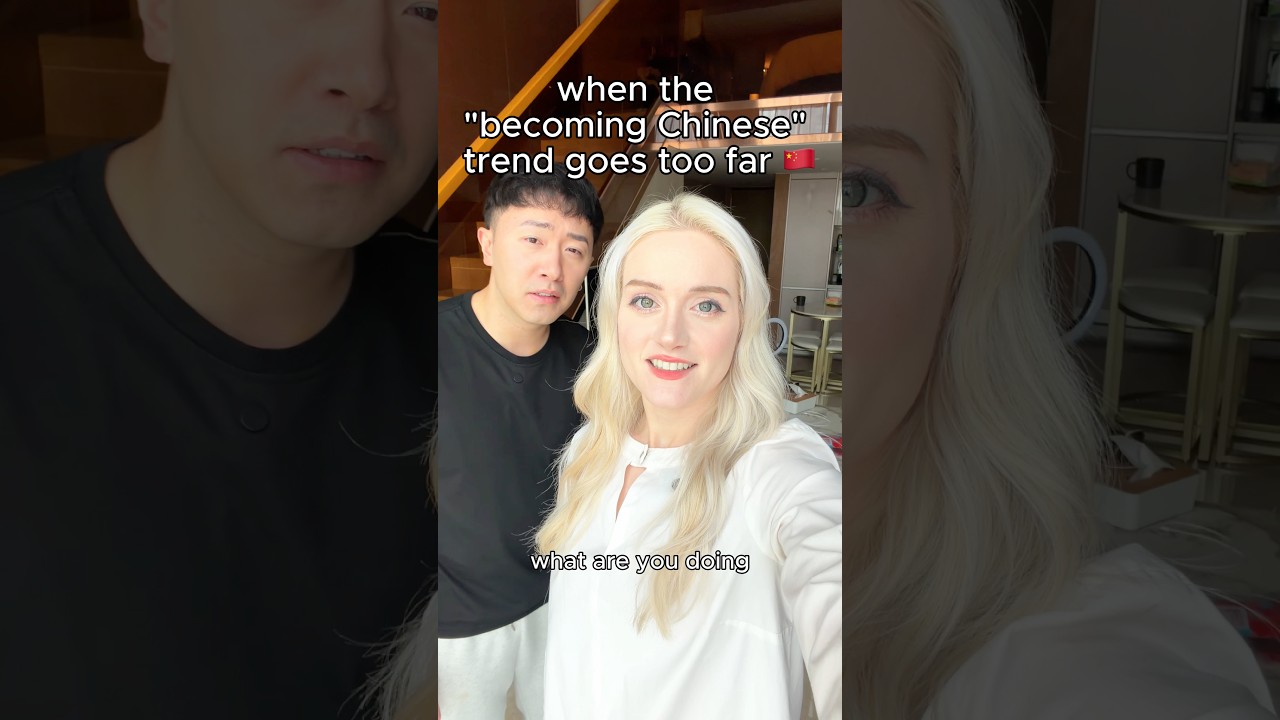
This article may be meeting you at a very Chinese time in your life.
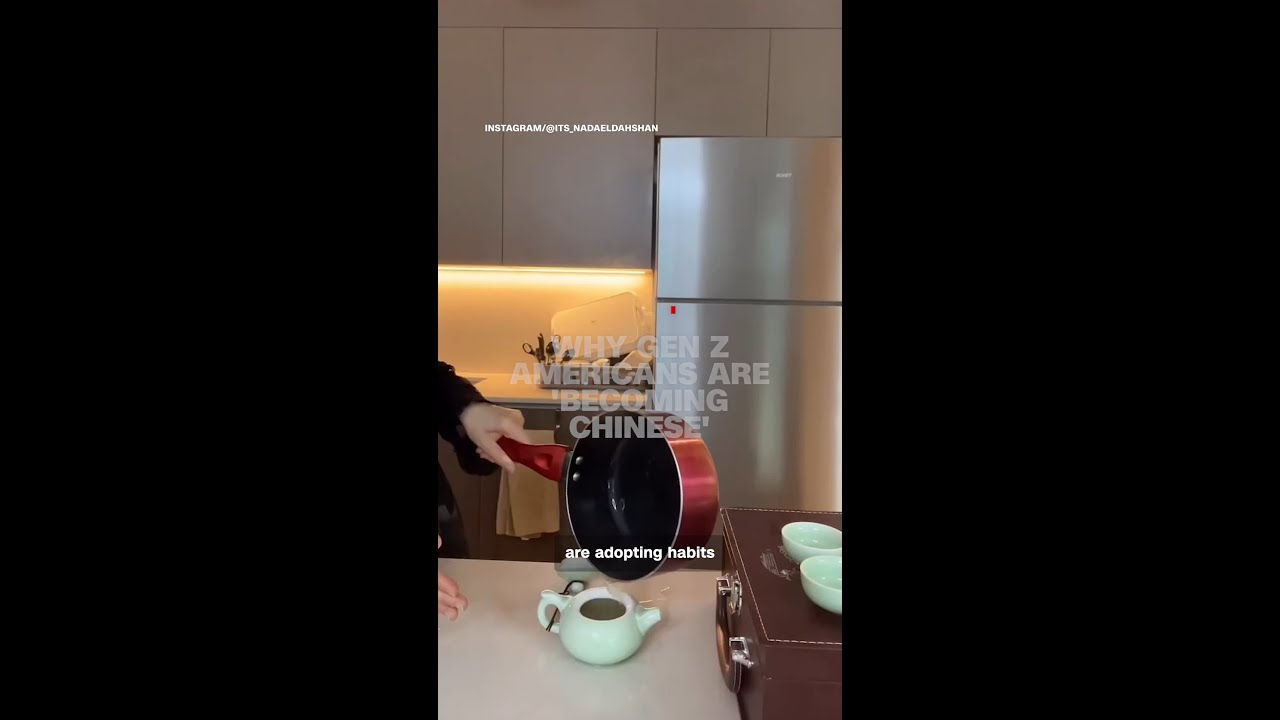
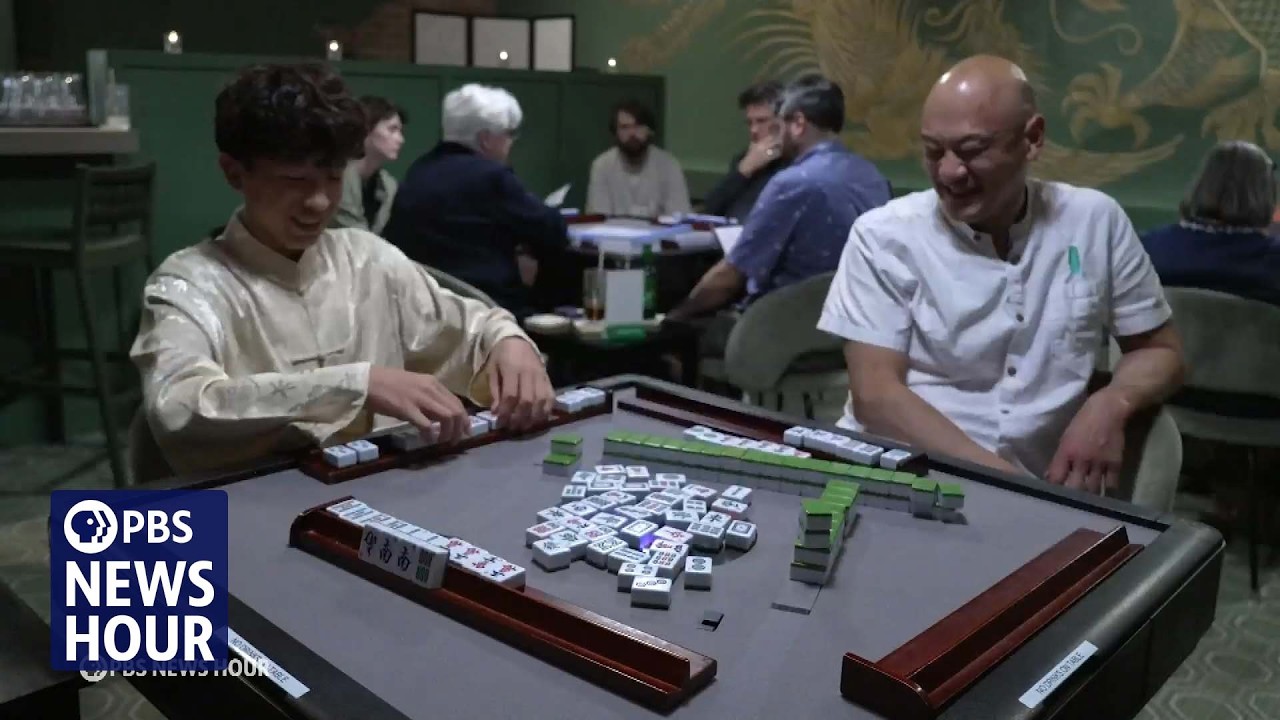
At least, if you’ve spent enough time recently on social media, where the phenomenon of “Chinamaxxing” has swept feeds with videos of people sipping hot water, shuffling around the house in slippers and donning a viral Adidas jacket resembling historic Chinese fashion.
These things, content creators joke, will help you “become Chinese” – reflecting a growing Western fascination with Chinese culture and aesthetics.
“Morning routine as a new Chinese baddie,” one TikTok creator captioned a video in which he does a series of traditional Chinese exercises. Another video, viewed more than 2.4 million times as of late February, shows the creator boiling apples to make fruit tea – a supposedly old-school Chinese elixir for gut health.
We’ve seen this play out before as Asia steadily accumulated global cultural capital. K-dramas, K-pop and K-beauty have become beloved worldwide, while record numbers of tourists are flocking to Japan and gushing over its pristine streets and high-speed rail.
Now, it seems it is China’s turn.
A guest wears brown fur Labubu bag with Labubu charm attached, outside Dior, during the Womenswear Spring Summer 2026 as part of Paris Fashion Week in Paris, France, on October 1, 2025.
Claudio Lavenia/Getty Images
A guest wears dark sunglasses, a mustard yellow suede Adidas Tang jacket with white toggle closures, oversized beige cotton trousers, and a bright yellow Vivienne Westwood heart-shaped leather handbag, outside Jeanne Friot, during the Menswear Fall/Winter 2026-2027 as part of Paris Fashion Week on January 20, 2026 in Paris, France.
Claudio Lavenia/Getty Images
“For the longest time, there was all this discussion about (how) China didn’t really have as much soft power vis-à-vis South Korea or Japan,” said Tianyu Fang, a PhD student at Harvard University’s Department of the History of Science.
“We see that changing quite a bit over the last few months – with Chinese video games, Chinese films, and even tiny things like Labubus that are really reshaping the cultural imagination of China in the US, and more broadly in the West.”
But this feels a little different from previous Asian cultural waves. For starters, South Korea and Japan are both democracies and staunch US allies, while China is an authoritarian state and major US rival.
The trend also marks a vibe shift within the American public.
Just a few years ago, the Covid-19 pandemic fueled a surge in deadly anti-Asian hate crimes. US President Donald Trump repeatedly used racist language, calling Covid “kung flu.” A trade war and other tensions deepened the widespread Sinophobia.
Sally Sha holds up a sign during a Stop Asian Hate rally at Discovery Green in downtown Houston, Texas, on March 20, 2021.
Mark Felix/AFP/Getty Images
Against this backdrop, it can seem like something of a 180 for many Gen Z Americans to now embrace “becoming Chinese.”
But experts say the trend reveals deeper undercurrents like dissatisfaction among many Americans with life at home – from political turmoil, gun violence, immigration crackdowns and persistent racial tensions. All this has dulled the veneer of the US, driving curiosity for American youths to see what life is like on the other side.
It’s also about simple exposure, Fang pointed out. While Chinese products have long been ubiquitous across the planet, more Americans are now noticing Beijing’s dominance in many fields – especially in the competitive world of tech.
And increasingly, what they’re seeing is redefining their image of cool.
Has the US lost its ‘cool’ factor?
This isn’t the first time China has drawn intrigue from the West. In the 2000s and early 2010s, as China began opening up to the world, more outsiders began learning Mandarin, and travel and immigration to and from China spiked.
A group of American tourists from Minnesota wait for entry to the Forbidden City in Beijing, China, on 25 August 2003.
Mark Ralston/South China Morning Post/Getty Images
Much of the enthusiasm to engage with the Asian giant was economically driven, said Fang.
In the past decade, however, “China became more self-sufficient, it is much more inward-looking than it used to be, especially during Covid.”
Relations with the US also soured drastically as China turned increasingly authoritarian under leader Xi Jinping, instead of more democratic and liberal as Western leaders had hoped.
But now, it appears people are drawn to China not purely because of money – but because of the cool factor.
That may be partly fueled by China’s reopening post-Covid, which included relaxing some visa policies and encouraging more tourism – as well as the great migration of social media users to China’s Xiaohongshu (also known as RedNote) platform after the US government threatened to ban TikTok.
The influx of Americans to Xiaohongshu saw two vastly different populations – who normally exist in entirely separate online spaces – directly connecting like never before.
And it’s no coincidence the trend comes amid a broader decline in the US’ global image. Though it’s still the dominant cultural force globally, recent geopolitics and domestic turmoil have reshaped how people around the world view the superpower.
Just look at how the immigration crackdown has prompted many international students to go elsewhere for their studies; how research budget cuts have pushed top scientists to work in China instead; how Canadians, angered by a trade war, are boycotting US goods; or how Americans themselves are choosing to leave the country.
You can see this growing sense of disillusionment in the kinds of Chinese content young Americans are gravitating towards.
For instance, videos showing vertiginous skylines from Chinese metropolises like Chongqing and Shanghai have gone viral for depicting a futuristic vision of urban life, replete with seemingly clean streets and low levels of violent crime.
Chongqing Rail Transit Line 2 passes through Liziba Station, where the track runs directly through a residential building.
Sky_Blue/iStock/Getty Images
A Serbian tourist has fun at the viewing platform around the Liziba Station of Chongqing Rail Transit in Yuzhong District of southwest China’s Chongqing, on October 3, 2025.
Xinhua News Agency/Getty Images
Clips showing neon-lit skyscrapers, drone shows and jaw-dropping transport systems have been topping social media algorithms. Other popular videos highlight China’s electric vehicle advances and embrace of green energy.
In many ways, this romanticism of Chinese progress is oversimplified. For instance, while housing costs in China are lower than in the US, average wages are also far lower – one of many real-life challenges of life in China. Despite these problems, however, the viral videos present a seductive contrast to America’s aging infrastructure and high cost of living.
The current trend “tells us more about what Americans feel about America, than what Americans feel about China,” Fang said.
Is the future Chinese?
With a long history of Sinophobia in the US and geopolitical tensions, it’s hard to say how long “Chinamaxxing” will last – and whether it’s a sign of an increasingly Chinese future.
Beijing has spent years cultivating its soft and hard power in parts of Africa, Latin America, Southeast Asia and the Pacific Islands. In certain countries, it’s common to see Chinese EVs and Huawei or Xiaomi smartphones – products that are far less visible in the US in part due to policy restrictions and import controls.
“A lot of Americans (are) slowly realizing that these are the things China has been producing and they’re pretty good,” said Fang. “There is a lag precisely because these things weren’t allowed in the US.”
An electric vehicle charges at a charging station in Yichang, Hubei, China, on January 21, 2026.
NurPhoto/NurPhoto/NurPhoto via Getty Images
Even some of the US’ closest traditional allies are inching closer to China in the face of Trump’s volatile foreign policy. France’s Emmanuel Macron, Britain’s Keir Starmer, Finland’s Petteri Orpo and **Canada’s Mark Carney**all visited Beijing in recent months, and were hosted by Xi.
Internet culture moves fast, and viral memes fade quickly. For most users, “Chinamaxxing” was never that serious and meant to be used ironically or as a joke.
The trend has come under criticism too, with some members of the Chinese diaspora accusing it of being culturally appropriative and insensitive.
But for a brief moment, trends like these can offer an unlikely digital bridge between two cultures often divided by politics and the decisions of their leaders.
“I personally grew up or came of age in this decade when people in the US and people in China were interested in what each other had to say, and had to offer to the world,” Fang said.
“I’d like to see some of that revive in this day and age.”


# TikTokers are ‘becoming Chinese’ in a new trend that’s part parody and part politics
Published: February 25, 2026 2:11pm EST
AuthorJustine Poplin
- Teaching Associate, Faculty of Education, Southern Cross University
Disclosure statement
Justine Poplin does not work for, consult, own shares in or receive funding from any company or organization that would benefit from this article, and has disclosed no relevant affiliations beyond their academic appointment.
“Drink hot water” has become an unlikely life philosophy on TikTok, as countless users track their journey towards “being” or “becoming Chinese”.
All of this is part of a broader social media trend dubbed “Chinamaxxing”.
Out of context it may seem strange: thousands of Chinamaxxing videos – often with the caption “you’ve met me at a very Chinese time in my life” – show users of various backgrounds partaking in traditional Chinese practices and wellness rituals. This may look like going to bed early, wearing slippers indoors, eating congee, or doing traditional stretches to improve energy flow.
The Chinamaxxing trend is a unique example of digitally mediated cross-cultural admiration. It reflects the West’s general growing interest in traditional Chinese medicine and culture – and more broadly shows us how social media can reshape the way we think about and engage with other cultures.
Ideas of wellbeing in China
Digital spaces are increasingly shaping how cultures are understood and shared.
Recent articles have documented this shift. Journalist Zoey Zhang’s reporting on the “becoming Chinese” TikTok trend describes how non-Chinese are experimenting with wellness habits rooted in traditional Chinese medicine. This holistic framework, developed over centuries, is grounded in theories of qi (vital energy), yin and yang (complementary forces), and the five elements.
How The Conversation is different: We explain without oversimplifying.
Learn more
Some videos are tongue–in-cheek – akin to parody. But as Zhang and others note, many represent a genuine attempt to engage thoughtfully with Chinese culture. And in most cases, even the humorous videos aren’t making fun at the expense of Chinese people or culture.
Global Times reporter Xu Liuliu suggests the trend signals a move from a surface-level fascination to a more reflective form of engagement with Chinese culture. For instance, many users point out how Chinese practices associated with moderation, balance and longevity can function as antidotes to burnout culture.
Viral trends as soft power
Viral memes such as “you’ve met me at a very Chinese time in my life” aren’t just trivial; they can be viewed as cultural vehicles. Memes help condense complex cultural narratives and practices into an engaging and shareable format.
For example, a short TikTok video about refusing iced water stands in for a centuries-old medical philosophy tied to concepts of bodily balance and internal heat.
Through repetition, these kinds of visual narratives can become familiar, or even desirable, to audiences far removed from their original context.
It’s an example of “soft power”, which refers to a country’s ability to shape global perceptions of it through its portrayal of culture and values.
In the age of TikTok, Xiaohongsu (RedNote) and Instagram, soft power no longer flows only through film studios or state-sponsored media. It also moves through influencers’ kitchens, aesthetic vlogs and comment sections.
This latest wave of content promoting Chinese culture feels intimate, domestic and desirable.
Is it appropriation?
The Chinamaxxing trend has led many to ask an important question: are we seeing cultural appreciation, appropriation, or something in between?
Many users adapt and remix the practices to fit their own lives, and may lose important context or histories in doing so. On TikTok and Instagram, traditional Chinese medicine may be reduced to a checklist of habits: avoid cold drinks, boil ginger, prioritise rest. These kinds of oversimplifications risk detaching practices from the important philosophies underpinning them.
At the same time, it would be reductive to dismiss the entire trend as mere appropriation. Many creators credit their sources, share family stories and collaborate across cultures. And many are themselves members of the Chinese diaspora living in the West.
Rather, we might view the trend as a kind of trans-cultural renaissance, mediated by algorithms.
Why this moment matters
The Chinamaxxing trend has largely been driven by Gen Z users based in the United States. Although it’s hard to know for sure, some commentators think it may stem from this group’s growing disenchantment towards its own government.
The popularity of this content speaks to several contemporary Western anxieties. Burnout culture, climate uncertainty and economic precarity have made the West’s hyper-optimised self-care culture feel hollow.
This trend of celebrating Chinese culture comes at a time when some Western ideological structures are coming under intense scrutiny. Perhaps this is making Western audiences question whether the anti-Chinese sentiment they’ve been exposed to through their own institutions ought to be questioned.
The challenge is to remain reflective. Engagement can deepen cross-cultural understanding – but only if curiosity extends beyond memes. Drinking hot water may be simple, but understanding the worldview behind it requires more sustained inquiry.
As digital user-generated content continues to dissolve distances between cultures, it is in our collective interest to connect with one another beyond the algorithm.

# Is this a ‘very Chinese time in your life’? The trend boosting China’s soft power
14 February 2026
Koh Ewe
AFP via Getty Images
Being Chinese is now in vogue
Ni hao, we’re all Chinese now.
Or at least that’s what they claim on TikTok, where a trend called “Chinamaxxing” has taken off in the West.
Chinese wellness practices, once associated with the tacky and geriatric, have suddenly found themselves in vogue, largely among Americans.
From warm apple-boiled water to indoor slippers and longevity exercises, people are sharing videos of themselves “learning to be Chinese”. Many come with the Fight Club-inspired caption “you met me at a very Chinese time in my life”, or the hashtag #newlychinese.
As Donald Trump shakes up the world order, the Chinese Communist Party has welcomed this boost to the country’s image.
Chinamaxxing is certainly adding more gloss to the recent flourish of Chinese soft power. Over the past year we’ve seen the world clamour for Labubu dolls, wait in line at brand new stores to buy Mixue bubble tea and Luckin coffee, and scroll through their friends’ holiday feeds in the “cyberpunk city” of Chongqing.
Some say Chinamaxxing stems from young Americans’ disenchantment with their own country, although it’s unclear how much that is really driving the trend.
But like so many internet trends, this one hardly paints the full picture. It’s a celebration of memes and fleeting moments that make up just one slice of Chinese life. Beyond that are young people who, like their American counterparts, are also worried about their future in a sluggish economy and a fast-changing world.
A very Chinese time in our lives
Some Chinese youth may find it strange that parts of their culture - long seen as “uncool” in the Western imagination - are now the object of fascination. Some may find it offensive that Westerners on TikTok are facetiously claiming they’ve been “diagnosed as Chinese”.
But others say Chinamaxxing strikes a different note from derogatory jokes like “bing chilling” - where the punchline is ex-wrestler John Cena’s stilted Mandarin pronunciation - or the “social credit” meme that mocks the Chinese government’s restrictions on personal freedoms.
This time, Chinese people are in on the joke - not the butt of it.
One of the most influential figures behind the Chinamaxxing meme is Sherry Zhu, a Chinese-American TikTok content creator who regularly shares traditional wellness tips with her “Chinese baddies”.
“Tomorrow you’re turning Chinese,” she tells her 740,000 TikTok followers. “And I know that sounds intimidating, but there is no point in fighting it now.”
Getty Images
Mixue, an ice-cream and tea chain, now has thousands of stores across the globe
Few could have seen this coming.
It was not that long ago when the Covid pandemic sparked a wave of Sinophobia. Chinese diaspora spoke of racism and how people were avoiding the community and their businesses.
Then a stunned world watched Beijing put its cities into hellish lockdowns. Reports emerged of residents running out of food and pleading for help from inside their sealed-off neighbourhoods. The restrictions ended only in early 2023 after rare protests. By then expats had left China in droves, many of them saying too much had changed.
There was also an exodus from Hong Kong, where Beijing’s control was reshaping the city. This, along with China’s growing power and assertiveness, strained the relationship with the West, even as the world’s reliance on the Chinese economy became clear.
Meanwhile, China’s investments in tech, infrastructure and exports began to pay off - and became more visible as it reopened post pandemic, relaxing visa rules to bring back tourists.
It was hard to miss: glitzy skyscrapers, a sprawling high-speed rail network, highways packed with electric vehicles, and a boom in green energy, robotics and artificial intelligence. Chongqing - a humid southwestern metropolis which once made global headlines for a corruption scandal and murder - turned popular and cool.
NurPhoto via Getty Images
Tourists are flocking to China’s “cyberpunk city” of Chongqing
There have been other, smaller triumphs. Young people around the world are snatching Adidas Tang-style jackets off the shelves, bingeing on Chinese micro-dramas and experimenting with powdery make-up looks flaunted by Chinese girls and women on Douyin, China’s version of TikTok.
“As a Chinese person who has been online throughout years and years of heavy Sinophobia, it felt refreshing to have the mainstream opinion finally shift regarding China,” Claire, a Chinese-Canadian TikTok user, tells BBC Chinese.
The 22-year-old, who shares political content on TikTok and would only reveal her first name for that reason, says, for her, the “critical juncture” was last year.
That was when she noticed a shift in attitudes about China. A wave of Americans arrived on RedNote, a popular Chinese social media app, ahead of a TikTok ban in the US.
Within days memes became the currency of these American “TikTok refugees” as two worlds that rarely interact because of China’s internet firewall were brought closer.
A dimming American Dream
“These young people have watched their physical reality remain frozen while China built entire cities,” says Afra Wang, a tech writer and podcaster.
“When you can’t build high-speed rail but you can scroll through videos of Chinese infrastructure, of course the future starts to look Chinese.”
For observers like her, it’s no coincidence that Chinamaxxing comes as the American Dream seems to be dimming.
Americans who came of age after the Iraq War, the 2008 global financial crisis or even the 6 January 2021 Capitol riot face a job market disrupted by globalisation and then AI, Wang says: “American exceptionalism was never something they lived.”
AFP via Getty Images
China now has the world’s largest high-speed rail network
What do people in China think of Chinamaxxing? Not much, it seems. The trend has stirred limited reactions on Chinese social media.
Rather, in the eyes of Chinese people, America, once seen as a beacon of success, has lost its shimmer. Not least because tensions between the two sides have made it harder for Chinese students who want to study or work there.
“During America’s Chinamaxxing moment, China is experiencing its own America-minimising moment,” Wang says.
On parts of Chinese social media, there are dystopian references to the “US kill line”, a Chinese gaming term that refers to the perilous descent into poverty in the US. The idea, which took root quickly among users and influencers, is that America is a tough place to survive because a single stroke of bad luck can derail your life.
The term’s popularity on social media is helped by the fact that it has been embraced by Chinese state media and the government. They have sought to portray the US as a decaying superpower because of inequality, a weak social safety net and a broken healthcare system.
According to a commentary in state-owned Xinhua, the “kill line” meme “underscores how far the lived reality can drift from the ideals once broadcast to the world”.
Beyond the memes
It’s little wonder that Chinese authorities are pleased with Chinamaxxing.
“Chinese lifestyles increasingly gain global appeal, offer a steadier way of being,” reads the headline of a Global Times piece about the trend.
When asked about it at a press briefing earlier this month, Chinese foreign ministry spokesperson Lin Jian said a “unique blend of history and modernity” is making China increasingly appealing to foreigners.
He was “happy” to see foreigners experiencing the “everyday life of ordinary Chinese people”.
Getty Images
Young Chinese face many of the same challenges as their Western counterparts
Are they really?
For one, it’s hard to know what Chinese people make of so many things because all public conversation and activity is heavily policed. Criticising the government is risky and protests are quickly quashed.
Two, there is a lot the memes making it to the West don’t show. China’s youth are facing an unemployment rate that sits at more than 15% and burning out from a gruelling work culture, yet sharing too much of their pessimism online could alert internet censors. They are worried about finding a home as the country’s property crisis continues, and dating is no easier than anywhere else.
Propping up breakneck delivery speeds are gig workers scrambling to hit deadlines. Many can relate to the hustle: in 2023, Beijing courier Hu Anyan’s memoir about the relentless nature of gig work became a national bestseller.
“When I think of my American friends and tech people wandering through Shenzhen in awe, I also think of my own experience in Shenzhen,” Wang says. “Drinking a six yuan latte from Luckin Coffee, delivered on a scooter by someone like Hu Anyan, whose labour makes ‘cool China’ visible while remaining almost invisible themselves.”
Perhaps, if the fascination with China’s successes continues, more of Chinese life will surface. But for now apple tea seems to be where it’s at.
“Ever since I started boiling apples in my tea water my period cramps have completely gone,” reads a comment on RedNote from an American user - one of the TikTok refugees still lingering on the app.
“We have so much still left to learn being Chinese.”
Additional reporting by Eunice Yang from BBC Chinese
if you enjoy Hanfu Gene you should checkout my cosplay sky king armor. All the laddies love it.
That’s sexually ambiguous. What are your pronouns again? 
But srsly, post a pic.
Chinamaxxing is a Gen Z thing…
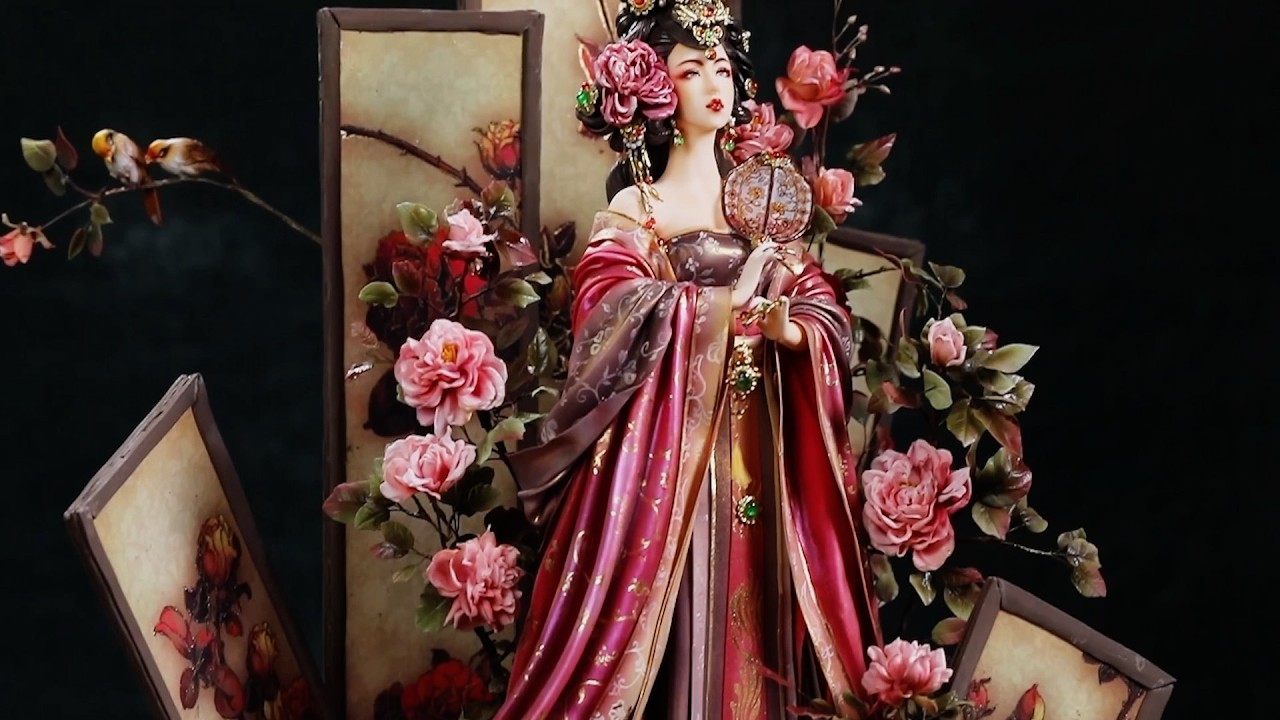
# Chinese practices like qigong are trending on social media. Here’s what you need to know.
Brian Huff of Body & Brain explains the basics
BY
-
MARCH 20, 2026
Qigong is trending on social media outlets like TikTok
Photograph courtesy of Body & Brain
From Asian lymphatic drainage techniques to traditional Chinese medicine teas, Asian remedies, treatments, and practices are trending on social media. Buried within that overarching trend is an ancient practice called qigong (chee-gong in Chinese or kee-gong in Korean) that is rising in popularity, particularly on TikTok.
“Qigong is a mind-body wellness practice that focuses on holistic wellness,” says Brian Huff, the regional director for Atlanta of Body & Brain, the largest qigong and tai chi company in the country that offers in-person and online instruction. “It’s about cultivating your energy or your inner scape, and bringing your body, breath, and focus into alignment.”
What that looks like in practice is a series of physical exercises and breathwork that Huff says can promote better circulation, balance, emotional regulation, and general well-being. Huff says Body & Brain is feeling the impact of qigong trending. Customers were previously mostly older adults, but recently, they have seen more young people. “People come in saying they don’t know how to focus or manage their emotions. They say, Can you teach me to be still inside?” he says.
Qigong exercises combine stretching and joint work. There are thousands of qigong exercises, and perhaps just as many ways to practice them. Potential exercises include twisting your torso, bouncing and shaking your body, circling your arms, stretching your arms in opposite directions, chest opening stretches, gently hitting your solar plexus with your fists, and pushing your arms outward and inward while bending your knees.
One reason qigong is trending on social media is that it’s free and something someone can incorporate into their day at any time. Huff says that ideally, a qigong practice would be done every day for at least 15 minutes, but anything is better than nothing. “It’s a way to manage yourself, such as brushing teeth twice a day,” says Huff. “We should be managing our insides.”
The other reason it’s trending is that it’s preventive. “People come to us saying, I don’t want to replace my knees and hips. I want to do as much as I can to help my body now,” says Huff.
Unlike other styles of exercise that have meditative elements, such as yoga, qigong focuses on the journey just as much as the destination. Huff says that qigong’s differentiator is to do exercises slowly and mindfully. “For example, think of a stretch in yoga—you do it and hold the pose. In qigong, you do it, but you focus on your shoulder, then on your elbow, then on your wrist, and then hold your mind there to let it feel what’s happening,” he says.
If this sounds similar to tai chi, it’s because the two are related and often get confused. Tai chi is a martial arts discipline that derives from qigong’s principles. “Qigong is much freer,” he says.
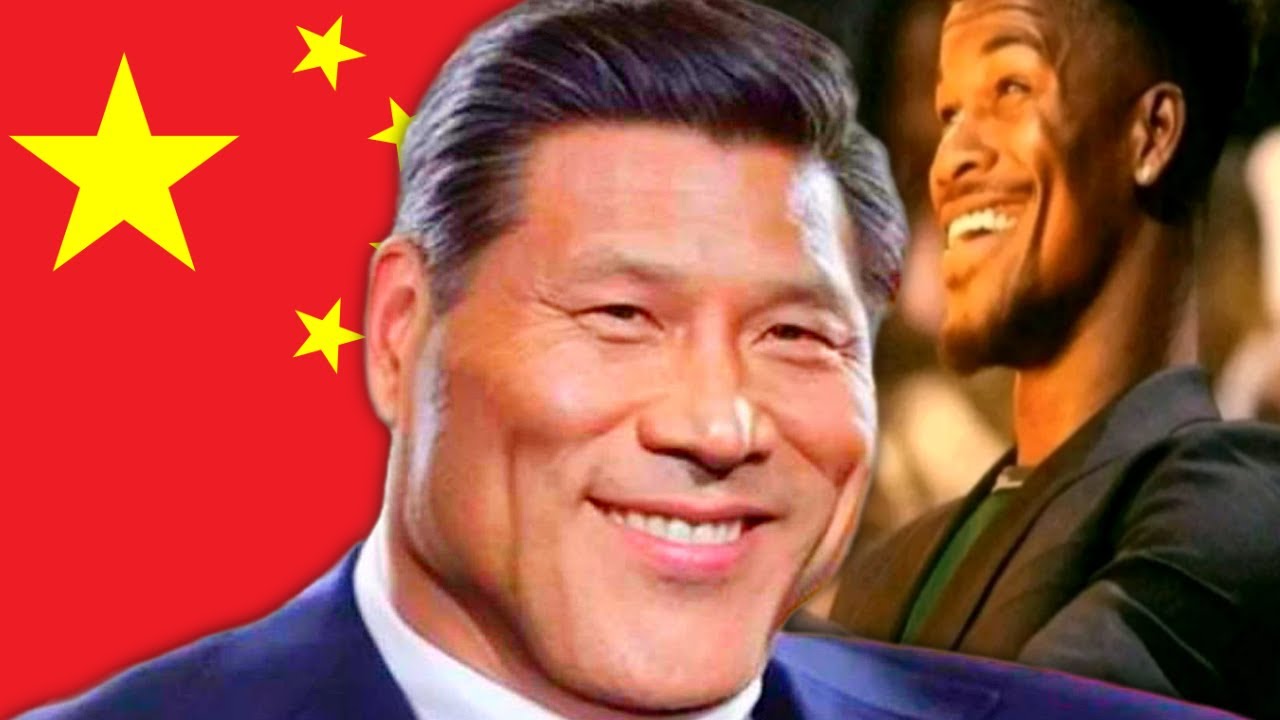
> # Gen Z flocks to Chinese medicine as trust in US health system plummets: ‘It’s so personalized to being human’
As Americans embrace ‘alternative’ remedies, people online joke that they’re ‘Chinamaxxing’ their wellness routines
Wed 4 Mar 2026 10.00 EST
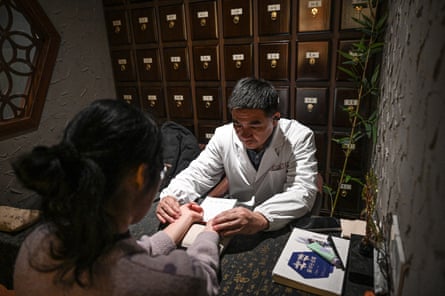
Did you drink ice water today? If you did, that was “not very Chinese of you”, according to Sherry Zhu, a 23-year-old Chinese American creator based in New Jersey. If you were really serious about “becoming Chinese”, you would be sipping hot water every day, she warned in a TikTok video with millions of views. “I really do feel like, digestion-wise, a lot better when I’m drinking hot water,” she later explained to GQ.
Britain and the US, calm down. The gen Z Chinamaxxers will do you no harm
Zhu’s guidance is taken from traditional Chinese medicine (TCM), a health system that dates back 5,000 years and offers a holistic approach to treating symptoms – physically, emotionally and spiritually. Other creators of Chinese descent have their own TCM hacks: keep your feet warm and your periods will be more bearable. Drink tea made with goji berries, jujubes and ginger as a cure-all. Move your body every day to promote the flow of qi, or internal energy. “Do my Chinese baddie routine with me,” they caption their videos in half-authoritative, half-joking tones. “Advice from your Chinese big sister.”
Creators of non-Asian descent have been eager to prove they can follow directions. “Day one of being Chinese,” they post, showing off pots of boiled apple or savory breakfasts (both better for digestion, according to TCM). “It has come to my attention that we are all suddenly Chinese,” a white health influencer declared as she bumbled through her first congee recipe.
When Americans don’t trust their own institutions … they become more willing to look for alternative reference points
Shaoyu Yuan
Why are Americans drawn to Chinese wellness tips – and expressing interest in “becoming Chinese” or “being in a very Chinese time” of their lives? It’s tied to what some have dubbed “Chinamaxxing”, a recent trend begun by Americans, involving the sharing of memes and videos in praise of Chinese culture.
Ironically, Chinamaxxing was a response to Donald Trump’s economic targeting of the country in 2025. Between a bungled trade war, flip-flopping restrictions on Chinese tech and a fudged TikTok ban, the US began to look feeble in comparison with its geopolitical rival. With a sense of subversiveness, young Americans started professing fascination with Chinese culture. Influencers such as iShowSpeed and Hasan Piker traveled to China to produce content, while the US market embraced Chinese cultural goods, such as Labubus, the video game Black Myth: Wukong and Adidas’s athleisure spin on the Tang suit.
A traditional Chinese medicine practitioner performs a pulse diagnosis. Photograph: Jade Gao/AFP/Getty Images
“When Americans don’t trust their own institutions, media or political class, they become more willing to look for alternative reference points,” said Shaoyu Yuan, a scholar of international relations and New York University professor, over email. “Public debates over TikTok, sanctions, export controls and ‘decoupling’ signal to many young people that China is central to the future, whether they like it or not.”
Chinamaxxing also comes as Americans’ trust in the US healthcare system plummets. RFK Jr has consistently cast doubt on vaccines and other conventional medicine while promoting “alternative” remedies, boosting a wellness market that repackages holistic care from other cultures as luxury treatments. Chinese medicine might seem less “woo-woo” than it once did now that the US health secretary is bragging about drinking cod liver oil.
Lulu Ge, the founder of Elix, a wellness brand that uses Chinese traditional herbs, makes videos about “avoiding ice drinks and eating warm foods” to promote her brand. For years her content invited mostly skeptical reactions. But when the Chinamaxxing trend exploded in January, she was taken aback by a sudden surge of engagement: Elix’s social channels saw a 250% increase in organic impressions and its site traffic went up 40% week over week.
Lulu Ge of Elix. Photograph: Courtesy of Lulu Ge
Ge believes that Americans have become skeptical of the US healthcare system’s emphasis on physician “specialization”, which can frustrate people seeking treatment for multi-symptom conditions such as long Covid and autoimmune disorders. “Chinese medicine really works best for chronic conditions where it touches upon multiple different health systems,” she said. (Numerous studies have shown that TCM therapies can play an important role in the prevention and treatment of chronic diseases – but they can’t be claimed as a cure for all conditions.)
Promoting TCM is part of China’s soft power strategy. In 2016, Xi Jinping’s administration issued a directive for China to “actively introduce TCM to the rest of the world”. In 2020, China’s National Health Commission advised the use of TCM in its recommended treatment of Covid-19 and drafted a plan to punish anyone who “slanders” the medicine system (which it later abandoned). The government also sent TCM doctors and supplies to countries that were particularly affected by the virus’s spread, such as Uzbekistan and Italy. By 2022 the global TCM market had a valuation of $400bn.
TCM staked out a presence in America in 2021, when beauty creators began scraping their faces with gua sha stones to promote lymphatic drainage, and Covid longhaulers sought acupuncture to manage their most mysterious and persistent symptoms. Last year, TikTokers spearheaded a niche “Chinese face mapping” trend, asking ChatGPT to act as a TCM doctor and offer less-than-trustworthy assessments of their health based on puffy eyes or pale tongues. When cold and flu season hit this year, many were eager to receive and share health tips, culminating in the broader call to Chinamaxx wellness routines. It helped that practices culled from TCM – such as going to sleep before 11pm – fit neatly within the “get ready with me” and “bedtime routine” formats so popular on social media.
“When someone adopts qigong, acupuncture, cupping therapy, herbal remedies [or] gua sha … they are not consuming a one-time cultural export. Instead they are building a habit, and habits quietly change how foreignness feels,” Yuan said. “That doesn’t mean they are ‘switching sides’, however … People can be skeptical of Chinese state policies and still find Chinese wellness practices useful or interesting.”
There is a medicine tied to [TCM], but there’s almost a lapse in communication or understanding of why our parents told us [about it]
Dr Felice Chan
Some Asian American creators and writers have found this online obsession with China jarring, especially because people of Asian descent in the US were harassed, assaulted and even killed during Covid times. Others have called out white creators for assuming authority on Chinese practices – like the non-Asians claiming to offer the wisdom of a “Chinese grandmother” via recipes for waterless chicken soup. “What a privilege it is, to be able to try on someone else’s identity for a day without inheriting any of the consequences,” wrote Faith Xue, the editor-in-chief of Coveteur.
One Chinese American creator questioned her decision to post a video of “Chinese baddie tips” to promote her tea business. After seeing how “saturated” the trend had become, she wondered whether content about TCM was “appreciation or extraction” of Chinese culture.
Dr Felice Chan, an acupuncturist, doctor of Chinese medicine and co-founder of the skincare brand Moonbow, said that she loves the visibility around TCM. “If it gives acupuncturists jobs, if it gives light to other Chinese medicine brands, why not?” she said. But she is aware of “surface level” content that flattens or oversimplifies the health benefits of TCM, which is a shared wisdom best passed down through families, not algorithms.
Dr Felice Chan. Photograph: Courtesy of Dr Felice Chan
“There’s a reason why your mom told you to wear slippers in the house … If our feet are cold, our womb is cold, we have bad period cramps, right?” Chan said. “There is a medicine tied to it, but there’s almost a lapse in communication or understanding of why our parents told us.”
Other creators embrace the familial framing. “I’m spending my nights and weekends on TikTok telling people that they’re part of my Chinese family, that they’re being adopted by my Chinese mom,” Ge said. “We get people saying, ‘Can I get adopted?’ We’re doing this together, sis. We’re basically like family.” For Ge, this kind of response “speaks to this broader desire for community, for belonging”.
The Chinamaxxing trend blazed on through February, buoyed up by the lunar new year and an influx of content about bringing good fortune in the year of the fire horse. The spiritual nature of such guidance underlined another explanation for TCM’s popularity right now: the system itself can be poetic and mystical, defying the creep of AI and automated systems into western healthcare. For instance, according to TCM practitioners, the herbal blend to treat a persistent stuck throat, or “plum pit qi”, can also help quell the emotions brought on by “a situation that is figuratively too hard to swallow”.
“[TCM] is very rich with heritage, lineage, tradition [and] extremely rich in symbology,” said Minjung Hwangbo, a student of TCM and content creator. “This medicine is so personalized to being human, and with the emergence of AI, I think people are craving meaning and a return to humanness.”
The lunar new year happened on the same day as the beginning of Ramadan, during Black History Month, and shortly after a Super Bowl half-time performance from Bad Bunny that briefly “made everyone Puerto Rican”. As one X user joked, Americans are “globalismmaxxing” now – eager to seek out cross-cultural connections, if only through the lens of a 10-second meme.
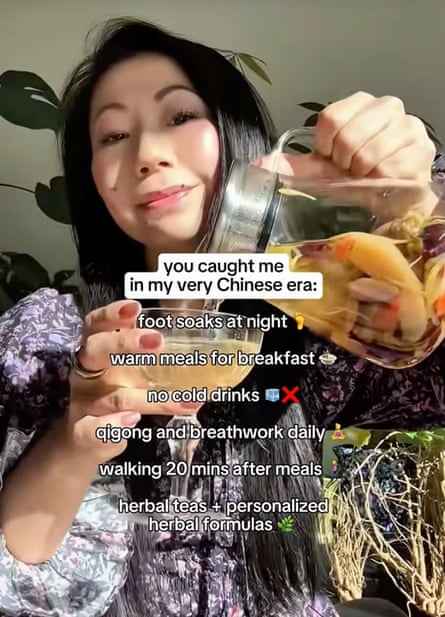
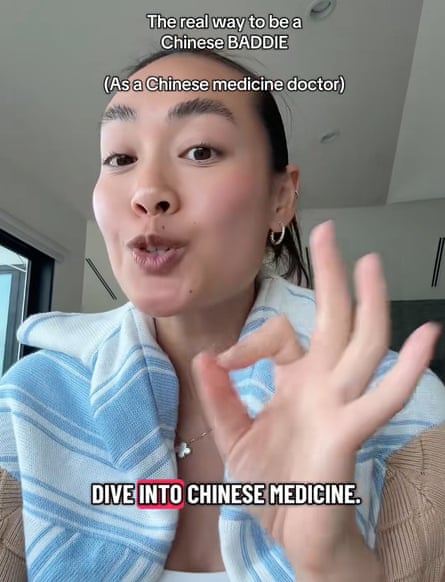
> # Chinamaxxing: The American trend co-opting and romanticizing Chinese culture
The line between appreciation and appropriation in this viral TikTok trend is very thin
BY THEARA COLEMAN, THE WEEK US
PUBLISHED 11 HOURS AGO
Chinese culture has become more appealing to Gen Z
(Image credit: FotografiaBasica / Getty Images)
Even though relations between China and America are tense, many young Americans’ perspectives seem to be shifting as they adopt Chinese cultural habits. The online trend, dubbed “Chinamaxxing,” has non-Chinese content creators singing the praises of their newfound Chinese identity. At the same time, the meme’s prevalence has prompted some members of the Chinese diaspora to push back.
Young people are in a ‘very Chinese time’ in their lives
For social media users, Chinamaxxing translates to acting increasingly more Chinese. The trend can include “drinking hot water instead of iced lattes, wearing house slippers indoors or embracing traditional Chinese skincare routines,” said NPR. TikTok and Instagram users have taken to saying they are entering a “very Chinese time” in their lives.
The trend has been “amplified by Chinese diaspora influencers” such as Sherry Zhu, who shares “herbal skincare recipes and advice on becoming a Chinese ‘baddie,’” said NPR. Though it began as “niche lifestyle content,” the trend has since “spilled into celebrity PR stunts by the likes of Timothée Chalamet playing ping-pong in Chengdu and mainstream cultural debates.”
It is probably not an accident that Chinamaxxing has been popularized on TikTok, Shaoyu Yuan, a scholar who studies Chinese soft power, said to NPR. Soft power is the ability to influence international relations through attraction and persuasion rather than coercion. The social media app has an impact on multiple levels. One content stream weakens “American narrative authority by highlighting content that highlights U.S. dysfunction,” while another “makes China look more attractive.”
The meme is not “bound by nationality or ethnicity; anyone can be Chinese if they wish,” said The New York Times. “And right now, many do.” As Labubus and other “Chinese cultural exports” win over global audiences, experts say that the spread of “being Chinese” memes may “signal China’s growing soft power abroad.” For some American content creators, the memes are also a “wry expression of disillusionment with politics at home.”
It is “partly meme logic,” but it’s also a “sign of growing cultural cachet,” Yuan said to the Times. The memes reflect a “broader shift, in which online audiences are developing a new level of familiarity with China as they engage with it through lifestyle trends and aesthetics” and not as the “geopolitical rival and security threat it is often portrayed as in the United States.”
‘Orientalism by any other name’
The trend has sparked mixed reactions from the Chinese diaspora, with some “worried about the potential for cultural appropriation,” The Guardian said. Even Zhu is concerned about non-Chinese creators reducing traditional medicine to a wellness fad. “I don’t want people to forget the benefits that my culture is providing,” she said to NPR. It comes from China. It is not “coming from somewhere else.”
Chinamaxxing seemed to reach its peak during Lunar New Year in February. Related advice from non-Chinese creators felt like a direct challenge to the identity of those within the diaspora, Jenny Lau, author of “An A-Z of Chinese Food (Recipes Not Included),” said to The Guardian. Chinamaxxing is “Orientalism by any other name.”
In 2026, it is “apparently cool to be Chinese,” Cherie Wong, a Hong Kong Canadian activist, said in an Instagram video. But before “white people claim they’re drinking hot water” and they’re in a “very Chinese time, I’mma need you to stop.” A very Chinese time in “my ancestry was my grandparents seeing all their schoolteachers get executed for being intellectuals.”
Theara Coleman has worked as a staff writer at The Week since September 2022. She frequently writes about technology, education, literature and general news. She was previously a contributing writer and assistant editor at Honeysuckle Magazine, where she covered racial politics and cannabis industry news.
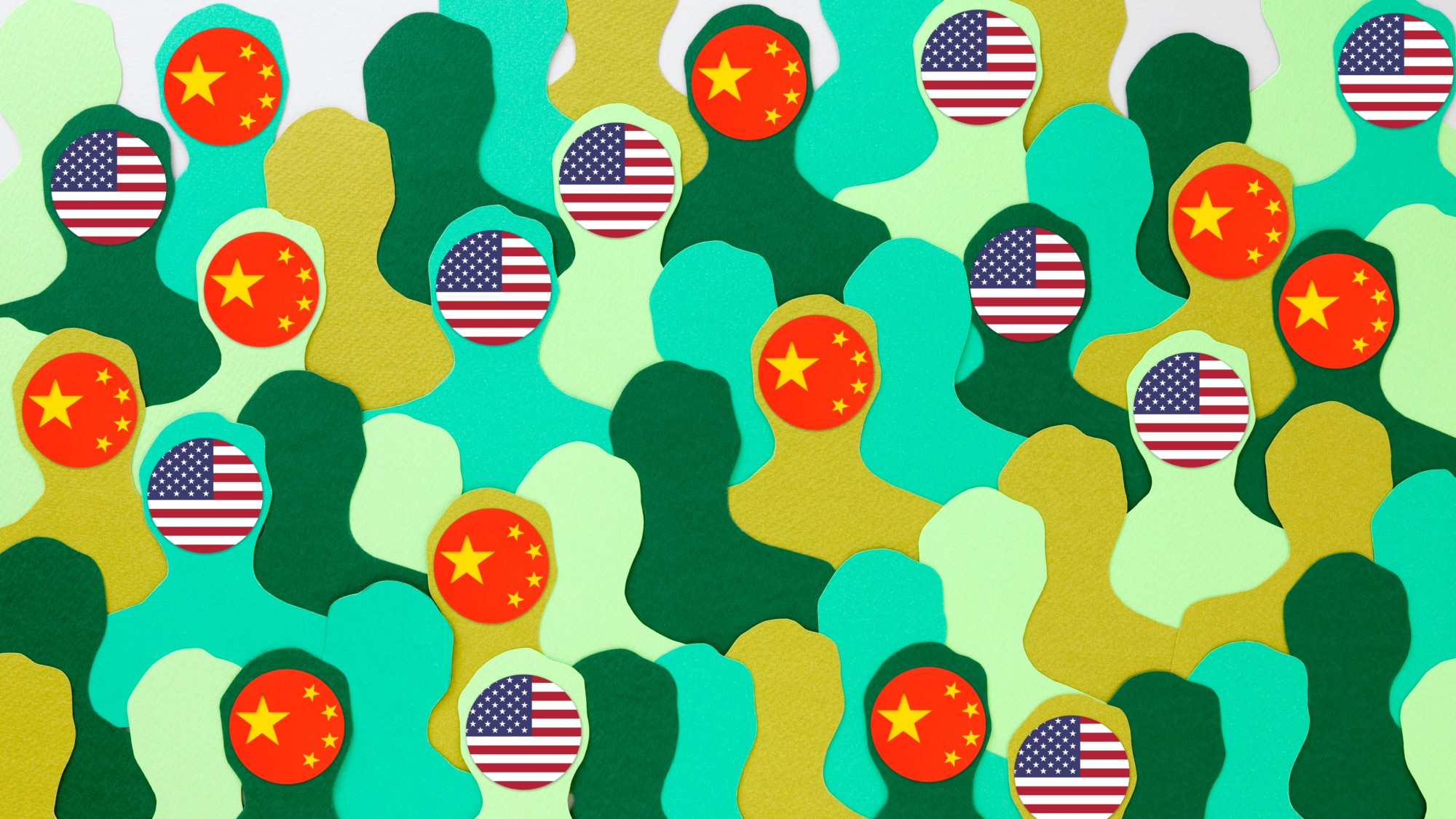
> # Chinamaxxing Is The Latest Viral Trend: Why Is Everyone Suddenly ‘Becoming Chinese’?
From “Chinese mornings” to gua sha routines and congee breakfasts, a new kind of aesthetic is taking over the Instagram algorithm
Written by:
Apr 14, 2026 15:37 pm IST
Published OnApr 14, 2026 15:37 pm IST
Last Updated OnApr 14, 2026 15:37 pm IST
Read Time: 6 mins
This cultural wave sweeping social media is made in China.
First, it was Japan. Think matcha rituals, minimalist homes, Studio Ghibli-core aesthetics. Then came Korea, with K-beauty routines, glass skin, K-dramas, and carefully curated wardrobes. India had its moment too, with Ayurveda, yoga, saree drapes, and “desi girl” aesthetics making their way into global feeds.
And now, if your Instagram algorithm feels slightly different, you are not alone. The latest cultural wave sweeping social media is China.
From “very Chinese mornings” to gua sha routines and congee breakfasts, a new kind of aesthetic is taking over. It is not loud or flashy. If anything, it feels slower, softer, and comforting.
Why Everyone Is Becoming Chinese On Instagram?
At the centre of this shift is a broader fatigue with fast-paced, hyper-optimised lifestyles. The appeal of “becoming Chinese” online is less about identity and more about adopting a rhythm of life that feels calmer and more intentional.
The trend took off in early 2026 when Chinese-American creator Sherry Zhu began posting videos about everyday habits she grew up with, from drinking hot water to wearing indoor slippers and eating warm, nourishing food. What began as casual sharing quickly turned into a viral moment, with millions of users declaring they were in their “very Chinese era”.
Soon, people were not just watching these videos. They are trying them.
So, What Does Becoming Chinese Look Like
Scroll through Instagram or TikTok right now, and you will find a familiar set of visuals.
Morning routines that begin not with iced coffee, but with hot water. Breakfasts that swap granola for congee. Evenings that include herbal teas instead of sugary shakes. There is a noticeable shift from “doing more” to “doing gently”.
A large part of this draws from principles associated with Traditional Chinese Medicine, which emphasises balance, warmth, and long-term wellbeing over quick fixes.
The Rise Of C-Aesthetics
Beauty is perhaps where the shift is most visible.
Instead of heavy contouring or multi-step routines, the focus is on what many creators call “high-performance minimalism”. Think glowing skin, de-puffed faces, and tools like gua sha becoming part of everyday routines. Skincare leans into herbal ingredients and slow results rather than instant transformation.
Fashion, meanwhile, blends affordability with aspiration. Platforms like Shein and Temu have made Chinese streetwear aesthetics widely accessible, from oversized track jackets to sleek monochrome outfits.
Brands like Adidas are also available in much cheaper and cooler pieces sold in China, which make viral Reels.
There is also a subtle incorporation of traditional elements, whether it is hanfu-inspired silhouettes or styling choices that nod to older influences.
The “Chinese baddie” or “I got my makeup done in China” look, as it is often tagged, sits somewhere between polished and effortless.
The Wellness Core Of It All
If there is one thread tying the trend together, it is wellness.
The idea of starting your day with warm food instead of cold, or doing a short Baduanjin routine instead of an intense workout, feels approachable.
Baduanjin, an 800-year-old qigong practice, has become especially popular. Short, gentle movements that promise better circulation, reduced stress, and improved posture have made it an easy entry point for beginners.
Even the emphasis on soups, broths, and ingredients like goji berries or snow fungus, which people are now incorporating into their beauty and wellness routines, also fits into this larger narrative of nourishment rather than restriction, according to Chinese medicine.
All these trends growing come under one single trend in what the Internet is calling: Chinamaxxing.
So, What Is Chinamaxxing?
Like earlier “maxxing” trends, which focused on optimising different aspects of life, think protein maxxing, fibremaxxing, etc., Chinamaxxing is about adopting Chinese habits, aesthetics, and routines in pursuit of a better, more balanced lifestyle.
The content often leans into humour as well. Captions referencing “you met me at a very Chinese time in my life,” “Don’t mind me while I do my Chinese routine” are making memes, Reels, making the trend feel self-aware rather than overly serious.
Why Are People Chinamaxxing
There are a few reasons this trend has caught on as quickly as it has.
First, it taps into burnout. Many users, especially Gen Z, are looking for alternatives to hustle culture. The promise of slower mornings, warmer meals, and gentler routines is deeply appealing.
Second, it is accessible. You do not need expensive products or a complete lifestyle overhaul. Drinking hot water, trying a simple exercise routine, or switching your breakfast is easy enough to experiment with.
Third, there is a growing curiosity around Chinese culture itself. From tech and infrastructure to beauty and fashion, China’s global influence has been steadily rising, and social media is amplifying that interest.
Travel plays a key role in this growing curiosity. Data shows that China’s inbound tourism has experienced explosive growth in early 2026, with foreign visitor numbers surging over 110% during the New Year holiday compared to the previous year, driven by expanded visa-free policies for more than 40 countries, streamlined entry procedures, and the viral “China Travel” trend on social media platforms.
Arrivals in secondary cities like Chongqing (up 170%), Hainan, and Dali have skyrocketed, fueled by influencers showcasing cultural sites, eco-tourism, and immersive experiences, while a stronger RMB attracts high-spending travellers from Southeast Asia and beyond.
This boom, which saw a 38-52% rise in the first weeks of 2026 alone, has boosted GDP contributions from tourism and signals a full post-pandemic recovery, outpacing 2019 levels in key metrics like bookings and experiential activities.
And then there is the algorithm. Once a few of these videos go viral, they multiply quickly, creating the sense that everyone is doing the same thing at once.
Music has also played a role. Tracks like Blueprint Supreme by Hong Kong artist SKAI ISYOURGOD have become unofficial soundtracks to the trend, adding a sense of ambition and aesthetic cohesion to these videos. On just Instagram alone, the song has over 441K Reels.
The song’s themes of success and upward momentum fit neatly into the aspirational tone of Chinamaxxing content.
Will India Be Next?
If past trends are anything to go by, the answer is probably yes.
From K-beauty to Japanese minimalism, global social media trends tend to reach India a little later, but they do arrive. And once they do, they are often adapted in uniquely local ways.
Chinamaxxing has already begun appearing on Indian feeds. It is still early, but the signs are there. It would not be surprising to see Indian creators soon putting their own spin on these routines, blending them with familiar practices like Ayurveda or yoga.
For now, though, the Internet seems to be in its Chinese era.
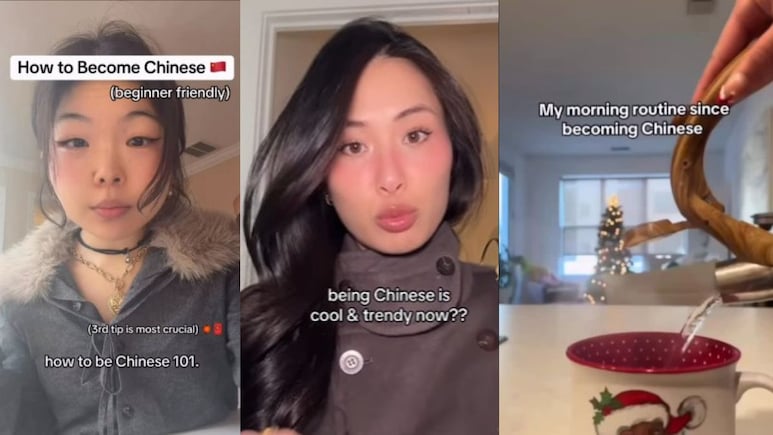
Interesting how easily the masses bend to perceived power and strength. Yesterday in the west we were subhuman tools and toys, and now they give grudging respect. How short their memories and allegiances fade.
*rubs testicles and sniffs hand
> # Tai Chi, Qigong, Soft Power and #Chinamaxxing
by Gene Ching
April 20, 2026
Since 1999, World Tai Chi Qigong Day has been observed on the last Saturday in April. For 2026, that lands on April 25th, but we here at the YMAA Publication Center celebrate it throughout the entire month. For this installment of Good News, YMAA Staff Writer Gene Ching examines how this year is unlike any other for Tai Chi. 6 Min Read