TCM sales

At least some one is making a profit during the recession.

Aug 27, 2009
Eu Yan Sang posts $13m profit
By Joyce Teo, Property Correspondent

TRADITIONAL Chinese Medicine firm Eu Yan Sang International has posted a 165 per cent rise in net profit to $13.1 million for the year ending on June 30.

Revenue rose 7 per cent to $222.5 million, the ninth consecutive year-on-year growth since the Group’s listing in 2000.

The firm is recommending a dividend of 2.2 cents per share, up from 2 cent a share one year ago.

Earnings per share hit 3.63 cents, up from 2.84 cents a year ago. Net asset value per share reached 25.9 cents, up from 24.3 cents a year ago.

Is this Health Care Reform? :stuck_out_tongue:

…maybe it is Health Care Reform…

health care reform PRC style…

Thursday, August 27, 2009
Hutchison China MediTech boosted by new essential drugs list compiled by Chinese Ministry of Health

Hutchison China MediTech (AIM: HCM) announced today that fourteen of its drugs have been added to a new list of 307 essential drugs compiled by the Ministry of Health in China.

The 307 drugs include 102 traditional Chinese medicine drugs, and it is expected that approximately 30% of all state owned grass-roots heath institutions in China will be equipped with the drugs by the Ministry.

“These health institutions would be directed to give priority to the listed drugs when treating patients. By 2020, all state-owned health institutions in urban and rural China would be required to give priority to the listed drugs,” Hutchinson China MediTech stated.

The fourteen drugs manufactured by Hutchinson China MediTech and added to the list generated sales of US$53.1 million and net profit after tax and minority interests of US$6.6 million in the first six months of 2009. One of the drugs, She Xiang Bao Xin Pill, for cardiovascular disease, is only manufactured by the Company’s joint venture Shanghai Hutchison Pharmaceuticals Limited. The other 13 drugs are manufactured by several companies in China.

Christian Hogg, Chief Executive Officer of Chi-Med, said, “Overall, we believe this is good news for Chi-Med. Since our 2006 flotation, our China Healthcare Division has recorded compound annual organic growth of 28% as well as improving operating profit margins from 0% in 2005 to 18% in the first half of 2009. Inclusion of our main drugs on the Essential Medicines List positions us well to continue this growth.”

Chi-Med is focused on researching, developing, manufacturing, and selling pharmaceuticals, health supplements and other consumer health and personal care products derived from Traditional Chinese Medicine and botanical ingredients.

once again…

…I think I’m in the wrong business… :o

* AUGUST 13, 2009, 9:20 A.M. ET

Tianyin Pharma Gets China Drug Clearance; Stock Soars

Tianyin Pharmaceutical Co. (TPI) said it had been cleared by the Chinese State Food and Drug Administration to make generic forms of medicines to treat internal bleeding and respiratory ailments.

Shares jumped 32% to $4.35 in premarket trading. The stock through Wednesday had already more than doubled this year.

Sanqi tablets are used to treat injury-related bleeding and reduce swelling and pain. Tianyin expects producing the tablets - which have estimated annual Chinese sales of about $73.5 million - will help it gain a share of the Chinese orthopedic-medicine market. A feature of Sanqi is it does not cause blood stasis, or blood stagnation, an important underlying pathology of many disease processes, according to traditional Chinese medicine.

Yinqiao Jiedu is intended to treat are acute respiratory ailments such as influenza and colds. Tianyin estimates annual Chinese sales of about $1.2 billion for the medicine. It expects demand to surge during the winter flu season, increasing the company’s share of the Chinese flu-medicine market.

Tianyin, while still small compared to peers, is growing fast. The company in June projected sales and earnings for the year started July 1 to soar more than 40%, with revenue seen rising to $59 million. The company sells some 40 products and has roughly that amount of treatments in its pipeline.

smart move

It’s all about the packaging, especially this time of year. :wink:

[URL=“http://www.guardian.co.uk/business/2009/dec/22/hutchison-chi-med-cambridge-university”]Chinese medicine firm employs Cambridge University to research remedies
medicines
* Richard Wray
* guardian.co.uk, Tuesday 22 December 2009 19.11 GMT

Manufacturer Hutchison Chi-Med signs three-year deal with Cambridge pharmacologists to find active ingredients in traditional medicines

Hutchison Chi-Med, the Chinese medicine company backed by the firm that created mobile phone group Orange, has signed up the University of Cambridge to investigate the potential healing and anti-aging properties of a number of the group’s herbal remedies.

Aim-listed Chi-Med sells traditional medicines in China and also has a research and development laboratory in Shanghai where its scientists analyse herbal remedies, some dating back 2,000 years, to establish their active ingredients.

The company already has a proprietary patent medicine for heart disease, the Shexiang Baoxin pill, and sold over 400 million doses of the drug in China over the first half of this year. It has been shown to have healing properties but the research deal announced today will focus research on the core ingredients of the pill. The medicine has been shown to control angiogenesis, the growth of new capillary blood vessels in the body. Dysfunctional angiogenesis is associated with more than 80 diseases, from cancer and diabetic eye problems to stroke.

Modulation of angiogenesis in the skin has also been shown to affect skin aging and over the three years of the Cambridge tie-up, which will be run by Dr Tai-ping Fan of the university’s department of pharmacology, scientists will try to identify ingredients that could be used in skin care products to be marketed under Chi-Med’s Sen consumer products brand.

Chi-Med is controlled by Hutchison Whampoa, a Hong Kong conglomerate that owns ports and telephone companies in the UK, and is headed by Asia’s richest man, Li Ka-shing. Hutchison was also behind the creation of Orange in the early 1990s.

The company’s key product to date is HMPL-004, a compound based on a Chinese remedy for inflammation of the bowel, which Chi-Med is hoping will prove a winning treatment for ulcerative colitis and Crohn’s disease. Trials are ongoing.

[QUOTE=GeneChing;978617]Chi-Med is controlled by Hutchison Whampoa, a Hong Kong conglomerate that owns ports and telephone companies in the UK, and is headed by Asia’s richest man, Li Ka-shing.[/QUOTE]

More like Li Cha-Ching! He’s Ka-shing in on folk medicine.

Not sure how I feel about this yet - MEGACORPORATIONS keep yer dirty mitts off our folk medicine, and keep it affordable and accessible to the people!

revolutionary ox

If it works, there’s a buck to be made…

…and if there’s a buck to be made, the megacorps will get involved. It does work, doesn’t it, herbox? :wink:

How TCM becomes regulated and marketed is key to it’s integration in the western markets. That’s why I monitor these news feeds.

Hong Kong Regulatory Overview for Health Supplements
2009-12-28 - EAS Strategic Advice Pte Ltd
NPICenter
By Daniel Tsi and Wai-Mun Poon, EAS Strategic Advice Pte Ltd

Hong Kong is one of the vibrant markets for health supplement products in Asia. There is an increasing trend among consumers to take various kinds of health supplements for good health and well-being. The most popular supplements are vitamin-based although products containing herbs and other ingredients are growing.

When planning to import, or manufacture, and market health supplements in Hong Kong, a company should have basic clarity on the regulatory requirements. A health supplement, depending on the dosage form, product composition and usage claims, may be regulated as pharmaceutical products, proprietary Chinese medicines, or pre-packaged foods.

Health supplements in pharmaceutical dosage forms (tablets, capsules, syrup), containing vitamins, minerals, and other ingredients such as glucosamine, fish liver oils and digestive enzyme such as lipase, amylase and cellulase are classified as pharmaceutical products.

Products containing herbal ingredients commonly used in Chinese medicine and which carry claims that are stated in the recognised traditional Chinese medicine text, shall be regulated as proprietary Chinese medicines under the Chinese Medicine Ordinance. Health supplements that fall under these 2 categories must be registered with the Department of Health for pre-market approval.

Product that contains other bioactive ingredients such as fish oils, coenzyme Q10 and herbal ingredients may be classified as food. However, if the product carries claims that are linked to the diagnosis, treatment, mitigation or prevention of a specific disease or disease symptoms, a health supplement will be categorised as a pharmaceutical product. Such claims usually make reference to a certain disease or disease symptom, examples are:

· soothes sore throats

· this product may lower blood sugar

· can alleviate pimples

· prevents osteoporosis

· relieves constipation

Under the Undesirable Medical Advertisement Ordinance (UMAO), high risk claims are prohibited. Examples of prohibited claims are those related to the prevention, elimination or treatment of breast lumps, and the regulation of the endocrine system. Certain claims related to maintaining normal or healthy blood sugar or blood pressure or cholesterol levels may be used subject to conditions stipulated in the Ordinance. It should be noted that health supplements with such claims have to be registered as pharmaceutical products or proprietary Chinese medicines.

In term of the maximum and minimum daily levels of vitamins and minerals permitted, there is no official limit but the levels incorporated into health supplement have to be supported by safety evidence. The usage of other bioactive ingredients such as fish oil, bee pollen and herbs/ botanicals are allowed in principle, provided there is a good safety record for the ingredients.

Companies interested in the Hong Kong market should note that proper documentation is required when registering health supplement products. The safety, quality and efficacy aspects should be supported by main documents such as free sales certificate, certificate of analysis and test methods, manufacturer’s GMP certificate and stability study reports.

EAS has released a unique and easy-to-follow guide to help companies build successful regulatory strategies to enter Asian region’s nutritional product market. The guide, titled ‘Marketing Health Supplements, Fortified & Functional Foods in Asia: Legislation & Practice’, covers national and regional rules for health supplements, including rules for ingredients (vitamins and minerals, herbs and other functional ingredients), claims and regulatory procedures for product marketing. Visit www.eas.asia for more information.

Another lesson in economics

Health Care Reform, TCM style

China Health Care Reform Spurs Rise in Traditional Chinese Medicine Shares
By LAUREN COOPER Posted 7:00 AM 02/24/10

Shares were mixed in Asia Wednesday. In China, the Shanghai Composite Index rose 1.3% to 3,022, and in Hong Kong the Hang Seng Index fell 0.8% to 20,468. In Japan, the Nikkei 225 Index lost 1.5%, ending the day at 10,199.

Reports that China will begin public hospital reform trials sent shares of traditional Chinese medicine company Yunnan Baiyao Group surging 4.1%.

The high cost of health care is an urgent issue in China as in the U.S., but unlike America where a plan to overhaul the system must be ratified before it can be applied, in China, the government often comes up with new plans and puts them to the test in certain areas before implementing sweeping changes throughout the country. In this case, 16 cities have been selected to test reforms of government-run hospitals, according to China Daily, and if all goes well, the reforms will then spread across the country.

In a country where over-prescribing of super-strong and expensive antibiotics has got out of control, the government has structured the reforms to favor hospitals with expertise in certain areas, including traditional Chinese medicine (TCM). According to Andrei Marks, a blogger who has spent time studying the Chinese health care system, “The majority of the Chinese population seeks out TCM and the government actively promotes it and integrates it into the national health care system.” The promotion of traditional Chinese medicine could help reduce medical costs. In Hong Kong, it’s not unusual for Chinese to bring steaming mugs of strong, bitter tinctures to sick neighbors and friends. I myself have been on the receiving end of such a drink, and once I managed to down the murky, brown liquid, I have to admit I was better the next day!

But medicine is indispensable, and commercial drug companies also rose today: Henan Taloph Pharmaceutical jumped 3.5%, Shenzhen Neptunus Bioengineering climbed 4.1% and Hualan Biological Engineering rose 2.0%.

In Hong Kong, metals companies followed the London Metals Exchange lower. Jiangxi Copper slid 1.5% and Aluminum Corp of China, otherwise known as Chalco, slipped 0.3%.

Warren Buffett-backed BYD Co., which makes batteries and electric cars, fell 2.4% in Hong Kong. According to Bloomberg, BYD will delay the release of its electric cars until the Chinese government determines the subsidies that will be available to buyers and the safety standards that will be required. It has been reported that a limited number of BYD’s vehicles will become available in the U.S. this year. Hong Kong-listed DongFeng Motor fell 2.5% and Great Wall motor rose 1.1%.

In Japan, where the government has downgraded the assessment of expected exports, in large part based on the damage the Toyota debacle has caused to the reputation of Japanese cars, today’s grilling of Toyota by a U.S. Congressional panel didn’t help the value of Japanese carmakers. Toyota fell 1.5%, Nissan tumbled 3.4%, Suzuki lost 1.3% and Honda dropped 0.5%. Shipping companies also closed lower: Mitsui OSK Lines tumbled 2.4% and Nippon Yusen KK fell 1.8%.

On CNBC this morning, investor Enzio von Pfeil, CEO of Economicclock.com, said, “We’ve kind of given up on Japan’s economic prospects, to be honest with you, just because it’s frankly got stuck in a rut.” Like pouring salt in the wounds of a country trying to claw its way back from a lost decade.

The chicoms always say “cultivating able talents”

I think the real challenge is convincing people to consume fungus growing from worm butts because some Tibetan watched some yaks bang.:stuck_out_tongue:

Huge challenges for China in overseas TCM market
By Hu Yang (chinadaily.com.cn)
Updated: 2010-03-03 16:48

The development of the traditional Chinese medicine (TCM) industry in China faces a huge challenge as 90 percept of the international herbal medicine market is dominated by Japan and South Korea, forcing the issue to be raised during the annual session of China’s top advisory body, the Chinese People’s Political Consultative Conference (CPPCC), according to qq.com, a leading portal website in China.

Wu Yiling, member of CPPCC, calls to enhance research and development of TCM and promote its industrialization in his proposal to the CPPCC. Wu is also an academician of Chinese Academy of Engineering and head of a pharmaceutical company.

The annul CPPCC session officially kicks off on Wednesday.

Japan and South Korea import herbal materials from China at low prices and process the materials with well-developed technologies.

The international herbal medicine market is developing very fast, but China, the birth place of TCM, only accounts for three to five percent of the market.

Wu lists the existing problems in China’s TCM industry in his proposal, such as weak research power, inflexible system and lack of competitiveness.

He suggests improving the status quo by innovation, cultivating able talents and strengthening R&D power.

Chi-Med & Abbott

Chinese drugmaker could partner with Abbott
March 5, 2010 — 11:21am ET | By Liz Jones

Hutchison China MediTech, or Chi-Med, the pharmaceutical company controlled by Hong Kong billionaire Li Ka-shing, is looking for a partner this year for its experimental treatment for a bowel disorder–and rumor has it that Abbott Laboratories may be in the mix. Chi-Med, is “very aggressively working with everyone in the gastrointestinal space” on a licensing deal, CEO Christian Hogg tells Chicago’s Daily Herald. Although Hogg declined to name potential partners, Abbott and Johnson & Johnson are among companies that sell products for ailments of the digestive tract. Neither company would comment on the rumor.

A partnership with Chi-Med would offer drugmakers a way to invest further in China, where the government plans to spend $125 billion to start a national health insurance system, according to the Herald. The company, which develops drugs based on traditional Chinese medicine and botanical ingredients, also distributes pharmaceuticals in China and sells consumer-health products.

In 2009, HMPL-004 returned encouraging Phase IIb results for ulcerative colitis, according to a March 4 earnings statement. The company is now in a position to out-license HMPL-004 to a global partner for continued Phase III development and commercialization. It also had three novel, small molecule drugs emerge from pre-clinical last year. HMPL-011 is a first-in-class drug for inflammation, that was approved to enter Phase I trials in Australia. HMPL-012 and HMPL-013 are two angiogenesis inhibiting oncology drugs that are currently under IND review by the China State Food and Drug Administration. The cancer treatment market in China is believed likely to become the largest in the world over the next 20 years, according to the company.

In addition, Chi-Med plans to spin off its drug-development business within two years. And it’s attracting the attention from private equity and strategic investors. A MediPharma spinoff “is something we’re deeply in discussions on now. It’s more likely to be an IPO. We’d be quite unique in that we’d be the first biotech IPO out of China. I imagine we’d start that process in a year or two,” Hogg tells the paper.

Given the content of some of the forum posts, I imagine a few of our members could use something to cure their bowel disorders. :rolleyes:

dry spell?

Updated: Friday April 9, 2010 MYT 2:47:36 PM
Prices of Chinese herbs shoot up due to dry spell in China
By WINNIE YEOH

GEORGE TOWN: The prices of several Chinese herbs have sky-rocketed to as much as 300% over the last six months due to the prolonged hot spell in China.

The dry weather in Sichuan, Gui Zhou, Yunnan and Guang Yi has affected the growth of the herbal plants, causing a drop in production for the worldwide market, including Malaysia.

Among those affected are Tian Qi (Panax notoginseng),which is imported from Yunnan.

It used to be sold for about RM90 per kg but has now shot up to about RM300 per kg.

Siew Seng Loong Medicine shop manager Khaw Lim Swee Nam said the prices for the herb was also changing on a daily basis.

“Tian Qi is good for blood circulation. When supply drops, its demand increases and causes the price to soar.

“Even Pu Er tea, also from Yunnan, is more expensive now. It is sold from RM50 to RM100 per block, depending on the grade, compared to RM30 to RM50 half a year ago,” he said Friday.

He added that many tea trees had dried up and it would take eight years for another plant to be fully grown.

Pak Hoe Tong Medical and Liquor shop assistant Teoh Hai Wei said the price of Tian Qi had risen dramatically as it was used to produce many types of Chinese medicine.

“It helps to lower the cholesterol and is highly beneficial for stroke, Parkinson and bypass patients,” he said.

As for cordyceps or Dong Chong Cao, the price now is RM16,000 per kg compared to RM15,000 per kg.

Teoh said the herb was imported from Sichuan and Tibet and beneficial for the lungs.

He, however, said most people don’t buy it in kilograms but only in a few grams.

Other herbs that have seen price increases in the past six months include the Jin Yin Hua (Japanese honeysuckle or Lonicera Japonica), which now costs RM200 per kg compared to RM60 per kg and Pao Shen or American Ginseng, which used to cost RM9,000 per kg, but now carries a price tag of RM13,000 per kg.

Teoh said the prices of Chinese herbs might rise further if the dry spell continued.

It’s more than a dry spell. It’s a full on drought. Jackie Chan has been doing charity work for this.

The severe drought has been plaguing Guizhou, Sichuan, Yunnan, Guangxi and Chongqing, leaving 18 million people without adequate water.

It seems the water that should have been there was falling in Massachusetts the last month.

We had flooding, and a record rainfall.

Let me know if you start something to raise money for them.

Ill send products and dvds.

$1.46 billion?

UPDATED: August-10-2010
Exports of TCM Reach $1.46 Bln

Exports of traditional Chinese medicine (TCM) in the global market were valued at $1.46 billion, Wang Guoqiang, director of the State Administration of TCM, said Saturday.

Wang, also vice minister of the health ministry, said the number of countries and regions which recognize the advantages and special features of TCM in treating modern diseases were on the rise and many countries were seeking cooperation with China on TCM.

Traditional Chinese medicines are mostly mixtures of a number of ingredients or medical plants such as herbs, which makes them much more difficult to explain and analyze in a quantitative sense than western drugs.

One major obstacle Chinese drug firms face when obtaining market approval in the U.S. and European countries is how to explain how traditional Chinese medicines work using a scientific language that appeals to Westerners.

China has so far signed more than 90 pacts that partially or exclusively touched on TCM cooperation with more than 70 countries and regions.

$1.46 billion USD or yuan? They are using the $ so we’ll assume USD.
My other question is ‘what was the value last year?’

You can buy most anything. I just sprung for a big box of acupuncture needles. Things are relatively cheap.

Nestle TCM

It’s worthy of note that while here in America, we perceive Nestle as makers for the candy, baby food and dog food, they are seen differently in Asia. Remember the Chinese milk scandal around the time of the Beijing Olympics?

29 November 2012 Last updated at 01:34 ET
Nestle in Chinese medicine deal with Li Ka-Shing’s firm
A Chinese medicine shop The market for traditional Chinese medicine has seen robust growth in recent years

Nestle, the world’s biggest food group, has agreed a deal to develop treatments based on traditional Chinese medicines.

It will set up a joint venture with Hutchison China MediTech, controlled by Hong Kong billionaire Li Ka-Shing.

The deal will give Nestle access to more than 50,000 extracts used in the manufacture of Chinese medicines.

The deal comes as the global market for Chinese medicines expands. It is valued at more than $83bn (£52bn) by the World Health Organization.

In China alone, the industry produced almost $48bn worth of such medicines in 2010.

That was up almost 30% from the year before.

“We believe traditional Chinese medicine has a real potential to become part of innovative solutions,” Luis Cantarell, chief executive of Nestle Health Science, was quoted as saying on a conference call by the Financial Times and the Bloomberg News agency.

The joint venture, called Nutrition Science Partners Limited (NSP), will develop and manufacture nutritional and medicinal products.

It will initially focus on developing gastro-intestinal products, but may “may in the future expand into the metabolic disease and brain health areas”, Nestle said in a statement.

A nice overview article

Unfortunately in the transfer, the formatting is lost. I replaced some of it, but I recommend reading this on the original source - follow the link.

Traditional Chinese Medicine: Business Blockbuster or False Fad?
January 8, 2013 By David Friesen

Tong Ren Tang is a household name in China. The pharmacy specializing in traditional Chinese medicine (TCM) has been around since 1669. Legend has it that Tong Ren Tang was set up as the royal pharmacy for the palace of the Qing Dynasty. The dynasty came and went, but Tong Ren Tang withstood the test of time. In fact, today it has spread its wings beyond China to places like the United Arab Emirates, Vietnam, the Philippines, Malaysia and Australia. By 2015, it aims to open over 100 overseas stores in countries as diverse as the US and Japan. From the claims of healing herbs to pain-reducing acupuncture, TCM is steeped in historical terminology and philosophical musings. Taking a so-called holistic approach to health and wellness, TCM has long been practised in China. Today, as many companies like Tong Ren Tang are discovering, it is also big business, both in China and many Western countries. According to a 2012 report by market research organization IBISWorld, government support and increasing demand in China has driven TCM to expected revenues of $25.7 billion in 2012, up 14.8% from 2011. The industry has grown by 20% each year on average since 2007, and profitability has continued to rise as well. So what accounts for this sudden spurt in TCM’s popularity, and is it sustainable in the long run?

Marketable Medicine
There is no doubt that TCM within China is a hugely profitable business with growing industrial output. According to China’s National Bureau of Statistics, in 2011 the value of the industrial output of TCM reached RMB 418 billion, recording a year-on-year growth of 37.9%. The surprising fact, however, is that TCM is growing at a faster clip in other countries. The National Bureau of Statistics also points out that TCM exports rose in 2011, with exports to the US alone jumping by 66.3% year-on-year. It is not just Western countries that are seeing growth. Africa is now China’s largest market for the export of medical products, both TCM and otherwise, thanks to low cost. In fact, in 2011 TCM was formally introduced into South Africa’s healthcare system. Many of the large Chinese TCM companies have expanded outside of China. Apart from Tong Ren Tang, others like China Health Resource, Inc. have seen record results this year thanks to increased sales of premium TCM herbs such as its Tian Ma brand in Western countries, as well as a growth of low-cost TCM options in Africa and Asia. Much of the success of TCM in Western countries is because it is associated with wellness. It offers an alternative to supposed Western modes of thinking about treating the symptoms of disease as opposed to seeing the human body holistically. This is pushing TCM from the fringes to the mainstream in terms of demand and acceptance. Australians, for example, are spending over AUS$4 billion per year in the complementary and alternative medicine industry, some of which is on TCM. In July this year, the Chinese Medicine National Registration Board began to officially register Chinese Medicine practitioners nationwide in Australia. In fact, TCM marketing has become a business in itself, with a number of companies now dedicated to providing marketing solutions for individual TCM practitioners and TCM companies. “There is potential in all areas of Chinese medicine, from the herbs and acupuncture to health preservation and wellness. The ideas of Chinese medicine can be used as a format for understanding the human body to design wellness plans and treatments,” says Alex Tan, a qualified TCM practitioner and educator from Australia who founded the Straight Bamboo TCM Clinic in Beijing. Tan thinks that aside from his firm belief that TCM really can improve health and wellness, TCM has appeal because of its cost-effectiveness. “TCM (is a) low-technology, low-cost approach. Most of the developing world cannot afford Western medicine purely because of the cost. These countries can use the methodology of Chinese medicine to diagnose and then use local herbs or acupuncture pins which are cheap to treat patients,” says Tan. This is not always the case in developed countries, however. “Due to the National Health Service in the UK, TCM does not enjoy any economic advantage and is seen as quite expensive. A typical consultation with a Chinese doctor in the UK can cost up to £50 before any charges for medicine are added,” says Mike Bastin, Visiting Academic at Tsinghua University and researcher at Nottingham University’s School of Contemporary Chinese Studies. The potential economic benefits of TCM are also attracting large pharmaceutical companies, as they begin to research ways of using TCM. Britain’s biggest drug maker, GlaxoSmithKline, has set up a number of research labs in China that are looking at ways of developing TCM. The company has created a Discovery Performance Unit that will integrate traditional Chinese medicine with modern drug discovery.

Economics over Evidence
Despite the economic success of TCM in recent years,TCM also has its share of problems. Although qualifications and regulations are growing and advocates strongly recommend that those offering such services be fully qualified and appropriately registered, the industry is still fragmented in terms of regulation and quality. For example, the USFDA has struggled to regulate herbal medicines, as it has often seen herbs as ‘not drugs’, thereby leaving them almost completely unregulated. Herbs are classified as dietary supplements, leaving the FDA with no power under federal law to regulate these products in the same way as drugs. This is not to say that the FDA could not approve certain TCM products. In fact, the Dantonic pill by TCM manufacturer Tasly, used to treat angina and heart disease and approved by drug watchdogs in Canada, Russia, the Republic of Korea, Vietnam, Singapore and some African countries, is currently in Phase III trials to become the first USFDA-approved TCM product in the US. Of course, such legitimacy is not always sought, given the lack of regulation of herbal products. However, the European Union (EU) has been stricter. In May 2011, all unauthorized TCM products were pulled from shelves in the EU. This followed a directive in 2004 that gave a seven-year grace period to manufacturers of herbal medicines to register their brands. No Chinese TCM producers were able to obtain a license due to high costs and difficulties meeting the EU’s stringent criteria. This has changed recently however, with SU BioMedicine BV successfully registering the Diao Xin Xue Kang capsules, the first Chinese medicine in the Netherlands this year. Whilst it is clear that herbal TCM has some promise because many herbs do, in fact, have active ingredients, the products approved are so far the exceptions in terms of regulation and stringent testing. Although most practitioners seemingly welcome further research, this belies the fact that extensive research in many areas has already been carried out. Also, in areas where further research is needed to potentially prove efficacy and mechanisms of action for treatments such as herbs or acupuncture, treatment still continues. This is generally a reversal of the usual methodology of science-based medicine, where efficacy and significant understanding is needed before treatment is prescribed. Take acupuncture, for example. The well regarded website Science-Based Medicine gives an excellent overview of the efficacy of acupuncture. In summary, there appears to be no plausible mechanism for acupuncture, and most of the evidence supporting acupuncture, of which there is, in fact, very little if any, is generally not scientifically rigorous. A large majority of acupuncture studies showing any sort of positive effect have come out of China and have not been properly peer-reviewed or shown to be scientifically rigorous. And although major manufacturers do at least have quality controls in place, outside of this there is a worrying lack of quality control and regulation. For example, an Australian-led group of scientists found traces of endangered species, as well as potential toxins and allergens in traditional Chinese medicines that were confiscated from overseas travellers. They performed ‘second generation DNA sequencing’ on 15 samples, and found traces of animals including Asiatic black bear and the saiga antelope. “There’s absolutely no honesty in the labelling of these products. What they declare is completely at odds with what’s in there,” says Mike Bunce, a geneticist at Murdoch University near Perth, Australia, who led the study, in a comment to the journal Nature. These concerns do not appear to be harming the TCM business as of yet though. Marketing that plays to today’s consumers regarding health and wellness, as well as the logical fallacy that just because something is ancient and has a long history means it must work, will continue to attract people to TCM. Combined with consumers’ frustration with what they see as the problems of Western medicine, the rise of TCM is likely to continue. However, without addressing many of these concerns and really putting money into rigorous research, the economics of TCM will surely be overtaken by the weight of evidence in the long-term.

Thanks for posting that up.

Decent article.

A pharma company that I worked for used synthetic artemisin (wormwood) to combat malaria and it worked reasonably well. The problem was that it showed too many adverse effects in healthy subjects that it was discontinued.

More western pharma companies are attempting to go back to some ‘old world’ products to upregulate their bottom line, which is good in one way but same companies try to prevent local companies (at least Indai) from developing their own usage of the product.

See the Neem vs Monsanto debacle
http://www.france24.com/en/20110921-india-monsanto-gmo-brinjal-bio-piracy-biopiracy-steal-seeds-terminator-cotton-onion-melon-debt-suicide

In a study by Lomuscio, patients were given Acupuncture after a Cardioversion. Specific needle points were identified. 80 patients with persistent A-Fib were randomized into four groups: Acupuncture, Sham Acupuncture, Amiodarone and No Treatment. The patients receiving Acupuncture or Sham Acupuncture had 10 sessions of 15-20 minutes weekly starting within 48 hours of cardioversion.

The most freedom from recurrence occurred with the Amiodarone group. The Acupuncture group came in second but approximated the results of the Amiodarone group.

The No Treatment group had significantly more recurrence, while the Sham Acupuncture group had the worst recurrence rate.

Acupuncture, though not quite as effective as Amiodarone, might be a welcome option for patients who can’t tolerate or don’t want to risk the toxic side effects of Amiodarone. Cardioversion has a notoriously high recurrence rate.

“50 to 75 percent of patients eventually develop Atrial Fibrillation again.” 1 Ten weekly Acupuncture sessions seems a small price to pay to avoid going back into A-Fib.

But one surprising result of this study was the poor results of the Sham Acupuncture group. One would expect a placebo effect from these ten Sham Acupunctures. But instead the misdirected Acupuncture needle *****s produced more recurrence than No Treatment.

The lesson to be learned is for patients to make sure their Acupuncturist knows what spots to hit and has a proven track record in treating A-Fib. Unfortunately these Acupuncturists are hard to find.

(Lomuscle A et al. J Cardiovasc Electrophysiol 2011; 22: 241-7)

Back to the beginning of this thread

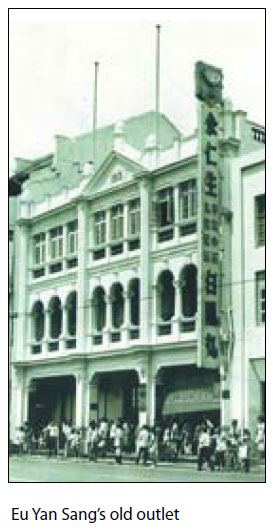
Eu Yan Sang was what launched this discussion.

Traditional medicine brand breaking into world market
Updated: 2013-09-22 08:00
By Xu Xiao (China Daily)
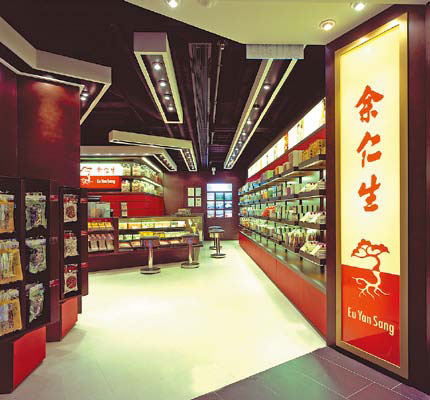

Eu Yan Sang’s outlet on Russell Street in Hong Kong. Photos Provided to China Daily
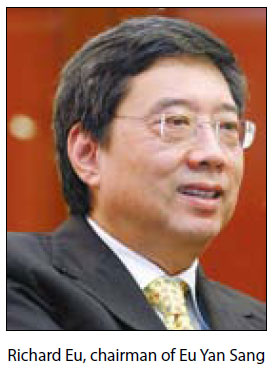


The time-honored traditional Chinese medicine brand Eu Yan Sang is set on becoming a leader in the global healthcare industry, company Chairman Richard Eu said.

An old Chinese saying goes: “Great men’s sons seldom do well”. However, the Eu family empire has been passed on through four generations, and the company is still going strong.

In the 1870s, Eu Tong Sen, Richard Eu’s great-grandfather, was the Foshan-born owner of a tin ore mine. He provided his opium-addicted workers traditional Chinese medicine and healthcare.

Gradually he found business opportunities in the field of Chinese medicine and established the Eu Yan Sang brand in 1879. Eu is the family name and has remained part of the trademark of the business over generations, while Yan Sang stands for caring and charity in the Chinese language.

When control over the company passed to Richard Eu in 1989, it was just a small chain store, Eu said. At the time it had one outlet in Singapore, one in Hong Kong and five in Malaysia.

Richard found that the only business in the Eu family’s empire that carries the family name still had a lot potential to be explored so he decided to take over the company.

The ambitious young man had a comprehensive educational background and extensive work experience. He had a law degree from London University and formerly worked as a banker, a stockbroker, a computer retailer and luxury goods seller.

The first obstacle he had to overcome after taking over the business was how to deal with jealous relatives, who sold their shares in the company.

Rather than viewing this as a setback, Eu used it as an opportunity to purchase back the other stocks shares and integrate the brand as a whole.

By the time the company was listed in 2000, the number of its chain stores had grown to 52.

Fast development has taken place since 1997 despite various risks, including the world financial crisis that broke out in 2008.

Richard said an important reason for Eu Yan Sang’s growth during the financial crisis is attributable to the inelastic demand in the healthcare industry.

In healthcare, demand remains constant despite macroeconomic conditions.

“It was the combination of luck and planning,” he recalled.

“We learned what is right at the right time (through our expansion from 2003 to 2008).”

The core competitiveness of the brand comes from “its constant pursuit of innovation”, Richard said.

Now Eu Yan Sang has more than 300 chain stores and 27 clinics across the globe. In Singapore alone, it has 23.

He said branding is very important for them. In some places of the world, Eu Yan Sang is already a household name, especially for its infant healthcare products.

Industry image

Despite the success of Eu Yan Sang, traditional Chinese medicine still suffers from an image problem in some parts of the world due to an insufficient understanding of the practices involved, Eu said.

He said Western people are confused about traditional Chinese medicine. They hear that some materials are from tigers or bears, which sounds sensational and cruel.

He told reporters that the foremost thing to do is to let more people know what traditional Chinese medicine really is. He said it is not witch doctors making strange potions but rather a type of folk wisdom that has been passed from generation to generation.

He suggested two ways to improve the public image of traditional Chinese medicine.

The first is to strengthen corporate governance and the second is to focus on transparency.

Both require a consistent industry standard, he added.

All of Eu Yan Sang’s stores and clinics are directly operated by the company, enabling them to be managed under the same standard.

Chinese entrepreneurs

Richard Eu has his own understanding of what it means to be a successful Chinese entrepreneur.

In Thailand, Chinese entrepreneurs blend in well with local businesspeople, thus it is difficult to tell the difference.

However in Indonesia, the group accounts for a small percentage -about 5 percent. As a minority in these regions, they should be more careful in dealing with local communities, he said.

The situation is different in some Western countries, especially the US and Canada, where quite a lot of Chinese entrepreneurs have been successful.

Eu said these countries have a more open and tolerant culture. Even as a minority, Chinese are getting more and more recognition.

He went on to say that no matter which country or culture Chinese entrepreneurs are doing business in, they should be careful about being a part of the local society.

“Be mindful to avoid being alienated due to cultural differences,” he suggested.

“You should find the balance between your own Chinese ethical values and the national culture of the country you are doing business in,” he added.

Social responsibility

Though he has received several awards in the industry, Eu keeps a low profile.

“The awards represent many people behind you,” he said. “I’m not keen about individual honor.”

“As a leader, you are not only responsible to your shareholders but also to the customers, suppliers, government agencies and media,” he said.

He said the responsibility of a company is giving back to society.

“I’ve kept asking my staff to care about the minority groups. Though you may not have money, you can still donate your time,” he said.

He noted that his ambition is to help Eu Yan Sang gain more recognition as a leader of the industry.

He aims to triple the current size of the company to expand business to the Chinese mainland and many other places both in the East and West.

Eu said he also wants to raise health awareness by encouraging people to pay more attention to prevention rather than waiting to get sick before visiting the doctor.

“An environmentally friendly and natural lifestyle is the most important,” he concluded. He said he hopes his successors can adapt to changing situations because change and innovation maintain the vitality of a brand.

xuxiao@chinadaily.com.cn

Interesting

Good to see traditional Chinese Medicine being marketed globally, from what seems to be sound, natural (traditional) methods.
With the utmost respect to your posting, sir, I would like to point out that Native American medicine has silently played a big role in the development of Western medicines. From the earliest accounts of settlers there are First Nation’s people sharing teas/ tonics and root medicine with the settler’s. In fact, things like today’s Advil and Tylenol were originally taken from recipes & ingredients used by Native people- today they have been altered of course, and the white man runs a monopoly on these medicines, they were stolen concepts from us. Also sassafras root was the original inspiration for root beer, which is also good medicine in small doses, which again, was a First Nations tonic. Anybody reading this with diabetes should steep a small amount of skunk cabbage root in a boiling pot of water and have a spoonful or 2 of that tonic every day for 2 months- that again is a North Eastern American Indian tonic.
Not only that, but 3/5 of the western world’s food supply is Native American in origin- it was this fact plus the gold found here that got Europe out of the dark ages. That, and all the other natural resources too numerous to list found on Native land. A lot of today’s quarrying sites for example, were opened in areas originally with large amounts of Native stone-work (sometimes on top of the old NDN quarry sites). In pre-Colombian America the Incas practiced brain surgery. No barbaric white man was doing this at the time. Also when the Spanish saw the Mayan’s performing open heart surgery, they couldn’t comprehend it and mistook it for sacrifice.
What does this have to do with Kung Fu? Nothing, really!!
But it is the TCM thread. I hope my article was educational and interesting. I could use some Chinese herbs and American Indian herbs together, or side by side, and it would be like the same concept, is sort of what I am saying, but most people don’t know the story of American Indian medicines or that some of the modern western medicine has it’s roots in it.