This sounds really interesting and i would like to learn more about it. Could you name any links to interesting reliable information about Traditional Native American Medicine ?
What about shaolin temple ???
[QUOTE=GeneChing;1249567]Eu Yan Sang was what launched this discussion.[/QUOTE]
Can anyone share some information about Shaolin Temple’s sales of medical products ?
Bayer buys Dihon
Bayer buys Dihon to add traditional Chinese medicine
By Ludwig Burger
FRANKFURT Thu Feb 27, 2014 9:13am EST
(Reuters) - Bayer said it would buy privately held Dihon Pharmaceutical Group Co, a maker of traditional herbal Chinese medicines (TCM), as the German drugmaker pushes to become the world’s largest non-prescription medicines group.
With China’s healthcare spending forecast to nearly triple to $1 trillion by 2020 from $357 billion in 2011, according to consulting firm McKinsey, the country is a magnet for makers of medicines and medical equipment, but many patients remain strongly attached to traditional approaches.
“What’s growing the most within Chinese healthcare is traditional medicine. It’s a strong part of their culture,” said Lilian Montero, a healthcare analyst at Swiss bank Julius Baer.
“Local companies tend to show superior growth in emerging markets. It’s a good move from that point of view.”
Dihon has about 2,400 employees and generated sales of 123 million euros ($168 million) in 2013, Bayer said on Thursday.
It declined to provide the financial terms of the deal but brokerage M.M. Warburg estimated it was worth about 500 million euros ($680 million).
Even though TCM is winning a following in some urban communities in the West, Bayer said it was too early to say whether Dihon products would be exported to Germany or Europe.
“It’s less likely that these products will move to the West,” said Julius Baer’s Montero. “You would need a lot more medical training and education, otherwise it will stay a niche market like homeopathy.”
Dihon’s products include dandruff treatments, antifungal creams and medicine against gynecological conditions such as endometriosis.
The deal, which could help Bayer challenge Johnson & Johnson to the No. 1 spot in the over-the-counter (OTC) market, underscores its push into herbal medicine after it bought smaller German supplier Steigerwald last year.
The fragmented OTC market is gearing up for more consolidation, with Merck & Co Inc’s consumer healthcare business drawing interest from Bayer and Novartis.
China is of particular focus for deal-hungry international healthcare firms. Pharmacy chain Alliance Boots plans to take a 12 percent stake in distributor Nanjing Pharmaceutical Co Ltd, while Medtronic Inc purchased China Kanghui Holdings in 2012.
But doing business in the world’s most populous country is not without risk. China’s regulators have been investigating several foreign and domestic drug companies on suspicion of bribery, with the most high-profile investigation involving Britain’s GlaxoSmithKline.
The country’s consumer health and wellness market is expect to hit almost $70 billion by 2020 as increasing numbers of consumers turn to health supplements and OTC health treatments, according to a recent report from Boston Consulting Group.
The OTC market alone was worth $18 billion and is estimated to grow at a rate of around 8 percent per year, the report said.
The Dihon deal is to close in the second half of 2014, Bayer said.
Interesting…
Tiens Group - starting with the sale of Traditional Chinese Medicine
Sales must be good with them. There’s a vid if you follow the link.
6,400 Chinese employees treated to record breaking French holiday
09/05 16:47 CET
A Chinese company has taken 6,400 employees on a four day record breaking trip to France.
They rounded off the adventure by creating the world’s longest human made phrase.
Wearing sun hats in different colours, the workers from Tiens Group lined up to spell the words:
“Tiens’ dream is Nice in the Cote d’Azur.”
The message, which was visible from the sky, broke a Guinness World Record.
Li Jinyuan founded the Tianjin based conglomerate 20-years-ago, starting with the sale of Traditional Chinese Medicine (TCM) as well as calcium tablets and instant coffee.
He was listed on the 2011 Forbes list of world’s billionaires.
Li said “We chose Nice because it is the most beautiful city in the world. And for Chinese, to be between mountains and the sea is incredible. This is why we have invited our best employees for this trip.”
The group had earlier visited Paris where they booked up 140 hotels and were given private access to the Louvre.
According to Le Parisian newspaper they made purchases estimated at around 13 million euros, partly on luxury goods.
Li met the French Foreign Minister Laurent Fabius.
The cult of personality surrounding the Tiens chairman was clear as he drove the length of the Promenade des Anglais in a World War Two Jeep.
Sexy TCM
I’m amused that this is categorized under ‘entertainment’ instead of ‘health’. :rolleyes:

Desmond Tan weighs in on how he thinks he can make Traditional Chinese Medicine sexy. Photo: May Seah
He’s taking his role as a traditional Chinese medicine practitioner very seriously
BY MAY SEAH
may@mediacorp.com.sgPUBLISHED: 4:15 AM, JANUARY 13, 2016
SINGAPORE — We’re not sure how far we would trust Desmond Tan with our lives, but we’ll say one thing about him: The guy can make it look like he knows what he’s doing. Even if he doesn’t.
That skill comes in handy for his role as a traditional Chinese medicine (TCM) practitioner in the upcoming long-form half-hour series Peace And Prosperity on Mediacorp TV Channel 8.
Production for the show will commence this month, and it also stars Xiang Yun as the matriarch of a family that runs a Chinese medicine practice. Her six daughters give her almost as much grief as her lack of sons does.
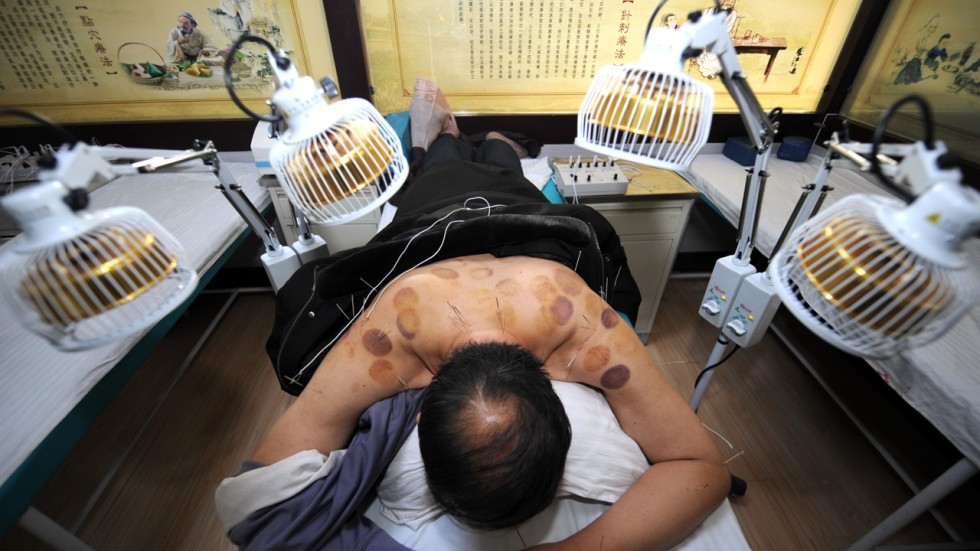
Tan, who plays the young, hotshot doctor employed at the practice, had received a crash course in all things TCM at a medical hall in Toa Payoh, alongside co-stars Belinda Lee and Dawn Yeoh. It included shaving an antelope’s horns, and packing and weighing herbs with a traditional hand-held scale. He was also instructed on how to perform cupping and acupuncture procedures.
“The hardest part is to look like a pro doing it,” he quipped. “I’m very afraid of needles, so I was trying very hard to look cool.”
Yes, Tan knows that in matters of utmost importance, style is the vital thing. That’s why he asked the production team to let him wear a pouch on his side, from which he can take his lighter out easily, “do a swirl, and put it back, like a cowboy”.
He’s making sure his character has all the right moves. “Even packing and talking about medicine can be very cool. And if you can make it impressive, more guys will want to practice TCM to woo the girls,” he declared. “It can be a good pick-up line, right? I’ll just look at you and say, ‘Judging by your skin tone, I know you’re not sleeping enough. I believe that taking medicine A, B and T will help you a lot. If you want to find out more, come to my place and I can tell you more about it’.”
So, can Tan make TCM cool? “I always hope I can make things cool,” he said. “When I was playing a barista (in 96C Cafe), I hoped to raise the profile of coffee culture in Singapore. For this — I hope I can make it sexy as well, because the thing about TCM is that youngsters don’t know much about it.
“So, I hope that through this show, people will know more about TCM and its benefits.”
U.S. herb market
Expanding interest in traditional Chinese medicine could boost demand for U.S.-grown herbs
By Deborah Gertz Husar Herald-Whig
Posted: Jan. 17, 2016 12:01 am
Expanding interest in traditional Chinese medicine in the United States is fostering a potentially lucrative new niche market for farmers who plant the varieties of herbs, flowers and trees sought by practitioners.
While almost all practitioners still rely on imports from China, the Associated Press reports dwindling wild stands there, as well as quality and safety concerns, could drive up demand for herbs grown in the U.S. Several states have set up “growing groups” to help farmers establish trial stands of the most popular plants.
Jean Giblette, a researcher who established New York’s group, said it could be a moneymaker. She estimates the market for domestically grown medicinal plants to be $200 million to $300 million a year.
Traditional Chinese medicine is gaining mainstream acceptance in the U.S. with 30,000 licensed practitioners across the country.
Giblette and Peg Schafer, an herb grower in Petaluma, Calif., compiled a list of marketable species for U.S. farmers. They include Angelica dahurica, a flowering perennial whose root is used to relive pain and inflammation; Aster tataricus, a relative of garden asters said to have anti-bacterial properties; Mentha haplocalyx, a mint used for stomach ailments; and Salvia miltiorrhiza, a type of sage whose roots are used for treatment of cardiovascular diseases.
Market research shows high demand and low supply.
“The current herbs from China are not of the quality they once were, and U.S. practitioners indicate they are willing to pay a premium price for herbs grown with organic principles, locally, with high efficacy,” said Rob Glenn, chairman of the nonprofit Blue Ridge Center for Chinese Medicine in Pilot, Va.
Good point, although Giblette and Schafer clearly have a marketing agenda. Here’s Schafer’s site: Chinese Medicinal Herb Farm
Another TCM company shows international growth
More on Tong Ren Tang earlier on this thread.
Traditional Chinese Medicine Retailer Accelerates Overseas Expansion
FEBRUARY 15, 2016
The time-honored traditional Chinese medicine brand Tong Ren Tang says it accelerated its overseas expansion and opened nine new stores in the overseas market in 2015.
In reporting the company’s results for last year, the company says it has developed 31 branches in 25 countries and regions outside China, operating 115 retail sites, traditional Chinese medicine clinics, and traditional Chinese medicine health centers. It served over 30 million patients in those countries and regions.
Mei Qun, chairman of Beijing Tong Ren Tang Group, said that based on the planning of Tong Ren Tang, its international development is divided into three steps. In 1993, the group started its overseas development in Hong Kong; in 2003, they established Beijing Tong Ren Tang International Co., Ltd. in Hong Kong; and in 2013, Beijing Tong Ren Tang Chinese Medicine Co., Ltd. was successfully listed in Hong Kong and started developing in major European markets.
Ding Yongling, deputy general manager of Beijing Tong Ren Tang Group, said that in 2015, the group opened nine new stores in six countries and regions, including Hong Kong, Germany, United Arab Emirates, New Zealand, Sweden, and the Czech Republic. Apart from Chinese medicine stores, the group also developed Chinese medicine clinics and health centers in foreign countries.
And here is TRT’s official English website.
$50b
Traditional Chinese medicine closes in on US$50 billion market with long-awaited nod from WHO
The World Health Organisation is including a chapter on China’s ancient medicine programme in its influential book classifying thousands of diseases
PUBLISHED : Saturday, 29 September, 2018, 3:33am
UPDATED : Saturday, 29 September, 2018, 11:24pm
Zhuang Pinghui
When Chinese President Xi Jinping gave the World Health Organisation a bronze statue last year showing acupuncture points on the body, the move was widely seen as an expression of Beijing’s ambition to win global acceptance for traditional Chinese medicine (TCM).
TCM, which originated in ancient China and has evolved over the years, is set to receive its first-ever official endorsement from the WHO next May at the World Health Assembly when the international public health agency dedicates a chapter to it in its 11th version of the “International Statistical Classification of Diseases and Related Health Problems”.
A classification system on traditional medicine will be featured in Chapter 26 of the work, which provides a system of diagnostic codes for classifying thousands of diseases, according to a report published this week in the British scientific journal Nature.
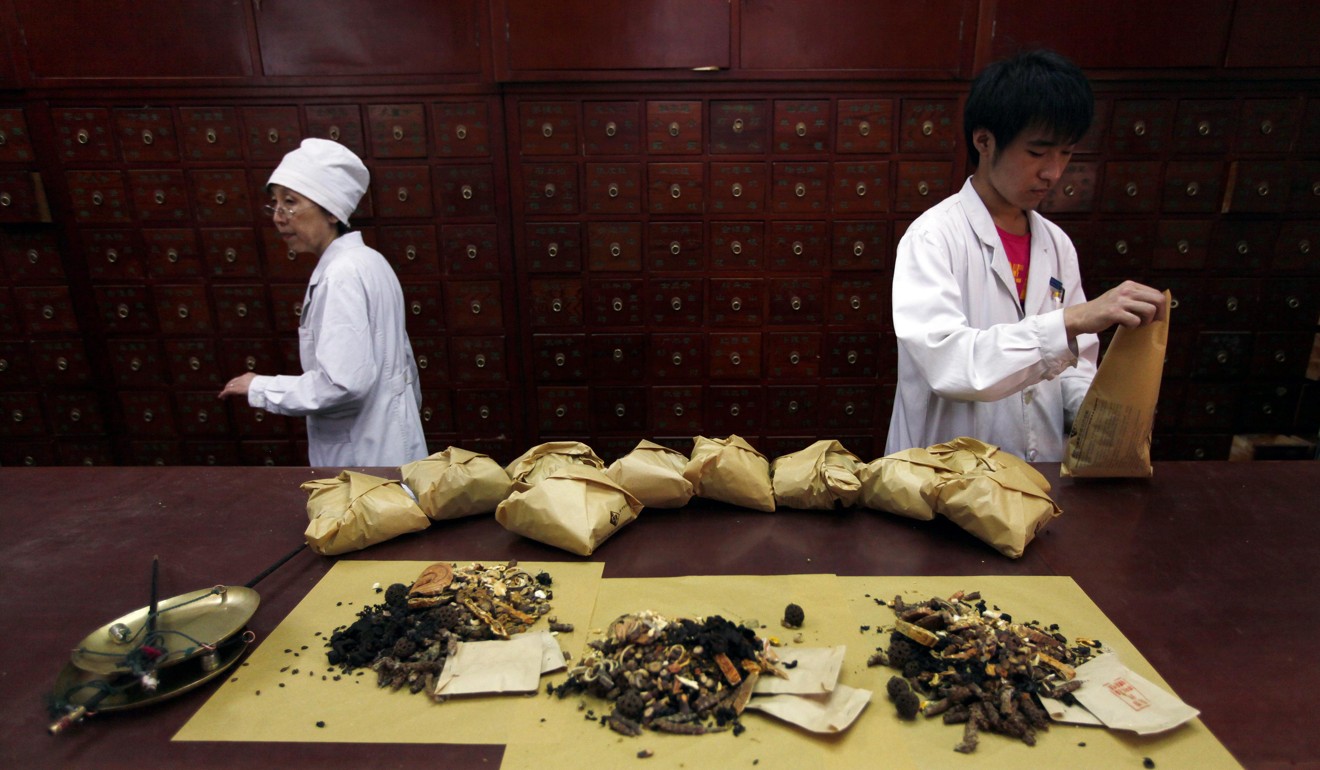
Workers prepare remedies at Capital Medical University’s TCM hospital in Beijing. Photo: Reuters
Although the safety and effectiveness of TCM is still controversial in China – of 1.57 million adverse drug reactions and incidents in the country last year, 16.1 per cent were related to traditional Chinese medicine – the government has set a national strategy for TCM development.
It wants to see TCM theory and practice win greater acceptance in world medical circles so it can claim a share of the US$50 billion global medicine market.
On that note, Beijing is establishing 30 overseas TCM centres in countries along the route of its massive infrastructure plan, the “Belt and Road Initiative”.
By 2020, the government also seeks to register 100 TCM products and set up 50 international TCM cooperation model centres.
As TCM acquires legal status from Belt and Road countries, it is expected to evolve into a booming industry by 2030, according to the plan.
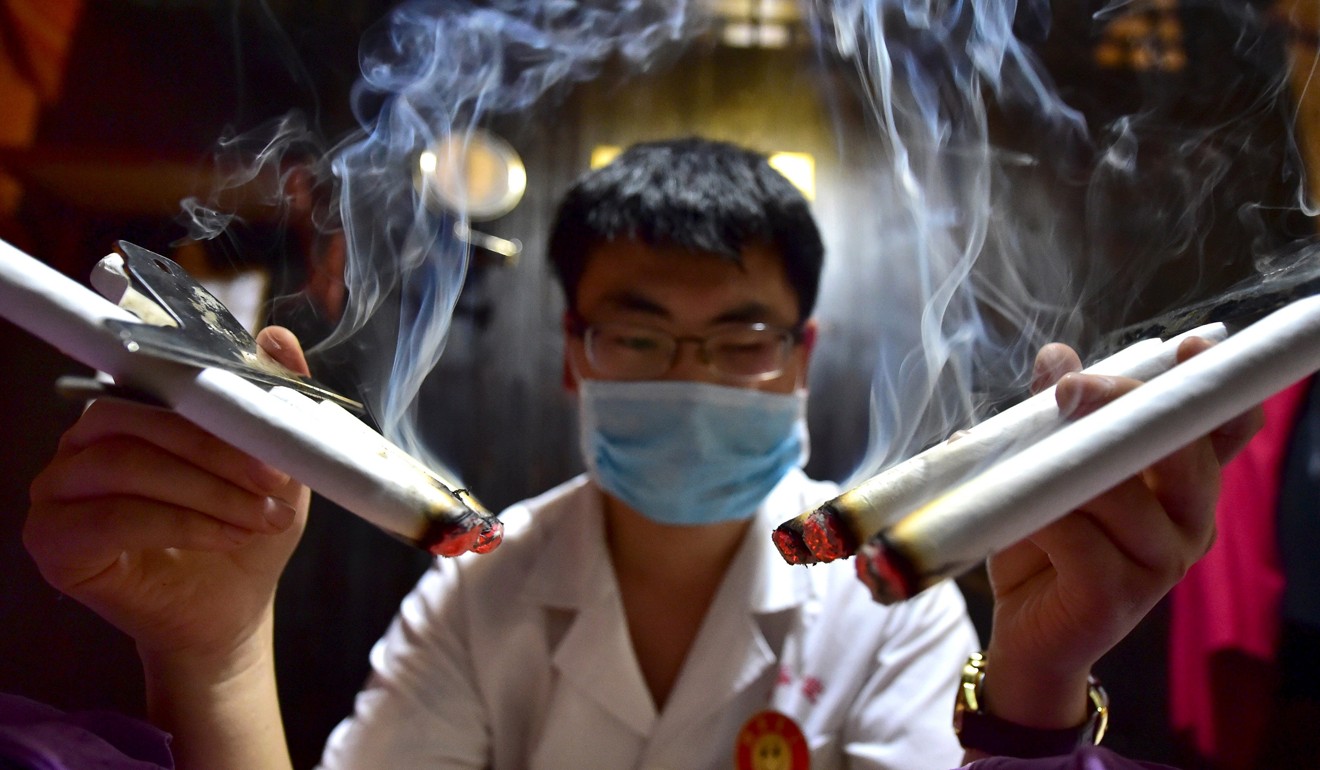
A therapist applies a moxibustion treatment – burning dried mugwort on points on the body – on a patient in Yiwu, Zhejiang province. Photo: Reuters
A State Council white paper in 2016 said TCM was being practised globally in 183 countries and regions.
Although Xi presented WHO officials with the acupuncture statue just last year, the agency’s increasing appreciation of China’s ancient style of medicine has been at least a decade in the making.
In the past, TCM experts from Shanghai have visited WHO headquarters in Geneva, Switzerland to lobby officials to include TCM in the disease classification code book, which has its roots in the early 20th century. The effort had to contend with negative claims by critics that TCM was a backwards approach to wellness and was hardly science.
Cui Yongqiang, a professor at the Guanganmen Hospital of Traditional Chinese Medicine, affiliated with the China Academy of Chinese Medical Sciences, said receiving recognition from WHO would set standards for TCM while spurring its modernisation.
“Traditional Chinese medicine can’t develop by itself,” Cui said. “It needs to be evolved and integrated with Western medicine to make it more effective and accepted by a wider audience.”
But getting the nod from WHO still left TCM a long way from winning over drug regulators in different countries, Cui said. Regulatory bodies will demand that TCM drugs, for instance, be evaluated within the framework of Western medicine.
Tian Kan, a Nanjing University professor of Chinese medicine, said winning acceptance from the WHO might help spread the practice of TCM worldwide, but does not guarantee that non-believers can be converted to TCM users.
“The spread of TCM in the Western world does not rely on being recognised by local drug regulators but on the experience and recommendations of patients,” Tian said.
follow the money…:rolleyes:
Booming
 t
tAccording to Qurate Research’s research experts, “Global Chinese Traditional Medicine Market 2022 Insights, Size, Share, Growth, Opportunities, Emerging Trends, Forecast to 2028.” The study is an anthology of in-depth research studies on many aspects of the global Chinese Traditional Medicine industry. It is an admirable effort to offer a true, transparent picture of the current and future conditions of the global Chinese Traditional Medicine market, based on credible facts and exceptionally accurate data.
“Global Chinese Traditional Medicine Market Insights, Size, Share, Growth, Opportunities, Emerging Trends, Forecast to 2028,” according to a Qurate Research report. Several in-depth research studies on various facets of the worldwide Chinese Traditional Medicine market are included in the report. It’s a commendable effort to present a true, transparent view of the existing and future situations of the worldwide Chinese Traditional Medicine market, based on reliable facts and extraordinarily precise statistics.
Click Here for Free PDF SAMPLE copy of this Report
Key players Profiled In This Report Are:
Medical Qigong Centre & Acupuncture Clinic
ICTCM House
ACTCM
NZ Chinese Medicine & Acupuncture Society
Misha Ruth Cohen
Dublin Chinese Medicine Clinic
Sacred Lotus
ChinaMed Charlottesville
Healthy Lifestyle Brands, LLC.
TCM Australia
Key Market Segmentation of Chinese Traditional Medicine:
On the basis of types, the Chinese Traditional Medicine market from 2015 to 2025 is primarily split into:
Acupuncture
Cupping Therapy
Herbal Medicine
Moxibustion
Aroma Therapy
Compounding Therapy
Magneto Therapy
Others
On the basis of applications, the Chinese Traditional Medicine market from 2015 to 2025 covers:
Relaxation
Insomnia
Pain management
Skin and hair care
Scar management
Cold and cough
Cancer treatment
Others
Scope of the Chinese Traditional Medicine Market Report:
The research examines the key players in the global Chinese Traditional Medicine market in detail, focusing on their market share, gross margin, net profit, sales, product portfolio, new applications, recent developments, and other factors. It also sheds light on the vendor landscape, helping players to foresee future competitive movements in the global Chinese Traditional Medicine business.
This study estimates the market size in terms of both value (millions of dollars) and volume (millions of units) (K Units). Both top-down and bottom-up techniques were used to estimate and validate the market size of the Chinese Traditional Medicine market, as well as the size of various other dependent submarkets in the overall market. To identify important market participants, secondary research was utilized, and primary and secondary research was employed to determine their market shares. All percentage share splits and breakdowns were calculated using secondary sources and verified sources.
Updated Market Report is available at the link below:@ https://www.qurateresearch.com/report/buy/BnF/2020-2025-global-chinese-traditional-medicine-market/QBI-MR-BnF-950566/
The COVID-19 pandemic has had a major influence on the Chinese Traditional Medicine industry. In the second quarter, the sector exhibited indications of recovery around the world, but long-term recovery remains a concern as COVID-19 cases continue to rise, particularly in Asian countries like India.Since the pandemic began, the sector has been handed a series of setbacks and surprises. As a result of the epidemic, many changes in buyer behavior and thinking have occurred. As a result, the industry is being strained even further. As a result, the market’s expansion is anticipated to be constrained.
Chinese Traditional Medicine Market Region Mainly Focusing:
— Europe Chinese Traditional Medicine Market (Austria, France, Finland, Switzerland, Italy, Germany, Netherlands, Poland, Russia, Spain, Sweden, Turkey, UK),
— Asia-Pacific and Australia Chinese Traditional Medicine Market (China, South Korea, Thailand, India, Vietnam, Malaysia, Indonesia, and Japan),
— The Middle East and Africa Chinese Traditional Medicine Market (Saudi Arabia, South Africa, Egypt, Morocco, and Nigeria),
— Latin America/South America Chinese Traditional Medicine Market (Brazil and Argentina), — North America Chinese Traditional Medicine Market (Canada, Mexico, and The USA)
Free Sample Report from Qurate Research includes: FREE PDF SAMPLE
- Introduction, Overview, and In-Depth Industry Analysis for the 2021 Updated Report
- Impact Analysis of the COVID-19 Pandemic Outbreak
- A Research Report of 205+ Pages
- On request, provide chapter-by-chapter assistance.
- Regional Analysis Updated for 2021 with Graphical Representation of Size, Share, and Trends
- Includes a list of tables and figures that has been updated.
- The report has been updated to include top market players’ business strategies, sales volume, and revenue analysis.
- Facts and Factors Methodology for Research
The major questions answered in this report are:
• How to get a free copy of the Chinese Traditional Medicine Market sample report and company profiles?
• What are the main causes fueling the Chinese Traditional Medicine Market’s expansion?
• What are the Chinese Traditional Medicine Market’s predicted market size and growth rate?
• Who are the leading companies in the Chinese Traditional Medicine Market?
• What market segments do Chinese Traditional Medicine Market cover?
Table of Contents:
Chapter 1 Introduction to Chinese Traditional Medicine Market
Chapter 2 Executive
2.1 Chinese Traditional Medicine Market 3600 synopsis, 2018 – 2028
2.1.1 Industry Trends
2.1.2 Material Trends
2.1.3 Product Trends
2.1.4 Operation Trends
2.1.5 Distribution Channel Trends
2.1.6 Regional Trends
Chapter 3 Chinese Traditional Medicine Market Insights
3.1 Industry segmentation
3.2 Industry ecosystem analysis
3.2.1 Component Suppliers
3.2.2 Producers
3.2.3 Profit margin analysis
3.2.4 Distribution channel analysis
3.2.5 COVID-19 impact on the Market value chain
3.2.6 Vendor Analysis
3.3 Technology Landscape
3.4 Regulatory landscape
3.4.1 North America
3.4.2 Europe
3.4.3 Asia Pacific
3.4.4 Latin America
3.4.5 Middle East and Africa
3.5 Pricing analysis (including COVID-19 impact)
3.5.1 By region
3.5.1.1 North America
3.5.1.2 Europe
3.5.1.3 Asia Pacific
3.5.1.4 Latin America
3.5.1.5 Middle East and Africa
3.5.2 Cost structure analysis
3.6 Industry impact forces
3.6.1 Growth drivers
3.6.2 Industry drawbacks & challenges
3.6.2.1 Focus on reducing weight
3.7 Innovation & sustainability
3.8 Growth potential analysis, 2020
3.9 Competitive landscape, 2020
3.9.1 Company market share
3.9.2 Major stakeholders
3.9.3 Strategy dashboard
3.10 Porter’s analysis
3.11 PESTLE analysis
Chapter 4 Disclaimer
Any query?Inquire Here For Discount Or Report Customization
Contact Us:
Nehal ChinoyQurate Business Intelligence Pvt ltd.
Web:www.qurateresearch.com
E-mail:sales@qurateresearch.com
Ph: US – +13393375221
Didn’t read the report in full but I found this to be an index of interest.
> # Gen Z flocks to Chinese medicine as trust in US health system plummets: ‘It’s so personalized to being human’
As Americans embrace ‘alternative’ remedies, people online joke that they’re ‘Chinamaxxing’ their wellness routines
Wed 4 Mar 2026 10.00 EST
Did you drink ice water today? If you did, that was “not very Chinese of you”, according to Sherry Zhu, a 23-year-old Chinese American creator based in New Jersey. If you were really serious about “becoming Chinese”, you would be sipping hot water every day, she warned in a TikTok video with millions of views. “I really do feel like, digestion-wise, a lot better when I’m drinking hot water,” she later explained to GQ.
Britain and the US, calm down. The gen Z Chinamaxxers will do you no harm
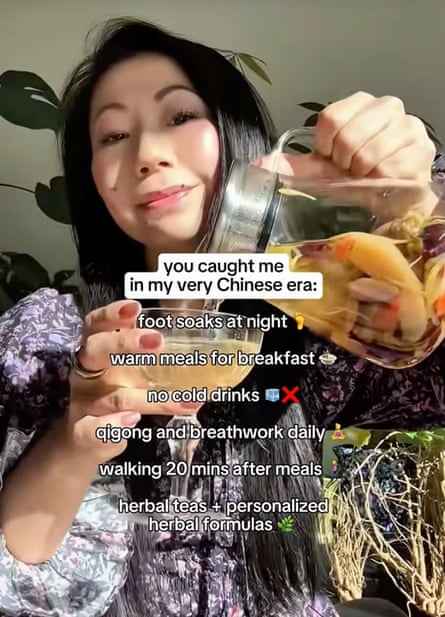
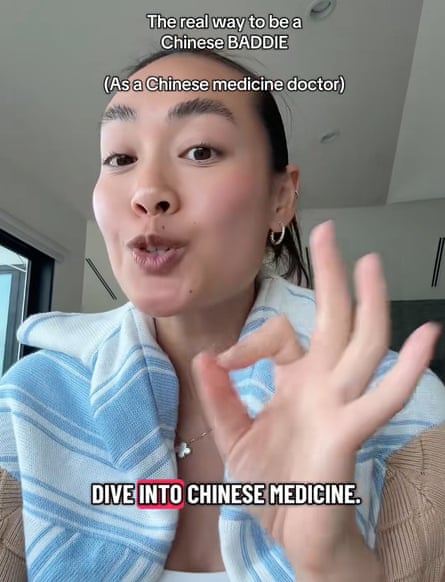
Zhu’s guidance is taken from traditional Chinese medicine (TCM), a health system that dates back 5,000 years and offers a holistic approach to treating symptoms – physically, emotionally and spiritually. Other creators of Chinese descent have their own TCM hacks: keep your feet warm and your periods will be more bearable. Drink tea made with goji berries, jujubes and ginger as a cure-all. Move your body every day to promote the flow of qi, or internal energy. “Do my Chinese baddie routine with me,” they caption their videos in half-authoritative, half-joking tones. “Advice from your Chinese big sister.”
Creators of non-Asian descent have been eager to prove they can follow directions. “Day one of being Chinese,” they post, showing off pots of boiled apple or savory breakfasts (both better for digestion, according to TCM). “It has come to my attention that we are all suddenly Chinese,” a white health influencer declared as she bumbled through her first congee recipe.
When Americans don’t trust their own institutions … they become more willing to look for alternative reference points
Shaoyu Yuan
Why are Americans drawn to Chinese wellness tips – and expressing interest in “becoming Chinese” or “being in a very Chinese time” of their lives? It’s tied to what some have dubbed “Chinamaxxing”, a recent trend begun by Americans, involving the sharing of memes and videos in praise of Chinese culture.
Ironically, Chinamaxxing was a response to Donald Trump’s economic targeting of the country in 2025. Between a bungled trade war, flip-flopping restrictions on Chinese tech and a fudged TikTok ban, the US began to look feeble in comparison with its geopolitical rival. With a sense of subversiveness, young Americans started professing fascination with Chinese culture. Influencers such as iShowSpeed and Hasan Piker traveled to China to produce content, while the US market embraced Chinese cultural goods, such as Labubus, the video game Black Myth: Wukong and Adidas’s athleisure spin on the Tang suit.
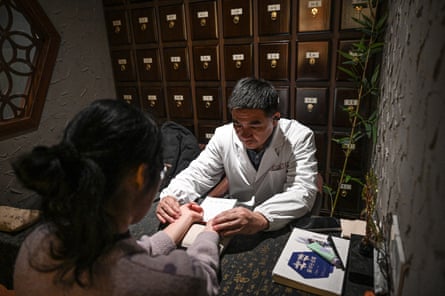
A traditional Chinese medicine practitioner performs a pulse diagnosis. Photograph: Jade Gao/AFP/Getty Images
“When Americans don’t trust their own institutions, media or political class, they become more willing to look for alternative reference points,” said Shaoyu Yuan, a scholar of international relations and New York University professor, over email. “Public debates over TikTok, sanctions, export controls and ‘decoupling’ signal to many young people that China is central to the future, whether they like it or not.”
Chinamaxxing also comes as Americans’ trust in the US healthcare system plummets. RFK Jr has consistently cast doubt on vaccines and other conventional medicine while promoting “alternative” remedies, boosting a wellness market that repackages holistic care from other cultures as luxury treatments. Chinese medicine might seem less “woo-woo” than it once did now that the US health secretary is bragging about drinking cod liver oil.
Lulu Ge, the founder of Elix, a wellness brand that uses Chinese traditional herbs, makes videos about “avoiding ice drinks and eating warm foods” to promote her brand. For years her content invited mostly skeptical reactions. But when the Chinamaxxing trend exploded in January, she was taken aback by a sudden surge of engagement: Elix’s social channels saw a 250% increase in organic impressions and its site traffic went up 40% week over week.
Lulu Ge of Elix. Photograph: Courtesy of Lulu Ge
Ge believes that Americans have become skeptical of the US healthcare system’s emphasis on physician “specialization”, which can frustrate people seeking treatment for multi-symptom conditions such as long Covid and autoimmune disorders. “Chinese medicine really works best for chronic conditions where it touches upon multiple different health systems,” she said. (Numerous studies have shown that TCM therapies can play an important role in the prevention and treatment of chronic diseases – but they can’t be claimed as a cure for all conditions.)
Promoting TCM is part of China’s soft power strategy. In 2016, Xi Jinping’s administration issued a directive for China to “actively introduce TCM to the rest of the world”. In 2020, China’s National Health Commission advised the use of TCM in its recommended treatment of Covid-19 and drafted a plan to punish anyone who “slanders” the medicine system (which it later abandoned). The government also sent TCM doctors and supplies to countries that were particularly affected by the virus’s spread, such as Uzbekistan and Italy. By 2022 the global TCM market had a valuation of $400bn.
TCM staked out a presence in America in 2021, when beauty creators began scraping their faces with gua sha stones to promote lymphatic drainage, and Covid longhaulers sought acupuncture to manage their most mysterious and persistent symptoms. Last year, TikTokers spearheaded a niche “Chinese face mapping” trend, asking ChatGPT to act as a TCM doctor and offer less-than-trustworthy assessments of their health based on puffy eyes or pale tongues. When cold and flu season hit this year, many were eager to receive and share health tips, culminating in the broader call to Chinamaxx wellness routines. It helped that practices culled from TCM – such as going to sleep before 11pm – fit neatly within the “get ready with me” and “bedtime routine” formats so popular on social media.
“When someone adopts qigong, acupuncture, cupping therapy, herbal remedies [or] gua sha … they are not consuming a one-time cultural export. Instead they are building a habit, and habits quietly change how foreignness feels,” Yuan said. “That doesn’t mean they are ‘switching sides’, however … People can be skeptical of Chinese state policies and still find Chinese wellness practices useful or interesting.”
There is a medicine tied to [TCM], but there’s almost a lapse in communication or understanding of why our parents told us [about it]
Dr Felice Chan
Some Asian American creators and writers have found this online obsession with China jarring, especially because people of Asian descent in the US were harassed, assaulted and even killed during Covid times. Others have called out white creators for assuming authority on Chinese practices – like the non-Asians claiming to offer the wisdom of a “Chinese grandmother” via recipes for waterless chicken soup. “What a privilege it is, to be able to try on someone else’s identity for a day without inheriting any of the consequences,” wrote Faith Xue, the editor-in-chief of Coveteur.
One Chinese American creator questioned her decision to post a video of “Chinese baddie tips” to promote her tea business. After seeing how “saturated” the trend had become, she wondered whether content about TCM was “appreciation or extraction” of Chinese culture.
Dr Felice Chan, an acupuncturist, doctor of Chinese medicine and co-founder of the skincare brand Moonbow, said that she loves the visibility around TCM. “If it gives acupuncturists jobs, if it gives light to other Chinese medicine brands, why not?” she said. But she is aware of “surface level” content that flattens or oversimplifies the health benefits of TCM, which is a shared wisdom best passed down through families, not algorithms.
Dr Felice Chan. Photograph: Courtesy of Dr Felice Chan
“There’s a reason why your mom told you to wear slippers in the house … If our feet are cold, our womb is cold, we have bad period cramps, right?” Chan said. “There is a medicine tied to it, but there’s almost a lapse in communication or understanding of why our parents told us.”
Other creators embrace the familial framing. “I’m spending my nights and weekends on TikTok telling people that they’re part of my Chinese family, that they’re being adopted by my Chinese mom,” Ge said. “We get people saying, ‘Can I get adopted?’ We’re doing this together, sis. We’re basically like family.” For Ge, this kind of response “speaks to this broader desire for community, for belonging”.
The Chinamaxxing trend blazed on through February, buoyed up by the lunar new year and an influx of content about bringing good fortune in the year of the fire horse. The spiritual nature of such guidance underlined another explanation for TCM’s popularity right now: the system itself can be poetic and mystical, defying the creep of AI and automated systems into western healthcare. For instance, according to TCM practitioners, the herbal blend to treat a persistent stuck throat, or “plum pit qi”, can also help quell the emotions brought on by “a situation that is figuratively too hard to swallow”.
“[TCM] is very rich with heritage, lineage, tradition [and] extremely rich in symbology,” said Minjung Hwangbo, a student of TCM and content creator. “This medicine is so personalized to being human, and with the emergence of AI, I think people are craving meaning and a return to humanness.”
The lunar new year happened on the same day as the beginning of Ramadan, during Black History Month, and shortly after a Super Bowl half-time performance from Bad Bunny that briefly “made everyone Puerto Rican”. As one X user joked, Americans are “globalismmaxxing” now – eager to seek out cross-cultural connections, if only through the lens of a 10-second meme.