typically the word “kuen” is used to denote “fist method/law” or “set/form”
“chuan fa” is another term (literally “fist law”)
Mostly “Kuen” (or “kyun” if you prefer) though.
typically the word “kuen” is used to denote “fist method/law” or “set/form”
“chuan fa” is another term (literally “fist law”)
Mostly “Kuen” (or “kyun” if you prefer) though.
The Cantonese term for forms/routine is also “tou lou” or “tao lu” as in Mandarin. “Jiu Sik” is used more for individual movements. So it should be “Fei Hok Paai Tou Lou” and not “Fei Hok Phai de Jiu Sik” for “ROUTINES OF THE FEI HOK PHAI STYLE”.
“Bing hei” is definitely more in use by the Cantonese than “mou hei”, because “mou hei” sounds too close to “mou hei” (without qi), so it is not that desirable. So it should be “Bing Hei Tou Lou” and not “Mou Hei Jiu Sik” unless you want to talk about the individual movements with the weapons.
Hope this helps.
really? tou lou? I’ve never heard that term from cantonese players across a few styles.
It’s pretty much always “kuen”
tid sen kuen
fu hok seung ying kuen
ng ying kuen
sap ying kuen
gong lik kuen
da kuen
ping kuen
moi fah kuen
and so on and so forth…
curious! 
As a westerner confronting Cantonese, there were some things I learned in English, some in canto, and some in one than the other.
I wouldn’t over reach your Cantonese language skills to promote your school, just stick with the terms you know, as those are probably the most important anyway, and from there just build. Don’t be afraid to use English, especially in the admin.
If you get real canto speakers, you will be out of your depth, and if you get non-canto speakers, you’ll just work in English.
BTW, our forms are called Kuen too. As in Jik Bo Kuen. And staff forms are guan. I think the collective for all these exercises might be Tou Lou, but we simply call it ‘kung fu’. But, the way we scramble up the language between Sifu and the English speakers is often hard to tell, what is chinese and what is English.
For example, I really thought a couple of the younger brother’s Chinese names were ‘Mau Wong’ and all the time I didn’t know it was a nickname referring to their stance training.
I learned in the hodge podge of toisanese/english that is common in most chinatowns of north america. lol
so, i tread carefully around stuff like chinese language terms and such not being very adept at the language.
Hi David and Yum Cha,
Tou Lou (or a series of routines) is a collective name for all the kuen, and one can also call it Kuen Tou, a short hand way of saying, “kuen (dik) tou (lou)”.
Bing Hei (or weapons) is a collective name for all the guan and do and gim, etc., so a collective name for Bak Mei Guan, Bak Mei Gim and Bak Mei Do, etc is Bak Mei Bing Hei, one can also say Bak Mei Bing Hei Tou Lou but not Bak Mei Bing Hei Kuen Tou.
Bak Mei Kung Fu would refer to all the Bak Mei Kuen Tou, Bak Mei Bing Hei, Bak Mei Doei Chak and Bak Mei Hei Gung, etc, that is the full collection of Bak Mei Kung Fu.
I think it is very commendable that Luohan wants to sort them out properly in Cantonese for a Cantonese style of Kung Fu, it shows respect for his art.
tks for the replies
about the bing hei/mou hei and toulou..this info helped a lot, tks.. i didnt know toulou was used in cantonese. so i will put in the chart- for the “weapon’s forms” -binghei toulou and for "“combined weapons forms” - binghei tuicha (dui4chai1)
there is a lot of confusion, practitioners in general are not as informed as the people of this forum. In my country for exp, many people insist in calling forms “kati”, because when the first chinese teachers imigrated to sao paulo, students didnt know about chinese culture, but japanese martial arts like karate already were known here, so some students of chinese marts like to use similar terms with the jap ma, and they start calling gongfu’s forms of “kati”,like kata, and it is still in use today as a nickname. terrible..
i think we must keep the original terms. a exp of the confusion: the jump “xuanzi” is called in english “butterfly kick”, and here in BR “tail of dragon”. in my opinion, if we change the meaning of the terms with this regionalism of terminology we are discharacterizing the origin of the art. i believe a informative material for students is very important, keeping the original terms as much as possible.
Hi Luohan,
So you are from the line of Zhao Ping-Le , who named his style Feihe Pai to express the idea that he is a crane (or one who likes Hok Kuen) that flew from the East to the West (Toishan to Brazil).
XJ
thats right. chiu ping lok in cantonese..that explanation of the name of the style is an interpretation by a practitioner of the style when he was asked by an editor of a martial arts magazine, that was made popular through internet. There is lots of crane techniques in the style..
The style contains forms of hung gar (like fu hok chuan), hung tao choy mei gar (chow gar), techniques of choy li fut, tai ji, a very interesting internal form of staff (rats tail staff), and compilations especific for the style..
I am originally from Hong Kong.
It seems most of the questions are answered. If you need anymore help, post on this thread.
ttt for 2018!
Just Saying by Yonden Lhatoo
Is gweilo really a racist word? Hong Kong just cant decide
Yonden Lhatoo shakes his head at the on-again, off-again debate over the use of the word that is obviously racist in its roots, but has become benign due to widespread acceptance among Caucasians themselves

PUBLISHED : Saturday, 08 September, 2018, 4:19pm
UPDATED : Saturday, 08 September, 2018, 10:32pm
Yonden Lhatoo
yonden.lhatoo@scmp.com
Here we go again. The same old question that Hong Kong can never give a straight answer to after all these years: is it acceptable to use the word gweilo for Caucasian people, or anyone whos not Chinese for that matter?
The latest catalyst for this on-again, off-again debate is the case of a British man who has filed a discrimination lawsuit against a construction contractor he worked for, citing what he called a general underlying hostility towards non-Chinese employees, who were referred to as gweilo in a derogatory sense.
The offending Cantonese term literally translates as ghost man, the pejorative intent harking back to the unpolitically correct days when passive-aggressive natives perceived those pale Europeans who colonised Hong Kong as being ghostlike foreign devils.
Theres no denying the xenophobic roots of the word, but the fact is, its now used so widely and commonly in this city that most of those pesky foreign devils dont take it as a racist epithet.
Now, of course, that can change depending on the situation as well as the tone and delivery of the term, and it can be used as a disparaging descriptor.
But where do you draw the line? Some of you might remember the controversy back in 1998, when, during a debate in the legislature about attacks on the local currency, veteran politician James Tien Pei-chun referred to international speculators as gweilo.

James Tien once used the word to refer to international speculators. Photo: Sam Tsang
We should never let the gweilo know our last card, he said. He defended it as just a slip of the tongue at the end of a long speech, when foreign diplomats complained it would spread prejudice against non-locals an us versus them mentality.
The thing is, two decades later, not a single Caucasian colleague Ive asked in my office feels unduly offended by the word. Many of them see no problem in regularly using it to describe themselves.
And one of them reminded me of the successful Gweilo Beer brand in Hong Kong, the brainchild of a bunch of yes gweilo, who have no qualms about using the word to make money.
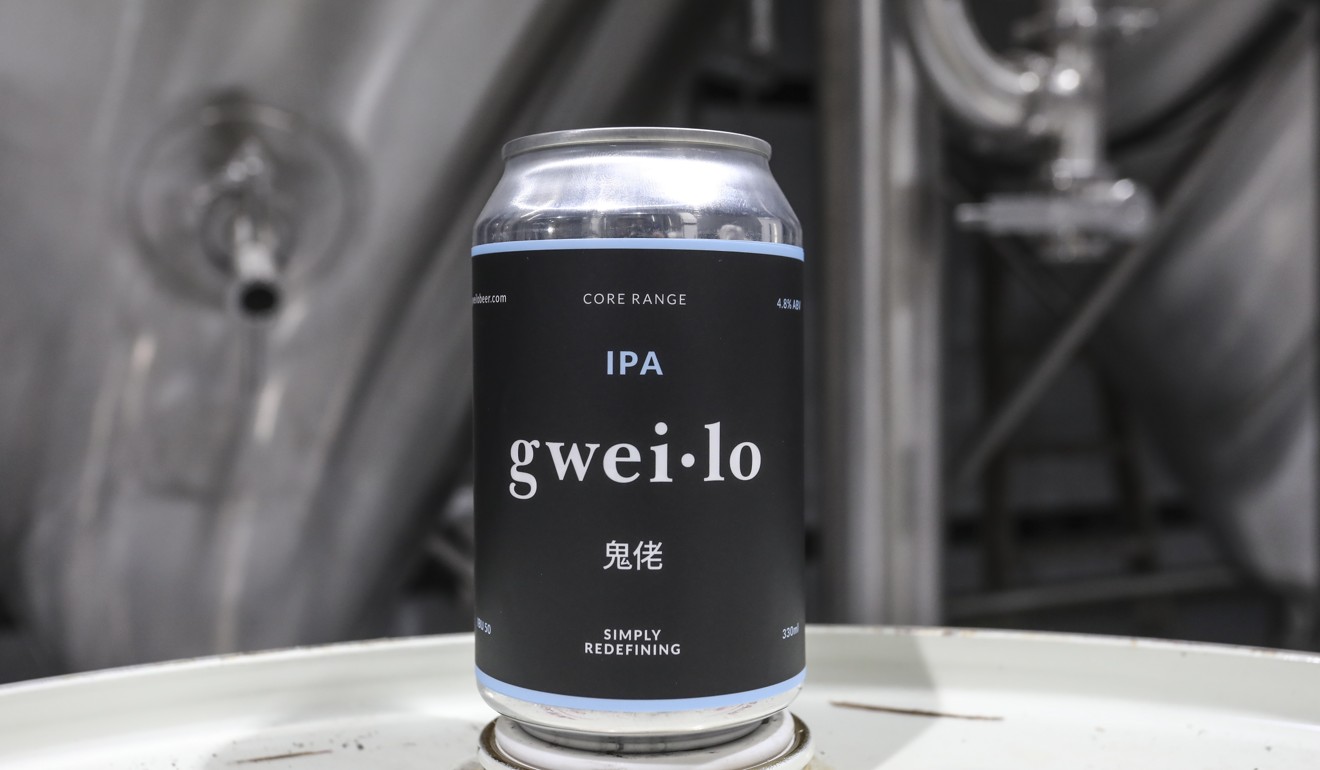
A can of Gweilo beer in Hong Kong. Photo: Jonathan Wong
The trademark registry is quite conservative, co-founder Ian Jebbitt, an intellectual property lawyer, told the Post. It did initially reject it on the basis of it being derogatory, but I spent three months putting together a legal submission showing how the word is not being used in this racially deprecating manner and it was accepted. There you go, folks.
But I must remind you that our in-house Cantonese specialist at the Post, the lovely Luisa Tam, has reservations about using gweipo, the feminine version of the word. And this one has more to do with being sexist than racist. The word po, as she rightly points out, refers to older, rather than younger women. And we cant have that.
Im neither white nor fluorescent in any way to justify the tag, but I do get called a gweilo myself like any other member of an ethnic minority group in this city. Not South Asians and Africans, though the Chinese have separate nicknames for them that are not so benign when it comes to offensive impact.
Just the other day, I was taking the lift to my flat when three construction workers got in. See, I told you, there are so many gweilo in this building, one of them said to his mates in Cantonese, making it obvious I was the evidence to prove his point.
I wasnt in the least offended, but I did feel I should clarify matters right there and then, employing my limited grasp of the local dialect.
Im not a gweilo, dai lo [big brother], I told him. Im ethnic Tibetan. Are you saying Im a foreigner in this country?
The lift doors opened for my floor just then, and I had to leave them hanging like that, jaws agape. Sticks and stones may break my bones…
Yonden Lhatoo is the chief news editor at the Post
Gweilo beer. That’s awesome. 
THREADS
Cantonese help?
Beer…
Fuk the haters!
SCMP Columnist
My Hong Kong
by Luisa Tam
The F word ‘fuk’ represents one of Chinese culture’s greatest values, and Hong Kong gin brand’s name is meant to celebrate, not curse
Fok Hing Gin’s trouble with UK watchdogs over its name highlights a lack of cultural awareness about a word that means ‘fortune’ or ‘good luck’ in Chinese
Hong Kong is full of innocuous street names that could upset the faint of heart – just look at Wan King Path and Fuk Man Road in Sai Kung
Luisa Tam
Published: 10:45am, 20 Nov, 2021
Never would I imagine feeling so protective towards the “f” word, but this particular “f” word probably isn’t the one that you are thinking of.
The Chinese word fuk, which means “fortune” or “good luck” in English, encapsulates one of the greatest values in Chinese culture.
In Hong Kong, when we hear people say zuk fuk to someone, it means they want to impart a blessing of luck, success, prosperity and happiness onto the recipient.
During the Lunar New Year, you will see front doors adorned with the Chinese character fuk on red paper and turned upside down for extra luck.
Unfortunately, its Cantonese pronunciation is similar to a certain Western swear word.
That’s why the Hong Kong-based brand Fok Hing Gin, named after Fuk Hing Lane in Causeway Bay, a popular shopping area on Hong Kong Island, has run into some trouble.
The brand is trying to break ground in the UK but has been deemed offensive by an industry watchdog comprising British alcoholic beverage producers and brewers.
It has been asked to expand on its brand story after a complaint from a member of the British public who said: “The name of the product is clearly intended to shock and be pronounced as an offensive term. Personally, I wouldn’t want to see this product on family supermarket shelves.”
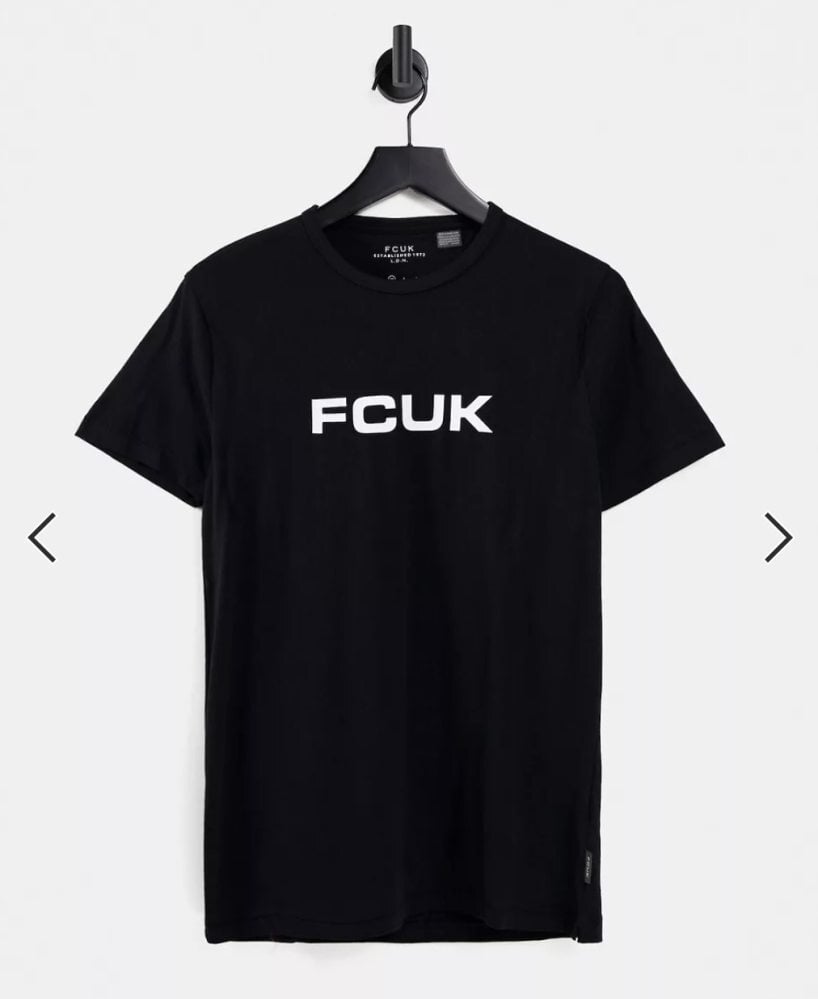
UK-based fashion brand French Connection UK is often initialised as “FCUK”and, despite some initial controversy after the rebranding in 1991, continues to be known as such today. Photo: FCUK
Some consumers may agree, but the consensus – at least on this side of the world – is that these complaints are rooted in a lack of cultural awareness.
The phrase fuk hing spells luck, fortune and thriving growth, so to speak. Who wouldn’t want to name their product or business after that?
There is nothing wrong with creating a memorable brand identity and Fok Hing Gin has done exactly what it has set out to do, which is to pay homage to Hong Kong and its colonial roots. But please don’t ever say the Chinese word fuk is profane.
Incognito Group, the owner of the label, should go the whole nine yards and use the original Romanised spelling “Fuk” rather than “Fok”. There is no shame in paying homage to Fuk Hing Lane as a means of celebrating Cantonese language and its culture. The brand has doubled down by pushing clever marketing phrases like “Fok the haters”.
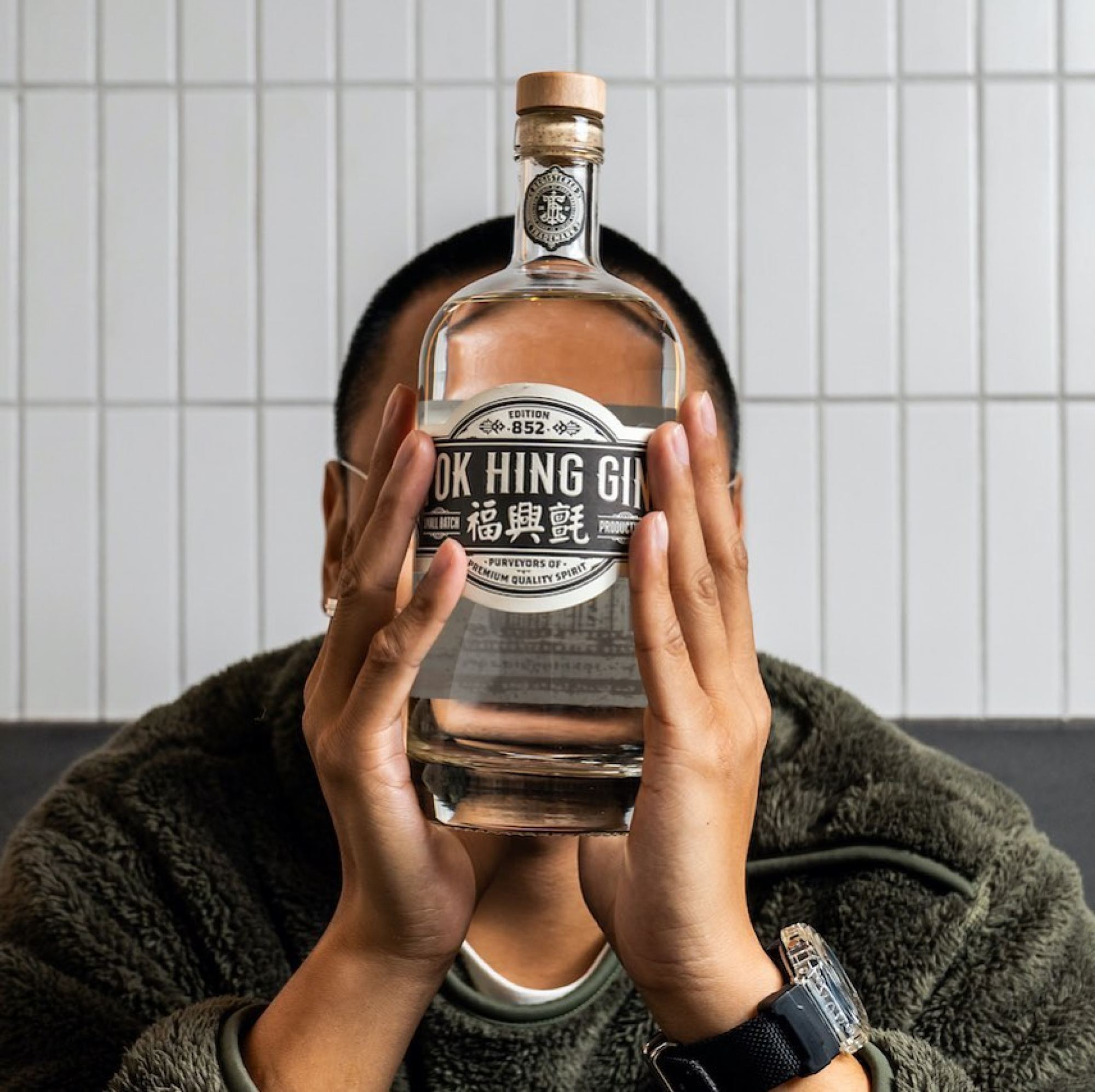
Fok Hing Gin claims to celebrate the language, culture and heritage of Hong Kong. Photo: Facebook / Fok Hing Gin
A British friend, MJ, who is a long-time Hong Kong resident and fluent Cantonese speaker, is infuriated by the complaint. “These people have nothing better to do with their lives than to pick holes in an obvious joke. They should be looking at more important things such as global warming.”
My Irish friend, Paul, points out the double standards of this cultural controversy by drawing attention to the 1990s rebranding of French Connection.
The UK-based global fashion retailer and wholesaler rebranded itself as “French Connection UK” in 1991, which is often initialised as “FCUK”. Despite some controversy at the initial stage of its rebranding, French Connection remains known as “FCUK” today.
“I have no problem with the brand Fok Hing,” Paul says. “In this case, any obscenity lies in the mind of the beholder, not the name itself. Moreover, alcohol is usually sold in places that minors shouldn’t be allowed to access.”
An Italian friend, Alex, says: “It’s a local name intended to preserve its company’s heritage. It’s not racist or ****phobic or insulting to a targeted group of people. In fact, it’s great to see Hong Kong products abroad.”
If you look around the city, there are scores of innocuous street names that could upset the faint of heart. Just look at Wan King Path and Fuk Man Road, both of which are found in Sai Kung, known as the “back garden of Hong Kong” in the New Territories.
Even the Hong Kong Trade Development Council has on its sourcing website a company called Fuk Hing Manufacturing.
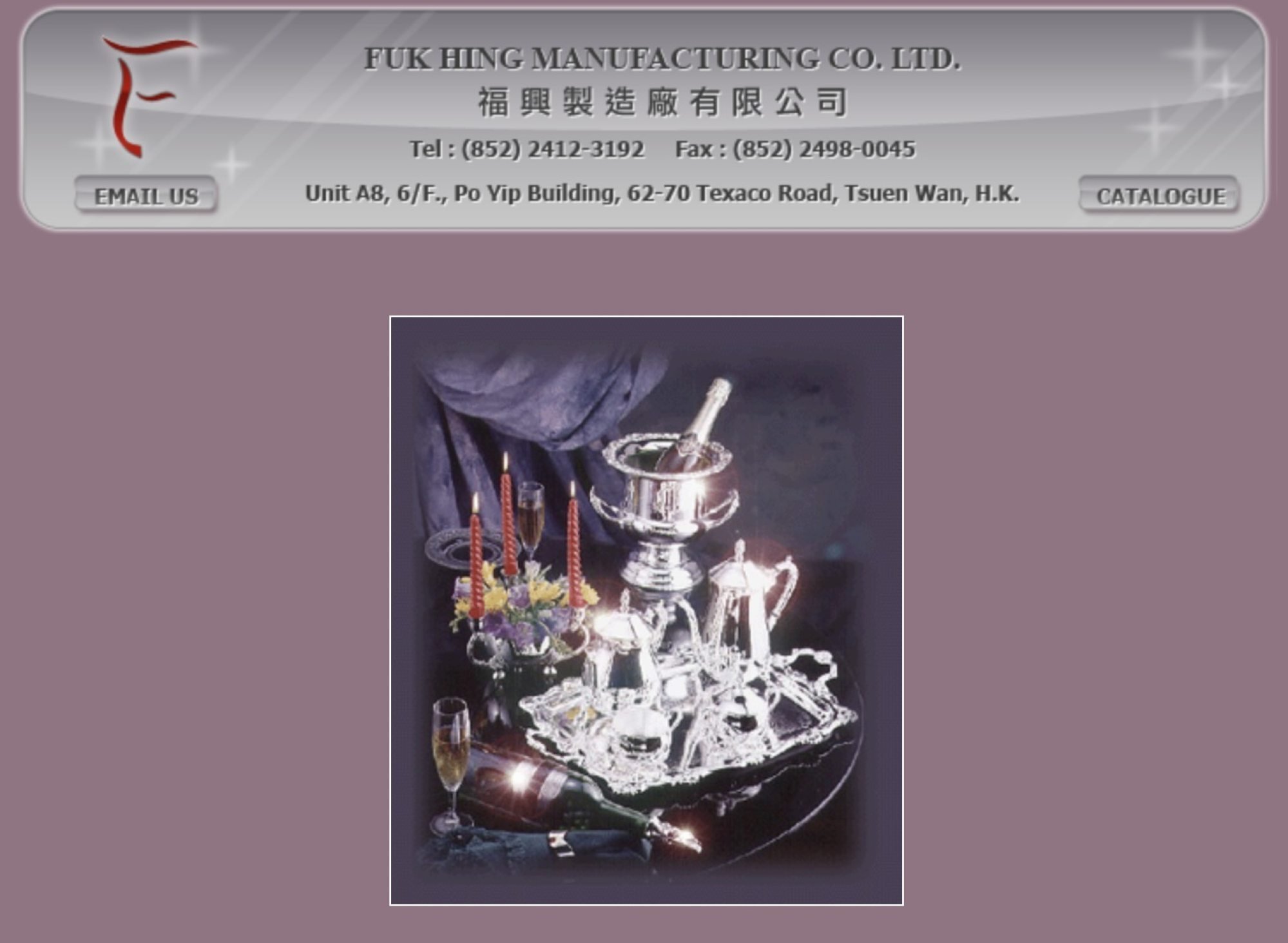
Fuk Hing Manufacturing is included on the Hong Kong Trade Development Council’s website. Photo: Fuk Hing Manufacturing
If we were to take these complaints against Fok Hing Gin seriously, perhaps the Hong Kong Tourism Board should “rebrand” certain street names for the sake of appeasing these priggish complaints.
This is far from the first time that a brand name has offended British sensibilities. In 2015, a London coffee shop kowtowed to legal pressure and changed its shop name from “***offee” to “Fckoffee” after some consumers took offence at the name. The general public mood was that some people simply couldn’t take a joke; even then-London mayor Boris Johnson supported the business’ humorous intentions.
But some food for thought. There are a handful of English words that don’t go down well in some other countries.
For example, the word “pick” sounds a lot like the Norwegian word for male genitals pikk; “lull” is spelt and pronounced similarly to the word lul in Dutch, which also means male genitals. You might be surprised to know that “cookie” means something different in Hungary. Yes, you guessed right, it pertains to male genitalia (but of a more diminutive stature).
I probably need a Fok Hing Gin and tonic after all that.
Cheers!
Luisa Tam is a Post correspondent who also hosts video tutorials on Cantonese language that are now part of Cathay Pacific’s in-flight entertainment programme
threads
liquor
Cantonese-help