I will start by saying I have collected various blades from the time I was 9 or so. I have always liked many Chinese weapons yet I have found very very few quality combat functional weapons on the market. I got a pair of Leung Ting’s Knives came in a box and look nice but they are really only for demo or practice use. The blades are thin and would never stand up to actual use and was never meant to have an edge. I have seen a few good blades out there but they were very expensive. I have not yet learned the use of the weapon myself but would like to have a pair of good functional ones. I have even thought about trying to get a custom pair made with a few of my own ideas I prefer a Bowie style blade.
Anyway I have seen a few antique Wu Dip Dau around here are a couple I found online. Does anyone know of anyone who makes quality blades that are not so decorative that they are out of the $300-$400 range. Also I don’t know how many people know about the various shapes and things but these below are closest to Wing Chun style Wu Dip Dau the others I have seen are more for like Hung Gar such as the ones made by Cold Steel.
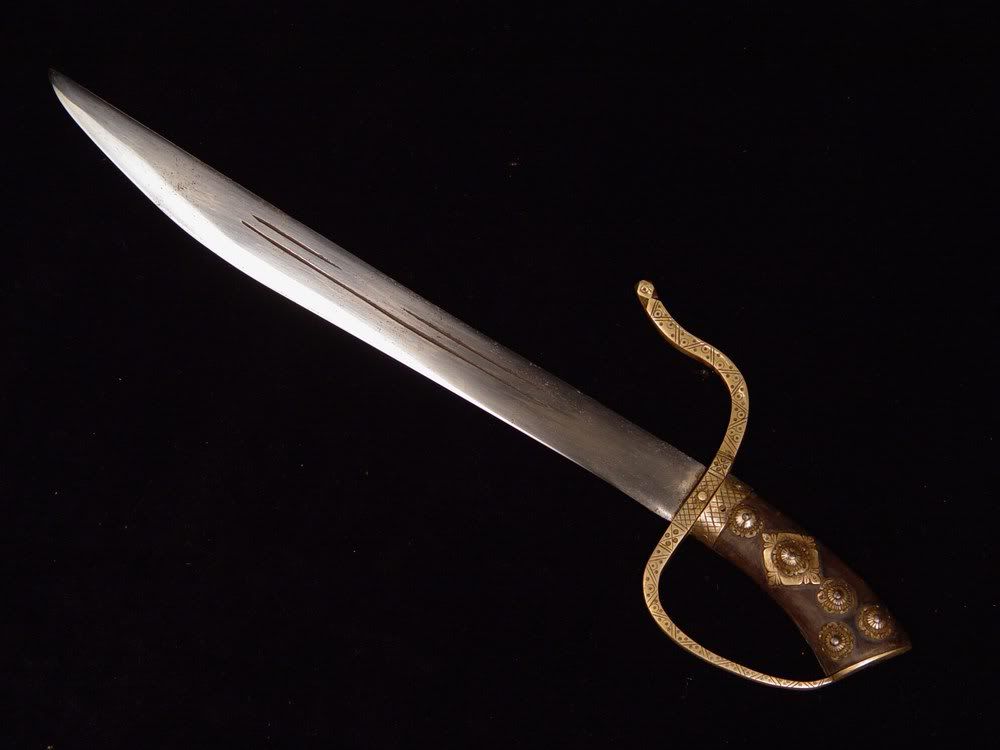
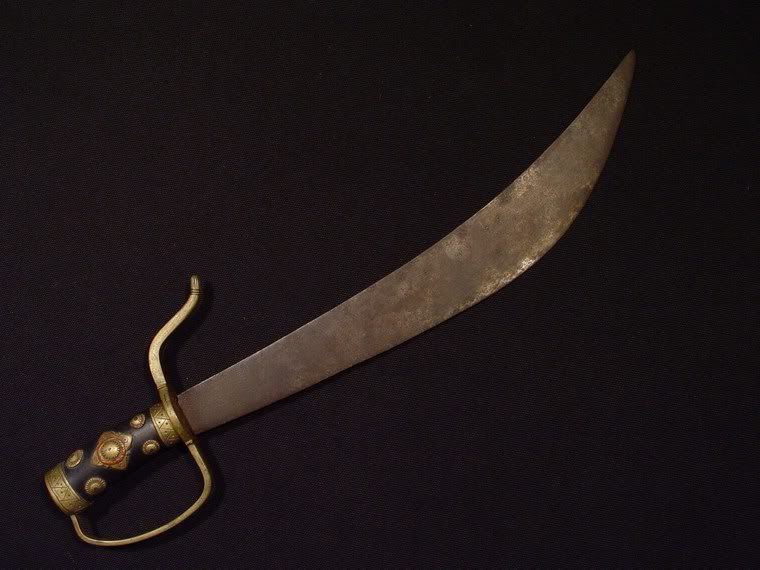
Wing Chun knives are called Baat Jam Do. The Wu Dip Do is a Southern Chinese weapon and is similar but not the same weapon. You can buy good knives here:
http://www.itg8.com/stamps/wushu/index9.html
[QUOTE=Phil Redmond;1099858]Wing Chun knives are called Baat Jam Do. The Wu Dip Do is a Southern Chinese weapon and is similar but not the same weapon. You can buy good knives here:
http://www.itg8.com/stamps/wushu/index9.html[/QUOTE]
Just my opinion but I have always believed the weapons were called Wu Dip Dau and there are different variations such as blade styles and griping locations. Typically Wing Chun Wu Dip Dau have a grip in line with the back of the blade. However those I have seen in Hung Gar use grips that are centered below the blade. I have heard these called Ox Ear Knives.
Hu Die Shuang Dao, Niu Er Jin Dao or Wu Dip Dao.
I have always believed the name of our knife FORM not the weapon was called Baat Jarm Dau. If I remember correctly I think I heard the name 8 Slashing/cutting knives comes from 8 target points the wrists, elbows, shoulders and knees. Anyone have an alternate view point?
The pointy end goes into the other guy.
[QUOTE=Xiao3 Meng4;1099884]The pointy end goes into the other guy.[/QUOTE]
Yes that would be the best way to use the weapon depending however on blade shape as many were made for cutting not thrusting. But what I need is a good pair that aren’t made from aluminum or some other worthless material. Many are not made for actual use they look nice or they are light weight but were never intended to be sharpened or used to cut anything.
[QUOTE=Xiao3 Meng4;1099884]The pointy end goes into the other guy.[/QUOTE]
Yes that would be the best way to use the weapon depending however on blade shape as many were made for cutting not thrusting. But what I need is a good pair that aren’t made from aluminum or some other worthless material. Many are not made for actual use they look nice or they are light weight but were never intended to be sharpened or used to cut anything.
[QUOTE=wolf3001;1099886]Yes that would be the best way to use the weapon depending however on blade shape as many were made for cutting not thrusting. But what I need is a good pair that aren’t made from aluminum or some other worthless material. Many are not made for actual use they look nice or they are light weight but were never intended to be sharpened or used to cut anything.[/QUOTE]
My understanding of BJD’s “unique” qualities are as follows:
- Bottom D Guard
- Top L Guard
- Single straight edge tapering to a point*
- Shorter than your arm ("proper" length of blade - wrist to elbow)
There are many blades which have these qualities. Whether or not the handle attaches near the top edge, bottom edge or middle of the blade is of little relevance in application.
There are some Civil War Bowie Knives which have this exact configuration:

*Some knives with this configuration also have a sharpened back tip, useful for back-cuts.
I say look around, don’t restrict yourself to any particular nationality or culture, find a good blade that you like, and make it yours. Or, just damn it all and get a set of Cold Steel BJD. 
[QUOTE=wolf3001;1099882]Just my opinion but I have always believed the weapons were called Wu Dip Dau and there are different variations such as blade styles and griping locations. Typically Wing Chun Wu Dip Dau have a grip in line with the back of the blade. However those I have seen in Hung Gar use grips that are centered below the blade. I have heard these called Ox Ear Knives.
Hu Die Shuang Dao, Niu Er Jin Dao or Wu Dip Dao.
I have always believed the name of our knife FORM not the weapon was called Baat Jarm Dau. If I remember correctly I think I heard the name 8 Slashing/cutting knives comes from 8 target points the wrists, elbows, shoulders and knees. Anyone have an alternate view point?[/QUOTE]
If you’re a student of Jerry Bolding your Sifu’s Sifu who is also my Sifu calls the weapons Bat Jam Do. BTW, Since it’s Southern weapon the Cantonese term would be “Do”. Dau/Dao is Mandarin.
[QUOTE=wolf3001;1099882]Wu Dip Dao.[/QUOTE]
Wu Dip Dao is Butterfly Knife in Cantonese. 
You can’t put Woo Dip Do together to look like one weapon. You can with BJD. Also the knives in the link I supplied are availabe in 440 Steel or Damascus steel. I have a few pairs of them. I also have these:
http://www.youtube.com/watch?v=Lv_xH-yMPsA
:30 you can see how the two knives can be held as one. It would be difficult to that with a WDD.
[QUOTE=Xiao3 Meng4;1099889]My understanding of BJD’s unique qualities are as follows:
- Bottom D Guard
- Top L Guard
- Single straight edge tapering to a point*
- Shorter than your arm ("proper" length of blade - wrist to elbow)
There are many blades which have these qualities. Whether or not the handle attaches near the top edge, bottom edge or middle of the blade is of little relevance in application.
There are some Civil War Bowie Knives which have this exact configuration:
*Some knives with this configuration also have a sharpened back tip, useful for back-cuts.
I say look around, don’t restrict yourself to any particular nationality or culture, find a good blade that you like, and make it yours. Or, just damn it all and get a set of Cold Steel BJD. ;)[/QUOTE]
I would like to have a Bowie style blade and the back edge being sharpened a bit would be my choice. I like using a reverse hand cut many people miss that and get cut. The D guard Bowie knives usually don’t have a guard that sweeps up as high as what a Wu Dip Dau would. I have thought about buying a couple blank Bowie blades but I have never done much knife making and I would need a guard that suits my needs. The Wing Chun knives I have seen always have a handle in line with the blade it may not seem like a big deal but depending on how you use them it may not feel right to some. To me these are a bit more compact because the guard doesn’t have to come out as far. Some people flip these knives not really seen in most wing Chun schools however it is done in other Chinese arts and I like the handle position on our knives better if you plan to flip it around although I see little advantage. Wing Chun Baat Jarm Dau do not have a clip point blade. Few Wu Dip Dau I have seen have much of a point they look more like Machetes and are mainly for chopping or cutting. A few antiques I have seen like one I posted above had a blade capable of a good thrust. I like having a bit more thrusting capabilities and never cared much for how broad many Wu Dip Dau are.
[QUOTE=Phil Redmond;1099894]If you’re a student of Jerry Bolding your Sifu’s Sifu who is also my Sifu calls the weapons Bat Jam Do. BTW, Since it’s Southern weapon the Cantonese term would be “Do”. Dau/Dao is Mandarin.[/QUOTE]
Yeah I hate all the different Do, Dao, Dau there are to many languages in China and the majority of people speak Mandarin. After talking to a few people I was told even around Canton many people speak Mandarin and that it is widely spoke in Hong Kong.
Ignoring the 56 official minority languages spoken in mainland China, there are over a hundred dialects of Chinese.
I also see the romanized spelling as Dao or Dau more than Do. Regardless the written language is the same.Just reading Butterfly is Wu Dip, Woo Deep or Hu Die I don’t know anything about Cantonese. The blades have to my knowledge in Chinese arts been refereed to as Double or Twin Butterfly Knives. If I ever get the chance I would like to learn Cantonese but we don’t have a large Chinese population most here are Vietnamese, Laotian or Burmese and surprisingly Master Jerry and his wife were the only ones teaching anything other than Karate. According to everyone I ever talked to or anything I have read people say to learn Mandarin because there are few Mandarin speakers who know both but a lot of Cantonese speakers speak Mandarin. Cantonese also seems harder from what I hear.
I did just recently buy a book that has not arrived yet. I ordered an English Chinese Dictionary it is supposed to have both Cantonese and Mandarin we will see. Honestly I can’t always tell the difference im not familiar with the languages.
[QUOTE=kowloonboy;1099895]Wu Dip Dao is Butterfly Knife in Cantonese. :)[/QUOTE]
Do you speak either of these languages? if so I am having a hell of a time finding anything that really shows a difference in the Mandarin or Cantonese pronunciation of Knife. This is leading me to believe the words regardless for Knife sounds about the same in both languages meaning the romanization of the word is more or less not important.
The butterfly knife form from Hei Ban (Opera) Wing Chun is called “mui fah wu dip dao”.
There isn’t a singular expression of Wing Chun. Similarly, there isn’t a singular way to reference the knife form(s).
Suki
[QUOTE=kowloonboy;1099895]Wu Dip Dao is Butterfly Knife in Cantonese. :)[/QUOTE]
Hey, I know you speak Cantonese but knife is Do. Dao is Mandarin.
[QUOTE=Wu Wei Wu;1099906]The butterfly knife form from Hei Ban (Opera) Wing Chun is called “mui fah wu dip dao”.
There isn’t a singular expression of Wing Chun. Similarly, there isn’t a singular way to reference the knife form(s).
Suki[/QUOTE]
You could be right. Some people have said the Yip Man coined the phrase BJD.
[QUOTE=wolf3001;1099901]Yeah I hate all the different Do, Dao, Dau there are to many languages in China and the majority of people speak Mandarin. After talking to a few people I was told even around Canton many people speak Mandarin and that it is widely spoke in Hong Kong. I also see the romanized spelling as Dao or Dau more than Do. Regardless the written language is the same.Just reading Butterfly is Wu Dip, Woo Deep or Hu Die I don’t know anything about Cantonese. The blades have to my knowledge in Chinese arts been refereed to as Double or Twin Butterfly Knives. If I ever get the chance I would like to learn Cantonese but we don’t have a large Chinese population most here are Vietnamese, Laotian or Burmese and surprisingly Master Jerry and his wife were the only ones teaching anything other than Karate. According to everyone I ever talked to or anything I have read people say to learn Mandarin because there are few Mandarin speakers who know both but a lot of Cantonese speakers speak Mandarin. Cantonese also seems harder from what I hear.
I did just recently buy a book that has not arrived yet. I ordered an English Chinese Dictionary it is supposed to have both Cantonese and Mandarin we will see. Honestly I can’t always tell the difference im not familiar with the languages.[/QUOTE]
I love Cantonese. It’s more colorful and expressive. But I have to say that in these time it’d probably be better to learn Mandarin. I studied Cantonese in college because I was living in NYC. I moved to Detroit and many Chinese there spoke Fu Jau so I couldn’t talk to them. But they did speak Mandarin. So had I know Mandarin I’d have been able to talk to them. Mandarin is also easier for Westerners since it only has 4 “musical” tones.
Cantonese however has 7 tones (according to the Yale University Romanization). So miss pronouncing a tone can cause you to insult someone though you didn’t mean to.
[QUOTE=Phil Redmond;1099908]Hey, I know you speak Cantonese but knife is Do. Dao is Mandarin. ;)[/QUOTE]
You are right Dao is Mandarin, but it can also be Cantonese if you pinch the speaker when s/he try to say Do. 
Does the Cold Steel Knife feel and weight like a Wing Chun Knife? I am thinking of getting it too.
To the OP, thanks for creating this tread. I want to know the best functional Wing Chun Knife too. I got 7 Swords of different kinds, but no Wing Chun Knife yet.
It is only my personal belief but the Butterfly Knives used in Wing Chun look better I just prefer them. I would have posted this earlier but wanted to space my stuff out a bit. I did some reading and found on another forum they had a discussion about the types of knives. Seems they agreed there are 2 different forms and it went something like this.
Wu Dip Dao or however you wish to say it are not the same as the blades with the handle in the center below the blade. These knives are a bit broader normally and have different weight. They are referred to as Bulls or Ox Ear Knives. They were talking about these and someone said although similar they are used a bit differently and for different forms. Wing Chun typically use the Wu Dip Dao in my opinion and others such as Hung Gar use the Ox Ear Knives. The Cold Steel Butterfly Knives are of the Ox Ear variety. Some said that the Ox Ear Knives usually have a flattened Guard but I don’t know that it really matters. Im not sure there is really any defining difference with names or otherwise. I have been told that in Wing Chun we use the knives with the handles in line with the back of the blade and that the blade should not be longer than your fist and forearm so that it can pass between your arms and not touch the body while being rotated inward.
Butterfly Knives (Hu Die Shuang Dao, Butterfly Double Knives or Niu Er Jin Dao, Ox Ear Sharp Knives)