Which Colossal Death Robot are you?

Maison Roboto Begins Field Testing of Robot Fashion During Kung Fu-Inspired Humanoid Mobility Trials in China

July 03, 2026 1:15 PM EDT | Source: Tedfuel

Paris, France and Shanghai, China–(Newsfile Corp. - July 3, 2026) - Paris-based robot couture atelier Maison Roboto has begun a field testing program in China to evaluate fashion designed for humanoid robots during kung fu-inspired movement exercises. The program is intended to assess how custom-built garments perform while robots execute complex movement sequences under controlled testing conditions.

Cannot view this image? Visit: https://images.newsfilecorp.com/files/9586/303278_d456f618446158b3_001full.jpg

Maison Roboto

To view an enhanced version of this graphic, please visit:

https://images.newsfilecorp.com/files/9586/303278_d456f618446158b3_001full.jpg
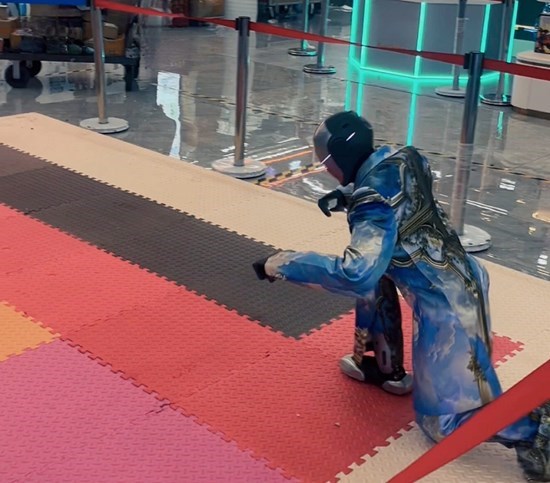
According to the company, participating humanoid robots perform movement sequences that include kicks, punches, blocking techniques, balance transitions, aerial maneuvers, and extended combinations. The garments are being observed throughout these exercises to better understand how they respond to repeated movement, articulation, and changes in body position.

The testing program is being conducted in collaboration with robotics research groups and commercial humanoid robot developers in China. Engineers and designers are documenting garment behavior throughout the evaluation process, with attention given to structural durability, mobility, and compatibility with robotic hardware.

The study focuses on several technical factors, including fabric movement, seam performance, wear at areas exposed to repeated friction, and the interaction between garments and articulated joints. The evaluation also examines whether garments affect a robot’s operational range of motion or interfere with onboard sensors and other functional components.

Maison Roboto said the testing is intended to provide practical observations that may support future garment development for humanoid robotic platforms. Information collected during the program will be reviewed as part of the company’s ongoing design process, with any necessary refinements incorporated into future versions where appropriate.

The company noted that designing garments for humanoid robots presents considerations that differ from conventional apparel. In addition to appearance, garments must accommodate mechanical joints, repeated movement cycles, and hardware layouts that vary between robot platforms. As a result, pattern development and construction methods may require adjustments based on the physical characteristics of individual systems.

Cannot view this image? Visit: https://images.newsfilecorp.com/files/9586/303278_d456f618446158b3_002full.jpg

Maison Roboto

To view an enhanced version of this graphic, please visit:

https://images.newsfilecorp.com/files/9586/303278_d456f618446158b3_002full.jpg
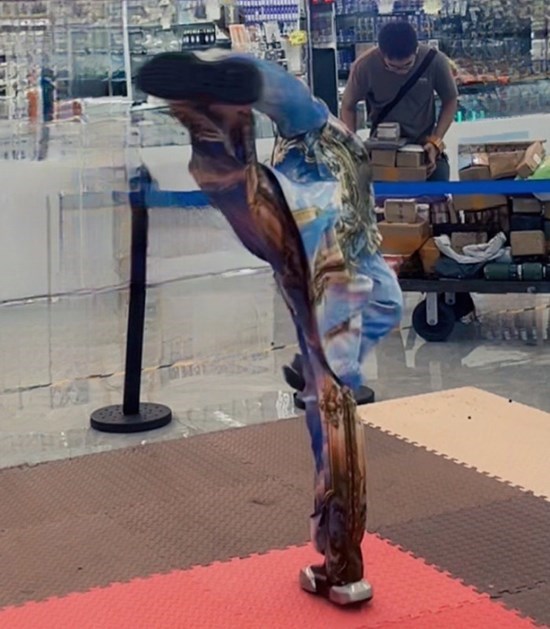
The current testing program includes multiple movement scenarios intended to expose garments to different operational conditions. Observations are being recorded throughout the evaluation to identify areas where garment construction, fit, or material selection may benefit from further refinement. The company stated that the testing is part of an iterative development process rather than a final product evaluation.

Maison Roboto also indicated that it intends to document elements of the testing methodology and technical observations for future discussion with researchers and organizations involved in humanoid robotics and wearable systems.

The China program forms part of Maison Roboto’s broader effort to conduct garment fitting, measurement, and performance evaluations on multiple humanoid robot platforms. The company said its work includes developing garments tailored to the dimensions and movement characteristics of different robotic systems rather than applying a single standardized design across all platforms.

As humanoid robotics continues to evolve across research and commercial applications, companies developing accessories and wearable products are also exploring approaches to improve compatibility with robotic hardware. Maison Roboto stated that observations from the current testing program will be used to guide future design revisions and ongoing research related to garment construction for humanoid platforms.

About Maison Roboto

Maison Roboto is a Paris-based robot couture atelier established in 2024 that develops garments for humanoid robotic platforms. Its work includes bespoke garments, ready-to-wear collections, and custom apparel designed for a range of humanoid robot models. The company also conducts garment fitting and performance evaluations as part of its design and product development process.

Media Contact

Quentin Alecsander
Maison Roboto
229 Rue Saint-Honoré
75001 Paris, France
Phone: +44 7880 922330
Giant fighting robots step into the ring at new San Francisco storefront for boxing bots

ByJ.R. Stone

Thursday, June 25, 2026

Giant fighting robots step into the ring at new SF storefront

San Francisco storefront opened by robot fighting event company REK will allow customers to train, showcase, repair and develop giant 6-foot humanoids

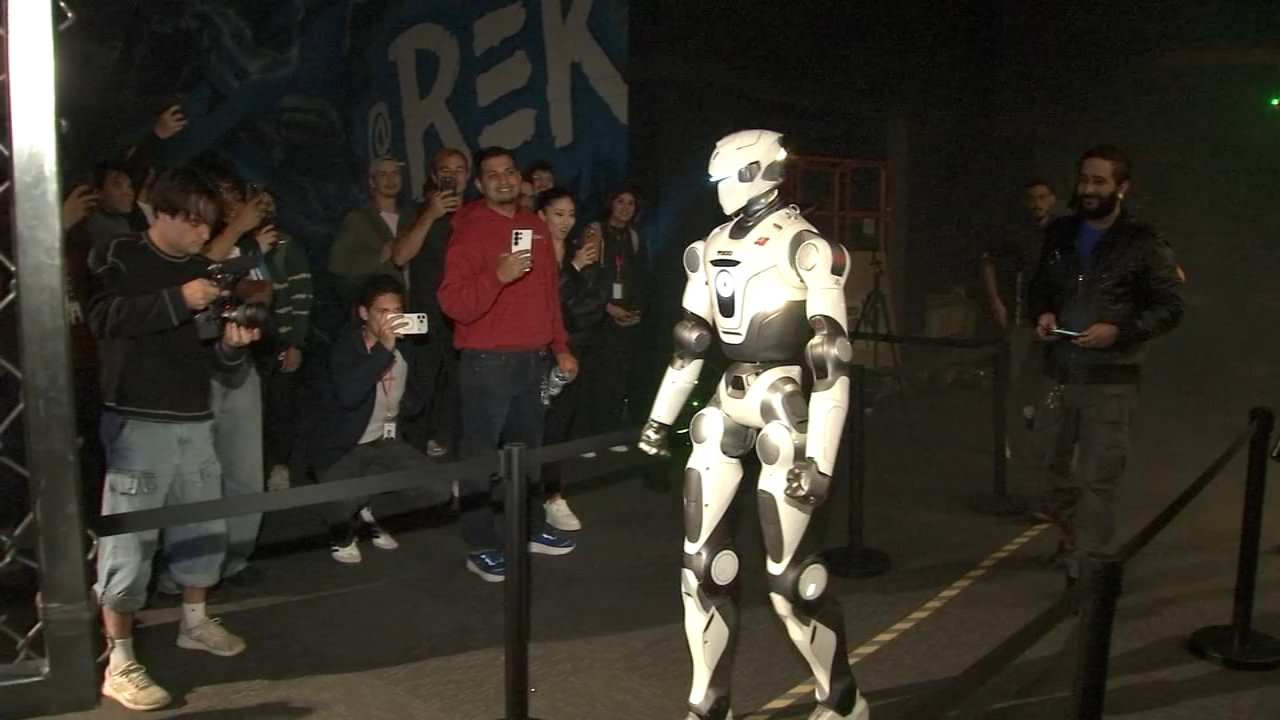
SAN FRANCISCO (KGO) – A viral robot company is turning an empty San Francisco storefront into a space where visitors can watch, learn about and eventually buy humanoid robots.

REK, a company known for its robot fighting events, is expanding its operation with a storefront that will serve as both a showcase and a training center for its humanoid robots.

“We’ve been fighting robots for a little bit more than a year,” Cix of REK said. “Last time we talked we were down at the gym on Van Ness. Those were four and a half feet tall, today we’re upgrading to 6 feet.”

The larger robots bring a new level of power to the competition, according to Cix.

“It’s not going to be making your dishes that’s for sure,” he said. “It’s like a motorized bat. If you were hit by a bat going 100 miles per hour that’s what it would be like to get hit by one of these.”

Cix described the company’s mission as bringing science fiction to life and the new storefront is expected to offer several services related to humanoid robots.

“The REK shop here you’ll be able to repair humanoids, be able to buy humanoids, rent them, and then we will also do classes so for the first time you’ll be able to see a humanoid robot and figure out how to walk it and how to program it,” Cix said.

He compared robot fighting to another technology-focused competition.

“Effectively, humanoid robot fights are the robot equivalent of car racing,” Cix said.

As demonstrations took place inside the space, Cix said spectators can expect more than just flashy moves from the machines.

“You’re going to see some moves, it’s going to be the sound and the weight that you’re going to recognize more than anything else,” he said.

San Francisco residents visiting the showcase expressed excitement about seeing the technology up close.

“Honestly, the big one, like this one is insane, it’s Iron Man, you cannot tell me that’s not Iron Man right there,” said Kamran Karic.

Karmen Leung said seeing robot combat in person was a sign of how far the technology has come.

“I think people have been talking about robots for many decades and it’s very cool to finally see it come into fruition and see them getting into a fight right now,” Leung said.

Cix likened the experience to a popular video game coming to life.

“It’s effectively like Mortal Kombat blew out of a video game console and went into a piece of metal,” he said.

Looking ahead, both Cix and visitors said they are eager to see what comes next for the growing world of humanoid robots.

“With robots, size matters,” Cix said.

REK is at 1415 Van Ness Ave. in San Francisco between Pine & Bush. I must check this out next time I’m up there.

Chinese humanoid robot spars with martial arts stars in new demo series

By Global Times Published: Jul 29, 2026 09:58 PM

Photo: Courtesy of AgiBot

Photo: Courtesy of AgiBot

Chinese robot maker AgiBot has released a three-episode martial arts series in which its full-size humanoid A3 spars with action stars Louis Fan Siu-wong and Zhang Lanxin, in what the company describes as the first martial arts bout staged between a human and a robot, the company told the Global Times on Wednesday.

The series is the second season of a wuxia (martial heroes)-themed format the company built around the A3. The first, released last year, was a straight action demonstration. This one is structured as a story: an opening episode sets up a challenge at a martial arts school, the second stages the fight, and a third drops the costume drama to walk through the engineering behind the moves.

AgiBot credits the performance to five technologies. Its latest balance control algorithm lets a full-size humanoid execute a kip-up, a 450-degree airborne back kick, consecutive Webster flips and a 360-degree side aerial, and hold its stance while absorbing strikes from a human opponent, according to the company.

The company also said the A3 is the first full-size humanoid to run perception and motion control as a fused system, linking what it senses to how it moves within milliseconds — shown in the series by crossing plum blossom piles, a traditional training obstacle.

Its OmniHand 3 Ultra-M dexterous hand, unveiled at the World Artificial Intelligence Conference in Shanghai this month, has 20 active degrees of freedom, opens and closes in 0.3 seconds and carries multimodal visual-tactile sensors.

Two further claims cover scale and durability: a swarm dispatch system called LinkBots that coordinates formation changes and navigation across multiple machines, and a chassis the company said has been validated through more than 1,000 rounds of extreme-condition testing.

The A3 was launched in February and is pitched by AgiBot as a “silicon-based stage star,” built for live events, showrooms and exhibitions rather than factory floors. The company said its 10,000th A3 came off the line in March, and that the robot played autonomous table tennis in June in work with a Peking University team led by Zhang Shanghang.

AgiBot led the global humanoid market in 2025 with about 31.9 percent of installations, ahead of Unitree Robotics on 26.5 percent, according to Counterpoint Research. Roughly 16,000 humanoids were installed worldwide that year, more than 80 percent of them in China.

It’s crazy how relevant this topic has become…

Trump administration bans foreign-made robots and power gear amid fears of Chinese influence

Advanced robots and power inverters made overseas pose risks that could include blackouts and espionage on Americans, U.S. officials said.

A worker looks on near humanoid robots on display from Magiclab, a Chinese embodied AI and humanoid robots company during the World AI Conference in Shanghai, Saturday, July 18, 2026. (AP Photo/Ng Han Guan)

Robots from the Chinese company Magiclab are on display during this month’s World AI Conference in Shanghai. | AP

By JOHN HENDEL

07/28/2026 04:55 PM EDT

The Trump administration Tuesday halted imports of advanced robots and a type of power equipment frequently used in solar energy projects, in the latest outgrowth of White House alarm about security threats from China.

The restrictions, announced by the Federal Communications Commission, follow recent steps to limit imports of foreign-made drones and wireless routers. Tuesday’s move would sweep in mobile robots, such as humanoids or quadrupeds, as well as power inverters that are often deployed to connect solar energy to the electric grid.

The move appears in line with two huge priorities of Donald Trump’s second presidency — countering Chinese competition in artificial intelligence and thwarting the rise of clean energy, a technology that China dominates worldwide.

“Following President Trump’s leadership, the FCC will continue to do our part to secure America’s critical supply chains and, with today’s action, the FCC is acting in lock step with our national security agencies to do just that,” Chair Brendan Carr said in a statement.

A Trump administration interagency group determined that these forms of technology pose a risk to the country’s supply chain and could allow for cybersecurity vulnerabilities exposing U.S. critical infrastructure, for example by triggering widespread power blackouts or enabling spying on Americans.

The FCC updated its list of risky electronic equipment and services to reflect these new concerns — a step that blocks the authorization of the equipment and prevents the use of those devices within the U.S.

The FCC action will only affect new models of these devices and won’t curb people’s flexibility to use equipment they may already have or stop stores from selling previously authorized models. The decision won’t affect the federal government’s purchasing or use.

The administration is including a waiver process allowing for exemptions, as it has done with other tech such as drones and routers. Producers of these advanced robots and power inverters can seek conditional approval for new models from the Pentagon and Department of Homeland Security through an FCC application process.

The FCC posted the determinations for both robotics and inverters laying out the perceived risks.

“The networked capabilities of advanced robotic systems create extensive vulnerabilities and vectors for attacks that can manipulate the data and physical operation of the advanced robotic system,” one determination said. “Relying on foreign-produced advanced robotic devices presents unacceptable supply chain and cybersecurity vulnerabilities . . . Advanced robotic devices collect data that could be leveraged by malign actors to surveil Americans, enhance the capabilities of foreign intelligence services, or to remotely commandeer the robots.”

Over 2,000 humanoid robots to compete in Beijing games

2nd edition of World Humanoid Robot Games tests machines on soccer, martial arts and factory chores

Beril Canakci

14 August 2026•Update: 14 August 2026

Content media

ISTANBUL

More than 2,000 humanoid robots from 16 countries are set to compete in Beijing this month, quadrupling participation from last year’s inaugural event, according to state-run Xinhua news agency.

The second edition of the World Humanoid Robot Games, scheduled for Aug. 22-26, has attracted 666 teams and 2,056 robots, it said.

Participants include teams from the US, Germany, Japan and Brazil, Xinhua reported, citing Jiang Guangzhi, director of the Beijing Municipal Bureau of Economy and Information Technology.

Chinese teams account for 641 of the registered teams.

The event will feature more than 30 competitions, including running and football, as well as newly added long jump, weightlifting, tug-of-war and table tennis.

Other contests will move beyond sports, testing robots on tasks such as assembly, housekeeping, emergency response and sorting books in settings designed to resemble factories, hotels, homes and logistics facilities.

The games are designed to test how well humanoid robots can move, maintain balance and manipulate objects, according to the report.

Organizers said some competition rules could eventually contribute to technical standards for industrial use.

The event gained international attention last year when the first games featured more than 500 robots from 280 teams representing 16 countries.

China’s robotics push

Humanoid robots have since become a prominent part of China’s technology push.

Videos of Chinese humanoid robots performing martial arts and gymnastic routines at the country’s Spring Festival Gala on Feb. 16 went viral worldwide.

A Chinese government official said in July that the country’s humanoid robot output is expected to exceed 100,000 units this year as the sector moves toward wider commercial use.

The games also serve as a showcase for an industry China now dominates commercially.

Chinese manufacturers accounted for more than 97% of global humanoid robot shipments in the first half of 2026, according to California-based market research firm Smart Analytics Global.

The industry’s rise has also strained ties with Washington.

The US Federal Communications Commission on July 29 restricted new foreign-made humanoid and quadruped robots from receiving the authorization generally required for import, marketing or sale in the US, citing cybersecurity and national security risks.

The restrictions do not affect robots already authorized for use in the US but could limit Chinese manufacturers’ access to a key prospective market as they expand overseas.

Looks like those sparring robots have not quite mastered Drunken Robot Style kung fu!