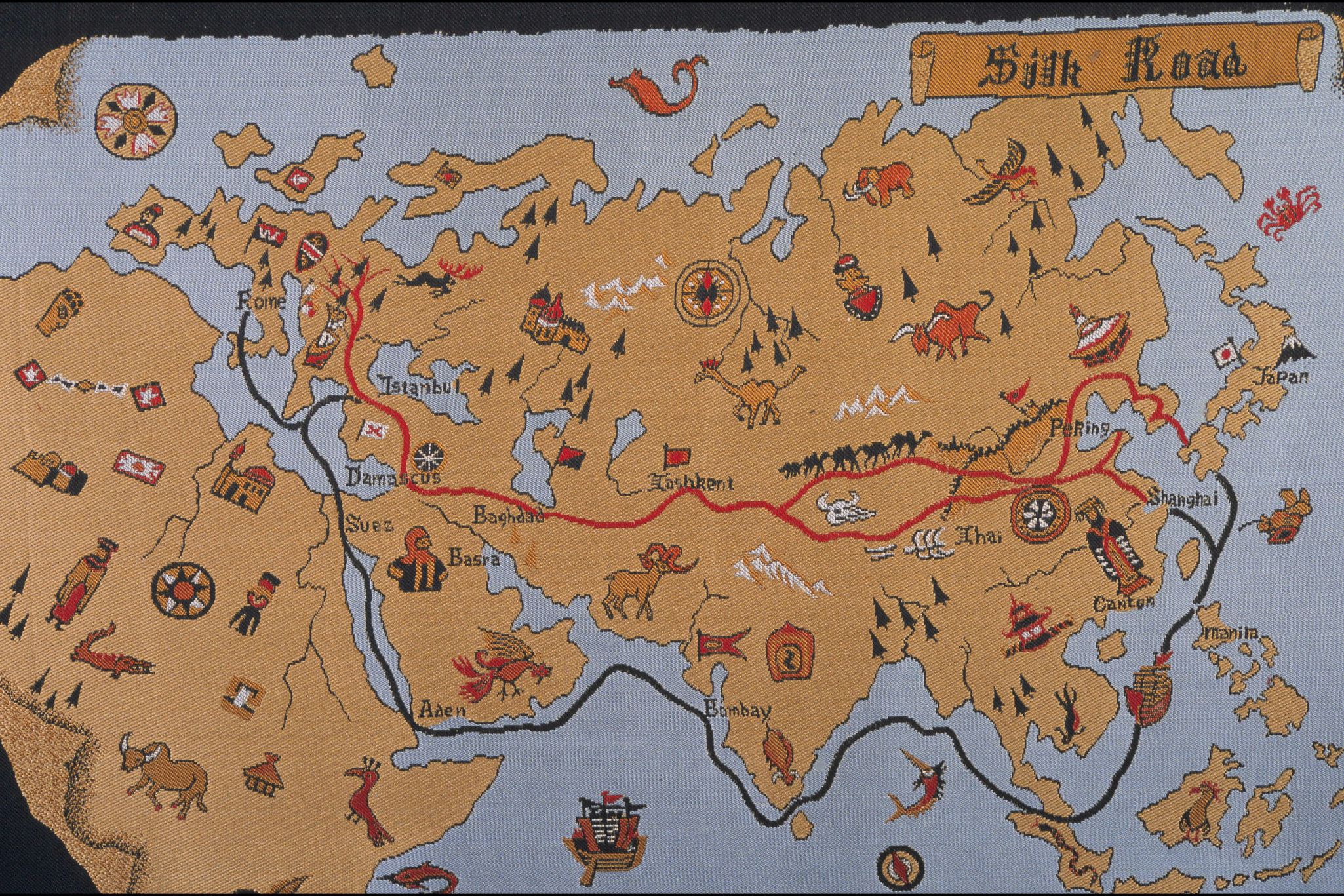
The Silk Road

HASAN KANBOLAT
h.kanbolat@todayszaman.com
August 10, 2015, Monday
China: 21st century Silk Road project

China is undergoing a major transformation. Its high-paced growth is taking a toll on the social structure. For instance, Mao Zedong’s Cultural Revolution largely undermined the fabric of family and social life. Even members of the same family would report each other’s anti-establishment activities. It was an ideology-centric era in China when people were required to hang photos of Mao, Karl Marx, Friedrich Engels and Josef Stalin on the walls of each room in the house.

Gone are the old days. The wounds of the past were redressed and had started to be forgotten. The practice of wearing single-type attire was terminated in 1973. Although the elder and more traditional members of the Communist Party of China (CPC) continue to stick to this tradition, it is more like a veneration of the past. Mao has come to be accepted and honored as the founding leader of China. China has emerged as the world’s primary buyer of raw materials and energy. As the same time, it has become the primary exporter of cheap processed goods. It is the world’s third largest foreign investor after the United States and the European Union.

In 2013, China announced the One Belt, One Road (OBOR) development framework that focuses on the land-based and maritime silk roads. The land-based Silk Road is around 7,000 kilometers and was mainly used between the second and 16th centuries to transfer raw materials and processed goods from China to the West. The Silk Road was instrumental not only in transformation and commerce but also played a major role in improving communication and civilization between East and West. The Beijing administration argues that China, which has implemented a reform and foreign expansion program, has to integrate with the world to fuel its growth, while the world needs close cooperation with China for development. There was certain progress in eliminating inequality among people and countries until the 1980s, after which inequality started to increase. The rise in inequality has sped up, particularly in the wake of the disintegration of the Soviet Union in 1991.

The Silk Road project seeks to eliminate inequity and ensure that people and countries are provided with equal opportunities. The project takes into consideration diversities as well. The main purpose of the project is to connect dynamic Asia to developed Europe, help the development of the countries under the project and cement a more balanced structure of regional cooperation. Under the project, China is offering state scholarships to 10,000 students from Silk Road countries. Cooperation will be improved in the areas of tourism, technology, health and science. Investments, commerce and visa procedures will be facilitated. Free-trade zones will be established. The project will avoid competing with other regional cooperation projects and, rather, seeks to have a complementary relationship. China expects a foreign trade volume of $2.5 trillion with the Silk Road countries in the next 10 years. This figure is currently $1.3 trillion.

In China, the number four is considered to bring bad luck. This is because its ****phone is the Chinese word for death. The number seven is also considered ominous as it is perceived as bringing obsession or getting stuck. In Chinese, the word eight is very similar to the word for wealth. Therefore, if a business employs many eights, it is believed to be successful. When the Chinese words for danger and opportunity are merged, you get the Chinese word for crisis. In Chinese mythology, the lotus flower represents purity and integrity as it emerges from the mud. I hope the phrase Silk Road brings good luck to all the Silk Road countries. This project may or may not be successful, but we need solidarity, peace and development with equality.

Why do we need a Silk Road thread? Soon come. :wink:

:)New Silk Road Project will include the “Marco Polo” Connection in ground/maritime master plan: http://thediplomat.com/2014/05/chinas-new-silk-road-vision-revealed/

:slight_smile: History Channel Tour: http://www.history.com/shows/mankind-the-story-of-all-of-us/videos/mankind-the-story-of-all-of-us-the-silk-road

Get ready for a trip

KungFuMagazine.com’s intrepid reporter Greg Brundage begins his Silk Road Kung Fu Friendship Tour: Part 1: Xian, China and the Fabled Silk Road by Greg Brundage.

Part 2

Read The Silk Road Kung Fu Friendship Tour Part 2: The Kung Fu Masters of Xian by Greg Brundage

Part 3

The Silk Road Kung Fu Friendship Tour Part 3: Turpan: Flaming Mountains, Eid al-Fitr with a Uyghur Family, and Bezeklik 1000 Buddha Caves by Greg Brundage

check out more photos

For more great photos check out the KungFuMagazine.com Google+ Album.

:slight_smile: Great to have reporter/TCMA Greg Brundage on the Road for a glimpse of the big picture in this monumental project. Finished Part 1. A must read!

Part 4

The Silk Road Kung Fu Friendship Tour Part 4: Turpan: Urumqi Jingwu School Interview with Faculty Member Young Master Ai Li and Other Kung Fu Schools in Urumqi By Greg Brundage

Part 5

The Silk Road Kung Fu Friendship Tour Part 5: Road to Almaty Kazakhstan by Greg Brundage

Part 6

The Silk Road Kung Fu Friendship Tour Part 6: Kung Fu In Almaty, Kazakhstan by Greg Brundage

Part 7

The Silk Road Kung Fu Friendship Tour Part 7: Interview with Dmitrushenko Yuriy Vladimirovich, President of the Kung Fu Federation of Kyrgyz Republic by Gregory Brundage

Part 8

The Silk Road Kung Fu Friendship Tour Part 8: Interview with Uzbekistan’s Wushu Federation President Mr. Ganiev Ravshan by Greg Brundage

The next installment is the final one.

Part 9 - the final chapter

The Silk Road Kung Fu Friendship Tour Part 9: Kung Fu Tai Chi Magazine and International Diplomacy by Greg Brundage

I want to thank Greg for sharing his extraordinary adventure with us.

:slight_smile: Great reads! Going to binge read the last 3 installments, now! :smiley: * Greg is the perfect ambassador for the KFM Silk Road Journey.

Train running

The ancient ‘Silk Road’ is back in business as new train connects China to Tehran
Zhejiang to Tehran in 14 days
By Andrew J . Hawkins on February 15, 2016 12:36 pm Email @andyjayhawk

The first train connecting Iran and China loaded with Chinese goods arrived in Tehran Monday, reviving the ancient Silk Road trade route and highlighting the economic possibilities for Iran since the lifting of international sanctions, AFP reports. The 5,900-mile trip from eastern Zhejiang province took 14 days, or 30 days less than a typical sea voyage between Shanghai and the Iranian port of Bandar Abbas, according to the head of the Iranian railway company, Mohsen Pourseyed Aqayi.

Tehran is not the train’s final stop, though. According to Aqayi, the plan is to lengthen the routes into Europe, which would give Iran the opportunity to raise even more money from passing trains. The country recently sent its first shipment of crude oil to Europe via shipping container, Bloomberg reports.

[QUOTE]
30 DAYS LESS THAN A TYPICAL SEA VOYAGE

China was one of the few world powers that did not have sanctions against Iran. More than a third of Iran’s foreign trade is with China, which is Tehran’s top oil customer. A spokesperson for Iran’s rail company told AFP that future trains from China would arrive with greater frequency, starting at once a month and increasing from there. The leaders of both countries agreed to a 10-year, $600 billion trade partnership last month.

The Silk Road is an ancient network of trade routes dating back to 220 BCE, connecting China to the Mediterranean Sea. It was a significant player in the rise of both Eastern and Western civilizations, including China, India, Greece, Rome, and Persia. In 2013, the president of China proposed the idea of creating a new Silk Road through Russia and the Ukraine into Europe. Under the title “One Belt, One Road,” this plan is China’s new national vision to improve its connectivity to Europe, Asia, and Africa.[/QUOTE]

What an amazing train ride this must be.

More on the train

China’s Silk Road Reaches Iran, Pushes Toward Europe
February 25, 2016 • From theTrumpet.com
The ancient trade route continues its modern-day advance.
BY KIEREN UNDERWOOD

The first train on China’s “Silk Road” railway arrived in Tehran on February 15, making the 5,900-mile journey in a third of the time required by a sea voyage.

The Silk Road refers to an ancient network of trade routes that connected cultures running from Southeast Asia to the Mediterranean—especially the lucrative trade of Chinese silk. In late 2013, Chinese President Xi Jinping unveiled his plan to revive the Silk Road with his One Belt, One Road initiative (OBOR). Now that transport network has reached Iran.

China’s government says OBOR “aims to promote the connectivity of Asian, European and African continents,” while “strengthening partnerships” that run through the path of the ancient Silk Road. Others expect even more. “Some people say there are only 65 countries involved, but that’s a misunderstanding,” says Zhao Changhui, chief risk analyst at China Export-Import Bank. “It’s a new method of development for China and the world.”

Iran welcomed the project. Mohsen Pourseyed Aqayi, the head of the Iranian railway company, said the train’s arrival in 14 days was an “unprecedented achievement.”

But the train routes don’t stop in the Middle East. One diesel locomotive already makes the 8,100-mile journey from the east coast of China to Spain. Political leaders in Europe, including British Prime Minister David Cameron and German Chancellor Angela Merkel, have publicly lauded OBOR and expressed enthusiasm to participate in it. Multiple European countries previously showed their enthusiasm for joint cooperation when they joined the China-sponsored Asian Infrastructure Investment Bank (AIIB).

The Diplomat, which covers the Asia-Pacific region, recognized the opportunities that China’s grand initiative could have:

For centuries, the long distance between Europe and China has been a natural obstacle to strengthening bilateral trade relations. As the OBOR project concentrates on enhancing connectivity and transport infrastructure, there is huge potential to enlarge and accelerate the movements of goods between China and Europe.

Critics of the OBOR intiative have pointed to slow growth of major projects in Europe. “Europeans are watching at the implementation in Pakistan, which is really the only country where major OBOR projects are coming up,” said the deputy director of the Asia and China Program, Mathieu Duchatel.

Zhao says the lack of projects so far is simply because the concept is new: “The time is not ripe. It’s not that there aren’t projects, it’s just that they aren’t developed yet.”

China’s largest trading partner is already the European Union, and its economic footprint there is spreading. In January, China was accepted as a small yet symbolic shareholder into the European Bank for Reconstruction and Development.

The Trumpet has followed the growing relationship between China and Europe (especially Germany) and expects their trade alliance to be further strengthened. You can find out the details of that trade relationship in a column by the late Ron Fraser, “The Great Mart.”

And more to come…:wink:

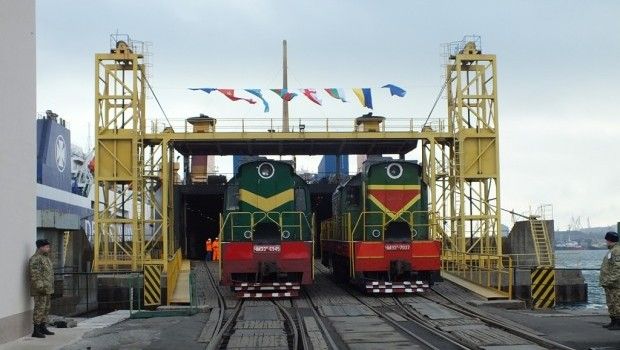
Train kept a’rollin, all night long

Full-scale launch of Silk Road route from Ukraine to China slated for March
26.02.2016 | 16:08

Acting head of Ukrainian rail transport giant PJSC Ukrzaliznytsia Oleksandr Zavhorodniy says that the Trans-Caspian transport corridor from Europe to China will begin to work at full capacity early this spring.


The Silk Road route from Ukraine to China will take 11 days / Photo from mtu.gov.ua

“It hasn’t been launched at full capacity yet. We have sent a first train to assess the situation, to see if there are problems or restrictions. The route will be launched at full in March. When this Silk Road starts working, we’ll be able to deliver freight from China to the border with Poland for 11 days. This is virtually as much time as a train runs via Russia,” Zavhorodniy said in an interview with Ukrainian online publication Livy Bereh at lb.ua.

In his words, Ukrzaliznytsia plans to launch two own ferries to reduce the Silk Road fare.

“This will significantly reduce the cost of freight transportation along the Silk Road and make the route more attractive and competitive. Our counterparts from Poland and Germany have repeatedly announced their interest in the creation of this transport corridor. And today, we are working with them to hammer out a common policy with a single tariff,” he said.

Zavhorodniy says that this route is of strategic importance to Ukraine in terms of national security.

I’m starting to ponder the economic impact of this route on tomorrow’s international commerce.

Another two-fer…

And there’s even a new TV show coming to Discovery Channel.

David Baddiel on the Silk Road
Giant dogs, eagle hunters and vodka were all in a days work when comedian David Baddiel was filming his new TV series about the historic trade route


David Baddiel in Kashgar Sunday livestock market, Xinjiang Region, China. Photograph: TIm Pelling/Discovery Communications

Interview by Will Coldwell @will_coldwell
Friday 26 February 2016 06.49 EST Last modified on Friday 26 February 2016 06.51 EST

Theres a famous bit in Blade Runner when the android, Roy, dies and says: Ive seen things you people wouldnt believe. I like to think thats something I could say about my Silk Road journey. I was on parts of the Earth that felt like the moon.

The Silk Road was the first international trade route. Travellers exchanged ideas on scientific invention, religion, culture, music everything, really. Globalisation has been the wellspring of most ideas.

Theres an old Georgian saying that wine should be good enough to make a pheasant cry. Wine is meant to have begun there. In Sighnaghi theres a vineyard called Pheasants Tears, where we had a traditional feast of about 27 courses, with a speech between each one, and drank an incredible amount.


A train container covered with a tarpaulin depicting the Silk Road. Photograph: AFP/Getty Images

We had to track down these enormous, human-sized dogs. Silk Road traders bred them for catching bears. They still exist in Georgia, but theyre really hard to find. We drove out into the mountains and eventually we found a farm that had one. It was terrifying.

I had to run away from dogs in China, too. We were trying to find the old Great Wall what we think of as the Great Wall was rebuilt by Mao. The old one is very hard to find because it has fallen into disuse and was made of mud. We thought wed found a bit of it but it was surrounded by wild dogs. Theres footage of me running away.

In Xian, I was grabbed by a middle-aged woman and pulled into her noodle shop. I thought I was being arrested, but shed just thought, OK, hes on TV somewhere so Ill advertise my noodles. I had one of the best meals Ive ever had. There are thousands of these places in Xian market.


Food stall in the Muslim quarter of Xian, China. Photograph: Alamy

Kyrgyzstan is the only democracy in central Asia. Everywhere else around there is still very Soviet. Bishkek, the capital city, is still very poor but its becoming a hip, exciting city. There are lots of really fabulous cafes.

In Uzbekistan, the whole crew apart from me fell really ill. Me and the fixer just kept filming. We dined with the one Jewish family left in Uzbekistan and they insisted on me drinking vodka. It was 50C, I was filming with a guy who had never done it before and I was completely drunk. Then I had to go and wrestle in the main square of Bukhara…

Turns out I really like camels milk who knew? The food in central Asia is not so great: it tends to be horse. Rabbit stew at an eagle hunters house in Kyrgyzstan was really nice, though. At first I felt bad because this thing was hopping around the desert one minute, then killed by an eagle. The hunter skinned it in front of me … But then his wife cooked it and it was delicious.


Baddiel with a local boy in a nomad village in Kyrgyzstan. Photograph: Mielnikiewicz Justyna

In Turkey, I had to harvest pigeon poo to try and make gunpowder. The eventual collapse of the Silk Road happened because the Ottoman took gunpowder from the Chinese and found this way of making it. It led, indirectly, to the fall of Constantinople.

Theres a shade of blue invented by the Chinese that you can see in Buddhist caves in western China. As you move west along the Silk Road, you see how it appeared on church walls. Its amazing how you can trace the process. We were trying to find places where things that are very widespread in the world began.

I dont think comedians are better travellers but they are communicators and storytellers. I think it was Victoria Wood who said: Im over 50 and that means Im not legally allowed to do a comedy show any more. I have to do a travel show. There is some truth in that, but I dont care: I really enjoy it.

David Baddiel on the Silk Road is on the Discovery Channel, Sundays at 9pm

I must give props to our writer Greg Brundage. He foresaw this coming and went on his The Silk Road Kung Fu Friendship Tour, which was the inspiration for launching this thread. And he went again recently, so we’ll be bringing you more installments of that series very soon.

$1 Trill

China is spending nearly $1 trillion to rebuild the Silk Road
BY VIKRAM MANSHARAMANI March 2, 2016 at 11:02 AM EST


An man in ancient Chinese costume walks next to a camel while participating in the Silk Road Cultural Journey, in Jingyang, Shaanxi province September 19, 2014. Organized by Shaanxi government and a local tea company, the journey, started on Friday in Jingyang, Shaanxi province and was expected to finish in Kazakhstan more than a year later. A total of 136 camels, eight horse-drown carriages and more than 100 people in ancient Chinese costumes will travel an estimated 15,000 kilometers (9,321 miles) along the Silk Road with tea leaves while giving performances and promoting the tea products on the way, local media reported. REUTERES/Rooney Chen

An man in ancient Chinese costume walks next to a camel while participating in the Silk Road Cultural Journey, in Jingyang, Shaanxi province September 19, 2014. China is rebuilding the Silk Road. Photo by Rooney Chen/Reuters

Two weeks ago, a 32-container train from Wuyi, China arrived in Tehran, Iran. You might think the arrival of cargo by rail would be no big deal, but in this case you’d be wrong. This was the first journey of its kind between the two cities, and it shortened the typical ship-based travel time by 30 days. This new connection is among the first visible signs of a massive trade network that China is currently constructing across Eurasia. The Silk Route is being rebuilt.

Known as One Belt, One Road, China’s plan to build veins of trade over land and sea into Europe and Asia — announced in 2013 — may be the most significant global economic initiative in the world today, and it’s not getting the attention it deserves in Western media.

The initiative is gigantic, with future investments of almost $1 trillion already announced. In comparison, America spent an inflation-adjusted $130 billion on the Marshall Plan following the World War II. China’s web of trade would span over 60 countries that are home to 4.4 billion people — more than half of the world’s population. Further, the initiative would interact with economies representing more than 40 percent of the world’s GDP. It’s a massive program that has the potential to affect global trade patterns.

[QUOTE]One Belt, One Road may be the most significant global economic initiative in the world today.

The initiative is broken into a land component, known as the Silk Road Economic Belt, and a sea component, called the Maritime Silk Road. The “Belt” will consist of a number of corridors connecting China to the far reaches of Eurasia by road and rail. The “Road” will involve the development of ports and shipping routes connecting Chinese harbors to Europe and the South Pacific.

Funding this massive program is not a trivial undertaking. There are a number of institutions on hand to support the funding of China’s grand vision. First, Beijing started a $40 billion “Silk Road Fund” that has already helped fund a hydroelectric power project in Pakistan and invested in a liquefied natural gas project in Russia. Second, there’s the newly created, $100 billion Asian Infrastructure Investment Bank in which China controls 26 percent of the votes. It’s logical to assume it might finance some of these projects. Lastly, the China Development Bank announced in June that it would invest a stunning $890 billion dollars in over 900 One Belt, One Road projects across 60 countries.

So why would China want to deploy capital in this way? After all, doesn’t it face a massive domestic slowdown and potential debt crisis that warrant financial prudence? Why invest abroad aggressively when there are potential domestic needs?


A map illustrates China’s One Belt, One Road megaproject at the Asian Financial Forum in Hong Kong, China Jan. 18, 2016. Photo by Bobby Yip/Reuters

There appear to be two main reasons: one related to the Chinese slowdown and economic vulnerabilities, the other to geopolitical ambitions in the region.

First, China faces significant overcapacity in its steel and construction sectors. Building roads, ports, rails and other infrastructure will help deploy some of these otherwise idle human and capital resources. Investing abroad might also strengthen the economies of nascent trading partners, thereby securing future demand for Chinese goods and services. There’s also the issue of rising domestic labor costs; better trade networks would help Chinese firms offshore manufacturing more efficiently.

It will also foster greater trade and energy security. The current maritime trade routes, which Chinese goods flow through, are deeply vulnerable — in a time of war, a blockade could crush the economy. The Silk Road initiative will keep markets open for Chinese goods, but also secure China’s access to energy. Last spring, China announced it would support over $20 billion worth of infrastructure projects in Kazakhstan, a potential energy partner. It is also planning a 2,000-mile, high-speed railway from western China to Tehran, in part to gain easier access to the growing supply of Iranian oil.

In addition to bolstering its economic strength, One Belt, One Road will also generate significant geopolitical clout for Beijing.

In addition to bolstering its economic strength, One Belt, One Road will also generate significant geopolitical clout for Beijing throughout Southeast, South and Central Asia as well as the Middle East, parts of Africa and Europe. Just consider the influence China will have in Pakistan. Beijing has already launched a $46 billion infrastructure program in Pakistan, which will double the energy-poor country’s electricity supply. In return, China will secure access to the port of Gwadar, minimizing the time for goods to transit from inland Chinese cities to global markets. Investing in Pakistan will help develop western China.

The Pakistani alliance is particularly useful, since China can use it as a counterweight to India’s influence in the region, and controlling instability in Pakistan through investment might lessen the risk of it spilling into China. Beijing already has growing concerns of restive minorities within China and wants to minimize the likelihood of domestic instability gaining momentum from external sources.

Despite the clear benefits the Chinese strategy seems to offer, it’s not without risk. The Financial Times pointed out that the sheer ambition of the project is part and parcel with the fragmented and often contradictory process of economic policymaking in China. How implementation goes is anyone’s guess.

Further, Chinese inroads abroad could produce international tensions. Russian President Vladimir Putin has signaled openness to cooperating with the initiative, but it remains to be seen how far he will tolerate Chinese influence in Central Asia.

And the countries that are part of this new Silk Route are not without significant credit risks and political risks. Local instability could undermine investment projects in countries like Pakistan, which is deploying thousands of troops to safeguard China’s investments. The private-intelligence firm Stratfor also points out that the flip side of stronger connections is that they will “provide new routes for the illicit movement of goods and people into China.” Could major Chinese cities emerge as terrorist targets, as New York, Paris and London have in recent years?

Despite this uncertainty, it is particularly unwise to ignore the One Belt, One Road initiative. It just might shape the 21st century as much as the Marshall Plan did the 20th.

Vikram Mansharamani is a lecturer in the Program on Ethics, Politics & Economics at Yale University and a senior fellow at the Mossavar-Rahmani Center for Business and Government at the Harvard Kennedy School. He is also the author of “Boombustology: Spotting Financial Bubbles Before They Burst” and is a regular commentator in the financial and business media.[/QUOTE]

We’ll have more on this soon.