My Sifu was in Fujian province the last two weeks visiting his village and relatives. He is now in Vietnam for two weeks visiting the cck tcpm schools there. Will have to ask him if he’s been to any of the temples there.
The final chapter
THREE SHAOLIN MONASTERIES IN FUJIAN PROVINCE: THE JEWELS OF SOUTHERN SHAOLIN: PART 3: FUQING by Gregory Brundage
a photo essay
Pretty pix…
Monks practice martial art at Quanzhou Shaolin Temple(1/8)
2015-05-18 08:33 Xinhua Editor:Li Yan
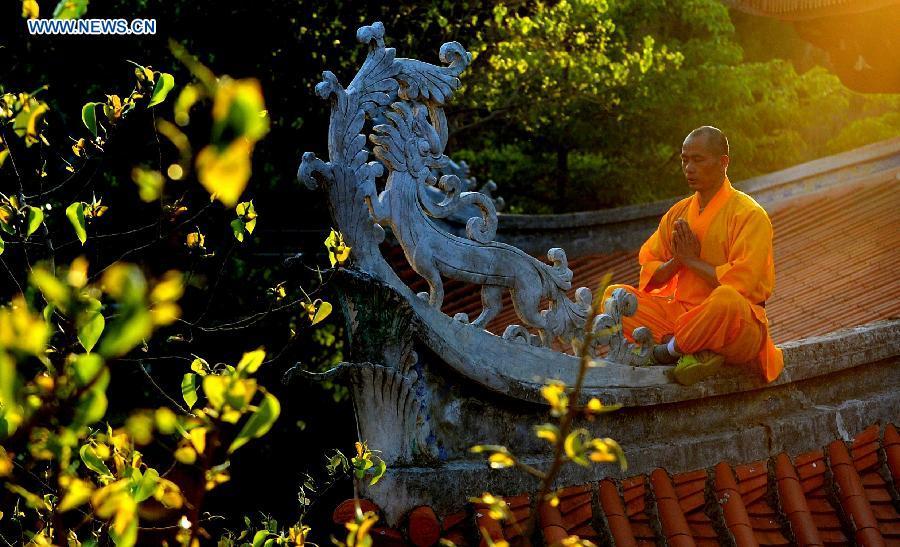
A monk meditates on a rooftop at the Quanzhou Shaolin Temple in Quanzhou City, southeast China’s Fujian Province, May 13, 2015. Located in the east of the Qingyuan Mountain of Quanzhou, the Quanzhou Shaolin Temple, also called the South Shaolin Temple, is the birthplace of the South Shaolin martial art, which has spread to Taiwan, Hong Kong and Macao and even Southeast Asia since Ming (1368-1644) and Qing (1644-1911) dynasties. It’s also jointly called “the South and North Shaolin” with Songshan Shaolin Temple in central China’s Henan Province. Zen, the doctrine which every monk learning the Shaolin martial art should observe, refers to a frame of mind which gets rid of greed, anger and confusion and helps oneself reach inner peace as to become more powerful and invincible. (Photo: Xinhua/Wei Peiquan)
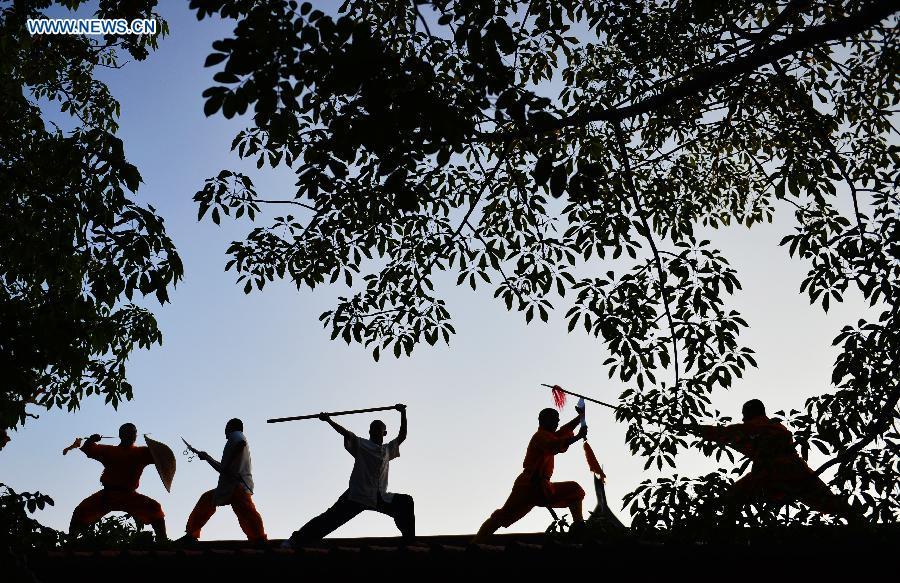
Monks practice martial art on a rooftop at the Quanzhou Shaolin Temple in Quanzhou City, southeast China’s Fujian Province, May 15, 2015. Located in the east of the Qingyuan Mountain of Quanzhou, the Quanzhou Shaolin Temple, also called the South Shaolin Temple, is the birthplace of the South Shaolin martial art, which has spread to Taiwan, Hong Kong and Macao and even Southeast Asia since Ming (1368-1644) and Qing (1644-1911) dynasties. It’s also jointly called “the South and North Shaolin” with Songshan Shaolin Temple in central China’s Henan Province. Zen, the doctrine which every monk learning the Shaolin martial art should observe, refers to a frame of mind which gets rid of greed, anger and confusion and helps oneself reach inner peace as to become more powerful and invincible. (Photo: Xinhua/Wei Peiquan)
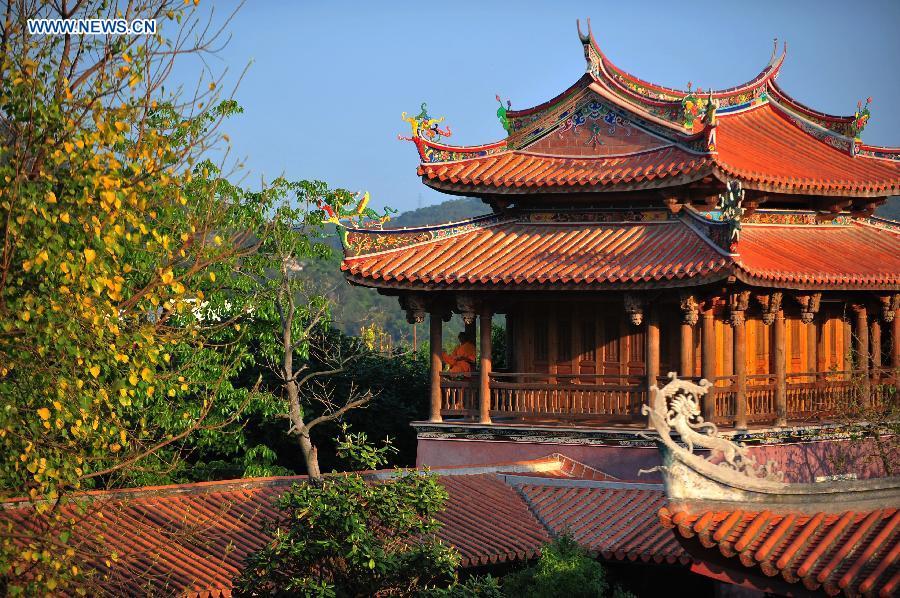
Photo taken on May 13, 2015 shows a bell tower at the Quanzhou Shaolin Temple in Quanzhou City, southeast China’s Fujian Province. Located in the east of the Qingyuan Mountain of Quanzhou, the Quanzhou Shaolin Temple, also called the South Shaolin Temple, is the birthplace of the South Shaolin martial art, which has spread to Taiwan, Hong Kong and Macao and even Southeast Asia since Ming (1368-1644) and Qing (1644-1911) dynasties. It’s also jointly called “the South and North Shaolin” with Songshan Shaolin Temple in central China’s Henan Province. Zen, the doctrine which every monk learning the Shaolin martial art should observe, refers to a frame of mind which gets rid of greed, anger and confusion and helps oneself reach inner peace as to become more powerful and invincible. (Photo: Xinhua/Wei Peiquan)
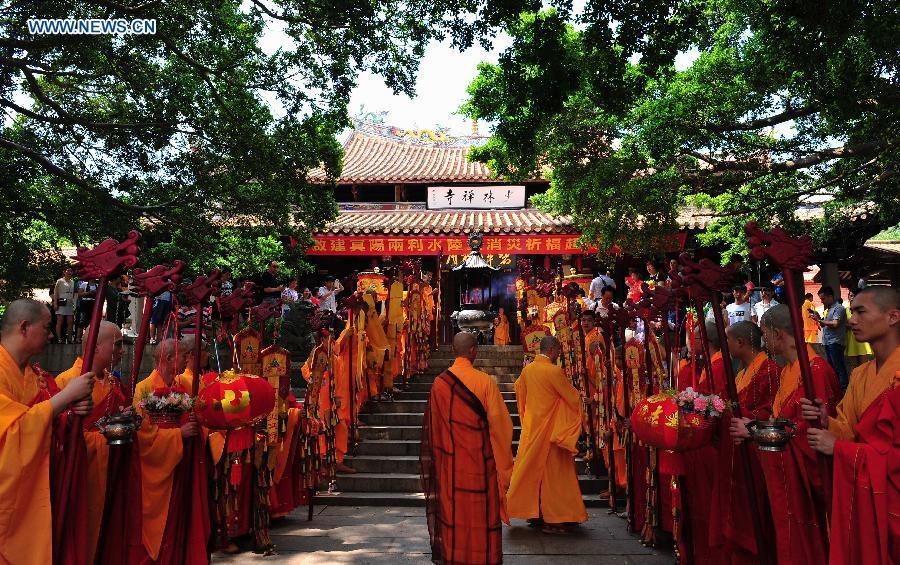
Monks attend a ceremony at the Quanzhou Shaolin Temple in Quanzhou City, southeast China’s Fujian Province, May 16, 2015. Located in the east of the Qingyuan Mountain of Quanzhou, the Quanzhou Shaolin Temple, also called the South Shaolin Temple, is the birthplace of the South Shaolin martial art, which has spread to Taiwan, Hong Kong and Macao and even Southeast Asia since Ming (1368-1644) and Qing (1644-1911) dynasties. It’s also jointly called “the South and North Shaolin” with Songshan Shaolin Temple in central China’s Henan Province. Zen, the doctrine which every monk learning the Shaolin martial art should observe, refers to a frame of mind which gets rid of greed, anger and confusion and helps oneself reach inner peace as to become more powerful and invincible. (Photo: Xinhua/Wei Peiquan)
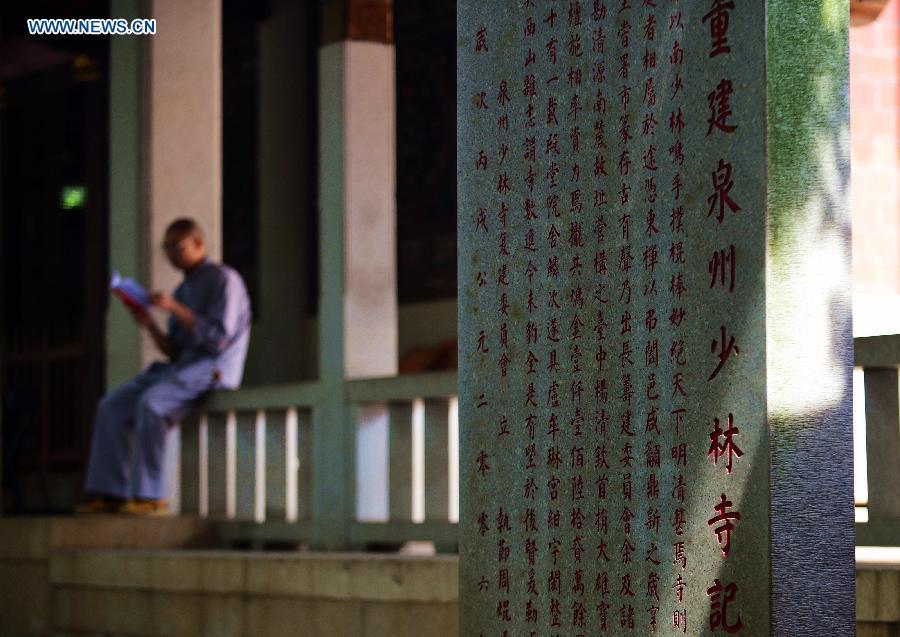
A monk reads texts at the Quanzhou Shaolin Temple in Quanzhou City, southeast China’s Fujian Province, May 14, 2015. Located in the east of the Qingyuan Mountain of Quanzhou, the Quanzhou Shaolin Temple, also called the South Shaolin Temple, is the birthplace of the South Shaolin martial art, which has spread to Taiwan, Hong Kong and Macao and even Southeast Asia since Ming (1368-1644) and Qing (1644-1911) dynasties. It’s also jointly called “the South and North Shaolin” with Songshan Shaolin Temple in central China’s Henan Province. Zen, the doctrine which every monk learning the Shaolin martial art should observe, refers to a frame of mind which gets rid of greed, anger and confusion and helps oneself reach inner peace as to become more powerful and invincible. (Photo: Xinhua/Wei Peiquan)
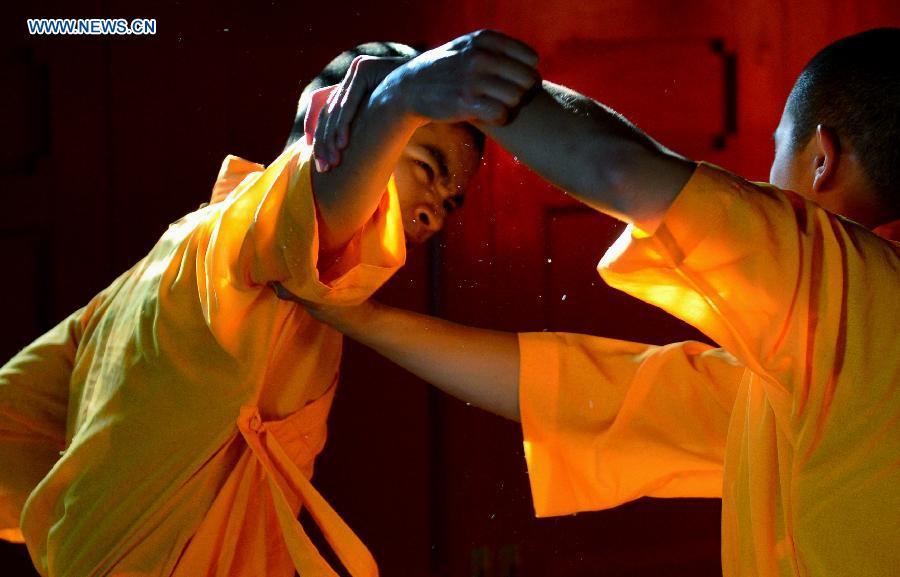
Monks practice martial art at the Quanzhou Shaolin Temple in Quanzhou City, southeast China’s Fujian Province, May 13, 2015. Located in the east of the Qingyuan Mountain of Quanzhou, the Quanzhou Shaolin Temple, also called the South Shaolin Temple, is the birthplace of the South Shaolin martial art, which has spread to Taiwan, Hong Kong and Macao and even Southeast Asia since Ming (1368-1644) and Qing (1644-1911) dynasties. It’s also jointly called “the South and North Shaolin” with Songshan Shaolin Temple in central China’s Henan Province. Zen, the doctrine which every monk learning the Shaolin martial art should observe, refers to a frame of mind which gets rid of greed, anger and confusion and helps oneself reach inner peace as to become more powerful and invincible. (Photo: Xinhua/Wei Peiquan)
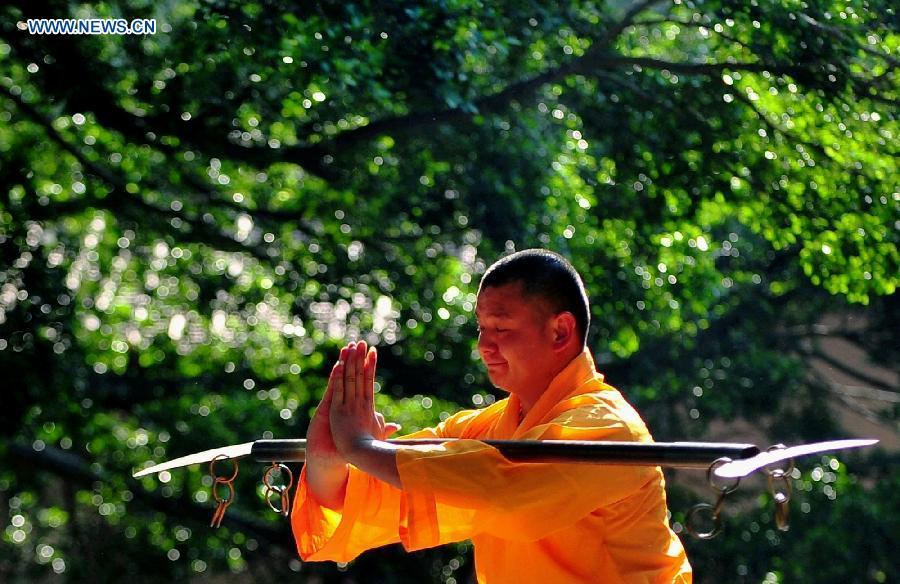
A monk practices martial art at the Quanzhou Shaolin Temple in Quanzhou City, southeast China’s Fujian Province, May 15, 2015. Located in the east of the Qingyuan Mountain of Quanzhou, the Quanzhou Shaolin Temple, also called the South Shaolin Temple, is the birthplace of the South Shaolin martial art, which has spread to Taiwan, Hong Kong and Macao and even Southeast Asia since Ming (1368-1644) and Qing (1644-1911) dynasties. It’s also jointly called “the South and North Shaolin” with Songshan Shaolin Temple in central China’s Henan Province. Zen, the doctrine which every monk learning the Shaolin martial art should observe, refers to a frame of mind which gets rid of greed, anger and confusion and helps oneself reach inner peace as to become more powerful and invincible. (Photo: Xinhua/Wei Peiquan)
 Awesome photos! Great to see one of the existing temples of Fujian Province that was present during the development of numerous Southern styles based on Shaolin TCMA.
ttt 4 2017!
Interesting articles. Someone needs to tell ECNS.CN that Abbot only has one T
Southern Shaolin’s kung fu monks battle for attention
1 2017-12-27 16:31CGTNEditor: Gu Liping ECNS
*You’ve probably heard of Shaolin Temple, but did you know there’s more than one in China?
In Quanzhou, in southeastern Fujian Province, monks in saffron-colored robes practice kung fu moves in front of a few dozen tourists every day.
For Abbott Shi Changding, more needs to be done to attract people and get the word out about his temple.
For many, the name Shaolin Temple immediately conjures up images of monks performing flying kicks and acrobatic tricks, as portrayed in countless movies. The temple most people know about is located in Henan Province in central China.
The origins of the Quanzhou version are more mysterious. Officially, it was established during the Tang Dynasty (618-907 AD). Legend has it that monks from the northern Shaolin Temple came south to help fight pirates. Others say they fled the north at the fall of the Ming Dynasty in the 17th century.
At one point, there were said to be several Shaolin temples in China.
In any case, Southern Shaolin Temple was destroyed by fire in the late 18th century. It was not rebuilt until 1997 and now labels itself as the “birthplace of Southern Shaolin martial arts.”
Monks vs. pirates
Unlike other types of martial arts that are heavy on kicks and leg work, Southern Shaolin focuses much more on punches and arm movements.
This goes back to the Southern Shaolin monks’ history of fighting pirates. On unstable terrain, such as at sea or in mountainous areas, it was easier to battle opponents with feet firmly planted on the ground, rather than try to perform elaborate jumps and flying kicks.
The weapons used are based on similar thinking: a two-meter-long wooden staff could be used to strike opponents at a distance, such as from one boat to another.
The “pa” – a sort of curved trident with metal rings – and handball-sized “double hammers” that rattle could not only harm an opponent, but also ward off wild animals in the mountains by making noise.
Nowadays, Southern Shaolin martial arts are no longer used to fight off pirates, but the craft has spread far and wide, and can now be found in southeast China’s island region of Taiwan, and southeast Asia and even the US.
PR and kung fu
At the temple in Quanzhou, pupils as young as six years old practice for up to six hours per day every day to master the skills to become a proper kung fu master.
But the learning actually never ends, says Shi Ligang, head of the wushu team at the temple.
Even Abbott Shi Changding still practices two to three hours a day.
A kung fu practitioner since the age of 13, he has been with Southern Shaolin Temple since it was rebuilt. He says his mission is to help the temple gain recognition.
This has meant attending conferences, giving media interviews and generally doing public relations work for the temple.
“As the abbot of the temple, part of my job is to make more people know about Shaolin,” he told CGTN on a recent visit.
In the process however, he has attracted criticism from some who argue a monk’s duty is at the temple, studying scripture.
“When I take part in discussions and meetings all over the country, people ask: why isn’t this Buddhist monk at the temple chanting prayers? How come he’s here taking part in these activities?”
But Shi Changding insists: "I have to, otherwise no one will know who we are and what we’re doing.
“We can’t separate Buddhism from society and from life. If you want to carry it out to the community and to the world, you have to leave (the temple).”
A pop culture boost
One thing that has helped is kung fu movies, starting with Chang Hsin Yen’s 1982 film “The Shaolin Temple,” starring Li Lianjie, or Jet Li as he is better known in the West.
“The Shaolin Temple movies in the 1980s, when they came out, were hugely popular, causing kung fu fever around the world. They contributed hugely to making more people familiar with Shaolin,” according to Shi Changding.
Nowadays, aspiring kung fu masters come from as far as Canada or Belgium to learn Southern Shaolin martial arts at the temple. Anyone can study kung fu at the temple as there is no prerequisite to be a monk.
At the same time, Southern Shaolin is a Buddhist temple like any other in China: amid the Bodhi trees and imposing statues, monks study the teachings of Buddha and ordinary people go to pray and burn incense.
The temple is still undergoing renovation and expansion work but once completed, it is expected to become one of the largest temples in China, covering some 400 “mu” (26.7 hectares).
Still, on cool mornings when the only sound on the hill is that of dozens of monks moving in unison and punching the air, it is easy to feel transported to the time when warrior monks battled pirates.
Chongqing Shaolin Temple in pictures (1/4)
2017-12-27 10:48Ecns.cn Editor:Yao Lan
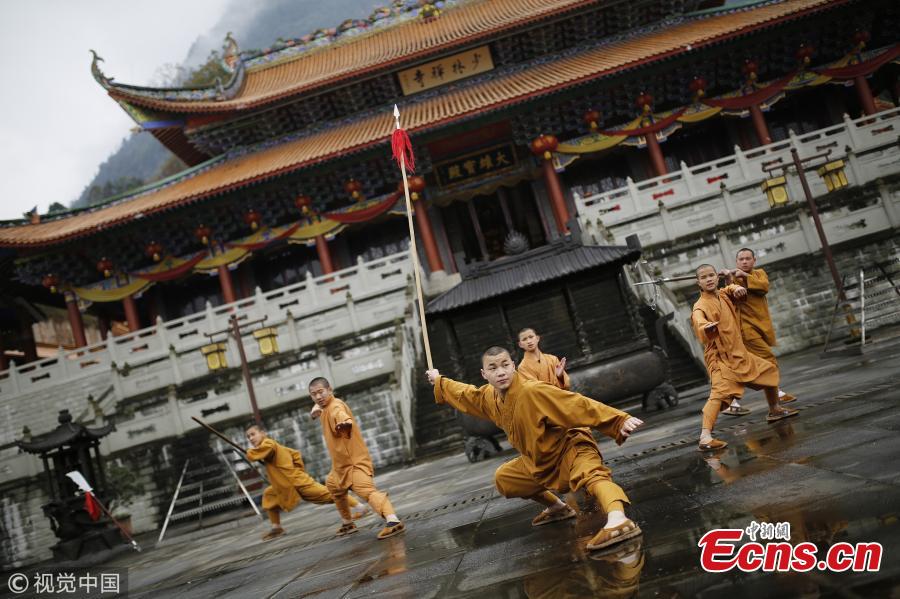

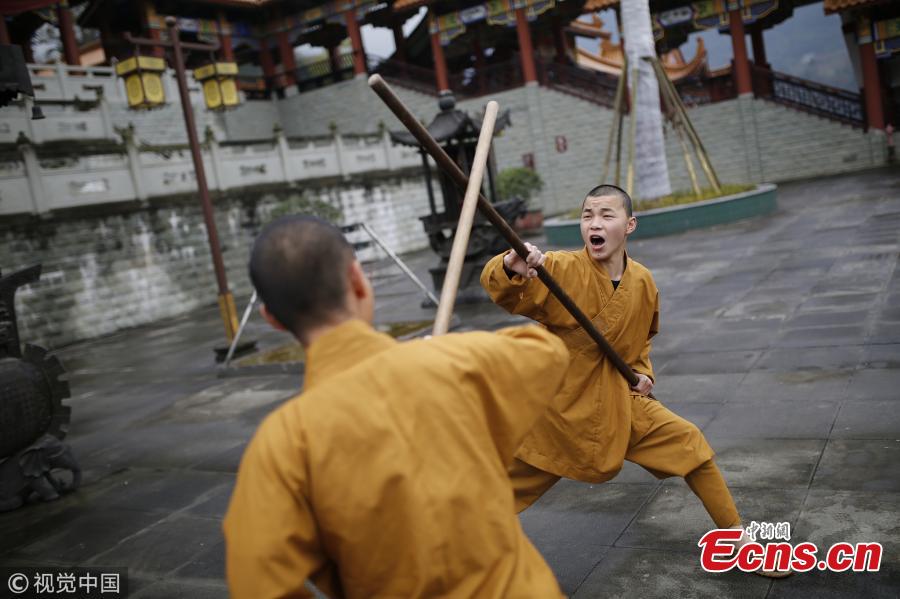
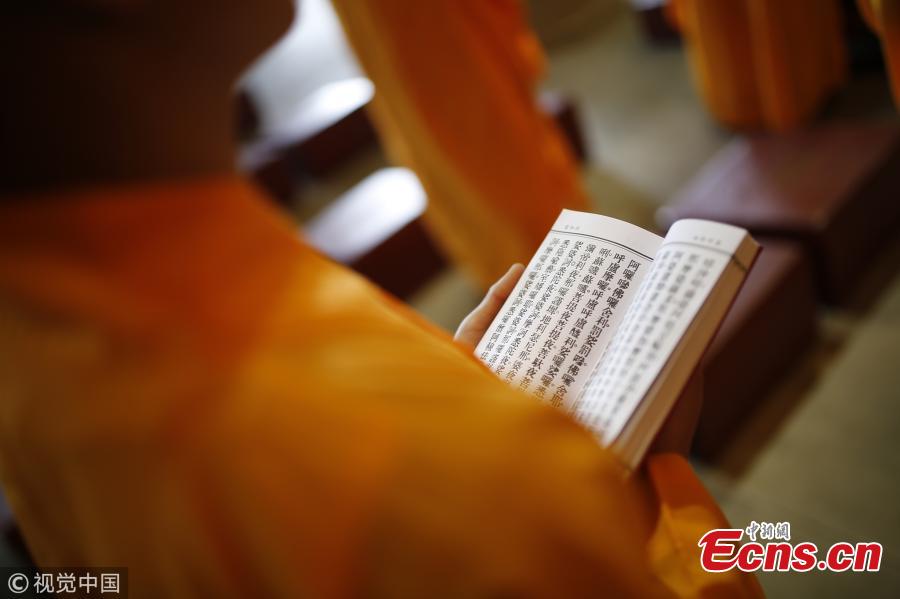
Monks conduct their daily practice at a Shaolin Temple in the southwest Chinese municipality of Chongqing on December 14, 2017. Monks have been living in the Chongqing Temple for close to two years. Built at a cost of some 300 million yuan, the Shaolin Temple in Chongqing is the fourth Shaolin Temple in China behind ones in Quanzhou in Fujian, Tianjin, and the original in Henan Province. (Photo/VCG)
There’s a flag waving vid behind the link.
4th July[URL=“https://www.denbighshirefreepress.co.uk/news/17749536.international-eisteddfod-southern-temple-saholin-monks-make-british-debut-intense-performance/”]
International Eisteddfod: Southern Temple Shaolin Monks make British debut with intense performance
By Arron Evans
ONE of the most eye-catching performances on day four of the Llangollen International Eisteddfod came from a team of monks who had travelled all the way from China to perform.
The Southern Shaolin Temple Warrior Monks, first formed 15 years ago, had been performing all over South East Asia over the last year before appearing in North Wales on Thursday.
The performance group train six hours a day, six days a week at the monastery in Putian, China and had previously visited Llangollen back in March.
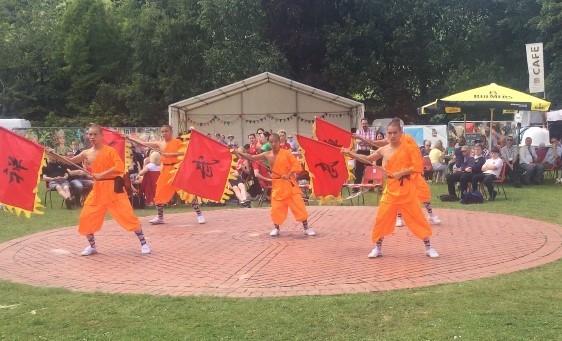
The Southern Temple Shaolin Monks at the International Eisteddfod
They say they were inspired to return to the Town thanks to the “peacefulness and beauty” of Wales and the “warmth of the people”.
During a high-energy performance at the Eisteddfod on Thursday, the monks showcased their kung fu mastery.
The group, whose members are as young as nine years old, performed routines with swords and whips and even broke a piece of iron in half.
Kung Fu Master Pol Wong, who teaches classes in Wrexham and is the go-between between the Shaolin Monks and Europe, said: "This is the first time in the Temple’s 1500 year history that this group have performed in Britain.
“They’ve really enjoyed being here and everyone else seemed to enjoy watching them as well which is great.”
After a dazzling performance in front of a large crowd out on the grounds, the monks took to the globe before performing alongside other international acts at “The Gathering” headliner.
On Sunday, the Monks will be performing once more at the William Aston Hall in Wrexham for 7pm before heading back to China next week.
Made famous by the 2000 film ‘Crouching Tiger Hidden Dragon’, the Shaolin style of kung fu dates back 1,500 years and brings with it the traditions, power and majesty of 32 dynasties of kung fu fighting.
Shaolin fighting monks hold the reputation throughout China as highly honourable, courageous and greatly skilled. Their model of fighting serves today as virtuous and spiritual representation of the Great Spirit present in each living being.
Southern Shaolin Temple in southeast China’s Quanzhou City
18:00, 21-Sep-2022
Translate
Live: Inheritors of kung fu spirit at Southern Shaolin Temple
Quanzhou, China
Kung fu, or Chinese martial arts, is a traditional sport that advocates for virtue and peace, with its roots set in ancient Chinese history and philosophy. Follow CGTN reporter Lucy to visit the talented young inheritors of kung fu at Southern Shaolin Temple in southeast China’s Quanzhou City, and watch how they engage in training with the goal of taking the tradition forward.
follow the link for the vid.
ttt42023
13:55, 02-Jan-2023
Shaolin spirit lives on in kung fu pupils
Lucy Lv
Many of those who are curious about Chinese culture have heard about kung fu. Also known as Chinese martial arts, kung fu is a fighting style that advocates virtue and peace, with its roots in ancient Chinese history and philosophy. Presently, in Quanzhou’s Southern Shaolin Temple, a group of pupils are engaged in kung fu training with the noble goal of carrying the tradition forward.
05:52
Quanzhou is an ancient port city in China’s coastal province of Fujian. It has long been a place where people from around the world experience traditional Chinese culture.
Originated in the Shaolin Temple in Henan, the Shaolin Kung Fu style is considered an important style in China and is widely followed around the world. Legend has it that a group of Shaolin Kung Fu masters came to Quanzhou and set up the southern branch.
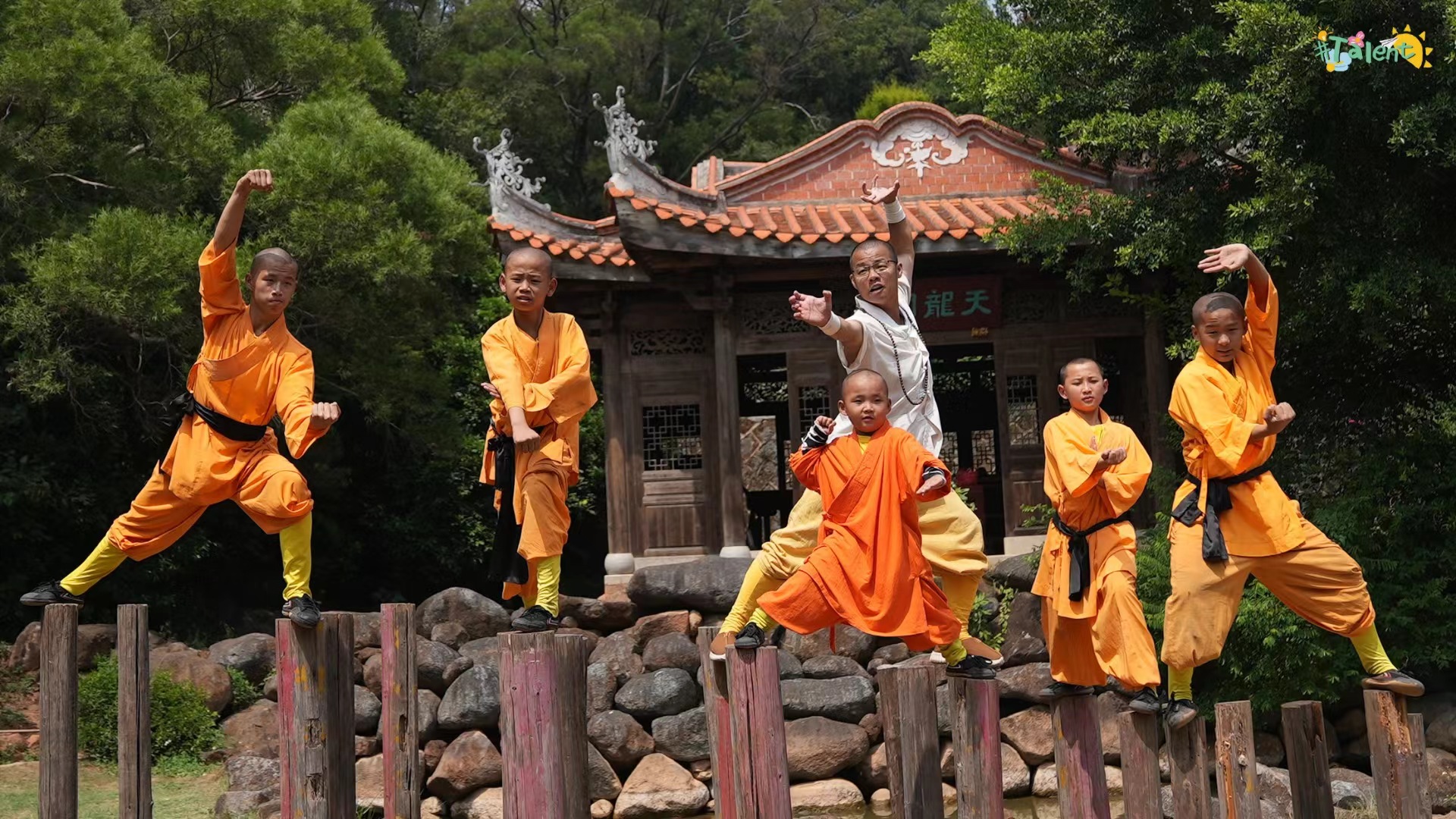
Kung fu pupils practice with their master on the wooden blocks at the Southern Shaolin Temple in Quanzhou.
Xu Haican became a pupil at the Southern Shaolin Temple two years ago. “I used to watch kung fu movies when I was little and I fell in love with it,” Haican said with a smile on his face. “So I’m happy to finally be able to learn it.”
The temple is open to kung fu lovers of different ages and has even had students from overseas. Master Shi Licheng is Haican’s teacher. For this cohort of boys aged 5 to 16, Licheng teaches them not only kung fu, but also traditional Chinese arts such as calligraphy and tea appreciation. He hopes that these experiences can “strengthen their bodies as well as their minds.”
But the pupils’ core learning area is the southern Wuzu Fist. It is typical to southern Shaolin Kung Fu and was officially listed as a form of national intangible cultural heritage in China in 2008.
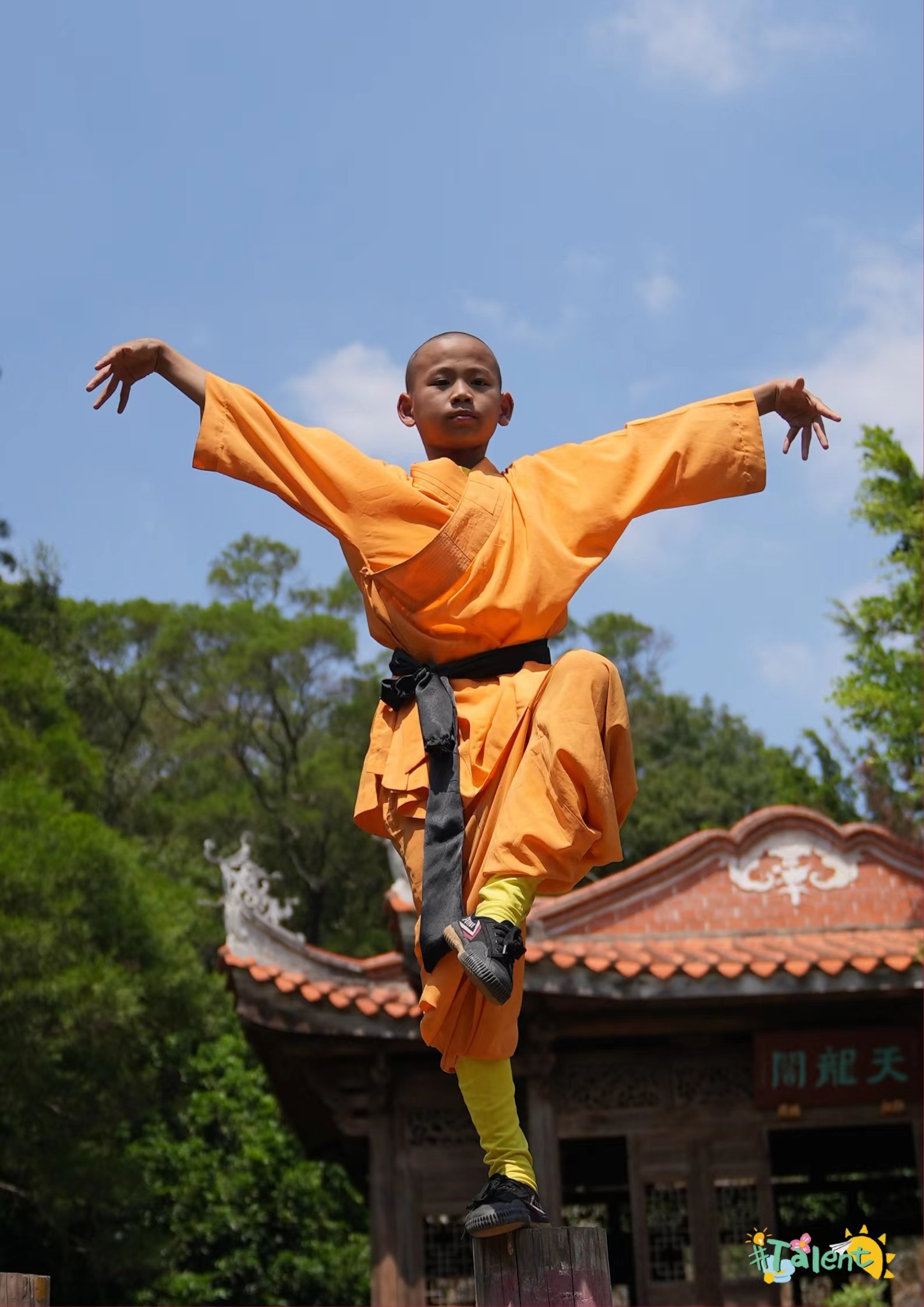
Xu Haican shows his kung fu pose.
Licheng says that Haican’s wuzu fist ability has reached a good level in a short time. The technique has given him strength of body and mind, as each movement needs to be powerful yet calculated. Haican is often called on to demonstrate moves to the younger pupils.
Haican can also proudly wield the nine-section chain and perform the monkey fist. “I enjoy learning kung fu with my classmates. I also like helping the young ones,” Haican said, looking at Wenxuan, the youngest kung fu pupil at the temple. Living together and helping each other have given the boys a sense of maturity and inter-dependence.
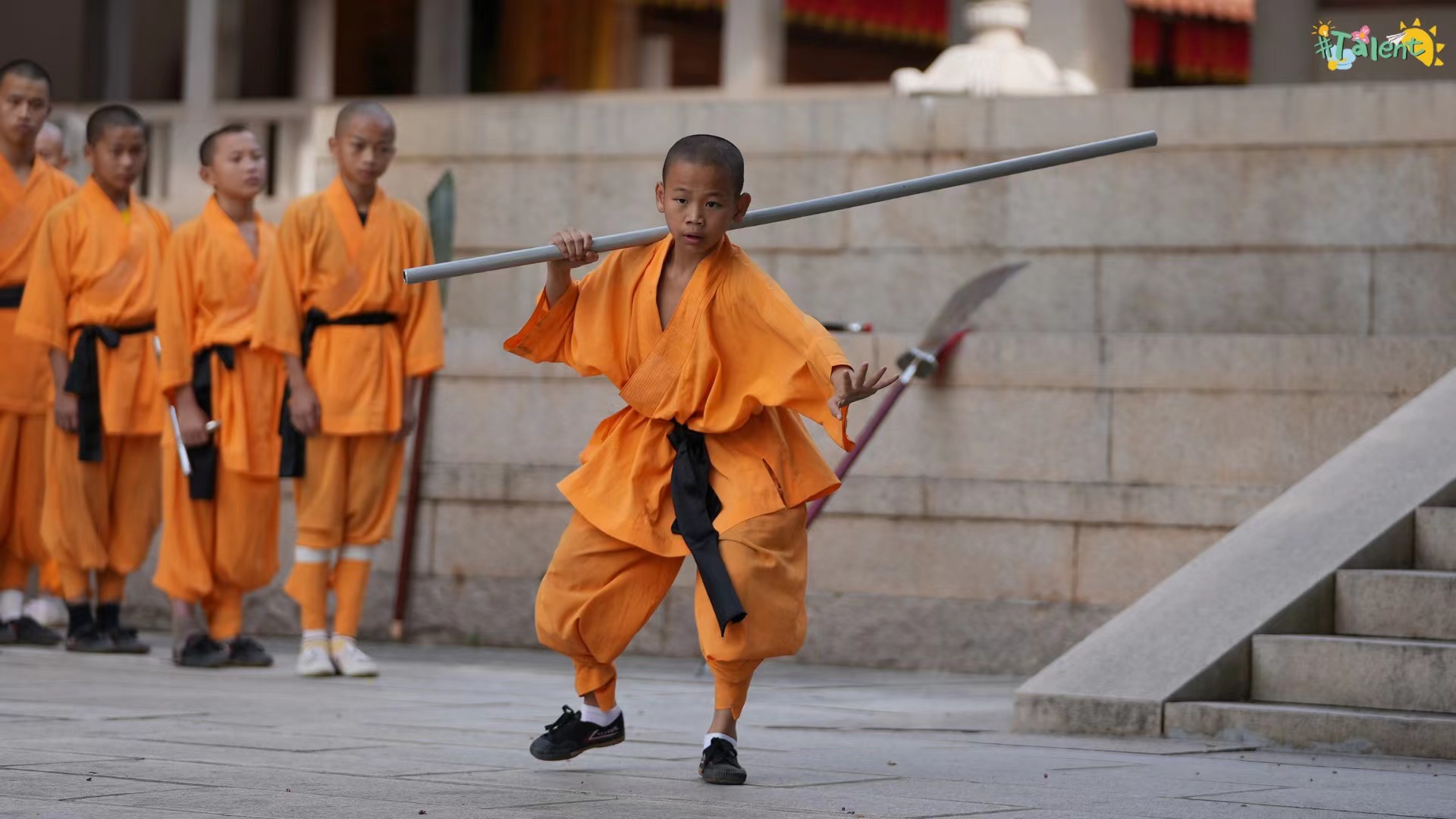
Xu Haican during a performance.
The Southern Shaolin Temple in Quanzhou plans to keep the kung fu pupil program going, so more and more young people can have a taste of this traditional Chinese defense form. As for Haican, he wishes that one day he can be as good as his teacher Licheng.
There’s a short news vid behind the link.
Southern Shaolin Intangible Cultural Heritage
Southern Shaolin Intangible Cultural Heritage Martial Arts Exchange Conference Successfully Held
July 03, 2024 02:34 ET
| Source: Southern Shaolin Temple
PUTIAN, China, July 03, 2024 (GLOBE NEWSWIRE) – From June 29 to 30, 2024, the notable Southern Shaolin Intangible Cultural Heritage Martial Arts Exchange Conference (the Conference) was successfully held at the Southern Shaolin Temple on Jiulian Mountain in Licheng District, Putian City, Fujian Province, China.
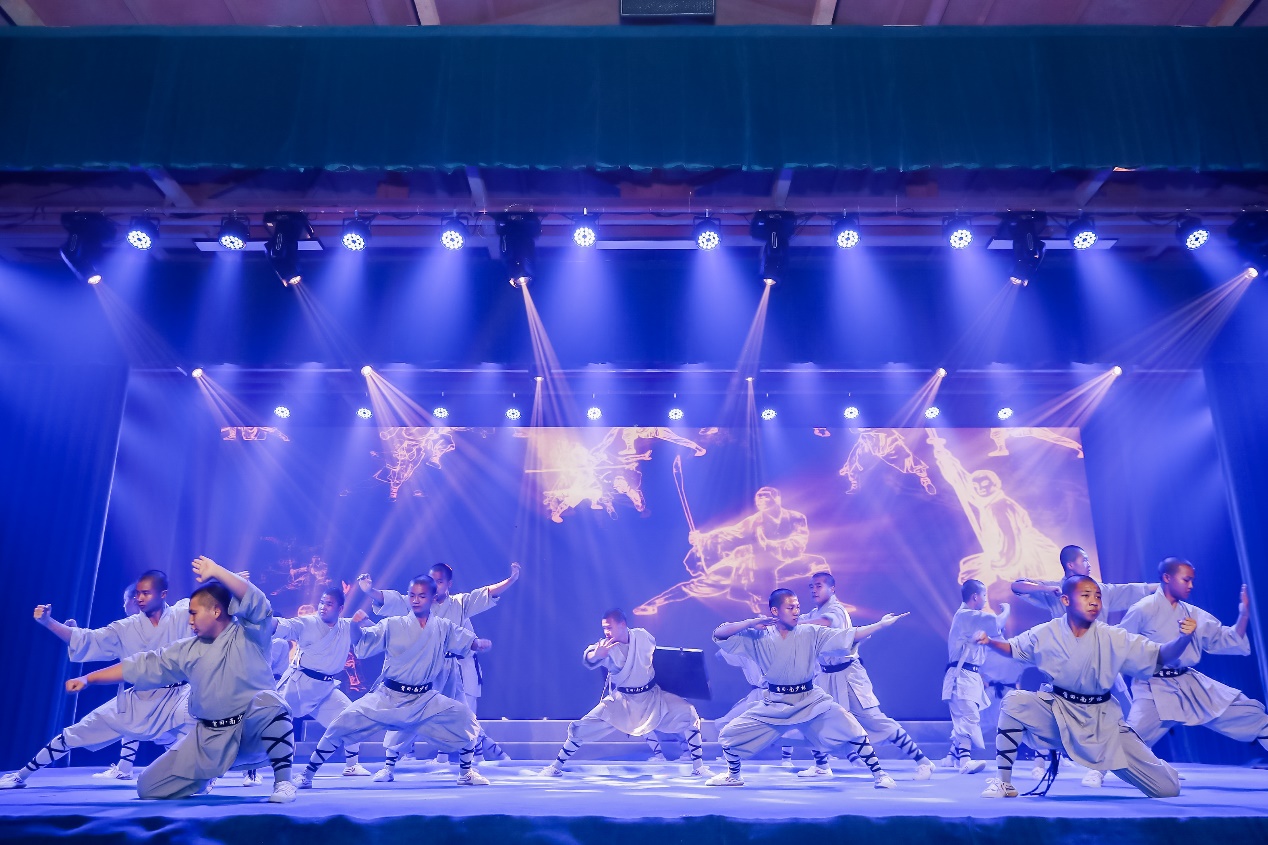
This two-day event brought together 300 martial arts masters, inheritors, and enthusiasts from 70 martial arts associations and groups from Zhejiang, Fujian, Guangdong, as well as Europe, the Americas, East Asia, Southeast Asia, and Oceania to witness the charm and splendor of Chinese martial arts.
By means of keynote speeches, the release of martial arts preservation initiatives, exchanges & discussions, and cultural relic exhibitions, participants engaged in intensive discussions on topics such as the history, characteristics, inheritance, and development of Southern Shaolin martial arts during the Conference.
Additionally, the Conference accommodated the release of the achievements made by Putian Southern Shaolin Temple in protecting endangered martial arts styles, the launch of the Initiative for the Protection of Intangible Cultural Heritage Martial Arts, and the signing of the Southern Shaolin Martial Arts Protection Convention.
During the Conference, well-known martial arts groups from home and abroad performed more than 80 types of martial arts styles, presenting the audience with a series of spectacular visual feasts. This Conference showcased the profound and unique charm of the martial arts at Southern Shaolin Temple as an intangible cultural heritage, and promoted exchanges and interactions among martial arts enthusiasts both domestically and internationally.
China loves the word ‘intangible’ 