Soft power

Greetings..

YouKnowWho: As you say, balance.. hard/soft are the same.. neither is first, they are inseperable.. it is only a matter of which you choose to use, which has the most beneficial aspects for your personal path.. discussions of soft do not ignore hard, they simply choose to address the questions at hand.. personally, i find soft/hard much more applicable to states of mind than physical attributes..

Be well..

Yield the original position or space, move to a new position and also gain some timing.

This is mostly misunderstood as pointed out.

Most people think about protecting or defending your position and not moving your feet and trying to deflect everything comes your way.

The opponent moves close to you and starts to punch, kick, pull and push.

If you yield the old position which is the target where the opponent is aiming?

He or she misses the target, you may work on his or her exposed posture with extended arms and legs. While your arms and legs are still bent and ready to extend.


The water analogy is good. A single drop of water over and over will penetrate the rock. If we acceralate the process by pushing million drops of water on a high speed? I think people use high speed water to cut diamond and superalloy.

The water has the abililty to dissipate or disperse or change direction, if you do not like the word “yielding”.

Other common analogy is soft as cotton, fishnet or soccer goal net.

People use cotton in couch, ,mattress, padding glove etc. There are consisted of many threads. They will disperse the focused weight/force over many directions or “yield”. Once the weight or the force is dispersed or empty out. It is “stopped” or supported.

The caught fish will flip and flop in all directions. It will bounce off the flat surface and get back to the water. If you use a fishnet, it will disperse or yield in many directions and still hold together. The fish’s flipping and flopping forces are empty out.

The same idea with the soccer goal net to “catch” or stop the soccer ball in all directions and forces.

In short, if we rotate our arms, or use circular movements to disperse linear force from punching arms?

if we use our arms, body and legs like a fishnet?

we still have a holding together force, some may call it Peng or other wise.

To be soft is to be able to yield or follow the same direction of incoming forces and redirect the direction of the force away from us.


Just some thoughts.

:smiley:

Taichibob and Spj… ahhh ha! I’m am not fooled…You both are two Daoist priests sitting in a courtyard somewhere… exchanging dialog through your laptops…

Greetings..

hung-le: LOL.. i wish it were so.. but, i struggle with the same things we all do.. i’ve just been struggling longer than some and try to share some of the experiences with my brothers and sisters..

Be well..

I’m hijacking this old thread and moving it from the main to the internal subforum

There’s a lot of talk about soft power in China politics now. In a grossly simplistic model, it’s a reflection of the Tai Chi philosophy playing out on the global stage.

So let’s examine it a little here. :cool:

[URL=“http://www.scmp.com/comment/letters/article/2149490/buddhism-cant-be-chinas-soft-power-when-its-origins-are-indian”]
Buddhism can’t be China’s soft power when its origins are Indian
PUBLISHED : Wednesday, 06 June, 2018, 6:47pm
UPDATED : Wednesday, 06 June, 2018, 6:47pm

With regard to the article on “dharma diplomacy” by Patrick Mendis (“China’s quest for soft power: where Confucius has failed, the Buddha may succeed”, June 1), the writer says that China should leverage its Buddhist heritage for a new soft power model.

Sorry Mr Mendis, while China has contributed a lot of things to the world of which it should be proud – Confucius, Taoism, paper, gunpowder and so on – Buddhism is not one of them. Even the word “dharma” is a Sanskrit term from India.

Siddhartha Gautama, who became known as the Buddha, was from India. His life and experiences, with all the pilgrimage sites that Buddhists aspire to visit – Sarnath, Kushinagar, Sravasti, Rajgir, and so on, are all located in India, including the most important one, Bodh Gaya, where he attained enlightenment. Though of course, his birthplace of Lumbini is located in neighbouring Nepal.


Ruins of monks’ cells at Nalanda Mahavihar in the north Indian state of Bihar. The monastic-cum-educati*onal institution was one of the greatest universities in ancient India and an important Buddhist centre which drew scholars including the celebrated Chinese traveller, Hiuen Tsang (Xuanzang). Photo: Lindsay Hebberd/Corbis

Buddhism was first spread to the countries to the west and east by India’s emperor Ashok in the second century BC. Later, Indian priests, kings, merchants and artisans travelled to Southeast Asia, impacting those countries with both Buddhism and Hinduism.

Chinese scholars had to visit the ancient Indian universities of Nalanda and Vikramshila, among others, to learn about Buddhism.

Yes, Buddhism became an integral part of Chinese culture, and due to Chinese efforts it spread to Japan, Korea and so on.

But it can only be considered as a part of India’s soft power “trademark”, just like yoga, The Ramayana, karma and reincarnation, though it is practised by hundreds of millions of people outside India.

Gordhan Gurnani, Lam Tin

Limp d!@k power

More thread hijacking…

Read this in the SF Chron’s pink section yesterday

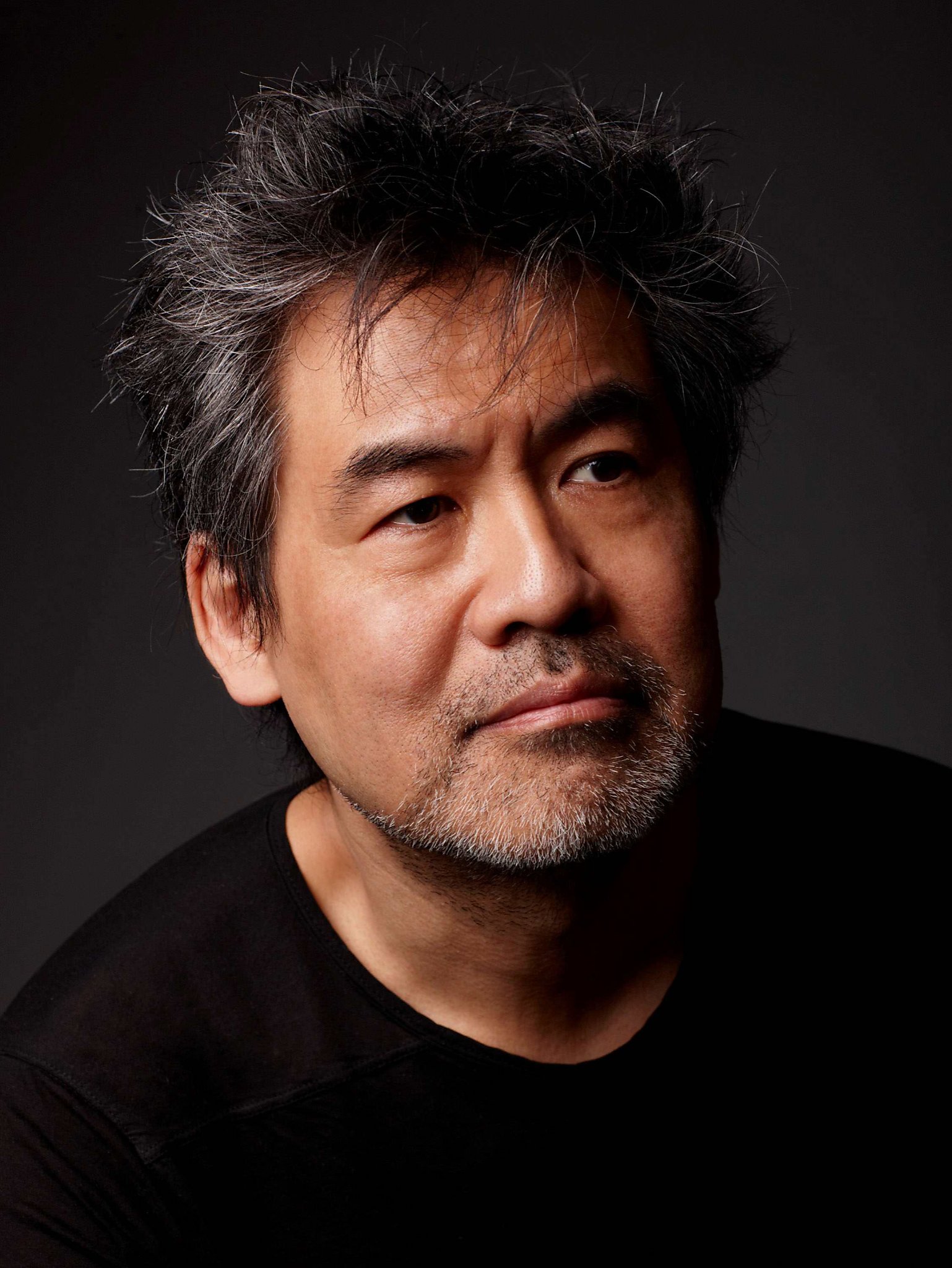
Hwang’s ‘Soft Power’ — part play, part musical — sparked by ‘King and I’ revival
Ruthe Stein June 14, 2018 Updated: June 14, 2018 9:25 a.m.


David Henry Hwang calls his new work a play with a musical.
Photo: Gregory Costanzo

Early in David Henry Hwang’s prolific career, the theater community started referring to him as the most famous Chinese American playwright. Over the decades Hwang has had mixed feelings about his anointment.

“At this point I think it is just true. I think everybody who is fortunate enough to have a career gets labeled in one way or another, and I do write a lot about Asian American stuff, so that is fair. But ‘label’ has evolved into a term more desirable, which is branding, and I am well branded,” he said recently with a laugh.

Much as August Wilson wrote about African Americans, Hwang’s plays often cast a light on Asian American lives. In “FOB” he depicts the acrimony between established Asian Americans and those “fresh off the boat.” “The Dance and the Railroad” looks at the plight of coolie laborers in California in the 19th century, and “Family Devotions” takes on the effect of Western religion on a Chinese family.

But the 60-year-old playwright has shown a curiosity about all manner of subjects over the years. His best-known play, “M Butterfly,” which won a Tony Award and was turned into a movie, details a 20-year romantic relationship between a French diplomat and a male Chinese opera singer who somehow convinces his lover that he is a woman.

[QUOTE]
More Information
Soft Power June 20-July 8 at the Curran. $29-$175. https://sfcurran.com

With his new show, “Soft Power,” Hwang has really spread his wings. Part play and part musical — he calls it “a play with a musical” — it opened to critical acclaim in Los Angeles and lands at the Curran June 20-July 8 on its journey to Broadway. It tells a complicated story. The Los Angeles Times critic described himself as “slightly dizzy” from his attempt at a synopsis.

Hwang begins by explaining the origins of his title. It refers to one kind of international power which stems from artistic and cultural influences, as opposed to hard power which would be military and other shows of physical strength. “America has a lot of soft power while China doesn’t but is trying to gain it.”

His imagination was sparked after watching the revival of “The King and I” at Lincoln Center in New York. “I always loved this musical but as I have gotten older I became aware of aspects of it that are questionable such as whether an English woman would come to Siam to teach the king how to run his country,” he said.

“That trope is pretty recurrent in a lot of western work. So I wondered how one might start to flip it on his head. I got the idea for a play where we learn of a glancing encounter between a Chinese national and an American leader. Several decades in the future that incident has been mythologized in Chinese culture and becomes the source material for a beloved East-West musical in China.”

The second part of “Soft Power” consists of showing that musical in all its glory including a dancing-singing Hillary Clinton and a chorus made up of Chinese performers in whiteface.

“It is a complicated concept,” Hwang acknowledges, “because the musical supposedly is written 50 years from now by a Chinese author. It is written in the future, but it is set in our present. The show assumes that China has become the dominant power 50 years down the road, and that they therefore control the narrative. China stepped into the dominant role when America collapses after the 2016 election.”

Asked whether the storyline was inspired by his view of ultimate events, Hwang laughed. “My initial thought was that the American leader encountered by the Chinese national was going to be Hillary Clinton, who I assumed would be president. It would sort of be a parallel to the ‘King and I.’ Obviously that didn’t happen.

“But the morning after the election I woke up and thought, ‘Personally, this is not good for the country, but it could be really good for our musical.’ You see America withdrawing from a lot of international commitments and turning inward, so it is possible that China would step in earlier than I imagined when I first conceived of the play.”

Seeing David Henry Hwang and Jeanine Tesori jaywalk across Geary Street unencumbered by an entourage, you might not peg them as the creators of the most…
Hwang brought in Jeanine Tesori, the Tony award-winning composer for “Fun House,” to do the music. But with his musical background, Hwang was involved in that aspect of the show as well.

“I started playing violin at 7. I played classical music through high school. I am a decent classical violinist. It was great in college when I learned to improvise and became a jazz violinist. I think I am pretty good. In recent years I have even sat in with a fusion band,” said Hwang, whose spiky, wayward hair would fit right in.

“My association with music now has to do with work on musicals or operas. I am considered the most produced living American opera librettist, and maybe the most strange as well,” Hwang said. A few days following the opening of “Soft Power” he traveled to St. Louis to observe rehearsals of his new opera “An American Soldier,” a commission from the Opera Theatre of St. Louis. (The San Francisco Opera premiered his “Dream of the Red Chamber” in 2016.)

Working on “Soft Power” was such a positive experience that Hwang definitely hopes to tackle another original musical, though probably not as his next endeavor.

“I am not sure what I will do next,” he said. “I have two things in the back of my mind that I want to do before my career is over.”

Ruthe Stein, the former San Francisco Chronicle movie editor, is the senior movie correspondent for The Chronicle.[/QUOTE]

Soft Power at Curran June 20 - July 8

//youtu.be/2XVRoQ259YE

In the Name of Confucius

Confucius Institutes need its own thread, distinct from the Soft, soft and MORE SOFT thread I hijacked for it.

CONFUCIUS INSTITUTES: CHINAS BENIGN OUTREACH OR SOMETHING MORE SINISTER?
A new documentary paints the image of a non-profit organisation using the guise of education to subvert academic freedom worldwide; others see it as a benign introduction to the Middle Kingdoms culture, from Chinese food to tai chi
BY ALEX LO
14 JUL 2018

Soft power or sharp power? Its almost inevitable that such catchy phrases are being used to describe the phenomenal worldwide spread of Chinas Confucius Institutes in the past two decades. At last count, they have been set up in more than 140 countries and territories around the world, raising alarm among people already critical of Chinas rise and global reach.

Are those institutes benign vehicles for Chinas projection of soft power to promote its language and culture, and to improve its international image; or Trojan horses sent to subvert academic freedom and autonomy of teaching institutions at their host countries, and perhaps even to spy on people and recruit agents?

For Doris Liu, a Chinese-Canadian journalist and filmmaker, its clearly the latter.

First, there is the human rights discrimination. Second, its academic independence, she said in an interview with This Week in Asia. Our fundamental values are at risk or damaged. The institutes teach propaganda by sneaking it into our campuses.

After an investigation over three years, Liu has produced In the Name of Confucius, a new hour-long documentary that claims to expose such threats posed by the institutes in Canada, the United States and elsewhere.


Doris Liu conducts an interview for her documentary film ‘In the Name of Confucius’. Photo: Doris Liu

However, you cannot get a more different response from famed US sinologist David Shambaugh, hardly an apologist for China.

I see them as quite benign and devoted to their primary mission of teaching language and cultural studies, he told a panel at the Brookings Institution in March. Whether its film, cooking, tai chi, whatever.

He said the concept of soft power was coined by US political scientist Joseph Nye in the late 1980s, but more recently the term sharp power, which is used to describe manipulative diplomatic policies, has emerged.

I personally am still trying to wrap my brain around this term and that concept and whether it applies to China, with a question mark.


David Shambaugh. Photo: internet

My sense is that it does not apply yet to China. What I see China doing is more what I would call public diplomacy with Chinese characteristics or journalism with Chinese characteristics, said Shambaugh, who is director of the China Policy Programme at George Washington University.

Whether its foreign aid across Africa, investment in South America, or the Belt and Road Initiative, every global move made by contemporary China has come under intense scrutiny and criticism.

The Confucius Institutes have been no different. In many ways, the controversy has been worse since the first institute was opened in South Korea in 2004.

In April, Texas A&M University became the latest North American institution to end its partnership with a Confucius Institute under a cloud of controversy. There have been others over the years worldwide, in countries such as Sweden, France, Germany and Denmark.


Undergraduate student Moe Lewis, left, shows her watercolour painting of peony leaves at a traditional Chinese painting class at the Confucius Institute at George Mason University in Fairfax, US. Photo: AP

Despite the often sensational news reports about the closing of Confucius Institutes at those schools, it all amounts to a closure rate of less than 3 per cent, and its hard to generalise why it did not work out at schools in those nations.

Liu studied the cases of McMaster University in Hamilton, Ontario, and the Toronto District School Board, the largest school board in Canada, which were the primary focus of her documentary.

In the Name of Confucius has been headlined or featured in indie and documentary film festivals in Canada, Taiwan and the US, and at a human rights forum in Tokyo. It paints a sympathetic portrayal of Sonia Zhao, a Falun Gong follower and former institute teaching assistant whose human rights complaint with Ontario authorities helped shut down the institute at McMaster in 2013.

But in an interview with This Week in Asia, Zhao admitted her intention, and the goal of her Falun Gong supporters, was to shut down the institute from the start rather than simply addressing her personal grievances.

We wrote to McMaster at first to shut it down, but they didnt reply, so the tribunal [the Human Rights Tribunal of Ontario] was the last option, she said.


Protesters rally against the so-called contamination from the Confucius Institute in Toronto, Canada. Photo: Doris Liu

I hope this could (have) a chain effect on other universities in Canada, and was hoping they could shut down too.

After working a year at the institute, Zhao brought a complaint against the university to the tribunal. The bone of contention concerned a clause in her contract with Hanban, the Chinese national office responsible for the worldwide operations of the organisation and which is part of the mainlands Ministry of Education.

It states that mainland instructors such as Zhao were hired to teach the Chinese language overseas and could not engage in illegal activities, such as being a member of the outlawed Falun Gong religious group. Her complaint alleged discrimination on the grounds of creed, which is illegal in Canada.

continued next post

Continued from previous post


Sonia Zhao, a Falun Gong follower, filed a human rights complaint against the Confucius Institute in Ontario, Canada. Photo: Doris Liu

“I was not on my own, I had a lot of people helping me [with the case]. I gave them what I could give,” she said. When asked who “they” were, she admitted they were Falun Gong members in Ontario.

At the time of her hiring on the mainland, she was a postgraduate student specialising in teaching Chinese as a second language.

She taught a year at the institute at McMaster until her contract expired. The tribunal case that followed led to a settlement between Zhao and the university. Its details were never disclosed, but shortly after the two sides settled, the university shut down the institute. Zhao also filed successfully for residency in Canada as a refugee on the grounds that she faced persecution if she returned to China.


Sonia Zhao, a former instructor for the Confucius Institute, said she was trained to avoid politically sensitive subjects such as the Tiananmen Square crackdown in 1989. Photo: Reuters

In speaking to This Week in Asia, she claims the institute was engaged in spreading “propaganda” in that only positive views of Chinese culture and China were allowed to be presented and instructors were trained to avoid politically sensitive topics such as Tibet, Taiwan independence and the Tiananmen Square crackdown.

The institutes focus on teaching Mandarin, Chinese cooking and calligraphy, and celebrating Chinese culture – as sanctioned by the communist state. Many continue to operate across Canada, despite the McMaster case and a statement in 2013 issued by the Canadian Association of University Teachers calling on all tertiary institutions in cut ties with the organisation.

Most have resisted. Many public schools across Canada also have “Confucius classrooms”, which operate on a smaller scale than the institutes.

However, the Toronto District School Board (TDSB) decided not to proceed at the last minute with Confucius classrooms. In 2014, the board was ready to roll out its own programme until a public campaign forced the board to drop the initiative. Former board chairman Chris Bolton, who backed the partnership, had to resign. The board also had to refund the Chinese more than C$200,000 (US$152,000) as an advance subsidy.


A protest against the Tornto District School Board’s affiliation with the Confucius Institutes. Photo: Doris Liu

The successful campaign, in which Zhao and other Falun Gong members took part, is included in the film In the Name of Confucius. Of particular interest is a statement presented to TDSB by Michel Juneau-Katsuya, former head of the Asia-Pacific division of the Canadian government’s Security Intelligence Services. It was full of the most alarming allegations, though no evidence was offered to support his claims, other than his own “professional” experience.

“The Chinese Government and especially the Chinese Intelligence Services are behind this project and these groups,” he said.

“Confucius Institutes have been at the forefront of that intelligence war. To understand the true intentions behind Beijing politics, it is necessary to comprehend how a language school fits into their master plan.”

This included recruiting spies, cultivating agents of influence and the monitoring of dissidents in the Chinese diaspora.

There appears to be a good deal of hysterics and rhetoric against Confucius Institutes in Canada and elsewhere, and because of the global backlash, those institutes often clam up instead of becoming more open and transparent. For example, the Confucius Institute of Toronto and Seneca College did not respond to multiple requests for an interview and comment for this article.

The institutes and their host institutions might have run a smoother public relations operation. After all, Shambaugh estimated China spent US$311 million in 2015 on the language and culture programme, amounting to US$2 billion over 12 years. There are about 5,000 Confucius instructors teaching almost 1.4 million students worldwide. Each institute is provided, usually free of charge, with trained mainland instructors, reading materials and about US$100,000 a year.


A Nigerian student learns to write “I love my home” at the Confucius Institute of the University of Lagos. Photo: Xinhua

China could be spending more than US$10 billion a year on its overall soft power push, Shambaugh said.

Other countries, of course, have state-supported institutions that promote their own language, culture and image: British Councils, France’s Alliance Française, Germany’s Goethe Institute, Italy’s Dante Alighieri Society and Spain’s Cervantes Institute. There is no doubt that those long-standing Western cultural institutions were the original model for Confucius Institutes. But there are several key differences.

While those western institutions take funding directly from their national governments, they operate mostly independently. They also own or rent their premises, classrooms and offices.

But Confucius Institutes deliberately embed their operations and teachings within the host country’s universities, colleges and/or public schools by partnering with them. Local instructors are rarely hired, preferring instead those trained and contracted on the mainland before sending them overseas.

The institutes are globally managed by the Hanban, which is part of the Ministry of Education and is headed by Xu Lin, a vice-minister-level official who sits on the State Council. Such tight control has raised suspicions among those critical of the Chinese government.


Though the terms of her settlement were not made public, the Confucius institute ceased operations in Toronto after Sonia Zhao filed her complain. Photo: Sonia Zhao

Not all China specialists are so suspicious, though.

“On Confucius Institutes, it’s a subject I’ve followed very closely,” Shambaugh said.

“There’s a kind of McCarthyite undertone I sense that is there … I thus far don’t see evidence that they are being politicised. There have been a couple of cases – there’s certainly a lot of publications, a lot of controversy. There have been a couple of closures … But there are nearly 200 Confucius Institutes in the United States. We’ve had less than five controversies, that tells me one thing.

“Secondly, there’s a lot of assumptions and innuendo I find in the reporting. One assumption is that a Confucius Institute … somehow affects the curriculum of Chinese studies the way China is taught on campus: absolutely wrong.

“There’s a complete firewall between Confucius Institutes that teach language and the Chinese – the rest of the faculty and the curriculum on every university campus, across the country. So they have no impact on how Chinese studies are taught, so that’s a flawed assumption that a lot of journalists leap to. They tend to take a couple anecdotal cases and string it together and say here’s a case.”

Shambaugh recommends greater transparency in the way the institutes are operated jointly with their host universities. He said oversight meant the host institution needed to make sure Chinese employment contract conditions did not conflict with the laws of host countries.

RELATED ARTICLES
“The contracts between recipient universities and the Hanban are kept confidential by request of the Hanban,” he said. “It’s kept under lock and key in the president’s office of the university. That’s not appropriate.”

It’s really all about Soft Power. The Falun Gong angle is fascinating.

martial arts & world diplomacy

WORLD NEWS AUGUST 7, 2019 / 5:33 PM / UPDATED 11 HOURS AGO
Judo helps Japan get to grips with China’s expansion in Pacific
Jonathan Barrett
4 MIN READ

APIA, Samoa (Reuters) - In a large church hall near the Samoan parliament, 175-kg (386-lb) judo practitioner Derek Sua is being thrown to the mat by his Japanese coach, a black-belt who is just a third his size.

Sua welcomes the training, usually difficult for athletes in Pacific Ocean islands to secure, but now offered free by Japan’s development assistance agency, to help him qualify for the 2020 Olympic Games in Tokyo.

“It’s not easy, because here in the Pacific for us, especially Pacific islanders, we have limited competition,” Sua said. “Because we need to find funding to travel overseas and compete.”

Sua added that he would train in Japan in August with several other Samoans, following an invitation he described as fostering goodwill between the two nations.

But the offer is also part of a wider diplomatic effort in the Pacific by the United States and its allies, including Japan, to counter the growing influence of China, which has ramped up its sports programs in the region.

Sometimes called “soft” or “cultural” diplomacy, such programs can extend beyond sports to language exchanges and the arts, with the aim of advancing foreign policy goals.


FILE PHOTO: Samoan judoka Derek Sua attends a practice session with his Japanese coach Kohei Kamibayashi at a training facility inside a church hall in Apia, Samoa, July 13, 2019. REUTERS/Jonathan Barrett

Although tiny, the Pacific islands control vast swaths of resource-rich ocean and strategic infrastructure, such as airstrips and ports, provoking interest from China and a counter response from the United States.

Last week, Samoan sports minister Loau Keneti Sio said China had extended an invitation to train a “large contingent” of young athletes in sports, from athletics to badminton and volleyball, later this year.

China had already hosted Samoan athletes ahead of the Olympic-styled Pacific Games, held in Samoa in July, while training chefs and performers for the opening and closing ceremonies, he added.

China has soft power initiatives elsewhere in the Pacific, which include exposing regional table tennis players to the country’s world-class coaches and training regimes.

The judo diplomacy complements similar initiatives from regional allies Australia and New Zealand, which actively use rugby union and league to forge strong ties with Pacific islands, where the football codes are dominant.

Originating in Japan, judo makes use of grip fighting and throws that have proved to be effective techniques for mixed martial art competitions.

On the mats in Samoa, Sua’s coach, Kohei Kamibayashi, said judo was a sport whose most powerful practitioners did not always win the battle.

The Japanese coach said his star Samoan pupil, who competed at the last Olympics in Brazil, must prepare to face bigger opponents in his 100-kg (221-lb) -plus category, where there are no weight limits.

Kamibayashi said he was helping Sua perfect his use of a technique called “seoi-nage”, effective for throwing bigger opponents.

While Samoans were naturally built for a sport like judo, it was a very demanding martial art that was still struggling to win converts on the island, Sua added.

“It can be another dominant sport here in Samoa if a lot of people get interested,” he said.

Reporting by Jonathan Barrett in APIA, Samoa; Editing by Clarence Fernandez

THREADS
2020 Tokyo Olympics
Judo
Soft Power

How Do You Yield To Be Soft: 1. Rotation of the Waist.

Karate Kid 2 Find Drum, Find Secret (2 minutes 28 seconds)
https://www.youtube.com/watch?v=gDLuQdLN5G8

Karate Kid 2 At the Cannery (talk and drum technique)
https://www.youtube.com/watch?v=YKHCOgbq77Q

Karate Kid 2 actual Drum of Drum technique
https://www.youtube.com/watch?v=5whE6r-lreE
[only need first minute]

No_Know

How Do You Yield To Be Soft? Shifting The Weight Between The Knees

The Knees can both be bent and the same direction at within shoulder’s width. Out side of within Shoulder’s width one must give for the other to have. I must stand on one leg before I can free the other enough to move it out. (Video w/ me later).

One knee bends for the other to straighten
One knee loses it’s bend for the other to bend more.

One cannot take unless the other gives.-Ernie Moore Jr.

I lean and contract or turn or twist to place my weight where the leg can support it. Once there I use my foot to anchor my waist so I can shift height for the other leg to move freely and to stabilize it.-Ernie Moore Jr.

24 but great knee use:
https://www.youtube.com/watch?v=YdFtOzwMwAY

No_Know

Knees Shifting Yielding For Smoothness/To Free Other Leg, Not Shift Weight

24 group
https://www.youtube.com/watch?v=fylo5OPEdk4

Bagua guy Circle Walking
https://www.youtube.com/watch?v=j7mVRLSfwWo

Torso shifts weight. Leg holds weight. Foot drives hip. Knee yields to position pelvis. Knee moves out to advance other leg. Knee moves in to support withdrawal or hold.-Ernie Moore Jr.

No_Know

Soft Martial Arts recommended in CA

Outdoor recreation

Can I still exercise? Take my kids to the park for fresh air? Take a walk around the block?
It’s okay to go outside to go for a walk, to exercise, and participate in healthy activities as long as you maintain a safe physical distance of six feet and gather only with members of your household. Below is a list of some outdoor recreational activities.

*Parks may be closed to help slow the spread of the virus. Check with local officials about park closures in your area. Californians should not travel significant distances and should stay close to home.

Soft Martial Arts – Tai Chi, Chi Kung (not in groups)

THREADS
Soft power
covid

Slightly OT but something compelled me to share this here

What’s the Deal With: Tai chi at the Karate Church?

Martial arts are back at the academy of ‘elf’ defense

  • July 26, 2026 9:00 p.m.

The century-old church housing Bellingham's Karate Church of Elf Defense.

The century-old church housing Bellingham’s Karate Church of Self Defense — the S fell off — has been converted to a community gathering space, and tai chi instructor Gene Golden has hosted classes there since 2024. (Noah Harper/Cascadia Daily News)

**By COCOA LANEY**Lifestyle Editor

For roughly a decade, Bellingham’s iconic “Karate Church” at the intersection of East Maple and High streets in Bellingham had nothing to do with self-defense. The 19th-century house of worship was home to a dojo for a few years; that endeavor folded in 2015, but the nickname remained. Nowadays, the Karate Church functions as a community center.

But as of 2024, instructor Gene Golden brought martial arts back to the Karate Church — albeit not in the form of karate. Rather, Golden is the tai chi instructor behind The Golden School of T’ai Chi Ch’uan. He offers group classes, “Push-Hands,” on Mondays and Wednesdays at 6 p.m. in the Karate Church, plus private lessons upon request.

“Tai chi is the most misunderstood art,” said Golden, who has been practicing since age 21. “Many people don’t even realize it’s a martial art, but it’s also a spiritual art. It’s a moving meditation.”

A former Western Washington University instructor, Golden used to host classes at another Bellingham community center. But the Karate Church is comparably more affordable, and has “much more of a spiritual energy to it,” Golden said.

That’s not to mention the existing signage: “It used to say Academy of Self Defense, and the letter S fell off, so it says Academy of Elf Defense,” he continued. “I’m like, oh, that’s me for sure.”

Karate and tai chi are both forms of martial arts, though Golden said tai chi takes an unorthodox approach to self-defense. Rather than combat, it focuses on “controlling the situation” and de-escalating before an encounter turns violent.

Has Golden ever had to use tai chi during real-life conflict? In his own words, “quite a few times.”

“You learn to move with an attack and deflect it, and simultaneously return the energy back to its source,” Golden continued. “So, it’s almost like instant karma.”

Cocoa Laney is CDN’s lifestyle editor; reach her at cocoalaney@cascadiadaily.com; 360-922-3090 ext. 128.

weird, it seems tai chi is getting out of fashion here and the west it picking up the pop culture leftovers. how the times have changed.