# Is this ‘unlucky’ Lunar New Year chocolate mahjong set a sign of cultural appropriation?
A Hong Kong-based chocolate company is facing criticism for its Lunar New Year set, which features a winning hand known as ‘13 Orphans’
Reading Time:3 minutes
Published: 7:15am, 26 Jan 2026Updated: 7:59am, 26 Jan 2026
Mahjong has been an integral part of Chinese social life since its invention in the mid-1800s, during the late Qing dynasty. It took less than a century to reach the West, with a simplified playing system developing in the United States in the 1920s.
In modern-day Hong Kong, many older people play mahjong socially and to improve their brain health. The game is often played by people of all ages during festive occasions, as well as between strangers during competitive sessions at dedicated parlours.
With China’s soft power gaining pace in recent years, there has been a resurgence of appreciation for Chinese culture and the tile-based game has become popular in unexpected corners outside East Asia.
However, just as bubble tea – created in Taiwan in the 1980s – was at the centre of a cultural appropriation debate in October 2024, mahjong has suffered a similar fate.
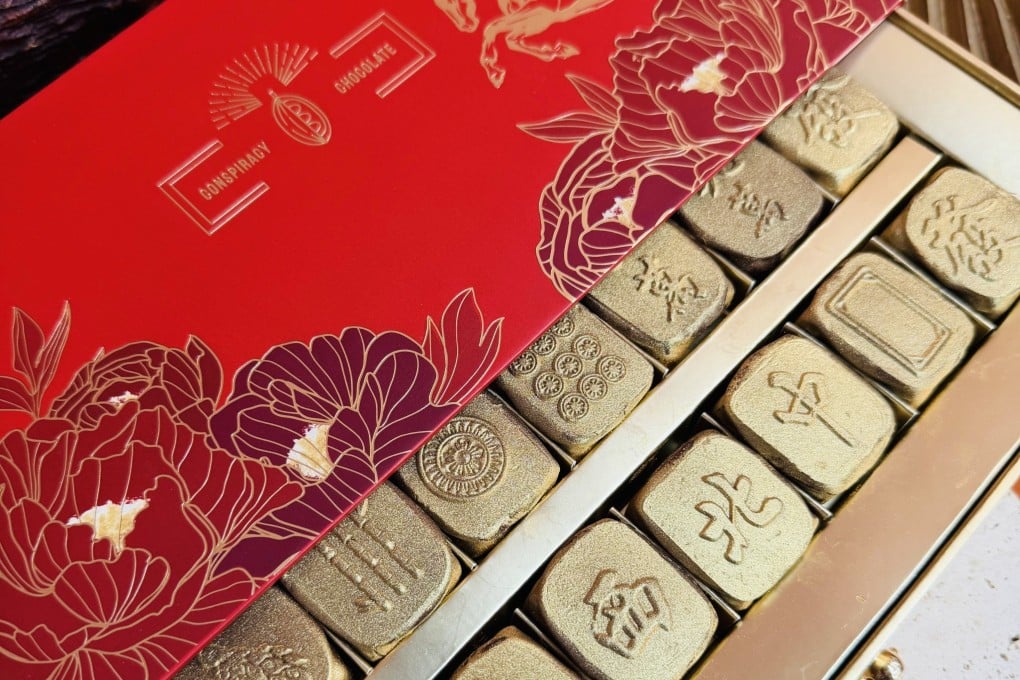
Earlier this month, Hong Kong-based company Conspiracy Chocolate released its yearly limited-edition Mahjong Chocolate set to celebrate the coming Year of the Horse, featuring a winning hand known as sap saam jiuor “13 Orphans”.
Learn to play mahjong in 2.5 minutes
The chocolate maker, founded in 2018 by a Swiss and Israeli couple based in Hong Kong, called it the “royal flush of mahjong” in its press release. But while sap saam jiu is a famously strong winning hand, “13 orphans” sounds unlucky to even the least feng shui-inclined.
It is also a mismatched hand, linked to misfortune, and is sometimes likened to the mahjong move of discarding four West tiles consecutively, which, as urban legends say, can mean death for all four players, because the Cantonese for “west” sounds like “death”.
The chocolate set also features 14 tiles, a number that sounds a lot like “must die” in Cantonese. Many older buildings in Hong Kong skip the fourth and 14th floors for this reason, just as some buildings in the West avoid the number 13.
Hong Kong fashion worker Rey Sung says, “I’m all about cultural appreciation; it’s awesome seeing Chinese culture be acknowledged and inspiring people.
“But when the culture you are referencing isn’t well researched or understood, that’s when it becomes ‘appropriation’. Rather than seeking to understand before capitalising, [it seems] a very surface-level understanding is used to create these products.”
Hong Kong-based Conspiracy Chocolate’s latest collection of mahjong tile-shaped sweets is inspired by the inauspicious winning hand, “13 Orphans”. Photo: Conspiracy Chocolate
She adds that, in this age of the internet and artificial intelligence, proper research before product development is “very easy” and that “knowledge is pretty much open source”. The people behind the company could have conducted research and consulted Chinese friends, or visited mahjong shops to talk to the people working there.
Responding to the Post’s inquiry, Conspiracy Chocolate says that the Lunar New Year collection was developed in consultation with local cultural advisers.
“We sought to honour the hand’s status as mahjong’s rarest and most auspicious combination – a symbol of perfect assembly and harmony, akin to a royal flush in poker,” says co-founder Amit Oz, who went to secondary school in Hong Kong, then left to join the Israel Defense Forces before settling back in the city.
“The superstition around ‘draining the luck pool’ is precisely why this set is designed for generosity and sharing,” he says. “Just as a player who wins with [sap saam jiu] shows humility and redistributes prosperity through gestures like lai see [red packets], our chocolate set is a tangible means to share this symbolic fortune with family and friends.”
He adds that the collection is conceived as “a sweet, communal catalyst for prosperity meant to be shared at the beginning of the year”.
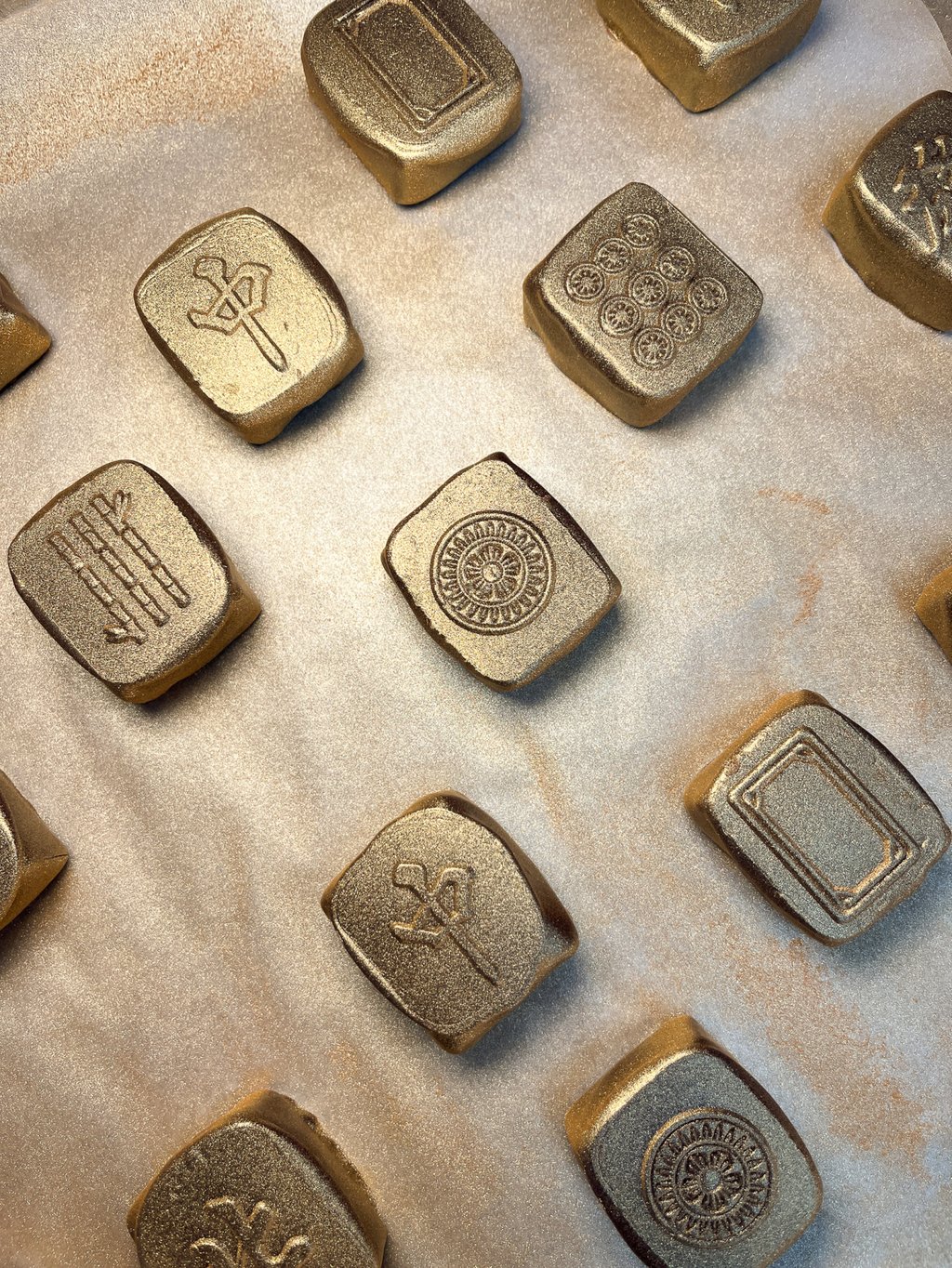
Mahjong tiles made of chocolate from Conspiracy Chocolate. Photo: Conspiracy Chocolate
None did mahjong as dirty as The Mahjong Line, a Texas-based mahjong set maker accused of cultural appropriation after it launched a “refreshed” – or rather, whitewashed – version of the game in 2020.
It was a total redesign. The traditional Chinese characters and symbols on the tile pieces were replaced with Western imagery such as a soldier, a castle, bubbles and bags of flour.
The Texan company’s three white women founders apologised in January 2021 for their “failure to pay proper homage to the game’s Chinese heritage” and use of words like “refresh”.
However, a quick scroll through the brand’s social media suggests the company has continued to change the symbols on its sets.
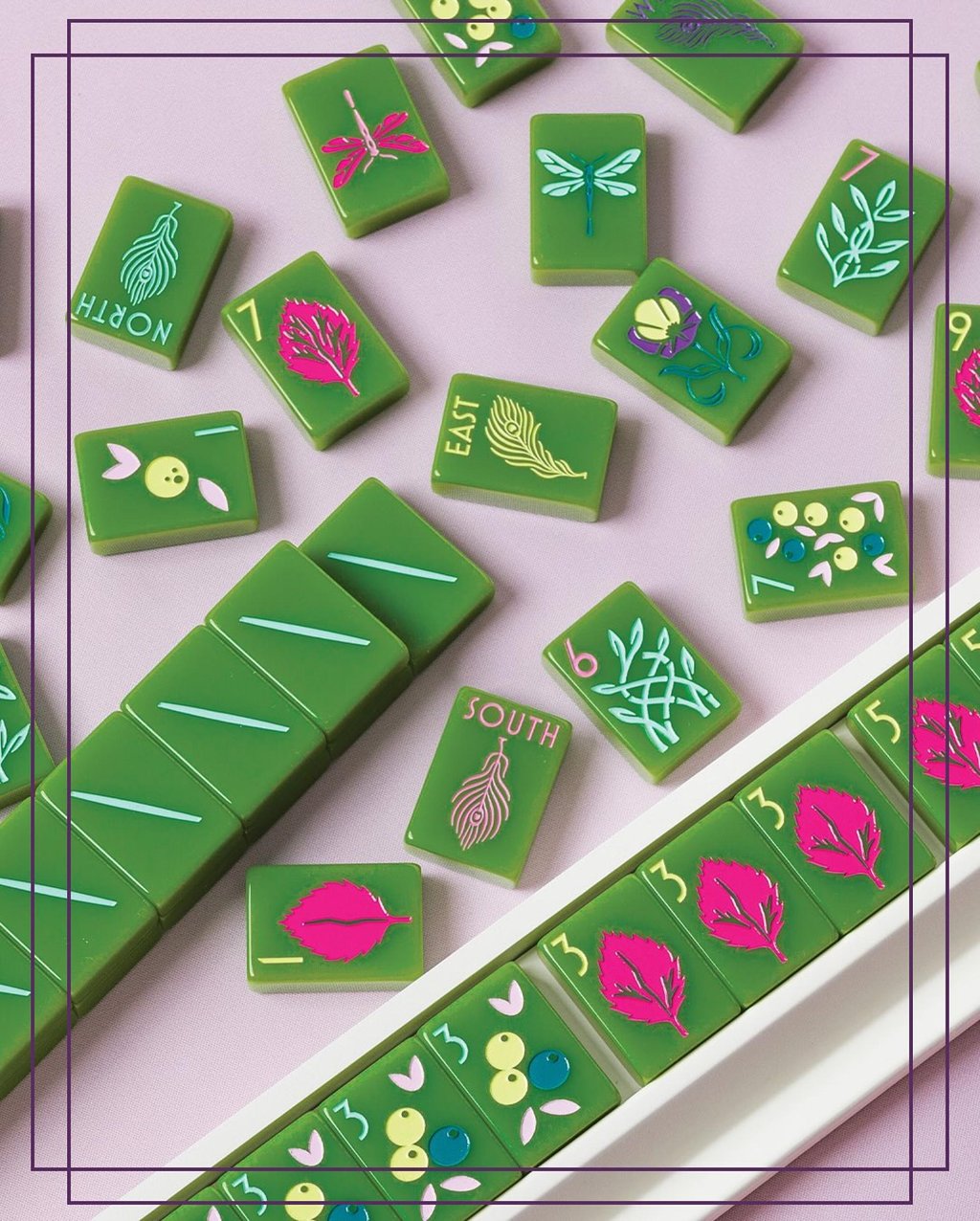
In an October 2025 post, The Mahjong Line, which now has more than 86,000 followers on Instagram, announced its new “Avocado Green Mahjong Tiles” that, with their floral motifs, looks like they come from a completely different game.
Texas company The Mahjong Line’s “Avocado Green Mahjong Tiles” are adorned with floral motifs. Photo: Instagram/themahjongline
According to the Oxford Learner’s Dictionaries, the definition of “cultural appropriation” is “the act of copying or using the customs and traditions of a group or culture that is not your own, in a way that is considered to show a lack of respect or understanding”.
There is a difference between cultural appreciation and cultural appropriation. The line becomes painfully clear when it is crossed for profit by members of a historically more dominant and privileged people, with presumably little connection to the culture’s roots.
The cheapest full set on The Mahjong Line retails for just under HK$3,000 (US$380) when visiting the website from Hong Kong, whereas a machine-made set with true-to-origin designs can cost less than HK$500.
Ashlyn joined the Post’s culture desk in 2022. She holds two degrees from the University of the Arts London and launched her career in New York. Besides writing, she enjoys films that pass the Bechdel test, walkable cities, and spicy cocktails.