Hi friends
Before some time was suffering from bird flu infection, so I decided to meet a doctor, so meet a shrewdest doctor of that area, but unfortunately he have not got proper information about bird flu infection, can anyone help me.
In Chinese Medicine, it doesn’t matter if you have a BIRD flu or COW flu or “REGULAR” flu. It comes down to signs, symptoms, tongue and pulse. It puts the whole body in holistic healing.
Kenton
PS, So - no…I don’t know anything about the Bird Flu, but I know a bit about TCM.
It’s baaaaaaaaaaaaaaaaack
Another strain. There’s a vid if you follow the link.
Report: Third man in China dies from unusual bird flu strain
By Jethro Mullen and Jason Hanna, CNN
updated 11:46 AM EDT, Wed April 3, 2013
Watch this video
New deadly strain of bird flu in China
STORY HIGHLIGHTS
NEW: Third man to die lived in Zhejiang in eastern China, but worked in Jiangsu province
Announcement comes days after the first three other cases -- and first two deaths -- were announced
Officials are trying to find the source of the infections
Hong Kong (CNN) – A third man in China has died from the H7N9 virus, a strain of avian flu not previously detected in humans, the Zhejiang provincial department of health said Wednesday, according to state-run media outlet Xinhua.
The disclosure of the third death comes only days after Chinese authorities announced the first three known cases of humans infected with the H7N9 bird flu virus on Sunday.
The total number of people infected with H7N9 in China has risen to nine, Xinhua reported Wednesday.
The death reported Wednesday was that of a 38-year-old man who passed away on March 27 in his home province of Zhejiang in eastern China, Xinhua reported. He worked in nearby Jiangsu province, where at least four other cases of humans infected with H7N9 were reported Tuesday.
Two other people who died – men aged 27 and 87 – lived in nearby Shanghai, according to Xinhua. The World Health Organization confirmed those deaths Monday.
Chinese authorities are trying to find the source of the human infections. They have so far said there are no signs of transmission of the H7N9 virus between any of the victims or people they have come into close contact with, suggesting the virus isn’t highly contagious among humans.
They have also dismissed suggestions linking the infections with the discovery of thousands of pig carcasses from the Huangpu River which runs through Shanghai.
The Shanghai Animal Disease Prevention and Control Center on Monday tested 34 samples of pig carcasses pulled from the river and found no bird flu viruses, Xinhua reported.
On Tuesday, the Jiangsu provincial health bureau reported four cases of H7N9 in humans: a 45-year-old woman from Nanjing, a 48-year-old woman from Suqian, an 83-year-old man from Suzhou, and a 32-year-old woman from Wuxi.
The Nanjing woman worked culling poultry, it said.
Malik Peiris, a professor at Hong Kong University’s School of Public Health, said Monday that the H7N9 strain of avian flu, already known to exist in wild birds, had probably been transmitted to poultry, and it infected the humans.
“It’s really important to understand where this virus is coming from,” he said.
Authorities in Shanghai are gathering daily data on cases of pneumonia resulting from unknown causes and will set up a team of experts to assess the “severity and risk” of H7N9, Xinhua reported Tuesday.
Since the transmission of these types of viruses from animals to humans is usually “extremely inefficient,” there are often tens of thousands of infected birds for every human case, according to Peiris.
As a result, “it is very likely that there is a quite widespread outbreak happening” among the animals from which it came, he said, underscoring the urgent need to track down the source.
The World Health Organization said Monday it was “in contact with the national authorities and is following the event closely.”
Because there are so few cases of H7N9 detected so far, little research has been done, according to Xinhua. There are no known vaccines against this virus, it said.
But Peiris said it was likely that existing anti-flu drugs, such as Tamiflu, are likely to work against the H7N9 strain. He also noted that the WHO has identified the H7 virus family as a potential threat and earmarked possible vaccine candidates.
He said other strains from the H7 family had caused previous outbreaks in poultry in countries including the Netherlands, Britain, Canada, the United States and Mexico. Human infection was documented in all of those cases except the Mexican one.
The outbreak of the H7N7 strain in the Netherlands in 2003 infected 89 people, one of whom died, according to Peiris.
The better known H5N1 avian flu virus has infected more than 600 people since 2003, of which 371 have died, according to the WHO.
In February, China reported two new human cases of H5N1 in the southern province of Guizhou, both of whom were in a critical condition, the WHO said.
A spike in H5N1 deaths, many of them children, has been reported in Cambodia, prompting concern among health authorities.
I read that people that associate themselves with animals tend to suffer some sort of DNA alterations. People that work long periods of time with horses can not take certain vaccines that are made from horse plazma or whatever. They become extremely elergic to it. I suspect that is how some people can catch this bird or swine flu. Their dna alters enough that animal dna specific viruses can cross into humans. Just like the swine flu, this is just a matter of time before it makes the jump into normal humans.
[QUOTE=Lee Chiang Po;1223947]I read that people that associate themselves with animals tend to suffer some sort of DNA alterations. People that work long periods of time with horses can not take certain vaccines that are made from horse plazma or whatever. They become extremely elergic to it. I suspect that is how some people can catch this bird or swine flu. Their dna alters enough that animal dna specific viruses can cross into humans. Just like the swine flu, this is just a matter of time before it makes the jump into normal humans.[/QUOTE]
No, just…no. I’m drunk off Nugget Nectar and Perpetual IPA at the moment, so I’m not going to give a coherent thought out response. But all of this, forget all of it. Permanently, eternally, and never bring it back to light again…
banlangen
Are Chinese officials trying to use bird flu to promote traditional Chinese medicine?
By Lily Kuo — April 5, 2013

Debating what to tell the worried residents of Shanghai. AP Photo / Eugene Hoshiko
As cases of avian flu in China mount, Shanghai officials said in a press conference today that the Chinese herb, banlangen, the root of the woad plant, could ward off (link in Chinese) the rare and seemingly deadly strain of H7N9. (Here is a map of the outbreak and latest updates.)
Officials have previously said traditional Chinese medicine (TCM), including banlangen, could stop viruses that have broken out in the past like swine flu or SARS. This time, the advisory is drawing fire from Chinese consumers and medical experts, who say it’s unhelpful and possibly driven by a desire to boost the local TCM industry. Most doctors believe the root works as a health supplement for immune support but others say its effectiveness at preventing stronger viruses still needs confirmation (video in Chinese).
One blogger on Chinese social media site Sina Weibo wrote, “Ten years ago it was banlangen, and 10 years later it’s still banlangen. Ten years ago experts were spouting nonsense, and 10 years later they still are.” Doctor Fang Shimin, a popular science writer wrote, “The traditional Chinese medicine industry is trying to cash in,” the South China Morning Post reported.
It would be easy for officials or businesses to take advantage of nervous Chinese residents who have bought up health products of questionable effectiveness during past health scares. Residents hoarded vinegar, and face masks ran out during the SARS outbreak in 2003. In 2011, there was a run on salts believed to mitigate radiation residents feared was drifting into the mainland from the meltdown of Japan’s Fukushima Daiichi nuclear plant.
Already, investors have piled into Chinese companies making pharmaceuticals and rice wine (also believed to help prevent catching bird flu), we reported. Today, panicked Chinese residents bought up ground banlangen, clearing out stocks of the product at a store in Shanghai and almost all at a pharmacy in Nanjing. Sina Weibo was lit up with over two million posts on the herb.
Officials may just be trying to offer residents some hope as health experts scramble to make a vaccine that doesn’t yet exist for the virus. Chinese officials, who developed a bad reputation after trying to cover up SARS, appear to be responding actively to the crisis that’s already killed six. Still, while their efforts might be serious, their advice doesn’t seem so. Officials in Shanghai also advised residents to sneeze on their elbows rather than their hands (which the US CDC also advises), and health authorities in Gansu province told people to take walks (link in Chinese) outside, listen to music, as well as massage the side (paywall) of one’s nose and light incense near parts of their legs and stomach.
I endorse banlangen as a great cold preventative. I’m not sure how it works against Bird Flu, but I always traveled with it in Asia.
Disturbing
Bird Flu Spreading? Netizens Report Mysterious Bird Deaths in China
9 hours ago by Jessica

China is currently dealing with an outbreak of deadly bird flu (H7N9 virus). As of April 10, there have been nine deaths and 28 confirmed infections, largely in the Shanghai area. Officials have been taking measures to prevent the spread of the disease, but they may have acted too slowly.
A rash of shocking photos from around China has been shocking Web users over the last couple of days. The images show sparrows and pigeons lying dead on the ground with no visible signs of injury. And not just one or two, but several and sometimes more than 10 mysteriously downed birds, leaving many to speculate whether bird flu is to blame.
Dead birds have been confirmed in Nanjing, Chengdu and Hubei Province, where witnesses to the mass die-offs have photographed the carcasses and put them online.
According to one person in Nanjing, “Under a magnolia tree, there were all these dead sparrows. I have no idea where they came from or what killed them.”
Another person in Hubei said, “This pigeon just like fell out of the sky dead. At school, too, we found all these bodies of little songbirds.”
What would cause so many birds to drop dead at once without any visible sign of injury?
The problem appears to be centered in the Yangtze River Basin at the moment, with cases in Changzhou, Suzhou, Jingmen, and Huanggang. Hopefully, the relevant agencies in China will be able to swiftly deal with this problem.
Where there dead birds falling out of the sky like this with the previous outbreak? I can’t remember and I’m too lazy to websearch it right now…
The Mainland has to be concerned with disease surveillance and follow-up but it appears they do not care. The Pigs in the River Incident probably probably started with factory(ies) dumping untreated waste chemicals, ingested by pigs resulting in death the river water carrying additional waste downstream to possible affected communities and with each step, no surveillance appeared to have taken place meaning the factory concerned, the pig feeding location and the owner of the pigs then the rotting pigs at the waterway where they finally laid to rest.
I haven’t seen information on citations issued for failure to heed the guideleines protecting the commons of the people! Lose Lose all around!
It’s like SARS all over again
I just heard of a martial arts tour to China that cancelled this summer.
Here’s my personal account of traveling in China during the SARS epidemic: Shaolin Trips - Episode Two: Reigning in at the Brink of the Precipice
Bird Flu Fears Mount in China as Herbal Remedies Run Out
By Bloomberg News - Apr 17, 2013 8:06 AM PT
A popular herb called ban lan gen, or blue root, has been flying off pharmacy shelves across China as local governments encourage people to consider traditional remedies to ward off the latest bird flu virus.
With scientists so far unable to pinpoint the H7N9 influenza virus’ animal host, locals are preparing for a possible pandemic by stocking up on popular plant remedies as well as face masks and hand sanitizers and other over-the- counter medicines.
“Chinese people associate ban lan gen with anti-virus,” said Shen Jiangang, assistant director for research at the Chinese University of Hong Kong’s School of Chinese Medicine. “So when they hear about bird flu, they immediately think it might be effective to protect themselves although there is no experimental evidence.”
Ayurvedic and Chinese medicines have used the remedy for centuries. Scientists have proved it can relieve bacterial conjunctivitis in eye drops and found it has an antiviral effect in test tubes. There is no test to show it works against influenza.
That hasn’t stopped buyers. Chinese consumers, especially older ones, tend to believe in traditional formulations especially when it comes to cold and flu remedies, said Iwona Mamczur, an analyst at Mintel International Group Ltd. The market for over-the-counter medicines was worth 77.5 billion yuan ($12.5 billion) in 2011, according to a report from the London-based researcher.
Warm Drink
Ban lan gen is the root of a flowering plant known as dyer’s woad or indigo woad, and found in southeastern Europe, central Asia and eastern Siberia. The roots are dried and often processed into granules, which consumers ingest dissolved in hot water or tea. According to traditional Chinese medicine, which seeks to balance heat and cold in the body, the root can help clear the heat triggered by a viral attack, Shen said.
Patients should take the remedy under the guidance of a trained health practitioner, said Albert Leung, who heads Hong Kong University’s School of Chinese Medicine.
Huashi Pharmacy, located in Shanghai near the eastern bank of the Huangpu river, has started replenishing supplies of ban lan gen daily instead of weekly and still struggles to meet demand, according to pharmacy worker Zhang Zhijin.
Sales of facial masks have also gone up 10 times from before the H7N9 infections announcements, hand sanitizer has sold out, and companies have been bulk-ordering alcohol wipes for their employees, Zhang said.
Face Masks
Beijing Tongrentang (600085), which makes a product extracted from ban lan gen, said in an e-mail that the outbreak of H7N9 has boosted sales, but didn’t provide numbers. The company’s shares increased 1.9 percent to a two-week high of 22.20 yuan at the close of trading in Shanghai today.
Francis Chu, the Singapore-based inventor of the totobobo face mask, said he’s fielded more than 20 inquiries about the pollution-filtering equipment’s effectiveness against bird flu since the start of April. Sales are up eight-fold from the same period last year.
“Earlier in the year, most of the increased orders from China were because of the air pollution,” Chu said in a telephone interview. “Sales are still increasing, but now it’s because of worries about bird flu.”
Beyond anecdotal evidence, the surge is hard to quantify. Pharmaceutical companies reaped at least $10 billion in sales of vaccines and antivirals globally as a result of the 2009 swine flu outbreak, according to data compiled by Bloomberg at the time. It’s too early to tell whether H7N9 will touch off another pandemic.
No Immunity
Chinese authorities are struggling to identify the source and mode of transmission of the virus, which has sickened 82 people and killed 17 so far, most of them in China’s eastern provinces. While there is no evidence that H7N9 is spreading easily among people, it hasn’t been detected in humans before, so they have no natural immunity. That raises public health concerns, researchers at the Centers for Disease Control and Prevention in Atlanta said last week.
Sinovac Biotech Ltd. (SVA), the first company to win regulatory approval for a swine flu shot in 2009, surged 6.8 percent to $4.11 in Nasdaq trading on April 15 after Chief Executive Officer Yin Weidong said in an interview it is preparing to make immunizations against the new virus. Beijing-base Sinovac could have a first batch of the vaccine ready for commercial use by late July in the event of a pandemic, according to Yin.
Until such a vaccine is found, the race is on for Chinese citizens to track down the ban lan gen herb.
Zheng Bing, who works as an assistant at a local private equity firm, recently walked away empty-handed from three separate pharmacies in Beijing’s financial district. Zheng was told by his boss to stock up on the herb for the entire office. But he found that other anxious residents had beat him to the punch.
“I’m going to try a few more shops,” he said. “Otherwise I can’t answer my boss.”
Disease surveillance does not seem to be a priority for China. That being said, it would makes sense to identify the chemical composition of banlangen and work to produce the best variety and quality in order to counteract the SARS related problems. The mainland needs to get back to their public health concept as put forth by Ma Haide (Geroge Hatem)
H7n9
Bad flu season…
H7N9 bird flu resurges in China ahead of Lunar New Year
By Madison Park, CNN
updated 12:04 AM EST, Tue January 28, 2014
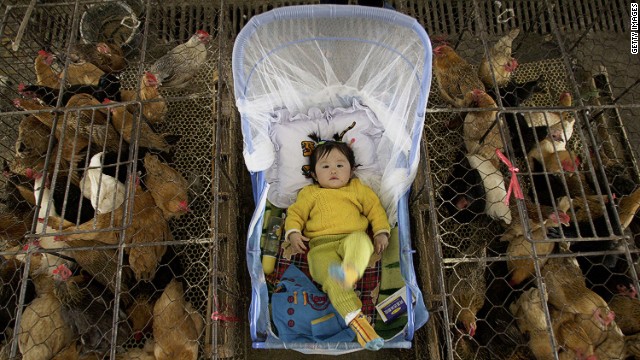
A vendor’s child is placed between poultry cages in Wuhan, China, in this file picture.
Hong Kong (CNN) – When Mr He, a 39-year-old furniture factory owner came down with flu symptoms late last year, he wasn’t worried.
According to his family, the man, who worked in Guangdong province in southern China, had always been healthy.
Weeks later, He was on a ventilator. Hospitalized for about 20 days, he slipped into a vegetative state and later died, his family said.
He was diagnosed as having H7N9 virus, a new strain of avian flu that jumped from birds to humans for the first time last year, said his close cousin, who requested not to be identified.
“I couldn’t believe it,” she said. “How could this happen to him? It all came so suddenly to a healthy person.”
In recent weeks, China has seen a spike in cases and experts are worried that infections will gather pace as the country celebrates the Lunar New Year this week - a peak time for travel and for poultry sales.
Fresh wave?
Since the strain was first reported in Shanghai in February 2013, it has affected 246 in mainland China, according to Hong Kong’s Department of Health. The World Health Organization says that 56 have died from the disease.
The number of cases faded after May, but returned in late 2013. Like all flu strains, H7N9 cases increase during colder months.
In January alone, 19 deaths and 96 human cases have been reported, according to figures from the Chinese Center for Disease Control cited by state news agency Xinhua on Monday – rivaling the initial wave of H7N9 cases seen in March 2013.
Cases have also been reported in Taiwan and in Hong Kong, which on Tuesday began culling 20,000 chickens after a sample of live chicken imported from mainland China tested positive for H7 viruses.
According to the WHO, most of the human cases were exposed to the H7N9 virus through contact with poultry or contaminated environments, such as live bird markets,
“When the chickens are very overcrowded, at the time of festivals like Christmas, Chinese New Year, and there are no bio-security measures taken, then the virus spreads through poultry very quickly,” said Dr. Kwok-Yung Yuen, chair of infectious diseases at the University of Hong Kong.
“It’s also possible that travelers will bring live poultry back to their own villages,” he added.
The WHO does not plan to issue a special advisory ahead of the holiday, said Gregory Hartl, a spokesman with the organization.
“Further sporadic human cases are expected in affected and possibly neighboring areas, especially given expected increases in production, trade and transport of poultry associated with the upcoming Lunar New Year,” the WHO warned.
The Lunar New Year is one of the biggest annual human migrations on the planet as most Chinese travel to spend the nearly two-week holiday with their families.
The H7N9 virus appears deadlier than the seasonal flu, but less virulent than another bird flu strain, H5N1, with a crude 30% mortality rate, said Yuen, who has worked on major outbreaks including Severe Acute Respiratory Syndrome and H5N1.
He said the key is to implement sanitation measures at the live poultry markets. He drew parallels of the current situation in China with the first case of H5N1, which appeared in Hong Kong in 1997.
The Hong Kong government implemented rules such as requiring regular cleaning of transport cages, mandating a rest day when no live poultry would be allowed at the marketplace and ordering all unsold birds at the market to be killed in the evening.
Yuen said such measures are crucial to avoid the spread of the virus.
“There will be an increasing number of cases in the coming February to May unless the mainland government takes more stringent measures to stop this spread,” Yuen said.
Live poultry trading has been halted in three cities in the hardest-hit province of Zhejiang in eastern China, Xinhua reported.
And in Shanghai, the live poultry trade will shut starting January 31 to April 30 to prevent spread of bird flu, according to Xinhua.
However, not all H7N9 patients have had close contact with live birds, including the case of He, whose cousin said his closest poultry contact was eating chicken at a restaurant.
On January 19, a 31-year-old Shanghai doctor died, marking the first medical worker death from the strain. The doctor, according to Xinhua, appeared to have limited exposure to poultry or a contaminated environment, .
Infection of health care workers is closely watched because it might indicate human-to-human transmission in a medical setting.
“Sometimes we just don’t know the source,” said the WHO’s Hartl.
Not having exposure to poultry doesn’t equate human-to-human transmission, he added. H7N9 does not appear to transmit easily among humans, according to the WHO.
Loved ones suffer
Family members who’ve seen their loved ones suffer from H7N9 describe a long, harrowing illness, that resembled pneumonia.
Zhang Kewei’s 57-year-old father, who lived in eastern province of Zhejiang, was diagnosed as having H7N9 after developing a 104 degree Fahrenheit fever in November. He did not survive.
“He, at first, felt cold and had a fever and later, his oxygen level in his blood dropped to 40 per cent,” said his daughter Zhang Kewei.
His family struggled to transfer him to a bigger hospital. When they did, it took several days to confirm that he had H7N9, she said.
“We couldn’t stop crying,” said Zhang. “But we had to wipe away tears, and told my dad that he was ill, but assured him that he would recover, but needed to suffer a little because the needles could hurt.”
“My father then said: ‘It’s OK. I’m not afraid.’”
Beijing intern Andi Wang and CNN’s Katie Hunt contributed to this report.
Chinese New Year again - a lot of germs spread
Bird Flu never really went away, just like measles and ebola. We just stop trending it and move on. :o

Health authorities said that the number of people infected with the H7N9 bird flu virus this year has reached 100, with Guangdong, Fujian, Zhejiang and Jiangsu seeing the most cases.
The latest case was reported in Shantou Guangdong, marking the province’s 43rd bird flu case this winter.
The Shanghai Health and Family Planning Commission confirmed the first human infection with H7N9 in the city on January 17. The second case was reported about a week after. Live poultry trade will be banned across the city from February 19 to April 30 to lessen chances of further infection.
The number of cases reported this year is slightly less than what was seen around this time last year. By February 17 last year, at least 120 human H7N9 cases were reported, including 32 deaths.
By Katie Nelson in News on Feb 12, 2015 10:00 AM
It’s baaaaaaaaaaaaaaaaack part deux
Just in time for the Year of the Rooster
Patient treated in Shanghai as cases of bird flu rise
Source: Agencies | December 23, 2016, Friday

CHINA has reported two more cases of human bird flu infection, with one patient being treated in a Shanghai hospital, bringing the total number to three this week as other Asian nations battle to control outbreaks.
Health officials in South Korea and Japan have been scrambling to contain outbreaks of different strains of bird flu, with the poultry industry in both countries bracing for heavy financial losses.
A man diagnosed with the H7N9 strain of bird flu is being treated in Shanghai, after traveling from neighboring Jiangsu Province, the city’s health commission said on its website.
The local government in Jiangsu is looking into the origin of the infection, the provincial health authority said.
In Xiamen, a city in southeast China’s Fujian Province with a population of around 3.5 million, local authorities ordered a halt to poultry sales from yesterday in the Siming district after a 44-year-old man was diagnosed with H7N9 flu on Sunday, Xinhua news agency reported.
The patient is being treated in hospital and is in stable condition, Xinhua said, citing Xiamen’s center for disease prevention and control.
The latest reports of infection come after Hong Kong confirmed that an elderly man had been diagnosed with the disease earlier in the week.
They also follow reports that South Korea and Japan have ordered the killing of tens of millions of birds over the past month, fueling fears of a regional spread.
Bird flu is most likely to strike in winter and spring, and farmers have in recent years been increasing cleaning regimes, animal detention techniques and built roofs to cover pens where they keep poultry, among other steps, to prevent the disease.
In the past two months, more than 110,000 birds have been killed following bird flu outbreaks, according to China’s Ministry of Agriculture. They did not lead to human infection.
Each year, China slaughters 11 billion birds for consumption.
Authorities have not culled any birds as a result of this week’s episodes, which appear to be isolated cases.
Still, farmers worry that the virus could spread, hurting demand for chicken as the industry prepares for a peak in demand during Lunar New Year celebrations at the end of January.
Amid recent outbreaks elsewhere, the Chinese are feeding their flocks more vitamins and vaccines and ramping up sterilization procedures in a bid to protect their birds.
On Wednesday, authorities said that they would ban imports of poultry from countries where there are outbreaks of highly pathogenic bird flu. It already prohibits imports from more than 60 nations, including Japan and South Korea.
The last major bird flu outbreak on China’s mainland was in 2013. It killed 36 people and caused around US$6.5 billion in losses to the agriculture sector.
Delegations from Japan, South Korea and China were in Beijing last week for a symposium on preventing and controlling bird flu and other diseases, according to China’s agriculture ministry.
Returning in 2017?
Bird Flu Is Circling in China Again—Here’s How It Could Develop into an Outbreak
BY CYNTHIA WALLENTINE 02/10/2017 10:49 AM
Avian flu is making the news again with new human cases in China reported in January. What does “avian flu” mean to you—and how dangerous is it?
Each year you, or someone you know, probably gets a flu shot. The seasonal flu shot changes each year to reflect circulating influenza viruses. This year, the flu shot protects against two influenza A viruses, and one influenza B virus. Influenza is a respiratory virus that causes fatigue, fever, aches, headache, cold-type symptoms, and more.
In addition to humans, influenza A viruses also afflict dogs, pigs, seals, horses, and even whales, but doesn’t always sicken its host. Wild waterfowl also get influenza A, or avian influenza, and are primary reservoirs for the frequently mutating virus, taking it with them along migratory pathways and into bird markets.
The wet markets of China are marketplaces crowded with animals and humans together in conditions ripe for microbial transfer. These markets are a dangerous mixing pot for seasonal, human-adapted influenzas and wild ones to which humans aren’t able to fight off.
Many avian flus come from conditions like this and can be mild or dangerous, depending on how well they spread between humans and how sick they make us. For wild birds and wet markets, there is no vaccine and no way to stop of spread of infection between birds, other than killing them en masse.
What’s in a Name?
Influenza is a complicated virus and keeping its strains, or names, straight can be confusing. Different strains of the virus have slightly different genetic code and can infect different hosts, in different ways, with varying degrees of danger. The January 2017 alert from the Centers for Disease Control and Prevention is specifically an avian strain of influenza A called H7N9, which has low pathogenicity and can infect both birds and humans.
Most influenza virus strains include H and N numbers. You might also see something like HPAI or LPAI. These terms simply mean “high pathogenic avian influenza” and “low pathogenic avian influenza,” and refer to the capability of the virus strain to cause disease. A highly pathogenic strain of influenza results in higher infection rates.
For example, the influenza epidemic of 1918 was caused by a strain of influenza A, type H1N1. By the time the Spanish flu subsided, one-third of the population of the planet had been infected, and between 50 and 100 million people had died. Later in the century, researchers used modern tools and data analysis to discover the virulent flu strain had mutated in pigs, and then transformed to infect humans.
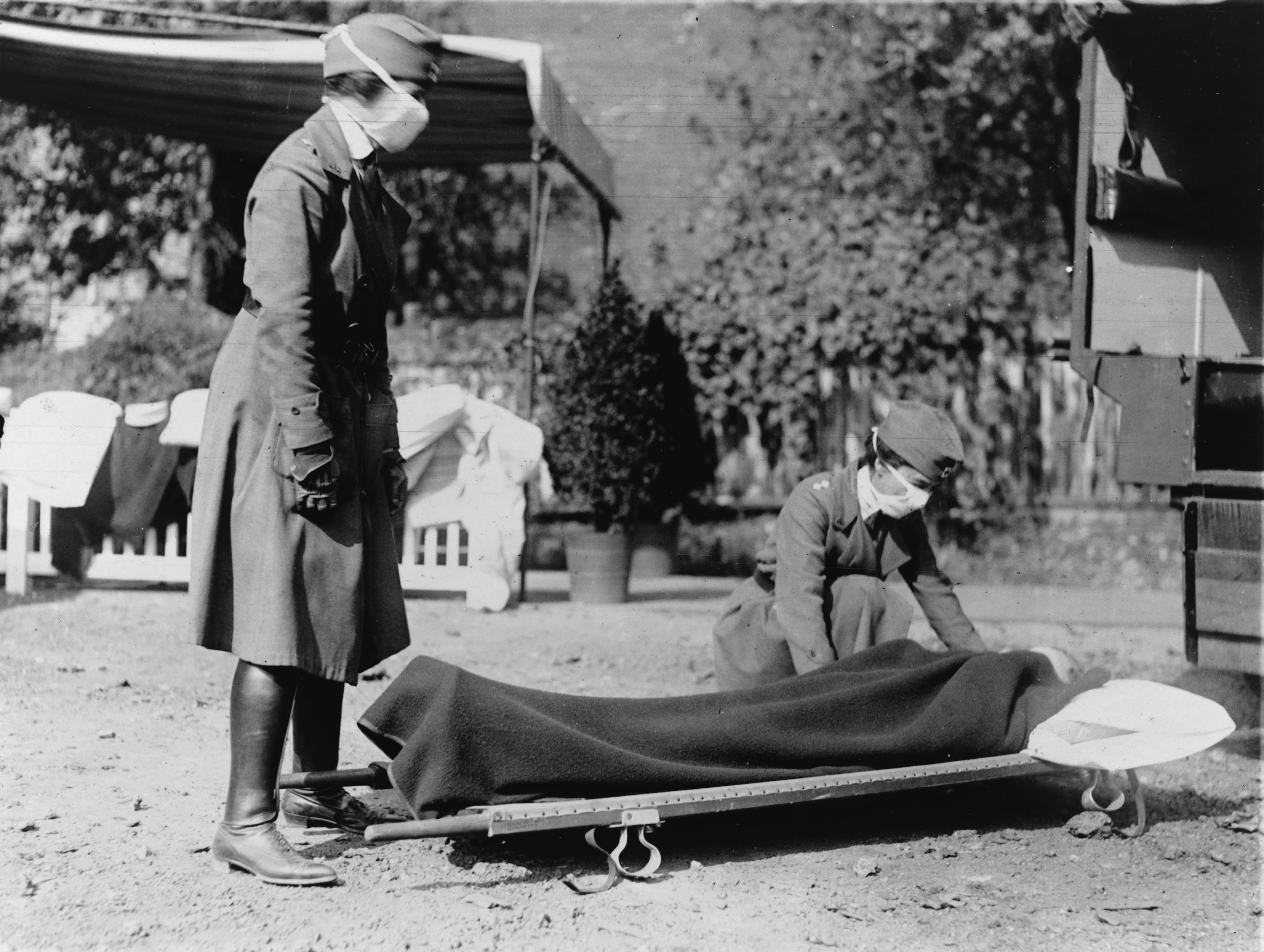
Red Cross workers training in Washington, D.C. during the influenza pandemic of 1918.
Image by National Photo Company/Library of Congress
The Spanish flu pandemic is called the “mother of all pandemics,” for its modern-day severity, and because its genetic material drifted forward, becoming incorporated in avian and other flu strains present today.
Where Does That Leave Us?
Because of some probable remaining immunity in humans to the H1N1 strain that caused the 1918 pandemic, the CDC does not believe the same flu strain will cause another pandemic. The danger exists from emerging influenza A types that borrow the ability to move from animal, like a pig or bird, to human.
We saw this back in 1996 when the highly pathogenic avian flu strain H5N1 was isolated in geese farmed in southern China. Given the tight confines of Chinese wet markets, the strain successfully jumped to humans, with approximately 900 reported infections and more than 400 deaths.
Spreading across Asia, Europe, and Africa, these highly pathogenic avian flu strains gained a wealth of genetic diversity, making it easier for influenza A to adapt to new conditions—and new hosts.
In wet markets, wild bush animals and birds are packed side by side with domestic poultry, reptiles, fish in buckets, caged rats, bagged, living cats, dogs intended for cooking, and more. These markets are believed to play a part in the transfer of avian influenza strains to humans through crowded conditions, accumulation of animal waste, and chronic contamination of cages and other equipment. Consumers crowd into market stalls packed and stacked with these live animals in cages.
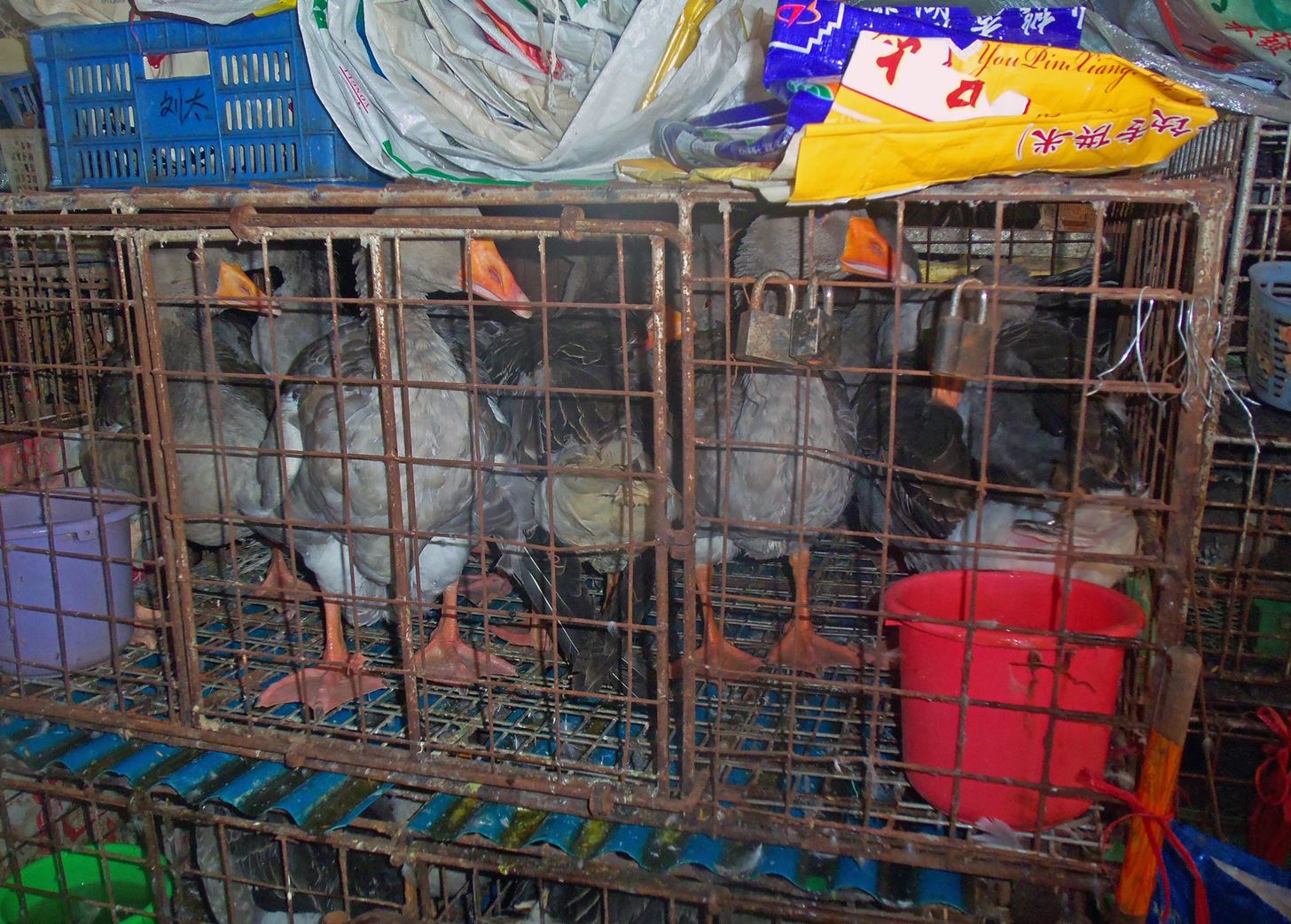
Ducks in a wet market in China.
Image by Daniel Case/Wikimedia Commons
A 2014 study of wet markets found “that poultry workers and the general population are constantly exposed to H7N9 virus at these markets.” Of the ongoing outbreaks and mutations of avian influenza strains in China, the World Health Organization notes:
[QUOTE][I]t can be assumed that interspecies transmission of influenza A viruses occurs more frequently than we think, mainly from birds to mammalian species. Although the outbreaks in poultry have weakened economies and jeopardized food security, the greatest concern for human health is the risk that present conditions could give rise to an influenza pandemic."
In August 2016, China reported an outbreak of highly pathogenic avian influenza called H5N6. By January 2017, Chinese health authorities reported that another 110 people are confirmed with infections from influenza A type H7N9 from an outbreak that began in September 2016. As expected, many of these were individuals who worked with, or had visited, wet markets.
Those numbers are just the top of the stack. Since 2013, more than 900 confirmed cases of H7N9 have been reported in China, with a mortality rate of about a third of those infected. A few cases of human-to-human infection, without transmission through a bird market, have occurred, but they remain rare—at present.
In southern China, it is not unusual for humans to share their space with their food animals, mixing microbes, breathing the same air, swiping waste from a sleeve, or sorting diseased and dead animals from the living. With influenza A strains mixing and mutating in these conditions right now, it is only a matter of time before H7N9, or other virulent flu type, figures out how to share itself by a sneeze or cough and perhaps causing the next global pandemic.[/QUOTE]
Wet markets. ew.
uh oh
I just realized I never added my article Shaolin Trips: Episode 2 - Reigning in at the Brink of the Precipice, which relates my experiences travelling during the SARS outbreak. SARS isn’t bird flu, but epidemics are epidemics, so it’s a cautionary tale about travelling to China when there’s an outbreak.
79 people killed in January by bird flu in China’s worst outbreak on record
BY ALEX LINDER IN NEWS ON FEB 15, 2017 5:40 PM

The bird flu season this year is already shaping up to be the most terrifying in China on record with the virus infecting 192 people and killing 79 in January alone.
That number far outpaces the January death tolls in recent years, which have ranged between 20 and 31 people, and has skyrocketed since two deaths and seven infections alarmed the country back in December. The total number of those killed by the virus since October is now up to 100, along with 306 people infected, Reuters reports, citing data from China’s National Health and Family Planning Commission.
This revelation has caused Chinese chicken prices to drop to their lowest level in more than a decade, placing China’s poultry producers in a precarious situation.
The virus is known to strike each winter and spring. Following an outbreak in 2013 that caused widespread panic, killing 36 people and resulting in more than $6 billion in economic losses for China’s agricultural sector, China began to institute measures to contain and prevent the disease.
This winter, those policies have led to poultry markets around the country being shut down and some 175,000 birds being culled as Chinese authorities have become increasingly worried about the spread of the deadly virus.
Last week, Guangzhou officials advised residents to avoid contact with any live poultry after one-third of poultry markets in the city were found to be contaminated with bird flu.
H7n9
The raging bird flu in China is a good reminder the US isn’t prepared for a pandemic
The virus has a fatality rate of up to 40 percent.
Updated by Julia Belluz@juliaoftoronto julia.belluz@voxmedia.com Mar 3, 2017, 12:19pm EST
:format(webp)/cdn2.vox-cdn.com/uploads/chorus_image/image/53506757/GettyImages_140554143.0.jpg)
H7N9 typically surfaces at live poultry markets in China. Forty percent of those with confirmed infections have died — including at least 87 people this year alone. Karl Johaentges / LOOK-foto.
A strain of deadly bird flu that has a high risk of becoming a pandemic is surging in China, and experts are warning that the US isn’t making the necessary preparations.
According to an assessment from the World Health Organization this week, China had 460 lab-confirmed human cases of the H7N9 bird flu virus since last October — the most of any flu season since the virus was first reported in humans in 2013.
This makes the current outbreak the largest on record for H7N9, a virus that typically circulates around poultry markets and can cause pneumonia or death when it spreads to people. Forty percent of those with confirmed H7N9 infections have died — including at least 87 people this year alone. That’s a very deadly pathogen.
The risk of the current outbreak causing a global epidemic is low right now, the WHO said. Almost all of the current infections were caught directly from birds and there’s no evidence yet of ongoing human-to-human transmission. But whenever bird flu spreads to people, there’s always the worry that it will mutate to become more contagious.
[QUOTE] Follow
Ronald Klain @RonaldKlain
WARNING: America isn’t ready & the Trump Admin–understaffed, inexperienced, isolationist–DEFINITELY isn’t ready: https://www.statnews.com/2017/02/28/bird-flu-surge/ …
1:08 PM - 28 Feb 2017
Photo published for Human cases of H7N9 bird flu are surging, officials say
Human cases of H7N9 bird flu are surging, officials say
The H7N9 bird flu virus, which has sickened and killed several hundred people in China, had seemed to be diminishing as a threat.
statnews.com
731 731 Retweets 650 650 likes

Most people at risk of H7N9 virus right now are in China, particularly those who work in the poultry sector. Vietnam should also be on guard; reports suggest the virus has surfaced there as well.
But if this H7N9 outbreak were to spread further, experts say we’re not ready.
“America has long been unprepared for a dangerous pandemic, but the risks are especially high under President Trump,” the former Ebola czar Ron Klain told Vox.
Trump hasn’t yet named nominees for a new head to the Centers of Disease Control and Prevention, the agency that would lead a pandemic response. He also hasn’t nominated anyone to head Assistant Secretary for Preparedness and Response, or USAID — two other key agencies in a pandemic.
With the repeal of the Affordable Care Act looming, Trump is poised to gut a key public health fund that accounts for 12 percent of the CDC’s budget, and he’s reinstated the global gag rule, which depletes global health funding. “His proposed cuts in foreign aid,” Klain added, “will devastate work to detect and combat disease outbreaks abroad — the very best way to prevent those diseases from coming to America.”
If it’s not a bird flu outbreak, it’ll be some other health threat. The pace at which pathogens are flying around the globe and threatening pandemics is only accelerating. Over the past decade, the WHO has declared four global health emergencies. Two of them happened during President Obama’s tenure (Ebola and Zika). There’s slim chance Trump will finish a four-year term without facing an outbreak of some kind.
As for H7N9, it’s very possible it could spread to birds and people in other countries, said Dr. Tim Uyeki, a medical epidemiologist in CDC’s influenza division.
“Among the viruses we’ve assessed… H7N9 is the most concerning. It’s at the top of the list,” Uyeki said. “We don’t know when the next pandemic is going to start, where it’s going to start. But at this time the biggest concern is the H7N9 virus.”
Treating the current cases is also proving to be a challenge since some seem to carry genetic markers associated with drug resistance to antiviral treatments for the disease, like Tamiflu. A new assessment from the CDC also shows the virus has also split into a new lineage — which is a problem because the vaccine development for H7N9 was based on an older lineage of the virus. So we don’t have any vaccine candidates in the pipeline to fully address the current outbreak.[/QUOTE]
It’s important to understand that H7N9 is different than H5N1. There are about 40 different strains of Avian Flu.
Here it comes…
U.S. IDENTIFIES BIRD FLU OUTBREAK AT TENNESSEE CHICKEN BREEDER
BY REUTERS ON 3/5/17 AT 5:35 PM
First Study Of Human Transmission Of New Bird Flu Raises Worries
U.S.BIRD FLU TENNESSEE
A strain of bird flu has been detected in a commercial chicken breeder flock in Tennessee’s Lincoln County and the 73,500 birds will be culled to prevent the virus from entering the food system, U.S. and state agriculture officials said on Sunday.
The U.S. Department of Agriculture said this represented the first confirmed case of highly pathogenic H7 avian influenza (HPAI) in commercial poultry in the United States this year.
The facility has been placed under quarantine, along with approximately 30 other poultry farms within a 6.2-mile (10 km) radius of the site, the Tennessee state government said. Other flocks in the quarantined area are being tested for the virus, it added.

A Centers for Disease Control scientist measures the amount of H7N9 avian flu virus which was grown and harvested in an unnamed CDC laboratory in 2013.
REUTERS
In 2014 and 2015, the United States killed nearly 50 million birds, mostly egg-laying hens, during a bout of HPAI. The losses pushed U.S. egg prices to record highs and prompted trading partners to ban imports of U.S. poultry.
No humans were affected in that outbreak. The risk of human infection in poultry outbreaks is low, although in China people have died this winter amid an outbreak of the H7N9 virus in birds.
HPAI bird flu was found in a commercial turkey flock in Indiana in January 2016 but there have been no other cases in commercial flocks until now.
The breeders at the Tennessee facility were for the broiler flock, USDA spokeswoman Donna Karlsons said in an email.
In January, the USDA detected bird flu in a wild duck in Montana that appeared to match one of the strains found during the 2014 and 2015 outbreak.
In recent months, different strains of bird flu have been confirmed across Asia and in Europe. Authorities have culled millions of birds in affected areas to control the outbreaks.
France, which has the largest poultry flock in the European Union, has reported outbreaks of the highly contagious H5N8 bird flu virus. In South Korea, the rapid spread of the H5N6 strain of the virus has led to the country’s worst-ever outbreak of bird flu.
TN has 30 poultry farms within a 6.2-mile radius of the site. That seems dense, but perhaps there are as many poultry farms in any such region. Americans eat a lot of nuggets.
Chinese herbal remedy Lianhuaqingwen inhibits influenza virus in vitro
https://www.ncbi.nlm.nih.gov/pmc/articles/PMC5324200/?report=reader#!po=19.5652
Easily formulated but contains ephedra, which is banned in the US. Acupuncturists and Herbalists need to unite to educate the FDA on the truth regarding ephedra. In the TCM application of this medicinal, it has a high margin of safety and an incredible efficacy… but that’s another discussion for another time.
ABSTRACT
Background
Lianhuaqingwen Capsule (LH-C) is a traditional Chinese medicine (TCM) formula used to treat respiratory tract infectious diseases in Chinese. The aim of this study was to determine the antiviral activity of LH-C and its immunomodulatory effects on viral infection.
Method
The in vitro cytotoxicity and antiviral activity of LH-C was determined by MTT and Plaque reduction assays. Time course study under single-cycle virus growth conditions were used to determine which stage of viral replication was blocked. The effect of LH-C on the nuclear export of the viral nucleoprotein was examined using an indirect immunofluorescence assay. The regulation to different signaling transduction events and cytokine/chemokine expression of LH-C was evaluated using Western blotting and real-time RT-PCR. After virus inoculation, BALB/c mice were administered with LH-C of different concentrations for 5 days. Body-weight, viral titers and lung pathology of the mice were measured, the level of inflammatory cytokines were also examined using real-time RT-PCR.
Results
LH-C inhibited the proliferation of influenza viruses of various strain in vitro, with the 50% inhibitory concentration (IC50) ranging from 0.35 to 2 mg/mL. LH-C blocked the early stages (02 h) of virus infection, it also suppressed virus-induced NF-kB activation and alleviated virus-induced gene expression of IL-6, IL-8, TNF-a, IP-10, and MCP-1 in a dose-dependent manner. LH-C treatment efficiently impaired the nuclear export of the viral RNP. A decrease of the viral titers in the lungs of mice were observed in groups administered with LH-C. The level of inflammatory cytokines were also decreased in the early stages of infection.
Conclusions
LH-C, as a TCM prescription, exerts broad-spectrum effects on a series of influenza viruses, including the newly emerged H7N9, and particularly regulates the immune response of virus infection. Thus, LH-C might be a promising option for treating influenza virus infection.
161
More dead. Less panic. Go figure. 
161 people have been killed by bird flu this winter in China’s worst outbreak since 2009
BY ALEX LINDER IN NEWS ON MAR 14, 2017 12:35 AM
This year’s bird flu season continues to set records in China with the virus infecting another 160 people and killing 61 in the month of February.
Since last October, 161 people have been killed by the H7N9 virus in the most deadly avian flu outbreak the country has seen since at least 2009, the Chinese government said on Monday.
Fortunately, the worst is likely behind us. Fatalities dropped in February from a high of 79 in January. Infections tend to fall off at the end of winter.
Following a bird flu outbreak in 2013 that caused widespread panic, killing 36 people and resulting in more than $6 billion in economic losses for China’s agricultural sector, China began to institute measures to contain and prevent the disease.
This winter, those policies led to poultry markets around the country being shut down and some 175,000 birds being culled as Chinese authorities have become increasingly worried about the spread of the deadly virus.
Don’t start licking those frogs yet
Not TCM related per se but along the lines of ethomedicine origins of emerging pharmaceutical interventions… h.ox
Frog Skin Mucus May Help Kill Strains Of Flu Virus
19 April 2017, 7:13 am EDT By Allan Adamson Tech Times
The slime that coats the skin of a species of colorful frogs found in southern India may help kill strains of the flu virus.
In a new study involving mice, researchers found that certain peptides present in the skin mucus of the Hydrophylax bahuvistara frogs can kill the H1 variety of influenza viruses.
What Are Peptides?
Peptides are short chains of amino acids that are known as the building blocks of protein. The skin of frogs secretes peptides that can kill viruses and bacteria.
Findings of a new research published in the journal Immunity on April 18 suggest that these peptides could be a potential source of new antiviral and antimicrobial treatments.
Such treatments can help when vaccines are not available to deal with new strains of pandemic flu or once currently known flu strains develop resistance to available drugs. Flu comes in several varieties and may evolve into new forms, which is why researchers need to develop new vaccines for a specific type of the virus every flu season.
Frogs As Source Of Defense Peptides
All animals produce at least a few antimicrobial host defense peptides since these are involved in the workings of their immune systems. Frogs, however, are of interest to researchers as a source of these peptides because it is relatively easy to isolate peptides that are found in their mucus.
All the researchers need to do is give the amphibians an electric shock. They can also rub a powder on the animals so they would secrete their defense peptides.
Urumin
Jacob and his colleagues looked at 32 frog defense peptides for use against a flu strain and found that four of these had flu-busting abilities.
Unfortunately, when they exposed isolated human red blood cells to these peptides, they found that three of the four peptides were toxic.
Urumin, one of the peptides present in the frog’s mucus, appeared harmless to human cells but was found lethal to a range of flu viruses.
How Urumin Works Against Flu Viruses
Urumin works by targeting the viral surface protein hemagluttinin, the H in H1N1.
“The virus needs this hemagglutinin to get inside our cells,” said study researcher Joshy Jacob of Emory University. “What this peptide does is it binds to the hemagglutinin and destabilizes the virus. And then it kills the virus.”
In experiments involving mice, urumin, was found to provide protection to unvaccinated mice. The peptide binds to a protein that is identical across many strains of influenza. Researchers found that the peptide can neutralize dozens of flu strains ranging from the 1934 archival viruses to those that sprung in modern times.
Urumin As Potential Antiviral Treatment For Flu
Urumin appears to have limitation. The peptide protected mice against a lethal dose of H1 flu strain but it was not found effective against the H3N2. Researchers though remain optimistic of its potentials as a treatment for flu.
“Urumin represents a unique class of anti-influenza virucide that specifically targets the hemagglutinin stalk region, similar to targeting of antibodies induced by universal influenza vaccines,” Jacob and colleagues wrote in their study.
“Urumin therefore has the potential to contribute to first-line anti-viral treatments during influenza outbreaks.”
- See more at: Frog Skin Mucus May Help Kill Strains Of Flu Virus
