fearable bird flu

ttt 4 2019!

[URL=“https://www.businessinsider.com/r-china-reports-new-bird-flu-outbreak-in-yunnan-province-2019-2”]
China reports new bird flu outbreak in Yunnan province
Reuters 2m

BEIJING (Reuters) - China reported a new H5N6 bird flu outbreak in the southwestern province of Yunnan, the agriculture ministry said on Friday.

The new case, found on a poultry farm with 2,861 birds in Lijiang city in Yunnan, infected and killed 463 of the animals, China’s Ministry of Agriculture and Rural Affairs said in a statement published on its website.

Local authorities have culled 55,917 birds following the outbreak, according to the statement.

(Reporting by Hallie Gu and Ryan Woo; Editing by Tom Hogue)
poultry pestilence :frowning:

Oh ****

Published: February 4, 2020 3:19 PM UTC
Bird Flu: China’s Ticking Time Bomb of Infectious Disease
As the world grapples with the Wuhan coronavirus outbreak, a new disease emerges: a highly-fatal bird-flu known as H5N1.
Author: William Ebbs @ebbs_william


As China’s ascendancy to world power continues, infectious diseases could become the norm. | Image: REUTERS / Bobby Yip / File Photo

A highly pathogenic strain of bird flu, H5N1, has caused an outbreak in China’s Hunan province, near ground zero of the deadly coronavirus.

The disease doesn’t easily infect humans but when it does, it carries a staggering mortality rate of 60% according to the WHO.

China is a hotbed of emerging diseases. As the country rises to economic prominence, this puts the global economy at risk.

For most people who live in first world countries, infectious diseases are not a big concern. We get a cocktail of vaccines as children and go on to live relatively healthy lives. The biggest things we have to worry about are the common flu, the common cold, and occasionally, strep throat. As China rises to global prominence, in a world that has grown increasingly interconnected, things may be changing.

We could be reverting to a time when deadly diseases were a fact of life for everyone – in every country.

As the global coronavirus outbreak grows to infect over 20,000 with 425 fatalities, China finds itself in the cross hairs of a new, dangerous outbreak: bird flu, an infection that can kill poultry and humans alike. While the disease, known as H5N1, hasn’t infected any humans yet, it’s revealing a disturbing pattern with global implications. New diseases are emerging at an alarming rate, and this puts the whole world at risk.

The Coronavirus Is Still At Large

According to the latest data, Wuhan coronavirus has grown to infect 20,680 people – the majority in Hubei province, China. The disease has spread to 27 countries and 427 people have died.

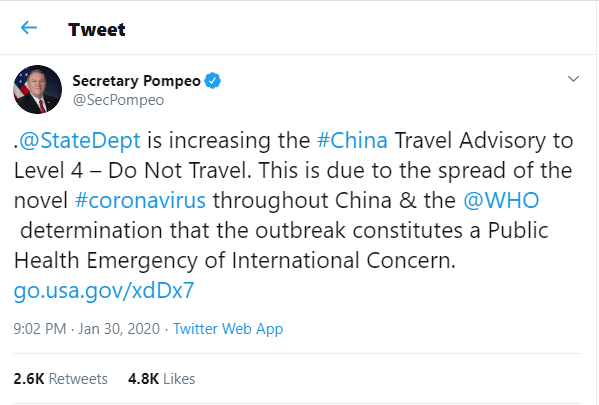
In response, U.S authorities have taken drastic actions to limit contact with China. The State Department has issued a travel warning, airlines are canceling flights and American companies with Chinese operations are shuttering operations in the country.


Source: twitter.com

Authorities should have the ability to get the coronavirus under control but what will they do when the next massive outbreak crops up? Can the global economy withstand these repeated shocks?

Another Outbreak: Bird Flu

According to China’s Ministry of Agriculture and Rural Affairs, the nation is experiencing an outbreak of a highly pathogenic strain of bird flu called H5N1. The disease has already killed 4,500 chickens in Hunan province alone and the government has culled almost 18,000 chickens to prevent its spread.

According to the United States Geological Survey, there’s no need to panic about the term “highly pathogenic” because it refers to the virus’s ability to kill chickens, not humans.

They state the following:

[QUOTE]The designation of low or highly pathogenic avian influenza refers to the potential for these viruses to kill chickens. The designation of “low pathogenic” or “highly pathogenic” does not refer to how infectious the viruses may be to humans, other mammals, or other species of birds.

The World Health Organization (WHO) paints a more disturbing picture of the disease.

Human cases of H5N1 avian influenza occur occasionally, but it is difficult to transmit the infection from person to person. When people do become infected, the mortality rate is about 60%.

They go on to elaborate

Influenza viruses constantly undergo genetic changes. It would be a cause for concern, should the H5N1 virus become more easily transmissible among humans.

A 60% mortality rate is staggering. To put this in perspective, note that coronavirus has a mortality rate of only 2.1% while SARS had a mortality rate of 9.6%. With a mortality rate of 60%, the bird flu is as deadly as Ebola. While it doesn’t currently spread well among humans, experts believe it can mutate into more virulent forms.

This is a ticking time bomb.

This article was edited by Sam Bourgi.

William Ebbs @ebbs_william
As a writer with over five years of experience, William Ebbs has contributed to CCN, The Motley Fool and other wonderful clients. He has earned millions of page views with his hard-hitting, opinionated work. He focuses on financial markets and business. When Will isn’t writing, he enjoys strategy gaming, heated debates, and researching for his next article. William Ebbs is based in the United States of America and can be reached at qzh8778@outlook.com[/QUOTE]

THREADS
Bird Flu
Coronavirus

Still a threat

Bird flu: humans infected with H5N8 strain for first time in Russia
Seven poultry workers found to be infected, but no evidence of transmission between humans


Turkey hens in Germany. The H5N8 strain is deadly for birds, and this marks the first transmission of the strain from animals to humans. Photograph: Jens Buettner/EPA
Molly Blackall
Sat 20 Feb 2021 12.17 EST

A H5N8 strain of bird flu has been detected in humans for the first time, among seven workers who were infected at a Russian poultry plant in December.

There is no evidence of the strain being transmitted between humans, but Russia has reported the transmission to the World Health Organization.

The workers now feel well, and the situation did not develop further, according to Dr Anna Popova, head of consumer health watchdog Rospotrebnadzor. She said the workers had been infected during an outbreak of the strain at the plant.

Outbreaks of the strain have been reported in Russia, Europe, China, the Middle East and north Africa in recent months, but only in poultry.

Other strains of bird flu, including H5N1, H7N9 and H9N2, have been transmitted to humans before.

The H5N8 strain is deadly for birds, and this marks the first transmission of the strain from animals to humans. While Popova said the strain didnt appear to be able to spread among humans, only time will tell how soon future mutations will allow it to overcome this barrier.

The discovery of this strain gives us all, the whole world, time to prepare for possible mutations and the possibility to react in a timely way and develop test systems and vaccines, she said.

The Vector Institute in Siberia said on Saturday that it would start developing human tests and a vaccine against H5N8, according to RIA news agency.

Speaking on state TV, Popova said that Russia had reported the developments to the WHO several days ago, just as we became absolutely certain of our results.

Most cases of human bird flu infections have been linked to direct contact with infected live or dead poultry, though properly cooked food is considered safe.

The cases tend to be spread via migrating wild birds, leading producing countries to keep their poultry indoors or segregated from wildlife.

Outbreaks of bird flu often lead poultry plants to kill their birds to prevent the virus spreading further, and often prompts other countries to impose trade restrictions. In the UK, five outbreaks of the H5N8 strain in Gloucestershire, Dorset, Devon, Cheshire and Kent were detected in November, leading officials to implement a prevention zone in England, Scotland and Wales.

The Department for Environment, Food and Rural Affairs said that all birds in the affected areas had been culled humanely and control zones introduced.

The future is in vaxxing…

If it’s not one plague…

…it’s another. :frowning:

October 26, 2021
12:50 AM PDT
Last Updated 9 hours ago
Environment
Rise in human bird flu cases in China shows risk of fast-changing variants: experts
By Dominique Patton

4 minute read

A man provides water for chickens inside a greenhouse at a farm in Heihe, Heilongjiang province, China November 17, 2019. REUTERS/Stringer

BEIJING, Oct 26 (Reuters) - A jump in the number of people in China infected with bird flu this year is raising concern among experts, who say a previously circulating strain appears to have changed and may be more infectious to people.

China has reported 21 human infections with the H5N6 subtype of avian influenza in 2021 to the World Health Organization (WHO), compared with only five last year, it said.

Though the numbers are much lower than the hundreds infected with H7N9 in 2017, the infections are serious, leaving many critically ill, and at least six dead.

“The increase in human cases in China this year is of concern. It’s a virus that causes high mortality,” said Thijs Kuiken, professor of comparative pathology at Erasmus University Medical Centre in Rotterdam.

Most of the cases had come into contact with poultry, and there are no confirmed cases of human-to-human transmission, said the WHO, which highlighted the rise in cases in a statement on Oct. 4.

It said further investigation was “urgently” required to understand the risk and the increase in spill over to people.

Since then, a 60-year-old woman in Hunan province was admitted to hospital in a critical condition with H5N6 influenza on Oct. 13, according to a Hong Kong government statement.

While human H5N6 cases have been reported, no outbreaks of H5N6 have been reported in poultry in China since February 2020.

China is the world’s biggest poultry producer and top producer of ducks, which act as a reservoir for flu viruses.

The Chinese Center for Disease Control and Prevention (CDC) could not be reached for comment on the rise in H5N6 human cases. However, a study published on its website last month said the “increasing genetic diversity and geographical distribution of H5N6 pose a serious threat to the poultry industry and human health”.

Avian influenza viruses constantly circulate in domestic and wild birds, but rarely infect people. However, the evolution of the viruses, which have increased as poultry populations grow, is a major concern because they could change into a virus that spreads easily between people and cause a pandemic.

The largest number of H5N6 infections have been in southwestern Sichuan province, though cases have also been reported in neighbouring Chongqing and Guangxi, as well as Guangdong, Anhui and Hunan provinces.

At least 10 were caused by viruses genetically very similar to the H5N8 virus that ravaged poultry farms across Europe last winter and also killed wild birds in China. That suggests the latest H5N6 infections in China may be a new variant.

“It could be that this variant is a little more infectious (to people)…or there could be more of this virus in poultry at the moment and that’s why more people are getting infected,” said Kuiken.

Four of the Sichuan cases raised poultry at home and had been in contact with dead birds, said a September report by China’s CDC. Another had bought a duck from a live poultry market a week before developing symptoms.

China vaccinates poultry against avian influenza but the vaccine used last year may only partially protect against emerging viruses, preventing large outbreaks but allowing the virus to keep circulating, said Filip Claes, Regional Laboratory Coordinator at the Emergency Centre for Transboundary Animal Diseases at the Food and Agriculture Organization.

The Ministry of Agriculture and Rural Affairs did not respond to a request for comment.

Backyard farms in China are common and many people still prefer to buy live chickens at markets.

Guilin city in Guangxi region, which had two human cases in August, said last month it had suspended trading of live poultry in 13 urban markets and would abolish the trade within a year.

Reporting by Dominique Patton; Editing by Michael Perry

Just to keep things in perspective…

…epidemics don’t necessarily ever go away. They just subside.

[URL=“https://www.newsweek.com/bird-flu-avian-person-catches-very-rare-case-animal-human-transmission-1666305”]
Person Catches Bird Flu in ‘Very Rare’ Case of Animal to Human Transmission
BY ROBERT LEA ON 1/6/22 AT 9:16 AM EST

A"very rare" case of bird flu has been detected in a human in southwest England, a U.K. government agency confirmed on Thursday.

The U.K. Health Security Agency (UKHSA) said that the person had been in close contact with infected birds and there was no evidence of onward transmission.

The UKHSA said: "The person acquired the infection from very close, regular contact with a large number of infected birds, which they kept in and around their home over a prolonged period of time.

“All contacts of the individual, including those who visited the premises, have been traced and there is no evidence of onward spread of the infection to anyone else. The individual is currently well and self-isolating. The risk to the wider public from avian flu continues to be very low.”

The U.K.'s chief veterinary officer, Christine Middlemiss, said in a press release that the risk of the spread of avian flu had been further diminished by rapid action.

She said: "While avian influenza is highly contagious in birds, this is a very rare event and is very specific to the circumstances on this premises.

“We took swift action to limit the spread of the disease at the site in question, all infected birds have been humanely culled, and cleansing and disinfection of the premises is underway. This is a reminder that stringent cleanliness when keeping animals is important.”

The UKHSA said that the U.K. has recently seen a large number of outbreaks and incidents of the H5N1 strain of avian influenza in birds across the country. This has prompted the U.K.'s Chief Veterinary Officer and the Animal and Plant Health Agency (APHA) to issue alerts to bird owners.

This case was detected when APHA identified an outbreak of avian flu in a flock of birds as part of routine testing. The UKHSA said that the World Health Organization had been informed of the infection.

It added that to prevent the spread of avian flu, it is important that people do not touch or otherwise handle dead birds. Exposed people are offered anti-viral treatment to stop the virus from reproducing in their bodies, thus limiting the spread of avian flu.

Professor Ian Jones, a virologist at the University of Reading, U.K., said in a statement: "Transfer of avian flu to people is rare as it requires direct contact between an infected, usually dead, bird and the individual concerned.

“It is a risk for the handlers who are charged with the disposal of carcasses after an outbreak but the virus does not spread generally and poses little threat. It does not behave like the seasonal flu we are used to.”

Jones said: “Despite the current heightened concern around viruses there is no risk to chicken meat or eggs and no need for public alarm.”

Mike Tildesley, professor in infectious disease modelling at the University of Warwick, U.K., said in a statement: "This is clearly going to be big news but the key thing is that human infections with H5N1 are really rare and they almost always occur as a result of direct, long term contact with poultry.

“There has never been any evidence of sustained human to human transmission of H5N1 so at present I wouldn’t consider this to be a significant public health risk.”


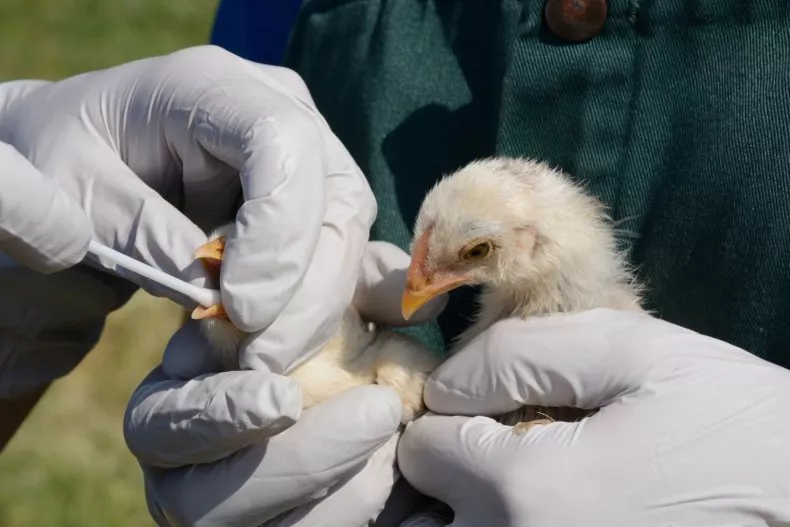
A stock image of birds being tested for avian flu. UK authorities have discovered a rare case of avian flu in a human.
MERRIMON/GETTY

Avian fllu still fearable…

Bird flu: 50 million birds die in record US outbreak
Published
23 hours ago


IMAGE SOURCE, GETTY IMAGES
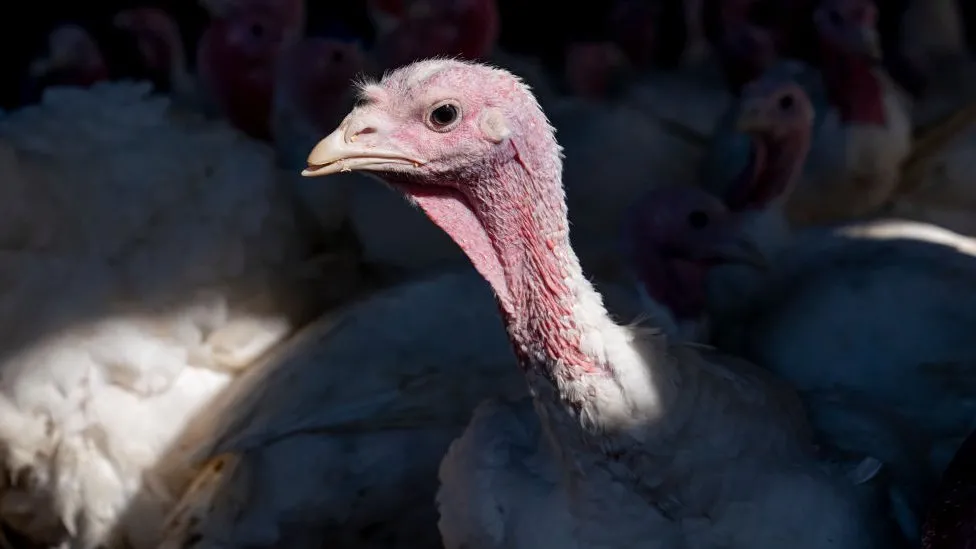
Bird flu deaths caused a rise in turkey prices ahead of the US Thanksgiving holiday

Over 50 million birds have died amid a record-breaking outbreak of avian flu in the United States, according to the Department of Agriculture (USDA).
This year’s total of 50.54m birds - including chickens and turkeys - has surpassed a previous high set in 2015.
Flocks in over 40 states have been affected, more than double the number of states in the previous outbreak.
While the risk for humans is low, authorities have warned that safety measures should be taken near birds.
The disease is spread by wild birds which transmit the virus through feathers, faeces and direct contact.
“Wild birds continue to spread HPAI [highly pathogenic avian influenza] throughout the country as they migrate, so preventing contact between domestic flocks and wild birds is critical to protecting US poultry,” Rosemary Sifford, the USDA’s chief veterinary officer, was quoted as saying by Reuters.
Why is bird flu so bad this year?
In a 3 November announcement about the ongoing outbreak, the US Centers for Disease Control (CDC) said that while the risk to the general public remains low, it is advising Americans to take “preventative measures” - such as avoiding direct contact with wild birds and avoiding unprotected contact with poultry - to prevent spreading the disease to humans, pets, birds and other animals.
“This applies not just to workplace or wildlife settings, but potentially to household settings where people have backyard flocks or pet birds with potential exposures to wild or domestic infected birds,” the statement added.
While cases of human infections are rare, the CDC’s website warns that the virus could spread when airborne - such as via droplets or dust - if it gets into a person’s eyes, nose or mouth, or is inhaled.
Symptoms of bird flu in humans have previously ranged from eye redness and mild flu-like symptoms, to pneumonia and difficulty breathing. World Health Organization (WHO) data shows that only 868 cases of transmission from birds to humans were recorded between 2003 and 3 November 2022, resulting in 456 deaths.
In the US, only one case - a Colorado resident who was directly exposed to poultry - has been reported in the recent outbreak. The person reported fatigue for a few days and recovered, the CDC said in April.
Poultry deaths stemming from avian flu led to rising prices for eggs and turkey ahead of last week’s Thanksgiving holiday in the US. The American Farm Bureau, a US-based insurance company and lobbying group, said the price of a traditional Thanksgiving turkey had risen 21% over the last year and now stands at nearly $29 (£24.05) for a 16 pound (7.5kg) bird.
Record outbreaks of avian flu have also swept across the UK and Europe, as well as parts of Africa and Asia.
The World Organisation for Animal Health believes the wave of outbreaks is the result of international trade, farming practices and migratory wild birds. Over 4.6 million birds died or were culled between mid-October and mid-November alone, according to the organisation.
On 31 October, concerns over the outbreak prompted officials in England to order that all poultry and captive birds must be kept indoors from 7 November.
A similar measure went into effect on Monday in Northern Ireland, and is scheduled to be implemented in Wales on 2 December.

I didn’t see this at all in the US news…

Avian flu outbreak is killing wild birds across California — and there’s no cure

//youtu.be/fjQh5-SnZ8s

A new strain of highly pathogenic avian #influenza, #H5N1, is infecting wild #birds in the #SFBayArea in an outbreak that experts say is unprecedented in #California.

H5N1 causes neurological problems such as tremors and seizures, as seen in these videos. Those who see a bird acting strange, having tremors or looking weak and lethargic should call a local animal control or wildlife center.

Don’t touch injured or dead birds or let pets or children near them, and report dead birds to the Department of Fish and Wildlife. The department also recommends against feeding and giving water to wild birds, since the disease can spread when they’re closer together.

Credit: Erika Carlos, Stephen Lam
Read more: http://bit.ly/3hyBBDB

Hammering

The avian flu is hammering U.S. poultry farmers, leaving experts to ask: What has changed?
More than 40 million egg-laying hens have been culled in the U.S. alone, making it the worst outbreak on record.

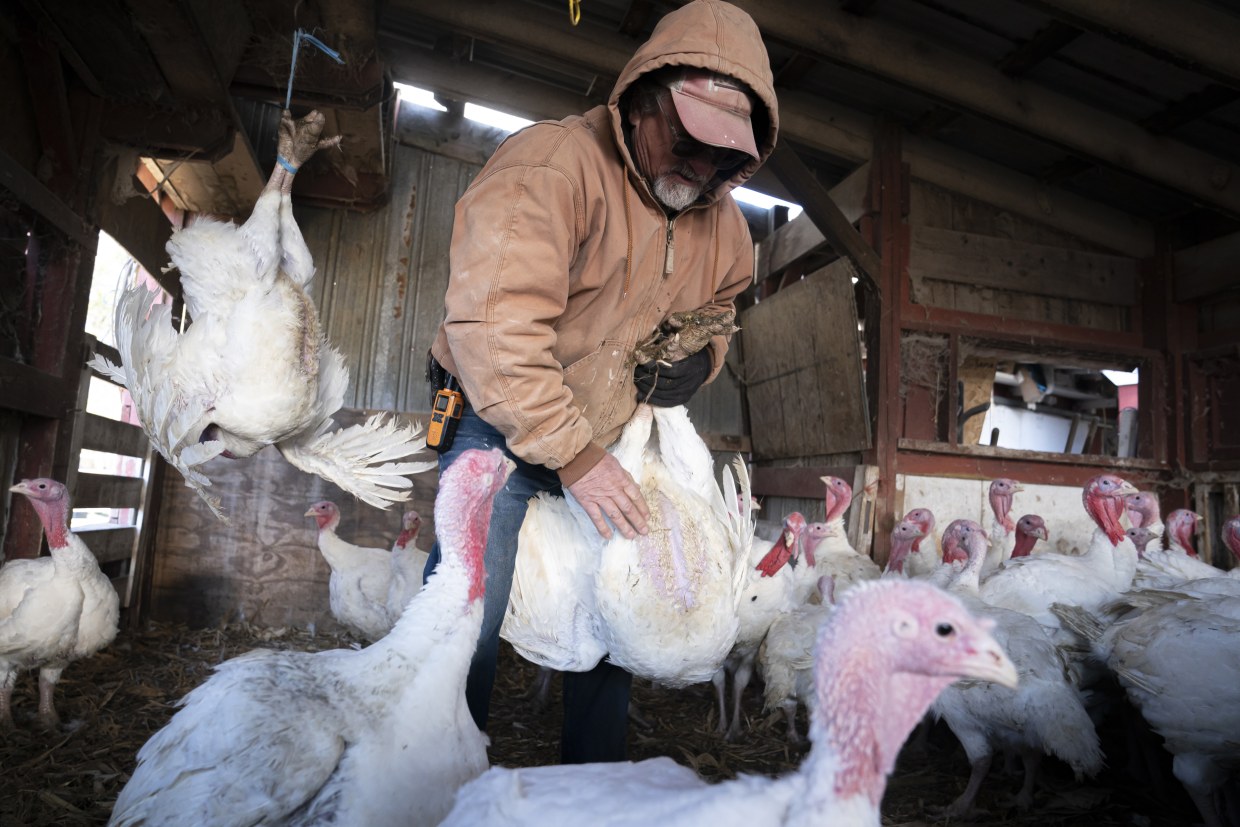
A man checks his flock of white turkeys at his family’s farm last year in Townsend, Del.Nathan Howard / Getty Images file

Jan. 18, 2023, 12:57 PM PST
By Denise Chow and Evan Bush
The worst outbreak of avian influenza on record is threatening to stretch into a second year, as the U.S. races to contain a virus that has already caused some food prices to soar amid a shortage of eggs.

Nearly 58 million birds from commercial and backyard flocks have been wiped out in the U.S. since last February, according to the U.S. Department of Agriculture’s Animal and Plant Health Inspection Service.

Experts say the virus, known as Highly Pathogenic Avian Influenza, or HPAI, has been difficult to contain because it appears to be more prevalent in wild birds now than during previous outbreaks — a development that also makes future infections more likely. And while the risk of the virus spilling over into humans remains low, scientists say communities will feel the consequences of such a serious and lengthy outbreak for months to come.

“As it is now, this is the largest animal emergency that the USDA has faced in this country,” said Gino Lorenzoni, an assistant professor of poultry science and avian health at Pennsylvania State University.

More than 40 million egg-laying hens have been culled in the U.S. alone, causing the price of eggs nationwide to skyrocket, Lorenzoni said. Months earlier, the “bird flu” outbreak drove the cost of turkey meat to record highs.

The virus can take commercial poultry farms out of commission for extended periods.

“They have to remove dead birds, disinfect their facility and bring new birds in — that’s a several-month process to do that,” said Kevin Snekvik, the executive director of the Washington Animal Disease Diagnostic Laboratory at Washington State University. “That’s when production of eggs is hammered.”


Eggs on a shelf at Pioneer Supermarkets in Brooklyn, N.Y., on Thursday.Michael M. Santiago / Getty Images file
Efforts to prevent infections in commercial and backyard flocks are ongoing, but slowing the outbreak has been challenging because the virus seems to have gained a foothold in species of wild birds, said Biao He, a professor of infectious diseases at the University of Georgia College of Veterinary Medicine.

As these birds migrate, crisscrossing continents and oceans, they can carry the virus with them.

“That’s how the virus can go from Asia to Europe to North America — all the way around the world,” He said.

Poultry can become infected through direct exposure to wild birds but more likely from fecal matter that contaminates the ground around farms or yards.

Once that happens, entire flocks typically need to be culled.

“The virus transmits very, very rapidly within the flock, so even if birds don’t appear sick, they will eventually die very soon,” Lorenzoni said. “The best way to stop the spread of the disease is if we eliminate all the birds that are in close contact with the contaminated birds.”


Rescued chickens gather last year in an aviary at Farm Sanctuary’s Southern California Sanctuary in Acton, Calif.Mario Tama / Getty Images file
Monitoring and prevention of avian influenza has improved since the last major outbreak in 2015, Lorenzoni said, when roughly 50 million birds were killed over six months. The USDA’s “Defend the Flock Program” includes, for instance, information on biosecurity measures and how to spot signs of illness.

Still, the scale of the spread is putting strain on animal health laboratories. Suresh Kuchipudi, the interim director of the Animal Diagnostic Laboratory at Pennsylvania State University, said three animal testing laboratories in Pennsylvania are processing several thousand samples each week. His lab is largely operating seven days a week.

“The spread is much more complex than what we normally predict,” Kuchipudi said. “Nothing like this has happened in the past and the question is — what has changed?”

The virus’s prevalence in the wild presents new challenges for its containment. Many migrating birds are not sickened by bird flu, which means it’s not well understood just how widespread it is in the wild, Lorenzoni added.

Local weather conditions also influence how the virus spreads. The sun can, for instance, naturally disinfect surfaces while gloomier days help viral particles survive on surfaces contaminated by infected bird poop, Lorenzoni said.

And if the outbreak lingers into spring, infections could become even more difficult to prevent as a new wave of bird migrations begin.

There are also concerns that the virus could mutate as it continues to spread or infect other animals. Though experts have said the virus rarely infects humans, HPAI has been detected in mammals such as skunks, raccoons, harbor seals, red foxes and bears, according to the USDA.

If allowed to spread unfettered, the pathogen could evolve in such a way that makes it more devastating or harder to control.

“A virus is single-minded: It has to replicate, to reproduce,” He said. “With all those replications, it can accumulate a lot of different changes. This is happening as we speak, and this is why I’m afraid influenza is going to be with us for a long while.”

Denise Chow
Denise Chow is a reporter for NBC News Science focused on general science and climate change.

About that price of eggs…

Keeping an eye…

…we are too.

Bird flu isn’t a direct threat to humans yet, experts say, but they’re keeping a close eye on the virus
By Jen Christensen, CNN
Published 7:20 AM EST, Tue February 14, 2023

CNN

Avian flu has infected a record number of birds and some mammals across the United States, and scientists are keeping close watch.

World Health Organization Director General Tedros Adhanom Ghebreyesus said Thursday that the risk to humans remains low but added, “we cannot assume that will remain the case.”

As with the coronavirus that causes Covid-19 that is believed to have started in animals before spreading to humans, some animal viruses can mutate, jump species to make humans sick and spread quickly around the world.

But highly pathogenic avian influenza is no Covid-19. Scientists are reassuring the public that, with a few rare exceptions, the virus hasn’t made the jump to humans at a large enough scale to trigger an outbreak.

It has gone far beyond birds, though, and its recent spread among members of a separate species has some experts concerned about the way the virus is changing.

What is bird flu?

Avian flu is a type A influenza virus that originated in birds. The version that’s predominantly causing problems in the Americas and Europe is called H5N1. There are several subtypes, and H5N1 bird flu viruses commonly in circulation now are genetically different from earlier versions of the virus, according to the US Centers for Disease Control and Prevention.

Since late 2022, scientists have detected this virus in more than 100 species of wild birds like ducks, seagulls, geese, hawks and owls in the US.

Globally, this strain of the virus has actually been around a lot longer, said Richard Webby, an infectious disease researcher at St. Jude Children’s Research Hospital in Memphis, Tennessee, and director of WHO’s Collaborating Centre for Studies on the Ecology of Influenza in Animals and Birds.

“We saw the sort of great-great-granddad of the virus in the late 1990s in Southeast Asia, and we’ve been following its evolution and change ever since,” Webby said.

By the 2000s, it had spread into parts of Europe and Africa and then got carried into the rest of the world through infected migratory birds. It came to the Americas more recently, Webby said.

The first infection with this version of the virus was reported in wild birds in the US in January 2022, according to the CDC. The next month, the US Department of Agriculture announced an outbreak among turkeys in a commercial facility.

Studies have shown that bird flu may spread to songbirds, but the ones that typically gather at feeders – such as cardinals, sparrows or blue jays – and those you may see on the street like pigeons or crows do not typically carry bird flu viruses that would be a threat to humans, according to the CDC.

Ducks and geese can carry the virus without appearing sick. Poultry isn’t always so lucky.

Highly pathogenic avian influenza carries “very high mortality rates” among chickens and turkeys. The disease can affect multiple internal organs, causing death in 90% to 100% of chickens within 48 hours of infection, according to the CDC.

Because it can spread rapidly, farmers usually have to cull uninfected birds along with infected ones to prevent a wider outbreak. It is considered one of the largest known threats to domestic birds.

As of Wednesday, 6,111 cases had been detected in wild birds in all 50 states, the USDA says. The virus has affected more than 58.3 million poultry birds in 47 states, according to the CDC.

The sheer volume of cases means that the virus has a better chance of spilling over into other species, experts say.

More animals getting sick

Bird flu spreads through things like feces and saliva. It can also spread through contact with a contaminated surface.

The virus has infected many mammals in the US, mostly in the West and Midwest, as part of the latest outbreak.

In Alaska, cases have been reported among bears and foxes, according to the USDA. The virus has also been found in a bobcat in California, a skunk in Colorado, a raccoon in Washington, possums in Illinois and Iowa, a mountain lion and grizzly bear in Nebraska, seals in Maine and even a bottlenose dolphin in Florida.

In total, 17 non-bird species have been infected in 20 states.

Scientists say that all of those sick mammals probably caught the virus when they ate or otherwise interacted with infected birds.

But in a concerning development last fall, the virus seemed to spread between mammals – perhaps for the first time – at a mink farm in Spain, according to a study published in the journal Eurosurveillance.

The mink got bloody noses, developed tremors, lost their appetite and seemed depressed, the scientists said, and had to be killed to keep the threat in check.

The virus did not spread to humans who worked at the mink farm, but what worried scientists were the multiple mutations found in the virus that made it distinct from sequences found in birds. One mutation made it better at replicating in mammals, although it’s not clear whether the mutation was in the virus before it got to the farm.

“But it’s when it starts to spread from one mammal to the next mammal to the next mammal, it’s in those environments where we think it’s most likely that it will pick up these changes that allow us to switch hosts, and that’s why we get concerned,” Webby said.

A handful of human cases

There have been less than 10 known avian flu cases in humans since December 2021, and none has come from human-to-human transmission, the CDC says.

The most recent US case was in a person in Colorado who got sick after culling infected birds in April. The person reported being tired for a few days. They were isolated and treated with an antiviral, according to the CDC.

The agency said at the time that the threat to public health remained low, but it urged people who had any kind of exposure to birds to take precautions.

“People who’ve typically become ill are one of those individuals who have very intense interactions with wildlife either alive or dead,” said Dr. W. Ian Lipkin, director of the Center for Infection and Immunity and the John Snow professor of epidemiology at the Columbia University Mailman School of Public Health. “I wouldn’t say there’s another pandemic upon us, because it’s not. We’re not there.

“What we need to do right now is to watch very closely the way this spreads. We need to contain it in farms and wildlife as best we can,” he added.

How to stay safe

Although the threat to people is low, the CDC suggests avoiding direct contact with wild birds.

Webby says that if you need to handle a dead bird, such as removing it from a feeder, use gloves and a mask. Always wash your hands after touching birds or feeders.

It’s safe to eat poultry and eggs that are properly handled and cooked, the CDC said. Bird flu is not a foodborne illness, and the poultry industry is closely monitored and has strict health standards that include monitoring and controlling bird flu.

Always cook poultry and eggs to 165 degrees, a temperature that kills bacteria and viruses, including bird flu.

In the highly unlikely case that someone became sick, the CDC recommends getting treated right away. Most bird flu infections can be treated with currently available flu antiviral drugs, the agency says.

The US government also has a stockpile of vaccines, including against bird flu viruses, that could be used if this flu were ever to spread easily from person to person, the CDC says.

“The chances are not zero that you could get this, and anything you can do to further reduce that risk is a good thing,” Webby said. “But you probably really have to work hard to be infected with this virus.”

more…

3 minute readFebruary 24, 20236:49 AM PSTLast Updated 2 days ago
Bird flu situation ‘worrying’; WHO working with Cambodia
By Jennifer Rigby


[1/2] A test tube labelled “Bird Flu” and eggs are seen in this picture illustration, January 14, 2023. REUTERS/Dado Ruvic/Illustration

LONDON, Feb 24 (Reuters) - The World Health Organization is working with Cambodian authorities after two confirmed human cases of H5N1 bird flu were found among one family in the country.

Describing the situation as “worrying” due to the recent rise in cases in birds and mammals, Dr Sylvie Briand, the director of epidemic and pandemic preparedness and prevention, told reporters in a virtual briefing that WHO was reviewing its global risk assessment in light of the recent developments.

The U.N. health agency last assessed the risk to humans from avian flu as low earlier this month.

Cambodian authorities on Thursday reported the death of an 11-year old girl due to H5N1, and began testing 12 of her contacts. Her father, who had been showing symptoms, has also tested positive for the virus.

“The global H5N1 situation is worrying given the wide spread of the virus in birds around the world and the increasing reports of cases in mammals including humans,” Briand said. “WHO takes the risk from this virus seriously and urges heightened vigilance from all countries.”

Briand said it was not yet clear whether there had been any human-to-human transmission, which was a key reason to focus on the cases in Cambodia, or if the two cases were due to the “same environmental conditions,” likely close contact with infected birds or other animals.

A new strain of H5N1, clade 2.3.4.4b, emerged in 2020 and has been causing record numbers of deaths among wild birds and domestic poultry in recent months. It has also infected mammals, raising global concerns.

However, unlike earlier outbreaks of H5N1, which has been around for more than two decades, this subtype is not causing significant illness in people. So far, only about a half dozen cases have been reported to the WHO in people who had close contact with infected birds, and most of those have been mild. Experts have suggested that the virus might need to change in order for human transmission to occur.

However, WHO said it was stepping up preparedness efforts regardless, and noted that there were antivirals available, as well as 20 licensed pandemic vaccines if the situation changes, although they would have to be updated to more closely match the circulating strain of H5N1 if needed.

That could take four to five months, said Richard Webby, director of the WHO Collaborating Center for Studies on the Ecology of Influenza in Animals and Birds at St. Jude Children’s Hospital. However, some stockpiled vaccines would be available in the meantime.

WHO-affiliated labs already hold two flu virus strains that are closely related to the circulating H5N1 virus, which manufacturers can use to develop new shots if needed. A global meeting of flu experts this week suggested developing another strain that more closely matches H5N1 clade 2.3.4.4b, Webby told the briefing.

Reporting by Jennifer Rigby; editing by Jon Boyle, Jason Neely and Tomasz Janowski
concerning…

vaccinate…

MAR 8, 2023 7:00 AM
It’s Time for a Flu Vaccine—for Birds
Avian influenza has killed millions of birds. Shots to prevent it already exist. Why isn’t the entire poultry industry using them?

THE WAVE OF avian influenza H5N1—which so far has hit 76 countries, triggered national emergencies, and created the worst animal-disease outbreak in US history—keeps roaring through wild birds and commercial poultry. More than 140 million poultry worldwide have died from the virus or were slaughtered to keep it from spreading, according to the World Organization for Animal Health. And though they are harder to count, the die-offs among wild birds have been catastrophic.

Something has to put the brakes on. In the US, where losses are close to 60 million, industry experts are talking quietly about taking a step they have long resisted: vaccinating commercial chickens, laying hens, turkeys, and ducks against the flu.

That doesn’t sound controversial; after all, flu shots for humans are routine, and chickens already receive a handful of vaccinations in the first days of their lives. But only a few countries routinely vaccinate poultry against avian influenza. Introducing a vaccine could trigger trade bans that would crush the enormous US export market, turn sectors of the poultry trade against each other, and possibly provoke consumer uneasiness about food safety.

Officially, therefore, the industry opposes what would be a drastic step. But privately—none would speak on the record—scientists at poultry companies say they see no other exit strategy. And researchers who work alongside the US industry say there may be little choice but to begin vaccination—but also that the US cannot embark on vaccination alone.

“Vaccination is being discussed on a global scale, because it would be a global decision,” says Karen Burns Grogan, a veterinarian and clinical associate professor at the University of Georgia’s Poultry Diagnostic and Research Center. (Georgia produces more broilers, or meat chickens, than any other state, about 1.3 billion per year.) “Everyone from the World Organization for Animal Health, to the US federal government, to trading partners, would have to come to a decision.”

But that decision is by no means guaranteed. Limited stocks of avian vaccines against H5N1 flu were commissioned by the federal government after a huge outbreak in 2015, but they may not curb the currently circulating strain. The US Department of Agriculture has not authorized their use. And expanding the supply enough to protect billions of birds would require a massive manufacturing effort—as well as a significant labor force, because those shots would likely be given by hand.

The discussion is becoming urgent. H5N1 flu keeps infecting humans—most recently, it killed an 11-year-old girl in Cambodia and sickened her father, though the strain they contracted was different from the one currently ripping through birds, and there was no indication the disease spread from them to others. It is rapidly adapting to mammals, most recently killing sea lions off the coast of Peru and minks being farmed in Spain.

H5N1 flu is also killing an uncountable but presumably vast number of wild birds, a change from its historic pattern in which wild birds carried the virus but were not sickened by it. “The impact on wild bird populations is unprecedented,” says Peter Marra, an ornithologist and director of the Earth Commons Institute at Georgetown University. “Massive numbers of gannets and other species have vanished. And this is not just in the US, it’s in the entire Western Hemisphere, throughout Europe, and we assume in Africa.”

And outbreaks in poultry are increasing, even though the industry has tried to harden its biosecurity practices. Those outbreaks represent enormous animal suffering: The fast-moving disease is so gruesome that a prominent expert once called it “chicken Ebola.” Plus, a subset of American veterinarians claims a common method of culling chickens to prevent disease spread—turning off ventilation so that birds die of heat stroke—is cruel. Then, there’s the impact on the food supply: Flock losses just among laying hens last year cut the availability of eggs by 29 percent while doubling prices.

The devastation among those hens hints at complexities that make vaccination challenging. Every type of commercial poultry is allowed to live to a different age depending on its purpose: Broilers grow to full size in six to seven weeks, turkeys take about six months to get to market weight, and layers and broiler breeders (meat chickens’ parents) are allowed to live a year or more, because hens can’t produce eggs until they’re about 26 weeks old. It’s odd but notable that the longer-lived varieties, layers and turkeys, seem to account for more of the losses from flu. (That may partly be an artifact of layer farms housing such huge numbers of animals—millions per property—that the arrival of the virus takes out many more birds.) So it makes sense that egg and turkey operations would benefit the most from vaccines.

But eggs and turkeys don’t account for most of the US international trade in poultry. Broilers do: meat, and also spare bits such as feet that Americans don’t care to consume. Broiler meat exports earned more than $5 billion in 2021, according to the USDA. Meanwhile, multiple countries that buy US chicken have long refused to accept meat from vaccinated broilers, arguing that the immune response to vaccination and flu infection is so similar that safe birds cannot be distinguished from carriers. In other words, the US poultry sector that least needs a vaccine would have the most to risk, economically, from using one.

The intensity of H5N1’s onslaught around the world may be changing that calculus. Last fall an international meeting in Paris explored “removing unnecessary barriers” to avian flu vaccine use. In November, the European Union issued new regulations permitting poultry vaccination under certain conditions; they go into effect this month. Since the beginning of the year, countries in Central and South America, where H5N1 just arrived, have announced they will begin vaccinating poultry.

And late in 2021, the USDA authorized a five-year research project intended to search for new vaccines against avian flu, determine how to prove that they work, and map whether the use of such shots drives the flu virus toward mutations that vaccines would not protect against.

A segment of the flu research community has argued for years that there’s a clear way to distinguish vaccinated birds from infected ones. The strategy, called DIVA (for “differentiating infected from vaccinated animals”), creates a molecular marker by swapping out one protein in whatever circulating strain is used to make the vaccine. When vaccinated chickens are tested, they display antibodies to that substitute strain instead of the wild type, demonstrating that their immunity comes from the vaccine and thus that they are safe to trade. The strategy was twice used in Italy, in 2000 and 2001, to shut down poultry outbreaks caused by flu strains H7N1 and H7N3.

“Other countries always said that the costs attached to vaccination—because of the vaccine itself, but also because of the testing and the potential restrictions on movement—weren’t worthwhile,” says Ilaria Capua, a virologist and senior fellow for global health at Johns Hopkins SAIS Europe in Bologna, who proposed the system’s use in Italy while at the Istituto Zooprofilattico Sperimentale delle Venezie. “But the trade barriers can be nullified if you apply a system that tells you that a flock is vaccinated and has not been exposed to the virus.”

Use of the DIVA system lapsed in Italy because that multiyear wave of H7 strains faded (though not before killing a Dutch veterinarian), and because other countries that were thought to be at risk at the time didn’t have the national budgets or lab capacity to create something similar. The context is different now, given how H5N1 flu has spread worldwide. The number of poultry and wild bird species it has been able to attack isn’t only a measure of the destruction it is wreaking—it’s also a signal that the virus is finding many more hosts in which it can mutate toward more virulent forms.

Experts say recognizing that reality makes poultry vaccination more urgent. It’s always been known that flu spreads from wild birds to domesticated ones, on ponds or in droppings or via small birds that can squeeze past fan covers. But it’s also possible that flu spreads to wild birds in those moments. And while the logistics of vaccinating birds in the wild are unfathomable, vaccinating the ones close to home is within our grasp.

All I know is that I haven’t had any eggs in months…

Still an issue

China’s ‘best defence’ is poultry vaccine as bird flu spreads from Europe, Africa
International research team led by University of Hong Kong finds epicentre for deadly H5N1 virus has shifted, carried across the world by wild birds
With infections recorded across 5 continents, including Antarctica, penguins and marine and land-based mammals are ‘at risk’
Holly Chik

Published: 4:00pm, 19 Nov, 2023

The deadly virus behind bird flu has become better adapted to wild birds and is shifting from China to Europe and northern Africa, in what a study led by the University of Hong Kong (HKU) has called “an environmental disaster”.

The team, which included researchers in Australia, Egypt, France, the United Arab Emirates and the United States, found that recent outbreaks suggested the epicentre for the H5N1 virus had extended beyond Asia.

In a paper published by the peer-reviewed journal Nature, the researchers said the virus had also become more persistent in wild bird populations, driving the evolution and spread of new strains, putting marine and land mammals at risk across the world.

“Since November 2021, this H5N1 virus has caused unprecedented outbreaks in diverse wild bird species across five continents and a significant rise in incidental infections in wild carnivores, mink farms and marine mammals,” they said.

Lead author Vijaykrishna Dhanasekaran, who heads the HKU pathogen evolution lab, urged China to guard against strains of the virus arriving from Europe by keeping up its vaccination programme against bird flu infections among the country’s flocks.

“Especially since the emergence of H7N9 in 2013 … the control in China has become really good with mass application of H5 and H7 vaccines. That is one of the reasons the recent resurgence was not in China,” he said.

“They need to sustain it because now the viruses are coming back from Europe. [China should] continue the vaccination system so that we can keep eliminating the virus.”

H5N1 first emerged in China in 1996 and was the first virus to establish sustained transmission in domestic poultry. After years of being largely confined to Asian poultry networks, recent outbreaks have emerged further afield.

On the rare occasions the virus appeared in Europe and Africa, it was carried there by wild birds but would die out after a few months because H5N1 was not as adaptive to wild populations.

“However, in the past two years we have seen extensive outbreaks – they’re doubling,” said Dhanasekaran, who is also an associate professor with the HKU school of public health.

“It’s an environmental disaster in terms of the number of wild birds that have been infected. The virus is also spreading to new regions via these migratory flyways.”

In September, three adult harbour seals in Puget Sound, on the northwestern coast of Washington state, tested positive for the H5N1 virus, according to the US National Oceanic and Atmospheric Administration.

It was the first time the highly pathogenic bird flu was reported in marine mammals on the US West Coast.

Last month, concerns were raised that penguins and other local species could be at risk after H5N1 was detected in the Antarctic region for the first time.

The virus was probably carried to Antarctica by migratory birds returning from South America, where there has been a high number of bird flu cases, according to the British Antarctic Survey.

Dhanasekaran said the H7 and H9 virus groups mainly infected chickens, while the biggest difficulty in controlling the H5 viruses was that they affected aquatic and terrestrial poultry differently.

“When [H5] is infecting … poultry, it can kill chickens but it does not kill ducks. It is naturally adapted to ducks so when it is circulating in the live bird markets, we can never be sure until it infects chickens and they start dying,” he said.

The paper warned that the scale of H5 outbreaks in wild birds had been escalating beyond Asia since 2014. The researchers said recent incidences in African and European bird populations suggested the epicentre had also extended beyond the Asian region.

“It is necessary to enhance global surveillance and improve multifaceted mitigation strategies for outbreak prevention and response,” the scientists said.

The World Health Organization recorded 1,566 cases of human infection and at least 613 deaths from the H7N9 virus between 2013 and 2018. China remained the epicentre of the virus until 2016.

A 2021 study by the State Key Laboratory of Veterinary Biotechnology in Harbin, northern China, identified five waves of human infection caused by the H7N9 bird flu virus, and confirmed that it caused only mild infections in ducks while being highly lethal to chickens.

The Harbin researchers noted that “further human cases have been successfully prevented since September 2017 through the use of an H7N9 vaccine in poultry” but the virus had not been eradicated from poultry.

They found that the H7N9 viruses isolated in 2019 were antigenically different from the vaccine strain used to control the virus in poultry. “Replication of these viruses cannot therefore be completely prevented in vaccinated chickens.”

Meanwhile in Britain, scientists proposed gene editing as a possible way to breed chickens that are partially resistant to bird flu, in a paper published by the peer-reviewed journal Nature Communications in October.

The team said it was able to restrict the virus from infecting chickens by altering a small section of their DNA. The researchers found fully grown chickens were resistant to a very low dose of the flu from infected birds, but not at doses 1,000 times higher.

Co-author Mike McGrew, personal chair of avian reproductive technologies at the University of Edinburgh’s Roslin Institute, said gene editing “promises a new way to make permanent changes in the disease resistance of an animal”.

“This can be passed down through all the gene-edited animals to all the offspring so it would protect the poultry and reduce risk to the poultry farmers and wild birds,” he said.

Wendy Barclay, head of the department of infectious diseases at Imperial College London and the study’s other author, said her group discovered a gene called ANP32 which was “absolutely essential” to supporting the virus when it was inside the cell.

“If you could prevent the protein from being used [to help viruses replicate] by gene editing, the virus would not be able to replicate. This strategy could be used not just for H5N1 bird flu, but for any of the strains, because it is fundamental to the way that the virus works,” she said.

The British scientists monitored the gene-edited birds for more than two years and said they showed no adverse effects on health or egg-laying productivity.

They cautioned that further study would be needed to ensure animal health, and that multiple edits of the gene family might be needed to eliminate the possibility of viral evolution.

Not to lessen the magnitude of this crisis, but the author’s name is Chik?

Sonoma?

Oh man, this is our backyard. :eek:

Bird Flu Continues to Batter Sonoma County Poultry Industry Amid Big New Outbreak This Week
Juan Carlos LaraRiley Palmer
Dec 21

Thousands of chickens gather and lay eggs in an organic hen house at Sunrise Farms in Petaluma on Aug. 25, 2010. (Paul Chinn/San Francisco Chronicle via Getty Images)

More cases of avian flu were detected this week at three additional Sonoma County poultry operations near Petaluma, including one that houses nearly half a million birds, hitting the largest facility since the disease began ripping through this area late last month.

That brings the total number of sites here to seven, prompting the euthanization of more than 1 million birds, according to the U.S. Department of Agriculture, which tracks the outbreaks.

Highly Pathogenic Avian Influenza is typically spread from wild birds to farm-raised flocks through direct or indirect contact. The virus is often deadly to birds but is rarely transmitted to humans.

Bill Mattos, president of the California Poultry Federation, said the ongoing winter migration of wild birds has contributed to the transmission of the virus.

“I haven’t really got any reports from the state veterinarian other than the fact that they had hoped, like us, this wouldn’t have been so severe already,” Mattos said. “We’re just starting the winter months. It isn’t even halfway through.”

Sonoma County Supervisor David Rabbitt, who represents the district where all seven affected farms are located, said these outbreaks are financially and emotionally devastating to farmers who have to kill off and dispose of their entire flocks whenever the disease is detected.

“It’s just tragic. No other way to put it. I mean, the consequences of one infection … you lose your entire flock,” said Rabbitt, who confirmed that Sunrise Farms owns the site of the biggest outbreak.

Adding to the financial burden, he said, farmers at affected sites must also wait 120 days or pay for environmental testing before repopulating their flocks.

“The biggest concern of the producers is losing their customers, losing their clients, the markets,” Rabbitt said. “Because the markets are gonna have eggs on the shelves, and if they don’t get them from the producers right around Petaluma, they’re gonna get them from someone else.”

Rabbitt said the county has some resources to help struggling farmers but not nearly enough to cover the sizable damage already inflicted on the county’s $50 million poultry industry.
Sponsored

He added that two of the largest feed distributors in this rural area about 40 miles north of San Francisco have also lost roughly 60% of their business now that so many farms have been emptied and the demand for feed has plummeted.

The avian flu has been reported among farm-raised flocks at five other counties throughout the state in recent months, but only Merced County has seen a higher number of affected birds. Last week, farmers in a single facility in that county had to euthanize more than 1.3 million birds after the virus was detected.

Agriculture officials are also investigating a suspected outbreak at another Central Valley facility that houses more than 1 million egg-laying birds, according to Mattos of the California Poultry Federation.

“It’s a lot of birds, it’s terrible,” he said.

HPAI outbreak


COMMISSIONER MILLER SAYS MYSTERY DAIRY COW DISEASE HAS BEEN IDENTIFIED (3/25/2024)

Confirmation of Highly Pathogenic Avian Influenza in the Texas Panhandle

AUSTIN – A mysterious disease has been working its way through the Texas Panhandle, puzzling the agriculture industry. Today, Texas Agriculture Commissioner Sid Miller received confirmation from the United States Secretary of Agriculture, Tom Vilsack, and the Animal and Plant Health Inspection Service (APHIS) that the mystery disease has been identified as a strain of Highly Pathogenic Avian Influenza (HPAI) commonly known as Bird Flu. To date, three dairies in Texas and one in Kansas have tested positive for HPAI. The Texas Department of Agriculture (TDA) is vigilantly monitoring this outbreak.

“This presents yet another hurdle for our agriculture sector in the Texas Panhandle,” Commissioner Miller emphasized. “Protecting Texas producers and the safety of our food supply chain is my top priority. The Texas Department of Agriculture will use every resource available to maintain the high standards of quality and safety that define Texas agriculture.”

The Texas dairy industry contributes roughly $50 billion in economic activity across the state. Texas also ranks fourth in milk production nationwide and continues to be a key player in the dairy industry.

Commissioner Miller wants to assure consumers that rigorous safety measures and pasteurization protocols ensure that dairy products remain unaffected by HPAI. The Texas dairy industry maintains strict standards to ensure the safety of every product.

“There is no threat to the public and there will be no supply shortages,” assured Commissioner Miller. “No contaminated milk is known to have entered the food chain; it has all been dumped. In the rare event that some affected milk enters the food chain, the pasteurization process will kill the virus.”

Cattle impacted by HPAI exhibit flu-like symptoms including fever and thick and discolored milk accompanied by a sharp reduction in milk production averaging between 10-30 pounds per cow throughout the herd. Economic impacts to facilities are ongoing as herds that are greatly impacted may lose up to 40% of their milk production for 7 to 10 days until symptoms subside. It is vital that dairy facilities nationwide practice heightened biosecurity measures to mitigate further spread.

Texas dairies are strongly advised to use all standard biosecurity measures including restricting access to essential personnel only, disinfecting all vehicles entering and leaving premises, isolating affected cattle, and destroying all contaminated milk. Additionally, it is important to clean and disinfect all livestock watering devices and isolate drinking water where it might be contaminated by waterfowl. Farmers are asked to notify their herd veterinarian if they suspect any cattle within their herd are displaying symptoms of this condition.

“Unlike affected poultry, I foresee there will be no need to depopulate dairy herds,” Miller said. “Cattle are expected to fully recover. The Texas Department of Agriculture is committed to providing unwavering support to our dairy industry.”
‘thick and discolored milk’ churns my tummy…:frowning:

Not an April fools joke

For the first time, U.S. dairy cows have tested positive for bird flu
BY JOE HERNANDEZ
APRIL 1, 2024

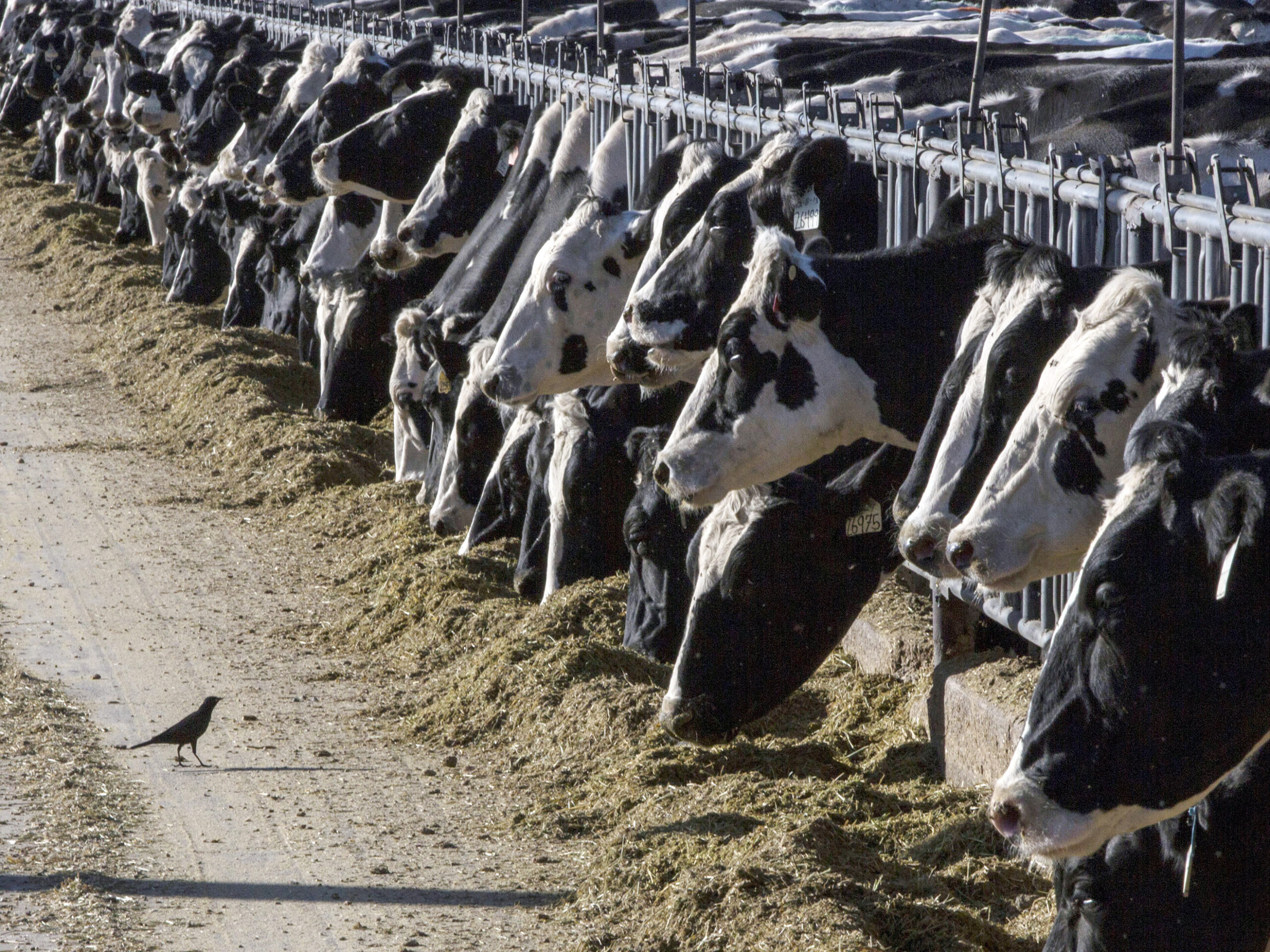
Dairy cattle feed at a farm on March 31, 2017, near Vado, N.M. The U.S. Department of Agriculture says cows in multiple states have tested positive for bird flu.
Livestock at multiple dairy farms across the U.S. have tested positive for bird flu — also known as highly pathogenic avian influenza, or HPAI — in an outbreak that’s likely spread to at least five states.
The U.S. Department of Agriculture’s Animal and Plant Health Inspection Service confirmed Friday that cows in Texas, Kansas and Michigan had been sickened by the virus, and there were presumptive positive test results for additional herds in New Mexico and Idaho.
It’s the first time the disease has been found in dairy cattle, according to the American Veterinary Medical Association.

The cases come just days after a group of young goats contracted bird flu on a Minnesota farm.
Bird flu
Government officials say the risk to the public amid the current outbreak remains low. Most past human infections have occurred after people had “unprotected exposures to sick or dead infected poultry,” according to the Centers for Disease Control and Prevention. And officials say the strain of the virus detected in Michigan is similar to the one found in Texas and Kansas, which was shown through initial testing not to include any changes that would make it more transmissible to humans.
The rash of bird flu infections should also not dramatically impact consumers of dairy products, federal and state officials say.
“Understanding the details surrounding the transfer of avian virus to livestock is the top priority of animal health professionals and agriculture agencies,” Texas Agriculture Commissioner Sid Miller said in a statement. “While troubling, this outbreak is not currently expected to threaten our nation’s commercial dairy supply.”
There is virtually no impact on consumers so far
The country’s commercial dairy supply is safe and a milk recall is unnecessary, the USDA says.
That’s because dairies are required to divert or destroy any milk from impacted livestock, and only milk from healthy cows can be processed for human consumption.
Additionally, pasteurization — which is required for milk entering interstate commerce — kills bacteria and viruses, including influenza.
The Food and Drug Administration says there is limited information available about the transmission of bird flu in raw, unpasteurized milk. The agency has long warned people to avoid raw milk, which it says can harbor dangerous bacteria and sicken consumers.
Federal officials say the loss of milk from ill dairy cows is too limited to significantly impact the commercial supply, which is typically higher in the spring due to increased seasonal production. Dairy prices are not expected to rise due to the outbreak, they added.
How regulators and farmers are working to contain the spread
The USDA believes the dairy cows have been sickened by a strain called H5N1, Eurasian lineage goose/Guangdong clade 2.3.4.4b, which was likely introduced by wild birds. Pigeons, blackbirds and grackles were identified at the affected Texas farms.
But federal officials are also not ruling out the possibility of cow-to-cow transmission. That’s after a Michigan farm recently received a shipment of cattle from an affected Texas farm before any of the cows show signs of disease, the Michigan Department of Agriculture and Rural Development said Friday.
Cows sickened by bird flu at affected dairy farms have recovered “after isolation with little to no associated mortality reported,” according to the USDA.
Federal and state agencies are continuing to test sick livestock and unpasteurized milk samples.
The USDA also recommends that farmers and their veterinarians practice “good biosecurity,” which includes limiting animal movements, testing livestock before they’re moved and isolating sick cows.

Shouldn’t it be cow flu now?

I didn’t want to jinx it…

…but this is the other shoe (hoof?) drop that I’ve been anticipating. :frowning:

First human case of bird flu in Texas detected after contact with infected dairy cattle

The person had contact with infected cattle, state health officials said. It’s the second recorded human case in the U.S.
BY NEELAM BOHRA
APRIL 1, 2024
UPDATED: 21 HOURS AGO

Cattle stand in the burn scar from the Smokehouse Creek fire on March. 3, 2024 Credit: Justin Rex for The Texas Tribune
Sign up for The Brief, The Texas Tribune’s daily newsletter that keeps readers up to speed on the most essential Texas news.

A person in Texas became ill with bird flu after contact with infected dairy cattle, state officials reported Monday.

It’s the first human case of the highly pathogenic strain of avian influenza in Texas, and it’s the second recorded in the U.S., according to the health alert state officials issued.

“The risk to the general public is believed to be low; however, people with close contact with affected animals suspected of having avian influenza A(H5N1) have a higher risk of infection,” the alert said.

The patient’s primary symptom was conjunctivitis, or eye redness, according to the alert.

State officials recommend that clinicians should “consider the possibility” of infection in people who have symptoms and a potential risk for exposure, including those who have had close contact with someone infected, contact with affected animals, or contact with unpasteurized milk from dairy farms with infections.

Symptoms can include a fever, cough, sore throat, runny or stuffy nose, headaches, fatigue, eye redness, shortness of breath, diarrhea, nausea, vomiting, or seizures. The illness can range from mild to severe, and health care providers who come across someone who may have the virus should “immediately consult their local health department,” according to the alert.

Because eye redness has been observed in these infections before, health care providers like optometrists and ophthalmologists “should be aware of the potential of individuals presenting with conjunctivitis who have had exposure to affected animals,” according to the alert.

The strain, novel avian influenza A(H5N1), started infecting dairy cattle in the Panhandle last week, in another blow to the Texas cattle industry after thousands were lost in historic Texas wildfires. Similar outbreaks were reported at dairies in Kansas and New Mexico.

Lauren Ancel Meyers, professor and director of the Center for Pandemic Decision Science at the University of Texas at Austin, said there is a lot of uncertainty at this point.

“On the positive side, it seems like this was a very mild case and it’s the only case that’s been identified so far,” Meyers said. “But at the same time, it seems like there’s quite a bit of this virus that has been detected in cattle populations. Anytime a virus jumps into a new species, especially a rapidly evolving virus like influenza — we need to be approaching it with the utmost caution and vigilance to make sure we really understand the situation.”

The U.S. Department of Agriculture said there is no safety concern to the commercial milk supply. Consumer health is also not at risk, the department said. The milk from impacted animals is being dumped or destroyed and will not enter the food supply.

Neelam Bohra is a 2023-24 New York Times disability reporting fellow, based at The Texas Tribune through a partnership with The New York Times and the National Center on Disability and Journalism, which is based at the Walter Cronkite School of Journalism and Mass Communication at Arizona State University.

same mistakes…

US repeating Covid mistakes with bird flu as spread raises alarm, experts say
Public health experts warn ‘overinflated view of abilities’ and restrictive laws could make next outbreak more lethal
Melody Schreiber
Fri 30 Aug 2024 10.00 EDT

The US is making the same mistakes with the H5N1 bird flu virus as with Covid, even as the highly pathogenic avian influenza continues spreading on American farms and raising alarms that it could mutate to become a pandemic, public health experts argue in the New England Journal of Medicine.

“We’re closing our eyes to both the Covid pandemic and to a potential nascent bird flu [pandemic] on the horizon,” said Gregg Gonsalves, associate professor of epidemiology at the Yale School of Public Health and co-author of the article. “Our ability to react swiftly and decisively is the big problem.”

Beyond the outbreaks – of Covid, bird flu, mpox, measles and other dangerous pathogens – the inability or refusal to learn the lessons of each crisis is the most pressing health issue facing America, he said. “The social epidemic of forgetting is probably the more worrisome public health event of 2024.”

A lack of testing, opaque data, political divides, poor healthcare access and a sense of hubris – all have plagued the Covid response, and now these errors are playing across the bird flu response, Gonsalves said.

“We have not really done anything to address what’s happening in terms of the onward spread of bird flu across the US – we’re back to the same old mistakes,” he said. “Right now, the imminent risk is low and we haven’t seen human-to-human transmission. But the point is, we don’t wait for that to happen. Right?”

Global officials have feared an H5N1 pandemic ever since the first case was detected among people in 1997.

Highly pathogenic influenza viruses have been closely watched for decades because of their pandemic potential, and it was partly because of its monitoring for pandemic-potential pathogens like these that the US ranked No 1 for pandemic preparedness in 2019.

Yet when struck by a new respiratory virus, SARS-CoV-2, the US fared much worse than other countries in the global north, with at least 1.2 million deaths and millions more sickened and disabled by the virus.

Experts are still unraveling the reasons why – and trying to draw attention to these failures before the next avoidable crisis.

A lack of testing and monitoring of the virus plagued the Covid response, from the limited and faulty tests in the early days to the lack of testing that persisted. Similarly, scientists now know H5N1 circulated in cattle for months before being detected, and reporting indicates infections among farm workers may have gone unreported as well. Some employers at farms have been reluctant to cooperate with health officials – much like the meatpacking industry was with Covid, Gonsalves said.

The confusing and byzantine structure of federal, state and local agency responsibility also creates significant challenges. Although there were calls for the US Centers for Disease Control and Prevention to be granted greater powers to lead federal responses to pandemics because of Covid, no such changes have been made.

Agencies still struggle with jurisdiction and collaboration, and there are also substantial differences between federal, state and local approaches. With Covid, “we had a patchwork of state responses, some of which were more robust than others, and we paid for it”, Gonsalves said.

The curbs on public health powers only worsened because of Covid. At least 26 states introduced new laws putting limits on public health authorities during the pandemic.

Iowa and Tennessee, for example, now prohibit mask requirements in schools, and health officials can’t close schools in Wisconsin.

That’s deeply troubling because the next pandemic could greatly affect school-aged children, which has been true of influenza historically, Gonsalves said. “We’re fixated on what just happened, not having any sort of imagination of what a new pandemic could bring.”

The next pandemic virus could spread even faster and be even more lethal – and that’s true even if the virus itself isn’t more virulent, because of the lack of funding for, trust in, and authority of public health, he said.

Recent decisions from the US supreme court, including invoking the “major questions” doctrine and overturning the Chevron precedent, mean federal agencies would likely need explicit permission from Congress, which can be divided and slow to act, to take quick action and stem new outbreaks.

“We’re basically being told, ‘Ignore what just happened over the past four-plus years, ignore what’s happening now with bird flu, and let’s tie your hands behind your backs in terms of being able to respond when the time comes,’” Gonsalves said.

Political fractures only worsened during the Covid pandemic and threaten to derail efforts to contain outbreaks of infectious diseases.

Growing anti-vaccine sentiment could block the development and distribution of new and existing pharmaceuticals, like vaccines, once they have gone through the complicated and expensive process of development. Operation Warp Speed, a massive and successful project to produce Covid vaccines quickly, wound down instead of becoming a regular fixture in pandemic response.

Inequities have hampered vaccine distribution even now. “We have a fractured healthcare system, which means if you can’t get a vaccine because you don’t have insurance right now, you’re **** out of luck,” Gonsalves said.

Those who can afford it may access quality health care in the US, but serious gaps remain for those who are uninsured or under-insured. The US health system has “the most fancy tertiary care in the world”, he said, but it stumbles on primary care, preventive medicine and public health. “We’re not good at the basics.”

Vast inequality meant some patients were able to access some of the most sophisticated care in the world while others struggled to find enough masks, ventilators and treatments. While other countries softened the worst of the pandemic’s blows with social safety nets, many Americans were left to fend for themselves, Gonsalves said. And the focus on individual health overlooks the role of public health, which is collective by definition.

Despite these fatal missteps, the US has never had a Covid commission to analyze what went wrong, as countries like the UK have done. There was a bipartisan effort to create an inquiry similar to the 9/11 Commission, but it fizzled.

It was America’s sense of misplaced and persistent confidence that it was handling the pandemic as well as possible that perhaps most damaged its response, Gonsalves said. “We have a vastly overinflated view of our abilities, capacities and willingness to do the right thing.”

Officials have reiterated, for instance, that “we have the tools” – yet treatments and vaccines quickly become outdated as the virus evolves, while access issues and misinformation persist and other precautions, like isolating for the duration of illness, are no longer recommended.

There’s still time to correct these mistakes, the experts said.

“Everybody is exceedingly grateful that we are not stuck in a loop of 2020, in which our hospitals were overflowing, morgues were overflowing and we had no recourse against the virus,” Gonsalves said. But “we can do a lot more”, from updating respiratory virus guidance with the latest evidence on transmission to improving indoor air quality.

The Covid pandemic has been “one of the most important historical events in the United States in the past 100 years, in terms of public health. We’ve all suffered,” Gonsalves said. “The best way to avoid the pain that we’ve felt in the past four years is being prepared.”

fearable-bird-flu
Coronavirus-(COVID-19)-Wuhan-Pneumonia

Human case here in Cali…

CDC Confirms First Severe Case of H5N1 Bird Flu in the United States
STATEMENT
For immediate release: December 18, 2024
CDC Media Relations
(404) 639-3286
https://www.cdc.gov/media/

December 18, 2024-- A patient has been hospitalized with a severe case of avian influenza A(H5N1) virus (“H5N1 bird flu”) infection in Louisiana. This marks the first instance of severe illness linked to the virus in the United States. The case was confirmed by the Centers for Disease Control and Prevention (CDC) on Friday, December 13. Since April 2024, there have been a total of 61 reported human cases of H5 bird flu reported in the United States.

Partial viral genome data of the H5N1 avian influenza virus that infected the patient in Louisiana indicates that the virus belongs to the D1.1 genotype related to other D1.1 viruses recently detected in wild birds and poultry in the United States and in recent human cases in British Columbia, Canada, and Washington state. This H5N1 bird flu genotype is different than the B3.13 genotype detected in dairy cows, sporadic human cases in multiple states, and some poultry outbreaks in the United States. Additional genomic sequencing and efforts to isolate virus from clinical specimens from the patient in Louisiana are underway at CDC.

While an investigation into the source of the infection in Louisiana is ongoing, it has been determined that the patient had exposure to sick and dead birds in backyard flocks. This is the first case of H5N1 bird flu in the U.S. that has been linked to exposure to a backyard flock. A sporadic case of severe H5N1 bird flu illness in a person is not unexpected; avian influenza A(H5N1) virus infection has previously been associated with severe human illness in other countries during 2024 and prior years, including illness resulting in death. No person-to-person spread of H5 bird flu has been detected. This case does not change CDC’s overall assessment of the immediate risk to the public’s health from H5N1 bird flu, which remains low.

This case underscores that, in addition to affected commercial poultry and dairy operations, wild birds and backyard flocks also can be a source of exposure. People with work or recreational exposures to infected animals are at higher risk of infection and should follow CDC’s recommended precautions when around animals that are infected or potentially infected with H5N1 avian influenza virus. This means that backyard flock owners, hunters and other bird enthusiasts should also take precautions.

The best way to prevent H5 bird flu is to avoid exposure whenever possible. Infected birds shed avian influenza A viruses in their saliva, mucous, and feces. Other infected animals may shed avian influenza A viruses in respiratory secretions and other bodily fluids (e.g., in unpasteurized cow milk or ‘raw milk’).

As a general precaution, whenever possible, people should avoid contact with sick or dead animals, in particular wild birds, and poultry.

For individuals with direct/close contact with wild birds or sick or dead poultry or other animals, wear recommended personal protective equipment (PPE). Wild birds can be infected with avian influenza A viruses even if they don’t look sick.

Do not touch surfaces or materials (e.g., animal litter or bedding material) contaminated with saliva, mucous, or animal feces from wild or domestic birds or other animals with confirmed or suspected avian influenza A virus infection.

For more information on H5 bird flu in the U.S. and CDC’s response, including regularly updated case counts, visit the H5 Bird Flu: Current Situation page.

Pestilence is the first horseman. Then it’s War, Famine, & Death. Non-believers need to read the Bible. :wink:

Cats

Cats can get sick with bird flu. Here’s how to protect them
ByCARLA K. JOHNSON AP logo
Saturday, December 28, 2024 11:37PM

Can our pets get bird flu? Here’s how to protect them

The death of an Oregon house cat and a pet food recall are raising questions about the ongoing outbreak of bird flu and how people can protect their pets.

Bird flu has been spreading for years in wild birds, chickens, turkeys and many other animals. It was first confirmed in U.S. dairy cattle in March.

The virus has been causing sporadic, mostly mild illnesses in people in the U.S., and nearly all of those infected worked on dairy or poultry farms. When the virus is found, every bird on a farm is killed to limit the spread of the disease.

Oregon health officials traced the cat’s illness to frozen cat food that contained raw turkey. Virus recovered from the recalled pet food and the infected cat matched.

Some pet owners feed their animals raw meat, but that can be dangerous, even fatal for the animals, said Dr. Michael Q. Bailey, president-elect of the American Veterinary Medical Association. Cooking meat or pasteurizing raw milk destroys the bird flu virus and other disease-causing germs.

“Raw milk, raw meat products can be and are a vector for carrying this virus,” he said.

Are pets in danger of getting bird flu?

Though cases of infection are rare, cats seem especially susceptible to the bird flu virus, or Type A H5N1. Even before the cattle outbreak, there were feline cases linked to wild birds or poultry. Since March, dozens of cats have caught the virus. These include barn and feral cats, indoor cats, and big cats in zoos and in the wild.

The Los Angeles County Department of Public Health is investigating the deaths of four house cats that drank recalled raw milk.

Dogs seem to be less vulnerable than cats, but they should eat only thoroughly cooked foods, Bailey said.

How can I protect my cat from bird flu?
Cats should not drink unpasteurized dairy products or eat raw meat. Pet owners should keep cats away from wild birds, livestock and poultry.

Don’t let them wander freely in the outdoors, Bailey said, “because you don’t know what they’re getting into. Cats are natural hunters, and one of the animals they love to hunt are birds.”

Avoid touching sick or dead birds yourself. Thoroughly wash your hands after handling poultry or animals.

What are the symptoms of bird flu in cats?

Cats sick with bird flu might experience loss of appetite, lethargy and fever.

If your cat is usually playful and likes to look out the window, but instead has been sleeping all the time or hiding from you, take note, Bailey said. “There’s something wrong,” he said.

They could have reddened or inflamed eyes and discharge from the eyes and nose. They might have difficulty breathing or have tremors or seizures.

If your cat is sick, call your veterinary clinic and keep the cat away from anyone with a weakened immune system.

What pet food was recalled?

Northwest Naturals, a pet food company in Portland, Oregon, announced a voluntary recall Tuesday of one batch of its 2-pound Feline Turkey Recipe raw frozen pet food after it tested positive for the virus. The product was sold in Arizona, California, Colorado, Florida, Georgia, Illinois, Maryland, Michigan, Minnesota, Pennsylvania, Rhode Island and Wisconsin, as well as Canada’s British Columbia.

The recalled food has “best if used by” dates of May 21, 2026, and June 23, 2026. Consumers should throw it away and contact the place of purchase for a refund.

Raw pet food challenge…

//youtu.be/sH1W0QdWsog