Chinamaxxing: China has become the aesthetic everyone wants to live in
From drinking hot water instead of coffee to Labubu keychains, via skincare, feng shui, and traditional medicine: the Chinamaxxing phenomenon shows how Chinese culture is becoming one of the most desired imaginaries for Gen Z.
AUTHOR
Lucia Antista
PUBLISHED
30 June 2026
Hot water instead of coffee. Labubu as keychains. Mahjong on Friday nights. Jianbing for breakfast. Skincare routines inspired by traditional Chinese medicine. More and more young Westerners are taking to social media to share that they have entered their “Chinese period”. On TikTok, the phenomenon already has a name: Chinamaxxing.
The response to this Chinese influence is called Chinamaxxing – the trend that has swept through TikTok and Instagram in recent months, prompting young Americans and others to declare that they have entered their “very Chinese period”.
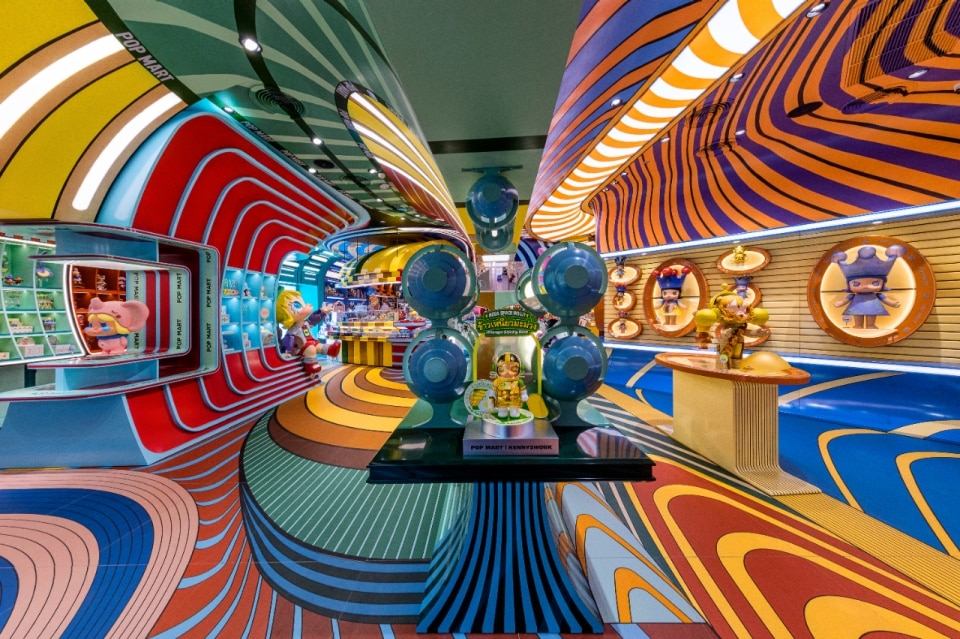
Pop Mart in Bangkok: The World’s Largest Labubu Store
On the surface, it seems like little: someone drinks hot water instead of cold brew, someone follows a skincare routine inspired by traditional Chinese medicine.
But looked at closely, the phenomenon tells us something more precise about the way Gen Z is rewriting its cultural coordinates – and how aesthetics circulate in the world today, increasingly independent of the geopolitics that produce them.
China as an Everyday Imaginary
This is not the first time a non-Western cultural imaginary has been absorbed by the West through memes and lifestyle content. The difference, this time, is the context in which it occurs: while relations between the United States and China remain formally tense, a generation raised on TikTok – itself a Chinese platform – is developing a familiarity with that country’s culture that completely bypasses geopolitical discourse.
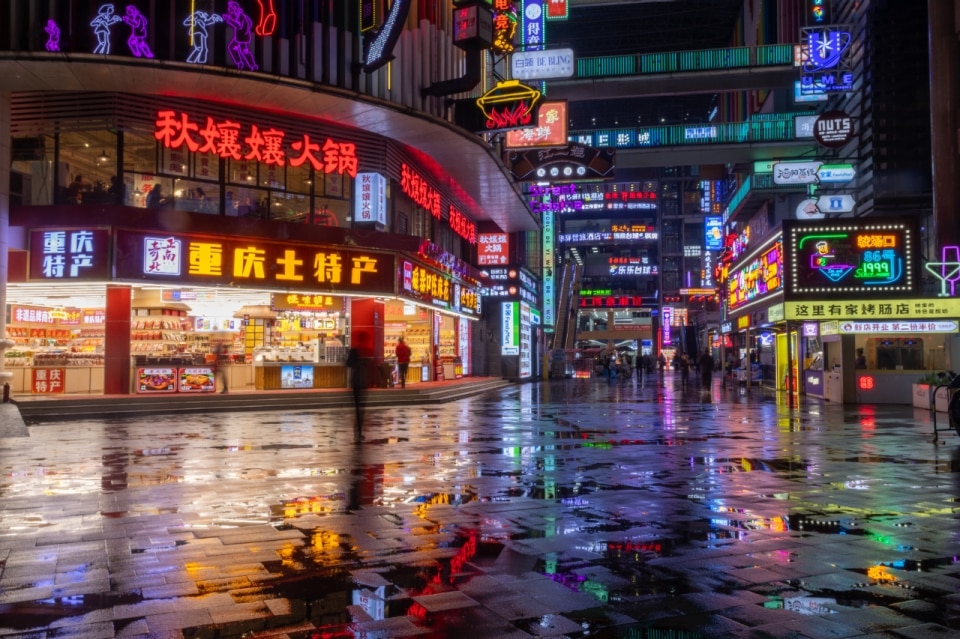
Not China as a systemic rival, not China as a technological threat: China as a source of daily rituals, of objects, of an aesthetic of care and slowness that clearly has something to say to those who have grown up in the permanent acceleration of the digital West.
There is something structurally interesting in this short circuit. Chinamaxxing did not start as a political gesture (perhaps for some) – it started as an aesthetic gesture, and for that very reason, it ends up being more effective than many stances. Anyone adopting an herb-based beauty routine or starting to drink tea instead of coffee is not necessarily declaring a political position: they are choosing an imaginary, a way of being in the world. And it is precisely in that seemingly superficial choice that we can measure something that soft power analysts – a country’s ability to influence through attraction rather than coercion – still struggle to quantify.
It is no coincidence that the trend found its main amplification right on TikTok, which by its very architecture builds familiarity with what it shows – and it shows a great deal of Chinese daily life, its rhythms, its objects, its domestic aesthetics.
Between fascination and appropriation
The result is a generation that knows China not through newspaper headlines but through cooking videos, skincare tutorials, Chengdu apartment tours, and Chinese or sometimes expat creators. A fragmented knowledge, superficial in some ways, but also unusually direct.
The other side of the phenomenon is less comfortable to look at. Part of the Chinese diaspora has reacted with growing annoyance, and it is not hard to see why: seeing traditions, practices, and knowledge condensed into an aesthetic that anyone can adopt, without history or context, produces a form of symbolic erosion that those belonging to that culture recognize immediately.
Chinamaxxing is ultimately a textbook case of how aesthetics work in the social media era: they detach themselves from the body that produced them, circulate freely, are adopted, reworked, emptied, and filled with new meaning. It is a process that has always existed – cultures have always contaminated, hybridized, and copied one another – but today it happens at a speed and with a ubiquity that make it almost impossible to draw clear lines between appreciation and appropriation, between curiosity and consumption.
What remains, beneath the trend, is something more interesting than the trend itself: a generation looking elsewhere – geographically, aesthetically, culturally – for what its own context can no longer offer.
Featured image: Photo from Adobe Stock
very interesting that current western youth pop culture lingo is inc*l terminology. Says a lot about the times.
The Guardian view on perceptions of superpowers: the world isn’t Chinamaxxing, it’s America-avoidant
Startling new research shows that in many countries – including old US allies – the public prefers Beijing to Washington

Earlier this year, a spate of western TikTok and Instagram creators announced that they were at “a very Chinese time in my life” – drinking hot water and wearing slippers around their homes. The Chinamaxxing phenomenon primarily reflected the constant need of influencers for novel content. But social media trends also reflect a growing fascination with China, as the economic historian Adam Tooze has noted.
While it broods over China’s economic, military and technical advance, the Trump administration is accelerating Beijing’s diplomatic progress, as striking new polling by the Pew Research Center shows. For the first time, China and Xi Jinping are seen more favourably than the US and its president in most of the 36 major countries surveyed – including Canada, Mexico and Australia. Only in six countries did people rate the US more highly. While Beijing has seen significant improvements in some places, the slump in Washington’s standing is more dramatic. Across 20 countries, the median percentage with a favourable view of China rose from 32% to 46% between 2023 and this year; for the US, it fell from 58% to 36%. Views of China were much more positive in Latin America, Africa and parts of south and south-east Asia than in wealthier European and east Asian countries.
On Thursday, Mr Trump accused China of interfering with the 2020 election – casting doubt on polls ahead of midterms that are forecast to hit Republicans hard. Never mind the lack of evidence; he offered Argentinians a $20bn economic incentive to vote in line with his preference last October. In nearly every country surveyed, more people thought the US interfered in other countries than thought China did so. Mr Trump’s demands to take over Greenland, the abduction of Venezuela’s then leader Nicolás Maduro and the illegal war on Iran have all left their mark. Even the World Cup, which should have been an easy US soft power win, has been tarred by his exclusion and bullying.
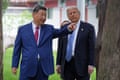
Xi Jinping and Donald Trump.Photograph: Mark Schiefelbein/AP Pool/AP
Grave concerns about Beijing remain. Though it has dialled back displays of aggressive “wolf-warrior” diplomacy, it is forceful in its dealings. But it may benefit from lower expectations, and it looks predictable beside Trump-created turmoil. Famously, Beijing has just one ally: North Korea. Washington has more than 50 – but seems to accord them less respect than adversaries. Beijing detained two Canadian citizens for more than 1,000 days in retaliation for Ottawa’s arrest of the Huawei executive Meng Wanzhou due to a US warrant. But Mr Trump announced that Canada will be the 51st state.
China is increasingly investing in overseas influence operations, including working with or amplifying local social media content creators. Content may range from paid-for Xinjiang travelogues intended to erase concerns about the persecution of Uyghurs, to softer material about food or technology.
The Pew findings may further convince it of Washington’s hegemonic decline. China is keen to encourage the belief that it is leaping into a shiny new future of cyberpunk cities, while the west struggles with a declining standard of living – not least because it is useful in the face of domestic disillusionment.
But public perceptions of other countries are often complex and volatile. US standing rebounded after dropping sharply over the Iraq war; China’s favourability ratings fell during the pandemic, reflecting its handling of the outbreak. The lasting lesson for both superpowers should surely be that presentation shapes opinion, but others will judge them on their actions – and respond accordingly.