Zen/Buddhist brand names

Slightly OT

…but oh so worthy of this here thread. :rolleyes:

Kyoto confectioner selling hemp-infused Buddha head chocolates
Casey Baseel10 hours ago

If you’ve got such a powerful sweet tooth that you worship chocolate, these might be just the treats for you.

Being located in Kyoto, Japan’s center of traditional culture, you might imagine chocolate specialist Cacao Magic’s offerings to have an elegant air to them. You’d be right, too, as the confectioner’s sweets are designed to be a treat for the eyes as well as the palate.

You may also expect Cacao Magic to produce some uniquely Japanese chocolates, and again you’d be right. While most of its candies take the orthodox forms of hearts, squares, and discs, you’ll also find something called the amasumi butsuda in the product lineup. “Butsuda” means “head of the Buddha,” and that’s exactly what they look like, as you can see in the photo above.

But butsuda is only half of the name, and thus half of the story, of amasumi butsuda. “Sumi” means “charcoal,” and while they may not be such a common seasoning in Western cuisine, it’s not an entirely unprecedented flavoring in Japan.

What is unusual though, even by Japanese standards, is the “ama” portion of amasumi” which means “hemp.”

Yes, mixed in with the chocolate used to make amasumi butsuda is a measure of hemp charcoal. Given the stringent anti-drug stance taken by both Japanese law and culture at large, it’s unlikely that eating amasumi butsuda will cause any of the narcotic effects associated with other uses of the herb.

It’s also worth noting that Cacao Magic is neither a head shop nor specifically courting the stoner crowd, as the rest of its extensive catalogue of chocolates is entirely hemp-free.

Instead, Cacao Magic simply states that the special ingredient adds “a deep flavor” to the dark chocolate from which the tiny heads are shaped.

If you’re interested in finding out just what exactly that deep flavor is, Cacao Magic is currently taking preorders for amasumi butsuda through its website here, with prices starting at 1,500 yen (US$12.50) for a pack of three.

Source: Hachima Kiko
Images: Cacao Magic (edited by RocketNews24)

Slightly OT

I just had to post this somewhere here today. There is a ‘vehicle’ pun to be made here.

Zen-sational: Toyota creates Buddhism-inspired wooden car
Last Updated: 05/04/2016
Toyota has unveiled a unique new concept ahead of this year’s Milan Design Week, an electric roadster manufactured entirely of wood and inspired by Zen philosophy.
Ryan McElroy

Although these days carbon fibre and lightweight aluminium are the de rigeur materials for carmakers, Toyota is to unveil a new concept car made only of wood.

The Japanese manufacturer has built its unique concept, called the Setsuna and due to debut at the upcoming Milan Design Week, from 86 hand-crafted panels of cedar mounted on a birch frame.

Built using a traditional Japanese joinery technique known as ‘okuriari’, the car uses no nails or screws and instead relies on perfectly carved joints to maintain its structural integrity.

28mph top speed

Crafted to look like an old open-top roadster, the Setsuna is powered by six electric batteries, which give it a range of up to 16 miles and a top speed of a rather placid 28mph.

However, speed wasn’t the object of the concept’s design according to Kenji Tsuji, the Setsuna’s lead designer; instead, it’s supposed to make its driver feel more connected to the car.

He said: “When we created the Setsuna, we envisaged a family pouring its love into it over generations so that the car gains an irreplaceable value.

Unique hand-crafted design

“Continuous development is possible in the form of bonds between the car and the family, like the growth rings of a tree.”

Durable but prone to change over time, the wooden car concept is meant to demonstrate the developing relationships between people, their cars and each other, Toyota added.

The name itself, Setsuna, is designed to express the Buddhist concept of time and is intended to remind its owner to live every moment to its fullest potential.

Zen-inspired concept

Even the dash-mounted dial counts time in hours, days and years up to 100 years in the future, designed as a Zen exercise to encourage the driver to value the experience of driving rather than just clocking up the miles.

Unfortunately, as cool as it is, the Setsuna has been built exclusively for Milan Design Week and is not authorised for road use, so don’t expect to see one parked in your driveway any time soon.

even motorcycles are zen

This is a zen motorcycle.

Oh WTH? A bidet? srsly?

Zen Bidet

Clean never felt so fresh!

Never mind bringing Xmas back. I want to see a toilet plunger brand called “Christ”.

:rolleyes:

[QUOTE=GeneChing;1299143]Never mind bringing Xmas back. I want to see a toilet plunger brand called “Christ”.

:rolleyes:[/QUOTE]

“Christ! My arse is clean!” Christ Bidets, flush the sin away!

couldn’t find the plungers man.

Zen Berry Hard Cider

Zen Berry? WTH?

Streetwise: Point Brewery rolls out Zen Berry for Ciderboys
Nathan Vine, USA TODAY NETWORK-Wisconsin Published 8:33 a.m. CT Oct. 19, 2017 | Updated 8:40 a.m. CT Oct. 19, 2017

//youtu.be/TWvqQ-Om1yk


(Photo: Courtesy of Stevens Point Brewery)

STEVENS POINT - The Stevens Point Brewery has released Zen Berry as the newest offering from Ciderboys, its line of hard ciders.

Available in six packs of 12-ounce bottles and on draft, Zen Berry is a limited edition release that will be available through Nov. 30 or as supplies last, according to the Ciderboys’ website.

According to a release, Zen Berry “combines the sweetness of apple cider with the fruity tartness of boysenberry, a hybrid of raspberry, European blackberry, and American dewberry first developed in California in the 1920s.”

The Ciderboys’ lineup includes year-round offerings First Press, Strawberry Magic and British Dry. Seasonal offerings include Grand Mimosa, Cranberry Road, Raspberry Smash, Pineapple Hula, Peach County, and Mad Bark.

For more information about the Ciderboys, please visit www.ciderboys.com or call 1-800-369-4911.

See something? Say something. Bug reporter Nathan Vine with news at 715-345-2252 or nvine@gannett.com; on Twitter: @NathanAVine.

Generation ZEN

Not really a brand per se. More of a label. A crappy label at that. Zen is calm, but not relaxed in a easy way.

Chinese ‘Generation Zen’ millennials choosing smartphones over communist values


Chinese millennials are said to be shunning Communist party values CREDIT: JOHANNES EISELE/ AFP
Jamie Fullerton, xiamen
3 JANUARY 2018 • 4:13PM

China’s ruling communist party is concerned that swathes of politically apathetic millennials, branded the ‘Zen-generation’, are sauntering through life in a passive and unpatriotic way - raising doubts about their loyalty to the Chinese Communist Party.

In the past few months the buzzphrase ‘Zen-generation’, based on the Buddhist notion of a relaxed, Zen attitude, has gone viral online. It is used to describe young Chinese who choose easy, often low-paid careers ahead of challenging, higher-paid roles and eschew the often demanding social pressures of Chinese society.

They are generally born after 1990 and are defined by having a blasé attitude to jobs, politics, and pretty much anything else in life.

With the Chinese Communist Party (CPC) currently on a drive to shore up party loyalty, one of its media outlets, Youth.cn, has dubbed this trend a “total tragedy”. As well as a lack of political loyalty, the state-controlled newspaper The Global Times added that there was concern that such attitudes could hold back Chinese society in the long term.

Members of ‘Zen-generation’, according to the newspaper, “are seemingly fine with anything that happens to them. They are not inspired by any patriotic drive or the Party’s political catchphrases. They are simply indifferent.

“In other words, there are few things they care about. Be it missing the bus, getting turned down for a promotion or failing to find a spouse, they simply shrug and move on.”

The Global Times quoted a 23 year-old graduate named Xiaoyue, who identified as a Zen-generation member, as saying her attitude to life "is a bit different from pessimism.”

She added: "I feel it tiring to compete with others or strive, for whatever it may be in life. We just don’t have big ambitions; we don’t want to be number one. We are happy with an average life, and we are optimistic.”

Xiaoyue said she turned down a well-paid position in favour of an easier life in the civil service, and stayed single to avoid “troublesome” relationships, according to the paper.

In response to the phrase going viral, Youth.cn, the mouthpiece of China’s Communist Youth League, ran an article with the headline "So-called ‘Zen-generation’ are a total tragedy for youth.”

The website said: “Only when the young have ambitions and are responsible can a nation have prospects.” It added that young people should “pursue their dreams with sweat and to always fight for their family and their country.”

Many members of ‘Zen-generation’ embrace the term, buying clothes with the phrase written on them. Some believe their lifestyles are reactions to the salary-obsessed mentality that instilled in much of Chinese society, and its cutthroat graduate jobs market.

The Global Times said: “Some say this new trend is a passive reaction against the rapid reforms, changes and developments of modern-day Chinese society, which has made many young adults feel ‘helpless’ and ‘left behind’. Rather than fight against it, these Buddha-like youngsters resignedly accept their lot in life.”

Of equal concern to the party is these people not engaging with the CPC’s varied attempts to advertise communist ideals to China’s younger generations. In the last year the party has used rap videos, matchmaking events and concerts by hologram-rendered virtual pop stars to promote itself.

However, the growth of party membership figures has been slowing. In 2015, 965,000 members joined the party, the lowest growth figure since 2012, making the total amount around 89 million.

The decline in growth cannot simply be put down to a lack of interest, however. President Xi Jinping, who took power in 2012, has overseen a huge crackdown corruption that has seen many officials purged from the party. He has also asked for the party to only keep “quality” members.

Zen/Buddhist brand names

This article got me thinking about our old Zen/Buddhist brand names thread. The photo in the article is NOT the Vegas bar and sushi joint, but classic beloved watering hole in SF Chinatown. Haven’t been there in years. Fond memories of that place. Any of the SF members here know what I’m talking about.

For that reason alone, I’m launching a new Buddha Bar thread.

Does Buddhism Need a Blasphemy Army?
An organization that combats profane depictions of the Buddha raises questions about disrespect, appropriation, and policing others behavior.
By Matthew Gindin JUL 03, 2018


A Buddha Bar in San Francisco. Photo by Thomas Hawk | https://tricy.cl/2u0Hpc8

When I was a monk in the Thai Forest tradition, I took a meditative camping trip to the mesas of Southwestern Utah along with a group of mostly Thai monks. This occasioned a drive through Las Vegas, where we passed a billboard advertising a sushi restaurant called Buddha Bar, whose ad campaign featured an image of the Buddha along with lingerie-clad waitresses offering trays of drinks. Ai! cried one of the Thai monks, followed by several other exclamations of discomfort and indignation. It wasnt the presence of the erotic that disturbed us (nude or erotic imagery can be found in Thai temples, too), but rather the use of Buddhist imagery for such crass commercial purposes.

In the Thai tradition, Buddha images, along with other embodiments of the dharma like stupas, relics, and sacred texts, are treated with the utmost respect. They are always placed highest in the room. One does not point ones feet toward them. And one should never sit on them, put their images on secular clothing, or use them for commercial purposes. Yet such profane uses of sacred Buddhist objects or imagery have become common in North America and Europe. And Asian Buddhists have noticed.

The Knowing Buddha Organization (KBO) was formed in Thailand in 2012 to combat global disrespect toward Buddhist imagery. The KBOwhich boasted 5,000 members in 2016, according to a study by religious studies scholar Michael Jerrysonhas been rapidly growing and is now even receiving support from the Thai government. The group has pressured manufacturers in France and the Netherlands to remove decorative Buddha images from toilets and caused Maxim magazine to cancel a photo shoot in the US that featured buddhas. They have also created an online guide to avoid showing disrespecting to Buddha images, making such suggestions as greeting one with a wai (hands pressed together in respect), not placing Buddha images on the lower part of the body or in the low parts of a room, not decorating mundane objects with them, not featuring them in tattoos, and not selling them as merchandise.

We speak out to protect Buddhism by giving correct knowledge on proper treatments [sic] to Buddha images and symbols, reads the KBO website. In recent years, Buddha images and statues have been used as Buddhist Art for decorationssuch as furniture, rather than as a remembrance of his compassion with respect and gratitude.

But are such concerns with the way people treat Buddha statues Buddhist? In the Brahma Net Sutta (DN 1), the Buddha says, Monks, if others were to speak in dispraise of me, in dispraise of the dhamma, or in dispraise of the sangha, neither hatred nor antagonism nor displeasure of mind would be proper. If others were to speak in dispraise of me . . . and at that you would be upset and angered, that would be an obstruction for you yourselves.

In other words, being upset about or monitoring others respect toward the Triple Gem can interfere with our practice.

In addition to concerns over the obstacles that our anger can create, the KBOs campaigns may strike some people as uncomfortably reminiscent of violent protests over cartoons of Mohammed or Hindu riots in India against perceptions of Muslims disrespecting sacred sites or religious rules. Although KBO is explicitly nonviolent, at their annual thousand-strong marches down Khaosan Road in Bangkok, they identify themselves as a Dharma Army (kawngtaptham)which is likely to provoke unease in some observers.

On the other hand, it is admittedly curious that in a time when there is a passionate debate about cultural appropriation and someone can get mobbed online for wearing a Chinese dress to a prom, no concern over the insensitive appropriation of Buddhist imagery seems to have arisen in the public sphere. There may be several factors behind this: a more laissez-faire attitude toward religious imagery in the largely secular West, an ignorance of the vocabulary of respect with which traditional Buddhists treat such images, or a perception that Buddhists would be easygoing about such things.

Although customs about what constitutes respect and disrespect will differ among cultures and lineages, traditions around the world believe in the importance of showing respect for the Triple Gemthe Buddha, the dharma [Buddhist teachings], and the sangha [the community of practitioners]. In this view, disrespect of the Triple Gem has negative spiritual consequencesit creates bad karma. In most cases, however, Buddhists trust the law of karma to work out the consequences of disrespect, and dont police others respect themselves.

Nothing in the Brahma Net Sutta mitigates against the KBOs campaign to educate people in how to respect Buddhist sentiments and avoid cultural appropriation and insensitivity, although it also suggests such activities carry dangers for those pursuing them. The sutta reminds us that such activities should always be carried out without anger or ill-feeling, and in ways that dont pose obstacles to our actual practice of the dharma. According to the study by the religious studies scholar Jerryson, Acharavadee Wongsakon, the Thai entrepreneur who founded KBO, made the following reassuring statement at a 2016 march: With a campaign of over a thousand people, this army does not possess guns or swords. It has no malice or any hidden ill-intent.

Nevertheless, the secretariat of KBO in 2016, Sayan Chueyuksorn, remarked to Jerryson that he agreed with Sri Lankas deportation of tourists for having Buddha tattoos as well as Myanmars jailing a bar owner and manager for featuring a Buddha wearing headphones, saying that KBO hoped and expected Thai laws to move in that direction. Faced with the prospect of people facing the real world violence of jail time or deportation for conceptual violence against mere symbols, it would seem wiser for Buddhists to lean err on the side of tolerance as a prophylaxis against sliding into strong-arming others in the name of Buddha.

The last time I was in Vegas, no longer a monk but passing through with my wife and son, Buddha Bar and its like-minded confrere, Little Buddha Restaurant, were both gone. The Buddha warned us not to speculate over the specific workings of karma, so Ill refrain, but the law of impermanence was clearly manifest.

Matthew Gindin is a journalist and meditation teacher in Vancouver, British Columbia. A former monk in the Thai Forest tradition, he is the author of Everyone in Love: The Beautiful Theology of Rav Yehuda Ashlag.

I almost never get offended at exploitation or appropriation anymore.
Most times, it’s bemusing, sometimes it’s hilarious, otherwise, no matter what, it’s temporary. :stuck_out_tongue:

Zen Party Mix

[QUOTE=David Jamieson;1309406]I almost never get offended at exploitation or appropriation anymore.
Most times, it’s bemusing, sometimes it’s hilarious, otherwise, no matter what, it’s temporary. :p[/QUOTE]
Don’t get me wrong with this. I’m not offended. I’m more amused. But being Buddhist myself, I do like to point out the inequality by swapping these zen/buddhist brand names with christian/jew/muslim names.

Right now, I’m indulging in some Zen Party Mix for my office desk snack. It’s not bad really, except for the title that sounds like the worse meditation music mix ever. :stuck_out_tongue:

ZEN PARTY MIX

The perfect blend of nuts and crackers combine to make a great snack mix with our Zen Party Mix. Tasty sesame sticks along with roasted peanuts, chili crackers, paprika, garlic powder, onion powder, and tamari roasted almonds all combine to make a light and healthy snack mix perfect for all types of parties. They are also great after a long day on the trail and enjoying the campfire. Kosher Parve (no Dairy).

But I must confess, it’s good marketing. I only got this because of the name. And I might even get it again. :wink:

So on topic, it hurts

Zen Is Not A Perfume
BY JAN CHOZEN BAYS| DECEMBER 24, 2018

Click to share on Facebook (Opens in new window)Click to share on Twitter (Opens in new window)Click to email this to a friend (Opens in new window)More
In the Fall 2002 issue of Buddhadharma: The Practitioner’s Quarterly, Jan Chozen Bays offered this open letter to purveyors of commercial products bearing the label “Zen.”


Photo by Christin Hume on Unsplash

As someone who has practiced Zen for thirty years and is called a Zen master by some, I know I should have mastered allowing irritation to arise but not persist. But I haven’t. There’s one thing that really makes me crabby. It is the way the label “Zen” is plastered on anything anyone wants to sell, from perfume to computers.

The point of Zen practice is not to sell anything or anyone. It is not a name for a product. Enlightenment is not something to acquire. It is a process, lifelong—or lifetimes long. It is very hard and very rewarding work.

Zen is not a perfume. The point of Zen is not to cover up the stink of the sweating, striving self. The point of Zen is to put the entire mass of self-centered, self-serving strategies on a funeral pyre, strike a match and burn it down to clean ash. That ash serves as wholesome fertilizer for whatever life arises next, whether cabbage or king.

Does the name Zen really apply to what you are trying to sell or how you sell it?

I hereby ask all those who slap the label “Zen” on their beer bottles, paint it on signs outside their curio shops, or dot.com it on their website, to please think for a moment whether you deserve to use it. Do you know what the word “Zen” means? Have your ad agency guys even looked it up in a Buddhist dictionary? It means samadhi, a profoundly pure and quiet state of mind acquired—no, not acquired! uncovered— through deep meditation. Probably not acquired through buying your product.

At our Zen monastery (which I am not trying to sell, as we just bought it) we have a small business that we call ZenWorks. We think it’s a good name, because we know from personal experience that Zen does work. We’ve watched it transform our greed, anger, and delusion, albeit more slowly than we would like. We also picked the name because our products—air-filled meditation cushions and elevated meditation benches—make the work of Zen easier for those practitioners whose mind and heart are still willing but whose older, bulkier, and stiffer bodies are beginning to complain. We feel we have earned the name and we work at serving it.

Does the name Zen really apply to what you are trying to sell or how you sell it? Two fundamental tenets of Buddhist practice are to want little and to be easily satisfied. Is that your aim? Are you helping people to live a life of less suffering and more happiness through continuous practice of meditation, virtue, and insight?

Think for a moment. Would it make sense to pick names like Catholic Computers, Baptist Bubble Bath, or Lutheran Lager? Would you title a book Jesus and the Art of Selling Jewelry, or Methodism and the Art of Making Muffins? It’s disrespectful to use a name you did not earn.

If you should wish to use the name Zen honestly, let me know. I’d be happy to help you set up a meditation hall in your shop and teach the benefits of Zen practice to your employees. But you have to give them enough time to do it so that it becomes an integral part of their lives, their work, and finally, down the assembly line, your product.

I’m sitting on my cushion (ZenAir™) next to the phone. Give me a call.

This is my point exactly. Although I see more of the humor in it than Master Jan Chozen Bays. :cool:

Funky Buddha Brewery

There are probably enough Buddhist Beers now to make a separate thread from our Zen/Buddhist brand names one.

I want some Funky Jesus Beer. :stuck_out_tongue:

Funky Buddha Brewery

Funky Buddha Brewery was founded in 2010 in Boca Raton, Florida, and is committed to producing bold craft beers that marry culinary-inspired ingredients with time-honored technique. Our mantra is big, bold flavors, made exactingly with natural ingredients. So, for example, if we say a beer will taste like peanut butter and jelly, you can be sure you’ll smell and taste the fresh roasted peanuts and fruity berry jam. Our flagship beers such as Hop Gun IPA and Floridian Hefeweizen, also strive towards big, bold flavor. It’s who we are.

Our Brewery is located in the heart of Oakland Park’s new Culinary Arts District. The 110,000 sq-ft facility is powered by a 30-barrel, three-piece brewhouse, which feeds nearly 45,000 BBLs of capacity, making us South Florida’s largest craft microbrewery. Each of our distinctive beers is brewed using the finest, all-natural ingredients. We offer tours of our facility, scratch-made grub, and dozens of delicious beers on tap daily.

You can sample our creations in our spacious tap room - open 7 days a week, 11:30am to midnight - as well as in bars and restaurants all across South Florida. Or just pick up a six pack of Hop Gun or Floridian or one of our seasonal offerings at major retailers throughout Florida. And of course, we still brew at our original location in Boca Raton, the Funky Buddha Brewery & Lounge, which has become a test kitchen for our more experimental brews.

See you soon for a pint! Cheers!

Shindo Ramen Zendo noodles

A cup ramen for Zen Buddhists: New Shindo Ramen Zendo noodles are meat, dairy and egg free
Katy Kelly 15 hours ago

These ascetic noodles taste like soy sauce, and leave out all animal products — as well as the five pungent roots!

Sometimes what we think we want and what we need are at odds. Perhaps your body thinks it wants a gigantic slab of beef on a burger, but you’d actually be much more spiritually satisfied with a meatless curry. This goes double in recent times, seeing how the meat industry has a not-insignificant impact on the environment, and so it’s little wonder that the food industry is looking for ways to cater to vegetarian and vegan palates.

But as it turns out, there’s a set of experts who are old hands at this whole “restrictive diet” thing. That’s right: Buddhist monks! Shojin ryori is the name given to the diet eaten by devout monks, and while said diet varies based on location and teachings, the general rules remain the same: no meat, no eggs, no fish — and none of the five pungent roots either. This refers to aromatic roots: garlic, Allium chinense, asafoetida, shallot and mountain leek, all of which are said to “excite and stimulate” the palate.

Shoji Ramen Zendo, a cup ramen brand that went on sale on February 1, promises to avoid animal products — as well as any exciting and stimulating flavors.

Even the packaging is calm, clean and minimalistic.

Zen-Foods, creator of Shoji Ramen Zendo, spent three whole years perfecting their recipe to provide a wholesome, nourishing meal for vegetarians and vegans…while honoring the principles of an austere Zen diet. They’ve dabbled in the cup ramen market prior to this, but this marks Zen-Foods’ first soy sauce ramen, and unlike their previous offerings the Shoji Ramen Zendo comes with soy meat toppings!

Rather than aromatic herbs, this ramen uses bok choy, ginseng and pumpkin for added flavor.

The base for the broth was created by brewing Japanese kelp alongside other vegetables in soy sauce, and results in a mellow, “nostalgic” flavor that even meat-eaters should be able to appreciate. And at under 300 kilocalories, it’s a light and refreshing meal that won’t leave you feeling as encumbered as other variations on cup ramen that we could name.

Don’t hold your breath waiting to see this frugal noodle cup on supermarket shelves, though. If you want to taste this healthy twist on a classic snack, you’ll need to order it directly for now, from the supplier in a case of twelve for 3,600 yen plus tax (US$32.78).

Source, images: PR Times
Related: Zen Foods
I’d support these if they were available, even if it’s almost $3 per cup.

THREADS
Shaolin diet, vegetarianism and stuff
Zen/Buddhist brand names

X Ambassadors, K.Flay and grandson - Zen (Official Video)

//youtu.be/rZgeF5SrCAg

Re: X Ambassadors, K.Flay and grandson - Zen (Official Video)

//youtu.be/Ddivfb7Ojhg

zen pen

//youtu.be/dsU5jnBaoxY

So basically it’s a mini-********-lightsaber?

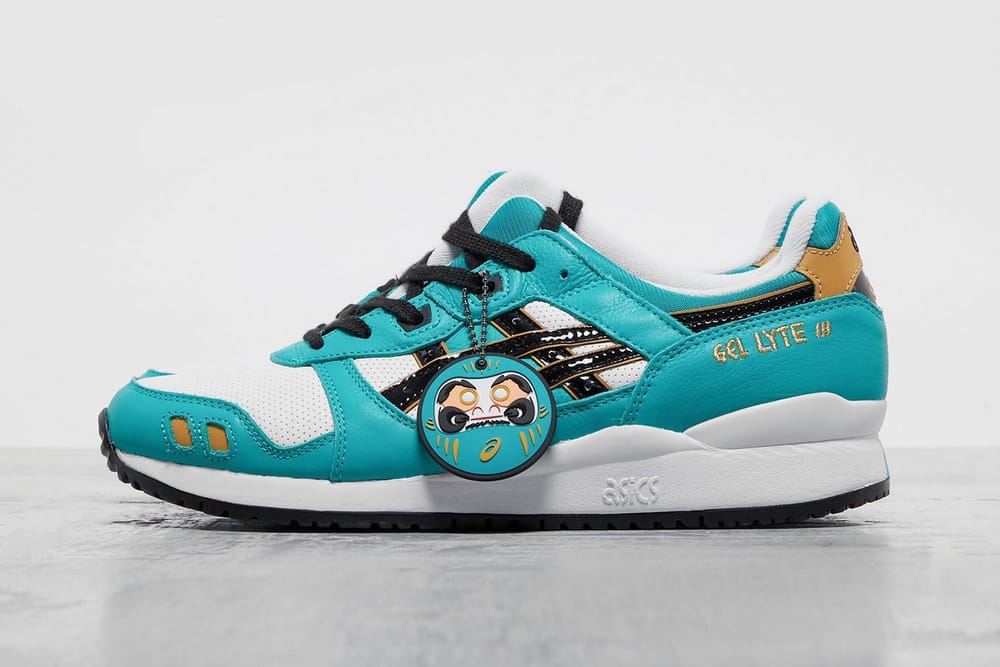
Daruma kicks

Not quite a Buddhist brand name, but definitely Bodhidharma related.

[URL=“https://hypebeast.com/2020/12/asics-gel-lyte-iii-og-daruma-doll-baltic-jewel-buddhism-bodhidharma”]
ASICS GEL-LYTE III “Baltic Jewel” Channels Buddhist Energy With Daruma Doll Inspiration
Paying homage to its Japanese roots.
Footwear
Dec 22, 2020
By Eric Brain

ASICS pays homage to its Japanese heritage with its latest GEL-LYTE III sneaker, serving a Baltic Jewel pair that features inspiration from Daruma dolls.

These traditional Japanese dolls are modeled after Bodhidharma, the founder of Zen, or Chan Buddhism. Although the dolls typically appear in red, they can be served in various other bold colors such as the bright teal found on the sneaker above.

No matter what color theyre presented in, a Daruma doll always depicts a bearded man. In ASICS sneaker, the black beard seen on the rubberized hangtag has been continued into the sneakers design, with patent black leather taking form on the mid-panel branding stripes and heel section.

Elsewhere, gold has been used to highlight areas such as the heel and signature GEL-LYTE III components all around, while perforated white leather on the toe box and mid-panel cuts through the bright colors.

Naturally, the pair is finished with its foot-hugging split tongue construction and a tri-density midsole for immense amounts of comfort and support, all while delivering unrivaled amounts of shock absorption.

Take a look at the ASICS GEL-LYTE III in Baltic Jewel above, and pick up a pair for yourself from stockists such as Footpatrol. The pair retails for £105 GBP (approx. $140 USD).

In case you missed it, read up on how New Balance won 2020.

These should be red, not teal.

April 2026 • Member Exclusive:

> # Daruma Rice Lager Japanese-Inspired Non-Alcoholic Craft

Discover the refined elegance of Japanese brewing tradition with this ultra-clean, rice-forward lager featuring delicate floral hop aromas and an incredibly crisp, dry finish.