Opens in Northa America this Friday.
First Forum Review
Holy Cats! This is Jackie Chan at 71 reclaiming his crown as the King of Action. So fun. So Jackie.
It has that old Hong Kong skool 80s police procedural spirit. Some preposterous leaps in surveillance and observation and absurd criminal identity concealment, but once that’s accept this movie moves along at a steady clip. Then it goes full Hong Kong ballistic and literally explodes. Absurd action overkill. In a flash, a firefight turns into a major siege with car battering rams and lots of exploding. These are Kung Fu superheroes. No one is Jackie Chan. No one comes close.
Jackie plays a retired cop now dog walker named Wong who gets called back to deal with the Shadow, a supervillian played by veteran HK star Tony Leung Ka-Fai. There’s a lot of old skool vs modern kids and analog vs tech stuff.
The fights are one shot / 1-3 moves but it’s that kinetic Jackie choreo where you can disassemble a pistol while fight the person trying to shoot you with it. Jackie takes some falls. Jackie does a big car crash stunt - he pulls out to safety much quicker than he did when he was 40, but if he hadn’t moved, he would’ve been crushed by a flying car for real.
Jackie also delivers a solid emotional performance. He’s still working out issues with his real life daughter, and there’s a lot of parent child themes. Playing opposite Zhang Zifeng playing Guoguo, his dead former partner’s daughter.
It’s melodramatic and nationalistic. At one point, I was getting misty over the noble sacrifice of Macao cops anfter a rousing speech by Jackie. Wait, what? I don’t even know why that worked so well on me. It was overplayed like Hong Kong cinema does. But for me, it worked.
There’s a subtle dig at Karate Kid: Legends. The Shadow’s Edge starsthe Jackie/Jaden Karate Kid actors Yu Rongguang (Master Li / Kreese) ad Wang Zhenwei (Cheng / Johnny Lawrence).
It also stars Xing Yu looking remarkably young, so much so that I thought it was just some new up and coming action star that looked like Xing Yu. He’s 47 now I think and plays a background hench in his 20s. That’s the Shaolin monk I trained with in 95 & 96 whohas gone on to become a major action star.
Ultimately, it’s all about the action. This is Jackie at his purest. He’s using a stuntman (has been for years now) but delivers a lot of the fights personally. His gait is a bit off, there’s a limp and a waddle, and I’m not sure that him acting. Nevertheless, he still moves better than I have ever moved in my life. Some of those flips, falls and fight scenes are clearly him and he’s still so agile and clever about how to stage the hits for maximum impact. It’s sanguineous - sanguineous in that ‘I’m going to stick my thumb in your wound for break your chokehold’ way.
Great film. See it in the theaters if you can.
Sep 14, 2025 7:53pm PT Jackie Chan’s ‘The Shadow’s Edge’ Leads China Box Office for Fourth Week
By Naman Ramachandran
[IMG2=JSON]{“data-align”:“none”,“data-size”:“full”,“src”:“https://variety.com/wp-content/uploads/2025/09/The-Shadows-Edge1.jpg?w=1000&h=667&crop=1”}[/IMG2]
Trinity CineAsia
“The Shadow’s Edge” (iQIYI Pictures) stayed atop the China box office chart for the Sept. 12–14 frame with RMB61.3 million ($8.5 million), lifting its running total to RMB 1.133 billion ($157.4 million), according to Artisan Gateway. The Jackie Chan thriller is directed by Larry Yang.
The film follows retired Macau surveillance expert Wong Tak-Chung (Chan), who’s brought back to track a high-tech heist carried out by a mastermind criminal known as the “Wolf King.” Assisting him is rookie cop He Qiuguo (Zhang Zifeng), as they face off against Tony Leung Ka-fai’s cunning Fu Longsheng and his criminal gang. The film was fifth on the global chart, per Comscore.
“Nobody” (Shanghai Animation Film) held second with $5.6 million. After seven weekends, the animated feature stands at $222.8 million. Directed by Yu Shui, the film draws inspiration from “Journey to the West,” reimagining the classic mythology through the eyes of minor demons on their own spiritual pilgrimage. It occupied eighth place on the global chart. Popular on Variety
“Dead to Rights” (China Film) placed third on $3 million, taking its cume to $414 million. Directed by Shen Ao and written by Shen Ao, Zhang Ke, and Xu Luyang, and set against the backdrop of the 1937 Nanjing Massacre and drawing from documented historical events, “Dead to Rights” follows A Chang (Liu Haoran of the “Detective Chinatown” franchise), a postman who assumes the identity of a photo developer to survive the Japanese occupation. Operating from within the walls of a Japanese-controlled studio, he covertly shelters Chinese soldiers and civilians in an act of quiet resistance.
Among the imports, “Final Destination: Bloodlines” (New Line Cinema) added $1.7 million for $24.7 million to date, while Universal’s “The Bad Guys 2” earned $1.3 million for a cumulative $26.5 million.
The weekend box office reached $26.8 million, bringing China’s 2025 total to $5.565 billion, up 18.8% from the same period last year.
Like I said above “Great film”
Sep 19, 2025 3:49pm PT Jackie Chan Talks Busan Selection ‘The Shadow’s Edge,’ Reflects on 64-Year Career: ‘I’m an Actor First, Who Also Knows Action’ (EXCLUSIVE)
By Naman Ramachandran
[IMG2=JSON]{“data-align”:“none”,“data-size”:“full”,“src”:“https://variety.com/wp-content/uploads/2025/09/The-Shadows-Edge.jpg?w=1000&h=667&crop=1”}[/IMG2] Golden Network Asia
Jackie Chan was initially reluctant to play another police officer. But when director Larry Yang approached him with “The Shadow’s Edge,” the action legend found himself drawn back to familiar territory for their next collaboration following 2023’s “Ride On.”
“At first, I didn’t want to play another police officer because I’ve done so many cop stories,” Chan tells Variety. “But the way he presented it was very compelling. It made me want to try once more, to see what new elements I could bring to audiences.”
The crime thriller, which is playing in the Open Cinema strand at the Busan International Film Festival and has held the No. 1 position at the China box office for four consecutive weekends, finds Chan playing legendary police officer Wong Tak-chung, who is pulled out of retirement to investigate a high-stakes heist at the iconic Wynn Macau. When a crew of thieves steal billions of dollars while evading both police and the state-of-the-art Sky Eye surveillance system, Wong suspects the mastermind is legendary criminal Fu Longsheng (Tony Leung Ka-fai), who mysteriously vanished years ago.
For Chan, the story’s contrast between traditional investigative skills and advanced surveillance systems mirrors his own career journey balancing old-school stunt work with modern filmmaking technology. “I started on film sets a long time ago — this year marks my 64th year in the industry. It’s been such a long journey, and I’ve witnessed the entire development of cinema,” he reflects. “The pace of new technology still amazes me, and many techniques feel so fresh to me. But in action films, no matter how technology develops, the human element can never be replaced.”
The reunion with Yang, whose debut feature “Mountain Cry” closed BIFF in 2015, was driven by mutual respect for perfectionism and work ethic. “Director Larry Yang is very hardworking and serious. He’s young, but I really admire his persistence and drive to keep creating,” Chan says. “So when he brought me this new script and wanted to collaborate again, I happily agreed.”
Yang’s approach resonates deeply with Chan’s own methodology. “He works extremely hard. On set, he’s very serious, and he doesn’t just focus on directing — he pays attention to everything happening around him. He even takes care of things that aren’t really his responsibility. He’s a perfectionist, and I admire that. After we finished our first film, within two months he had already written a new script outline and brought it to me. I like people who work hard, which is why I agreed to collaborate with him again.”
Despite his advancing years and accumulated injuries from decades of stunts, Chan maintains that authenticity remains paramount in action cinema. “For action films, the actor is still the foundation. I’ve always believed action actors can never be replaced. No matter how advanced technology and equipment become, they can only support and enhance the film — they can’t completely replace professional stunt performers.”
However, he’s increasingly interested in evolving his craft. “In recent years, I’ve wanted to transform. As I get older and with so many injuries from the past, some action is no longer easy for me,” he admits. “So I’ve tried to shift, to show audiences different sides of me — family-friendly comedies, pure dramas without any action that can move people to tears. I hope these changes give audiences a sense of freshness and surprise, and remind them that I’m not just an action actor — I’m an actor first, who also knows action.”
This evolution reflects a broader philosophy that has guided Chan throughout his career. Recently honored at Locarno for his lifetime contribution to cinema, he remains driven by the same perfectionist instincts that have defined his work. “I feel very fortunate to have received this award. I started working in the industry as a child actor — I never imagined I would achieve what I have today, or receive so much love from audiences. Back then, I just needed a job to survive. But I loved learning. I was curious about every department on set, and I wanted my films to be as perfect as possible.”
That commitment to excellence has been unwavering. “I always told myself: every single shot must be done well — you can’t slack just because it’s dangerous or exhausting. Otherwise, every time you watch that shot later, you’ll regret it. Maybe this attitude all these years is why audiences have appreciated my films. This award feels like recognition of that persistence.”
The approach extends to his legendary Jackie Chan Stunt Team, which has evolved dramatically over the decades. “After the success of ‘Snake in the Eagle’s Shadow’ and ‘Drunken Master,’ I started making action films non-stop. That meant I needed many skilled stuntmen with film experience to help pull off all the action and dangerous scenes. So I formed my own stunt team,” he explains. “Everyone was incredibly talented, and together we could quickly shoot a huge volume of action material. Over the years, the team grew — from just over a dozen people in the beginning to now more than 300. It’s already moved from the first generation to the eighth.”
Looking back at his extensive filmography, spanning from Hong Kong classics like “Police Story” to global hits like “Rush Hour” and “The Karate Kid,” Chan singles out “Miracles” as particularly meaningful. “I once made a film that I wrote, directed, and starred in called ‘Miracles.’ I was very proud of it. At the time, some friends said I could only make action films, and that made me angry. So I developed ‘Miracles’ to show everyone that I could do more than action. I poured huge effort and investment into it. I tried to make every detail perfect. There was very little fighting in it — more focus on musical numbers and storytelling. Looking back now, I’m still very happy I had the determination to complete such a film that was very un-‘Jackie Chan.’ It gave me a strong sense of accomplishment.”
The creative process remains as compelling as ever for the veteran performer. “There are several films I’ve been developing for years that remain unfinished. I want them to be perfect, so I keep revising the scripts. But while I’m shooting other films, those projects get delayed. Sometimes I’ll keep rewriting a script I love for years without locking it down. I don’t know if I’ll ever finish them, but I hope so.”
As for immediate projects, Chan has a full slate ahead. “There are a few confirmed projects — for example, a comedy action film in China, another pure action film, and two or three overseas projects currently in talks. Honestly, every project I agree to is one I genuinely like, and I hope to complete them well and share them with audiences.”
His advice for the next generation of action stars reflects decades of hard-earned wisdom. “There are so many excellent actors. I don’t think anyone should try to inherit another person’s path or style — everyone is different, their journeys are different, and the heights they can reach can’t be predicted. I believe that as long as this new generation of action actors works hard and commits to making every film the best it can be, they’ll have great futures. They’ll lead new schools of action in their own ways.”
“The Shadow’s Edge” also features Zhang Zifeng as He Qiuguo, the daughter of Wong’s deceased former partner, and Jun from K-pop group Seventeen. The film is produced by iQIYI Pictures, Shanghai Tao Piao Piao Movie & TV Culture Co., and Beijing Hairun Pictures Co., with international sales being handled by Golden Network Asia Limited.
Again, see this on the big screen if you can…
Sep 21, 2025 6:26pm PT Jackie Chan’s Busan Title ‘Shadow’s Edge’ Has Sequel Discussions Underway (EXCLUSIVE)
Director Larry Yang and producer Victoria Hon discuss follow-up plans as crime thriller dominates China box office
By Naman Ramachandran
Plus Icon [IMG2=JSON]{“data-align”:“none”,“data-size”:“full”,“src”:“https://variety.com/wp-content/uploads/2025/09/The-Shadows-Edge-BTS.jpg?w=1000&h=667&crop=1”}[/IMG2] Golden Network Asia
Director Larry Yang and producer Victoria Hon are considering a sequel to Jackie Chan‘s “The Shadow’s Edge” as the action thriller makes its international festival debut at the Busan International Film Festival‘s Open Cinema section.
The crime thriller, which has held the No. 1 position at the China box office for four consecutive weekends, represents a reimagining of the Hong Kong classic “Eye in the Sky” for contemporary audiences. Director Larry Yang, whose debut feature “Mountain Cry” served as the closing film of the 20th Busan festival, collaborates again with Chan following their 2023 success “Ride On.”
“The challenge didn’t come from shaping the story into today’s tech-driven world, but from fitting into today’s audiences’ cinematic tastes,” Yang tells Variety. “I wouldn’t mind tell the same story again if the audiences today could appreciate it, but I guess that would not be the case. Finding the right tone – a combination of right characters, rhythm and emotional flow – for today’s audiences is more important than finding the right story settings.”
The film features 85-90% new material while drawing inspiration from the original story. “My respect for the original come from my willingness to buy the remake right even if it’s just 1%, because that 1% is the idea of a film,” Yang explains. “A great idea always comes before a story. There can be countless ways to tell that idea, but a great idea is a great idea.”
Yang’s approach to the remake prioritized creative freedom over strict adherence to the source material. “My opinion of a remake doesn’t necessarily have to be an exact scene-by-scene reboot of the same story, but instead a new breed of the same idea,” he says. “Therefore, I didn’t worry too much about balance. I primarily focused on what would be good for my story and my tone surrounding this great idea.”
In “The Shadow’s Edge,” Chan plays a veteran surveillance expert pulled out of retirement to investigate a high-stakes heist in Macau. Tony Leung Ka-fai reprises his villain role from the original “Eye in the Sky,” though Yang reimagined the character for the contemporary setting.
Yang approached Leung’s character as a “simple speculation of ‘what if,’ like in a parallel universe. What if that guy didn’t die? What if he survived, was saved by a bunch of kids, raised them, trained them, and teamed up with them two decades later? What if, by spending years with these boys, this ruthless guy began to grow a bit of something called love in him? And, what if, due to some misunderstanding or miscommunication, the boy betrayed his love?”
The film blends surveillance technology with character-driven action sequences. “The idea of a covert surveillance team on foot searching for a ghost came from the original story,” Yang notes. “Technology serves as obstacles and opportunities on both sides, giving new twists to the story. I made sure this part never exceeded the flow of intensive energy while telling the story. It’s still a ‘human story,’ never tech-driven, but wit-driven.”
Yang emphasizes that action sequences serve narrative purposes beyond spectacle. “Action served as a continuation of a dialogue, a continuation of a quiet and covert surveillance mission, and a continuation of the evil-fighting barrier which technology alone couldn’t reach,” he explains. “We built sequences that ‘speak’ through character by always holding on to the human factors.”
Regarding Chan’s performance capabilities, Yang remains confident: “Jackie can still fight, and this movie is far from reaching his limit.”
Producer Victoria Hon emphasizes the film’s thematic exploration of generational dynamics. “We bought the remake rights for ‘Eye in the Sky’ a few years ago and have been developing a story for years,” Hon says. “How to make the story work with today’s audiences has always been an interesting discussion internally. At the same time, we see how AI plays a more and more significant role in modern society. So we wanted to incorporate this element into the story. The idea of old and new became the theme we wanted to discuss and explore.”
The challenging production required convincing investors that action films could succeed in the current Chinese market. “I think the biggest challenge was to make this film and this genre itself,” Hon explains. “In the recent China film market, action films were not doing very well at the box office. To make investors believe in this genre, we worked hard on the script and building the characters.”
Hon credits the strong screenplay with attracting top talent. “I believe the script is always the first milestone of a project – being able to talk to masters like Jackie and Tony and convince them there’s something different and unique in their characters,” she says. The production also featured young actors with extensive wushu training and “young and talented crew members who are very creative and energetic.”
Balancing industry veterans with emerging talent became a key production strategy. “This is just like the theme of our film,” Hon notes. “I think it is also one of the key to success – that we respectfully learned from the masters and added young energy and creatives into the film.”
Hon describes the collaborative process with Chan: “In all the action scenes, Larry and action director Su Hang had many creative ideas they wanted to try. They shot action demos and showed them to Jackie. With Jackie’s experience, he gave advice on parts that could escalate the tension, or parts that could be dangerous and needed preparations. Other than that, he gave us all his trust, which meant a lot and allowed us to try new things.”
The complex action sequences required extensive preparation and significant budget allocation. “Action scenes are very costly and time consuming,” Hon explains. “Even so, we shot the actions scenes with one single crew to keep the action and actor performance consistent. Pre-production time was about 5 months and we shot 84 days. Most of the action scenes were storyboarded, and action demos were filmed during pre-production.”
Macau’s distinctive cultural backdrop proved essential to the film’s atmosphere. “Macau is a city with mixed cultural elements. It has very fancy luxurious hotels, and also very old town almost next to each other,” Hon notes. “We loved that atmosphere, and we felt the story and character could blend into the city well.”
The production team spent eight months scouting locations, with some sequences emerging organically from the geography. “The script’s locations were based on routes we walked ourselves and felt reasonable to include,” Hon explains. “For example, when the robbers flew from the Macau Tower, they needed to find the nearest platform to land. We stood at the edge of the tower and saw the platform of Wynn Macau. That’s how we first approached the hotel and asked for their support.”
With Golden Network Asia handling international sales, Hon expresses optimism about overseas performance. “This time most of the sales were made in Cannes earlier this year, and many buyers were confident to promote the film after seeing our demos and reels,” she says. “I look forward to the theatrical release in all the regions and hope for strong box office results.”
Looking toward future projects, Yang indicates sequel discussions are underway while he develops additional action projects. “We’re considering the idea of a sequel, but right now we’re unsure what direction it will take,” Yang says. “I don’t want to repeat myself so I will very likely find a new approach. We’ll see how that goes.”
The director remains committed to genre exploration. “I love telling a good story, and I will continue searching for great movie ideas and compelling stories to tell, no matter the genre,” Yang explains. “I’m interested to try different genres, including sci-fi or historical stories in the future.”
Hon sees continued opportunities for Asian cinema in global markets. “Commercial genres like action and thrillers are probably the most popular ones for reaching global audiences,” she says. “We will keep working in action, and I also hope to do more co-production that can target both local and international audiences.”
The Shadow’s Edge | 捕风追影
Asian Film Festivals and Awards
# Hong Kong Film Awards 2026 recap: Ciao UFO wins top awards
Published: Apr 20, 2026 04:15 PM HKT, 3 min read
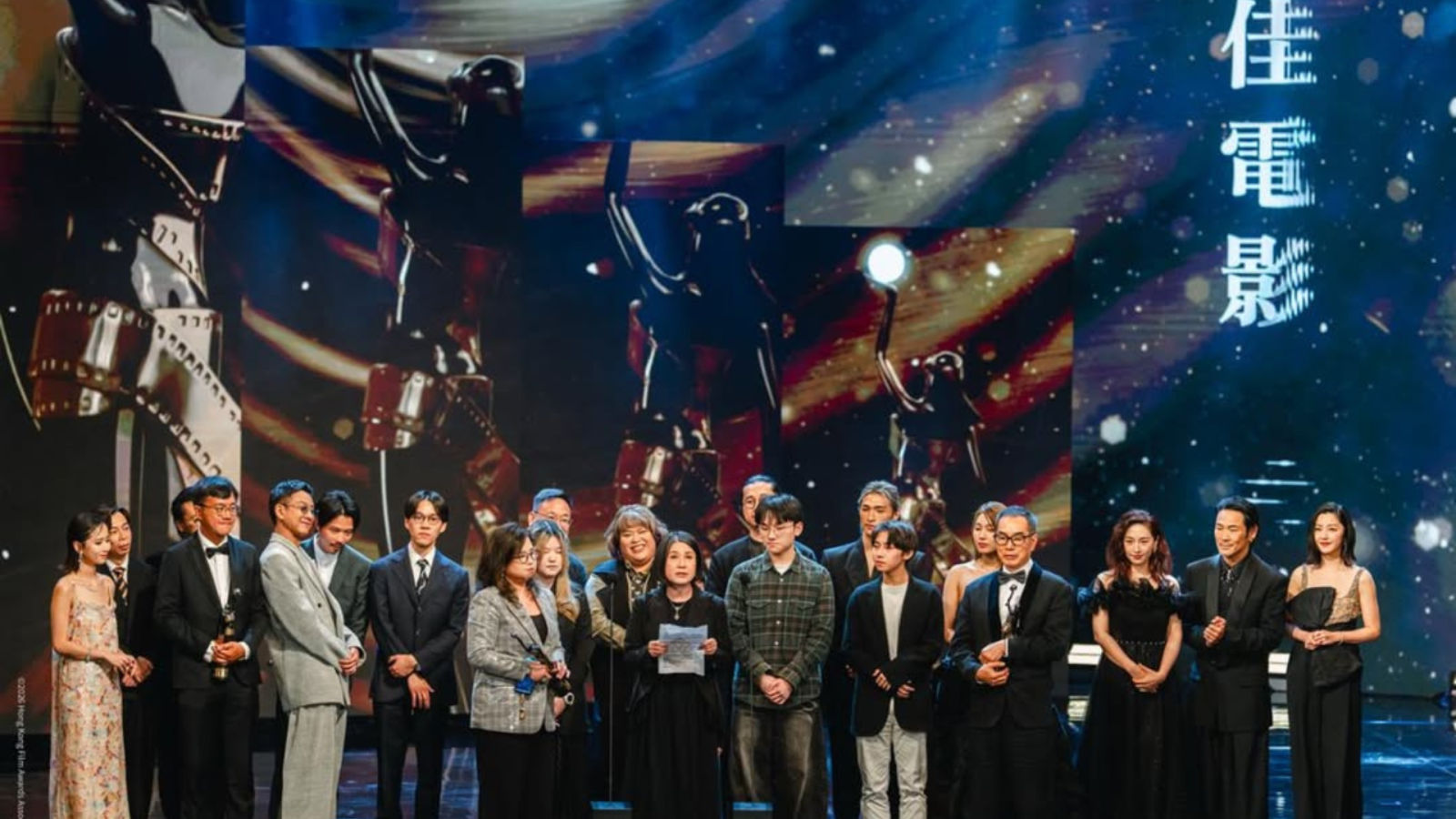
The 44th Hong Kong Film Awards was held on April 19, 2026, at the Hong Kong Cultural Centre. The annual award ceremony once again brought together actors, actresses, and filmmakers, turning the event into a truly star-studded spectacle. Patrick Leung’s Ciao UFO dominated the ceremony taking home the award for Best Film, Best Director, Best Screenplay, Best Supporting Actress, and more. For those who couldn’t tune in to the event live, below are key highlights from the Hong Kong Film Awards 2026.
What you may have missed from the Hong Kong Film Awards 2026
The 44th edition of the Hong Kong Film Awards gathered all the industry’s top stars for its annual celebration if cinema. The red carpet welcomed A-listers from Hong Kong and across the region, and the stars include Collar’s Marf, Mirror’s Keung To, Zhang Ziyi from She’s Got No Name and more. And ahead of the ceremony itself, the night kicked off with Eason Chan’s performance of A Dance for Tomorrow by Terrence Lam. Below are all the winners from the night.
The full list of winners from the Hong Kong Film Awards 2026
Best Film: Ciao, UFO
Best Director: Patrick Leung Pak Kin (Ciao, UFO)
Best New Director: Shu Qi (Girl)
Best Actor: Leung Ka Fai Tony (The Shadow’s Edge)
Best Actress: Fish Liew (Someone Like Me)
Best Supporting Actor: Alex To (Sons of the Neon Night)
Best Supporting Actress: Michelle Wai (Ciao, UFO)
Best New Performer: Elizabeth Tang (Girlfriends)
Best Cinematography: Sion Michel, Richard Bluck (Sons of the Neon Night)
Best Art Direction: Juno Mak, Yee Chung Man, Chow Sai Hung Ambrose, Jona Sees (Sons of the Neon Night)
Best Screenplay: Kong Ho Yan, Amy Chin (Ciao, UFO)
Best Costume & Makeup Design: SoMad, Uma Wang (Sons of the Neon Night)
Best Action Choreography: Su Hang (The Shadow’s Edge)
Best Original Film Score: Ryuichi Sakamoto, Nate Connelly (Sons of the Neon Night)
Best Original Film Song: Wah Fu One (Ciao, UFO)
Best Sound Design: Nopawat Likitwong, Poolpetch Hatthakitkosol, Dhanarat Dhitirojana (Sons of the Neon Night)
Best Visual Effects: Enoch Chan, Yu Yat Tung, Chris Chow, Lai Tsz Fei Felix (Sons of the Neon Night)
The best red carpet moments
The red carpet at the 44th Hong Kong Film Awards was nothing short of a sartorial spectacle, blending Old Hollywood glamour with edgy Eastern flair. While Michelle Wai floated through the venue in a jaw-dropping sequinned feather gown, Alex To redefined menswear by swapping a traditional bowtie for a sleek kung fu-inspired belt. And for a dose of pure nostalgia, Louis Koo charmed fans from a chartered yacht in the harbour before landing on solid ground with his Step Into The Past co-stars, proving that in Hong Kong, the drama happens both on land and at sea.
Note:
The information in this article is accurate as of the date of publication.
Written by
Fashila Kanakka
Digital Writer (Growth)
Indian-born and Hong Kong-raised, Fashila’s fuelled by caffeine, spreadsheets of travel itineraries, and a healthy dose of lame puns and dad jokes. An old soul at heart, she’s the happiest around fresh-out-of-the-oven pastries, vintage boutiques, and flower shops.
I told y’all about The Shadow’s Edge…
‘The Furious’ wins big at 7th Jackie Chan Intl Action Film Week
By Zhang Rui
August 15, 2026
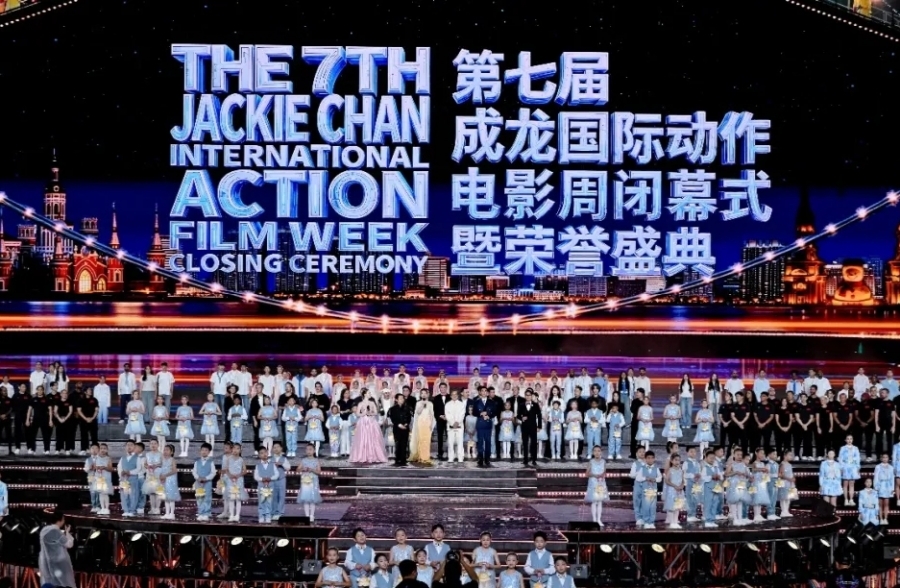
Chinese action film “The Furious” took home three honors, including best action film, at the closing and awards ceremony of the 7th Jackie Chan International Action Film Week in Harbin, Heilongjiang province, on Aug. 12.
The closing and awards ceremony of the 7th Jackie Chan International Action Film Week is held in Harbin, Heilongjiang province, Aug. 12, 2026. [Photo courtesy of China Movie Channel]
“The Furious” won three Iron Man Awards: best action film, best action actor for lead Xie Miao and best new action actress for Yang Enyou.
Directed by Kenji Tanigaki, the Hong Kong film stars Xie as Wang Wei, an ordinary man who teams up with journalist Navin, played by Joe Taslim, to rescue his kidnapped daughter, played by Yang, from an international crime syndicate that abuses and kills children.
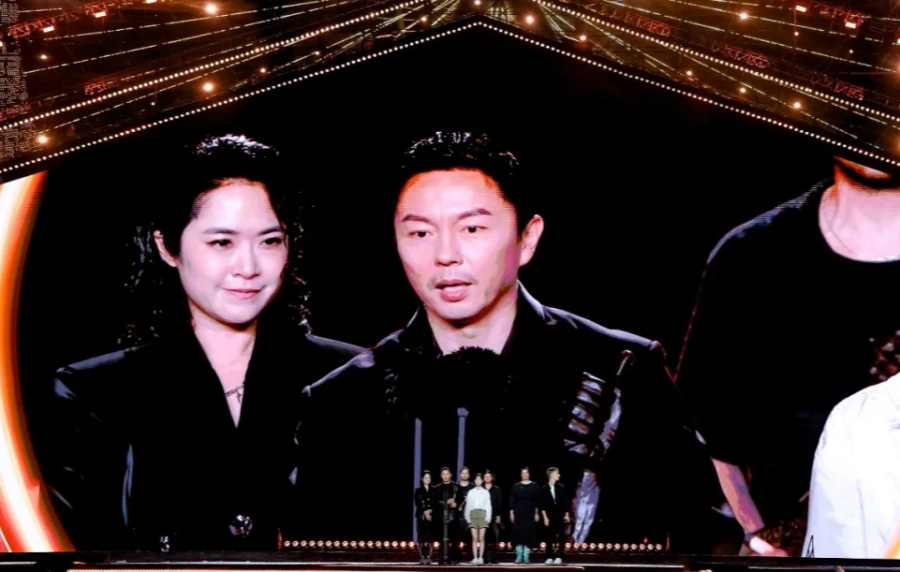
Xie began his screen career at 9 and has worked in action cinema ever since, a trajectory that mirrors the perseverance of many performers in the genre. Accepting his award, an emotional Xie said: “I want to thank every member of ‘The Furious’ team. I truly love this character. I made my first film at 9, and I’ve been on this action film journey for a long time. I will keep going — maybe not at a fast pace, but I will never lose heart.”
Accepting the best action film award on behalf of the cast and crew, he said: “We will keep learning from and paying tribute to the action filmmakers who came before us, stay true to our original aspirations and continue making excellent action films.”
Xie Miao accepts the best action film award for “The Furious” at the closing and awards ceremony of the 7th Jackie Chan International Action Film Week in Harbin, Heilongjiang province, Aug. 12, 2026. [Photo courtesy of China Movie Channel]
The film week, held under kung fu icon Jackie Chan’s name, brought together action performers and films from around the world. Twelve films were shortlisted for the awards, including “Blades of the Guardians,” “Detective Chinatown 1900,” “Kung Fu Soccer” and “Mortal Kombat 2.”
Director Timur Bekmambetov led the Iron Man Awards jury, joined by Arthur Wong, Jonathan Mostow, Stanley Tong, Tony Jaa, Chen Zhixi, Liu Tao, Wu Yue and Iko Uwais.
Bekmambetov said that in the world of action cinema, “we are all climbers, and Jackie Chan is like a guide pointing the way from the summit.” He added that the film week stands out because of its focus on the development of action cinema and on stunt performers themselves.
The 16 Iron Man Awards cover categories including directing, action performance, behind-the-scenes technical work, action choreography and overall production.
“The Furious” shared the top award, best action film, with the Russian film “Major Grom: The Game,” which also won best screenplay and best film editing.
“The Shadow’s Edge,” which stars Jackie Chan, also won big, taking best director for Larry Yang, best new action actor for Chaney Lin and best action choreography for Su Hang. The film has grossed 1.26 billion yuan ($176 million).
Reflecting on his creative journey at the event, Yang thanked Chan for passing on his decades of experience.
“I am proud to be able to make action films,” Yang said. “I want to carry this banner forward and pass on the romance of Chinese action cinema.”
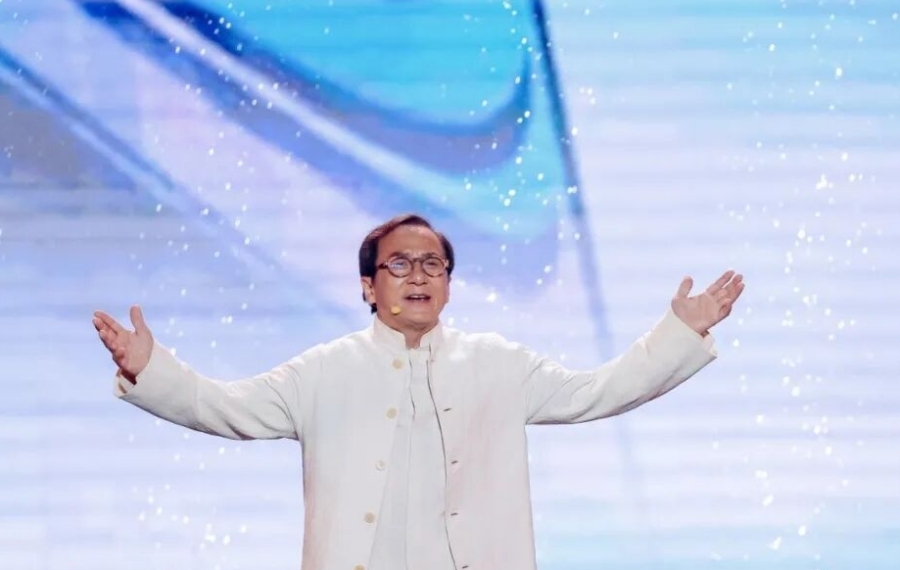
Jackie Chan appears on stage and performs at the closing and awards ceremony of the 7th Jackie Chan International Action Film Week in Harbin, Heilongjiang province, Aug. 12, 2026. [Photo courtesy of China Movie Channel]
Chinese military action film “Operation Hadal” also won three awards: best stunts, best cinematography and the organizing committee’s special honor.
“Blades of the Guardians,” a film credited with reviving the wuxia genre, won best action actress for Chen Lijun, a newcomer to the film industry but a veteran of Yue Opera. Stephen Chow’s summer kung fu comedy “Kung Fu Soccer” was also recognized for emerging talent, with Xueye taking the most promising action performer award.
The Pakistani film “The Legend of Maula Jatt” won best art direction and shared the special jury award with the Kazakh film “Racketeer 3.”
Chan presented the lifetime achievement award to 80-year-old Tommy Tam. The two hugged and recalled their collaboration years ago. Reflecting on his 60-year career in the film business, Tam said he felt the weight of responsibility that comes with such an honor. He also recited an original poem, “Ode to the Kapok,” comparing himself to a kapok tree that has weathered storms with pride and resilience.
Tommy Tam accepts the lifetime achievement award at the closing and awards ceremony of the 7th Jackie Chan International Action Film Week in Harbin, Heilongjiang province, Aug. 12, 2026. [Photo courtesy of China Movie Channel]
That night, Chan also led 93 members of his stunt team in a chorus of “True Hero,” paying tribute to generations of action filmmakers. He then joined members of his international action training camp, along with a choir, in singing “May Peace Embrace the World,” a nod to the Eastern martial ideal of ending conflict through martial virtue.

I have never heard Ti Lung called Tommy Tam before this, but apparently it is indeed one of his names.