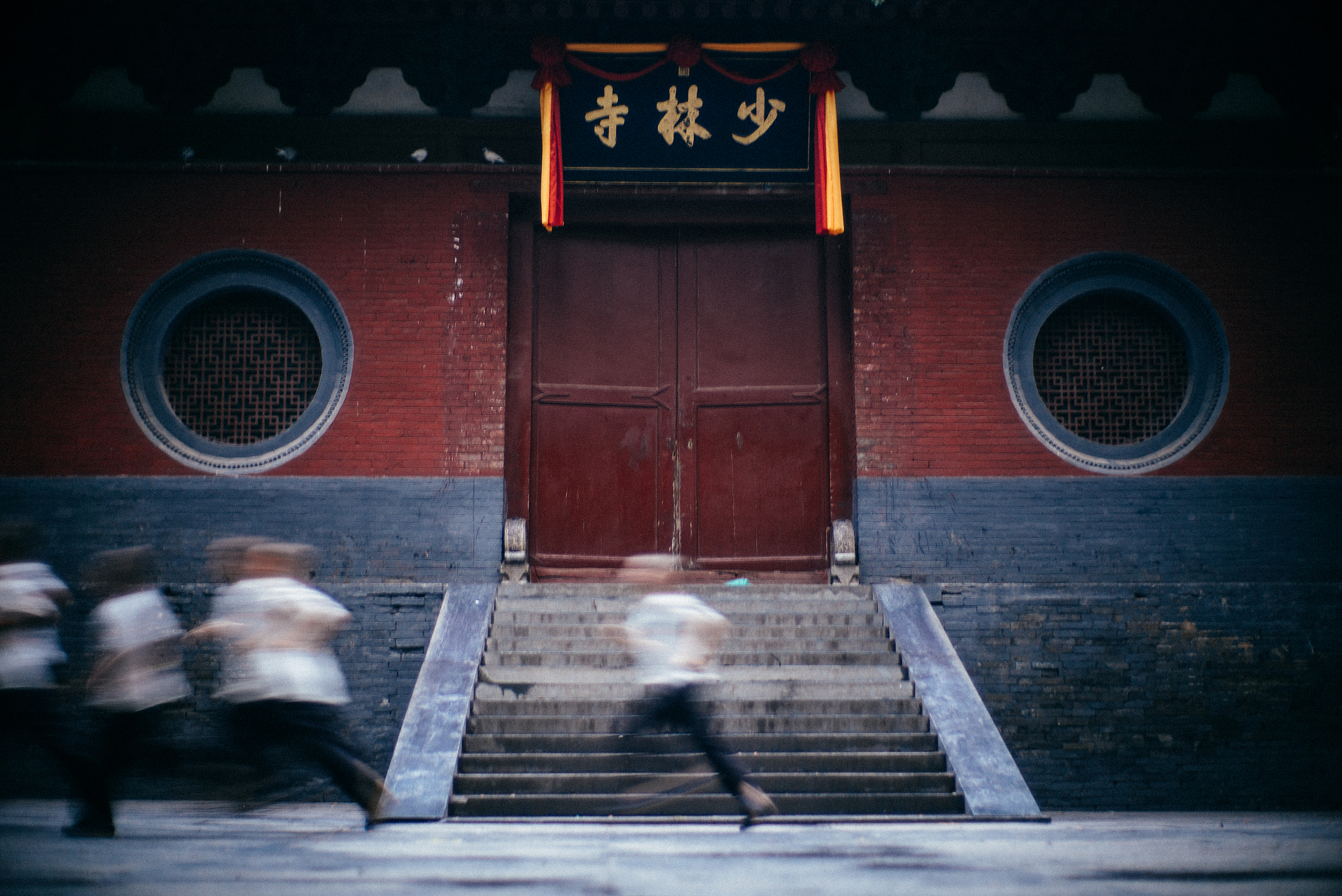
Shaolin Temple

Fact and the path of human nature..

Thank you gentlemen for the quality discussion. I have very little to contribute, however much to learn.

My interest in Shaolin temples is two fold, as a practitioner in general, and as a Pak Mei student in detail.

The alleged conflict between a Taoist Pak Mei and Buddhist Shaolin has led to many remarkable legends, fairytails and rumors. Everyone tells a different story. Firstly, I should say, I personally am not sold on the idea that a “Pak Mei” ever existed. More that he was an Iconographic figure…

Many will refute the picture in the HB Un book as being Pak Mei.

When Buddism came to China, one can only assume there was conflict with the established religions of Taoism and Confucism. Was it ideological, physical or political, who knows?

I have learned that the Taoists and Buddists have since found common ground, and many cross between temples and philosophys. This is obvious to any student of either.

The legend of Pak Mei takes place with the coming of the Manchu and the fall of the Ming dynasty, in the mid 1700’s I believe.

This temple in the south, Fujian Shaolin or Gau Lin Temple, is this the one currently in ruins that has been unearthed, or a currently standing one?

There is also talk of one in Canton…

The legend I know is, one south destroyed, moved north, then moved south again…

Thanks again guys for the time and effort.

New Sanitized Temples

The temples in China were not just Buddhism or Ch’uan, but a blend of Buddhism, Taoism, Confusciousism and Mensiuosism and some others. Although in some temples one belief would be emphasized more than the others, the blend of various faiths was the very essence of Shaolin. It is unfortunate that in the rebuilding of the temples by the China government, Shaolin has become a sanitized concept as it is being presented. The training they offer in the martial arts and internal arts is fairly good, but the rich philosphy and religion and the blending of so many beliefs, which was unique to China, has been lost forever.

May Peace Be With
You

Shi Bok-

Shaolin Temple was a Ch’an Buddhist temple.
The order consisted of Martial and Religious Monks.
In the earlier days, there was no seperation.

The seperation of religious and martial monks occured in the late 1300’s with the installation of the Ming dynasty. The distinction was made deeper with the incoming Ching dynasty in 1644.

By the time anyone who is still alive from the time of the boxer rebellion (ending 1900-01)there was a definitive seperation of Martial and Religious Monks. Although each received a formal education in Buddhism, the Martial Monks had more secular privilidges while still be allowed within the monastery.

These Ch’an buddhist Shaolin monks also learned astronomy, reading, writing, agriculture and of course the priesthood as it is associated with buddhism.

The Mohists, the Taoists and the other schools of Buddhism as well as smaller indigenous philosophies and religio-philosophies, while sharing some aspects through the cultural familiarities still had their own traditions and practices in their own right.

Still, there is only One Shaolin Si. As much as people like to connect themselves to it by stating things like there were multiple Shaolin temples.

Ch’an in China was a remarkably secular offering of Buddhism that the common man could relate to quickly in a superficial sense because of the simplicity of it.

The doctrine and dogma associated with other buddhist schools in a religious sense was too much for just anyone to have to go through and thus the legendary facsination with the Shaolin Order.

They have left us this, Ch’an later becoming Zen, but still there are pockets of Ch’an practitioners worldwide who do not subscribe to the doctrines of the two schools of Zen but remain on the simple path, and a plethora of Martial arts influencing a myriad of styles and some still virtually entirely Shaolin in content.

As for writings, there are few, being that they were Ch’an and transmission is direct from master to student and not through scripture reading or chanting passages from sutras.

Many of the texts that were penned at Shaolin had much more to do with processes of secular practices or day to day accountings. Things like grain tally’s or martial practice diagrams, or medicinal diagrams. The religious part centered around the attainment of nirvana via seated meditation for hours on end in utter silence. To gain strength to do so, martial practice, Chi Kung et al was done when not eating or sleeping or working at the day to day maintenance of the temple and it’s grounds.

peace

Kung Lek

Martial Arts Links

Yuan Fen & Shi Bok Se Teung

YF: Nice post. Here are some thoughts I’d like to add to your points.
1,2. Government interest in religion, especially in PRC is always a factor, but Buddhism, especially Chan, doesn’t require government support. It doesn’t even require temples. As long as the three treasures exist, Buddhism thrives - and two of those treasures are fairly constant (but I guess I can’t be a good Buddhist and say permanent now, can I?)
3. I was on retreat at the Tibetan monastery in Bodh Gaya. I didn’t find any evidence of young forest symbology. Can you clarify this?
4. You might take a look at our old thread “what if Bodhidharma’s kungfu was fake”. It’s a back a few pages in the archives and many of us engaged some of the Bodhidharma mythology.
The connection to Indian martial arts and Yoga has always been interesting, but had to really validify. I was doing some research in India in '97 on this - studying Yoga and arts like Kalliripayattu to try and make a connection, but it was pretty sketchy.
The archery issue is one that always confused me. Archery figures so prominently in Indian myth - ie. Mahabharata, or even young Siddharta, and Chinese archery is well reserched, so why didn’t it make it into Kungfu? In Japan, Kyudo is a huge Zen practice, but in China archery is not traditionally part of Chan. It’s really quite a riddle when you think about it.
5. Do you have a citation for Nationals lobbing shells into Shaolin?
6,7,8. There are two major considerations when looking at Chan. Both relate to the precedence of Taoism. Many Taoists believed that Buddhism was actually Laozi’s teachings returning from the west, since that’s the direction he was heading when he left and wrote Daodejing. There was a rejection of “foreign” philosphies, so early Chan was considered to have it’s roots in Taoism. Also many of the Buddhist terms had no meaning, so they were either phoneticized from the sanskrit (ie. TaMo) or mapped on to previous Taoist terms. anything that passes through China picks up a Chinese smell - just look at what Qingdao did to German brewing…

SBST: Ancient temples are always rebuilt. Old things need repair, not just from the ravages of the elements, but also, often moreso, the ravages of man. This is not ground for skepticism on authenticity.
Shaolin is certainly tourist, but the religious practice is still quite vital there - you just need to know where to look. Get thee to a nunnery - Shaolin’s nunnery and Yongtai still uphold the teachings very well. And there are other surrounding temples where it’s going on.
Shaolin is a flagship, a figurehead for Chan and kungfu. Just as a president should be judged on his cabinet, Shaolin should be judged on its surrounding temples and affiliates. But then again, Chan and judgement, make no distinction, eh?

Gene Ching
Asst. Publisher
Kungfu Qigong Magazine & www.KUNGFUmagazine.com

Hi Gene: thanks for your post.

Different personal chemistries. My curiosities are in attempts to solve intellectual puzzles.
Others take notes and citations but cant tell a puzzle or an idea if they see one.So I dont take notes and citations till I get involved in pleasing the scholarly priests and gate keepers.. But over time when neededI can dig up things again. very sloppy info retrieval system. The forest symbolism for meditaion is very old in India and predates Sakyamuni. But there was a famous forest in his time(sal trees possibly?)
near a place where he preached
and he referred in one of his sermons on retaining the freshness of vision like the young forest in spite of the changes of the seasons.The pre Buddhist ideal (Drona in the Mahabharata) of
a wise man is a combination of internal power and mastery of yoga and self defense- hand(mudras) and
weapons(astra). Buddhism did careful surgery with Hindu symbolism.Kept some. threw awy some, sublimated others- kali becomes Tara.BTW Kali’s khera provides the link to the Gurkha kukhri. Therefore except for the yoga,breath,archery(focus)
the mudras and bandhs-18 hands of lohan you are left with the monks staff and possibly the trident.The monks staff and the archery is alive in Ladakh. The lion dance,the associated 108 stops.other lion symbolism are also Buddhist in origin. I am sure you know about the Tibetan snow lion dance.Buddhists from my area (Bengal)playeda big role in early Tibetan Buddhism and the transmission of Hinayana to Sri Lanka. In a way the Sri Lankan conflict involves old old old migrants from bengal versus newer Tamil migrants.
The Brits. devastated Indian martial arts. But the trained eye can see the remnants- not just in kalaripayattu.The dim mak ideas were well known- there is a whole old literature-the marma shastras-
the science of the strike points. War elephants were controlled through poking specific points.
There are two additional problems in understanding all this- the westernised Indian bourgeoisie dont know their own history and Indians were not as good as Chinese in record keeping. The blending of meditation. breath control. knowledge of the spinal alignments, chakras( dan tiens). MARTIAL gathering of prana/chi has its now truncated roots in India.
Many Taoists would put their own overlay on Buddhist things… thus the parallel in chi circulation…clockwise or anti clockwise in the stomach area- take your pick. But the young forest,
the lotus and the perennial plum flower may yet survive… lots of folks will peace for people of their own faith. The dharma wills it for all. the Sangha may be in trouble but hey… last week
almost 50,000 low caste Hindus took tonsure in delhi and became Buddhists. Finis rather than rattle on. Best-Joy
PS You may or may not have seen my old piece in IKF
about December 1990; 108 steps- the Sino-indian Connection in the martial arts.It touches a bit on the Bodhi dharma.
www.azwingchun.com

Kung Lek
There is much I agree with you on and yes as I posted earlier, there was only one monastery call called Shao Lin Si . But : - ) to say that there were no other monasteries which had close associations to Shao Lin Si it is simply not true. The fa cts and historical records point to the opposite. The formation of early Ch’an Buddhism, its spread to other parts of China, and the building of other Ch’an monasteries clearly demonstrates this.

Subterfuge aside, it must be remembered that at var iou s times the Imperial government was very much involve in the support (financial and otherwise) of Buddhist growth and expansion. This Imperial support was much more important than popular literature would have one believe. Even ordination was very mu ch under the control of the Imperial government. If you can find one, check out a pre-1900 Budddhist ordination certificate or even a lay-sister’s Ordination certificate. You well find they all have an Imperial sanction on them. Ordaining Abbots receive d a uthority to
grant Ordination Certificates from the Imperial government. Abbots of large important monasteries were appointed by Imperial command. It was Emperor Shi Zu who appointed the Venerable Fu Yu, a very charismatic Ch’an monk, as Abbot of Sha o L in Si in the late 1200’s. Before his conversion to Tibetan Buddhism Shi Zu was very interested in Ch’an. Even after his conversion he remained friendly with Fu Yu. It was the Emperor himself that decreed Fu Yu to established affiliate monasteries in Yan J i, Chan’an, Tai Yuan and Luo Yang. It is apparent that it was at the prompting of the Abbot that this be done.
Fu Yu’s restoration of Shao Lin Si and the expansion of Ch’an monasteries was no mean feat and resulted in his being granted an Imperial title and then being appointed as the Minister of Education in 1312 by the Emperor.

[This message was edited by r.(shaolin) on 11-08-01 at 08:18 PM.]

Kung Lek wrote:

>The seperation of religious and martial monks occured in the late 1300’s with the installation of the Ming dynasty. The distinction was made deeper with the incoming Ching dynasty in 1644.<

The first tangible record of a distinct ‘warrior monk’ rank at Shao Lin Si goes back much further back than that.

Emperor Tia Zong granted Shao Lin Si the legal right to maintain a defensive army of monks at Shao Lin Si. The record of this decree is on a stone stele written in the Imperial script and dates to approximately 620 A.D..

This decree had far reaching implication on subsequent dynasties and Emperors.E

puzzles, leaders & religion

YF: Sure solving intellectual puzzles is fun, but solving them with hearsay is unsatisfactory. Yet, I certainly empathize with a sloppy retrieval system - my library has been a shambles since I moved and that was 2 years ago. I was curious to clarify your statements since you raised some interesting points.
The forest symbolism - do you mean the three trees of buddhism? Banyan, for Buddha’s birth, bodhi for his enlightement, and something else for his death - alas, there is my sloppy retrieval system of memory. You know, here’s some trivia, there is a cutting of that death tree at Yongtai nunnery next to Shaolin. Allegedly that was the first Buddhist nunnery condoned by the emperor and the only cutting of that tree in China (but then they also claim a relic of Buddha, which I don’t beleive yet.) I’m still not sure how this fits into “young forest”. I’ll have to look up that dhamra talk, was it the first one at Deer Park?

Many of the things you mention seem more parallel to me than linear. Surely, qi and prana are similar, but I feel it is an oversimplification to say they are connected. You can’t map meridians on chakras and nadis successfully. things like Kali>Chenrizig>Tara or Avalokiteshavara>Kuanyin>Kannon are linear and easy to validify. But the 108, now there’s a big chicken & egg problem. My daughter’s name is Tara by the way, so this strikes close to my heart :slight_smile:

Now I’m not sure about the Indian bourgeoisie, but the scant Indian research always seemed much more fruitful than the Chinese. It is an extremely scholarly culture. The very concept that the Mahabharata was an oral tradition for centuries, and yet little deviation was seen across even to modern day, is astounding. In contrast, China was where we developed the slang “chinese whispers.” I find this so evident in CMA.

I enjoy your writing Joy (loved your last submission to us in NOV/DEC 2001, BTW) but I probably don’t have that old IKF. Could you send me a copy via email. I would prefer to read your unedited version
:slight_smile:

r (s) et.al. As for gov’t subterfuge, sometimes I think this is a separation of church and state issue we have in the US. It can be very positive. Since we are discussing India & Buddhism, think of Ashoka.

Gene Ching
Asst. Publisher
Kungfu Qigong Magazine & www.KUNGFUmagazine.com

Thanks Gene for a nice note and post:

A partial reply:
I have one of those machines for emailing documents but without number 2 son I am lost on how to use it. I will probably send you a xerox copy of the IKF article on 108.The issue of the chicken or the egg should disappear once you read it.There is not only the number theory, the myths
and rituals related to the Indian side but ancient astronomy as well.
There was once near Loyang a whole colony of Indian astronomers(Needham: Science and Civilization in China)) in order to share with the Chinese their calculations of eclipses-specailly what in babylon came to be known as the saros cycle. The prana/chi analogy right now is linear but the yoga breath/mind control in the Buddhist transmission is more direct.
The Young Forest symbolism really has to do with a
neaby forest referred to in one of Siddhartha’s sermons. My memory fails me right now. It is not just the general banyan tree analogy.
Asokha really applied religious freedom and tolerance in his time to all the many diverse religions and sects around in his time…and tolerance for cultural and linguistic diversity
as well.You know that Asokha’s world extended into Afghanistan as well.
Tara is a beautiful name, Best wishes for your daughter. You know I am sure that Boddhidharma’s teacher’s name was Prajna-Tara. Best, Joy

Gene Ching wrote:
>As for gov’t subterfuge, sometimes I think this is a separation of church and state issue we have in the US.<

Hi Gene. Actually by “subterfuge aside” I was referring to the Southern Buddhist /Hung Moon resistance to the Qing.
I think that is what Kung Lek is taking about. In the south, a number of monasteries (and this was mostly in the south) and Buddhist monks were supporters of the Hung Moon. This was a revolutionary political grassroots organization which opposed to the Manchu /Qing Imperial government.
During this period the Hung Moon split into three sections so to speak. The Hung Bong - responsible for overall control and responsible for recruitment.
The Qing Bong - often ex-military men in disguise as Buddhist monks. Their prime function ws to teach martial arts in the temples.
and the third, Buck Lin - these were the spies of the organization. Also under the appearance of monks, they served as conveyors of information
and raised funds.a

Gene Ching wrote:
>Since we are discussing India & Buddhism, think of Ashoka.<

Ashoka conquering Kalinga after a very bloody war in which a 100,000 were killed, 150,000 injured and thousands more were captured and enslaved. .
. . . . Redemption does not come easily : - (

I’m leaving for the mountains to meditate.to

[This message was edited by r.(shaolin) on 11-09-01 at 08:12 PM.]

E.B. Vermeer, Development and decline of Fukien Province in the 17th and 18th Centuries, Sinica Leidensia, Vol. XXII, Leiden/New York 1990

This book is good reading for those who are interested in the situation of the temples in Fukien during this time. There is also some about the resistance movement against the Qing.

South Paw

Religion and History

R (shaolin)
Thanks for the clue on the Hung Moon. That meets most closely with the story of my Sifu, concerning the genesis of the Pak Mei legend. The quality of the discussion is well beyond this, but thanks for the tidbit. A thread to unravel…

South Paw, thanks for the citation. Looks interesting.

India, subterfuge, and Tara

yf: I’ll look forward to that FAX - no hurry - just make sure it’s to my attention or it might not get to my desk.
That Indian Loyang astronomy connect is great. I’ll have to explore that a little further. Where they involved with Gaocheng observatory in Dengfeng?
There’s a huge Indian community here in Fremont, near the office. I keep seeing posters for a pop movie on Ashoka. Do you know if it’s any good (I’m interested in entertainment value as much as schoalrly content.)
And yes I knew the Prajnatara connect, although we hadn’t thought about it in choosing her name - we picked Tara because it was the Irish Hill of Kings as much as for the Buddhist deity.

r(s): Sorry, I completely misread you about subterfuge. Given that point, my post was irrelevant.
As for Ashoka, few political leaders escape history with no blood on their hands. My comment was more specific to Buddhist culture than redemption.

Gene Ching
Asst. Publisher
Kungfu Qigong Magazine & www.KUNGFUmagazine.com

Shaolin Temple

Shaolin Temple is probably the most famous temple in China, not only because of its long history and its role in Chinese Buddhism, but also because of its martial arts or Wushu Chan. Shaolin Temple is situated in the beautiful Songshan Mountains, which is only eight miles of Dengfeng and about 50 miles southwest of Zhengzhou, the capital of Henan Province.
Shaolin Temple was established in 495 during the Northern Wei Dynasty (386-534). Batuo, an Indian monk, came to Luoyang, the ancient capital, for spreading Buddhism at that period. Emperor Xiaowen was a believer of Buddhism so he decided to build the temple in the Songshan Mountains to house Batuo, who translated many Buddhist works and had a few hundred followers there.

Damo (Bodhidharma), the legendary Indian monk, came to Shaolin in 517, who was the creator of Chinese Zen. There are many legendary stories about him. One of the well-known stories says he was meditating in a cave for nine years. The cave is now called Damo Cave. Many people believe he wrote the famous ‘Yijinjing,’ the base of Shaolin martial arts or Kung fu. But there is no record about the book before and during the Tang Dynasty (618-907) so experts think Damo has little to do with Shaolin Kung fu. Zongheng, a Taoist priest of Tiantai Mountain, wrote ‘Yijinjing’ in 1624, but to add mystery to it, he made up a story saying ‘Yijinjing’ was originally written by Damo.

Shaolin does have a long tradition of Chinese martial arts, as the saying goes ‘All martial arts (Kung fu) are from Shaolin.’ This is partly because Shaolin was located in a strategic area so they had to protect the temple themselves from wars or any invading, and partly because of the support of most emperors from different dynasties, which came after the 13 Shaolin monks once saved Li Shimin, the emperor of the Tang Dynasty (618-907). Since then Shaolin was allowed to have solider-monks. During the Ming Dynasty (1368-1644), Shaolin housed over 1,000 solder-monks at its peak and they were often used by the government to combat rebellions and Japanese bandits. But martial arts were forbidden during the Qing Dynasty (1644-1911). Even with the protection of solder-monks, Shaolin was severely damaged by fire a few times. The largest fire set by the army of Shi Yousan in 1928 destroyed most of the buildings of Shaolin Temple.

There are many noted relics at Shaolin. There are over 300 ancient stone inscriptions, some of them by famous calligraphers. The large mural of 500 arhats in the Qianfo Hall was from the Ming Dynasty. There are 232 pagodas from different dynasties, known as the forest of pagodas. The oldest one was from the Tang Dynasty. The pagodas are the tombs of the celebrated Shaolin monks. The Shaolin martial arts are an important part of the relics.

Shaolin Temple

A surprising find at my parents house. I forgot I had done a Shaolin Temple Signboard while I was a student of Shi guo Lin back in 1998. A bit dusty and banged up being in the garage for almost 14 years:D

Shaolin reopened

Kung fu shrine Shaolin Temple reopens to public
Xinhua
20:15 UTC+8, 2020-06-22

China’s kung fu shrine Shaolin Temple reopened to the public on Monday, ending a months-long closure amid the COVID-19 epidemic.

The 1,500-year-old temple, in central China’s Henan Province, opened its gates at 9 a.m., ushering in its first tourists in five months.

The temple declared it had enhanced epidemic control measures, including thorough disinfection of the temple and nucleic acid testing among its monks.

The Shaolin Temple, like many other scenic spots and cultural sites in China, closed in late January as the country moved to curb the COVID-19 outbreak.

Source: Xinhua Editor: Zhang Long

THREADS
Shaolin-Temple
covid

Follow the embedded link for a vid.

Newsflare
Shaolin monks disinfect stage and audience area to prepare for performance
Duration: 01:10 17/06/2020
Shaolin monks disinfected the stage and the audience area to prepare for the Shaolin Zen Music Ritual outdoor performance in central China’s Dengfeng city on June 13. In the video, monks carry pressure sprayers to disinfect the audience area, the stage and the building’s roof. According to reports, the Shaolin Zen Music Ritual reopened recently after months’ coronavirus lockdown. Only one-third of the seats are available to visitors and social distance are requested.

THREADS
Shaolin-Temple
covid

reclosed

Culture China 19:43, 13-Jan-2021
Kung fu shrine Shaolin Temple and other temples close again amid COVID-19
CGTN

China’s kung fu shrine Shaolin Temple at Songshan Mountain in central China’s Henan Province has again closed its door since Wednesday amid COVID-19 concerns as its neighboring province Hebei is facing a new wave of infections and has reported more than 300 new cases since January 2.

The management committee of the Songshan Scenic Area, where the temple is located, announced on Tuesday that public visits to Shaolin Temple and other religious places in the area would be suspended from January 13 until further notice due to the coronavirus pandemic.

According to the announcement, other scenic spots in the area, including Songyang Academy, Luya Waterfall and Songyue Pagoda, are still open with stern epidemic control measures in place.

Visitors are required to wear masks, scan the “health code” and get their body temperature checked before entering the scenic area.


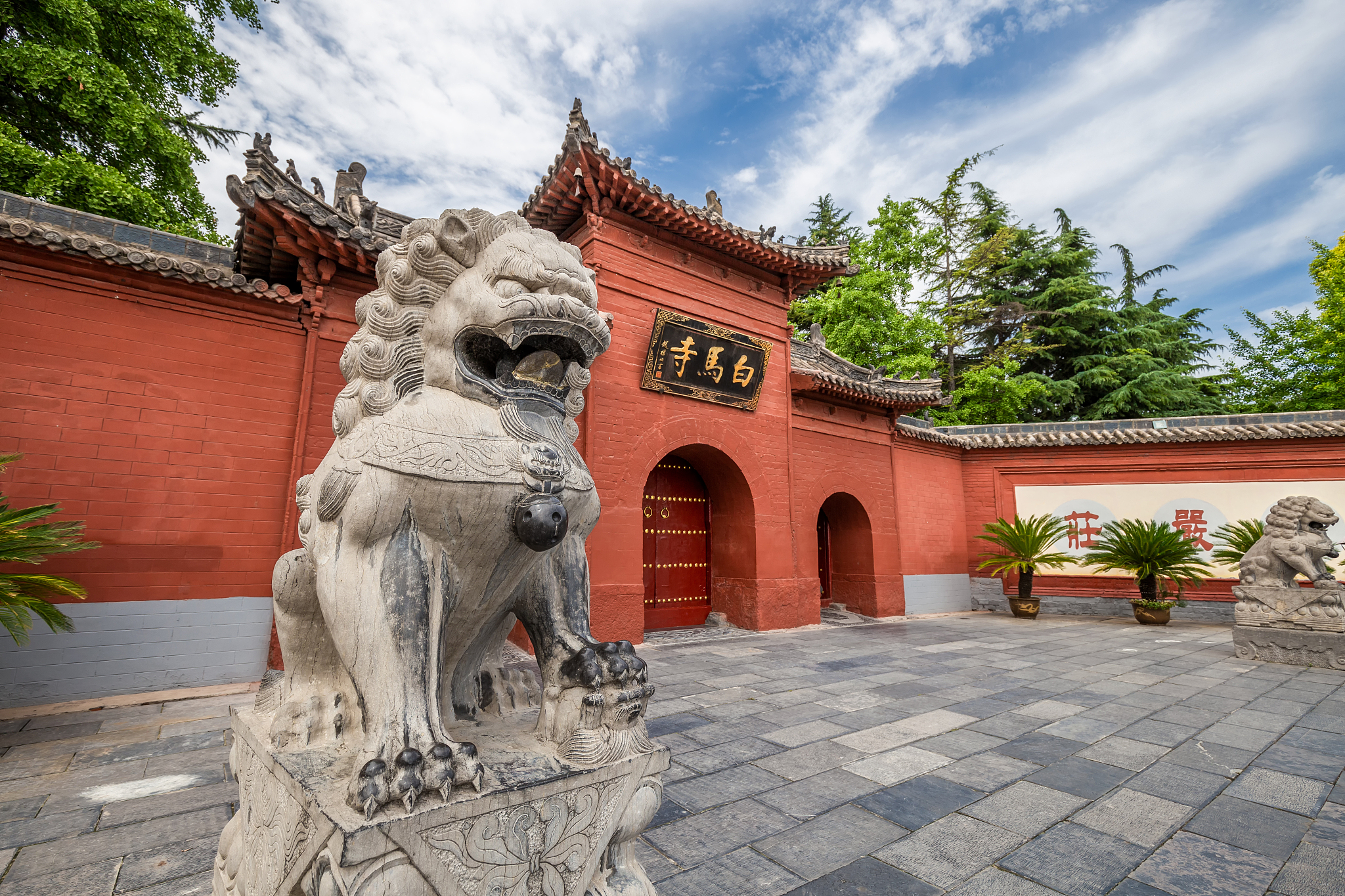
White Horse Temple in Luoyang, Henan Province, China. /CFP

Other famous ancient temples in Henan, such as the White Horse Temple in Luoyang City and Daxiangguo Temple in Kaifeng, also followed suits to close their doors suspending public religious activities from Wednesday to prevent mass gatherings and cross infections.

The move came as multiple cities in China have reported new COVID-19 cases related to public gatherings over the past weeks.

The world-famous Shaolin Temple, like many other scenic spots and cultural sites in China, closed in late January 2020 to curb the spread of COVID-19. The 1,500-year-old temple then reopened to the public last June after the five-month closure.

(Cover: Shaolin Temple is located at Songshan Mountain in central China’s Henan Province. /CFP)

THREADS
Shaolin-Temple
covid

Live: Kung fu stunts at Shaolin Temple in central China, a feast for your eyes

//youtu.be/Xf1SoKmdhUg

I have not watched all of this. If anyone does, let us know the timecodes for the interesting bits.