Auspicious.
It used to be the ‘Shaolin Zone’ for me. Now it’s the Shaolin Rasta Zone. A friend just posted this on my fb.
Auspicious.
It used to be the ‘Shaolin Zone’ for me. Now it’s the Shaolin Rasta Zone. A friend just posted this on my fb.
Wow - give praise and thanks to Jah :eek:
'ear another
Again posted on facebook by one of my Dragon Crew who had to bail last weekend.
Made a facebook meme

This is from our 2014 Shaolin Special. It’s been getting the funniest comments on facebook. My fav is “Needs haircut to look normal” 
LOL — nice!
Here’s another

This is all we have for meme cards, but perhaps we’ll get something more from SR himself. 
Alborosie - Can’t Cool
I luv Alborosie. I’ve seen him perform many times. Now I luv him even more. 
I just saw Alborosie working at California Roots last weekend
But more amusing was our very own Shaolin Rasta slinging patois with Master Mimi Chan at a KFTC25 AF after party (if that doesn’t make sense to you, you haven’t seen Pui Chan: Kung Fu Pioneer - a documentary by Mimi Chan, and if you haven’t seen that, you cyant call yourself Shaolin Rasta).
On top of all that, check this new PBS doc. It explains the Jamaican Chinese connection.
Finding Samuel Lowe
1:01:13Video duration: 1:01:13 Aired: 05/14/17 Expires: 06/13/17Rating: NRVideo has closed captioning.
Paula Madison knew her mother was half Chinese, half Jamaican. Growing up in Harlem, she wondered about her Chinese grandfather, Samuel Lowe. When did he immigrate to the islands? Where did he go when he left? In “Finding Samuel Lowe,” Madison embarks on a trip of a lifetime, tracing her grandfather back to his ancestral village – and finds she has a whole new family to embrace.
Drunken Kung Fu
Drunken Kung Fu blends rock, hip-hop, reggae into unique sound
Corina Gutierrez • February 19, 2018 • Leave a Comment

Photo courtesy of Holly E. Renfro - H.E.R. Photography
From left, Sam Phelps, Jacob Gleason, and Matt Klee make up Drunken Kung Fu. The trio will return to Sac State Feb. 21.
Drunken Kung Fu, an “Afro-beat funk” trio, will be playing a free show at noon on Feb. 21 in the Redwood Room of The University Union.
The Sacramento-based band consists of three members: Jacob Gleason on guitar and saxophone, Sam Phelps on vocals and keys and Matt Klee, the drummer. It has played gigs as far as San Francisco, Las Vegas and Portland.
“We’ve always appreciated the support of Sac State,” Gleason said.
Having played on campus a handful of times before, he said the band is looking forward to coming back.
[video=vimeo;187305587]https://vimeo.com/187305587[/video]
“There was a time I applied to Sac State but I didn’t have the foreign language requirement so they didn’t take me,” Gleason laughed.
The three met around 2009 while playing for other bands and have tried to develop a unique sound. While Drunken Kung Fu was nominated this year for a reggae Sammie (Sacramento Area Music Award), Gleason said that he doesn’t necessarily see the band as reggae.
“We keep things funky and danceable; we weave in and out of different genres: hip-hop, reggae, jam, classic rock, ’90s music — there’s a lot of different influences at play,” Gleason said. “We’re all jazz musicians so there’s a jazz overtone plus a rock ‘n’ roll rawness to how we play. We make big sound with three people.”
Because of their eclectic style, the dynamics between the three band members are often in flux and they are forced to improvise and make alterations on the fly.
As the lead singer, Phelps said he writes a lot of the music.
“I’ll bring a song to the table as a Sam Phelps song,” he said. “We’ll hash it out and turn it into a Drunken Kung Fu song.”
Phelps said everyone in the band has an equal say and the chemistry between the three is unique.
“There’s moments in our sets that are structured and moments of just jamming and looking at each other like, ‘This is awesome,’ ” Gleason said. “It’s a lot of fun to play with these guys; they’re not just always lost in their instruments like some bands can be.”
Leaving space for improvisation during their performances allows for the creativity to flow, Phelps said.
“We want to take people to a higher place with the energy; you can feel it in the room and just like, ravage and lift off,” Phelps said. “It’s always a risk, doesn’t always take off, but that’s our goal — that’s what it’s all about.”
[QUOTE]Will Moon
@MoonMan0305
Sacramento-based funk band Drunken Kung Fu grooves in the University Union.
10:36 AM - Sep 6, 2017
See Will Moon’s other Tweets
Twitter Ads info and privacy
Even though Drunken Kung Fu typically identifies as an “Afro-beat” band, the trio incorporates many other styles and genres into their music.
“I think the music defies racial boundaries,” Gleason said in response to an inquiry about negative responses from crowds considering the group is an Afro-beat band with no people of color. “I don’t think any person should limit what they listen to or play based on the color of their skin.”
Gleason said the band talks about serious topics in some of their songs, such as politics and war.
“There is a heavy, revolutionary commentary on the political stuff going on,” Gleason said. “Overall, we take opposition on war; I consider myself a conscientious objector of war.”
Looking toward the future, Drunken Kung Fu has some new songs it plans to release soon as well as shows lined up for later in the year.
“We’re currently working on a new record, we have a bunch of festivals lined up this summer,” Gleason said. “We test things out and see how the audience reacts — what it comes down to is how to make the audience dance. Hopefully people feel inspired to dance it out and feel free.”[/QUOTE]
A Cali reggae jam band named Drunken Kung Fu? How is it that I don’t know these guys?
Thread: Kung Fu Music
Thread: Shaolin Rasta - the 37th Chamber
Fist of Curry
Asian AND Jamaican curries? This Kung Fu Restaurant is so Shaolin Rasta. 
First Taste: Fist of Curry brings irreverent kung-fu fun to old Huron Room space
Mark Kurlyandchik, Detroit Free Press Published 7:01 a.m. ET April 5, 2018

(Photo: Mark Kurlyandchik, Detroit Free Press)
A Kurosawa film plays on the bar’s lone TV hanging above the painting of a clenched fist ostensibly belonging to Bruce Lee as I sip a cold Slovakian lager.
Dragonmead’s Final Absolution is just $4 here, but I’m only waiting for carryout. There’s no need to go down that dark path, however good a deal it may be.
The place is decked out in ‘70s regalia – all tan and mustard yellow and brown. I don’t recall any shag carpet, but it certainly wouldn’t be out of place at Fist of Curry, where the aesthetic is decidedly disco-stoner conversion van.
It has been nearly two months since the folks who run Johnny Noodle King and Green Dot Stables — otherwise known as Inlaws Hospitality — quietly closed floundering seafood restaurant the Huron Room in southwest Detroit and revived it just three days later as a ‘70s-themed globetrotting curry slinger with a kung-fu kick.
Fist of Curry — a pun on the title of the classic Bruce Lee film “Fist of Fury” — launched at the corner of Bagley and 18th on Valentine’s Day. The place is still getting its proverbial fighting stance down and tweaking its offerings. It may be too early to conduct a full review, but between one dine-in visit and one expansive carryout order, I’ve sampled almost the entire menu and found a lot more to like than in visits to its predecessor.

The interior of the new Fist of Curry restaurant in southwest Detroit, which suddenly replaced the Huron Room in February. (Photo: Mark Kurlyandchik, Detroit Free Press)
For starters, there’s the concept itself. Sure, you can get both Thai-style and Japanese curries down the street at Takoi and Ima respectively or trek up to Hamtramck for its panoply of Indian, Pakistani and Bangladeshi offerings. But Fist of Curry is perhaps the first restaurant of its kind in metro Detroit to build its identity on the broader concept of curry itself, which originated on the Indian subcontinent thousands of years ago but has been exported around the world and altered regionally in fundamental ways.
The origins of chicken tikka masala, for example, are disputed, but the most widely accepted claim is that it was invented in Scotland, likely by a chef of Pakistani or Bangladeshi descent.
Fist of Curry’s cardamom-forward tikka masala with either chicken or smoked tofu ($13) is already its most popular item, but there are much better options on the brief menu, which is split into five snacks, six curries, one rotating special, a couple of sides and two varieties of soft-serve ice cream.
Start with the cheese sticks ($6). This clever riff on mozzarella sticks employs melty halloumi cheese wrapped with fresh sage leaves in a crispy wonton roll. The result is lighter and less greasy than the traditional American bar variety and just might be the best thing on the menu. They come five to an order and are accompanied by a spicy tikka dipping sauce sans butter and cream, which allows the tomato and turmeric flavors to shine while being bolstered by a house-made ginger-garlic paste — a base for many of the curries here.
If there’s one challenger to the cheese sticks, it’s the curry-fried cauliflower ($7), another of the snack options. The florets are battered in rice flour and soda water for an almost tempura-like coating that’s also gluten-free. It lends the florets a satisfying crunch despite being drenched in a sweet-and-sour-and-spicy Manchurian sauce. The garnish of cilantro and scallions adds an herbal element that rounds out the dish.

Jamaican jerk brisket curry ($16) from the new Fist of Curry restaurant in southwest Detroit. Mark Kurlyandchik, Detroit Free Press
The meat version made with chicken drumsticks ($8) is just as satisfying, while the lion salad ($8) deceives you with fresh herbs and hunks of English cucumber before sneak attacking with spice from both Thai and Hungarian peppers and a guajillo chile-infused vinaigrette.
Broadly speaking, the snacks are Fist of Curry’s strongest offerings, while the curries themselves could use a little more coaxing in the depth department. (I’m going to make a controversial recommendation here and suggest a dash or two of MSG.) The long-grain basmati rice that accompanies each, on the other hand, is nicely cooked and worth noting.
Of the five curries I sampled, the soft-shell crab rose above the rest thanks to its Thai-inspired coconut curry that’s bright with lemongrass and a dusting of sumac. There’s crab paste and oil in the curry itself, but while soft-shell is in season, the whole crab is served on the side, lightly breaded and fried to crispy perfection. At $16, this dish represents the top of Fist of Curry’s modest price scale.
The Japanese-inspired kare curry ($13) with pork katsu is another I’d recommend. The sauce starts with Japanese curry powder that’s enriched with leftover pork juices from sister restaurant Johnny Noodle King and blended with sake, mirin, tamari and fresh Granny Smith apples. It’s a silky and mild version of curry, perfect for heat-averse diners.
Other offerings include a smoked tofu curry ($12) that’s both vegan and gluten-free, a meaty Jamaican jerk brisket curry ($16), a vegetarian saag halloumi ($12) that I also enjoyed and a rotating weekly special.
One of the biggest misses for me and evidently for a group of early online reviewers as well is the non-naan bread that’s offered as a $2 side. The menu describes it as a house-made fry bread and the deep-fried gluten-free flatbreads that come out indeed have more in common with Navajo fry bread than soft, leavened naan – a key component of so many good curries.
Executive chef and co-owner Les Molnar said he’d never attempt to make naan without a tandoori oven and is instead experimenting with a pizza dough-based flatbread brushed with ginger-garlic butter that will likely make it to the menu next month. That’s a smart move and will likely stanch some of the criticism.
On the beverage side, Fist of Curry offers five house cocktails priced at $9 each that employ many of the ingredients you’d find in their curries, like a masala simple syrup. The beer list of nine drafts and 20 bottles and cans is well priced and includes a few surprises — like a nitro-draft Old Speckled Hen for $4 — among some usual suspects.
“Part of our motivation here is to expose people to what’s out there," Molnar said. "I’m not some artisan savant when it comes to making curry yet, but we know we can make good food at an affordable price.”
Most important, though, is bringing new life to a concept that should’ve worked but never took off for a variety of reasons.
“Doing a smaller restaurant like this — Fist of Curry is between 40 and 50 seats — I think you can get away with having some niche fun over here when it comes to cuisine,” Molnar said. "We just want to have fun at work. If we can make it as fun as possible and pass that energy on to the guest, that’s something we get a kick out of.”
If that’s the goal, then this punny kung-fu curry shop may soon deliver a knockout roundhouse.

A Jamaican bobsled cocktail ($9) from the new Fist of Curry restaurant in southwest Detroit features rum with strawberry and pineapple juice garnished with a whole baby banana. (Photo: Mark Kurlyandchik, Detroit Free Press)
Fist of Curry
2547 Bagley, Detroit.
313-265-3325 and detroitcurry.com.
Dinner daily.
Irreverent '70s-themed curry joint with small bar and mostly booth seating.
Full liquor license with limited selections.
Reservations accepted.
Contact Mark Kurlyandchik: 313-222-5026 or mkurlyandc@freepress.com. Follow him on Twitter @mkurlyandchik and Instagram: curlyhandshake.
Bruce Lee Rastaclat bracelet
WANT!
Although ‘clat’ isn’t the right term to use here. :rolleyes:
INFINITE OPTIMISM RASTACLAT BRACELET
$23.95
477 items left
SIZE 7" TO 9" WRIST CIRCUMFERENCE
DESCRIPTION
A Bruce Lee Family Store Exclusive!
The Bruce Lee Family Company teams up with Rastaclat to celebrate Bruce’s inspirational philosophy of Infinite Optimism with this iconic yellow and black release.
When you read Bruce Lee: A Life by Matt Polly, there is much discussion of his pot use.
Our newest exclusive web article
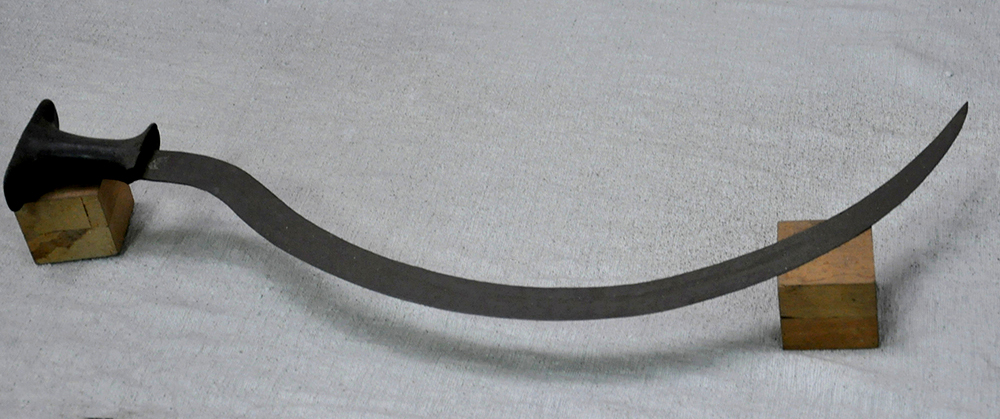
Our intrepid reporter travels to the Land of Cush. READ The Rainbow Continent Kung Fu Friendship Tour Part 1: Welcome Home to Ethiopia by Gregory Brundage
THREADS
The Silk Road
African Martial Arts
Shaolin Rasta - the 37th Chamber
Our newest exclusive web article
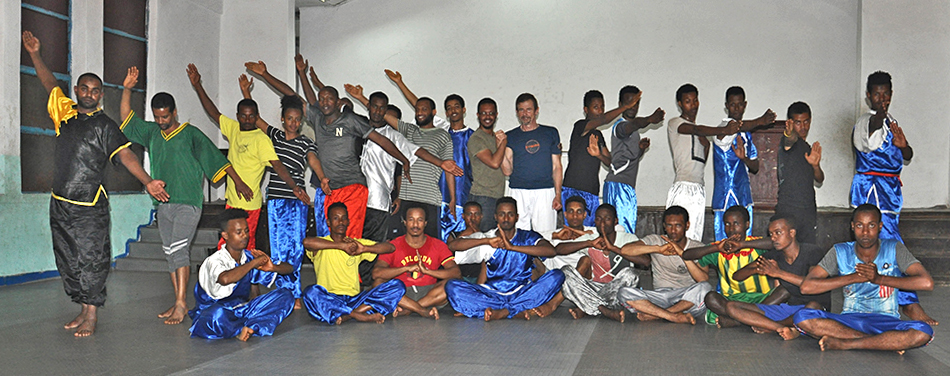
Our intrepid reporter explores Wushu in the Land of Cush. READ The Rainbow Continent Kung Fu Friendship Tour Part 2: Ethiopia by Gregory Brundage
THREADS
The Silk Road
African Martial Arts
Shaolin Rasta - the 37th Chamber
Kung Fu Vapes
Oh man, srsly? If they sent a sample, I’m sure I could find some one to review it. Maybe a Shaolin Rasta or a Marijuana TCM proponent?
MARKETING > EVERCANNABIS
Kung Fu Vapes sees growth ahead
Mon., Aug. 19, 2019

Alexis Dawson and John Dawson Jr. of Kung Fu Vapes (Joe Butler / EVERCANNABIS)
By Joe Butler
EVERCANNABIS Writer
Kung Fu Vapes
4811 N. Market St., Spokane
(818) 254-8861
www.kungfuvapes.com
John Dawson Jr. knows exactly when his Aha! moment happened.
In a tattoo shop in San Diego, a friend asked him to try an early version of a vape pen loaded with hash, a cannabis concentrate.
Hed smoked pot before growing up but never experienced the type of high as he did with that device. He instantly knew that plenty of people are going to love their cannabis this way, and he wanted to be part of it.
We went on a mission right then to all the stores around town and bought any kind of e-cigarette and vape pen we could find, so we could take them all apart, see how they were made, and see if we could figure out how to make them better, said Dawson.
Today, a decade later, Dawson is the owner of Kung Fu Vapes, which provides components for vaporizers, including batteries and cartridges, plus all sorts of pens and pocket rigs designed for heating cannabis concentrates or oil.
We love to help design, brand, and package products for different companies, he said.
Located on Market Street in the Hillyard area, he and co-owner/brand manager Alexis Dawson now work with producers and processors and retailers in 25 states.
While Kung Fu Vapes must follow state rules governing the sale and use of vape products, the restrictions for 502 licensees dont apply, allowing it sell and distribute outside of Washington.
This evolution is a trip we have a small niche of the industry, but were doing huge numbers around the country and even internationally, John Dawson said.
Vape pens/e-cigs can deliver a more potent experience than smoking flower. Theyre also more discreet than a traditional pipe or bong, can easily fit in a pocket or purse, and the vapor doesnt fill the lungs or have a strong odor like pot smoke does.
A client may have ideas of what they want or dont want in their next vape product. Or Dawsons manufacturing partners in China may suggest new products and materials. Mostly, the ideas for come from his own hands-on research.
Were always trying to push the industry forward, he said. We never want to follow trends we want to create them.
He also likes to visit different growers and social media/industry influencers, and is always attending cannabis events around the country, either as a vendor or an attendee to learn what new products are in the works. Its also a chance to educate consumers and possible partners about everything Kung Fu Vapes can bring to the table.
He and Alexis essentially do everything it would easy to hire sales people around the country, but he likes being hands-on and involved in all discussions and decisions.
Kung Fu Vapes recently released the Quasar pod system, a one-time use fillable pen thats already receiving praise for its portability, stability, and ability to use different types of oil. Its child-proof, and theres no wicking or alloys involved.
Later this year, it plans to release Kung Fu Vitals, a pre-filled device containing CBD oil sourced from high-quality hemp grown in New York.
Dawson said this is a great time for the industry. Though there are a lot of vape products, producers/processors want to make sure their customers have safe, reliable and enjoyable products, and thats where he thinks Kung Fu Vapes has established a great reputation.
What were seeing right now is this perfect blending of electronic materials and cannabis, and its all going to get bigger, he said. There are a lot of products out there, but your hardware is going to define you.
Joe Butler is a longtime marketing writer and editor at The Spokesman-Review. Hes an enthusiast of Star Wars, commemorative spoon collecting, and the Oxford comma.
Came to salute this thread just for the title, and say I’m all for the 37th Chamber.
check dis 'ere
Culture Desk
Stephen Cheng Released One Single That Sounded Like Nothing Else. But Who Was He?
The story behind an obscure and beloved rocksteady recording and a singer who tried to bring worlds together in his music.
By Hua Hsu August 23, 2019

Photograph by Friedman-Abeles / © The New York Public Library
Pop-music history is filled with dreamers who came and went, leaving behind just enough to scramble a latter-day listener’s sense of what was once possible. In 1967, the Jamaican record label Sunshine released a seven-inch single by a man named Stephen Cheng, titled “Always Together (A Chinese Love Song).” The track begins in the loping, offbeat style of rocksteady: a guitar cranking through a skanking rhythm, the bass slinking up and down in the background. But things get odd when Cheng starts singing. Most Jamaican rocksteady singers of the time mimicked the cadences of American soul. Cheng sings in a bold, over-the-top style reminiscent of Chinese opera. The words he sings are in Mandarin: the lyrics for “Always Together” were adapted from “Girl from Ali Shan,” a folk song that originated in Taiwan, thousands of miles from Jamaica. “Always Together” was obscure even upon its release; eventually, it became a cherished novelty among hard-core Jamaican-music fans. But, for years, the few historians and collectors who knew about it wondered about its provenance. Chinese Jamaicans played a significant role in the island’s rocksteady and reggae scenes, as both performers and producers, but Cheng was an unknown. Where did he come from? And where did he go?
Last year, I joined the curatorial team at New York’s Museum of Chinese in America for “The Moon Represents My Heart,” an exhibit focussed on the role that music has played in Chinese-American life. Our show didn’t have a central story, because there’s no single thing that might credibly be called “Chinese-American music.” Instead, we tried to explore how music brings meaning to our lives, whether we are singing in church or at a karaoke bar; freestyling with friends or dancing at a rave; learning enough chords to make a racket at a club or in the garage. Sometimes the meaning of such experiences doesn’t come into focus until later—the piano lessons you were forced to take as a child morph into a predisposition for synth-pop. Music shapes our identities in ways that, like a forgotten recording artist, can be difficult to trace. Our show’s title came from a 1977 hit by the Taiwanese pop singer Teresa Teng, whose songs about romance and reunion bound people throughout the Chinese diaspora, serving as a beacon for those who would never return home. Naturally, we were drawn to musical stories involving unlikely circuits of encounter. One day, while working on the exhibit, I mentioned Stephen Cheng to one of the museum’s curators, Andrew Rebatta. I played “Always Together” for him, and he was entranced. Within a week, he had tracked down Cheng’s family.
Cheng, we were surprised to learn, was a New Yorker. He had died in 2012 and was survived by five children, who told us that music was a constant part of their upbringing. Their father was born into a well-to-do family in Shanghai, in 1921, and worked as a journalist there after college. In 1948, he moved to Hawaii, where he had family, and then to New York, where he attended Columbia, and later studied singing at Juilliard. He was cast in Broadway shows, including “The World of Suzie Wong” and “Flower Drum Song,” and he recorded an album of Chinese folk songs for New York’s Monitor Records. His summers were spent performing theatre and touring.
Cheng’s children knew most of this growing up. But they had not learned about “Always Together” until recently. In November, 2017, Cheng’s son Pascal discovered it by chance on YouTube—he had listened to some of his father’s other recordings, and the site’s algorithm suggested it to him. The song had been uploaded to YouTube in 2010, around the time the single was reissued by a Japanese record label specializing in Jamaican obscurities. Pascal left comments below the YouTube video and on music blogs, touting his father’s long career and asking if anyone knew about the song’s origins.
After Rebatta, the curator, contacted Cheng’s family, Cheng’s daughter Danielle came by the museum. She brought a collection of files that their father had kept about his musical exploits: news clippings and magazine articles, advertisements of shows in Jamaica and Trinidad, glossy photos of him performing on “The Steve Allen Show” and the Jack Paar show. (He also performed on “The Ed Sullivan Show.”) In some of the photos, Cheng is dressed in a silk robe, marking him as Chinese; in others, he sports the sharp suit or flowy shirt of a nineteen-sixties lounge singer. He wears a broad, blissful smile in nearly all of the pictures.
Cheng saw music as a way of reaching people outside his predominantly Chinese-speaking world. His ability to sing in different languages allowed him to tour throughout the West Indies, catering to communities of Chinese immigrants, and, after a successful string of shows in Suriname, he secured a hotel-lounge gig in Trinidad and Tobago, where he performed a repertoire that included songs in English, French, German, Italian, Spanish, and Chinese. He became a minor star. In the late sixties, he worked with the local government to stage a series of shows as a benefit for the National Stadium of Trinidad, bringing, as he would later write, “the Chinese out of the confines of the strictly Chinese community to work with the other racial groups for the benefit of their whole country.” His fame spread to Jamaica. On a visit sponsored by the Chinese Benevolent Association, he met Byron Lee, a renowned Chinese-Jamaican musician, and they recorded “Always Together.”
Back in New York, in the early seventies, Cheng started a band called the Dragon Seeds. (Byron Lee had a band called the Dragonaires, though it’s likely the similarity is a coincidence.) Among the files that Cheng’s children brought was a draft of a press release that described the Dragon Seeds’ approach to blending Chinese traditional song with a softened version of American rock—“a new Chinese folk rock sound,” minus the “screaming.” Trying to imagine what the Dragon Seeds actually sounded like was dizzying. Reviews described Cheng’s singing as “attractive,” “sensitive,” and “attractively unassuming”; the Times praised his “superior way of reacting to the moods of each song.” The band’s lineup featured twelve musicians playing Chinese instruments, surrounding a four-piece jazz band. They played the Public Theatre and benefits for Chinatown churches. In 1971, they were invited to be part of Jazz in the Garden, a Museum of Modern Art concert series that also included legends of jazz, blues, and Latin music. The program included Elvin Jones, Odetta, Big Mama Thornton, and Mongo Santamaría among the performers. Cheng and the Dragon Seeds was the only act that I had not previously heard of, the only one that hadn’t left an obvious legacy.
continued next post
Continued from previous post

Stephen Cheng, August, 1971.
Photograph by Leonardo Le Grand / MOMA
Some time after Danielle dropped off the files, she provided a couple of reels of quarter-inch tape, one recorded in Jamaica, presumably with a local band, and the other a live Dragon Seeds set from Town Hall. It seemed possible that the second reel represented the entirety of the Dragon Seeds’ extant recordings.
So much of what we know about immigrant life, even in the not very distant past, is thanks to hoarding and scavenging, rather than the sort of careful personal archiving one sometimes sees among the more powerful and well-to-do. When we were putting together “The Moon Represents My Heart,” we wanted things that could bring shape and texture to the role that music had played in Chinese-American life, and I thought it would be easy to find personal mementos and fan-club membership cards, mixtapes or photos of epic karaoke nights. But, when you don’t see yourself as part of a scene or a movement, you may not think such things need to be saved. Immigrants have not tended to regard their own lives as rising to the status of history. Sometimes they simply don’t have the room or the resources to keep records of their lives.
We converted Cheng’s reels into audio files, but I was hesitant to listen. Lost artifacts are almost always better in the imagination, burnished by hope and yearning. When we pressed play, I was captivated by Cheng’s voice. He croons with a kind of desperate earnestness. There were standards, such as “The Shadow of Your Smile” or “Softly as I Leave You,” that I’d heard hundreds of times before, but never with his amateurish zeal, which soars above his band’s tasteful, jazzy pop. He sings with a slight accent and seems to compensate for it by singing louder, with more passion. There’s a groovy song inspired by the Chinese tale of the “Butterfly Lovers”; he races through English-language lyrics about lovers reuniting in heaven, accentuating his words with a series of delirious, scat-like trills and the Chinese expression “Ai-ya! Ai-ya!”
The Dragon Seeds fizzled out after a few years, and Cheng redirected much of his energy from performance to teaching. He gave voice lessons at the New School, N.Y.U., the Stella Adler Conservatory, and Sarah Lawrence College. In 1991, he published “The Tao of Voice: A New East-West Approach to Transforming the Singing and Speaking Voice,” a book that tried to fuse ancient Chinese philosophy and breathing practices with Western vocal technique. It wasn’t intended only for aspiring performers: Cheng wanted to help all kinds of people feel confident using their voices, whether to sing or to give presentations at work.
The reels that Cheng’s children brought didn’t contain other rocksteady gems like “Always Together,” though the Dragon Seeds did record a more traditional version of “Girl from Ali Shan.” There was also a funky version of another Chinese folk song, “Girls from Daban City.” On all of the tracks, Cheng sounds impossibly hopeful, as though his effervescence can’t be contained, and he can’t help but share it. His performance spans styles and eras: he affects a heavy vibrato croon here and lightly tiptoes through syllables there, occasionally flitting between English and Mandarin. The song I can’t stop listening to is his version of “Yesterday.” The recording begins with a dutiful polish, but soon Cheng breaks free of the cool economy of the Beatles’ original, and begins singing with a kind of operatic gusto. It’s a song about longing and memory, and he’s trying to sing it into tomorrow.
“The Moon Represents My Heart: Music, Memory and Belonging” is on view at the Museum of Chinese in America, in New York, until September 29th.
Hua Hsu is a staff writer at The New Yorker and the author of “A Floating Chinaman: Fantasy and Failure Across the Pacific.”
[QUOTE=Djuan;1315262]Came to salute this thread just for the title, and say I’m all for the 37th Chamber. [/QUOTE]
Welcome 'ere mi bredren.


