Made in China

Continued from previous post

[QUOTE]TO THOSE IN THE COUNTRY, “MADE IN CHINA” MEANS ITEMS PRODUCED BY THEIR FELLOW CHINESE THAT CONTRIBUTE TO THE ROBUST ECONOMY

Today, Walmart outsources the majority of its production around the world. According to a 2011 report in the Atlantic, Chinese suppliers are believed to account for around 70 percent of the company’s merchandise. A 2015 analysis from the Economic Institute, a progressive think tank, found that Walmart’s trade with China may have eliminated 400,000 jobs in the US between 2001 and 2013.

This is something Walmart says it’s trying to change. In its 2014 annual report, the company pledged to spend an additional $250 billion on US-made goods by 2023, saying it believes “we can drive cost savings by sourcing closer to the point of consumption.” Research from Boston Consulting Group projected this could create a million new US jobs.

At the initiative’s 2018 halfway point, though, it’s unclear how many jobs have been created or how much money has actually been spent. Additionally, in 2015, the Federal Trade Commission initiated a probe into Walmart’s mislabeling of foreign goods as “Made in the USA.” Walmart took action by removing inaccurate logos and making its disclosures more transparent, only to come under fire for deceptive “Made in the USA” labels yet again the very next year.

Forced labor is commonly practiced in the Chinese prison system, which the Chinese Communist Party first established countrywide in 1949, modeling it on Soviet gulags. The kind of crimes that land someone in the Chinese penal system range widely, from murder and bribery to saying anything remotely bad about the government. Freedom of speech isn’t a reality for Chinese citizens, who can face decades in prison for publishing articles about human rights online.

A tenet of the Chinese justice system is that labor inside prisons is good for the country. The government, as well as many of its citizens, believes it helps reform corrupted people — and China is far from the only country to use prison labor. The US legally benefits from labor in its prison system, and while not every US prison practices penal labor, hundreds of thousands of American inmates work jobs that include making furniture and fighting fires. In August of this year, prisoners from 17 states went on strike to protest being forced to work, characterizing the practice as “modern slavery.”

Peter E. Müller, a leading specialist at the Laogai Research Foundation, and his team extensively document the human rights abuses inside China’s prison system. This work includes identifying prisons and camps that employ forced labor, tracking the inmate population, and gathering personal testimony from those who have experienced forced labor.

He says prisoners in China, the US, and elsewhere are sometimes paid for their labor. (In the Walmart note, the writer describes forced labor and beatings, as well as low pay for long hours and health care deducted from payment.) The amount depends on the financial situation of the prison; the average pay in American state prisons is 20 cents an hour. Müller says the monthly salary specified in the note (2,000 yuan, or $295) is “unusually high,” but speculates that it may be because the prison “makes good money because of high-quality workers.”

Human rights organizations, such as the Laogai Research Foundation and China Labor Watch, say the biggest problem in stopping the export of products made in prisons is that the supply lines are “almost untraceable.” Supply lines, in general, are very difficult to trace due to the enormous complexity of supplier networks, a lack of communication between actors, and a general dearth of data that can be shared in the first place. The result is a frustratingly opaque global system of production.

Li Qiang, the founder and executive director of China Labor Watch, explains that American companies that manufacture abroad place their orders directly with factories or sourcing companies, and that those factories and companies can transfer the orders to prisons without the company’s knowledge. In fact, some of these relationships are formalized to the point where prisons that use forced labor have a sister factory that coordinates the prison manufacturing.

It’s essentially a front, as sister factories will use a commercial name for outside trade, intentionally mislabeling products that are made in prisons. Prisoners are never physically sent to the sister factories; the main bulk of the production happens on prison grounds. Once nearly complete, items are then sent to the sister factories, where they are prepared and labeled for international delivery. This system isn’t easy for companies to monitor. Suppliers conceal these practices from clients, and supplier checks are not frequent, especially for large corporations like Walmart, which use a large number of suppliers and subcontractors.

Qiang says the issue can feel intractable. “Even if shoppers in the US understand that the items are being made under poor working conditions, there is nothing they can really do,” he says. “Multinational corporations will not invest in improving their supply chain if there are few laws to protect workers whose rights are being violated, and no successful lawsuits against brands, companies, or their factories for violating them.”

On a Tuesday morning in late May, Channing and I sit at a table in our hotel lobby. We browse message boards on Baidu, one of the country’s most popular search engines and social networking sites, to see if the issue of prison labor is discussed on Chinese social media, or if it’s a subject the government censors.

In a matter of seconds, Channing is able to find discussion boards filled with suppliers looking to outsource labor to prisons. The conversations are quite ordinary — there is no coded language, and full addresses and contact numbers are included in postings. We also find dozens of posts from people offering the services of prisons they work with to mass-produce items for overseas companies, including “electronic accessories, bracelets, necklace bead processing, toy assembly, and shirt processing.”

One post in Chinese reads: “Because our processing personnel are from prison, it has the following advantages. The prison personnel are centralized and stable, and they are managed by the prison. There is no need to worry about the flow of people and the shortage of labor. The processing price is low: Since the processing location is in prison, there is no need for manufacturers to provide space and accommodation; and the prison works in the principle of serving the people, so the processing price is guaranteed to be absolutely lower than the market price. If your company needs it, please contact!”

In an effort to verify not only that Yingshan prison exists but also that it’s one of many Chinese factories that use forced labor and contract with manufacturers, Channing and I drive toward the suburbs in the eastern part of Guilin.

[/QUOTE] continued next post

Continued from previous post

Channing asks our driver to drop us at a high school so we can remain undetected. Nearby, I’d marked a spot where I believed the prison to be according to the human rights report I’d found before arriving in China. But the prison isn’t there. In its place is a crossing, though there’s reason to believe the prison is closed — a dilapidated sign pointing left reads: Yingshan.

We walk down the road and find the area under heavy surveillance. Security cameras are hitched onto poles on every corner of the pathway. The ****her we walk, the more literal the warnings that we shouldn’t be there. Three different signs hammered into a tree read: “DO NOT APPROACH.”

Yingshan prison, described in a note found in a Walmart handbag thousands of miles away in the US, does exist — and we are standing in front of it.

Though it had been difficult to find, it actually doesn’t seem so hidden after all. It is integrated into the neighborhood, just around the corner from a driving school, near leafy streets and apartment blocks.

The prison doesn’t look like an archetypal prison you’d see in the US. If it weren’t for the two security watchtowers, Yingshan could be mistaken for a modern residential building. Thick bushes cover dark blue metal fences lined with barbed wire. The high walls are painted cream with decorative white lines demarcating each of the building’s five floors. Each window has a neat white frame, with a metal air vent attached.

Several guards in uniform are standing in the parking lot of the building next door. We don’t approach them for fear of being detained. The Chinese government treats both domestic and foreign journalists hostilely. Reporters are often banned from entering the country, and they have also been detained for their work. Our safest bet for gathering information is to speak to people in the area who may have ties to the prison.

Walking down a second pathway that runs alongside Yingshan, the village of Sanjia comes into view. Sanjia is a small village that abuts the prison grounds. In the village, crumbling homes stand alongside gated, modern ones painted gold. Locals say this is because the land is being bought out, and that the village is grappling with redevelopment.

Each person we speak to has a personal connection to the prison. They know people imprisoned, have a family member working inside, or have worked inside themselves. They tell us that guards who work in Yingshan are housed with their families in an apartment complex next to the prison. We realize this is the building with the parking lot filled with uniformed guards.

Zhenzhu, who asked that her surname not be used for fear of retribution from the government, can see the prison from her front door. A jovial woman, she has lived in the village for 14 years, moving to the area right after she was married. As we talk, we hear pigs squealing. Zhenzhu explains that those are her pigs, 100 of them, next door in a slaughterhouse she runs with her husband.

When the building of the prison commenced in 2007, Zhenzhu was three months pregnant, and her husband was employed as a construction worker on the project. By the time their daughter turned 3, the building was complete. Zhenzhu has visited the prison before, to see an inmate; Yingshan allows visits from family members under heavy security. She says its walls are buried so deep into the ground that “even if the prisoners want to break out by digging an underground tunnel, they can’t dig through.”

[QUOTE]YINGSHAN PRISON, DESCRIBED IN A NOTE FOUND IN A WALMART HANDBAG THOUSANDS OF MILES AWAY IN THE US, DOES EXIST — AND WE ARE STANDING IN FRONT OF IT

Zhenzhu recounts much of what her husband told her about his experience at Yingshan. For years following the construction, he would visit for maintenance checks and additional building; trucks were always driving fabric in and out of the prison. The trucks, he told Zhenzhu, were from factories located in the Guangdong province. Guangdong is home to an estimated 60,000 factories, which produce around a third of the world’s shoes and much of its textiles, apparel, and toys.

Everyone we speak to, Zhenzhu included, says they’ve seen labor inside the prison or have been told about it directly by inmates. None were familiar with Walmart goods being produced there, but some could confirm that women’s fashion is manufactured inside.

To those in the village, prison labor is not just common knowledge; it’s also necessary. They consider the prisoners “bad guys” who have committed horrible crimes. In their eyes, the labor is a good thing: It helps rehabilitate inmates and gets them to understand the value of work. But that work can come at a great cost. According to local hearsay and furthered by a published account from a woman who was married to a Yingshan prison guard, inmates have been known to kill themselves because of the poor conditions and forced labor.

Zhenzhu leads us around the edge of the village, to get a side view of the prison. She points to the building we first passed and tells us that’s where the inmates eat and sleep. She then points to a building ****her in the distance on the left that looks almost exactly the same. It’s also painted cream, but with slightly larger white window frames; a yard obscured behind the prison wall separates the structures. The second building, she tells us, is for “the work.”

The Walmart note followed a tradition of hidden messages found by shoppers. In 2014, shoppers found labels stitched into several items of clothing in Primark stores across the UK. The labels, written in English, read: “forced to work exhausting hours” and “degrading sweatshop conditions.”

As the notes spread across social media, the fast-fashion company conducted an investigation and found the labels were fake. The company said the items were all made by different suppliers, in different factories, on different continents. They stressed it was impossible that the same labels, especially those written in English, would appear on all the items and that they believed the labels were part of an activist stunt carried out in the UK.

Though no one claimed credit for the labels, activist groups had been waging campaigns to protest Primark’s labor practices in the time leading up to their discovery. War on Want led a 2013 campaign against the company after more than 1,100 people died as a result of the Rana Plaza collapse. Primark, along with J.C. Penney and Joe Fresh, was among the retailers whose products were made in the Bangladeshi complex.

Almost all the messages that have been found in stores have come under public scrutiny, as they’re often suspected of being written and planted by activists. The handwriting, the language, and even the paper used for notes have pointed to activist work. For example, several notes and labels, like the Primark ones, were written in English. Many inmates and factory workers in China, as well as Bangladesh, come from poor backgrounds and are unlikely to have had the chance to learn English in school.

[/QUOTE] continued next post

Continued from previous post

There have been, however, at least two instances in which actual workers have claimed the notes. In 2011, a shopper bought a box of Halloween decorations at an Oregon Kmart. She found a note inside the box, allegedly from a prisoner in China explaining that he had made the item under forced labor conditions.

Two years later, Zhang — a man who asked newsrooms to only use his surname for fear of being arrested and imprisoned again — claimed to be the writer of the note. He said he planted 20 such notes during the two years he spent in prison, with hopes they would reach American stores. His handwriting and modest English language proficiency matched those of the note, but even then, it wasn’t feasible to fully corroborate his story. As the New York Times wrote, “it was impossible to know for sure whether there were perhaps other letter writers, one of whose messages might have reached Oregon.”

The second instance came in 2014, when a shopper in New York found a note in a Saks shopping bag she received when purchasing a pair of Hunter rain boots two years earlier. The note, written in English, claimed to have been written by a man in a Chinese prison; it also included his email address, photo, and name, which led to the finding of the alleged author, Tohnain Emmanuel Njong. Originally from Cameroon, he said he’d been teaching English in China when he was arrested in May 2011 and wrongly jailed for fraud charges.

In both cases, the final step of verification would be to confirm with the prisons mentioned in the notes that Zhang and Njong served sentences at their facilities and that forced labor occurs there. But since Chinese prisons refuse to provide comment on such stories, there’s little way of definitively confirming the prisoners’ accounts.

In 2017, the validity of hidden notes came into question yet again. Shoppers in Istanbul found tags inside clothing items in a Zara store that read: “I made this item you are going to buy, but I didn’t get paid for it.”

It turned out Turkish workers, who produced the clothing for Zara in an Istanbul factory, planted the notes in protest. The factory where they had been employed closed down overnight, leaving them suddenly without jobs or a source of income. The workers wrote notes urging shoppers to pressure Zara into giving them the back pay they were owed. They then went to a Zara store in the center of Istanbul and hid the notes in the pockets of clothing being sold inside.

[QUOTE]“WHEN WE THINK WE’RE NOT GETTING MOVEMENT FROM COMPANIES, WE TURN TO CONFRONTATIONAL TACTICS LIKE THIS”

The Turkish workers didn’t come up with the idea of the notes on their own. The Clean Clothes Campaign and its alliance partner Labour Behind the Label (LBL), an organization that campaigns for garment workers’ rights, helped plan the action.

LBL and other campaign groups have organized “note droppings” like this in retail stores like Zara for many years. The notes describe how poor labor practices are behind the store’s items; LBL gathers information about these practices through its own reports and interviews.

“Dropping notes is an extension of leaving leaflets in stores,” says LBL’s director of policy Dominique Muller. “When we think we’re not getting movement from companies, we turn to confrontational tactics like this.”

LBL doesn’t worry that the notes they plant in stores could overshadow any potentially real notes found in stores. “These notes are just a drop in the ocean. They’re still new” — as an activism tool, that is — “and they will continue to have an impact.”

As of this June, the Turkish workers had only received partial payment.

Finding Yingshan brought some answers about the validity of the note. For one, the prison named in the Walmart note exists. We heard firsthand accounts from locals who said forced labor does occur inside the prison as the note described. What we were told about the work is that the hours are long, the work is done indoors, and the labor involves manufacturing fashion items, which might include bags like the purse Christel bought in Arizona.

After Walmart issued its statement about there being “no way to verify the origin of the letter,” the company launched an internal investigation. It was found that the factory that made the purse didn’t adhere to Walmart’s standards, which stress the need for “labor to be voluntary” and state that “slave, child, underage, forced, bonded, or indentured labor will not be tolerated.” As a result, the company cut ties with the supplier, a decision the company only disclosed after it was contacted for this story. Walmart declined to clarify whether the supplier in question had contracted with Yingshan prison.

In a statement to Vox, a Walmart spokesperson wrote: “Walmart has strict standards for our suppliers, and they must tell us where our products are being made. Through our investigation into this matter, we found the supplier’s factory sent purses to be made at other factories in the region that were not disclosed to us. The supplier failed to follow our standards, so we stopped doing business with them. We take allegations like this seriously, and we are committed to a responsible and transparent supply chain. There are consequences for our suppliers when our standards are not followed.”

One last question did remain unanswered. Was the note written by an actual prisoner, or by an activist with knowledge of the conditions that produced the bag? Müller of the Laogai Research Foundation believes the note is indeed real.

The description and details referenced in the note, he says, mirror much of what he’s heard in interviews with former prisoners. He says the language, the style of writing, and the use of the phrase “horse cow goat pig dog” — a common expression in China that compares the treatment of prisoners to that of animals — add to its authenticity. He believes the writer of the note certainly risked his life to send his message.

Even if the note is real, though, what’s come to light during the reporting of this story is that the Walmart note won’t end forced labor in China. The government is not going to release a public statement condemning human rights abuses inside its prisons because of stories like this one. It doesn’t see forced labor as a human rights abuse; Chinese citizens who don’t support the practices risk arrest if they speak out, and so most won’t.

The pitfall of pinning reform on awareness is expecting a bad thing to end if enough people know about it. Very rarely does mass attention on an issue result in a tangible shift in how things work. If merely sharing information were enough, the countless viral stories about forced labor recounted here would have already resulted in widespread reform.

Still, the incremental change the Walmart note led to — however impossibly small, however seemingly inconsequential — is a step. It has to be.

Additional reporting by Channing Huang.[/QUOTE]

“we found the supplier’s factory sent purses to be made at other factories in the region that were not disclosed to us.” = kill with a borrowed dagger.

So politicized now…

Kinda dumb to get in a legal battle with a courthouse. :rolleyes:

Company removes ‘Made in China’ desks after contract flap
By THE ASSOCIATED PRESS
IONIA, Mich. — Dec 12, 2018, 11:04 AM ET
Email
A company has removed Chinese-made office furniture it delivered to a Michigan courthouse following a six-month legal battle with officials who wanted American-made products.

The (Greenville) Daily News reports that Custom Office Systems removed the unwanted desks — many of them faulty — on Monday from the Ionia County Courthouse. The Ionia-based company earlier this year delivered the desks in boxes clearly marked “Made in China” along with some American-made furniture.

County commissioners in April went with Custom’s $41,862 bid over a rival’s $33,739 offer based on the promise that the furniture would be made in the U.S. Commissioners demanded the Chinese-made furniture be replaced with American-made products and in June voted to end Custom’s contract and accepted the rival’s bid.

Custom apologized and blamed the mistake on an oversight with its U.S.-based supplier.

2025

I think most Americans are more concerned with 2020 than 2025. We’re self centered that way. :o

Macroscope by Bloomberg
The world can rest easy, as there is nothing to fear from the Chinese government’s ‘Made in China 2025’ industrial plan
China will spend US$100 billion less than budgeted for R&D in the five years ending 2020, missing the government’s target
PUBLISHED : Sunday, 16 December, 2018, 4:50pm
UPDATED : Sunday, 16 December, 2018, 4:50pm

China’s industrial ambitions have the US on edge. But what has actually come of its plans for global technology domination?

The road map, which seeks to advance domestic production of critical technology, has been a key bone of contention in President Donald Trump’s trade war. Other reports said China may replace the programme altogether and give foreign companies more access to its market.

On the same day, though, the State Council said it had decided to boost “mechanised farming” and upgrade agricultural machinery (while also noting that farmers would be subsidised whether buying foreign or Chinese brands). And the Ministry of Industry and Information Technology said it would roll out policies to upgrade manufacturing with “cutting-edge technologies.” Both announcements were in line with “Made in China 2025” goals.

The reports make one thing clear: China isn’t going to rein in its industrial objectives any time soon. At the same time, it’s a long way from achieving those targets.

By the numbers, China increasingly doesn’t need the world’s factories. The foreign content of its exports, based on the ratio of imported components, has been dropping for the last 20 years. Most basic inputs are now made in China.

But that is also true for foreign companies. Consider ABB. The Swiss industrial giant sources locally almost 90 per cent of the parts it uses to manufacture transformers, robots and electrical equipment in China, and sells most of its output there, according to Morgan Stanley.

“Made in China 2025”, published in summer 2015, laid out how and why China would need to move up the technology ladder and close the gap with developed countries in higher-end or intelligent manufacturing.

The plan identified 10 key sectors and set out targets to raise domestic content in core components and materials. The global community has balked at the proposal, seeing it as a type of stealth import substitution policy. Its financial scale has sent shudders, with hundreds of billions of dollars in funds backed by state banks and other pools of government capital.

But Beijing doesn’t have much to show for all this. China’s research and development expenditure, while growing, remains well below the likes of the US and Japan as a percentage of GDP.

R&D intensity, a proxy for how effectively the country has spent its money, has barely budged in the past two years.

At a recent business forum, a senior official with the financial and economic affairs committee of the National People’s Congress NPC) said China was likely to miss its targets for R&D spending as a portion of GDP in the five-year plan ending 2020. The nation will effectively end up spending US$100 billion less than it had budgeted.

Speak to CEOs of German machinery makers, and they will tell you China’s expertise may have reached the second or third level, but it is nowhere close to the highest tier. Chemical companies in southern China say every local entrepreneur wants to make the compounds but when it comes to the high-end they cannot quite cut it, producing formulations that are often unstable.

In 2017, hi-tech manufacturing accounted for just under 13 per cent of total industrial value-added. More than half of China’s technology standards for smart manufacturing do not match internationally accepted ones. That might hinder foreign players, but it also impedes the nation’s own companies on the global stage.

A look at the state of the new energy vehicle, or NEV, industry suggests China is unlikely to race ahead. Domestic production is supposed to have an 80 per cent share of the NEV market by 2025. Yet for all the millions of NEVs China now churns out, it has yet to produce a global or even a domestic champion.

Instead, subsidies have led to swathes of low-quality electric cars. Several would-be “Tesla killers” have come and gone. Ultimately, China brought in Tesla itself to manufacture locally.

Despite the trade tensions and the apparent barriers, foreign investment in China has continued to pour in. In the first 11 months, it rose 1.1 per cent to more than US$120 billion and the number of newly approved foreign-invested enterprises increased by almost 78 per cent. Funds going into the high-sector climbed 30 per cent.

Clearly, foreign investors aren’t too concerned by “Made in China 2025”. After all, other countries have industrial policies. The US-Mexico-Canada trade agreement has local content rules. India has exorbitant import tariffs. And the Committee on Foreign Investment in the US now targets all of the industries China has listed in its 2025 plan.

China’s openness to foreign investment has served it well - and overseas companies such as BMW, Dow-DuPont and Apple that have profited there.

The country has a better chance of climbing the technology ladder by exposing its companies to the rigours of world-class competitors than by seeking to shut them out with rhetoric-heavy and substance-light strategy documents. There’s little to fear from “Made in China 2025”.

advantages

The advantages of ‘Made in China’ still outweigh the risks
While some companies have announced that they are looking elsewhere, there is little evidence of a systemic spike in the number of firms shifting production away from China in the wake of the trade dispute
Herald van der Linde
Published: 7:35pm, 13 Apr, 2019


The “Made in China 2025” industrial modernisation programme aims to make the country a dominant player in 10 strategic industries. Photo: Reuters

Export manufacturers in China are clearly worried about the potential impact of raised US import tariffs, but the latest evidence seems to suggest that most are not yet worried enough to shift production away from the mainland.
True, some companies have announced that they are looking to set up export manufacturing capacity elsewhere. South Korean memory chip maker SK Hynix says it intends to move some output back home; Taiwan-headquartered Foxconn, which assembles the iPhone, has said it is looking at expanding in Vietnam; and officials at both Toshiba Machine Co and heavy equipment manufacturer Komatsu have told the media that they are already moving some production out of China.
Manufacturers of high-volume, low-margin products in search of cheaper labour and land have been moving capacity elsewhere in Asia for years and it is difficult to determine how much these more recent shifts have been prompted by the uncertainties of the US-China trade relationship or if they are part of the longer-term trend to diversify production prompted by rising costs in China and new opportunities elsewhere.
Whatever the motive, there is little evidence of a systemic spike in the number of companies shifting production away from China in the wake of the trade dispute. It is notable that the trade deficit in goods between the US and China reached a 10-year high of US$419 billion in 2018 despite the threat of raised tariffs. While this is at least partially a result of stockpiling ahead of any announcement, more granular data tells a similar story of business as usual.
Capital expenditure levels in the rest of Asia are actually down in 2019 year to date compared to 2018. If companies were investing significant sums in buying property or machine tools ahead of a move, they would be expected to rise. Indeed, orders from the Japan Machine Tool Builders’ Association, a useful leading indicator for investment in new manufacturing capacity, are also down from the same time last year.
These are all indicators that initial worries of a mass exodus from China in response to the trade tensions are overdone. We argue that China will be investing more in new equipment or factory extensions, suggesting that exporters have chosen to upgrade existing facilities to improve quality and productivity to allow them to raise prices to offset the negative impact of the tariffs.
It seems that although export manufacturers are looking at the prospect of raised tariffs with alarm, for most the benefits of staying put outweigh the potential downside.
Push factors such as growing protectionism and rising wages for Chinese workers are a concern, but even the problem of rising wages has a silver lining. The Chinese middle class now numbers some 400 million and we expect it to grow to 850 million by 2030. Chinese workers have more spare cash to spend.
There are other strong pull factors. The mainland has a supply chain ecosystem unrivalled anywhere else in the world. The clusters of parts-production expertise that have grown up around centres like Shenzhen and Chongqing would take years of work and billions of dollars to reproduce elsewhere in the region.
China is also years ahead of the rest of Asia in both hard and soft infrastructure. High-speed rail and air links have opened up the middle of the country with its vast resources of labour and cheaper land to manufacturers. Its education system is turning out millions of new university graduates, new intellectual property laws have given added protection to proprietary technology, and authorities are still working hard to make exporters’ lives easier: for example, the central city of Chongqing, which manufactures a third of the world’s laptops, reduced export clearance times by 98 per cent in 2018.
For most manufacturers, it seems that the continuing advantages of “Made in China” outweigh the threat of new US tariffs.
Herald van der Linde is HSBC Global Research’s head of equity strategy in Asia-Pacific

This article appeared in the South China Morning Post print edition as: The advantages of ‘Made in China’ still outweigh the risks

Take it from an insider (me) - if a US/PRC tariff war really happens, the martial arts will take a huge blow. The bulk of martial arts gear - Chinese, Japanese & Korean - is manufactured in China. Uniforms, the largest moving item, can fall to clothing tariff. That’ll hit the schools and anyone who buys gear right in the wallet.

Chinabots

[URL=“https://www.scmp.com/economy/china-economy/article/3015136/chinas-robot-makers-are-hooked-subsidies-highlighting-another”]
China’s robot makers are hooked on subsidies, highlighting another red line in US-China trade war
Mentions of ‘Made in China 2025’ may have disappeared, but Beijing and local governments continue to subsidise emerging technologies, sparking US outrage
US President Donald Trump has long complained about China’s state subsidies, even accusing Chinese trade practises of ‘raping’ the American economy
SCMP
Orange Wang
He Huifeng
Sidney Leng
Published: 6:15am, 20 Jun, 2019


Last year China was the world’s largest producer of industrial robots – the machines that automate production lines – for the sixth successive year, with 147,682 units made, according to date from OFweek. Photo: Handout

Prospects of China and the US securing a deal to end the trade war are dwindling. This is the fifth in a series of long reads examining the elements of any deal that Beijing would be willing to agree to, those that are considered achievable in the long run, as well as the red lines, on which Beijing is unlikely to ever budge. Part five focuses on the complex issue of state subsidies for China’s hi-tech industries.
If Beijing’s phasing out of references to “Made in China 2025”, the ambitious blueprint for the country’s industrial upgrade, was supposed to convince the United States that it had dropped the plan, then an outburst from US President Donald Trump last week showed that the move had clearly failed.
In an interview with CNBC, Trump railed against the plan, claiming that he had told his Chinese counterpart Xi Jinping that it was “insulting” to America, and that it was his own threat of retaliation that led to the brand being quietly dropped.
Washington has long complained about China’s state subsidies. Trump has often directed his fury at heavy industry, railing against cheap Chinese steel flooding US markets, even accusing Chinese trade practises of “raping” the American economy. However, it is arguably Beijing’s subsidies for hi-tech industries that the US fears most, as can be showed by its pursuit of China’s technology giants, Huawei and ZTE.
Both China and the US are aware that whoever dominates in technologies such as 5G, robotics, electric vehicles and cloud computing, could gain the upper hand in both trade and military terms in the decades ahead. Furthermore, the US government can look at industries such as electric vehicles and solar cells for precedents as to how China subsidises a developing technology to the point of dominance and only then winds down government support.
In the EV sector, China is beginning to reduce subsidies, but only at a stage when it is by far the global leader. In 2017, the country produced more electric vehicles than the rest of the world combined, 579,000, compared to 200,000 in the US and 98,000 in Japan.
China views these technologies as crucial to moving its manufacturing economy up the value chain and avoiding the dreaded middle income trap, where wages stagnate, igniting the potential for domestic unrest. In that regard, subsidising new industrial sectors – as with the state support continually pumped into job-rich industries like machinery and car manufacturing – helps keep discontent among the public muted.
For these reasons, hi-tech subsidies are viewed by many as a red line for China in the talks with the US to end the trade war. Conversations with industry insiders – many of whom receive subsidies – reveal little desire to change a model which suits them well.


In 2017, China produced more electric vehicles than the rest of the world combined, 579,000, compared to 200,000 in the US and 98,000 in Japan. Photo: AFP

In the robotics business, for instance – one of the 10 key industries named in Xi’s Made in China 2025 plan, launched in 2015 – subsidies are warmly welcomed and viewed as necessary if Chinese companies are to be competitive.
Some even think that even with the billions being pumped into the sector from government coffers, Beijing is not doing enough, even though last year China was the world’s largest producer of industrial robots – the machines that automate production lines – for the sixth successive year, with 147,682 units made, according to date from OFweek.
Sun Kai, the chief technology officer of Beijing Elite Technology, a privately-owned industrial robot maker which opened a production plant in the manufacturing hub of Suzhou near Shanghai last year, said that he “absolutely” wanted the Chinese government to grant more financial support to the industry, despite US demands to stop.
“[The subsidies for buying robots] make little sense in terms of boosting the R&D on industrial robot technologies,” Sun said.
This year, the picture has been less rosy, with tariffs and a slowdown in global demand forcing industrial robot production down by 10.2 per cent in the first four months, according to OFWeek, a data resource for China’s hi-tech industries.
But that does not mean that Beijing has stopped subsidies. Government handouts accounted for 44 per cent of net profits for 53 listed robotic companies in 2018, according to a research note by Sinolink Securities, a sharp rise from the 10 per cent recorded between 2012 and 2017.
continued next post

Continued from previous post

[QUOTE]Big powers in manufacturing are all ratcheting up the development of intelligent manufacturing
unnamed Gree executive

Robotic industry subsidies come in different forms, but they are delivered by government authorities across China. In 2014 and 2015 alone, more than 36 Chinese cities launched a total of 77 supportive policies for the sector, according to the China Robot Industry Alliance.
This led to an influx of companies to the sector, including private start-ups like Beijing Elite Technology and major, established manufacturing players, such as Gree, a state-owned home appliance maker based in Zhuhai, which created a subsidiary in September 2015 to produce industrial robots.
“Big powers in manufacturing are all ratcheting up the development of intelligent manufacturing. China also released the action plan for Made in China 2025. Within this context, Gree dug into the research and development of intelligent equipment,” said an unnamed Gree Intelligent Equipment executive in a statement received from the company, who declined to disclose how much the company had received in subsidies.
In Suzhou, the municipal government released a two-year funding plan in 2016 for smart devices and the internet of things, whereby 500 million yuan (US$72 million) would go towards helping manufacturers upgrade their production lines with one-time rewards of between 5 million yuan (US$722,000) and 10 million yuan.
These enable companies to purchase robots from companies such as Beijing Elite Technology, but Sun said that he would prefer the government channel funds directly into research and development (R&D).
“It makes little sense not to boost the R&D on industrial robot technologies,” Sun said, adding that 10 per cent of his companies budget came from government subsidies.
“China’s robot industry is still falling behind the ones in Europe, the United States, Japan and South Korea. Most [robot] companies that target the high-end market are facing huge financial pressure, mainly from the spending on research and development.”
Zhu Sendi, a member of the National Manufacturing Strategy Advisory Committee, told the Made in China Forum in Foshan earlier this year that while China is the world’s biggest manufacturer, building better industrial robots would help it catch up with the US in terms of efficiency.
“It is urgent now for China to consider the strategy of how to transform manufacturing from big to strong. Intelligent manufacturing should be the main direction,” he said.
This is a widely-held view within the sector and one backed up by research as a study by the Chinese Academy of Engineering showed that Chinese manufacturing is 15.48 per cent less efficient than its American equivalent, up from 11.68 per cent in 2012.
Chen Hongbo, the vice-president of Jaten Robot & Automation, a robot manufacturer in Foshan in China’s Guangdong province, said that “global economic and trade trends are not conducive” to innovation in China’s hi-tech sectors, with the drag on international demand caused by the trade war making it difficult for his company to invest in R&D.
“Tech enterprises, the government and talent should support each other to tide over the difficulties to improve the productivity of robot and intelligent manufacturing and promote the transformation of robotics companies,” Chen said, adding that government subsidies could help achieve this.

Tech enterprises, the government and talent should support each other to tide over the difficulties to improve the productivity of robot and intelligent manufacturing and promote the transformation of robotics companies
Chen Hongbo

A separate Guangdong manufacturer based in Dongguan, who wished to remain anonymous, admitted that government subsidies form “about 30 per cent” of its R&D budget, which itself was up to 20 per cent of the company’s revenue.
“Government subsidies and incentives are an important boost to R&D, especially in the current economic downturn and uncertainties, which mean most Chinese companies have become more conservative with regard R&D investment than in previous years,” said the executive, whose company makes radio frequency identification equipment for controlling industrial robots.
The message from the robotics sector is clear: China should continue subsidising companies until the money is no longer needed, the technology is sufficiently developed and the companies able to sustain market forces.
“The US government thinks the monopoly of Chinese state-owned enterprises has been strengthening, so it is disgusted with China’s government subsidies. But even in mature market economies, the US or European Union, they also have government subsidies and financial support programmes in cutting-edge technology development,” said Luo Jun, chief executive of the International Robotics and Intelligent Equipment Industry Alliance, a government think tank.
Understandably, this is a point of frustration in Washington. Jeff Moon, assistant US trade representative for China during the final year of the Obama administration, cites the example of solar panels, which China subsidised to the point of domination, as well as Beijing’s plans last year to establish a 300 billion yuan (US$43.38 billion) fund to support its domestic semiconductor industry.
“I don’t think that [the Trump administration] think they are going to wipe out all subsidies, but I think that putting some really outrageous number against semiconductors, then that is completely changing the entire industry,” Moon said.
“If China is claiming that it has the right to now subsidise beyond anyone’s wildest expectations a company that is going to sell products below market prices, engage in predatory pricing, bankrupt companies all around the world, and that is how they are going to achieve Made in China 2025, by first capturing the Chinese market and then capturing world markets, well, then there’s a reason to have a trade war and we ought to fight it.”


China offered subsidies to solar panel manufacturers. Photo: San Jose Mercury News/MCT

In China’s electric vehicle sector, where subsidies are being reduced, companies are racing against time to innovate before they are fully exposed to market forces. Beijing’s latest policy plan showed that this year, subsidies for all electric vehicles combined would be half last year’s level and are expected to be completely phased out by the end of next year.
The plan also forbids local governments from subsidising electric passenger vehicles starting from this month – subsidies for electric public transports and fuel cells are still allowed – but encourages local officials to fund more infrastructure construction, such as charging stations.
Chongqing Sokon Industry Group, a private Chongqing-based company, mainly produces low-end electric vehicles that are reliant on subsidies. According its annual report, nearly 40 per cent of its electric vehicle revenue came from government subsidies last year.
“The subsidy is only a guidance. The government eventually will let the market play a bigger role. The subsidy can only raise a lot of locusts. Any subsidy policy is not a long-term solution,” said an analyst at the company, who preferred not to be named.
Sokon has been pouring funds – 10 billion yuan (US$1.4 billion) over five years – into an advanced new model, its plug-in hybrid electric vehicle, with its self-developed engine, with a view to mass-producing later this year. The company is betting on the new model to boost revenues that have been hit by China’s sluggish vehicle market and help reduce some of its debt burden, which has risen to more than 70 per cent of its assets.
It is easy to see why China is now happy to stop propping up its electric vehicle industry as it is already miles ahead of other competing nations. Bloomberg reported earlier in June that there are already 486 electric vehicle start-ups in China, many of which are yet to introduce their first commercial products. Despite this, there were more than 1 million electric vehicle sales in China for the first time in 2018.
Other tech-related issues in the trade war, such as an end to intellectual property violations and forced technology transfer, are viewed as items China can accept and address in the medium-term. However, as it strives to be the global power in new technologies, Beijing appears less inclined to meet US demands on subsidies.[/QUOTE]

THREADS
Trade War
Made in China
Which Colossal Death Robot are you?

We’ve been so ahead of this…freakin trendsetters!

How Chinas Feiyue sneakers, shoes of Shaolin monks, are making a comeback
Traditionally the go-to footwear of Shaolin monks, Chinese Feiyue sneakers are seeing a resurgence thanks to Gen Zs love of retro heritage brands
New stores have opened in Beijing as the Chinese brand looks to differentiate itself from separate Feiyue brands in France, the US and elsewhere
Jessica Rapp
Published: 11:15am, 23 Jun, 2019


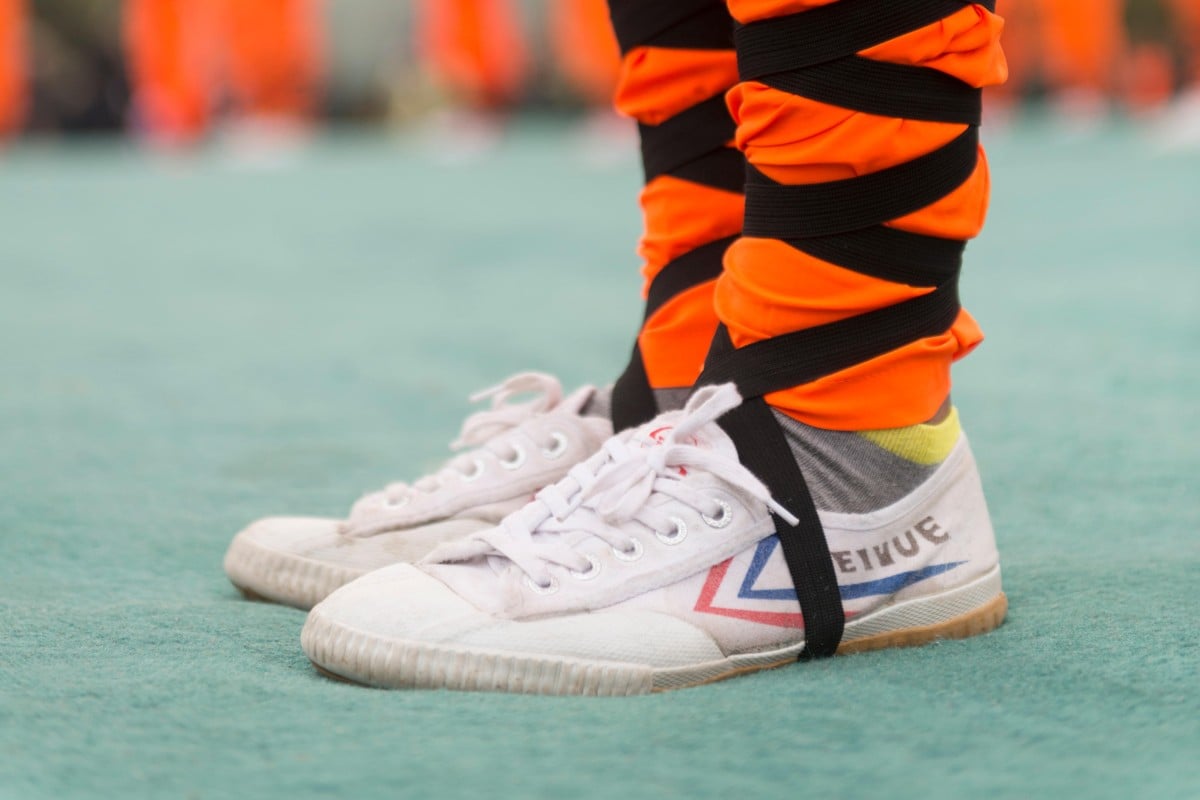
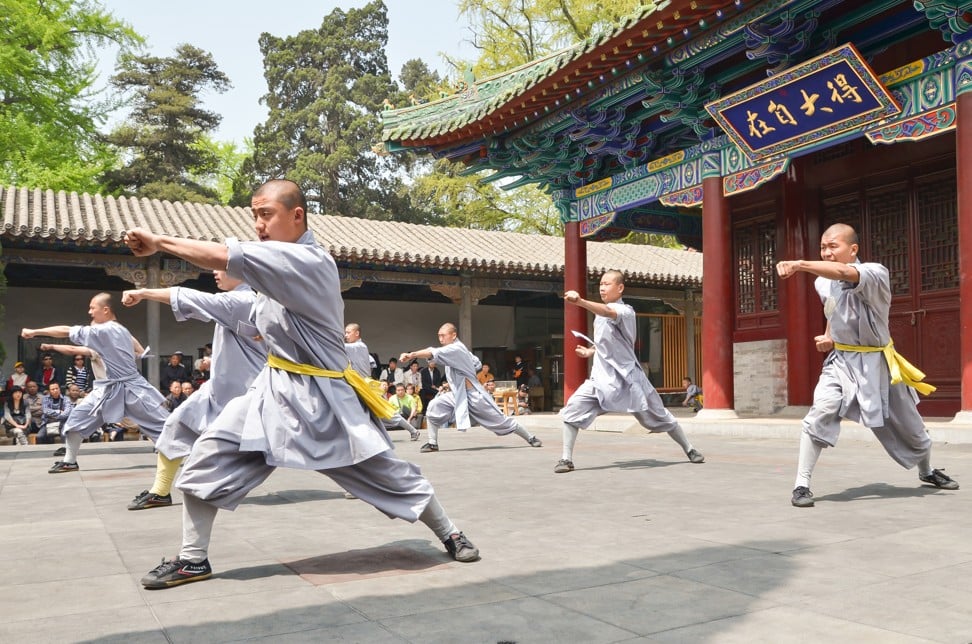
A Shaolin kung fu student wearing Feiyue shoes. The sneakers are making a comeback in China as younger consumers seek out Made in China heritage brands. Photo: Alamy
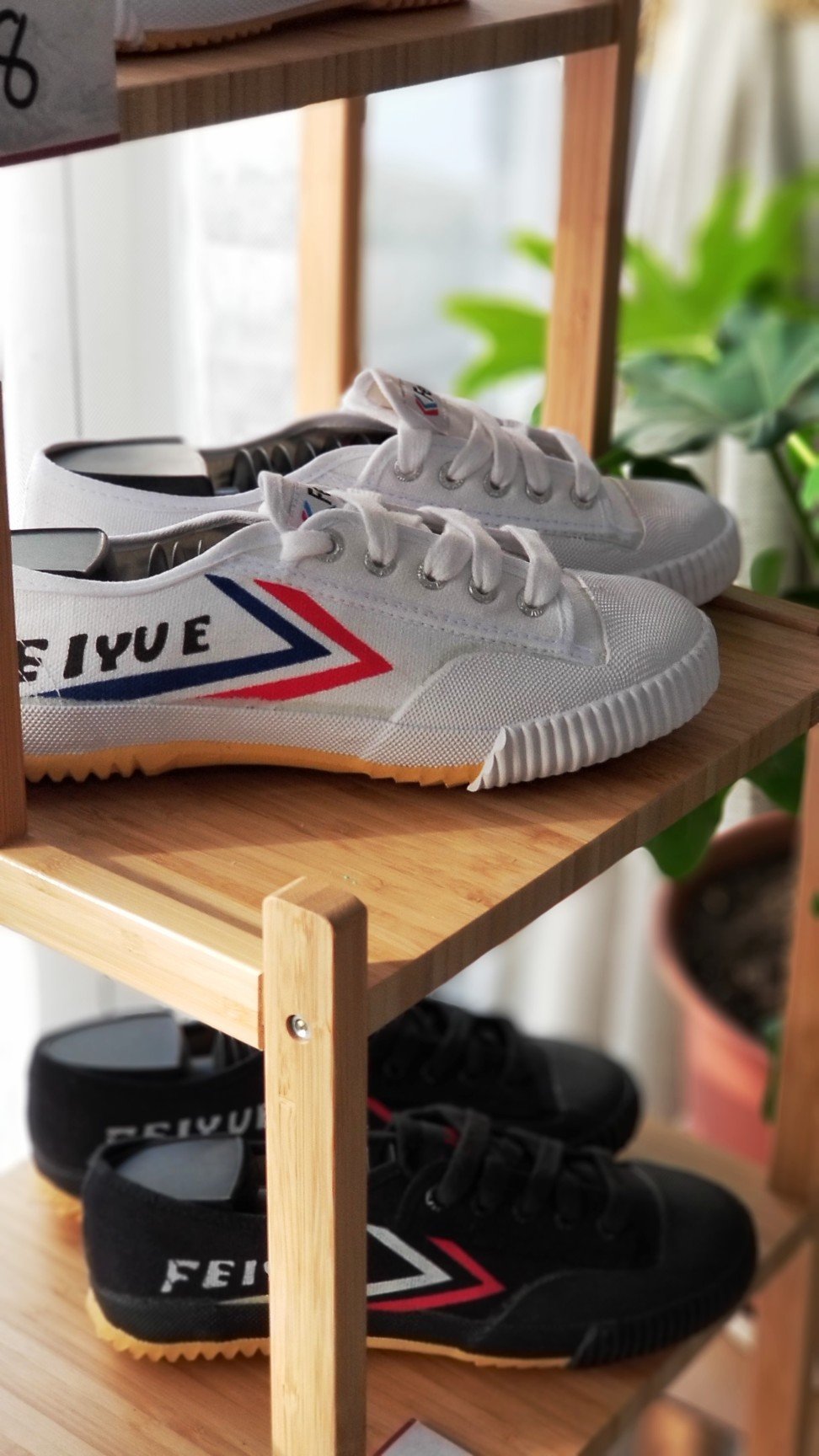
Chinese sneaker brand Feiyue started out providing the go-to footwear for Shaolin monks; the shoes were lightweight, supportive and cheap.

Fast forward nearly 70 years and the martial art accessory has become a fashionable must-have and the cause of multiple copyright disagreements. For the past year and a half, Beijing resident AJ Donnelly and his business partner Nic Doering have been working with the Shanghai-based brand to bring it back to its humble roots.
Donnellys story starts like that of many who encounter Feiyue in Beijing: he stumbled upon the shoes when he started his martial arts training at the Shaolin Temple in Henan province in 2015.
The shoes, which were also a staple of the martial arts performers at the 2008 Beijing Olympics, are made using recycled rubber from the Shanghai Da Fu Rubber tire factory. Their Chinese name means to leap or to fly over, though its slogan flying forward will be more familiar to people in the West.
In 2016, Donnelly and Doering launched a company called Cultural Keys to help foreign students in China learn about traditional Chinese culture. It included martial arts programmes conducted in partnership with the Shaolin Temple and Feiyue shoes were part of the students training outfits. It soon became clear, however, that they would need a greater supply.
All of the students who were with us were saying, Wow, these shoes are so cool, theyre so hip, where can we get more? Donnelly says.
After discovering that few sports apparel stores in Beijing actually sold Feiyues, Donnelly contacted Da Fu to determine whether they could resell the footwear in their cultural centres in Beijing.


Shaolin Monks wearing Feiyue shoes demonstrating their skills to tourists outside their training temple. Photo: Shutterstock

They basically said the same thing that the Shaolin Temple told us: they said, Wed love to do this *[as] we dont have easy access to orders from an international market, so if you could help us by stocking our shoes wed love to work with you, Donnelly says.
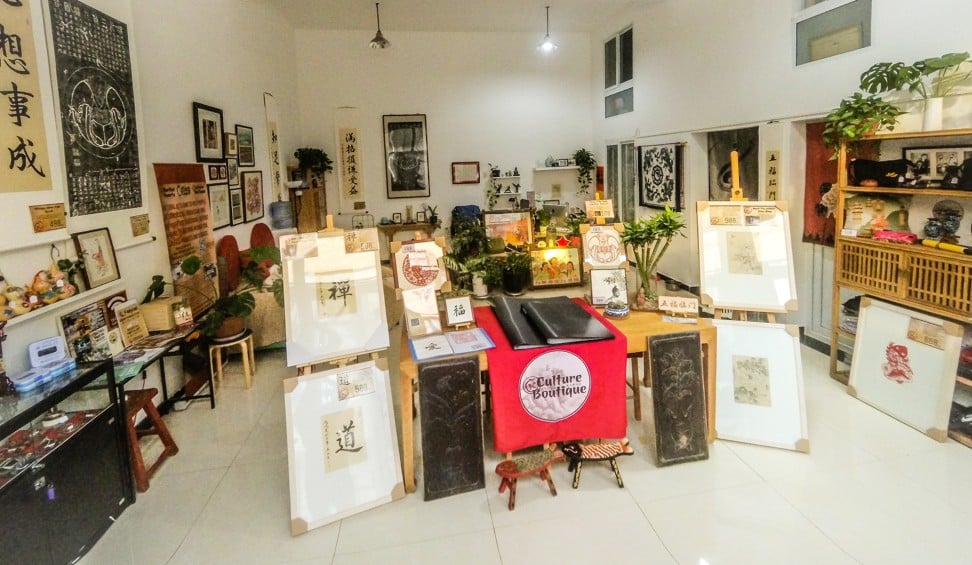
From there, Donnelly says he and his team opened a shop in Beijing called the CK Culture Boutique (now located in the Songzhuang Art District in Beijings Tongzhou district) where they sell the shoes, along with Chinese calligraphy, kung fu clothes and other cultural products.
Most of Donnellys customers are tourists who find the shop through TripAdvisor or Google. But the Feiyue shoe has also been making a comeback in the Chinese market thanks to a surge in interest in all things retro, especially among Gen Z consumers.
The company, buoyed by this interest in Made in China heritage brands, has expanded its range of the shoes, as well as its consumer engagement strategy.


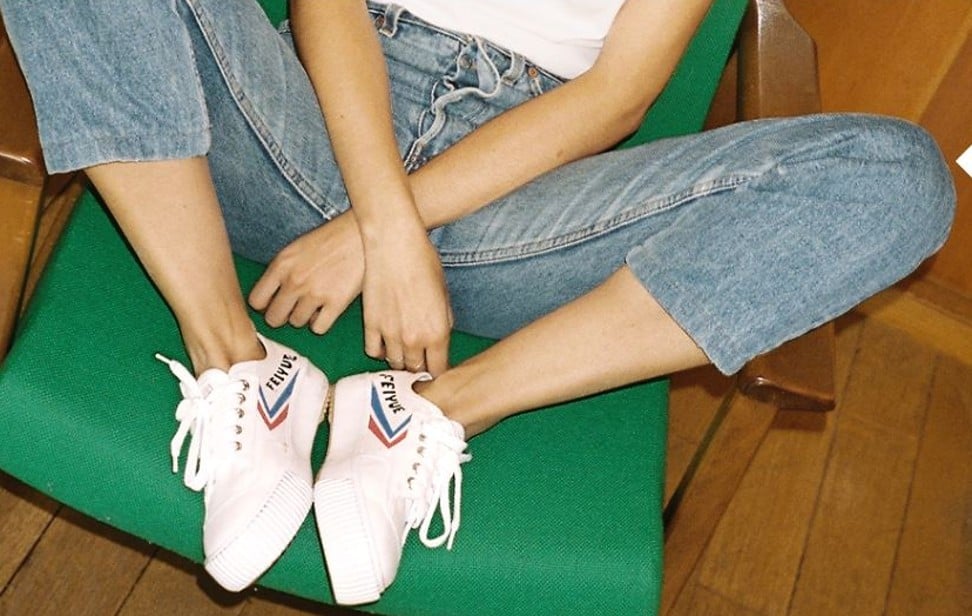
Modern Feiyue sneakers.

Ive noticed wherever I go I see more and more young Chinese people wearing them on the subway, and just going down the streets, Donnelly says. But I see older people as well who just pop into the shop when theyre walking past who say, Oh my gosh, I was wearing these when I was 10 years old and its amazing to see them here now. Its great to hear both sides of that.
The increasing popularity of Feiyues can sometimes pose challenges for Donnellys boutique. Da Fu makes around 150 styles of the shoes, but change out styles yearly depending on Chinese tastes.


Feiyue sneakers on display at the CK Culture Boutique in Beijing.

The Chinese consumer likes very bright and colourful styles, even rainbow-coloured shoes, whereas we see the most popular ones [among Western shoppers] are the most basic very simple. Grey mid tops with a black line going through them are a number-one bestseller for us, but theyre not popular with the Chinese shopper. So Feiyue will stop making them after a year.
Sometimes the range of colourful styles on offer can be confusing for those unfamiliar with Feiyues complicated brand story.
In 2006, a French marketing and events manager living in Shanghai had the idea to create a hip, stylish culture around the shoe. He bought the brand registration from a manufacturer in China and trademarked the name to sell them in France. Since then, not only has the French brand given Feiyues an updated, fresh look, it has attracted Western celebrities like Orlando Bloom and Poppy Delevingne, who once told W Magazine that she lived in the trainers.


CK Culture Boutique in Beijings Tongzhou district.

The Feiyue name has also been trademarked in Australia, New Zealand, South Korea and Taiwan all separate entities from Shanghai Da Fu Rubber and its subsidiary Double Coin, which took over manufacturing the shoes in 1979.

[QUOTE]We serve a very specific group of customers. And when people come to us, whether its for classes or martial arts programmes, or for the shoes themselves, we always try and give as much of the story that we have
AJ Donnelly

There is also a US version of the sneaker company, headed by a Florida-based footwear firm called BBC International, which bought out the French brand in late 2014, according to new magazine Footwear News. In China, countless copies of both the Chinese and French versions of the Feiyue shoe are also available as the Chinese market still grapples with the protection of intellectual property rights.
For the moment, the Chinese Feiyue is carving out its own niche and recent years have seen the introduction of branded stores in Beijing.


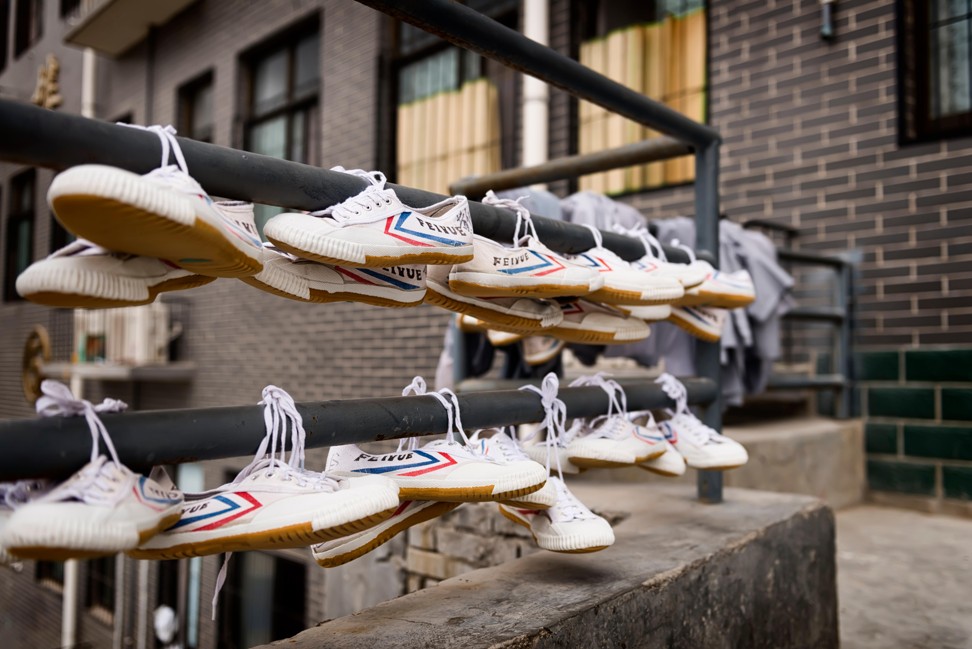
Feiyue shoes drying outside the Shaolin Kung Fu school dormitory in Dengfeng city in Henan province. Photo: Alamy

Donnelly believes his company is helping ground the flying footwear brand.
We serve a very specific group of customers, Donnelly says, noting that his shop has one additional value for foreign travellers that they wont find at Feiyues branded shops: its collection is available in extended sizes, up to a size 47. And when people come to us, whether its for classes or martial arts programmes, or for the shoes themselves, we always try and give as much of the story that we have from our point of view.
Were not a tour company; we dont talk about modern China and these kind of things. We always take everything back to its roots.

This article appeared in the South China Morning Post print edition as: How a kung fu favourite gained traction[/QUOTE]

[URL=“https://www.martialartsmart.com/catalog/category/view/s/shoes-feiyue-shoes/id/819/”]

You know where to get your FEIYUES…MartialArtSmart.com.

THREADS
Tiger Claw brand Feiyue
Att Gene - FeiYue shoes
Got me some Feiyue’s
Made in China

Not that I don’t trust Chinese production at all .. but I buy equipment, weapons, and accessories with quick detach mount fasteners from another manufacturer (ATN). We are talking about hunting equipment. This is my hobby and my life.

Guochao () literally “national hip”

Can ‘Made in China’ be cool? Yes, if the West thinks so
Jiaqi Luo
SEP 18, 2019

Guochao (), literally “national hip,” is the latest buzzword in the Chinese fashion world.

The term initially referred to specific homegrown streetwear brands but now encompasses any Chinese aesthetic that counters style references from the West.

That includes heritage brands like Feiyue, Li-Ning, and Warrior, apparel makers that were once popular in the 1970s and ’80s but overtaken by foreign brands like Nike and Adidas because of their global prestige.

Now, Chinese youngsters wear guochao as a badge of pride, akin to the “Made in America” label in the United States. Call it Chinese retro.


Feiyue, a Chinese sneaker brand, has benefited from the guochao resurgence. / Photo: Tmall

And with the ongoing political crisis in Hong Kong and the U.S.-China trade war, the youth in China desire guochao more than ever.

The Chinese media consistently portrays guochao as the result of “cultural self-confidence” (), that with economic power comes cultural might as well. China, they say, has had enough time chasing Western fashion and culture, and it’s time to embrace their own.

Ironically, much of guochao’s rise can also be attributed to the recognition of these brands in the West.

But ironically, much of guochao’s rise can also be attributed to the recognition of these brands in the West.

Feiyue, for example, became a global street fashion icon after a French entrepreneur discovered the shoes while learning martial arts in China. He bought the rights to sell them in France, and the shoes took off.

That this “Western gaze” is embedded in guochao makes it a complicated cultural trend. How Chinese millennials feel about heritage brands is a reflection of how they see their country: proud of its achievements but also aware that it still seeks validation from the West.

What is guochao?

Western media tends to portray guochao as the result of Chinese millennials looking back to their cultural heritage and generating renewed interest in Chinese culture.

But what excites millennials more about guochao is the transformation of old heritage brands into nostalgic chic. Because embedded in the story of guochao is the story of China’s rise.

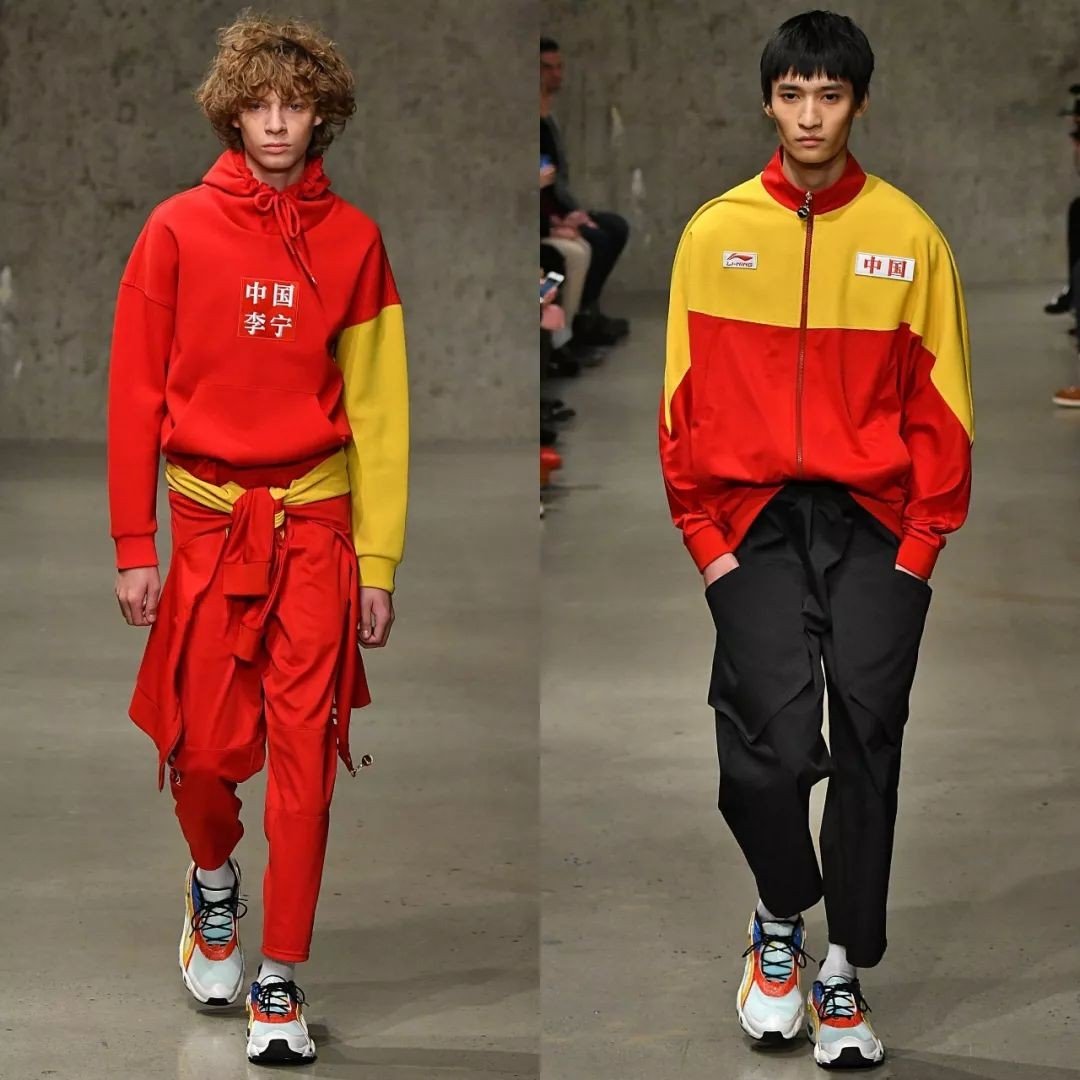
One can pinpoint the start of guochao to February 2018, when Chinese sportswear brand Li-Ning showcased its Taoism-inspired Wu Dao collection at New York Fashion Week.


Li-Ning’s fall-winter collection at New York Fashion Week 2018. / Photo: Shutterstock

The show instantly became a social media sensation in China, where Li-Ning was lauded for “making it” in New York. Online posts juxtaposed photos of old Li-Ning products alongside new ones with the caption, “This is not the Li-Ning you knew.”

The narrative? A brand as dull and basic as Li-Ning could now turn heads with a Chinese flag design in glamorous New York.

After the Fashion Week hubbub, guochao emerged. Before, the word for heritage brands like Li-Ning was (guohuo), or “national product.” Now, they were not just products; they were cool, hip, and stylish.

Before, the word for heritage brands like Li-Ning was (guohuo), or “national product.” Now, they were not just products; they were cool, hip, and stylish.

Other brands started to jump on the guochao bandwagon, reimagining their products to capitalized on the nostalgia of millennials.

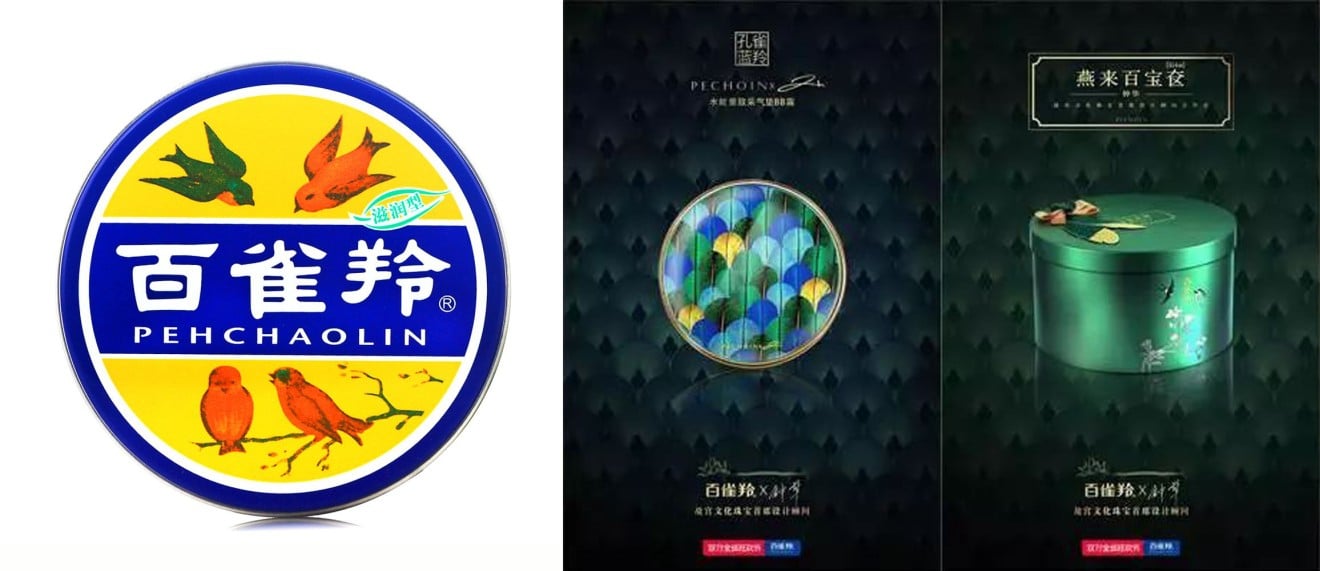
Hero, whose ink pens were a staple of primary school writing classes, launched an ink-colored cocktail with liquor distiller Rio, and Pehchaolin, a facial cream popular in the 1980s, collaborated with the Palace Museum on a chic cosmetics line.


The original Pehchaolin cream (right) and the Palace Museum collab. / Photo: Pehchaolin

White Rabbit, known for its milk candies, launched a candy-scented perfume with Scent Library and even came up with a White Rabbit-scented lip balm with cosmetics maker Maxam.

All these products were sold out overnight.

While these heritage brands sought to capitalize on their image among a domestic audience, others looked abroad.

Warrior, a shoe brand worn by Chinese schoolkids in the ’80s and ’90s, has gone through a rebranding and now sells its signature sneakers at around $90 a pair overseas. In China, the same model goes for $9.


Warrior rebranded for the Western consumer. / Photo: Warrior

And then there’s Feiyue, the once forgotten shoe brand from Shanghai that re-emerged after Patrice Bastian started selling the sneakers in France in 2006.

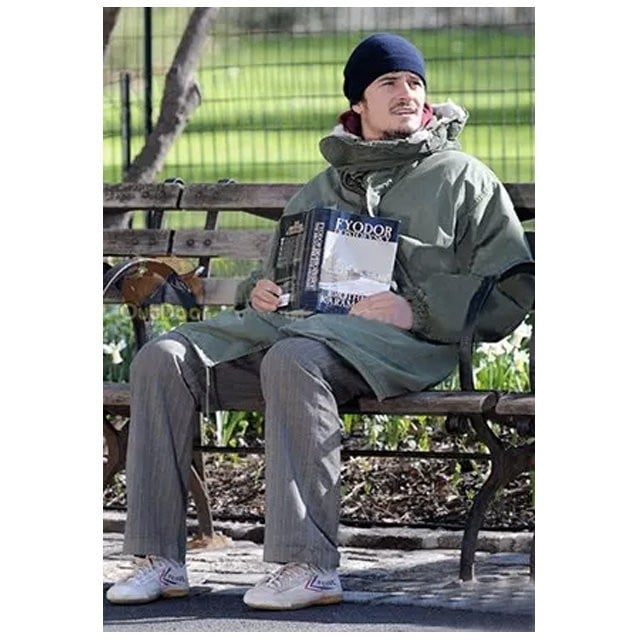
The shoes quickly became a street fashion icon. Celebrities like Orlando Bloom and Poppy Delevingne were spotted in them. Collaborations with Celine, Marvel, and Swarovski soon followed.


Orlando Bloom wearing Feiyue sneakers on the set of “New York, I Love You.” / Photo: Weibo

Within China, the brand saw a revival. Millennials who once thumbed their noses at Feiyue in favor of Nike and Adidas started buying them again. Ironically, it had taken recognition from the West to raise Feiyue’s profile in its home country.

Patriotism as fashion, or why “a loser strikes back” narrative works

In Chinese classrooms, students are taught at a young age that the last 100 years was a “century of humiliation.” Events such as China’s defeat in the Opium Wars and the destruction of the Old Summer Palace by European forces remain an indelible part of history education.

Against this backdrop, China’s economic miracle is seen as the country catching up to the West. In colloquial language, it’s known as (diaosinixi), literally “loser strikes back.”

The usefulness of this narrative has not been lost on the government, which has called the renaissance of Chinese brands “the result of rising cultural self-confidence.”

Buying domestic brands is now a patriotic act.

Buying domestic brands is now a patriotic act, and consumers will not hesitate to boycott foreign labels that they feel have tarnished China’s image.

Dolce & Gabbana took a hammering last year after releasing an advertisement that was perceived as racist. Versace and Coach sparked outrage last month for shirts that apparently suggested Hong Kong was separate from China.

And amid the U.S.-China trade war, many former Apple users have switched to Chinese-made Huawei to show their solidarity, boosting Huawei’s smartphone sales by 16.5% in the second quarter this year, while Apple’s declined 13.8%, according to research firm Gartner.

It’s not uncommon to find reviews that say, “I support Chinese brands,” rather than comments on the product itself.

In online shopping sites, it’s not uncommon to find reviews that say, “I support Chinese brands,” rather than comments on the product itself.

And the latest development in the guochao trend is buying Chinese wear before going abroad.

“I got a bunch of Li-Ning T-shirts for my trip,” says Jack Song, a 23-year-old Guangzhou native. “I think it will make me look cool in Europe.”

Herein lies one of the great contradictions of guochao. Underlying this newly empowered Chinese identity is a desire to prove oneself. The message is not “this is how great China is” but rather “see how much China has changed.” For a generation that grew up with stories of humiliation from the West and viewing foreign brands as superior, international recognition is still important.

But there are signs that the next generation—those born after the year 2000—might see things differently. They are coming of age in a China that’s developing its own brands and technology. They’re wealthier, more independent, and they view domestic products as superior because they actually believe they’re faster, better, and more innovative.

Today’s guochao might be about the “loser striking back,” but tomorrow’s might see a different narrative.

Want to learn more about Chinese heritage brands and how they came to be? Keep swiping for our series Retro China, where we explore the stories behind some of China’s most beloved brands.

Jiaqi Luo
Jiaqi Luo is a writer based in Milan. She writes about fashion and style in contemporary China. Her work has appeared in Jing Daily, The Business of Fashion China, and The Luxury Conversation.

THREADS
Made in China
Feiyue
Li-Ning
White Rabbit

The return of ‘sick men of asia’

[URL=“https://www.scmp.com/week-asia/health-environment/article/3048104/made-china-how-wuhan-coronavirus-spread-anti-chinese”]
‘Made in China’: how Wuhan coronavirus spread anti-Chinese racism like a disease through Asia
Xenophobic chatter about Chinese eating habits is going viral on the internet
Such ignorance isn’t just unpalatable – in misdiagnosing the problem, it’s dangerous, too
Kok Xinghui
Published: 8:00pm, 29 Jan, 2020


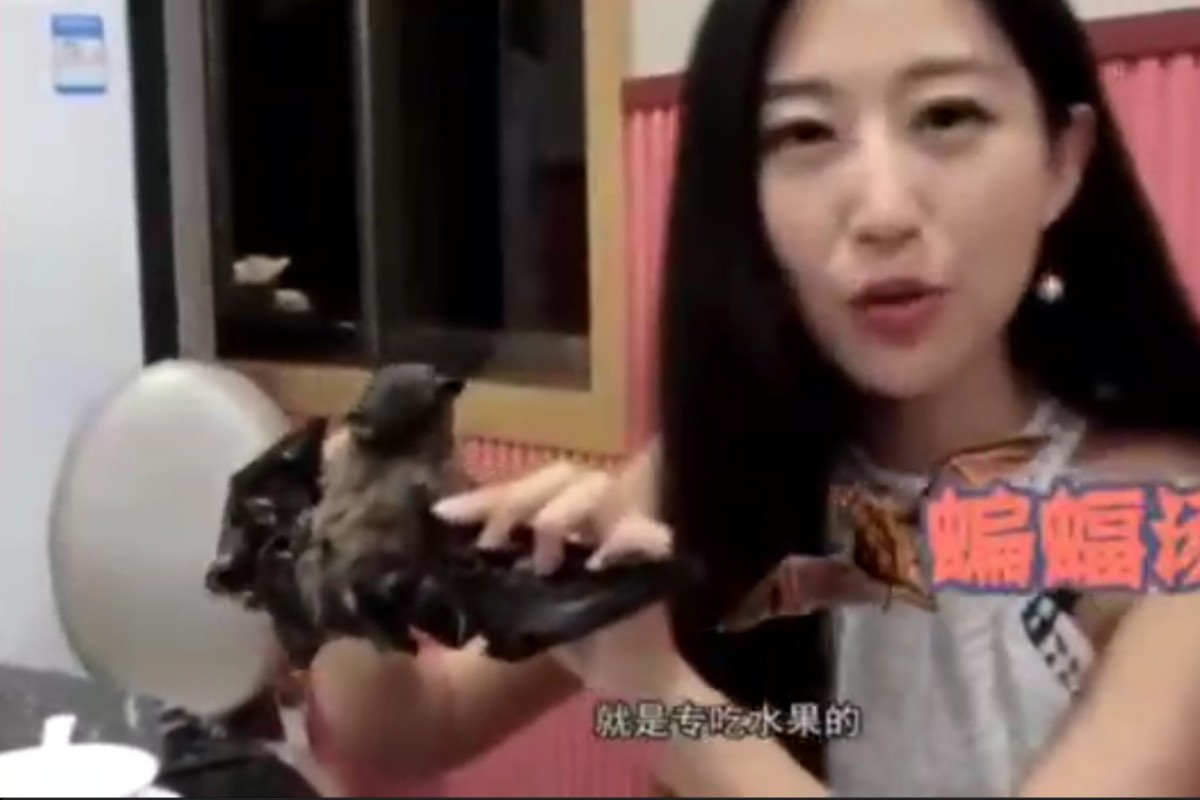
A video by Chinese social media influencer Wang Mengyun, in which she tries bat soup has been held up by some as evidence of ‘disgusting’ Chinese eating habits – even though the video was shot in Palau. Photo: Sohu

As Singaporeans gathered over the Lunar New Year weekend, jokes were cracked about Chinese eating habits and how a propensity to eat “anything with four legs except the table and everything that flies except planes” had given rise to the Wuhan coronavirus.
One meme said there was no need to worry – the virus would not last long because it was “made in China”.
The jokes, tinged with racism, soon grew into a call for the city state to ban Chinese travellers from entering. A change.org petition started on January 26 had 118,858 signatures as of Wednesday afternoon. Among those calling for health to be prioritised over tourism dollars was Ian Ong, who wrote: “We are not rat or bat eaters and should not be made to shoulder their nonsense.”
Xenophobic chatter about mainland Chinese and their eating habits has spread across the world since the first cases of the novel coronavirus 2019 (2019 n-CoV) emerged in China’s Hubei province in December.
The virus has now infected more than 6,000 people, most of them in mainland China where at least 132 people have died. Dozens of people have been infected in the rest of Asia – including 10 in Singapore and seven in Malaysia.
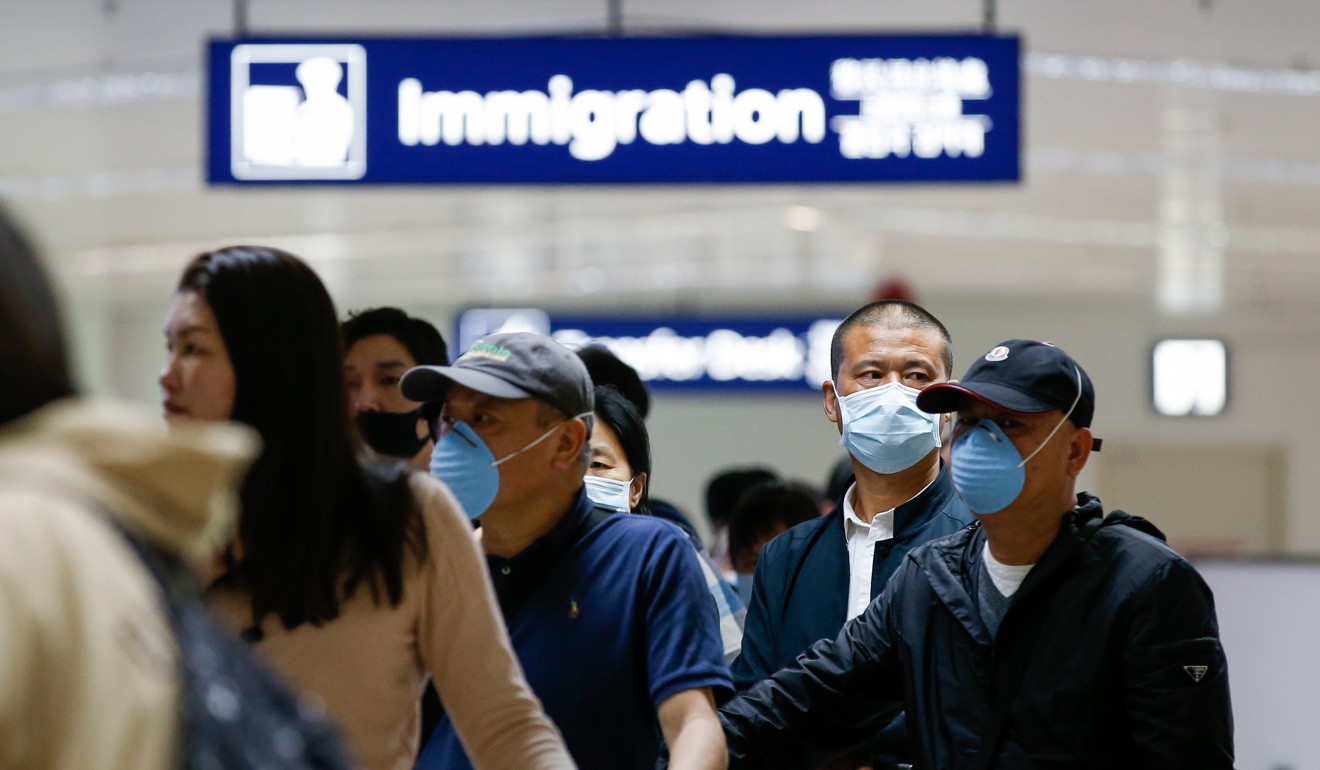
Some countries, including the Philippines, have stopped issuing visas on arrival to all Chinese nationals. Papua New Guinea has gone further, shutting its air and seaports to all foreigners coming from Asia.


Passengers arriving from Guangzhou, China, at the Ninoy Aquino International Airport in Manila. The Philippines has stopped issuing visas on arrival to all Chinese nationals. Photo: EPA

In Malaysia, there have been calls to block Chinese tourists and social media posts claiming the outbreak is “divine retribution” for China’s treatment of its Muslim Uygur population. Some mosques in Malaysia have also closed themselves off to tourists.
In Japan, a shop in a mountain town prompted an apology from tourism authorities after it posted a sign saying: “No Chinese are allowed to enter the store. I do not want to spread the virus.”
From noon on Wednesday Singapore has blocked the entry of tourists who had visited Hubei province in the past 14 days, or who hold passports issued in the province. Malaysia has also stopped issuing visas to Chinese travellers from Hubei.
The Singapore government has said the travel ban was due to global trends showing that most of the infections were in people who had been to the province and the country wanted to minimise import of the virus to Singapore.
The growing stigma has even reached European shores. Graduate student Sam Phan wrote in the British newspaper The Guardian about how a man on the bus in London had scrambled to get up as soon as Phan sat down. “This week, my ethnicity has made me feel like I was part of a threatening and diseased mass. To see me as someone who carries the virus just because of my race is, well, just racist,” he wrote.
In Canada, Toronto website BlogTO said a stigma was also attached to Chinese food, noting that a similar thing happened during the 2003 outbreak of severe acute respiratory syndrome (Sars), which infected 8,000 people globally and killed nearly 800. The website noted racist comments on its Instagram post about a new Chinese restaurant, which some posters urged diners to avoid because it “may have bat pieces in there or whatever else they eat”.
The comments were in part a reference to a video of a Chinese social media influencer tucking into a bowl of bat soup. Some posters have claimed the video is evidence of “disgusting” Chinese eating habits, though the video was in fact filmed three years ago in Palau, a Pacific island nation where bat soup is a delicacy.

continued next post

Continued from previous post


Wrongly accused? The Huanan Seafood Market in Wuhan. Photo: Simon Song

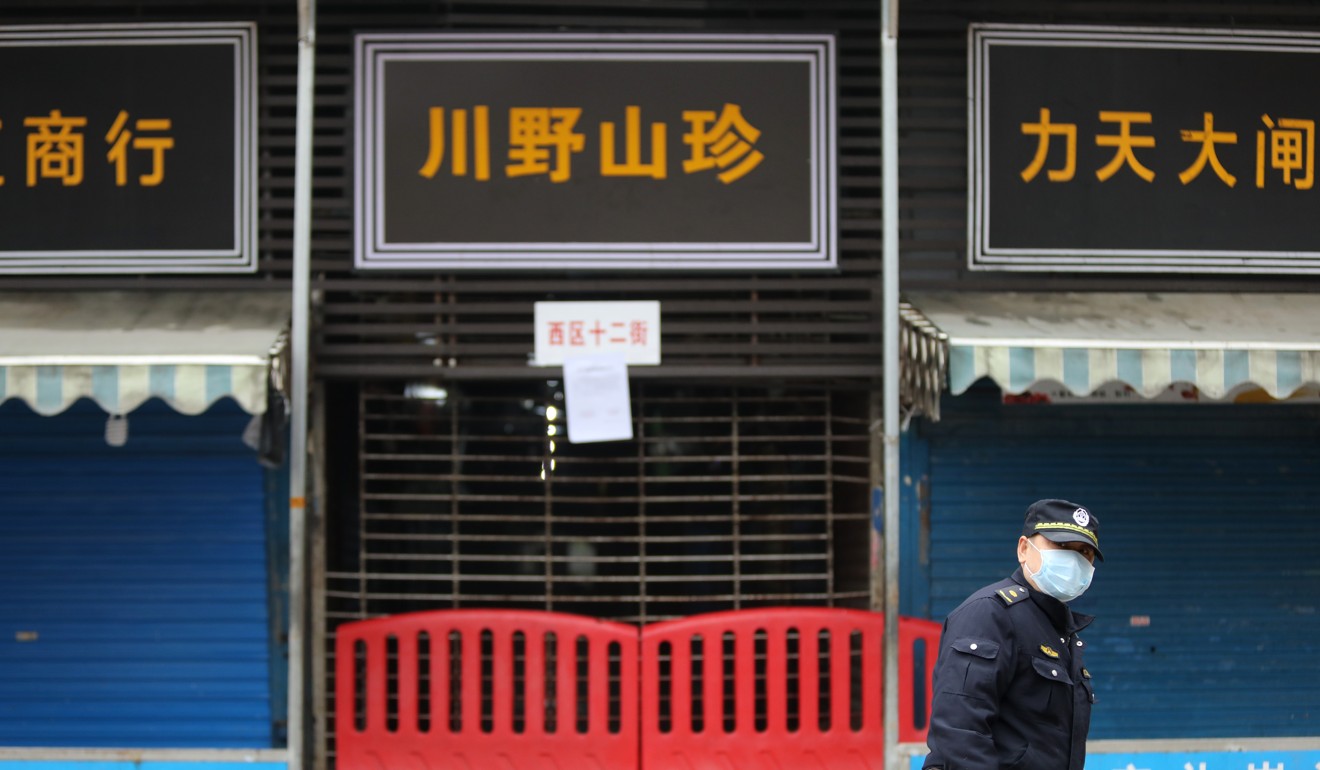
It is still unknown how the coronavirus made the jump from wildlife to humans, but early on in the outbreak the Huanan Seafood Market in the central city of Wuhan was widely assumed to be the origin of the disease. The market has a thriving wildlife trade, selling animals from foxes to wolf puppies, giant salamanders to peacocks and porcupines.
However, in recent days research has emerged suggesting the market may not be the source of the virus.
The medical journal The Lancet on January 24 said that of the first clinical cases, 13 out of 41 had no link to the market.
The first patient showed symptoms on December 1, meaning human infections must have occurred in November 2019 given the two-week incubation period. Researchers said the virus could have spread in Wuhan before the cluster within the market was discovered.
Similarly, the virus genome has been sequenced but researchers are not sure if it comes from bats as Sars did or snakes. Still, experts said it is not so much about what meat is eaten, but how thoroughly it is cooked and the hygiene precautions taken during food preparation.
The chef is at greatest risk, said infectious disease specialist Leong Hoe Nam, who was closely involved in Singapores fight against Sars, which killed 33 people and infected 238 in the city state.
Leong said anybody could catch a virus from an animal.
It is a case of the right person meeting the wrong virus at the wrong time. It could happen to anyone studying viruses, or meeting the bats in the most inopportune time, he said, referring to a case in Melaka, Malaysia, when a bat flew into a house and infected a 39-year-old man and his family.
Painting the coronavirus as a Chinese problem was like dealing with the problem with a sledge hammer, implicating all Chinese nationals rather than dealing with bad food safety practices and diets, said National University of Singapore sociologist Tan Ern Ser.
Nanyang Technological University (NTU) sociologist Laavanya Kathiravelu said xenophobic social media posts were an extension of colonial-era stereotypes.
Chinese, in these xenophobic accounts, are seen as taking resources away from deserving local populations, and having uncouth behaviour. More broadly, this can also be seen as informed by older stereotypes of Chinese as dirty, having bad hygiene and undesirable culinary practices, she said.
Even Singapore government ministers have spoken out.


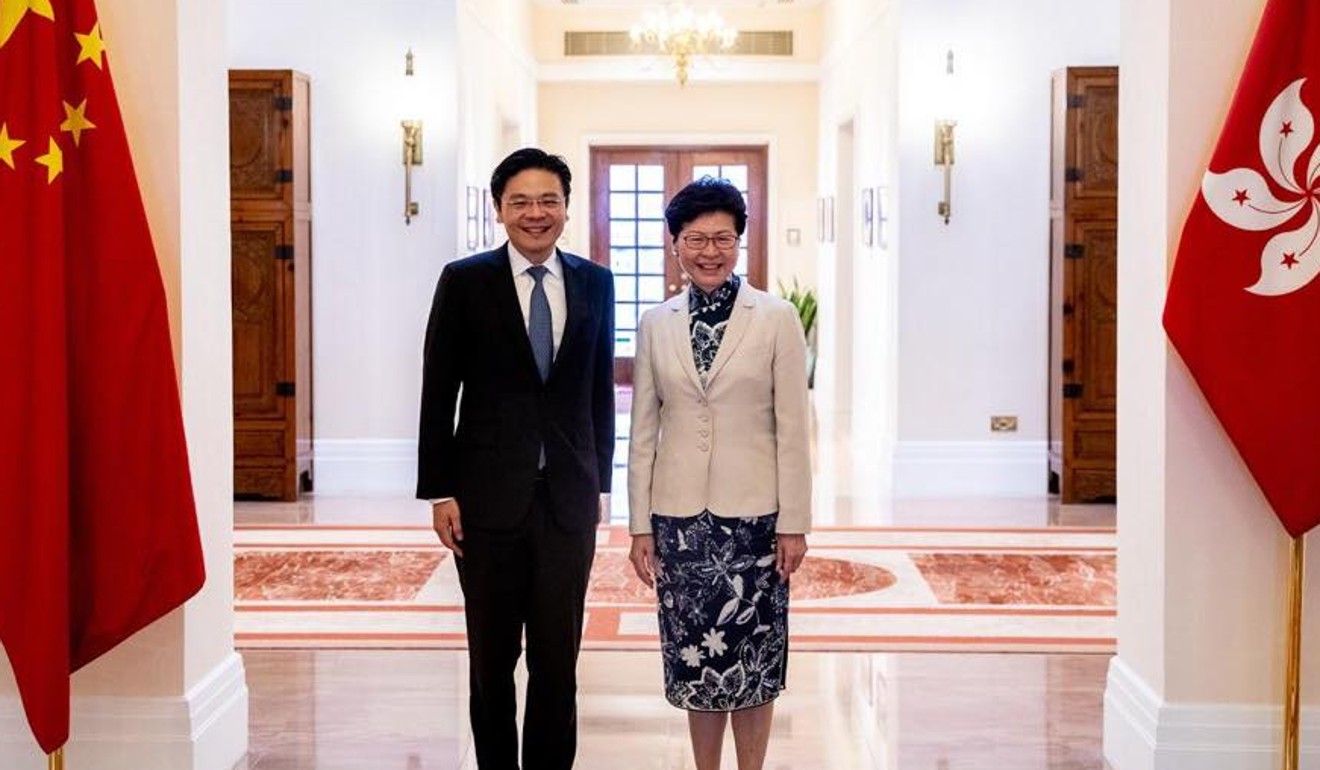
Singapores National Development Minister Lawrence Wong, pictured with Hong Kong Chief Executive Carrie Lam, has cautioned his countrymen against turning xenophobic. File photo

Minister for National Development Lawrence Wong, who co-chairs a task force set up to deal with the virus, said on Monday: I want to assure Singaporeans that the government will do everything we can to protect Singaporeans and Singapore but this does not mean overreacting, or worse, turning xenophobic.
Singaporean playwright Zizi Azah, who is based in New York, said it was illogical to pin the virus on a race. Illness knows no geographical or racial boundaries and it really is the luck of the draw, isnt it? Where something starts and where it gets to, she said.
Mohamed Imran Mohamed Taib, director of the Centre for Interfaith Understanding, cautioned against the effects of dehumanising Chinese people as uncivilised. It is not due to Chinese-ness; the fact that these people are Chinese is incidental, not the reason for the emergence and transmission of the virus. The virus could have emerged in any other part of the world, just as Ebola started in Congo and Middle East Respiratory Syndrome in Saudi Arabia, he said.
Singapores Minister for Education Ong Ye Kung on Monday called for empathy, saying that Singaporeans would not have liked it if during the Sars outbreak other countries had asked Singaporean expatriates to leave.
Were an international hub, we can well be quite hard hit by such epidemics. So Id say do not do unto others what you do not want others to do unto you. We all must tackle the problem objectively.
In Malaysia, Prime Minister Mahathir Mohamad clarified that any mosques that had closed themselves off to tourists had not done so on the governments advice.
This is not a government policy and it is an irresponsible act, he said on Wednesday, warning the public against spreading fake news that could stir racial tensions.
Even though we believe in freedom of expression, it does not mean we can be antagonistic and agitate the feelings of others.

This article appeared in the South China Morning Post print edition as: racism aimed at chinese spreads fear and panic

THREADS
Coronavirus
Made in China
Chinese Food

After the Trade War issues, this could be really bad for us.

Coronavirus to test just how reliant the world is on Chinese manufacturers, with Asia braced for shock wave
With regions of China accounting for 80 per cent of exports on lockdown, factories around Asia are being forced into looking for alternative supplies
Workers trapped in China amid travel bans, while trade watchers as far afield as California wait for boats from China to stop arriving
Finbarr Bermingham
Published: 8:00pm, 4 Feb, 2020


The world’s second largest economy remains on lockdown, with factories in 14 provinces covering 70 per cent of China’s gross domestic product and 80 per cent of its exports ordered not to open until Monday at the earliest. Photo: Reuters

Manufacturing and logistics players reliant on China’s giant economy are braced for an incoming shock wave from the spread of the novel coronavirus, which is set to test “just how reliant we have grown on Chinese manufacturers”.
The world’s second largest economy remains on lockdown, with factories in 14 provinces covering 70 per cent of China’s gross domestic product and 80 per cent of its exports ordered not to open until Monday at the earliest.
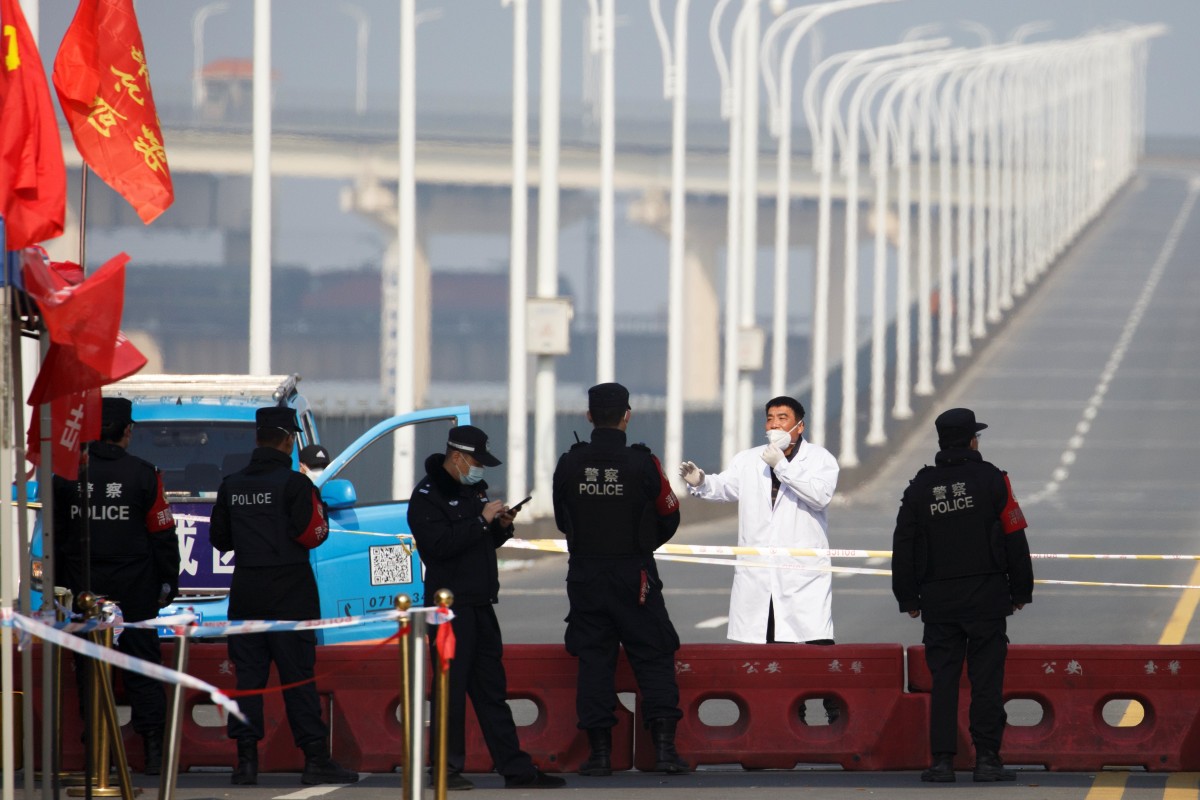
The virus has claimed over 420 lives, the vast majority in China, but has infected people throughout the region, with more than 25 countries having confirmed cases as of Tuesday. In an effort to contain the spread, authorities in the likes of the United States, Singapore and Vietnam have restricted air traffic to and from China, while the movement of Chinese people across borders is also being restricted.
“Anything that limits the free movement of goods or people is bad for shipping,” said Tim Huxley, founder of the Hong Kong container freight shipper, Mandarin Shipping. “The expected demand decline in China is already being factored into prices of commodities and shipping rates. It’s very difficult to make any decisions while we’re still unclear about how long this is going to go on for.”

[QUOTE]Anything that limits the free movement of goods or people is bad for shipping. It’s very difficult to make any decisions while we’re still unclear about how long this is going to go on for.
Tim Huxley

Some are sceptical as to whether manufacturing will resume as normal on Monday, given the virus is still spreading, albeit at a slower rate in recent days. Huge numbers of migrant workers are trapped in parts of China that are under an official lockdown covering more than 60 million people, while many others are in areas unofficially closed off by local officials.
“Some entire factories may not reopen at all because their entire management and a good part of their operators are still blocked in Hubei province – and that is true of many factories,” said Renaud Anjoram, partner and CEO of manufacturing consultancy firm Sofeast.
Within mainland China, oil demand has dried up by 20 per cent, Bloomberg reported, amid a freeze in travel, while metal prices have plunged on consecutive days since markets reopened on Monday, a sign of expected weak demand in key industrial sectors.
All this means the optimism that followed the signing of a phase one US-China trade deal barely three weeks ago already feels like a distant memory.

//youtu.be/l3uQYgeMyxQ

Coronavirus tally in outbreak epicentre Wuhan, China may just be ‘tip of the iceberg’

“While production remained largely normal over the Lunar New Year period, logistical disruptions could mean that metal stocks are building at producers,” wrote Wenyu Yao, senior commodities specialist at ING in a note to clients. “We’ve heard that some alumina smelters are facing the risk of fuel gas shortages.”
Nick Bartlett, director at CBIP Logistics in Hong Kong, said that the company’s fulfilment services have ground to a virtual halt since Chinese trade has dried up so severely.
“Some services remain operating at partial and controlled levels, and in some cases, specific logistic providers have come to a halt until February 9 when another review of things will be taken,” Bartlett said. “This leaves most Chinese-based logistics companies working around limited operations ensuring the safety of its people.”
A survey of businesses in the city released by the American Chamber of Commerce in Hong Kong on Tuesday found that more than 80 per cent of companies had been affected to medium or great extent by the coronavirus prevention measures recommended by the Hong Kong government, with 87 per cent having to adjust working practices for employees.
Factory operators in Southeast Asia reliant on Chinese-made materials and Chinese staff are unsure if they can obtain new components – a problem that will only get worse the longer the virus outbreak continues.
“Our components factories are all closed for another week – we do not know what’s going to happen, we have absolutely no idea,” said Larry Sloven, CEO of Capstone International, a lighting manufacturer that recently moved its production from China to Thailand, but which still imports many components from the mainland.
Vietnam, meanwhile, has been toasted as the “real winner” of the US-China trade war since it inherited much of the production capacity leaving China so companies could avoid paying US tariffs. But after the Vietnamese government put a ban on Chinese nationals entering the country last weekend, these producers face a new challenge.

The logistics have barely been affected [yet] but the biggest problem for me now is that I am banned from re-entering Vietnam
Steven Yang

“We export raw materials from China to Vietnam,” said Steven Yang, a Chinese furniture maker who relocated his factory from Foshan in Guangdong province in to Vietnam last year to avoid the escalating tariffs and who spent the Lunar New Year in his hometown. “The logistics have barely been affected [yet] but the biggest problem for me now is that I am banned from re-entering Vietnam.”
Ernie Koh is faced with a similar conundrum. His company, Koda, makes furniture in Vietnam and Malaysia for export around the world.
However, many of the parts come from China, as do many of his management staff. Furthermore, he operates a retail franchise in China – meaning his business and supply chain is heavily exposed to the fallout from the coronavirus. Having decided to wait until after the Lunar New Year holiday to replenish stock from China, Koh is now running low on some inventory lines.
“We need to look for another source and diversify our supply chain,” he said, adding that he had been forced to write a note to Vietnamese staff members assuring them that Chinese workers that returned to the country before the border was closed would be quarantined, over fears that the coronavirus could be spread through factories.
“Some of our staff and middle-management in Vietnam are Chinese and they have not been able to come back after Lunar New Year. We have had to urgently reposition some of our management from Malaysia to make up for it.”

Some of our staff and middle-management in Vietnam are Chinese and they have not been able to come back after Lunar New Year. We have had to urgently reposition some of our management from Malaysia to make up for it
Ernie Koh

Aemulus, a Malaysia-based maker of semiconductor testing equipment, said that it too was looking at contingency plans for its China suppliers, including companies in South Korea and Taiwan, amid fears that the Chinese lockdown will continue.
“We, as well as our vendors definitely have concerns over the cases,” said Sang Beng Ng, Aemulus CEO. “The starting date that vendors were due to come back to work has been delayed and there could be further delays which it’s hard to tell at this point.”
The US economy was buoyed overnight by positive manufacturing data, after the Institute for Supply Management’s purchasing managers’ index – a survey of American factory owners – rose by 3.1 per cent to 50.9 per cent. This was in contrast with Asian manufacturing surveys, which performed poorly in January – even though they were conducted before the coronavirus outbreak.

Coronavirus in context
Coronavirus Fatality rate: 2.1% 20,676 427
US seasonal flu* Fatality rate: 0.07% 13,000,000 10,000
Sars Fatality rate: 9.6% 8,437 813
MERS Fatality rate: 34.4% 2,494 858
Ebola Fatality rate: 43.9% 34,453 15,158
H1N1 Fatality rate: 17.40% 1,632,258 284,500

Nonetheless, there is some concern that even the US could be hit with collateral damage.
“Here, we’re waiting for the boats from China to stop showing up once Chinese [dock workers] no longer have anything to load. US importers, who normally plan for factories in China to go dark during the annual New Year celebrations, certainly would not have expected those factories not to reopen promptly after the last [cheers] of the holiday,” said Jock O’Connell, Beacon Economics’ international trade adviser and a veteran watcher of Californian trade.
“Those importers with taut supply chains should soon be seeing inventory shortages. If this situation persists, we will all eventually see just how reliant we have grown on Chinese manufacturers.”
Additional reporting by Harry Pearl and Cissy Zhou[/QUOTE]

THREADS
Coronavirus
Made in China

China isn’t the only one…

MARCH 15, 2020 11:04PM PT
China’s Economy Heading for Historic Reverse, Reflecting Virus Impact
By PATRICK FRATER
Asia Bureau Chief


CREDIT: REX/SHUTTERSTOCK

An historic shift into reverse gear for the Chinese economy could be one of the next consequences flowing from the spread of the novel coronavirus. That prospect threw Asian stock markets into reverse on Monday, despite economic stimulus measures in the U.S.

The U.S. Federal Reserve, on Sunday (Monday morning in Asia) announced a full percentage point cut in its benchmark interest rate, reducing it to close to zero. The Fed also promised to inject liquidity into the economic system by buying at least $500 billion of Treasury securities and at least $200 billion of mortgage-backed securities. The Hong Kong Monetary Authority followed the U.S. central bank’s example and cut its own base rates.

But financial markets were unimpressed. Australia’s ASX index crashed by more than 9% on Monday to 5,002. New Zealand’s NZX 50 index fell 3.6%. Hong Kong’s Hang Seng Index, already a bear market since Friday, was down 2.2% at the lunchtime trading break. South Korea’s KOSPI index headed for a loss of more than 1%, though Japan’s Nikkei index rose 0.7%, apparently in anticipation of stimulus measures.

Mainland Chinese markets were firmly down, with the SSE Shanghai Composite benchmark down more than 2%.

Chinese data unveiled on Monday showed that industrial production in the world’s manufacturing hub fell by 13.3% in January and February. That has never happened before in the modern era.

Other data showed Chinese retail sales down by 20.5% in the same two months, and fixed asset investment down by 24.5%.

Despite China, now seeming to get back to work after new Covid-19 infections have peaked in the country, many economists are now forecasting an historic decline in China’s GDP when data for the January-March quarter is completed.

In total, China has incurred some 81,000 coronavirus infections and over 3,100 deaths. On Monday, it reported 16 new coronavirus infections and 14 deaths, numbers that are significantly down on the past trend. Since the weekend, mainland authorities have been saying that most new cases are not local infections, but are imported with foreigners arriving in China.

That pattern may also explain the latest fall in Asian stock markets. The recent decision by Apple to close its retail stores outside Greater China hurt many of its Asian suppliers. iPhone assembler Hon Hai Precision fell 4.3% to TWD71.3 per share by mid-Monday. Sunny Optical slumped 10.6% to HK$105.9. LG Display was 2.2% lower at KRW11,050. Sharp bucked the trend with a 2.2% gain to JPY989.

The pain being incurred by Chinese businesses was reflected in additional share price losses for Alibaba and Tencent. The Hong Kong-traded units of Alibaba dropped 5% on Monday to HK$182.10, while Tencent fell 4.2% to HK$349.60.

There was no new bad news for China’s media sector. But the longer that mainland cinemas stay shut, the deeper the problems become for companies including: Wanda Film (whose shares were down 4.4% to CNY17.12); China Film Co. (down 2.4% to CNY12.96); and Huayi Brothers (down 3.5% to CNY3.77). Hong Kong-traded Imax China on Monday fell 3.5% to HK$13.94.

THREADS
Chollywood rising
Made in China
covid-19

I’m surprised ‘China flu’ conspiracy theorists aren’t having a field day with this…

Sep 19, 2020,05:50am EDT[URL=“https://www.forbes.com/sites/kenroberts/2020/09/19/china-more-dominant-than-ever-in-covid-related-ppe---and-us-flags/#7685ee9717f7”]
China More Dominant Than Ever In Covid-Related ‘PPE’ — And U.S. Flags
Ken Roberts Contributor


One of the companies importing N-95 masks from China was 3M, which was also manufacturing in the … [+] GETTY IMAGES

China is now accounting for more than 85% of all U.S. imports in the category dominated by N-95 respirators, disposable and non-disposable face masks, surgical drapes and surgical towels, and, oddly enough, including U.S. flags.

As the United States closes in on 200,000 American deaths attributed to the coronavirus pandemic that originated in China, the textile category for these personal protection equipment items is growing more rapidly than any of China’s other top 15 imports into the United States this year, according to the latest Census Bureau data, which runs through July.

Those top 15 imports accounted for almost 46% of U.S. imports from China.

While overall U.S. imports from China are down 14.71%, which is more than overall U.S. imports, which are off 12.04%, the increase in the category dominated by the masks was 395.47%.

The $10.8 billion total is three times the total the United States imported from the entire world in the same first seven months of 2019.

That allowed the percentage of those imports arriving from China to increase from a still-lofty 70.17% in the first seven months of 2019, before the outbreak of the coronavirus, to the current market share, 85.43%.

Even as the United States has aggressively ramped up its own manufacturing of such items, it has come to rely more heavily on China for these life-saving pieces of medical equipment than any time in at least a decade and almost certainly ever.

While dominated by masks and other PPE, it is a broad category that includes furniture movers’ pads, pillowcases and wall banners — as long as they are made of textiles — and U.S. flags.

Through there are a number of U.S. manufacturers of U.S. flags, imports from China in the first seven months of the year accounted for 98.91% of the total. The $4.28 million in U.S. flags, a trifling compared to $1.4 billion in N95 respirators, was the lowest total since 2015. The percentage, however, has been consistent for years.

Though the category is broad, it does not, of course, necessarily capture all personal protection equipment.

Looking more broadly at the leading U.S. imports from China through the first seven months of the year, 12 of the 15 fell in value.

In addition to the textile category, a category of miscellaneous plastic articles — which also includes products that could be related to the pandemic, such as pneumatic mattresses, plastic facemasks and other laboratory ware — also increased 13.22% but accounted for a record 53.72% of all U.S. imports.

Computer parts also increased, up 9.97% but China accounted for the lowest percentage of U.S. imports in more than a decade, at 28.7%. Two years earlier, that percentage was at 69.7%.

One category, furniture fell more than 37% while three categories, toys, seats and lamps and lighting fixtures, all fell more than 20%. For all four, their percentage of U.S. market share was lower than at any time in more than a decade.

Ken Roberts

I didn’t leave the womb thinking I would find my life’s work writing and speaking about trade data, trying to make it interesting and relevant. But this is where I find myself. Today, the company I founded in 1998, WorldCity, has published annual TradeNumbers publications around the country, from Seattle to Miami, Los Angeles to New York and numerous points in between. Monthly, we upload more than 10 million pages and page views of Census data at ustradenumbers.com, on hundreds of airports, seaports, countries, and export and import commodities. I serve on the Federal Reserve’s Trade and Transportation Advisory Council. In the last year or so, I have spoken about trade in Washington, D.C., Los Angeles, Laredo, Miami and Chicago. I also post a weekly Trade Matters video. I don’t expect you to fawn over it like I do, but I hope I bring a little clarity, a different perspective or some insights that are helpful.

THREADS
Made-in-China
covid

5 grams

Walmart pulls children’s toy that swears and sings in Polish about doing cocaine

Pat Foran
CTV News Toronto Consumer Alert Videojournalist
@PatForanCTVNews Contact
Published Tuesday, November 23, 2021 6:32PM EST
Last Updated Tuesday, November 23, 2021 10:06PM EST

TORONTO – An Ontario grandmother who bought an educational toy for her 15-month-old granddaughter was shocked when the dancing cactus started swearing and singing about doing cocaine.

“This toy uses swear words and talking about cocaine use,” Ania Tanner told CTV News Toronto. “This is not what I ordered for my granddaughter.”

The cactus was sold on Walmart’s website as an educational toy for about $26 and sings songs in English, Spanish and Polish.

But Tanner, who is Polish, said when she listened to the Polish lyrics, the cactus was singing about doing cocaine, drug abuse, suicide, depression and used profanities.

“It just so happens that I am Polish and when I started to listen to the songs and I heard the words,” she said. “I was in shock. I thought what is this some kind of joke?”

The song is by Polish Rapper Cypis, who is reportedly unaware his song was used by the Chinese manufacturer of the children’s toy.

“It’s about taking five grams of cocaine and being alone … It’s a very depressing song,” Tanner said

This singing cactus toy was also sold in Europe through Amazon and in July 2021 other families also noticed and complained about the lyrics that many felt were inappropriate for a children’s toy.

The Polish artist said he planned to take legal action against the Chinese company for using his song without permission.

CTV News Toronto was unable to contact Cypis or the manufacturer for comment.

Tanner said she feels Walmart should not be selling the toy and wants a refund.

Walmart told CTV News Toronto they take this customer complaint concern seriously.

“These items are sold by a third-party seller on our marketplace website. We are removing the items while we look into this complaint further,” a Walmart spokesperson told CTV News Toronto.

That was a relief for Tanner who said “I just don’t want anybody before Christmas to think this is a great toy and go online and have the same thing happen, that happened to me."

Some families may already have the dancing cactus toy and if they don’t speak Polish, they wouldn’t know what it was saying.

Complaints with the toy go back almost five months so it’s not clear why the toy is still being sold.

I kinda want one…