Kung Fu Sneak Peek and Q&A | WonderCon@Home 2021
threads
Comic-Cons
Kung-Fu-TV-show-CW-REMAKE
Kung Fu Sneak Peek and Q&A | WonderCon@Home 2021
threads
Comic-Cons
Kung-Fu-TV-show-CW-REMAKE
Kung Fu: Inside The History of a Martial Arts Classic
Read my latest feature for Den of Geek: Kung Fu: Inside The History of a Martial Arts Classic
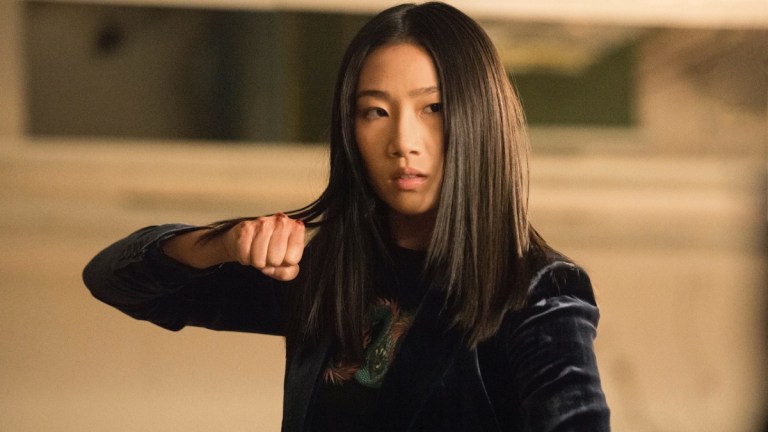
Who’s tuning in tonight?
I’m really curious how this will be received. My NDA is expired now because today’s is the premiere.
Personally, I wasn’t impressed. I luved Tzi Ma. He was the best part, and unusually timely given #stopasianhate. I want to see a show where he’s the dad of a bevy of ninjettes.
But seriously, eager to hear your opinions on this one.
No
[QUOTE=GeneChing;1320681]
But seriously, eager to hear your opinions on this one.[/QUOTE]
Not going to work. The viewing public is weary of 98 lb. women throwing around 250 men like rag dolls. Heaven forbid they would cast someone of the acting credentials like Hoon Lee as Kwai Chang Caine.
[QUOTE=GeneChing;1320681]
But seriously, eager to hear your opinions on this one.[/QUOTE]
Well, if you want opinions, tell people what CW means! Ever try searching for something that is two letters? Eventually discovered that it stands for CBS/Warner, and then it took a while to find that its KTTV channel 5 on Dish! I must be getting old, because to me CBS was always channel 2…
[QUOTE=GeneChing;1320681]I’m really curious how this will be received. My NDA is expired now because today’s is the premiere.
Personally, I wasn’t impressed. I luved Tzi Ma. He was the best part, and unusually timely given #stopasianhate. I want to see a show where he’s the dad of a bevy of ninjettes.
But seriously, eager to hear your opinions on this one.[/QUOTE]
Wonder if there’s any historical examples of a sword handle having a heating element, whether gunpowder or gas? Watched the whole show. Could hardly follow it with so many commercials. Have not watched TV for years…
Where to stream
The Kung Fu Video pilot is here on The CW site.
Looks like they’ll be streaming new eps every Thursday here. I’m obligated to watch.
The premiere did okay. We’ll see if they sustain it.
Ratings: Kung Fu Gives CW Slot a 2-1/2 Year Audience High, Nancy Drew Rises
Matt Webb Mitovich
Thu, April 8, 2021, 8:32 AM·2 min read
In the latest TV show ratings, The CWs Kung Fu debuted on Wednesday night to 1.4 million total viewers and a 0.2 demo rating improving upon Riverdales season averages to date (530K/0.14) and, in fact, giving the time slot its largest audience in two-and-a-half years. TVLine readers gave the premiere an average grade of B; read recap.
Leading out of the reboot, Nancy Drew (666K/0.1) rose to its largest audience in 16 months while (faint praise alert!) improving on last weeks 0.0 rating.
Renewed for season 2
‘Kung Fu’ & ‘Stargirl’ Renewed At The CW
By Peter White
Television Editor
@peterzwhite
May 3, 2021 10:30am

CW
The CW is continuing to kick-ass with renewals.
The youth-skewing broadcaster has picked up freshman series Kung Fu for a second season and handed a third season of DC’s Stargirl ahead of its sop****re debut.
This comes as the network continues to look for stability in its scripted lineup – bringing the number of renewals for the 2021-22 season to 15 with only The Republic of Sarah, which launches in June, still pending.
The renewal of Kung Fu is not a surprise. The drama kicked off strong with more than 3.5M viewers watching the premiere episode and it had the highest total viewership number for a Wednesday debut in 7 years since The 100 debuted in 2014.
Kung Fu follows a young Chinese American woman, Nicky Shen, played by Olivia Liang, whose quarter-life crisis causes her to drop out of college and go on a life-changing journey to an isolated monastery in China. But when she returns to San Francisco, she finds her hometown is overrun with crime and corruption and her own parents Jin (Tzi Ma) and Mei-Li (Kheng Hua Tan) are at the mercy of a powerful Triad. Nicky will rely on her tech-savvy sister Althea (Shannon Dang) and Althea’s fiancé Dennis (Tony Chung), pre-med brother Ryan (Jon Prasida), Assistant District Attorney and ex-boyfriend Evan (Gavin Stenhouse), and new love interest Henry (Eddie Liu) as well as her martial arts skills and Shaolin values to protect her community and bring criminals to justice…all while searching for the ruthless assassin who killed her Shaolin mentor Pei-Ling (Vanessa Kai) and is now targeting her.
Christina M. Kim wrote the pilot episode and serves as executive producer/co-showrunner with Robert Berens. Greg Berlanti, Sarah Schechter, Martin Gero and David Madden also serve as executive producers. Hanelle Culpepper directed and co-executive produced the pilot episode. Kung Fu is produced by Berlanti Productions and Quinn’s House in association with Warner Bros. Television and is inspired by the original series created by Ed Spielman.
Similarly, last year’s premiere of Stargirl was The CW’s most-watched summer debut in six years. The show’s second season premieres on August 10.
Stargirl follows high school sop****re Courtney Whitmore (Brec Bassinger) and her stepfather Pat Dugan (Luke Wilson) as she leads an unlikely group of young heroes to take on the legacy of DC’s very first superhero team, the Justice Society of America. In the thrilling second season, Courtney and her friends take on one of the most frightening adversaries in DC’s mythology – the dark entity of corruption known as Eclipso.
Geoff Johns is showrunner and executive produces with Greg Berlanti and Sarah Schechter. Based on the characters from DC, it is produced by Berlanti Productions and Mad Ghost Productions in association with Warner Bros. Television.
The renewal of both shows has been made slightly easier due to corporate synergies. Kung Fu’s premiere episode also aired on TNT, the basic cable network owned by The CW co-owner WarnerMedia.
The CW Sets Summer Premieres For Final ‘Supergirl’ Season, ‘DC’s Stargirl’, ‘Roswell, NM’ & More; ‘Riverdale’ Moves To August
The pick-up of Stargirl, meanwhile, is part of a deal between The CW and HBO Max to co-finance the show. The show originally aired as part of DC Universe, but was renewed for a second season by The CW in summer 2020 and a deal was worked out between the broadcast network and the streamer where The CW gets first run followed by its launch on HBO Max.
These are the latest examples of the two companies working together – they recently picked up Wellington Paranormal, a New Zealand horror mockumentary based on Jemaine Clement and Taika Waititi’s What We Do in the Shadows film, together.
“We are beyond proud to continue to share the stories of Nicky Shen and Courtney Whitmore, two strong, powerful young women at the center of this new generation of hit shows for The CW in Kung Fu and DC’s Stargirl,” said Mark Pedowitz, Chairman and Chief Executive Officer, The CW Network. “While each boasts remarkable talent on both sides of the camera, Kung Fu and DC’s Stargirl have not only treated fans to some visually stunning action and high-flying heroics, but they also both strike very powerful emotional chords as they delve into the family dynamics and personal relationships at their core, and we are so excited to see what happens next.”
They join recently renewed series including Superman & Lois, Walker, All American, Batwoman, Charmed, DC’s Legends of Tomorrow, Dynasty, The Flash, In the Dark, Legacies, Nancy Drew, Riverdale and Roswell, New Mexico.
Anyone watching this? I am. I feel obligated. 
[QUOTE=GeneChing;1320863]Anyone watching this? I am. I feel obligated. :([/QUOTE]
Is there not some easy way of watching this without ads?
Brett Chan
I find it fascinating that Warrior & Kung Fu are both choreographed by Brett Chan. This two shows are like yin and yang when it comes to choreo quality.
Jun 3, 2021 9:05am PT[URL=“https://variety.com/2021/tv/features/snowpiercer-warrior-kung-fu-stunts-brett-chan-1234933180/”]
‘Snowpiercer,’ ‘Kung Fu’ and ‘Warrior’ Stunt Coordinator on Keeping Fights Grounded in Character
By Danielle Turchiano

Brett Chan
Courtesy of David Bukach
With more than two decades in the business, Brett Chan has racked up quite the résumé as both a stunt performer and a coordinator. On the small screen alone he has dozens of credits from superhero dramas “Arrow” and “Supergirl,” to Netflix’s “Altered Carbon.” Now, he is responsible for the stunts on a quartet of high-adrenaline series: TNT’s “Snowpiercer,” WarnerMedia’s “Warrior,” the CW’s “Kung Fu,” and the upcoming “Halo” for Paramount Plus.
How does a character’s backstory affect the kind of fight style you create for them, especially on a show like “Snowpiercer” where people from all walks of life are crammed on that train?
It’s basically characters first, and then you have to elaborate from there. Daveed Diggs’ [character Andre Layton] was an ex-police officer, and so was [Mickey Sumner’s Bess] Till, but they both have very different backgrounds in terms of what their positions were in the police force. [Layton] had been on the force for a little bit longer, so he had a little bit more of a street toughness to him. I tried to give them a little bit more adeptness because police do some basic self defense, gun disarms and how to deal with situations with multiple people or when you’re trying to keep a person [subdued]. It’s always harder to be police officer because you can’t just hit people, you always have to try and and incapacitate them by not striking at them, but at the same time keeping yourself safe. Neither Till nor [Layton] had any martial arts training. The Jackboots were trained military guys — soldier types — so we gave them a standard basic etiquette about how they move with their weapons and we gave them a little more regimented look. They had a definite order about they move in formation, and you have to because if you don’t and one side falters, then the line gets overrun and they can pull you over.
Between Season 1 and Season 2 of shows like “Warrior” and “Snowpiercer,” did you have time to get in and train with any actors, or did they have to rely on muscle memory?
If anything the actors came in more gung ho for Season 2: They loved the stunt team training room and spent more time in there than anywhere else. As more actors joined the “[Warrior”] cast in Season 2, it was more about trying to get them out of the stunt training room. Many of our stunt team remain very close with many of the actors. When Season 3 got renewed there was not any doubt that everyone would do whatever they needed to do in order to be a part of that season. It is an anomaly of a show and if you ever get to work on one like this in terms of the people and content of the project, you are lucky. It is one in a million. [Between seasons of “Snowpiercer”] there isn’t really time to do anything. It’s really up to the actors themselves. Mickey, in her spare time when she wasn’t filming, was training [such as in] jujitsu. It was on her own time. She just wants to train and kick butt — and she wants to be able to show women empowerment, that women don’t need to be saved by men all the time; they can have their own collective of how they survive, especially in that type of climate, where you have to be a little sneakier. She wanted to look like she was better at it, and she was really good and she picked it up really fast. We can definitely give her moves to make it look like she’s a fighter. And we always paired her with a really good dance partner, per se, so she can showcase what she’s doing.
How does the train setting on “Snowpiercer” inform the scope of what you can accomplish in any given stunt sequence?
It can’t be all martial arts. And we have cots in it and we’re dealing with extras. You’ve got to fill the train; you can’t have a car with 50 people and they’re all stunt guys. We have to be really cognizant of that, but we still have to make it look chaotic. We have to keep the action mitigated a certain way so that we can keep our actors safe and keep everyone else around them safe at the same time. I’ll either be able to choreograph on the actual train booth, depending on if they’re shooting or not. If not, then I’ll go tape out the dimensions of it and use boxes and choreograph everything in there. And it definitely limits what you can do and where you can go because the train walls aren’t all solid. Because we have to be able to take the walls off and on and move really fast between shots, that means we can’t always bang against the train walls or they’ll fall and hurt people.
Do you have leeway to have walls moved if you need a bit more room for something special?
They built some trains to be like that, like the Night Car: it’s supposed to be like a giant, two-level thing and it’s wider. But it’s definitely confining and it limits the weapons you can use because if you start putting long weapons in there and you’re swinging them around, you’re hitting people behind you and in front of you. But we’ve had no injuries!
The second season finale had an unexpected dog attack stunt. How complicated was that to pull off, given everything you’ve already talked about as limitations?
We used the actual trainer to be the person the dog attacks because he knows that person already. A dog comes on set, no one’s going to touch him, no one’s allowed to pet him, [there’s] no, “Oh you’re so cute!” You can’t do that because the dog’s got to keep the focus. We keep all things off the set that don’t need to be there because that changes the parameter of things, too.
What sequence did you feel was the most complicated to choreograph and then successfully achieve on the day of production on Season 2 of “Warrior”?
Episode 205’s Zing vs. Li Yong fight and the Episode 209 riot sequence with the individual fights were the most difficult because of logistics involved due to the time we had. We were shooting four episodes at once and I was action directing all of them while still choreographing and doing other work for them. Additionally I was in development for Episode 6 simultaneously. Episode 205’s saving grace was director Loni Peristere. He gave me full control to go to town, allowing me to time manage. He was extremely collaborative. For Episode 209, director Denny Gordon was also extremely collaborative and was a large reason I was able to execute such a difficult sequence. If I had to pick one fight that was the most complicated it would definitely be the riot with the individual fights in Episode 209.
When you have characters like Ah Sahm, who are martial arts experts when they are introduced, what is your philosophy about “topping” the fights and sequences, to continuously show off more of those characters’ skills?
I don’t know if it is just because they are cool fights or needing to “top a fight,” but more of that I think it all comes down to the story and the characters. Really, a fight is just a fight — but if you give it the story and individual characteristics associated with each character at that moment in time, the motivation for the fight becomes more meaningful and has more impact. As storylines changed in Season 2, so did our fight sequences.
How different was experience on “Kung Fu,” in which Olivia Liang, who plays the lead, had no martial arts training before the show but whose character needed to look like an expert?
Even after 10 years, you won’t even really be really that good in a stylistic martial art, and this is specifically stylistic. I said, “They need a little bit of martial arts training, give me eight weeks to train them.” But they gave me this girl who had no martial arts training and five days to to train her. None of the leads had martial arts training. But when they showed up, all they did was train. Olivia said, “I don’t care, I want to train Saturdays, Sundays.” We trained four to six hours a day. She has a dance background so she did fantastic, and she’s just getting better and better.
How does the mysticism element of “Kung Fu” affect what you are creating?
The show was never meant to be “Crouching Tiger, Hidden Dragon.” “Crouching Tiger, Hidden Dragon” has its audience has its genre, and it’s fantastic, but Christina [M. Kim], the showrunner, basically said, “Let’s ground it.” So, it was about keeping the kung fu grounded into daily fighting, but keeping the flair of the styles. We pick her movements depends on the style. Tiger is a very aggressive style, while crane is not. So you see a lot of crane, but when she’s angry, you’ll see the tiger come out. And then we start blending the two together, which starts leveling off her emotional levels. We tried giving that purpose to everybody.
Catharsis
Watching Martial Arts Movies Amid Anti-Asian Violence Is Much-Needed Catharsis
Movies and TV shows like ‘The Paper Tigers’ and ‘Warrior’ show the beauty of Asian American survival.
By Frances Nguyen
June 8, 2021, 4:00am
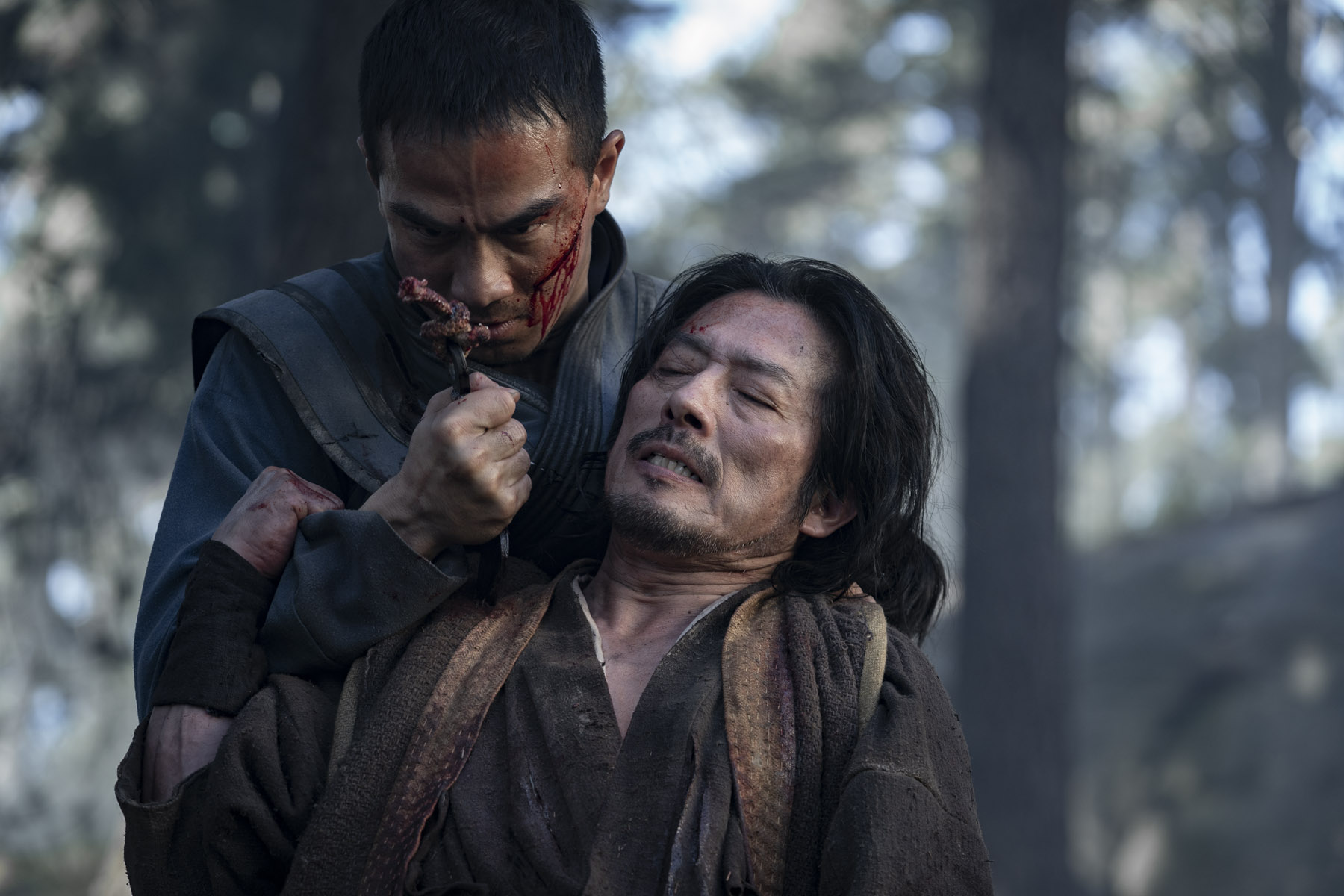
IMAGE VIA YOUTUBE
When I saw the opening seven minutes of Mortal Kombat on Instagram, it was the first time Id felt anything in the realm of joy in over a month. Given the contents of the clip, I was also a little horrified at myself.
Faithful to its video game source material, the violence in the film begins almost immediately. Within the opening minutes, a woman dies. A child dies. Hanzo Hasashithe man who will become Scorpion, the character in the game I played most often growing upliberates what looks like quarts of blood from the bodies of his masked opponents before confronting his nemesis, the man who will become the ice-wielding assassin Sub-Zero. The teaser leaves you at the edge of a fight that promises to be an enthralling one; here, once again, someone will surely die violently.
The theatrically gory film was an odd source of comfort during the weeks-long despondency I felt following a series of shootings in Atlanta that left eight people dead, six of whom were women of Asian descent. With a never-ending reel of brutal violence against Asians circulating online, there was something refreshing about escaping into a world populated by people who look like me and who are portrayed as strong.
Coming at the end of a year that gave rise to more than 6,600 reported instances of anti-Asian hate between March 2020 and March 2021, and where assaults continue almost daily across the country, watching a group of Asian characters wield their bodies with physics-defying agility and precision to deliver bouts that look and feel more like physical dialogue than combat made for a stark contrast to the images I was seeing on news broadcasts and social media, which tend to foreground Asian bodies as quiet, passive vessels for someone elses rage.
Examining some of the most brutal recorded attacks that have taken place this yearon elders Vicha Ratanapakdee, Vilma Kari, and Yao Pan Mathe abridged stories captured on camera repeat the same refrain: The Asian body appears and is brutalized; thats all that we see. For Asian Americans, these scenes invite us to participate in a ritual of vicarious trauma: Without sound, our minds train instead on the movements of the bodies that appear on screen. We imagine ourselves and our loved ones in the only body that bears our likenessthe victimsand our own bodies are activated by the input of threat.
Up until recently, however, Hollywood has arguably done little to provide counter-narratives to these stories, narratives that acknowledge the real-life experiences and agency of the individuals who are navigating what it means to be Asian in America in real time. A report released last monthco-authored by sociologist Nancy Wang Yuen, author of Reel Inequality: Hollywood Actors and Racism, and Stacy L. Smith, founder of the Annenberg Inclusion Initiativerevealed that in the top 100 films of 2019, just over a quarter of Asian and Pacific Islander (API) characters die by the end of the filmand all but one dies violently. The study also notes that 42 percent of the API characters experienced disparagement, including racist/sexist slurs, with 30 percent being tokenized (meaning they were the only Asian character in the film or scene) and 67 percent channeling tired Asian stereotypes. Notably, only 13 percent were portrayed as fully human, (ie, complex characters with agency) which the report measured in terms of them having a wide spectrum of relationships.
I wasnt alone in gravitating toward media where strong Asian characters took center stage. After the shootings in Atlantaand after the video of Vilma Karis attack went viralYuen, the reports co-author, told me that she and her friends started watching Kung Fu on The CW, a reboot of the 70s show starring David Carradine that premiered in early April.
Though the original was not without its shortcomings (the lead role, of a half-Chinese Shaolin monk who wanders the Wild West, went to the white actor instead of Bruce Lee, despite Carradine having no prior martial arts training), the CW series gives the story a 21st century update. This time around, the lead is an Asian womanand, importantly, an Asian woman who kicks ass. Olivia Liangs Nicky Shen stands alone as the only Asian American woman lead on network television right now, and her characterization as a strong and capable defender of her hometown of San Francisco offers some counterweight to the blunt fact that Asian women are twice as likely to report being targets of anti-Asian hate than Asian men are.
Certainly, our show is not the solution, but I hope that we are a part of the solution, showrunner Christina M. Kim said in a press conference a day after the Atlanta shootings.
As Yuen sees it, the shows main draw is its constellation of rich characters with developed backstories. As an Asian American watching it, I feel empowered, not just because theres martial arts but also in seeing people who arent just the sidekick, or the friend, or the villain, she said. They are the leads, and you feel like you can see yourself in different parts of them. Ultimately, she said, thats the goal of the report: for Hollywood to represent API characters as complex, multidimensional human beingsjust like in real life.
The Kung Fu reboot isnt the only recent work that draws on martial arts as a vehicle for telling more three-dimensional human stories. The Paper Tigersa charming comedy about three washed-up, middle-aged former kung fu disciples looking to avenge their sifus murderuses the martial art as a way of telling a story about redemption, brotherhood, and becoming men.
Released to streaming platforms and select theaters on May 7, The Paper Tigers complicates the strong-versus-weak narrative by presenting its heroes as both in different moments. Theyre strong when theyre aligned to the teachings of kung fuwhich espouse traditional Eastern values like honor, discipline, humility, and braveryand weak, both physically and morally, when they stray from them. Throughout the film, the men contend with choosing when to fight and when to walk away: When his son gets beat up by the school bully, Danny, the lead character, tells the boy that he should have walked away from the kid who has been terrorizing him and his friend. Later, after one of the Tigers is sorely wounded, Danny heads off to a fight, but not before calling his son to tell him that hes proud of him for sticking up for his friend. Fearing that he might not make it to see another day, he tells his son how to make a fist, but offers this information with a warning: If you go looking for a fight, that makes you the bully.
Beyond the moments of pitch-perfect comedy (see: the many fortune cookie-worthy proverbs doled out by a white sifu, the mens former schoolmate rival, in Cantonese, which none of them understand), theres also something deeply gratifying about seeing bodies, out of practice for 25 years, reckon with their limitations and slowly relearn their discipline, building back their strength over time. Tran Quoc Bao, the films writer and director, said he wanted to highlight martial arts as a practice of discovering ones inner strength, and learning the right moment to express it. With martial arts, he said, its that constant sharpening of the sword knowing that you can hang it up and not use it.
continued next post
Continued from previous post
As it turns out, the films resonance with the present moment is something of a coincidence: Tran conceived the story a decade ago, drawing on his experiences growing up in a multicultural martial arts community in Seattle. He never imagined it would be released during a pandemic, much less at a time of surging racist violence.
Obviously, theres a different subtext now that kind of lingers in the air, he told me. Still, with its subtle allusions to race and cultural appropriation, the film hits upon facets of the Asian American experience that feel just as relevant now as they did several decades ago. Importantly, its also an Asian American film that exists on its own terms. Though it centers non-white experience, it doesnt announce itself as suchnot to the point of color-blindness, but in a way where cultural difference feels normal, and honored.
Its nice to see martial arts, and kung fu especially, treated with reverence and respect. Although kung fu and martial arts movies have been a part of Hollywoods diet since the 70s, the form has too often been relegated to an unintentional sub-genre of comedyone replete with its fair share of racist stereotypes. As the report notes, a large component of the anti-Asian racism perpetuated in pop culture is the representation of Asian men as weak and effeminate compared to their Western counterpartsan emasculation that continues to be expressed by Hollywood through the physical domination of Asian characters by predominantly white leading characters.
One of the most notorious examples is Quentin Tarantinos characterization of Lee, the most beloved and celebrated martial artist of all time. In Once Upon a Time in Hollywood, the Lee charactercaricatured as a toxically masculine showboatchallenges Brad Pitts stuntman character Cliff Booth to a three-round fight. It technically results in a draw, but Lee walks away humiliated after Booth handily throws him into a car.
Yuen described the scene as exemplifying American pop cultures impulse to take a strong Asian man down a notch.
They get these really amazing Asian actors who are at the top of their martial arts game, and then they have the white lead beat them up in order to show his prowess and maintain a kind of racial hierarchy, she said.
Not surprisingly, over the past year, there have been disturbing reflections of that dynamic in real life. After a man of Chinese descent was assaulted in an unprovoked attack outside New York Citys Penn Station in March, his attacker reportedly assumed a mocking kung fu stance before fleeing the scene.
It makes them feel better about themselves to beat up an Asian whom they feel is the enemy, because Hollywood has historically represented Asians as enemies, said Yuen. Trumps kung flu rhetoric from last year, part of his campaign to scapegoat Asians as foreign vectors of disease, certainly hasnt helped.
Warrior, a Cinemax original series with an Asian-dominant cast that premiered in 2019, is yet another martial arts-related project that attempts to examine and subvert this sort of racist scapegoating. With a premise conceived by the late Bruce Lee himself, the show is set during the Tong Wars of San Francisco in the 1870sa period in American history that arguably gave birth to some of the most enduring and damaging Asian American stereotypes, from that of the disease-carrying foreigner to the Chinatown gangster and the brothel worker. The series follows Ah Sahm (played by Andrew Koji), a kung fu prodigy who becomes a hatchet man for a powerful tong, or criminal brotherhood, as it vies with rivals in Chinatown for control over resources. Notably, its set on the eve of the Chinese Exclusion Act of 1882, which effectively banned all immigration from China until 1943, in addition to prohibiting Chinese immigrants from becoming American citizens.
[In the show], we are dealing with the introduction of the Chinese mythology and propaganda machine, said Olivia Cheng, who plays Ah Toy, a fictionalized version of the eponymous Chinatown madame known as the first recorded Chinese prostitute in America. In an interview with VICE, Cheng said that she was challenged with not only honoring the real Ah Toys life but also playing against the traps of one of Hollywoods favorite and most harmful tropes about Asian women: the dragon lady, an Asian femme fatale who wields power through sex.
I began the show a month after the Atlanta shootings, shortly after it was announced that the series would be renewed for a third season, on HBO Max. Given the heartbreak and impotence I felt, I wasnt surprised to find myself drawn to Ah Toy, an Asian female character who seems fully possessed of her power as she navigates gender dynamics and a racist criminal justice systempower structures that are not only designed to oppress her but that render women like her entirely disposable. In the first season, when the police raid Ah Toys brothel as a means of signalling to its white citizens that its cracking down on Chinatown crime, she bribes the sergeant with a few calm words and a small red envelope. A gift for Chinese New Year, she says, meeting his gaze with an unflinching stare.
Cheng told me that other Asian women have expressed being triggered by her characters profession, which she understands. She said she had to overcome her own reticence about Ah Toy, but ultimately decided to lead with her characters humanity. I definitely feel a responsibility, she said. I think youd have to be incredibly vacuous to be in my position and not.
Every character in Warrior contends with different articulations of power, said Shannon Lee, executive producer of the show and Bruce Lees daughter. Were presenting power when it gets out of control and the people who have to participate in that culture, who are the victims of that culture but who dont think of themselves as victims, she said. They think of themselves as humans. They want what every human wants, and are fighting for it.
As violent as Warrior can be (and disquietingly close to our current reality), I have been enjoying getting to know these kaleidoscopic characterspeople who reveal new sides of themselves with every power play. Even as I tense at the scenes of racist confrontation (in the opening two minutes of the series, a white immigration officer singles out a man disembarking from the boat, calls him Ching Chong, and knocks him to the ground), I can take cover in characters with the agency to defend themselves. I can see them fight, and I can see them win.
Catharsis is something that people need right now, said Hoon Lee, who plays Wang Chao, a quick-witted black market arms dealer. In the context of a show, you can experienceand, hopefully, exorcisesome of that rage that you might not know what to do with otherwise. Thats a primary function of storytelling.
Martial arts might be a safe bet for a Hollywood looking for low-hanging fruit when it comes Asian representation, but in this new slate of film and television shows, its also the Trojan Horse: a vehicle for Asian characters whose identities are as layered and complex as people are in real life. And while, yes, these bodies encounter brutal violence, they survive to experience what lies beyond itjoy, grief, rage, and humor together. In devastating times like these, we need storytelling that shows us that access to the full spectrum of human experience is possiblenot just suffering.
threads
Stop-Asian-Hate
Warrior
Kung Fu
Once-Upon-a-Time-in-Hollywood
Mortal-Kombat-2021-reboot
Anyone watching?
I’ve seen every ep but the finale, which I plan to watch soon. That’s not bragging. I’m not sure what that is. :rolleyes:
But this is sweet.
Watch injury turn into a surprise engagement for stunt doubles on set of Kung Fu
By Rachel Yang July 22, 2021 at 09:06 PM EDT
The cast of Kung Fu pulled off an epic stunt recently, and it had nothing to do with martial arts.
The stunt doubles for stars Olivia Liang and Eddie Liu got engaged on the set of the CW action drama while filming the season 1 finale.
Liang shared a video on Thursday of the epic moment, which happened after Ken Do (who does stunts for Liu’s character Henry Yan) tripped and landed on the ground. Megan Hui, filming the scene as Liang’s Nicky Shen, quickly approached him in concern.
After some excellent acting, Do pulled out the ring and popped the question, prompting oohs and ahhs from the cast and crew.
Hui’s stunned reaction had Do double-checking: “Is that a yes?” It was of course a yes and the couple hugged and kissed, with Hui shedding some happy tears. The beautiful moment was capped off by cheers and claps from the Kung Fu team, many of whom helped make the surprise happen.
“the best best best part of shooting the finale was planning the engagement of our superstar stunt doubles,” Liang wrote on Twitter, with plenty of crying emojis. “Megan Hui and Ken Do are the kindest, most generous, and most mega talented people i’ve ever met. so proud to be Megan’s acting double”
Hui expressed her excitement and gratitude to her now-fiancé and everyone who helped plan the engagement “months in advance,” including Liang, Liu, Jon Prasida (who plays Ryan Shen), Yvonne Chapman (Zhilan), Tony Chung (Dennis Soong), director Joe Menendez, and some of his fellow stunt performers.
“BOY DID YOU SURPRISE ME @kendo482 ! Last shot after filming the final fight for the season finale of @cw_kungfu and I thought you broke your ankle lol,” Hui said on Instagram. “I feel so fortunate to be able to call you all my friends and super blessed to now be engaged to my best one.”
Hui also included some fun photos on set, like one of her and Do with their “acting doubles” Liang and Liu in matching outfits.
The sweet setup even got the attention of Henry Golding, who commented, “YEESSSSSS Love this guys congrats.”
Hui was a stunt double in the movie Snake Eyes, which stars Golding. Hui and Do have also done stunts together for films like Deadpool 2, Skyscraper, Wu Assassins, DC’s Legends of Tomorrow, The Flash, Supergirl, Arrow, and more. Hui has also appeared as the character Biyu in two episodes of Kung Fu. The series, a reboot of the 1970s show, got renewed for a second season in May, a month after it debuted.
Finale fell by a 10th
‘Big Brother’ Wins Wednesday Ratings, ‘The $100,000 Pyramid’ Takes Viewers; CW’s ‘Kung Fu’ Season Finale Falls From Debut
By Alexandra Del Rosario
TV Reporter
@_amvdr
July 22, 2021 11:57am

CBS
Unscripted programs ruled Wednesday evening as CBS’ Big Brother and ABC’s The $100,000 Pyramid marked the evening’s highest-rated and most-watched titles, respectively.
The latest installment of Big Brother was the most-watched program in the 8 p.m. to 9 p.m. timeslot, airing to 3.33 million viewers and gaining a 0.8 rating in the 18-49 demographic, per Nielsen Live + Same Day Day fast affiliates. Big Brother bested NBC’s Olympic Dreams Featuring Jonas Brothers special (0.3, 2.49M). ABC’s Press Your Luck was the second most-watched title of the hour (0.5, 3.29M).
Also in the same hour was the Kung Fu season one finale. The season ender, which saw a major showdown between Olivia Liang’s Nicky Shen and Yvonne Chapman’s Zhilan, aired to approximately 832,000 viewers and drew in a 0.1 rating. The finale fell from the series’ debut in April (0.2, 1.4M) by a tenth in ratings and about 40% viewers.
Later in the evening, The $100,000 Pyramid ruled the 9 p.m. to 10 p.m. slot taking in a 0.5 rating and 3.60 million viewers. Following behind were Chicago Fire (0.2, 1.83M) and Love Island (0.3, 1.62M). Crime Scene Kitchen closed off its first season crowning Natalie Collins-Fish and Luis Flores as the winners, but the season ender (0.3, 1.55M) failed to be the cherry on top viewers and ratings-wise.

ABC’s Match Game closed out Primetime winning the 10 p.m. to 11 p.m. time slot (0.4, 2.80M).
I’m astonished how much good press this show has received. I’m just going to say it - Tokenism?
Yvonne Chapman
HOME
TV
BREAKING NEWS[URL=“https://deadline.com/2021/08/kung-fu-yvonne-chapman-promoted-series-regular-season-2-1234822892/”]
‘Kung Fu’: Yvonne Chapman Upped To Series Regular For Season 2
By Denise Petski
Senior Managing Editor
August 26, 2021 2:35pm

EXCLUSIVE: Yvonne Chapman, who heavily recurred as villain Zhilan on the first season of the CW’s Kung Fu, has been promoted to series regular for Season 2.

Laura Baldwinson
Chapman’s Zhilan, a hard-edged and cunning assassin, is ruthless in achieving her goals. After stealing an ancient sword from Nicky’s shifu Pei-Ling–and nearly killing Nicky in the process–Zhilan flees China and begins her pursuit of the rest of the mystical weapons. The mystery of Zhilan’s identity, and her real intentions with those weapons, will fuel Nicky’s quest for justice.
Kung Fu follows a young Chinese American woman, Nicky Shen, played by Olivia Liang, whose quarter-life crisis causes her to drop out of college and go on a life-changing journey to an isolated monastery in China. But when she returns to San Francisco, she finds her hometown is overrun with crime and corruption and her own parents Jin (Tzi Ma) and Mei-Li (Kheng Hua Tan) are at the mercy of a powerful Triad. Nicky will rely on her tech-savvy sister Althea (Shannon Dang) and Althea’s fiancé Dennis (Tony Chung), pre-med brother Ryan (Jon Prasida), Assistant District Attorney and ex-boyfriend Evan (Gavin Stenhouse), and new love interest Henry (Eddie Liu) as well as her martial arts skills and Shaolin values to protect her community and bring criminals to justice…all while searching for the ruthless assassin who killed her Shaolin mentor Pei-Ling (Vanessa Kai) and is now targeting her.
Christina M. Kim wrote the pilot episode and serves as executive producer/co-showrunner with Robert Berens. Greg Berlanti, Sarah Schechter, Martin Gero and David Madden also serve as executive producers. Hanelle Culpepper directed and co-executive produced the pilot episode. Kung Fu is produced by Berlanti Productions and Quinn’s House in association with Warner Bros. Television and is inspired by the original series created by Ed Spielman.
Chapman is repped by The Characters Talent Agency and Jared Schwartz at Industry Entertainment.
I kinda like her character but I’m a sucker for villainesses.
Our latest sweepstakes. ENTER TO WIN!
Enter to win Kung Fu: The Complete First Season!
Contest ends 11/11/2021
Season 2 premieres Mar 11, 2022
The CW’s Midseason Schedule Teams Superman & Lois With Naomi, Sets Dynasty, Charmed and Kung Fu Returns
By Matt Webb Mitovich / November 5 2021, 10:30 AM PDT
'Kung Fu, ‘Naomi’ and ‘Superman & Lois’ (Courtesy of The CW)
The CW has released its midseason schedule for late December through early March, and there is a lot to process. So pull up a chair, grab and a pen and paper, and follow carefully.
For one, we have a Season 2 premiere date for the hit freshman series Superman & Lois, which will be paired on Tuesday nights with newcomer Naomi (as in the DC superhero series exec-produced by Ava DuVernay).
On the scripted front, there are also season premiere dates for Dynasty (which is Monday-bound, at least for a bit), Charmed and Kung Fu, plus a kickoff time for the All American: Homecoming spinoff.
(And as detailed here, both The Flash and Riverdale are bound for a months-long hiatus after their season-opening five-episode “events,” and they will each return on brand-new nights.)
Want scoop on any of the shows below? Email InsideLine@tvline.com and your question may be answered via Matt’s Inside Line.
Launch List
MONDAY, DEC. 20
8 pm Dynasty Season 5 premiere (new night!)
9 pm Dynasty (a second new episode)
FRIDAY, JAN. 7, 2022
8 pm Penn & Teller: Fool Us midseason return
9 pm Nancy Drew midseason return
TUESDAY, JAN. 11
8 pm Superman & Lois Season 2 premiere
9 pm NAOMI series premiere
WEDNESDAY, JAN. 12
8 pm Legends of Tomorrow midseason return
9 pm Batwoman midseason return
SUNDAY, JAN. 16
8 pm Legends of the Hidden Temple
9 pm Two Sentence Horror Stories Season 3 premiere
9:30 pm Two Sentence Horror Stories (second new episode)
MONDAY, JAN. 17
9 pm 4400 midseason return
THURSDAY, JAN. 27
8 pm Walker midseason return
9 pm Legacies midseason return
MONDAY, FEB. 21
8 pm All American midseason return
9 pm ALL AMERICAN: HOMECOMING series premiere
SUNDAY, MARCH 6
8 pm Riverdale midseason return (new night!)
WEDNESDAY, MARCH 9
8 pm The Flash midseason return (new night!)
9 pm Kung Fu Season 2 premiere
FRIDAY, MARCH 11
8 pm Charmed Season 4 premiere
9 pm Dynasty (sorta-new… but not night)
I know y’all been waiting…
Our winners are announced!
S2
‘Kung Fu’: CW Reboot Adds Vanessa Yao, Annie Q. & JB Tadena To Season 2 Cast
By Denise Petski
Senior Managing Editor
January 6, 2022 1:30pm

Courtesy of PR Machine/JC Chen/Joanna Degeneres
EXCLUSIVE: The CW is expanding the cast for Season 2 of Kung Fu, its reboot of the classic series, adding Vanessa Yao, Annie Q. and JB Tadena in heavily recurring roles.
Following the explosive Season 1 finale, Season 2 picks up with Nicky (Olivia Liang) and the Shens in a great place: Nicky’s been using her kung fu skills to keep Chinatown safe, she and Henry (Eddie Liu) are only deeper in love with each other, and unlike season one, the Shen family are all in the know about Nicky’s extracurricular activities. Jin and Mei-Li have righted the ship and Harmony Dumplings has seen an extraordinary recovery– the restaurant is doing better business than ever. Everything’s been great in Nicky’s life… that is, until the reemergence of Russell Tan, and the surprise appearance of Nicky’s cousin, Mia (Yao).
In addition to Liang and Liu, the series regular cast includes Tzi Ma, Kheng Hua Tan, Jon Prasida, Shannon Dang, Gavin Stenhouse, Vanessa Kai, Tony Chung and Yvonne Chapman.
Yao’s Mia, Nicky’s enigmatic cousin, is the daughter of Nicky’s deceased aunt Mei-Xue. Raised in extreme isolation with her mother, Mia ran away from home and has been living on her own for years. Mia will cross dramatically with Nicky in the season premiere, but it’s no warm and fuzzy family reunion: Mia is a natural powerhouse, armed with incredible strength and reflexes… and a deeply ingrained suspiciousness of other people. The daughter of a Guardian and a Warrior, her hybrid bloodline is a key piece of Russell Tan’s villainous plan. Mia could be a valuable ally to Nicky in her fight against Russell Tan… or a dangerous new adversary.
Annie Q. is Juliette Tan, the clever and conniving daughter of powerful business mogul, Russell Tan. Cultured, precocious, and already well-seasoned in the world of business, Juliette offers Russell her steadfast support, eager to prove she’s ready to succeed him at the helm of the Tan empire. But as her father’s plans get darker and more supernatural, Juliette will have to decide just how far she’s willing to go to seize the brass ring and ascend to her father’s throne.
Tadena plays Sebastian, Harmony Dumplings’ talented and charming new chef, who steps into the lurch as the restaurant’s newfound success threatens to swallow up Jin and Mei-Li. Charming, cocky, and eager to show the Shens what he’s got, Sebastian will immediately turn the newly single Ryan’s head… but, much to Ryan’s frustration, it’s unclear if the attraction is mutual. Is he Just Not That Into Ryan? Or is he merely avoiding a potentially complicated hookup with his bosses’ son? While the will-they-won’t-they suspense kills Ryan– and fuels the teasing of his watchful siblings– Sebastian will find himself a bigger and bigger part of the Shens’ lives, as his working relationship with Mei-Li blooms into an unexpected new friendship.
Christina M. Kim wrote the pilot episode and serves as executive producer/co-showrunner with Robert Berens. Greg Berlanti, Sarah Schechter, Martin Gero and David Madden also serve as executive producers. Hanelle Culpepper directed and co-executive produced the pilot episode. Kung Fu is produced by Berlanti Productions and Quinn’s House in association with Warner Bros. Television and is inspired by the original series created by Ed Spielman.
Yao has led four films for China Central Television, including Soul Breaker and Blackfox Ridge, and also led the films Back To Youth, and Into the Darkness for Guangzhou WeiXiao Films. She also played the lead in Huaxia Films’ award winning feature Father and Hero, which premiered at the Shanghai International Film Festival, and won the New Zealand’s Asia Pacific Film Festival Best New Actor Award for her role as Wei Wei. Yao is repped by Echelon Talent Management.
Annie Q. is best known for her portrayal of Christine in HBO’s The Leftovers and Sophie Hicks in the Netflix comedy-drama Alex Strangelove. She also starred as Erica Yang in the “School Spirit” episode of the Hulu/Blumhouse anthology series Into The Dark. She is repped by Authentic Talent & Literary Management and A3 Artists Agency.
Tadena was recently seen on Westworld, NCIS, SEAL Team and voiced a character on the popular Call of Duty: Vanguard video game franchise. On the film side, he has appeared in indie Pineapple. He also leads the popular new media series Naruto: Climbing Silver. Tadena is repped by Wonder Street Management.
I did watch the whole season 1. I’ll probably watch S2 as well. It was…painful.
Kung Fu Season 2 Trailer


