by Alison Beard
From the Magazine (May–June 2026)

Boban James
Summary.
In this interview, martial arts and movie star Jet Li reflects on a life shaped by discipline, curiosity, and an evolving sense of purpose. He describes growing up poor and then finding structure, opportunity, and confidence in sport before transitioing to…more
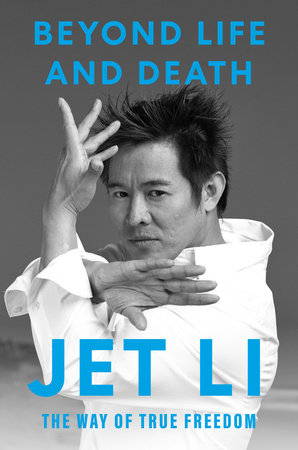
Before Li was born, his grandmother predicted that he would bring fortune to their family—and as a teenager he did, earning Chinese state sponsorship for his martial-arts career and winning five consecutive national championships. In his twenties he became an action movie star, popular with fans across Asia and then around the world. After surviving the 2004 tsunami in the Maldives, he launched one of China’s first charitable foundations and deepened his study of Buddhism. His new memoir is Beyond Life and Death.
Did you feel the pressure of your grandmother’s prophecy?
She always told that story, but I never knew if it was true. When I was two years old, my father passed away. After that, my mother worked hard to take care of the family, but we were still very poor, so I knew I also had to work very hard and always try my best. At eight I started learning martial arts, and my teachers chose me to continue.
What made you stand out as a martial artist?
Talent but also working smart. Some of my schoolmates tried much harder than I did, but I was the one who when the teachers said, “Do a thousand moves,” was always thinking, Why a thousand? What’s the goal? What if I just do 700 the correct way? Isn’t that better than a thousand? That’s why I learned fast, why my coaches liked me, and why in only one year I was recognized for overall excellence.
How did that willingness to question play out later in your career?
In martial arts the underlying philosophy is yin and yang, which makes you look at both sides of everything. In 1974, when I was 11, I went to America for the first time. The government had told us that China’s people and culture were good, while America’s were bad. But I saw that neither country was all good or all bad, which made me think more independently.
You were so young, competing against men in their twenties and thirties. Could you find a way to use your youth and inexperience to your advantage?
Yes, I even competed against my teachers. But children are cute, and with any performance, you can show your personality as well as your movement. You can be polite and humble and nice. When you do all that, even the people you beat are still happy. It’s the same in acting. A lot of people want to be actors, but the audience likes the ones who have something special inside.
How were you able to perform so well under pressure?
I had a very good coach. He taught me to focus on myself, on showing what I had learned and doing my best, not on beating anyone else—and also not to think too much at all. That was very helpful in my future life. You can compete only against yourself to do better and better. A lot of people go the wrong way, chasing others. So go your own way.
Why did you want to transition from athletics to entertainment?
After you become a champion in China, you get more money than normal people. I could take care of my mom, my sisters, my brothers. At 16 I already had one of the highest salaries in the country. So I asked myself, How do I work harder, be more famous, and get more money? That was my thinking then. After the trip to America, on the way back to China I passed through Hong Kong. A movie company boss asked, “Do you want to be an action star?” I said, “Why not?” But I belonged to the government, so it wasn’t my decision. When I was 17 I was allowed to make my first movie, and I did get more famous and was able to take better care of my family. But it wasn’t just about the money. I also love martial arts and wanted to promote them. At the demonstrations I did in many different countries up to age 16, there were maybe two thousand people or less at each. With movies, millions of people were watching. So I loved that.
You said that even in your early film career, you still felt like an employee. When did you start to claim more agency?
In the 1980s, China opened the country, but you still couldn’t make your own decisions; you needed approval. So over eight years, I made only four movies—one every two years. In Hong Kong, just across the bridge from the mainland, they were making 20 movies or more in that time. I had a lot of energy, and I wanted to do more, try new things. Finally, in 1988 the government let me go to America, where I could do what I wanted. But I’m Chinese, my English is poor, and no one knew me. So I went to Hong Kong instead. There, after a few movies I started my own production house, and that was probably when I was finally able to make my own decisions.
When you’re starring in or producing a film, what kind of leader are you?
The first thing is to show up on time. Lots of famous actors might show up for a 7 AM meeting at 7:30. But I’m always on time because in my martial-arts training, if I wasn’t, I was punished. The second thing I learned at a young age is that just because you’re a champion this year doesn’t mean you’ll be one the next. Every competition, you need to restart and try harder. It’s the same with movies: Just because one is a success, that doesn’t mean the next one will be. So you can’t get lazy. You can’t think you’re special. You have to work seriously every time, and then the team will follow you.
I think I also understand what people want. The ones who work for me want to do good work and feel financially secure. So while other Hong Kong companies might pay late or not pay you if the movie doesn’t make money, I always pay on time or early. And then to make a good movie, you need to think about the audience: How will they feel and react? They’re the consumers.
Why are you so adept at spanning different cultures?
I respect different cultures and systems. In each you need to learn how things work, who the decision-makers are, what the audience wants. But human nature is the same everywhere. We all want an honest, good life, to have freedom, to take care of family, to help the poor. And a basic action movie can appeal to that.
How do you think the relationship between China and the United States has changed over your career?
There’s a sociology professor from Princeton who is Chinese and who wanted to write a book using my life to explain the ups and downs, starting in the 1970s, when the two countries opened to each other, until now. It was an interesting idea, but I didn’t write that book. I do think that both countries are great, strong, and good for the world. But they come at it in different ways. American people start with their family, then their city, state, country, and so on. In Chinese culture it’s your country first, then state, city, and family.
After finding success in Hollywood, why did you recenter your life in Asia?
Every actor in the world wants to go to Hollywood, but the thing to ask is, “Why do they need you?” With me, it was because I made a kind of movie the market didn’t have yet: Hong Kong action style. They liked it, but in my mind I knew it would be only a short time—three to five years—before the Americans learned to do it themselves. And while an Asian face was OK in Los Angeles, San Francisco, New York, and Seattle, people in other parts of the country didn’t want to see that all the time, which I understood. In China we also want our own action heroes.
You also shifted the type and tone of your films. Why?
Martial-arts movies are about beating people up physically. But that doesn’t change their minds. So I wanted to start telling stories that show how violence can be a solution, but it isn’t the only one. Actually, the most powerful thing in the world is a smile, is love.
You’ve overcome many injuries and illnesses, including managing a thyroid condition currently. How have you powered through those challenges?
My book is called Beyond Life and Death because everybody in human history has the same beginning and end, and if that’s the truth, we don’t need to worry too much about the rest. You will be healthy and sick, lucky and unlucky. You can’t say, “Why me?” because there are no guarantees. You could die at 10 or still be alive at 90. A lot of people think pain and suffering are linked, but they don’t have to be. Complaining, yelling, being angry doesn’t help. If you don’t have loss, you won’t appreciate success.
How did your tsunami experience change your career path?
I say the first part of my life was about what I call “small Jet” or “small self”—my work, my family, my money, my fame, and my power. After the tsunami I knew it had to be about more. So I started a foundation, and we’ve now raised more than ¥4.5 billion from 10 billion individual donations to help 61 million disaster survivors. The idea is that everyone can do a little bit. This was a completely new fundraising model, but because I’m a Buddhist I believe every person has the power of compassion. Yes, governments, rich people, and big companies all have a responsibility. But as a citizen of the world, you also have a small one—maybe it’s giving 12 cents a month or volunteering. You can start there and grow.
You write early in the book that your accomplishments often left you feeling unsatisfied because there was always another goal to chase. Did the foundation help with that?
Well, giving back to society was the second part of my life, which I call “big Jet” or “big self” because I was no longer working for myself but working to help others. But there are always more goals. If you’ve funded 100,000 people, you want to fund a million, or if it’s millions, tens of millions. If you’ve helped the Chinese, you want to help Africans. It’s harder than making movies. That’s why I have spent the past 30 years training with Buddhist masters to learn how to become truly free—what we call “no self.”
What’s one Buddhist principle that might help ambitious, goal-chasing leaders?
Buddha teaches relative truth. An example is you see somebody on the internet who has very quickly become a millionaire—an overnight success—but you have no idea how hard they worked, nor do you see the people who haven’t been as successful. You don’t understand the whole picture. Everybody is unique, with their own love, power, wisdom, and journey. You need to respect yourself and discover yourself.
You recently made another film and are still hard at work on your foundation. You haven’t secluded yourself in a Tibetan monastery to practice Buddhism. What does the future hold for you?
For me, personally, I have no goal. I don’t need anything. I enjoy watching the world, understanding how people work. Over my career I inspired many children to learn martial arts but felt a little guilty because there weren’t a lot of ways for them to use their skills. Now, with new technology and social media, they can, so I’m helping young people make their own short films. I also want to share everything I’ve learned about mental training, philosophy, and religion to make people healthier and happier. When I was working with the World Health Organization, scientists and doctors told me that while we’re on our way to finding cures for the current first and second leading causes of death—heart disease and cancer—our biggest problem in the future is going to be the third: mental health problems. That’s why I’ve come out again, at my masters’ urging, to explain my journey.
- A version of this article appeared in the May–June 2026 issue of Harvard Business Review.
Alison Beard is an executive editor at Harvard Business Review and cohost of the HBR IdeaCast podcast. She previously worked as a reporter and editor at the Financial Times. A mom of two, she tries—and sometimes succeeds—to apply management best practices to her household.