221 EX/43Rev.Job: 2500262E
Executive BoardItem 43 of the provisional agenda
SUMMARY
This item was included in the provisional agenda of the 221st session of the Executive Board at the request of Algeria, Bangladesh, Bolivia (Plurinational State of), Chile, China, Colombia, Comoros, Congo, Cuba, Democratic People’s Republic of Korea, Djibouti, Dominican Republic, Egypt, Gabon, Kyrgyzstan, Liberia, Mauritania, Nicaragua, Nigeria, Panama, Russian Federation, Solomon Islands, South Africa, State of Palestine, Thailand, Togo, Tunisia, Venezuela (Bolivarian Republic of), Yemen and Zimbabwe. The corresponding explanatory note together with a draft decision is attached hereto. There will not be any financial implications.Decision required: paragraph 12. PARIS, 3April 2025Arabic/English/French/Russian and Spanish onlyTwo hundred and twenty-first sessionTwo hundred and twenty-firstsession
221 EX/43 Rev.Introduction1. Today, the world is undergoing accelerating changes unseen in a century, geopolitical conflicts keep escalating, multiple crises are emerging, and instability and uncertainty are increasingly prominent. In a time of intensified turbulence and transformation, we need more than ever to advocate for the concepts of peace and harmony, to let cultural exchanges transcend estrangementand mutual learning transcend clashes, and to promote mutual understanding and harmonious coexistence among people from different regions, countries and ethnicities, thereby maintaining world peace and fostering common development. 2. As a global cultural activity, sport embodies the shared aspiration and desire of people around the world for peace, development and friendship, playing an important role in promoting cultural exchanges and mutual learning, as well as fostering peace and development. In August 2013, the 67th session of the United Nations General Assembly designated 6 April as the International Day of Sport for Development and Peace (A/RES/67/296). In November 2015, the 38th session of the UNESCO General Conference proclaimed 20 September as the “International Day of University Sport” (38 C/50).3. UNESCO is United Nations’ lead agency for physical education and sports and plays the secretariat role for the Intergovernmental Committee for Physical Education and Sport (CIGEPS). In 2015, the General Conference, at its 38th session, revised and adopted the International Charter of Physical Education, Physical Activity and Sport, stating that “Physical education, physical activity and sport can play an important role in the realization of development, peace and post-conflict and post-disaster objectives.”Through its Fit for Life Global Sport Alliance, UNESCO works to increase participation in inclusive, equitable and safe sport and physical education.Background 4. Originating in ancient China and with almost 400 years of history, Taijiquan is deeply nourished by traditional Chinese philosophies and health-preservation concepts, such as the cycle of yin and yang, and the harmony between humanity and nature. It requires practitioners to maintain inner calm and a relaxed posture, emphasizing the balanced development of mental and physical strength. Through the coordination of movement, breathing and mind, Taijiquan reveals the philosophies contained in the balance between motion and stillness, openness and closure, strength and gentleness, as well as real and feigned force, embodying ancient Chinese people’s unique understanding and practice of the principles governing the universe and the movement of human body. Upholding the humanistic spirit of “respect for virtue and propriety” and with its cultural meanings and social functions continually enriched, Taijiquan has become a testament to human creativity and cultural inheritance. In December 2020, Taijiquan was included on the UNESCO Representative List of the Intangible Cultural Heritage of Humanity.5. As a traditional physical practice cultivating both inner and outer qualities, Taijiquan is characterized by moving in a gentle and flowing way while maintaining inner calm and a peaceful mind. It emphasizes the cultivation of both body and mind, and is practised individually, in pairs and in groups. Its functions and benefits include physical fitness, self-defence, self-cultivation and medical rehabilitation. Scientific research has shown that long-term practice of Taijiquan can boost immunity, enhance cardiovascular function and body flexibility, reduce stress, improve sleep quality, and cultivate concentration and patience, thereby improving overall physical and mental health.6. Carrying philosophical ideas of “balance between yin and yang”, “pursuit of peace”, “harmonious coexistence”, “mutual respect” and “overcoming strength with gentleness”, Taijiquan advocates the cessation of violence and conflicts and encourages its practitioners to maintain composure and modesty and to face external challenges and conflicts with a peaceful mind. The ethics offered by Taijiquan are highly compatible with UNESCO’s mandate which states “it is in the minds of men that the defences of peace must be constructed” and the International Charter of Physical Education, Physical Activity and Sport.
221 EX/43 Rev. – page 2 7. The practice of Taijiquan is not limited by weather, venue, culture, gender, age nor physical condition, which helps to eliminate discrimination and promote gender equality and social equity. Women are fully engaged in Taijiquan-related activities, with their right to equal participation in sportswell guaranteed. Youth are also important practitioners and active promoters of Taijiquan. The biennial World Junior Wushu Championships, which has been held for nine consecutive editions, has included Taijiquan as an event since 2006. In recent years, the promotion of Taijiquan for people with disabilities has also received increasing attention. Wheelchair Taijiquan, also known as seated Taijiquan, has become a popular form of exercise for individuals with lower limb disabilities, with exhibitions, competitions and training activities becoming increasingly widespread.8. As an intangible cultural heritage shared by humanity, Taijiquan has reached over 180 countries and regions, gaining wide participation and international recognition. It is commonly seen in parks and communities as well as at significant events such as the World Games, World University Games, Asian Games and World Wushu Championships. On 8 January 2020, the Executive Board of the International Olympic Committee (IOC) decided to include four Wushu events, including Men and Women’s Taijiquan Combined, as official competitive events at the 2026 Dakar Youth Olympic Games in Senegal. The International Wushu Federation (IWUF), recognized by the IOC, has formed, together with its 160 member countries and regions, a large competition system for Wushu, including Taijiquan. These events and cultural exchanges have enhanced friendship and deepened mutual understanding and respect among people of different countries.Proposed date9. It is proposed to celebrate the International Taijiquan Day annually on 21 March. 10.The date 21 March is around the time of the spring equinox, one of the 24 solar terms in the traditional Chinese calendar. “The Twenty-Four Solar Terms – knowledge of time and practices developed in China through observation of the sun’s annual motion” was inscribed on UNESCO’s Representative List of the Intangible Cultural Heritage of Humanity in 2016. The spring equinox, when day and night are of equal length, aligns with the principles of yin-yang balance and harmonious coexistence in Taijiquan. The Asian Sport for All Association has designated 21 March as the “Asian Taijiquan Day” to better promote and popularize Taijiquan. Expected results11.The expected results of the “International Taijiquan Day” include:•Boost the popularization and international exchange of Taijiquan and promote its ideasof "balance between yin and yang”, “pursuit of peace”, “harmonious coexistence”, “mutual respect”, and “overcoming strength with gentleness”, so as to foster exchanges and mutual learning among different civilizations and contribute to world peace. •Improve the health and quality of life of practitioners by combining movement and stillness, speed and slowness, and strength and gentleness in Taijiquan practice, enhancing human health and well-being, and contributing to the implementation of UNESCO’s “Fit for Life” sport initiative and the United Nations Sustainable Development Goal 3 – Good Health and Well-being.•Promote social inclusion and gender equality, and facilitate equal participation in sports for different groups, particularly women, youth and people with disabilities.•Support the implementation of UNESCO’s Convention for the Safeguarding of the Intangible Cultural Heritage and the Convention on the Protection and Promotion of the Diversity of Cultural Expressions and achieve “Strategic Objective 3: Build inclusive, just and peaceful societies by promoting freedom of expression, cultural diversity, education for global citizenship, and protecting the heritage” of UNESCO’s Medium-Term Strategy for 2022-2029.
221 EX/43 Rev. – page 3 Proposed decision12.In light of the above, the Executive Board may wish to adopt a decision along the following lines: The Executive Board,1. Having examined document 221 EX/43,2. Recalling United Nations General Assembly resolution 67/296 and 38 C/Resolution 44 of the UNESCO General Conference,3. Also recalling the United Nations 2030 Agenda for Sustainable Development, especially Sustainable Development Goal (SDG) 3 – good health and well-being, the Revised International Charter of Physical Education, Physical Activity and Sport (2015) and UNESCO’s “Fit for Life” Global Sport Alliance, 4. Reaffirming the important role that inclusive, equitable and safe sport plays in promoting cultural exchanges and mutual learning, as well as fostering peace and development,5. Noting that the ideas of “balance between yin and yang”, “pursuit of peace”, “harmonious coexistence”, “mutual respect” and “overcoming strength with gentleness” are highly compatible with UNESCO’s Constitution, which states that “it is in the minds of men that the defences of peace must be constructed”, and the Revised International Charter of Physical Education, Physical Activity and Sport (2015), 6. Recognizing that Taijiquan as an ancient sport and intangible cultural heritage plays a positive role in improving the overall health and well-being of humanity, promoting social inclusion and gender equality, deepening exchanges and mutual learning among civilizations and safeguarding world peace, 7. Also noting that Taijiquan, with wide participation worldwide, is seen at significant events such as the World Games, World University Games, Asian Games and World Wushu Championships and included as an official competitive event at the 2026 Dakar Youth Olympic Games, and that the International Wushu Federation (IWUF) and its 160 member countries and regions organize regularly w ushu events, including Taijiquan, 8. Further noting that the proclamation of International Taijiquan Day will have no financial impact on the regular budget of the Organization and will be funded with extrabudgetary resources, 9. Decides to: (a) welcome and endorse the recommendation to proclaim 21 March of each year International Taijiquan Day; (b) invite the Director-General to support all efforts leading to the proclamation of an International Taijiquan Day; (c) include this item in the agenda of the 43rd session of the General Conference;(d) recommend that the General Conference at its 43rd session proclaim 21 March of each year international Taijiquan day; invite the Director-General to cooperate with Member States and relevant stakeholders such as the International Wushu Federation (IWUF), to carry out promotional and celebratory activities for International Taijiquan Day in the most appropriate manner; and encourage Member States and relevant partners to provide extrabudgetary funds.
I’m impressed that the new forum ttt-ed this thread automatically.
There isn’t as much press on Taijiquan Day and I often forget when it is until I see the newsfeeds.
I should merge these two threads but I’m not sure how to do that with the new forum yet. 
Taijiquan Day
UNESCO International Day of Taijiquan
-Joint Celebration Announcement
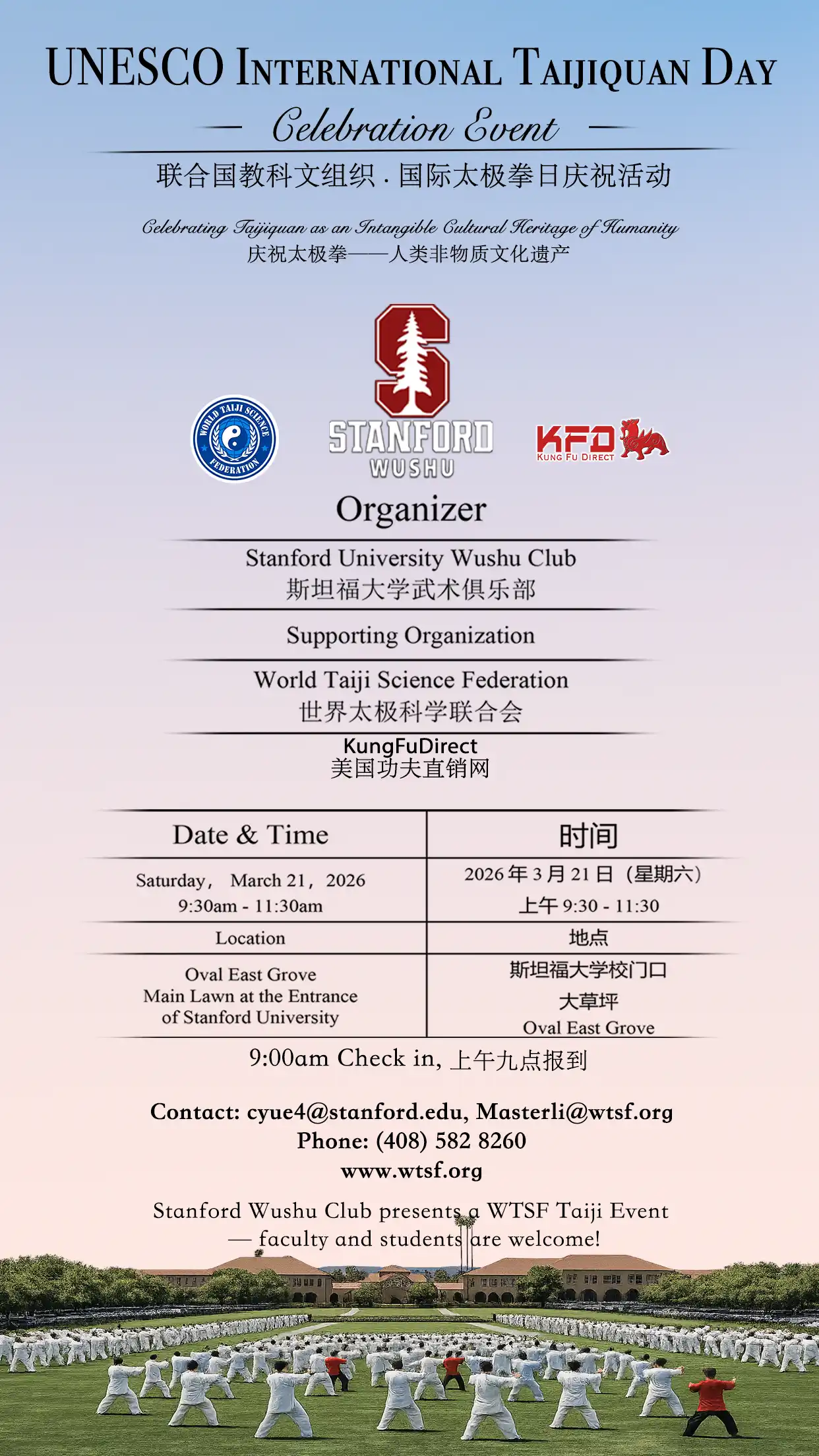
Organized By Stanford Wushu Club
-Supported by World Taiji Science Federation
March 21, 2026
Saturday 9:30AM – 11:30AM
Event Details
Plan Your Visit
**UNESCO International
Taijiquan Day**
Celebrating Taijiquan as an Intangible Cultural Heritage of Humanity
庆祝太极拳 —人类非物质文化遗产


Anyone doing anything for ITD? I’m just about to head to practice like always and will do my Taiji, like always.

> # Mass Tai Chi gathering in China marks 1st International Taijiquan Day
Culture China17:14, 22-Mar-2026
CGTN
00:29
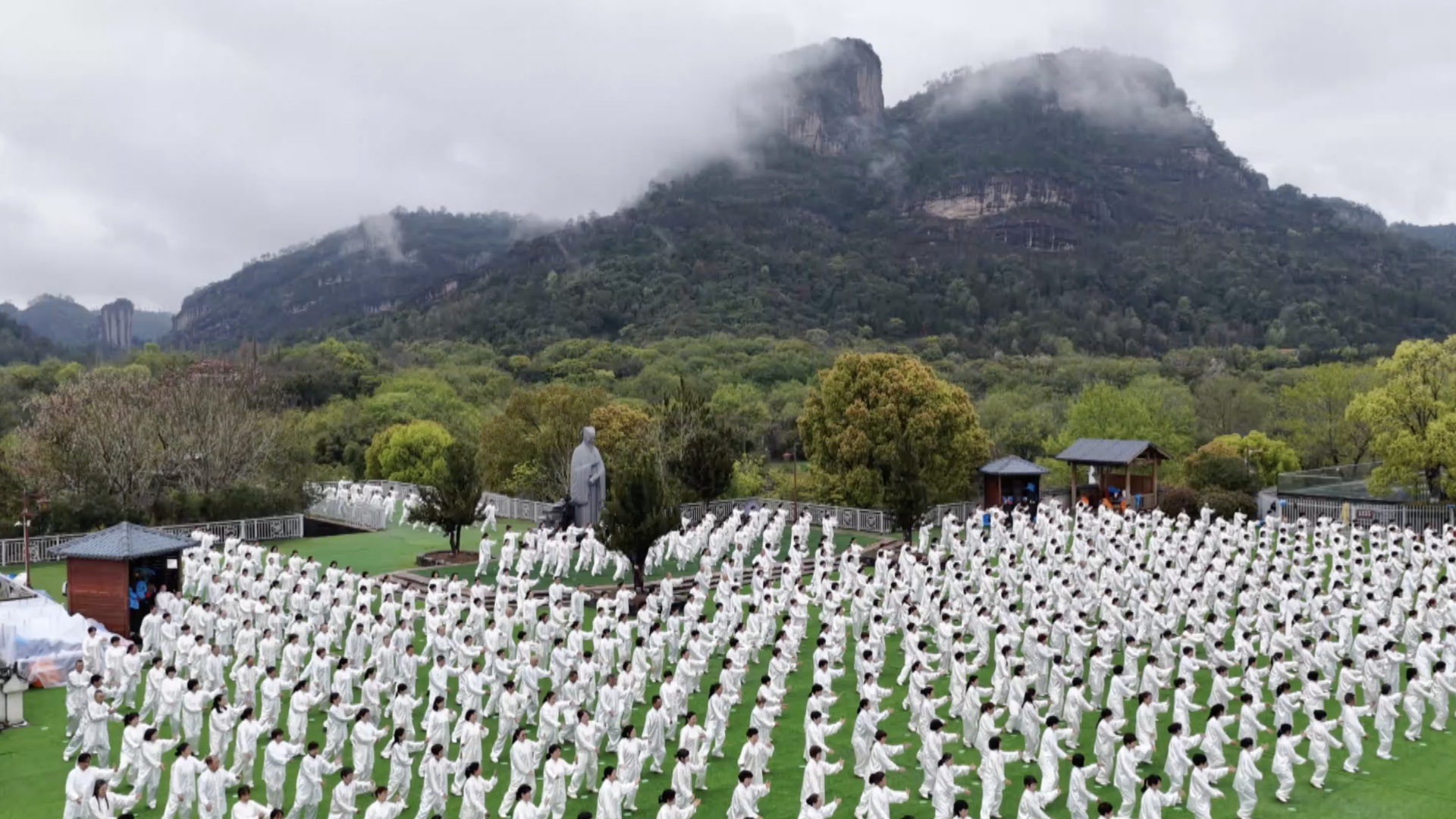
Wuyi Mountain, a UNESCO World Heritage Site, hosted a celebration on Saturday, drawing more than 1,200 Tai Chi enthusiasts from both China and abroad to mark the inaugural International Taijiquan Day.
The large-scale showcase took center stage in a series of nationwide events, while parallel celebrations unfolded in three cradles of the martial art: Wudang Mountain in Hubei Province, Wenxian in Henan Province, and Handan in Hebei Province.
It amuses me that this is being hailed as the “1st International” Taijiquan Day. Last year it was the 1st Asian Taijiquan Day. Next year, will it be the 1st Galactic Taijiquan Day?
> # Tai Chi Day marks March 21 worldwide
16:32, 21 March 2026
International Taijiquan Day (Tai Chi), a traditional Chinese martial art, is celebrated worldwide on 21 March. The observance was established in 2025 at the 43rd session of the General Conference of the United Nations Educational, Scientific and Cultural Organisation (UNESCO), TV BRICS reports.
Photo credit: TV BRICS
The art of Taijiquan originated in ancient China and has a history of nearly 400 years. The practice is based on traditional Chinese philosophy and health concepts, including the balance of yin and yang and the harmony between humans and nature. In December 2020, Taijiquan was inscribed on UNESCO’s Representative List of Intangible Cultural Heritage of Humanity.
“The ethics offered by Taijiquan are highly compatible with UNESCO’s mandate, which states, ‘It is in the minds of men that the defences of peace must be constructed,’ and the International Charter of Physical Education, Physical Activity and Sport,” the organisation’s documents note.
Taijiquan embodies the principles of balance, the pursuit of peace, harmonious coexistence and mutual respect. It is a form of exercise characterised by gentle and flowing movements. It can be practised individually, in pairs or in groups.
Scientific studies confirm that long-term practice improves cardiovascular function, increases flexibility, reduces stress, strengthens the immune system and enhances sleep quality. Taijiquan is accessible to everyone and can be practised in various conditions, regardless of gender, age or physical fitness.
For example, the Society for the Study of Traditional Taijiquan was established in Russia last year.
Practicing this type of martial arts is widespread in more than 180 countries. It can be seen in parks, public squares and major sporting events, including the World Games, the Universiade and the Asian Games. In January 2020, the International Olympic Committee included Taijiquan in the programme of the 2026 Summer Youth Olympic Games in Dakar, Senegal, as part of wushu competitions.
The date of 21 March is symbolic. It coincides with the spring equinox, when day and night are equal in length. In the Chinese calendar, it is part of the 24 solar terms – a system of timekeeping and traditions developed through observation of the Sun’s annual movement – which is also included in UNESCO’s Intangible Cultural Heritage list.
Автор
> Tai chi links world as both sport and smart answer for our times
By Li Yuche Published: Mar 22, 2026 11:57 PM
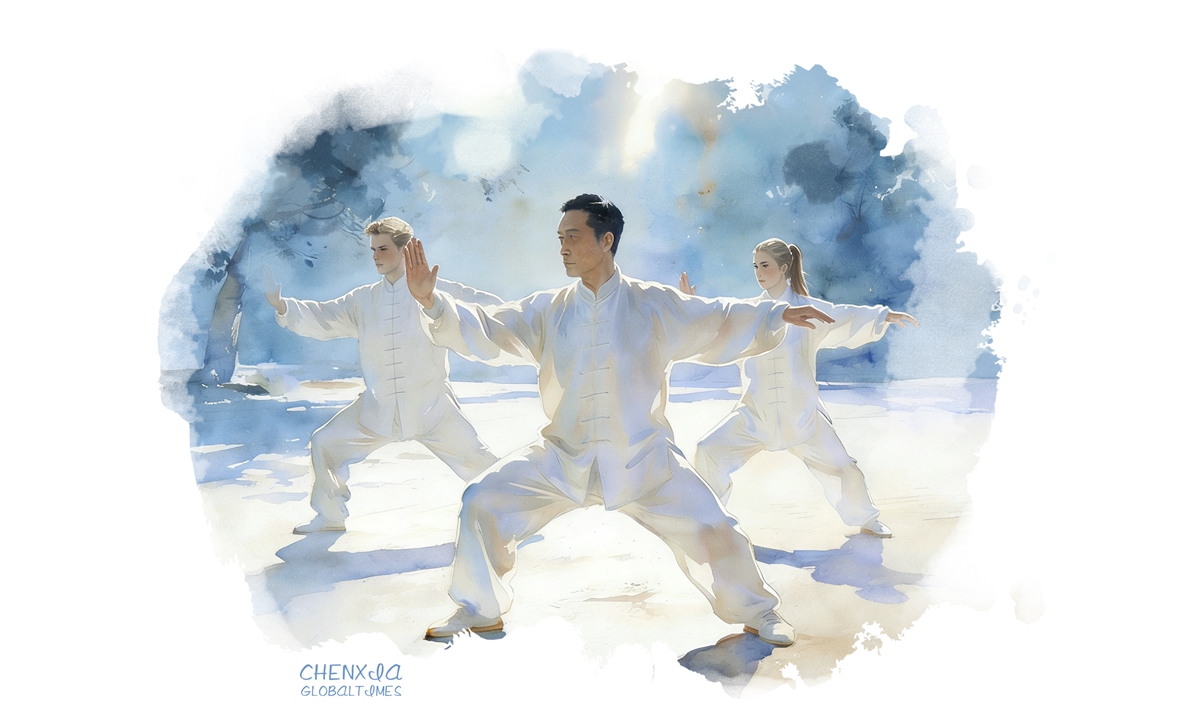
Illustration: Chen Xia/GT
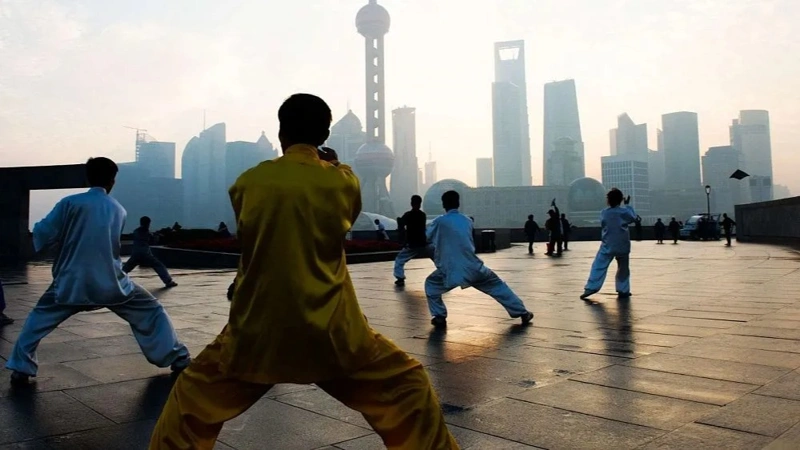
Across China, France, Argentina, and beyond, people from diverse cultural backgrounds, spanning languages and time zones, came together Saturday in their own corners of the world to practice the same thing, Taijiquan, also known as tai chi, a UNESCO-listed Chinese martial art. March 21 marked the very first International Taijiquan Day.
In an era obsessed with speed and stimulation, Taijiquan, which seeks a slow and balanced rhythm in every breath, is by no means as instantly appealing as the sensational news or video memes on people’s screens.
However, what enables it to unite people across the world is actually its sense of slowness and tranquility, qualities that stand out as precious in contrast to the ever-shifting desires of our time.
Originating in China nearly 400 years ago, Taijiquan is a national intangible cultural heritage (ICH) that was inscribed on UNESCO’s Representative List of the Intangible Cultural Heritage of Humanity in 2020.
Taijiquan embodies several strands of Chinese philosophy. On the one hand, the Confucian principle of Zhongyong, or the Doctrine of the Mean, forms one of Taijiquan’s core philosophical foundations, manifesting in techniques such as “maintaining an upright and centered posture.”
Meanwhile, Taijiquan also draws on the insights of Chinese Taoism, translating the concept of aligning human affairs with the natural order into bodily movements characterized by fluidity, freedom from stiffness, and responsiveness to circumstance. For example, in exercises like tuishou (lit: push hands), when facing a strong attack from an opponent, practitioners do not meet force with brute force. Instead, they neutralize the attack by yielding to and guiding the direction of the opponent’s energy. This marks a vivid expression of the Taoist philosophy of overcoming hardness with softness.
These philosophical ideas are difficult to convey through words as they require translation and rely heavily on intuition. But when braided into physical movements, these abstract concepts turn into concrete experiences.
That’s to say, this is one of the core reasons why people, even without understanding the Chinese language, can still feel the charm of Taijiquan. Yet it is not so much the charm of its individual movements they experience, but rather, through those movements, the charm of the Chinese cultural spirit.
But if Taijiquan was merely delivering ancient Chinese spirit, it could hardly become a world cultural heritage. In other words, Taoist or Confucian, the wisdom in Taijiquan practice has survived to this day because it still works.
It helps modern people manage anxiety, navigate relationships, and find balance. And these are precisely the kinds of problems that modern life brings - challenges that are universal, crossing every border.
French practitioner Trappler Marie-Line, studying at Taijiquan’s cradle Wudang Mountain in Hubei Province, said that Taijiquan “helped her find herself,” while British artist Holly told the Global Times that the seemingly peaceful practice instead stirred “a richer inner emotion” that fueled her painting.
These two examples are once again highlighting why Taijiquan is a universal practice: It is not like a standardized sport that demands everyone conform to the same mold, but rather a mirror that reflects what each person needs moment to moment.
Going beyond sports, as the world turns into a vast arena where everyone competes for external victories, the wisdom of Taijiquan reminds us that true strength lies not in controlling the outside world, but in settling the self within. And how, then, can this philosophy not offer some fresh perspectives for today’s society and international relations?
The pursuit of self-awareness and inner peace has also distinguished Taijiquan from the sports logic of pursuing faster or higher aims. Traditional sports culture has long been dominated by such logic, in which one seeks for external success. While pushing the body to its extremes often comes at the cost of mental and emotional balance, Taijiquan cultivates an inward-looking bodily experience - reminding people to reclaim themselves in practice.
That’s to say, in the long run, Taijiquan is a more sustainable form of exercise - one that is not only borderless, but also ageless and accessible to all.
It is this inclusiveness that has enabled Taijiquan to attract hundreds of millions of practitioners across more than 180 countries and regions.
The current International Taijiquan Day is indeed a milestone, because it offers these worldwide practitioners a stronger sense of community.
But, more importantly, Taijiquan actually underscores a value that extends far beyond community: As a cultural symbol that knows no borders, it can spark meaningful cultural dialogue across the world.
In Senegal, Africa, Taijiquan became an official event at its Youth Olympic Games. Meanwhile, practitioners from more than 30 countries brought what they had learned in China all the way to UNESCO headquarters in Paris. Such examples speak of one thing: Taijiquan sparks cultural dialogues through people, by people.
The author is a reporter with the Global Times. life@globaltimes.com.cn