Coronavirus (COVID-19) Wuhan Pneumonia

Coronavirus fake news

I haven’t seen this one, but I have been seeing a lot of disinformation about coronavirus lately. The good ol’ interwebz spreads viral fake news…like the plague.

Watch out for this extremely fake, weirdly racist viral post about coronavirus
BY CAITLIN WELSH
6 HOURS AGO

From fake Coachella posters and deepfake videos to Trump tweets and clout-chasing tragedy porn, there is no shortage of stuff on the internet trying to convince you of things that aren’t true. But an Australia-focused viral misinformation post about the coronavirus, packed with errors, typos, and blatantly made-up details, is still being shared by individuals and business pages on social media despite being both debunked and widely mocked.

The text post, which has been copied and shared on Facebook as well as harder-to-track Instagram Stories, claims “Corna’s disease” is “starting to spread in the greater Sydney region,” and warns of “contiminated [sic] products” (the spelling mistake is replicated in most iterations of the text).

The post then lists a random collection of popular Asian foods supposedly made in “neighbouring areas” to Wuhan— the Chinese city where the current virus originated — and are thus claimed to contain “traces of corona’s disease.” These foods include wagyu beef and Yakult (which are Japanese), Nongshim Onion Ring snacks (Korean), Mi Goreng instant noodles (Indonesian), Lipton peach-flavoured iced tea (made and bottled all over the world), fortune cookies, two varieties of rice, and Red Bull (both “Chinese” and “normal”).

Even more bizarrely, it claims the “bureau of diseasology parramatta” lists some “areas which people with corona’s disease have visited and contaminated,” proven by “positive readings” in the air near train stations. A couple of the Western Sydney suburbs listed have large populations of people who are of Chinese (or Vietnamese) birth or descent. The Sydney suburb of Parramatta is not home to a “Bureau of Diseasology,” however, as it does not exist.

[QUOTE]The post lists a random collection of popular Asian foods claimed to contain “traces of corona’s disease”

The name for study of diseases is actually epidemiology — and epidemiologists currently advise that coronavirus has not been proven to be transmitted by contaminated food or air, but rather by respiratory droplets (e.g. sneezing or coughing).

The post has been repeatedly debunked by the (actually real) New South Wales Department of Health throughout the course of Tuesday — with the existence of the mysterious Bureau specifically denied — but it was still being shared on social media as of at least 5 p.m. Sydney time. In some versions, extra suburbs had been added to the list of “contaminated” areas.

Kevin Nguyen

@cog_ink
Fake news and misinformation around the coronavirus is wild. Childcare centres are sharing a post claiming wagyu beef and mi goreng could have traces of the virus and that the “bureau of diseasology Parramatta” is testing the air. Everyone knows that burea relocated to Ryde.


73
5:49 PM - Jan 27, 2020
Twitter Ads info and privacy
34 people are talking about this

NSW Health
@NSWHealth
1/2 @NSWHealth has been made aware of a social media post that is being widely circulated warning people to not consume certain foods or visit certain locations in Sydney.

This post has not originated from NSW Health or any related entity…


196
7:53 PM - Jan 27, 2020
Twitter Ads info and privacy
206 people are talking about this

Carl Smith

@Carl3Smith
If you spot anything like what’s in this picture on social media, do your duty and repeat the NSW Health mantra: there is no such entity as the “Department of Diseasology Paramatta” https://twitter.com/NSWHealth/status/1222004812805332993


NSW Health
@NSWHealth
Replying to @NSWHealth
2/2 Further, there is no such entity as the “Department of Diseasology Parramatta”.

NSW Health would like to assure the community that the locations mentioned in this post pose no risk to visitors, and there have been no “positive readings” at train stations.

16
10:16 PM - Jan 27, 2020
Twitter Ads info and privacy
See Carl Smith’s other Tweets

Four of the five confirmed cases of coronavirus in Australia are in the state of NSW, and as most schools began classes on Tuesday, parents of children who have recently been to China were encouraged to keep their kids home until two weeks from their return date. At least one Sydney council also postponed its Lunar New Year celebrations over the previous weekend out of concern over the virus’ spread. And lines formed outside pharmacies in the Sydney CBD, as Sydneysiders queued to buy face masks. (Not everyone has invested yet, despite the ongoing bushfire smoke.)

Meanwhile, “Department of Diseasology” trended in Australia on Tuesday afternoon, as Twitter users made jokes and memes about the post.

The text’s scattershot, racist targeting of widely popular Asian snack foods and disdain for spellcheck give it a ****post-level absurdity — it’s hard to believe anyone meant it to be taken seriously, let alone succeeded.

But its sloppy phrasing might not be a dead giveaway for someone whose English isn’t strong — and it’s also powered by racist stereotypes about Asian food, people, and standards of hygiene.

Amid the deaths in China and the documented spread of the virus to a handful of other countries, East Asian people are reporting being profiled and avoided on public transport, recalling similar racism experienced during the SARS outbreak.

Terri Chu
@TerriChu
In my Chinese moms chat group, we discussed how to brace ourselves and the kids for the inevitable wave of racism coming our way as this unfolds.

Many of us have never even been to China but know we will not go unscathed. https://twitter.com/akurjata/status/1221165180568002560

Andrew Kurjata

@akurjata
Perhaps revealing some naiveté, I’m surprised at the level of vitriol towards Chinese people I’m seeing in the comments sections of stories about the Wuhan coronavirus. And I mean towards the people, not the government. Disheartening.

442
1:31 PM - Jan 25, 2020
Twitter Ads info and privacy
197 people are talking about this

Muqing
@muqingmq
The reason Western coverage of the coronavirus is so racist is bc it feeds orientalizing narratives of Chinese people as a dirty, diseased orientals and provides an excuse for increased Western aggression & “containment” of China as well as suspicion of Chinese in Western nations

26.7K
5:20 PM - Jan 25, 2020
Twitter Ads info and privacy
8,207 people are talking about this

Some of the earliest iterations of the post spotted by Mashable have already vanished from Facebook, where it seems to have originated, but it persists nonetheless. Whether its intent was earnest or not, misinformation like this feeds, and feeds off, racial profiling, ignorance, and fear. As with the arson conspiracy theories and misinformation that thrived once the Australian bushfires hit international headlines, it’s likely this misinfo will continue to spread and mutate throughout the internet despite best efforts to debunk it.

As always, take officially-recommended precautions as necessary – and be sure to double check your sources before sharing information on social media.[/QUOTE]
One day in Wuhan through a photographer’s lens

//youtu.be/BBEqV5f8Wag

Potential vaccine

This is good news, finally. But we’ll see. Hopeful.

China coronavirus: Hong Kong researchers have already developed vaccine but need time to test it, expert reveals
HKU’s Professor Yuen Kwok-yung says his team is working on vaccine, having isolated virus from the city’s first imported case
Scientists in mainland China and the United States are also racing to produce a vaccine for the deadly new coronavirus
Elizabeth Cheung
Published: 10:48pm, 28 Jan, 2020


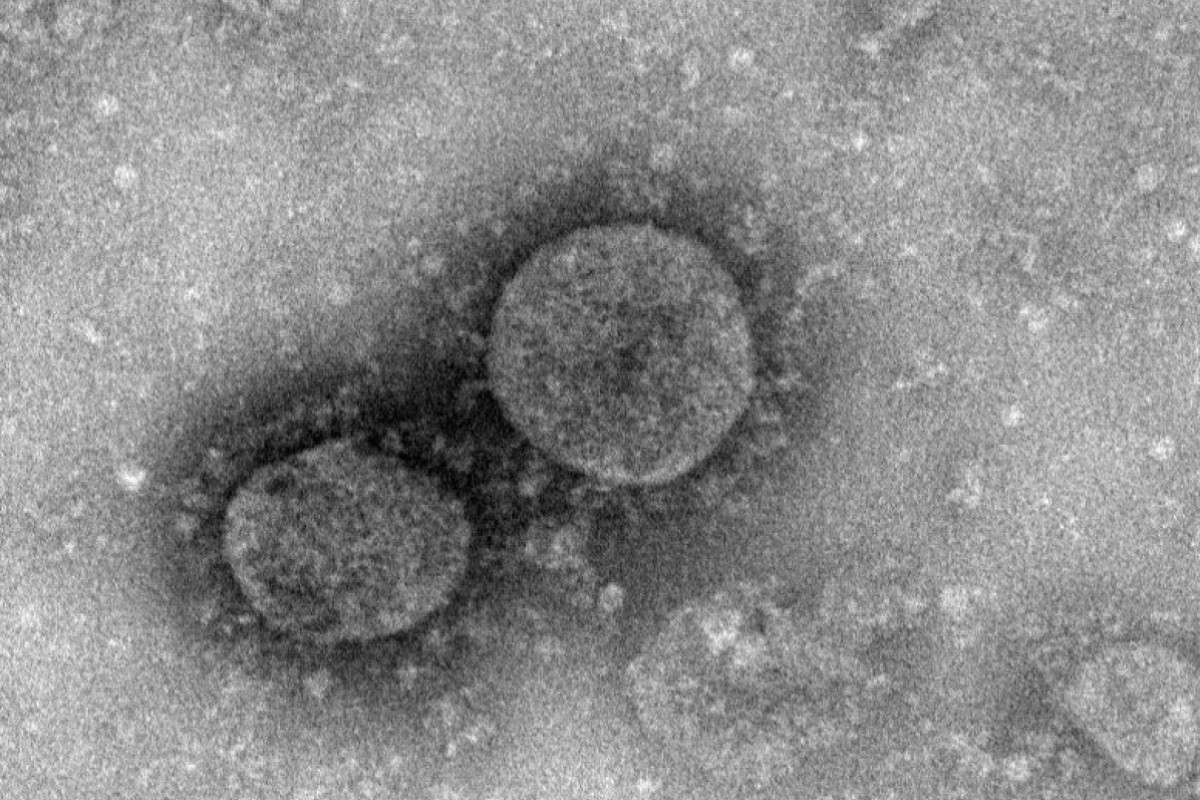
The previously unknown coronavirus has killed more than 100 people and infected thousands. Photo: National Microbiology Data Centre

Hong Kong researchers have already developed a vaccine for the deadly Wuhan coronavirus – but need time to test it, according to infectious diseases expert Professor Yuen Kwok-yung.
Scientists in mainland China and the United States were also separately racing to produce a vaccine for the new coronavirus, which has killed more than 100 people and infected thousands.
Yuen, chair of infectious diseases at the University of Hong Kong, revealed that his team was working on the vaccine and had isolated the previously unknown virus from the city’s first imported case.
“We have already produced the vaccine, but it will take a long time to test on animals,” Yuen said, without giving a specific time frame on when it would be ready for patients.


Professor Yuen Kwok-yung did not give a time frame on when the vaccine would be ready. Photo: Winson Wong

But he said it would take months to test the vaccine on animals and at least another year to conduct clinical trials on humans before it was fit for use.
HKU researchers based it on a nasal spray influenza vaccine previously invented by Yuen’s team.
Researchers modified the flu vaccine with part of the surface antigen of the coronavirus, meaning it could prevent influenza viruses as well as the new coronavirus, which causes pneumonia.
The vaccine, if successfully tested, could be the answer to a disease that has infected more than 4,600 people globally and killed over 100 on the mainland, mostly in Wuhan, centre of the outbreak.
Hong Kong had so far seen eight confirmed cases. From noon on Monday to noon on Tuesday, 78 more people were reported as suspected cases. Currently, 103 people are in isolation in public hospitals.
Although mainland media quoted Chinese infectious diseases expert Li Lanjuan on Monday as saying a vaccine targeting the coronavirus was being developed and could be made in around a month at the earliest, Yuen expressed doubts.

//youtu.be/a_tlM02QGjg

Hong Kong increases measures to contain spread of Wuhan coronavirus

He said the one being developed on the mainland is likely to be an inactivated virus vaccine, which consists of a virus grown in a culture that has had its infectivity destroyed by chemicals or radiation.
To test the vaccine, it will have to be injected into an animal to see if it produces a good immune response, Yuen said. The vaccinated animal would then be exposed to the virus to see if is protected.
“If the vaccine appears effective and safe in a number of animal species, it will go into clinical trials on humans. This takes at least one year even if expedited,” Yuen said.
He was also concerned that the approach taken by the mainland side to develop a vaccine would lead to a major complication, in which people who were vaccinated might develop a more severe disease if exposed to the virus. He said such a reaction for coronavirus had been recorded in reports.
Meanwhile, Xinhua reported that Shanghai East Hospital of Tongji University had urgently approved a project for the development of a vaccine targeting the novel virus.
The vaccine would be co-developed by the hospital and Stemirna Therapeutics, a Shanghai-based biotechnology company.
Company CEO Li Hangwen said no more than 40 days would be needed to manufacture vaccine samples, which would then be sent for tests and brought to clinics “as soon as possible”.

This article appeared in the South China Morning Post print edition as: Vaccine developed but far from ready, expert says

Here I’ve been waiting for someone to suggest banlangen or something.

More racism

The coronavirus panic is turning the UK into a hostile environment for east Asians
Sam Phan
Stereotypes are spreading as quickly as the virus. On the bus, in the street, people have started treating us as if were infected

Mon 27 Jan 2020 11.15 ESTLast modified on Tue 28 Jan 2020 09.19 EST


The virus has spread to at least eight other countries including Thailand, Japan and the US, and its highly likely it will reach the UK, according to Public Health England. Photograph: Amer Ghazzal/REX/Shutterstock

The atmosphere on my morning commute is tense. As panic over the coronavirus deepens and dominates the headlines, as an east Asian I cant help but feel more and more uncomfortable. On the bus to work last week, as I sat down, the man next to me immediately scrambled to gather his stuff and stood up to avoid sitting next to me.

[QUOTE] Perhaps it did not occur to these people that I, as a UK citizen, was no more likely than them to be carrying the virus

On the train over the weekend, a group sat opposite me chattering about their weekend plans. One of them seriously advised the rest, I wouldnt go to Chinatown if I were you, they have that disease.

As I made my way towards Chinatown in London, an elderly woman and her friend on the escalators at Leicester Square underground station were casually talking about how dangerous the area now was, and she complained she was obliged to go there for a meeting. At least Im old, I have nothing left to lose, she laughed.

In another loud conversation, I overheard a woman talking about how terrified she was that her friend, who had spent some time working with Chinese students, might have infected her with the virus.

In light of current events, we east Asians in the UK are on high alert, paying close attention to how people interact with us. It is not their concern about health that is problematic, but the stereotyping of all east Asians as a coronavirus risk. At times such as this, even a simple bus trip can feel like a hostile environment.

A friend at a university library experienced something similar: as soon as they sat down at a desk, the person in front of them packed up their things to leave. Were noticing odd things like this that we never saw happen before.

Perhaps it did not occur to some of these people, so happy to talk loudly in front of me, that I was also concerned about the virus or that I, as a British citizen, was no more likely than them to be carrying the virus. They grouped all east Asian people together, without factoring in that perhaps we were British or, if not, we were from unaffected areas of China, or even came from other countries in the Chinese diaspora. We were all the same to them.

The virus that originated in Wuhan has spread to at least eight other countries including Thailand, Japan, Australia and the US, and its highly likely it will reach the UK, according to Public Health England.

As it spreads, the virus has revealed more and more stereotyped judgments about Chinese people. I have also heard accounts from east Asians, even if they are not Chinese, who have recently been profiled while travelling at airports or on trains due to the ignorant perception that all east Asians are Chinese.

George Osborne, editor of the Evening Standard, proudly tweeted his newspapers cartoon of a rat with a face mask to supposedly commemorate the lunar new year. Piers Morgan mocked the Chinese language on Good Morning Britain with a tired ching chang chong joke. East Asians have been accused of instigating the virus by having revolting eating habits. Most Asians know these stereotypes all too well.

These insulting depictions dont reflect the reality of being Chinese at all, and encourage the misguided perception of more than one billion people being a monolithic and singular group in which everyone speaks, acts and looks the same. In fact, there is a huge diversity.

Language and culture vary massively within the region. Speakers of Hokkien would not be able to converse with people who speak Hakka. And despite Mandarin being the lingua franca, there are more than 200 dialects spoken across China. In fact in Wuhan itself, a beautiful and diverse city with more than 3,500 years of history, many of its population of 11.8 million speak a Wuhan dialect.

Elsewhere, natives of Aksu look completely different to the majority Han Chinese. And the food, too: dim sum from the south of China is vastly different from the tangy, spicy flavours of Sichuan.

This week, my ethnicity has made me feel like I was part of a threatening and diseased mass. To see me as someone who carries the virus just because of my race is, well, just racist.

As the lunar new year celebrations take place across the world, lets take a moment to think about the way in which east Asians are perceived and how important it is to see us in all our diversity, as individual human beings, and to challenge stereotypes. The coronavirus is a human tragedy, so lets not allow fear to breed hatred, intolerance and racism.

Sam Phan is an MA student at the University of Manchester[/QUOTE]

THREADS
Coronavirus
Year of the Rat

From the CDC

Novel Coronavirus in China
Warning - Level 3, Avoid Nonessential Travel
Alert - Level 2, Practice Enhanced Precautions
Watch - Level 1, Practice Usual Precautions
Key Points
CDC recommends that travelers avoid all nonessential travel to China.
There is an ongoing outbreak of respiratory illness caused by a novel (new) coronavirus that can be spread from person to person.
Chinese officials have closed transport within and out of Wuhan and other cities in Hubei province, including buses, subways, trains, and the international airport. Other locations may be affected.

Older adults and people with underlying health conditions may be at increased risk for severe disease.

The situation is evolving. This notice will be updated as more information becomes available.

What is the current situation?
CDC recommends that travelers avoid all nonessential travel to China. In response to an outbreak of respiratory illness, Chinese officials have closed transport within and out of Wuhan and other cities in Hubei province, including buses, subways, trains, and the international airport. Additional restrictions and cancellations of events may occur.
There is limited access to adequate medical care in affected areas.
A novel (new) coronavirus is causing an outbreak of respiratory illness that began in the city of Wuhan, Hubei Province, China. This outbreak began in early December 2019 and continues to grow. Initially, some patients were linked to the Wuhan South China Seafood City (also called the South China Seafood Wholesale Market and the Hua Nan Seafood Market).

Chinese health officials have reported thousands of cases in China and severe illness has been reported, including deaths. Cases have also been identified in travelers to other countries, including the United States. Person-to-person spread is occurring in China. The extent of person-to-person spread outside of China is unclear at this time.

Coronaviruses are a large family of viruses. There are several known coronaviruses that infect people and usually only cause mild respiratory disease, such as the common cold. However, at least two previously identified coronaviruses have caused severe disease — severe acute respiratory syndrome (SARS) coronavirus and Middle East respiratory syndrome (MERS) coronavirus.

Signs and symptoms of this illness include fever, cough, and difficulty breathing. This novel coronavirus has the potential to cause severe disease and death. Available information suggests that older adults and people with underlying health conditions or compromised immune systems may be at increased risk of severe disease.

In response to this outbreak, Chinese officials are screening travelers leaving some cities in China. Several countries and territories throughout the world are reported to have implemented health screening of travelers arriving from China.

On arrival to the United States, travelers from China may be asked questions to determine if they need to undergo health screening. Travelers with signs and symptoms of illness (fever, cough, or difficulty breathing) will have an additional health assessment.

What can travelers do to protect themselves and others?
CDC recommends avoiding nonessential travel to China. If you must travel:

Avoid contact with sick people.
Discuss travel to China with your healthcare provider. Older adults and travelers with underlying health issues may be at risk for more severe disease.
Avoid animals (alive or dead), animal markets, and products that come from animals (such as uncooked meat).
Wash hands often with soap and water for at least 20 seconds. Use an alcohol-based hand sanitizer if soap and water are not available.
If you were in China in the last 14 days and feel sick with fever, cough, or difficulty breathing, you should:

Seek medical care right away. Before you go to a doctor’s office or emergency room, call ahead and tell them about your recent travel and your symptoms.
Avoid contact with others.
Not travel while sick.
Cover your mouth and nose with a tissue or your sleeve (not your hands) when coughing or sneezing.
Wash hands often with soap and water for at least 20 seconds. Use an alcohol-based hand sanitizer if soap and water are not available.
Clinician Information
Healthcare providers should obtain a detailed travel history for patients with fever and respiratory symptoms. For patients with these symptoms who were in China on or after December 1, 2019, and had onset of illness within 2 weeks of leaving, consider the novel coronavirus and notify infection control personnel and your local health department immediately.

Although routes of transmission have yet to be definitively determined, CDC recommends a cautious approach to interacting with patients under investigation. Ask such patients to wear a surgical mask as soon as they are identified. Conduct their evaluation in a private room with the door closed, ideally an airborne infection isolation room, if available. Personnel entering the room should use standard precautions, contact precautions, and airborne precautions, and use eye protection (goggles or a face shield). For additional infection control guidance, visit CDC’s Infection Control webpage.

Hope no one was China-bound.

So tacky of Jedrzejczyk

[URL=“https://www.cbssports.com/mma/news/ufc-strawweight-champ-weili-zhang-slams-joanna-jedrzejczyk-for-joking-about-coronavirus/”]
UFC strawweight champ Weili Zhang slams Joanna Jedrzejczyk for joking about coronavirus
The Chinese-born champion was not happy at the former champ’s joke invoking her homeland
Brent Brookhouse
38 mins ago • 1 min read

As Weili Zhang prepares to defend her UFC women’s strawweight championship against former champ Joanna Jedrzejczyk, she is also dealing with a crisis in her country. Zhang became a hero in China after winning the title with a 42-second knockout of Jessica Andrade last August. But China is currently struggling with an outbreak of coronavirus, with the country reporting more than 130 deaths and 5,974 confirmed cases of the virus.

Jedrzejczyk posted a photo on her Instagram of a photoshopped magazine cover in anticipation of the fight with Zhang positioned in the foreground and herself in the background wearing a gas mask, apparently a reference to the fast-spreading disease. The attempt at a joke drew a serious response from the champion.

“To make fun of tragedy is a true sign of ones character,” Zhang wrote in her own Instagram post. “People are dying, someone’s father, someone’s mother, someone’s child. Say what you want about me if it makes you feel stronger but do not joke about what’s happening here. I wish you good health until March 7. I will see you soon.”

Zhang and Jedrzejczyk face off on March 7 in the co-main event of UFC 248. The event takes place from T-Mobile Arena in Las Vegas. The fight marks the first title defense for Zhang and an attempt for Jedrzejczyk to regain a championship she held from March 2015 to November 2017 while establishing herself as one of the most dominant forces in women’s MMA. Jedrzejczyk has lost three consecutive championship bouts.

Jedrzejczyk posted a response on her own Instagram, offering a partial apology in a video while also telling Zhang to not get emotional.

“Hey champ, hey Weili,” Jedrzejczyk said. “So sorry to make you feel bad, but I would never make fun of people with an illness or virus. I didn’t want you to get offended, but I just made fun of the funny internet meme. So, so sorry, but still, I will see you on March 7 and don’t get emotional, OK?”

Here’s the image:

THREADS
Zhang Weili
Coronavirus

The return of ‘sick men of asia’

[URL=“https://www.scmp.com/week-asia/health-environment/article/3048104/made-china-how-wuhan-coronavirus-spread-anti-chinese”]
‘Made in China’: how Wuhan coronavirus spread anti-Chinese racism like a disease through Asia
Xenophobic chatter about Chinese eating habits is going viral on the internet
Such ignorance isn’t just unpalatable – in misdiagnosing the problem, it’s dangerous, too
Kok Xinghui
Published: 8:00pm, 29 Jan, 2020


A video by Chinese social media influencer Wang Mengyun, in which she tries bat soup has been held up by some as evidence of ‘disgusting’ Chinese eating habits – even though the video was shot in Palau. Photo: Sohu

As Singaporeans gathered over the Lunar New Year weekend, jokes were cracked about Chinese eating habits and how a propensity to eat “anything with four legs except the table and everything that flies except planes” had given rise to the Wuhan coronavirus.
One meme said there was no need to worry – the virus would not last long because it was “made in China”.
The jokes, tinged with racism, soon grew into a call for the city state to ban Chinese travellers from entering. A change.org petition started on January 26 had 118,858 signatures as of Wednesday afternoon. Among those calling for health to be prioritised over tourism dollars was Ian Ong, who wrote: “We are not rat or bat eaters and should not be made to shoulder their nonsense.”
Xenophobic chatter about mainland Chinese and their eating habits has spread across the world since the first cases of the novel coronavirus 2019 (2019 n-CoV) emerged in China’s Hubei province in December.
The virus has now infected more than 6,000 people, most of them in mainland China where at least 132 people have died. Dozens of people have been infected in the rest of Asia – including 10 in Singapore and seven in Malaysia.
Some countries, including the Philippines, have stopped issuing visas on arrival to all Chinese nationals. Papua New Guinea has gone further, shutting its air and seaports to all foreigners coming from Asia.


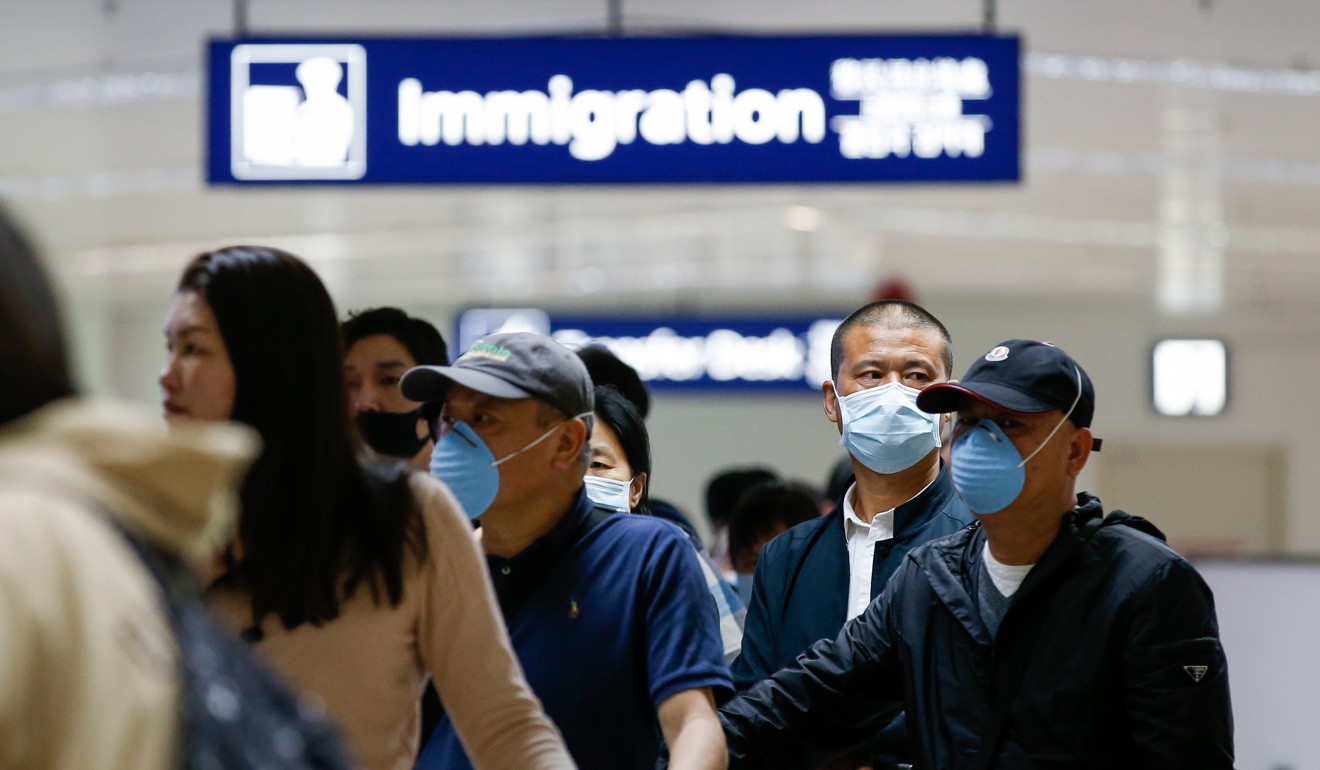
Passengers arriving from Guangzhou, China, at the Ninoy Aquino International Airport in Manila. The Philippines has stopped issuing visas on arrival to all Chinese nationals. Photo: EPA

In Malaysia, there have been calls to block Chinese tourists and social media posts claiming the outbreak is “divine retribution” for China’s treatment of its Muslim Uygur population. Some mosques in Malaysia have also closed themselves off to tourists.
In Japan, a shop in a mountain town prompted an apology from tourism authorities after it posted a sign saying: “No Chinese are allowed to enter the store. I do not want to spread the virus.”
From noon on Wednesday Singapore has blocked the entry of tourists who had visited Hubei province in the past 14 days, or who hold passports issued in the province. Malaysia has also stopped issuing visas to Chinese travellers from Hubei.
The Singapore government has said the travel ban was due to global trends showing that most of the infections were in people who had been to the province and the country wanted to minimise import of the virus to Singapore.
The growing stigma has even reached European shores. Graduate student Sam Phan wrote in the British newspaper The Guardian about how a man on the bus in London had scrambled to get up as soon as Phan sat down. “This week, my ethnicity has made me feel like I was part of a threatening and diseased mass. To see me as someone who carries the virus just because of my race is, well, just racist,” he wrote.
In Canada, Toronto website BlogTO said a stigma was also attached to Chinese food, noting that a similar thing happened during the 2003 outbreak of severe acute respiratory syndrome (Sars), which infected 8,000 people globally and killed nearly 800. The website noted racist comments on its Instagram post about a new Chinese restaurant, which some posters urged diners to avoid because it “may have bat pieces in there or whatever else they eat”.
The comments were in part a reference to a video of a Chinese social media influencer tucking into a bowl of bat soup. Some posters have claimed the video is evidence of “disgusting” Chinese eating habits, though the video was in fact filmed three years ago in Palau, a Pacific island nation where bat soup is a delicacy.

continued next post

Continued from previous post


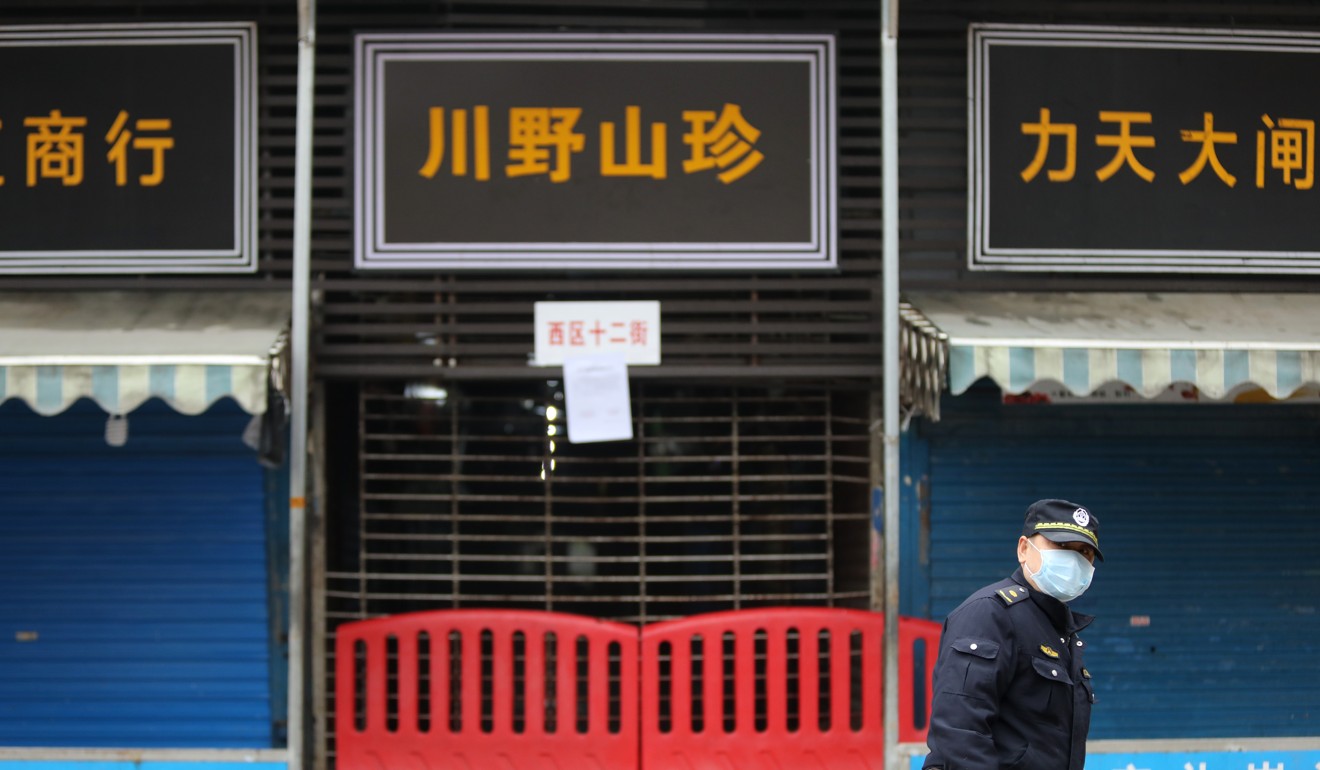
Wrongly accused? The Huanan Seafood Market in Wuhan. Photo: Simon Song

It is still unknown how the coronavirus made the jump from wildlife to humans, but early on in the outbreak the Huanan Seafood Market in the central city of Wuhan was widely assumed to be the origin of the disease. The market has a thriving wildlife trade, selling animals from foxes to wolf puppies, giant salamanders to peacocks and porcupines.
However, in recent days research has emerged suggesting the market may not be the source of the virus.
The medical journal The Lancet on January 24 said that of the first clinical cases, 13 out of 41 had no link to the market.
The first patient showed symptoms on December 1, meaning human infections must have occurred in November 2019 given the two-week incubation period. Researchers said the virus could have spread in Wuhan before the cluster within the market was discovered.
Similarly, the virus’ genome has been sequenced but researchers are not sure if it comes from bats – as Sars did – or snakes. Still, experts said it is not so much about what meat is eaten, but how thoroughly it is cooked and the hygiene precautions taken during food preparation.
“The chef is at greatest risk,” said infectious disease specialist Leong Hoe Nam, who was closely involved in Singapore’s fight against Sars, which killed 33 people and infected 238 in the city state.
Leong said anybody could catch a virus from an animal.
“It is a case of the right person meeting the wrong virus at the wrong time. It could happen to anyone studying viruses, or meeting the bats in the most inopportune time,” he said, referring to a case in Melaka, Malaysia, when a bat flew into a house and infected a 39-year-old man and his family.
Painting the coronavirus as a Chinese problem was like “dealing with the problem with a sledge hammer, implicating all Chinese nationals rather than dealing with bad food safety practices and diets”, said National University of Singapore sociologist Tan Ern Ser.
Nanyang Technological University (NTU) sociologist Laavanya Kathiravelu said xenophobic social media posts were an extension of colonial-era stereotypes.
“Chinese, in these xenophobic accounts, are seen as taking resources away from deserving local populations, and having uncouth behaviour. More broadly, this can also be seen as informed by older stereotypes of Chinese as dirty, having bad hygiene and undesirable culinary practices,” she said.
Even Singapore government ministers have spoken out.


Singapore’s National Development Minister Lawrence Wong, pictured with Hong Kong Chief Executive Carrie Lam, has cautioned his countrymen against ‘turning xenophobic’. File photo

Minister for National Development Lawrence Wong, who co-chairs a task force set up to deal with the virus, said on Monday: “I want to assure Singaporeans that the government will do everything we can to protect Singaporeans and Singapore but this does not mean overreacting, or worse, turning xenophobic.”
Singaporean playwright Zizi Azah, who is based in New York, said it was illogical to pin the virus on a race. “Illness knows no geographical or racial boundaries and it really is the luck of the draw, isn’t it? Where something starts and where it gets to,” she said.
Mohamed Imran Mohamed Taib, director of the Centre for Interfaith Understanding, cautioned against the effects of dehumanising Chinese people as uncivilised. “It is not due to ‘Chinese-ness’; the fact that these people are Chinese is incidental, not the reason for the emergence and transmission of the virus. The virus could have emerged in any other part of the world, just as Ebola started in Congo and Middle East Respiratory Syndrome in Saudi Arabia,” he said.
Singapore’s Minister for Education Ong Ye Kung on Monday called for empathy, saying that Singaporeans would not have liked it if during the Sars outbreak other countries had asked Singaporean expatriates to leave.
“We’re an international hub, we can well be quite hard hit by such epidemics. So I’d say do not do unto others what you do not want others to do unto you. We all must tackle the problem objectively.”
In Malaysia, Prime Minister Mahathir Mohamad clarified that any mosques that had closed themselves off to tourists had not done so on the government’s advice.
“This is not a government policy and it is an irresponsible act,” he said on Wednesday, warning the public against spreading fake news that could stir racial tensions.
“Even though we believe in freedom of expression, it does not mean we can be antagonistic and agitate the feelings of others.”

This article appeared in the South China Morning Post print edition as: racism aimed at chinese spreads fear and panic

THREADS
Coronavirus
Made in China
Chinese Food

Big jump

China’s coronavirus cases jump to 7711, Yuan to extend selloff
By ActionForex.com -Jan 30, 03:26 GMT

China’s National Health Commission reported that, as of January 29, number of confirmed coronavirus case in the country rose 1737 from 1459 to 7711. Serious cases rose from 1239 to 1370. Death toll rose from 132 to 170. Suspected cases rose from 9239 to 12167. Number of people being tracked rose from 65537 to 88693.

WHO chief Tedros Adhanom Ghebreyesus said in Geneva, “in the last few days the progress of the virus especially in some countries, especially human-to-human transmission, worries us.” “Although the numbers outside China are still relatively small, they hold the potential for a much larger outbreak.”

Offshore Chinese Yuan is back under selling pressure today. USD/CNH’s rebound suggests that rise from 6.8452 is resuming for channel resistance (now at 7.0061). Sustained break there should confirm that corrective fall from 7.1953 has completed. Further rally would be seen to 7.0867 resistance next. Nevertheless, break of 6.9420 support will indicate rejection by the channel resistance and turn focus back to 6.8452 low.
The economic impact could be devastating on the martial arts world what with us already grappling with the trade war issues. :frowning:

misinfo

I always cherry-pick the news that I post here but even I was taken in by the bat soup story. :o The news is happening so quickly that it’s hard to keep up.

Coronavirus Misinformation Is Spreading All Over Social Media
By Gerrit De Vynck, Riley Griffin, and Alyza Sebenius
January 29, 2020, 1:09 PM PST
Racist rants, dubious claims surface in wake of outbreak
YouTube, Twitter, Facebook trying to suppress misinformation

The new coronavirus roiling financial markets and prompting travel bans is taking on a life of its own on the internet, once again putting U.S.-based social media companies on the defensive about their efforts to curb the spread of false or dangerous information.

Researchers and journalists have documented a growing number of cases of misinformation about the virus, ranging from racist explanations for the disease’s origin to false claims about miracle cures. Conspiracy theorists, trolls and cynics hoping to use the panic to boost traffic to their own accounts have all contributed to the cloud of bad information.


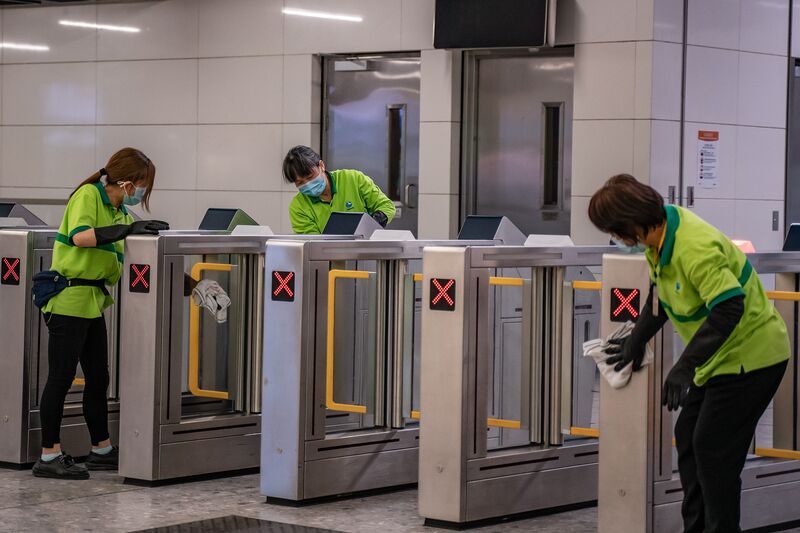
Workers clean gates at a Hong Kong High Speed Rail Station on Jan. 29.Photographer: Anthony Kwan/Getty Images

“It’s the perfect intersection of fear, racism and distrust of the government and Big Pharma,” said Maarten Schenk, co-founder of the fact-checking site Lead Stories. “People don’t trust the official narrative.”

The novel coronavirus, which originated in the Chinese city of Wuhan, has killed 132 people and infected over 6,000, with cases in 19 countries.

One set of tweets and Facebook posts from U.S. conspiracy theory accounts said drinking bleach could protect against the virus or even cure it. On YouTube, a series of videos accusing media organizations of suppressing information had hundreds of thousands of views.

Fact-checkers, medical experts and academics reviewing coronavirus-related misinformation said some of the most viral hoaxes have concerned vaccines that claim to prevent or cure the disease and that would soon be commercially accessible to the public. Though medical authorities and biotechnology companies have begun researching and developing vaccines, they’re far from being stocked on pharmacy shelves.

“Rumors can travel more quickly and more widely than they could” in an era before social media, said Thomas Rid, a professor of strategic studies at Johns Hopkins University, who has a forthcoming book on the history of disinformation. “That of course lends itself to conspiracies spreading more quickly. They spread more widely and they are more persistent in the sense that you can’t undo them.”

Mapping the Coronavirus Outbreak

Some of the internet traffic and misinformation has been outright racist against Chinese people and Asians in general. Posts attributing the coronavirus to Chinese culinary practices have blown up, and a review of a new Chinese restaurant in Toronto was swarmed by racist trolls.

“There’s a lot of misinformation out there, and some of that can be quite dangerous,” Maria Van Kerkhove, head of the World Health Organization’s emerging diseases unit, said at a Wednesday press conference in Geneva.


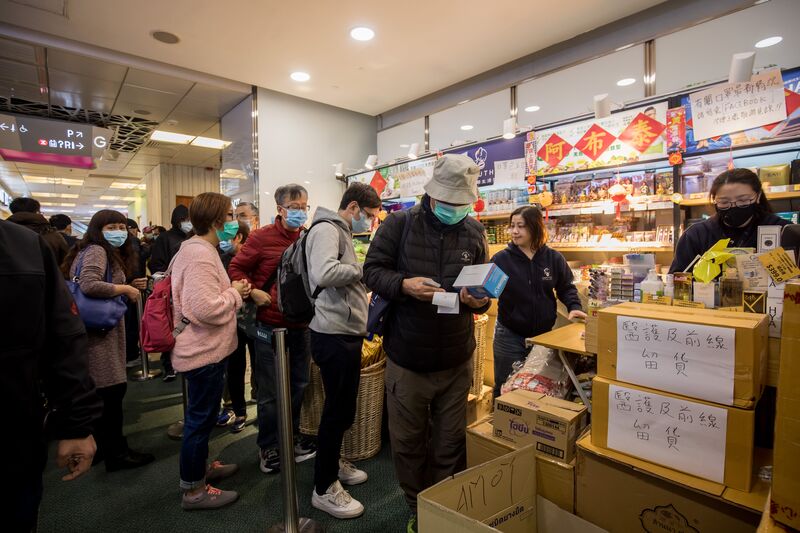
Customer wait in line to purchase protective masks at a store in Hong Kong.Photographer: Paul Yeung/Bloomberg

Viruses have always sparked fear and misinformation, striking panic as rumors spread and people desperate for information latch onto whatever snippets they can find – whether they’re true or not. But the advent of social media has supercharged this process, leading to waves of misinformation over elections, mass shootings, plane crashes and natural disasters.

The outbreak is just the latest test of social networks’ ability to handle the spread of false and dangerous information.

Twitter Inc. is trying to stave off bad information related to coronavirus by directing users to more reliable sources, prompting users who search for “coronavirus” to visit the Centers for Disease Control and Prevention website. The company has not seen an uptick in disinformation since coronavirus became a worldwide problem, a spokeswoman said. Twitter has a policy against people trying to “mislead” others with “deceptive activity.”

Facebook Inc.’s fact-checking partners – independent organizations that flag problematic posts on the platform – have been labeling misinformation about the coronavirus so users know it’s false, according to a company spokeswoman. Facebook is also alerting people who may have shared misinformation before it was fact-checked. On Tuesday, Facebook searches for “coronavirus” and related terms surfaced mostly credible reports from sites like the BBC and CNN, but there were also links touting dubious immune-boosting services and posts from users that questioned whether the virus news was a conspiracy from the World Health Organization.

Information shared in private groups are outside of Facebook’s fact-checking apparatus, and they have been known to incubate conspiracies on many different topics.

Alphabet Inc.’s Google searches for the virus are topped with a special panel linking to the Centers for Disease Control.

On Google’s YouTube, coronavirus was being treated as a news event, so searches for videos related to the outbreak mostly returned results from large, mainstream news organizations, though some conspiracy theory videos slipped through. Much of the dubious information being shared could be considered what YouTube labels “borderline” content. That’s information that isn’t necessarily wrong or racist but peddles unconfirmed conspiracies or shoddy medical information. YouTube said its algorithms are built to lower the number of times “borderline” content is recommended to viewers.

In China itself, where homegrown social media apps like WeChat and Weibo dominate, misinformation has spread alongside protests against the government’s handling of the situation. Generally, social media is closely monitored and censored by the communist party. But the sheer amount of posts criticizing the government and demanding more action mean some have evaded censors. Videos and posts that otherwise wouldn’t have left China have circulated through the internet, giving the world a view into the situation that isn’t totally controlled by the government.

“Early days in an outbreak, there’s so much uncertainty. People don’t like uncertainty. They want answers,” said Timothy Caulfield, a health law professor at the University of Alberta.

“Social media is a polarization machine where the loudest voices win,” he said. “In an outbreak, where you want accurate, measured discourse, that’s kind of a worst-case scenario.”

— With assistance by Kurt Wagner, Kartikay Mehrotra, and Sarah Frier

The racist issues are particularly disturbing. And shameful.

Meanwhile, the other illness that has a more direct impact on Americans…

A deadly virus is spreading from state to state and has infected 15 million Americans so far. It’s influenza
By Scottie Andrew, CNN
Updated 8:48 AM ET, Thu January 30, 2020
4 ways the flu turns deadly

(CNN)The novel coronavirus that’s sickening thousands globally – and at least five people in the US – is inspiring countries to close their borders and Americans to buy up surgical masks quicker than major retailers can restock them.
There’s another virus that has infected 15 million Americans across the country and killed more than 8,200 people this season alone. It’s not a new pandemic – it’s influenza.
The 2019-2020 flu season is projected to be one of the worst in a decade, according to the National Institute of Allergy and Infectious Diseases. At least 140,000 people have been hospitalized with complications from the flu, and that number is predicted to climb as flu activity swirls.
The flu is a constant in Americans’ lives. It’s that familiarity that makes it more dangerous to underestimate, said Dr. Magaret Savoy, chair of Family and Community Medicine at Temple University’s Lewis Katz School of Medicine.
“Lumping all the viral illness we tend to catch in the winter sometimes makes us too comfortable thinking everything is ‘just a bad cold,’” she said. “We underestimate how deadly influenza really is.”
Even the low-end estimate of deaths each year is startling, Savoy said: The Centers for Disease Control predicts at least 12,000 people will die from the flu in the US every year. In the 2017-2018 flu season, as many as 61,000 people died, and 45 million were sickened.
In the 2019-2020 season so far, 15 million people in the US have gotten the flu and 8,200 people have died from it, including at least 54 children. Flu activity has been elevated for 11 weeks straight, the CDC reported, and will likely continue for the next several weeks.
Savoy, who also serves on the American Academy of Family Physician’s board of directors, said the novelty of emerging infections can overshadow the flu. People are less panicked about the flu because healthcare providers “appear to have control” over the infection.
“We fear the unknown and we crave information about new and emerging infections,” she said. “We can’t quickly tell what is truly a threat and what isn’t, so we begin to panic – often when we don’t need to.”
The flu can be fatal
Dr. Nathan Chomilo, an adjunct assistant professor of pediatrics at University of Minnesota Medical School, said that the commonness of the flu often underplays its severity, but people should take it seriously.
“Severe cases of the flu are not mild illnesses,” Chomilo said. “Getting the actual flu, you are miserable.”
The flu becomes dangerous when secondary infections emerge, the result of an already weakened immune system. Bacterial and viral infections compound the flu’s symptoms. People with chronic illnesses are also at a heightened risk for flu complications.
Those complications include pneumonia, inflammation in the heart and brain and organ failure – which, in some cases, can be fatal.
Chomilo, an internist and pediatrician for Park Nicollet Health Services, said this flu season has been one of the worst his Minnesota practice has seen since the H1N1 virus outbreak in 2009. Some of his patients, healthy adults in their 30s, have been sent to the Intensive Care Unit, relying on ventilators, due to flu complications.
The virus is always changing
Influenza is tricky because the virus changes every year. Sometimes, the dominant strain in a flu season will be more virulent than in previous years, which can impact the number of people infected and the severity of their symptoms.
Most of these changes in the virus are small and insignificant, a process called antigenic drift. That year’s flu vaccine is mostly effective in protecting patients in spite of these small changes, said Melissa Nolan, an assistant professor at the University of South Carolina’s School of Public Health.
Occasionally, the flu undergoes a rare antigenic shift, which results when a completely new strain of virus emerges that human bodies haven’t experienced before, she said.
Savoy compares it to a block party: The body thinks it knows who – or in this case, which virus – will show up, and therefore, which virus it needs to keep out. But if a virus shows up in a completely new getup, it becomes difficult for the body’s “bouncers” – that’s the immune system – to know who to look for and keep out. The stealthy virus can infiltrate easily when the body doesn’t recognize it.
This flu season, there’s no sign of antigenic shift, the most extreme change. But it’s happened before, most recently in 2009 with the H1N1 virus. It became a pandemic because people had no immunity against it, the CDC reported.
Get your flu shot, experts say
To avoid complications from the flu, Savoy, Chomilo and Nolan have the same recommendation: Get vaccinated.
It’s not easy to tell how flu vaccination rates impact the number of people infected, but Savoy said it seems that the years she struggles to get her patients vaccinated are the years when more patients end up hospitalized with the flu, even if the total number of infections doesn’t budge.
The CDC reported at least 173 million flu vaccine doses have been administered this flu season so far – that’s about 4 million more doses than the manufacturers who make the vaccines projected to provide this season.
Still, there are some who decide skipping the vaccine is worth the risk. A 2017 study found that people decline the flu vaccine because they don’t think it’s effective or they’re worried it’s unsafe, even though CDC research shows the vaccine effectively reduces the risk of flu in up to 60% of the population.
Chomilo said some of his most frustrating cases of the flu are in patients who can’t be vaccinated because of preexisting conditions or their age (children under 6 months old can’t be vaccinated).
There are two important reasons to get the flu vaccine, he said – “Protecting yourself and being a good community member.”
It has been a rough flu season. I know so many who’ve gotten sick.

Who

WHO Declares Coronavirus a Public Health Emergency
The decision comes as the virus has spread to nearly 100 people outside of China.
By Cecelia Smith-Schoenwalder, Staff WriterJan. 30, 2020, at 3:53 p.m.


A young girl wears a protective mask at Beijing Railway on Jan. 21, in Beijing, China. As of Thursday some 8,000 cases of the coronavirus had been confirmed.KEVIN FRAYER/GETTY

THE WORLD HEALTH Organization on Thursday declared the coronavirus outbreak a public health emergency of international concern.

WHO Director-General Tedros Adhanom Ghebreyesus said that the main reason for the decision “is not what is happening in China but because of what is happening in other countries.”

“Our greatest concern is the potential for the virus to spread to countries with weaker health systems and which are ill-prepared to deal with it,” he said at a press conference in Geneva.

The health agency last week held off on the declaration, saying the situation was an emergency in China but not necessarily elsewhere.

The decision does not come with any restriction on trade and movement. The organization recommends accelerating the development of a vaccine.

As of Thursday, roughly 8,000 cases of the virus were confirmed, with nearly 100 of those coming from 18 countries outside of China, according to WHO.

There is also proof that the virus can spread from person to person, with cases confirmed in people in the U.S., Japan, Vietnam and Germany who had not previously traveled to China.

Cecelia Smith-Schoenwalder, Staff Writer

I’m not sure what this means yet. We’ll find out soon.

ALERTE JAUNE ‘Yellow Alert’

Really Berkeley? Really? Of all the U.S. universities, you’d think Berkeley would have this together.

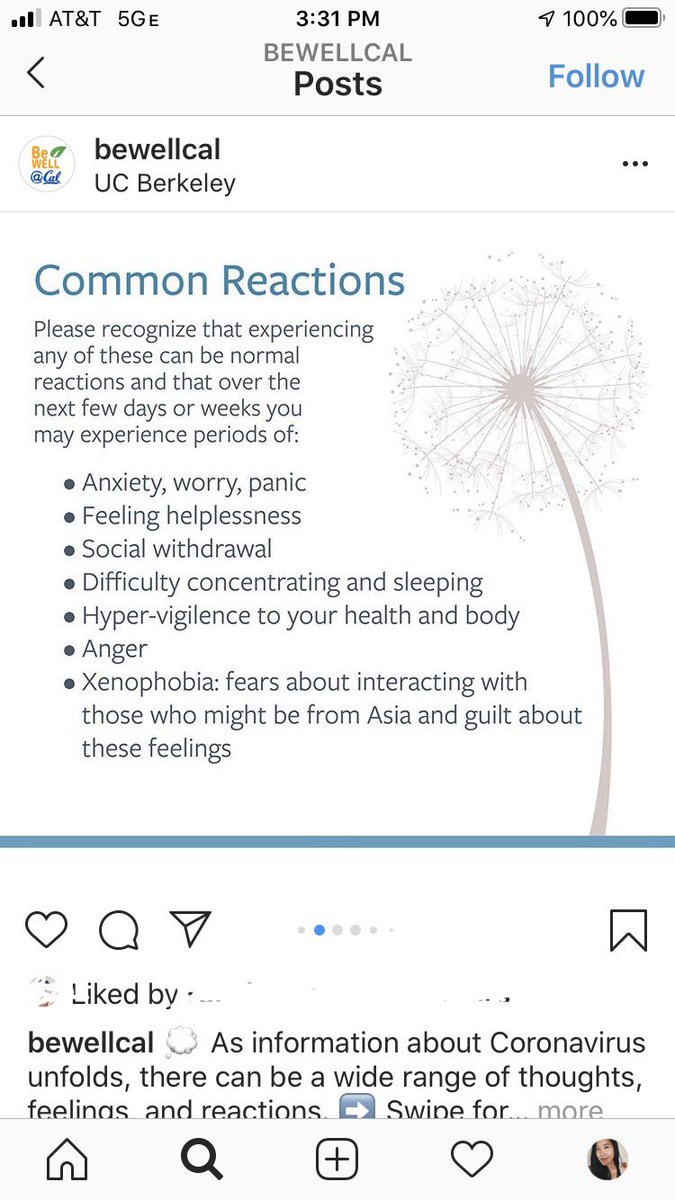
‘Stop normalizing racism’: Amid backlash, UC-Berkeley apologizes for listing xenophobia under ‘common reactions’ to coronavirus


Students walk on the University of California at Berkeley campus in Berkeley, Calif., on Aug. 15, 2017. (Marcio Jose Sanchez/AP)
By Allyson Chiu
Jan. 31, 2020 at 4:08 a.m. PST

At first glance, the informational handout recently shared by the University of California at Berkeley’s health services center on Instagram looked like many of the others that have been promoted amid rising worry over the global spread of the deadly coronavirus.

This particular post, which was widely circulated Thursday, focused on “managing fears and anxiety” about the pneumonia-like virus that originated in Wuhan, China, last month and has since infected people in countries worldwide, including the United States. In addition to offering mental health tips and resources, the bulletin identified a handful of “normal reactions” that people may experience as the crisis continues to unfold.

It would be reasonable, the university’s health center wrote, for people in the coming days or weeks to feel panicked, socially withdrawn and angry, among other emotions. But the last “normal” feeling listed was, as one person put it, “very much not like the other.”

“Xenophobia: fears about interacting with those who might be from Asia and guilt about those feelings,” the handout said.

As Asians, especially Chinese people, worldwide have experienced heightened tensions in their communities and an increasing number of racist incidents sparked by fears of coronavirus contamination, the post struck a nerve. Many critics slammed the notice, expressing disbelief that a prominent university with a large Asian student body appeared to be “normalizing racism.”

[QUOTE]Dustin R. Glasner, PhD
@drglasner
Hey @UCBerkeley @cal @UCBerkeleySPH @TangCenterCal - as a proud Cal alum (PhD Infectious Diseases '18) and Asian-American, this is really, truly unacceptable. Stop normalizing racism. It is not normal, and racist reactions to the current coronavirus outbreak are NOT OKAY. https://twitter.com/adrienneshih/status/1222986183778689024

[QUOTE]Adrienne Shih

@adrienneshih
Confused and honestly very angry about this Instagram post from an official @UCBerkeley Instagram account.

When is xenophobia ever a “normal reaction”?


22
1:25 PM - Jan 30, 2020
Twitter Ads info and privacy

See Dustin R. Glasner, PhD’s other Tweets[/QUOTE]
The outcry prompted university officials to take swift action, removing the Instagram post later in the day and issuing an apology for causing “any misunderstanding.”

“We apologize for our recent post on managing anxiety around Coronavirus,” said a statement shared by Berkeley’s Tang Center, which happens to be named after Hong Kong businessman Jack C.C. Tang. “We regret any misunderstanding it may have caused and have updated the language in our materials.”

AD

Thursday’s controversy coincided with the World Health Organization declaring the coronavirus outbreak a “public health emergency” and the State Department elevating its travel advisory for China to Level 4: “Do Not Travel.” According to the most recent figures from Chinese officials, nearly 10,000 people in China, where the pneumonia-like virus originated, have fallen ill, and the death toll in the country has risen to 213. Outside China, the number of international cases has risen to more than 80, with at least four countries, including the United States, reporting person-to-person transmission of the virus.

The latest developments are likely to stoke more fear over the virus’s spread, as experts say a vaccine won’t be ready any time soon. That doesn’t bode well for Asians already being subjected to discrimination and vitriolic attacks — and if history is any evidence, it’s only going to get worse.

Terri Chu
@TerriChu
In my Chinese moms chat group, we discussed how to brace ourselves and the kids for the inevitable wave of racism coming our way as this unfolds.

Many of us have never even been to China but know we will not go unscathed. https://twitter.com/akurjata/status/1221165180568002560

[QUOTE]Andrew Kurjata

@akurjata
Perhaps revealing some naiveté, I’m surprised at the level of vitriol towards Chinese people I’m seeing in the comments sections of stories about the Wuhan coronavirus. And I mean towards the people, not the government. Disheartening.

513
1:31 PM - Jan 25, 2020
Twitter Ads info and privacy
243 people are talking about this[/QUOTE]
Going back centuries, “Chinese and Chinese American people have served as scapegoats for infectious disease outbreaks and sanitation failures in the United States and around the world to particularly alarming effect,” wrote Jessica Hauger for The Washington Post.

During the third pandemic of the plague, political cartoons printed in California showed Chinese Americans “eating rats and bunking in crowded, unsanitary lodgings,” according to Hauger, a doctoral student at Duke University who studies healing and colonialism in the indigenous history of North America. Publications labeled China and Chinese people the “breeding place of King Plague.”

[/QUOTE] continued next post

Continued from previous post

The reactions to the coronavirus outbreak havent been all that different.

The hashtag #ChineseDontComeToJapan has been trending on Japanese social media, and Singaporeans are petitioning their government to bar Chinese nationals from entering the country, the New York Times reported. As of Thursday, there were 11 confirmed cases of the virus in Japan and 10 in Singapore, according to data compiled by The Post.

In France, Asian citizens launched a hashtag, #JeNeSuisPasUnVirus (Im not a virus), to fight back against racism, the BBC reported. Le Courrier Picard, a French newspaper, also recently apologized after weathering backlash for running a front-page headline that read, ALERTE JAUNE, or YELLOW ALERT. So far, the country has confirmed five cases.

Reports of xenophobic behavior in Toronto prompted Mayor John Tory to issue a public statement Wednesday rebuking the treatment of the citys Chinese Canadian community. Canada has reported three cases of infection.

We have to be here to stand up and say that kind of stigmatization is wrong, Tory said at a news conference. It is ill-founded and in fact, could lead to a situation where we are less safe because it spreads misinformation at a time when people are in more need than ever of real information and real facts.

The mayor went on to pledge solidarity to Chinese Canadians living in and around Toronto, stressing that quarantines or avoiding Chinese people and businesses are entirely inconsistent with the advice of our health care professionals.

[QUOTE]John Tory

@JohnTory
Standing with our Chinese community against stigmatization & discrimination, and reminding residents that, as our health care professionals have informed us, the risk of Coronavirus to our community remains low. We must not allow fear to triumph over our values as a city.

Embedded video
722
11:22 AM - Jan 29, 2020
Twitter Ads info and privacy
327 people are talking about this

Then, Berkeleys University Health Services publicized its latest coronavirus handout, which went viral Thursday after an image of the Instagram post was shared on Twitter. Critics, a number of whom are current or former students, blasted the university, suggesting that the post amounted to condoning racism against Asians. According to Berkeleys fall enrollment data, more than 40 percent of last years freshman class were Asian.

This just in from the number one public university in the world: its okay to be xenophobic as long as you also feel sort of guilty about it, one person tweeted.

Michelle Lee
@1michellelee
Very cool take from my alma mater @UCBerkeley - xenophobia as an acceptable common reaction to the coronavirus panic. Feeling good about the light fear people have had of me in public all week. https://twitter.com/adrienneshih/status/1222986183778689024

[QUOTE]Adrienne Shih

@adrienneshih
Confused and honestly very angry about this Instagram post from an official @UCBerkeley Instagram account.

When is xenophobia ever a normal reaction?


21
1:22 PM - Jan 30, 2020
Twitter Ads info and privacy

See Michelle Lee’s other Tweets[/QUOTE]
Reactions ranged from shock to disgust, as several people demanded answers from the university.

Is this a joke @ucberkeley? a Twitter user asked. Another opined that the handout was the exact opposite of good public health messaging.

At least one person pointed out that Thursday also marked the official removal of California lawyer John Henry Boalts name from the main classroom building at Berkeleys law school. Boalts anti-Chinese writings helped catalyze the passage of the Chinese Exclusion Act of 1882, according to a university news release.

Top Dog
@DJAL3XGA5
sorry professor i can’t come to class today. im xenophobic and i think it might be contagious. please understand https://twitter.com/adrienneshih/status/1222986183778689024

[QUOTE]Adrienne Shih

@adrienneshih
Confused and honestly very angry about this Instagram post from an official @UCBerkeley Instagram account.

When is xenophobia ever a normal reaction?


22
1:54 PM - Jan 30, 2020
Twitter Ads info and privacy

See Top Dog’s other Tweets[/QUOTE]
The revised version of the health-center handout makes no mention of xenophobia. Under Ways to Manage Fears & Anxieties, a bullet point reads, Be mindful of your assumptions about others.

Someone who has a cough or a fever does not necessarily have coronavirus, the handout said. Self-awareness is important in not stigmatizing others in our community.

Allyson Chiu
Allyson Chiu is a reporter with The Washington Post’s Morning Mix team. She has previously contributed to the South China Morning Post and the Pacific Daily News.Follow[/QUOTE]

I wonder if Coronavirus will still be an issue when CMAT happens. It’s scheduled for March 14, only a month and a half away.


it’s here now. :frowning:

CORONAVIRUS
LIVE: Coronavirus: Bay Area’s 1st case confirmed in Santa Clara County, CDC says

Updated 15 minutes ago

SAN JOSE, Calif. (KGO) – The Bay Area’s first case of the coronavirus from China has been confirmed in Santa Clara County, officials say.

The CDC says an adult male resident tested positive for the new coronavirus.

The Santa Clara County case marks the seventh confirmed case in the United States. There are two other cases in California, one in Arizona, one in Washington state, and two in Illinois.

Almost 10,000 people have been infected globally in a two-month period. More than 200 people have died, all in China.

Health officials have announced one confirmed case of coronavirus in Santa Clara County.

The U.S. State Department has issued a “Do Not Travel” advisory to the country.

Delta Airlines, American Airlines and United Airlines are suspending all flights between the U.S. and China.

Knew this was coming…

[QUOTE=GeneChing;1317517]
Here I’ve been waiting for someone to suggest banlangen or something.[/QUOTE]

Asia & Pacific
Kimchi, cow poop and other spurious coronavirus remedies


An employee works at a traditional Chinese medicine store in Beijing on Saturday. (Noel Celis/AFP/Getty Images)
By Anna Fifield
Feb. 2, 2020 at 12:43 p.m. PST

BEIJING — The new coronavirus has killed more than 300 people in China and infected thousands more. As the virus spreads and with no cure in sight, some people are looking to alternative remedies to protect them from infection or cure themselves if they’ve already contracted it.

Here are some of the theories floating around. Some of these have been proposed by medical doctors, and some of them are just common sense. Others, not so much.

As the ads say: If your symptoms persist or get worse, see your physician.

China
Traditional Chinese medicine for humans (and cows and chickens)
Chinese people have been flocking to buy Shuanghuanglian — literally “double yellow connect” — an herbal remedy that follows the principles of traditional Chinese medicine (TCM).

The liquid is made from the bud of the Lonicera japonica flower, and the fruit of Forsythia suspensa and Scutellaria baicalensis plants.

The Shanghai Institute of Materia Medica, part of the state-run Chinese Academy of Sciences, has said that the medicine could help inhibit the coronavirus.

State media including the Xinhua News Agency and CCTV have reported that clinical trials suggested the medicine might be effective, leading to long queues at TCM outlets around the country. Major Chinese e-commerce platforms including Taobao.com and JD.com are out of stock of Shuanghuanglian.

After some criticism about its endorsement of the product, the Shanghai Institute doubled down, saying its findings were endorsed by the Wuhan Institute of Virology as accurate.

Not all eager customers have found the right product, however. It turns out there are brands of medicine for poultry and livestock called Shuanghuanglian, and some consumers bought the wrong ones.

One Taobao vendor of the livestock remedy happily told local media he never expected so many people would support his veterinary medicine business, while the makers of the product for birds had to urge consumers not to ingest their product.

Chicken soup for the lungs
Speaking of poultry, chicken soup is not just good for the soul. It’s also good for mystery viruses, according to one Wuhan doctor. Zhang Jinnong of Wuhan Union Hospital contracted coronavirus and said he nursed himself back to health with standard medication and chicken soup, all in the comfort of his self-quarantine.

“In terms of diet, you should drink chicken soup often,” Zhang said in an interview with the Changjiang Daily and Wuhan Evening Daily. “When you drink it, you should sweat. The rise in body temperature is good for fighting the virus.”

‘Herbs that expel parasites’
The areca nut, or betel nut — usually used to get rid of hookworms, tapeworms and other intestinal parasites — are known as “purgative herbs that drain downward,” according to the TCM site Me and Qi.

The areca nut branch of the China Fruit Association says the nut can also be used to treat coronavirus. Well, it would say that, wouldn’t it? Its claims are, however, backed up by China’s National Health Commission, which has included areca nut in its recommended prescription for the pneumonia-like illness.

The National Health Commission and National Administration of Traditional Chinese Medicine recommended many TCM remedies to help alleviate symptoms of coronavirus, although they stressed they could not cure the virus.

One of the TCM ingredients was the areca nut, which they said could help detoxify and clear the lungs.

Putting the tea in TCM
A respiratory expert from Hubei People’s Hospital, Hu Ke, recommended people make prevention tea following the principles of traditional Chinese medicine. At a news conference at the provincial government buildings, he gave two precise recipes, which have been listed in Hubei’s recommended treatment for the coronavirus.

One: make a tea bag comprising atractylodes root (three grams), dried bunga mas flower (fice grams), sun-dried tangerine peel (three grams), reed rhizome (two grams), mulberry leaf (two grams) and astragalus root (10 grams).

Two: boil astragalus root (10 grams), tuber of white atractylodes rhizome (10 grams), siler (10 grams), fern rhizome (six grams), dried bunga mas flower (10 grams), eupatorium (10 grams), sun-dried tangerine peel (six grams).

They should be consumed twice a day for seven to 10 days, Hu said.

Warm salty water
The renowned 83-year old pulmonologist Zhong Nanshan, a veteran of the SARS crisis who is considered a national hero, has recommended swishing warm salty water around in your throat and nasal cavities a few times every morning and night to prevent infection.

But experts said this was bogus and that saline would not “kill” the new virus, according to Agence France-Presse. The World Health Organization also told AFP there was no evidence that saline solution would protect against infection from the new coronavirus.

South Korea
Kimchi finds its limits
Koreans have long claimed that kimchi, the spicy fermented cabbage dish that is a requirement at every meal, cures all manner of illnesses. SARS, bird flu, regular flu, you name it. But kimchi appears to have met its match.

“Eating kimchi does not prevent coronavirus infection,” South Korea’s Health Ministry said in a news release, disseminated to quell talk that, on the one hand, eating kimchi could boost immunity against coronavirus and that, on the other, it could spread the virus.

There had been rumors in some corners of the South Korean Internet that kimchi, much of which is made from Chinese cabbage, could contain the virus. The Health Ministry said that the illness could not be contracted from eating kimchi imported from China or receiving a parcel from China.

“The best way to prevent the novel coronavirus is to wash hands frequently,” it said.

India
Cow waste
The urine and dung of cows can be used for treating coronavirus infections, according to Swami Chakrapani Maharaj, president of Hindu Mahasabha, an Indian political party.

“Consuming cow urine and cow dung will stop the effect of infectious coronavirus,” Chakrapani said. If accompanied by a special yagna — or Hindu ritual, performed in front of a fire — it can “kill the novel coronavirus and end its effects on the world,” he said, according to Outlook India.

“A person who chants Om Namah Shivay and applies cow dung on body, will be saved. A special yagna ritual will soon be performed to kill coronavirus,” said Chakrapani.

Beyond that, however, he did not provide any specific recipes to make the cow excretions more, erm, palatable.

Ayurveda and homeopathy
The Indian government released a health advisory based on the traditional medicine practices of Ayurveda, homeopathy and Unani.

The main gist of the ayurvedic recommendations was, well, universal: maintain personal hygiene and wash your hands often with soap and water for at least 20 seconds, cover your face while coughing or sneezing and stay home when you are sick.

The Indian authorities also prescribed Shadang Paniya, a concoction given to fight headache and fever, along with other traditional remedies that included putting two drops of sesame oil in each nostril every morning.

Other suggestions included rubbing roghan baboona, a classical Unani oil-based concoction considered beneficial in treating gout, joint pain and backache, and the scalp and chest.

United States
For some more orthodox information from our public health correspondent in Washington, here’s: “What we know about the mysterious, pneumonia-like coronavirus spreading in China and elsewhere.”

Lyric Li and Liu Yang in Beijing, and Min Joo Kim in Seoul contributed to this report.
Good luck with these…especially the cow dung. :rolleyes:

SARS was just a warning

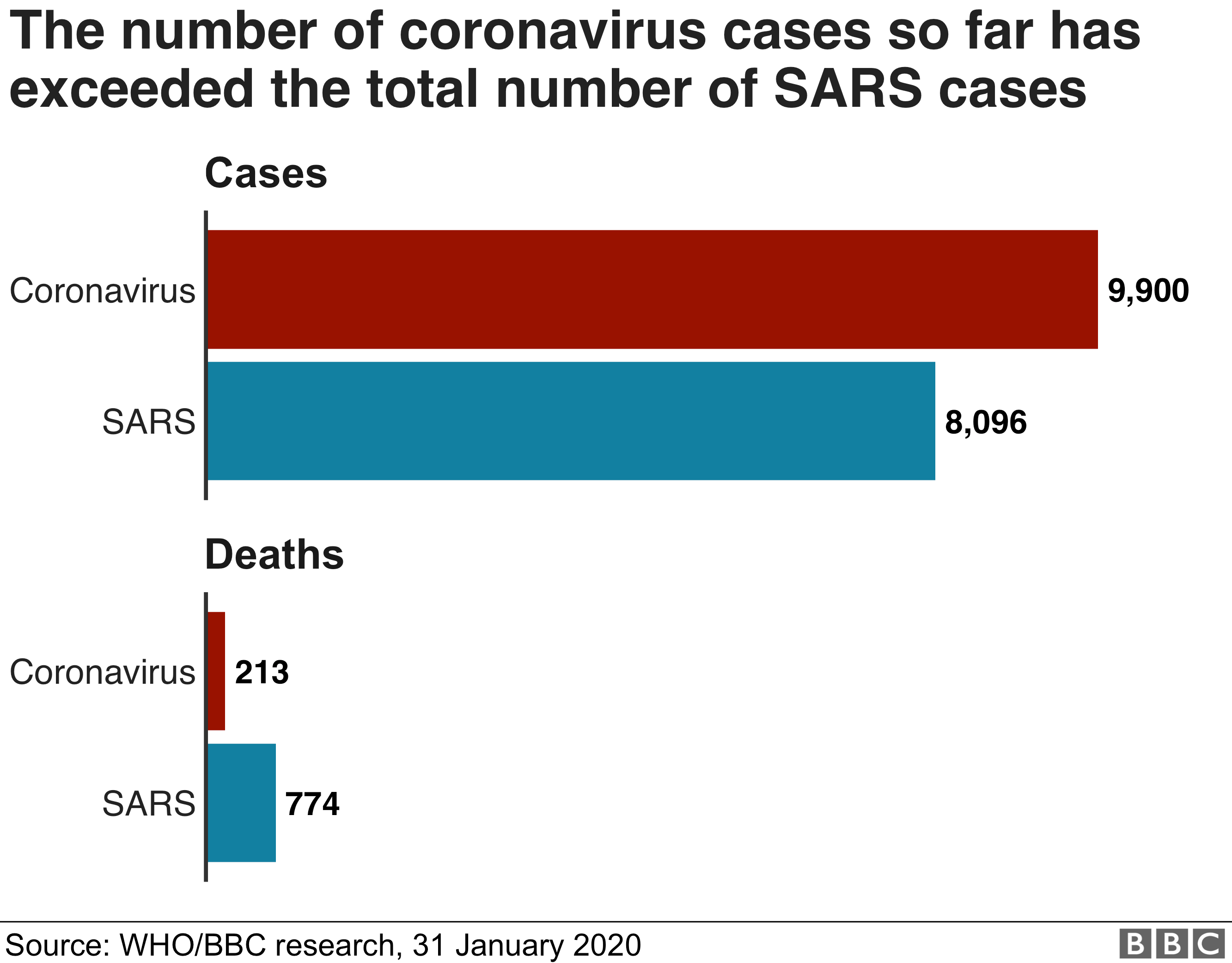
Coronavirus: Worldwide cases overtake 2003 Sars outbreak
31 January 2020

The number of coronavirus cases worldwide has overtaken that of the Sars epidemic, which spread to more than two dozen countries in 2003.

There were around 8,100 cases of Sars - severe acute respiratory syndrome - reported during the eight-month outbreak.

But nearly 10,000 cases of the new virus have been confirmed, most in China, since it emerged in December.

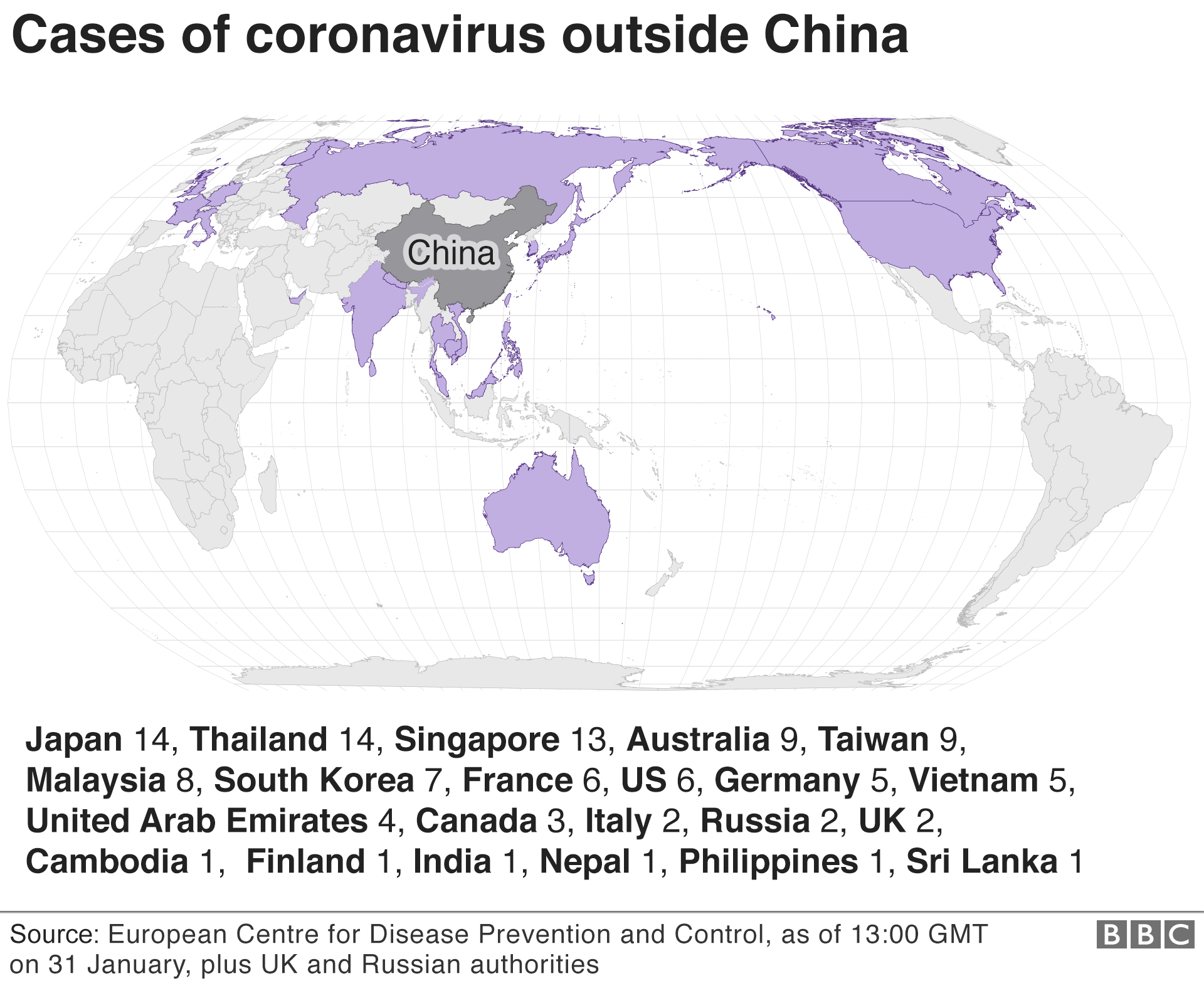
More than 100 cases have been reported outside China, in 22 countries.

The number of deaths so far stands at 213 - all in China. In total, 774 people were killed by Sars.

On Thursday, the World Health Organization (WHO) declared a global health emergency over the new outbreak.

The UK on Friday confirmed its first two cases of the virus.

In another development, the US also declared a public health emergency and said it would bar any foreign nationals who have visited China in the past two weeks from entering the country.

Estimates by the University of Hong Kong suggest the true total number of cases could be far higher than official figures suggest. Based on mathematical models of the outbreak, experts there say more than 75,000 people may have been infected in the Chinese city of Wuhan alone, where the virus originated.

Most cases outside China are in people who have been to Wuhan. But Germany, Japan, Vietnam, the United States, Thailand and South Korea have reported person-to-person cases - patients being infected by people who had travelled to China.

Wuhan’s Communist Party chief said on Friday the city should have taken measures sooner to contain the virus.

“If strict control measures had been taken earlier, the result would have been better than now,” Ma Guoqiang told state broadcaster CCTV.

As governments around the world acted to contain the virus, WHO spokesman Chris Lindmeier warned that closing borders could in fact accelerate its spread, with travellers entering countries unofficially.

“As we know from other scenarios, be it Ebola or other cases, whenever people want to travel, they will. And if the official paths are not opened, they will find unofficial paths,” he said.

He said the best way to track the virus was at official border crossings.

How does this outbreak compare to Sars?

Sars was a type of coronavirus that first emerged in China’s Guangdong province in November 2002. By the time the outbreak ended the following July, it had spread to more than two dozen countries.

The new coronavirus emerged only last month. So far, it has spread to fewer countries and - while more people have been infected globally - it has resulted in fewer deaths.

On Wednesday, the number of confirmed cases within China surpassed the Sars epidemic.

Sars was also estimated to have cost the global economy more than $30bn (£22bn).

But economists have said the new coronavirus could have an even bigger impact on the world economy. It has forced global companies including tech giants, car makers and retailers to shut down temporarily in China.

China was also criticised by the UN’s global health body for concealing the scale of the original Sars outbreak.

It has been praised for responding to the latest virus with tough measures, including effectively quarantining millions of residents in cities.

But in his interview with CCTV on Friday, the Wuhan Communist Party chief said transport restrictions should have been brought in at least 10 days earlier.

“The epidemic may have been alleviated somewhat, and not got to the current situation,” Mr Ma said.

The estimates from the University of Hong Kong suggest the epidemic is doubling in size roughly every week and that multiple Chinese cities may have imported sufficient cases to start local epidemics.

“Large cities overseas with close transport links to China could potentially also become outbreak epicentres because of substantial spread of pre-symptomatic cases unless substantial public health interventions at both the population and personal levels are implemented immediately,” Professor Joseph Wu said.

Harder to spot and harder to stop

Why is this outbreak more difficult to stop than Sars?

The answer is not down to China - the speed and scale of the country’s response to this new virus is widely considered to be unprecedented. The difference is the way the virus behaves inside the human body.

Sars was a brutal infection that you couldn’t miss - patients were contagious only when they had symptoms. This made it relatively easy to isolate the sick and quarantine anyone who might have been exposed.

But the new virus, 2019-nCov, is harder to spot and therefore harder to stop.

From the virus’s perspective, it has a far smarter evolutionary survival strategy than Sars.

The best estimate is only one-in-five cases cause severe symptoms, so instead of infected people turning up in hospital, you have to go out and find them.

And we are getting detailed documented cases of people spreading the virus before they even have symptoms.

There is a tendency to focus only on how deadly a virus is. But it is this, in combination with a virus’s ability to spread, that determines its true threat.

How is China handling this?

A confirmed case in Tibet means the virus has now reached every region in mainland China.

The central province of Hubei, where nearly all deaths have occurred, is in a state of lockdown. The province of 60 million people is home to Wuhan, which is at the heart of the outbreak.

The city has effectively been sealed off and China has put numerous transport restrictions in place to curb the spread of the virus. People who have been in Hubei are also being told to work from home.

China has said it will send charter planes to bring back Hubei residents who are overseas “as soon as possible”. A foreign ministry spokesman said this was because of the “practical difficulties” Chinese citizens had faced abroad.

The virus is affecting China’s economy, the world’s second-largest, with a growing number of countries advising their citizens to avoid all non-essential travel to the country.

How is the world responding?

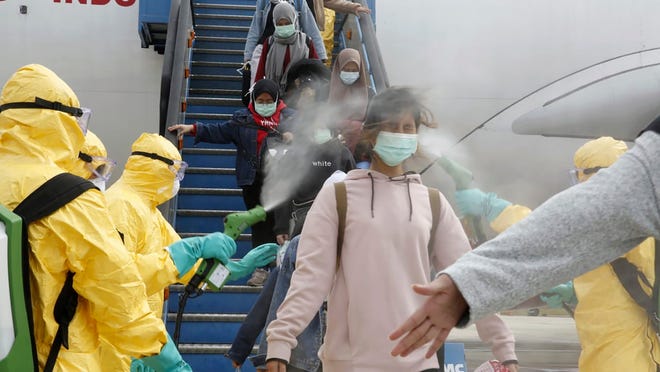
Voluntary evacuations of hundreds of foreign nationals from Wuhan are under way.

The UK, Australia, South Korea, Singapore and New Zealand are expected to quarantine all evacuees for two weeks to monitor them for symptoms and avoid contagion.

Australia plans to quarantine its evacuees on Christmas Island, 2,000km (1,200 miles) from the mainland in a detention centre that has been used to house asylum seekers.

In other recent developments:

Sweden confirmed its first case - a woman in her 20s who arrived in the country on 24 January after visiting the Wuhan area

Russia said two Chinese citizens had been placed in isolation after they tested positive for the virus

Singapore closed its borders to all travellers from China

Germany confirmed its seventh case - a man from a company in Bavaria where five other workers have tested positive

Italy declared a six-month state of emergency after two Chinese tourists in Rome were diagnosed with the coronavirus

Thailand confirmed its first case of human-to-human transmission

Mongolia suspended all arrivals from China until 2 March. It also banned its citizens from travelling to the country

In the US, Chicago health officials reported the first US case of human-to-human transmission

Russia decided to close its 4,300km (2,670-mile) far-eastern border with China

Japan raised its infectious disease advisory level for China

Some 250 French nationals were evacuated from Wuhan

India confirmed its first case of the virus - a student in the southern state of Kerala who was studying in Wuhan

Israel barred all flight connections with China

North Korea suspended all flights and trains to and from China, said the British ambassador to North Korea

Guatemala announced new travel restrictions, saying anyone who had been to China in the past 15 days would be prevented from reaching the country

THREADS
Coronavirus
SARS

China’s speed: Construction of emergency Huoshenshan Hospital

//youtu.be/hzT1T7l_PCU

Anti-Chinese sentiment and xenophobia

I had a racist slur hurled at me by some drunk dude last weekend. That hasn’t happened to me in years. :mad:

Coronavirus is spreading. And so is anti-Chinese sentiment and xenophobia.
Marco della Cava
Kristin Lam
USA TODAY

SAN FRANCISCO — As the coronavirus continues to spread around the world, Russell Jeung follows each development with concern.

Jeung, chairman of Asian-American Studies at San Francisco State University, applauds the various measures undertaken to quell the virus by everyone from airlines to the World Health Organization.

But he also cautions that one unhelpful reaction to the China-originating virus — racist reactions towards the Chinese and sometimes anyone merely Asian-looking — just adds hatred to hysteria.

“If you look at social media and some of the news, it’s fear of the ‘Yellow Peril’ all over again,” says Jeung, referring to a term that gained traction after the Japanese bombed Pearl Harbor in 1941. “‘Coughing while Asian’ is like ‘driving while black,’ something you get stereotyped for.”

Although San Francisco’s Asian-American history dates back to the Gold Rush of the 1850s, Jeung says since the coronavirus scare hit U.S. shores he has seen non-Asians move away from Asian-Americans who are coughing or wearing masks. “The masks are there out of courtesy, but instead they’re viewed in other ways,” he says.


Passengers wear face masks to protect against the spread of the Coronavirus as they arrive on a flight from Asia at Los Angeles International Airport, Calif. on Jan. 29, 2020.

Often the reactions are more hurtful than mere shunning. Fear of the coronavirus around the world has so far led to everything from anti-Chinese signs at businesses to misrepresented videos.

South Korean restaurant owners have displayed “No Chinese allowed” signs and Japanese Twitter users made the hashtag #ChineseDontComeToJapan trend. In Singapore, more than 125,000 people have signed a petition urging the government to ban Chinese nationals from entering the city-state.

One social media post that has gone viral speculates on the source of the virus and features a 2016 video of Chinese vlogger Wang Mengyun eating a bat soup in Palau, a nation in Oceania.

Even the University of California, Berkeley, where the student population is about 34% Asian American, faced backlash for a since-deleted post on the coronavirus.

The post featured an infographic listing a range of expected reactions to the virus, including anxiety, worry and panic. But it noted that another common reaction could be “xenophobia: fears about interacting with those who might be from Asia and guilt about those feelings.”

UC Berkeley officials soon amended the infographic and apologized for “any misunderstanding.”

Some media influencers also are fanning the flames. Conservative radio host Rush Limbaugh, whose show on Premiere Networks is heard by 27 million people weekly, said Monday that the virus comes from the “ChiComs,” a slur referencing the Chinese communist government.

“I don’t see where we’ve put any ban on Chinese passengers being permitted into the country,” Limbaugh said. “This is a serious thing that could be brewing out there.”

And in France, the newspaper Le Courier Picard featured a front page Sunday with an Asian woman wearing a mask and the headline “Yellow Alert.” The color referencing Asian skin tones drew immediate condemnation from French Asians — who started the hashtag #IAmNotaVirus — and an apology from the publication.

The health scare that started in late 2019 in Wuhan, China, overwhelmed local officials in China’s Hubei province, as victims suddenly developed pneumonia without clear causes and for which vaccines were not proving effective.

On Monday, patients arrived at Wuhan’s Huoshenshan Hospital, the 1,000-bed treatment center constructed in just 10 days to help battle the outbreak. The death toll in China has risen to 361, with more than 17,200 people infected. Outside of China, there have been 151 confirmed cases in 23 countries, and one death in the Philippines.

Based on the latest figures, the coronavirus fatality rate is roughly 2%. That compares to a fatality rate of the 9.6% for the 2002 SARS health scare.

Tedros Adhanom Ghebreyesus, director-general of the World Health Organization, said last week that “this is the time for facts, not fear. This is the time for science, not rumors. This is the time for solidarity, not stigma.”

Some observers note that the current administration’s hardline stance against immigrants may exacerbate racist incidents until the virus threat abates.

“The headlines have framed the coronavirus as an invasion into our country, and it surfaces the historical xenophobia and perpetual foreigner stereotype for Asian-Americans once again,” says Aarti Kohli, executive director at Asian Law Caucus, a civil rights organization focused on Asian Pacific communities.

Kohli says a Filipino staffer with a cold “got weird looks” while at a Los Angeles area airport early this week.

“She isolated herself at a cafe to avoid the feeling of being targeted,” says Kohli. “It’s a problem when a whole population is being discriminated and being treated as a threat.”

That sentiment has deep roots, dating back to the Chinese Exclusion Act of 1882, which grew out a desire to block cheap Chinese labor that had in fact been critical to many Western projects, including the completion of the first transcontinental railroad in 1869.

More recently, officials issued travel restrictions for the 2003 outbreak of SARS, a viral respiratory illness that sickened 8,096 people worldwide, eight of whom lived in the U.S..

“The danger here is that more extreme measures are taken,” says historian Jeung, recalling past health scares in the early 1900s that caused San Francisco’s Chinatown to be quarantined and Honolulu’s Chinatown to be burned to the ground.

“The irony of the Hawaiian reaction was that the bubonic plague was caused by rats, so burning down the Chinatown only meant that the rats left and infected other non-Chinese neighborhoods,” says Jeung. “This is not an Asian-American problem so much as it is an other people’s problem with Asian-Americans. This coupling of xenophobia with health scares needs to get uncoupled.”

Follow USA TODAY reporters @kristinslam and @marcodellacava

Well crap

Did NOT see this one coming…:frowning:

ASIA FEBRUARY 3, 2020 9:54AM PT
China Indefinitely Halts Film and TV Production Nationwide As Virus Deaths Surpass SARS
By REBECCA DAVIS


CREDIT: EYEPRESS NEWS/SIPA/SHUTTERSTOCK

China has officially ordered an indefinite halt to all film production in the country as it seeks to stop the spread of the deadly coronavirus that has swept the nation.

The death toll in China stands at 361 – higher now than that of SARS, which killed 349. China has confirmed 17,205 cases as of Sunday, with numbers rapidly rising, and as of Monday, there are 11 confirmed cases in the U.S.

Over the weekend, the producers’ and actors’ associations of the China Federation of Radio and TV Associations co-issued a notice declaring that all film and TV production companies, crews and actors are to suspend film and TV drama shoots until the unspecified time when the period of heightened virus prevention has passed. Those who don’t stop production will be held “responsible,” it said, without providing further detail.

Film industry professionals have the right to refuse to participate in shoots during the epidemic period, and can report shoots that continue unabated to the local authorities and industry associations.

“This is a necessary move given the current special situation,” the producers’ association’s secretary-general Li Gang told the People’s Daily newspaper.

The notice comes after a number of productions and facilities voluntarily shut themselves down, including the mega studio at Hengdian, which announced last Monday that all productions there would halt, and at the giant Qingdao studios.

Chinese citizens nationwide remain isolated in self-imposed quarantine in their homes, and more than a dozen major metropolises have been under lockdown measures restricting travel. In more than half the country, businesses have been ordered to extend their Chinese new year holiday and not resume working until at least Feb. 10, bringing the economy to a standstill.

Chinese reports predicted a definite decline in the number of films and TV shows produced this year, particularly as the epidemic stretches into the spring, a key period for production. “This and next year, there may be a ‘content shortage’ phenomenon,” assessed a local newspaper from Wuhan, the city at the disease’s epicenter.

THREADS
Chollywood rising
Coronavirus