Chinese Tycoons, CEOs & Tuhao

These stories are starting to become more prevalent so I’m starting this thread. It’s another telling barometer of the dragon that is China awakening.

Some related thread precedents:
Jet-Li-s-TaijiZen-International-Cultural-Development-Company (a lot about Jack Ma)

China-s-most-powerful-celebrities

Chinese Taxi Driver Turned Billionaire Bought Modigliani Painting
By AMY QINNOV. 10, 2015

Sold! In China

The Shanghai financier Liu Yiqian went from taxi driver to multimillionaire. He is also one of China’s most prolific collectors of art. By Jonah M. Kessel on Publish Date December 17, 2013. Photo by The New York Times. Watch in Times Video

BEIJING — Liu Yiqian, a former taxi driver turned billionaire art collector, confirmed on Tuesday that he was the buyer of the painting of a nude woman by Amedeo Modigliani that sold for $170.4 million at Christie’s New York on Monday night.

Speaking by telephone from Shanghai, the Chinese collector said he planned to bring the work back to the city, where he and his wife have two private museums.

“We are planning to exhibit it for the museum’s fifth anniversary,” he said. “It will be an opportunity for Chinese art lovers to see good artworks without having to leave the country, which is one of the main reasons why we founded the museums.”

Bidding by telephone, Mr. Liu, 52, was one of six people competing for Modigliani’s 1917-18 canvas, “Nu Couché,” during the auction. The final price of $170.4 million with fees was well above the previous auction record of $70.7 million for a work by Modigliani. With Mr. Liu’s winning bid, the painting became the 10th work of art to reach the elite nine-figure club for works sold at auction.

“Modigliani’s works already have a pretty established value on the market,” Mr. Liu said. “This work is relatively nice compared to his other nude paintings. And his nude paintings have been collected by some of the world’s top museums.”

As a teenager growing up in Shanghai during the tumultuous years of the Cultural Revolution, Mr. Liu sold handbags on the street and later worked as a taxi driver. After dropping out of middle school, he went on to ride the wave of China’s economic opening and reform, making a fortune through stock trading in real estate and pharmaceuticals in the 1980s and 1990s. According to the 2015 Bloomberg Billionaires Index, Mr. Liu is worth at least $1.5 billion.

“To me, art collecting is primarily a process of learning about art,” Mr. Liu said in an interview with The New York Times in 2013. “First you must be fond of the art. Then you can have an understanding of it.”

Mr. Liu, together with his wife, Wang Wei, is one of China’s most visible –—some say flashy — art collectors. Over the years, they have built a vast collection of both traditional and contemporary Chinese art, much of which is displayed in their two museums in Shanghai: the Long Museum Pudong, which opened in 2012; and the Long Museum West Bund, which opened last year. Ms. Wang, 52, is the director of both museums.

“I first came up with the idea that the Long Museum should collect international objects about two years ago,” said Ms. Wang, adding that her husband has been very supportive of her work.


Amedeo Modigliani’s “Nu Couché” (1917-18). Credit via Christie’s

The couple’s collection includes a 15th-century silk hanging, called a thangka, bought by Mr. Liu for $45 million at a Christie’s auction in Hong Kong last year. The purchase made headlines when it set the record for a Chinese artwork sold at an international auction.

With that purchase, Mr. Liu broke a record he had set months earlier when he paid $36.3 million at a Sotheby’s sale for a tiny Ming dynasty porcelain cup known as a “chicken cup.” Soon after, he caused an uproar after a photograph that showed him sipping tea from the antique cup spread online.

For both record-setting acquisitions, Mr. Liu reportedly paid with an American Express credit card, earning him many millions of reward points.

The couple’s self-promotion tactics have prompted some in contemporary art circles in China to draw comparisons with the “taxi tycoon” Robert Scull and his wife Ethel, voracious collectors of what came to be known as “Pop Art” in the 1960s but derided by some in the art world as crass nouveaux riche.

Speaking about Mr. Liu and Ms. Wang, Philip Tinari, director of the Ullens Center for Contemporary Art in Beijing, said: “These are collectors that have so much money that they acquire taste or they don’t have to have to taste because they buy everything in sight.” He added: “There’s very little discrimination, they just buy the most expensive things. They’re not connoisseurs.”

“Nu Couché” will be the most expensive artwork in the couple’s collection, Mr. Liu said. But when asked whether he planned to pay with the credit card again, Mr. Liu demurred.

“The payment method will be carried out in accordance with Christie’s guidelines,” he said.

A version of this article appears in print on November 11, 2015, on page A26 of the New York edition with the headline: Billionaire Is Buyer of a Modigliani. =

$48.4 million for a seven-year-old daughter.

Will Joseph Lau’s daughter grow up to be the Asian Paris Hilton? Doubtful.

Hong Kong tycoon’s 7-year-old daughter now owns the world’s most expensive diamond ever sold at auction

On Wednesday, a Hong Kong billionaire bought the extremely rare and ultra-pricey “Blue Moon” diamond for a whopping $48.4 million at a Geneva auction, making it the world’s most expensive diamond ever purchased.

Turns out, that when you pay that much for something you also get to rename it, so the buyer chose to call his newest rock “The Blue Moon of Josephine,” after his 7-year-old daughter.

The flawless 12.03-carat blue diamond has been described as one of the rarest gems in the world. It was whittled down from a 29.6-carat blue diamond discovered in South Africa last year, placed on a ring and now will be worn on special occasions by a primary school kid.

The record-breaking sale took place at a Sotheby’s auction in Geneva. Auctioneer David Bennett said that it sold for more than $4 million per cart, the highest price per carat ever obtained for any kind of stone, the BBC reports.

Initially, the proud new owner was described only as a “Hong Kong buyer,” but it turns out that he wasn’t too difficult to track down. The buyer has been confirmed as Joseph Lau, majority owner of property firm Chinese Estates Holdings and the 114th richest person in the world, according to Forbes, with a net worth of more than $10 billion.

Turns out that buying ultra-expensive jewels for his two daughters, 7-year-old Josephine and 13-year-old Zoe, is kinda Lau’s thing.

Only a day before at a Christie’s auction in Geneva, an “anoymous bidder” snatched up a 16.08-carat pink diamond for $28.5 million, dubbing it “Sweet Josephine.”

According to CNN, in 2009, Lau purchased a 7.03-carat blue diamond for $9.48 million, naming it the “Star of Josephine.” She’s never going to need to wear that cheap piece of garbage ever again.

In case you are worried about him playing favorites, last November, Zoe received a 9.75-carat blue diamond, bought by her father for $32.6 million and creatively named “The Zoe Diamond,” along with a Burmese ruby and diamond brooch weighing 10.10 carats purchased for $8.43 million and named “The Zoe Red.”

We have no idea what Lau has in store for their sweet sixteens.

But it will be extravagant, back in 2006, Lau purchased an iconic Andy Warhol portrait of Mao Zedong for $16.4 million. He also reportedly built Hong Kong’s tallest retail complex and named it “The ONE” after an ex-girlfriend.

Yesterday we reported on Liu Yiqian, a Chinese taxi driver turned billionaire, who purchased a Modigliani nude for $170.4 million at auction. Expect to see more and more of these kind of stories in the future. A recent Forbes survey found that China now has 596 billionaires – 715 if you count Hong Kong, Macao and Taiwan – surpassing the United States.

[Images via NetEase]

Contact the author of this article or email tips@shanghaiist.com with further questions, comments or tips.
By Alex Linder in News on Nov 13, 2015 3:45 PM

I added ‘& CEOs’ to the title of this thread.

This is somewhat random but it came up in a Kung Fu newsfeed search, so what the heck? Figured I’d add it.

Golden touch: Global Group founder Johnny Hon talks Kung Fu Panda, the Northern Powerhouse, Glenn Close and human rights
16 November 2015 2:29am
by Harriet Green


Johnny Hon: It’s not easy to say what’s right and what’s wrong

Did you sell sweets to all your classmates? I ask Johnny Hon, interjecting as he talks about his childhood. “Yes, I did actually,” he chuckles, before moving back to explaining how he never took money from his parents after the age of 18, and ended up selling second-hand cars to fund his education. “They taught me how to be independent from an early age; to be open-minded and appreciate people from all sections of society.”

It wasn’t that the Global Group founder’s family were ever short of a few bob – he came to the UK aged 12 to study at Uppingham School before attending King’s College London and Cambridge University. But spotting business opportunities and making the most of them seems to have been hard-wired into Hon.

After a stint in private banking and forex in the Middle East, he began a PhD in psychiatry. It was while at Cambridge that he started to build his business, putting Chinese entrepreneurs in touch with students who could help them create business plans. Now, Global Group’s range is vast, and Hon’s business interests almost endless. He is (and this is just a current selection) the executive chairman of his own company and Gate Ventures, which he also founded, a senior consultant for Pearl Oriental Oil, a fellow of the University of Buckingham, an adviser to the Chinese and Armenian governments, director of Infinity Creative Media, chairman of his own film company, and vice chairman of Sotheby’s International Realty. His financial-based interests alone stretch from a stake in a lottery in China to a bank in the Comoros Islands and an online gambling firm in London. But he’s a benefactor of the Duke of Edinburgh Award World Fellowship, and funds scholarships at Oxford, Cambridge and Peking Universities. “I did think about pursuing medicine. But I realised that making money means you can do a lot more good than just one doctor.”

Hon has always worked between Hong Kong and London, and says that the aim of his firm is to “bridge gaps. Historically, we’ve got more of a connection with Britain than with other Western nations. The US sees China as competition; the UK sees the opportunity for trade. Lots of Chinese people know British brands.” Hon mentions the Northern Powerhouse, explaining that one of the reasons it’s such an appealing prospect to the Chinese is that “northern cities are premium brand names in China because of football teams. Chinese people love football like they love the royal family.”

BAMBOO BLIND
But the entrepreneur is also aware of the differences between the two nations – and he puts a lot of it down to geography. “The thing is, the Western culture started around the Mediterranean. That’s a peaceful sea. The Yangtze river isn’t like that: it floods all the time, it kills people. In the West, the individual became the most important thing because people had more time to think about the self, their relationship to god. That didn’t happen in places of flooding.”

This thinking extends to human rights. He mentions the trolley problem, the ethical dilemma which states that there are five people tied down to a railway track with a train bearing down on them. You have the power to switch the train off the track, but then realise that there’s one person standing in the sidings. Who do you save? “In China, people would always choose to save the many over the one person. It would be out of the question to do anything else. When we’re talking about human rights, we need to remember that, to lots of people, some are more important than others. It’s not easy to say what’s right and what’s wrong.”

MUSICAL OVERTONES
Understandably, Hon is also accommodative of different ways of doing business. A good example, he says, is agreeing on and delivering a contract. “In the West, you sign a contract and it’s set in stone. In the East, it is perfectly common for a contract to undergo ongoing renegotiation. And it’s seen as a good thing to do – it keeps the spirit in the agreement.”

And his open-mindedness helps him to spot opportunity. One of the nifty approaches he is currently taking is “repackaging” brands. “Littlewoods, for instance, may not be so popular here anymore, but it’s a brand that could work in China. There’s a rapidly expanding middle class who have the same appetite for knowledge and desire for quality as the British – but the products and services aren’t available.”

He’s already acting on this when it comes to TV. A confessed arts buff with several film executive producer roles under his belt, Hon’s set his sights on a UK-made series, teaming up with Lord Grade, former chairman of the BBC. “In my view, TV is done a lot better here. The Chinese all watch Kung Fu Panda. It’s not like the Chinese can’t draw pandas, it’s because the animation is better.” And Hon is also taking the musical to China. “The musical is a new concept in China, and I think it will be very popular.” Again, the key is to be savvy enough to dress up something for a new audience: we might be Lloyd Webber-jaded, but there’s no reason for other nations to be. A couple of weeks ago, Hon attended the London launch of Sunset Boulevard, which Gate Ventures invested in. When we met, just beforehand, he was “extremely excited – and a lot of that is because I love Glenn Close.”

If anything, Hon sees China’s slowing economy as a golden opportunity. “The rate that property prices in China are rising is slowing. I believe that’s a good thing, long-term. And in the more immediate future, when the economy isn’t going as fast, entertainment products always work best.” Because of this, he is looking to invest increasingly across entertainment, technology and e-commerce businesses. “Think about Hollywood during the Great Depression. Really, people just need to be able to dream a bit.”

CV JOHNNY HON
Company name: Global Group

Founded: 1997

Number of staff: 80

Turnover: $100m a year

Job title: Executive chairman

Age: 44

Born: Hong Kong

Lives: Hong Kong, but I come to London every month

Studied: King’s College London, BSc in biomedical sciences; SOAS, MA in Korean studies; Cambridge University, PhD in psychiatry

Drinking: Fine wines

Eating: Steak

Currently reading: No time for reading currently

Favourite Business Book: Don’t really have one

Talents: Strategy, diplomacy and high net worth client management

Heroes: Nelson Mandela

First ambition: To build something

Motto: “Never give up. Never surrender.”

Awards: Medal of Honour from the government of Hong Kong

Only a week old and already this is post #5

This thread is the new barometer of the waking dragon. :cool:

NOVEMBER 18, 2015
Hong Kong Billionaire Is Offering $180,000,000 To Any Man Willing To Marry His Daughter
HK Billionaire Offers HK500mil to changes His Daugther Sexual Orientation

You might have read about Cecil Chao before, he is a Chinese billionaire who made his fortune through a company called Cheuk Nang Holdings Ltd a huge real estate conglomerate that focuses on the development of luxury high rises and trophy properties in Hong Kong.

He is known for making outlandish statements such as the time he was quoted by the Hong Kong media for saying he had bedded over 10,000 women in his lifetime. Most famous of all his public announcements was in 2012 when he offered $60,000,000 USD in the form of a “dowry” (which is a parental transfer of money or property) to whichever man could turn his daughter strait. He came back in 2014 upping the ante to $120,000,000 USD. And now he’s back to say the bounty is now $180,000,000 to who ever can get the job done.

The way I’m looking at it is like this I can get a non stop flight from Texas to Hong Kong on American Airlines for $1,561, or try Hong Kong’s own airline Cathay Pacific for $1,699. If I wanted to save a few bucks I saw some connecting flights on United and Delta Airlines for right around $1,000. That’s approximately 120,000 – 180,000 times your money. I don’t think anything in life really offered you that type of return on your investment, and if all else fails well I know I’ve spent $1,000 on dumber things before.

May the best man win!


(The chick in the bow tie is your competition.)

I’m adding ‘Tuhao’ to this thread.

This is exactly the trend that inspired me to start this here thread.

Tuhao =

The Rise of the Tuhao
The same group of entitled nouveau riche that gives China a bad name abroad is reviled at home as well.
By David Volodzko
August 03, 2015

Zheng Bijian, author of the phrase “China’s peaceful rise,” once wrote that as China’s development wins the attention of the world, it becomes increasingly important to understand its path. He explained that “economic growth alone does not provide a full picture of a country’s development. China has a population of 1.3 billion. Any small difficulty in its economic or social development, spread over this vast group, could become a huge problem.”

These words were penned 10 years ago, and in the decade since China’s social development has been stunning: brimming with ambition, globally instrumental, and touching the highest peaks of human progress. But at the very top of Chinese society, the peaks are narrow and the valleys below are deep and wide. One of the difficulties in China’s recent development is the emergence of a new social class of economic elites known as tuhao. These are China’s nouveau riche, though the term itself means something more offensive, and deservedly so.

“Tuhao” comprises the characters for “earth” and “powerful” (I prefer the translation “dirty rich”) and is an ancient reference to oppressive landlords that was given new life in 2013 when a joke went viral on the microblogging site Weibo. In the joke, a rich but unhappy young man asks a Buddhist monk for advice, to which the monk, cognizant of the young man’s wealth, replies, “Let’s be friends!” Since then, the term has been adopted into common use; the Oxford English Dictionary added “tuhao” to its 2014 edition.

Also, check out what I just posted in our Buddhist-life-release thread.

ALIBABA : http://www.thestreet.com/story/13326990/1/alibaba-wants-to-completely-own-china-s-version-of-youtube.html

[QUOTE=GeneChing;1288888]This thread is the new barometer of the waking dragon. :cool:[/QUOTE]
So she has a yen for the hen… hmmmm, Bawang? Got any ideas? :slight_smile: Does she know Eagle Claw?

Missing CEOs

The paradoxical thing about Chinese Tycoons is, of course, China is still communist.

Chinese executives keep going missing
By Sophia Yan @sophia_yan

Top company executives in China keep vanishing, and some never return to their posts.
This week, it was the CEO of the Hong Kong arm of one of China’s largest brokerages who disappeared; a few months ago, the president of a giant bank.

Once they go missing, there’s no telling when they’ll resurface. In some cases, they show up again – perhaps months later, and offering little explanation.
In others, state media report that the executive has been caught up in a government investigation, into insider dealing or bribery, for example. Few details are ever revealed.
Some of these cases appear to be linked to a campaign against corruption launched by President Xi Jinping in 2013. But lately, more seem to be tied to investigations related to China’s summer stock crash. Officials have been casting around for people to blame for the wild market swings.
Either way, the bizarre case of China’s missing executives has observers puzzled. Here’s a look at four recent examples of unexplained absences:

  1. Guotai Junan International
    The Hong Kong subsidiary of a major state-owned Chinese brokerage reported on Monday that its CEO, Yim Fung, was missing. Shares tumbled 12% after Guotai Junan International said that it had been unable to reach Yim since last week, and had no idea of his whereabouts.
    Local media reports suggest that Yim is being detained in connection with the investigation of a senior government official – Yao Gang, vice chairman of the China Securities Regulatory Commission, the country’s stock market regulator. Yao was general manager at Guotai Junan from 1999 to 2002, according to the CSRC website.
    Neither the company, nor the government, has said anything about why Yim has disappeared.
    Related: Giant Chinese brokerage can’t find its CEO

  2. China Minsheng Bank
    Early this year, a respected financial news magazine in China reported that Minsheng’s president, Mao Xiaofeng, couldn’t be reached after he was detained to help with an investigation. Then, in February, the bank announced in an exchange filing that he had resigned for “personal reasons.”
    Months later, there’s still no clarity or confirmation on what exactly happened to Mao, and Minsheng’s shares have plummeted 20% this year.
    Several other financial executives have been caught up in these government probes. Chinese state media reported that Zhang Yun, president of Agricultural Bank of China, one of the world’s largest banks, was detained to assist officials with an investigation.
    Xu Xiang, a high profile fund manager with Shanghai-based Zexi Investment, has also been arrested and is being investigated for alleged insider trading, reported state media, citing the Ministry of Public Security.
    Related: Top China banker implicated in corruption probe

  3. China Aircraft
    CEO Poon Ho Man resigned with immediate effect in a letter received June 17 by the company board, according to a description of the letter in a June 19 exchange filing. He had been on leave for a month, and gave no reasons for his decision to quit.
    His resignation letter also made no reference to media reports linking him to a government investigation into China Southern Airlines, one of the company’s customers. And China Aircraft seems to know very little.
    “Except for news reported in the media, the Board does not have any information on the status of the alleged investigations, nor has the Board received any notice that Mr. Poon is under any kind of investigation,” China Aircraft said in the filing.
    The company also said it had been unable to contact Poon since receiving his resignation, and was “unable to verify the source of information of the news in the media.” Its shares plunged 19% on June 19, and the stock has lost 26% so far this year.

  4. Hanergy
    Hanergy chairman Li Hejun, once China’s richest man, failed to show up for the company’s annual shareholder meeting in May. The meeting was just getting started as Hanergy shares began plunging, losing 47% in just one hour. That wiped $18.6 billion off the company’s market value.
    Trading was eventually suspended pending an announcement “containing inside information,” but the company hasn’t clarified much since, and dealing is still halted.
    Plenty of analysts were already skeptical about Hanergy’s astonishing rise – the stock had soared 625% in 2015 before the crash. They were concerned about market manipulation and inflated profits, particularly after the company said 60% of sales came from its parent company.
    A company spokesperson later said Li was attending the opening of Hanergy’s clean energy exhibition in Beijing instead of addressing shareholders. In late May, the Hong Kong Securities and Futures Commission said in a statement it was conducting a formal investigation into Hanergy, but gave no details.
    The statements only raised more questions, especially when it was revealed in exchange filings that Li himself had upped his bet that Hanergy shares would fall.
    Things took an even stranger turn when, in a rare speech in September, Li denied shorting Hanergy stock himself, and instead blamed outside investors for malicious short selling, causing the company’s spectacular fall.

Goldfinger is Chinese?

I thought Dr. No was the Chinese Bond villain…

Woman spends 3.5 million yuan on 13.35 kg of gold bars
(People’s Daily Online) 08:48, December 02, 2015

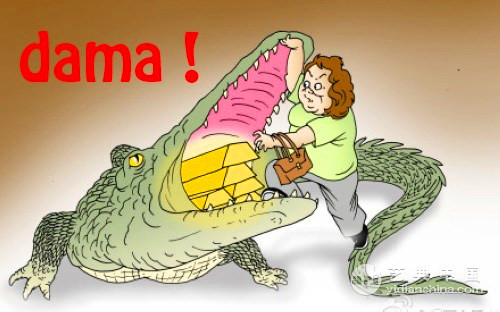
A woman spent 3.5 million yuan on 13.55 kg of gold bars Sunday in northeast China’s Jilin province. It has been the 7th year for her to keep buying the gold.
The Monkey Year gold bars issued by China Gold Coin Corporation officially entered the market of Jilin province Sunday. With a price of 267 yuan per gram, 90 kg gold bars were sold out immediately.
“The gold sales in the past 10 years shows that people like to collect the gold, especially gold bars,” said a staff member of the Jilin Gold Coin Corporation. With expectations for the Fed’s decision to increase the interest rate, the decline in International gold price accelerated in November, hitting a new low in six years. As of Nov. 28, the international gold price reached $1,057.88 an ounce and the domestic spot price of gold hit 219.2 yuan a gram. Therefore, the New Year gold bullion price also hit a new low since 2010. The relative low price created a new round of gold buying spree.
The staff member who sold the gold to the woman said the woman is around 50 years of age. It has been the 7th year for her to buy the New Year gold bullion. Last year she bought 10 kg of gold worth 2.7 million yuan; she bought the largest amount of gold this year with a value of more than 3.5 million yuan.

Guo Guangchang missing

I’m trying to imagine what would happen if major tycoons went missing in the U.S. Like what would happen if Trump went missing now? :wink:

Have you seen this man? China’s Warren Buffett gone missing

Reportedly last seen carried away by the strong hand of the law in a Shanghai airport, 48 year-old billionaire Guo Guangchang has seemingly disappeared. It is unclear if Guo is being detained, but he has been unreachable since Sunday, as his phone has been shut off.
Guo is the chairman of Fosun, one of the largest private investment firms in China. He has a net worth of $7 billion and is the 11th richest man in the country, according to Forbes. He’s the same guy that bought the One Chase Manhattan Plaza skyscraper in 2013 for a cool $725 million.

Earlier this year, a Shanghai court filing alleges Guo had inappropriate connections to Wang Zongnan, the former chairman of a state-owned enterprise who is now imprisoned for the misuse of 195 million yuan, reports Caixin.
Since 2013, Guo has repeatedly fought against accusations that he is being investigated for corruption.

In an e-mail provided by Reuters, Fosun claims: “[We] never sought to inappropriately benefit from cooperation with [Wang’s] Friendship Group and never delivered benefits to Wang Zongnan.”
In a text message, Fosun says they are “handling the situation.” In the meantime, the company has halted trading in shares of its listed units, just in case.

Of course, it is certainly possible that Guo simply hurt his back while swimming, but it is starting to seem likely that the man known as “China’s Warren Buffett” may be the latest victim in Chinese President Xi Jinping’s never-ending fight against corruption.
By Mary DeMay

More on Guo

Shares plunge after ‘China’s Warren Buffett’ caught in probe
by Sophia Yan @sophia_yan
December 14, 2015: 5:26 AM ET

Why are China’s rich facing government scrutiny?

Shares of a Chinese conglomerate plunged Monday in Hong Kong after the company announced last week that its billionaire chairman had been caught up in a government probe.
Fosun International shares tumbled 10%, while Fosun Pharmaceutical lost around 12%. Hong Kong’s benchmark Hang Seng index was down 0.7%.

Both companies were suspended from trading last Friday after its chairman, Guo Guangchang, was reported to be missing. The parent company later confirmed that Guo was assisting authorities in an investigation.
The firms are linked to Chinese conglomerate Fosun Group, which has interests in everything from real estate to entertainment, and recently bought the luxury resort chain Club Med. It also owns a stake in Cirque du Soleil. In 2013, it bought the landmark One Chase Manhattan Plaza skyscraper.
Guo is China’s 17th richest man, with an estimated wealth of about $7.8 billion, according to the Hurun Report, which publishes a ranking of China’s wealthy. The billionaire has described himself as a student of famed investor Warren Buffett.
Photos surfaced on social media Monday that appeared to show Guo speaking at the company’s annual meeting. While the photos appear to be from today, Fosun hasn’t confirmed his attendance. Calls to the company went unanswered.
A string of top Chinese executives have mysteriously disappeared this year, as officials crack down on the financial sector, casting around for individuals to blame for the country’s summer stock market crash. Once individuals go missing, there’s no telling when they’ll resurface; if they do, there’s often scant information about what happened.
The strange case of China’s missing CEOs underscores the murky nature of China’s legal system, where confessions are sometimes coerced, and trials can happen behind closed doors. Since President Xi Jinping took office in 2013, a widening anti-corruption campaign has swept up scores of executives and businessmen in a similarly opaque way.
China’s largest brokerage firm, Citic Securities, said last week it wasn’t able to get in touch with two top executives. Citic had previously disclosed that the firm, and a number of its executives, were under investigation by Chinese market regulators.
In late November, the Hong Kong subsidiary of another major Chinese brokerage said its CEO, Yim Fung, had been missing since November 18, and appointed a replacement. The company, Guotai Junan, hasn’t said anything since, and Yim’s whereabouts are still unknown.
Zhang Xun, president of the Agricultural Bank of China, and well-known fund manager Xu Xiang have also been detained, Chinese state media have reported.
Hundreds of people have been arrested for alleged rumor-mongering following the wild stock market swings, including prominent journalists, and even officials with China’s securities regulator.

CNNMoney (Hong Kong)
First published December 13, 2015: 10:54 PM ET

Why are China’s rich facing government scrutiny? Because even with China’s economic boom, it’s still a communist nation.

Guo is back

Billionaire Guo Guangchang reappears, acts as if he never disappeared

The disappearance last week of the 11th richest man in China, Guo Guangchang, attracted attention from major international news agencies, such as the BBC, CNN, the Guardian, and the Wall Street Journal. The billionaire abruptly reappeared at a Shanghai company event yesterday without acknowledging that he had gone missing.

It was first speculated that he was detained by police for graft, as witnesses claimed they saw him dragged away by police at a Shanghai airport.
On Friday, Fosun, Guangchang’s investment firm, affirmed that Guangchang was with police, saying he was “aiding an investigation.” It is common in China for officials to first claim they are “assisting investigations” before they are officially named as suspects.

Guo appeared only briefly at the Fosun strategy meeting at the Kerry Hotel Pudong yesterday morning. People there said he didn’t address his disappearance nor the investigation, and that he left before the meeting was over.
There were no police seen at the hotel, but professional security officers kept reporters away from the ballroom. Nobody has mentioned if the security was wearing smiley stickers.

Guo’s whereabouts are once again unknown. Following his disappearing act, the share price of Fosun International Ltd dropped nearly 10% and Shanghai Fosun Pharmaceutical fell from 12% to 3.8%, underscoring the uncertainty of the situation.

By Mary DeMay
Contact the author of this article or email tips@shanghaiist.com with further questions, comments or tips.
By Shanghaiist in News on Dec 15, 2015 1:00 PM

Suspicious?

Didn’t even know this was a thing…

Internet tycoons are weird all around the world.

LOOK: Chinese internet tycoons get dressed up for corporate CNY galas

As part of Chinese New Year celebrations, those at the very top of some of China’s largest companies will be dressing up to appear as the star of the company gala. Here’s a selection of some of the best outfits from previous years.
A frequent staple at the annual gala are figures from Chinese history. Here is Giant Interactive president Shi Yuzhu’s tribute to the Jade Emperor.

And Xiaomi founder Lei Jun’s took the role of Caishen, the Chinese deity of wealth.

Netease CEO Ding Lei turned up as a “Chinese zombie” to his company’s event in 2014.

Baidu chairman Robin Li once masqueraded as Zorro back in 2012.

He also happens to be a pretty awesome drummer.

But despite the stiff competition, the man to steal the show is everyone’s favorite internet tycoon Jack Ma, who delighted audiences when he turned up in a lovely frilly dress.

Who is the fairest of them all? You decide. We just hope that 2016 will live up to expectations.
[Images via DFIC / Xinhua]
Contact the author of this article or email tips@shanghaiist.com with further questions, comments or tips.
By Shanghaiist in News on Jan 21, 2016 11:00 PM

Another rags to riches

WATCH: Self-made billionaire Zhang Xin to Christiane Amanpour: ‘I don’t know how much I’m worth’

On the sidelines of the Davos WEF conference, Soho China chief exec Zhang Xin took a moment with CNN to contemplate the state of the country’s economy and discuss being richer than Donald Trump – sort of.
China’s favorite rags to riches success story, Zhang came from inauspicious beginnings, working as a 14-year-old in a Hong Kong textiles factory. But after being accepted to Cambridge University, she would start her considerably lucrative career with the Goldman Sachs & Travelers Group. In 1995, she and husband Pan Shiyi founded real-estate developer Soho China. Known for developing properties designed by the likes of Yamamoto and Zaha Hadid, Soho has made profits of nearly $2 billion.
Referred to as the “it couple” of China, Zhang and Pan are also known for following Baha’i faith and preaching of the country’s need for spiritual unity.
Zhang apparently has a talent for self-deprecation, calling her past self “annoying” and “very arrogant.”
In her interview with Christiane Amanpour, Zhang modestly hems and haws at her wealth being compared to the likes of Oprah Winfrey. “I don’t know the numbers, actually,” she smiles. Smooth player, that one.
Watch the interview below:
[video]https://www.facebook.com/camanpour/videos/10156505376045370/[/video]

(btw, Forbes has her at $2.5 billion)
[Video via Facebook]
Contact the author of this article or email tips@shanghaiist.com with further questions, comments or tips.
By Shanghaiist in News on Jan 22, 2016 6:30 PM

I don’t know how much I’m worth either. But it ain’t $2.5 bill, that’s for sure. :o

Crashed the Ferrari with two half-naked, women in the car…

…definitely Tuhao material. :rolleyes:

Secret Chinese documents leaked to the US all lead back to semi-naked women and a Ferrari
PRI’s The World
February 05, 2016 · 2:30 PM EST
By Bradley Campbell (follow)


Ling Jihua, newly elected vice chairman of the Chinese People’s Political Consultative Conference (CPPCC), pauses while attending the opening ceremony of the CPPCC at the Great Hall of the People in Beijing March 3, 2013. Credit: Jason Lee/Reuters

In modern China, it’s totally possible to have top Communist Party officials and Ferrari driving playboys in the same family.

Totally possible.

But sometimes when the lines blur, the results can be ugly.

Take the case of Ling Wangchen and his brother, Ling Jihua.

Ling Jihua was a top Chinese leader. And he’s believed to have handed over top secret documents to his brother Wangchen who, it is believed, handed them over to individuals in the US.

“So what happened was Ling Jihua’s son was driving very late in the evening in a Ferrari that he somehow managed to purchase, despite his parents’ nominally modest salaries as government officials,” says Isaac Stone Fish with Foreign Policy. “He crashed the Ferrari with two half-naked, women in the car.”

The crash injured the women, and killed the son. Officials gave the women hush money. Ling Jihua hoped it would be the end of it. Not so, according to Stone Fish. “Ling Jihua’s enemies used this to peg him on corruption,” he says. “He was deposed and arrested.”

Wangchen flew to the US and passed those documents along, ultimately to the FBI/CIA. According to reports, the documents appear to include nuclear secrets and embarrassing facts about the communist government.

Stone Fish says he likely did it in an effort to protect his brother. “Wangchen could trade the information back to Beijing for perhaps more lenient sentencing or a get out of jail free card,” he says.

We don’t know where the brothers are right now. Jihau may be in a Chinese jail cell, or a high-end villa. Wangchen is believed to still be in the US. Stone Fish thinks the whole story could be trumpted to upwardly mobile Chinese citizens as a warning to not be so unbridled with wealth and greed.

“I think if there was one great takeaway for any top Chinese officials listening it’s this: Keep your children in line.”

“Instant noodle billionaire” Li Ruipeng

Who hands out a quarter of a million dollars worth of Rolexes from a plastic bag?

Instant noodle billionaire Li Ruipeng, that’s who.

Tony Abbott and other Liberals took Rolexes they thought were fake
Tony Abbott, Stuart Robert and Ian Macfarlane were given $250,000 worth of watches out of a plastic bag by Chinese instant noodle billionaire Li Ruipeng


Tony Abbott and Ian Macfarlane are among the Liberal MPs who accepted designer watches out of a plastic bag from the instant noodle billionaire Li Ruipeng. Photograph: Dan Peled/AAP

Elle Hunt @mlle_elle
Tuesday 9 February 2016 20.01 EST Last modified on Wednesday 10 February 2016 04.19 EST

A group of Liberal party MPs, including the former prime minister and then federal opposition leader Tony Abbott, are under scrutiny over $250,000 worth of designer watches they were given by a visiting billionaire from China almost three years ago that were assumed to be fakes.

Among them is the embattled MP Stuart Robert, who was then the oppositions defence, science, technology and personnel spokesman, and is now under intense political pressure over a controversial trip to China in 2014.

Instant noodle billionaire Li Ruipeng, the chair of the Li Guancheng Investment Management Group, gave Abbott, Robert and the then opposition industry spokesman, Ian Macfarlane, designer watches out of a plastic bag at an informal dinner at Parliament House in June 2013 as a goodwill gesture.

There were also watches for Abbotts wife, Margie, and Roberts wife, Chantelle, who were not present at the dinner but not Abbotts then chief of staff, Peta Credlin, who was.

(The then Queensland minister Rob Molhoek also received a Cartier Ballon Bleu bracelet watch, valued at $23,400, from Guancheng in 2013 the most expensive gift received by any Newman government official in that financial year, and surrendered by Molhoek to the Ministerial Services Branch.)

Macfarlane, assuming his Rolex was a fake worth between $300 and $500, declared the gift with the clerk of the House of Representatives but kept it (and wore it occasionally, says the Herald Sun).

Macfarlane had the watch valued in Sydney after the September federal election, after the then Liberal candidate for Moore, Ian Goodenough, favourably compared it to his own, genuine Rolex.

Macfarlane was told his watch was worth about $40,000 and his had obviously not been as expensive as those given to Abbott and Margie Abbott.

Though the clerk told him he was entitled to keep it, he returned it to Li Ruipengs company and alerted Liberal fixer Tony Nutt, who the Australian Financial Review reports ordered the immediate collection of the watches so that they could be returned.

Robert and Abbott complied though a spokesman for Abbott denied it was on Nutts advice.

The spokesman told Guardian Australia that the two watches given to him were declared as well, though Abbott had also taken them to be fake. It wasnt so much the gift, as the way it was given, he said.

My understanding is that they were handed over in a plastic bag, as has been reported, and I think everybody was of the same view, he said.

They were declared in the normal way. As with most parliamentarians, its better to over declare than under declare but I believe Mr Abbott was of the understanding that they were fake, given the way that they were handed over, and, when it became apparent that they werent, they were handed over straight away.

Asked by Guardian Australia whether Robert had, like Macfarlane, assumed at first the watch was a fake, a spokesman said there was nothing to add to the story thats not already out there but confirmed that it had been returned.

Macfarlanes office has been contacted for comment.

Less than a year later in August 2014, Robert, the then assistant defence minister, took what he says was a personal trip to Beijing with friend and Liberal Party donor Paul Marks to celebrate a mining deal.

He is now fighting to save his ministerial career as Labor accuses the prime minister, Malcolm Turnbull, of failing to enforce his own standards.

Phillip Coorey writes in the Australian Financial Review that Roberts should have learned from the watches to tread warily in China.

The senior public servant Martin Parkinson will determine whether Robert breached the ministerial code of conduct with his trip to China.

Chinese word of the day “fuerdai”

FEBRUARY 22, 2016 ISSUE
The Golden Generation
Why China’s super-rich send their children abroad.
BY JIAYANG FAN


A reality show, “Ultra Rich Asian Girls of Vancouver,” chronicles the lives of Weymi Cho (left) and a group of friends.
CREDIT PHOTOGRAPH BY ANGIE SMITH FOR THE NEW YORKER

On a crisp Sunday morning in November, Weymi Cho picked me up at my hotel, in downtown Vancouver, in her new car, a white Maserati GranTurismo with a red leather interior. She had slept only two hours the night before. A new karaoke machine had been installed in her apartment, a four-million-dollar condo with a view of the city’s harbor, and she and some friends had spent the night singing and drinking Veuve Clicquot. Weymi is twenty years old and slim, with large eyes and waist-length hair that cascaded, on this occasion, over a silk Dior blouse. She has a reserved, almost aristocratic air. It was a little past ten, and we were going shopping.

Holt Renfrew, Vancouver’s equivalent of Barneys, is one of Weymi’s customary weekend haunts, though she is aware of its limitations. “It doesn’t compare to Vegas, where there is obviously a better selection,” she explained as we drove there. Weymi speaks English with a subtle but noticeable accent, and was relieved when I switched to Mandarin. Her speech was punctuated by European brand names, which functioned as a kind of currency. A maid’s monthly wages, she said, were probably the price of a pair of Roger Vivier satin pumps. A night out can cost half a suède Birkin bag. On Weymi’s last birthday, in March, she’d spent more than two Fendi totes—around four thousand dollars—on drinks in less than an hour.

In the store, Weymi spotted a former classmate from a Vancouver fashion institute, who was now working as a salesgirl there. She talked about the attitude of Chinese customers. “They treat this place like a supermarket,” she said. “A three-thousand-dollar outfit is like a carton of milk.” Another salesgirl joined in and lamented that such profligacy negated any sense of exclusivity. Weymi agreed. “I can’t even look at Chanel bags anymore,” she said at one point. “Everyone and their auntie now has a boy bag.”

Weymi moved to Vancouver at the age of fourteen, to attend boarding school. Her family owns a successful semiconductor business in Taiwan, where she grew up, but her parents are from the mainland. She and her sister attended an international school, which prepared them for studies abroad, and she spent summers travelling in America or Australia. “My dad always wanted our English to be strong,” she told me. “The plan was always to send us out West.”

The West is the plan for many of China’s new rich. In the past decade, they have swept into cities like New York, London, and Los Angeles, snapping up real estate and provoking anxieties about inequality and globalized wealth. Rich Chinese have become a fixture in the public imagination, the way rich Russians were in the nineteen-nineties and rich people from the Gulf states were in the decades before that. The Chinese presence in Vancouver is particularly pronounced, thanks to the city’s position on the Pacific Rim, its pleasant climate, and its easy pace of life. China’s newly minted millionaires see the city as a haven in which to place not only their money but, increasingly, their offspring, who come there to get an education, to start businesses, and to socialize.

The children of wealthy Chinese are known as fuerdai, which means “rich second generation.” In a culture where poverty and thrift were long the norm, their extravagances have become notorious. Last year, the son of China’s richest man posted pictures online of his dog wearing two gold-plated Apple Watches, one on each front paw. On Web forums, citizens complain that fuerdai are “flaunting what they haven’t earned” and that “their grotesque displays are a poison to the work ethic of Chinese society.” President Xi Jinping has spoken of the need to “guide the younger generation of private-enterprise owners to think where their money comes from and live a positive life,” and the government recently held an educational retreat for seventy children of billionaires, who were given a crash course in traditional Chinese values and social responsibility.

Yet fuerdai continue to fascinate. Some of the most popular Chinese TV dramas in recent years—such as “Noble Bride: Regretless Love” and “Ice and Fire of Youth”—have plots centering on fuerdai, whose love lives enhance or endanger the family fortune. There is also a fuerdai reality show: “Ultra Rich Asian Girls of Vancouver,” in which Weymi features.

The show, filmed in Mandarin and English, is broadcast online and is watched avidly by Chinese people worldwide. It follows the lives of half a dozen young women in disorienting, whip-fast edits of bling and scornful gazes. The women spend wildly to prove their status, but affect disdain for the ostentation of others. Season 1 ends with a woman being accused of ghastly crimes—attempting to pass off fake Hermès bags and wearing non-designer attire. Season 2 picks up in L.A., where two of the women are scoping out luxury houses.

Contempt for the nouveau riche is hardly limited to China, but the Chinese version is distinctive. Thanks to the legacy of Communism, almost all wealth is new wealth. There are no old aristocracies to emulate, no templates for how to spend. I asked some of the women on “Ultra Rich Asian Girls” about being the objects of both envy and censure. “In Web forums about the show, people are always, like, Why do they have to show off like that?” Weymi said with a shrug. “I don’t think I’m showing off. I’m just living my life.”

After shopping, Weymi and I went to the filming of the show’s second-season finale, in an upscale Thai restaurant that had been cleared for the occasion. We arrived early, and I chatted with the show’s creator, Kevin K. Li. Kevin, who is thirty-seven, was born in Vancouver to a Cantonese-speaking family and has worked for various broadcast networks in the city. He told me that he had envisaged the show as a mashup of “Lifestyles of the Rich and Famous,” his favorite program growing up, and the “Real Housewives” franchise. He said, “I figured, if I wanted to know the kind of deluxe lives these kids led, so would people in Canada and the U.S. and Asia.”

Casting the show was easy. Kevin shot a short promotional video in which a friend of a friend displayed a collection of bags and rode around in a Lamborghini. “It just went viral after a local media outlet picked it up,” he told me. People began bombarding him with requests for interviews. “The subject of fuerdai was just ripe for the time. Everyone is curious and everyone has something to say.”

Gradually, other members of the cast arrived at the restaurant—a parade of Helmut Lang, Alexander McQueen, and rose-gold iPhones. There was Diana, an economics and Asian-studies major at the University of British Columbia, who is twenty-three and has lived in Japan, Korea, the Philippines, and Hong Kong. A friend of hers from the university, Chelsea, was the only married woman in the cast. She had recently had her first child but seemed remarkably slender, and wore a pink baby-doll dress so elaborately feathered that, in combination with her towering Gucci heels, it gave her the appearance of a tottering baby ostrich. Ray, a finance student at U.B.C., had brought her boyfriend, who is also a fuerdai. Pam, at twenty-six, was the oldest of the group and the most reflective. As the women waited for the filming to start, they inspected one another’s outfits and accessories in forensic detail, but there was warmth as well as competitiveness in their manner, as if a life of continual consumption had fostered a kind of intimacy.

In this episode, Kevin would be onscreen, leading a roundtable discussion of the women’s experiences during the season. Contention arose about whether an actual round table was desirable. Chelsea was concerned that it covered up too much of the clothes—“We could just be wearing p.j.s underneath”—but Kevin’s eye was on the composition. “I know what look you are going for,” he said, nodding sympathetically. “But we have six pairs of legs, and it’s just going to look messy.”

The episode began with a champagne toast, after which Kevin posed a series of softball questions: How did Diana’s experiment living on a low-income budget for one day go? (Not well.) How was house-hunting in L.A.? (Nice mansions but all in the wrong areas.) Kevin asked the women about the potential difficulties of dating outside their class. There was a slight pause before Diana ventured, “It can be hard. I’ve done it before and it’s just”—she took a second to smooth out her bangs—“just awkward and uncomfortable for everyone.”

It was one of the few discordant moments in the discussion, but off-camera exchanges were more revealing. At one point, Diana announced, to no one in particular, “I am going to fix my face.” She’d heard about a recent Korean innovation in plastic surgery called 3-D molding. It was noninvasive, and involved a variety of braces and other devices designed to give the face the oval shape valued in Asian culture.

Weymi chimed in, saying, “Last time, when I went to Korea with my parents and my sister, I wanted to do it but my parents wouldn’t let me.”

“It’s a high-tech thing,” Diana said nonchalantly. “And very natural. Recovery can take only eight months.”

When I asked why she would endure such a process so young, Diana looked at me with a perplexity that bordered on pity.

“For a more beautiful face, of course,” she said.
continued next post

Continued from previous post

About a third of China’s wealth belongs to just one per cent of the population. While China’s poor still inhabit a developing-world economy, a recent report found that the country now has more dollar billionaires than the U.S. does. “What is happening in China constitutes one of the most rapid emergences of wealth stratification in human history,” Jeffrey Winters, a politics professor at Northwestern University, told me. Winters, the author of the book “Oligarchy,” pointed out that China is one of a small number of countries—Russia is the other notable example—where extreme wealth stratification was eliminated in a Communist revolution and then later reëmerged. As in Russia, the sudden formation of a new oligarchy in China means that there are many super-rich people who are unfamiliar with the ways in which more entrenched aristocracies quietly protect their wealth. “No matter the culture or age, old money knows from long experience that it is far safer to be secluded and less seen,” Winters said. But new money, as Thorstein Veblen theorized, asserts itself through conspicuous consumption.


“I’m used to him finishing my sentences, but now he starts them, too.”

A study by the Bank of China and the Hurun Report found that sixty per cent of the country’s rich people were either in the process of moving abroad or considering doing so. (“Rich” was defined as being worth more than ten million yuan—around $1.5 million, a considerable fortune in China, though not stratospheric.) The Chinese are currently transferring money out of the country at a rate of around four hundred and fifty billion dollars a year. Most of that money has gone into real estate. According to the National Association of Realtors, Chinese buyers have become the largest source of foreign cash in the U.S. residential real-estate market.

Moneyed people leave China for various reasons. Some are worried about pollution. Others want to secure a good education for their children. Zhou Xueguang, a sociology professor at Stanford who received his bachelor’s degree in China, told me, “The competition in the Chinese school system is known to be brutal.” He went on, “There are only so many slots in good schools, and, at a certain level, it doesn’t matter how much money you have—you won’t be able to get in.” But, for affluent Chinese, the most basic reason to move abroad is that fortunes in China are precarious. The concerns go deeper than anxiety about the country’s slowing growth and turbulent stock market; it is very difficult to progress above a certain level in business without cultivating, and sometimes buying, the support of government officials, who are often ousted in anti-corruption sweeps instigated by rivals.

John Osburg, an anthropologist who spent years studying successful businessmen in Chengdu, told me that “there’s always a fear that, if the officials to whom they’re tied are brought down in an anti-corruption campaign, it could bring trouble for them, too, and lead to the seizure of their assets. There’s also a concern that business rivals who may be better connected to people in the government could use their ties to the party-state to bring down their competitors.” Some people he knew considered being on Forbes’s annual list of the richest people in China a curse. “The people on that list, for several years in a row, within a year or two of appearing, would be the target of some kind of criminal investigation or they’d be brought down in a corruption scandal,” he said.

In Vancouver, Weymi mentioned the pervasiveness of such anxieties: “Some of my relatives in Shanghai who are officials—all clean ones, of course—have told me stories about their friends who are fretting about the recent corruption crackdown. In China, it’s not just about what you did but what your network of relationships is.”

This is the first time that China’s rich have sought to emigrate in significant numbers. For thousands of years, the ruling class was proudly isolationist. “People now refer to China as an emerging economy, but it was the world’s dominant economy for two millennia, until 1810,” Shamus Khan, a sociology professor at Columbia who specializes in élites, told me. “Before that, the Chinese élite were very reserved and almost snobbish in their view of foreigners. They thought of the European élite as backward people who wanted to acquire culture from China.” Westerners made hazardous journeys to obtain prized commodities—porcelain, tea, silk—from the Middle Kingdom, which considered itself the center of the world.

Only in the nineteenth century did it become evident that the West had outstripped China, especially in the field of military technology. The Opium Wars, which were fought over China’s trade imbalance with Britain, resulted in a humiliating defeat and, ultimately, the end of the Empire. “China’s first encounter with globalization led to its collapse, one from which the country has never completely recovered,” Khan said. “The emergence of a new Chinese élite is China’s second moment of encounter with these global processes, and it’s interesting how certain dimensions are reversed.”

A party followed the filming, and went on until the early hours of the morning. Ray and her boyfriend pointed out a man who they said knew everybody. He owned an Aston Martin, they said—not in itself a distinction, as they were each considering buying one, but this particular car was modelled on the one that appeared in the latest James Bond movie, and was the only one of its kind in British Columbia.

This was Paul Oei, a loquacious fifty-year-old with bristly silver hair. When I introduced myself, he immediately took a selfie of us and posted it to Instagram—his usual manner of salutation, it turned out. Then he presented me with three business cards. The first identified him as the founder and C.E.O. of Organic Eco-Centre Corp., a composting company that is also a sponsor of the show; the second as the chair of the Miss Chinese Vancouver Pageant; the third as the head of Canadian Manu Immigration & Financial Services. Manu, which Oei founded a decade ago, provides advice on immigration strategies, investments, and assimilation for Chinese nationals moving abroad. For fuerdai seeking to establish themselves in Vancouver, he is the go-to fixer and an unofficial ambassador.

Oei said that so many Chinese want to move to Vancouver that Manu has many more potential customers than it can accommodate. “They buy properties without hesitation,” he said. “It’s very cheap in comparison to, let’s say, New York, L.A., Hong Kong, or Japan. First, it’s very economical to buy properties, and then, second, these folks have so much money, they want to diversify and put it in a country that is safe.”

I asked him if the people he works with could be considered China’s one per cent. “I wouldn’t say that they are the one per cent,” Oei replied. “More like between the one and two per cent.” His clients tend to have prospered in regional manufacturing cities, whereas the very wealthiest people are from Beijing, Shanghai, and Shenzhen. “The tippy top of the pyramid have political backing or connections,” he said. “They don’t need to export the wealth.”

A few days later, Oei took me to dinner at a Chinese restaurant that had opened recently in downtown Vancouver. Bentleys and Range Rovers in the parking lot and the expansive waterfront view gave me a good idea of the clientele, as did the Peking duck, which was eighty-eight dollars. Over aromatic shiitake soup, poured from tiny clay pots, Oei expanded on the aims and the attitudes of Chinese families who decide to put down roots in Canada. Early on, they often think of it as a temporary arrangement. “When they come, in the first month or two months they want to go back,” he said. “It’s too boring in the new world.” The turning point generally comes after a year and a half. “It’s usually the children, who graduate, and they say, ‘I love Canada. This is like heaven—I don’t want to go back.’ ”
continued next post

Continued from previous post

The owner of the restaurant, Hu Yan, stopped by our table to say hello to Oei. A woman in her mid-forties, with weatherbeaten cheekbones and an efficient demeanor, she had been a successful restaurateur in the northern city of Xi’an and had come to Vancouver two years earlier. When I asked her how she had made the decision to move, she smiled and shook her head. “My husband was in Vancouver on vacation, and his buddies dragged him to a few open houses,” she said. “The next thing I know, we are signing the deed to property in the city.” Even though it was an expensive purchase, she didn’t feel that she was making a commitment to the city. It just seemed like insurance against the vagaries of the Chinese economy.

What made her think about staying was her eleven-year-old son. She told me that he was currently in L.A. for a junior golf tournament and that she was making plans to gradually move East for him. With some pride, Hu explained her plan to open restaurants in Los Angeles, Las Vegas, and, ultimately, New York. I asked her why New York, and she looked at me with surprise. “For my son, of course. The Northeast is where all the best universities are, and that’s where he’ll be living one day.”

Hu’s priorities are typical of her generation, China’s first wave of entrepreneurs. Having amassed vast amounts of capital in the transition to a market economy, they can afford to bring up their children in a new atmosphere of privilege, and the legacy of the one-child policy gives the beam of parental expectation an especially tight focus. Furthermore, the memory of poverty and backwardness is ever-present in the collective consciousness. I remembered something Ray had told me: “The poorer your parents were when they were young, the more they want a better environment for their kids.” The desire to have a Western-educated child is spurred by considerations of prestige as much as by practicalities. Also relevant is Oei’s observation that his clients aren’t the richest or the best-connected people in China; they want their children to have access to the cultural and political capital that is unavailable to them. Underpinning the discussion of fuerdai in China is a national apprehension about the future élite of a country that is just coming of age.

While in Vancouver, I met up with Andy Yan, an urban planner who has done extensive studies of the city’s real-estate market. We drove out to West Point Grey, one of the most expensive areas, which overlooks an inlet. (In general, the most desirable real estate is in the west, toward the ocean, and the influx of international money has pushed longtime residents inland.) It was a bright, cool afternoon, and, as we drove down block after leafy block, the only other vehicles we saw were maintenance trucks. “It feels a little like a movie set,” Yan said. The houses we passed, palatial properties with views of the water, represented a cut-and-paste approach to Old World European glamour: there were French windows flanked by Corinthian pillars and topped by Tudor roofs. Yan pointed out the lion statues that stood beside many of the security gates: “That’s a dead giveaway the owner is Chinese.”

Yan was born in Vancouver and his family has been in Canada for nearly a century. He studied urban planning at U.C.L.A. and then got a job in the office of the prominent architect Bing Thom—a Vancouver native whose family is originally from Hong Kong—monitoring the impact of the city’s property boom. In a recent study, Yan found that about seventy per cent of the single-family homes sold in three high-end west-side neighborhoods were bought by Chinese. Many occupants of these properties described themselves as housewives or students—twenty-seven per cent of the respondents in homes with an average value of $3.05 million. The finding led Yan to speak of so-called “astronaut” family arrangements. The home buyer, typically the husband, lives and works in Asia, where cash can be made fast, while establishing his family members in Canada in order to move the money to a place of social and political stability. Yan has coined the term “hedge city” for places like Vancouver: they are a hedge against volatility at home.


“You know, this isn’t helping convince people you’re not a witch.”

In the past six years, the value of single-family homes in Vancouver has risen seventy-five per cent, to an average of $1.9 million. At the same time, the median household income has barely budged. The disparity is not lost on locals. Last year, an indignant twenty-nine-year-old woman tweeted a selfie with the hashtag #don’thave1million. Hundreds of other Vancouver residents followed suit.

David Eby, who represents Vancouver-Point Grey in the Legislative Assembly of British Columbia, told me that he recently met with the district’s residents’ association. “All the talk was about mainland money. There is a lot of anxiety, and a sense that mainland buyers purchase houses but don’t contribute to the community or take part in it.”

Under pressure, the mayor of Vancouver, Gregor Robertson, has proposed a tax on luxury homes and a tax on income from property speculation. He has recommended raising the tax on vacant investment properties and called for “far better tracking” of international investment and absentee owners. But it seems unlikely that such measures will be implemented. As prices have risen, ordinary Canadians have found that their homes represent more and more of their net worth. Many people in the federal government, including the Prime Minister, Justin Trudeau, have advocated caution when it comes to steps that would depress property values. Besides, rich international buyers mean higher tax revenues. “The state is addicted to the revenue,” Eby told me.

I asked Bing Thom about the changes. The property boom has, of course, been good for the architectural profession, but Thom, who is now in his early seventies, is troubled by what is happening to his home town. “By all accounts, I have done pretty well in my business, but I made more money from sitting on my Vancouver property than I made by working an entire lifetime,” he said. “That tells you something.”

continued next post

Continued from previous post

Thom was alarmed that consumption has effectively replaced production as Vancouver’s growth industry. “The city has become a hotel,” he said. He was opposed to what he called “selling citizenships”—the practice whereby countries including Canada and the U.S. grant residency in exchange for investment. “I think any country should be against that, because you’re not buying the best people,” Thom said. “They don’t invest in their country. There’s no belonging. But it’s a worldwide trend. It’s happening in England. It’s happening in France. It’s happening in Australia. Everywhere.”

There is a common conception that the fuerdai are being groomed to inherit their parents’ businesses, but this isn’t necessarily the case. One of the women on the show told me, “My daddy doesn’t want me to kill the company he has worked so hard to build. He told me, ‘If you don’t have the ability to take over, it’s better for you to collect a monthly income and give the reins to someone else.’ ” Parents often provide their children with money to start a small venture, to test their business acumen. Weymi’s parents promised her half a million dollars to launch a bilingual luxury-life-style magazine, which will be distributed free at high-end stores, in order to foster a sense of exclusivity. “I don’t plan on making a huge fortune from it,” Weymi said. “But my friends all agree: this project is so Weymi.” Ray’s boyfriend, who has yet to graduate from college, is going to open a conveyor-belt sushi restaurant in downtown Vancouver, with a sizable parental stake. “I plan to have menus on iPads, and there will be a video-game component to the ordering,” he told me.

Of all the women I met from the show, the only one who had a job was Pam, who was cheerfully squeezing three gigs into seventy-hour workweeks. She was a producer on the show, worked at a Vancouver auction house owned by an uncle, and ran her own modelling agency. One morning, I accompanied her as she flitted from one job to the next. We met in a clothing store with a makeshift runway, where she’d been casting models for an upcoming charity event, and then took a car to the auction house. She clearly enjoyed this kind of juggling. “Doing a nine-to-five, it’s too boring, and you don’t get to meet people,” she said, laughing. “My biggest flaw is that I have trouble finishing boring tasks.” She cited a Chinese proverb about beginning with the ferocity of a tiger and ending with the anticlimax of a snake’s tail.

Pam is uncommonly energetic. Her speech, alternating between slangy English and proverb-laden Mandarin, puts one in mind of a human split screen. She came to Vancouver, from Harbin, to attend middle school. By the age of fifteen, she was renting a place of her own. She told me, “If I had stayed in China, I think I would have been very sheltered. Being so far away from my family has made me more appreciative of their sacrifices.” Pam recalled a moment in college when she was waiting for a fifteen-thousand-dollar wire transfer to arrive. After a few days, she called her mother, who said that there were some minor bank clearance issues. Later, a relative revealed that her mother’s business had been close to bankruptcy. “It was, like, the first real moment when I saw how far my mom was willing to go to spare me the worry. It made me shudder to think how careless I’d been.”

We pulled into a strip mall and parked in front of a sign that read “VANDERFUL AUCTION INC.”—a pun on “wonderful” and “Vancouver.” Pam led me into a display room filled with brush-and-ink landscape paintings, porcelain horse statues, and intricately carved rosewood tea tables. She is the firm’s marketing director and, as the sole English speaker in the business, had spent the past two months translating the auction catalogue from Chinese. On a tour of the warehouse, Pam pointed at a small curved bamboo plank in a glass vitrine, which she said was for calligraphers to rest their arms on. “What do you call this?” she whispered, and then said sheepishly that she had ended up rendering it in English as “Elbow Lifter.” “This business of translation,” she sighed. “It’s harder than people realize, and there isn’t the vocabulary in English for everything.”

The lament was one I heard often in Vancouver, and it seemed to express something about the dislocation that comes with an enviable international existence. As we paused before an exquisite Qing-dynasty armoire, I asked Pam if she ever thought about working in China. As she considered the question, she ran her fingers over a phoenix carved on the cabinet’s front panel.

“The thing is, I’m not sure I’d fully fit in there now,” she said slowly. “I lack my parents’ Chinese business know-how. Westerners are all about being straightforward and direct. But, when you negotiate a deal in China, it’s all about what’s unsaid, simultaneously hiding and hinting at what you really want. In China, I’m treated like a naïve child, and sometimes I feel like an alien.” Pam and many of her friends, having emigrated in their teens, exist between two cultures. Canadians, and the West generally, could be inscrutable. The cultural capital that their parents had hoped would be theirs was elusive. But having been away from China during years of dizzyingly rapid change made them foreigners there, too.

Weymi and I had dinner one night. For once, she was dressed casually—a knee-length wool cardigan, sensible flats, no makeup—and we headed to a no-frills Chinese restaurant called Little Szechuan, in Richmond, an enclave of Canadian-born Chinese, not unlike Flushing, Queens. As Weymi drove, I asked whether she preferred Vancouver to Asia, and she said she did. She tapped the steering wheel and said, “It’s like this: when I am driving here and need to make a turn, I turn on my signal light and do it. It’s the most normal thing in the world. When I first drove in Asia, I flashed my signal and immediately people, instead of slowing down, all sped up to cut me off. It was so maddening, and then, after a little while, I became like everyone else. I never signal when I turn in Asia. I just do it. You don’t have a choice.”

Little Szechuan was bigger than its name suggested. Almost everyone there was Chinese, and Weymi waved to a table of rowdy young men as we entered. “In this town, everyone knows each other,” she said absently. After we ordered, she asked, “Do you want to see my pic with Justin Trudeau?” She scrolled through her phone. “He wasn’t the Prime Minister then, and I just asked him for a photo. I like Justin. I like most Canadian politicians, actually.” But she said that Westerners were too liberal on issues like marijuana and the death penalty. (China executes more people than any other country, more than a thousand people each year.)

As we ate, the conversation turned to inequality, and the extent to which it is visible in China and Canada. “Have you been to East Hastings?” she asked, referring to a neighborhood that contains Vancouver’s equivalent of Skid Row and is bordered by fashionable bars and million-dollar condos. “That’s where you see it the most. But for the most part everyone’s life is O.K. here.” She paused. “A lot better than in China, at least.” She recalled a visit to Shanghai when she had strayed into a shantytown of migrant workers from the Chinese countryside, and then spoke of the impoverished rural region of Yunnan, in southern China, from which her mother came. “When I was little, my mom would tell me stories about how poor they were,” she said. “It was a kind of poverty that makes you fearful the rest of your life.” Weymi’s grandmother and aunt took in laundry to make a living. “She didn’t want to be like her mom or older sister, always gossiping about those in the village a smidgen better off than themselves.” Weymi put down her chopsticks. “It’s that kind of typical provincial pettiness, but that was her entire life if she had stayed.” She shook her head and drew a breath. “I mean, can you just imagine?”

Ah the good ol’ New Yorker - still the master of long form journalism. :cool: