Chinese Counterfeits, Fakes & Knock-Offs

Sffcccks Coffee!

So wait…this is a street of fake fakes? :confused:

On this street in southern China, you can visit Starbucks Coffee - or rather, ‘Sffcccks Coffee’
A “street of fakes” in Wuxi has drawn ridicule and condemnation from Chinese netizens
PUBLISHED : Thursday, 09 January, 2014, 7:08pm
UPDATED : Friday, 10 January, 2014, 7:18am
Jeremy Blum jeremy.blum@scmp.com
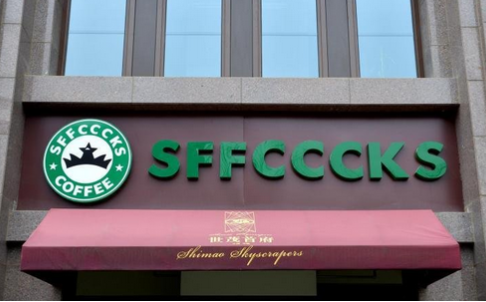

It looks like Starbucks from a distance, but upon closer inspection, something is very off here. Photo: Chinanews.com

A “street of fakes” has sprouted up in the southern Chinese city of Wuxi, featuring signs that flaunt modified names of famous international stores like Starbucks and Zara.

On this commercial street, located near the Wuxi East Railway Station, clothing stores Zara and H&M have morphed into “Zare” and “H&N,” American electronics company Apple is “Appla,” Starbucks Coffee has become the bizarre sounding “Sffcccks Coffee" and even the Industrial and Commercial Bank of China has made an appearance – only with one of the characters of its Chinese name removed and replaced with another, rendering the name nonsensical.


H&M, Zara and even the Industrial and Commercial Bank of China have all undergone tiny tweaks to their names. Photo: Chinanews.com

All of the store signs displaying these famous names are written in fonts that make them appear similar to the real deal from a distance, and China’s netizens have quickly taken to calling the area a “street of fakes” or a “shanzai street.” Shanzai is the Putonghua word for knock-off.

“How could the people that put these signs up possibly be proud of such a thing?” one commentator wrote on Chinese news portal Wenxuecity.com. “They are completely ignorant of intellectual property rights.”

Local reports claim that the stores displaying the shanzai signs are actually all empty, and the entire street is property available for purchase by shop owners or landlords. According to reports from internet portal Sohu.com, real estate representatives for the street told reporters that the signs were “pre-made advertising images designed to create a shopping atmosphere” and appeal to prospective property buyers.


All of the shops on this “street of fakes” are empty, local reports claim. Photo: Chinanews.com

“The real estate operators in charge are engaging in misleading behaviour and should stop this infringement,” said Zhao Jia, a local lawyer interviewed by Sohu.com.

Despite this warning, copyright infringement is common in the mainland, and local stores and products have frequently copied the logos or fonts of international brands for recognition purposes. Photos of Chinese stores such as “KLG” (a chicken restaurant similar to international fast-food chain KFC) and “Sunbucks Coffee” (a coffee shop resembling Starbucks) have been virally shared on the internet for years.

400+ Walmarts in China

Wait…how can they be sure it wasn’t a counterfeit Walmart?

CCTV exposes unlicensed and fake goods at Chinese Walmarts
Staff Reporter
2014-01-27
11:56 (GMT+8)


A Walmart store in Hangzhou, the capital of eastern China’s Zhejiang province. (Photo/CNS)

China’s state-broadcaster CCTV has accused US retailer Walmart of bypassing quality and safety checks to fast-track products, some of which are unlicensed, to Chinese shelves.

The four-minute CCTV report aired on Jan. 23 featured around 200 alleged company documents from as far back as 2006 showing that company managers signed off on more than 600 products that lacked the requisite paperwork for distribution. The unlicensed products even included fake products, including counterfeit versions of the Feitian Moutai Chinese liquor made by Kweichow Moutai, the CCTV report said.

In response, Walmart, the world’s No. 1 retailer, explained that it uses its “special approvals process” only in specific circumstances.

“Our special approval process is used to accelerate listing items from suppliers we already do business with. The process requires three levels of management approval on an item by item, supplier by supplier basis. This ensures that we do not sell fake or inferior products nor we compromise the welfare or safety of our customers,” the company said in a statement, adding they have “stopped selling hundreds of items” that fall short of customers’ “quality expectation” over the past year.

A former supermarket manager told the Chinese-language Beijing Times newspaper that these special approvals processes employed by companies such as Walmart is a form of corruption. A new product needs to go through a lot of administrative processes and paperwork to gain access to a supermarket, the manager said, suggesting that Walmart executives could be forgoing these requirements in exchange for some kind of personal benefit.

This is not the first time Walmart, which has more than 400 stores in China and plans to open 110 more, has run into trouble on the mainland. Earlier this month, US retailer was forced to recall donkey meat sold at some Chinese outlets after tests showed the product contained traces of other animals, including the cheaper fox meat. In 2011, Walmart and France’s Carrefour were fined a combined 9.5 million yuan (US$1.6 million) for manipulating product prices. Later that year the US retailer was fined again for selling duck meat past its expiry date.

Walmart, however, is far from the only foreign brand to be criticized by CCTV. Other past subjects of negative reports include global coffee chain Starbucks, electronic giants Apple and Samsung, fast food chain KFC and carmakers Audi and Subaru.

China’s Colbert Report ripoff

China’s Colbert Report ripoff

http://www.colbertnation.com/the-colbert-report-videos/432450/january-23-2014/china-s-colbert-report-rip-off

That was great, Almost a Ghost.

Luv Colbert.

Meanwhile, bringing it back to America…

$20M and counting: Feds tackle counterfeit goods ahead of Super Bowl
By Cristina Corbin
Published January 29, 2014
FoxNews.com


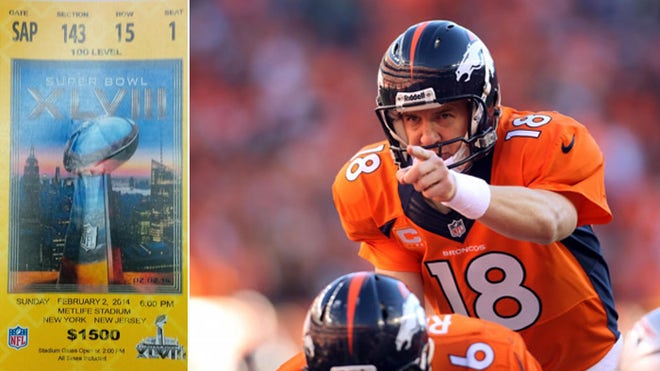
The ticket is fake, but its bar code is real enough to get a fan inside MetLife Stadium to see Peyton Manning lead the Broncos against the Seahawks in the Super Bowl. (AP)

The feds have already set a Super Bowl record – by seizing some $20 million worth of phony gear smuggled in from all over the world as Sunday’s game approaches.

Fake tickets good enough to gain entry to MetLife Stadium, knock-off jerseys and even sex workers descending on the biggest event in American sports are all on the radar of the Department of Homeland Security. The agency has set up a 24-hour operation at JFK airport, where they are confiscating loads of unlicensed Super Bowl paraphernalia in advance of Sunday’s game, FoxNews.com has learned.

“We have seized upwards of $20 million worth of counterfeit merchandise, most of which is related to the Super Bowl,” said Special Agent in Charge James T. Hayes of Homeland Security in New York. “We’ve executed 11 arrests so far and expect to make more in the coming days.”

Hayes said investigators have confiscated “thousands of pieces” of illegal merchandise, sent mostly from Asian countries like China. The fraudulent items include hats, jerseys and T-shirts made to look like they are officially endorsed by the National Football League for this year’s Super Bowl game between the Seattle Seahawks and Denver Broncos as MetLife Stadium in East Rutherford, N.J.

"If it’s produced, it’s being counterfeited."
  • James T. Hayes, DHS Special Agent in Charge

“If it’s produced, it’s being counterfeited,” Hayes said. “This is the perfect environment for counterfeiters because of street vendors,” he said of New York City and areas surrounding the northern New Jersey stadium.

Knock-off goods typically arrive in the U.S. by container ship, but with just two weeks between the Super Bowl and the playoff games that determine who competes in it, Seahawks and Broncos’ gear is coming in by plane, in the suitcases of smugglers, officials said.

Hayes and a team of investigators are opening up thousands of packages deemed “suspicious” to “make sure what is claimed is there,” said Department of Homeland Security spokesman Ubon Mendie. The NFL has also sent representatives to assist the DHS in determining what is official and what is fraudulent.

“Even a savvy consumer can be fooled,” Hayes said.

Mendie noted that the government last year seized more than $17 million in of counterfeit goods related to the NFL’s championship, meaning one Super Bowl record has already been broken.

“We have eclipsed that this year,” he told FoxNews.com.

Also troubling DHS is the discovery of Super Bowl tickets with a working UPC code – passes to the game that are hard to distinguish from legitimate tickets.

“The fraudulent ticket schemes that are out there are getting pretty sophisticated,” Mendie said. “The intricate systems that we’re seeing now are not things we’ve seen in the past.”

“These tickets essentially have a photo-copied bar code,” Hayes added.

Hayes is urging the public to always purchase tickets through reputable vendors like Ticketmaster and StubHub for any sporting event.

“You’ve got to use a legitimate vendor that guarantees that you’re going to get a legitimate ticket no matter what,” he said.

DHS is also investigating cases of alleged human trafficking in which women and minors are crossing state lines to work as prostitutes during game weekend. Mendie said DHS has already identified suspects and plans to execute arrests “in the next few days.”

“We are seeing an influx of people being trafficked to the area,” Mendie said. “This is always a problem that we constantly work to eradicate.”

Hayes said DHS has reached out to at least 20 hotels in the New York City area about how to identify “signs of a person being trafficked or held against their will.”

Hayes said most cases involve women over 18 and under who are foreign nationals – sometimes unaware of U.S. law and often from countries “where law enforcement isn’t trusted.”

Bummer for James Bond

See? See what happens when you go to China, Mr. Bond?

5 February 2014 Last updated at 13:27 ET
[URL=“http://www.bbc.co.uk/news/uk-england-coventry-warwickshire-26058905”]Aston Martin recalls 17,000 cars over possible defective part


Aston Martin One-77 Aston Martin is based in Gaydon in Warwickshire

Aston Martin is recalling more than 17,000 cars because of a potentially defective part.

The Warwickshire-based luxury car maker said the recall accounted for most of its sports cars built since late 2007.

It follows the discovery that a Chinese sub-supplier was allegedly using counterfeit plastic material in part of the accelerator pedal.

There are fears the pedal arm may break although there have been no reports of any accidents, the firm said.

A spokesman said it would now bring manufacture of the pedal arm back to the UK.
‘Get it replaced’

The firm is recalling a total of 17,590 cars - 1,553 in the UK - including all of its left-hand-drive models built since November 2007 and all right-hand-drive models built since May 2012, affecting about 75% of all cars built in those periods.

The recall applies to all cars apart from the new Vanquish coupe and Volante models.

“Customer safety is very important and to change the pedal takes less than an hour, so take the car and get it replaced is what we’re saying,” the spokesman said.

“It’s very important to say that there have not been any incidents or accidents.”

68%

I imagined it would be higher…:o

‘68% of counterfeit goods seized in US come from China’
China was closely followed by counterfeit and pirated goods from Hong Kong, which accounted for 25% of the total goods seized
Press Trust of India | Washington
March 25, 2014 Last Updated at 12:31 IST

China is the primary source for counterfeit and pirated goods seized in the US, according to an official report that puts India at a distant third.

In the year 2013, Chinese counterfeit and pirated goods seized in the US accounted for a total value of $1.1 billion, representing 68% of all such goods seizures by the Customs and Border Protection, the US Department of Homeland Security (DHS) said yesterday in its annual report.

China was closely followed by counterfeit and pirated goods from Hong Kong, which accounted for 25% of the total goods seized.

Hong Kong, a former British colony is now a special administrative region of China.

China and Hong Kong was followed by India at a distant third position, accounting for three per cent of the total goods seized, the report said.

The number of intellectual property rights (IPR) seizures increased nearly seven per cent from 22,848 in fiscal 2012 to 24,361 in fiscal 2013.

The manufacturer’s suggested retail price (MSRP) of seized goods increased from $1.26 billion in FY 2012 to $1.74 billion in FY 2013.

The report averaged slightly over 66 seizures per day, with an average MSRP of each seizure being slightly more than $71,500.

“Together with our IPR partners, CBP continues to guard the nation’s borders against counterfeit products,” said Customs and Border Protection (CBP) Commissioner R Gil Kerlikowske.

“These products are not only unsafe and dangerous to consumers, but they also pose a threat to the economic security of our country,” he added.

The National Intellectual Property Rights (IPR) Center continued its initiative Operation ‘In Our Sites’ in FY 2013 to shutdown rogue websites trading in counterfeit and pirated goods.

It seized control of 1,413 websites trading in these illicit goods in FY 2013. Consumers are reminded to remain vigilant when making online purchases, the report said.

I’m not sure if I read the article correctly…68% from China, but 25% from Hongkong. That makes 93% from China.

Gene, did I make your day?:stuck_out_tongue:

It’s not surprising that the countries that manufacture the most consumer goods would be the same countries that bootleg those same consumer goods.

I build electronics and I used to shop around for the best deals and get parts from China but I have been burned too many times. The parts are cheap, so it’s not about the money, it’s about the blue smoke! Fuckers. :stuck_out_tongue:

As a rule, I don’t buy from China unless I have to. Which is unfortunate because I would like to support LEGIT dealers from China, but it’s just too much of a pain in the ass to vett(sp?) these guys anymore. The only Chinese parts I get now are from reputable distributors like DigiKey. They have the time and money to figure out what’s real and what’s not.

Thought this was going to be like the walnuts…

…but it was another faux labeling thing.

Fake oranges seizure becomes Hong Kong’s first counterfeit fruit scandal
5,200 oranges with suspect Sunkist labels seized in first such case in HK
PUBLISHED : Friday, 25 April, 2014, 3:59am
UPDATED : Friday, 25 April, 2014, 2:03pm
Lo Wei wei.lo@scmp.com


Customs’ intellectual property officer Lam Yau-tak shows off some of the haul of fake Sunkist oranges. Photo: SCMP Pictures

Customs officers have seized 5,200 oranges with suspected forged Sunkist labels in the first case of counterfeit oranges in Hong Kong.

The fruit was seized from two Yuen Long stalls after the buyer complained they tasted sourer than the real thing and had thicker skins.

The genuine and counterfeit oranges look similar except for their label stickers - the real ones are made of plastic while the fakes are printed on paper, said Lam Yau-tak, commander of the Customs and Excise Department’s intellectual property general investigation division.

The owner of the two stalls and three sales staff aged 19 to 62 were arrested. Apart from the oranges, 112,000 forged labels were seized, some not yet stuck on the fruit.

The officers launched a two-week investigation after receiving the complaint.

“The complainant ate the oranges and found them sourer than the usual ones. The skin was thicker too,” Lam said.

The counterfeit oranges were imported from North Africa. Tests by government chemists have found them suitable to eat.

Genuine Sunkist oranges, usually imported from South Africa and California, cost HK$3 to HK$4 each and are sold to customers at HK$5 to HK$6. The counterfeit ones cost HK$1 and were sold at HK$3 to HK$4 each. The 5,200 oranges seized were estimated to have a market value of HK$90,000.

During their investigation, the officers found the staff secretly sticking the forged labels to the oranges.

The shop had posted signs prohibiting customers picking up the oranges while choosing them which Lam said he thought was done out of fear the fake labels would be spotted.

He said paper labels were cheaper and easier to print than plastic ones.

The two stalls in an outdoor market in Yuen Long were six stalls apart and had different names but were owned by the same person.

Checks of more than 10 other stalls in the market found no further fakes.

Lam said the investigation was continuing but no sign of a syndicate had been found.

The last counterfeit fruit case involved more than 130 boxes of watermelons seized in 2011, presented as having been imported from Malaysia when in fact they were from the mainland.

Under the Trade Descriptions Ordinance, anyone selling or possessing goods with a forged trademark is liable to a fine of HK$500,000 and five years in jail.

At least they were actually oranges. I’m sure the mislabeling happens all the time. Better than a walnut with a freakin’ rock in it, lol. I love the audacity of some of these people. Some of the scandals in this thread are quite ballsy.

Here’s a riddle for ya

There’s a vid report if you follow the link.

Egypt complains over China’s fake Sphinx
05/26/2014

A full-sized replica of the Great Sphinx of Giza has appeared in a Chinese village near Shijiazhuang() in China’s Hebei() Province. The sphinx is about 197 feet long and 65 feet high, and is open for tourist visits.

Ali El-Asfar, Chairman of the Egyptian antiquities department, filed a complaint to United Nations Educational, Scientific and Cultural Organization (UNESCO) over China’s fake sphinx.

Egyptian authorities said the highly counterfeit fake sphinx of China has violated international regulations. El-Asfar also pointed out that the fake sphinx is not only inaccurately built, but will do harm to the value of the original Great Sphinx of Giza, and hurt Egypt’s tourism and film industry.

A local filming company said the fake sphinx is a set piece and will be destroyed after production. They also say they are not charging fees to the visitors.

But this is not the first time China has made counterfeits of famous historical buildings and wonders.
A fake Eiffel Tower cropped up in Hangzhou(), a fake Arc de Triomphe stands in Shaoxing(), a fake London’s Tower Bridge is available in Xuzhou(), and there is even a fake White House toilet in Anhui().

Slightly OT

The ol’ switcheroo

All that glitters: businessman ‘who bought HK$270m of gold’ ends up with metal bars
Probe into HK$270m riddle of bullion from Africa switched for metal bars continues
PUBLISHED : Thursday, 05 June, 2014, 5:31pm
UPDATED : Friday, 06 June, 2014, 11:54am
Clifford Lo and Andrea Chen

The cases were shipped to a Tsuen Wan warehouse before being couriered to Hung Hom, police believe. Photo: Bloomberg

Police were last night making arrangements with a mainland businessman to check whether HK$270 million of gold bullion he bought in Africa was genuine after part of the consignment was swapped with metal bars.

On Wednesday, Zhao Jingjun, 43, opened part of his shipment in front of his buyer in Hong Kong and discovered the gold had been switched for worthless metal.

A senior officer said it would be the city’s biggest heist in a decade if it was confirmed that all the gold had been stolen.

An initial inquiry showed Zhao purchased 998kg of gold bars from a company in Ghana in mid-April, police said.

The consignment, in 14 cases, was escorted by his staff and delivered from Ghana on a chartered flight late last month.

“Officers were told that his employee confirmed the cases contained the gold before it was loaded onto the chartered flight in Ghana,” a police source said.

The source said the employee left Hong Kong after the consignment was handed to the staff of a logistics company at Chek Lap Kok airport. It was then couriered to a Tsuen Wan warehouse.

The businessman arrived from Hebei province on Monday and checked into the Kowloon Shangri-La hotel in Tsim Sha Tsui. On Wednesday, he had five of the cases couriered to his buyer’s Hung Hom office.

“When he opened the boxes, he found they were filled with metal bars instead of gold bullion,” the source said. “He told officers the cases appeared to have been tampered with.”

Police received a report from Zhao on Wednesday night when he returned to his hotel room.

He went to Tsim Sha Tsui police station yesterday with documents proving he bought the bullion in Ghana and that it was delivered to Hong Kong.

A police investigator said: “We don’t rule out the possibility that the gold bullion may have been switched for metal bars before being delivered to Hong Kong.”

Zhao has reportedly made several such transactions. His business activities include the purchase of iron ore from Australia, Africa and South America.

Four years ago, 265 gold bars were taken from a Yuen Long company. Police arrested three men and recovered most of the HK$90 million in bullion stolen.

crazy. How much is that in USD?

[QUOTE=GeneChing;1269334]There’s a vid report if you follow the link.[/QUOTE]

I call shenanigans! Those aren’t counterfeits. No one is like, hey, I didn’t realize the Statue of Liberty was in Dalian!

[QUOTE=Jimbo;1203899]Early in the period when I lived in Taiwan, in the '80s, they had a brand of toothpaste called Darkie Toothpaste. It had an old-fashioned looking charicature of a wide-eyed, grinning black man in a top hat on the package. A well-known African-American Tv personality (and DJ?) in Taipei, whose Mandarin was excellent, protested it to the point they changed the name to Darlie, and changed the drawing to a white man in a top hat.[/QUOTE]

But they kept the original Chinese name of Hei Ren.

iPhone 6

First functional iPhone 6 clones may soon be available in China

While Apple still has months to announce its next-generation iPhone, some Chinese manufacturers are steps ahead and seemingly ready to release the first functional iPhone 6 clones following the knock-off, nonfunctional iPhone 6 phones already floating around the market.

Just like the past clones, the devices are likely running a skinned version of Android with a custom launcher that imitates the appearance of iOS 7. According to 9to5Mac, “these devices use the rumored specification and schematics of the actual iPhone 6 that we have seen so much over the last few months, but obviously use off-the-shelf internals and don’t run iOS.”


The iPhone 6 clone was photographed next to a Samsung Galaxy S III for comparison.


These images of “shanzhai” (cloned) iPhone 6 are going viral on Weibo, with Chinese netizens exclaiming the ‘greatness’ of Chinese counterfeiters.

By Daniel Zhang

[QUOTE=Faux Newbie;1270290]I call shenanigans! Those aren’t counterfeits. No one is like, hey, I didn’t realize the Statue of Liberty was in Dalian![/QUOTE] It’s a fair cop. That one was slightly OT

Venice

Wasn’t sure whether to put this here or on our Chinese-Theme-Parks thread. I went with this one because it was further down from the top.

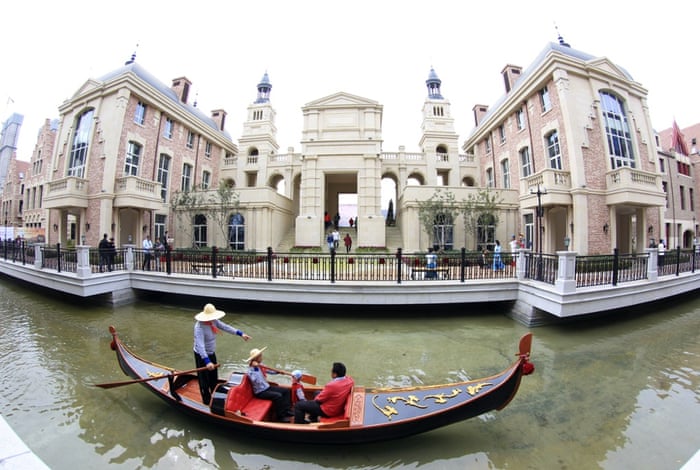
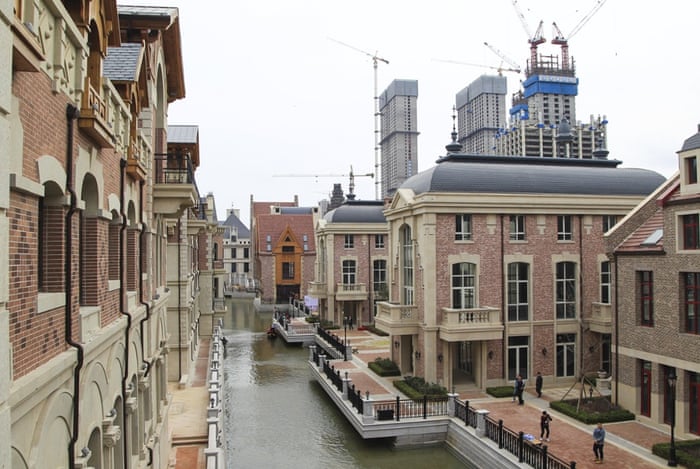
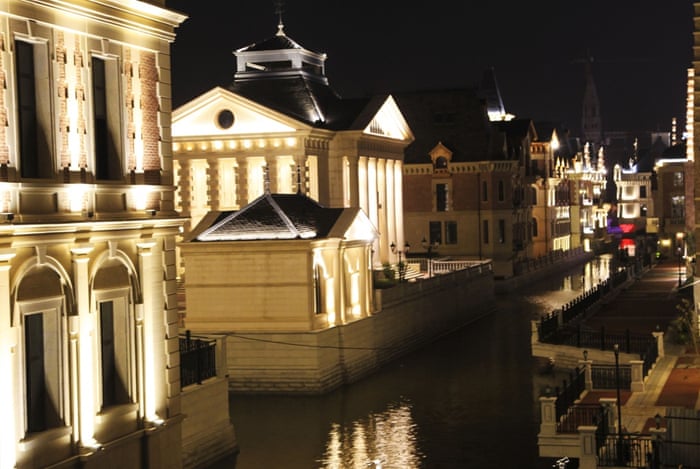
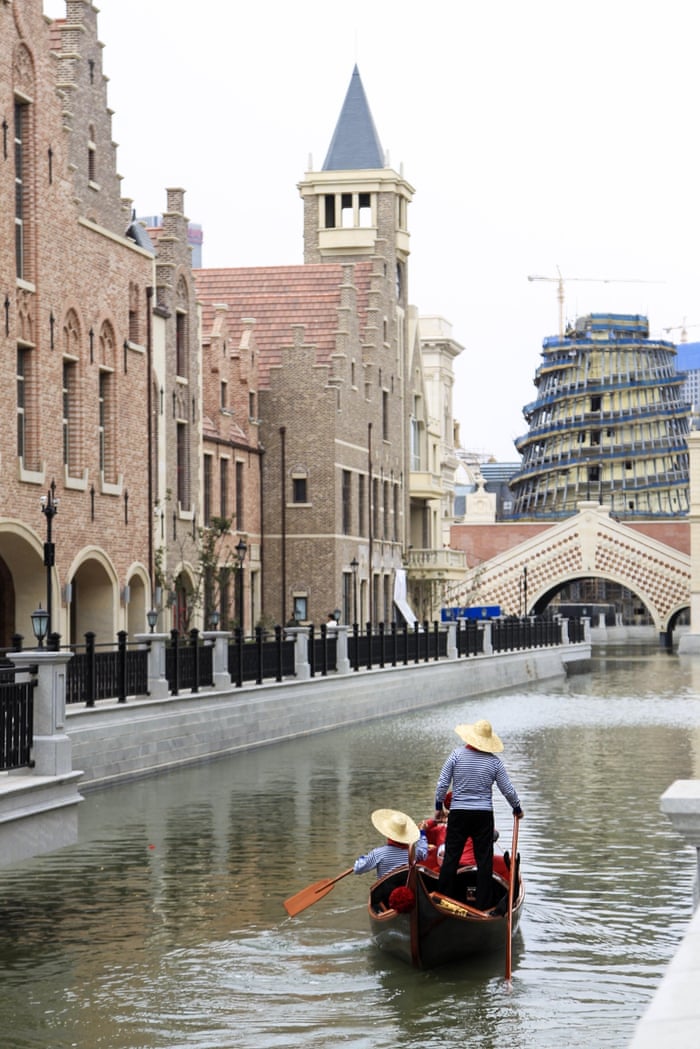
Welcome to Venice, China: Dalian copies canals, palaces … and gondoliers
The copycat city in north-eastern Liaoning province is just the latest example of China’s fondness for replicating Europe’s greatest architectural hits
Nick Mead
Wednesday 22 October 2014 06.56 EDT

Chinese people can now experience Venice without actually going to Italy after the Northern Chinese city of Dalian built a 4km canal lined with European style buildings.


Gondoliers in traditional Venetian costume offer Chinese residents in the port city of Dalian a taste of Venice – without the hassle of travelling to Italy
Photograph: HAP/Quirky China News/Rex


It is just the latest example of China’s fondness for replicating Europe’s western architecture: from Hangzhou’s ‘Eiffel Tower’, to Chengdu’s recreation of Dorchester and Shanghai’s Thames Town, complete with red phone boxes and a statue of Winston Churchill
Photograph: HAP/Quirky China News/Rex


Bianca Bosker, author of Original *Copies: *Architectural Mimicry in *Contemporary China, calls the phenomenon ‘duplitecture’. She argues that in mimicry is seen as ‘a form of mastery’ in China
Photograph: HAP/Quirky China News/Rex


The Venice recreation features man-made canals lined with European-style buildings. The first phase, which opened to the public at the weekend, features one kilometre of canals, which will extend to four kilometres when the five billion yuan (£500m) project is complete
Photograph: HAP/Quirky China News/Rex

Fake beggars

There’s a special place in hell for people like this.

Spotted: ‘Paralyzed’ beggar stands up to catch bus in Zhejiang

A beggar claiming to be paraplegic was seen scooting around on a skateboard on a street in Wenling, Zhejiang province province yesterday, gaining onlookers’ sympathy and money. The saddest part about it? He was a fake.

The miserable scene mixed with some recorded music was enough to get several people pulling change out of their pockets to help the struggling man. When a reporter gave him some money and asked if he needed anything, the beggar replied: “What can you do to help me?” I hate journalists the most,” Xinhua News reports.

The reporter followed the beggar to a bus stop, where he took off all the ragged clothes, put them into a knitted bag, took off the socks that had been tied on his shoes and stood up. He even rushed to the road to get on the bus.

Fake beggars can earn more than 10,000 yuan a month in Nanjing, Jiangsu province, China Daily reported last year. Just last week, a photo of a beggar holding an iPhone in Beijing triggered hot discussion online.

By Dina Li

Here’s that China Daily report:

‘Fake beggars’ seek fortune in metro
Updated: 2013-06-03 18:51
(chinadaily.com.cn)

“Professionals” account for 80 percent of beggars in the subway in Nanjing, Jiangsu province, and many have a monthly income of more than 10,000 yuan ($1,630), the Modern Express reported on Monday.

The per capita disposable income of urban residents in the city in 2012 was 36,700 yuan, according to official statistics.

Of the 10,200 cases involving begging that the subway authority handled since 2009, 80 percent were not from impoverished families and had they had the ability to work.

These beggars, the paper said, work eight hours a day like regular commuters and their daily income is around 400 yuan. Some veterans receive 1,000 yuan per day.

One beggar, pretending to be disabled, had an expensive mobile phone, a passport and an exit-entry permit to Hong Kong and Macao, said Li Bin, a worker at the management company of Nanjing metro.

Counterfeit editorial

Nice one, China Daily. :rolleyes:

China Daily fakes op-ed under New Yorker journalist Peter Hessler’s byline

New Yorker journalist Peter Hessler says that state-run newspaper China Daily faked an editorial and put it under his byline after he took part in an interview and his responses were taken out of context.

China Daily had requested for Hessler, along with his former colleague and translator Li Xueshun, to participate in a Q&A, in which he was asked, among a series of other questions, to compare Egypt and China (Hessler has worked as a correspondent in both of these countries).

The newspaper took his reply, framed it as an editorial about China and Egypt (the headline reads: "US observer: Comparing Egypt with China”) and slapped his byline on it, he explained in a post to Facebook.

The column praises the stability and the education system of China, and out-of-context, conveniently appears like another party-pushing editorial typical of the Daily. One part reads: “I think I have a better understanding of how essentially stable the Chinese system is,” after his time living in Egypt. “It reminds me that in China, even in a tiny village, there was a great deal of government activity. The villagers were very clearly connected to the larger political systems and issues of the country.”

Says Hessler:

[…] it omitted crucial parts, including the most important point: that I believe it’s harder to make a political change in China, where the system is deeper rooted than in Egypt, and thus the flaws are also more deeply rooted. I said that this is the reason why the current anti-corruption campaign will be a failure, because China is not addressing its systemic flaws. This material, among other things, was not included in the published article. (Nor did the paper print any of Li Xueshun’s answers, of course.)

China Daily has since removed the article from its English-language site, but other state media sites had already picked up by that point and it’s been published all over the web.

Here is Hessler’s full response:

Earlier this month, a reporter from China Daily approached me with a request to do an interview, in conjunction with Li Xueshun, a former colleague from Fuling who has translated the mainland editions of my books. Li and I were told that this was part of a year-end special, and many of the questions were around that theme: what was your top achievement of the last year, biggest regret, and other questions. Li was asked, for example, for his opinion of the translation profession in today’s China. One question asked me to compare Egypt and China.

Yesterday, China Daily published an article under my byline, presented as an article that I had written solely about Egypt and China, and including much of my response on the question about post-revolution Egypt. But it omitted crucial parts, including the most important point: that I believe it’s harder to make a political change in China, where the system is deeper rooted than in Egypt, and thus the flaws are also more deeply rooted. I said that this is the reason why the current anti-corruption campaign will be a failure, because China is not addressing its systemic flaws. This material, among other things, was not included in the published article. (Nor did the paper print any of Li Xueshun’s answers, of course.)

After the article appeared, I asked China Daily to remove the article from their website and issue a retraction, because it should not have been under my byline and it did not accurately convey the substance of the interview. I offered to participate in a proper Q&A, provided that they made a statement disavowing the earlier article, and allowed me to approve the final edit of the Q&A before publication. China Daily removed the article from the English website, but Chinese translations have been picked up by various outlets. And the paper has refused to issue a retraction.

I want to emphasize that this article does not in any way represent a comprehensive picture of my views on China and Egypt, and I never would have agreed to such a story. And I want readers to understand that the terms under which I was approached - that this was a year-end interview with my friend and colleague Li Xueshun, on a range of topics - are completely different from being approached for an article specifically about Egypt and China (especially when my byline will be used, not to mention with key material removed). I believe that a proper comparison between Egypt and China is extremely useful, but it requires more space and focus than such a format.
I also want to note that this incident has not been representative of my recent experiences with Chinese journalists. Over the past two years I’ve had many interviews with the Chinese press, including a book tour last fall. I’m well aware of the pressures that journalists face in China, especially in the current climate, where there is a risk that words can be twisted or taken out of context for political ends. I’ve appreciated the fact that so many of the Chinese journalists that I’ve met have been sensitive to this, and in some cases have worked with me directly in an effort to find the best way to convey ideas responsibly and accurately.

Peter Hessler

[Image via Wiki Commons]

Fake Bank

I’ve heard of fake ATMs before, but a whole bank? That’s impressive.

Fake Chinese bank cheats huge deposit
English.news.cn 2015-01-23 18:11:14

NANJING, Jan. 23 (Xinhua) – A rural cooperative posing as a bank cheated 200 million yuan (32 mln U.S. dollars) from unwitting depositors in an eastern Chinese city, local police said.

The fake bank ensnared more than 200 customers over the past year with promise of higher interest rates.

The scheme was unraveled only after a customer was denied withdraw of his money and reported it to the police, according to police in Nanjing, capital of Jiangsu Province.

Police say the cooperative has decorated itself exactly the same as a bank, with LED screens, a queuing machine and uniformed clerks. It also faked documents to prove itself as an authorized financial institute.

One legal representative cooperative and four “managers” have been detained on suspicion of illegally absorbing public money.

Most victims were businessmen from neighboring Zhejiang Province. Police are still seeking victims of the scam.