going to go there tomorrow.
anyone know if there’s a good bookstore to pick up hard to find kung fu books?
any other places I should go while there?
going to go there tomorrow.
anyone know if there’s a good bookstore to pick up hard to find kung fu books?
any other places I should go while there?
pm MonkeySlap. He’s in the area.
cool, thanks.
The best bookshop is called Eastwind I think…there’s also a great VCD store off one of the side streets (there are plenty of these shops - but this one really gets it) - and other cool stuff. Gene Ching prbably knows better than me.
great, thanks.
china town
go eat fish at YUET LEE, 1300 Stockton & Broadway
phone # 982-6020
get the steamed clams in black bean sauce
go this little candy shop in china town where they sell crazy candies like dried lemon peel and 10 differenty types of dried plumbs..the herb dired plumb is best
go to the little hole in the wall bakerys on the side streets and get how gar (shrimp dumplings for 1.00 each)
peace
ok, so Chinatown is mostly a big tourist trap.
did have some good dim sum at the Golden Palace (i think that was the name)
the trippiest bit was walking down the street w/ all the markets and being very afraid of some 4 and a 1/2 foot tall chinese ladies trying to get to the fresh fish as it was coming off the truck.
didn’t find Eastwind or anyone who would tell me if they knew where it was. went into ‘Louie’s’ book store and he had a decent collection but nothing bilingual that interested me.
and don’t waste your time at the Cliffhouse till they get done with the remodel. lot of money spent for very poor service and ho hum food.
climbing around at the bath house ruins was fun, though.
tomorrow is winery day…yum yum.
Oso
Oso
South of Jackson st is a big tourist trap. But North of it is where I shop most of the time. Thats where the locals go.
~Jason
thanks, bro, i’m printing this thread for the next visit.
I’ll be back out here again within the year, the girls mom is here.
it was fun.
Next time you come out, make sure you call me. PM’d you my number, but didn’t hear a peep - musta been having a good time, eh 
Be happy to give you the tour next time.
crap!
naw, I didn’t get the popup telling me I had a new pm. probably cuz of the settings on my mom-in-law’s computer.
sorry about that. would have definitely called you. thanks for the offer, next time maybe.
Well I’m from the bay area, (actually was born in SF) and know of lots of places to go as well, not too familiar with the Chinatown area however. There are a few other members from the bay area that are on the board to I’m sure that can help ya out as well. I will probably be spending a bit more time in the Chinatown area in the next few months, so I’ll let ya know of some good spots to hit up!!
thanks.
back on the east coast now.
highlight of the return trip was all the wwf dudes, and dudettes, on the plane back from Sacramento.
2 guys I know are pretty big names and the dude from the first season of “Tough Enough” was right behind us. I think his name was Maven or something like that. He’s gotten HUGE since TE.
SF is in decline
I’ve been hoping for some revitalization with the restoration of the Great Star Theater but that hasn’t had too much impact.
SF Chinatown businesses fighting to survive
By Lia Zhu in San Francisco | China Daily USA | Updated: 2018-11-15 00:07

Daisy Xie works during a slow day in her barbecue restaurant in San Francisco’s Chinatown. LIA ZHU / CHINA DAILY
Customers don’t come into Daisy Xie’s restaurant in San Francisco’s Chinatown even at lunch hour anymore, so she spends most of the day looking out the window.
“Times have changed,” said Xie, owner of the Chinese barbecue restaurant New Golden. “Chinatown used to be very busy and vibrant”.
With a history spanning more than 150 years, Chinatown, with a high density of small businesses, has long been a shopping and cultural hub and a tourist destination. But as Xie said, "times have changed’'.
The compact area of Chinatown’s 27 blocks house a community of more than 14,000 residents and over 900 small businesses, according to a 2017 report by the Chinatown Community Development Center.
Aging buildings and infrastructure, gentrification pressures and other factors are leaving Chinatown at a “critical juncture”, said the center.
Like Xie’s New Golden, most of the shops and restaurants on Stockton Street — the main shopping and business area in Chinatown — have little business on a Sunday.
Xie blamed the years-long construction of the central subway Chinatown station right in front of her restaurant.
“The businesses on both sides of the street are disrupted because of the traffic condition,” she said. “I’m afraid the rent will hike after the construction is complete.”
In the Stockton Street area, eight or nine other businesses have closed because their leases were not renewed. Many other business owners say that they fear the same fate as landlords favor more upscale tenants.
Across the street from New Golden, a new bubble tea shop called Subway Station’ replaced a barbecue restaurant a month ago. Young people packed the small shop recently and loud pop music played.
Xie said the new shop was a good sign. “The buildings are too old in Chinatown,” she said. “Every time I walk by the Italian neighborhood, I think we should learn from them. We need better planning and to smarten up ourselves.”
But she said she was reluctant to invest in renovations because she didn’t know when her rent would be increased to an unaffordable level.
“It’s a shame to lose the cultural district,” said Naveed Naficy of Seattle, while queuing outside Good Mang Kok Bakery for his favorite radish cake.
Every time he goes to San Francisco, he stops at the bakery for authentic Chinese food. “I like chicken feet as well,” said Naficy, calling himself an “adventurist”.
A “Sustainable Chinatown” initiative was launched last year by CCDC and San Francisco planning and environment departments to help preserve the community by increasing its affordability and resilience in the face of gentrification and other challenges.
“Chinatown has been going downhill since 10 years ago. It only got worse in the past two or three years,” said Raymond Hong, 58, owner of Rainbow Photography.
“Everything is so expensive now, and it’s difficult to find a parking space,” said Hong, who has run the shop for 25 years on Stockton Street.
Hong declined to say how much he pays in rent, but said a shop of his size, about 800 square feet, could cost $5,000 to $6,000 a month, and a one-bedroom apartment could command $1,600 a month.
He said he has to work by himself every day to stay in business, but even then, Hong said he barely breaks even.
“I’m not worried about myself. I’m worried about Chinatown. I fear it would fade away some day, like the one in Los Angeles,” he said.
Contact the writer at liazhu@chinadailyusa.com
Empress of China to become Empress by Boon
Gentrification Fears Mount in SF’s Chinatown as Another Spendy Newcomer Nears Its Debut
As Empress by Boon moves into one of Chinatown’s most recognizable buildings, activists worry it won’t really serve the local community
by Luke Tsai Feb 18, 2020, 2:50pm PST

timparkinson/Flickr
The reopening of a restaurant space on the top floor of one of San Francisco Chinatown’s most recognizable buildings has come under fire from local activists. Empress by Boon, a 7,500-square-foot modern Cantonese restaurant, is slated to open this spring in the old Empress of China Building at 838 Grant Avenue, right in the heart of Chinatown. But community activists are worried that the upscale restaurant’s arrival is a sign of looming gentrification in Chinatown, the SF Chronicle reports.
Should the opening of a Chinese restaurant helmed by a Chinese chef and located in a building that’s owned by a Chinese-American SF Chinatown local spark those kinds of concerns — especially here in San Francisco, where Chinatown remains a vibrant and distinctly Chinese American neighborhood? In some ways, that’s a hard question to answer.
At issue is a particular pattern that’s emerged in the past few years: As the argument goes, the neighborhood’s historic Chinese banquet halls have shuttered and been replaced, one by one, by a new wave of upscale restaurants that cater to customers who don’t live in the neighborhood. So, Four Seas was replaced by Mister Jiu’s. Gold Mountain was replaced by China Live. And now, the Empress of China.
The trend is alarming enough to local activists at the Chinatown Community Development Center (CCDC) that they’ve filed an appeal to the city’s planning department, calling into question whether the top floors of the Empress of China building should be used as a restaurant at all. The hearing will be held on Wednesday night, the Chron reports.
Concerns about the fate of the Empress of China have been building for years now. A 2015 feature for San Francisco Magazine, “Long Live the Empress” noted that the initial real estate ad mockups for the building positioned it as “an ideal space for creative technology tenants.” And indeed, after the real estate firm of current owner John Yee — an SF Chinatown native — purchased the building in 2016 for $17.25 million, his initial plans were to convert the top floor banquet space into either tech offices or a hotel — a since-discarded plan that was a source of great unease for Chinatown community groups at the time. Among their fears was the loss of yet another community gathering space — one that hosted events for organizations like Chinese for Affirmative Action over the years.
As iconic a landmark as it was, however, the Empress of China itself was never exactly a beacon of affordability in Chinatown, as the massive banquets it hosted during its heyday in the 70s and 80s often cost upwards of $20,000. It, too, became something of a tourist attraction over the years — a place guidebooks would recommend to out-of-towners looking to sip on sugary mai tais while taking in one of the most impressive views in the city.
But seen in another light, a certain anxiety around the news that yet another ritzy restaurant is coming to Chinatown is understandable: Chinatowns around the country — from Boston and Washington D.C. to just across the bridge in Oakland — have battled displacement for years, in the face of rising rents, expensive new real estate development, and pricy new businesses that aren’t really geared toward local clientele. In some cases, those battles have been all but lost — in D.C.’s Chinatown, for instance, where there were only 300 Chinese residents remaining as of 2015, the Washington Post reported, and where there are now only a scant handful of Chinese restaurants left amid a sea of new high-rises and generic chains.
Empress by Boon, for its part, has revealed little about its specific menu plans thus far — other than that the food will be “modern Cantonese” — but the restaurant seems likely to attract a significant contingent of out-of-towners based on the reputation of Michelin-starred chef Ho Chee Boon. His prior gig was as the international executive chef for the Hakkasan restaurant group — known for its sleek, dark interiors and ultra-luxe interpretation of Cantonese cuisine. When contacted by Eater SF, representatives for Empress by Boon said that Boon would not be commenting, though building owner Yee told the Chron he believes the new restaurant will bring jobs and tourist dollars to the neighborhood.
The broader question, though, is this: What responsibility do ambitious new Chinatown restaurants have to not only be a part of the local community, but also to serve food that’s accessible and appealing to Chinatown residents? This is something that all of the recent high-profile Chinatown openings — from Mister Jiu’s through China Live and Eight Tables — have had to wrestle with.
George Chen, chef and owner of the massive, multi-venue China Live complex that opened in 2017, says that if the issue is the loss of big banquet halls, it’s largely a moot point. He says there just isn’t much demand among second- and third-generation Chinese Americans for the massive Chinese banquets that were in fashion during the heyday of Gold Mountain, the restaurant China Live replaced.
That said, Chen acknowledges that China Live is moderately more expensive than other Chinese restaurants in the area (to say nothing of Eight Tables, his exclusive upstairs tasting menu spot where a meal for one runs a cool $225). But he says that he tries to draw in local customers — including by offering a 20 percent discount at China Live’s first-floor Marketplace restaurant to Chinatown residents who show their ID: “Just show me you live in the 22 blocks of Chinatown, and you get 20 percent off,” Chen says.
“Do I have a responsibility? Yes, because we’re in that community,” he adds. “We’re not trying to create a place where rich people can feel like they’re slumming it in Chinatown.”
I remember many posh banquets there celebrating so many occassions when I was young. My aunt was a translator and often got our clan in on various banquet tables for all sorts of odd happenings. I didn’t realize how special so many of those were at the time.
I used to love the grocery store below. They had this back area that always had Kung Fu weapons - some unique stuff too. Last weekend, my sihing Ted Mancuso was just showing me a dao he got there many years ago that was remarkable. I don’t think I ever got a weapon there but I always looked. Mostly, I stocked up on White Rabbit. :o
What will Chinatown look like after the pandemic ends?
There’s an embedded vid but it says exactly what this article says.
‘It’s a disaster:’ SF Chinatown merchants, denied loans, speak out after 100-year-old staple forced to close
This comes as news that Far East Café, a staple in Chinatown for more than a hundred years, announced they will close next week.
By J.R. Stone
Tuesday, December 22, 2020 11:17PM
Business owners in San Francisco’s Chinatown are speaking out, demanding that the city do more to help them. This comes as news that Far East Café, a staple in Chinatown for more than a hundred years, announced they will close next week.
SAN FRANCISCO (KGO) – Business owners in San Francisco’s Chinatown are speaking out, demanding that the city do more to help them.
This comes as news that Far East Café, a staple in Chinatown for more than a hundred years, announced they will close next week amid the coronavirus crisis.
“That’s really sad to see that Far East is closing because it’s one of the best restaurants in Chinatown,” says Domingo Ortiz who works nearby.
And there is a fear in this neighborhood that more businesses will close if help doesn’t come soon.
“For Rent” and “For Sale” signs already sit in the windows of vacant storefronts in the once-bustling area.
Denis Xenos, the owner of Denis’ Country Kitchen in Lodi, California, claims to have found a loophole to legally keep his small business open against the state’s stay-at-home order during the coronavirus pandemic.
Sam Chen of Magical Ice Cream tried for a small business loan, but was denied.
“I do try like four times but I couldn’t get it,” says Chen.
Those across the street at New Age Camera tried for a loan. They were denied as well.
“Over here it is a disaster,” says Ortiz.
Eva Lee of the Chinatown Merchants Association says city leaders need to help fight for these businesses by helping with grants and loans, or work to partner them with big companies.
“What do we want our city to look like? Are we going to be like a typical suburbia with just Targets and big stores left? Is that what we want? The fabric of our city is being torn apart right now,” says Lee.
And as the city landscape changes, lawmakers in Washington D.C. are arguing about whether to give $600 or $2,000 to individuals.
It’s money that wouldn’t go to businesses, but would go to those who work in these locations and are barely getting by.
“Like I told my wife last night, anything the amount helps even if it’s 600 dollars,” says Ortiz.
threads
Chinatown-San-Francisco
Coronavirus-(COVID-19)-Wuhan-Pneumonia
All people’s problems are getting worse due to these uncertain times. I really wish that this pandemic will get to an end.
Chinatown blues
CORONAVIRUS CALIFORNIA[URL=“https://abc7news.com/society/how-are-chinatown-businesses-surviving-heres-what-we-found/9735798/”]
San Francisco’s Chinatown clings to hope amid COVID-19 pandemic
Small businesses and restaurants in the historic neighborhood are banding together. But they need your help.
By Lauren Gee
Monday, January 18, 2021 5:15PM
San Francisco’s Chinatown was one of the first neighborhoods to feel the impact of the coronavirus pandemic so we visited the neighborhood to see how businesses are surviving.
SAN FRANCISCO (KGO) – If you’ve ever been to San Francisco’s Chinatown on any weekday afternoon, pre-pandemic, you’d be struck by the vitality of the community. Residents weaving through the tourists, the sound of children throwing poppers onto the ground, workers unloading boxes of fresh produce onto crowded sidewalks while locals compete to find the best deals.
Now, many businesses in America’s oldest Chinatown are at risk of closing. We spent a day in Chinatown to find out how the neighborhood is really doing.
Our day started as we emerged from the underground parking lot at Portsmouth Square where we were first shocked to see dozens of people.
It wasn’t the normal sight of seniors huddling together playing cards and chess, or dancers practicing their Chinese fan dance routine. Instead, it was a sea of people wearing face masks and shields as they waited to get a COVID-19 test.
Grant Avenue, Chinatown’s most popular corridor for tourists, was empty. Entire blocks of businesses were adorned with closed signs, colorful toys inside souvenir shops were locked behind metal gates and the red lanterns dangling in the wind were the only moving objects in sight.
“It feels depressed, you know, I mean, if there’s no other way to describe it, it feels depressed and it doesn’t feel like Chinatown,” Malcolm Yeung, executive director of Chinatown Community Development Center, explained.
San Francisco was one of the first cities in the nation to implement the shutdown, which prompted empty streets across town, but Chinatown Merchants Association’s Advisor Betty Louie believes the neighborhood was hit even earlier because of xenophobia.
What started as attacks, to empty stores, then a major decline in tourism, it has been a detrimental year for the community, Malcolm Yeung explained.
“Even back then (pre-pandemic), I would say we have about 930 storefronts in Chinatown. I would be surprised if even 150 were operational right now,” he added.

Since the pandemic started, Eastern Bakery owner Orlando Kuan has moved his pastries outside for people to see on Grant Avenue.
KGO-TV
We spotted Eastern Bakery owner Orlando Kuan sitting on a plastic fold-out chair under his shop’s awning with a table of freshly-baked treats.
“Chinatown is almost dead,” he explained.
Even as the oldest bakery in Chinatown, Kuan says he lost at least 70% of sales since the shutdown started. It’s his loyal customers who rave about the bakery’s coffee crunch cake, moon cakes and Smackles (crispy savory cookies) that keep him going.
“It’s nothing like before,” Yeung said. “I think that Chinatown and particularly Grant Avenue is like a ghost town right now.”
To prove just how empty the neighborhood is, we went to the most crowded shop we could think of – Chinatown’s iconic Golden Gate Fortune Cookie Factory. The storefront is tucked in an alley, but you can’t miss it because on any afternoon, you’d smell the sweet scent of cookies and see visitors lining out the door waiting to squeeze through for a peek at how fortune cookies are made. This time, we missed the alley and the store was empty.
“It’s just terrible, miserable and we have no business,” Golden Gate Fortune Cookie Company owner Kevin Chan explained.
Now, Chan says he can’t even afford to turn his machine on because no one is buying his fortune cookies. Since the pandemic, Chan says he’s lucky to see 10 customers per day – they’re all local.

“This business is 15 years here. I can’t afford to shut it down because it’s a legacy,” said Kevin Chan, owner of Golden Gate Fortune Cookie Factory in San Francisco’s Chinatown.
KGO-TV
As we walked through the streets with Chinatown’s Community Director Malcolm Yeung, we realized the neighborhood wasn’t all that quiet. Shopkeepers shouted to one another from across the street, locals who recognized Yeung exchanged their greetings and, he pointed out a silver lining amid the pandemic – community.
Following the announcement of one of Chinatown’s oldest and most iconic restaurants permanently closing, the community’s resilience was on full display.
Since the shutdown of indoor dining, Far East Cafe’s 100-year-old hand-carved wooden chandeliers, prohibition-era dining booths and lazy Susan’s have been collecting dust. Owner Bill Lee and his daughter, Kathy Lee, described how strange it was to stand in a dark space that was once a hub for family banquets, wedding celebrations and huge association gatherings. Bill Lee shared that he has less than 30 orders a day and the latest ban on outdoor dining was “the nail on the coffin.”
Longtime customers, neighboring business owners and even Supervisor Aaron Peskin plead with Lee to hold off on closing so they could secure $1.9 million, a relief package that would fund CCDC’s Feed and Fuel Chinatown program, which pays local restaurants to make meals for neighbors living in single-room-occupancy hotels.
Business owners in San Francisco’s Chinatown are speaking out, demanding that the city do more to help them. This comes as news that Far East Café, a staple in Chinatown for more than a hundred years, announced they will close next week.
The Lees said they’re taking a break and hope the wait will give them time to reboot and figure out how to continue moving forward. “The community, they support us 100%.”
“I think the pandemic has really brought us much closer together,” Merchant Association Advisor Betty Louie said. “We’re all helping each other as much as possible.”
The closed streets program was another way the neighborhood was able to connect with one another and boost business. Louie is optimistic that the program brings a newfound perspective to the area and entices new businesses with lowered rent.
As Lunar New Year soon approaches, the CCDC’s executive director said it’s going to be devastating since no parades or street festivals are scheduled. Chinatown businesses generate up to a third of their annual revenue during the holiday. “That’s why the help from the city, the donors, from whoever…to keep the restaurants open, the immigrants employed is more critical now than ever,” Yeung said.
“The only way we’ll survive is to have people come and support our small businesses and they won’t know what it’s like if they don’t come and visit and they’ll be pleasantly surprised,” Louie adds.
Louie was right – we were prepared to see closed storefronts and quiet streets, but what we didn’t expect to find was the generosity and resilience of business owners who refused to give up. Though Chinatown may look like a ghost town, the community is coming together and most importantly, clinging to hope.
“When Chinatown reopens for business, it will be a great place to come.”
To help donate to Feed and Fuel Chinatown program, click here.
Treat yourself during quarantine with Eastern Bakery’s homemade pastries, artisan chocolates from Jades Chocolate, or delicious fortune cookies from Golden Gate Fortune Cookie Company.
ABC7 News’ Alix Martichoux contributed to this report.
threads
Chinatown-San-Francisco
covid
Saving Chinatowns
Lunar New Year celebrations this year aim to help struggling Chinatowns
In New York City, grassroots groups are using the holiday to support businesses that lost 50 percent to 70 percent of revenue since the pandemic began.
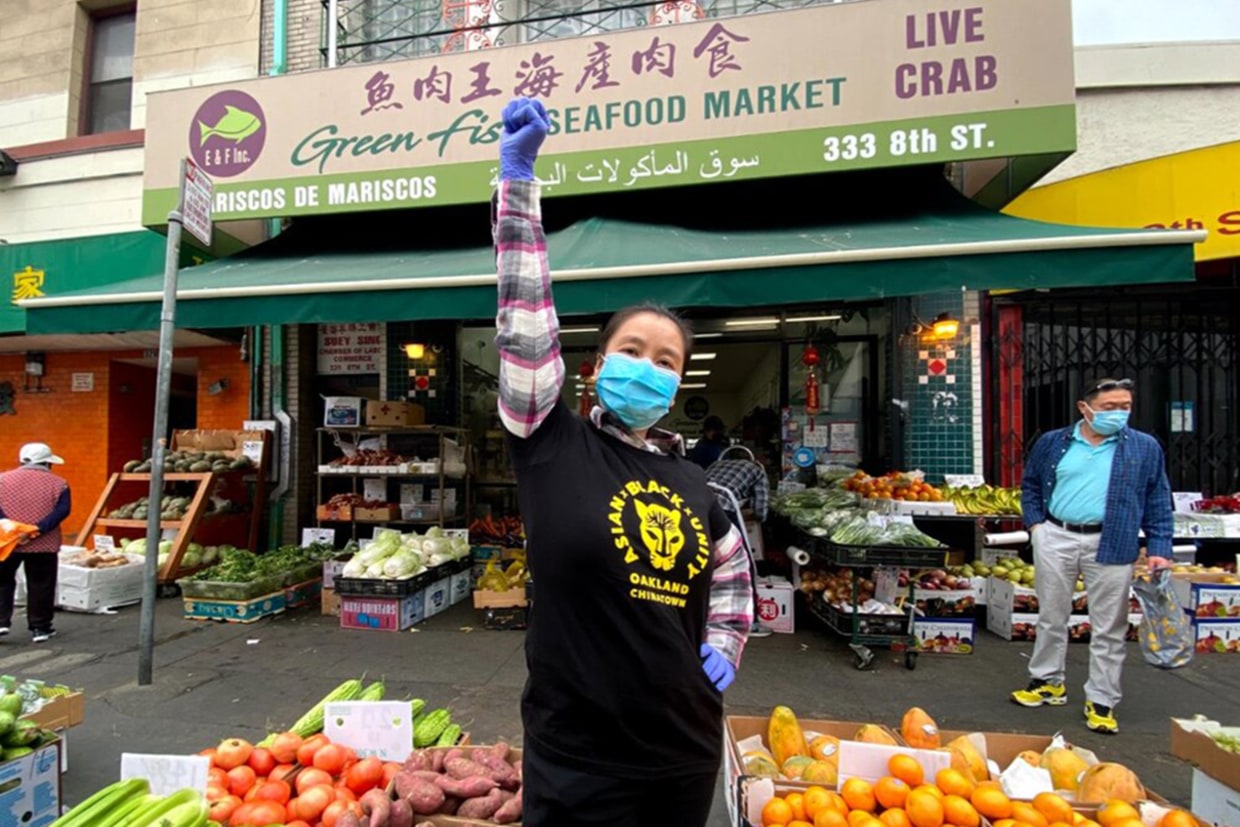
Finnie Fung, the owner of Green Fish Seafood Market in Oakland, Calif., is featured in the recipe zine "Have You Eaten Yet?"Good Good Eatz
Feb. 5, 2021, 9:37 AM PST
By Victoria Namkung
Lunar New Year celebrations usually mean colorful lion dance parades, thumping drumbeats, popping firecrackers and massive feasts with family and friends. While the holiday will certainly look different in the Covid-19 era, wishes for health, wealth and good fortune are louder than ever in America’s struggling Chinatowns.
The Year of the Ox begins Feb. 12, and organizations, grassroots groups and volunteers throughout the country are using the Lunar New Year to raise money for Chinatown businesses hit especially hard since the onset of the pandemic. Creative initiatives and virtual events are using art, storytelling, culture and community to highlight the people behind the businesses that make Chinatowns beloved places for countless Asian Americans.
New York City’s Welcome to Chinatown, founded by friends and Manhattan Chinatown residents Victoria Lee and Jennifer Tam, partnered with the Abrons Arts Center and Wing on Wo’s W.O.W. Project to commemorate Lunar New Year with “From Chinatown, With Love,” a photo calendar shot by Mischelle Moy, featuring products from 18 Manhattan Chinatown businesses, such as Lucky King Bakery and Bangkok Center Grocery.
“We want people to see the Chinatown we see as locals,” Tam said. “Chinatown is so much more than a place for tourism or gathering.”
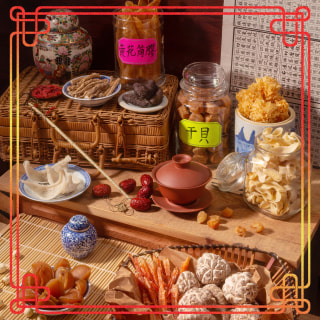
IMAGE: The calendar ‘From Chinatown, With Love’
The calendar “From Chinatown, With Love” features photos of 18 Manhattan Chinatown businesses.Mischelle Moy
The classic Chinese-style calendar, which will be given to customers who spend $20 at participating businesses, is accompanied by a neighborhood Lunar New Year gift guide filled with local insider tips.
Tam said her nonprofit has raised more than $650,000 for Manhattan’s Chinatown since it was founded 10 months ago.
Welcome to Chinatown is also selling a Lunar New Year Collection of merchandise benefiting six Manhattan Chinatown businesses and a nonprofit.
It’s estimated that businesses in the area have lost 50 percent to 70 percent of their revenue since the pandemic and the subsequent xenophobia began in January 2020.
Alice Liu is a second-generation proprietor of Grand Tea & Imports, which got a grant from Welcome to Chinatown’s Longevity Fund in September.
“It was really exciting and offered a lot of hope, because being a Chinatown small business, we’ve been closed out of a lot of mainstream funding,” said Liu, whose family business is featured in the calendar and the merchandise collection. “Having [a relief program] made for us, by us and administered in a way that small businesses in Chinatown are used to creates a lot more trust.”
Another New York-based group, Send Chinatown Love, has created an illustrated map of Asian American-owned restaurants and gift shops for its Lunar New Year Crawl through Chinatowns in Manhattan, Queens and Brooklyn.
Other organizations have also taken design-forward approaches to supporting local businesses.
Save Our Chinatowns and Good Good Eatz teamed up to produce “Have You Eaten Yet?” a recipe zine and red envelope bundle to benefit Yuen Hop Noodle Co., Cam Anh Deli and Green Fish Seafood Market in Chinatown in Oakland, California.

IMAGE: ‘Have You Eaten Yet?’
“Have You Eaten Yet?” a recipe zine created by Save Our Chinatowns and Good Good Eatz benefits businesses in Oakland’s Chinatown.Courtesy of Save Our Chinatowns
Daphne Wu of Oakland, a Save Our Chinatowns volunteer who conceptualized, wrote and edited the zine, said, “A recipe zine is a way to inspire folks to go out and support these businesses and also get to know the owners a bit more personally and intimately.”
The printed copies sold out within two hours of the zine’s launch Jan. 25, but digital copies are available with an online donation.
Wu said people feel deep connections to Oakland Chinatown because “there are so few places in the world where us third-culture kids can feel at home and a sense of belonging.”
But even with the support of grassroots initiatives like Save Our Chinatowns, which raised $40,000 last year, Chinatowns in San Francisco and Oakland must fight to stay open because of Covid-19-related closings and racially motivated fears.
Business owners like Anh Nguyen of Cam Anh Deli, who arrived in Oakland in the early 1990s as a refugee from Vietnam, are dedicated to moving forward.
“A lot of people stepped up it’s just incredible,” said Nguyen, who contributed a recipe for lemongrass tofu to the zine, which was illustrated by six artists, including Save Our Chinatowns founder Jocelyn Tsaih. “I want to tell people Chinatown is a safe place to be and we will go on and continue to serve the neighborhood and community as long as we can.”
Traditional fundraising events are also underway for Lunar New Year.
The 43rd-anniversary L.A. Chinatown Firecracker 5/10K, Kiddie Run, Bike Ride & Paw’er Dog Walk on Feb. 27 is being held virtually this year, giving participants the flexibility to complete their events at the time and date of their choosing.
It is one of the largest and longest-running Lunar New Year charity runs in the nation, and 100 percent of net proceeds are reinvested locally.
Similarly, the Boston Chinatown Neighborhood Center is holding a free Lunar New Year Virtual 5K/1 Mile Run/Walk, “We Love Boston Chinatown,” Feb. 12-15.
The organization encourages entrants to run or walk in Chinatown and patronize its spots in the process. Prizes will include gift certificates from Boston Chinatown restaurants to encourage spending in the community.
Social service agencies are also using digital spaces to encourage donations and visits to Chinatown.
The Philadelphia Chinatown Development Corporation, or PCDC, plans a virtual Chinese New Year celebration Feb. 26 to benefit programs for Chinatown.
PCDC’s Ai Love Chinatown campaign, which was launched in August to support small businesses affected by Covid-19, has produced a video series that spotlights Asian American-owned businesses.
“We wanted to bring that personality to people’s attention to show there’s real people standing behind these businesses, and they’re hurting, but they’re still taking the time to take care of their customers and workers,” PCDC Project Manager Lamei Zhang said.
Tam of Welcome to Chinatown said the immense nostalgia and love people have for the historic neighborhood is why people are eager to volunteer and donate money to help.
“We always say we hope when we have kids of our own, that they get to know the Chinatown that we grew up experiencing,” Tam said. “People can’t fathom the idea of Chinatown disappearing.”
I went through SF Chinatown early in the pandemic last year, before the lockdowns, and I’ve never seen it so barren…like a ghost town.
threads
2021-Year-of-the-Ox
covid
NYC-Chinatown-and-Chinese-New-Year
Chinatown-San-Francisco
L-A-Chinatown
Last stand…
THE LAST STAND OF S.F. CHINATOWN’S STORIED BANQUET HALLS
These restaurants have been Chinatown’s heart and soul. What happens to S.F. if they disappear?
By Melissa Hung | Feb. 14, 2021 | San Francisco Chronicle
ON A SATURDAY AFTERNOON in late December, Bill Lee walks through his empty restaurant in Chinatown. Though the tables are draped with white tablecloths, the dining room functions more as a storage space. Wedged between tables are stacks of red-cushioned dining chairs. Signage, featuring large photos of the restaurant’s dishes, leans against a wall. A lone bottle of hand sanitizer sits on a dining table. A year ago, the scene looked very different — the chatter of locals and tourists filled the room as they feasted on Cantonese and Chinese American dishes.
Opened in 1920 at 631 Grant Ave., Far East Cafe is one of San Francisco Chinatown’s oldest restaurants. Much of its decor remains unchanged from its early days: oil paintings depicting historical scenes from Guangdong (where many early Chinese immigrants hailed from), large hanging lanterns from the province, and a set of dark wood-paneled private booths behind red curtains. Buttons for summoning wait staff remain on the walls, though the bell system no longer works.
Far East Cafe is also one of Chinatown’s last remaining large-scale banquet halls, serving as a gathering space for the neighborhood’s many family associations and civic organizations. The dwindling number of Chinatown banquet halls worries community leaders, who fear their loss could devastate the culture and traditions of a community already threatened by gentrification. Ten years ago, there were five: Empress of China, Far East Cafe, Four Seas, Gold Mountain, and New Asia Restaurant. Now, only Far East and New Asia remain.
Lee, 77, who took over Far East in 1999 and added the second floor for banquets, is only the third owner — along with nine other shareholders — in its history. Over the years, thousands of banquets have taken place there. Lee had planned to throw his own event: a 100th anniversary celebration of the restaurant in the fall of 2020. But that was before the COVID-19 pandemic and the shutdowns that began in March. Now, instead, sitting in the dim dining room, he contemplates shutting down Far East for good.
“I tell you, I love this restaurant. I have never spent so much time in one place,” Lee says. “I spent 20 years for this restaurant.”
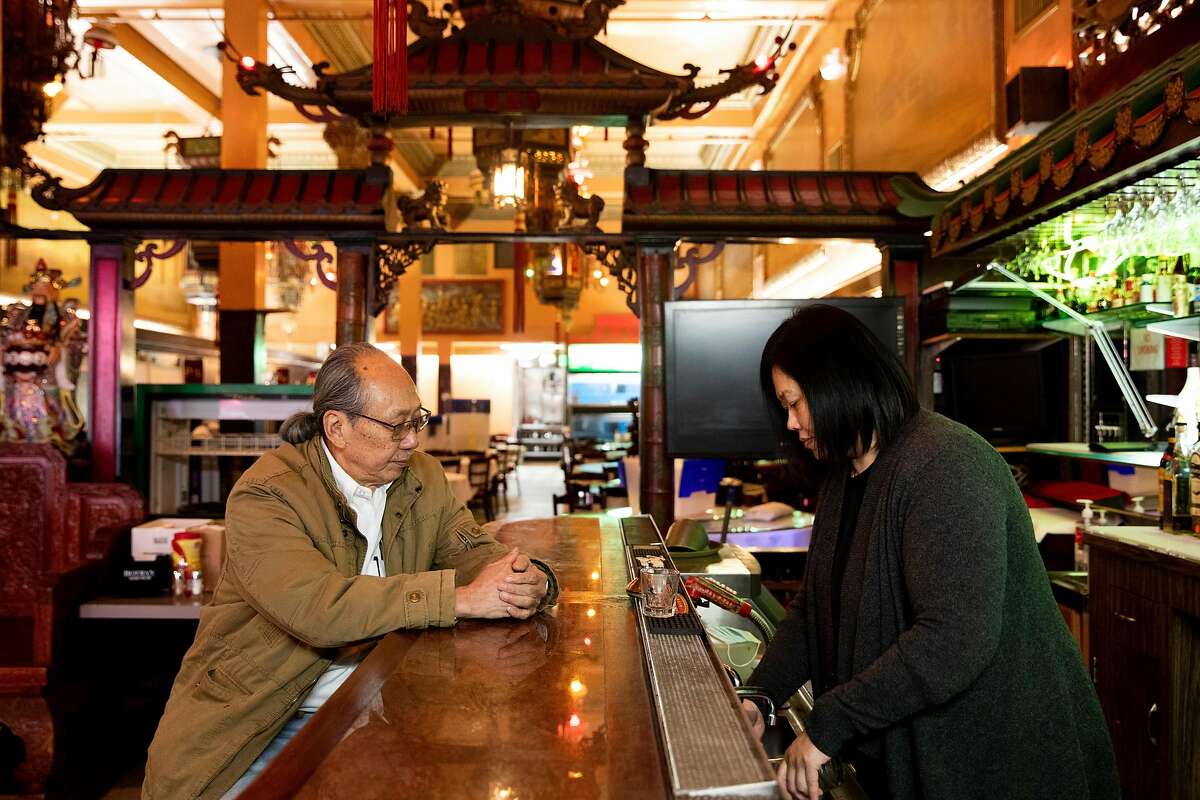
Far East Cafe owner Bill Lee sits at the bar while his daughter Kathy Lee, the restaurant’s manager, makes him a drink. Far East Cafe is one of the few remaining banquet halls in S.F.’s Chinatown, but Lee is unsure how long he can keep it running. | Jessica Christian / The Chronicle
While the entire restaurant industry is struggling for survival, the pandemic has hit especially hard in Chinatown, which saw business drop months before shelter-in-place began. Lee is down to four employees from the 50 or so full- and part-time staff he once employed. He has tried to make a go at outdoor dining. Volunteers had been putting finishing touches on a new parklet structure, painted red and trimmed in yellow to match the restaurant. But then the city halted outdoor dining on Dec. 6 in the midst of a coronavirus surge. Lee felt defeated. He didn’t want to close, but he was operating at a deep loss, even after he and his daughter Kathy Lee, the manager, stopped taking their salaries.
Two weeks later, on Dec. 22, news broke that Far East would close permanently on Dec. 31. The next day Supervisor Aaron Peskin, who represents Chinatown, held a press conference in front of the restaurant, telling Lee that help was on the way. The week before, nine community organizations had written to Mayor London Breed, warning that the situation in Chinatown was dire and asking the city to provide millions in financial aid, as it had done for the Latino community. Peskin and Supervisor Sandra Lee Fewer introduced legislation proposing $1.9 million in relief for Chinatown restaurants. Peskin urged Lee to hang on. Lee shrugged his shoulders and seemed to laugh, perhaps wearily, from behind his face mask.
But the speed of government bureaucracy is too slow for Lee. Nearly a month passed before the Board of Supervisors approved the legislation on Jan. 19, another month where he owed tens of thousands more dollars in rent, utilities and more. The city funds will help Chinatown restaurants, including Lee’s Far East, survive for a few months. But then what? Will enough people be vaccinated by then that COVID-19 infections slow sufficiently for businesses to reopen? Or will the situation worsen again?
And there is a larger question: If the banquet halls go, what will become of Chinatown?
continued next post