Bruce Lee Memorials

worth revisiting this

> # 25 YEARS OF THE DRAGON

Reunion with a cult classic

The global pandemic caused many celebrations to be postponed during 2020, with the silver jubilee of our most fêted creation among them.

As a turbulent year draws to a close, we joined Montegrappa CEO Giuseppe Aquila to look back on the birth and rise of the elusive Dragon.

“We decided that if celluloid was to make a comeback, it would need to be spectacular,” Giuseppe Aquila recalls, as he hustles us past the glittering vitrines dotted throughout Montegrappa’s private museum. “We couldn’t risk it going unnoticed,” he adds as he nears the case housing The Dragon. “There she is,” he remarks, looking on with a glint in his eye.

In 1993, Aquila was fresh out of university and eager to leave his mark on the family company. One year prior, the all-silver 80th Anniversary had been Montegrappa’s first public luxury release in decades. Curiosity in Italy’s first fountain pen maker was rebounding, and calls to revive the brand’s vintage codes were growing.

“In the thirties and forties, Montegrappa’s intriguing celluloid colours were hugely popular,” Aquila explains. “But the fire put an end to that.”

Although celluloid is a delight to the senses, curing and machining it is a precise and perilous science. “In 1946, it all went up in flames,” Aquila explains, pointing to the site of the accident. “Bringing celluloid back was much more than a choice,” he pauses. “It was a commitment.”

CHASING GLORY

Modest successes with precious metals had made the company eager to use silver and gold to glorify the celluloid.

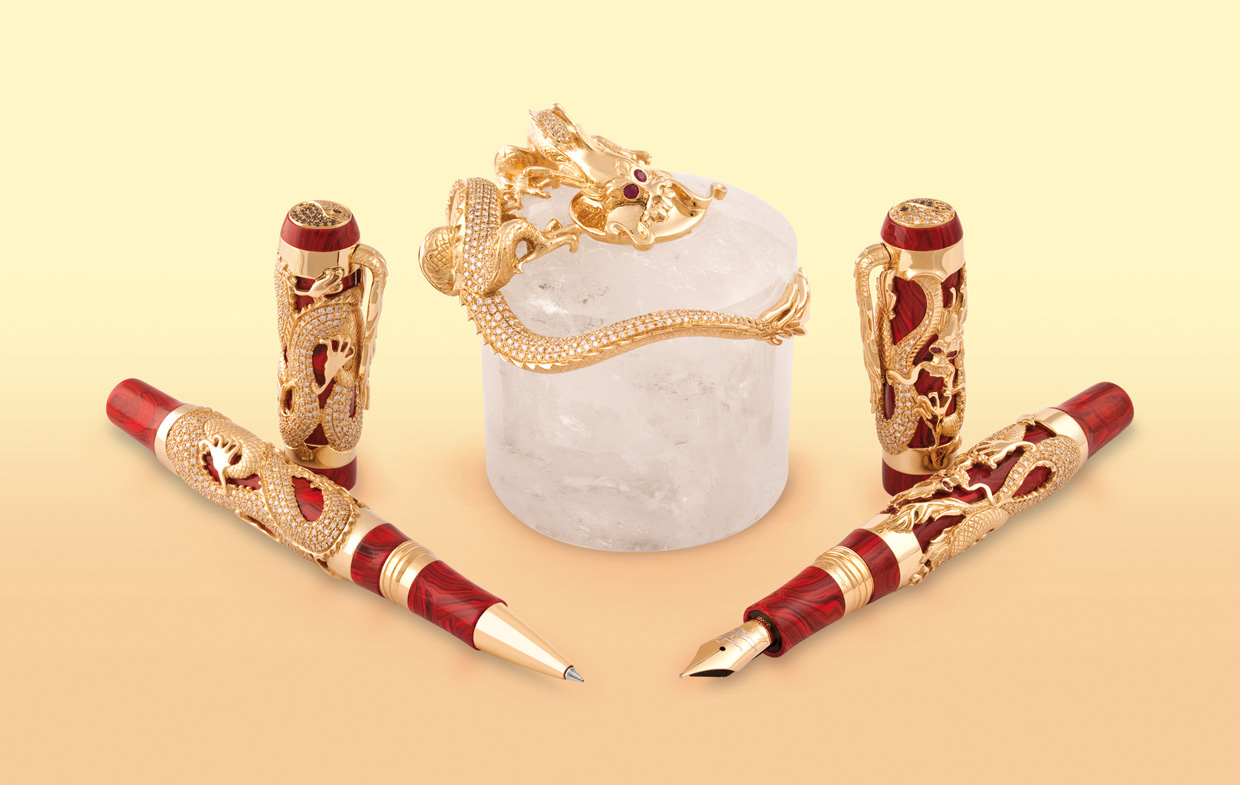
But ensuring both materials could realise their full potential would require skills that no-one in the pen industry possessed. A search for solutions began.“We visited local jewellery manufacturers, who showed us how detailed three-dimensional figures could be made at small scale using complex, handmade moulds.” Aquila’s interest had been piqued: the jeweller’s art of lost-wax casting offered thrilling possibilities. The idea to encase a celluloid pen within a precious metal frame was born.

For the idea to become a reality, many technical challenges lay ahead. The heft of a writing instrument demanded much larger pieces than those produced in typical jewellery ateliers. But there was also a creative dilemma to resolve. What should such an elaborate creation say? “We needed a motif that could envelop the entire pen, but leave space for the celluloid to shine through.”

THE IDEA

Milanese sculptor, Federico Monti, was enlisted into the project, and the design process began.

“We looked at several concepts with Federico, and soon arrived at the idea of an ancient dragon,” Aquila explains. Of all the figures that could be coiled around a writing instrument, a dragon offered the greatest scope for artistic expression. But the choice was also an emotional one: “Attributes like strength, ferocity and hidden knowledge seemed a perfect recipe for a power pen.”

Montegrappa’s far-eastern partners were brought on as project consultants to help Monti’s design meet local expectations, and local Chinese artists gave cultural insights. Meanwhile, a boutique casting studio in Bassano del Grappa was preparing to turn the team’s vision into a reality. Lost-wax casting had never before been used in the fabrication of pen elements.

When the first prototypes of Dragon emerged, the project had spent more than two years in development, and involved a complex network of collaborators on three continents. “This all took place before the advent of company email,” Aquila quips. “Honestly, it seems miraculous today that we managed to bring it all together.” But the product itself showed no signs of haste.

ENTER THE DRAGON

Versions of sterling silver and 18K gold were paired with black, mother-of-pearl celluloid.

It was everything Aquila and his team had hoped for.

In the winter of 1995, Montegrappa headed to Frankfurt’s Paperworld exposition armed with a single production sample.

Pride and anticipation within the team were high, but tempered with anxiety: “We had costed the pen at ITL. 3,900,000 (approximately €2,000),” Aquila recalls.

“But, back then, the most expensive pens retailed at around ITL. 2,000,000.”

He was haunted by doubt: in his drive to achieve the ultimate celluloid pen, had he created an even bigger monster?

His worries were soon banished: interest in the daring creation was intense and Montegrappa was the talk of the show.

“The heads of all the big brands came to see what the fuss was about, and congratulate us on what we had achieved,” Aquila recounts.

Praise from dealers was just as effusive, with pre-orders causing the edition to sell out within a month of its public debut.

TURNING POINT

Though the Dragon had proven a tremendous commercial success, its influence on Montegrappa and the wider writing landscape was just as profound.

Its groundbreaking craftsmanship – and price tag – had broken a glass ceiling. Connoisseur and collector interest in new luxury pens had been kickstarted, causing many manufacturers to recalibrate their ambitions and pursue ever more elaborate, outlandish designs.

For Montegrappa, the Dragon’s impact is impossible to overstate. Over the ensuing 25 years, celluloid and lost-wax casting would become signature elements of many of the company’s most extraordinary designs, while variants of the silhouette would reappear in 2005 – with the ultra-limited 10th Anniversary edition – and again in 2010 to mark the 70th birthday of Bruce Lee.

Meanwhile, the silhouette’s cult appeal helped Montegrappa achieve some of its most notorious milestones. On 31 December 1999, Boris Yeltsin signed over power to Vladimir Putin using a Dragon: a piece that remains in the possession of the Yeltsin family. Similarly, the company’s long-term friendship with Sylvester Stallone also traces back to the Dragon, as Aquila recalls.

“Stallone’s management reached out to us,” he remembers. “Apparently he had lost his own Dragon and was desperately looking for a replacement to sign a deal.” Knowing that the edition had long since sold out, Aquila offered them a rare example from the company’s cache of artist proofs. The offer was accepted, precipitating a relationship that would culminate in 2011’s blockbuster Chaos collaboration. Fittingly, this landmark design also relied on celluloid encased in precious metals.

Twenty-five years after the Dragon’s launch, the world has changed – not least in the writing sphere, where formidable new competitors have seen pens embrace their potential not just as tools, but as trophies. Looking back, the Dragon’s blatant disregard for practical conventions seems remarkably prescient. Perhaps the mythical creature’s hidden knowledge was the biggest clue all along.

Since the Dragon’s unprecedented assault on luxury’s norms, Montegrappa’s archive of Limited Editions has swollen to encompass more than 150 enchanting handcrafted designs. Visit our Vault section to discover – or rediscover – them all.


> # Regional: Bill Would Create Day Honoring Sf Martial Arts Icon Bruce Lee

By Bay City News Service May 13, 2026

Late martial arts and film icon Bruce Lee’s daughter, Shannon Lee, speaks in support of a bill in the California state legislature that would establish May 17 as Bruce Lee Day. Lee spoke to a crowd at San Francisco Main Library in San Francisco, Calif., on Wednesday, May 13, 2026, as the legislation was introduced. (Thomas Hughes/Bay City News)

Thomas Hughes/Bay City News

A bill to commemorate May 17 as Bruce Lee Day in California was announced Wednesday to honor the legacy of the San Francisco-born actor and martial arts star.

Lee, named one of Time Magazine’s “100 Most Important People of the Century” in 1999, was a trailblazer for the Asian American, Native Hawaiian, and Pacific Islander community. He died in 1973 at the height of his fame, which had skyrocketed as he churned out blockbusters such as “The Big Boss,” “Fist of Fury,” “The Way of the Dragon,” and “Enter the Dragon.”

His films and the roles he chose – and those he refused – redefined how Asians and Asian Americans were represented in the media, showing them as strong, proud, and intelligent, a turnabout from some previous portrayals.

The day of recognition would not close banks and government offices but would encourage schools to create educational materials to teach about Lee’s legacy beyond the screen during May, AANHPI Heritage Month.

The bill was authored by Assemblymember Matt Haney, D-San Francisco. He said he expected it to be signed by the end of summer, setting the stage to celebrate Lee’s legacy in 2027.

But for San Franciscans who can’t wait another year: enter the library.

On Sunday, the main San Francisco Public Library will host a Bruce Lee Day celebration of its own. There will be martial arts demonstrations, activities and film screenings, with events starting at noon. More information is available at https://sfpl.org/celebrating-bruce-lee.

Lee was born at San Francisco Chinese Hospital in 1940 and moved to Hong Kong as a child before returning and living much of his life in the city and elsewhere in California. When he died in Hong Kong in 1973 at the age of 32, he was still a legal resident of California and always considered the state his home, according to his daughter Shannon Lee, founder and president of the Bruce Lee Foundation.

Shannon Lee, Haney, and representatives from organizations that Bruce Lee impacted and inspired spoke about his legacy at the library Wednesday.

Lee said the commemorative day would prompt young people to learn more about her father’s work beyond the screen developing self-empowerment philosophies, teaching new generations about the Chinese and Asian American experience, and shaping attitudes in American popular culture.

“He changed the world,” she said. “The reason martial arts is so popular in the Western world is because of him. The reason that every spy, every superhero is a martial artist on film, is because of him. The reason that perceptions about Asians shifted is because of him.”

Shannon Lee is the chief executive officer of Bruce Lee Enterprises, which controls his image, likeness and intellectual property. She wrote the book, “Be Water, My Friend: The Teachings of Bruce Lee” to share her father’s philosophy and methods for self-improvement, including using martial arts as a metaphor for life.

Bruce Lee created Jeet Kune Do, an expression of martial arts that incorporates philosophy. The term translates to “Way of the Intercepting Fist” and uses diverting an opponent’s technique or intent as a guiding principle, according to the foundation.

Claudine Cheng, founder and president of the APA Heritage Foundation, which celebrates Asian American and Pacific Islander heritage, said Lee’s legacy was important for young people to learn.

“Bruce Lee is a shining example of how one person is able to help shape the community, help shape the future,” she said.

I wanted to attend this but I couldn’t get away from work.

California Lawmakers Vote Unanimously to Establish Annual Bruce Lee Day

The historic piece of legislation heads to Governor Gavin Newsom’s desk, making the martial arts icon the first Chinese American to receive a dedicated state day.

California is on the verge of establishing an official annual day of recognition for the late martial arts icon and actor Bruce Lee. The state Senate voted thirty-eight to zero this week to pass Assembly Bill 2445, sending the legislation directly to Governor Gavin Newsom for his final signature.

The bill, introduced by San Francisco Democratic Assembly member Matt Haney, seeks to formally honour Lee’s extensive contributions to global cinema, pop culture, and Chinese American history. If Newsom signs the measure into law, Lee will become the first Chinese American individual to receive a dedicated commemorative day under California state law.

A Pivotal San Francisco Return

The legislation designates 17 May as Bruce Lee Day across the state. Lawmakers selected the specific spring date because it marks the precise day in 1959 when an eighteen-year-old Lee returned to San Francisco, the city of his birth in 1940. The cross-Pacific journey served as a vital turning point, launching the next phase of his career and his eventual international film career.

“Bruce Lee was a symbol of pride, resilience, and possibility for generations who rarely saw themselves reflected with strength and dignity,” Haney said in a public statement following the Senate vote. He added that the international star perfectly represents the cultural diversity and creative spirit that define modern California.

During his career, Lee transformed the global entertainment landscape through a series of record-breaking martial arts feature films. Early projects such as The Big Boss, Fist of Fury, and The Way of the Dragon shattered box office records across East Asia. His final completed feature, the 1973 Hollywood co-production Enter the Dragon, achieved massive commercial success in the United States and Europe, establishing martial arts cinema as a permanent fixture in global pop culture.

Encouraging History Lessons and Exhibits

The move has received full backing from the late actor’s family. His daughter, Shannon Lee, who functions as the chief executive of the Bruce Lee Foundation, expressed gratitude for the legislative milestone. She noted that her father spent his life working as a cultural bridge, using his films and physical philosophy to promote cross-racial solidarity and self-confidence.

“To be the first Chinese American recognised this way shows the scale of my father’s enduring impact and the countless lives he continues to touch,” Shannon Lee stated.

The statutory designation does not establish a paid public holiday. Instead, the law legally encourages schools, museums, and community organisations throughout California to coordinate voluntary commemorative activities each May. Planned events will include targeted classroom history lessons, public martial arts demonstrations, and local cultural exhibitions detailing Lee’s complex historical context and his fight against racial stereotypes in Western media.

https://www.youtube.com/watch?v=Hf5ud2umBnQ

Author

Jun Kit Man

Jun is a former News producer and reporter with extensive experience covering major global events. In recent years, Jun has turned his focus to empowering the East and Southeast Asian (ESEA) diaspora. His guest appearance on BBC Stories’ “Meet the kids who grew up in Chinese Takeaways” highlights his personal connection to the community. As the founder of Resonate, he provides a platform for young ESEA creatives to showcase their talents globally.

Mark your calendar: May 17 is now ‘Bruce Lee Day’ in California

Aldo Toledo

Tue, June 30, 2026 at 10:21 PM PDT

2 min read

Gov. Gavin Newsom on Tuesday signed legislation to commemorate May 17 for Bruce Lee, the San Francisco native who changed martial arts and film history. (Screen Archives/Getty Images)

California is giving Bruce Lee a permanent place on the calendar.

On Tuesday, Gov. Gavin Newsom signed legislation to commemorate May 17 for the San Francisco native who changed martial arts and film history.

The bill by Assemblymember Matt Haney, D-San Francisco, honors Lee’s legacy in film, martial arts and Chinese American history, as well as his California roots. AB 2455 passed the state Senate with unanimous support, 38-0, before heading to Newsom’s desk.

Lee now becomes the first Chinese American to be commemorated with a day on the state calendar, according to Haney’s office. The legislation does not create a state holiday or require any closures.

“Bruce Lee was a symbol of pride, resilience, and possibility for generations who rarely saw themselves reflected with strength and dignity,” Haney said in a statement. “Born in San Francisco and celebrated around the world, he embodies the creativity and diversity that define California.”

May 17 was chosen because it’s the day Lee returned to San Francisco at age 18, a turning point that helped to launch the next chapter of his life and career.

Lee was born in San Francisco in 1940 but shortly thereafter his family moved back to Hong Kong. He went on to become an international star whose films helped transform martial arts cinema. It also brought Asian-led storytelling to global audiences, and he is considered to be a trailblazer for East Asians in Hollywood.

The law creating the day encourages voluntary commemorative activities across the state, including school lessons, cultural exhibits and public events focused on Lee’s contributions and historical significance.

Shannon Lee, Bruce Lee’s daughter and the founder and CEO of the Bruce Lee Foundation, said the recognition reflects her father’s lasting influence across generations.

“To be the first Chinese American recognized this way is a testament to my father’s enduring legacy and the countless lives he continues to touch,” she said. “From young people who found confidence and possibility in his philosophy, to families who finally saw themselves represented on screen, to athletes who still draw on his teachings of discipline and inner strength, his reach is profound.”

Mark Young, co-founder of Stand With Asians, said Bruce Lee Day recognizes a broader cultural impact.

“Bruce Lee was a San Francisco native and a trailblazer who challenged stereotypes and helped reshape how Asian Americans were seen in this country,” Young said.

California to institute Bruce Lee Day, in first for a Chinese-American in the state

May 17, the day Lee returned to San Francisco after spending his childhood in Hong Kong, will be his annual namesake day

2-MIN READ

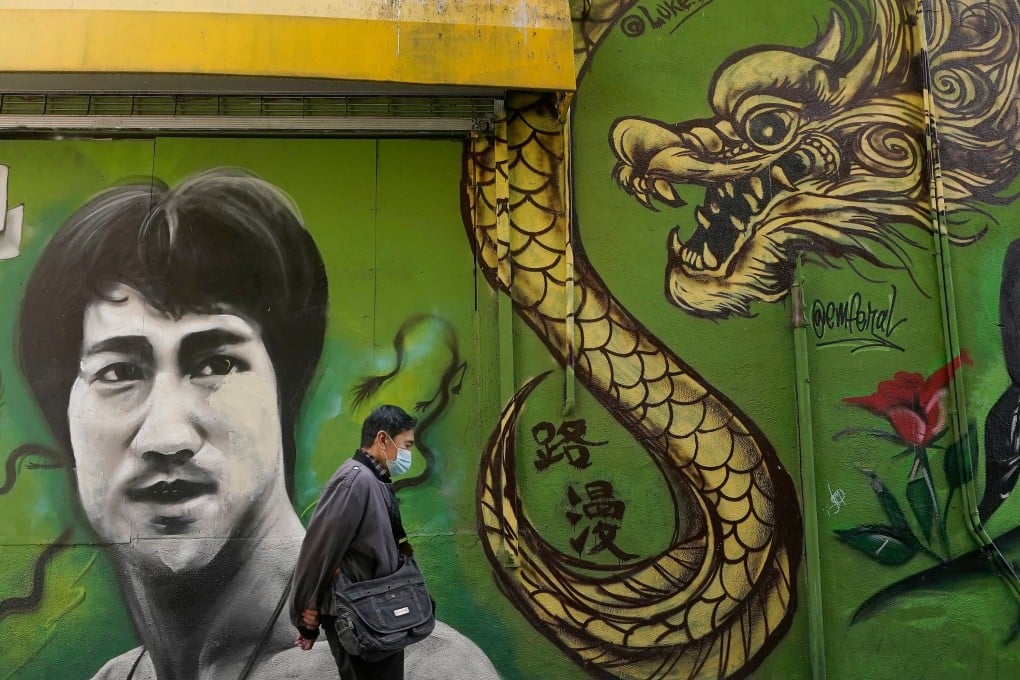
Street art of Bruce Lee in San Francisco. Photo: AP

Associated Press

Published: 7:26am, 2 Jul 2026Updated: 12:45pm, 2 Jul 2026

Martial arts icon Bruce Lee, who was born in San Francisco, will become the first Chinese-American in California history with an annual namesake day.

Governor Gavin Newsom signed a law on Tuesday afternoon officially designating May 17 as Bruce Lee Day, according to the office of state Assemblymember Matt Haney, who represents San Francisco.

An 18-year-old Lee returned to San Francisco on May 17, 1959, after spending his childhood in Hong Kong.

Lee’s daughter, Shannon, who is CEO of the Bruce Lee Foundation, said the honour is a testament to her father’s enduring legacy as a bridge between cultures.

“From young people who found confidence and possibility in his philosophy, to families who finally saw themselves represented on screen, to athletes who still draw on his teachings of discipline and inner strength, his reach is profound,” Shannon Lee said in a statement.

Haney called Lee the epitome of the best of California.

The philosophy behind Bruce Lee’s fists of fury

“At a time when Asian-Americans were too often absent from or stereotyped on screen, Bruce Lee helped generations see themselves represented with strength and dignity,” he said in a statement.

The foundation and various Asian-American organisations hope Lee will be celebrated every year with voluntary commemorative activities around the state such as cultural exhibits, public events and classroom lessons.

Born in 1940 to Chinese parents who were touring with an opera, Lee was allowed to have birthright citizenship. A few months later, the family returned to Hong Kong where Lee became a child actor and began learning Chinese kung fu.

He moved back to the US in 1959 and enrolled in the University of Washington in Seattle two years later. He dropped out and threw himself into practising and teaching martial arts.

In the 1960s, Lee found work in Hollywood, most notably as Kato in the television series The Green Hornet, but studios wanted him to play racist stereotypes and paid him less than his white counterparts.

He pivoted back to Hong Kong and soon became a megastar of martial arts flicks, including The Big Boss and Fist of Fury. Lee died in 1973 at 32 after an allergic reaction to pain medication.

Lee’s name and likeness remain popular. Fans gather on his birthday. A treatment for a proposed television action series he wrote inspired the HBO Max show Warrior.

Recently I sort of realized some Asian Americans succeed in overcoming their societal environment through high levels of narccicism. Bruce Lee I think was one such a person, I think his constant smirk at the corner of the mouth signals strong narccicism. Hence imo he built a legacy for himself but not the Asian American community.

I also finally found the words to describe his high pitched scream that was often imitated in mockery in daily life; its the idea of deviant masculinity. It’s not something exuded naturally like Clint Eastwood or Marlon Brando. It’s weird and twisted. Hence Bruce lee’s legacy rarely attracts people who want to become like him, but people who are already like him: skinny narccicists who dream of power.

In the mainland there are now young people doing martial arts who have no idea who he is.