Bruce Lee: A Life by Matt Polly

Criterion Collection

Lifestyle / Entertainment
Bruce Lee: His Greatest Hits – Criterion Collection producer on preserving the martial arts icon’s legacy with new box set
Box set collects together all of Bruce Lee’s films, along with commentaries and special features, and producer Curtis Tsui says Lee still has cultural relevance
‘He left a small body of work, but behind it was a way of addressing life … that we could implement,’ Tsui says of the actor, who died in Hong Kong in 1973
Richard James Havis
Published: 5:00am, 12 Jul, 2020
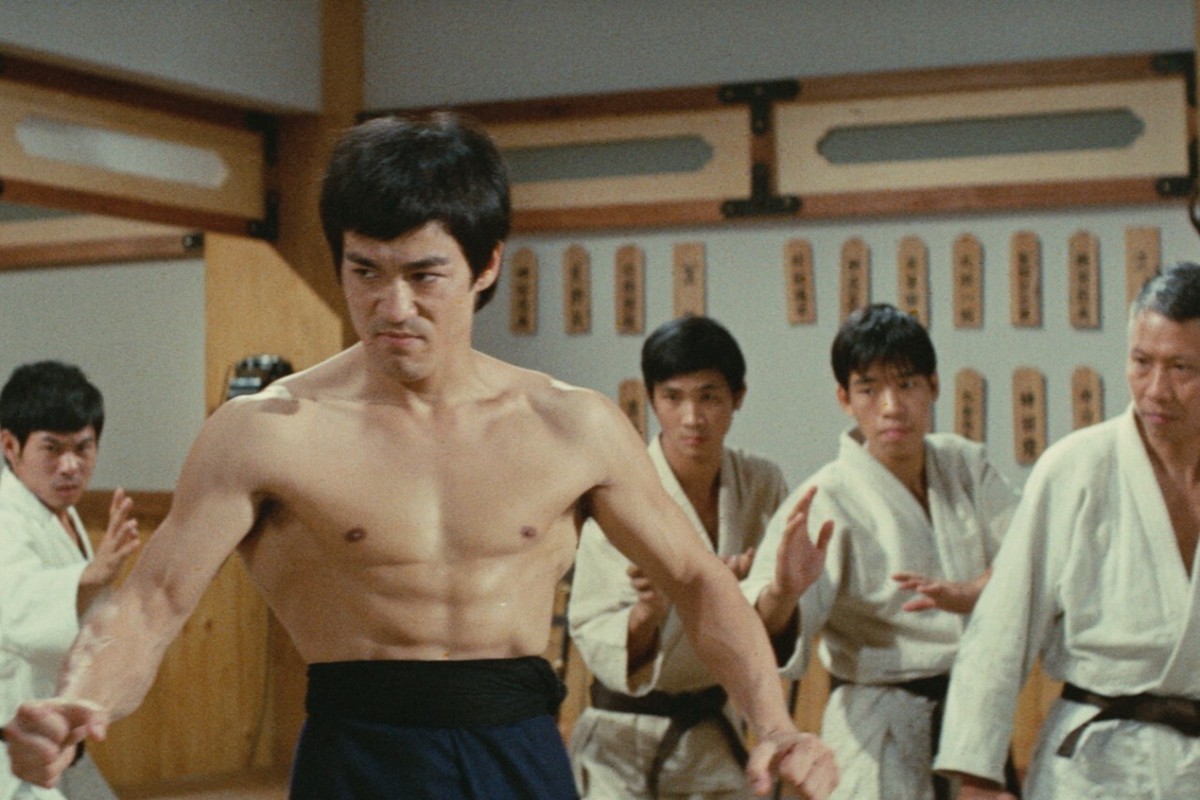

Bruce Lee in a still from Fist of Fury (1972), one of the films featured in a Criterion Collection box set being released this week with introductions that put the martial arts icon’s films in context, and mini-documentaries. Photo: Criterion Collection

Fans of Bruce Lee are in for a bonanza this week when esteemed home-video distribution company Criterion Collection release a seven-disc Blu-ray box set called Bruce Lee: His Greatest Hits.
For release on July 14, the box set, put together by New York-based producer Curtis Tsui for Criterion, collects together all of Lee’s martial arts films, along with a plethora of special features and commentaries, to provide a comprehensive overview of the actor’s life and career.
Lee is still popular enough in the United States to warrant such an extensive release, says Tsui, noting that the martial artist’s philosophy of life fits the mood of the times.
“People are still hungry for Bruce Lee, and he has a cultural relevance,” he says. “Symbolically speaking, Lee has always spoken for a kind of oneness in humanity, about looking beyond our differences and finding what is similar in all of us and finding solidarity there.
“You can look at that in relation to the way he lived his own life as a teacher who went against the strict doctrine of traditional martial arts instructors by opening his school up to everyone. He showed us that everyone could use martial arts to better ourselves and to strengthen ourselves. That has a lot of meaning for people here, and it’s a key element of his continued popularity,” Tsui tells the Post.
“There was an entire philosophy behind Lee’s on-screen presence. He left a small body of work, but behind it was a way of addressing life, of addressing ourselves, that we could implement. That’s why people are still interested in him today,” Tsui says.

The films in the box set include The Big Boss, Fist of Fury , The Way of the Dragon, the shorter US theatrical version and the special edition of Enter the Dragon , and Game of Death. The movies are introduced by Lee biographer Matthew Polly, author of Bruce Lee: A Life, and feature commentaries by Enter the Dragon producer Paul Heller and Bruce Lee expert Mike Leeder.
The Big Boss, Fist of Fury, and Way of the Dragon feature Mandarin Chinese, Cantonese, and English dialogue tracks.
The special features are a combination of already existing licensed content, and new mini-documentaries and introductions produced by Tsui. These include an enthralling examination of the “Bruceploitation” genre – exploitation movies that were made after Lee’s death which feature lookalikes and old footage of the star – and an enlightening documentary about the English-language voice artists who dubbed Lee’s films in Hong Kong for their international release in the 1970s.
Tsui licensed Lee’s first three martial arts films, which had already been restored in 4K, and Game of Death, from Hong Kong company Fortune Star. Acquiring rights can be tricky, and Tsui was thrilled to obtain permission from Warner Brothers to include Enter the Dragon, so that North American fans could have the films together in one collection.
“Enter the Dragon really makes this box set special,” says Tsui. “We are including the shorter 99-minute original US theatrical version of the film, as well as the longer ‘special edition’ release. The theatrical cut has not been available since the days of the laser disc in the 1990s, and fans have been clamouring to see it for some time.” Both versions are presented in new 2K restorations.

//youtu.be/Ckk7f8x4xR8

The films feature lengthy introductions by Polly, which set the films in context and provide some film history and biographical notes. His introduction to Fist of Fury, for instance, features an opinion about how Lee’s style of acting was influenced by watching Japanese samurai films, and he also talks about Huo Yuanjia, the real-life martial arts master whose death provides the premise for the story.
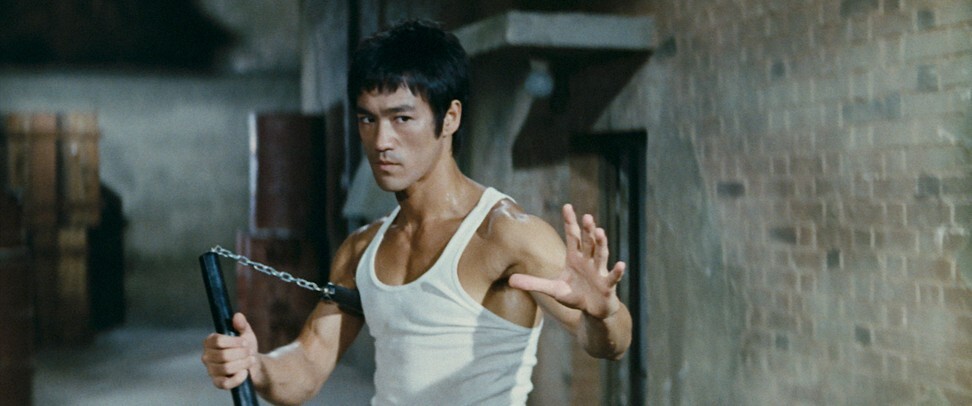

Bruce Lee in a still from The Way of the Dragon (1972). Photo: Criterion Collection

“I wanted to have someone reflect on the films in relation to Lee’s life, rather than vice versa,” says Tsui. “There’s usually a big focus on his life, and the people that he knew and met. I wanted someone who could succinctly focus on the movies and talk about them as films, and what they mean to the genre,” Tsui says. “That’s what Matthew brings to the discs.”
Tsui also made a short film about the dubbing artists who dubbed Lee’s films into English in the 1970s, Michael Kaye and Vaughan Savidge. This provides some fascinating insights. Although the dubbing in martial arts films is usually disparaged, both voice artists say they were committed to the work, and enjoyed it.
Most dubbing in Hong Kong in the early 1970s was done by expatriate radio and television announcers who wanted to earn some extra money. Films were dubbed into English primarily for a release in the Philippines, they say, and the voice artists had to fit a translation of the script to a voice soundtrack in Mandarin and the lip movements of the actors – so a lot of improvisation was necessary. The voice artists even supplied Lee’s trademark whoops and screeches in the dubbed versions, they say.
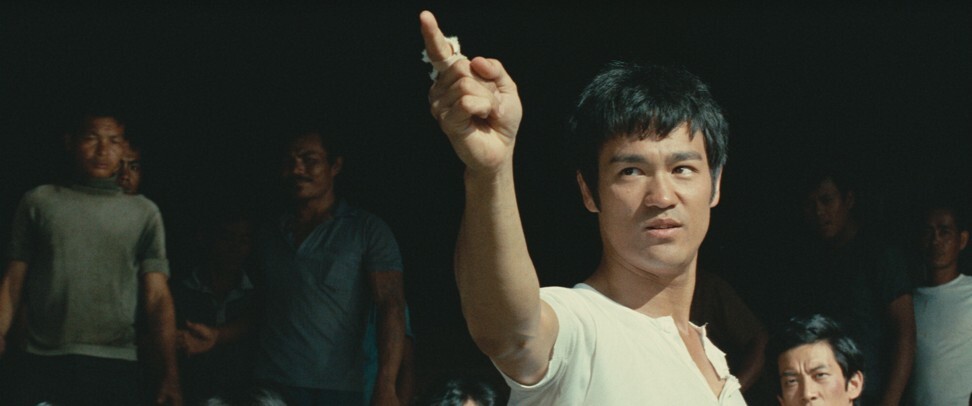

Bruce Lee in a still from The Big Boss (1971). Photo: Criterion Collection

“The experience of watching the films with the dubbed soundtracks can’t be buried, and it’s something that we have to talk about,” says Tsui, who notes that one of Lee’s voice artists now works for Criterion. “They might even have added to our enjoyment of the movies. When you see the way they had to work, you see how impossible a task it was. They were not being slipshod, they were trying hard to make it work.”
Another short film Tsui produced features author and film historian Grady Hendrix, who scripted Netflix’s recent Iron Fists and Kung Fu Kicks documentary, talking about the Bruceploitation genre. Those films were an attempt to fill the gap left by Lee when he died in 1973.
“I don’t think there has been anything like it in the history of cinema,” says Tsui of the genre. “It’s both amazing and horrifying at the same time.”
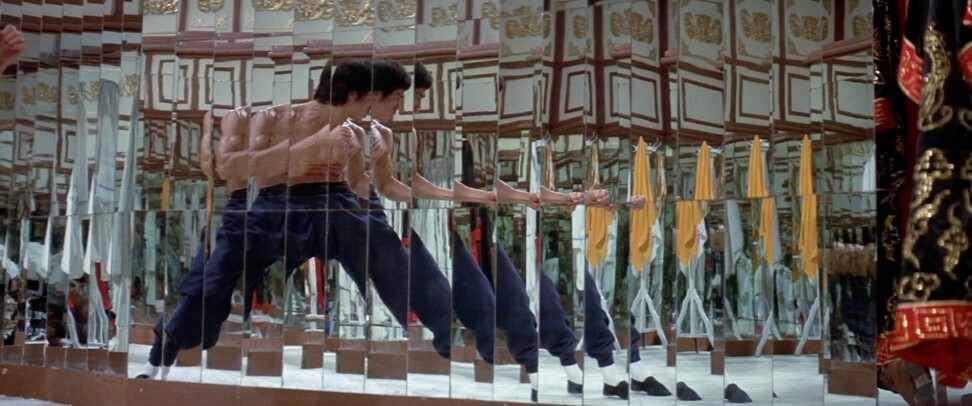

Bruce Lee in a still from Enter the Dragon (1973). Photo: Criterion Collection

THREADS
Bruce-Lee-filmography
Bruce-Lee-A-Life-by-Matt-Polly

only 7?

[URL=“https://entertainment.howstuffworks.com/bruce-lee.htm”]7 Reasons Bruce Lee Continues to Kick Butt

BY DAVE ROOS NOV 2, 2020


A publicity portrait of Bruce Lee from the 1972 film “The Way of the Dragon.” WARNER BROTHERS/GETTY IMAGES
When the kung fu legend Bruce Lee is on screen, it’s hard to take your eyes off of him. Consider Lee’s cocky swagger as he swipes at his nose and beckons his opponent — or sometimes a roomful of opponents — to give it their best shot. You know how this is going to end, with a punishing flurry of kicks and punches, and Lee standing over his vanquished foes flexing his taut torso.

The Bruce Lee made famous in films like 1973’s “Enter the Dragon” is the ultimate badass, an unbeatable kung fu warrior, and for most Westerners that’s the only Bruce Lee they ever knew. Lee died under mysterious circumstances at only 32 years old, just as his Hollywood star was beginning to shine.

But who was the real Bruce Lee? And how did his childhood and upbringing in Hong Kong and America help shape the man who would become an actor and dancer years before he became a kung fu master? For answers, we spoke with Matthew Polly, author of the eye-opening biography, “Bruce Lee: A Life.” Here are seven essential things to know about this iconic star.

  1. Lee Was Born in the U.S.A. and Had Jewish Ancestry
    In America, we think of Bruce Lee as a Chinese actor who made it big in Hollywood, but Bruce was actually born in America and comes from an ethnically diverse family tree.

In his biography, Polly reveals that Lee’s maternal great grandfather was a Dutch-Jewish merchant named Mozes Hartog Bosman, who sailed to Hong Kong in the 1850s with the Dutch East India Company. Bosman eventually became the Dutch ambassador to Hong Kong and had six children with his Chinese concubine. One of those children, Ho Kom-tong, grew fabulously wealthy and had a British mistress in addition to his wife and 13 concubines. Bruce Lee’s mother was the 30th child of Ho, who was half Jewish, and his British girlfriend.

Bruce’s father, on the other hand, was 100-percent Han Chinese and born into poverty. He escaped through his singing voice, becoming a famous Cantonese opera star and actor. He was touring in the United States when Bruce was born in San Francisco in 1940. Bruce’s parents named him Li Jun Fan, and a nurse at the hospital suggested Bruce as his English name. The Lee family moved back to Hong Kong when Bruce was still a baby, and Lee grew up attending English-language private schools.

Throughout his life, Lee bounced back and forth between two worlds, Chinese and American, but never felt like he fit fully into either one. In China, he was a Eurasian with an American passport. In America, he was a Chinese guy with a funny accent. Polly thinks this is key to understanding Lee’s persona.

“He didn’t quite fit in anywhere and I think it’s why he has this wide appeal to various groups,” says Polly. “He has this outsider status — he’s not of any one tribe.”

  1. He Was a Small, Sickly Kid Who Became a Street Fighter
    Bruce’s early years in Hong Kong coincided with a brutal three-year occupation by Imperial Japan. Lee was small to begin with, but was further weakened by strict food rations and a cholera epidemic. He grew into a frail and skinny boy with one leg shorter than the other, an undescended testicle and bad acne.

But Lee was also a whirlwind of energy and a natural-born troublemaker. He constantly picked fights to prove his manhood, and Polly says he earned a reputation in the Hong Kong streets not as a gangster, exactly, but a “middle-class tough guy.”

“Bruce Lee fits into the pattern of a young boy who felt weaker and had a bit of a chip on his shoulder,” says Polly. “He got very interested in physical dominance in order to project himself out in a world in which he felt threatened.”

When Lee was a teenager, he got trounced by another kid who was studying Wing Chun, a school of kung fu or Chinese-style martial arts. Unwilling to accept defeat, Lee decided to up his game and began studying kung fu at the age of 15 or 16.

  1. He Was an Actor (and Dancer) First
    Lee’s opera singer father also acted in Cantonese movies and musicals, and Bruce grew up on movie sets. He first appeared on film as an infant stand-in at just 3 months old, but his first starring role as a child actor was in a popular 1950 Hong Kong movie called “The Kid” filmed when Lee was 10. Polly says that he even debuted some of his classic moves in “The Kid,” like swiping at his nose before a fight and ripping open his shirt.

//youtu.be/y7rswoB0jJU

“The Kid” was a huge success, and Bruce was signed on to do sequels that would have made him the Cantonese MaCaulay Culkin, but his father stepped in. The elder Lee wanted his kids to be doctors and lawyers, not actors, and Bruce was constantly getting in trouble at school anyway. His father squashed his chance at child stardom, but Bruce acted on and off in small Hong Kong movies throughout the 1950s.

“By the time Bruce was 18, he had appeared in 20 Cantonese movies and none of them were kung fu flicks,” says Polly. “Watching those 20 movies, you see that Bruce was an actor first who later becomes a martial artist.”

Lee was also a talented dancer, once winning a Hong Kong “cha-cha” contest.

continued next post

continued from previous post

  1. Lee’s First Hollywood Break Was as Kung Fu Instructor to the Stars
    Bruce’s parents sent him off to America for college, where the spoiled kid from Hong Kong got his first taste of supporting himself. In Seattle, between classes at the University of Washington, Lee worked as a busboy in a Chinese restaurant and slept there in a glorified closet. Word of his martial arts skills got around and soon Bruce was teaching some kung fu classes on the side.

It wasn’t long before Bruce’s side gig overshadowed his studies. Lee dropped out of school and hatched a plan to open a franchise of martial arts schools along the West Coast. “It was going to be the McDonald’s of kung fu,” jokes Polly. To drum up business, Lee traveled to Los Angeles to give a demonstration at a karate tournament where he caught the attention of a TV producer. This led to Bruce’s first and only role on American television as the fast-fisted sidekick Kato on the forgettable 1966 series “The Green Hornet.”

The show was canceled after just one season, but Bruce hung around in Hollywood hoping for his next big break. He scored a few bit parts over the next four years, but Polly says Bruce mostly made his living as a kung fu instructor to the Hollywood elite.

“Steve McQueen was one of his students, so was James Coburn and Roman Polanski,” says Polly. “Bruce was charging the equivalent of $1,000 an hour.”

  1. Back in Hong Kong, a Kung Fu Legend Was Born
    Even with his high-profile clients, Bruce got himself into some financial trouble and needed some fast cash to dig out of debt. He decided to fly back to Hong Kong for a few months, take some roles in “cheapo” kung fu movies and earn enough money to come back to Los Angeles.

The first of these Hong Kong movies was called “The Big Boss,” and Lee wasn’t even supposed to be the lead. It was already in production when he arrived, Polly says, but Lee was “so charismatic they killed off the lead actor and made him the star.”


Bruce Lee on the set of 1971’s “The Big Boss,” written and directed by Wei Lo.
GOLDEN HARVEST COMPANY/SUNSET BOULEVARD/CORBIS VIA GETTY IMAGES
The movie was the first to feature his unique style of fight choreography. At the time, fight scenes in most kung fu movies looked like dance routines, but Bruce’s fight choreography, informed by years of martial arts mastery, packed a wallop.

“What he was doing was a kind of heightened realism,” says Polly. “When he hit somebody, it felt like a real hit, like there’s real violence occurring. What Bruce created is still the dominant form of fight choreography in Hollywood movies to this day.”

“The Big Boss” was a breakout hit and propelled Lee into a new stratosphere of fame, at least in Asia.

“'The movie blew the box office record out of the water and suddenly Bruce was like the Beatles in Hong Kong and all of Southeast Asia,” says Polly.

Bruce followed up with two more wildly popular kung fu movies filmed in Hong Kong, “Fists of Fury” and “The Way of the Dragon,” that caught the attention of American producers. It was time to parlay Bruce’s Asian stardom into the Hollywood career of his dreams.

  1. His Death Launched a Thousand Conspiracy Theories
    1973’s “Enter the Dragon” was supposed to be the film that made Bruce Lee a household name. And it was, but Lee didn’t live to see it.


Bruce Lee practices martial arts with a group of students in a scene from the 1973 film “Enter The Dragon.”
WARNER BROTHERS/GETTY IMAGES
A month before the film premiered in the United States, Lee was at his mistress’ apartment in Hong Kong when he complained of a headache, took a prescription pain reliever and lay down for a nap. He never woke up. He was only 32 years old, leaving his young wife Linda to care for their two children, Brandon and Shannon.

The odd circumstances and mysterious nature of his death became fodder for conspiracy theories — that he was killed by ninjas or given the “touch of death” by a rival kung fu master — but the official cause of death was listed as a brain edema caused by an allergic reaction to the pain reliever, which he had been taking for months for a back injury.

Polly thinks that a better explanation is heat stroke. Ten days before his death, Lee collapsed while dubbing a film in an un-air-conditioned room in Hong Kong’s sweltering heat. The day he died was also exceptionally hot, and Lee spent part of the afternoon practicing moves for an upcoming role. His body may simply have given out.

“Enter the Dragon” became a touchstone of popular culture, introducing Western audiences to the archetype of the kung fu hero, and earning Bruce the posthumous fame that had eluded him in life.

“Before ‘Enter the Dragon,’ Bruce was basically a no-name actor from an obscure TV show,” says Polly, “and then the movie came out and he became an international sensation a month after his death.”

  1. He’s the Reason Martial Arts Are So Popular in the West
    “Bruce Lee is perhaps the only iconic figure from the 20th century who died before he became famous,” says Polly, “and that’s why he became a mythological figure.”

Lee didn’t live long enough to give endless press interviews, to attend glitzy award shows or to get drunk and wreck his sports car on Sunset Boulevard. One of the advantages of dying young, says Polly, is that people can project their own image onto you. This is how Bruce Lee becomes the legendary kung fu hero and the ultimate warrior.

And on a cultural level, Polly says that it’s hard to overestimate the influence that Bruce Lee’s films had on popularizing the martial arts in the West.

“Before ‘Enter the Dragon,’ there were about 10,000 people who studied the martial arts in America,” says Polly, himself an enthusiast, “and now it’s like 40 million. He introduced more westerners to Asian culture than any other figure in modern history.”

Surprised this article didn’t reference his 80th.

Holy stuff

‘Holy stuff’ - Bruce Lee’s letters document shipments and orders of cocaine, acid, other drugs
Recently revealed letters from Bruce Lee allegedly detail international drug shipments to Hong Kong.

By Anton Tabuena@antontabuena Jul 6, 2021, 12:59pm EDT

Bruce Lee on the poster of Fist of Fury Photo by Movie Poster Image Art/Getty Images

BruceBruce Lee’s marijuana use has been recently well documented, mostly thanks to Matthew Polly’s 2018 biography on the martial arts icon that had him interview at least a hundred of his friends, family, and colleagues. Lee was said to have enjoyed smoking weed and ingesting hashish because “it raises the consciousness level,” but did the actor have a more serious drug habit?

Enter Robert Baker, who started out as a volunteer for the iconic “one inch punch” demonstration in 1964, and would eventually become Lee’s close friend and confidant.

Baker would be known for his role in Lee’s 1972 film Fists of Fury, but according to Polly, he was also “long rumored to be Bruce’s dealer.” The author of Bruce Lee: A Life stated that it was “assumed by many” that Bob, as he was called, simply supplied the actor with marijuana.

Recently released private letters between the two seem to suggest that it was much more than that.

Heritage Auctions has since authenticated and put up various memorabilia from Bob Baker’s Bruce Lee collection on sale, which includes over 50 letters that Bruce and his wife, Linda sent him through the years. Most of them were handwritten, and many used Lee’s personal Jeet Kune Do letterhead stationeries.

These personal correspondence discussed various topics such as their developing friendship, plans for their film careers, and Lee’s back injuries. Perhaps more striking, it also contains numerous references to drugs, including marijuana as well as cocaine.

The handwritten letters allegedly document different instances of Lee trying Baker’s “holy stuff,” recovering from their get togethers, and having nights out with “little recollection of what had happened.”

There was also a letter with a short-lived attempt at quitting.

“I told Linda to call you to forget about the ‘stuff’ because I really don’t need them in my training,” a letter from 1970 read. “I feel that I have ‘gained’ in trying them, but excessive indulgence of them just isn’t in my road in Jeet Kune Do.”

By 1972, as Lee left the US and moved to Hong Kong, the letters included requests to Baker for “advice on the possibility of shipping some coke to me.”

Hong Kong had very strict drug laws, but he supposedly proposed a plan on shipping drugs to an address under the name “Wu Ngan,” and hiding the contraband inside books and clothes. Wu Ngan was one of Lee’s friends, who had a role in his 1972 movie, The Way of the Dragon.

In one letter authenticated by Heritage Auctions to be from Lee, the writer ordered “COKE (in large amount),” “ACID (in fair amount)” and “HASH OR GRASS,” before also inquiring about procuring “psilocybin” — commonly known as magic mushrooms — after supposedly reading about it in a book.

In the same note, the writer also asked for “more goodies ready for shipping” including a “very classy derringer” firearm and a “cowboy holster.”

Later in the year, a supposedly “stoned as hell” Lee wrote a less legible letter to Baker about needing “some coke” to “help in the formation” of a character he was working on.

In various other letters, there were repeated orders of “C,” “coke” and “Coca-Cola.” There were also references to other substances, which he called the “holy stuff,” “super duper,” “M pills”, “H oil” and others.


One of the dozens of letters in auction, with Bruce Lee asking Bob Baker to “air-mail me some coca-cola”
Other letters signed by Linda appear to discuss follow ups on drug shipments and money orders. It was also stated that she bought a scale and would be inspecting the cocaine that would be sent.

“Enclosed you will find the $500 for the amount of C you quote that Bruce can get. I’ll measure it but the quality (that goes without saying) plus the quantity Bruce himself will have to judge,” the letter from 1973 read. “I hope you will send him the mostest along with the one oz of H. oil and/or whatever.”

“The goodies list can be (1) COKE (in large amount) (2) ACID (in fair amount) (3) HASH OR GRASS”
Two letters also appear to have Linda thanking Bob’s wife, Bev for “past favors” and for “taking the risk and sending the last shipment to Bruce.”

In another note following up a new shipment of “C,” Baker was assured that Bruce had things under control.

“Don’t worry about Bruce using the C — he is not going overboard,” a letter signed by Linda in 1973 read.

Apart from details on drugs, one correspondence also revealed what Polly calls “a previously unknown mistress named Teresa,” as Lee seemingly tried to plan a secret meet up without their family knowing.


Hong Kong, 1971: Bruce Lee and Maria Yi in a scene from Fists of Fury Photo by Michael Ochs Archive/Getty Images
They discussed various topics through the years, but below are a few of the more notable snippets from the letters addressed to Baker.

Bruce’s only typewritten letter to Baker from this collection. Sent from Los Angeles, December 15, 1969:

A personal letter to thank you for bringing me the stuffs, especially the pipe and the painting.

February 2, 1970:

It was a brief but definitely enjoyable get together. Thank you again for that “holy stuff”

March 6, 1970:

… By the way, wouldn’t mind going in with you for some of those “holy stuff” before leaving for H.K.

March 11, 1970:

I’m planning to leave for H.K. on April 1st, and definitely would like to store up on some “Holy stuff” to bring over there. See if you can come up with something good.

…

The paper that I had “taste” kind of sweet and that definitely adds to it. So see if you can get some “good tasting” paper.

March 17, 1970:

Though I have little recollection of what had happened - - - - - - - - - - anyway I know that I enjoyed your stay and am looking forward for another visit from you. Thank you for that stuffs and do take care and have fun.

Love, Peace, Brotherhood,

Bruce

P.S. I can’t think of the six items, but I think you have a better memory - - - - -

Ordering and planning on sharing “M” pills with friend and actor James Coburn, who would eventually win an Academy Award in 1997. From April 22, 1970:

A quick letter to thank you personally for the “wonderful gifts.” I enjoyed them very much. By the way, when and if you should come down again, do get more 1-inch boards plus the same “M” pills. They do give me tremendous experience. Coburn likes some of them. I’ll give some to him when I get them.

Cancelling an order and trying to quit, June 17, 1970:

I told Linda to call you to forget about the “stuff” because I really don’t need them in my training. I feel that I have “gained” in trying them, but excessive indulgence of them just isn’t in my road in Jeet Kune Do.

June 30, 1970:

“Again thank you for your generous supply of paper that would seem to last a life time!”

October 8, 1970:

…Anyway, when you go back to work, I need more paper! Plus I can’t remember what - - - - - - anyway, you will remember.

December 16, 1970:

It takes me a day to get back to myself to write this letter to “thank you” once more for everything, particularly “those super duper!” We had some wonderful moments.

February 25, 1971:

“Thank you” Bob

Organizing a secret meet up, June 22, 1971:

I plan to come up — depending when I finished shooting — from July 2 (friday nite) to probably Tues or Wed (7). One thought here: I “might” come up (fly) with Teresa and she probably stays Friday nite (July 2), Sat nite (July 3) and leave Sunday (July 4) afternoon or so. The question is, is it convenient for Beth Bev and the kids to spend two Friday nite, Sat. and Sunday morning at her mother or somewhere and make up some convenient jazz for I don’t want Bev to know about this. Of course it has to be convenient or else forget it. My mother and everybody is at my house now. Let me know, and remember if only it is convenient and flow and everything is cool.

From Thailand, while filming “The Big Boss,” August 3, 1971:

Thailand is full of G but I have very little time for it though. I have to say it is “extremely” good.

From Thailand, August 23, 1971:

…By the way the “G” in Bangkok is holy indeed. I understand Hong Kong is super lousy.

That same later also included a passage stating Baker would be “coming” to Hong Kong and has been cast to star in his next film, Fist of Fury. The movie was shot in Hong Kong late in 1971. Prior to this, Lee dealt with serious back injuries, and previous letters showed that Baker also gave him a loan when he was struggling financially at the time.
continued next post

continued from previous post

//youtu.be/4_AJTgxBqpg

After Lee moved to Hong Kong, February 28, 1972:

…Still am in the process of adapting to life here. By the way, what is the advice on the possibility of shipping some coke to me? Drop me a line on that.

Planning the orders and shipment of various drugs, along with a firearm, from late 1972:

(A) Regarding the goods you can send them in a package addressed to Mr. Wu Ngan c/o Golden Harvest Studio, 1412 Tung Ying Building 100 Nathan Rd.

The goodies list can be (1) COKE (in large amount) (2) ACID (in fair amount) (3) HASH OR GRASS (the former can be more while the latter, even cleaned, has to be carefully packed. As to what you put the above with you know better inside books? Clothings?

(B) Also, when I come I would like to have more goodies ready for shipping including finding me a really classy derringer from shops, collection, or what not. Also, find me a cowboy holster for my 45 fast draw all these when I come but not for your sending me right away.

So send (A) request right away … they might open for brief inspection or they might not but play it safe. As for the total cost, let me know and Ill send you the money order by air mail right away.

…

P.S. Do you have access to any PSILOCYBIN. If so send a little together with info on how to take it. Read about it in a book.

From Linda Lee, October 5, 1972:

I just want to check with you about the second shipment. We thought you probably would have sent it already, but it has not arrived. Hope nothing has happened to it in the mail. Please confirm if you have sent it or not. In regards to the money, Ill send as soon as I can get to the bank to buy a money order.

November 22, 1972:

…One thing you have to do is to air-mail me some fine C if you can swing it.

December 11, 1972:

Air-mail me some Coca-Cola do it the way you and I sincerely feel in other word, whatever. Be cool about the package. Same procedure, Wu Ngan quality! man

Date illegible, late 1972:

Cooly send some Coke Hows everything? Stoned as hell, but am working on the upcoming character. Some coke would help in the formation and [illegible] I want to create.

Another order after Bakers friend supposedly got busted in 1973:

Deep regret for your friend being busted

…

RUSH the sparkle quality LOTS!

…

By now you should have received my money order, though I feel that it might be a slight delay because of your friends situation. I hope you will send me the quality stuff you said you will send (it has never been from the street). In the mean time Im getting a quality spoon and [illegible] scale. Do send it air-mail like yesterday (ha! ha!)

March 21, 1973:

Just want you to know that Linda had yesterday send the ADDITIONAL money you have requested. I had a hard day, a REAL HARD day. You take good care of yourself and your family. By the way, Ill be waiting for the 1 oz of H. oil I have ordered from you send it as soon as you can.

From Linda Lee, March 29, 1973:

Dear Bob and Bev, For past favors and for being a good friend. Hope this small amount helps a little.

From Linda Lee, March 30, 1973:

Received your four letters. Bruce is in the midst of shooting working very hard.

Well, forget about your making some money out of the last orders. Ive bought a gram measurer and enclosed you will find the $500 for the amount of C you quote that Bruce can get. Ill measure it but the quality (that goes without saying) plus the quantity Bruce himself will have to judge. I hope you will send him the mostest along with the one oz of H. oil and/or whatever.

From Linda Lee, April 16, 1973:

Dear Bob, Its been quite a while since youve written. I assume you have received the money order for $500 and I am wondering if you have sent the C yet. Please let me know right away because if you did not receive the money order, then I will have to talk to the bank to put a tracer on it.

How are you all doing? We hope things are straightening out for you. Say thanks to Bev for taking the risk and sending the last shipment to Bruce. Dont worry about Bruce using the C he is not going overboard.

…

Write very soon and let us know about the $500 money order and/or when the C is coming.

[QUOTE]Dont worry about Bruce using the C he is not going overboard

On May 10, 1973, less than a month after that letter signed by Linda, Bruce Lee collapsed. He suffered seizures and headaches, and was diagnosed with cerebral edema. While the reports and circumstances leading to his death were conflicting, more headaches and brain swelling happened again two months later. Lee passed away on July 20, 1973, at just 32-years-old.

In the years following his death, letters show that Linda still tried to keep in touch with Bev and Bob Baker. The latest from this collection being sold is from January 16, 1975.

After living with Bruce for so long, I certainly have the strength and determination to keep going, as well as the ability to take life as it comes, Linda wrote. Like Bruce used to say turn those stumbling blocks into stepping stones!

Baker reportedly died by heart attack in 1993, at age 52.[/QUOTE]

threads
Bruce-Lee-A-Life-by-Matt-Polly
Bruce-Lee-Memorablia-auctions
bruce-lee-and-marijuana!