Asian Games

Nice post, Xiao3 Meng4

Fencing uses electric scoring and there’s been instances of tampering and cheating. I was wondering when electric TKD would elicit similar controversy.

In Kung-fu, we believe
English.news.cn 2010-11-18 16:19:35

GUANGZHOU, Nov. 18 (Xinhua) – Although familiar sports ranging from soccer to swimming dominate the Asian Games, Wushu has attracted a solid fan base of both the faithful and the curious.

Uzbekistan’s blonde Karmazina Olga ended her first Asian Games by finishing the last at the women’s taiji boxing and Taijijian all-around. The 18-year-old iatrology freshman suffered a major setback since she started practice Wushu at five, as her score is nearly 4 points less than that of the gold medal winner.

“See, I’m the only one who scored less than 16 points,” said the four-time national championship winner with some embarrassment.

However, Olga said she wouldn’t give up.

“It’s my first time to come to China and I saw so many good players. They show me what’s the best of the best, I learned a lot from them,” she said. “Next time, I believe, my name won’t be the last one.”

Wushu, literally meaning "martial art"in Chinese, is more wildly known as Kung-fu. Founded more than 3,000 years ago, it has been developed into routines using hands, swords, spears and staffs involving stances, kicks, punches, balances, jumps and sweeps over centuries.

Thanks to Kung-fu movie stars Bruce Lee, Jackie Chan and Jet Li, Wushu has got known by more people as cool, healthy graceful art similar to gymnastic floor exercises.

"Jet Li is my idol. Actually it’s because of him I started to practice Wushu, " said Japan’s Ichikizahi Daisuke in Chinese. He was silver medal winner in men’s changquan, or long fist boxing at the Guangzhou Asiad.

To make his Kung-fu dream true, Ichikizahi traveled between his hometown Osaka and Tokyo, where the coach’s Wushu club is, for years. He used to do several part-time jobs to make the ends meet, because the Japanese Wusu organizations only cover the costs for important events like the Asian Games.

The 23-year-old named Japanese chess and soccer as his hobbies, but those sports are what he only does when he is off the Wushu training room.

“The more I practice, I’m more clear of that I can’t be another Jet Li,” said Ichikizahi.

“Wushu is such a profound topic. It’s far more than fighting skills. It’s also about philosophy of balance between man and nature,” he said.

“If possible, I will practice Wushu all my life, because I have so much to learn.”

TICKET TO OLYMPICS?

For many spectators, the inclusion of the non-Olympic regional sports, such as Wushu, Kabbadi, cricket, is what gives the Asian Games its charm. For the athletes, however, competing at the Olympics is a common dream.

“A Olympic gold medal is my one last dream as a sportsman,” said Wushu player Yuan Xiaochao, who won the Asian Games’ first gold.

The International Wushu Federation is one of the IOC’s 31 recognized federations along with cricket, golf, karate, rugby and squash, meaning a spot on the programme is not impossible.

With a growing popularity cross the world, the Chinese have been working hard to make Wushu an item on the Olympic menu. They claim a victory for the first time to hold an unofficial competition on the sidelines of the 2008 Beijing Olympic Games.

The Asian Games are seen as a good stepping stone with more than 140 athletes competing for 15 gold medals.

“It’s a good opportunity to show the world that Wushu is such an beautiful, but at the same time, very competitive sport,” said Gao Xiaojun, president of the Chinese Wushu Association (CWA).

However, patience are required. Sports for the 2012 Olympics have been decided and Wushu is not shortlisted for 2016.

“There is no need of rush to make the Wushu an Olympic competition, because I believe, what comes first is the cultural nature of the sports. It’s a symbol of China. If Wushu exists as an competitive competition, it loses its essence,” said Sardor Tashkhatjaev, secretary general of the Wushu Federation in Uzbekistan

The founders obviously don’t think so. On the contrary, they believe an Olympics ID of Wushu will means a passport with free visas for Chinese culture.

“Olympics is such an important stage for the cultural communication, more powerful than Asian Games in terms of influence,” said Gao. “It won’t kill, but promote the Chinese culture through wushu”

The Chinese have been exercising each muscle to make Wushu into the Olympics menu by widening its presence worldwide and helping improving the skills of foreign practitioners.

“We know it will be hard. but we are trying. We have sent our coaches and provided free training abroad, and we have invited foreign athletes to come to train in China with Chinese athletes as well,” said Gao.

However, revolutions need to make on both management and the Wushu formats.

Sun Jianming, coach of the Japanese Wushu team, suggested that CWA should simplify the formats of the sports.

“Chinese wushu has such a rich collection of routines, but most of them are too hard for beginners. They may appreciate it, but they won’t practice,” said Sun, a teammate of the famous Kung-fu star Jet Li when he was training at the Wushu team of Beijing.

“Why shouldn’t we have something easier and more suitable for common people?” he asked.

Sun has been running his own Wushu club in Tokyo for more than 20 years, with more than 200 members following him to learn Taijiquan, or shadow boxing. In his eyes, both the boxing formats, featuring 24 moves, and the designed music are too “old”.

“They were developed in 1950s, and never changed,” he said.

Sun found his own way by reducing the standard set of 24 moves to eight.

“More seniors and youngsters thus join in, and they get to know Wushu is not only for the Jet Lees – it’s something every one can do,” said the 51-year-old.

Sardor Tashkhatjaev, however, looks forward to more international cooperations.

“I hope they can airdrop some Chinese coaches for us,” said the 38-year-old, a former national championship of Chinese Sanda (free sparring).

“I know the Japanese, the Iranians and many other athletes are coached by Chinese, and I hope the Chinese may consider spread the seeds in Uzbekistan too.”

In the wake

Here’s some follow up on the TKD controversy Xiao3 Meng4 broke for us here.

Darlene Storm
Security Is Sexy
November 21, 2010 - 4:36 P.M.
Hackers attack with digital kung-fu, demand taekwondo gold medal

After the disqualification of a female athlete who was headed toward a gold medal and could literally kick the snot out of most of us in real life, hackers attacked and it turned into an online fight of digital kung-fu.

At the Asian Games held in China, Yang Shu-Chun was winning the taekwondo semi-final by 9-0. Her victory seemed a sure thing. But a referee suddenly ended the game, accused Yang of misplacing electronic sensors in her foot guards and removed her from the ring.

Some online chatter claims it is a conspiracy that disqualified Yang before she reached the gold medal race. China’s contestant will now supposedly face a much weaker opponent in the gold-medal round.

Here’s a little background about the socks (sockgate) in any official taekwondo game, according to WTF rules. All checks are made before the game begins and Yang’s equipment was examined and passed prior to the fight. This included checking the electronic sensors in her foot guards. These sensors were introduced to make judging fairer by detecting when a taekwondo competitor scores a point by landing a kick on their opponent. Kicking Yang from the competition and “taking” her medal over these electronic socks turned into a major uproar.

TechBang reported that the Asian Taekwondo Union (ATU) further ticked off the Taiwanese by publishing an article on its official website that criticized the Taiwan team for its “shocking act of deception.”

Hackers, allegedly from Taiwan, attacked the ATU website to display a middle finger flipped upward between the national flags of South Korea and the People’s Republic of China. The defaced website also had messages that said, “we all Taiwanese,” “shame on you,” and demanded that the ATU “give our gold medal back.”

TechBang posted a screenshot of the hacked ATU website before the message was taken down. The hacked site also showed a video that allegedly uncovered the “truth” behind the controversy and conspiracy that disqualified Yang. The video showed Yang removing extra sensors on her foot guards and giving them to her coach before the competition.

According to Taipei Times, ATU said their site went down “because of excessive traffic” and “remains paralyzed today for unknown reasons.” ATU’s “shocking act of deception” website statement was labeled as “inappropriate” by a South Korea-based World Taekwondo Federation (WTF) official.

Hanopolis reported Yang’s statement, “I brought two pairs of WTF-certified socks with me. The Chinese examiner asked me to scrap the first pair, but the second pair passed the examination.” Angry Taiwanese fans and politicians called for a boycott of Korean products. Protest rallies, Korean flag burnings, and a Facebook campaign were launched for the disqualified athlete.

Taiwan’s government demanded an apology for ATU’s statement and claimed the disqualification was unjust. ATU taekwondo chiefs apologized for calling “Taiwan’s Yang Shu-chun a cheat” after she was disqualified at the Asian Games for wearing “illegal super socks,” a Straits Time report said.

China said the disqualification was “regretful” but WTF will not hold a full inquiry until after Asian games are over.

http://www.facebook.com/home.php?#!/video/video.php?v=143140675734833&comments

tai chi play from taiwan in asia games 2010.

:slight_smile:

Interesting story on Zou

It made Reuters

INTERVIEW-Games-‘Mummy’s boy’ Zou back in action for Asian Games
By Sabrina Mao and Ian Ransom
GUANGZHOU, China | Sun Nov 21, 2010 10:13am EST

GUANGZHOU, China Nov 21 (Reuters) - Olympic champion Zou Shiming’s rise to the pinnacle of amateur boxing sprang from martial arts – and the need to man up against bullying from the boys and girls who used to terrorise him.

“I was weak when I was young, always bullied by others, even girls,” Zou told Reuters in an interview at the athletes’ village at the Guangzhou Asian Games.

“My mother spoiled me and raised me like a girl, including tying my hair into pigtails.”

The 29-year-old Zou, like Chinese boxing in general, now has much less of an identity crisis.

Zou put Chinese boxing on the map at the 2004 Athens Olympics, his awkward but effective style upsetting a string of opponents and securing bronze, China’s first medal in the sport.

He then led his team mates to a shock four-medal haul at the 2008 Beijing Games, with his victory over Mongolian opponent Badar-Uugan Enkhbat in their light-flyweight final bringing up the hosts’ 50th gold.

Zou will now lead China’s 13-strong boxing team at the Asian Games, and like most other sports in Guangzhou, they are expected to take the spoils on home territory.

His achievements are a far cry from the boy who was too scared to tell his mother about his love of the ring.

“She did not understand me at the beginning of my career,” said pint-sized and soft-spoken Zou.

“I was forbidden from practising so I trained secretly. She later supported me when I became successful.”

MARTIAL ART

Zou’s parents enrolled him in a school where he practised the gymnastic martial art of Wushu, but he began training on the sly with the school’s boxing team.

“I realised boxing was my calling, but I was rewarded from Wushu in that I was able to combine its techniques with boxing to create a Chinese boxing style, not like the European and American styles that emphasise strength and power,” Zou said.

Zou has little fear of Western opponents and says his toughest bouts inevitably come from Asia.

“It won’t be easy to win at this Asian Games … Asian boxers are all familiar with the skills and techniques of each other. They have studied my technique and my style a lot.”

Unlike many Chinese Olympic champions, Zou’s boxing has not brought endorsement riches or major celebrity. He still makes most of his money from the state, like the majority of athletes yoked to the country’s Soviet-style sports system.

Despite the lure of big-money bouts, Zou has put off launching a professional career, at least until after the 2012 London Olympics where he intends to defend his title.

“The good thing is London will have less pressure for me, not like at the 2008 home Games where I felt great pressure around me,” he said.

Few of his now grown-up childhood tormentors would want to step in the ring with Zou, who makes up for a short reach with nimble footwork and lightning-quick combinations. Zou has one opponent who wins all the time, however.

“In my family, my fiancee is the most powerful,” he said.

The next Michelle Yeoh?

Saturday November 20, 2010
Chai hopes for golden career in movies
By MARTIN CARVALHO

MALACCA: Having clinched many gold medals in the sports arena, wushu exponent Chai Fong Ying hopes to also fight her way to a gold in another competitive field – the silver screen.

When she decides to call it a day from participating in wushu tournaments, the petite 24-year-old Asian Games gold medallist will be ready to accept offers to act in action movies, just like her idol Datuk Michelle Yeoh.

Earlier, during her meeting with Chief Minister Datuk Seri Mohd Ali Rustam at his office, Chai drew laughter from him when she requested a house as a reward for her achievements.

She is mindful the career of an international wushu exponent lasts only a few years.


Ready to leap into the movie world: Malaysia’s Chai Fong Ying in action women’s Taijiquan finals at the 16th Asian Games in Guangzhou - GLENN GUAN/The Star

“I will appreciate it very much if the state can reward me with a house,” she said.

An amused Mohd Ali quipped that the request was surely one prompted by her 45-year-old mother Teh Mary who was also present.

Chai, who is pursuing an accountancy degree with Universiti Putra Malaysia, said she hoped to obtain her degree in due time as her studies had to take a backseat for wushu practice and competitions.

Chai won Malaysia’s first gold medal in the women’s combined taijijian and taijiquan event at the 16th Asian Games in Guangzhou on Monday, defending the gold she won in the Doha Asian Games four years ago.

In 2007, she became the first Malaysian woman exponent to win a gold in the taijijian in the 24th SEA Games in Thailand.

She was also the only Malaysian gold medallist in the Wushu World Championships in Beijing the same year.

As for her immediate goals, Chai said she was aiming to “wushu” her way to more golds for the country in the World Wushu Championship in Turkey and Asean Games.

Both the events are scheduled for next year.

Mohd Ali said the state would consider Chai’s request for a home via the newly formed Malacca Sports Institute. A decision is expected to be announced early next year.

“We will make clear guidelines on specific rewards and incentives for outstanding athletes, including the considering rewarding Fong Ying with a new house,” he said.

He earlier presented Chai with a RM3,000 cheque and assured her employment with the state upon her graduation.

A movie career and a house? Wushu champions command more respect elsewhere for sure.

She’s a cutie :smiley:

Some one should tell Malaysia about the state of wushu in international competition

Saturday November 27, 2010
MCA pledge RM200,000 to wushu for Asiad success
By SHAUN HO

KUALA LUMPUR: MCA president Datuk Seri Dr Chua Soi Lek pledged RM200,000 to the Wushu Federation of Malaysia as a recogntion of their achievements in the Guangzhou Asian Games.

Chua said the federation were very motivated and organised, and that they should be provided with any resources they needed.

“My deputy has said there will be no problem in seeking sponsors to raise that amount,” he said during a dinner he hosted to honour the national wushu team yesterday.

Chua also promised a RM30,000 cash prize to wushu gold medallist Chai Fong Ying and RM10,000 to bronze medallist Tai Cheau Xuen. Chua’s deputy, Datuk Seri Liow Tiong Lai, said MCA was glad to assist the federation as wushu was not a heavily sponsored sport.


Well done: MCA president Datuk Seri Dr Chua Soi Lek (centre) congratulating wushu’s Asian Games gold and bronze medallists, Chai Fong Ying (second from left) and Tai Cheau Xuen, at an appreciation dinner yesterday. Looking on are MCA deputy president Datuk Seri Liow Tiong Lai (right) and Wushu Federation of Malaysia president Datuk Seri Kee Yong Wee.

“We are pleased with their achievements and we are here to help,” said Liow.

Also present at the dinner were Wushu Federation of Malaysia president Datuk Seri Kee Yong Wee and other MCA leaders.

Kee said the federation hoped wushu could be promoted to all.

“Although Malaysia did not win any medals in the last Olympic Games, our first medal in the next Games may come from wushu,” he said.

I’ve heard word that there are more renovations coming to wushu rules, especially for how team competition is scored. Sounds like it will reverse the pairings (quan/dao & jian/qiang) somehow. We’ll report more when we get some hard facts.

Interesting fallout

Thursday, December 02, 2010
Iranian Cleric: Female Athletes Should Not Compete Abroad

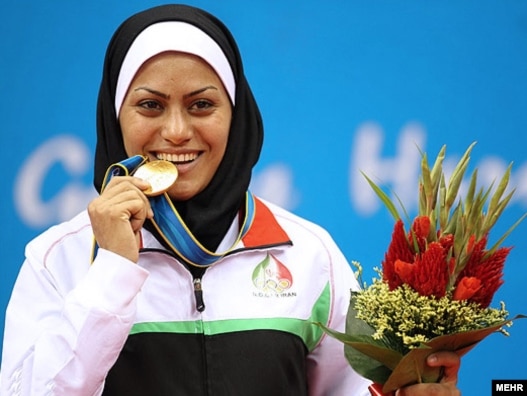
Khadijeh Azadpour, who won the gold medal in Women’s Wushu at the 16th Asian Games.

Khadijeh Azadpour, who won the gold medal in Women’s Wushu at the 16th Asian Games.
December 02, 2010
An eminent Iranian cleric has said female athletes should not compete in sporting events abroad – days after the Islamic Republic sent its biggest female contingent in recent years to the Asian Games, RFE/RL’s Radio Farda reports.

Grand Ayatollah Safi Golpayegani said on November 30 that sending Iranian female athletes to international events is a “disgrace” and should not be allowed.

His comments come after Iran sent 88 sportswomen to China to take part in last month’s 2010 Asian Games – the biggest contingent since the 1979 Revolution. More than a dozen won medals, including Khadijeh Azadpour, who won a gold medal in the women’s Wushu competition.

Golpayegani, 91, a Shi’ite source of emulation in the holy city of Qom, is not the first conservative cleric to deplore the participation of female Iranian athletes in foreign competitions.

Ahmad Alamolhoda, the Friday Prayer leader in Mashhad, argued in 2008 that sending Iranian sportswomen to the Beijing Olympic Games and choosing a female rower, Homa Hossein, to carry the Iranian flag at the opening ceremony constituted “waging war on Islamic values.”

Denmark-based sports analyst Mehdi Rostampour told Radio Farda that the authorities are concerned by the Iranian women’s success in the 16th Asian Games in Guangzhou.

Ayatollah Abbas Kabi, a member of the Society of Qom Seminary Teachers, criticized Iranian state television for showing women competing in the event. He said it was “deplorable” and “bizarre.”

Analyst Rostampour added that the authorities are worried that they will no longer be able to prevent female Iranian athletes from participating in international events: “They want to uproot this young plant before it grows.”

Reminds me of Shadya - PBS Independent Lens - this was one of the best martial arts documentaries of 2009.

Forget Iran…

…at least they like wushu in Pakistan

[URL=“http://www.dawn.com/2010/12/03/football-ignored-as-hockey-and-wushu-return-to-national-games.html”]Football ignored as hockey, wushu return to National Games
Agencies
(4 hours ago) Today


Pakistan’s Ahmed Ijaz won a Wushu silver medal at last month’s Asian Games in China. —Reuters Photo

LAHORE: The Pakistan Olympic Association, on Friday, announced the inclusion of hockey and wushu in the program for the upcoming National Games.

In a hurriedly called meeting, POA President Syed Arif Hasan said the decision was taken after considering the national hockey team’s gold-medal winning performance at the Asian Games and Pakistan’s medal success in Wushu.

Football, however, was unable to find its way back into the Games despite the game’s popularity and earlier reassurances given by officials.

“We have decided that 19 disciplines will now be part of the 31st National Games, after the inclusion of hockey and wushu,” Hasan told reporters after the meeting.

Meanwhile, Sports Minister for Khyber-Pakhtunkhwa Syed Aqil Shah outlined the security arrangements for the Games, which will be held in the provincial capital Peshawar.

“He (Shah) has assured us that all law enforcing agencies will be working together to ensure the smooth conduct of the games in Peshawar,” the POA President said.

Hasan said the POA has constituted a three-member evaluation committee, which will monitor the daily progress of security measures being taken for and during the Games.

Yesterday, the city local Legislative Council voted 40 vs 14 against applying to host the 2023 Asian Games. So Hong Kong not going to host the Games is now a fact. Period. I am glad of the outcome despite the government has tried in some degrees to impose hosting the Games. Forcing ourselves to do things that we are not quite capable of will unlikely yield expected good result.

Regards,

KC
Hong Kong

ttt 4 2014

Didn’t really follow it this year. But this story caught my attention.

Malaysian wushu winner stripped of Incheon 2014 gold medal after positive drugs test
Tuesday, 30 September 2014
By Nick Butler at the Main Media Centre in Incheon


Malaysia’s Tai Cheau Xuen has been stipped of her wushu title after a failed drugs test, with gold now expected to go to Indonesia’s Juwita Niza Wasni ©AFP/Getty

Wushu player Tai Cheau Xuen has been stripped of her Asian Games gold medal after testing positive for banned drugs, although the Malaysian team are appealing the decision, claiming there were problems with the handling of the athlete’s sample.

Earlier today, the 22-year-old became the third athlete to fail a drugs test at the Games, but the first medallist.

She tested positive for the banned stimulant sibutramine, leading to the Olympic Council of Asia (OCA) taking away the gold medal she had won in the nanquan and nandao all-round event.

In a statement this afternoon, OCA director general Husain Al Musallam confirmed that a urine sample collected during post-competition testing on Saturday September 20 showed traces of the substance, which is banned in the 2014 WADA Prohibited List.

She has consequently been disqualified from the Games, with her accreditation cancelled, while the findings will be forwarded to the International Wushu Federation and the Wushu Federation of Asia, as well as the World Anti-Doping Agency (WADA), for further action.

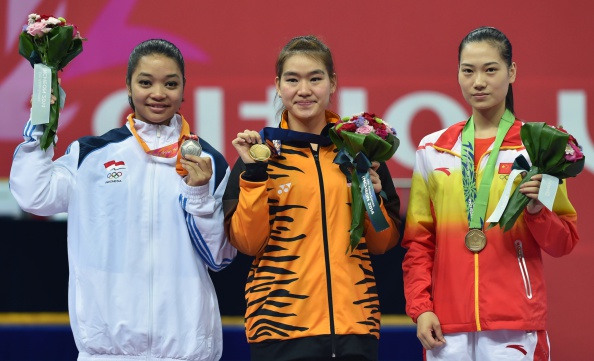
This means Indonesia’s Juwita Niza Wasni, the runner-up behind Tai, will be promoted to gold.

Third-placed Wei Hong of China will take silver with Ivana Ardelian Irmanto, also of Indonesia, upgraded from fourth to the bronze medal position.


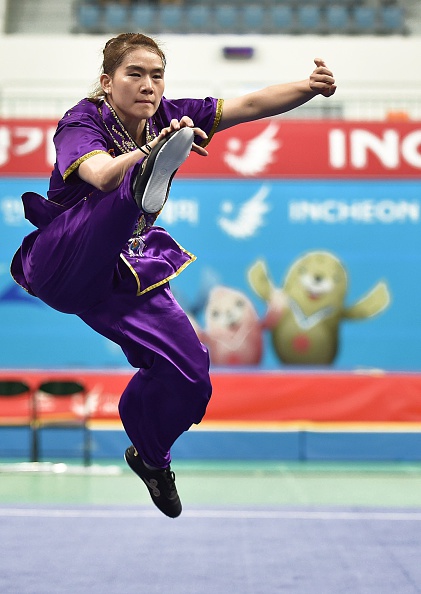
Cheau Xuen Tai of Malaysia performs during the nanquan section of the competition last Saturday (September 20) ©AFP/Getty Images

But in a strongly worded statement, Malaysia’s Minister of Sport Khairy Jamaluddin has questioned “strange and suspicious” elements of the chain of custody in the handling of the urine sample when the test was taken.

They will appeal the decision to the Ad Hoc Committee of the Court of Arbitration for Sport here in Incheon.

Writing on Facebook, Jamaluddin queried why it had taken an alleged 16 hours for Tai’s sample to reach the Doping Control Command Centre and raised concerns over the apparent “lameness of the chain of custody”.

“We do not have any reason to question the validity of the sampling or analysis regarding the KIST (Institute of Science and Korea Technology), but the question was about the lameness [of the] CoC (Chain of Custody) process that should not be answered by that panel,” he said.

"With such things, we need a decision challenging the Anti-Doping Rule Violation (ADRV) against Cheau Xuen perceived that there were doubts over integrity [of the] CoC process.

"During our aggressive fight against drug use among athletes, we also need to ensure that the process is conducted with integrity [of the] CoC because every athlete is entitled to fair and equitable treatment.

“This is also to ensure that there is no dispute or doubt on the anti-doping process.”


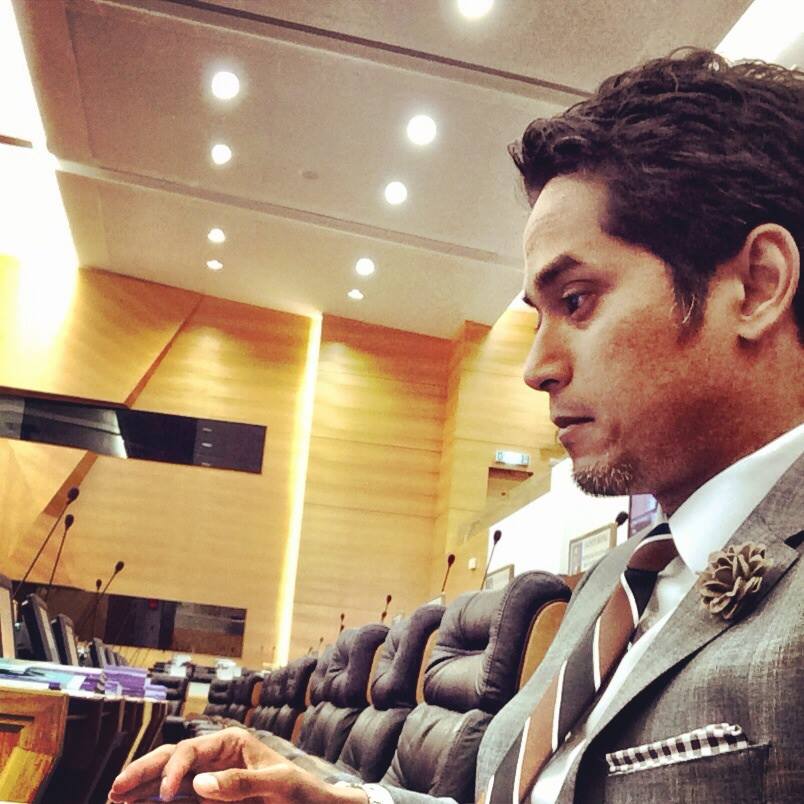
Malaysian Sports Minister Khairy Jamaluddin has revealed that they will appeal the decision to the Court of Arbitration for Sport ©Facebook

Tai, who also won a gold medal at the Southeast Asian Games in Myanmar last December, follows Tajikistan footballer Khurshed Beknazarov and Cambodian soft tennis player Yi Sophany to register fail tests here.

But, unlike the other two, the announcement of her result was delayed because Tai had requested that the B-sample was tested to confirm the findings of the original analysis.

All three testing positive for stimulants, and both Sophany and Tai Cheau Xuen for sibutramine.

The drug, originally developed and marketed by Knoll Pharmaceuticals and most recently manufactured and marketed by Abbott Laboratories, is often found in diet and slimming pills but has been withdrawn from the markets after links were found with cardiovascular problems.

It was sold under a variety of brand names, including Reductil, Meridia and Sibutrex.

The highest profile case in sports involving sibutramine came when in 2010 when footballer Adrian Mutu tested positive for the drug, with the Romania and Fiorentina striker given a nine-month ban but only serving six months of it.

Under the WADA code, the substance is listed as a specified stimulant, which means it carries a maximum two-year ban with the possibility of a reduced sentence if the athlete can prove they took the substance inadvertently.

But, whatever the eventual punishment, the news is a major blow for Malaysia, who have now lost one of only three gold medals they have won at the Games, along with two in women’s squash events.

Tai’s victory, coming the day after the Opening Ceremony, was also greeted ecstatically back home, with Malaysian Prime Minister Mohd Najib Tun Razak among those to tweet his congratulations.

This is the first time an Asian Games gold medallist has been stripped of their award since Hiroshima 1994.

Then, 11 members of the Chinese swimming and cycling teams, winners of a total of 15 titles between them, were disqualified after failing tests for Dihydrotestosterone, a steroid.

Today’s case is also the first positive case at an Asian Games in wushu, a martial art which made its Asian Games debut at Beijing 1990.

Contact the writer of this story at nick.butler@insidethegames.biz

The story thickens

I confess that this controversy has renewed my interest in the Asian Games.

SPORTS
Malaysia’s wushu gold medallist denies wrongdoing as track, medal, doping rows dog Asian Games
OCTOBER 1, 2014


Tai Cheau Xuen of Malaysia performs during the wushu women’s nanquan final at the 2014 Asian Games in Incheon on September 20, 2014. — AFP pic

INCHEON, Oct 1 — All three top finishers in the men’s 800 metres final were disqualified and an aggrieved Indian boxer turned down her bronze medal as disputes flared at the Asian Games today.

Malaysia also refused to return a gold medal over a failed drugs test, and a Syrian karate competitor became the fifth athlete caught doping in a day of discord at Asia’s Olympics.

North Korea stunned world champions Japan 3-1 to win the women’s football final, avenging their tight loss in the title match four years ago.

Indian women’s boxing icon Mary Kom was a big winner as she won a split decision in the flyweight final to claim her first Asian Games gold, buoying her hopes for the 2016 Olympics.

Qatar’s Femi Ogunode completed a sprint double when he won the 200 metres in a Games record 20.14sec, to add to his new Asian mark of 9.93sec in the 100m.

But controversy broke out in the men’s 800m when Abdulaziz Mohammed, Musaab Bala and Abraham Kipchirchir Rotich, who finished one, two and three, were all disqualified.

Team officials protested after Saudi Mohammed was disqualified for obstruction and Qatar’s Bala and Rotich of Bahrain were penalised for breaking lane regulations.

Adnan Taess Akkar, 34, who crossed the line fourth, stepped onto the podium all smiles to collect Iraq’s first gold of the Games.

“The athletes from Bahrain, Qatar and Saudi Arabia were very worthy opponents, but they made mistakes and those mistakes were against the rules,” Akkar said.

The drama comes just days after Bahrain’s Ruth Jebet was stripped of her steeplechase win as she was about to step onto the victory podium, only to be reinstated the next day.

India rejoiced as Kom finally got an Asian Games gold. But the spotlight fell on Indian team-mate Sarita Devi, who rejected her lightweight bronze in an angry protest against judging standards.

Devi, who was controversially judged beaten by South Korea’s Park Ji-Na in the semi-finals, walked to the podium in tears. After refusing to let officials put the medal around her neck, she walked over to Park and, as the South Korean fighter bowed in greeting, she placed the bronze medal around her neck.

“I said, ‘This is for you and all Korea, because you only deserve a bronze,’” Devi told AFP.

“It was a protest for all the sportsmen and women of the world against injustice in sport. There should be fair play in sport.”

Doping net

“If she wanted to refuse the medal she should have not come to the ceremony,” said a spokesman for the Incheon Asian Games Organising committee, who added that the snubbed officials had been “offended.”

Syria’s karate fighter Nour-Aldin al-Kurdi, 19, became the fifth athlete snared in the doping net when he tested positive for clenbuterol.

But Malaysia lodged an appeal with the Court of Arbitration for Sport and refused to hand back a gold medal after wushu winner Tai Cheau Xuen failed a drugs test.

According to reports, the Malaysian delegation believes Tai’s sample may have been accidentally switched with another athlete’s.

“I am convinced Tai did nothing wrong. She strongly denied knowingly taking any illegal drugs or substances,” said Ramlan Aziz, National Sports Institute director-general.

Swim star Joseph Schooling was facing an investigation by Singaporean authorities over an allegedly boozy night out as he celebrated his gold medal success.

As Afghanistan’s men’s cricketers reached the semi-finals with victory over Nepal, the war-torn country’s head of the sport invited top nations to tour.

“I am telling the players to come to my country and play there, they will treasure those memories for ever,” Afghanistan Cricket Board chairman Shahzada Masoud told AFP.

Shi Tingmao won the women’s 1m springboard and He Chao took out the men’s equivalent as China progressed to six diving medals, four away from a perfect 10.

Rhythmic gymnast Son Yeon-Jae failed to inspire South Korea to team gold, but Asia’s leading exponent remained favourite for the individual title tomorrow.

And South Korea’s women edged China 1-0 to take the field hockey gold. China reached 131 golds overall, ahead of 62 for South Korea. — AFP

lol@ taking steroids for wushu

lol

lol

loses appeal

Malaysia’s Tai Cheau Xuen loses appeal to have doping ban overturned
INCHEON South Korea Thu Oct 2, 2014 3:22pm IST

(Reuters) - Malaysia’s Tai Cheau Xuen, who was expelled from the Asian Games and stripped of the gold medal she won in martial arts after failing a doping test, has lost her appeal to be reinstated.

The Court of Arbitration announced on Wednesday that it had dismissed the application to overturn the ban and the penalties would stand.

(Editing by Amlan Chakraborty)

Bummer for Malaysia.

On athletes and herbal supplements – The Tired Eye

Published: 7 October 2014

The news that Malaysian wushu exponent Tai Cheau Xuen failed a drugs test at the Asian Games came as a big blow to the nation. Not only did Tai – who bagged our first gold at the games – have the medal and placing withdrawn, but it also put Malaysian sports in a bad light.

This incident also came quickly after news of our other athletes failing their drugs test – Sukma weightlifter and gold medallist Jelinie Empera, Federal Territories cyclist Dhia Danial Kharil and Perlis weightlifter Siti Fazera Ishak.

In Tai’s case, tests reportedly found traces of sibutramine, which is widely used to control weight gain. Yet, the very same ingredient is banned in developed countries because it can cause strokes.

As for Jelinie, the Sarawakian reportedly tested positive for anabolic steroids.

In both cases, the athletes denied deliberately ingesting the drugs but did indicate that they were taking traditional or herbal supplements.

And this is where the problem lies. First of all, it is hard to prove that one had unknowingly ingested a banned substance. Then, there is that lack of awareness towards the possible consequences of taking herbal supplements.

Being Asians, we have a long standing relationship with herbs, herbal remedies and supplements. Many of us have grown up with the notion that because herbs are plants, and plants are natural, herbal remedies and supplements are safe.

We take herbal soups, drinks and raw mixes of roots, leaves, fruits and plants in powder or tablet form because some of our elders say that these are good for health, help with general well-being and are of course, natural.

Of course, some of these herbal supplements and remedies undoubtedly make us feel better.

Plants have been used to treat ailments over centuries. Science has shown that plants themselves contain many different types of chemicals – some useful, others potentially harmful.

It has been reported that 25% of modern medicine being prescribed today contain ingredients that are plant based.

Let us take for example steroids. According to a friend who works in the medical line, steroids come in many forms, and some forms of steroids can also be found in fungi, animals and plants.

Steroids are controlled chemicals and different types of steroids are used in treating conditions that range from late puberty, to allergies and muscle loss.

In an article titled “Natural Steroid Plants”, Livestrong.com explains different types of steroids found in herbs that are used by cancer patients for pain relief and to counter muscle deterioration.

Without proper laboratory tests, there is no telling what some herbal remedies or supplements prepared from plants may contain.

Because of the belief that herbs are natural and safe, many people have the notion that the more they consume, the better; without realising the damage that they could cause to their bodies.

The research on chemical elements found in herbs that are useful and even harmful to humans is still being carried out all over the world, and as with most research, the journey is long and daunting, with many experiments and verifications to be made.

On the other hand, let us not forget that there are unscrupulous manufacturers of herbal supplements who are out to make a quick buck. Let us take Tai’s case as an example.

Tai had indicated that as an athlete, she was taking herbal supplements to help her manage her weight, which again, most of us Malaysians think is the ‘safe’ thing to do.

But if we took the time to dig further, we would find that there have been many cases where manufacturers of herbal supplements adulterate their products to make them seem effective by adding on additional chemicals, just so that people will keep buying and even promoting their supposedly natural herbal supplements.

In May 2011, the European Union imposed stringent controls and bans on many herbal remedies and supplements for safety reasons. In EU countries, herbal supplements are regulated as pharmaceutical drugs.

Because of these stringent controls in developed countries, many of these products find their way to our shores. We are bombarded with advertisements of such products online, and even over social networks.

Perhaps it is time that Malaysia too raised the bar on its enforcement on the influx of banned or unverified and untested supplements in the market. More importantly, there is a necessity for better education for athletes, their families, coaches and even sports authorities towards needing to be careful in the supplements that they take.

This initiative to educate is especially urgent in Malaysia where unregulated herbal supplements are found being sold cheaply and in abundance, even in coffee-shops! – The Borneo Post, October 7, 2014.

*The Tired Eye is a columnist at The Borneo Post.

*This is the personal opinion of the writer or publication and does not necessarily represent the views of The Malaysian Insider.

the end of wushu romping

No more wushu romp by Chinese in Asiad
2:43 AM | Thursday, November 27th, 2014

China will no longer dominate the wushu competitions of the Asian Games.

Wushu top official Julian Camacho said the Wushu Federation of Asia has trimmed down the number of events where China can participate in future editions of the continental meet.

Camacho, secretary general of the Wushu Federation of the Philippines, said the Asian federation has now limited China to winning just 60 percent of the medals at stake.

“It’s a welcome development. It will give other countries the chance to win more medals, especially the Philippines,” said Camacho.

The Philippines finished with two silver medals and one bronze in the Incheon Asian Games with the gold medals in those events all won by China.

The Olympics adopts a similar strategy with Korea and TKD.

If you can’t beat them, regulate them.

Happy Thanksgiving to all.

4 month ban for Tai Cheau Xuen

A slap on the wrist, especially as it’s the off season.

Four-Month Doping Ban For Malaysian Wushu Athlete
Details Published on Thursday, 11 December 2014 14:59


Photo: NSTWushu’s international governing body has banned Malaysia’s Tai Cheau Xuen from competition for four months over a positive doping test at the recent Asian Games, the Wushu Federation of Malaysia said on Thursday.

Tai, who was stripped of the Asian Games gold medal she won in September, has been banned until March 20, 2015, after the banned stimulant sibutramine was found in her system following the competition in Incheon, South Korea, the federation said.

Tai has returned her gold medal.

Tai, 24, was tested after winning the Chinese martial art’s women’s nanquan and nandao all-round event on September 20, Malaysia’s first gold medal of the Games.

The Malaysian governing body said it was informed of the ban in a letter received last week from the International Wushu Federation.

The Malaysia federation insisted Tai unwittingly ingested sibutramine via health supplements and a slimming product.

The head of the Wushu Federation of Malaysia at the time, Martin Lim, resigned to take responsibility for the doping scandal.

2018 Asian Games in Jakarta

Jiujitsu added to 2018 Asian Games
Updated: 2015-01-12 03:44:15 KST

Now one of the fastest growing sport in the world is mixed martial arts. And if you are a mixed martial artist, one of the techniques you should learn is jiu-jitsu. So naturally, the popularity of jiu-jitsu is also rising throughout the world. So much so,.. the martial art will be added to the 2018 Asian Games in Jakarta.
Now according to a report from the North European Brazilian Jiu-jitsu website,.. the martial art will most likely be added to the Asian Games for the first time ever, come 2018 Asian Games in Jakarta. However, despite Brazilian jiu-jitsu being the more popular variation of the sport, European jiu-jitsu will be added to the Asian Games. And while, there are some differences between the two, mixed martial arts fans are getting excited,.. as they hope this will be a first step towards making mixed martial arts an Olympic sport, as well.

And that wraps it up for me. This has been SJ. Have a great rest of the day, and see you guys again, for your sports needs
Reporter : seungjae86@gmail.com

Not confirmed by the Asian Games themselves yet, but we have a few years…

Snubbed in Malaysia

Tuesday, 2 February 2016 | MYT 9:50 PM
Coach cool about wushu snub from Podium Programme
BY LIM TEIK HUAT

KUALA LUMPUR: Despite being a consistent medal contributor at the Asian Games and World Championships, wushu is surprisingly excluded from the Podium Programme.

While other non-Olympic sports like sepaktakraw and bowling have athletes placed under the programme, wushu head coach Lim Yew Fai is not disheartened by the omission.

The programme is to produce athletes to win medals at the Asian Games, Commonwealth Games and Olympics.

“I always look at things from the positive side. Maybe we will be considered later … or maybe they want to see how we perform at the 2017 SEA Games. We’ll wait and see.

“We will continue with our own programme. In fact, we have just started a back-up squad programme. Former world junior champion exponent Koo Chee Zhong is now coaching the back-up squad,” said Yew Fai.

At last year’s World Wushu Championships in Jakarta, Malaysia won three golds, four silvers and four bronzes.

In the Asian Games, wushu contributed one gold in Busan (2002), Doha (2006) and Guangzhou (2010).

Then again, if this program me is for the Asian Games, Commonwealth Games and Olympics, wushu isn’t in the Commonwealth Games and Olympics. Neither is sepaktakraw and bowling, so maybe Malaysia just hates wushu. :o

Failed drug test for Coco Lin at Asian Games

This is really the fault of the TCM doctor. That’s so sloppy and it almost cost Lin the medal. What an ignorant TCM doc.

Hong Kong fencer Coco Lin apologises after traditional Chinese medicine nearly ruins her Asian Games dream
The 23-year-old receives only a reprimand despite a positive test as Hong Kong take silver in the womens épée at the Asian Championships
PUBLISHED : Friday, 22 June, 2018, 8:20pm
UPDATED : Friday, 22 June, 2018, 10:47pm
Chan Kin-wa

Upcoming fencer Coco Lin Yik-hei has apologised after a doping incident almost ruined her dream of competing in the Asian Games in Indonesia this summer.

Lin was part of the Hong Kong womens team that took silver after losing a nail-biter to China 35-34 in the final of the womens épée at the Asian Fencing Championships in Bangkok on Friday night.

After spraining her right ankle in April, Lin enlisted the services of a bonesetter to accelerate her recovery, a move that proved more negative than positive.

Lin was given traditional Chinese medication by the bonesetter and a doping test two days later turned up a banned substance.

The 23-year-old, a scholarship athlete at the Sports Institute where fencing is a tier A programme, posted on social media this week that she had been temporarily suspended for two weeks by the Hong Kong Anti-Doping Committee leading up to the tournament in Bangkok.

Her name was also removed from the 2018 Asian Games squad after the Hong Kong Fencing Association had confirmed the list.


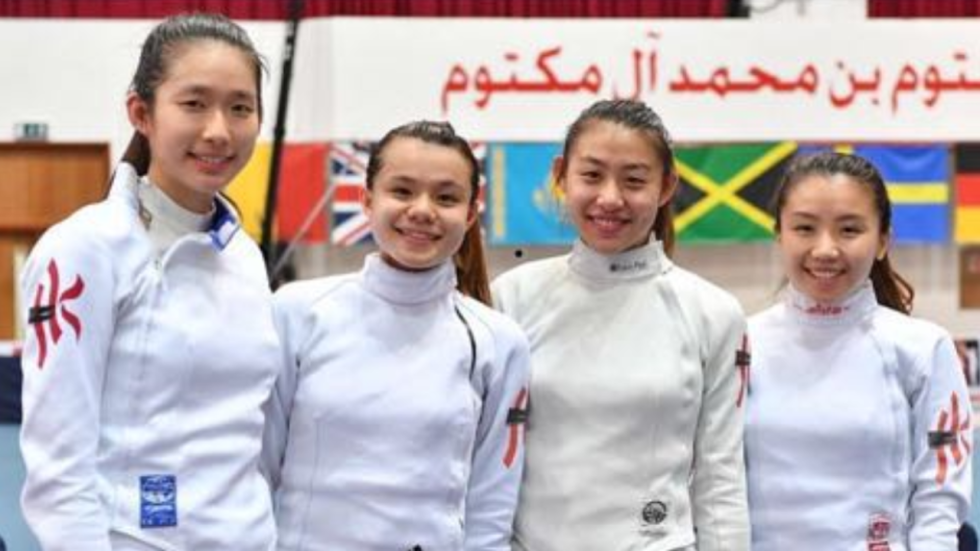
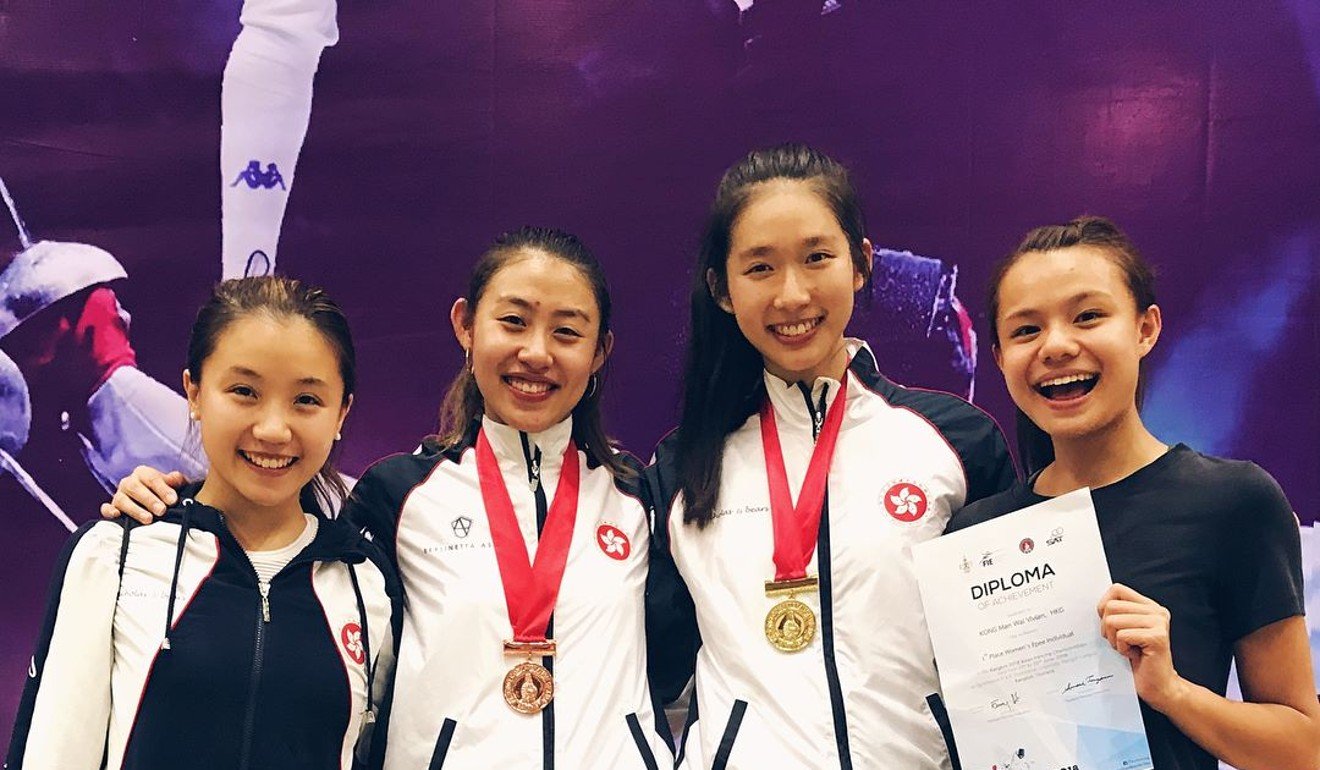
Chu Ka-mong (left), Kaylin Hsieh, Vivian Kong and Coco Lin. Photo: Handout

She was asked to provide an adequate explanation or face a two-year suspension when she was informed of the test results early this month.

After a hearing, Lin received only a reprimand allowing her to compete in this weeks regional championships.

I am a professional athlete and must take responsibility for the drugs I have taken, Lin said. Its my own negligence that has affected not only my career but also the image of Hong Kong athletes.

I have grown up quite a bit the past month, learnt to take the greatest caution with all medications that I put inside my body, and to stay strong in difficult situations.

Thank you for all the love, care and support over the past two weeks from the fencing association, sports institute, my family, friends, teammates, coaches and the media. Im deeply sorry for all the confusion caused for all parties at such a critical moment.

The Hong Kong womens épée team also features Vivian Kong Man-wai, the individual champion in Bangkok, and bronze medallist Kaylin Hsieh Sin-yan, who knocked Lin out of the competition in the quarter-finals. Lins top-eight result was her best finish in five appearances at the Asian Championships.


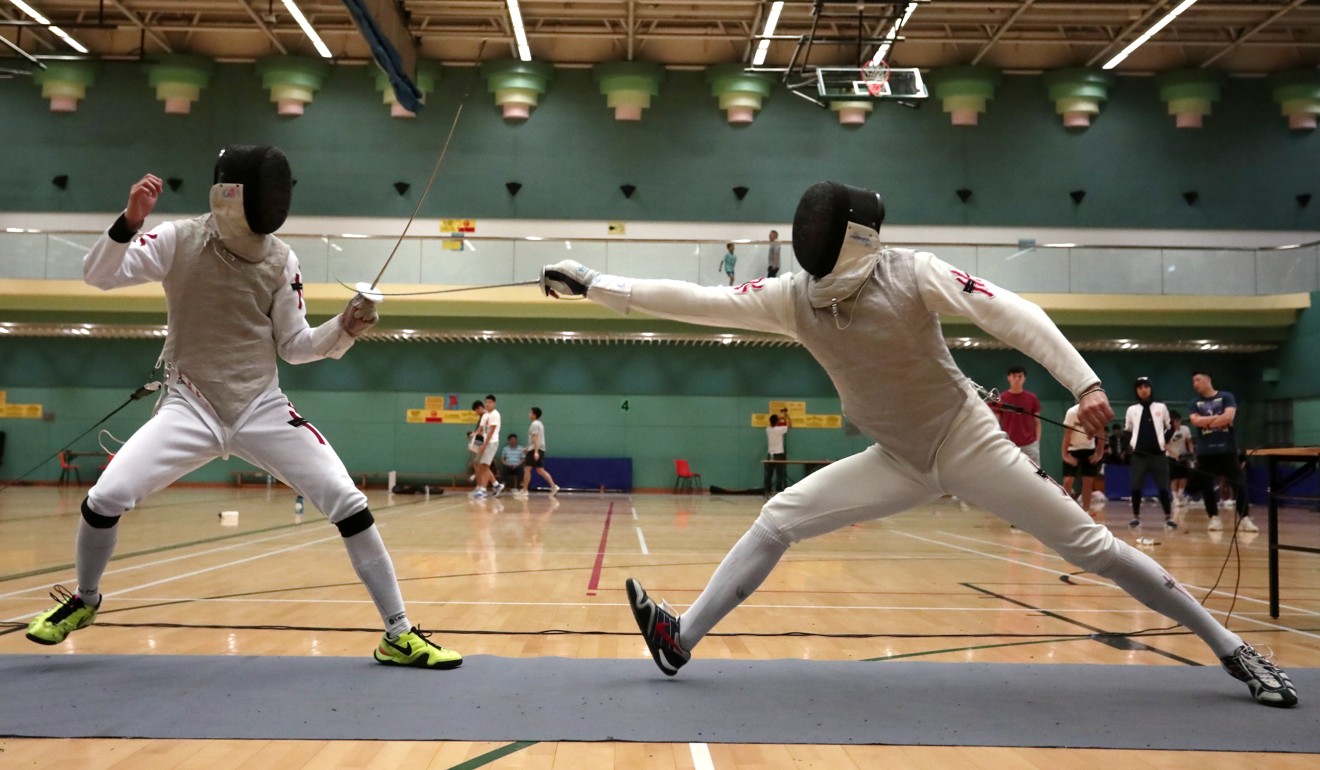
Cheung Siu-lun (right) on the attack against Ryan Choi at the Presidents Cup in Hong Kong. Photo: Jonathan Wong

Friday nights result was Hong Kongs second silver of the week after the mens foil team lost to South Korea in the final.

But gold medals from Cheung Siu-lun and Kong, in the mens individual foil and womens individual épée, respectively, ensured Hong Kongs best result in the regional event and gave them a strong boost before the Asian Games this summer.

Why is the Asian fencing champion missing the Asian Games? Hongkonger only has himself to blame

The womens teams épée silver was also their best performance in the event, with Hong Kong taking bronze in every tournament since 2001.

Kong, the individual champion, was in superb form and matched the class of her mainland counterparts, with China headed by Olympic bronze medallist and world number two Sun Yiwen.

China went in as favourites and were in control of the game until Hsieh closed the gap to 29-27 in the second last session.

Kong gave her all in the final three-minute session but her opponent managed to hold on for a tight victory.

This article appeared in the South China Morning Post print edition as: Fencer Lin apologises for doping incident

THREADS:
TCM Fails
Asian Games
Fencing