Arms & Armor Museum Exhibits

I’m starting this thread for both museums that specialize in Arms & Armor and special exhibits of Arms & Armor at regular museums.

Here’s links to some previous postings:
Arms and Armor at the Metropolitan Museum of Art

Lords of the Samurai at the the San Francisco Asian Art Museum
The Spirit of Budo: The History of Japans Martial Arts
Samurai: The Way of the Warrior at the Frist Center, Nashville TN
Samurai: Japanese Armor from the Ann and Gabriel Barbier-Mueller Collection
Evangelion and Japanese Swords at the Osaka Museum of History

Armi e potere (Arms and Power), Castel Sant’Angelo and Palazzo Venezia, Rome
[URL=“http://www.kungfumagazine.com/forum/showthread.php?67074-RIP-Higgins-Armory-Museum”]
RIP Higgins Armory Museum

My my, that’s a lot of Japanese Arms & Armor special exhibits.

More to come…

We still have those old weapons and amour Gene. They just need to polish the boys swords ! WhiteAsian , Im one !

San Francisco’s Legion of Honor & de Young collections

SF’s Legion of Honor has several shields, spear & arrow heads, and various weapons in their Africa, Oceania, and the Americas collection. To be honest, much of these cultures are a gap in my hopological research.

SF’s de Young has a few really nice swords including gaudy diamond-hilted sword and a fine colichemarde.

Here’s that diamond-hilted piece.

Sword and Scabbard
Maker: Tiffany & Company
Artist: Unidentified artist
Date: ca. 1901
Location:de Young Gallery 23
Century: 20th Century AD
Media: Silver, Steel, Gold Wash And Diamonds
Department: American Decorative Art
Object Type: Arms Or Armor
Country: United States
Continent: North America
Accession Number: 54582a-b
Acquisition Date: 1934-07-31
Credit Line: Museum purchase, M.H. de Young Memorial Museum

made for Brigadier General Frederick Funston, USV

Here’s the colichemarde. It has bothered me for years that it is labelled ‘sword’ and not identified as a colichemarde.

Sword
Date: ca. 1735
Location: de Young Gallery 21
Century: 18th Century AD
Media: Silver And Steel
Dimensions: 35 1/4 x 3 1/8 x 2 1/2 in. (89.5 x 7.9 x 6.4 cm)
Department: American Decorative Art
Object Type: Arms Or Armor
Country: United States
Continent: North America
Accession Number: 1981.62
Acquisition Date: 1981-12-02
Credit Line: Museum purchase, Art Trust Fund

As it turns out, you can search the database for the Legion of Honor and de Young for Arms & Armor and it even shows pieces in their collection that are not on display.

San Francisco’s Asian Art Museum

SF’s Asian Art Museum has some nice armor and blades in the Japanese section on permanent display. There’s a few odd pieces scattered about the entire museum, particularly notable Indian and Iranian weapons. For China, they have some ancient bronze swords, ge, axes and daggers. They have an excellent collection of Kris blades in a wall display that the main attraction for hopologists.

Sword
Place of Origin: China
Historical Period: Eastern Zhou period (770-256 BCE)
Materials: Bronze
Dimensions: L. 21 1/2 in x W. 2 in x Diam. 1 1/2, L. 54.6 cm x W. 5 cm x Diam. 3.8 cm
Credit Line: The Avery Brundage Collection
Department: Chinese Art
Collection: Arms And Armament
Object Number: B62B145
On Display: Yes
Location: Gallery 14

Here’s one of the kris (krises?). There are many more.

Lady’s dagger (kris)
Place of Origin: Indonesia, Java or Sumatra
Date: perhaps 1900 - 1950
Materials: Steel, iron, horn, leather, and ivory
Dimensions: L. 11 in x W. 3 in, L. 27.9 cm x W. 7.6 cm (overall); L. 9 1/2 in, 24.1 cm (kris); L. 8 3/4 in, 22.2 cm (sheath)
Credit Line: Gift of the Christensen Fund
Department: Southeast Asian Art
Collection: Arms And Armament
Object Number: 2005.102.30.a-.b
On Display: No

You can also access a gallery specifically dedicated to Arms & Armor on their site that includes pieces not on display.

They offer lessons and programs on their site. Here’s the one on Japanese swords.

Short Sword (wakizashi) and Long Sword (katana)


Short sword (wakizashi) and Long sword (katana) with blade mountings. Japan. Muromachi period (1333–1573). Forged and tempered steel, sharkskin, black lacquer, gold on bronze. The Avery Brundage Collection, B64W7 and B64W8.


Short sword (wakizashi) and Long sword (katana) with blade mountings.Short sword (wakizashi) and Long sword (katana)

Resource Type: Artwork
Region: Japan
Topic: Looking at Art
Grade Level: Middle School (6-8), High School (9-12), College and Beyond
Academic Subject: Visual/Performing Arts, History/Social Science, Art History
Keyword Results: samurai
Downloads:
PDF iconShort Sword (wakizashi) and Long Sword (katana) (.pdf)
What were the military and symbolic significance of the long and short sword?
The sword was the most honored and important weapon for samurai. When a samurai was born, a sword was brought into the room; when he died, a sword was laid beside him, and in between those two events a samurai always slept with his sword by his pillow. Constantly at his side, it was a symbol of the warrior’s physical strength, discipline, and loyalty. Its razor-sharp edge was a point of pride for warriors, allowing for quick, precise cuts and thrusts in the chaos of battle.

How were they made?
Sword making is a highly refined and respected art in Japan, part of a ritualized process requiring decades of training. To make a sword, the smith heated blocks of steel, hammering, folding, cutting, forging, and re-forging to drive out impurities and create a finely layered blade that was hard but not brittle. The folding-in of softer iron near the end of the process added resiliency, while the final tempering of the blade, which exposed the edge to the greatest heat and fastest cooling, created an exceptionally hard cutting edge. After the sword-smith had completed the blade, a grinder and polisher gave it its gleaming finish, exposing the unique structure of its razor-sharp edge.

How did sword styles change to meet the needs of the warrior?
The use of single-edge iron swords (tachi), dates to the sixth century. By the Kamakura era (1185–1333), tachi were being used by mounted warriors, and rivaled the bow and arrow in importance to the samurai. To improve the tachi’s capability as a cutting and slashing weapon, its design was gradually altered. The long blades became tapered from the hilt to the tip; they were ridged for greater strength; and were curved slightly at the base. To better serve the needs of foot soldiers, a shorter sword (katana), was developed. Curved at the tip and worn stuck into the belt (cutting edge up), the katana allowed soldiers to move unencumbered, able to draw and cut in one stroke.

In the fifteenth century, mounted samurai also came to prefer the katana, since they often dismounted for hand-to-hand combat. An even shorter companion sword called the wakizashi soon joined the katana in the samurai’s arsenal. Worn together, the pair was known as daisho (big and little).

What is the significance of the sword’s decorative fittings?
During the peacetime years of the Edo period (1615–1868), the daisho became a mark of status for the samurai, the only members of society allowed to wear two swords. As the sword became more symbolic than functional, the quality of the blades declined, but enthusiasm for elaborate and expensive sword fittings grew. Sword owners would own many sets of fittings, changing them to suit the occasion or season. Although elegant fittings had been made earlier, the art form reached its peak in the Edo period with richly inlaid and sculpted scenes, and patterns combining precious metals and new alloys.

Knights in Armor at the Bowers Museum, Santa Ana, CA

Knights in Armor at the Bowers Museum, Santa Ana, CA
September 22, 2018 – January 13, 2019
2002 N Main St, Santa Ana, CA 92706

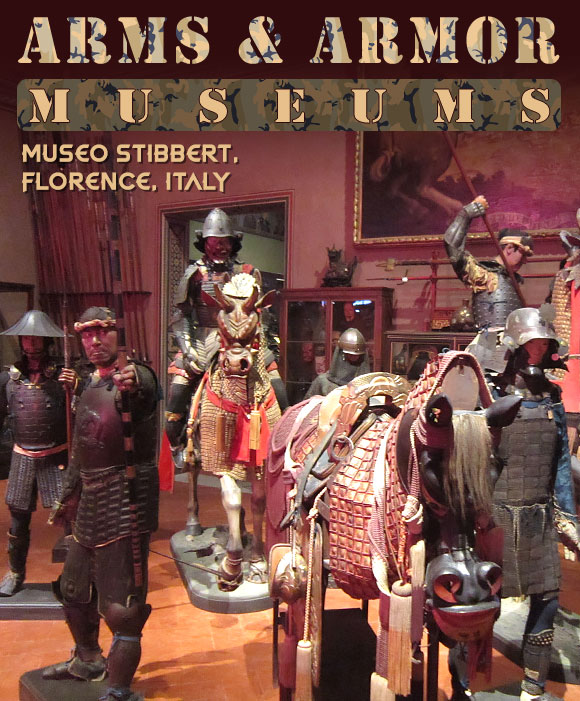
This features pieces from the Museo Stibbert in Florence, which I visited last month. I’m planning on reviewing that later which is what motivated me to launch this thread.

Other places

Also worth a look up in the biggest city in canada is the Royal Ontario Museum in Toronto. Or, “The Rom”

It has:

Prince Takamado Gallery

Which has really well preserved samurai armour, swords, helmets etc. Amazingly well taken care of too.
Also in the same museum is the Earl of Pembroke armour, given to him by Henry VIII along with various weapons, horse armour etc. throughout the museum, there are various other pieces that have made their way through time and into displays.

Worth it.

FWIW, there are pretty large galleries involving Buddhist temple art and Tang dynasty, Ming Dynasty architecture with a complete Ming Dynasty Tomb on premises if you’re interested in that kind of thing. :smiley:

Knights at the John & Mabel Ringling Museum of Art, Sarasota FL

Knights
When: Feb 3, 2019 Apr 21, 2019
SPECIAL EXHIBITION FREE WITH MUSEUM ADMISSION
Contact: 941-359-5700
Where: Museum of Art
Searing Galleries

Drawn from the superb collections of the Stibbert Museum in Florence, Italy, this extraordinary exhibition reveals the figure of the European knight in the Middle Ages and Renaissance through over 100 exquisite objects, including full suits of armor, helmets, swords, and other weaponry. The exhibition explores the function, history and craftsmanship of these exquisite objects, focusing on themes of love and war, jousts and tournaments, and the 19th-century revival of interest in medieval knighthood. A fully-illustrated catalogue will be available.

This exhibition was organized by Contemporanea Progetti in collaboration with the Museo Stibbert, Florence, Italy.

Support for this exhibition was generously provided, in part, by the Arthur F. and Ulla R. Searing Endowment, the William G. and Marie Selby Foundation Endowment, and the John and Mable Ringling Museum of Art Foundation.

Paid for in part by Sarasota County Tourist Development Tax Revenues.

Another exhibit from the Museo Stibbert in Florence, which I visited last August. The last one was Knights in Armor at the Bowers Museum, Santa Ana, CA, which I was hoping to get to but did not.

I’ve been tracking Arms & Armor Museum Exhibits and this Knights at the John & Mabel Ringling Museum of Art sounds like another good one.

Arms & Armor Museum Exhibits

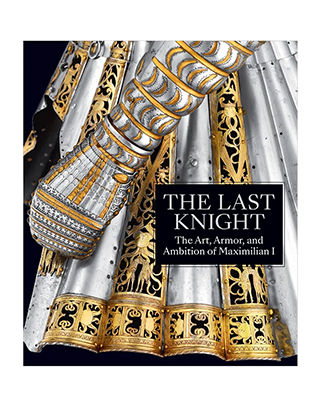
All Current Exhibitions The Last Knight: The Art, Armor, and Ambition of Maximilian I
At The Met Fifth Avenue
OCTOBER 7, 2019JANUARY 5, 2020
Buy Tickets Exhibitions are free with Museum admission.


Exhibition Catalogue
This lavish catalogue is the first to examine the singular masterworks that were commissioned by Emperor Maximilian I.

Exhibition Overview
The Last Knight: The Art, Armor, and Ambition of Maximilian I examines the profound significance of European armor at the dawn of the Renaissance, through the lens of Emperor Maximilian I’s (14591519) remarkable life. On view only at The Met, The Last Knight coincides with the five-hundredth anniversary of Maximilian’s death, and is the most ambitious North American loan exhibition of European arms and armor in decades. Including 180 objects selected from some thirty public and private collections in Europe, the Middle East, and the United States, The Last Knight will explore how Maximilian’s unparalleled passion for the trappings and ideals of knighthood served his boundless worldly ambitions, imaginative stratagems, and resolute efforts to forge a lasting personal and family legacy.

This exhibition features many works of art on view outside Europe for the first time, including Maximilian’s own sumptuous armors that highlight his patronage of the greatest European armorers of his age, as well as related manuscripts, paintings, sculpture, glass, tapestry, and toys, all of which emphasize the emperor’s dynastic ambitions and the centrality of chivalry at the imperial court and beyond.

Accompanied by a catalogue and an Audio Guide.

[QUOTE]"A remarkable array of paintings, drawings, prints, sculpture, tapestry, stained glass and related art places the armor in a stirring biographical and artistic context. . . . these manifold riches invite multiple visits."Wall Street Journal

The exhibition is made possible by Jo Carole and Ronald S. Lauder.

Additional support is provided by Alice Cary Brown and W.L. Lyons Brown, the Estate of Ralph L. Riehle, the Sherman Fairchild Foundation, the Gail and Parker Gilbert Fund, Kathleen and Laird Landmann, Marica and Jan Vilcek, and Christian and Florence Levett.

The exhibition is supported by an Indemnity from the Federal Council on the Arts and the Humanities.

The catalogue is made possible by the Grancsay Fund, The Carl Otto von Kienbusch Memorial Fund, and The Andrew W. Mellon Foundation.

On view at The Met Fifth Avenue in Gallery 899[/QUOTE]

THREADS[URL=“http://www.kungfumagazine.com/forum/showthread.php?71584-The-Last-Knight-The-Art-Armor-and-Ambition-of-Maximilian-I-At-The-Met-Fifth-Avenue”]
The Last Knight: The Art, Armor, and Ambition of Maximilian I At The Met Fifth Avenue
Arms & Armor Museum Exhibits

Samurai Art Museum

I saw this full page ad in the latest issue of Arts of Asia. If I ever get to Berlin…

Clayallee 225 D
Entrance to Villa Clay
14195 Berlin-Zehlendorf

Oskar-Helene-Heim underground station

Tel. Info during opening hours:
+49 30 213 00 27 80
kontakt@samurai-artmuseum.com
www.samurai-artmuseum.com

Here’s some images from their site:


Our latest exclusive web article

When in Paris…READ Arms & Armor Museums: Musée de l Armée, Paris, France by Gene Ching

Sakabato Shinuchi: Reverse blade Katana

Real-life Rurouni Kenshin reverse-blade sword to be displayed in Tokyo
Casey Baseel days ago

The sakabato’s journey brings it to Japan’s eastern capital, just like the anime swordsman’s did.

Himura Kenshin, protagonist of the Rurouni Kenshin anime/manga, famously wields a reverse-edged sword called a sakabato. The reason why is pretty easy to see from a storytelling perspective: Being unsharpened along the regular cutting edge for a katana lets Kenshin swing his sakabato with speed and strength in duels without drawing blood or killing his opponent. Having the inner edge sharpened, though, also provides a constant temptation to resort to deadly violence, and a means by which to show Kenshin’s honorable resolution in overcoming it as part of his path to redemption after years as a feared killer.

In real life 19th-century Japan, however, people in the market for a sword didn’t have the luxury of choosing a weapon that sacrificed sharpness in order to accentuate their troubled personal backstory, and so no real-world sakabato existed. Well, at least none existed until recently, when Japanese swordsmith Kanekuni Ogawa created one, called the Sakabato Shinuchi (meaning “Sakabato Truly Forged”)

Kanekuni Ogawa

Based in the town of Seki, which has been known for its swordsmiths for centuries, Ogawa is so talented that he, personally, has been awarded the title of “important tangible cultural property” by the city. Upon the sword’s completion, it was exhibited in the Meijimura historical building park in Aichi Prefecture, in connection with Rurouni Kenshin being set in the Meiji period of Japanese history.

Now, though, just as the emperor of Japan moved from Kyoto to Tokyo in the Meiji period, so too is the Sakabato Shinuchi coming to the capital, where it will be displayed from April 24.

Even for those who’ve never read the manga or watched the anime (Ogawa himself had never seen either before taking on the project), the Sakabato Shinuchi is a striking piece, and has a singular beauty among Japanese swords. Because its blade is on the other side of where it would be on a normal katana, the real-life sakabato also has completely unique hamon (tempering marks), with the undulation being more prevalent along the inner curve of the flat.

Sakabato Shinuchi, during its display at Meijimura

As is customary for swords in Japan, the Sakabato Shinuchi will be displayed without a handle. This is done because the nakago (the part of the hilt that extends into the handle) is where Japanese swordsmiths inscribe their names, though in the case of the Sakabato Shinuchi, Ogawa has instead carved the death poem of Arai Shakku, the smith who forged Kenshin’s sakabato in the anime, since that’s what’s on the nakago in the source material.

The sword will be displayed as part of the travelling Ruruni Kenshin Exhibition, celebrating the franchise’s 25th anniversary. The Tokyo exhibition will take place from April 24 to June 7 at Gallery AaMo, part of the Tokyo Dome City complex adjacent to Tokyo Dome, with tickets available online here.

Event information
Rurouni Kenshin Exhibition /
Venue: Gallery AaMo /
Address: Tokyo-to, Bunkyo-ku, Koraku 1-3-61

website

THREADS
Katana
Arms & Armor Museum Exhibits
Rurouni Kenshin

Our Latest Feature

Love Ancient Weapons? READ Arms & Armor Museums: Museo Stibbert, Florence, Italy by Gene Ching

The Age of Armor: Treasures from the Higgins Armory Collection


Comb Morion, 1556–1586, Hans Hörburger the Elder (Austrian, active 1556–1586), steel, brass and leather fragments, The John Woodman Higgins Armory Collection, 2014.1094.

The Age of Armor: Treasures from the Higgins Armory Collection at the Worcester Art Museum
Beginning November 6 | Levis Gallery

Suits of armor, and the warriors who wore them, have fueled the human imagination since they first appeared in the ancient world. The Age of Armor: Treasures from the Higgins Armory Collection at the Worcester Art Museum, explores how these compelling exoskeletons have been used in various forms around the globe, from antiquity to modern times. The Worcester Art Museum’s Higgins Armory Collection is the one of the largest collections of arms and armor in the United States.

Full suits of articulated steel plates were made only briefly in Europe’s golden age of armor during the late Middle Ages and Renaissance. The exhibition examines how armor played an important role in the military, technological and cultural life of societies throughout history.

The first section of the exhibition begins with ancient Greece, when stylish body armor expressed the warrior’s personal taste and social standing, while increasing his chances of survival on the battlefield. Section two details how, by the Middle Ages, knights with expensive iron coats of mail, as well as swords, lances and horses came to dominate the battlefield. Sections three and four examine the craft of armor-making as it evolved in several European cities and the innovation of armorers, who developed full suits of steel for a range of purposes, including wartime applications and ceremonial uses. The exhibition’s final two sections recount how the rise of firearms impacted armor design from 1500 to 1700, and that a renewed interest in medieval armor as collectibles developed in the 19th and 20th centuries.

The Age of Armor: Treasures from the Higgins Armory Collection at the Worcester Art Museum is organized by the Worcester Art Museum and is sponsored locally by presenting sponsors Susan and Tom Palmer and Taylor Cadillac, as well as Exhibition Program sponsor ProMedica, with additional support from the McLoughlin Family Foundation and the Ohio Arts Council.

Tickets are required for entry. TMA Members receive free admission.

Coming to the Toledo Museum of Art
2445 Monroe Street
Toledo, OH 43620

threads
Higgins-Armory-Museum-Worchester-MA
Arms-amp-Armor-Museum-Exhibits

Samurai Splendor: Sword Fittings from Edo Japan

EXHIBITION
Samurai Splendor: Sword Fittings from Edo Japan
March 21, 2022 – Spring 2024
Now on view at The Met Fifth Avenue , 380
Exhibitions are free with Museum admission.

After almost a century and a half of near-constant civil war and political upheaval, Japan unified under a new ruling family, the Tokugawa, in the early 1600s. Their reign lasted for more than 250 years, in an era referred to as the Edo period, after the town of Edo (present-day Tokyo) that became the new capital of Japan. The Tokugawa regime brought economic growth, prolonged peace, and widespread enjoyment of the arts and culture. The administration also imposed strict class separation and rigid regulations for all. As a result, the ruling class—with the shogun as governing military official, the daimyo as local feudal lords, and the samurai as their retainers—had only a few ways to display personal taste in public. Fittings and accessories for their swords, which were an indispensable symbol of power and authority, became a critical means of self-expression and a focal point of artistic creation.

This installation explores the luxurious aspects of Edo-period sword fashion, a fascinating form of arms and armor rarely featured in exhibitions outside Japan. It presents a selection of exquisite sword mountings, fittings, and related objects, including maker’s sketchbooks—all drawn from The Met collection and many rarely or never exhibited before.

This exhibition is made possible by the Vilcek Foundation.

Wish I was there…

Arms & Armor Museum Exhibits

Europe’s first samurai museum opens in Berlin
As a new museum on the samurai opens in Berlin, here are five facts about how the legendary warriors and political elite shaped the history of Japan for centuries


Ferocious warriors on horseback the Samurai
The Japanese samurai are considered to be masters of swordsmanship and brave, fearless fighters. The myth surrounding the warriors still fascinates today. Both in Hollywood and in video games, feudal Japan is a box office hit. The samurai are romanticized as the epitome of chivalry and honor even if their warfare was no less bloody or ruthless than combat elsewhere.
A new museum in Berlin explores what is behind the myth.
More than 1,000 artefacts from the collection of Peter Janssen, a German entrepreneur, are showcased at the Samurai Museum Berlin, which opens on May 8.
Weapons and armor, tea sets, woodcuts and Buddhist sculptures are part of the interactive exhibition. “The myth and influence of the samurai on Japanese society are illuminated from different perspectives such as everyday life, art and craft or martial arts,” the museum writes.
Five facts about the Japanese warriors:

  1. Samurai means ‘the serving one’
    The history of the samurai began when military conscription was abolished in Japan in the 8th century. Men from the provinces with military training took the place of the conscripts. They served the imperial court in Kyoto as well as noble families. They earned their living as fighters.

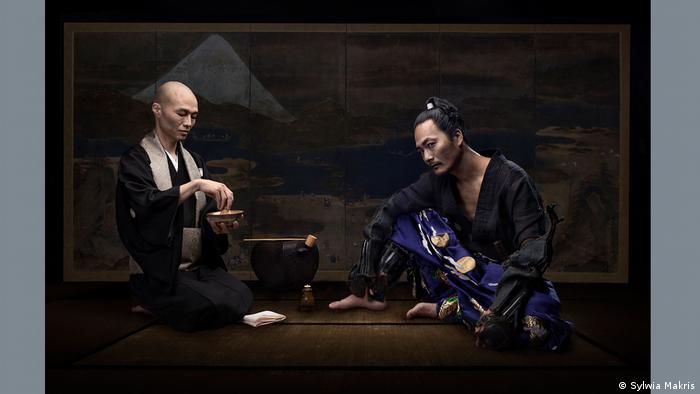
    Tea ceremony: Photo from the Seven Virtues series
    Over the centuries, the samurai expanded their power. At the end of the 12th century, they established their own military government, the shogunate, which coexisted with the imperial house.
    Until the 19th century, when their status was revoked by Emperor Meiji in favor of a modern army, the samurai were an integral part of Japanese political, social and cultural life.

  2. Only a true samurai was allowed to carry two swords
    The samurai fought and rode on horseback, for the most part using bow and arrows.
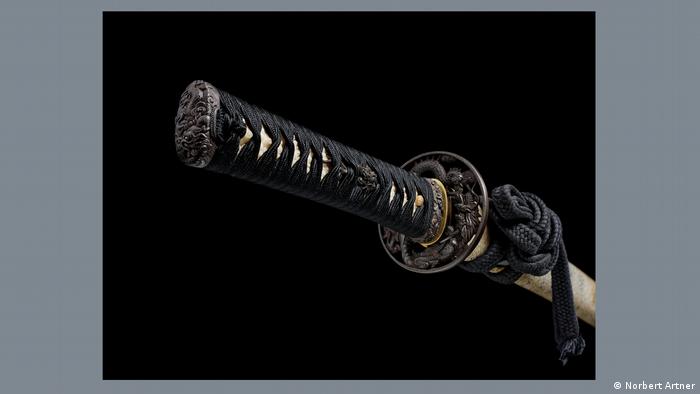
    Over time, the two swords they carried a curved long sword (katana) and a second, shorter sword (wakizashi) became an important status symbol.
    In some families, they were passed on from one generation to the next.

    The sword is the samurai’s soul, a warrior leader allegedly once said
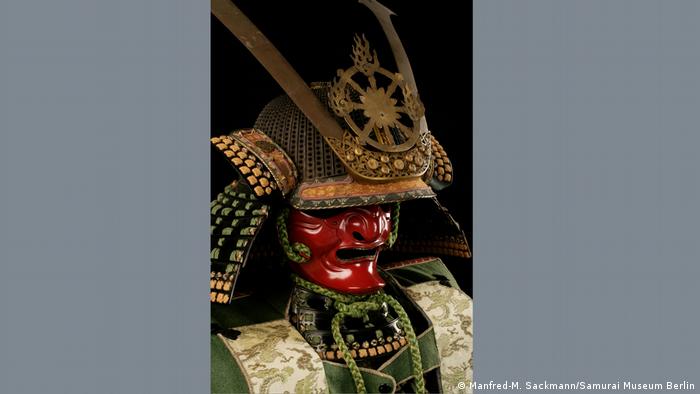
    Ornaments and intricate decorations added to the swords stood for the personality of the samurai. Elaborately decorated armor and helmets also referred to the warrior’s rank and character. Motifs including demons, dragons and Buddhist patron gods were supposed to offer supernatural protection. Occasionally, samurai wore face masks with grim features and mustaches meant to scare off the enemy.

  3. Samurai warriors did not always act nobly
    The Japanese term bushido means “way of the warrior.” It referred to the samurai’s code of conduct long before a German rapper became famous under this stage name.
    The values idealized by the samurai included courage, honor and, above all, loyalty to one’s master. The warriors also had to be willing to sacrifice themselves in battle or through ritual suicide.
    There is no doubt that the samurai demonstrated great courage and martial skill, but to what degree the samurai followed a code of conduct is disputed today. In reality, there was treachery, deceitfulness and disloyalty even among the Japanese warriors. They broke truces, burned villages and slaughtered the people they defeated. They took the heads of their victims as trophies.

    Masks show different emotions at the Noh theater
    In fact, bushido is more of an idealized idea of how the samurai should live their lives. The term only became popular in the late 19th century, when the samurai no longer existed.

  4. The samurai were much more than warriors
    Elite samurai were expected to combine the arts of peace (bun) and war (bu).
    In times of peace, the samurai turned to bureaucratic tasks.
    Samurai children had to study Chinese and Japanese literature and Confucian texts, but they also learned martial skills like archery and horseback riding.
    Many high-ranking samurai devoted themselves to tea ceremonies and painting. Scenes from famous battles, horse races and the Inuoumono “dog hunt,” where dogs were shot at, were popular motifs.
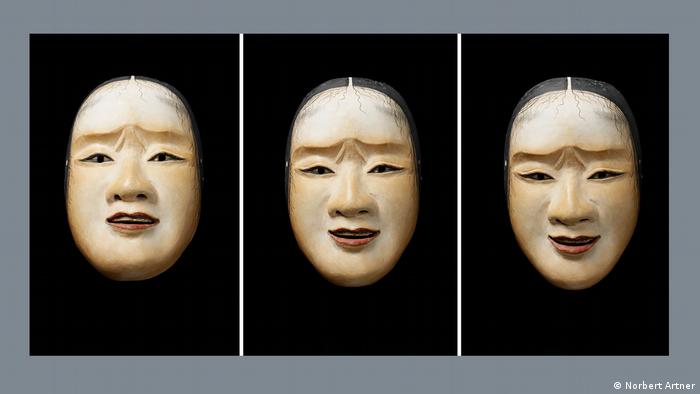
    Noh theater, a traditional form of dance drama, was another samurai activity. Noh plays emphasize Buddhist themes and focus on the emotions of a main character tormented by love, anger, or grief.

  5. The samurai were men but women fought, too
    Women fought alongside the samurai. Nakano Takeko is considered one of the greatest and also the last Japanese female warrior. During the Battle of Aizu in 1868, the 21-year-old led a unit of female fighters armed with rifles against the imperial army.

    Impressive 18th-century samurai armor
    The daughter of a high-ranking official at the imperial court, Takeko was highly educated and trained in martial arts.
    During the Aizu attack, she killed several men before she was hit by a bullet. Legend has it she asked her sister to cut off her head so her body would not be taken as a trophy by the enemy.
    Shortly after the battle, the shogunate the feudal Japanese military government fell, leaving the imperial court in charge and ending the era of the samurai.

This article was originally written in German.

If I ever get to Berlin…

threads
Samurai Museum Berlin
Arms-amp-Armor-Museum-Exhibits

Samurai Splendor: Sword Fittings from Edo Japan at the Met


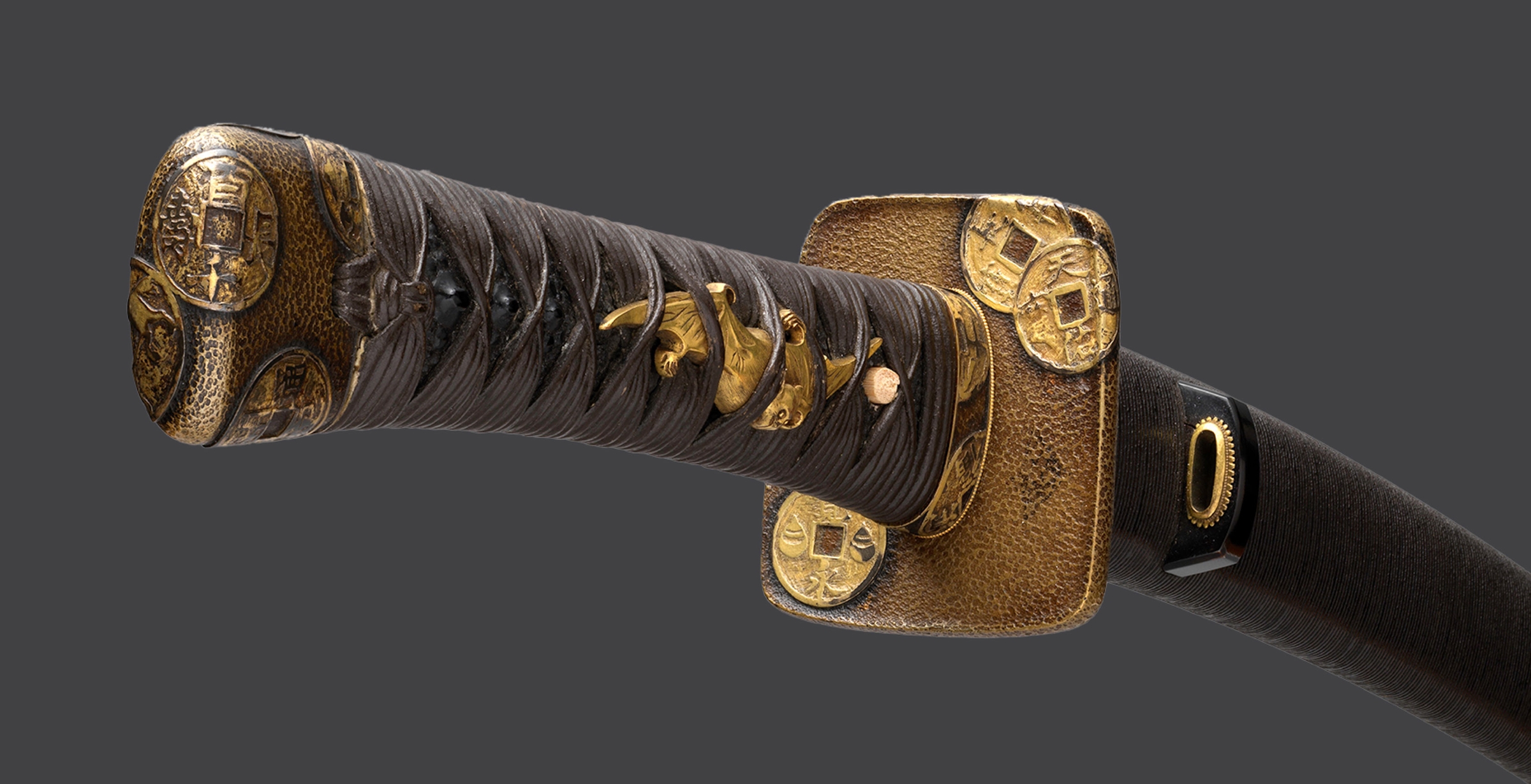
Detail of a blade and Mounting for a Long Sword (Katana)
EXHIBITION[URL=“https://www.metmuseum.org/exhibitions/listings/2022/samurai-splendor?fbclid=IwAR3rmK1eNIfZFQKQNx_E910mWfPO6HP26w3BGSgLn_k0Ub7D78btOaIZgl0”]
Samurai Splendor: Sword Fittings from Edo Japan
March 21, 2022 – Ongoing
Now on view at The Met Fifth Avenue , 380
Exhibitions are free with Museum admission.

Overview Exhibition Objects

After almost a century and a half of near-constant civil war and political upheaval, Japan unified under a new ruling family, the Tokugawa, in the early 1600s. Their reign lasted for more than 250 years, in an era referred to as the Edo period, after the town of Edo (present-day Tokyo) that became the new capital of Japan. The Tokugawa regime brought economic growth, prolonged peace, and widespread enjoyment of the arts and culture. The administration also imposed strict class separation and rigid regulations for all. As a result, the ruling class—with the shogun as governing military official, the daimyo as local feudal lords, and the samurai as their retainers—had only a few ways to display personal taste in public. Fittings and accessories for their swords, which were an indispensable symbol of power and authority, became a critical means of self-expression and a focal point of artistic creation.

This installation explores the luxurious aspects of Edo-period sword fashion, a fascinating form of arms and armor rarely featured in exhibitions outside Japan. It presents a selection of exquisite sword mountings, fittings, and related objects, including maker’s sketchbooks—all drawn from The Met collection and many rarely or never exhibited before.

This exhibition is made possible by the Vilcek Foundation.

Arms-amp-Armor-Museum-Exhibits
Arms-and-Armor-at-the-Metropolitan-Museum-of-Art

A Knight’s Tale October 22, 2022 – February 12, 2023 Arlington Museum of Art

A Knight’s Tale October 22, 2022 – February 12, 2023
Arlington Museum of Art

From the renowned collection of the Museo Stibbert in Florence, Italy, stunning examples of European arms and armor will fill our galleries this winter. One hundred and thirty rare objects, including full suits of armor, mounted equestrian figures, helmets, swords, and other weaponry, tell the tale of the European knight from the Middle Ages and Renaissance through the medieval revival of the nineteenth century.

The exhibition explores the historical and functional contexts of arms and armor of this period while also highlighting the undeniable craftsmanship, beauty and artistic appeal.

I’ve been to the Museo Stibbert. It is one of the most spectacular collections on the planet. Read ARMS & ARMOR MUSEUMS: MUSEO STIBBERT, FLORENCE, ITALY

Way of the Sword: Warrior Traditions in China and Italy at Tai Kwun

Friday, March 12, 2021, 12:00 PDF View
Cutting-edge show on swordsmanship
By Rebecca Lo


Way of the Sword co-curator Hing Chao says the sword can be seen as an instrument used to protect people as opposed to causing harm. (PHOTO PROVIDED TO CHINA DAILY)

If there is one thing the East and West have in common, it is their epic battles and the noble warriors who fought them. As successive Chinese emperors pushed into territories across Asia, the Roman Empire expanded beyond Italy to engulf much of Europe, the Middle East and North Africa. Conquests would not have been possible without the sword and the expertise it took to wield it with deadly precision.

Way of the Sword: Warrior Traditions in China and Italy is Tai Kwun’s latest exhibition and chronicles the sword’s impact upon civilization over the years. The show is co-presented by the Institute of Chinese Martial Studies and co-organized by The Martial Art Museum, City University of Hong Kong, International Guoshu Association and Ma’s Tongbei Martial Studies in partnership with the Consulate General of Italy in Hong Kong and the Hong Kong Culture Festival, and supported by the Hong Kong Arts Development Council, among others.

Curators Hing Chao and Roberto Gotti spent two years choosing materials that span two millennia. “The first prehistoric depictions of the sword can be found at Val Camonica, a place where people of different cultures met well before the Silk Roads were established,” notes Chao.


New media curator Jeffrey Shaw created a range of interactive and immersive multimedia experiences for the Way of the Sword exhibition. (PHOTO PROVIDED TO CHINA DAILY)

The valley in northern Italy’s Alps is the site of Europe’s largest concentration of rock carvings, with etchings of warriors and swords that date back thousands of years. A film capturing the rock carvings in situ can be seen alongside photos on the mezzanine level of Tai Kwun’s Duplex Studio.

“This is the first multimedia exhibition on the topic combining video and still images,” says Jeffrey Shaw, the exhibition’s new media curator.

For the first time in Hong Kong, more than 50 ancient swords and over 20 martial arts manuscripts and books dating back to the 16th century are on public display. “The lower level of the Duplex Studio takes visitors through the sword’s history, with the red section displaying Chinese artifacts and the blue section Italian ones,” says Chao. “Joining them in the middle is a white double-sided display case showcasing both cultures. The mezzanine level is devoted to martial arts, with a combination of video and still images.”

Some of the swords on display are embellished with expensive metal, like gold hilts. Ceremonial armor reinforces the pageantry associated with brave warriors. For example, a 19th-century costume of a Manchu officer assigned to protect the emperor is decorated with dragon designs in gold thread on blue satin silk.


Costume of a 19th-century Manchu officer assigned to protect the Chinese emperor on display at the Way of the Sword exhibition in Tai Kwun. (PHOTO PROVIDED TO CHINA DAILY)

Achille Marozzo’s Opera Nova dates back to 1528 and outlines the battle postures of Italian Renaissance martial arts through linear drawings. “Opera Nova is our most important artifact here,” states Chao. To bring the manuscript to life, Shaw and Sarah Kenderdine developed Linear Navigator, which allows viewers to watch sword techniques through digital animation.

On the mezzanine level, film scenes featuring Italian and Chinese martial arts masters demonstrating sword fighting techniques are played on rotation, giving viewers a chance to note the cultural differences between the two. Images by photographer Almond Chu and other Hong Kong artists highlight the power of different weapons as they are wielded.

“With the rise of gunpowder in China, the sword was eventually replaced by the knife,” says Chao. “The sword can be seen as an instrument of protection, while the knife is an instrument of harm.”

“Way of the Sword was designed to be an immersive museum experience,” says Shaw. “Sometimes, to understand our own culture, we have to view it through the lens of a foreign one.”

This one is dated from last year so I don’t know if it’s still going.

More on the exhibit above

I may not know if it’s still going, but the interwebz does…:rolleyes:

Way of the Sword: Warrior Traditions in China and Italy

Date & Time

25 FEB - 4 APR, 2021
11am-8pm
Location
Block 01 Duplex Studio and Block 14 G/F

Free of charge

The exhibition “Way of the Sword: Warrior Traditions in China and Italy”, curated by Hing Chao and Roberto Gotti, is a multi-dimensional presentation of China and Italy’s warrior and sword traditions from the Classical era through to the Early Modern age. The first mixed-media exhibition of its kind, the exhibition includes over 50 historic swords and polearms, over 20 sixteenth-century martial art manuscripts and books, as well as a range of historic objects related to the martial cultures in China and Italy.

At the same time, drawing on City University of Hong Kong professor and new media curator Jeffrey Shaw’s world-leading expertise in new media, “Way of the Sword” offers a wide range of immersive and interactive experiences in order to bring viewers through a historic journey of the sword, ultimately arriving at the twenty-first century when historic martial arts in Italy and China converge upon a common path of rediscovery and exchange.

The exhibition also features photography by Almond Chu, Chinese ink art paintings by Lin Haizhong, Zheng Li, and Lee Chi Ching, as well as a selection of animations and documentary film specially commissioned for this exhibition.

Audio guide materials* are available at the exhibition entrance (Visitors are reminded to bring their own headphones).

//youtu.be/ejnkrL-rcaA