Year of the Pig 2019

More on Peppa Pig

Am I going to have to make a separate thread for Peppa Pig here?

JANUARY 31, 2019 7:15PM PT
Peppa Goes Viral Ahead of Chinas Year of the Pig
By REBECCA DAVIS

//youtu.be/7zOUJGYzHQY

With a helping hand from e-commerce giant Alibaba, China has succumbed to Peppa Pig mania. And following a recent agreement with STX, North American audiences will also get a taste of Chinese New Year swine fever.

As the lunar new year approaches the year of the pig, according to the Chinese zodiac theres no way to escape Peppa or her upcoming movie, Peppa Pig Celebrates Chinese New Year. Shopping malls, grocery stores and restaurants across China are plastered with her image, despite the happy cartoon character having been banned on social media last year for being too gangster and a potential negative influence. Now, the pink porker appears to have the blessing of no less than the ruling Communist Party.

Peppa Pig Celebrates Chinese New Year comes out in theaters Feb. 5, the first day of the new year holiday period. An official co-production between Entertainment One and Alibaba Pictures, Alibabas film investment and distribution arm, it faces stiff competition from 12 other films opening the same day, including two other pig-themed animations: The Legend of Pig Warrior and Boonie Bears: Blast Into the Past. But Peppas prospects look promising, owing to her popularity not just with kindergartners but with ironic Chinese teens who have adopted her as a symbol of self-mockery and rebellion.

The Peppa Pig show was an immediate hit among youngsters when it landed in China in 2015. Two years later, the character became immensely popular with post-90s kids who identified with the shehuiren, or gangster, youth subculture but who didnt have the money to dress the part (think tattoos and gold chains). To poke fun at themselves, they took on innocent Peppa as their emblem, painting on fake Peppa tattoos, wearing toy Peppa watches, and remixing images and videos to make her, say, sport sunglasses, chains and a reefer.

Alarmed at the trend, Douyin, Chinas version of TikTok, deleted more than 30,000 videos hashtagged #PeppaPig. The government-aligned Global Times newspaper warned: The popularity of Peppa Pig in China shows a spirit of innovation, but it could also bring negative influence to the young generation if they overindulge in such a subculture.

Now, the beloved British toon star has gone viral once again, but this time in a much more state-sanctioned manner.

Earlier this month, the films director, Zhang Dapeng, released a five-minute, live-action promo that has brought viewers to tears and worked state media into a tizzy of praise. The adorable short, which both encourages family togetherness and promotes the Peppa movie, is perhaps one of the most successful examples of the localization of foreign content in China in recent memory, and has been viewed more than 200 million times.

Tell Grandpa what you need [as a new years gift] and Ill prepare it for you, an old man tells his grandson in a thick provincial accent on his dodgy mobile phone, while standing alone on a desolate hilltop to catch a signal. Peppa? Whats Peppa?

The phone signal cuts, sending grandpa on a goose chase to figure out what a Peppa is. He tries looking it up in a dictionary, asking his village over the loudspeaker system, and hassling everyone he knows before ultimately fashioning a gift out of a metal fan painted pink to look like Peppas face. The short video ends with the message: On the first day of the new year, dont accept gifts; instead, go with the whole family into the city to watch Peppa.

The short has been praised by the Communist Partys highest anti-graft body, the Central Commission for Discipline Inspection and Supervision, and its official mouthpiece, the Peoples Daily. It was the emotional resonance of this uniquely Chinese feeling [of longing for family reunion] that made this video a hit, the newspaper said. As a cultural phenomenon, What is Peppa? has brought a good beginning to 2019.

Thanks to the shorts success, California-based STX Entertainment announced Thursday that it plans to release the Peppa film in 32 U.S. markets. It will play in 65 theaters across the U.S. on the same day that it debuts in China, subtitled in English.

I got a phone call from Alibaba a week and a half ago, shortly after the marketing materials for Peppa in China had gone super-viral And it was clear to us that the virality was extending far beyond the mainland to Mandarin-speaking U.S. populations, STXfilms chairman Adam Fogelson told Yahoo Finance. There certainly could be not on the Marvel level, of course broad interest. Depending on what happens in the first week or two, anything is possible.

STX is targeting cities with large Chinese American populations, including Los Angeles, New York and San Francisco, with family-friendly matinee and early screenings. Profitability is likely to be limited, Fogelson acknowledged, but said the goal of the partnership is to deepen ties with Alibaba. The company is already partnered with Alibaba Pictures on upcoming animated film Uglydolls and on Steel Soldiers, to be directed by Robert Zemeckis.

Two new Chinese New Year-themed special TV episodes of Peppa Pig will also hit the airwaves on Feb. 5, Entertainment One announced Monday. They will be aired by Nickelodeon and free-to-air broadcasters in regions including Australia, New Zealand, Europe, Canada and South Africa, and will play in Mandarin in Asia, Taiwan and Hong Kong.

[QUOTE=David Jamieson;1312210]Yes! It is an awesome and positive show.
Obviously, it’s for little kids, but still, it is great to watch. All the littles giggling is a kick. I put it on for my dogs when I go to work and they love it. :D[/QUOTE]
David, I did watch a little Peppa Pig. Honestly, it wasn’t working for me and I couldn’t make it through a single episode. I guess I’m not as gangster as you. :o

Prelude to tomorrow

Here we go! The Spring Festival film rush race and it’s White Snake in the lead from the starting gate.

FEBRUARY 3, 2019 9:58PM PT
China Box Office: ‘Snake’ Steals Win as Pre-Holiday Slowdown Deepens
By PATRICK FRATER
Asia Bureau Chief


CREDIT: COURTESY OF PARAMOUNT PICTURES

Chinese animation “White Snake” slithered to a weekend win, as theatrical box office in China, ahead of the Lunar New Year holidays, slipped to the lowest total of the past two years. “Snake” scored with just $9 million.

The film has now accumulated $64.5 million since its Jan. 11 release, according to data from entertainment consultancy Artisan Gateway. That makes “Snake” the biggest film to date from producer Lightchaser Animation Studios, and one of the top-performing Chinese-made animation films.

In the absence of competition from new releases, “Once Upon a Deadpool” and “Bumblebee” kept going. The expurgated version of “Deadpool 2” earned $7.3 million for a cumulative of $41.8 million, while “Transformers” spinoff “Bumblebee” earned $5.2 million, to advance its total to $170 million and confirm its status as the biggest film released in 2019 in China. “Escape Room” added $5.2 million for a $33.9 million total. Chinese-made “The Big Shot” added $2.7 million to its total, lifting its cumulative to $56.3 million.

Nationwide, Chinese theaters earned only $32.7 million between Friday and Sunday, the quietest weekend since September 2016. Artisan Gateway points to a year-to-date total of $535 million, down 32% from the $790 million accumulated at this point last year.

Even though businesses have been on slowdown since Friday, distributors avoided putting out new releases this weekend. They preferred instead to wait for the official first day of the holidays Tuesday.

Whether that strategy was a wise one will become clear over the next week. From Tuesday, more than a dozen new films will compete for screens and viewers, ranging in genre from comedies to animation to Jackie Chan in costume targeting family audiences.

Word-of-mouth promotion, driven by social media, is hugely important in China. Last year it took viewers just two days to switch from the early favorite (“Monster Hunt 2”) to Dante Lam’s well-made patriotic actioner, “Operation Red Sea.” But the scores that can be obtained in those few days may dwarf the past weekend’s total.

#PigYearDontEatThem

FEBRUARY 3, 2019 / 7:14 PM / UPDATED 13 HOURS AGO
Stop pigging out and save the planet, Chinese told ahead of Lunar New Year
Beh Lih Yi
3 MIN READ

KUALA LUMPUR (Thomson Reuters Foundation) - As Chinese people celebrate the new Year of the Pig this week, environmental campaigners are urging them to eat less pork and help save the planet.

Men perform a dragon dance called Liong ahead of the upcoming Chinese Lunar New Year during the Grebeg Suro ceremony in Solo, Central Java province, Indonesia, February 3, 2019 in this photo taken by Antara Foto. Antara Foto/Mohammad Ayudha/via REUTERS. A
China consumes more meat than any other country and accounts for half the worlds consumption of pork, which is used in everything from dumplings and stir-fries to hotpots.

That has helped make it the worlds biggest emitter of climate-warming greenhouse gases - according to the U.N. Food and Agriculture Organization (FAO), livestock are responsible for about 14.5 percent of global emissions.

Chinese emissions can be reduced by almost 10 percent in the next decade if Chinese people just ate half as much meat, said Jen Leung, China climate director at the U.S.-based charity WildAid.

So just try eating a little less pork in honor of a healthy Year of the Pig, she told the Thomson Reuters Foundation.

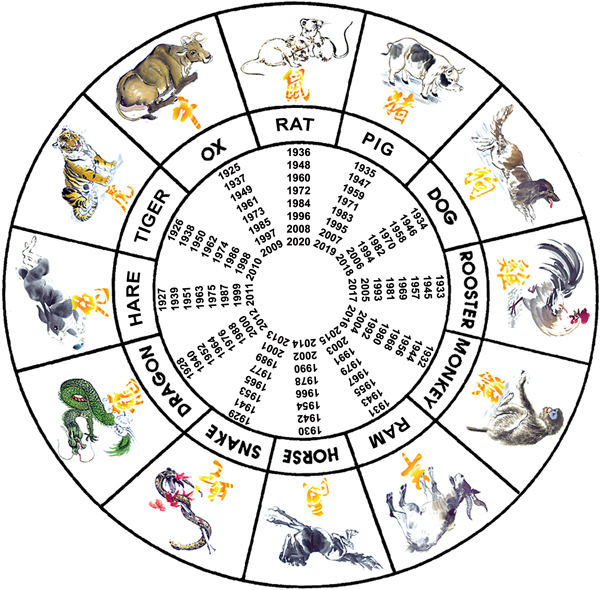
Twelve animals make up the traditional Chinese zodiac and this week marks the transition from year of the dog to year of the pig.

The week-long holiday starts on starts on Monday, the eve of the new year, and is the most important in the Chinese calendar, when millions of people travel home.

Many restaurants have special menus to mark the festival, which is celebrated by Chinese communities around the world.

In Hong Kong, famous for its dim sum and barbeque pork, one company is partnering with restaurants to promote Lunar New Year dishes cooked with its vegan pork made with ingredients including soybeans and peas.

Traditional belief dictates that we should not eat the same animal during their year in order to bring good luck - so pig year dont eat pork, said Alvin Lee, marketing manager at Green Monday, a social enterprise that promotes sustainable living.

But more importantly its to address the issue of food safety and to mitigate climate change, he said, referring to a recent outbreak of deadly African swine fever on pig farms in China.

On Weibo, Chinas equivalent of Twitter, animal rights group PETA has launched a campaign to honor the playful animal with the hashtag #PigYearDontEatThem.

Animal agriculture is responsible for more greenhouse gases than all the worlds transportation systems combined, PETA Asia campaigner Jason Baker said.

China issued dietary guidelines in 2016 recommending people halve their meat consumption - a move lauded by environmentalists as a way to cut greenhouse gas emissions as well as boosting public health.

Experts said people were unlikely to give up on their pork dumplings any time soon in China, where meat is still associated with wealth and status.

Its quite challenging because culturally there are quite a lot of values attached to being able to eat meat, Beau Damen, an expert on climate change at the FAO in Bangkok, told the Thomson Reuters Foundation.

But one thing consumers do have to keep in mind is that choices about what we eat do have a direct impact on the environment, he warned.

Reporting by Beh Lih Yi @behlihyi; Editing by Claire Cozens. Please credit the Thomson Reuters Foundation, the charitable arm of Thomson Reuters, that covers humanitarian news, women’s and LGBT+ rights, human trafficking, property rights, and climate change. Visit news.trust.org

Bacon!!!
Year of the Pig 2019
WildAid

Kung Fu Horoscopes by our Feng Shui Master Wilson Sun

What does the Year of the Pig hold for you? See our 2019 Chinese Zodiac Horoscopes.

THREADS
Year of the Pig 2019
Chinese Zodiac

Opening tomorrow in PRC

Next up for Spring Festival - The Wandering Earth - my money is on this one to win out this year, mostly because of the momentum of Wu Jing. My second pick is the New King of Comedy.

The Wandering Earth could be the film to spark Chinas science fiction moviemaking
The film, starring Wolf Warriors Wu Jing, is a sci-fi movie of epic scale that rivals Hollywood blockbusters like Interstellar and Gravity
Hopes are high that it will inspire more quality Chinese sci-fi blockbusters after a frankly embarrassing line of substandard productions
PUBLISHED : Monday, 04 February, 2019, 7:02am
UPDATED : Monday, 04 February, 2019, 7:01am
Elaine Yau
https://www.facebook.com/elaine.yau.3152
https://www.weibo.com/u/6450432252

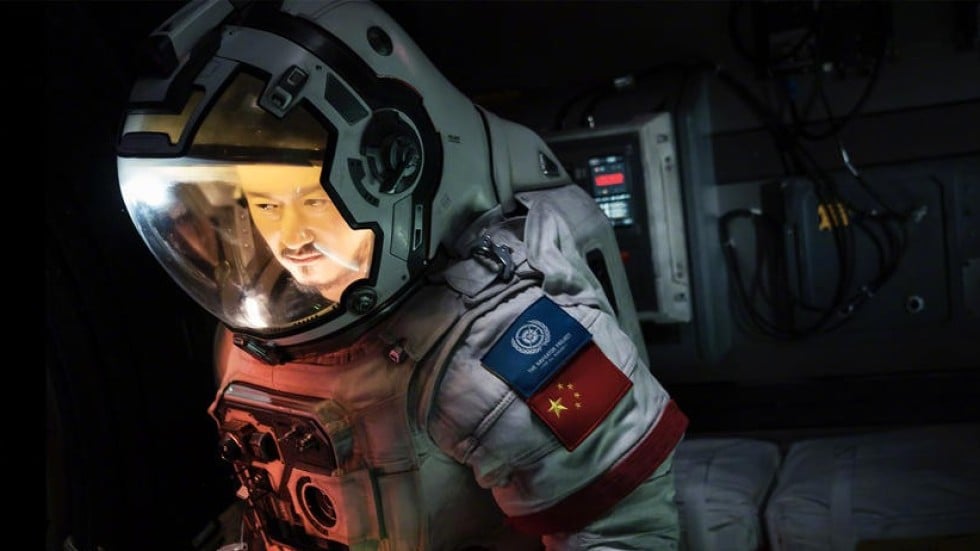
Laden with an extravaganza of special effects, The Wandering Earth (out in China on February 5) is a Chinese science fiction movie of epic scale that rivals Hollywood space blockbusters like Interstellar and Gravity.

Adapted from the novel of the same name by renowned science fiction author Liu Cixin the first author from Asia to win best novel at the Hugo sci-fi and fantasy literary awards, for The Three-Body Problem in 2015 the film has created a large buzz in China, with a series of screenings generating rave reviews.

Movers and shakers in Chinas scientific community are singing the films praises, saying it heralds a new dawn for Chinese sci-fi cinema.

While Chinas movie industry has enjoyed spectacular growth since the countrys opening up 40 years ago, science fiction is a genre that has been left mostly underdeveloped due to huge technical costs and the deep philosophical depth often involved in plots.

//youtu.be/c8LAwozrXPo

Ji Shaoting, co-founder of the Future Affairs Administration, which promotes Chinese science fiction writers and is the films official promoter, told ifeng.com last year that many Chinese TV and movie companies eager to make science fiction productions lack basic understanding of the genre.

For example, Resident Evil and Interstellar are totally different works, she said. The stories by [science fiction authors] Han Song and Liu Cixin are also different.

The history of Chinese science fiction movies is an embarrassing mixture of substandard productions and lacklustre box office results.

According to a 2018 report on Chinas science fiction industry released by the Southern University of Science and Technology in Shenzhen, the total China box office for science fiction movies in 2017 was 13 billion yuan (US$1.9 billion), but Chinese productions accounted for only 1.3 billion yuan, or 10 per cent. In the first half of 2018, the total China box office for science fiction movies was 9.5 billion yuan, of which only 890 million yuan, or 9 per cent, was chalked up by Chinese productions.

Foreign science fiction productions like Interstellar, Gravity and Lucy were blockbusters in China and account for one-third of all foreign movie imports since 2012.

In comparison, Chinese science fiction fare like Future X-Cops (2010) and Metallic Attraction:Kungfu Cyborg (2009) are embarrassing productions where science fiction elements do not even constitute the main plot.

Meanwhile, a much-hyped movie adapted from Lius critically acclaimed The Three-Body Problem has been shelved, leading commentators to say that Chinas movie-making standard does not measure up to the epic scale portrayed in the book.


A still from The Wandering Earth. Photo: Future Affairs Administration

Alex Li, co-founder of the Future Affairs Administration, told chinawriter.com in 2016 that it might take a decade for local science fiction productions to enjoy the same popularity at the China box office as Hollywood productions.

Science fiction accounts for a very high proportion of the box office, he said Its impossible for local industry players and capital to just cede the profits generated from the sector to Hollywood. But the process might last up to a decade. We believe in local science fiction productions and we are willing to wait.

The long wait might be over prematurely with the release of The Wandering Earth.


Wu Jing in a still from The Wandering Earth. Photo: Future Affairs Administration

The film portrays how a group of intrepid Chinese astronauts save the world from the brink of annihilation due to the imminent destruction of the sun. Like Hollywood space movies where Americans are portrayed as the only ones capable of saving humanity, here Chinese astronauts are the sole adventurers among the global space community determined to complete the arduous task of fending off the apocalypse.

In spite of such overt patriotism, the film is spectacular for its ceaseless stream of hair-raising close-shave encounters and apocalyptic landscapes oozing desolation and despair. There is also a touching subplot involving family bonds at the centre of the mission to save the earth.


Qu Chuxiao in a still from The Wandering Earth. Photo: Future Affairs Administration

Wu Jing who directed and starred in the hugely patriotic Wolf Warrior blockbuster series plays the father in the family, a Chinese astronaut stationed in space who has been away from his family for years.

[QUOTE]The Chinese have landed on the dark side of the moon. No humans have done this before. Such scientific achievements and development have set up a solid foundation WU JING

Wu told huanqiu.com recently that 2019 is the inaugural year of Chinese science fiction movies due to the release of The Wandering Earth.

When director Frant Gwo first came to me to explain all the physics data, I didnt understand it at all, he said. However, in him, I saw traces of me when I made the first Wolf Warrior, when I went everywhere telling people how the helicopter, tanks and explosions worked. Like him, I was close to breaking down then.

I told him, I can help you as long as you will help young people involved in new film genres after you become successful. Later, capital for making the movie became tight, so I told him I didnt need to get paid. I shot the movie for 31 days. Later, money ran out. I told Gwo that we are in the same boat and I dont want to regret putting effort into the movie, so I became an investor as well.


A still from The Wandering Earth. Photo: Future Affairs Administration

Although Wu is not a big fan of science fiction movies, he said the making of The Wandering Earth helped him understand the genre.

Chinese science fiction fans have seen all the world-class science fiction movies and they have waited for a long time with patience [for good] Chinese science fiction movies, he said.

The Chinese have landed on the dark side of the moon. No humans have done this before. Such scientific achievements and development have set up a solid foundation. No Chinese filmmakers have made anything like The Wandering Earth. Seven thousand people worked on the movie. It has at least nurtured 7,000 peoples basic knowledge in science fiction movies.


Frant Gwo, director of The Wandering Earth. Photo: Xun

In a discussion session after a recent screening held at the China Science and Technology Museum in Beijing, Gwo said he has been a fan of science fiction since childhood and has now realised his dream of making a science fiction movie.

When making the movie, we learned from Hollywood production flow and methods. We have overcome many unimaginable difficulties to make it. I hope this movie will prompt more directors to try the genre and boost investors confidence in it.[/QUOTE]

THE NEW KING OF COMEDY Trailer

The New King of Comedy is another contender for the 2019 Spring Festival box office.

//youtu.be/nr-ErwHSEKk

Pulling out ahead…

I called Wandering Earth for the Spring Festival winner, not Crazy Alien. It’s now ahead of White Snake.

FEBRUARY 5, 2019 4:21AM PT
Ning Hao’s ‘Crazy Alien’ Leads $200 Million Day at Chinese Box Office
By PATRICK FRATER
Asia Bureau Chief


CREDIT: COURTESY OF DIRTY MONKEY FILMS

“Crazy Alien,” a comedy caper by hit-making director Ning Hao, led the box office in China on the first day of the Chinese New Year holiday period. By 7 p.m. on Tuesday, the film had earned $55 million in mainland Chinese cinemas.

The top eight movies earned a combined $200 million (RMB1.35 billion) by 7:30 p.m., according to data from China Box Office.

“Crazy Alien,” in which two brothers hope to make a fortune from an alien who lands in their lap, is the third film in Ning’s “Crazy” franchise. It follows 2009 black comedy “Crazy Stone” and 2006 title “Crazy Racer.” Once again it stars Xu Zheng and Huang Bo.

The early score, and a 28% market share, is a solid start for the film, which is backed by Huanxi Media, the stock market listed vehicle in which Ning and Xu are major owners. The company announced last year that distributors had provided a minimum guarantee that “Alien” would achieve $415 million (RMB2.8 billion) in China.

“Pegasus,” by celebrity blogger-turned-film director Han Han, was in second place with $42 million (RMB282 million) at 7 p.m., for a 21% market share. “New King of Comedy,” a remake of Stephen Chow’s 1999 title, was third. It had earned $36 million (RMB243 million) for a 19% share of the early evening pie.

“Wandering Earth,” heralded as China’s first genuine sci-fi movie, earned $24.8 million (RMB167 million) in fourth place and a 13% market share. “Boonie Bears: Blast Into the Past,” the sixth film in a Chinese animation franchise, earned $10.9 million on its first official day of release. But with previews, it has already amassed $16.8 million. Its producer, Fantawild has gone on record to forecast a result of more than $100 million.

Jackie Chan-starring family friendly historical adventure, “Knight of Shadows: Between Yin and Yang” was in sixth place on Tuesday with $9.3 million by 7 p.m. It was narrowly ahead of Chinese-British animation “Peppa Pig,” which had raked in $9 million. In eighth place was “Integrity,” stuffed with a cast of Hong Kong veterans, which had earned $7.9 million (RMB53 million).

Cinema attendance could increase on subsequent days, following family get-togethers on the first day of celebrations. The Chinese New Year (also known as Lunar New Year and Spring Festival) holidays run through the whole of the week in mainland China.

[2019] | cctv

//youtu.be/4RJ-K1-xz6Y

THREADS
Tagou
Year of the Pig

Our newest exclusive web article

HAPPY LUNAR NEW YEAR! READ Chinese New Year 2019: Year of the Dirty Pig by Gene Ching

THREADS
Year of the Pig 2019
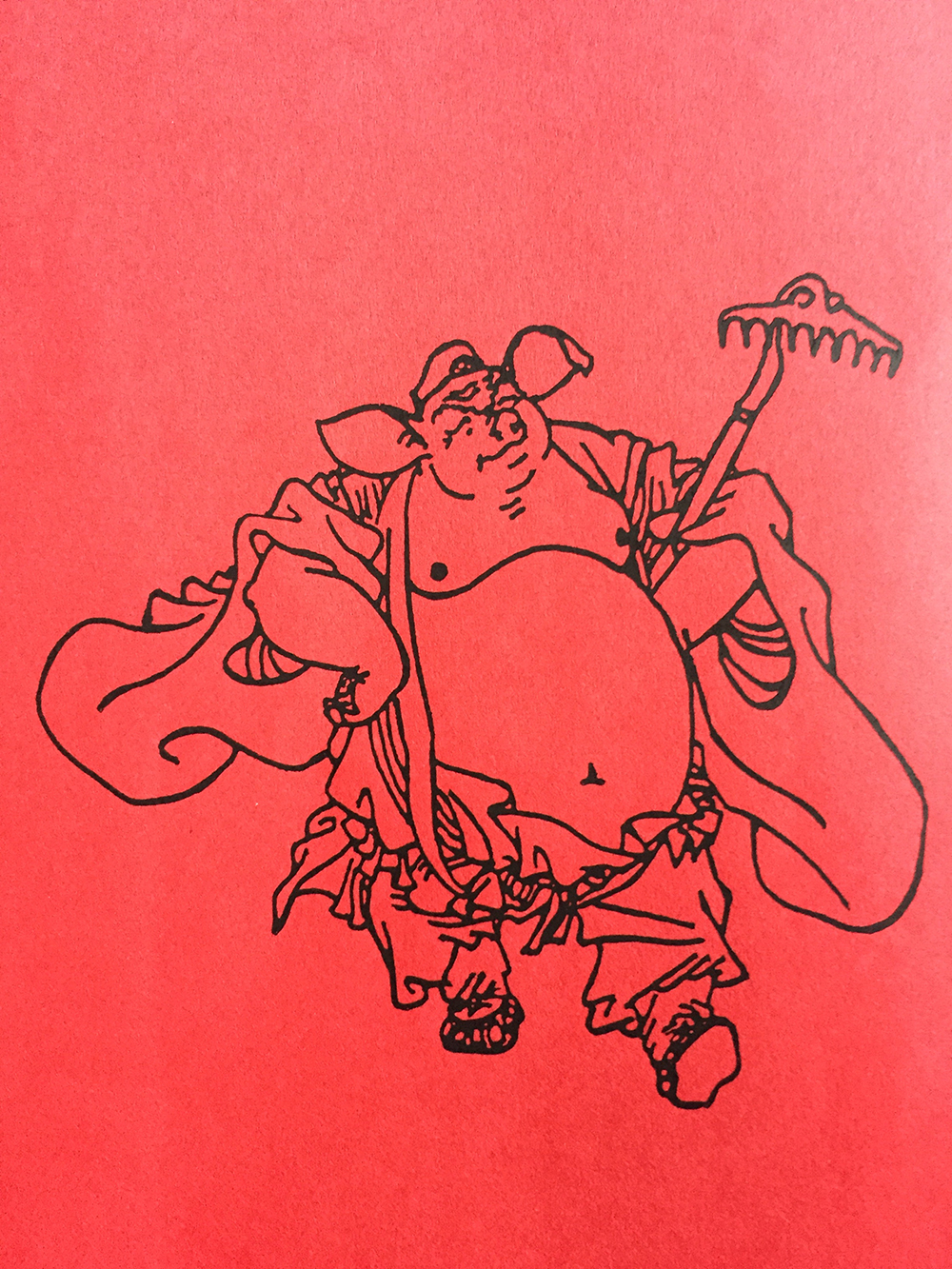
9 teeth rake
Monkey King

$200m

Bummer. I wasn’t even close with my Wandering Earth for the Spring Festival winner. It’s all about Crazy Alien. I haven’t seen any of the Crazy trilogy yet. :o

FEBRUARY 5, 2019 4:21AM PT[URL=“https://variety.com/2019/film/asia/ning-hao-crazy-alien-heads-200-million-dollar-day-at-chinese-new-year-box-office-1203128600/”]
Ning Hao’s ‘Crazy Alien’ Leads $200 Million Day at Chinese Box Office
By PATRICK FRATER
Asia Bureau Chief


CREDIT: COURTESY OF DIRTY MONKEY FILMS

“Crazy Alien,” a comedy caper by hit-making director Ning Hao, led the box office in China on the first day of the Chinese New Year holiday period. By 7 p.m. on Tuesday, the film had earned $55 million in mainland Chinese cinemas.

The top eight movies earned a combined $200 million (RMB1.35 billion) by 7:30 p.m., according to data from China Box Office.

“Crazy Alien,” in which two brothers hope to make a fortune from an alien who lands in their lap, is the third film in Ning’s “Crazy” franchise. It follows 2009 black comedy “Crazy Stone” and 2006 title “Crazy Racer.” Once again it stars Xu Zheng and Huang Bo.

The early score, and a 28% market share, is a solid start for the film, which is backed by Huanxi Media, the stock market listed vehicle in which Ning and Xu are major owners. The company announced last year that distributors had provided a minimum guarantee that “Alien” would achieve $415 million (RMB2.8 billion) in China.

“Pegasus,” by celebrity blogger-turned-film director Han Han, was in second place with $42 million (RMB282 million) at 7 p.m., for a 21% market share. “New King of Comedy,” a remake of Stephen Chow’s 1999 title, was third. It had earned $36 million (RMB243 million) for a 19% share of the early evening pie.

“Wandering Earth,” heralded as China’s first genuine sci-fi movie, earned $24.8 million (RMB167 million) in fourth place and a 13% market share. “Boonie Bears: Blast Into the Past,” the sixth film in a Chinese animation franchise, earned $10.9 million on its first official day of release. But with previews, it has already amassed $16.8 million. Its producer, Fantawild has gone on record to forecast a result of more than $100 million.

Jackie Chan-starring family friendly historical adventure, “Knight of Shadows: Between Yin and Yang” was in sixth place on Tuesday with $9.3 million by 7 p.m. It was narrowly ahead of Chinese-British animation “Peppa Pig,” which had raked in $9 million. In eighth place was “Integrity,” stuffed with a cast of Hong Kong veterans, which had earned $7.9 million (RMB53 million).

Cinema attendance could increase on subsequent days, following family get-togethers on the first day of celebrations. The Chinese New Year (also known as Lunar New Year and Spring Festival) holidays run through the whole of the week in mainland China.

I give up - it’s on NPR

Why It’s The Year Of Peppa Pig In China
February 5, 20196:09 PM ET
Maureen Pao, photographed for NPR, 17 January 2019, in Washington DC.
MAUREEN PAO

//youtu.be/7zOUJGYzHQY

YouTube

It’s the Year of the Pig — Peppa Pig, that is. The popular porcine British cartoon character is being boosted to new heights — in part thanks to an unusual movie trailer that’s become a runaway viral hit in China.

A British import, the Peppa Pig TV show debuted in China in 2015 and follows the exploits of plucky piglet Peppa, Mummy, Daddy and brother George Pig, and her menagerie of friends. Kids have gone crazy for her; her likeness gracing toys, watches, backpacks, temporary tattoos and, eventually, memes that temporarily sullied her reputation in China (more on that later.)

And now, in the Year of the Pig, Peppa is on her way to becoming a full-fledged movie star. Peppa Pig Celebrates Chinese New Year opened in China on Tuesday, the first day of the Lunar New Year.

But for now, people are talking about the promotional trailer more than the film.

Titled “What Is Peppa?” the five-minute live-action trailer tells the story of a grandfather in rural China and his quest to find the perfect gift for his city-dwelling grandson to celebrate Lunar New Year. It’s the most important holiday in China, and one that is, above all, about family. For some, it is the only time of year they are able to travel back to their hometown.


People walk past a Peppa Pig pop-up shop in the Yu Yuan gardens, a popular tourist spot in Shanghai.
Matthew Knight/AFP/Getty Images

“What is brilliant about this video is that it changes Peppa into a certain feeling, of bringing people together,” says Manya Koetse, an Amsterdam-based Sinologist and editor-in chief of What’s on Weibo, a website that reports on social media trends in China. “More than just the pig being the film or a toy or a commodity, it shows the gap between the Chinese urban areas and rural areas.”

The trailer opens on a hillside with an elderly man, Li Yubao, talking on his cellphone with his 3-year-old grandson about the upcoming New Year visit. The man’s simple clothes immediately signal that he’s one of China’s more than half-a-billion rural citizens. The grandfather wants to know what the boy wants as a present. He answers, “Pei Qi” — before Li Yubao’s outdated phone cuts out when the antenna — yes, antenna — falls off.

Thus Grandfather Li’s quest begins: What is Pei Qi? (That’s Peppa’s name in Chinese.) His devotion to answering this question is at the emotional heart of the trailer.

continued next post

Continued from previous post

//youtu.be/CXscAme1Kok

A father spent hours creating a Peppa Pig out of snow for his young daughter.
YouTube

He looks in the dictionary. He uses the village P.A. system to ask if anyone has a clue. (He repeats the announcement to be sure everyone heard, you know, as grandpas often do.)

In Chinese, Pei Qi sounds similar to other words: Is it a shampoo? A kind of Chinese checkers? No one knows — until, finally, a breakthrough: A neighbor’s wife worked as a nanny in Beijing. She’ll know.

And she does. She describes the little pink pig to Li, who at first literally tries to paint a live pig. That will not do.

So he makes a gift … and waits. Awakened by firecrackers on New Year’s Day, he gets ready for his family to visit. He wraps dumplings, alone. As others greet their returning relatives, the man sweeps his courtyard, alone. Waiting.

Nonspoiler alert: you’ll have to watch it to find out how it ends.

With over 1 billion hits since its Jan. 17 debut on Weibo, China’s version of Twitter, the trailer is clearly a hit. But there were some who criticized it for being unrealistic or romanticizing rural life.

“That’s nonsense,” says Koetse. Director Zhang Dapeng has said he used nearly all nonprofessional actors for the trailer, which was filmed in two days in a Hebei province village. The locals wore their own clothes. The story was set in their own homes.

“So it couldn’t be much closer to the truth,” Koetse says.

That realism is part of why Chinese audiences loved the trailer — and extends to how the mini-drama hits hot-button social issues.

“There is a gap, and it’s not just an urban-rural gap but also a gap between young people and older people, in a time where the digitalization of China is going so, so fast,” Koetse says. “And especially the older people, and especially those in rural areas, are quick to be left behind if they don’t catch up with the latest technology.”

But perhaps the trailer’s greatest strength is the pull of nostalgia — and of family. In China, grandparents traditionally play a prominent role in raising their grandchildren.

“Now with the rapid urbanization of China, you see that this is not always possible anymore,” says Koetse, as younger generations leave for the cities — and more opportunities — leaving their elders behind.

To Koetse, another part of the genius of “What Is Peppa?” is how it takes the idea of quintessentially British Peppa and wraps her up in Chinese traditions and values about familial bonds.

“Peppa has never been this Chinese before,” Koetse says.

continued next post

Continued from previous post

//youtu.be/U-xmBLmaxyU

Peppa fever extends even to China’s People’s Liberation Army, as soldiers in Hong Kong assume a pig formation.
YouTube

It’s not been all muddy puddles and spaghetti for Peppa. (Those are two of her favorite things.) She made headlines, and not in a good way, when she was co-opted by the Chinese youth subculture known as shehuiren – which literally means “society person” but actually refers to anti-authority slackers.

Koetse explains that this subculture took Peppa as their symbol and in memes and unauthorized videos, depicted her smoking cigarettes, wearing sunglasses, “making her into something different” and, in the eyes of Chinese authorities, undesirable. As a result, some 30,000 unofficial videos of Peppa were removed from Douyin, a popular short-video platform in China, last year.

But that hasn’t stopped the #WhatIsPeppa juggernaut. Social media users opined that it made them homesick and want to treat their grandparents better.

Some pig, indeed.

Wanyu Zhang contributed reporting to this story.

Peppa Pig gets its own thread, independent of our Year of the Pig thread.

$27.5 m

I’m still pulling The Wandering Earth to win the box for Year of the Pig

Chinese Sci-Fi Blockbuster Draws Crowds on Opening Day
The Wandering Earth a big-budget adaptation of a Liu Cixin novel is expected to spark deeper interest in homegrown science fiction.
Yin Yijun
Feb 06, 2019 3-min read

JIANGSU, East China Chinese film fans ushered in the Year of the Pig with a new single-day box-office record on Tuesday, with the countrys first big-budget sci-fi blockbuster, The Wandering Earth, contributing a significant share.

In all, eight movies were released yesterday, garnering total box-office takings of 1.46 billion yuan ($207 million), breaking the previous record of 1.28 billion yuan set on the first day of Lunar New Year 2018. The much-anticipated The Wandering Earth took an estimated 186 million yuan ($27.5 million), according to ticketing site Maoyan.

Based on a short novel of the same name by Liu Cixin Chinas first science-fiction author to win the prestigious Hugo Award The Wandering Earth has been four years in the making and cost around $50 million to make. The story takes place in an apocalyptic future where, as the sun dies, the world government decides to physically move Earth away from destruction and embark on a centuries-long voyage to a new solar system. But humanity is threatened with annihilation almost immediately, when scientists discover that Earth is on an apparent collision course with Jupiter. In the end, it is left to a rebellious young man named Liu Qi played by up-and-coming actor Qu Chuxiao and his father, a Chinese astronaut, to come to the rescue.

The Wandering Earth has attracted attention both at home and abroad for being Chinas first big-budget sci-fi blockbuster. Science fiction as a whole is becoming increasingly popular in China, partly thanks to the success of Liu Cixins award-winning trilogy The Three-Body Problem. But although the countrys domestic movie industry is growing rapidly churning out around 1,000 titles per year, according to consulting firm Askci Hollywood films still constitute the bulk of the countrys sci-fi releases.

The early signs indicate that The Wandering Earth is a hit. At a series of promotional screenings before its official release, critics praised its visual effects and gripping storyline. And on Douban, the movie currently has a score of 8.3 out of 10 points, higher than most other movies in the same genre.

On Tuesday afternoon at a movie theater in Lianyungang, a coastal city in the eastern Chinese province of Jiangsu, a near-full house flocked to see the first screening of The Wandering Earth. Thirty-seven-year-old Qiao, a self-professed fan of science fiction and Liu Cixins works in particular, took his wife and 10-year-old daughter to see the movie. He, too, lauded the plot and eye-catching special effects.

Qiao is familiar with smaller-budget Chinese attempts at sci-fi, such as 1980s Death-Ray on the Coral Island, but claims that The Wandering Earth is the first true Chinese sci-fi movie. He added that The Wandering Earth held its own against movies like The Day After Tomorrow and 2012 two of the best-known examples of overseas sci-fi in China. But we shouldnt compare ourselves with movies from previous years, now that filmmaking technology is developing so fast, he said, adding that he was cautiously optimistic about the future of homegrown sci-fi.

Not all reviews of The Wandering Earth have been positive, however. On Douban, certain netizens complained about what they perceived as the films overly patriotic tone, and about their dislike of Wu Jing, the actor who plays Liu Qis father and also stars in the bombastic Wolf Warrior action movies.

With a host of other homegrown sci-fi movies set for release this year, some Chinese film critics and media outlets have dubbed 2019 year one for the genres development in the country. Another Liu Cixin adaptation, the sci-fi comedy Crazy Alien, was also released yesterday, taking 404 million yuan on its opening day. And further examples of the genre are scheduled for screening later this year, including Shanghai Fortress, which sees the eastern megacity defend itself against invading aliens, and Pathfinder, about an interstellar adventure on a desert-like planet.

Contributions: Wang Yiwei; editor: Matthew Walsh.

(Header image: A promotional poster for the film The Wandering Earth. From Weibo user @)

Police scramble to capture wild boar

//youtu.be/lFx-jn-J11o

Ftw

[QUOTE=GeneChing;1312568]Next up for Spring Festival - The Wandering Earth - my money is on this one to win out this year, mostly because of the momentum of Wu Jing. [/QUOTE] I love to say ‘I told ya so’ :cool:

FEBRUARY 10, 2019 11:48AM PT
‘Wandering Earth’ Sci-Fi Film Earns $300 Million Chinese New Year Victory
By PATRICK FRATER
Asia Bureau Chief


CREDIT: COURTESY OF JINGXI CULTURE AND MEDIA

China’s first large-scale sci-fi film, “Wandering Earth” came to dominate the box office over the Chinese New Year holidays – though it started from behind.

Over the full six days of the holiday, the picture earned $304 million. Some $187 million of that came over the Friday-Sunday period, making “Wandering Earth” far and away the top scoring film worldwide over the weekend.

In comparison, “How to Train Your Dragon: The Hidden World” earned $38.2 million in six international territories. The Lego Movie 2: The Second Part” topped the North American charts with $34.4 million.

Eight locally-made films opened in Middle Kingdom cinemas on Tuesday (Feb. 5), the first day of Chinese New Year. The initial leader was Ning Hao-directed comedy “Crazy Alien” with $60 million (RMB405 million,) according to data from tracking service, China Box Office. “Wandering Earth” placed only fourth with $27.8 million (RMB188,) behind “Pegasus” and “New King of Comedy.”

The following day, “Crazy Alien” kept the lead, but with a score diminished to $42.3 million (RMB284 million). “Wandering Earth” increased its score, to $38.2 million (RMB257 million).

On Thursday, “Wandering Earth” snatched first place and did not relinquish it. Its daily scores improved in each session until Saturday, when it took $61.6 million.

Giant screen operator, Imax played three Chinese films on its 604 commercial screens in the Middle Kingdom, and adjusted its schedules over the period as audience preferences became easier to read.

“Imax’s record performance during this year’s Chinese New Year is proof that demand for Imax’s premium entertainment experience is alive and well in China,” said Rich Gelfond, CEO, Imax, in an emailed statement. “’Wandering Earth’ is the first blockbuster sci-fi film to be made in China. As China makes more high quality, blockbuster content, we believe audiences will continue to seek out the Imax experience.”

Over the full six-day period, “Crazy Alien” scored $215 million for second place. “Pegasus,” directed by celebrity blogger and race driver Han Han, earned $156 million.

“New King of Comedy,” a remake of Stephen Chow 1989 title, fell well short of the RMB1 billion ($148 million) milestone that these days marks a blockbuster in China. It earned only $78.6 million (RMB531 million) for fourth place, ahead of animation franchise title “Boonie Bears: Blast Into the Past” which earned $69 million (RMB466 million).

Jackie Chan-starring “Knight of Shadows: Between Yin and Yang” faded quickly, as “Wandering Earth” prevailed. “Knight” earned only $19.1 million ($129 million) over six days. Still, that was marginally better than much hyped animation “Peppa Pig,” which despite being timed for the new Chinese Year of the Pig, earned only $16.6 million (RMB112 million).

“Integrity” brought up the rear, earning $14.1 million (RMB95 million) over six days. No Hollywood titles received new releases during the period and none broke through to figure in the chart.

When bacon bites back

There is an astonishing amount of pig news on the web. Who knew?

Russian woman ‘eaten by pigs’ after collapsing
7 February 2019


SCIENCE PHOTO LIBRARY
Media reports say an investigation into the incident has been launched. File image

A 56-year-old woman has been eaten by pigs after collapsing in their pen, Russian media report.

After venturing out to feed the animals in a village in the central Russian region of Udmurtia, the farmer reportedly fainted or suffered an epileptic seizure.

Her husband later found the body. She reportedly died of blood loss.

Their farm is in a village in the Malopurginsky district of Udmurtia, east of the city of Kazan.

Local media say the husband had gone to bed early the day before as he was feeling unwell.

After waking to find his wife missing, he came upon her body in the pen.

Media reports say an investigation into the incident has been launched.

Bacon!!!
Year of the Pig 2019

Shaolin can be cold…

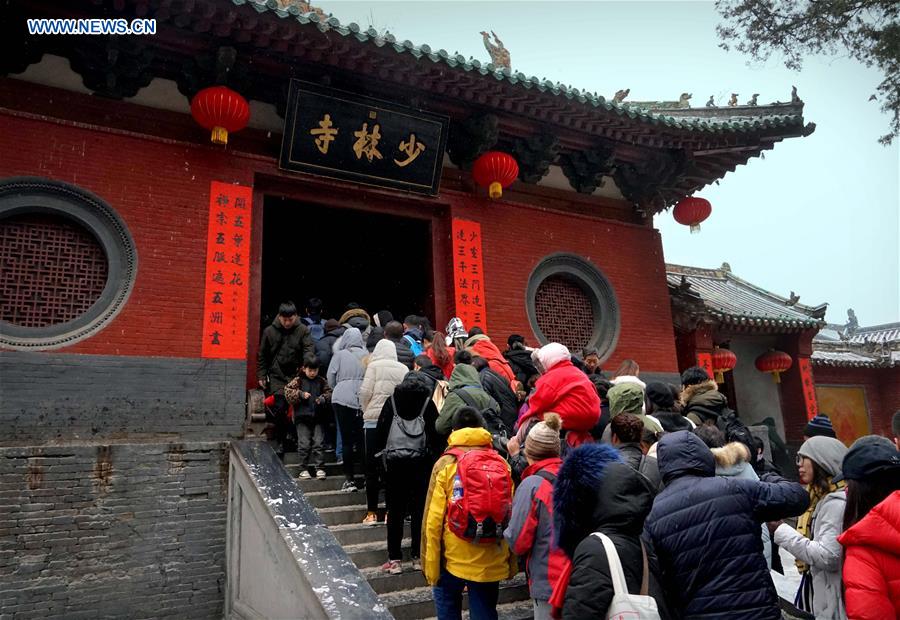
Tourists visit Shaolin Temple in China’s Henan during Spring Festival holiday
Source: Xinhua| 2019-02-09 07:34:15|Editor: mmm


CHINA-HENAN-SHAOLIN TEMPLE-TOURISM (CN)
Tourists visit Shaolin Temple, the cradle of the Chinese martial arts, during the Spring Festival holiday in Dengfeng City, central China’s Henan Province, Feb. 8, 2019. (Xinhua/Li An)

THREADS
Happy New Year Shaolin
Year of the Pig 2019

More CNY Lion Dance

LUNAR NEW YEAR
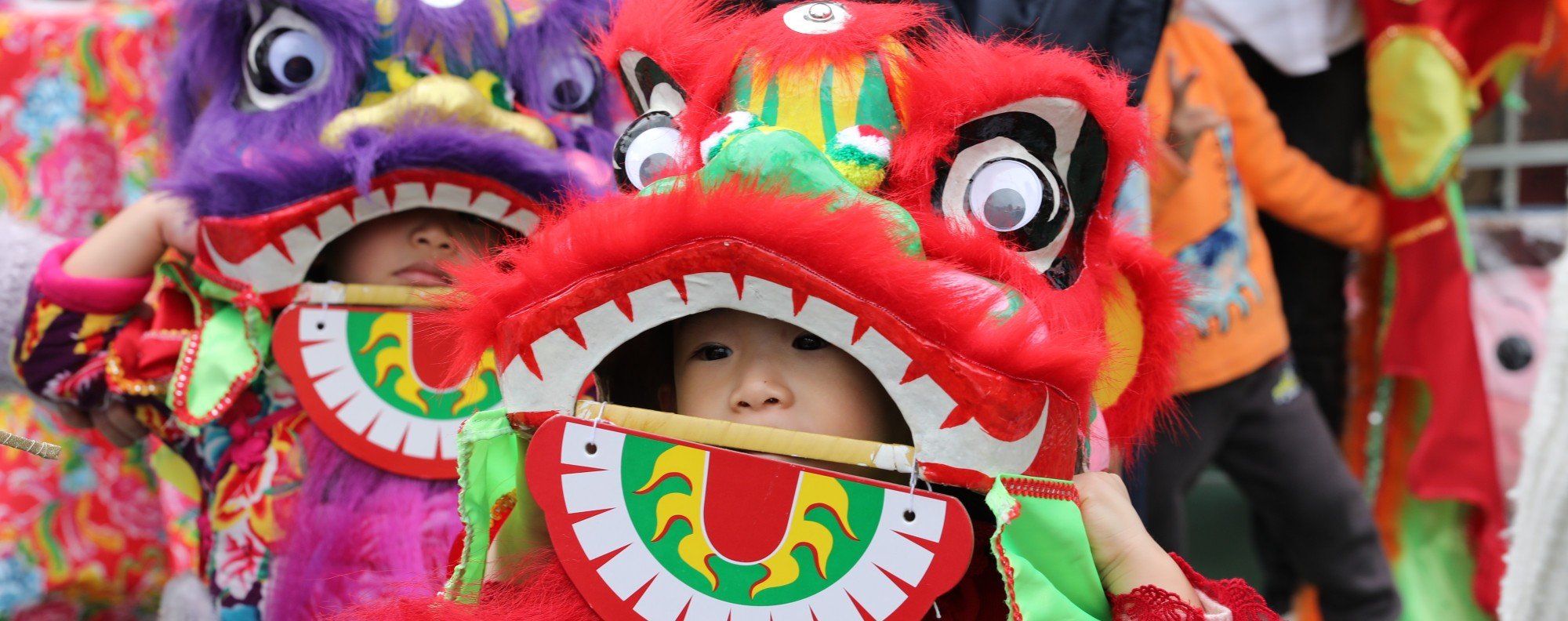
GOING, GOING, GONG: WHY IS LION DANCE DYING IN SINGAPORE AND HONG KONG, BUT ROARING BACK TO LIFE IN CHINA?
The lion dance has a storied history of more than 1,000 years and is a regular feature of Lunar New Year celebrations by the Chinese diaspora
But troupes are struggling to attract young talent, due in part to tough training regimes and parents who prioritise education over arts and sport
BY DEWEY SIM
10 FEB 2019

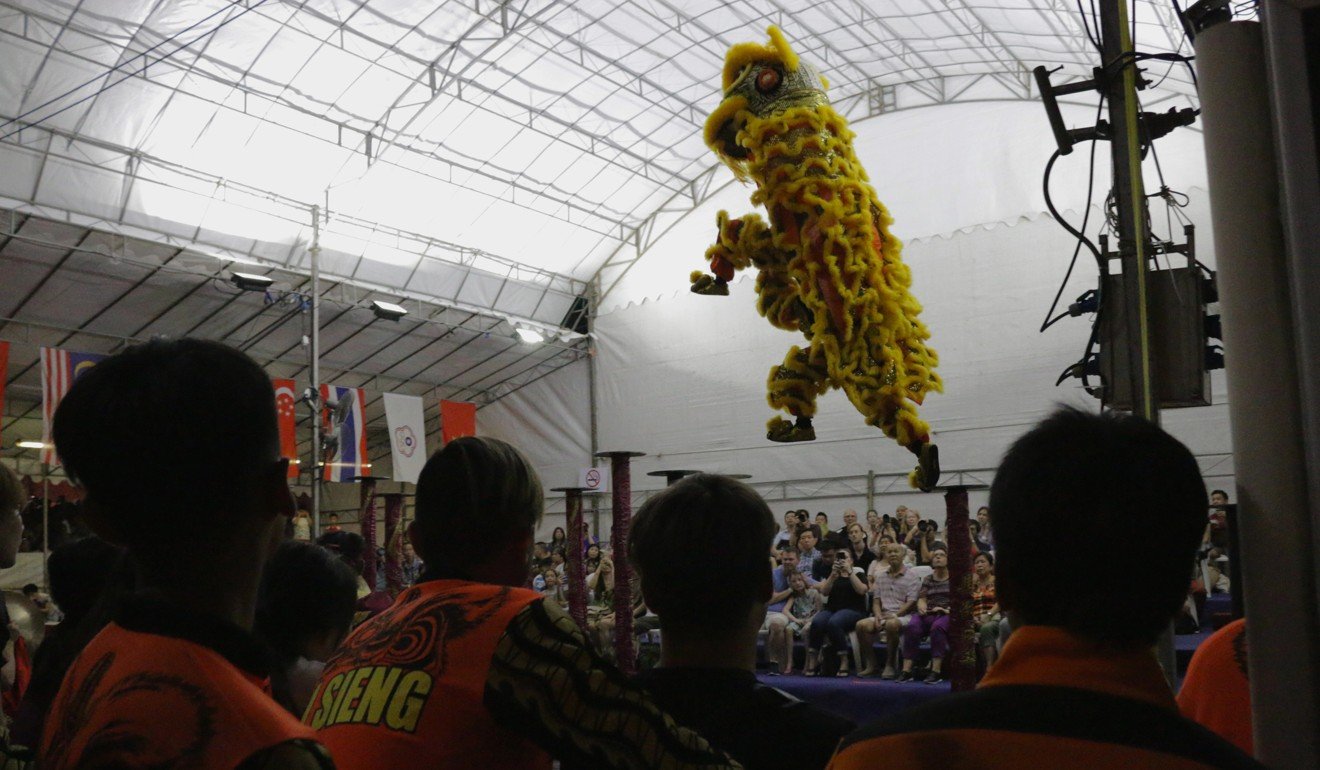
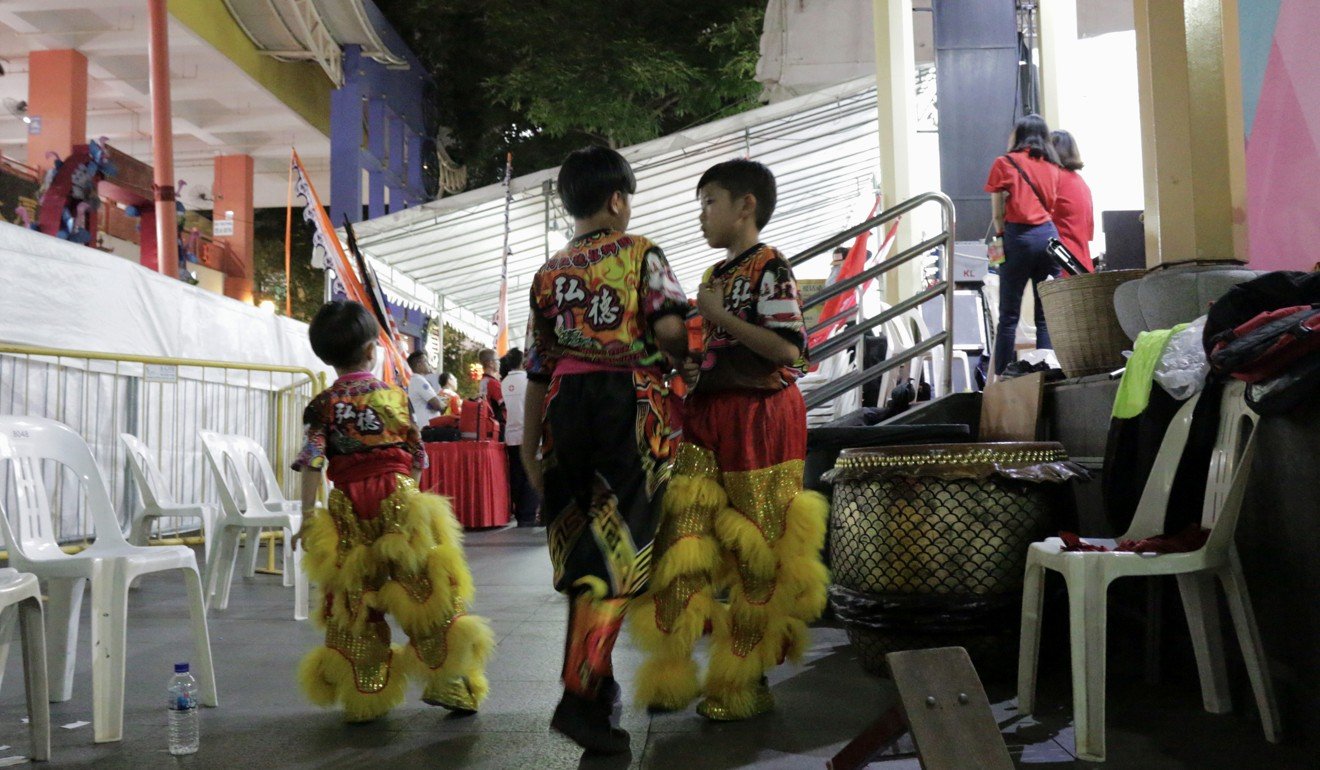
With small, steady steps, Samuel Sim sauntered towards the stage in downtown Singapore, just as he had in his first lion dance competition two years ago. But unlike his previous attempts, in which he fell from the high poles multiple times, Sim was not prepared to fail.

Clad in the same fur-lined pants illuminated by hundreds of gold sequins, Sim thrust himself into the air as his partner, Ang Junming, tugged tightly at his waist. With each beat of the drum and sound of the gong, the 19-year-old performers executed their well-rehearsed hoists, drawing a roar of appreciation from the home crowd.

The young lion dancers were one of seven teams that took part in an annual international lion dance competition held at Kreta Ayer Square last month, in the city state’s bustling Chinatown.

Sim and Ang are part of an increasingly rare group of people in Singapore, where a growing lack of interest for the traditional Chinese performance, especially among young people, has led to a recruitment crisis.


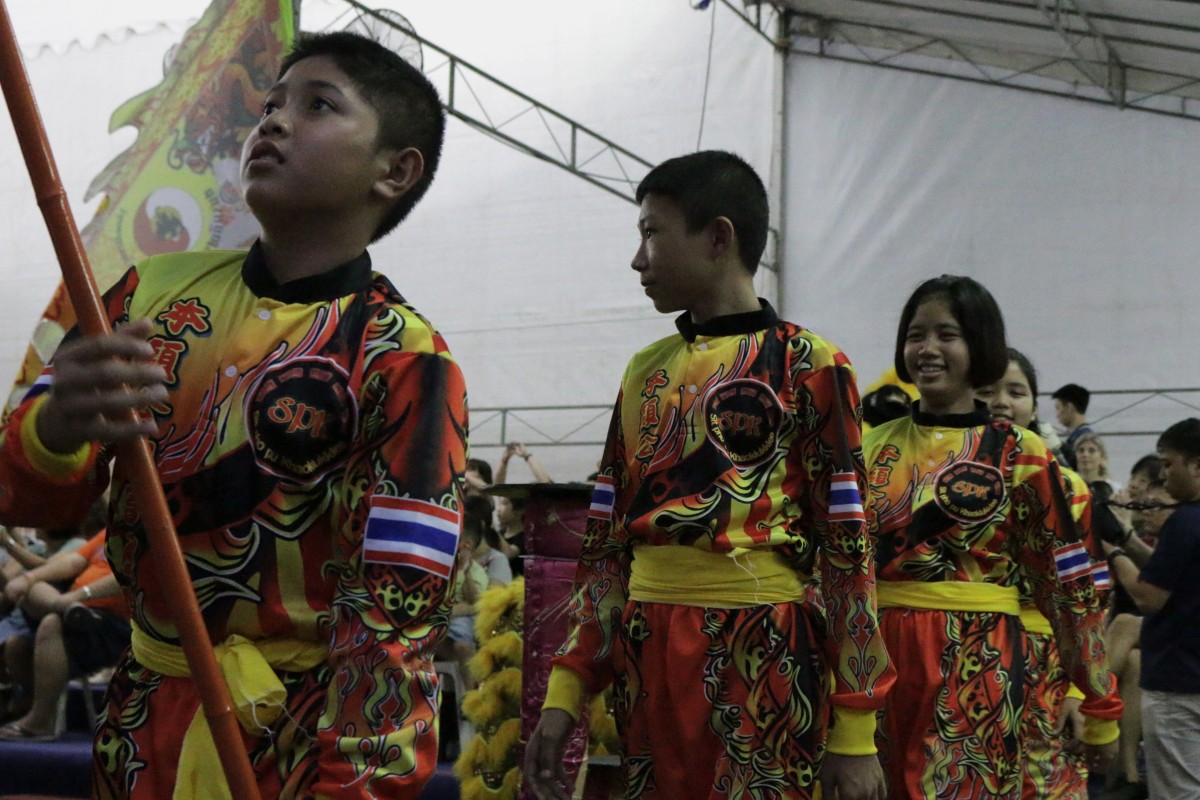
Members of Singapore’s Nam Sieng Lion Dance Troupe cheer on Samuel Sim and Ang Junming, both 19, who were representing Singapore at the 12th International Lion Dance Festival. The duo were runners-up. Photo: Dewey Sim

The number of troupes had fallen from 323 in 2016 to 265 by late last year, according to the Singapore Wushu Dragon and Lion Dance Federation.

Sim, who trains at the Nam Sieng Dragon and Lion Dance Activity Centre, picked up lion dancing after watching a competition.

But he said many of his peers were “not interested in traditional dances like these”.

Calvin Loke, who coaches Nam Sieng’s 60-member troupe, said there were only five new members last year in what was the smallest enrolment since its formation in 1990.

“We used to have about 20 to 30 new members every year in the past,” he said.

A REGIONAL PROBLEM

The lion dance has a storied history of more than 1,000 years, and is performed at auspicious occasions to usher in good fortune and wealth, and ward off evil spirits. It is a regular feature of Lunar New Year celebrations in Singapore – as well on the mainland, in Hong Kong, and regions where Chinese communities have settled – and is also performed at the launch of new businesses or at housewarming events.


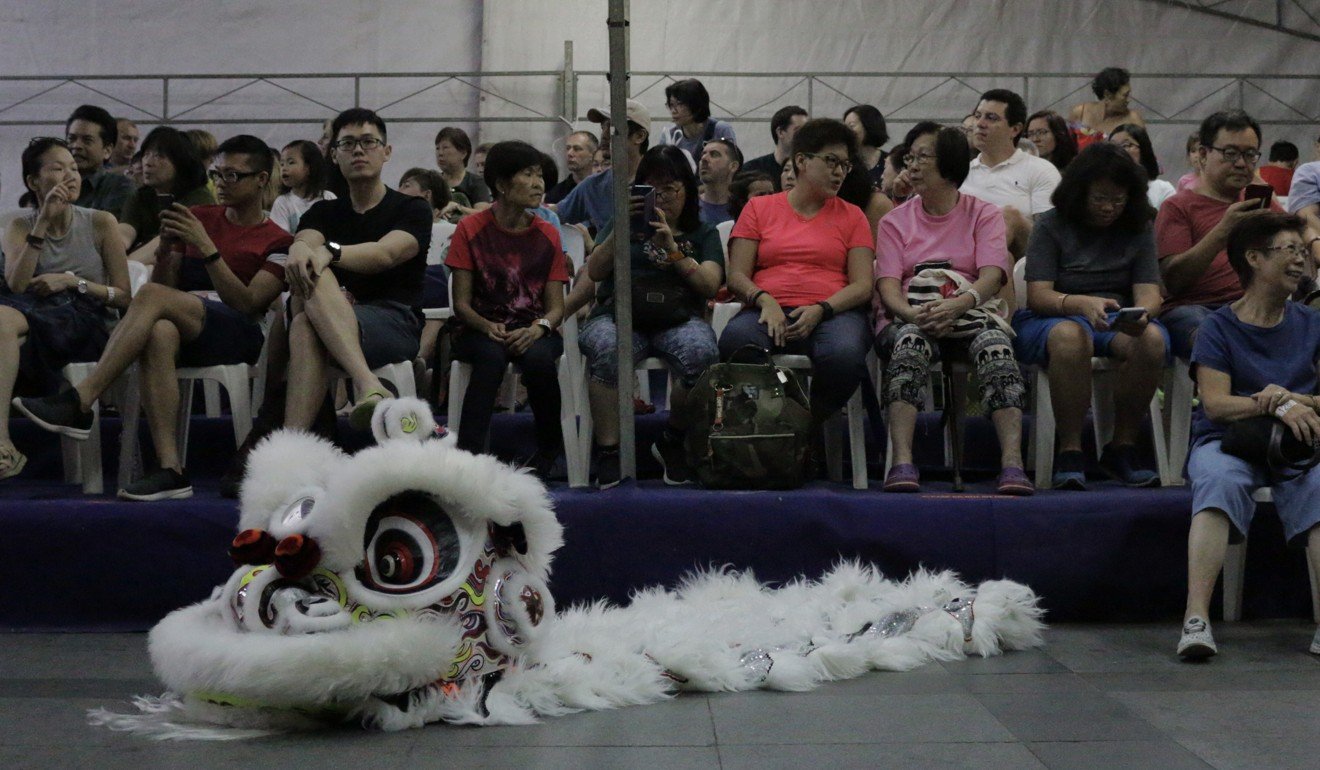
Lion dance performances in Singapore often draw a middle-aged crowd. Photo: Dewey Sim

Lion dance groups like the Sheng Hong Lion Dance Athletes Troupe said they tend to be busiest during the Lunar New Year, with performances lined up back to back.

Co-founder Threuno Goh said the troupe books an average of 60 performances over the two-week festive period every year. They can earn anywhere from S$688 (US$500) to S$2,888 for each show, depending on factors such as the number of performers and the difficulty of the stunts involved.

Performances range from basic acts with only four dancers to those involving high poles and flags, Goh said. But he admitted he has found it a challenge to recruit youth. “Not a lot of young people like traditional things such as lion dance.”

Singaporean troupes are not alone in their struggles to recruit young people. Declining interest is a regional phenomenon, said Philemon Loh, who is part of Chinatown Festivals, a government-backed body that organises events to promote Chinese culture in Singapore.

“It is worrying to see how youths around the world are not participating as much in the traditional dance as they were in the past,” Loh said. “As more and more younger people turn away from the dance, it is going to be a challenge passing the culture down.”

In Hong Kong, lion dance can be hard to promote because it is seen as an art form rather than a sport, said Ivan Wong, founder and coach of Team-A Sports Association. He added that Hongkongers’ focus on education was also a factor limiting its popularity.

“Education and school [are] the priority for many parents here in Hong Kong, with sports and the arts taking a back seat,” Wong said. His association, once 160 members strong, now has just 80 members.


Lion dance troupes in Singapore are holding annual competitions to engage and attract young dancers from as young as eight. Photo: Dewey Sim

Joseph Low, secretary general of the Singapore Wushu Dragon and Lion Dance Federation, said the gruelling training regime causes many young people to lose interest because they see it as tedious and strenuous.

Dancers train four days a week on average, and sometimes as often as six days a week if there is a competition, said 20-year-old lion dancer Jarrell Tock, whose father is the founder and coach of Yiwei Athletic Association.

“Training can be extremely tiring, but if you treat you as a hobby, you will get used to it and will make time for it,” he said.

Funding challenges also stymie attempts to grow troupes.

Lau Ming Fung, founder of an eponymous lion dance association in Hong Kong, wants the government to do more to support it.

“There is also a lack of venue and spaces for troupes to train at and troupes face a lot of restrictions,” Lau said.

Low, of the Singapore Wushu Dragon and Lion Dance Federation, said its lion dance arm has not received funding from Sport Singapore, an agency under the Ministry of Culture, Community and Youth tasked with developing a national sports culture. Sport Singapore did not respond to questions on funding.

In the absence of top-down support, the federation is trying to actively engage children from as young as eight through activities such as holding annual lion dance competitions for different age groups.

The initial stages of these competitions are typically held in residential areas, Low said. “By doing so, we are bringing lion dance to the heartlands for residents to watch.”


Divers perform an underwater Lion Dance to celebrate Lunar New Year in Kuala Lumpur. Photo: AP

continued next post

Continued from previous post

CMON KIDS

China has managed to overcome the youth problem with a combination of government and community initiatives. Guo Qian Rong, who heads Nam Siengs China arm, said: Compared to a decade ago, the lion dance scene in China is more vibrant, robust and professional now, with more troupes joining the trade.

Exposing children to lion dance and cultivating interest from a young age is key to promoting it, said Guo, who is based in Guangdong Province, where the lion dance originated.

What the mainland has done, as part of a broader push to promote tradition to the masses, Guo said, is to incorporate lion dance as part of the curriculum in primary and secondary schools, with some kindergartens also introducing it to children through targeted activities.

In Hong Kong, some troupes have introduced new, creative elements to modernise the ancient tradition.

Tiffany Au Yeung, the founder of Ha Kwok Cheung Dragon and Lion Dance Troupe, said her troupe worked with Swarovski to put together a lion made of crystal.

We also tried to introduce different music genres such as hip-hop to the dance, she said, adding that about half of the troupes 300 members were recruited in the past few years.

In Singapore, the Wenyang Sports Association has incorporated sports such as football and other team-building activities as part of its training programme, while the Yiwei Athletic Association has planned occasional overseas welfare trips, chalet stays and bowling sessions.

Other Singaporean troupes are bringing in non-Chinese dancers to preserve the tradition in the multicultural nation.

[QUOTE]WE CAN TRY AS HARD AS WE CAN TO ATTRACT YOUTHS, BUT IF THEY ARE NOT PASSIONATE ABOUT LION DANCE, WE WILL NOT BE ABLE TO TIE THEM DOWN FOREVER
Kiefer Teo, Yiwei Athletic Association

The Teng Yang Lion Dance Troupe has attracted youths from the Indian community, while the Kuo Chuan Arts Cultural group has more than 40 members ranging from the ages of eight to 38, all of whom are Malay.

I started this troupe because I wanted my friends from the Malay community to learn something new and benefit … even though the dance is a Chinese custom, said Jamsairi Kamaruddin, Kuo Chuans founder.

During the Chinese New Year period, members of the troupe can also earn some extra cash and use the money purposefully such as paying off their school fees, he said, adding that the troupe has more than 150 performances lined up during the two-week festive period this year.

We follow the traditional way of lion dance, but we try to be creative by adding in a bit of freestyle.

There is little promotion, and recruitment is mostly done through word of mouth.

The troupe gets one or two new members every month, Jamsairi said. He isnt bothered by concerns whether groups such as Kuo Chuan are seen to be wrestling for business with its traditional Chinese counterparts amid a dying trade.

Singapore places a strong emphasis on our multiracial society, said Jamsairi. The art of lion dancing is a passion to us.

For new recruits, sustaining the passion is the challenge, said veteran Singaporean lion dance coach Hiew Yun Cheong. Few can endure the hours of training. Many drop out within their first year.

Most of them join out of initial curiosity, which can die down very quickly, he said.

Kiefer Teo, an assistant leader at Yiwei Athletic Association, said: We can try as hard as we can to attract youths, but if they are not passionate about lion dance, we will not be able to tie them down forever.

Sim, the 19-year-old performer, admits his passion for the tradition has been tested many times.

He has sustained injuries such as a sprained ankle, a bruised tailbone, and a chipped tooth during training.

But the teenager is now flying the Singapore flag high his team came second in the lion dance competition, and he will head to Thailand later this year for another international competition.

I hope that by winning such competitions, it will inspire younger Singaporeans to take up lion dancing, Sim said. And hopefully we will be able to revive this dying tradition and proudly pass it on. [/QUOTE]

THREADS
Year of the Pig 2019
Chinese Lion Dance