Taiji products, marketing, and branding

This is an odd presentation, but I do agree with the heart of the author’s message.

Taiji and the luxury lifestyle
By Matt Hodges (China Daily)
Updated: 2011-06-19 07:48

The popularity of yoga, spinning and Pilates classes at gyms in top-tier cities suggests that taiji quan, as a homegrown means of keeping yourself physically and spiritually in synch, is one Chinese traditional art in need of some serious re-branding.

Adding insult to injury, it is also often translated as “shadow boxing”, rather than the more accurate and death-defying moniker “supreme ultimate fist”, which highlights how much of a pounding its street cred has taken.

Even the tinge of menace associated with the word “boxing” soon fades in the minds of most foreigners, who see taiji as kungfu lite, or as something exotic your granny may pick up when she grows tired of collecting food-discount vouchers at Tesco.

Apparently, young Chinese are starting to feel much the same way. At least in Shanghai, there is a clear dichotomy. Taiji is something pensioners perform at the crack of dawn in parks, when they aren’t playing mahjong, waltzing in town squares or water-painting hanzi on the sidewalk.

Meanwhile, cool young trendies head to California Fitness to stretch out or burn calories on bikes while listening to Lady Gaga.

Most of these classes are filled by women, and most of these women own at least one, real or imitation, Louis Vuitton handbag or purse, and a pair of Chanel sunglasses.

This is an important connection because it highlights how taiji as a brand, or “designer label”, cannot compete with the attention of the younger demographic even in the domestic market right now, let alone build a stronger export market for itself.

This issue of branding was raised at a recent luxury goods forum in Shanghai, where representatives of designer Swiss watchmakers and other luxury goods talked gleefully about their expected 25 percent sales increases in China this year.

Some suggested that, instead of trying to ape foreign brands or create luxury brands from scratch, China should focus on branding and exporting traditional products like Maotai and Dragonwell Tea in a more luxury format. The same logic applies to taiji.

For example, did you know that many Chinese masters consider taiji the purest and most perfect form of kungfu? It is also a nifty little calorie burner (Wikipedia dubiously reports that it burns more calories than surfing). On the down side, unlike yoga, taiji is time-consuming and difficult to learn, so it is hard to find a good teacher.

The key point is that, until the allure of Western ideas, trends and fashions starts to wane, traditional Chinese arts and products need to become cool again, at least in the eyes of the consumer. They need to spark people’s imagination in the same way that kungfu unremittingly has.

In contrast, try telling a teenager that he will appreciate the sense of balance taiji gives you later in life (clinical tests show it can reduce by half the number of falls that form a major source of injury and death among old people), then watch him roll his eyeballs and crank up the volume on his MP3.

What is needed is an aggressive marketing campaign centered around the holistic benefits of attacking your day charged on superhuman levels of qi, the essential life force that taiji is built around and the Oriental equivalent of The Force.

How else would women small enough to fit in my backpack, and old enough to remember a time before Sausage Egg McMuffins, be able to elbow me out of the taxi line with all the swinging power of Barry Bonds? It is not artificial growth hormones or purple-rinse hair dyes. It is pure qi.

Traditional Chinese culture is steeped in the concept of qi, In acupuncture, kua refers to a point on the groin that accepts qi from the earth, while lao gong refers to a point on the palm that can both accept and transmit qi. If you master both, you can stop bullets with a wave of your hand, or bend reality like a spoon.

While taiji is more bent on balancing your internal energy (yin and yang), it retains strong links to the martial arts that gave birth to it centuries ago. It won’t make you bulletproof like Neo, but it is way cooler than putting on pink leggings and signing up for a yoga class.

yang shen or cultivation of life

it is very big in china and taiwan.

they include

diet,

herbs

qi gong

self hitting

and some standing in postures

and last but not the least

some tai chi like stretching and moving

–

it is the whole deal

of yang shen.

branding yang shen for all of them.

tai ji branding is limited.

–

:slight_smile:

That, sire, was an excellent post! Well said. I think it goes the same with qigong. Since I practice qigong, I have been thinking more in terms of re-marketing qigong which also ties nicely into tai chi. I like this phrase, “benefits of attacking your day charged on superhuman levels of qi”. I initially read, “attacking your day with superman levels of qi”, which sounds cool.

Some of the guys I’ve trained with talk more about qi in an interesting way that got me much more interested. Instead of saying, "sink your qi lower and enter into the cosmos, being one with all that is…‘’ They talked of it like, “after qi gong, I just feel stacked” or “you could see me blinging from mars” or “qigong makes my kung fu swift and smooth”.

But the problem with talking about chi is that it’s gotten a lot of bad rap, such as my “chi power” and doing “chi blasts”. So I was thinking if it could be approached in a way that athletes found intriguing, then we could get some pull. It could be taught initially as a deep method of training for deep breathing and intention that leads to direct performance. Teach some of the principles to athletes, as part of a experimental training program and test their results. If it starts going mainstream, then people will see it as a good way to supplement it into their training program.

For example, this video is presented on qigong and pain where they just taught the principles of it and the results:

http://paincenter.stanford.edu/press/video_discovery.html

It’s also interesting to note that yoga went through a rebranding and that’s why it’s largely accepted. If you look at yoga in India and the west, the whole image about it is different. The yogi masters are very spiritual, which would be too much for the western mind, so when it was brought over, they adapted it. Now people that really get into it, want to travel to India to practice it.

I think the same thing can be done for tai chi and qigong.

I haven’t tried tai chi because a lot of what was said in the post is true about what I thought of it. It feels like “kung fu lite”. When simply looking at someone practicing tai chi or qigong, externally it seems like nonsense, at least it did for me. So, I think it should be taught based on principles and then there can be a lead into the whole art itself. If you don’t capture their interest at first, you lost them, but if you do, then you can lead them.

I think overall it can gain some acceptance if it’s taught based on the principles, though there will probably be resistance in the mainstream area of medicine and science because there hasn’t been conclusive empirical studies, though the results have been demonstrated. But there is more acceptance today because people are realizing the shortcomings of mainstream science.

A book called “Chi Running” has been flying off the shelves, so that’s proof people are open to the idea. It’s just got to be approached in a way that resonates with people.

[QUOTE=SPJ;1109491]yang shen or cultivation of life

it is very big in china and taiwan.

they include

diet,

herbs

qi gong

self hitting

and some standing in postures

and last but not the least

some tai chi like stretching and moving

–

it is the whole deal

of yang shen.

branding yang shen for all of them.

tai ji branding is limited.

–

:)[/QUOTE]

I think that’s a possibility, it doesn’t have a certain stigma in the west, at least I haven’t heard of it. I had talked to my marketing teacher about the popularity of yoga, and he said first of all it has a cool name, it’s kind of that yin yang rhythm, yo - ga. I think if we found some catchy names in Chinese, it would also have more success. Some kind of name that is a catch all.

Yes , tai chi is thought of as a old people health exercise.

I heard Howard Stern saying on his radio show how tai chi would not help you protect yourself. I used to think the same thing, until I met someone who did it the right way.

What happened is all these hippies got a hold of it and started doing it as part of being a hippy.

Now you have a bunch of women teaching it as a health benifit that have no internal at all and are just promoting a exercise dance movement and calling it tai chi, which has the missing part of CHI.

I think all these fraud teachers should be exposed, there is one out in the Sonoma Valley that is miss leading a lot of people.

[QUOTE=YiQuanOne;1111160]Yes , tai chi is thought of as a old people health exercise.

I heard Howard Stern saying on his radio show how tai chi would not help you protect yourself. I used to think the same thing, until I met someone who did it the right way.

What happened is all these hippies got a hold of it and started doing it as part of being a hippy.

Now you have a bunch of women teaching it as a health benifit that have no internal at all and are just promoting a exercise dance movement and calling it tai chi, which has the missing part of CHI.

I think all these fraud teachers should be exposed, there is one out in the Sonoma Valley that is miss leading a lot of people.[/QUOTE]

posting while stoned is fine, unless you are driving a motor vehicle, then you should not do that

Mr. Lee’s Noodles Tai Chi Chicken

Mr. Lee’s Noodles sure capitalize on Chinese martial arts. The logo is a little racist in that *****y sort of way. It reminds me of Sambo in the old Sambo’s restaurants.

Meet The Manufacturer: #2199: Mr. Lee’s Noodles Tai Chi Chicken

Tai chi makes me think of the slow moving exercise many people do in large groups. This is an instant noodle blog though and so you get 3 minutes to do your tai chi! This is the chicken noodle – the basis of where all instant noodles come from. I believe a company’s chicken instant defines them. Let’s give it a look!

Detail of the side panels (click to enlarge). Contains chicken. to prepare, add boiling water to ther ‘ridge line’ (just below the lip of the cup). Stir and cover for 3 minutes. Stir and enjoy!

http://i2.wp.com/www.theramenrater.com/wp-content/uploads/2016/08/2016_8_24_2199_003a.jpg?w=300

The noodle block.

Some of the seasoning and bits of vegetable and chicken from the inside bottom of the cup.

Finished (click to enlarge). The noodles came out as always – well hydrated and of good quality. They’re thin and broad – plentiful too. The broth was a on the bland side. The vegetables were excellent – green beans and corn were well hydrated as well as cubes of real chicken. 3.0 out of 5.0 stars. EAN bar code 0641243998701.

Motherboard

Also worthy of linkage to this thread here as well - Tai Chi Shoes & Tai Chi Cars

AT20 Giveaway Day 9: ASRock Gives Your Ryzen an X370 Taichi Motherboard
by Ryan Smith on May 8, 2017 8:00 AM EST

Welcome everyone to the start of the third week of our 20 day giveaway celebration of AnandTech’s 20th anniversary. We have a full schedule this week, so that means 9 more giveaways between now and Friday.

Kicking things off for the week is one of our long-time motherboard partners, ASRock. With AMD’s Ryzen CPUs selling so well – a welcome change for the battered AMD – Ryzen-compatible Socket AM4 motherboards are now in demand. So ASRock has sent over one of their X370 Taichi motherboards for us to give away to someone looking to complete their Ryzen system.

ASRock X370 Taichi Motherboard
ASRock’s X370 Taichi is a full ATX board, giving it room for 3 PCIe x16 slots, and another 2 PCIe x1 slots. Along with the traditional form factor, the board also sports a duo of M.2 slots – one sporting SATA and PCIe 3, the other sporting purely PCIe 2. ASRock has also added several third-party controllers to the board, including an unnamed (but likely ASMedia) controller for USB 3.1 (Gen 2) support, an Intel I211AT controller for GigE networking, an Intel 802.11ac dual-band WiFi controller (on an includes M.2 stick), and a Realtek ALC 1220 for audio.

Rounding out the package, ASRock has equipped their board with their “steel slots” PCIe braces for two of the PCIe x16 slots to better support heavy video cards, along with a 16-phase power delivery system for the CPU. And while the board itself doesn’t sport RGB LEDs, it does include a pair of controlled headers for adding RGB lighting strips. Meanwhile on the software side of matters, the board uses ASRock’s latest-generation UEFI firmware, supporting features such as Instant Flash and Crashless BIOS.

Finally, as with our other giveaways, today’s giveaway is only open for 48 hours, so be sure to enter soon. However please note that for legal reasons, we’re only able to open these giveaways to residents of the United States.

Good luck to everyone! And be sure to check in this afternoon for our next giveaway.

More Taichi motherboard

Not as cool looking as the one above.

ASRock X399 Taichi is ready for AMD ThreadRipper 16C/32T
ASRock prepares its next-gen X399 Taichi motherboard, ready for AMD ThreadRipper CPUs By: Anthony Garreffa | Motherboards News | Posted: 13 hours, 52 mins ago

Computex 2017 - AMD just detailed their new HEDT processor range with ThreadRipper, and now we have ASRock with their upcoming X399 Taichi motherboard.

As you can see the CPU socket itself is freakin’ huge, with 8 x DDR4 DIMMs in total.

The gear-like chipset heat sink looks great, while there’s plenty of PCIe slots to keep multi-GPU fans like myself happy.

Intel is being a bit nasty here, with a massive Intel logo on the board as they have their GbE network controller on the ASRock X399 Taichi, something I’m sure AMD isn’t so happy about.

Read more: http://www.tweaktown.com/news/57772/asrock-x399-taichi-ready-amd-threadripper-16c-32t/index.html

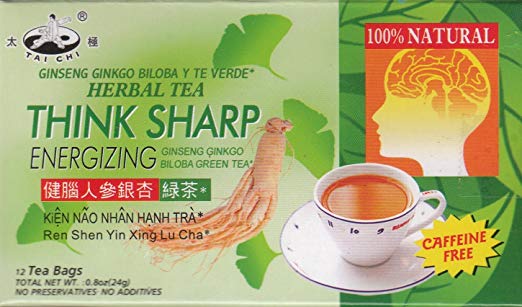
Tai Chi Tea

Anyone ever try this?

Tai Chi Tea: Beware of TM Infringement
August 27, 2018 Dennis Crouch

Diamond Hong owns the Tai Chi mark shown above on the left and Tai Chi Green Tea is has the mark on the right. Are these confusingly similar if both used in the hot beverage market?


The PTAB sided with cancellation petitioner and senior mark holder Diamond Hong and the Federal Circuit affirms here. Zheng Cai, DBA Tai Chi Green Tea Inc. v. Diamond Hong, Inc. (Fed. Cir. 2018).

A difficulty here is that Zheng Cai represented himself pro se and did not exactly follow either TTAB or Federal Circuit procedure. In particular, Cai presented a set of factual assertions and images in his brief, but did not follow the particular brief filing rules. Because of the procedural failure, the TTAB refused to consider the materials presented — finding that Mr. Cai “introduced no evidence.” As Manafort can attest — it is difficult to win a case without presenting any evidence. On appeal, the Federal Circuit affirmed the TTAB procedure with two main points:

The TTAB has authority to manage its own procedure; and
Mr. Cai’s Main Brief contains numerous assertions of fact without actually introducint the supporting evidence — i.e., no evidence.
In a cancellation proceeding, the moving party still has the burden to make its case. Here, the Federal Circuit affirmed the confusing similarity (Applying the DuPont factors). The court writes:

The marks are similar, when considered as a whole, because they both invoke a large yin-yang symbol and prominently display the term TAI CHI.

Cancellation affirmed.

= = = = =

Interesting backstory: On the same day this case was released supporting Diamond Hong’s Mark (No. 3966518), the USPTO also cancelled the mark. “Registration cancelled because registrant did not file an acceptable declaration under Section 8.”

Dennis Crouch
About Dennis Crouch
Law Professor at the University of Missouri School of Law.

THREADS:
Taiji products, marketing, and branding
Tea