snakes

Live snakes from China

Cobras no less. :eek:

Live cobras found in package at JFK mail facility


Federal authorities found live cobras in a package from China. (CBP)


By: FOX5NY.COM STAFF
POSTED: JUL 11 2017 10:52PM EDT
UPDATED: JUL 12 2017 09:59AM EDT
NEW YORK (FOX 5 NEWS) - A package labeled “plastic tray” that arrived at Kennedy Airport from China turned out to contain live venomous snakes.

On June 29, U. S. Customs and Border Protection officers at the JFK international mail facility inspected the package after an X-ray showed what appeared to be snakes in a round container.

Officers called in the U.S. Fish and Wildlife Service to take a closer look. They carefully opened the outer box and discovered five juvenile king cobras and three geckos inside a foam casing.

“Our CBP officers perform numerous daily tasks to protect the United States from potential dangers,” CBP’s Leon Hayward said in a statement. “This seizure demonstrates our wide-ranging responsibility in protecting our borders and our partnership with the U.S. Fish and Wildlife Service.”

Dumb Buddhist

Chinese man gets five days’ detention for releasing snake in park
It is latest case of people freeing wild animals on the mainland in so-called ‘mercy releases’
PUBLISHED : Tuesday, 12 September, 2017, 12:48pm
UPDATED : Tuesday, 12 September, 2017, 5:00pm

He Huifeng
huifeng.he@scmp.com

A video of the man releasing the serpent in Xiangtan, Hunan province, on Saturday has been widely shared online.
Several internet users contacted the police after watching the footage, warning that the cobra was dangerous, the news website Rednet.cn reported.
Firefighters tried to find the snake on Sunday, but failed, according to the article.
The park’s operators later had to issue a warning about the cobra to tourists.
Freeing captive animals is a tradition in Buddhism and is said to create good karma.
Animal rights and environmental groups, however, have raised concerns about the practice on the mainland. They say it can lead to the death of animals, potentially spread disease and fuel illegal trading in wild creatures.
A large number of snakes, turtles and other captive animals were freed in “mercy releases” on a beach in Haikou in Hainan province in January to mark the new year. Tourists at the beach called the police for help after they found animals, including pythons, slithering in the sand.
Several women tried to release about 500 Brazilian turtles into a lake on the campus of Peking University last October, but were stopped by students.

snakes and Buddhist ‘life release’

Not a toy

I had a similar experience once. I was just coming back from China so very jet lagged and there was this snake on the floor. The cat probably brought it in. But I thought it was a new toy snake that my kid had so I reached down to pick it up. My old house had pergo floors and snakes can’t really crawl on pergo - too slippery - so it wriggled. I screamed like a girl. :o

‘Realistic toy snake’ gives Chinese family the fright of their lives
Child unpacks box from online toy shop to find something not to be trifled with
PUBLISHED : Sunday, 08 October, 2017, 3:42pm
UPDATED : Sunday, 08 October, 2017, 6:31pm

Viola Zhou
viola.zhou@scmp.com
https://twitter.com/violazhouyi

The woman first thought the 20cm snake was plastic when her six-year-old son took it out of the packaging in Haining, Zhejiang province, Haining Daily reported late last week.
Marvelling at its soft patterned skin, the woman showed the snake to her husband, remarking on how realistic toys were becoming, the report said
But the husband looked at the snake’s head and soon worked out that it was real – albeit dead.
Forestry authorities said the animal was a non-venomous Mandarin rat snake and might have slithered into the parcel for warmth.
“I’m glad it was dead,” the woman was quoted as saying. “I dare not imagine what would happen if it weren’t.”
The online toy shop said it had no idea how the snake got into the parcel, but agreed to offer the family a refund, the report said.

The inland taipan snake

Call me callous, but I don’t have a lot of sympathy for bitten snake handlers. Same goes for gored matadors. :o

1 day ago
Star teen snake wrangler fighting for life after bite from ‘world’s deadliest snake’
Fox News


The inland taipan is usually quite shy and is known to only strike when it is provoked or mishandled. (Credit: Nathan Chetcuti, Facebook)

A famous 19-year-old snake wrangler from Australia is fighting for his life after being bitten by his pet snake, one that is regarded as the world’s most venomous.

Nathan Chetcuti, from Brisbane, Australia, was attempting to put his pet inland taipan back into its enclosure on Sunday when the snake lashed out and bit him. Nathan’s father immediately called emergency services after seeing the horiffic attack.

Toxicologist Dr. Geoff Isbister told the Australian Broadcasting Company that the snake’s poison can cause major issues for humans. “In terms of its effects, it causes blood not to clot, but its most important effect is it causes neurotoxicity," Isbister said. "So if it’s not treated early, it can cause paralysis.”

As of Nov. 7, Chetcuti was still in serious condition in the intensive care unit of Redcliffe Hospital in Queensland, where his family has remained by his side.

On Chetcuti’s YouTube page, Australian Pythons And Other Reptiles, which has more than 4,000 subscribers, he has several videos of non-venmous snakes and other reptiles, according to a report in news.com.au, which first reported the story.

The inland taipan snake, however, is known as a fierce snake from central east Australia and is regarded as the most venomous snake on the planet. A bite from the inland taipan could kill a person in 45 minutes if left untreated, according to a 2013 report from the University of Melbourne.

Unlike the saw-scaled viper or the king cobra snake, the inland taipan is usually quite shy. It is known to only strike when it is provoked or mishandled, so the strike on Chetcuti comes as a surprise to some.

In 2013, a 17-year-old male was bitten by an inland taipan in New South Wales, but he eventually recovered from the attack.

Following the bite, Hunter Valley snake catcher Judy Martin kept the snake and said they’re usually very docile. “They are a very placid snake, they rarely bite,” she said, according to news.com.au.

Snakes on a train!

There’s a vid behind the link. The dude is pretty nonchalant about it.

MAN HAILED AS HERO FOR KILLING SNAKE ON A TRAIN WITH BARE HANDS
BY SOFIA LOTTO PERSIO ON 11/23/17 AT 5:52 AM

A commuter on an Indonesian train was hailed as a hero on social media for his cold-blooded reaction to a finding a snake on the carriage.

A video of the man’s encounter with the reptile quickly spread online Tuesday, getting more than 170,000 views and nearly 4,000 enthusiasic comments.

The video showed the man, wearing glasses and a backpack, on the train from Bogor to the capital, Jakarta, lifting himself to grab the snake with his bare hands from an overhead compartment.

Carefully holding it by its tail, the man, whose identity is unknown, then swung the snake to the floor with one swift blow, appearing to kill the reptile before kicking it outside the door onto the platform, where a security guard and a military officer were in attendance as the train made an emergency stop.

The reptile appeared to be around three feet in length, but it remains unclear what kind of snake it was and whether it was poisonous.

The Commuter Line train operator Kerata Commuter Indonesia (KCI) believes the snake was intentionally brought on the train, sneaking out of a passenger’s bag, but it is unlikely that the culprit will ever be found. “It will certainly be difficult because no one wants to confess,” company spokesperson Eva Chairunnisa said in a statement to local media.

KCI also apologized to the passengers. “We regret the incident and apologise to train travelers who were disturbed by it,” Chairunnisa told the AFP news agency.


Workers hold a snake before killing it at a slaughterhouse at Kapetakan village near Cirebon, Indonesia’s West Java province, February 8, 2013. A man appeared to kill a snake found on a commuter train in Jakarta on November 21.
BEAWIHARTA/REUTERS

The train operator is a subsidiary of the state-owned railway company Kerata Api Indonesia. The Transport Ministry opened an investigation into the incident.

“The discovery of a snake inside a railcar on the Bogor-Angke line caused passengers to panic, so the train had to stop at Manggarai Station [in Central Jakarta]… to prevent a potential accident resulting from the panic,” the directorate general said in a statement to local media on Wednesday.

Creating disturbances or danger to passengers on trains is an offense that can be punished with up to three weeks imprisonment.

ttt for 2018!

After a decade of dormancy, we’re overdue to ttt this OT: AI and Artificial Life forms thread. I’ll copy it to snakes too, just because I can’t quite wrap my coils around it. :smiley:

Snake joke slithers into New York Times story
3 hours ago


GETTY IMAGES

The New York Times has corrected an article that mistakenly referred to the “Great Recession” as “the time of shedding and cold rocks”.

One of its editors had installed software that adds references to snakes to websites.

The substitution was missed and published online, but did not appear in the print edition of the newspaper.

The newspaper blamed an “editing error involving a satirical text-swapping web browser extension”.

The Millennials to Snake People add-on for Google’s Chrome browser was created by coder Eric Bailey, who had noticed a surge in news stories blaming so-called millennials for the world’s problems.

He decided changing the term “millennials” to “snake people” in news articles and on websites, and making other snake references, would be funny.

[QUOTE]

View image on Twitter

Justin Bank

@bankonjustin
I’m horrified to be the guilty editor here. But thankfully @YLindaQiu’s excellent work stands so far above it.

Also, I have now deleted the excellent Millenial-Snake Person Chrome extension. https://www.nytimes.com/2018/03/06/us/politics/07dc-tradefacts.html
9:14 AM - Mar 7, 2018
481
202 people are talking about this
Twitter Ads info and privacy
Report
End of Twitter post by @bankonjustin

The New York Times correction offered readers a “pro tip” to avoid mistakes, advising: “Disable your Millennials to Snake People extension when copying and pasting.”

The mistake appeared in an article fact-checking President Donald Trump’s claims on trade deficits.

In 2016, Wired magazine made a similar mistake and published an article in which Donald Trump’s name was replaced with “someone with tiny hands”.

The error made it past the magazine’s production team, who had assumed it was an intentional joke.[/QUOTE]

I want a satirical text-swapping web browser extension for Kung Fu Tai Chi…only I don’t know what it would say. :confused::stuck_out_tongue:

RIP Abu Zarin Hussin

Snake-catching fireman dies after cobra bite
Bernama | March 16, 2018

Abu Zarin Hussin headed the King Cobra Squad of the Fire and Rescue Department and had helped train firefighters to catch the venomous animals.


Abu Zarin Hussin had been bitten by snakes several times before and even spent two days in a coma after being bitten by a cobra in 2015.

TEMERLOH: Abu Zarin Hussin, the firefighter renowned for his snake-catching skills, died early today after being bitten by a cobra three days ago.

The 33-year-old died at 12.54am in the intensive care unit of the Sultan Haji Ahmad Shah Hospital here, Pahang Fire and Rescue Department director Abdul Wahab Mat Yassin said.

Abu Zarin, who was in critical condition after being bitten by the snake he was attempting to catch in Bentong, was admitted to the Bentong Hospital on March 13 before being transferred to the Sultan Haji Ahmad Shah Hospital.

“Abu Zarin’s remains were taken to Kampung Permatang Gading, Pasir Puteh, Kelantan at 5am and are expected to be buried before the Friday prayers today,” said Abdul Wahab when contacted.

Abu Zarin, who hailed from Pasir Puteh, had served the Fire and Rescue Department for over 10 years. He was attached to the Muadzam Shah Fire and Rescue Station in Pekan before being transferred to Temerloh.

He headed the King Cobra Squad of the Fire and Rescue Department, established at the end of 2015, and helped train firefighters to catch the venomous animals. He also delivered public talks.

Abu Zarin had been bitten by snakes several times before and even spent two days in a coma after being bitten by a cobra in 2015.

He tried his luck in the “Asia’s Got Talent” competition last year but failed to win over the judges with his dangerous snake feat.

In the West, he’s known as the ‘snake whisperer’. Search “Famed ‘snake whisperer’ dies after cobra bite” to see a less heroic, more sensational, portrayal of his life. :frowning:

whole lotta nope

What is it about snakes and toilets? I remember my fencing team mascot (a 13 ft. boa) liked hotel bathrooms because she’d wrap around the hot water pipe under the sink, but toilets aren’t hot water driven.

SIX-FOOT PYTHON COILS AROUND TEEN’S LEGS AS HE SITS ON TOILET
BY BRENDAN COLE ON 3/20/18 AT 5:07 AM

A teenage boy groggily taking a late night toilet stop got the shock of his life when he came across an unexpected intruder.

The unnamed 17-year-old in Mountain Creek in Queensland, Australia, found that he was sharing the toilet with a large carpet python.

Snake catcher Luke Huntley was called to the house in the Sunshine Coast and said that the teenager did not realize until the serpent wrapped itself around his leg and tried to bite him.

A Centralian carpet python lies coiled at Sydney Wildlife World on September 11, 2009.
GREG WOOD/AFP/GETTY IMAGES.

He quickly managed to fight off the snake, which was not poisonous, and beat a hasty retreat.

Huntley told Australia’s ABC News: “He flicks it off with its other foot and it sort of recoils. So he pulls his pants up and he runs out of there and he closes the door behind him. His mum said she tried to move it on herself but it kept striking at her,” he added.

Huntley put the snake’s aggression down being in hunt mode, the fact that it was hungry and that it had been cornered.

“It had to fight because it couldn’t run away and that’s what the snake did. It’s an unusual behavior for a snake to wrap itself around a person and try to strike.”

He said it was lucky that the boy was not injured and although it was not the first time he had to get a snake out of the toilet, it was the biggest and most aggressive one he had had to capture, describing it as being in a “grumpy mood”.

“I think he’s going to make sure all the doors and windows are always closed now, that’s how a snake would’ve got in,” he added.

“This is the stuff nightmares are made of. Of all the places to have that happen, when you’re at your most vulnerable,” he added.

In February, the Sunshine Coast Snake Catchers warned Queenslanders to be cautious if they came across snakes in their home because often they might mistake deadly ones for harmless ones.

The National Coronial Information Service says that around 300 people are bitten by snakes in Australia each year, although only 35 people have died between 2000 and 2016.

“Snakes. Why’d it have to be snakes?”

I was told about the ability of decapitated snakes to strike out of reflex in Wilderness Survival training. Guess that’s true…

Severed Rattlesnake Head Bites Texas Man
A Texas man discovered in the most unpleasant way possible that a decapitated rattlesnake can still bite.
By Kim LaCapria 7 June 2018


Tom Reichner / Shutterstock.com

A man from Corpus Christi, Texas is recovering after he was bitten by a rattlesnake in May 2018 — after he decapitated the creature with a shovel.

South Texas’ KIII-TV reported the victim’s wife said that the snake discharged “all its venom.” She said her husband’s condition was touch and go at first:

[QUOTE]Jennifer Sutcliffe and her husband were doing weekend yard work when she spotted a four-foot rattlesnake. She said her husband quickly took his shovel and severed the snake’s head, but moments later when he bent down to dispose of the snake, the snake’s head bit him … Sutcliffe said the first 24 hours were the worst. Doctors told her husband might not make it, even after giving him vast amounts of antivenom.

“A normal person who is going to get bit is going to get two to four doses of antivenom,” Sutcliffe said. “He had to have 26 doses.”

Sutcliffe’s husband is now in stable condition, but his kidney function is still weak. Trauma surgeon Michael Halpert said although dying from a snake bite is rare, it happens.

“There are about 6,000 to 8,000 snake bites per year in the country, and 10-12 people die,” Halpert said.

The incident in Corpus Christi was not the first time in recent years that a decapitated snake bite made news. In 2013, a video of a decapitated copperhead in Alabama went viral. After a 2014 incident in China, biologists affirmed that removing the head of a venomous snake doesn’t instantly eliminate the threat it poses.

According to experts, venomous snakes bite differently than many other species:

Snakes in general are well known for retaining reflexes after death,” said Steven Beaupré, a biology professor at the University of Arkansas. Many ectothermic, or cold-blooded, vertebrae— including species of reptiles and amphibians— share this quality, he said.

In fact, there have been previous [to 2014] reports, including in the U.S., of people being bitten by the severed heads of snakes.

For venomous snakes, such as cobras and rattlesnakes, biting is one of the reflexes that can be activated in the brain even hours after the animal dies, Beaupré told Live Science.

The bite reflex is stronger in venomous snakes than it is in some other carnivores because these snakes use their bite differently than other meat-eaters, Beaupré said. Unlike a tiger, for instance, which kills prey by sinking its teeth into an animal’s flesh and holding on, snakes aim to deliver just one, extremely quick bite and then move away from their prey before getting trampled.

Sutcliffe’s husband remained in stable condition after receiving doses of antivenin, but continued to have impaired kidney function as a result of the incident. Biologists warn that most bites from venomous snakes occur when people try to neutralize the snake by killing it, rather than simply leaving it alone.[/QUOTE]

death by snake

This is way up there for me as one of the worst ways to die. :eek:

23-foot python swallows Indonesian woman near her garden
By ASSOCIATED PRESS
JUN 16, 2018 | 5:05 AM
| JAKARTA, INDONESIA


An Asiatic reticulated python. (De Agostini / Getty Images)

A 23-foot python has swallowed a woman in central Indonesia, a village official said Saturday.

The victim, 54-year-old Wa Tiba, went missing while checking her vegetable garden near her village on Muna island in Southeast Sulawesi province on Thursday evening, according to the village chief, Faris.

On Friday, her family went to look for her at the garden but found only her belongings, including sandals and a flashlight, said Faris, who uses a single name.

The family and villagers launched a search for the woman, and found the snake with a bloated belly about 50 yards from where her belongings were found.

The villagers killed the snake and carried it to the village.

“When they cut open the snake’s belly they found Tiba’s body still intact with all her clothes,” Faris said. “She was swallowed first from her head.”

Videos posted on some websites showed villagers slicing open the python’s carcass to reveal the woman’s body.

Faris said the victim’s garden, about a half-mile from her house, is in a rocky area with caves and cliffs believed to contain many snakes.

Reticulated pythons, which are widespread in Indonesia and other parts of Southeast Asia, grab onto their prey with dozens of sharp curved teeth, then squeeze it to death before swallowing it whole.

Reports of humans being killed by pythons are extremely rare. In the wild they are known to eat monkeys, pigs and other mammals.

It was the second python attack on a human in Indonesia since March last year, when a 25-year-old man was swallowed whole by a python in West Sulawesi province.

Yikes!

VENOMOUS VIPERS MYSTERIOUSLY LEAVE FOREST TO INVADE WORLD CUP HOST CITY, RUSSIA SENDS TEAMS TO CAPTURE
BY DANIELLE KOGAN ON 6/29/18 AT 9:28 AM
Advertisement 0:08

Following a fly infestation in Volgograd—a southwestern city in Russia and one of the places hosting the 2018 World Cup—snakes are now migrating down the Volga River to the Volga Sports Arena. Among the snakes are black vipers, the species Vipera nikolskii, whose bites could be fatal. The vipers are about 2 and a half feet in length when fully grown.

Blocknot, one of the first local news sources to cover the sightings, reported spotting this species Monday, when team members of the city’s search and rescue recorded five sightings of snakes in a single day from.

On Tuesday, Volgograd’s head of search and rescue, Alexander Sivolobov, said this species can easily cover distances of 2 miles and has the ability to creep ashore on land, according to The Moscow Times.

The vipers’ arrival was just in time for the World Cup’s last H game, which includes matches between Senegal and Columbia as well as Japan and Poland. Russia’s response has been to send search-and-rescue teams to divert and remove all the snakes before they incite panic among the city’s 5,000 visitors and general population. How or why the endemic species migrated has so far stumped the ecological and biological communities in Volgograd. Also known as Nikolsky’s viper, the snake usually resides in a forest.

“All vipers are venomous, but not necessarily poisonous. They naturally avoid human areas,” said Dr. Frank T. Burbrink, curator of herpetology at the American Museum of Natural History.


Nicolsky’s Viper, pictured above, is a native endemic species that lives in the forest.
BENNY TRAPP

When a viper bites, its two swiveling fangs operate like syringes. According to Burbrink, two types of venom that can be found in snakes are hemotoxic or neurotoxic venom. Burbrink said hemotoxic venom is the type that destroys tissue—the reason why hemotoxic bites tend to hurt—whereas neurotoxic venom would damage the nervous system. However, according to Burbrink, a venomous snake bite may not necessarily be fatal.

“It depends on what the snake was doing,” Burbrink said. Snakes who have eaten have injected their venom into their prey and will inevitably allow less venom to pass through in the case of a second bite. This is known as a “dry bite,” which Burbrink estimated makes up approximately 25 percent of snake bites.

swivelling fangs. kinda biblical. :eek:

‘constricting’ airplane seats - he made a funny.

MIAMI TSA AGENTS DISCOVER PYTHON HIDDEN IN A HARD DRIVE IN PASSENGER’S LUGGAGE
BY EWAN PALMER ON 7/10/18 AT 8:30 AM

Authorities in Florida have managed to stop a man who attempted to smuggle a python onto a flight by hiding it inside a hard drive.

Transportation Security Administration agents discovered the snake placed inside a nylon stocking and hidden in the hard drive enclosure at Miami International Airport on July 8.

Officials said the man attempted to sneak the snake inside his checked bag onto a flight towards Grantley Adams International Airport (BGI) in Barbados.

“The snake, that didn’t get on a plane thanks to our officers’ diligent screening, had been artfully concealed inside the electronics of a hard drive and placed in a checked bag headed for a flight to Barbados,” TSA spokeswoman, Sari Koshetz, told the Miami Herald.

“Upon the TSA officer’s discovery of the organic mass, one of our TSA bomb experts was called into the baggage screening room to investigate the innards of the hard drive and that is when he discovered the mass was a live snake.”

Koshetz explained that while the snake was not in any immediate danger, there is a real risk that the animal could have escaped and chewed through wires, threatening the lives of other passengers, reports WSVN.

“This organic mass was not explosive, but it shows you can’t hide any threat from us,” Koshetz added on Twitter.


The python seen wrapped in a stocking an placed inside the hard drive at Miami International Airport on July 8.
TSA

The passenger, who has not been named, was stopped from flying and later fined an undisclosed amount with the snake taken into custody by U.S. Fish and Wildlife Services, reports the Associated Press.

“Agent Neville Flynn would be extremely proud of our officers at the Miami International Airport (MIA),” a spokesperson for TSA said, referring to the character played by Samuel L Jackson in the 2006 film Snakes on a Plane.

“You see, Agent Flynn has HAD IT with snakes on planes, and our officers prevented a young Ball Python from flying the friendly skies this past Sunday."

“If you think airplane seats can feel constricting, imagine how this little guy felt.”

The snake in question was identified as Ball or royal Python, which is considered a non-native species by the Florida Fish and Wildlife Conservation Commission.

"Ball pythons are one of the most popular nonnative snakes in the pet trade,” the FWC states on its website.

“While they can be confused with Burmese pythons, adult ball pythons rarely grow longer than four feet. Although ball pythons have been found in the wild, there are no known reproducing populations.”

Snakes on a Plane - I really should see that some day.

She Wong Lam closes

Snake restaurant in Hong Kong to close after 110 years, marking end of an era
Family-run She Wong Lam in Sheung Wan was hugely popular, with actor Stephen Chow a regular customer. But its snake handler is nearly 90, and no one in the family wants to continue the business

PUBLISHED : Wednesday, 11 July, 2018, 6:48pm
UPDATED : Wednesday, 11 July, 2018, 7:20pm
Bernice Chan
bernice.chan@scmp.com
http://twitter.com/beijingcalling

One of Hong Kong’s oldest snake restaurants is closing for good, ending more than 110 years of history in Sheung Wan.

Family-run She Wong Lam was hugely popular in the 1960s and 1970s, but with no one from the family’s younger generation keen to continue the business of looking after snakes and preparing them for soup, the restaurant will close its doors on July 15.

According to Lo Tin-yam, the fourth-generation owner, She Wong Lam’s manager, Mak Dai-kong, is in his late 80s and has decided to retire, so the Lo family feels it is the right time to close the Hillier Street shop.

“Master Mak is almost 90 and he is the boss of the shop. He has worked for four generations of our family,” Lo says by phone from Vancouver, Canada. “Since my grandfather passed away, my father [Lo Yip-wing] didn’t know much about the snake business and I know even less,” he says.

His family trusts Mak but are unfamiliar with the shop’s other employees, making it hard for them to continue the business, he explains.
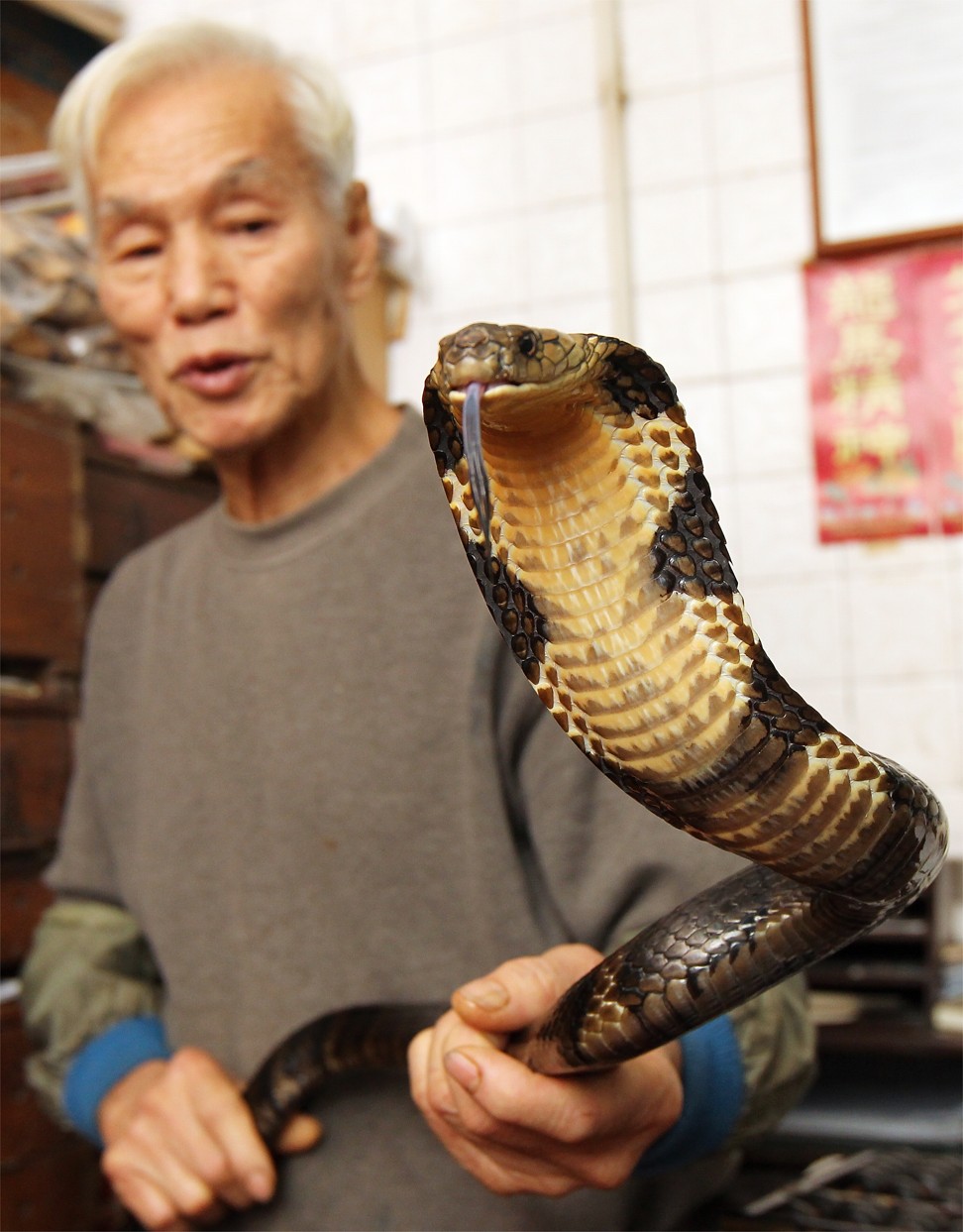

Mak joined She Wong Lam in 1948, when he was 18 years old. Photo: Oliver Tsang

Lo says the date for closing She Wong Lam was chosen by his uncle and father, the latter now in an old people’s home in Hong Kong. Lo, an accountant, and his younger sister have lived in Vancouver since he was about eight years old and he does not intend to return.

“It’s very difficult to find people to work in this particular industry. It’s not for everyone,” Lo says.

Mak joined She Wong Lam in 1948, when he was 18 years old, and the founder, Lo Tai-lam, encouraged him to help out around the shop and eat snake soup to help build his strength.


She Wong Lam in Sheung Wan in 1972. Photo: SCMP

Mak gradually learned how to handle snakes, remove their fangs, extract the gallbladder, and make the shop’s signature snake soup.

The ingredients of snake soup include the meat of various snake species, chicken, pork, sugar cane, mandarin peel, and white pepper. It is garnished with chrysanthemum petals and finely sliced lemon leaves.

“In the past, when I saw my colleagues handling snakes, they told me I didn’t have to be afraid of them,” Mak said in an interview with the Post late last year.
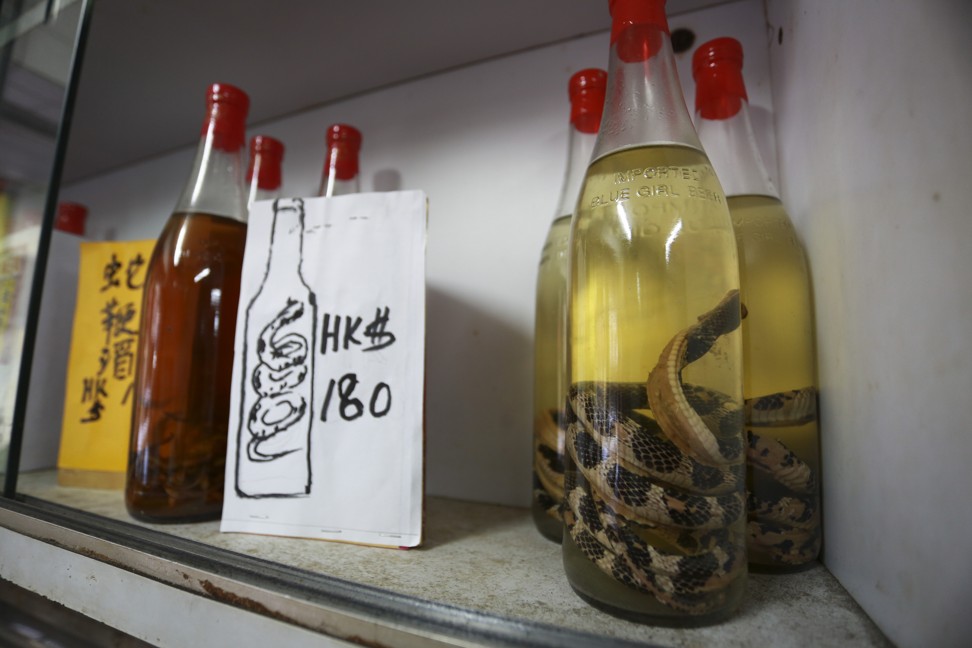

Bottles of snake wine for sale at She Wong Lam. Photo: James Wendlinger

“Once their fangs have been pulled out, they are not venomous … I remember my first attempts at handling snakes. I got bitten by them but it wasn’t painful at all. Since then, I have never been afraid of snakes.”

Sidney Cheung Chin-hung, professor and director of the Centre for Cultural Heritage Studies at the Chinese University of Hong Kong, has a copy of a flier from She Wong Lam promoting its snake gallbladder seasoned with ginger or pepper that dates back to 1910, and believes the shop was established in the early 1900s.

While fourth-generation owner Lo didn’t learn much about the snake business, he has a few fond memories to share about the business. The shop moved a few times during its more than 110-year history, but has always been in Sheung Wan. He also revealed how the shop got its name.

“My great-grandfather used to be busy in the back of the shop dealing with the snakes, and because people couldn’t see him, they assumed he was being lazy, which is why he got the nickname ‘Se Wong’, or ‘Snake King’,” says Lo. “She wong” is a Chinese euphemism for a lazy person.

Lo isn’t sure how or when his great-grandfather came to Hong Kong from the southern Chinese province of Guangdong, but Cheung is convinced the business was founded back in the dying days of the Qing dynasty.

One of his former anthropology graduate students, Esther Chok Wing-sum, says that in 1885 there were about 115 snake shops in Guangzhou. At the turn of the century, many snake handlers, including Lo’s great-grandfather, brought their knowledge and skills to the British colony of Hong Kong.

The younger Lo attributes the family’s financial success to the hard work of his great-grandfather and grandfather. At one point She Wong Lam sold snake gallbladder and soup not only in Sheung Wan, but at two other locations in the city.
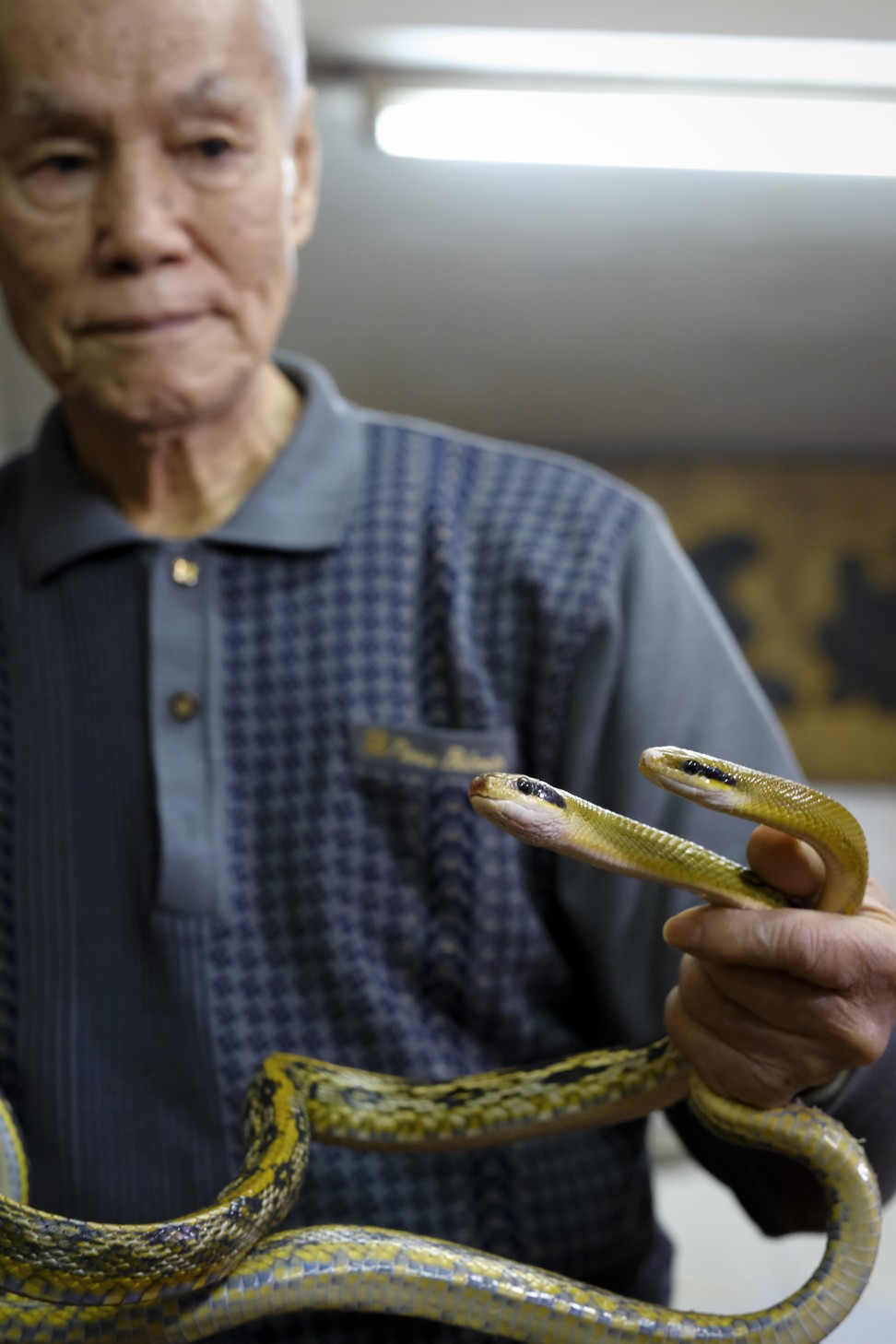

Mak gradually learned how to handle snakes, and defang them. Photo: James Wendlinger

Hong Kong historian Cheng Po-hung says one of the shops was on the corner of Hennessy and Fleming roads in Wan Chai. The other was in Kowloon, he says, though no one we spoke to remembers the exact location.

Before the 1950s, Chok says, snake was a delicacy on par with shark’s fin and bird’s nest, which only the well-off could afford.

“A snake gallbladder was a few days’ salary at the time,” she explains. “It cost HK$20, but at that time the average person’s monthly salary was only HK$250.”

However, from the 1950s onwards, eating snake became increasingly affordable for the working class and grew more popular. “A bowl of snake soup would cost HK$8, but then it went down to HK$2 to HK$3,” Chok says.

continued next post

Continued from previous post


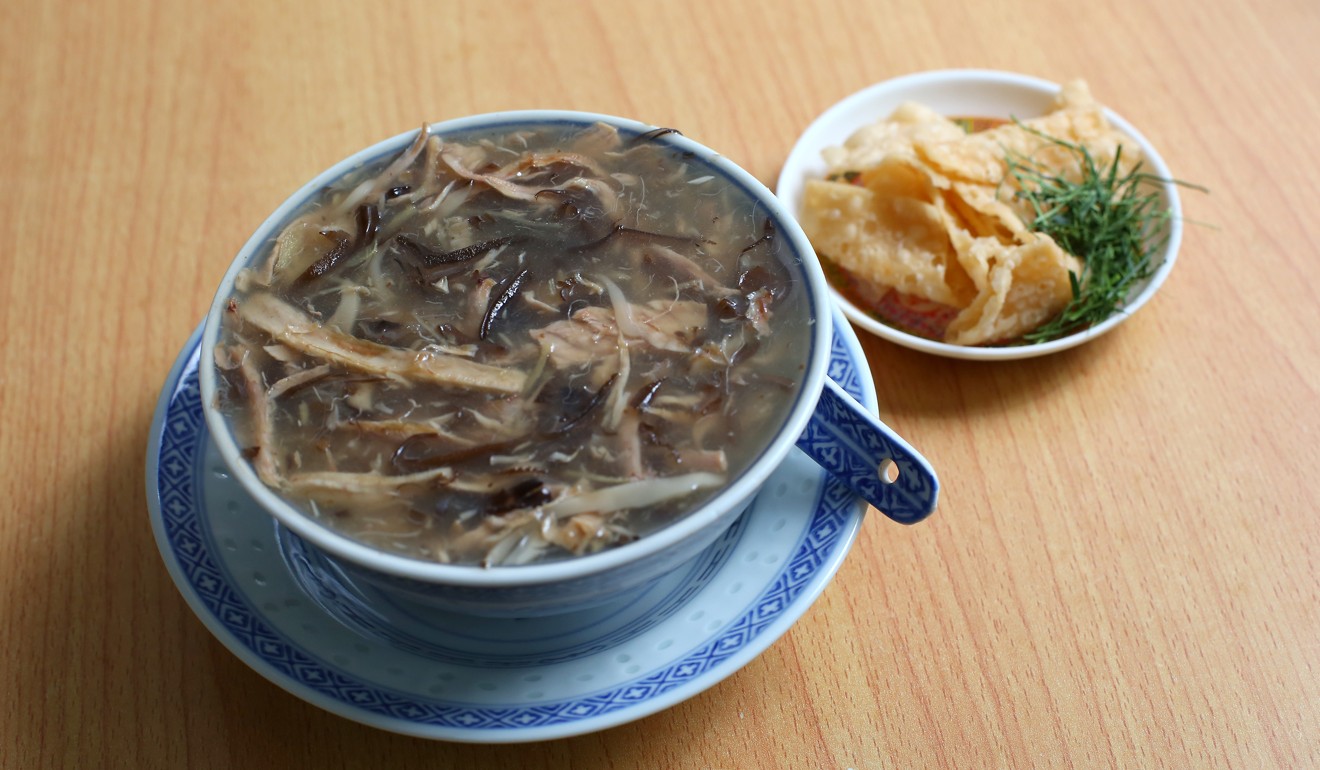
Snake soup served at She Wong Lam. Photo: Edmond So

Lo says there was a Chinese opera theatre in Sheung Wan in the 1960s, close to She Wong Lam, and opera singers would patronise the shop regularly, downing snake gallbladder with alcohol to boost their stamina.

Celebrities such as actor Stephen Chow Sing-chi and former senior police officer Tsang Kai-wing (actor Eric Tsang Chi-wai’s father) were regular visitors. Lo says Chow would tell the staff to contact him when they had a particularly large cobra in stock, such was his appetite for the snake.

Historian Cheng says he has tried the reptile’s gallbladder, which his friends used to buy regularly from other snake shops. “They put it in a spoon, or a shot glass, and added alcohol to it,” he says.

“One time a group of us drank the gallbladder of three different snakes mixed with alcohol … it was translucent green in colour and tasted bitter. People think it helps you become physically stronger, but the gallbladder has bacteria in it,” he says.

Despite She Wong Lam’s success, Lo’s elders were acutely aware of how important it was that a member of the next generation learn the snake trade if the business was to continue.

“My great uncle asked me when I was in my 20s if I would go into the business, otherwise no one else would do it. But I have my life in Canada. I’m 50 years old now and I don’t even live there [in Hong Kong],” he says.


Mak extracts the gallbladder, and then makes the shop’s signature snake soup. Photo: James Wendlinger

Lo points out that other traditional trades in Hong Kong, such as making lanterns, bamboo noodles, hand-carved mahjong tiles, and neon signs, are also disappearing.

[QUOTE]The younger generation move away and can’t come back. [Old] Hong Kong will disappearLO TIN-YAM

“The younger generation move away and can’t come back,” he says. “[Old] Hong Kong will disappear and instead have shops like Zara, McDonald’s and Fairwood, especially with rent being so expensive.”

A search on restaurant guide OpenRice shows 36 restaurants with the Chinese character for “snake” in their name still open in Hong Kong, at least four of them with more than one location. They may not necessarily be specialists like She Wong Lam, however, nor have live snakes on the premises.


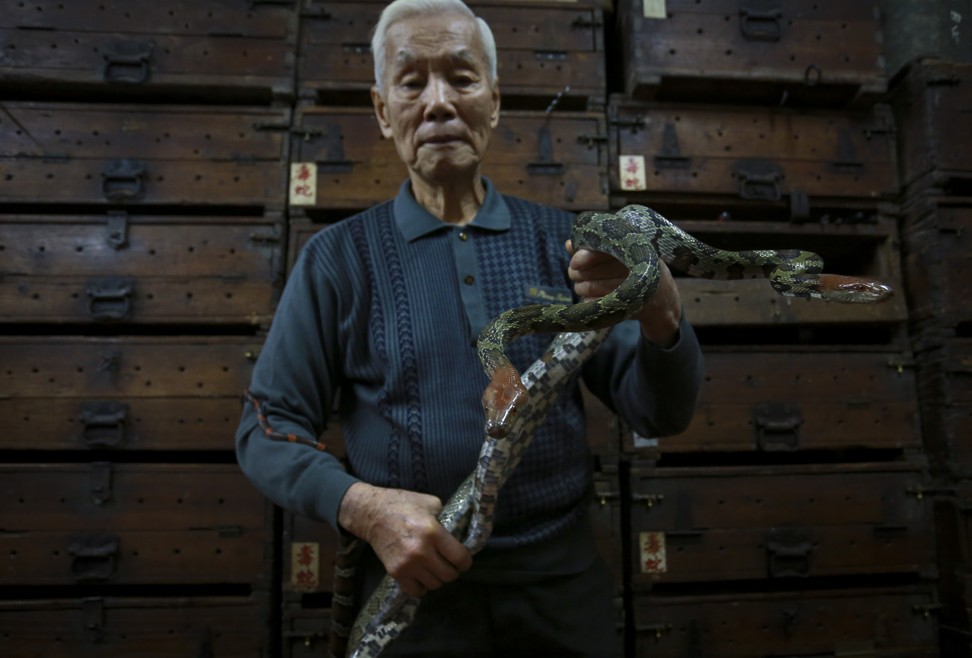
Snake boxes with the word ‘poisonous’ on them at She Wong Lam in Sheung Wan. Photo: James Wendlinger

Historian Cheng thinks there is still a decent number of places to get a bowl of snake soup, and doesn’t expect them all to close any time soon. He says the owners of Shia Wong Hip in Sham Shui Po, for example, have taught their siblings the snake trade, and adds there are still many snake shops in that neighbourhood and in Yau Ma Tei.

After the closure of She Wong Lam, the Lo family, which owns the shop space, will rent it out. In the meantime, Lo says, they have contacted the Hong Kong Museum of History about collecting the snake cabinets, cages and tables. The wooden cabinets are more than 100 years old.


Diners enjoy bowls of snake soup at She Wong Lam. Photo: AFP

Lo says Mak designed his own pocket knife to make a sharp slit to extract the snake’s gallbladder, and to skin it quickly and efficiently. According to Cheng, designing their own knives is common practice among those in the snake business.

For Lo, the closure of She Wong Lam is also the end of a long chapter in the family’s history, and tinged with sadness. Five years ago, Hong Kong public broadcaster RTHK made a documentary featuring Lo and his son Lo Yun-hei, then three years old, visiting the shop. At the time he hoped the business would continue to the fifth generation.

The reality is that the family respects Mak’s wishes to retire, and Lo hopes to keep the shop’s name alive. “I do have the intention to move back to Hong Kong when I retire, and I still have the rights to the name, so maybe I’ll open a restaurant with the same name,” Lo says.[/QUOTE]

THREADS:
Chinese food
snakes

Many-banded Krait wine?

Chinese woman in coma after being bitten by deadly snake she bought online
The 21-year-old is believed to have decided to keep the venomous many-banded krait as a pet
PUBLISHED : Thursday, 12 July, 2018, 4:11pm
UPDATED : Thursday, 12 July, 2018, 9:36pm
He Huifeng
huifeng.he@scmp.com

A 21-year-old woman is in a coma and on life support in a hospital in northwest China after she was bitten by a highly venomous snake she is thought to have bought online, local media reported on Thursday.

The woman, identified only by the pseudonym Xiaofang, was bitten on her finger at her home in Weinan city in Shaanxi province on Monday, according to China Business Report.

The report suggested the woman had been keeping the many-banded krait, a species found in much of China and Southeast Asia including Hong Kong where the government warns it is lethal as a pet.

The womans parents were quoted as saying their daughter had called for help after being bitten and she reported feeling dizzy and nauseous about an hour later.

They took her to a local hospital but she soon lapsed into a coma.

The hospital did not have any supplies of antivenin to treat bites from the many-banded krait, which has the scientific name Bungarus multicinctus, because the species is not common in the region. This meant she was not given a shot of the antidote until the following evening.

On Tuesday the womans parents reported to police that the snake was missing and later that day a dead snake subsequently confirmed to be a many-banded krait was found a short distance from the familys home.

Xiaofangs family said chat logs from her phone suggested she had bought the snake via an online shopping platform, but did not have any further information about the seller or how she had taken delivery of the snake.

Many-banded kraits are on a list of protected rare and endangered species in China, and it is illegal to hurt or sell them.

However with so little information to go on even the name of the platform used to buy the snake remains unknown there is little the police can do at present.

Records indicated that the seller had informed Xiaofang that the creature was venomous, the report said.

Although Xiaofang told the seller she planned to use it to make snake wine, a traditional Chinese medicine made by leaving the animals to ferment in alcohol, her parents said she apparently had second thoughts and had been keeping the animal as a pet.

THREADS:
snakes
Cobra Wine
TCM Fails

San Antonio snakes

This is a bad neighbor. :mad:

Texas Animal Control Seizes More Than 500 Snakes and Rodents From a Single Home


An San Antonio Animal Care Services officer carries bags containing snakes removed from a home in the 500 block of Kayton Avenua on San Antonio’s Southside, Wednesday, Sept. 5, 2018. Josie Norris—AP

By ASSOCIATED PRESS September 6, 2018

SAN ANTONIO — Animal control officials have removed more than 100 snakes and more than 400 rodents from a San Antonio home following concerns about the animals’ living conditions.

Animal Care Services seized 136 reticulated pythons and ball pythons Wednesday after weeks of attempting to work with the reptiles’ owner to improve the living conditions, The San Antonio Express-News reported .

The San Antonio animal owner was breeding and selling the nonvenomous constrictors, investigators said. The man wouldn’t disclose how many snakes he had or address their living conditions, which prompted authorities to get a search warrant, said Joel Skidmore, a field operations supervisor. Two of the snakes were 10-foot (3-meter) pythons.

Animal Care Services officers found the snakes in cages and plastic tubs, some of which were stacked in a shed. Officials also removed 415 mice and rats that were being used as the snakes’ food source.

The city’s animal ordinance bans venomous snakes but doesn’t have specific limits for nonvenomous snakes. The ordinance does require that reptiles are provided with care and treatment, such as access to fresh air and water, and appropriate food and shelter.

The city’s Dangerous Assessment Response Team, a herpetologist from the San Antonio Zoo, city code enforcement officers and SeaWorld experts assisted in the reptiles’ removal.

The owner must appear in court within 10 days to determine who will get custody of the snakes, Skidmore said. If Animal Care Services is granted custody, the agency will work with local rescue shelters and zoos to find appropriate placement for the reptiles, spokeswoman Lisa Norwood said.

29 snakes on a plane

German ‘TSA’ sucks.

I should really watch Snakes on a Plane someday. I reference it often. :o

SNAKES ON A PLANE: MAN SUCCESSFULLY BOARDS FLIGHT WITH 20 REPTILES IN HAND LUGGAGE
BY DAMIEN SHARKOV ON 9/12/18 AT 7:34 AM

Flying from Germany to Russia, the passenger, whose name and nationality were not given, packed a small hand luggage bag that apparently passed without issue through authorities at Dusseldorf Airport. Once landing in Moscow, however, the Environmental Protection Agency noticed the curious contents and flagged up the reptilians inside the bag.

The man stated he had purchased the non-venomous animals from a market in Germany, RP Online reported, according to a translation by The Local website. The Russian capital’s Sheremetyevo International Airport confirmed the incident in a statement.

“The reptiles were in canisters, packed in bags, carried in hand luggage. There were no documents provided for the reptiles," the airport’s press service said in a statement. "The species of snakes will be determined by specialists, but according to preliminary information they are not of a venomous species.”

Russian authorities determined that the passenger did not have proper documentation to transport the animals into the country, seized the beasts and placed them into quarantine in Moscow.

Germany’s federal police said officers had not reported an incident at the time when the passenger checked in for the flight from Düsseldorf, meaning the person may have had the necessary documents to take the reptiles out of the country, which is not illegal. However, Russia requires additional information if someone is bringing in animals from another country. This includes information about the creatures’ origin and health from vets.

The rules about bringing animals on board planes is a contentious topic, especially letting them in the cabin as emotional support pets. Earlier this year one woman was forced to drive cross-country, following her attempt to check in her peacock as an emotional support animal, despite the airline’s insistence that she had to purchase a separate seat for the bird.

Meanwhile staff at Texas’s San Antonio International Airport were left scrambling to recapture an escaped monkey that fled from its crate and bolted for the baggage area. After the incident was caught on camera, officials announced they had managed to catch up with the monkey and put it back into a crate, placing it back on track to its destination—the ironically named Born Free USA Primate Sanctuary in La Salle County.

Florence snakes

Hurricane Florence could spread killer snakes across the Carolinas
By Tamar Lapin September 13, 2018 | 3:26pm | Updated
Modal Trigger


Composite; Reuters; iStockphoto

Hurricane Florence could displace venomous snakes from South Carolina’s wetlands — and send them slithering down local streets, local zoo officials are warning.

The monster storm may uproot some 38 species of snakes — including dangerous cottonmouths and copperhead vipers — from their coastal habitats, Thad Bowman of the Alligator Adventure zoo in Myrtle Beach told the Sun News in S.C.

“They inject venom, which causes tissue destruction, platelet loss, causes bleeding, it can cause death,” said Gerald O’Malley, with Grand Street Hospital.

Residents shouldn’t be out during the storm, but if they are, and get bitten by a snake, they should rush to a hospital that isn’t closed. Many medical facilities in the area will be shut down, but the Conway Medical Center is still open, the paper reported.

Horry County officials are asking people not to call 911 unless it’s serious. A bite from a cottonmouth, for example, would count as an emergency.

Wayward snakes are common during devastating storms.

“They can be found swimming in water or hiding under debris and they should be avoided,” Accuweather warned.

After Hurricane Harvey passed over Houston, Texas, in September 2017, people found snakes, fire ants and even alligators in their homes.

All three of those animals are also native to the Carolinas, which lie in Florence’s path.

Bowman said the zoo is doing everything to keep their animals safe during the storm. The zoo boasts seven different species of snakes, including a boa constrictor, and multiple types of alligators.

This seems more credible than the Sharknado claims.

Waiter, there’s a…

…snake loose in the restaurant.

Live snake escapes from Guangzhou restaurant’s kitchen, gets caught by customer
At least you know your snakehead soup is fresh!
by Alex Linder October 5, 2018

Recently, a live snake escaped from the restaurant of a kitchen only to be caught and returned by one customer. This happened where else but in Guangdong province.

Video shows that the snake’s escape caused quite a stir in the Guangzhou restaurant, causing some diners to flee and others to step forward to help catch the creature. In the end, it was a brave uncle who snared the serpent and presented it back to restaurant staff.

In China, the people of Guangdong have a well-earned reputation as adventurous eaters — a popular saying goes that they will “eat anything that has four legs except for a table, anything that flies except for an airplane, and anything that swims except for a submarine — while restaurants there do not have such an impressive reputation for food safety, at least you know that the snakehead soup is made fresh.

I hope that ‘brave uncle’ got his meal comped, at least.

THREADS
snakes
Chinese Food

mysterious dinner snake

A New Snake Species Was Found in Another Snake’s Stomach
The so-called “mysterious dinner snake” represents not only a new species, but an entirely new genus


This isn’t the first time snakes have been found inside of coral snakes’ stomachs, but it is the first recorded instance of a new genus being identified from the remnants of a fellow serpent’s last meal. (John Livzey Ridgway 1859-1947)

By Meilan Solly
SMITHSONIAN.COM
DECEMBER 21, 2018

The elusive Cenaspis aenigma, or “mysterious dinner snake,” has never been captured alive. In fact, Jake Buehler reports for National Geographic, the slithering serpent has only surrendered itself to scientists once—and even then, in a distinctly roundabout manner.

Unwittingly trapped in the belly of the beast—specifically, the venomous Central American coral snake—Cenaspis first landed on researchers’ radar in 1976, when palm-harvesters working in the Mexican state of Chiapas caught a coral snake that had recently snacked on the smaller species. Due to the partially digested specimen’s irregular stripes, spineless hemipenes and skull shape, Cenaspis defied categorization for decades. But now, 42 years after this initial discovery, biologists from the University of Texas at Arlington have finally shed some light on the enigmatic snake’s origins.

The team’s findings, newly published in the Journal of Herpetology, identify Cenaspis as not only a new species, but an entirely new genus. As Buehler notes, the sole 10-inch male that represents both genus and species boasts an underside decorated with three triangular marks, affording its ventral scales a striped appearance divergent from that of other New World snakes.

Additionally, Cenaspsis’ hemipenes—branched sexual organs that essentially amount to dual *****es, according to National Geographic’s Tina Deines—lack the spines commonly seen along the organ, instead featuring cup-like structures known as calyces that Buehler likens to “some kind of otherworldly honeycomb.”

Michelle Starr of Science Alert adds that Cenaspis further differs from known species because of its elongated skull and undivided subcaudal scales, which are plates on the underside of the tail. Combined with the “unremarkable, … uniformly pale brown” coloring described by the researchers, these characteristics offer a strong argument for Cenaspis’ classification as a burrowing snake that spends most of its time underground.

Still, the scientists point out that the reptile’s triangular ventral scale pattern complicates this categorization: “Why a secretive burrowing snake would have such a distinctive ventral pattern is unknown,” the team writes in the study. “The ventral pattern is not replicated in any other Middle American snake."

Cenaspis’ teeth also suggest the snake is more complex than your average woodland burrower, which typically feasts on soft-bodied prey such as slugs and earthworms. The snake’s mouth and teeth—14 short chompers in the upper jaw—appear to be equipped for wrangling hard-bodied prey, including insects and spiders.

It may seem like the unusual manner of Cenaspis’ discovery outweighs its singular physical characteristics, but actually, the researchers write that “prey items, especially small snakes, are frequently encountered” in coral snakes’ stomachs. As far as the team knows, however, this study marks the first time a new genus has been identified from the remnants of a coral snake’s last meal.

The fact that scientists have yet to identify more than one Cenaspis specimen doesn’t mean the animal has vanished from the face of the Earth. Lead author Jonathan Campbell, a herpetologist at the University of Texas at Arlington, tells Buehler he thinks the mysterious snake still roams Chiapas, perhaps burrowing underground or adopting similar tactics to evade detection.

“This provides evidence of just how secretive some snakes can be,” Campbell says. “Combine their elusive habits with restricted ranges and some snakes do not turn up often.”

About Meilan Solly

Meilan Solly is a Washington, D.C.-based arts and science journalist. She has previously served as Smithsonian’s American Society of Magazine Editors intern and a Kiplinger.com editorial intern. Website: meilansolly.com
r

dual *****es :eek: