Shaolin's African Disciples

The article above made the WSJ blog

go figure…:rolleyes:

September 5, 2014, 12:43 PM ET

What Your CEO Is Reading: Kung Fu Pilgrimage; Better Learning Through Flunking
By Tom Loftus News Editor

Every week, CIO Journal offers a glimpse into the mind of the CEO, whose view of technology is shaped by stories in management journals, general interest magazines and, of course, in-flight publications.


Maye-E Wong / AP Photo
Monks from the Shaolin Temple in China, rehearse a dance entitled “Sutra” as part of a May 2009 arts festival in Singapore.

Executives make pilgrimage to China’s birthplace of Kung Fu. China Daily reports that foreign executives are trekking to “the ancient mountain fastness of Shaolin Temple.” Since January of last year, about 800 foreigners, including executives from Google and Apple, have visited the Buddhist sanctuary (and original stomping grounds of the legendary warrior monks). Some come to hear Abbot Shi Yongxin, the order’s 30th spiritual leader, and participate in talks like the ”self cultivation of entrepreneurs.” Others come to cultivate their fists, as a business and marketing consultant from Greece explains: ”In business, you have to be flexible, you have to find new paths and change. You have to see a crisis and avoid it. Kung fu teaches you to be fluid, like water, because everything in kung fu flows and stagnation is bad.”

You know, …Don’t lean on the wall!!!

yeah, I heard that a few times, and shouted it at others a few times too. It does look lazy and inattentive. :smiley:

Shaolin Togo

Shaolin Temple of China graduates open martial arts center in Lome
Source:Xinhua Published: 2014-11-28 11:04:15

A Chinese Martial Arts Center of Togo (CCAMT) has been unveiled on Thursday in Lome for Chinese kick- boxing Sanda, Kung Fu combat techniques chaining, body building, physical and mental health maintenance Taichi and Kung Fu Shaolin teaching.

This center, intended to promote Chinese culture in West Africa, is held by four graduates from Shaolin Temple of China and will provide, in addition, Chinese language teaching for individual monthly contribution of 15,000 CFA Francs, about 30 US dollars.

The Togolese Minister of Sport and Leisure Angele Amouzou-Djake and the deputy head of mission to the Chinese Embassy in Togo, Huo Yuntian, attended the inauguration ceremony.

The center will strengthen the Sino-Togolese cooperation through Chinese culture promotion, the minister said, before appealing to Togolese people to enroll in large number to learn Chinese culture.

Huo Yuntian wished that the center serves as cultural gateway for people of China and Togo.
I wonder if they’ll be leaning on the wall in Togo… :wink:

Soon to be an intangible cultural heritage?

More on laba’s intangible cultural heritage bid here.

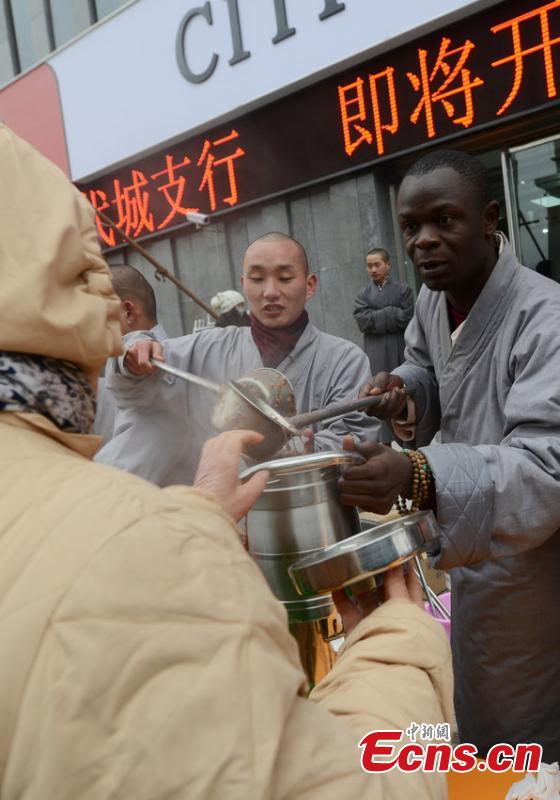
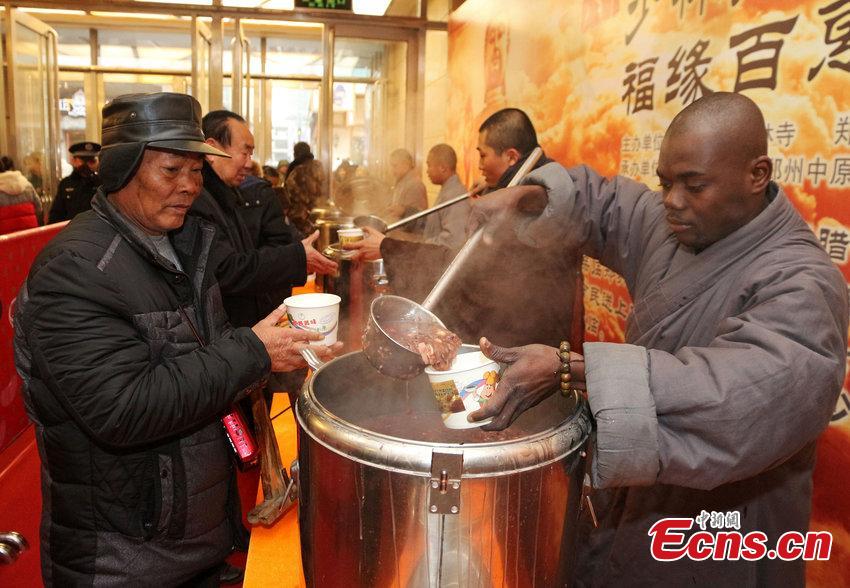
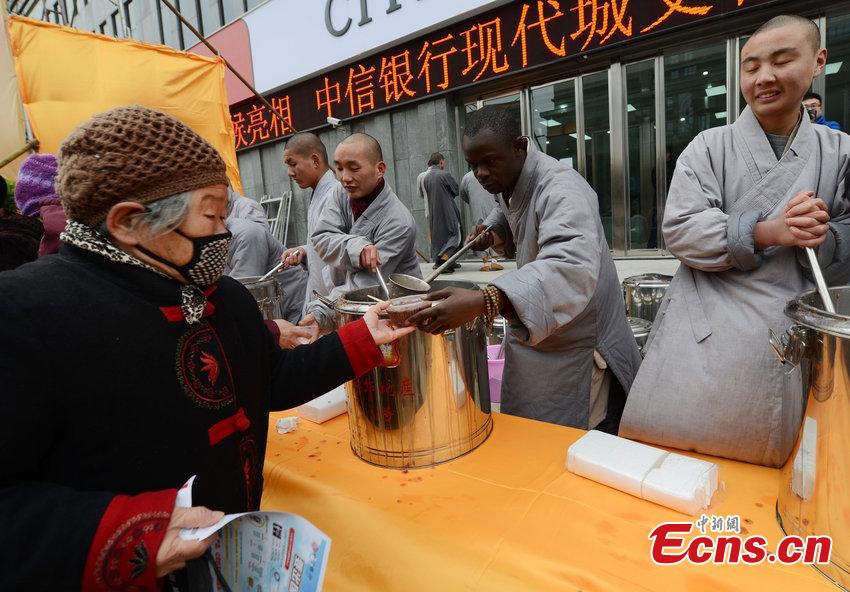
African disciple of Shaolin Temple helps distribute Laba porriage(1/3)
2015-01-28 09:57Ecns.cn Web Editor:Yao Lan


A disciple of Shaolin Temple distributes free Laba congee in Zhengzhou, Central China’s Henan province, Jan 27, 2015. The monk, with his Buddhism name Yan Di, is from Ivory Coast. Laba, a traditional Chinese festival celebrated on the 8th day of the 12th lunar month, fell on Jan 27 this year. It is a tradition to eat Laba congee to mark the festival, and it is also a tradition of some temples and non-profit organizations to distribute the congee for free on this day. [Photo/CFP]

Slightly OT

Shaolin has been in the news despite the latest Abbot Scandal. No pix.

Feature: Chinese Shaolin monks electrifies audience at Kungfu show in Kenya

NAIROBI, Aug. 18 (Xinhua) – Dressed in their trademark regalia, Chinese Shaolin Monks electrified the mood on Monday night when they staged a thrilling performance in the Kenyan capital Nairobi.

Revelers defied the August chill to watch eleven young Shaolin monks swing into action during the opening ceremony of the Zhengzhou Week at a luxury hotel on the outskirts of Nairobi.

Chinese Ambassador to Kenya Liu Xianfa and senior officials from the East African nation graced the colorful Kungfu show which elevated cultural interaction between the two nations to new levels.

In his opening remarks, the Chinese envoy said bilateral cooperation with Kenya in many spheres has remained solid.

“Ever since the establishment of our diplomatic ties in 1963, China-Kenya relationship has been developing in leaps and bounds,” Liu told the audience at Kungfu show.

The Zhengzhou municipal government of Henan province and China Radio International Africa Headquarters organized the captivating Kungfu performance by Shaolin Monks.

A six-year-old monk won the hearts of the audience as he showcased outstanding skills in martial arts.

Dignitaries agreed the staging of Kungfu show in Kenya was timely as cultural interaction with the Asian giant gain foothold.

“Culture is the bridge for enhancing mutual understanding and trust between nations. China and Kenya share similar cultures that emphasize the importance of peace, harmony and friendliness,” said the Chinese ambassador.

He added the Zhengzhou Week will help showcase China’s rich culture and economic miracle to Kenyans.

The staging of a Kungfu show in Kenya was not only historical but was also a confirmation of blossoming ties with China.

Kenyan officials hailed the martial arts’ prowess of Shaolin Monks and underscored the role of the ancient practice to promote cultural diplomacy.

“The Zhengzhou Week in Nairobi will showcase cultural treasures from China. Kenyans have gradually appreciated Chinese culture as our cooperation with the country deepens,” said the Chairman, Parliamentary Committee on Defense and Foreign Affairs, Ndung’u Gethenji.

Both Kenyan and Chinese revelers graced the electrifying Kungfu show by Shaolin monks.

The monks’ agility on stage was impressive while their endurance in the face of back breaking gymnastics shocked the audience.

Kenyan revelers were captivated by Shaolin monks’ spectacular performance that illuminated the best aspects of martial arts.

Like their counterparts in other Sub-Saharan Africa, Kenyans have learnt about Kungfu through movies and print media. Kungfu legends including Bruce Lee and Jackie Chan are well known in Kenya.

Likewise, a segment of Kenyan population that is educated and widely traveled has good knowledge of Shaolin monks who embodies the richness and authenticity of Chinese culture.

The CEO of Kenya ICT Authority Victor Kyalo noted that martial arts have gained traction globally owing to their therapeutic benefits.

“The young generation of Kenyans is accustomed to Kungfu and has appreciated its physical and spiritual benefits. We are privileged to host Shaolin Monks who are the custodians of a rich and rewarding oriental practice,” Kyalo told Xinhua.

This is more than just African, despite the headline

Shaolin Temple welcomes Kung Fu students from Africa
2016-07-07 17:12:21 CRIENGLISH.com Web Editor: Min Rui


Shaolin Temple in central China’s Henan province has launched Kung Fu courses for 20 students from the Republics of the Congo, Mauritius, Madagascar, as well as other African countries. The Abbot of the Shaolin Temple Shi Yongxin welcomes the new pupils at a launching ceremony on July 6, 2016. [Photo: Chinanews.com]


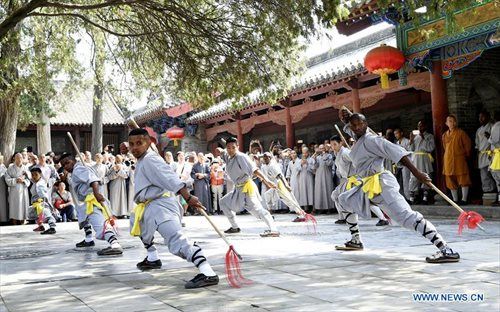
A British Kung Fu student at the Shaolin Temple in central China’s Henan province welcomes new pupils and shows off his Kung Fu skills on July 6, 2016.[Photo: Chinanews.com]


Russian Kung Fu pupils at the Shaolin Temple in central China’s Henan province on July 6, 2016 welcome new colleagues with a demonstration of their Kung Fu skills. [Photo: Chinanews.com]


Abbot of the Shaolin Temple Shi Yongxin welcomes new pupils and addresses them at a launching ceremony at Shaolin Temple in central China’s Henan province on July 6, 2016. [Photo: Chinanews.com]


Foreign Kung Fu students pose for a photo at the Shaolin Temple in central China’s Henan province on July 6th, 2016. [Photo: Chinanews.com]

Abbot on the mike. :slight_smile:

graduates

20 African apprentices graduate from C China’s Shaolin Temple
Source:Xinhua Published: 2016/9/24 16:39:51

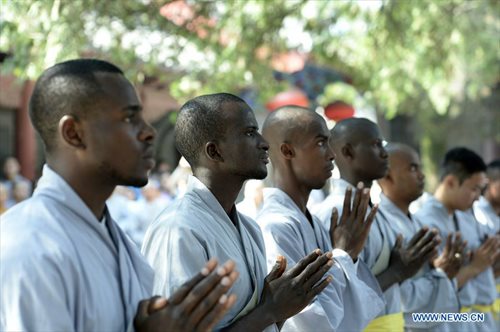
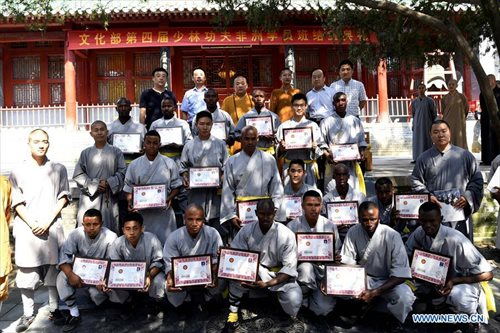
African apprentices attend the graduation ceremony at the Shaolin Temple on the Songshan Mountain in Dengfeng City, central China’s Henan Province, Sept. 23, 2016. A total of twenty apprentices from Africa graduated here on Friday after three-month training programs on Kungfu and Shaolin culture. (Xinhua/Feng Dapeng)

African apprentices pose for a group photo during the graduation ceremony at the Shaolin Temple on the Songshan Mountain in Dengfeng City, central China’s Henan Province, Sept. 23, 2016. A total of twenty apprentices from Africa graduated here on Friday after three-month training programs on Kungfu and Shaolin culture. (Xinhua/Feng Dapeng)

African apprentices pose for a group photo during the graduation ceremony at the Shaolin Temple on the Songshan Mountain in Dengfeng City, central China’s Henan Province, Sept. 23, 2016. A total of twenty apprentices from Africa graduated here on Friday after three-month training programs on Kungfu and Shaolin culture. (Xinhua/Feng Dapeng)

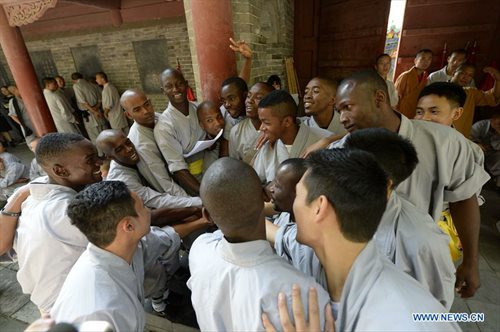
African apprentices celebrate for graduation at the Shaolin Temple on the Songshan Mountain in Dengfeng City, central China’s Henan Province, Sept. 23, 2016. A total of twenty apprentices from Africa graduated here on Friday after three-month training programs on Kungfu and Shaolin culture. (Xinhua/Feng Dapeng)

Posted in: Life

Graduating from Shaolin. Interesting concept.

Mystery Mozambican

You’d think this article would name it’s subject…:rolleyes:

[URL=“http://clubofmozambique.com/news/4-year-old-mozambican-boy-went-live-shaolin-temple-stayed-20-years/”]
The 4-year-old Mozambican boy who went to live in the Shaolin Temple – And stayed there for 20 years
9:17 CAT | 02 Nov 2016


He is 99 percent authentic Chinese, lacking only those typical eyes to make 100 percent.

Although born in Xai-Xai, he has virtually nothing of the Mozambican about him. At the age of four he went to live in the Chinese province of Henan and enrolled in the coveted and selective Shaolin Temple, the oldest martial arts school specializing in Kung Fu. And he lived there for 20 years, almost a lifetime!

There, he learned from the great masters the art and secrets of Kung Fu, spread worldwide by the Bruce Lee movies in the 80s. It is safe to say that at this point he is the only Kung-Fu master in Mozambique. Not Judo, Karate or Tang So; Kung Fu is regarded as “another level” in the martial arts. Kung Fu applies deadly blows. Widely used by ninjas in the movies, Kung-Fu is the highest form of martial arts in the Eastern world.

To get an idea of the impact of Kung Fu, it suffices to say that if you, dear reader, were to take, for example, a slap in the face from a Kung Ku master, it would be enough to leave you at rest in a tomb in Lhanguene or in the new cemetery of Michafutene! That is why Kung Fu is not for everyone. It requires a lot of discipline and responsibility.

As for the Shaolin Temple, it is seen as the martial art most elite and prestigious place. For centuries and to this day, it continues to be seen as the only place in the world where the Kung Fu “teachers of teachers” go. There, only the “very good” are allowed in! Only the elect. That is why it is not easy to become a “resident” in this temple. Many Chinese, Korean and Japanese with the label of “excellent” are rejected and can not get in, and nepotism, corruption and bribery do not work there. In other words, it is a rarity to see an African in that temple. But a Mozambican, our countryman from Xai-Xai, Gaza province, lived in the Shaolin Temple for 20 years, cheek by jowl with the greatest fighters, with the “best of the best.” What a great accomplishment! A round of applause for our Mozambican, the man who put “Moz” on the Chinese map.

In the East, this “Mozachinese” lived in Shanghai, Shangdon, Beijing, Tienjin, Taipei and Hong Kong. Then he studied management in Canada and in the end returned to China. He went through the teachings and temples of great masters such as Wong Yeng, one of the oldest masters of Kung Fu, and responsible for the training of famous actors such as Jackie Chan and Jet Li.

He saw Jet Li himself visit the temple, casting for stuntmen to participate in his films.

His food habits align with Eastern habits and customs. How could they not? A typical Chinese eats dog, cat, snake, frog and other animals. It could not be otherwise, since he was living there from the age of four and ate whatever they gave him. (Chinese saying: “We eat anything with four legs as long as it’s not a table, and everything that flies, provided it’s not a plane.”) And in that temple, there was “xima,” mboa,” “matapa “,” xiguinha” [Mozambican traditional dishes] etc.

In Mozambique, he goes unnoticed. Simple and respectful, known to few, he is the epitome of anonymous. He does not care to “appear” (lessons learned in the temple). It is said that one day he came home and crossed paths with robbers who demanded his wallet and cell phone. He declined, asking the thieves to let him go. They laughed in his face: “Futseka! Suka! Wabiwa? “(Are you crazy?) And threatened to torture him for daring to refuse to hand over his belongings. Always the humble victim, he begged them almost on his knees to let him go, because he was a man of peace and never got into trouble. They told him “to go have a smoke”. As they finally approached, he warned them that he did not want to see the blood of his brothers and have to chase ambulances to transport them to hospital. This statement so angered the gang that they advanced to attack, and in the blink of an eye, the assailed man soared to an incredible height (just like in the movies) and landed with a spiral movement, felling the group with a single ” fan” kick. Everyone on the floor! Only a blow in self-defense. Without any intention to hurt.

They got up and off they rushed, shouting “Futseka! We also have Jackie Chan DVD. Let’s learn karate to you give you a really great beating!” From a safe distance, one of them improvised a karate gesture. He saw it, smiled, and sent a “Tchau”!

This story could be confused with a movie about Alex Raúl Sitoe, known in the East as New Chung Hage, but to me as the “Bruce Lee of Mozambique”.

By: Albino Moisés

Source: Noticias

The real reason behind this thread.

Africa is changing China as much as China is changing Africa
** ADVANCE FOR MONDAY, SEPT. 3 **


A Chinese foreman looks on as laborers work on the construction of military officers housing, donated by China, in Bissau, Guinea-Bissau, Jan. 3, 2007. Market stalls are just one of the most visible signs of China’s massive penetration into African economies. The Asian giant _ a ready buyer of oil and other raw materials for more than a decade _ is also a major bidder on construction projects, a multi-million-dollar lender and a growing player in Africa’s telecommunications and textile industries. (AP Photo/Rebecca Blackwell)
New partners. (AP Photo/Rebecca Blackwell)

WRITTEN BY Lily Kuo
OBSESSION China in Africa
January 08, 2018 Quartz Africa

Eight years ago I watched the movie “2012,” named after the year the Mayan calendar supposedly ends. In the film an American geologist learns that a solar flare is heating the core of the earth and causing its tectonic plates to shift drastically. Before long, mass earthquakes and tsunamis are annihilating mankind. Los Angeles slips into the Pacific Ocean. The White House gets wiped out by a giant wave, with the president still inside. Soon, most of the earth is submerged in water.

The only people who do survive do so with the help of the Chinese. The People’s Liberation Army has managed to build a set of massive arks at breakneck speed, because it’s China after all. After 27 days at sea, the Chinese-made arks set sail for the only place in the world that has stayed above water—the Africa continent—specifically the Cape of Good Hope in South Africa where the Drakensberg mountain range is now, according to the movie, the highest in the world.

Over the past two years that Quartz has been writing about China’s growing presence in Africa, I keep coming back to this heavily CGI-ed image of China saving the world and along the way putting Africa on top. I wonder, was that 2009 John Cusack movie some kind of prophecy or just accidental propaganda for China?

//youtu.be/ce0N3TEcFw0

It is no longer news that Chinese companies, entrepreneurs, and central and local government are investing heavily in African countries. In Kenya, the Chinese have funded and built the country’s largest infrastructure project in more than 50 years, a standard gauge railway from Nairobi to the port city of Mombasa. At the grocery chain, Nakumatt, before it went under, an aisle was reserved for Chinese food supplies to serve the Chinese community in Nairobi.

Across the continent, Chinese electronics, clothes, and other products have flooded local markets. Chinese-made Dutch Wax Prints now sell better than the originals, decimating local industries in places like Lubumbashi, Congo. Increasingly you are finding Chinese-run factories in Ethiopia, Rwanda, Nigeria, and supposedly soon in Central Africa where the region’s first auto factory will be in Cameroon.


Sanitary napkins made by a Chinese company in the Kigali Special Economic Zone. (Quartz/Lily Kuo)

It’s not just business. Thousands of African students get Chinese government scholarships every year to study in China. Thousands of African officials and politicians are also being hosted in China by the Communist Party and other government ministries. The Chinese government has invested in more than 40 language schools, or Confucius Institutes, across the continent to teach Mandarin and Chinese culture. Chinese diplomats are also getting involved in regional conflicts from South Sudan’s civil war to a border dispute between Eritrea and Djibouti, where China’s first overseas military base is now.

[QUOTE]The China-Africa story provides us familiar tropes: Chinese invaders, meek African victims. The counter narrative is also misleading.

Yet, the more stories we do about China in Africa, the more questions I have not just about the topic but how we approach it. For instance, why is it that the international media is so interested in the China-Africa story when Chinese investment is also big in South America, the Caribbean, the Middle East, and basically any region of the world?

I used to think it was the novelty of seeing Chinese people next to black Africans—two parts of the world that have traditionally not mixed, that couldn’t look more different and that in some ways couldn’t be more different. I met a researcher studying local markets in Tanzania where Chinese and Tanzanian traders run their businesses alongside each other. The biggest point of friction wasn’t the competition between them, but the fact that the Chinese traders didn’t properly greet their Tanzanian neighbors. Instead of saying hello and asking after their families and businesses, they’d just go straight to their stalls and start their day. The Tanzanians found it off-putting.

What I think might be happening is that the China-Africa story provides us familiar tropes—the Chinese invaders, the meek, innocent African victims. The counter narrative, usually pushed by government voices both Chinese and African, is just as misleading. China is a fellow developing country, a partner that doesn’t judge the way the West does, and just wants the best for its African brothers and sisters. Again, it’s not news that the Chinese are a major presence here in Africa, but we need to go beyond the novelty of it and investigate those power dynamics.

[/QUOTE] continued next post

Continued from previous post


Xi Jinping (second from left) at the Forum on China-Africa Cooperation in Johannesburg. (DIRCO ZA)

The China-Africa story isn’t just about saviors or oppressors, and framing it that way is a disservice to all the interesting and enterprising people that form these links. I’ve learned that the topic of China in Africa is fraught with questions of representation. These stories can easily reek of exoticism, essentialism, and at times, racism. Africa isn’t one thing. Neither is China.

To me, the most interesting part about these connections is that they form a new kind of globalization, one that a lot of the world isn’t paying attention to, what one researcher described as a form of “globalization from below.” In Guangzhou, in southern China, you find entrepreneurs from Nigeria, Ghana, Kenya, Somalia running factories, logistic services, and other companies that are truly globally connected businesses.

[QUOTE]Africa has become a platform for analyzing China’s influence in the developing world. But what about how Africa is influencing China?

In African countries, increasingly you find Chinese people who never meant to stay as long as they have. But now, they say they can’t go home, because being in Africa has changed them. And that leads me to another point. Africa has become a platform that a lot of people, people like me, use to analyze and understand China’s expanding influence in the developing world. But what about how Africa is influencing China, or the rest of the world?

Some of China’s biggest companies have cut their teeth in Africa, their first overseas ventures, and learned lessons that still shape how they operate elsewhere in the world. Others have major African shareholders. Naspers, a South African company, owns 33% of one China’s largest internet companies, Tencent.

The number of African students and entrepreneurs studying or doing business in Chinese cities has forced China, long a migrant-sending country, to recognize that it’s a destination as well. These communities demand respect. Last year a museum exhibition featuring offensive photos comparing Africans to animals was taken down after protest from the African diaspora in China.


Portraits of Africans alongside animals at an exhibit in the Hubei Provincial Museum titled, “This is Africa.”


Students and other members of the African diaspora complained about an exhibit comparing Africans to animals at an exhibit in the Hubei Provincial Museum titled, “This is Africa.”

China’s image in Africa matters to Beijing. China recently implemented a complete ban on the sale of ivory, a measure conservationists in Africa have been advocating to help the continent’s decimated elephant populations. In South Sudan, state-owned Chinese companies are encouraged to do more community work to combat the idea that China is only in the country for its oil resources.

Last summer, when a Ghanaian artist published cartoons depicting China’s president Xi Jinping serving polluted water to Ghana’s Nana Akufo-Addo, the Chinese embassy was reportedly infuriated and issued a formal complaint. The embassy later backed off and China’s ambassador to Ghana even attended an exhibit featuring the cartoons.


A cartoon by Bright Tetteh Ackwerh. (Facebook/Bright Tetteh Ackwerh)

These examples matter because in a way, they are empowering, and that is critical. Late last year, we published a piece on a study that found that communities near Chinese mines enjoyed better infrastructure. The late Kenyan scholar of technology and development, Calestous Juma messaged soon after, questioning the piece and asking that we think more about Africa’s ability to shape trends, not just China’s.

He especially cautioned against the creation of the narrative that China is in Africa to answer all the continent’s problems. Juma said, “This needs to be countered because otherwise it feeds complacence. There are no Chinese messiahs.”[/QUOTE]

This is also connected to Wolf Warrior 2

The African Who Wanted to Fly

Festival has new name, broader mission


Tuscaloosa Africana Film Festivals main feature will be the movie The African Who Wanted to Fly, about Luc Bendza, who as a boy in Central Africa saw his first kung-fu movie and came to believe Chinese people could fly. [Courtesy photo]

By Mark Hughes Cobb / Tusk Editor
Posted Feb 1, 2018 at 11:00 AM
Updated Feb 1, 2018 at 11:13 PM

For its sixth year, Saturdays slate of movies has been re-named the Tuscaloosa Africana Film Festival formerly African Film Festival to reflect its inclusion of works from the African diaspora, in addition to those works created on the continent.

For 2018, it comes at the culmination of the Tuscaloosa Heritage Festival, a weekend of cultural activities hosted by the West Alabama Multicultural Alliance.

Heres some of the weekends rundown:

Thursday at 7 p.m., filmmaker Tyrik Washington will lead a workshop titled Arts in Activism, Room 159 in Russell Hall on the University of Alabama campus. The Emmy-award-winner will discuss films role in social change, and present the film Under the Heavens, which he wrote, directed, composed the score for, and co-starred in.

At 7 p.m. Friday, A Showcase of Film, Dance & Music will be held at the Tuscaloosa Career and Technology Academy, 2800 Martin Luther King Jr. Blvd. Therell be performances by Stillman College and University of Alabama choirs and dancers, Thomas Davis Jr., Blessed By Four, Dancers 4 Life and Dancing Stars Dance Studio, with a Step-Tease by local students. Admission is $5.

For more on todays and Fridays events, see www.westalabamamulticult.com.

Saturdays Sixth Tuscaloosa Africana Film Festival will be held at the Bama Theatre, with childrens dance and movie activities beginning at 3 p.m. The film is Liyana, part documentary, part animated quest tale, from 2016, directed by Amanda and Aaron Kopp, with animation by Sofela Coker. Its set in Swaziland, stemming from the imaginations of five orphaned children: A girl takes on the dangerous task of rescuing her younger twin brothers.

Evening films include short films and one feature, beginning at 6:30 p.m. and running until 10:30.

Among the shorts will be Tuscaloosan Santo Mosss Moving Forward, and 90 Days, billed as a story of love, integrity and compassion, as a couple examines a life-altering decision made after 90 days dating. Its written by Nathan Hale Williams, and directed by Williams and Jennia Fredrique Aponte. Stars include Teyonah Parris and Nic Few. The opening short will be the winner of the Tuscaloosa Career and Technology Academys film competition, to be announced.

The evenings feature film will be 2016s The African Who Wanted to Fly, about Luc Bendza, who as a 9-year-old boy in Gabon, Central Africa, saw his first kung-fu movie, and came to believe Chinese people could fly. Bendz became obsessed with joining them, and learning their secrets. He became the first African to enter the Shaolin Monastery, at age 14, and has lived and studied there for more than 30 years, mastering wushu and acting in martial arts movies.

The film, part documentary and part biography, was directed and written by Samantha Biffot, who though born in Paris, grew up in Asia and Africa, and after studying cinema in Paris, retured to Gabon in 2010 to develop TV series, documentaries and other movies.

The Tuscaloosa Africana Film Festival is being presented by the Edward A. Ulzen Memorial Foundation and Afram South Inc., nonprofit organizations supporting education and public health initiatives in Ghana, West Africa and West Alabama respectively. Co-sponsors include the College of Community Health Sciences at UA and Tuscaloosa Sister Cities International. Tuscaloosa has a sister-cities relationship with the adjacent pairing of Sunyani and Techiman in Ghana.

Tickets for the Tuscaloosa Africana Film Festival are $15 general, $10 for seniors, and $8 for students. Theyre available at www.brownpapertickets.com/event/3223711, or at the Bama box office on Saturday only.

For more, email eaumfoundation@gmail.com, or call Bill Foster at 334-322-0824, or Thad Ulzen at 205-552-6078.

Luc Bendza needs his own thread now, independent of Shaolin’s African Disciples

2018 Shaolin Martial Arts General Assembly

I copied the two posts above from the Beginnings of Shaolin Boxing - history thread to this Shaolin Temple World Martial Arts Assembly because it sits more appropriately here. Also copying this to our Shaolin’s African Disciples because I love those cross-links. I suspect the flag raising ceremony might have been connected to this Assembly too, but I’m not going to add that because it might have just been about National Day.

African Nations Pull Up in Force to Shaolin Kung Fu General Assembly
by Adan Kohnhorst | Aug 30, 2018

The Shaolin Temple just closed out its 2018 Shaolin Martial Arts General Assembly, and well ****, African nations came through.

Twenty-two trainees from seven African countries Cameroon, Chad, Niger, Burundi, Mali, Djibouti, and the Central African Republic spent three months at the temple as participants in the Ministry of Cultures sixth African student exchange program. The class studied empty-handed Shaolin kung fu, plus sword and staff techniques. At the end of the training period students performed what theyd learned for the temples abbot, and received certificates of completion.

Full disclosure, this writer happened to be at the temple while the African exchange unit was there training, and can confirm, they were doing some serious stuff. Tourists from across China watched with confusion and pleasant surprise .

We came empty-handed but finished full of enthusiasm, one participant said. Were really excited to be ambassadors of Chinese culture, and to share what we learned at the temple with people back home.

The abbot Shi Yongxin, international medias notorious CEO monk, had a more put-together statement to make:

[QUOTE]The Shaolin Temple is committed to supporting China-Africa ties, cultivating the friendship between Chinese and African people, and pushing forward on cultural exchange and cooperation between China and Africa.

Outside of the African class, other foreigners and kung fu fans made the trip out for the occasion. Peoples Daily was quick to seize a photo op on Twitter:


[URL=“https://twitter.com/PDChina/status/1034049667565268992/photo/1?ref_src=twsrc^tfw|twcamp^tweetembed|twterm^1034049667565268992&ref_url=https%3A%2F%2Fradiichina.com%2Fafrica-pulls-up-in-force-to-shaolin-kung-fu-general-assembly%2F”]View image on Twitter

People’s Daily,China

@PDChina
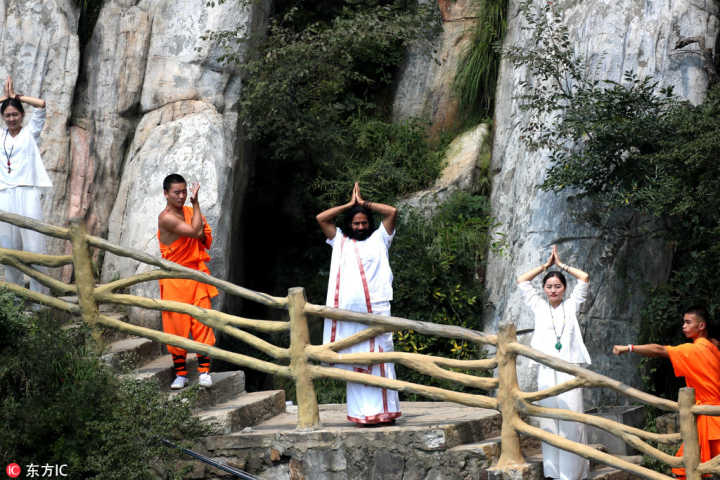
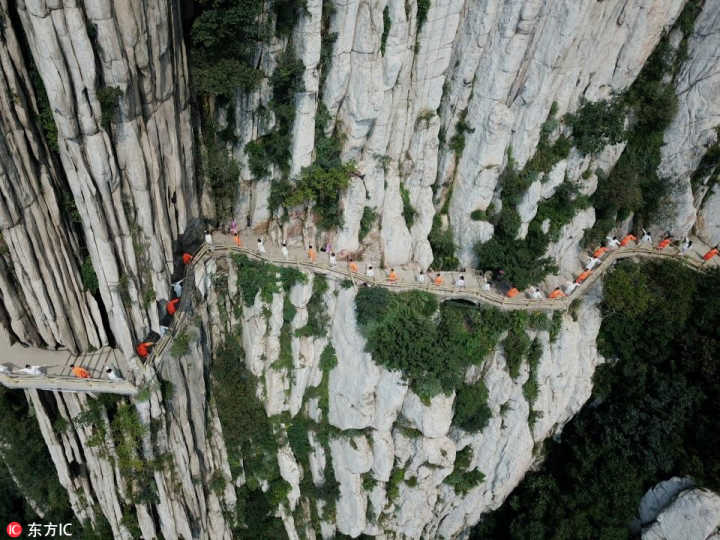
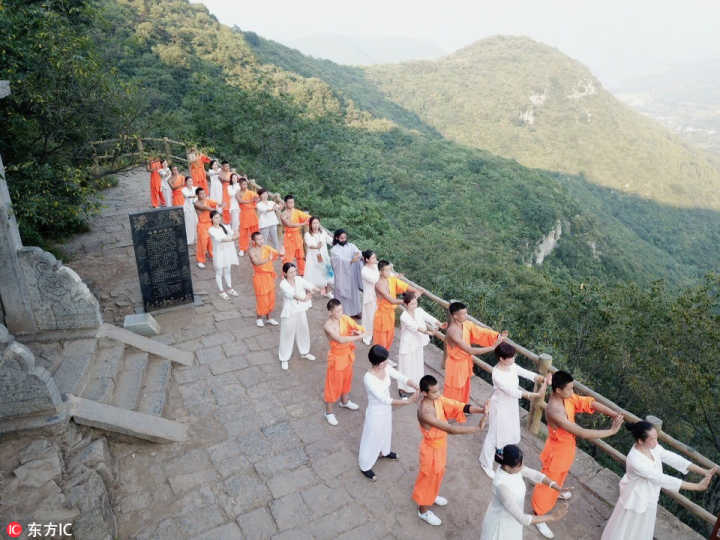
Yoga lovers practice yoga and Shaolin students perform martial arts along a cliff walkway on Songshan Mountain during the 2018 Shaolin Martial Arts General Assembly in Dengfeng city, Central China’s #Henan province, on August 25

5:07 AM - Aug 27, 2018
95
28 people are talking about this
Twitter Ads info and privacy

As time marches on, and the world around us changes, we can all take comfort knowing that foreigners will continue to flock to the Shaolin Temple with shocking consistency.[/QUOTE]

Soft Power in Africa

Feature: When a street kid from Yaounde discovers Kungfu
Source: Xinhua| 2020-01-05 17:48:56|Editor: zh
By Qiao Benxiao

YAOUNDE, Jan. 5 (Xinhua) – At the top of Nkol-Nyada hill, the Yaounde Conference Center was built in the 1980s as a China-aid project, and remains to this day one of the landmark buildings in Cameroon. The story of Fabrice Mba, a Shaolin disciple, started there.

Little Mba grew up on the street. He had no dad, his mom could not take care of every child because there are so many. In 1987, at the age of eight, he left his home in the southern town of Sangmelima with his elder sister to settle in the capital. They lived not far from the Yaounde Conference Center.

Every morning, little Mba saw a Chinese man making movements on the square of the Conference Center. He and his friends, all barefoot and T-shirts torn, looked at the foreigner and imitated him. “It was very beautiful,” recalled Mba.

One day, the Chinese called them and asked them to take a posture, with knees slightly bent as if holding a tree in the arms. “We stood facing the wall. It hurted in feet, shoulders and arms so much that my friends fled, and I was left alone,” said Mba.

This posture which is called “zhan zhuang” is in fact a basic training method of the Chinese martial arts. The man who “mistreated” little Mba was a Chinese technician assigned to Cameroon to maintain the Conference Center, and the “very beautiful” movements that the Chinese made was obviously Kungfu.

Since then, little Mba came every morning to learn Kungfu. “He was very thin, but at the same time very strong,” remembered Mba of his teacher, without being able to say his name is Zhang or Jiang.

A year later, little Mba returned to Sangmelima. His big brother was a projectionist, little Mba often helped him sweep the movie theater. For the first time, he saw the Shaolin monks on the screen. “It spoke to me very loudly.”

After studies, Mba returned to Yaounde to make a living. Life has hurt him more than the posture of zhan zhuang. Each job did not last long, and he did not know what to do to eat. His friend, who worked as a guardian of a bakery, sometimes kept breadcrumbs for him. “I had it on my hands, face and in my nostrils.”

“I don’t drink, I don’t smoke, Kungfu is all I have,” said Mba, who continued to practice martial arts by learning from videos. To find inner peace, he trained in the morning in front of Conference Center, as his Chinese teacher once did.

In 2011, a professor from the Confucius Institute encountered Mba while he was playing Kungfu. After short exchanges, Mba was invited to visit this establishment for teaching the Chinese language and culture. In a very short time, he made close friends with Chinese teachers who believed in him a lot. “I finally had the feeling of becoming me.”

Four years later, after a selection of profiles by the Confucius Institute, Mba obtained a scholarship to be trained in China in martial arts and traditional Chinese medicine at the Shaolin temple.

“It was just like what I saw in the movies,” said Mba, only this time he was on the other side of the screen. “The great masters of Shaolin really edified and enlightened me.”

Between 2015 and 2019, Mba went to Shaolin temple three times for training. Back to Yaounde, he became a physiotherapist, and gradually, he has constant income. When he is not busy with his patients, he teaches for free Kungfu fundamentals at the Confucius Institute and in several schools in Yaounde.

For many Africans, Kungfu is presented only as a combat system, however, “by embracing the Chinese martial arts, I discovered their virtue,” he said.

“What Kungfu basically teaches is the production of a man of morality. When a man is rich in moral values, it is easier for him to be surrounded by people who love him and to have advancements in life,” said Mba.

He managed to convey this message to young Kungfu enthusiasts. “He teaches us to be a man of integrity, hardworking and respectful. If you have a problem with your friend, you have to keep cool and take a step back,” said Emmanuel Ze, a student of Mba.

In his collection of poems published in 2017 entitled “Breach in a stone wall”, Mba saw his difficult years as a wall of despair. If he was finally able to break a breach, it is due to China.

“I come with a story, which is more and more similar to that of a million Africans, to whom China opens its doors, to whom China changes (their) destiny,” he wrote in this autobiographical anthology.

Growing up on the street, Mba knows that many young Africans need help to break a hole in the wall of their lives. He is currently preparing a program to offer short-term training in physiotherapy and others to disadvantaged young people free of charge so that they can find work.

“Be your own boss” is the slogan of his program named “Lotus and Water Lily”, because “these are the only flowers that are able to grow in a polluted environment, and succeed in producing white flowers,” he explained.

“I was a street kid, destined to be a bandit or a robber, but I discovered Kungfu which teaches me to become a man of moral excellence even if I had no money”, he said.

“All these children who are in difficulty like once I was, who are destined for a bad life, can become lotuses and water lilies if they are given the opportunities.”

THREADS
Shaolin Journeys
Confucius Institutes
Shaolin’s African Disciples

Slightly OT

Shaolin Temple in Zambia hosts first-ever African Kung Fu games
Xinhua, June 27, 2023


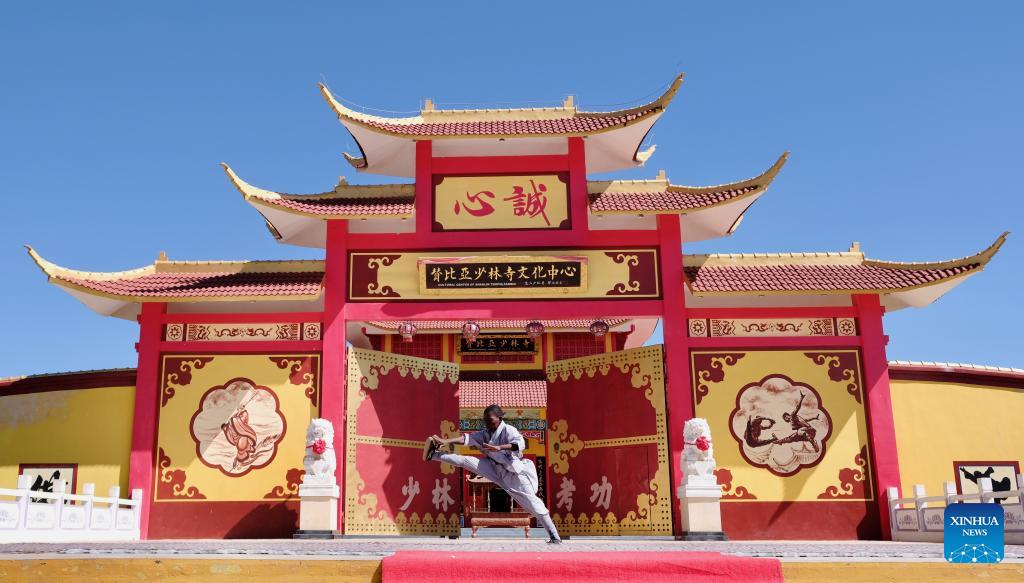
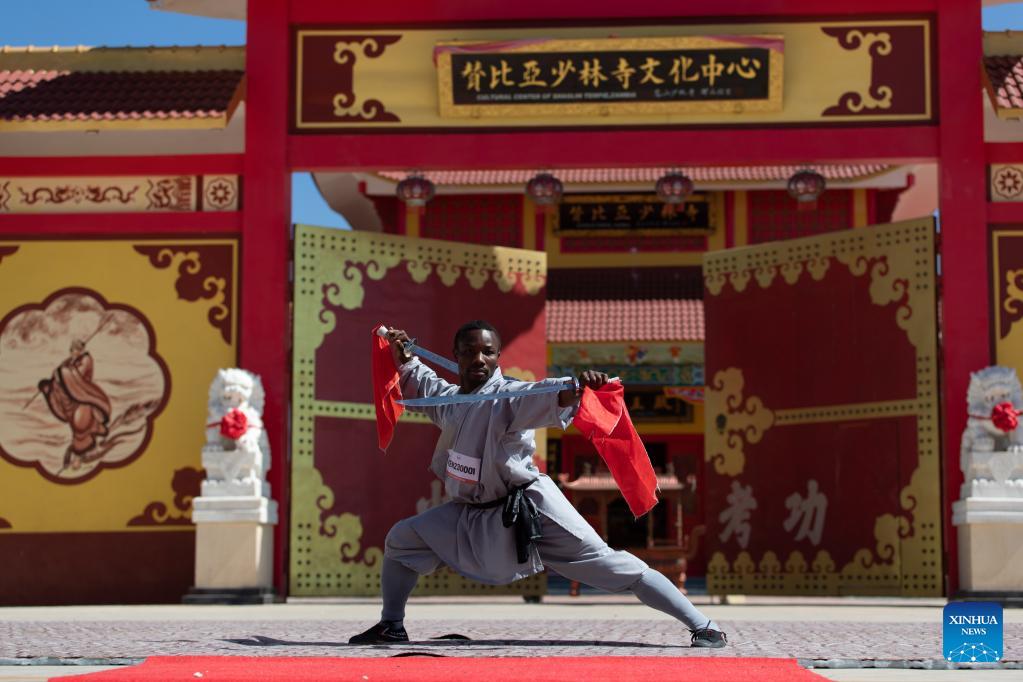
A participant demonstrates Kung Fu during the 2023 African Shaolin Kungfu Games held at the Shaolin Cultural center in Lusaka, Zambia, June 25, 2023. The Shaolin Temple in Zambia has organized the first-ever African Shaolin Kung Fu Games and other activities aimed at promoting the sport on the African continent and promoting cultural exchanges. The six-day event, which started on June 21 and ends on June 26 at the Shaolin Cultural Center in Zambia, has attracted over 150 contestants from 23 African countries and regions. (Xinhua/Yang Zhen)

The Shaolin Temple in Zambia has organized the first-ever African Shaolin Kung Fu Games and other activities aimed at promoting the sport on the African continent and promoting cultural exchanges.

The six-day event, which started on June 21 and ends on June 26 at the Shaolin Cultural Center in Zambia, has attracted over 150 contestants from 23 African countries and regions, while Abbot of the Shaolin Temple in China, Grand Monk Shi Yongxin, has come with a monk group to carry out cultural exchange activities.

The activities began with the first-ever Shaolin Kung Fu ranking system and test training class and was followed by lectures on the Shaolin phenomenon, as well as a grading awarding ceremony.

This was followed by Shaolin Kung Fu competition in which competitors from African countries showcased their skills.

Konate Yaya, a 30-year-old from Cote d’Ivoire, commended the organizers, saying the event will go a long way in promoting Kung Fu in Africa.

“This tournament is very good because it is the first one and also the temple is the first one in Africa. We are honored that there is a country in Africa with a temple,” said Yaya, who started Kung Fu training seven years ago.

Yaya, who started Kung Fu in order to keep fit, added that he has learned that Kung Fu is not just about fighting, but also getting lessons on life, family, how to treat other people and how to be self-disciplined.

Stanley Banda, a 20-year-old from Zambia, said he was inspired to start Kung Fu after watching Chinese movies, and said participating in the games will build his confidence and help the sport gain popularity in other parts of Africa.

He further said the sport has helped him in building his mental capacity, fitness and self-confidence.

Gahungu Serges from Burundi said he was happy to have been given an opportunity to participate in the games, saying he learned a lot from senior competitors.

The 31-year-old, who got the inspiration to learn Kung Fu from a young age after watching Chinese movies, expressed happiness that his dream of stepping into a Shaolin Temple has become a reality.

Lacmagou Fregis Arnaud from Cameroon encouraged people from different parts of Africa to start learning Kung Fu, and commended the organizers of the event, as it allowed people to see at close range the Kung Fu skills they previously just watched on television.


A participant demonstrates Kung Fu during the 2023 African Shaolin Kungfu Games held at the Shaolin Cultural center in Lusaka, Zambia, June 25, 2023. The Shaolin Temple in Zambia has organized the first-ever African Shaolin Kung Fu Games and other activities aimed at promoting the sport on the African continent and promoting cultural exchanges. The six-day event, which started on June 21 and ends on June 26 at the Shaolin Cultural Center in Zambia, has attracted over 150 contestants from 23 African countries and regions. (Xinhua/Peng Lijun)
Not to let the cat out of the bag, but there’s some talk of staging a USA Shaolin Games. I was in a zoom meeting yesterday about this.