Our latest ezine offering
Ever dream of going to Shaolin? Read The Shaolin Experience by Chris Friedman
Our latest ezine offering
Ever dream of going to Shaolin? Read The Shaolin Experience by Chris Friedman
Better than catnip!
This book is a cat magnet…every time I’m trying to read it, she flops her big butt right in the middle of the page and starts purring. First world problems.
Ancient Kung Fu Masters meet modern fitness stars
Our latest ezine offering
It’s more than walking rice paper and grabbing pebbles. Read Shaolin: Legend Meets Reality by Chris Friedman
Nigula Babayeva
The Story of One Beijing Expat’s Successful Shaolin Kung Fu Odyssey
Kyle Mullin | Jun 20, 2017 11:30 am
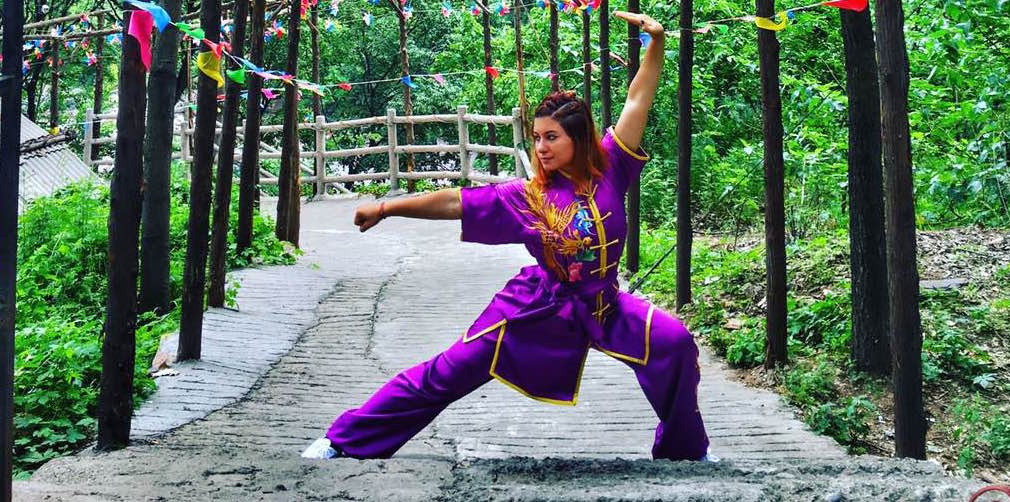
When most foreigners think about kung fu, the last thing to likely cross their minds would be a petite, glamorous redhead from Azerbaijan.
And yet Nigula Babayeva – an undeniably badass wushu devotee who finished third at the annual Shaolin temple kung fu championship earlier this month – is boldly defying any such narrow-minded assumptions with her tireless dedication and mastery of the discipline.
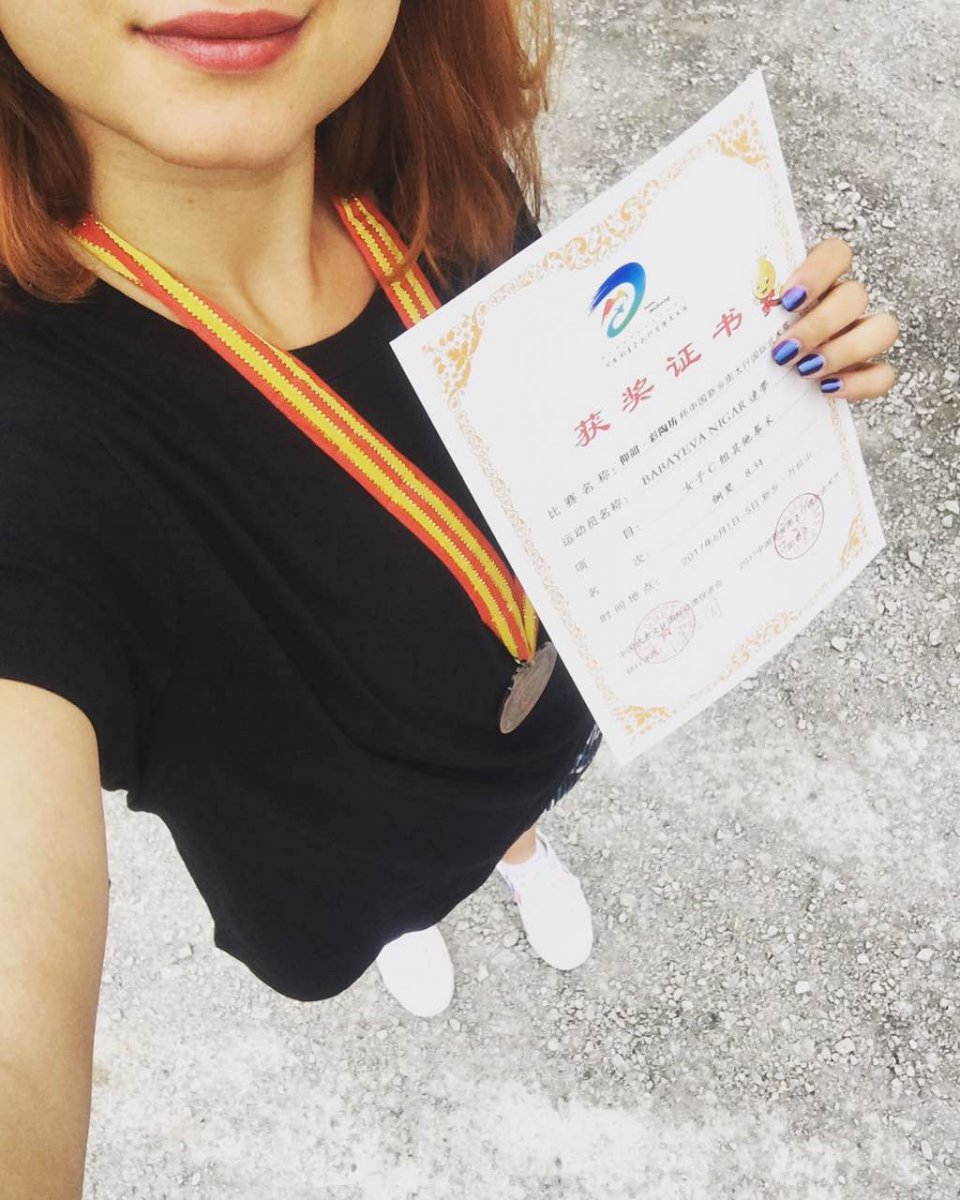
Babayeva may be best known in Beijing circles as the PR and social media manager at Glo Kitchen and Fitness (stylized as GLO), helping to promote the venue’s healthy eats and meal plans that they coordinate with their CrossFit gyms. And while she enjoys partaking in CrossFit with Glo colleagues and patrons, she has been practicing the wushu martial art as a hobby for her “own personal growth” since long before that.
Through her wushu classes Babayeva befriended an employee at the Beijing Shaolin Martial Art school, who was finalizing promotion for their children’s martial arts program. When Babayeva offered up a bit of advice and PR know-how to help her friend with the program’s posters their bond grew stronger, and that continued as Babayeva stuck with her demanding kung fu classes. This eventually lead to Babayeva getting an invitation from the school to participate in the annual International Kung Fu Championship.
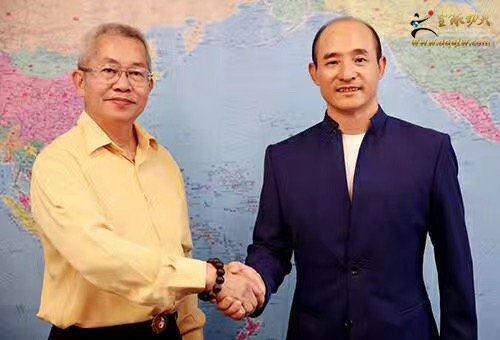
Babayeva is deeply honored to have legendary master Shifu Fu Biao, pictured on the right, as her mentor
“I agreed to meet with the President of the Kung Fu Federation and the Kung Fu school, Shifu Fu Biao, who warmly welcomed me and tested my skills,” Babayeva recalls of meeting the famous master who is also a UN Friendly Messenger and well acquainted with diplomats and world leaders like Kofi Annan.
“I know that sounds like a chapter from an adventure book, but miracles do happen in real life as well!” Babayeva enthuses.
Though she strove to be very competitive at the event organized by her friend at Beijing Shaolin Martial Art School, Babayeva wasn’t sure how well she’d fare given the range of talented participants from across China. And, besides, she got more than enough fulfillment out of the preparation alone.
Babayeva recalls how her invitation to partake in the championship came a mere 10 days before the event kicked off. I was worried because I knew how hard it is to train for this kind of championship," she says. “My thought was not to take place too highly, but at least to perform at a high level. Thus I partook in an intensive four-hour coaching session to get up to the fitness level needed for the championship.”
Thanks to her recent CrossFit workouts, Babayeva found she had the endurance to keep up with the formidable training, though her prior experience in wushu and gymnastics also certainly didn’t hurt. And in the end, it more than paid off – by training in wushu Babayeva says she is deeply honored to have learned “and practice the skills from people who mastered different fighting styles for decades. Imagine the inner fire you feel while watching movies by Marvel about superheroes. I was talking and practicing with real life superheroes and representatives of Chinese heritage.”
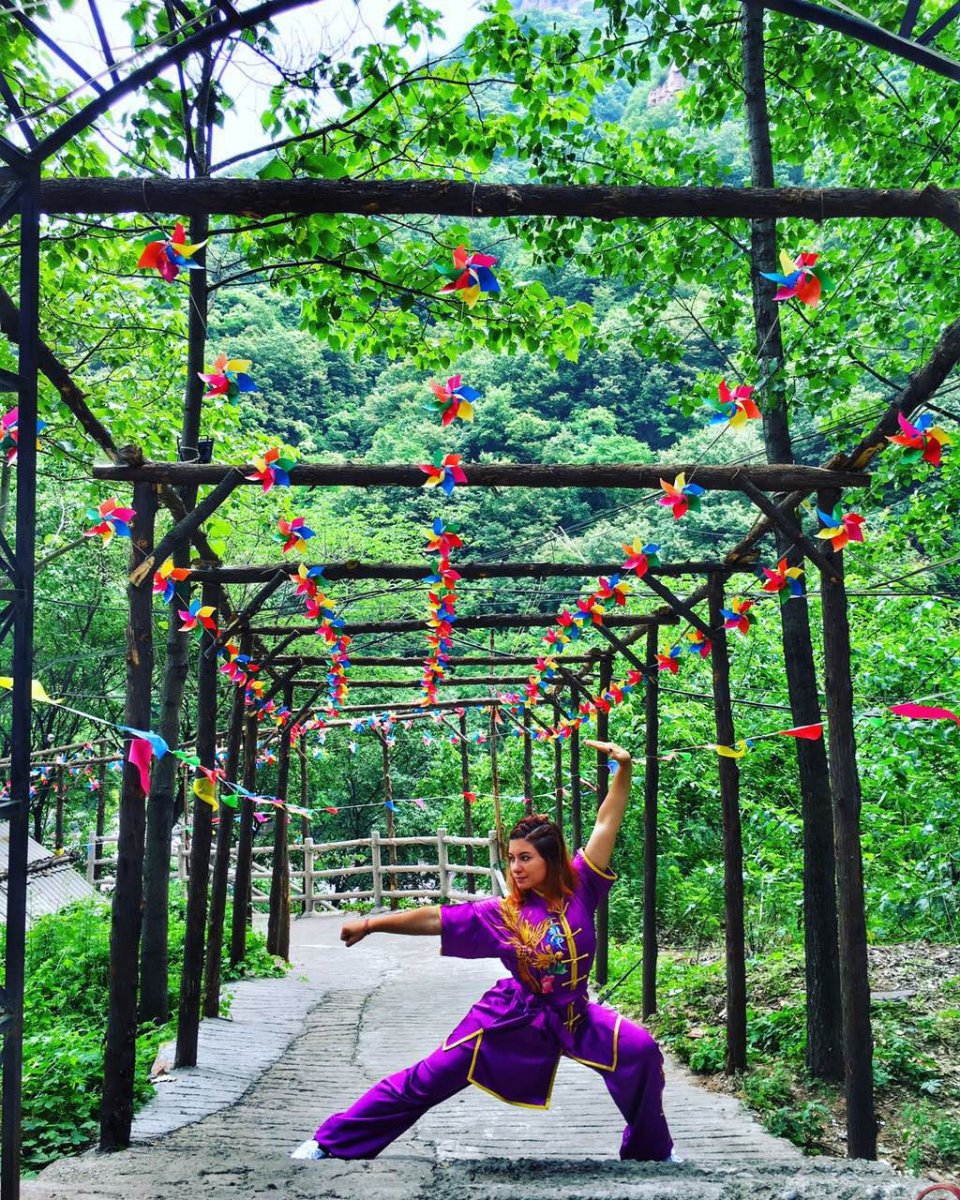
At the championship in early June, Babayeva fought hard and placed third by competing in the style of wushu taolu. She recalls how the championship was “very interactive, covering different styles of martial arts. I also enjoyed the networking; it was lovely because I was able to meet and talk with the other masters. Due to fact that none of them could speak English, it was a great opportunity to practice my knowledge of Chinese too.”
She likens her success to a steep and steady climb, adding: “I have learned to be patient and believe in something that seems impossible. Because if you believe in yourself and run at the obstacles, you may find that you end up crashing through them.”
More stories by this author here.
Email: kylemullin@truerun.com
Twitter: @MulKyle
WeChat: 13263495040
Photos courtesy of Nigula Babayeva
We know Fu Biao here - we’ve done some coverage on him before but I can’t search out the sources or remember exactly where right now.
Slightly OT
Looks like Shaolin Temple matches somewhere in South America.
If You Could Dig a Hole Through The Earth, Here’s Where You’d Pop Out
By Nathaniel Scharping | July 20, 2017 2:46 pm

(Credit: imgur)
A map showing the Earth’s antipodes — the places where you’d appear on the other side if you dug straight down. Most are in the middle of the ocean. (Credit: imgur)
Almost every child, shovel in hand, is struck by a tempting thought. What if I just kept digging and popped out on the other side of the world? The imagination conjures a muddy face emerging in the middle of a Shaolin temple or some such, China being the nominal “other side of the world” to Americans.
That image is wrong, unfortunately, as a map showing the Earthly antipodes makes clear. Antipodes on a sphere are the pair of points furthest away from each other, and on Earth, most of them are in the oceans. Start digging in the continental U.S. and you’ll find yourself smack dab in the middle of the Indian Ocean. There are actually very few places on Earth where you could start digging on land and emerge dry. Greenland to Antarctica might be your best bet, but you could also make a trip from Argentina to China or Spain to New Zealand.
This is all because Earth is a sphere, of course, meaning that if you dig straight down in the northern hemisphere you’ll end up just as far from the equator in the southern hemisphere. Going from here to China would require digging at an angle. You can check where you’d end up if you bored through the planet with this handy interactive antipodes map (it’s apparently popular, and the query limit has been getting maxed out lately).
Tunneling through the Earth is obviously a fantasy though, given the thousand of miles of molten rock that lie between us and the other side of the world. The furthest humans have ever gotten is the tip of the Kola Superdeep Borehole in northwestern Russia, which reaches a mere 7.5 miles beneath the ground. Even so, it took almost 25 years and ended when temperatures of over 350 degrees Fahrenheit made drilling impossible. The hole didn’t even come near to penetrating the continental crust though — the thin shell of rock that sits atop the rest of the planet.
So, we’d never actually make it through, but for the sake of argument, let’s say we did. If we had a tunnel that could somehow withstand the heat, how long would it take us to reach the other side if we jumped in? First off, this question assumes a few things. Even if we could withstand the heat, the atmospheric pressure on the way down becomes crushingly intense, reaching levels similar to the bottom of the ocean after only 30 miles. You’d also be smashed against the wall of the tunnel, a result of the fact that you’re rotating faster at the surface of the Earth than in the interior.
These considerations aside, calculations taking into account the variable densities of material you’d encounter on the way down put your trip through the Earth at about 38 minutes if you’re falling in a vacuum. If you forgot to hang on once you got there, you’d simply fall back to the other side, yo-yoing back and forth eternally.
Although, put the hole in the wrong place, and you’d just fall in the ocean.
Family trip
Trio visit China on kung fu pilgrimage
Wednesday, 23 August 2017 By Toby Leigh in Local People

Matt Bindon training at a Chinese temple
Martial arts instructor Matt Bindon has travelled hundreds of miles across China and climbed a 4,000ft mountain in the 1,600-year-old *footsteps of a Shaolin warrior.
Matt, who runs a martial arts school in Totnes, made the three-week trip with his partner Kim-Leng Hills and
19-year-old daughter Esme as an act of respect to the “roots” of Shaolin kung fu.
All three climbed Mount Song in China’s Henan province to the temple cave of Bodhidharma, or Damo, the fifth-century Buddhist monk credited with founding Shaolin kung fu.
Esme, who is a kickboxing champion, stopped off at a kung fu school to train with Chinese experts, while Matt and King-Leng travelled around a dozen Shaolin temples throughout China.
Matt, 47, said they had travelled to China “to pay respect to the roots of Shaolin kung fu, which I teach”.
He continued: “We went to China to train and pay homage by climbing one of the highest peaks in China to pay our respects at one of the most important temples up the mountain as a respectful connection to our school in Totnes.
“In each temple we were accepted. We did some training and joined in with some of the meditations. We were really made welcome, I think because we were Westerners appreciating their ancient arts.
“It’s something we’ve wanted to do for some time.”
Mount Song is one of the most sacred Taoist mountains and is considered to be the birthplace of Zen Buddhism.
Matt said it took them several hours in temperatures of 40 degrees to climb to the cave temple, where they were blessed.
“It was a real honour,” he said. “Travelling and training in the *mountains in China is a special *experience, as it is where Chinese martial arts originated.”
Matt teaches Shaolin kung fu, qigong and tai chi all within a Zen tradition and philosophy at classes that are all held at the Hu Long Temple in Totnes.
He said he is now looking to set up a permanent training centre in Totnes to help keep the tradition alive and to help others in the community by way of offering classes to “help people develop authentic training for health, self defence and to produce a strong and healthy mind and body”.
‘travelled around a dozen Shaolin temples throughout China.’ Hmm, wonder if they really got to some of the other temples or if this is a reporter misinterpretation.
Couldn’t resist posting this…
Schwab: Gift of a Shaolin priest provides lesson in humility
A post-surgery gift from a kung fu master at first seemed like an extravagance of little use.
Saturday, September 23, 2017 1:30am OPINION COLUMNIST
By Sid Schwab
Editor’s note: Today’s column is from Schwab’s Surgeonsblog on blogspot.com.
Somewhere in my home is a letter I received from a Shaolin priest, at the time one of five (so I was told) highest grand masters of the martial art of kung fu on the planet. The letter is embossed with the gold seal of the temple of which he was the head (if that’s the word). With its beautiful calligraphy and that timeless seal, I should have had it framed. Sadly, at the moment it’s missing in inaction.
The master came to me from another country, requesting that I — and only I — might operate upon him. (To put it a little more dramatically than circumstances might warrant.) According to the man who sent him to me, he taught very few select pupils, and demonstrated his skills only in private. The referring person, a student of kung fu (but not of the master), had had the opportunity to witness the man’s ability to toss a group of attackers like Pike Place fish, and other unearthly wonders. The priest was in his 60s, as I recall.
I’m not sure what I expected. A spectral aura? Levitation? A shimmering cone of calm? Surely, though, were I to give satisfactory care, I’d be granted some sort of special status, maybe presented with a holy relic, invited to the temple for a secret ceremony rooted in ages past. I let myself imagine wondrous things. Truths revealed. Powers conferred.
He arrived in my office dressed like a Florida retiree. Age-appropriately fit, but appearing neither athletic nor powerful, he was of unimposing stature. Less surprised than embarrassed for my silliness, I put aside my fantasies and proceeded into my usual doctor/patient partnership, treated him like everyone else, operated in due course and saw to his recovery, after which he returned to his homeland.
The letter, which lavishly compared my commitment and work to that of great artists, was accompanied by a package. The elegance (and flattery) of the letter was more than enough; but, once again, I unloosed my imagination, now at what might be in the box, which I opened with partially contained expectation.
It was a Montblanc fountain pen.
I’d not heard of them. Very expensive for a pen, I discovered, and quite beautiful. A nice gesture, no doubt, but of not much use to me. A little too showy, it was also impossible to use for writing orders at the hospital, because (before computerized records) I needed to push hard enough for several copies. Nor was I interested in lugging a bottle of ink on rounds. I confess to being disappointed. It seemed so impractical, so materialistic, so … unlike a Shaolin priest. Not that I had any information other than a TV show.
In its elegant box, the pen sat on my bedside table for a decade or more, alongside its exotic and suggestively erotic ink bottle. Then I wrote a book, found an actual publisher, gave some readings, did book signings. And it occurred to me: it was karma, or whatever kung fu masters believe in. He foresaw this moment, it was perfect, meaning and purpose of the gift revealed.
I took it to my first reading. With its elegant, filigreed gold nib, its meaty heft, its unmistakable emblem, the silky lines of ink it imparted to the page, it’d be perfect for a signature and a few well-chosen words. Testimony to a writer of distinction.
On stage, I read choice bits and answered questions. Humbly, I say my readings were mutual fun. I’m enough of a ham to enjoy it and get plenty of laughs. That first one was at “Wordstock,” a book fair of some renown in Portland. My presentation, in a small side room, was at the same time as Gore Vidal’s, in an appropriately huge one. “This is my first reading of my first book,” I told the audience, “So I’m looking forward to hearing what I have to say.”
When I finished, by then an old pro, sitting at a table stacked with books ready to be signed and inscribed for purchasers, I took up that auriferous pen as if having it were normal as breathing.
It leaked all over my hands. The first book I signed was so smudged I had to throw it away.
Email Sid Schwab at columnsid@gmail.com.
Weird story. It would help if he remembered this alleged Shaolin Priest’s name… :rolleyes:
Chinese press pix from the USSD’S 50TH ANNIVERSARY : JAPAN – CHINA TRIP 2018 JUNE 24T
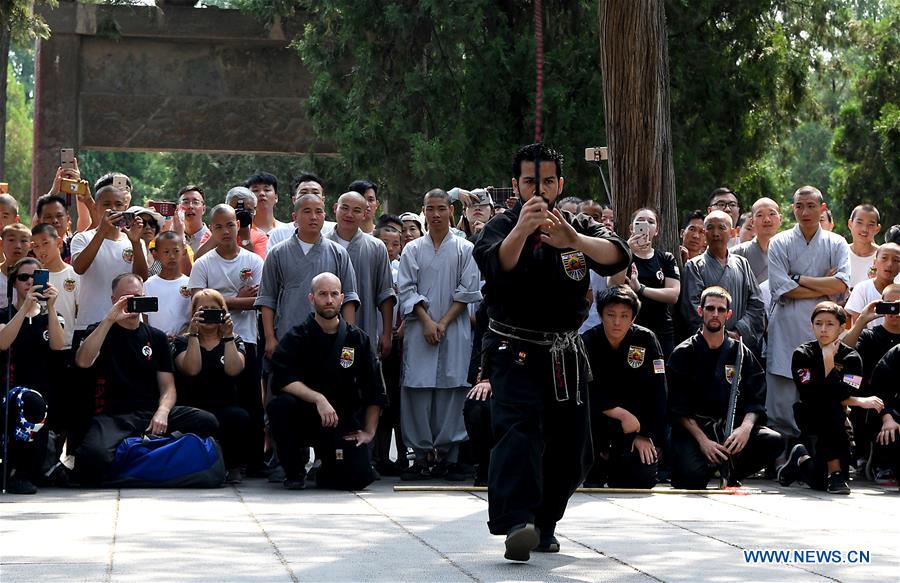
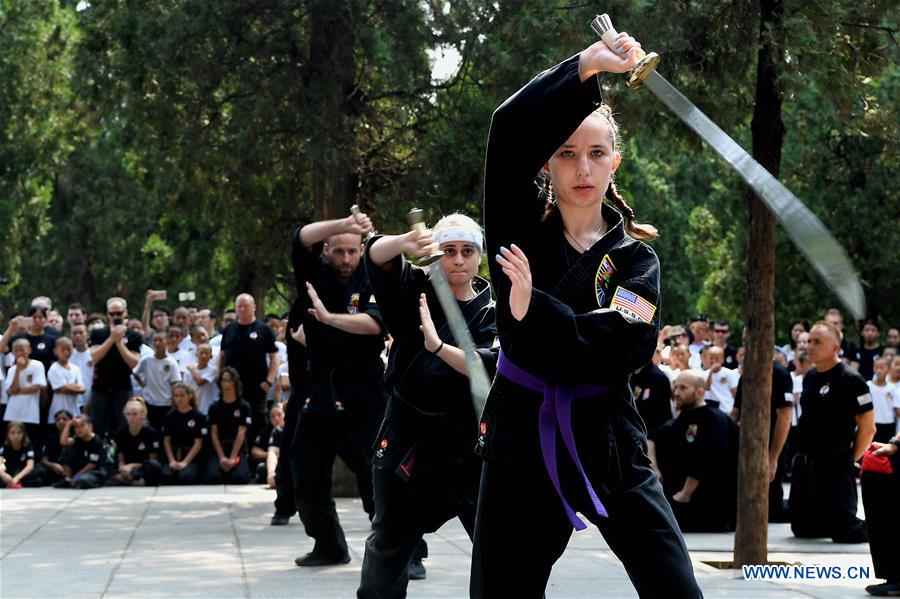
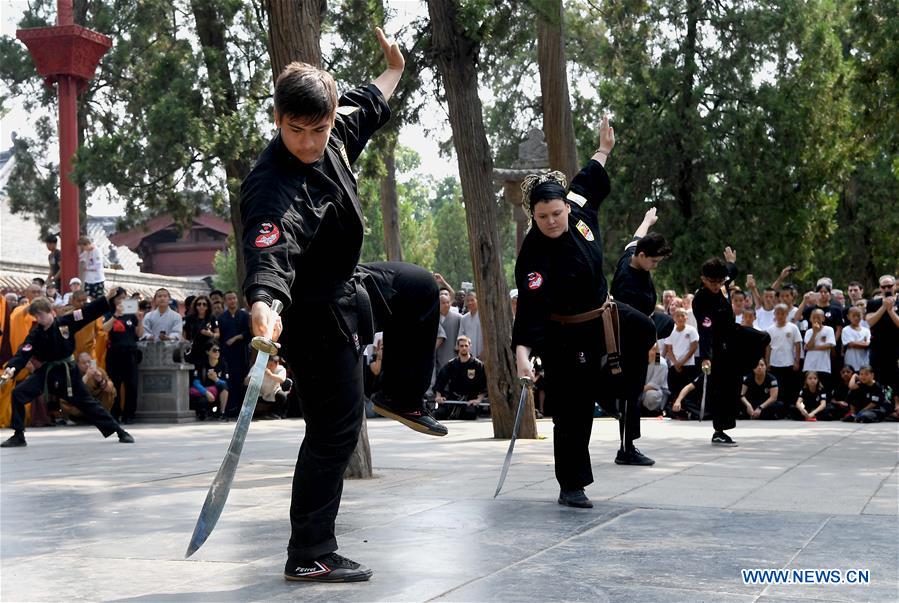
American Kungfu enthusiasts perform martial arts with local monks at Shaolin Temple
Source: Xinhua| 2018-07-01 21:29:30|Editor: Yurou
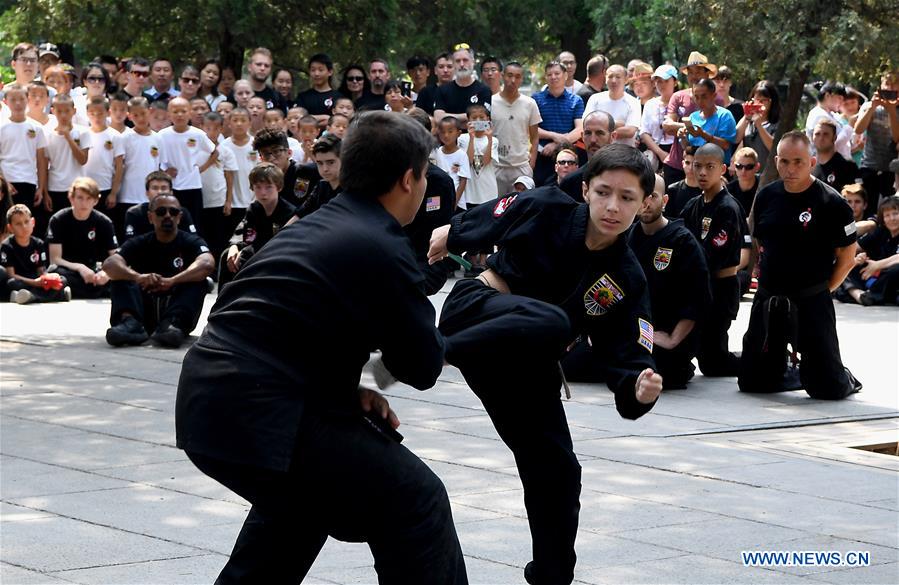
CHINA-HENAN-AMERICAN KUNGFU ENTHUSIASTS-PERFORMANCE (CN)
American Kungfu enthusiasts perform martial arts at Shaolin Temple on the Mount Songshan, central China’s Henan Province, July 1, 2018. Over 200 Kungfu enthusiasts from America made a trip to the Shaolin Temple and performed martial arts with local monks. (Xinhua/Li An)
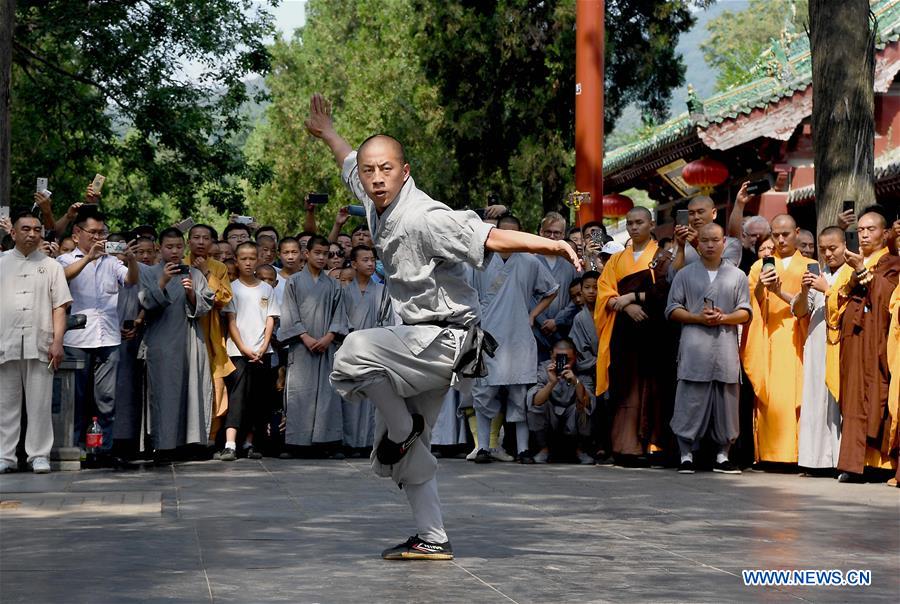
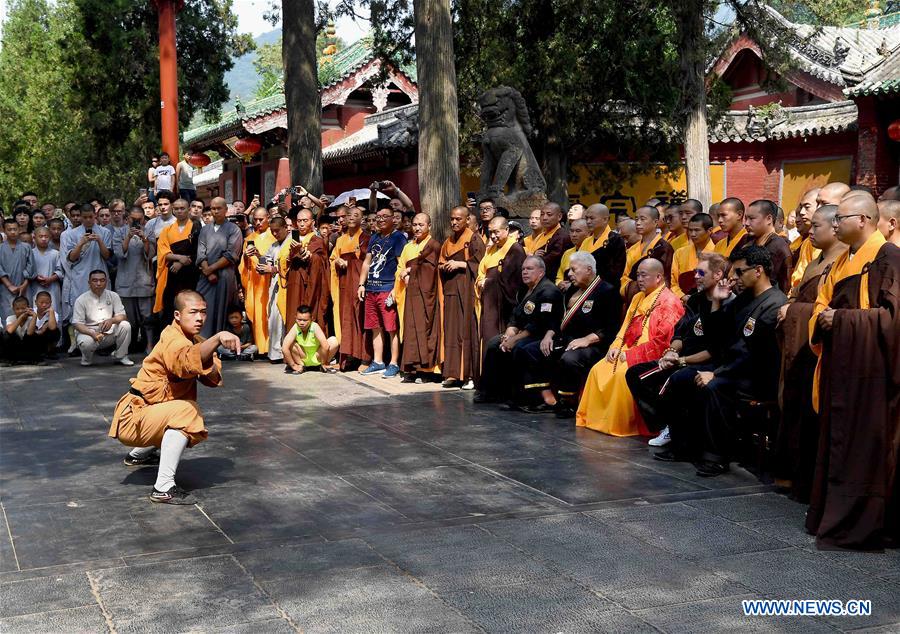
A monk performs martial arts at Shaolin Temple on the Mount Songshan, central China’s Henan Province, July 1, 2018. Over 200 Kungfu enthusiasts from America made a trip to the Shaolin Temple and performed martial arts with local monks. (Xinhua/Li An)
THREADS:
Shaolin Journeys
USSD
About 230 USSDers at Shaolin
American Students Show Off Their Kung Fu Skills at Shaolin Temple in China
by Bryan Ke 17 hours ago

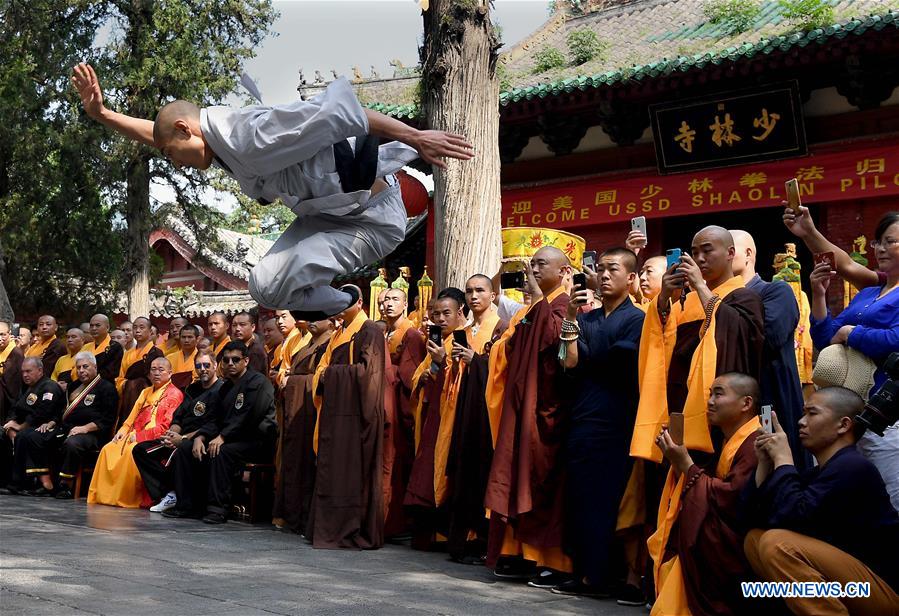
About 230 American disciples of the United Studios of Self Defense went on a pilgrimage to the Shaolin Temple in Dengfeng, Henan Province, China, to commemorate the martial arts school’s 50th anniversary.

Led by USSD founder Charles Mattera, also known as Yandeng, the disciples received a warm welcome from Shaolin monks as well as the current abbot and 13th successor Shi Yongxin at around 9 a.m. on July 1, according to Shaolin.org.cn.

“Today is a sunny day and welcome you to the Shaolin Temple. The United Studio of Self Defense aims to promote Chinese culture and has made unremitting efforts for the public health from all walks of life. USSD has become the largest Shaolin martial arts hall alliance recognized by the United States,” Abbot Yongxin said in his speech after paying tribute to Patriarch Bodhidharma, the first patriarch of the Chinese zen lineage.
“Yandeng had led overseas disciples to pilgrimage the Shaolin Temple for many times since 1997. He also invited Shaolin warriors to the US for performance and communication, carefully translated the Shaolin martial arts Cheats and has been enthusiastic about public welfare. Yandeng contributed to the development of the Shaolin culture overseas,” he continued.
“Shaolin Kongfu is the crystallization of the study by Shaolin monks of all generations, is the crystallization of oriental philosophy and culture and is also the eternal home of Shaolin disciples around the world. Welcome back home and hope you could be comfortable and peaceful in the Shaolin Temple,” Abbot Yongxin said in his closing remarks.

The disciples showcased the martial arts they learned in front of Abbot Yongxin and the other monks of the temple.

Some of their routines involved Shaolin boxing, weapon usage, kung fu pair practicing, and others.

“Shaolin Temple is our home and we haven’t been home for some time,” said Mattera, who received the dharma name Yandeng when he was adopted by the Head Abbot of the Shaolin Temple back in 2001. “Today I led the US Shaolin disciples to pilgrimage, have fulfilled our long-cherished wish and thanks very much for Shaolin monks’ warm reception.”

The monks of the temple also demonstrated their routines to the students.


Abbot Yonxing then presented a Guanyin statue to the USSD and praised them for the school’s determination as they continue to promote and spread Shaolin culture overseas.
Images via youth.cn
The author bailed out on spelling the Abbot’s name at the end. :rolleyes:
THREADS:
Shaolin Journeys
USSD
Adan Kohnhorst & Rebbeca Vorisek
Henan Province Tourism Administration invites American travel experts to a fantastic Kung Fu journey through Henan
NEWS PROVIDED BY
Henan Provincial Tourism Administration
Jul 05, 2018, 21:38 ET
BEIJING, July 5, 2018 /PRNewswire/ – In recent years, the Tourism Administration of Henan Province has been engaged in promotional projects designed to effectively enhance the visibility and interest of Henan tourism in North America. These projects include social media promotion across Henan Tourism’s social media accounts (Facebook, Instagram, Twitter, Pinterest, and YouTube), project planning, and online and offline theme promotion activities and are aimed at improving the awareness and fan base of Henan tourism in North America and building up the Henan Tourism brand. At the end of June, the O2O integrated marketing promotional activity with the theme of “Origins of Kung Fu -King of Kung Fu PK Contest” was officially started. The activity invited two highly-influential social media celebrities from North America - Musician Adan Kohnhorst and Travel Expert Rebbeca Vorisek, to travel in Henan and experience the two Kung Fu styles, “Shaolin” and “Tai Chi”. The trip had the Kung Fu experience, apprenticeship, and study as its core themes so as to inherit, carry forward, and promote the culture of Kung Fu. It also aimed to promote the images of Henan’s profound culture and beautiful natural scenery on various social media platforms overseas through creative video and promotional activities.
This activity followed Adan and Becca on their journey to “Trace the Origin of Kung Fu” and filmed the process of the two travel experts learning Kung Fu from the masters in the Shaolin Temple Wushu Training Center and Chenjiagou Village of Wenxian County. Adan learned the exquisite skill of Shaolin Boxing, while Becca studied Tai Chi Kung Fu, which couples hardness with softness. The pair followed the roots of Kung Fu as they sought a master to train under and practiced their martial arts in preparation for the PK Contest. In addition, Adan and Becca also visited the Longmen Grottoes, Luoyi City, Shaolin Temple, Yuntai Mountain, Kaifeng, and many other famous attractions in the various cities of Henan. The project team recorded their journey and introduced Henan landscapes, delicacies, and highlights from multiple angles.
Every day, the fantastic travel moments of Adan and Becca were published on @Discover Henan, the overseas social platform of Henan Tourism. Overseas fans could follow Adan and Becca on their journey through these posts. At the same time, they two shared and promoted Henan tourism through photos and videos on their private accounts, telling the story of their unique Kung Fu-themed travel experience in Henan. A video of Adan street dancing during a storm on Yuntai Mountain gained nearly a thousand online interactions. As the activity ended, a creative video about the adventure of the two social media celebrities was released on the @Discover Henan Facebook page. Fans were invited to vote for their “King of Kung Fu”, cementing the experience in the minds of the fans and inviting them to join Henan Tourism’s extensive base of fans.
Training for the Tourist Administration - Good gig if you can get it. 
Domestic > foreign tourists? Unlikely.
This article needs a photo. :o
Foreign martial arts fans celebrate their Kung Fu roots at Shaolin Temple
Source: Xinhua| 2018-07-15 15:42:19|Editor: zh
ZHENGZHOU, July 15 (Xinhua) – Since the beginning of summer, domestic tourists can sometimes find themselves greatly outnumbered by foreign visitors clad in Shaolin-logo T-shirts or monk uniforms in front of a cluster of elegantly painted wooden houses situated at the foot of Song Mountain which is known as the fabled home of Kung Fu.
It is estimated that every year, tens of thousands foreign martial art aficionados make pilgrimages to Shaolin Temple, the most sought-after attraction for the growing legions of Kung Fu fans across the globe, seeking to experience the authentic Shaolin culture and hone their skills in the martial arts.
In lieu of the serenity and solemnity many have come to expect at Buddhist temples, this ancient institution often seems to bask in the atmosphere of jubilation and give off a cosmopolitan vibe with groups of visiting foreign practitioners putting on displays of martial routines at the invitation of the temple.
On Saturday evening, more than 120 Kung Fu fans from 20 countries and regions gathered in the sacred meditation hall and put on a diverse selection of performances to celebrate their Shaolin roots in the presence of the abbot Shi Yongxin.
Apart from showcasing traditional martial arts prowess through punching, kicking, cudgel bashing and tumbling on the stage, performers from Africa, Europe, and America pulled out all the stops to integrate the elements of their own cultures into Shaolin Kung Fu.
The most mesmerizing segments of the evening gala included a group of grey-robed Africans singing and dancing to the beats of the djembe, American students’ stunning display of acrobatics, athleticism, and agility, and a musical about seeking the truth of Shaolin culture in the birthplace of Kung Fu put on by a group of Russians. The zealous audience went wild with most rising to their feet and in thundering applause.
This celebratory event is a microcosm of what Shaolin Temple is hoping to achieve on the global stage in the future and a part of its attempt to broaden its appeal to foreign audiences.
Shi said that Shaolin Temple has been striving to transform Shaolin culture into a lifestyle and make it more integral to people’s everyday lives through cultural exchange programs connecting with people from all parts of the world. He said he also hopes that the Shaolin culture can open a gateway for people to better understand Chinese culture.
With its own unique cultural appeal, Shaolin Temple has established more than 40 cultural institutions overseas with more than 300 Shaolin practitioners stationed abroad and teaching martial art to locals.
Brune Poirson

Les révélations sur son stage de kung-fu à Shaolin coûtent cher à Brune Poirson © AFP 2018 ludovic MARIN
FRANCE
14:30 07.01.2019URL courte719
Brune Poirson, la secrétaire d’État auprès du ministre de la Transition écologique a révélé avoir fait un stage de kung-fu à Shaolin, en Chine, une expérience qui l’aide au quotidien en politique. En dépit de tous les mérites d’une telle philosophie, le Net lui a montré en réponse son visage satirique…
Dans une interview accordée à Libération le 4 janvier, la secrétaire d’État auprès du ministre de la Transition écologique, Brune Poirson, a annoncé avoir fait un stage de kung-fu à Shaolin, ce qu’elle considère comme un atout dans sa carrière politique.
«Le kung-fu, c’est apprendre à faire un geste parfait en totale harmonie avec son esprit. Et l’autodéfense en politique, ça peut servir, surtout contre la misogynie et l’arrogance technocratique», conclut-elle.
Cette expérience lui a permis de perdre «neuf kilos» plaisante-t-elle, mais lui a surtout appris «l’endurance et la rigueur».
Cette interview n’est pas passée inaperçue du grand public d’Internet. De nombreux internautes n’ont pas manqué l’occasion de plaisanter:
Auparavant, Mme Poirson avait découvert une photo d’elle sur un profil de l’application de rencontres Tinder et annoncé via Twitter qu’elle allait «engager une procédure judiciaire» pour usurpation d’identité.
googtrans (I didn’t copy&paste all the comments)
Revelations about his kung fu training at Shaolin are expensive at Brune Poirson © AFP 2018 MARINE ludovic
LA FRANCE
14:30 07.01.2019Short URL719
Brown Poirson, the Secretary of State for the Minister of Ecological Transition, said she did a kung fu internship in Shaolin, China, an experience that helps her on a daily basis in politics. Despite all the merits of such a philosophy, the Net has shown him in response his satirical face …
In an interview with Libération on Jan. 4, Secretary of State for the Minister of Environmental Transition, Brune Poirson, announced she had done a kung fu training in Shaolin, which she sees as an asset in her career. policy.
"Kung-fu is learning to make a perfect gesture in total harmony with one’s mind. And self-defense in politics can be useful, especially against misogyny and technocratic arrogance, "she concludes.
This experience allowed her to lose “nine kilos” she jokes, but mostly taught her “endurance and rigor”.
This interview did not go unnoticed by the general public of the Internet. Many Internet users have not missed the opportunity to joke:
Previously, Ms. Poirson had discovered a picture of her on a Tinder dating app profile and announced via Twitter that she was going to “sue” for impersonation.
THREADS:
Martial Arts Politicians
Shaolin Journeys
srlsy. wth?
When did Hidqi enter the nomenclature of Shaolin monastic names? :rolleyes:
Female guide wanted for Shaolin Master to travel together
Ad type: Wanted
Location: Other
Date added: 04 Jan 2019
Hidgi is a Shaolin monk, he is an activist that travels in the world to do humanitarian actions although he is blind.
We, his friends and students in Berlin, are looking for a female companion to be his guide in his journeys. It must be a woman. In the past he tried with men but it was always a problem to be accepted by associations and also to understand each other.
He is very kind, funny and honest. He looks for a woman to rely on and in whom he can trust.
He masters different disciplines like Martial Arts, Yoga, Tai Chi Chuan, Kung-fu, Meditation, etc. He is also a psychologist and osteopath. He speaks 12 different languages (french, english, italian …). He has knowledge about astrophysics and neurosciences too. He is always ready to teach high knowledge for free, to help people to evolve and rise up, being able to help themselves and the others.
He does a lot of missions on Work-away and other humanitarian websites therefore he knows by experience that 2 men together are refused, but a couple is always accepted. You don’t have to be a real couple, but the profile man - woman is important to be accepted by most of the associations.
Salary: - learning from/with him the things that interests you
Your dutys: - guiding him and organizing the journeys together
Next destinations are: Sicily, Sardinia and Lampedusa. Later on South Spain, France, Scotland…
Testimony last guide:
//youtu.be/LFHWzfRcihw
Contact Hidgi: AUDIO-MESSAGE because he is BLIND.
On Whatsapp or Telegram: +33 769 96 99 95
THREADS
Shaolin Journeys
Blind Masters
Shaolin Transformers?
I’m posting this in our Transformers thread, and copying it to our Shaolin Journeys thread (wasn’t really sure where to place this on the Shaolin sub-forum but it had to be there somewhere…)
Transformers in kung fu moves at Shaolin Temple(1/5)
2019-02-12 11:20:08Ecns.cn Editor :Li Yan
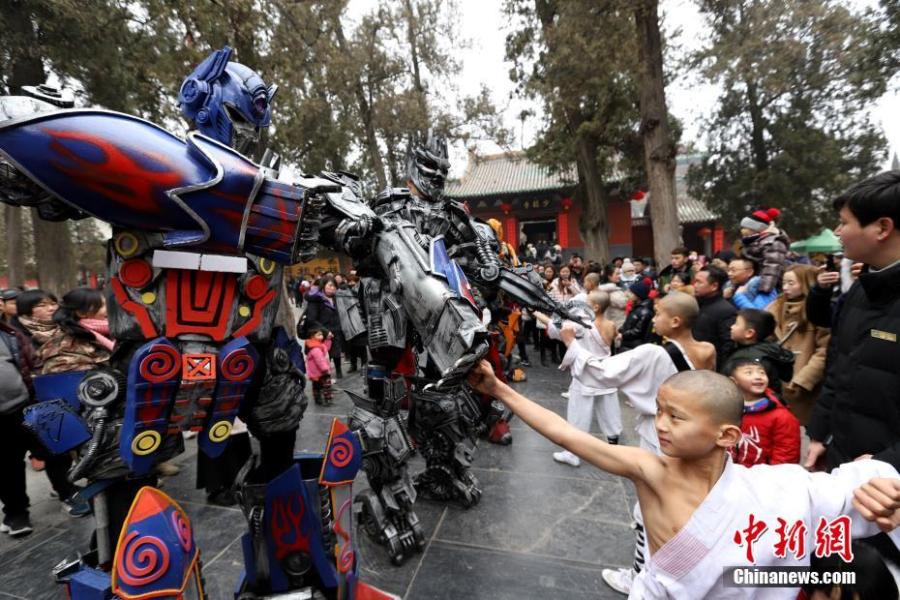
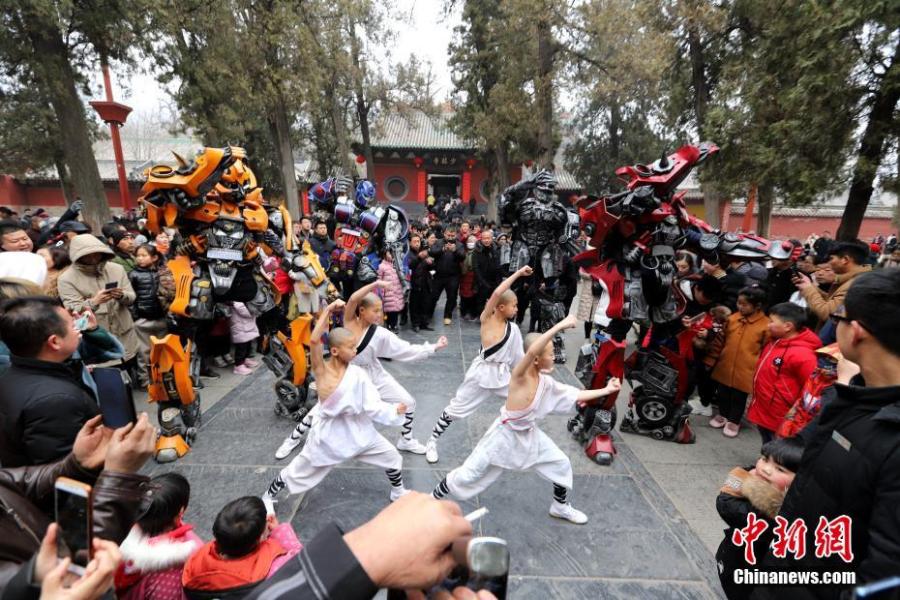
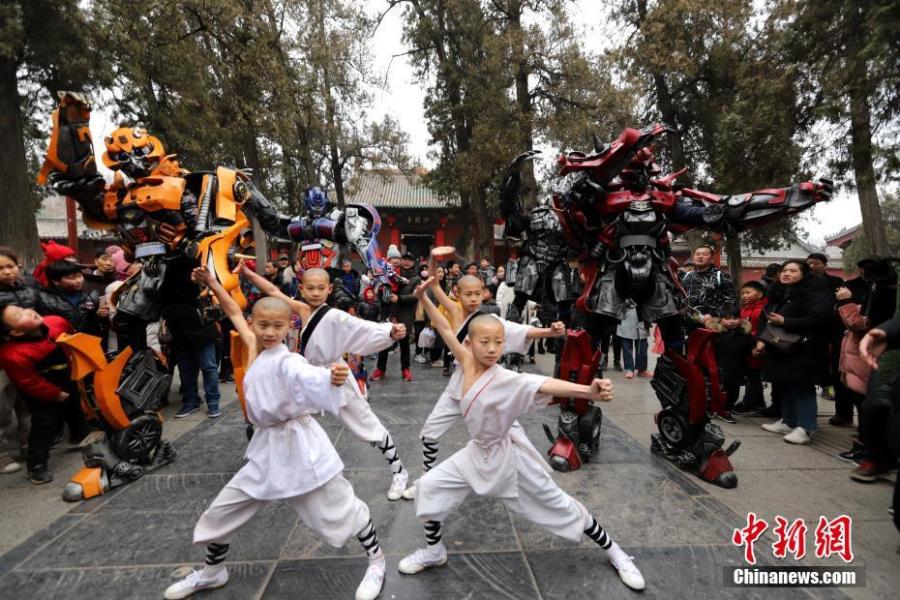
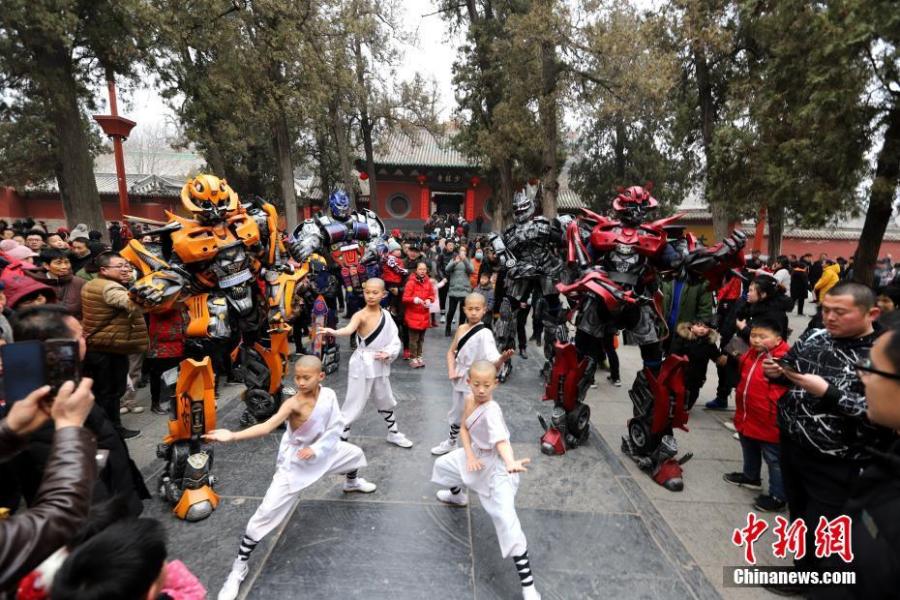
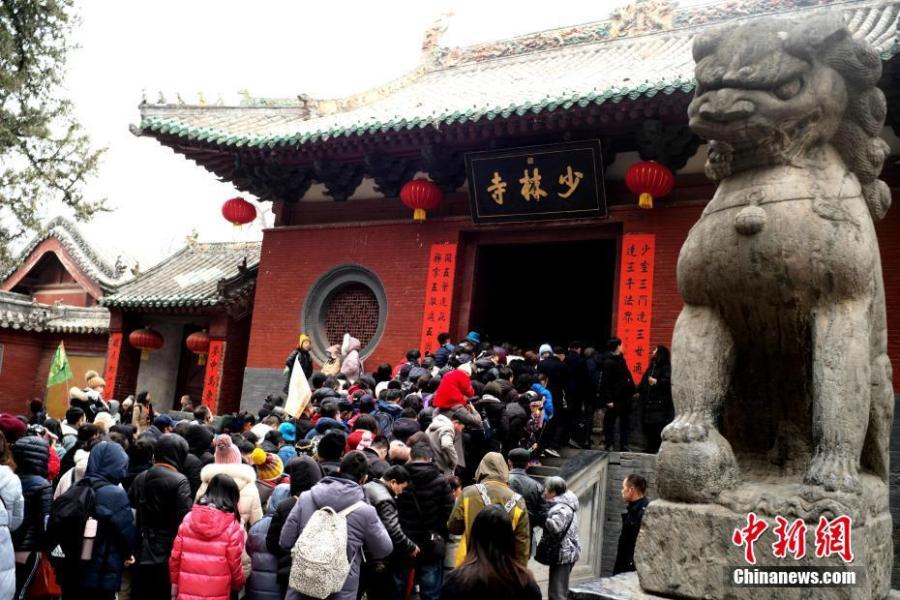
Students of kung fu at Shaolin Temple pose with Transformer-like statues in Dengfeng City, Central China’s Henan Province, Feb. 7, 2019, as many tourists visit the famed Buddhist temple during the Lunar New Year holiday. (Photo: China News Service/Wang Zhongju)
Slightly OT
Not quite a journey to Shaolin - wasn’t sure where else to post this however. :o
[URL=“https://www.theguardian.com/lifeandstyle/2019/jun/01/fit-in-my-40s-shaolin-training”]Fit in my 40s: will Shaolin training bring me calm?
I’m sitting in a carpeted temple-ish space, with three Buddhas looking down peaceably
• Fitness tips: three key Shaolin moves
Zoe Williams
@zoesqwilliams
Sat 1 Jun 2019 02.01 EDT

Zoe Williams doing a side plank on one finger
‘According to Shaolin, we are all made of the elements fire, water, earth and air.’ Photograph: Kellie French/The Guardian. Clothes: My Gym Wardrobe. Hair and makeup: Sarah Cherry using Mac cosmetics
I wasn’t sure I’d recognise the whereabouts of the Shaolin monk in north London, but the martial arts temple was bedecked with a splashy red arch. Heng Dao is not a monk; he is a practiser of Shaolin, an ancient combination of Zen Buddhism and martial arts. What is this place, anyway? On one side, a long boxing gym: very Fight Club. In another, a room with a sprung floor and a kung fu class. Heng Dao and I sit in a windowless, carpeted temple-ish space, with loads of fruit and three Buddhas looking down on us peaceably.
According to Shaolin, we are all made of the elements fire, water, earth and air, and they have to be in balance. I find these ideas quite calming. I don’t fully understand, because I’ll never understand, and I can’t leave because someone is talking to me. This is as close to letting go and inhabiting the moment as I will ever get.
Except, wait: there is concrete activity attached to these elements. Fire is kung fu, physical movement, the life of the muscles. A lot of it is punching, slowly, then faster, with one arm, then with two. “You do this a lot,” says Heng Dao, “and it’s good for stamina, strength, relaxation – and also you get good at punching.” The surprise element is the relaxation: like sewing, colouring in or cutting out pastry, a punch is at exactly the pitch of repetitiveness and concentration that engrosses your mind without depleting it.
Water is qi gong, which is sometimes called Chinese yoga. I can see similarities in the battle poses. This is the stuff people who look like your aunt do in a park, poses and movements with symbolic foundations: pulling an imaginary arrow; pouring water over yourself, beatifically, like the lady in that shampoo ad. Is the symbolism secondary to the summoning of your inner energy? Or is that how it’s summoned, and glute strength is really a side-issue? I don’t think these are the right questions; I think you have to wait for your body to deliver you an answer.
Earth is meditation and you start with this: sitting cross-legged, connecting with each muscle one by one, just to check it’s still there. I wonder if this is a ruse to keep your mind present, but it works.
Finally air is (tell me if I am stating the obvious) breathing: noisy and demonstrative, again like yoga breathing; huffing, holding, gasping. The sequencing and the emphasis change as you get older, although you always start at earth. The water sequence becomes the most important as our bodies get harder with age (Ha! Try telling that to my body) because water embodies softness. We are in the territory of metaphor. The complexity of it, its unfamiliarity, demands a concentration so deep it is effectively mindful. It works, in other words, though a tough crossword might too.
• Heng Dao teaches across the UK; shihengdao.com
What I learned
When punching, keep your active fist fast and your non-active one pinned tight to your rib cage.
Fitness tips: three key Shaolin moves
Learn to strengthen and relax body and mind
• Fit in my 40s: ‘I’m as close to inhabiting the moment as I’ll ever get’
Shifu Shi Heng Dao
Sat 1 Jun 2019 02.01 EDT

Heng Dao is a 35th-generation Shaolin disciple.
Push the sky
Stand comfortably. Focus on relaxing each part of your body, head to toe. Bring hands together in front of belly, loosely linking fingers. Take three deep breaths through nose. Raise arms as you inhale, until fingers point above you. Tilt head to look up at the sky. Breathe for four counts. Bring arms slowly down as you exhale. Hold for five to 10 seconds; shake arms and legs.
Mabu punches
Stand with legs about a metre apart. Squat slightly, make hands into fists and place on hips. Slowly bring elbows back towards each other so your chest puffs out. Exhale as you slowly punch right fist forwards. Hold. Inhale as you punch left fist while bringing right fist back to hip. Alternate arms for eight sets.
Tan Tui with punches
Begin in the same position as Mabu, hands on hips. Bring right hand out to the side with palm pushing forward. Twist to right while moving the fist on left hip up in a punch. At the same time, return right hand to hip in a fist. Now punch right arm out and kick the left leg simultaneously. Repeat on left.
• Heng Dao is a 35th-generation Shaolin disciple
As told to Emma Irving
Maybe I need another thread for Shaolin diaspora?
Strong Women: ‘I have dedicated my life to martial arts and I have no regrets’
By Natalie Morris, Senior lifestyle reporter Saturday 1 Jun 2019 10:00 am
So many women are put off from sport and physical activity because they don’t look a certain way. In fact, a study by Sport England found that 75% of women avoid being active due to a fear of judgement. Strong Women is a weekly series that aims to normalise diversity in the world of sport and fitness and reaffirm the idea that women of any age, size, race and ability can be fit, strong and love their bodies. By showcasing the wide range of different women who are achieving incredible things, we hope to empower and inspire underrepresented women. Martine Niven is a Shaolin kung fu disciple – it is something she does full time and she has dedicated her life to the practice.

Martine performing at Chinese New Year Celebrations in Southampton (Picture: Martine Niven)
Tell us about your relationship with martial arts I became a Shaolin Kung Fu disciple in 2012 after training with my teacher, Shi Yan Ming 34th Shaolin Warrior from Shaolin Temple in China, for four years in the UK. When I met my Kung Fu Master – ‘Shifu’ in Chinese, which means ‘a great master with expert and skillful knowledge’ – I hadn’t practiced martial arts for a while. In my late teenage years and twenties, while most young people were out clubbing and getting careers and families I was inside the kung fu hall, sweating and training, constantly feeling the pain. My teachers expressed daily ‘no pain, no gain!’ – at that time it felt more like pain than gain. I have no regrets from my path. I feel nothing but respect, great honour and privilege to have had the opportunity to train with many great masters, teachers and friends, who were so kind to me and had the patience and time to guide me on this path. What does it actually mean to be a disciple? Being a disciple means you have made a commitment to dedicate your life to the martial arts practice. You have made a commitment to master the skill and to share this knowledge with future generations. I always felt there was something missing from the other marital arts that I had previously studied, this I realised later was the internal aspects which help to balance the body, mind and spirit. I was introduced to practices like Meditation, Qi Gong and Tai Chi as well as continuing to practice the more external martial arts like san da (Chinese kickboxing), kung fu and weapons, this was a great balance.

Martine with her master Shifu Shi Yan Ming (Picture: Martine Niven)
Later on in my thirties I went on to specialise in Traditional Shaolin kung fu. Sometimes the paths you take uncannily lead you back to where you started. Being a woman and training, you can be faced with a number of extra challenges. You are always carefully balancing your body’s needs, losing energy every month and then having to build it back up, the process of progression can take longer and for me personally has been extremely frustrating. I have had to learn to be patient with myself and to accept what and who I am. Life is smoother when you’re not always fighting to be something else or trying to prove you are someone else. It can take courage to follow a difficult path but the rewards can be greater in the end. It takes great strength of mind to choose to face yourself with acceptance and love. How does martial arts help your mental health? Your mind is an extremely important part of the martial arts development. Having a positive mind effects everything you do. I learnt this the hard way and in my early training years I was very self-critical. I would chastise myself daily for not achieving what I wanted, but I slowly realised this was unproductive and futile. The process of martial arts is gradual, a difficult concept to accept in a world of rapid results and instant gratification.

(Picture: Martine Niven)
I see this a lot in my younger students when they don’t see instant results. They want to give up. We live in interesting times with our youth. They face so many difficult challenges with social media pressures and many device distractions, they need something like martial arts and its underlying philosophies more than ever. This fast-paced lifestyle is not helpful for our self-development, it is short-lived, temporary and eventually unrewarding. It bypasses important life lessons and learnings. Struggles and difficulties are important in life, to feel hardship can in some instances actually be a good thing. The Chinese have a saying ‘to eat bitter’, which means at the time it is not pleasant, like a bitter taste in the mouth, but the bitter taste in Chinese medicine is said to help strengthen the heart. So this is how we learn, grow and gain wisdom. If everything is fast and easy we are missing out on important realisations and deeper understandings. Martial arts helps to gain deeper awareness of the body and mind to feel disharmony and then to have the knowledge and strength to make changes. Experiencing all of these benefits, how could I not want that for others? What does training bring to your life? When I first started learning martial arts, I loved how confident it made me feel. I felt strong and able to defend myself. I loved the culture and learning about the deep underlying philosophies. Everything was new and exciting. Over the years, your awareness changes, your wisdom grows, you face more interesting challenges. You learn about yourself and others. You hit many walls. And every time this happens your awareness deepens and the practice becomes you. You are not separate from it. It is you. Through this you develop a great gratitude and compassion for yourself and others. The self-discovery is profound and life changing.

‘The best way to see if you will like something is to be brave and try it’ (Picture: Martine Niven)
When I am training I lose all sense of self, any ideas of image, gender, ability, race, all seem to vanish. I have no concept of these things, my focus and attention is solely on the movements I am trying to do. It is a combination of breathing, movement and intention. All time stands still and the body and mind come to a single focus point. For that moment I am free, connected and peaceful. The realisation is greatly rewarding. I spent many years trying to find the wise master to show me the way, but realised it is you who has to become the master of yourself. Why should more women get involved in martial arts? Working in schools and universities with young women, I have noticed there are many pressures and stresses that they find difficult to express and deal with. What we teach is a way to help them to balance their lives. The underlying philosophies that come out of the training helps them to become more self-aware, confident, relaxed, centred and balanced. They are slowly able to let go of stresses and strains of everyday life and be at ease with themselves and others. Most people/women come to martial arts because they want to learn how to defend themselves and of course this is the main function, but through this practice you develop so many other skills, developing strength of body, mind and spirit. What would you say to a woman who might be intimidated by the idea of fighting? A lot of women feel put off because they may feel the classes are mainly attended by men, but this is not the case we have a great mix of students. When looking for a class and teacher, do your research. Do not be fooled by appearances, finding a good teacher can be tricky.

Martine in the Song Shan Mountains in China (Picture: Martine Niven)
Some teachers are great for some people but not for others, it’s a personal experience, so be brave, try a class and if it doesn’t feel right go try out another until you find a place you feel comfortable. I think a good teacher needs to be patient and tolerant, knowledgeable, humble, and kind hearted. The best way to see if you will like something is to be brave and try it. It can be a bit intimidating and sometimes scary trying out something new but it builds great strength of character and it could be the start of an amazing journey.
This is not the Shi Yan Ming that was on our cover with the RZA.
Beat N Path buzz
I’m sharing this on our Shaolin Journeys thread and our Beat n Path thread.
Lupe Fiasco Grew Up With Martial Arts — Then Went To China To ‘Study With The Masters’
Arionne Nettles
July 2, 2019
3 MIN
Arionne Nettles/WBEZ
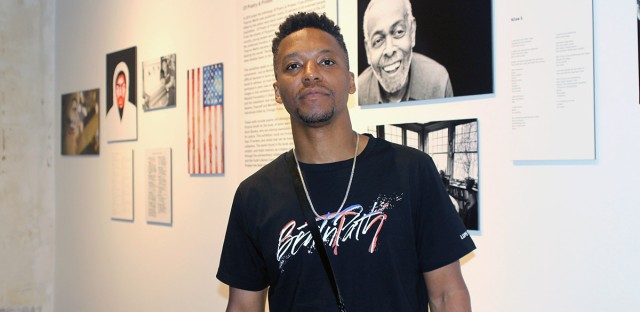
Chicago rapper Lupe Fiasco stands in the Stony Island Arts Bank before screening his new docu-series, “Beat N’ Path,” on Tuesday.
Chicago rapper Lupe Fiasco is going global in a new way — film.
Fiasco, whose real name is Wasalu Muhammad Jaco, said he learned martial arts from his father. Now, after a recent trip to China, he’s releasing a new docu-series and supporting a new cultural program right here in Chicago to honor his family’s legacy.
In China, he visited the Shaolin Temple, learned traditional Chinese martial arts, watched Sichuan face-changing opera — which he described as a mix of “kung fu meets performance arts meets ballet.” He even worked with a sword maker to create traditional Chinese weaponry.
Fiasco’s new docu-series, Beat N’ Path, follows his exploration of China’s culture and history. He screened the series Tuesday for friends and family at the Stony Island Arts Bank, which is next to where his father’s martial arts school stood in the 1980s and ’90s.
“Try and study with the masters”
Beat N’ Path pays homage to his father, Gregory Jaco, who did martial arts for more than 40 years.
“[My father] said if we ever get the opportunity, go back to the countries of origin where these martial arts started,” he said. “Try and study with the masters … at the schools where these things originated.”
Fiasco, 37, and his sister, Ayesha Jaco, grew up in their father’s school, absorbing all the learning and culture that came along with it. He said the trip was like coming full circle.
“It literally started here,” he said of the block where the Stony Island Arts Bank now stands. “My martial arts tradition started here right next door, and this bank was a part of it.”
“Make your community better than you found it”
Although the docu-series celebrates the exploration of Chinese culture, the Beat N’ Path project also serves as the launch of an arts and culture programming here at home. The project partnered with Rebuild Foundation, which runs Stony Island Arts Bank and reopened the former bank building as a neighborhood space in 2015. Proceeds from his newly released song, “Air China,” will help fund that programming.
“We were born into the martial arts … we were babies born into it — at the karate class, at the dojo, running around,” Fiasco said. “And so this area, in this community, is like the epicenter for me. My first memories are of this of this place.”
His sister, who is Rebuild Foundation’s 2019 dancer in residence, said that work in the community is an important part of upholding their father’s legacy. The project is in partnership with the second phase of her Rebuild fellowship, called “Black Samurai.”
“He told us your role, no matter what it is that you do, is to make your community better than you found it,” she said. “And so for Lupe, he chose music and philanthropy. … For me, it was dance.”
Lupe Fiasco produced Beat N’ Path with Hong Kong-based Studio SV, which he created with his partner, Bonnie Chan Woo. Simon Yin directed the series, which can be streamed at lupefiascobnp.com.
Arionne Nettles is a digital producer at WBEZ covering arts and culture. Follow her on Twitter at @arionnenettles.
Kazakh students
Kazakh students visited Shaolin monastery
27.09.2019 17:41 67
The famous temple is located in Song Shan Mountain in central China. The temple was established back in 495 AD with support of Emperor Xiaowen of the Northern Wei Dynasty. To date, it is a place of pilgrimage for tourists. Kazakh students were very impressed by discovering Shaolin and Chinese culture. They have witnessed the Buddhist monastery which they knew only from films. The temple made a huge impression on Kazakh students. They learned a lot about teachings of Buddha and lit candles and made a wish along with other visitors. The students said that such journeys contribute to expansion of their worldview and to thorough understanding of the world. “My point of view on China has changed. This trip exceeded my expectations about the country. I’ve learned a lot about myself, China, culture, mentality and traditions,” said student, Dilnaz Tokybayeva. After paying a visit to the Shaolin Buddhist temple, Kazakh students visited a school of martial arts. The students were delighted by the colorful presentation. As part of the Youth Year, the Chinese Embassy in Kazakhstan organized the cultural journey specially for the students who learn Chinese. During the week-long tour, the students visited four cities and discovered the unique Chinese culture. Photo: fishki.net
Kinda random, but there you have it.
Be a KungFu Trainee in Shaolin Temple for a Day