Shaolin commercialism

stage of joy

now there is a shop/restaurant in the temple. i have to say they have done it nice. but i feel like shaolin is selling out big time :frowning:

two years ago you could go up to fawang temple for free and when you got inside they gave you free books on budhism and confusionism (i think i might have spelt that wrong :p). now you have to pay to use the road leading to the temple then then you have to pay to get in :mad:

even if you want to walk up song mountain you have to pay aswell. its really getting out of control. :frowning:

There’s been a shop at the temple for years…

…that’s not at all uncommon in Chinese temples. It’s traditional to offer incense, souvenirs and other blessed tchothkes at religious sites. That’s not exclusive to China or Buddhism.

There was a restaurant inside Shaolin Temple by '96. I’m not sure that it has been open continuously since then. That too, believe it or not, has some tradition to it. Many Taoist and Buddhist temples offered vegetarian fare, often in the form of fake meats, in order to convince new initiates that vegetarianism was a viable option.

Getting back to commercialism, in the States, what’s everyone’s opinion of Dr. Yang Jwing-Ming? He has a couple of schools of here in Andover and Boston, Massachusetts and it’s contract and quite expensive. I don’t know if Wah Lum in Boston and Malden, Massachusetts is Shaolin but the school in Malden charges at least $200 a month to study. Who can afford such things in this economy - or any economy for that matter…:confused:

[QUOTE=UK MONK;909419]now there is a shop/restaurant in the temple. i have to say they have done it nice. but i feel like shaolin is selling out big time :frowning:

two years ago you could go up to fawang temple for free and when you got inside they gave you free books on budhism and confusionism (i think i might have spelt that wrong :p). now you have to pay to use the road leading to the temple then then you have to pay to get in :mad:

even if you want to walk up song mountain you have to pay aswell. its really getting out of control. :([/QUOTE]

I’m not sure what it is that makes people think just because there is spirituality involved the place should provide things free of charge or at the least dirt cheap.

There is no such thing as free books. Those books cost money to print and that money comes from donations to the temple. There is still money involved at every turn. The money collected for the road travel is used for the road (or do you think spiritual people don’t have to pay to repair a road someday?). The money collected for temple entry is used for the temple. And so forth.

Unfortunately money is a requirement everywhere in the world. We can’t do anything about it. I can relate to this personally. I’d love to teach Buddhism for free here in the states, but I don’t have big donators paying for the plane tickets or the flyers or anything. The ‘donations’ are the fees for the classes collected prior to entry and it all goes back into travel and teaching expense.

[QUOTE=Cat Nap;909689]Getting back to commercialism, in the States, what’s everyone’s opinion of Dr. Yang Jwing-Ming? He has a couple of schools of here in Andover and Boston, Massachusetts and it’s contract and quite expensive. I don’t know if Wah Lum in Boston and Malden, Massachusetts is Shaolin but the school in Malden charges at least $200 a month to study. Who can afford such things in this economy - or any economy for that matter…:confused:[/QUOTE]

Funny ussd www.ussd.com charges $250 a month for their fake shaolin kempo. I doubt they are doing well ethier.

Okay, it’s Praying Mantis - this is what their website shows for the price list. I could probably take three months of Wing Chun WITH private lessons cheaper than what these people charge for group in Maldan - and I assume true of Boston too…:eek:

Wah Lum Kung Fu & Tai Chi Academy
“A Center for Healthy Development for All”
Kung Fu:
First Month: Additional Month: Quarterly____________
Adult Traditional Kung Fu Group Class $200 with uniform $115 $410 (new members-QTR)
(Scheduled Classes) (shirt, pants, shoes, $330 (add. 3 months)
Sash & School Handbook)
Youth/Junior Kung Fu Group Class $190 with uniform $105 $380 (new members-QTR)
(Ages 7 to 17) (shirt, pants, shoes, $300 (add. 3 months)
Two to four classes per week. Sash & School Handbook)
Youth/Junior Kung Fu Group Class $155 with uniform $70 $280 (new members-QTR)
(Ages 7 to 17) (shirt, pants, shoes, $200 (add. 3 months)
(Saturday or Sunday Only) Sash & School Handbook)
Little Mantis Group Class $165 with uniform $85 $315 (new members-QTR)
(Ages 3 to 6) (shirt, pants, shoes, $240 (add. 3 months)
(Thursday & Saturday) Sash & School Handbook)
College Student Plan $360 (new members-QTR)
$270 (add. 3 months)
Private Instruction with Sifu $280 with uniform $200
(4 weekly private 30 min. lesson per month. Includes option to attend one group class per week.) Individual Private Lessons: $40 per half hour
Tai Chi:
Group Class (Ages 10+) $200 with uniform $115 $410 (new members-QTR)
(shirt, pants, shoes, Handbook) $330 (add. 3 months)
Private Instruction with Sifu $270 with uniform $200
(4 weekly private 30 min. lesson per month. Includes option to attend one group class per week.) Individual Private Lessons: $40 per half hour
***All Extracurricular Classes on Special Training, Meditation, Lion Dancing, and Gymnastics are free and opened to all students.

[QUOTE=Cat Nap;909781]Okay, it’s Praying Mantis - this is what their website shows for the price list. I could probably take three months of Wing Chun WITH private lessons cheaper than what these people charge for group in Maldan - and I assume true of Boston too…:eek:

Wah Lum Kung Fu & Tai Chi Academy
“A Center for Healthy Development for All”
Kung Fu:
First Month: Additional Month: Quarterly____________
Adult Traditional Kung Fu Group Class $200 with uniform $115 $410 (new members-QTR)
(Scheduled Classes) (shirt, pants, shoes, $330 (add. 3 months)
Sash & School Handbook)
Youth/Junior Kung Fu Group Class $190 with uniform $105 $380 (new members-QTR)
(Ages 7 to 17) (shirt, pants, shoes, $300 (add. 3 months)
Two to four classes per week. Sash & School Handbook)
Youth/Junior Kung Fu Group Class $155 with uniform $70 $280 (new members-QTR)
(Ages 7 to 17) (shirt, pants, shoes, $200 (add. 3 months)
(Saturday or Sunday Only) Sash & School Handbook)
Little Mantis Group Class $165 with uniform $85 $315 (new members-QTR)
(Ages 3 to 6) (shirt, pants, shoes, $240 (add. 3 months)
(Thursday & Saturday) Sash & School Handbook)
College Student Plan $360 (new members-QTR)
$270 (add. 3 months)
Private Instruction with Sifu $280 with uniform $200
(4 weekly private 30 min. lesson per month. Includes option to attend one group class per week.) Individual Private Lessons: $40 per half hour
Tai Chi:
Group Class (Ages 10+) $200 with uniform $115 $410 (new members-QTR)
(shirt, pants, shoes, Handbook) $330 (add. 3 months)
Private Instruction with Sifu $270 with uniform $200
(4 weekly private 30 min. lesson per month. Includes option to attend one group class per week.) Individual Private Lessons: $40 per half hour
***All Extracurricular Classes on Special Training, Meditation, Lion Dancing, and Gymnastics are free and opened to all students.[/QUOTE]

Is it about price?

[QUOTE=David Jamieson;909798]Is it about price?[/QUOTE]

I would say clearly - yes. A good teacher is a good teacher. If I can’t afford my classes for JKD, it’s free. My Wing Chun teacher came down for me just so I could afford to go back. When a school charges this much - it’s not a school, it’s a business. Frankly speaking, why does the student need to get a manual with the class? Haven’t you paid enough to learn about the style that you have to pay extra to have it in writing?

not any more

[QUOTE=DeHui702;909729]I’m not sure what it is that makes people think just because there is spirituality involved the place should provide things free of charge or at the least dirt cheap.

There is no such thing as free books. Those books cost money to print and that money comes from donations to the temple. There is still money involved at every turn. The money collected for the road travel is used for the road (or do you think spiritual people don’t have to pay to repair a road someday?). The money collected for temple entry is used for the temple. And so forth.

Unfortunately money is a requirement everywhere in the world. We can’t do anything about it. I can relate to this personally. I’d love to teach Buddhism for free here in the states, but I don’t have big donators paying for the plane tickets or the flyers or anything. The ‘donations’ are the fees for the classes collected prior to entry and it all goes back into travel and teaching expense.[/QUOTE]

im not saying the temples dont need money. the point i was trying to make is, before the temple were run by real monks/abbots that only used what the temple and the monks/nuns needed. now you have people elected to run the temples. and there not there to spread the word of budhism their there to make as much money for the goverment as possible.

now at fawang temple there are goverment tickect collectors at the gates NOT MONKS. the goverment have seen how much money can be made and are spreading it the the temple and mountains in the area. when i asked one of the old monks that i kind of know whats going on? he just said “its the goverment” he didnt say much more about it and i wasnt comfortable about asking cos he didnt look happy.

when i tried to walk up song mountain (the right hand side of fawang temple). you get 3 quarters of the way up and there is a ticket both when i ask them if they owen the mountain the man said to me “no but the goverment do”

temples have been living of donations and self sufficiency for hundreds if not thousands of years. open your eyes and realise that goverments are corrupt and just want to make money anyway they can.:frowning:

[QUOTE=Cat Nap;909799]I would say clearly - yes. A good teacher is a good teacher. If I can’t afford my classes for JKD, it’s free. My Wing Chun teacher came down for me just so I could afford to go back. When a school charges this much - it’s not a school, it’s a business. Frankly speaking, why does the student need to get a manual with the class? Haven’t you paid enough to learn about the style that you have to pay extra to have it in writing?[/QUOTE]

school is business.

how much is university tuition?
how much does tax cover for public school?
how much for a course in mma?

a person who has goods or services to offer is free to charge what they like.
If you can’t afford that school, go to another one.

You go to the grocery store and you don’t negotiate there and yet bread is cheaper in one place than another and really high quality bread will cost you much more than typical bread.

I’ve probably listed to much, but you get my point right?

Martial art establishments are supposed to care more about getting all your money. They’re not giving you a degree that will give you an edge in the workplace. People don’t go to college because it enriches the soul and they want to learn how to defend themselves; they want a better job. Martial art schools are supposed to care about students first and the money second - that’s way most have jobs in addition to the school. I agree though, if you’re in a martial art school that you find out is just a business fronting as a martial art school, then walk out and find a real teacher.

I can understand what you are saying. However, MA teachers do have to support themselves too. Yes they are spreading and teaching martial arts but it is also a business if you rely on the income. Many do. Both can be managed well.

As for the prices, well the average monthly tuition rate for most schools around Houston is $100 (depending on how many days you train, etc.). Some places or more some are less…it just depends. Olympic gold medalist Steven Lopez and his family have a TKD school in the southwest Houston area. Their monthly rates are far more than I ever paid at a shaolin school. If you want to train hard and get a shot at the olympic trials that’s the place to go. The Lopez family are wonderful people and have a great staff. I really consider it an investment in yourself rather than paying too much money for lessons. It just depends how you look at it.

[QUOTE=UK MONK;911565]im not saying the temples dont need money. the point i was trying to make is, before the temple were run by real monks/abbots that only used what the temple and the monks/nuns needed. now you have people elected to run the temples. and there not there to spread the word of budhism their there to make as much money for the goverment as possible.

now at fawang temple there are goverment tickect collectors at the gates NOT MONKS. the goverment have seen how much money can be made and are spreading it the the temple and mountains in the area. when i asked one of the old monks that i kind of know whats going on? he just said “its the goverment” he didnt say much more about it and i wasnt comfortable about asking cos he didnt look happy.

when i tried to walk up song mountain (the right hand side of fawang temple). you get 3 quarters of the way up and there is a ticket both when i ask them if they owen the mountain the man said to me “no but the goverment do”

temples have been living of donations and self sufficiency for hundreds if not thousands of years. open your eyes and realise that goverments are corrupt and just want to make money anyway they can.:([/QUOTE]

What consequences can the temple’s face if they do not listen to the government? Really, there s not much of a choice.

[QUOTE=Songshan;911808]I can understand what you are saying. However, MA teachers do have to support themselves too. Yes they are spreading and teaching martial arts but it is also a business if you rely on the income. Many do. Both can be managed well.

As for the prices, well the average monthly tuition rate for most schools around Houston is $100 (depending on how many days you train, etc.). Some places or more some are less…it just depends. Olympic gold medalist Steven Lopez and his family have a TKD school in the southwest Houston area. Their monthly rates are far more than I ever paid at a shaolin school. If you want to train hard and get a shot at the olympic trials that’s the place to go. The Lopez family are wonderful people and have a great staff. I really consider it an investment in yourself rather than paying too much money for lessons. It just depends how you look at it.[/QUOTE]

I agree with that if your intent is to compete and yes, it certainly costs money. However, if you’re teaching children and regular working stiffs (I make only $36,000 a year), it’s offensive to act like you’re doing them a favor and charge that price. While I understand the need to profit, anything higher than 60 a month for just one or two nights a week - most working people can’t train everyday - I find it excessive. But then I have wonderful teachers that are more interested in what absorb in class than making their next house payment off me.

An overview

I still regret not saving a Shaolin sausage label. Given the copyright laws in China, it was a major victory. I never thought they’d get rid of that stuff.

Going global with modesty
Offering the world meditation and martial arts, ancient Shaolin order wrestles with commercial success
By Bill Schiller Asia Bureau
Published On Mon Oct 12 2009

DENGFENG, CHINA–Like shadows in saffron robes, they start assembling in the darkness before dawn – their shuffling sandals filing into chapel.

Soon the shuffling subsides into silence – then a deeper silence.

A single candle burns on the altar.

Gilded Buddhas look down from above. Outside, an autumn moon shines through cedars.

Then a bell sounds – and so begins the ritual of morning prayers for China’s Shaolin monks, a ritual carried out here, with rare exception, for more than 1,500 years.

Many people know of Shaolin’s famed monks for their prowess at kung fu – the disciplined art of self-defence and exercise at once muscular and mystic, long a focus of fascination for the West.

Others have heard of the Shaolin Temple, the monks’ home in the Songshan Mountains of Henan province, and one of China’s top tourist destinations that attracts more than a million visitors a year.

Beneath this tide of tourism and fame, burrowed deep inside the Shaolin enclave, resides a community of 200 monks ranging in age from younger than 10 to older than 80, who lead a life of meditation and prayer.

For them this is a holy place.

But can it last?

In recent years, under the leadership of Abbot Shi Yongxin, Shaolin Temple and its monks have become a commercial success, branching out with Shaolin Centres around the world offering meditation, martial arts training and vegetarian foods in Europe, the U.S., and soon – they hope – in Canada.

Adherents have approached the Shaolin monks to start a centre in Canada, officials here say. Discussions are still in the early stages.

But some wonder whether such international commercialization is compatible with the ascetic life?

“It’s not a problem,” affirms the abbot, also known as Master Yongxin, seated in Abbot House at Shaolin Temple. “Nor is it in conflict with the goals of our community.”

The core values of charity, wisdom and mercy, he says, have not changed. "And sharing the fruit of human experience is a good thing.

“Of course fame has naturally brought commercial opportunities,” explains the Master, his left hand clutching a string of prayer beads. “But it is up to us to ensure that such opportunities are directed in a positive way. We want to prevent evil-minded business people who might seize such opportunities to malign our good name.”

The Master has a point.

During the 1980s and '90s – unbeknownst to the monks – the Shaolin brand was being used to market everything from cars and furniture, to cigarettes and even liquor.

Alcohol consumption is not allowed in Shaolin monastic life.

But it wasn’t until 1993 when a purveyor of ham launched a nationally televised ad campaign using the Shaolin name, that the problem of copyright infringement was finally brought to the monks’ attention.

The monks were appalled: they’re vegetarians. They sued and went on to set up Shaolin Intangible Assets Management Co. – a team of lay believers comprising lawyers and business managers – to protect their intellectual property rights.

Hundreds of companies across China, and even some abroad, were infringing on the Shaolin name. They were swiftly reined in.

Today times have changed, and so – in some ways – have the monks.

Though Master Yongxin is now a thoroughly modern monk, he arrived at the monastery at 16 from impoverished Anhui province carrying little more than a cotton quilt and the clothes on his back.

The temple and monastery were in ruins, he recalls.

It was 1981, the early years of China’s new “opening and reform” policy which had just begun allowing Chinese people greater personal and economic freedoms.

“Shaolin seemed poised to be reborn,” he says. The temple, which dates from 495 AD, had survived plundering bandits, wars, government land reforms and the reckless years of Mao Zedong’s Cultural Revolution when almost everything “old” came under attack.

But in the mid-1980s, with the support of a government that recognized Shaolin’s historic value, Shaolin was slowly rebuilt.

Today, Master Yongxin – his name means “Faith” – shows the signs of Shaolin’s success and modernity: he carries a laptop, relies on cellphones and has an immaculately kept SUV to whisk him to meetings across the region.

He has also travelled to South America, the U.S., Taiwan and Africa – where he met with Nelson Mandela. This year NBA star Shaquille O’Neal dropped in for a visit.

“We cannot avoid or ignore the modern world,” the Master says calmly. “If we do, we’ll have no chance at survival.”

But Master Yongxin has also managed to retain his humble demeanour and his piety.

Each day at 5 a.m. he leads the monks at morning prayers. Afterward, he repairs to the dining hall and eats as they do: boiled vegetables, a piece of rustic bread, and a bowl of soy-based porridge.

Thereafter, meditation follows. For adult monks, that amounts to 10 hours daily. Shaolin is, after all, the birthplace of Zen Buddhism – a unique strain of Buddhism with heavy emphasis on meditation.

For younger monks, like Yan Qun, 14, who arrived at age 7, the routine includes hours of kung fu training.

“Here everything is calm; everything peaceful,” Yan says. He won’t have to commit to a lifelong monastic life until he is 18.

“But I look forward to that day.”

Not sure how this one got by me

Now that it’s all over and done, I’m wondering if anyone paid that much of a donation.

Shaolin Temple defends prices
By Jane Chen | 2009-4-23

THE Shaolin Temple, the home of China’s kung fu monks, has defended a price list it has issued for an upcoming religious service.

According to a notice on the temple’s Website, anyone who gives 180,000 yuan (US$26,351) will be the chief sponsor for a major religious event that will run from this Saturday to May 2.

Those who donate 90,000 yuan will become “deputy chiefs,” the local Orient Daily reported yesterday.

The service will be held at the Chaohua Temple in Chaohua Town of Henan Province’s Xinmi County. One chief and nine deputies are needed. Chaohua Temple is affiliated to Shaolin Temple.

Also on the price list are sponsorship for Buddhist meals ranging from 100 yuan to 5,000 yuan. Abbot Shi Yansong, who is in charge of the service, defended the prices, saying they were worked out after careful calculations.

“Many people will donate to the service,” Shi said. “But the chief position at the service should be taken by the person who donates the most.”

As for the meals, Shi said the prices were fair. Citing one meal as an example, he said the price included a lecture by the Shaolin Temple’s Abbot Shi Yongxin.

This year’s annual assembly would be a major activity with 50 eminent monks attending, he said.

I was anticipating something along these lines

There used to be restaurants in San Francisco and Santa Cruz named Shaolin. There was no connection to the temple at all. Shaolin isn’t a common name, but it’s not singular by any means. I know the S.F. one closed but I don’t know about the one in the Cruz…I suspect that closed too.

Shaolin Temple fails in bid to revoke pharmacy’s name
* Source: Global Times
* [03:34 January 05 2010]
By An Baijie

A government agency rejected a request by the legendary Shaolin Temple to rescind the registered name of a Chongqing pharmacy in Southwest China that has a similar sounding name.

The State Administration for Industry and Commerce (SAIC) decided that the 2007 application by the temple accusing the Liu Shaolin Pharmacy in Chongqing of trademark infringement was unwarranted.

According to the Shaolin Temple’s application, the Shaolin brand was registered before the owners of the Liu Shaolin Pharmacy registered their shop. They claimed the pharmacy was misleading consumers by registering and using a similar name, the Chongqing Morning Post said.

Liu Guangrui, the manager of the pharmacy, told the paper in Sunday’s edition that his shop has been a family business for decades and that the name has nothing to do with the temple in Henan Province.

“I don’t know what’s wrong with naming our pharmacy after my father,” Liu said.

Liu said his father, Liu Shaolin, was the fourth generation in his clan that practiced traditional Chinese medicine, and the brand Liu Shaolin Pharmacy opened about 50 years ago, Shanghai-based Xinmin Evening News reported in 2008.

Liu registered the Liu Shaolin Pharmacy as a trademark in 2003.

The Bylaws for the Implementation of the Regulations on Medical Structures issued by the Ministry of Health in 1994 stipulated that private pharmacies must be named after its owner.

“Shaolin doesn’t necessarily mean the Shaolin Temple,” Liu said. “More than 1.2 million people are named Shaolin, and if the name can only be used by the Shaolin Temple, should all those people change their name?”

The administration made the decision about a month ago in Liu’s favor, saying that both the images and the reputation of the Shaolin Temple and the Liu Shaolin Pharmacy are quite different, and the trademark of the pharmacy did not harm the reputation of the temple, said the Chongqing paper.

Efforts by the Global Times to reach the Shaolin Temple were not successful Monday. The Shaolin Temple has not yet filed an appeal.

The Shaolin Temple in Dengfeng, known as the birthplace of Zen Buddhism, is about 1,500 years old. It established the Henan Shaolin Temple Development Company in 1998, and started to seek registration of trademark of Shaolin and Shaolin Temple brand.

It’s also considered the birthplace of kung fu.

SAIC approved the temple’s application in 2004 to register the trademark of Shaolin Medicine Bureau to produce medicine and bath appliances, but denied its application to apply the trademark to food products, saying it might make consumers believe that the food have special healing effects.

Not directly about Shaolin

We had some info on the Zen Music Shaolin Grand Ceremony show in What’s New in Dengfeng 2008 By Scott Jeffery in our 2009 Shaolin Special - Shaolin Yinyue Dadian.

China’s cultural tourism revolution sparks debate
English.news.cn 2010-05-02 18:49:01 FeedbackPrintRSS

JINAN, May 2 (Xinhua) – Tourists to a sacred mountain in east China’s Shandong Province have a new attraction to see – a lights and drama extravaganza featuring China’s largest LED screen.

The outdoor performance, which producers claim is based on the area’s history and culture, is part of a growing, but controversial, movement to imbue China’s tourist destinations with a “cultural” content.

The Worship of Heaven and Earth on Mount Taishan, which opened Saturday, depicts ancient emperors paying homage to the Heaven and Earth, praying for peace and prosperity for the nation.

The show is staged on a 27-meter-high, 53-meter-wide altar with 146 steps, the sides of which are covered with LED lights to form China’s largest screen of 567 square meters.

The performance brought the ancient culture of Mount Taishan to life and helped visitors to better understand the rituals and feel involved in historical events, said Li Liuyi, director of the performance.

The show would be performed daily from March to July every year, said a statement from the Taishan administrative committee.

“The performance is a magnificent combination of modern technology and ancient culture. It presents history, legends and folklore in a very artistic way,” said Beijing visitor Zhang Hongfa.

Producer Mei Shuaiyuan said he was confident the performance, which cost 120 million yuan (17.58 million U.S. dollars), would recoup the investment within two years.

He cited Impression Liu Sanjie, another outdoor performance in south China’s Guangxi Zhuang Autonomous Region, which recouped its 70-million-yuan investment in just one year, and earned more than 80 million yuan annually.

Mei also produced an outdoor show in a valley 7 km from the Shaolin Temple, known as a birthplace of Chinese martial arts. The Zen Music Shaolin Grand Ceremony show received 230,000 viewers in 2009, bringing 25 million yuan in revenue, up 10 percent during the global economic downturn.

After the success of Impression Liu Sanjie and Zen Music Shaolin Grand Ceremony, out-door performances mushroomed across China.

A team led by Beijing Olympics opening ceremony director Zhang Yimou has created five “impression series” shows in scenic spots in Yunnan, Zhejiang, Hainan and Jiangxi provinces. Two more shows in Chongqing Municipality and Taiwan are on their agenda.

Other outdoor shows have emerged in tourist destinations in Inner Mongolia, Sichuan, Hunan and other parts of China.

However, not all the shows have succeeded in boosting tourism. The semi-enclosed, 1,500-seat beach theater that hosts the 200-million-yuan Impression Hainan Island show, in south China, is usually less than one third full.

“Only 10 percent of tourists want to see the performance,” said a travel agency manager surnamed Wang.

Critics claim tourists are becoming jaded by formulaic entertainments.

“The shows are not boosting tourism, they are poisoning it,” wrote Jiang Zongfu, vice mayor of Hunan’s Linxiang City, in a posting in March on Rednet.cn, a local news website in Hunan.

More than 70 percent of 40,000 respondents to an Internet survey just after the posting agreed with Jiang.

“Most of the outdoor shows across China are just copies of the same formula. Directors and producers rake in money form these projects but local governments are often burdened with the investment and deficits,” wrote Jiang.

The problem with the unsuccessful outdoor shows was the lack of unique cultural characteristics, said Fan Xiaojun, head of Hainan’s culture and sports department.

“The performances must reflect the true unique culture of the tourist spot instead of repeating a mode that the visitors are getting tired of,” Fan said.

However, local governments are championing the trend as essential to the development of sustainable tourism and as a way to meet a growing demand for cultural products.

Chinese tourists were becoming increasingly culture-oriented and the outdoor performances promoted Chinese culture, said Lu Ren, a scholar with Shandong Academy of Social Sciences.
Editor: Zhang Xiang

Persistent attempts by Shaolin temple to stamp its trademark on

FYI: China court rejects Shaolin temple trademark bid
and . . .

r.

Shi Yanbao: biznezz consultant

Business | 29.12.2010
Managers turn to Kung Fu to boost their business skills


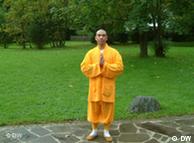
Großansicht des Bildes mit der Bildunterschrift: Shi Yan Bao takes the managers through martial arts

For business managers, the idea of going to seminars to learn new skills for your job is nothing new. But some are now looking East for inspiration, and taking tips from a Shaolin monk who now lives in Berlin.

The wisdom and strength of the Shaolin monks has been made famous worldwide through numerous martial arts movies and books. Now this wisdom is being harnessed by German business managers.

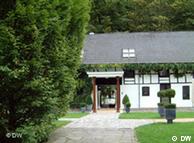
In two half-day seminars at a converted cloister (now a hotel) near Bonn, those attending can learn how to use the philosophies of the Shaolin monks in their stressful daily lives.

The course is run by Shi Yan Bao, a Chinese monk who has lived in Berlin since 2001. In between his work as a martial arts teacher, he runs coaching sessions teaching people the basic philosophy of Shaolin.


The hotel where the course takes placeBildunterschrift: Großansicht des Bildes mit der Bildunterschrift: A former cloisters is the quiet setting for the course

Using martial arts

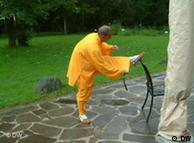
In a quiet room in the hotel, a group of managers are dressed in jogging bottoms and sports shoes, and taking part in a series of Qigong exercises. Qigong is a type of Chinese physical and mental training, combined with a little martial arts.

The eight men and women are led through the exercises by Shi Yan Bao who teaches them how to stay calm and focused. In the background, Chinese music is playing.

One of those taking part is 26-year-old Tanja, who works in a management consultancy. She says she is taking the course as she is at a crossroads in her career.

“I’ve been abroad lots, lived a lot and now I’m at a point where I don’t know if my job still has meaning for me,” she tells Deutsche Welle. “So it’s a good opportunity for me to look back and reflect a little.”

Mixing the physical and the mental


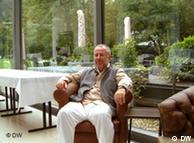
Psychologist Ralph Willms Bildunterschrift: Großansicht des Bildes mit der Bildunterschrift: Psychologist Ralph Willms takes the managers through the theoryAfter an hour of martial arts, the theory session begins with psychologist Ralph Willms.

Casually dressed, Willms articulates the philosophy behind the course, and takes the managers through a whistle-stop tour of philosophy. He touches on Jung, Freud, Aristotle and of course, Buddha.

“When we talk about coaching or spiritual development, it is always good to have a map,” Willms tells the audience. “So we know where we are, where we’ve come from and where we’re going.”

With a soft voice, he takes the five men and three women on the course through steps to help them concentrate and meditate at work. As he speaks to each of them, it is clear they all have stressful jobs, an unfulfilled private life and many fear burning out.

Group dynamics

In the afternoon of the second day, Willms asks the group to split into pairs and they take it in turns to hit each other on the back.


Shi Yan BaoBildunterschrift: Großansicht des Bildes mit der Bildunterschrift: Shi Yan Bao has been teaching in Germany for nine years

“This is how it’s done traditionally in China,” he says. He tells them the importance of trust as in China they would do this for a couple of years without knowing why.

“For us Europeans, we always need to know why we are doing something,” he says, and his audience laughs and nods in agreement.

The mixture of theory and practice seems to work, combined with the energy of Willms and Shi Yan Bao.

At the end of the course, the participants are exhausted, but on the whole enthusiastic. One Austrian manager says the course was “a lot less esoteric than I feared!”

And as for their Shaolin leader Shi Yan Bao, he praises those who took part in the seminar.

“When I’m running these seminars I feel as if I’m on holiday – a real sense of calm. A good group, good managers… I’m happy.”

Author: Susanne Luerweg (cb)
Editor: Andreas Illmer
Amusing spin on Shaolin, eh? :wink: