Rice

Maybe not plastic after all

We’ve discussed plastic rice here and here


Chris Elliott[URL=“https://www.foodsafetynews.com/2019/10/so-called-plastic-rice-could-have-been-the-real-deal-but-stored-for-a-decade/”]
So-called plastic rice could have been the real deal, but stored for a decade
By Joe Whitworth on October 15, 2019

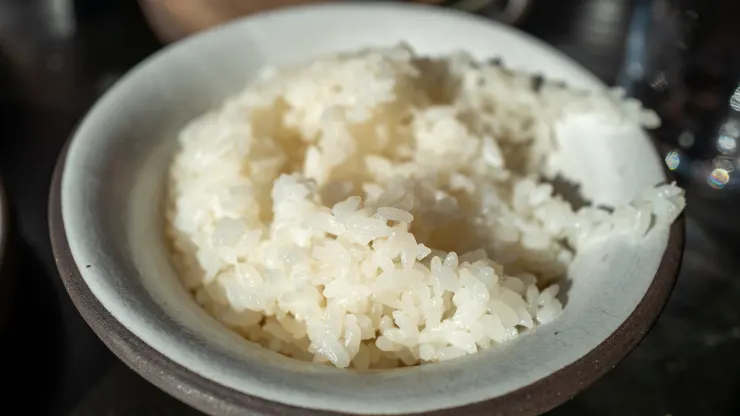
Reports about “plastic rice” are likely incorrect according to a food fraud expert who says it could have been actual rice that had been poorly stored for up to a decade.

Chris Elliott, professor of food safety and founder of the Institute for Global Food Security at Queen’s University Belfast, said he has been investigating rice fraud for a number of years.

“That all started off by lots of reports coming from different parts of the world about what was called plastic rice. People were claiming that they were being sold rice that was made from plastic. As someone who studies food fraud I was quite interested in this,” he told Food Safety News while he was in Edinburgh to meet the head of the Scottish Food Crime and Incidents Unit (SFCIU).

“The first thing, when we looked at the economics, actually plastic is more expensive than rice so you (know) it is not made from plastic. Then you think why would people think they are eating rice made from plastic? It took quite a long time to uncover what we think was going on and I spent some time in South East Asia asking lots of questions.

“Plastic rice is not made from plastic, it is rice that has been stored for up to 10 years and not stored particularly well. The rice had become badly contaminated with molds and instead of that nice white color, had turned into an unpleasant green color and what the fraudsters had done was they had taken that rice out of the stores and bleached it to get back the white color.

“The only problem was whenever you bleach rice it loses the nice shiny surface so to get that back they sprayed it with paraffin wax. With that paraffin coating on it, it didn’t cook properly, hence the reason it was called plastic rice.”

Smartphone-based analysis

The university has been trying to develop quick analytical tests for the past couple of years so people can detect the difference between genuine rice and product that has been treated badly in terms of chemicals.

“There has been a big push in terms of how science and technology can detect and deter food fraud,” said Elliott.

“In terms of my own work at Queen’s University, we are looking at how we can use the thing that we all have in our pocket to detect food fraud. So doing a lot of smartphone-based analysis. Using fingerprints of food we can build these mathematical models of what the fingerprint of food should look like. Just six weeks ago I was in a marketplace in Ghana checking for fraud in rice using my smartphone.”

Elliott said Europe has a good food safety network so people would not try to sell very low quality product into the region because the systems would pick it up.

“In the U.K. and wider Europe we don’t need consumers to check if our food has been fraudulently produced. We’ve got a great infrastructure of government agencies and a fantastic food industry that are doing all that for us,” he said.

“What we want to do is put these tools in the hands of people in the food industry, government inspectors and environmental health officers to do that checking for us. In the developing world it is very different because that infrastructure doesn’t exist there, we want to put those tools in the hands of consumers to make informed decisions.

“The plastic rice is being sold to parts of the world that don’t have those checks and measures. It is not just in South East Asia; in Sub-Saharan Africa it crops up regularly where it is not only rice, they are generally sold the worst of the worst. Anything that cannot go into Europe because of food safety standards will end up getting dumped in Sub-Saharan Africa. They will sell to countries where they don’t have the measures to check and test for these things.”

Elliott led the independent review of Britain’s food system following the 2013 horsemeat scandal and is joint coordinator of EU-China-Safe, an EU Horizon 2020 project that runs until August 2021. There are 16 participants from the EU and 17 from China with an aim to improve food safety and combat fraud.

Predictions and problems caused by Brexit

A lot of work goes into trying to predict what the next problem might be.

“We’re developing predictive analytics, gathering lots of information from different parts of the world,” said Elliott.

“Thinking about what is happening to our climate and the way food is traded around the world, to try and predict where there will be problems, shortages and more demand than availability of foodstuffs. That is not only to guide our research but we inform the industry and government agencies about what we think their surveillance program should be not now but six months or a year down the road.”

Regarding Brexit, Elliott said it is not a question of if it will cause problems but how big they will be.

“As soon as you start to change rules and regulations that gives a massive opportunity for people who cheat and that happens the world over. There will be potentially a massive amount of fraud around tariffs as they are going to change. I think the potential for lots of smuggling from the Republic of Ireland into Northern Ireland and the rest of Great Britain will happen as well,” he said.

“The other big factor, the thing that worries me even more, is that the U.K. will get cut off from the established European networks that share information and intelligence. Fraudsters aren’t silly, they will know the disconnect between the U.K. and Europe and they will maximize that opportunity.

“There will be difficulties in terms of the informal relationships as well, I know the regulatory agencies across the country can pick up the phone and talk to their counterparts in Germany or France but will that be the same case going forward, I doubt it somehow. It has not been a frictionless proposition about leaving Europe, I think it is going to take years to rebuild some of those relationships that we once had.”
This makes a lot more sense to me than plastic rice did.

Global markets + world politics = lost livelihoods

Hong Kong protests, cheap Chinese rivals: why Thai rice is in crisis
The country was once the world’s top exporter but it has been hit by a triple whammy of unrest in Hong Kong, a strong baht and tough competition
With rice front and centre in Thai politics, that’s bad news for Bangkok
Jitsiree Thongnoi
Published: 12:15pm, 17 Nov, 2019


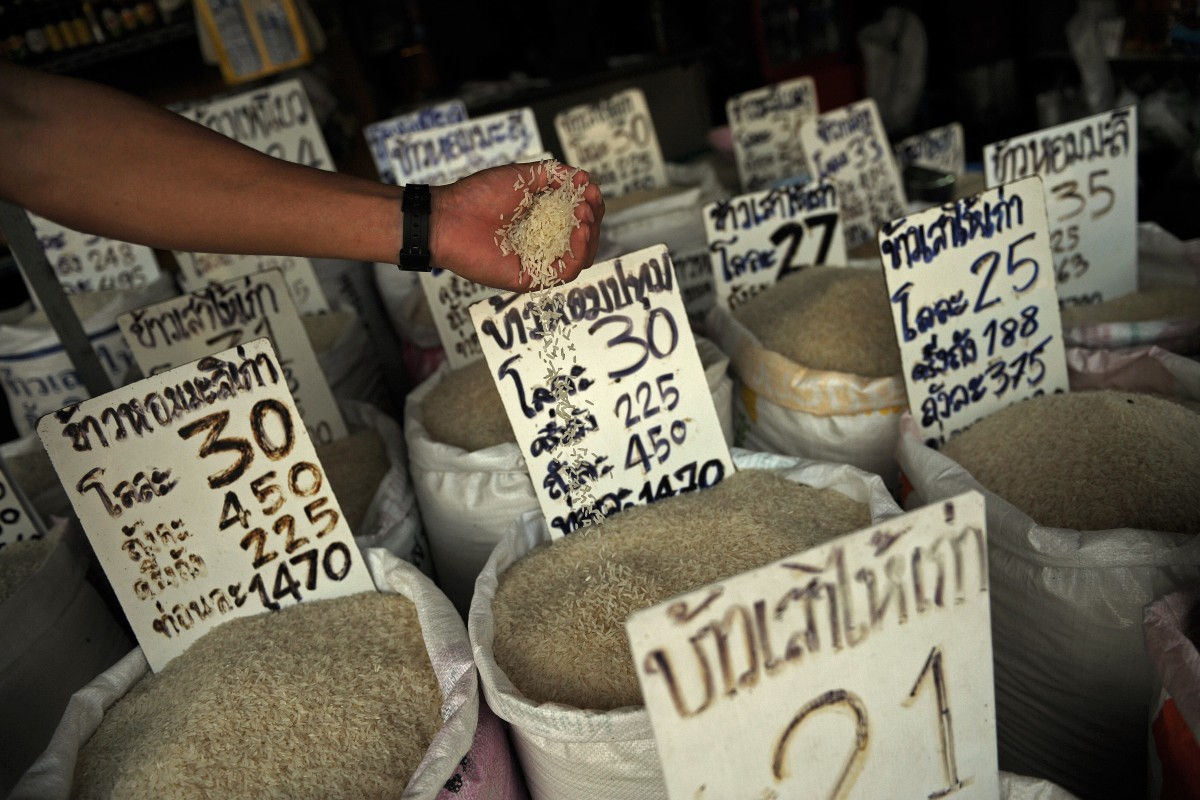
Rice at a market in Bangkok. Photo: AFP

Thai rice, once dominant on the world market, is now facing a triple whammy of a strong baht, tough competition from Asian neighbours and social unrest in Hong Kong that is weighing on demand.
The weaker sales overseas are part of a lacklustre performance by the country’s export sector amid an almost 10 per cent rise in the currency against the US dollar since the beginning of the year. Rice exports have been left exposed to stiff competition from large producers such as India, Vietnam and China.
Traders have also blamed continuing anti-government protests in Hong Kong, where about half of rice classified as premium produce comes from Thailand. The number of tourists visiting the Chinese city has plunged in recent months, from 5.1 million in July to 3.1 million in September.


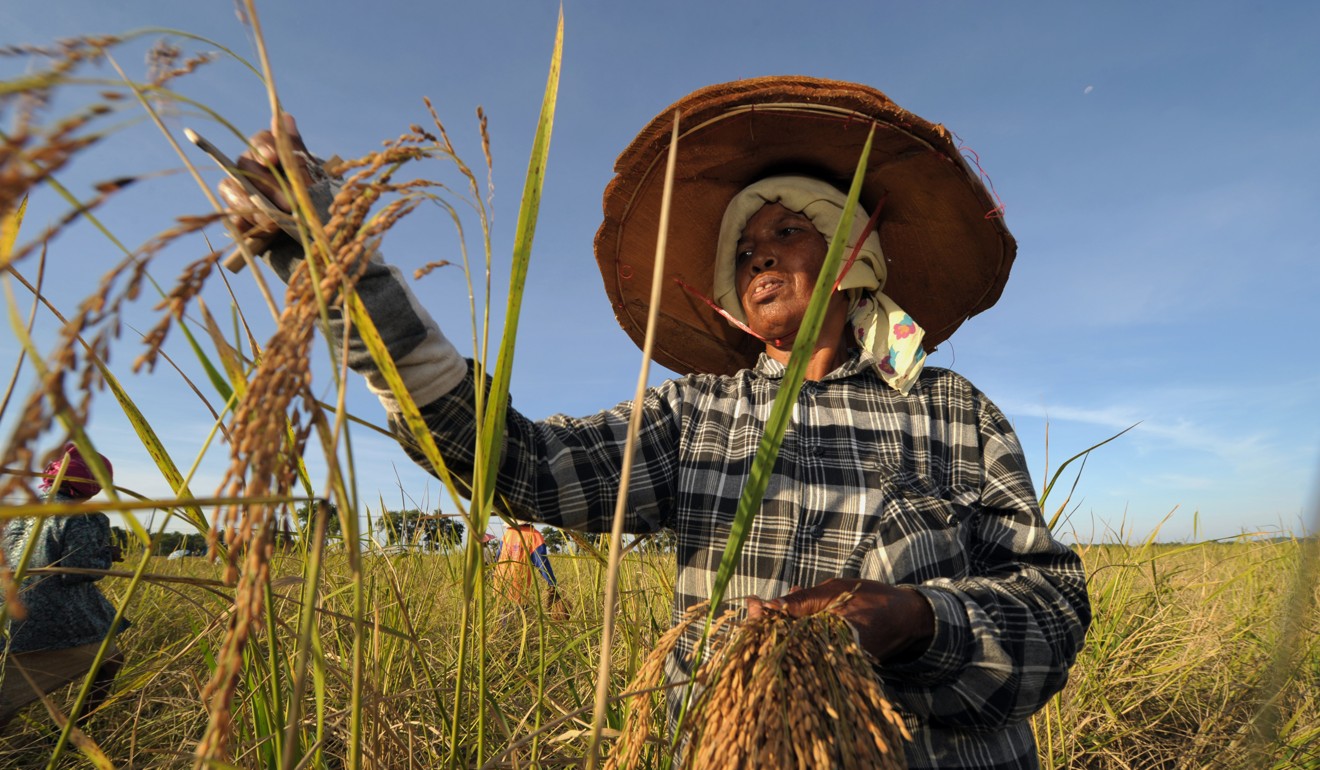
Thai farmers harvest rice in a field in Thailand’s southern Narathiwat province. Photo: AFP

Thailand exported 143,000 tonnes of rice to Hong Kong between January and September last year.
In the same period this year, the country managed only 127,000 tonnes – an 11 per cent drop.
“Thai premium white rice caters mainly to Hong Kong’s tourism sector,” said Charoen Laothamatas, president of the Thai Rice Exporters Association (TREA). “But we have seen fewer shipments to Hong Kong in recent months as there is lower demand from restaurants and hotels.”
Thailand’s share of the city’s rice market peaked in 2016 at 64 per cent, but Laothamatas said it had since fallen to about 52 per cent.
However, a source at Chaitip, a major rice trading company that has been exporting to Hong Kong for more than a century, said the demonstrations had not been as damaging as recent price rises.
“The lower demand is not due to the unrest, it is because jasmine rice has become too expensive,” said the source.
“Droughts in many parts of Thailand this year have led to lower production of jasmine rice, which is why the price has shot up.”
Thai hom mali, or premium jasmine rice, is the country’s most recognisable rice product. Its slim and aromatic grain now costs about 1,200 baht (US$39) per tonne, while Vietnam’s white rice is priced at about half that figure.
The industry is crucial for Thailand because of the large number of Thais who depend on it. It supports as much as 30 per cent of the country’s 69-million population, according to Chookiat Ophaswongse, TREA’s special president.


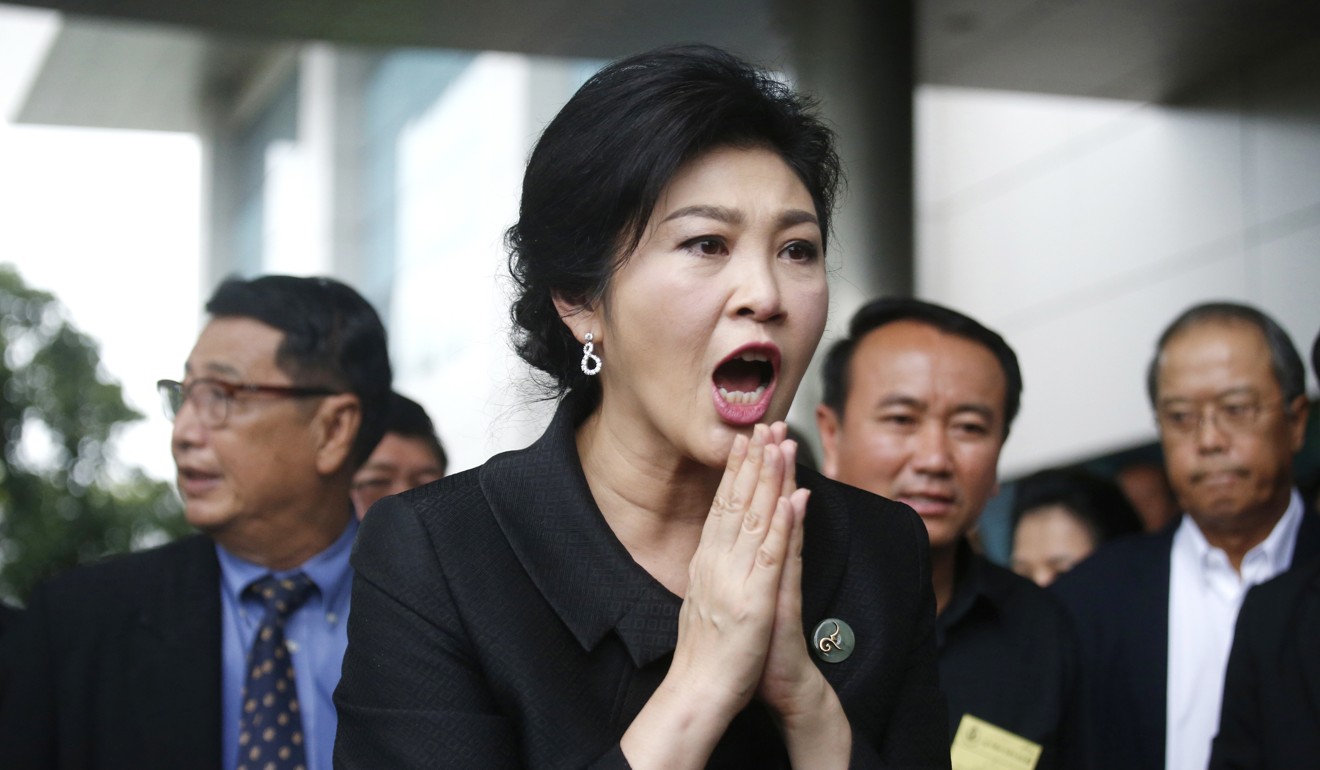
Former Thai prime minister Yingluck Shinawatra relied heavily on government subsidies to rice producers to win political support. Photo: AP

It has often been central to Thai politics, with the country’s farmers holding considerable political influence. Support from Thailand’s rural northeast was central to the electoral success of the Shinawatra family between 2001 and 2014. Former prime ministers Thaksin and his sister Yingluck relied heavily on government subsidies to rice producers, who in turn formed the backbone of their populist “red shirt” movement, which clashed repeatedly with anti-Thaksin, pro-monarchy “yellow shirts”. The conflict led to a military intervention in 2014 that only ended this year with elections in March.
Until 2012 Thailand was the world’s top rice exporter in terms of volume, but India took the top spot after it lifted a ban on non-basmati rice exports in 2011.
The loss of Thailand’s prized position came in the wake of a “rice-pledging scheme” embarked on by Yingluck’s administration. The government bought rice from farmers at inflated prices, which sent the price of the product upwards on the world market while forcing down demand. An 18-million-tonne stockpile was accumulated by the state, the last of which was shipped out to market only last year, when total exports for the year stood at 11 million tonnes.
The disastrous programme cost the government US$8 billion, according to figures from the military, which cited it as a major justification for its coup that deposed Yingluck in 2014. The prime minister was subsequently sentenced in absentia to five years in prison, and the military junta then worked hard to court Thai rice farmers before it relinquished power this year.


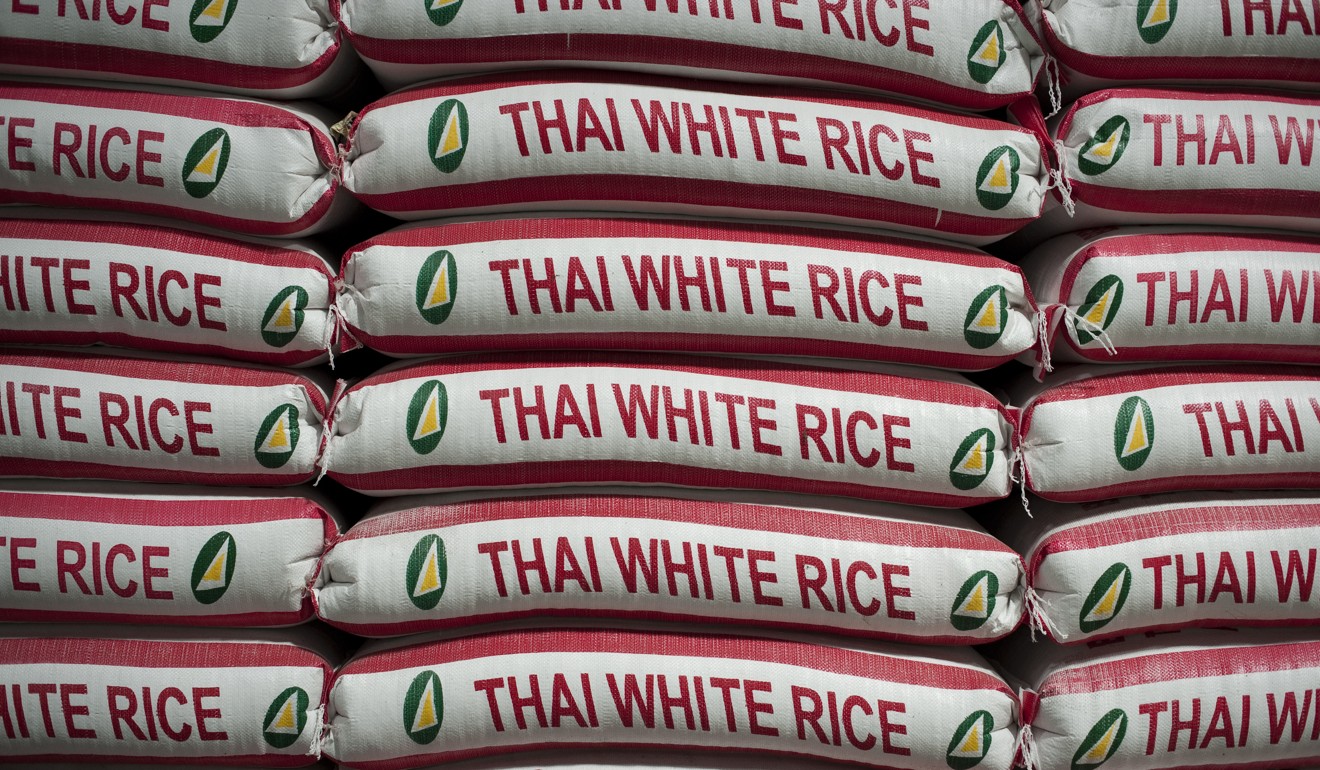
Bags of rice stacked at a factory in Bangkok. Photo: AFP

Nipon Puapongsakorn, a researcher at the Thailand Development Research Institute Foundation, said the government subsidy programme was a short-sighted attempt to maintain Thailand’s agricultural productivity and competitiveness.
The state last month also began paying farmers across Thailand who have joined a rice price guarantee scheme.
The scheme ensures farmers are paid the difference when the price falls below a predetermined benchmark. It covers five types of rice, including those from the country’s hom mali paddy and glutinous rice paddy, which are badly affected by drought and floods.
The programme will run until October next year, but several other subsidies and financial support schemes for rice farmers and growers of other crops, including oil palm, cassava, rubber and corn, will be available for longer.
Sudarat Keyuraphan, a key member of Thailand’s Shinawatra-backed Pheu Thai political party, this week said the government subsidy would allow middlemen to reduce the price of rice further when they bought from farmers.
But Puapongsakorn said these measures were only short term. “The budget for subsidy programmes is much higher than that for rice research, which helps Thailand stay competitive in the long run,” he said.
The researcher added that India’s development of hybrid fragrant rice and Vietnam’s research into soft white rice for export had seen Thailand’s jasmine rice lose its charm among international buyers.
“Vietnam has lower costs and the country’s currency is under control,” he said. “The government needs to develop new types of rice that meet more of the market demand.”
Vietnam is now the third-biggest supplier in the world.
Meanwhile, China, with its estimated rice stockpile of more than 100 million tonnes, has begun releasing supply to African countries, further edging out Thai producers, according to Puapongsakorn. He said China’s exports rose more than 70 per cent last year due to demand from Africa, with Ivory Coast the country’s biggest customer.
Chinese white rice cost US$300 a tonne in July, while similar grains from Thailand were quoted at US$390, those from Vietnam at US$360, and India at US$370, according to Thai media.
Market share for Thailand in Africa stood at 51 per cent last year, TREA figures show.
Laothamatas said TREA had cut its export target for this year to less than 8.5 million tonnes, down from the usual figure of between 9 million and 9.5 million.
“There was no competition 20 years ago, but there is competition everywhere now, from India, Pakistan, Myanmar and Cambodia,” he said. “We need to develop new rice varieties and reduce our costs so that we can compete.”
Ophaswongse told Bloomberg that the competition was “killing us all”. “We don’t know what else we can do. We tried reducing costs, but the baht keeps making our rice more expensive,” he said.
“We can only sit and wait, and some might have to quit the business.”

THREADS
Rice
Hong Kong protests

Color distinctions

I found this quite informative. :slight_smile:

What’s The Healthiest Rice? Brown Rice And White Rice Face Off
You might want to update your takeout order.
BY CHRISTINE YU
NOV 29, 2019


LUCHEZAR GETTY IMAGES

If you’ve hesitated when picking between white rice and brown rice while ordering from your favorite takeout joint, you’re definitely not the only one. White rice tastes so good soaked in sweet and sour sauce, but isn’t brown rice better for you?

Considering the age of keto and low-carb everything has many people throwing grains out the window, figuring out what type of rice is the healthiest (and if rice is honestly healthy at all) has never been more confusing.

Should you stick to brown rice—or skip the starchy stuff altogether? Well, it depends. Many nutrition experts advocate that grains can totally fit into a balanced diet—as long as you choose your variety (and portion size) wisely.

Don’t worry, your love affair with poke bowls is far from doomed. Here, dietitians break down the healthy (and not-so-healthy) types of rice—and how to make the grain work for you.

The big question: Is brown rice healthier than white rice?
Yep, it’s more than just color that sets these two types of rice apart.

“Brown rice contains all three parts of the grain: the bran, endosperm and germ," says dietitian Marisa Moore, RDN. SparkNotes: Yes, that means brown rice is a whole grain.

“White rice, meanwhile, goes through processing that removes the bran and germ, leaving just the starchy endosperm,” says Moore. So, nope, not a whole grain.

That processing has a pretty major impact on rice’s nutrition. “White rice has been stripped of most of its protein, fiber, B vitamins and minerals," says Lauren Harris-Pincus, MS, RDN, dietitian and author of The Protein-Packed Breakfast Club. (Because of this, a lot of companies in the US actually fortify white rice with the B vitamins thiamin, niacin, folic acid—and iron—to revive some shred of nutrition.)

“Brown rice, then, contains more protein, fiber, and nutrients than white rice, making it more filling and satisfying," Harris-Pincus says. "It also has a lower glycemic index, meaning one serving of brown rice raises blood sugar less than the same serving of white rice.”


KUMACORE GETTY IMAGES

To put the differences in perspective, here’s the nutritional information for one cup of cooked brown rice, per the USDA Nutrient Database:

Calories: 238
Fat: 1.87 g
Carbohydrates: 49.6 g
Fiber: 3.12 g
Sugar: 0.47 g
Protein: 5.32 g
Sodium: 202 mg


ALEAIMAGE GETTY IMAGES

And the nutritional information for a cup of cooked white rice, per the USDA Nutrient Database:

Calories: 204
Fat: 0.44 g
Carbohydrates: 44.2 g
Fiber: 0.63 g
Sugar: 0.08 g
Protein: 4.22 g
Sodium: 387 mg
Though a serving of brown rice is higher in calories, it provides more balanced nutrition—and is generally a better pick—than a serving of the white stuff.

Got it. So what are the healthiest types of rice?

Okay, so you know that brown rice is technically healthier than white—but brown and white rice aren’t the only players in the game. In fact, other varieties of rice may be even better for you than brown rice.

According to Moore, red rice and black rice actually compete for the title of “healthiest rice.”

“Black rice has been shown to have the highest antioxidant activity of all the rice varieties,” Moore says. “It gets its deep purple-black color from anthocyanins, the same pigments that give blackberries their antioxidant power."


DOUGLAS SACHA GETTY IMAGES

Here’s the nutrition information for a serving of black rice, per the USDA Nutrient Database:

Calories: 160
Fat: 1.5 g
Carbohydrates: 34 g
Fiber: 1 g
Sugar: 0 g
Protein: 4 g
Sodium: 0 mg
Though perhaps not as impressive as black rice, red rice also boasts a solid antioxidant profile, Moore says. (It actually has more fiber than black rice, though.) When it comes to these body-protecting compounds, brown rice can’t really compete.


VICTOR CARDONER GETTY IMAGES

Check out the general nutrition stats for a serving of red rice, per the USDA Nutrient Database:

Calories: 160
Fat: 1.5 g
Carbohydrates: 34 g
Fiber: 5 g
Sugar: 0 g
Protein: 4 g
Sodium: 30 mg

And then, of course, there’s wild rice. Another popular—and healthy—pick, wild rice is particularly unique because, well, it’s not actually rice.

“Wild rice looks and cooks like rice, but it’s technically the seed of an aquatic grass," says Harris-Pincus. “It contains more protein, fiber, potassium, and zinc than brown or white rice.” It’s also lower in calories and carbs.


MIKROMAN6 GETTY IMAGES
Finally, here’s the nutrition information for a serving of wild rice, per the USDA Nutrient Database:

Calories: 166
Fat: 0.6 g
Carbohydrates: 35 g
Fiber: 2.9 g
Sugar: 1.2 g
Protein: 6.5 g
Sodium: 4.9 mg

So does that mean pre-made or packaged rice is a no-go?

Though funkier rice varieties are your most nutritious picks, don’t completely discount the pre-made stuff—especially when you have zero time to cook from scratch.

“Packaged rice can be a healthy choice, especially compared to some other convenience foods," says Moore. Just check the label for unnecessary ingredients or high amounts of sodium.”

To keep it clean, opt for the plain versions of frozen or microwavable rice products. Uncle Ben’s Chicken and Broccoli Ready Rice, for example, contains almost 500 milligrams (half your daily limit) of sodium.

“In small portions, the nutritional differences are small," says Harris-Pincus. "But if you consume large portions (one cup or more) of rice several times per week, the differences add up.”

Want to add rice to your diet? Here’s the healthiest way to do it.

When choosing between types of rice, taste matters, says Moore.

“I grew up on rice and still love it," says Moore. It’s an inexpensive blank canvas to build upon.”

Depending on the type of dish you’re making (like an Asian-inspired stir fry versus colorful macro bowl), you might want to choose the type of rice you use based on the flavors you’re after, Moore says. “Some recipes taste best and are most authentic using white rice, while others work well with the nutty flavor of brown rice."

Whatever type of rice you choose, just keep portion sizes in mind. “If you love white rice, a small portion [think one-third to one-half of a cup] certainly will not hurt you,” she says.

Plus, “the good news is that when you cook and then cool white rice, it forms ‘resistant starch,’" says Harris-Pincus. This type of starch is resistant to digestion, so eating cooled rice will have less of an effect on your blood sugar. WIN.

The bottom line: Though brown, red, wild, and black rices are more nutritious than white rice, you can incorporate all types of rice into your diet as long as you stay mindful of portions.

CHRISTINE YU
Christine Yu is a freelance writer, yoga teacher, and avid runner who regularly covers health, fitness, nutrition, and wellness for outlets like Well + Good, Women’s Health, Runner’s World, and Outside.

Best Ever Rice Cooker ? - used by 95% of Taiwanese Households

Just bought a Tatung Rice / Multicooker - made in Taiwan - used by 95% of Taiwanese Households.
These last for ages apparently, around 30 years plus and are often handed down to the next generation.

The rice doesn’t burn at the bottom of the pot as it uses a water bath for the pot, which is stainless steel also so no toxic non-stick coating touches the rice.
Can also steam other foods and cook stews etc. Optional larger steamer trays available as well.

A bit pricey, but after having to repair or replace those old style, thermoswitch button type electric rice cookers, hoping the Tatung will last longer!

No beeping noises or complex programs to work out, unlike ‘InstantPot’ or those fancy Pressure RiceCookers.

They make sizes for Families or individuals too. A bit of dependability in this crazy World we live in!:slight_smile:

//youtu.be/oGPky9ExLZg

RIP Yuan Longping

Yuan Longping, whose hybrid rice helped feed the world, dies at 90

Rice researcher Yuan Longping, at center in 2017, in a field of hybrid rice in northern China. (Chinatopix/AP)
By
Harrison Smith
May 25, 2021 at 5:39 p.m. PDT
Yuan Longping, a Chinese scientist who developed strains of hybrid high-yield rice that helped alleviate famine and poverty around the world, enabling farmers to feed a growing planet with fewer resources, died May 22 at a hospital in Changsha, China. He was 90.

The cause was multiple organ failure, according to the state-run People’s Daily newspaper. Mr. Yuan had been hospitalized in March after falling at a rice-breeding center in southern China, and reportedly continued to track the weather and monitor crops from his bed.

Known in China as “the father of hybrid rice,” Mr. Yuan was one of his country’s most revered scientists, a self-described “intellectual peasant” who spent a few hours each day in the fields, sometimes taking a break from his research to play the violin among the stalks. Once targeted by Communist officials for daring to suggest a slight change to Mao Zedong’s agricultural program, he emerged as a national hero in recent decades, with thousands of mourners leaving chrysanthemums for him at a memorial service in Changsha.

In the early 1970s, Mr. Yuan and his team developed hybrid strains that typically yielded 20 percent more rice than conventional varieties, transforming Chinese agriculture after years of famine and scarcity. Some 10,000 years after Chinese farmers began cultivating rice near the Yangtze River, the country now produces more than 200 million tons of rice a year, more than any other nation.

Rather than limit his rice technology and growing techniques to China, Mr. Yuan pushed to share them with the world. He ultimately partnered with the United Nations and the International Rice Research Institute in the Philippines, in addition to teaching farmers in India, Vietnam and elsewhere how to grow hybrid rice. In 2004, he was awarded the World Food Prize with rice researcher Monty Jones of Sierra Leone, and credited with helping “create a more abundant food supply and more stable world.”


Mr. Yuan receives the World Food Prize in 2004 with Monty Jones, right. (Bill Neibergall/Des Moines Register/AP)
Along with American scientist Norman Borlaug, a Nobel Peace Prize laureate who developed high-yield varieties of wheat, Mr. Yuan was frequently cited as a leader of the Green Revolution, in which mid-century agricultural advances helped feed a growing planet. If the term was somewhat ironic, suggesting an alternative to China’s “red” communist revolution, it nonetheless suggested the scope of Mr. Yuan’s research, which influenced the cultivation of a staple crop that nourishes half the world’s population.

“He wanted to reach as many people as possible, so the problem of food could be solved globally,” said Jauhar Ali, a senior scientist at the International Rice Research Institute. In a phone interview, he added that hybrid strains account for about 15 percent of world rice production. “We have to attribute this to Yuan Longping,” he said. “Had he not been there, China would have starved.”

Born in Beijing on Sept. 7, 1930, Yuan Longping was the son of a railroad official and English teacher. His family moved frequently, uprooted by war between China and Japan, then between nationalists and communists. He said he became fascinated by flowers and trees after visiting a horticultural center as a student in Wuhan.

Mr. Yuan studied agronomy at what was then Southwest Agricultural College in Chongqing. After graduating in 1953, he taught at an agricultural college in Changsha, where his focus shifted from sweet potatoes to rice. High-yield hybrid corn was already in production, and Mr. Yuan sought to do something similar with rice, a self-pollinating crop that posed a far greater challenge for plant breeders.

Beginning in the late 1950s, his research was further stimulated by the Great Leap Forward, a government campaign to bring industry to the countryside, which resulted in catastrophic famine and tens of millions of deaths. “At that time, grain was even more precious than gold,” Mr. Yuan told China Daily in a 2011 interview. “I never had a full stomach during that period, and that bitter memory is unforgettable.”

Mr. Yuan said he saw at least five people who had collapsed on the side of the road, dead from starvation. In an autobiography, he recalled that some tried to fend off hunger by eating grass roots and bark or by double-steaming rice, which caused it to expand.

In the wake of the famine came the Cultural Revolution, a decade-long period of upheaval in which perceived foes of Mao were persecuted or killed. Mr. Yuan was targeted as an intellectual but saved by an official who “recognized the value of his research,” according to historian Sigrid Schmalzer’s book “Red Revolution, Green Revolution” (2016). He was later “sent to a coal mine to ‘temper’ himself and reform his thought,” Schmalzer wrote, and freed after a pair of students vouched for his character.

Mr. Yuan forged ahead with his research, concluding in the mid-1960s that male-sterile rice plants were key to producing a vigorous, high-yield hybrid strain. He later recalled looking through tens of thousands of ears of rice, often while walking barefoot through the paddy field, before he and his team located the right plant on Hainan Island in 1970.

Using the Hainan plant and a new technique for transferring genetic material into commercial strains, he and his team developed the high-yield hybrid in 1973. Large-scale cultivation began in 1976, the same year Mao died. Under the Communist leader’s successor, Hua Guofeng, Mr. Yuan rose to prominence in China for the first time.

In an email, Schmalzer said that during the Cultural Revolution, “the radical politics favored emphasizing the collective nature of the research, including the important contributions of peasant technicians.” By the mid-1970s, Chinese publications were celebrating the way in which Mr. Yuan’s research team had grown “from a small number of specialists’ experiments to a new phase of a thousand armies and ten thousand horses.”


Mr. Yuan in 2018. (Yang Huafeng/China News Service/Getty Images)
Mr. Yuan later directed a national hybrid rice research and development center and lent his name to a Chinese seed company. He carried the Olympic Torch in 2008 as it passed through Hunan province en route to Beijing, and in 2019 he was awarded the Medal of the Republic, the country’s highest official honor, by President Xi Jinping.

Survivors include his wife, Deng Zhe; three sons; and several grandchildren.

In recent years, Mr. Yuan and his team developed new varieties of salt-tolerant rice. Amid suggestions that he engineer rice with improved taste or texture, he said he remained focused on ensuring there was enough food to go around. He dreamed of creating “rice crops taller than men,” he said, in which “each ear of rice was as big as a broom and each grain as huge as a peanut.”

In his dream, he told state media, he “could hide in the shadow of the rice crops with a friend.”

By Harrison Smith
Harrison Smith is a reporter on The Washington Post’s obituaries desk. Since joining the obituaries section in 2015, he has profiled big-game hunters, fallen dictators and Olympic champions. He sometimes covers the living as well, and previously co-founded the South Side Weekly, a community newspaper in Chicago.

“the father of hybrid rice”

About Rice Cooker

Just bought a Tatung Rice / Multicooker - made in Taiwan - used by 95% of Taiwanese Households.
These last for ages apparently, around 30 years plus and are often handed down to the next generation.

The rice doesn’t burn at the bottom of the pot as it uses a water bath for the pot, which is stainless steel also so no toxic non-stick coating touches the rice.
Can also steam other foods and cook stews etc. Optional larger steamer trays available as well.

A bit pricey, but after having to repair or replace those old style, thermoswitch button type electric rice cookers, hoping the Tatung will last longer!

No beeping noises or complex programs to work out, unlike ‘InstantPot’ or those fancy Pressure RiceCookers.

They make sizes for Families or individuals too. A bit of dependability in this crazy World we live in!

[video]https://youtu.be/oGPky9ExLZg[/video]

Hmmm more spam

This makes me think of spam musabi.

I’m amused that Tatung has spammed us twice. Yo Tatung! Consider investing in an ad!

Rice grows in the Wentian Laboratory Module

//youtu.be/Pgeu6NvC6Zo

Tatung Rice Cooker - ‘spam’

[QUOTE=GeneChing;1321789]This makes me think of spam musabi.

I’m amused that Tatung has spammed us twice. Yo Tatung! Consider investing in an ad! [/QUOTE]

Gene, I did the first post, I apologise if it came across as spam - I did not intend it to be meant that way, As for the second post (which was basically a copy and paste job) I don’t know who did this - it seems a bit desparate.

No worries

I appreciate your apology. It wasn’t a bannable offence but it was enough for forum members to complain.

Moving on…

oh no

Global Rice Shortage is set to be the biggest in 20 years
PUBLISHED TUE, APR 18 20238:12 PM EDTUPDATED WED, APR 19 20231:23 AM EDT
Lee Ying Shan
@LEEYINGSHAN

KEY POINTS
Rice production for 2023 is set to log its largest shortfall in two decades, according to Fitch Solutions.
“At the global level, the most evident impact of the global rice deficit has been, and still is, decade-high rice prices,” Fitch Solutions’ commodities analyst Charles Hart told CNBC.
There’s a strained supply of rice as a result of the ongoing war in Ukraine, as well as weather woes in rice-producing economies like China and Pakistan.


Bowl of white rice at Bamboo Sushi restaurant in San Ramon, California, January 23, 2022.
Gado | Archive Photos | Getty Images

From China to the U.S. to the European Union, rice production is falling and driving up prices for more than 3.5 billion people across the globe, particularly in Asia-Pacific – which consumes 90% of the world’s rice.

The global rice market is set to log its largest shortfall in two decades in 2023, according to Fitch Solutions.

And a deficit of this magnitude for one of the world’s most cultivated grains will hurt major importers, analysts told CNBC.

“At the global level, the most evident impact of the global rice deficit has been, and still is, decade-high rice prices,” Fitch Solutions’ commodities analyst Charles Hart said.

Rice prices are expected to remain notched around current highs until 2024, stated a report by Fitch Solutions Country Risk & Industry Research dated April 4.

The price of rice averaged $17.30 per cwt through 2023 year-to-date, and will only ease to $14.50 per cwt in 2024, according to the report. Cwt is a unit of measurement for certain commodities such as rice.

[QUOTE]Given that rice is the staple food commodity across multiple markets in Asia, prices are a major determinant of food price inflation and food security, particularly for the poorest households.
Charles Hart
COMMODITIES ANALYST, FITCH SOLUTIONS

“Given that rice is the staple food commodity across multiple markets in Asia, prices are a major determinant of food price inflation and food security, particularly for the poorest households,” Hart said.

The global shortfall for 2022/2023 would come in at 8.7 million tonnes, the report forecast.

That would mark the largest global rice deficit since 2003/2004, when the global rice markets generated a deficit of 18.6 million tonnes, said Hart.

Strained rice supplies

There’s a short supply of rice as a result of the ongoing war in Ukraine, as well as bad weather in rice-producing economies like China and Pakistan.

In the second half of last year, swaths of farmland in the world’s largest rice producer China were plagued by heavy summer monsoon rains and floods.

The accumulated rainfall in the country’s Guangxi and Guangdong province, China’s major hubs of rice production, was the second highest in at least 20 years, according to agriculture analytics company Gro Intelligence.

Similarly, Pakistan — which represents 7.6% of global rice trade — saw annual production plunge 31% year-on-year due to severe flooding last year, said the U.S. Department of Agriculture (USDA), labeling the impact as “even worse than initially expected.”


Workers cultivate rice seedlings at an agricultural service station in Hangzhou in east China’s Zhejiang province Sunday, April 16, 2023.
Future Publishing | Future Publishing | Getty Images
The shortfall is partly due to result of “an annual deterioration in the Mainland Chinese harvest caused by intense heat and drought as well as the impact of severe flooding in Pakistan,” Hart pointed out.

Rice is a vulnerable crop, and has the highest probability of simultaneous crop loss during an El Nino event, according to a scientific study.

In addition to tighter supply challenges, rice became an increasingly attractive alternative following the surge in price of other major grains since Russia’s invasion of Ukraine in February 2022, Hart added. The resulting rice substitution has driven up demand.

Whose rice bowls will be affected?

Lower year-on-year rice production in other countries like the U.S. and EU have also contributed to the deficit, said Oscar Tjakra, senior analyst at global food and agriculture bank Rabobank.

“The global rice production deficit situation will increase the cost of importing rice for major rice importers such as Indonesia, Philippines, Malaysia and African countries in 2023,” said Tjakra.

Many countries will also be forced to draw down their domestic stockpiles, said Kelly Goughary, senior research analyst at Gro Intelligence. She said countries most affected by the deficit would be those already suffering from high domestic food price inflation such as Pakistan, Turkey, Syria and some African countries.

China is the largest rice and wheat producer in the world and is currently experiencing the highest level of drought in its rice growing regions in over two decades.
Kelly Goughary
SENIOR RESEARCH ANALYST, GRO INTELLIGENCE

“The global rice export market, which is typically tighter than that of the other major grains … has been affected by India’s export restriction,” said Fitch Solutions’ Hart.

India banned exports of broken rice in September, a move Hart said has been a “major price driver” for rice.

Surplus in the horizon

However, the shortage may soon be a thing of the past.

Fitch Solutions estimates that the global rice market will return to “an almost balanced position in 2023/24.”

That could lead to rice futures falling in year-on-year terms to below their 2022 level, but remain elevated at “more than one third above their pre-Covid (2015-2019) mean value, in part as inventories are replenished after a period of extensive drawdown.”

“We believe that the rice market will return to surplus in 2024/25 and then continue to loosen through the medium term.”

Fitch further projects that the prices of rice could drop almost 10% to $15.50 per hundredweight in 2024.

“It is our view that global rice production will stage a solid rebound in 2023/24, expecting total output to rise by 2.5% year on year,” Fitch’s report forecast, hinging on India being a “principal engine” of global rice output over the next five years.


Anindito Mukherjee | Bloomberg | Getty Images
However, rice production remains at the mercy of weather conditions.

While India’s Meteorological Department expects the country to receive “normal” monsoon rainfall, forecasts for intense heat and heat waves through the second and third quarters of 2023 continue to pose a threat to India’s wheat harvest, the report cautioned.

Other countries may not be spared either.

“China is the largest rice and wheat producer in the world and is currently experiencing the highest level of drought in its rice growing regions in over two decades,” said Goughary.

Major European rice-growing countries like France, Germany and the UK have also been afflicted with the highest level of drought in 20 years, she added.[/QUOTE]
This is bad.

Rice shortage


A supermarket in Tokyo has empty rice shelves and a sign telling customers they can only buy one bag at a time when available Image: AFP
National
Japanese gov’t appeals for calm as panic rice buying continues
Aug. 28 06:40 am JST 87 Comments
TOKYO

The threat of a megaquake, a series of typhoons, and a week-long national holiday have some Japanese scrambling to buy rice – the nation’s cherished staple food – with the government appealing to the public Tuesday not panic buy.

“We could only procure half the usual amount of rice this summer and bags of rice get quickly sold out,” a clerk at a branch of the popular Fresco supermarket chain told AFP in the Japanese capital.

Rice shelves in some stores emptied or stocks were rationed after a government warning this month – since lifted – of a possible megaquake, as well as several typhoons and the annual Obon holiday.

Other factors include lower harvests caused by hot weather and water shortages, as well as increased demand related to record numbers of foreign tourists.

At one food store in Tokyo, a sign seen by AFP read: “In order for many customers to be able to buy, we ask you to purchase one (bag of rice) a day per family.”

A worker at another store in Tokyo said: “We can’t purchase any rice at all, and there’s no prospect of buying anytime soon”.

The Fresco worker told AFP that daily stocks ran out by midday.

“Customers queue up before the store opens but piles of bags, each of which contains 10 kilograms, are always sold out during the morning,” he said.

Farm minister Tetsushi Sakamoto appealed for calm Tuesday.

“Please be cool-headed in your purchase activity by buying only the amount of rice you need,” Sakamoto said, stressing "the supply shortage situation will be gradually resolved.

Rice is deeply ingrained in Japanese culture and its harvesting has shaped the nation’s landscape – even being used as a currency in the 7th century.

With an annual consumption of seven million tons per year, it is by far the most consumed food staple in the country.

Demand has been falling for some time, however, because of a declining population and changing eating habits by many Japanese as they opt for alternatives.

The nation’s stockpile in June was the lowest since 1999 when comparable data was first collected, but officials believe the inventory is sufficient.

A new harvesting season has started with 40 percent of the crop available by the end of September, a farm ministry official told AFP.

And to think that the US had a similar issue with toilet paper at the start of the pandemic. Priorities, man…:o

[IMG2=JSON]{“data-align”:“none”,“data-size”:“full”,“height”:“686”,“width”:“1600”,“src”:“https://www.publichealth.columbia.edu/sites/default/files/styles/cola_media_1600_21_9/public/media/images/teaser/2025-04/paddy_rice_health_risks_b3_1600x900.jpg?itok=w-ZFqIts”}[/IMG2]
Climate Change May Lead to Rising Arsenic Levels in Paddy Rice, Increasing Health Risks

April 16, 2025

A new study by researchers at Columbia University Mailman School of Public Health reveals that climate change may significantly impact arsenic levels in paddy rice, a staple food for millions across Asia. The research indicates that increased temperatures above 2°C, combined with rising carbon dioxide (CO2) levels, result in higher concentrations of inorganic arsenic in rice, potentially increasing lifetime health risks for populations in Asia by 2050. Until now, the combined effects of rising CO2 and temperature on arsenic accumulation in rice have not been studied in detail.

The research, done in conjunction with colleagues at Johns Hopkins Bloomberg School of Public Health and the Chinese Academy of Sciences, is published in The Lancet Planetary Health(link is external and opens in a new window).

“Our results suggest that this increase in arsenic levels could significantly elevate the incidence of heart disease, diabetes, and other non-cancer health effects,” said Lewis Ziska, PhD, Columbia Mailman School associate professor of Environmental Health Sciences. “As rice is a dietary staple in many parts of the world, these changes could lead to a substantial rise in the global burden of cancer, cardiovascular diseases, and other arsenic-related health issues.”

Ziska explained that climate-change-related increases in temperature and CO2 elevate rates of arsenic accumulation in rice by altering the soil microbiome.

“From a health perspective, the toxicological effects of chronic arsenic exposure are well established and include cancers of the lung, bladder, and skin, as well as ischemic heart disease. Emerging evidence also suggests that arsenic exposure may be linked to diabetes, adverse pregnancy outcomes, neurodevelopmental issues, and immune system effects. In fact, “ingesting rice in regions like southern China and Southeast and South Asia is already a significant source of dietary arsenic and cancer risk,” said Ziska.

By measuring the effects of rising temperatures and CO2 on 28 rice strains over ten years in the field using FACE (Free-Air CO2 Enrichment) methodology, and combining advanced modeling techniques, the team estimated inorganic arsenic doses and health risks for seven Asian countries: Bangladesh, China, India, Indonesia, Myanmar, the Philippines, and Vietnam.

Health risks were calculated for cancer and non-cancer outcomes. Estimates of rice availability in 2021 by country, as reported in the Food and Agriculture Organization of the United Nations (FAO) food balance sheets, were used as the starting point for estimating rice ingestion. The standard deviation of rice ingestion per kg bodyweight from the U.S. Environmental Protection Agency data was used to create a normal distribution for each country.

The study’s projections for 2050 suggest a sharp rise in lifetime cancer cases, particularly lung and bladder cancers. China is projected to see the highest number of cases, with an estimated 13.4 million cancers linked to rice-based arsenic exposure.

“Based on our findings, we believe there are several actions that could help reduce arsenic exposure in the future,” Ziska noted. “These include efforts in plant breeding to minimize arsenic uptake, improved soil management in rice paddies, and better processing practices. Such measures, along with public health initiatives focused on consumer education and exposure monitoring, could play a critical role in mitigating the health impacts of climate change on rice consumption.

“Our study underscores the urgent need for action to reduce arsenic exposure in rice, especially as climate change continues to affect global food security,” says Ziska.

Co-authors are Dongming Wang, Brent F. Kim, Keeve E. Nachman, Andrea A. Chiger, Julie Herbstman, Irakli Loladze, Fang-Jie Zhao, Chuan Chen, Axiang Gao, Yongguan Zhu, Fangbai Li, Ren Fang Shen, Xiaoyuan Yan, Jiabao Zhang, Chuang Cai, Lian Song, Min Shen, Chuanqi Ma, XiongYang, Wei Zhou, Yujun Wang, Haoye Tang, Yu Jiang, Yanfeng Ding, Wuxing Liu, Jianqiang Sun, Wei Zhou, Ana Navas-Acien, Chunwu Zhu.

Author affiliations and sources of funding can be found in the paper.
More on this looming issue…

dataurl044058.jpg

First on CNN: Dangerously high levels of arsenic and cadmium found in store-bought rice, report finds

By
Sandee LaMotte
UPDATED MAY 15, 2025

[IMG2=JSON]{“data-align”:“none”,“data-size”:“full”,“src”:“https://media.cnn.com/api/v1/images/stellar/prod/gettyimages-1141317711.jpg?c=original&q=w_860,c_fill”}[/IMG2]
Dangerous levels of heavy metals are in the store-bought rice fed to children and families, a new report finds. Juanmonino/iStockphoto/Getty Images
Samples of store-bought rice from more than 100 different brands purchased in the United States contained dangerously high levels of arsenic and cadmium, according to a new report shared first with CNN.

“Even at low levels, both arsenic and cadmium have been linked to serious health harms, including diabetes, developmental delays, reproductive toxicity and heart disease,” said coauthor Jane Houlihan, research director for Healthy Babies, Bright Futures. The organization, which is dedicated to reducing children’s exposure to toxic chemicals, produced the report. RELATED ARTICLE [IMG2=JSON]{“alt”:“glasses of apple juice and red apples, autumn harvest”,“data-align”:“none”,“data-size”:“full”,“height”:“2002”,“width”:“3000”,“src”:“https://media.cnn.com/api/v1/images/stellar/prod/230601173018-apple-juice-file-060123.jpg?c=16x9&q=h_720,w_1280,c_fill/w_256”}[/IMG2]
FDA finalizes limit on how much arsenic can be in apple juice

“Heavy metal contamination in young children is especially concerning, as early-life exposures are associated with reduced IQ and a range of cognitive and behavioral problems,” Houlihan said.

One in four samples of rice purchased from grocery and retail stores across the United States exceeded levels of inorganic arsenic set in 2021 by the US Food and Drug Administration for infant rice cereal, according to the report published Thursday.

“The FDA set a limit for inorganic arsenic in infant rice cereal of 100 parts per billion, and since then we’ve seen levels in those cereals drop by 45%,” Houlihan said. “But the FDA did not address inorganic arsenic levels in the rice families purchased to cook and serve.

“Yet it turns out that for very young children, ages 0 to 2 years, rice is a more important source of inorganic arsenic than infant rice cereal,” she added. “It’s really the rice itself that’s driving higher exposures.”

Arsenic is a natural element found in soil, water and air, with the inorganic form being the most toxic. “Inorganic” is a chemical term and has nothing to do with the method of farming.

Arsenic is also a carcinogen, and early-life exposures — including during pregnancy — are especially dangerous, possibly leading to spontaneous abortion, stillbirth and preterm birth as well as later neurodevelopmental disorders, according to the American Academy of Pediatrics.

The USA Rice Federation, which represents American growers, told CNN via email that rice grown in the United States contains the lowest levels of inorganic arsenic in the world.

“While we do not agree that there is a public health safety issue as a result of trace amounts of arsenic in rice, we will continue to work with the U.S. Food and Drug Administration (FDA) to ensure the U.S. rice supply meets any threshold established,” said Michael Klein, vice president of communications and strategic development at USA Rice. RELATED ARTICLE [IMG2=JSON]{“alt”:“Baby taking a bite of food from a spoon with jar of baby food in foreground - stock photo”,“data-align”:“none”,“data-size”:“full”,“height”:“1125”,“width”:“2000”,“src”:“https://media.cnn.com/api/v1/images/stellar/prod/210203162024-baby-eating-food-stock-restricted.jpg?q=x_0,y_0,h_1125,w_1999,c_fill/h_720,w_1280/w_256”}[/IMG2]
Leading baby food manufacturers knowingly sold products with high levels of toxic metals, a congressional investigation found

“It is worth noting (that) the top source (42%) of arsenic in the diet of Americans is fruits, vegetables, and fruit juice. Rice is 17 percent,” Klein said.

That’s an unfair comparison, Houlihan said, because dozens of different fruits and vegetables contribute to that figure of 42%.

“In contrast, rice alone — one specific food — contributes 17%, likely making it the single largest individual food source of arsenic in the American diet,” she said. A global concern

Rice is the “most widely consumed solid food in the world,” according to the report, and a regular part of the diets of more than 1 billion children globally. In some cultures, rice is served at every meal.

“On average, for all children ages 0 to 2 years, rice accounts for 7.5% of their arsenic exposure, more than any other solid food,” Houlihan said. “For Hispanic and Latino children of the same age, that level rises to 14%.”

However, many Latino families are not aware of the dangers of arsenic in rice, said Juan Roberto Madrid, an advocate for the environmental advocacy association GreenLatinos, which partnered on the new report.

“In fact many of our full time staff were not even aware of the dangers of arsenic in rice,” Madrid said in an email. “Our communities must understand what arsenic does to babies and that there are alternatives available. This is not a cause for alarm, but rather a cause for concern.”

For Asian children, the levels are even higher, Houlihan said. “For babies 0 to 2 (years), rice accounts for 30.5% of the arsenic in their diet. It’s even higher for Asian children between 18 (months) and 24 months. Rice accounts for nearly 55% of their arsenic exposure.”

Some Asian families are aware of the presence of heavy metals in rice, but not the dangers posed by arsenic, said Gloria Tan, executive director of Gum Moon’s women’s residence at the Asian Women’s Resource Center in San Francisco. Gum Moon, which stands for “golden door,” has been providing services to Asian women since 1868 and was a partner in the new report.

“Knowing that there are dangers of arsenic might make families reconsider their rice choice,” Tan said in an email. “I think some families may be receptive to the idea of switching to a less contaminated grain.” Comparing rice with ancient grains

The new report analyzed the total heavy metal content in 145 samples of rice varieties grown in India, Italy, Thailand and the United States that were purchased by shoppers in the US.

“The researchers used a certified, accredited lab to measure arsenic and other heavy metals in rice samples, confirming that this is an issue with real-world implications,” said Tasha Stoiber, a senior scientist at the Environmental Working Group, via email. EWG is a consumer organization that monitors exposure to heavy metals, plastics and other dangerous chemicals. Stoiber was not involved in the new research.
[IMG2=JSON]{“data-align”:“none”,“data-size”:“full”,“src”:“https://media.cnn.com/api/v1/images/stellar/prod/gettyimages-1619160804.jpg?c=original&q=w_860,c_fill”}[/IMG2]
Ancient grains such as farro often contain significantly fewer heavy metals, the report said. bhofack2/iStockphoto/Getty Images
The independent lab also tested another 66 samples of nine ancient grains: amaranth, barley, buckwheat, bulgur, couscous, farro, millet, quinoa and spelt.

Results showed rice purchased by shoppers contained 28 times more arsenic than the alternative grains. The group of alternative grains, however, contained 1.5 times more cadmium than rice. Still, overall levels of heavy metals were three times lower in the nine grains compared with the levels found in the purchased rice.

Like arsenic, cadmium easily crosses the placental barrier to the fetus, potentially causing neurodevelopmental harm. Cadmium is also a known carcinogen and has been connected to harm to the kidneys, bone, stomach, lungs and more.

“Most research has focused solely on arsenic, but that leaves out an important part of the rice safety story,” Houlihan said. “By including cadmium in our analysis, we’re able to give a more complete picture of how different rice types compare in terms of overall toxic metal exposure.” Rice type and growing region matter

The type of rice and how it’s grown and processed can impact levels of arsenic and other heavy metals, experts say. Brown and wild rice often contain the highest levels because the milling process used to create white rice removes the outer layers of the hull, where heavy metals are concentrated.

Lab testing found purchased samples of US-grown brown rice contained 151 parts per billion of heavy metals — 129 of that due to arsenic. Arborio rice grown in Italy, which is typically used to make risotto, and white rice grown in the Southeast US (often labeled as simply “USA”) were almost as high in total heavy metals as brown rice, the report said.

Arborio rice from Italy contained 101 parts per billion of arsenic — total heavy metal load in the purchased samples was 142 parts per billion. White rice grown in the US contained 95 parts per billion of arsenic, with a total heavy metal count of 118 parts per billion.

Basmati rice from India, jasmine rice from Thailand and California-grown sushi and Calrose rice (a form of sushi rice) were at or below the 100 parts per billion levels set by the FDA for arsenic in infant rice cereals. However, the Indian basmati and Italian Arborio varieties contained the highest average levels of cadmium.

The California-grown rice had the lowest overall heavy metal content — 65 parts per billion, with 55 parts per billion from arsenic — making it an excellent choice to reduce overall exposure, Houlihan said.

Consumers should be wary, however, of precooked rice, including instant (one-minute and five-minute rice), parboiled (10-minute rice), and ready-to-heat-and-eat packaged rice, she said.

“Studies have shown the processing used to create instant rice can create additional toxins, and the ready-to-heat products are cooked inside the plastic containers, potentially releasing toxic chemicals,” Houlihan said.

While the report does list the names of the 105 brands tested, that’s not what’s important when choosing rice with the lowest levels of heavy metals, she added.

“Results between brands didn’t tend to vary,” Houlihan said. “The controlling factors for avoiding heavy metal levels seems to be the rice variety and the country of origin, not the brand of rice. So make sure you know where your rice comes from.

”Unfortunately, not all brands label the source of their product, so you’ll have to do some shopping to find those that do,” she added.

This lack of clear package labeling is a gap that should be addressed by industry and the federal government, EWG’s Stoiber said. “Stronger federal oversight and clearer labeling would go a long way to keep children safe from exposure to arsenic in food.”

The FDA takes the presence of heavy metals in food extremely seriously, said Andrew Nixon, director of communications for the US Department of Health and Human Services, which oversees the FDA.

“Under Secretary (Robert F.) Kennedy (Jr.)’s leadership, HHS is conducting a comprehensive review of chemicals in the food supply — both those added intentionally and those like heavy metals that are environmental contaminants,” Nixon said in an email. Additional ways to lower exposure

There is an easy way to eliminate nearly two-thirds of the arsenic in rice — cook it like pasta. Using 6 to 10 cups of water for every cup of rice and draining the excess before eating can remove up to 60% of arsenic. However, only rinsing rice before cooking doesn’t work, according to the report.

To further the amount of arsenic removed, soak rice for a half hour or overnight and drain before cooking as suggested.
[IMG2=JSON]{“data-align”:“none”,“data-size”:“full”,“src”:“https://media.cnn.com/api/v1/images/stellar/prod/gettyimages-960670358.jpg?c=original&q=w_860,c_fill”}[/IMG2]
Soaking rice overnight before cooking in extra water and draining can reduce arsenic levels significantly, experts say. krblokhin/iStockphoto/Getty Images
Keep in mind that boiling and draining will also remove some of the fortified iron added to rice. Iron is important for proper development and many babies are often deficient, the report said, so consult a pediatrician about adding iron-rich foods. Beans, eggs, fresh fruits and vegetables, lean red meat, and poultry are good sources.

In addition, there are nutrients such as B vitamins, calcium, zinc and vitamin C that can help “reduce the body’s absorption of contaminants or speed up their excretion,” the report said. “Find them in foods like lean meat, yogurt, cheese, leafy greens, broccoli, beans and lentils, citrus fruits, strawberries, and peppers.”

Yet another major bummer…