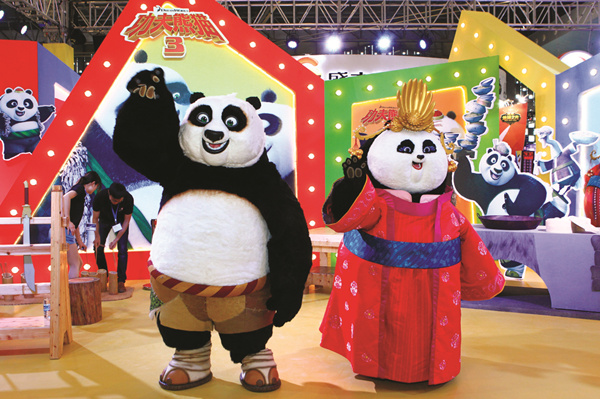
Kung Fu Panda 3

Co-director added

‘Kung Fu Panda 3 Gets Co-Director As DWA Looks To Shore Up Franchises
by Dominic Patten
February 24, 2015 3:00pm

EXCLUSIVE: Jennifer Yuh will not be helming the latest installment in the Kung Fu Panda franchise by herself, I’ve learned. DreamWorks Animation has brought in Alessandro Carloni to co-direct Kung Fu Panda 3 with Yuh, the first woman to direct an animated feature solo at a Hollywood studio when she helmed 2011’s Kung Fu Panda 2. Sources tell me that Yuh requested Carloni join her as a director on the pic and DWA execs signed off quickly.

In the case of adding Carloni to the film, the studio wanted Panda 3 to finish in a timely manner. DWA agreed with Yuh that strengthening the director’s bench on the film would ensure it was locked in time for a strong promotional campaign to be rolled out. With some misses and below expectation results in recent years, the company has said it wants to bring out one franchise movie annually going forward to play to its strengths. A strategy that a strong Kung Fu Panda 3 is very much a part of. Besides directing KFP2, the Oscar-nominated Yuh was also head of story and director of a sequence in the first film in the franchise.

A DWA veteran himself, Carloni served as an animation supervisor on 2008’s Kung Fu Panda, a story artist on the first sequel and was head of story on last year’s How To Train Your Dragon 2, the most successful animated film of the year at the box office. Carloni is also set as the director for Me & My Shadow, which was supposed to come out on March 14 last year but was moved back into development in February 2013.

This is the second big change for Panda 3 in just over two months. The Jeffrey Katzenberg -run studio said in December it was pushing the release of Kung Fu Panda 3 from December 23, 2015, to March 18, 2016, a move to stay clear of Disney’s Star Wars: The Force Awakens which will be released just five days earlier.

This KFP3 news comes on top of announcements today by DWA of a big Q4 loss and that it will sell its Glendale campus. Last month the studio said that it was cutting 500 jobs as part of a restructuring amid ongoing stock and strategic concerns. Also, the company’s How To Train Your Dragon 2 came up short in taking the Best Animation prize at Sunday’s Oscars. Having seen Frozen snag the award in 2014, Disney won the category for a second year in a row with Big Hero 6.

I’m glad HTTYD2 didn’t win the Oscar. BH6 was better but I was hoping for Song of the Sea or the Tale of Princess Kaguya.

Jan. 29, 2016

‘Kung Fu Panda 3’ Release Date Moves Up Two Months


Courtesy of DreamWorks Animation
by Rebecca Ford
4/14/2015 4:45pm PDT

DreamWorks Animation and partner 20th Century Fox are shifting Kung Fu Panda 3 up from March 18, 2016, to Jan. 29, 2016.

Jack Black returns to reprise the voice of lovable Panda Po. Other voice actors include Bryan Cranston, Rebel Wilson and Seth Rogen.

The threequel was originally slated for release on Dec. 23, 2015, but it was moved to March 2016 after the release of Star Wars: The Force Awakens was set for six days earlier, on Dec. 18.

The new date sets the 3D family film up against Sony’s YA adaptation The 5th Wave, starring Chloe Grace Moretz, and Disney’s Coast Guard drama The Finest Hours.

Much less competition than the Force…

Katzenberg on Po

Jeffrey Katzenberg Pumps Up ‘Panda 3,’ Dismisses Deal Talk


Jeffrey Katzenberg Dreamworks
Alvin Toh/Getty Images
April 19, 2015 | 06:00AM PT
Patrick Frater
Asia Bureau Chief

Jeffrey Katzenberg, CEO of DreamWorks Animation, sang the praises of digital technology and Chinese filmmaking from a platform in the Beijing Film Festival. But he dampened speculation that his company would be taken over by a Chinese firm.

He said he didn’t think DWA would benefit from being majority Chinese-owned. “We are a minority owner in a joint venture here, and I think that is the most successful structure to do business here in China today. We’re very comfortable with that arrangement,” he told Variety, on the margins of a conference at the Beijing International Film Festival.

Katzenberg denied that a long-term Chinese owner is necessary to alleviate pressure from Wall Street of the kind that followed DWA’s recent announcement of a cut in film production. Late last year there was stock market speculation that the company might be in talks with Chinese giants Wanda or Alibaba.

“Our stock is fine, the company has tremendous liquidity. We have a lot of cash on hand. We’ve had a few movies that didn’t work, we have a great success with ‘Home.’ That’s the movie business. You have your ups and downs. We’ve been fortunate we’ve had many more ups than downs.”

DWA is a co-founder of Shanghai-based animation producer Oriental DreamWorks, and an investor alongside China Media Capital (CMC), Shanghai Media Group (SMG), and Shanghai Alliance Investment Limited (SAIL). Oriental DreamWorks, DWA and China Film Corporation are investors in “Kung Fu Panda 3,” the first of the “Panda” films to be produced in China.

Representatives from the three companies held a signing ceremony in front of media. But it was not clear that what was being signed had any meaning. The document was described as a co-production agreement, albeit for a film that has already been in production for over a year.

Earlier in the week, the film’s director Jennifer Yuh Nelson said that production in China enabled a greater level of authenticity. “The weight of accuracy had been difficult for us. Previously we had to do things through research and extrapolate. Now we have Chinese people as creators,” she said. “We have some 200 artists working with us currently. They are not just executing, they are designers.”

The film is designed to have a high level of success with Chinese audiences. “There will be only two versions that are fully animated, the English and Chinese versions. ‘Kung Fu Panda 3 will be lip-synched in Chinese from the beginning; it will not be released in China as a subtitled English-language movie.”

Katzenberg said that the film is being made with a new degree of detail made possible by “methodical and predictable” technological progress. He said that it will take over 60 million hours of rendering, a figure that compares with 20 million for the first film and 50 million for the second.

“The digital revolution is fundamentally changing the way films are made, and animation seems to be leading the way. This is because in order to create our film every single moment on the screen must be computer animated,” said Katzenberg.

“The first ‘Shrek’ was the most sophisticated computer animated film in history when it came out in 2001. It featured a single dragon, which was one of the most complex digital characters ever created. Fast forward to 2014. ‘How to Train Your Dragon 2’ included hundreds of dragons each much more complex than that single dragon in ‘Shrek’ 1. These technological advances have been applied to live action filmmaking, allowing live action to increasingly portray anything that can be imagined.”

“Take the examples of ‘The Taking of Tiger Mountain’ or ‘Gone With the Bullets.’ These outstanding Chinese films also represent great examples of the integration of live action and digital effects,” Katzenberg said.

For those of you not paying attention:
The Taking of Tiger Mountain
Gone With the Bullets

synopsis revealed

I only cut&pasted the KFP3 reveal. You have to follow the link if you want the rest.

Synopses Revealed for KUNG FU PANDA 3, JOY, THE MARTIAN, and More
by Adam Chitwood 4 days ago

This afternoon, 20th Century Fox previewed its upcoming slate at CinemaCon in Las Vegas. Steve was onhand and will have a full video blog recap of the presentation shortly, but Fox has also unveiled the official synopses for some of its upcoming films, which you can peruse below.

KUNG FU PANDA 3

Release Date: January 29, 2016 in 3D

Directors: Jennifer Yuh Nelson and Alessandro Carloni

Cast: Jack Black, Angelina Jolie, Dustin Hoffman, Jackie Chan, Seth Rogen, Lucy Liu, David Cross, James Hong, Randall Duk Kim, Bryan Cranston, Rebel Wilson

In 2016, one of the most successful animated franchises in the world returns with its biggest comedy adventure yet, KUNG FU PANDA 3. When Po’s long-lost panda father suddenly reappears, the reunited duo travels to a secret panda paradise to meet scores of hilarious new panda characters.  But when the supernatural villain Kai begins to sweep across China defeating all the kung fu masters, Po must do the impossible—learn to train a village full of his fun-loving, clumsy brethren to become the ultimate band of Kung Fu Pandas!

More changes for Po

[UPDATE] Mads Mikkelsen Leaves ‘Kung fu Panda 3 Voice Cast + More New Details!
Posted by Max den Hartog 1 day ago

Kung Fu Panda 3 director Jennifer Yuh attended the Beijing International Film Festival this past week and, in an interview with the Chinese website, i.ifeng, she discussed some new artistic elements and production details about the film. We recently discovered that the film has been rescheduled for a January 2016 release and now we’ve learned some new details including that Mads Mikkelsen has left the project.

Cast Replacement

The first bit of information that Yuh revealed in the interview is that Mads Mikkelsen, who was originally set to play the film’s villain, has left the project due to scheduling issues. Who will replace Mikkelsen has not yet been officially announced by DreamWorks, but it pretty much looks like J.K Simmons, who previously unofficially joined the voice cast in an unknown role, is taking over as this film’s bad guy. Then again, he could Simmons could play another character entirely.

(See official update from DreamWorks regarding this Mikkelsen’s replacement below).

Oriental DreamWorks

She continues the interview talking about the collaboration with Oriental DreamWorks, the DreamWorks department in China, to make this movie as appealing as possible for Chinese audiences. Yuh reveals that one of the things that they’re going to do is reanimate all the lip syncing for the Chinese dub of the movie, so the lip syncing matches the Chinese voices. The two versions of the movie are supposed to be as similar as possible, but Yuh did say that they are going to try to rewrite some of the jokes in the Chinese dub for Chinese audiences.

Yuh also revealed details about the collaboration between the artists at DreamWorks Animation and Oriental DreamWorks, specifically how they incorporated Chinese culture into the film. She talks about how the Western artists thought at some point that they should have cookies in a particular scene in the movie, but the Chinese artists thought it shouldn’t be cookies, but traditional Chinese food instead. They recommended some traditional Chinese food that they could use, so in the movie more Chinese elements will be reflected this way. According to Yuh, these changes will certainly not affect the development of the story, but make the movie more interesting and cultural accurate.

New Synopsis

This past week, DreamWorks also revealed a first official synopsis for the movie at CinemaCon. This new synopsis reveals some new details about the story that the previous synopsis didn’t discuss. The only major change in this synopsis is that the film’s villain, who was previously referred to as The Collector, is now simply called Kai. You can read the new synopsis below.

”In 2016, one of the most successful animated franchises in the world returns with its biggest comedy adventure yet, KUNG FU PANDA 3. When Po’s long-lost panda father suddenly reappears, the reunited duo travels to a secret panda paradise to meet scores of hilarious new panda characters. But when the supernatural villain Kai begins to sweep across China defeating all the kung fu masters, Po must do the impossible—learn to train a village full of his fun-loving, clumsy brethren to become the ultimate band of Kung Fu Pandas!”

Kung Fu Panda 3 comes to theaters on January 29, 2016.
Oriental? srsly? DW went with that titles?

Go Po

DreamWorks Animation, Chinese partners bet big on ‘Kung Fu Panda 3’


Though the Glendale-based team of DreamWorks Animation remains the driving creative force behind “Kung Fu Panda 3,” more than 200 employees of Oriental DreamWorks – the China-based entity 45% owned by DreamWorks Animation – have been assigned to the film in Shanghai. Above, Oriental DreamWorks animation staff at work in Shanghai. (Nick May / For The Times)
By Julie Makinen and Richard Verrier contact the reporters

DreamWorks Animation CEO on its 45% stake in Chinese joint venture: ‘Not a huge downside, gigantic upside’
‘Kung Fu Panda 3’ to break ground with separate versions so characters’ speech in sync with English, Mandarin
200-plus workers in DreamWorks Animation’s Chinese joint venture are working on ‘Kung Fu Panda 3’ in Shanghai

On the 16th floor of a Shanghai office building, dozens of fresh-faced young animators are studying painting, sculpting and acting.

They’re participating in film-appreciation workshops — Woody Allen’s “Match Point” was a recent pick — and learning the latest software tools. Teaching them via video connections were some of the most experienced artists in Los Angeles, veterans who brought to life hits such as “Shrek” and “Madagascar.”

But it won’t take years for these newbies, many of them recent art-school grads, to get their big break working on a Hollywood blockbuster. As employees of Oriental DreamWorks, they’re already staff artists on “Kung Fu Panda 3,” set for release in January.

The runaway success of the “Kung Fu Panda” franchise inspired both awe and envy for Chinese who wondered how Americans came up with a billion-dollar global phenomenon that combines two quintessential elements of Chinese culture — a bumbling black-and-white bear and martial arts.

That sense of admiration and frustration helped smooth the way for DreamWorks Animation Chief Executive Jeffrey Katzenberg to create Oriental DreamWorks in 2012, a $330-million joint venture without precedent in the entertainment industry.

Modeled on agreements that have given American companies like General Motors expanded access to the restrictive Chinese market — in exchange for sharing their technology and know-how — the Shanghai-based entity is 45% owned by DreamWorks Animation.

Other partners include a government investment fund; private equity firm China Media Capital, which has invested in Imax’s China business; and Shanghai Media Group, a multimedia television and radio broadcasting company.

“Being able to be a bit of a pioneer in that market, I think could be incredibly and uniquely valuable for us,” Katzenberg said in an interview. “If we succeed, it could be a game changer for us.”

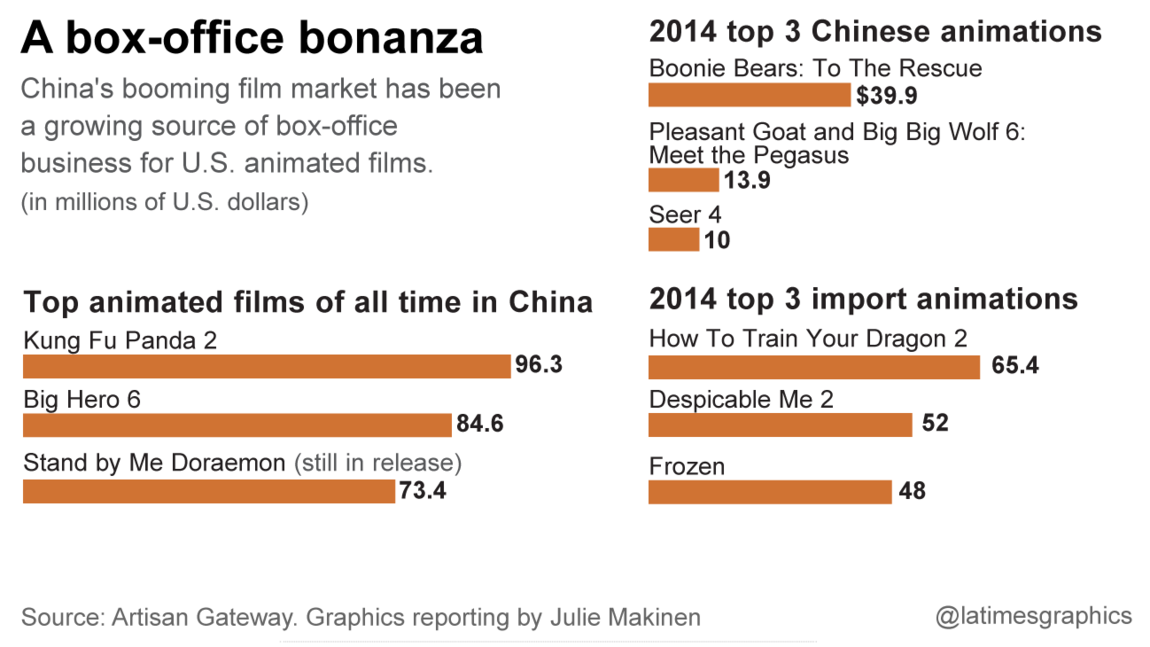
Hollywood studios have been scrambling to expand their business in China to capitalize on a booming box office, which is expected to overtake U.S. box-office receipts by 2018. DreamWorks is in an enviable position: The $96.3-million haul for the second installment of “Kung Fu Panda” in 2011 still stands as the highest gross ever for an animated film in China.

It also reinforced Katzenberg’s belief that the Middle Kingdom could be a mega-market for his Glendale studio.

“I would say saddle up, this is where it’s headed,” Katzenberg said.

continued next post

continued from previous post
DreamWorks sorely needs an unbridled hit to bolster its bottom line. The company this year shed about 20% of its workforce, closed its studio in Northern California, and sold (and leased back) its Tuscan-style corporate headquarters lined with olive trees and koi-filled pond. The layoffs and restructuring charges forced DreamWorks to take a loss of $54.8 million in the first quarter ended March 31.

Following a string of box-office misfires, Katzenberg has installed a new management team, scaled back the number of movies the studio produces, and vowed to focus on reviving the studio’s core feature animation business that once produced hits including the “Shrek” and “Madagascar” films.

The creation of Oriental DreamWorks has already resulted in preferential treatment for “Kung Fu Panda 3” in China. The movie’s recent designation as co-production will allow the company to receive a larger share of revenue than foreign studios typically receive when their films are allowed into China under its quota system.

And the movie has secured a choice release date over the Chinese New Year holiday, a period typically reserved for domestic productions.

Third installments in even the most successful franchises are far from sure bets, but the studio is making every effort to boost the film’s odds of being a hit with Chinese audiences.

The movie is breaking new ground by having two versions, in which characters are animated so that their speech is in sync with both English and Mandarin. To create the Mandarin-language version will take about 25% more time and effort, adding to the budget of the film that’s estimated near $140 million.

“The first few projects that we do are going to take longer and they’re going to be potentially more expensive than what we would normally be planning to do,” said Prashant Buyyala, head of Oriental DreamWorks’ animation studio. “But that’s all part of the process of building a world-class animation studio.”

Though the Glendale-based team led by director Jennifer Yuh Nelson remains the driving creative force behind “Kung Fu Panda 3,” more than 200 Oriental DreamWorks employees have been assigned to the film in Shanghai. They have been providing feedback on the authenticity of certain Chinese elements, working on details like the animation of snow, and helping craft the second version of the film that will be precisely coordinated to a Mandarin-language script (and be seen only in mainland China).

Nelson says the involvement of Chinese artists has improved the authenticity of the film. For instance, a brainstorming session with both Chinese and American staff led to some cultural discoveries.

“We were trying to come up with fun things the characters do — what they eat, how they play,” she said. “As Western story artists, one of the things we put in was cookies. And the Chinese story artists basically said, ‘Ummmm. You can’t put in cookies, you have to put in traditional food.’”

That led to changing the script to include food and games more traditional for the Chinese characters.

Teng Huatao, the director for the Mandarin-language version of the film who had no prior experience directing an animated film, spent two months in Glendale last year discussing story and visual elements. He also had a chance to meet with some of the English-language cast, including Jack Black, who voices Po, the panda.

Teng also chimed in on some culturally significant scenes.

“Some stuff they wanted to put in looked Korean or even Japanese — clothing, hairstyles, even fans were wrong,” he said. Alluding to historical animosities between China and Japan, he noted: “That can be very dangerous in China.”

Chief Executive James Fong said Oriental DreamWorks is already in preproduction on its next film project, an animated movie code-named “ODW1.” Executives are also deliberating over what to select for a second project, another animated film, but Fong said both should be in production simultaneously by next year.

The two movies, he said, would follow the “Kung Fu Panda 3” model — with versions in English and Mandarin — and are envisioned as co-productions with the Glendale campus. The content would be fully owned by Oriental DreamWorks.

There have been some growing pains.

Fong, a former executive at Amazon, joined the studio six months ago to become the company’s second CEO in three years. He replaced former Disney executive Guenther Hake — a veteran of Disney’s consumer products division in China, who left after just a year on the job. The Shanghai studio also lost its head of creative development after only about a year.

“Joint ventures are tough.… It’s like getting married,” Fong said. “Instead of two people, you have two corporations getting married; we’re the love child.”

The company has quietly dropped a film called “Tibet Code,” which Katzenberg unveiled at a Beijing news conference in April 2013 alongside Han Sanping, then-chairman of the powerful state-run distributor China Film Group.

The adventure story, based on a series of Chinese novels set in 9th century Tibet, has “all the makings of a world-class, quality, blockbuster franchise,” Katzenberg told reporters then. He said the company could not come to terms with the producer who owned the rights to the book.

The $330 million that DreamWorks and its Chinese investment partners invested in Oriental DreamWorks includes money to build and staff the Shanghai studio.

Katzenberg declined to say how much money DreamWorks contributed to the deal, or how DreamWorks and its Chinese partners will divvy up revenue and profit.

But he said DreamWorks’ 45% ownership stake in the joint venture limits its financial exposure.

“If it fails it will be a loss of our time and effort as opposed to damaging the underpinnings of the company,” he said. “Not a huge downside, gigantic upside.”

Also boding well for the partnership, Katzenberg said, is a strong partnership with media mogul Li Ruigang, chairman of China Media Capital.

“I feel like he has as much skin in this game and is determined that we win and succeed,” Katzenberg said. “I just find him an excellent partner, even when we disagree.”

How DreamWorks fares in China will be important to its future, analysts say.

“If China is going to surpass the U.S. box office in the next four or five years, having a strong foothold there is key,” said Eric Wold, a media analyst with B. Riley & Co. “It could not only help turn [DreamWorks] around, it could be a major leg of the company.”

Makinen reported from Shanghai and Verrier from Los Angeles.

Tommy Yang in The Times’ Beijing bureau contributed to this report.

It’s amazing to think about the impact this film franchise has now.

First look

Exclusive first look of ‘Kung Fu Panda 3’


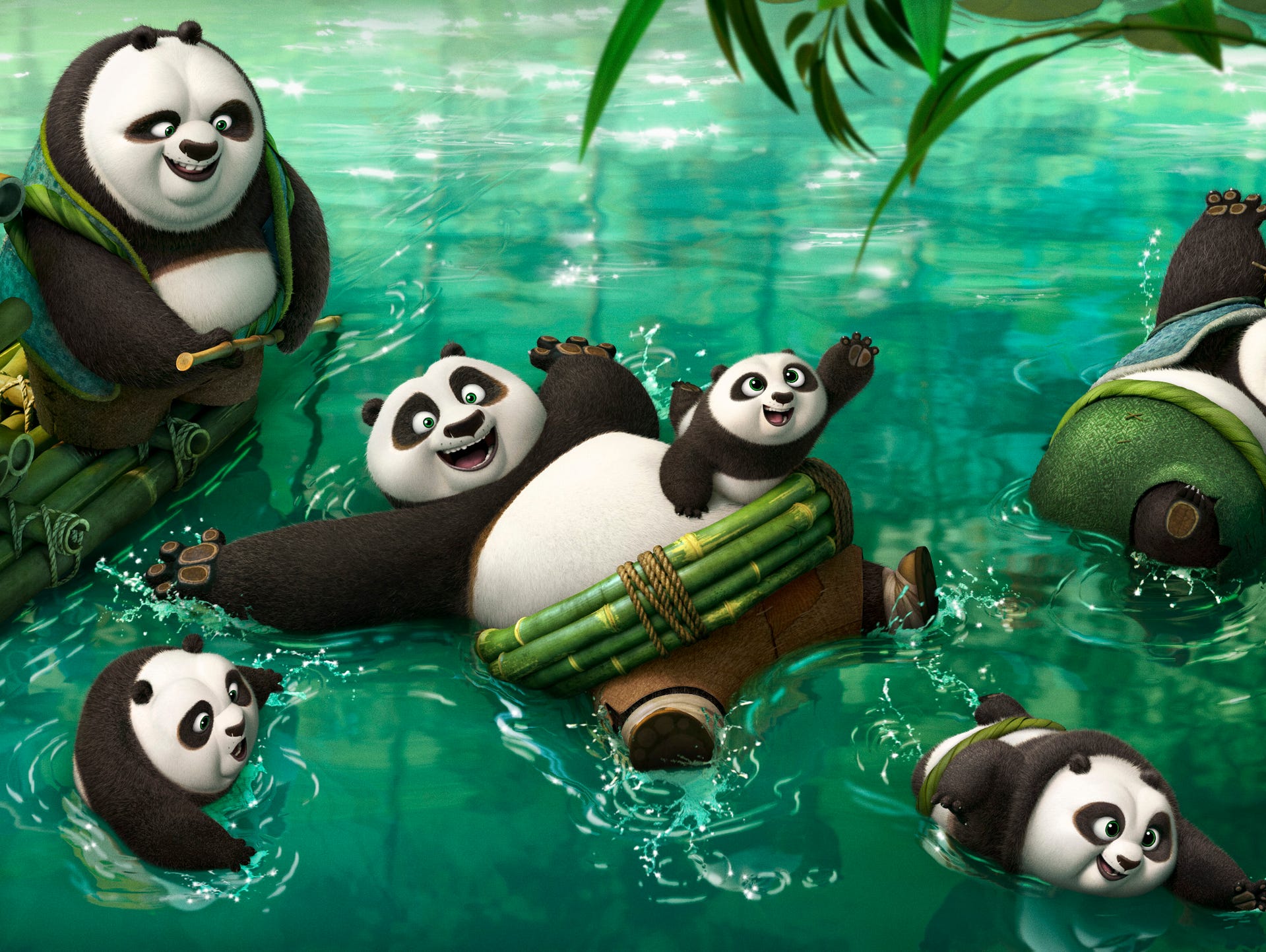
Kung Fu Panda Po (center) finds out he’s not the only panda alive in ‘Kung Fu Panda 3.’ In fact, it’s Panda-palooza as he hangs out in the cool springs. “There’s intense rejoicing, I’m reunited with my people,” says Jack Black, who voices Po. DreamWorks Animation


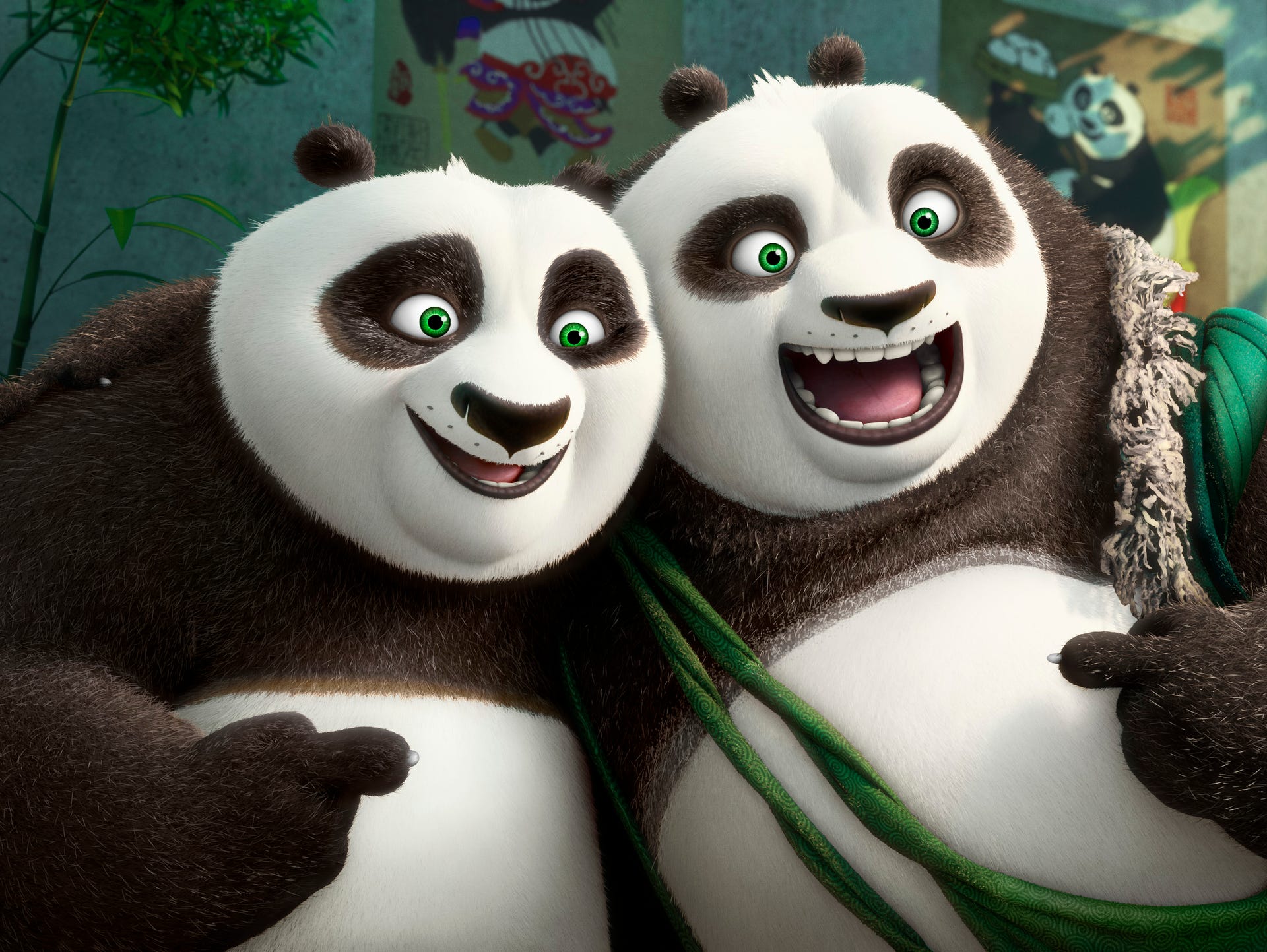
Po meets his long-lost panda father Li (voice of Bryan Cranston, right) in ‘Kung Fu Panda 3.’ Says Jack Black, “Li is the master of chilling, of having fun.” DreamWorks Animation


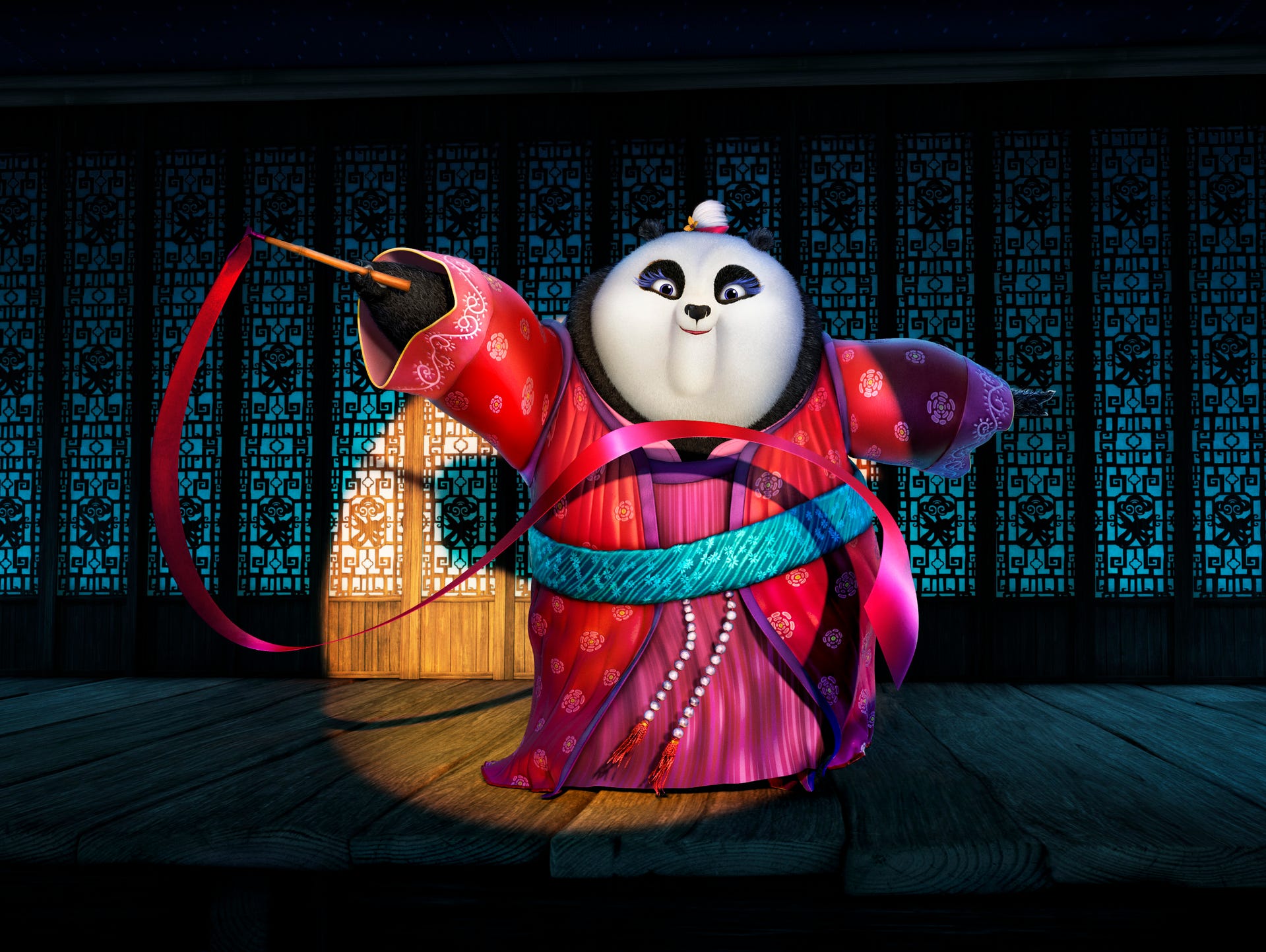
Mei Mei, voiced by Rebel Wilson, makes a powerful appearance in ‘Kung Fu Panda 3.’ Says Black, “She’s super into ribbon dancing and a funny, creative panda.” DreamWorks Animation

I thought Rebel was a nunchuk kinda gal

Chinesse trealier leaked.

//youtu.be/WjcHkFOXyU8

Most of these have been pulled up by Dreamworks already but this one is still live as I post it now. I suspect it’ll be pulled up soon. Word is the official U.S. trailer will release this Friday anyway.

Rebel’s numchuks

So why did Rebel Wilson whip around nunchucks during her first ‘Kung Fu Panda 3’ meeting?
By Bryan Alexander June 11, 2015 4:38 pm


Everything is a lethal weapon (Robert Hanashiro, USA TODAY)

How excited was Rebel Wilson to take on a role in Kung Fu Panda 3? For her first meeting with directors Jennifer Yuh Nelson and Alessandro Carloni, Wilson whipped out a set of martial art nunchucks to show off her skills.

The directors were floored. Almost literally, too, in terms of getting out of the way.

Says Nelson:

“She was almost treating it like an audition, even though she HAD the role. She was like, ‘I want you to know that I can do nunchucks.’ She pulled them out of her Louis Vuitton bag and was whipping them around my office. They were pink-padded nunchucks. Her hair was blowing. It was one of those weird moments that was just beautiful. It was like, ‘How did this ever come to pass?’ “

Keep in mind, Wilson’s role is for an animated movie. So her skills would never get onscreen.

But her character, which USA TODAY revealed yesterday, will use nunchucks in the film due out in January. So it helps to see Wilson can actually handle them.


The first look of Rebel Wilson’s Mei Mei (DreamWorks Animation).

Wilson has shown this skill off before. She showed British talk show host Graham Norton just how effective she can be.

//youtu.be/D9XAyOK_bVk

Nelson gave her endorsement as well: “Rebel is trained. She is not an amateur.”

Carloni noted that sometimes this training has a cost.

“(Rebel) does have stories of conking herself in the head a few times… But I’m planning to give her a bedazzled, beautiful shiny set of nunchucks to have on the (Kung Fu Panda 3 premiere) red carpet.”

Another note about Wilson’s prep: Her character Mei Mei has a big crush on Jack Black’s Po. So Wilson wrote a long love poem from Mei Mei to Po and read that at the first meeting as well.

She’s a comedy ninja all around. See, here she is on Pitch Perfect 2

Of course we all knew about Rebel’s numbchuk skillz cuz we keep up on that sort of stuff.

Kung fu panda 3 - official international teaser trailer

//youtu.be/hcbZFnkvcZI

Kai

Kung Fu Panda 3 filmmaker explains why Kai is the series’ first supernatural villain
Co-director Jennifer Yuh Nelson says ‘he’s a villain that Po is completely ill-equipped to face.’
by C. Molly Smith • @cmollysmith


(DreamWorks Animation)
Kung Fu Panda 3

Posted July 28 2015 — 6:33 PM EDT

In Kung Fu Panda, there was Tai Lung (voiced by Ian McShane), a leopard raised and trained in kung fu by Master Shifu (Dustin Hoffman), who sought revenge for being denied the role of Dragon Warrior. In Kung Fu Panda 2, there was Shen (Gary Oldman), a pea**** who slaughtered pandas by the masses and was exiled from Gongmen City, which he was the heir to, as a result. Eventually, Shen sought to reclaim his former home by force with cannons.

Looking ahead to Kung Fu Panda 3, the next villain will be Kai (J.K. Simmons), a bull who is especially notable because he is the first supernatural big bad of the series. “He’s somebody that’s beyond Tai Lung, beyond Shen,” says co-director Jennifer Yuh Nelson of the new antagonist, who has large horns, leather armor, and uses two jade swords with chains attached as his go-to weapon, according to USA Today, who unveiled the character last month. “He’s a villain that Po is completely ill-equipped to face.”

The decision to go supernatural was made, in large part, because it allowed Kai to stand apart from his predecessors, in a very big way. “I drew a little chart that had a picture of Tai Lung next to Po, a picture of Shen next to Po, and a picture of this new villain coming in,” Nelson says of the early stages of the film, when she and her fellow filmmakers were deciding where to take it, “and it was like ‘You can’t go brawler because Tai Lung was brawler. You can’t go smarter because Shen was smarter. Where can you go? You have to go supernatural, bigger, and even more intimidating.”

If the above art is any indication, it seems as though that’s exactly what Kai is, which is sure to make for something very exciting when he inevitably faces off, in one way or another, with Po, Master Shifu, and the Furious Five warriors: Tigress (Angelina Jolie), Monkey (Jackie Chan), Viper (Lucy Liu), Crane (David Cross), and Mantis (Seth Rogen). “That dynamic of a new villain, new energy, and new abilities that challenge Po is what makes it interesting for us—and makes for some cool fight scenes,” Nelson says, but she adds that there’ll be laughs too. “J.K. brings humor to a really intimidating bad guy, so we can go really intimidating with him and not scare the kids out of the theater.”

Kung Fu Panda 3 will be released on Jan. 29, 2016.
As if Po was equipped to face any of his villains.

The poster

Plus China’s take on this (the ODW version)

Chinas very own Kung Fu Panda
Updated: 2015-08-08 03:45
By ZHANG KUN in Shanghai(China Daily)

The third installment of Kung Fu Panda will be released on Jan 29, 2016. PROVIDED TO CHINA DAILY
It has only been three years since its founding but Shanghai-based Oriental Dream Works Studio (ODW) is already on its way to launching its first feature film, Kung Fu Panda 3, in collaboration with DreamWorks Animation in the United States.
Scheduled for worldwide release on January 29, 2016, the latest installment of the blockbuster movie marks the first time that an animated film has two versions in English and Mandarin. While there are no big differences between the versions, the Chinese film will feature characters with different facial expressions when they speak.
A new computer graphic technology was used to capture the facial expressions and lip movements of voice actors to ensure that the animations are in sync with the Chinese language. The Mandarin version will feature a star-studded cast of China actors, including action superstar Jackie Chan who also stars in the English edition.
We are creating movies with a Chinese flavor for worldwide distribution said Xavier Bernasconi, a digital supervisor at ODW. The objective here is to tell Chinese stories to a worldwide audience.
The first two installments of the Kung Fu Panda franchise, which boasted a lavish production budget of $280 million, was wildly successful at the box offices worldwide, grossing a total of $1.3 billion, and ODW is hoping the third will do as well as the first two episodes, said Yang Boning, a senior communications consultant with ODW.
Despite the similar names, ODW is not a subsidiary of the United States-based DreamWorks Animation, but an independent enterprise born from a joint venture between the American company and several Chinese partners, including China Media Capital, Shanghai Media Group and Shanghai Alliance Investment Limited.
Working on the film are more than 200 staff members in Shanghai, and another 300 from DreamWorks Animation in the US. We have collaborated seamlessly on this project, said Frank Zhu, vice president of ODW.
ODW also owns the copyright in the Chinese market for many of its American counterparts animations such as How to Train Your Dragon. DreamWorks Animation which produced the first two films in the Kung Fu Panda franchise owns a 45 percent stake in ODW while the Chinese investors own the majority.
We and DreamWorks Animation jointly own the intellectual property of the Kung Fu Panda series, confirmed Yang, who was speaking at the China International Cartoon & Game Expo on July 9.
In the North American market, the box office income of a successful animated film takes up no more than half of the total profits, and the rest comes from derivative merchandise. In the Chinese market, however, the box offices have always been the main profit source, with derivative products accounting for just 20 percent of the films total profit.
Kung Fu Panda is an animation that has received international recognition for its Chinese characteristics. You can hardly find a second of its kind, said Zhu, who added that this huge difference between the two markets has highlighted ODWs potential in the derivative products segment.
To tap onto the popularity of the franchise, ODWs creative team will be working with food, toy and stationery manufacturers to create Kung Fu Panda merchandise specifically for the Chinese retail market. These products are expected to hit stores in conjunction with the film release, Zhu added.
ODW is currently also working on a series of feature films at its new home on the west bank of the Huangpu River, but the studio is tight-lipped about its projects. Yang, however, did reveal that the studio will be engaging more Chinese artists in its creative and production processes, and that ODWs portfolio will not just feature animations, but also fictional films, internet content and television shows.
China had in the past decade started a series of initiatives to support the animation industry and has as a result nurtured hundreds of grassroots studios. Many of the Chinese artists working at ODW are from these studios. ODW employee Chen Xiang, who has been an animator since 2000, said: Kung Fu Panda 3 is a chance for first-timers like myself to go through the whole process of making a big-budget feature film that involves massive investment and hundreds of people.

A Father Rises | KUNG FU PANDA 3

//youtu.be/-g42ci-cmBA

Very amusing, especially given the Star Wars date shuffle.

Rebel out, Kate in

I guess it’s fairly easy to swap out voice actors in cartoons. Never thought about it really…

September 04, 2015 11:27am PT by Borys Kit
Kate Hudson to Replace Rebel Wilson in ‘Kung Fu Panda 3’ (Exclusive)


Courtesy of AP; Courtesy of Dreamworks
Insiders say the production schedule became extended, forcing Wilson to bow out.

Kate Hudson is replacing Rebel Wilson to voice one of the new characters in Kung Fu Panda 3, The Hollywood Reporter has learned.

Jack Black, Angelina Jolie, Seth Rogen and Dustin Hoffman are among those reprising their roles in DWA’s hit franchise telling the tales of Po, the noddle-peddling panda who is also a fabled Dragon Warrior.

J.K. Simmons and Bryan Cranston are among the new additions to the cast.

Wilson was due to voice Mei Mei, a crazy ribbon-dancing panda (the movie series’ first female panda lead) who is romantically obsessed with Po.

Insiders say the production schedule became extended, forcing Wilson to bow out.

Hudson will now voice Mei Mei, and the previously completed scenes will be re-animated to reflect Hudson’s take on the character.

Jennifer Yuh Nelson and Alessandro Carloni are directing the movie, which has a release date of January 29, 2016.

The new storyline sees Po reunited with this long-lost father and he discovers a long-lost panda paradise. His newfound happiness is threatened with the emergence of a supernatural villain (Simmons), Po has to go from student to teacher as he must train a village of bears to master the martial arts.

This is the first animated voice work for Hudson, who is currently shooting Mother’s Day for Garry Marshall.

Jay Chou

Well played, KFP3. :cool:

Jay Chou Voices for Kungfu Panda 3
2015-09-23 09:21:43 CRIENGLISH.com Web Editor: Sun Wanming

The photo which is released from a weibo account shows Jay Chou voices for “Kungfu Panda 3” [Photo: weibo.com]

It’s been revealed Jay Chou has done one of the voices for “Kungfu Panda 3.”

A trailer has come out with Jay Chou voicing the character of the monkey among the so-called “furious five.”

In this edition of the “Kung Fu Panda” series, Po has to train a village of clumsy, fun-loving pandas help stop a vilain which has stolen the Kung Fu powers of the masters.

TJackie Chan, Mini Yang, Jiang Wu and Huang Lei also have voice-over roles in the film.

“Kung Fu Panda 3” is set for release in China and US on January 29th.

Jan. 29, 2016

Not highly significant to this project but still a reason to ttt this thread…

‘Kung Fu Panda 2’ Director Signs With WME (Exclusive)


Courtesy of WME
by Rebecca Sun
10/26/2015 6:00pm PDT

Oscar nominee Jennifer Yuh Nelson also helmed the franchises threequel, out Jan. 29, 2016.

Kung Fu Panda 2 director Jennifer Yuh Nelson has signed with WME, The Hollywood Reporter has exclusively learned.

Nelson served as head of story on the DreamWorks Animation franchise’s first movie in 2008, then made her feature directorial debut with the sequel, which earned her an Academy Award nomination in 2011. She and voice stars Jack Black, Angelina Jolie, Jackie Chan and Dustin Hoffman have returned for the third installment, which has been scheduled for a Jan. 29, 2016, release.

Nelson began her career as a storyboard artist, working on films such as DWA’s Madagascar and Spirit: Stallion of the Cimarron.

Kung Fu Panda 3 | Official Trailer #2

//youtu.be/fGPPfZIvtCw

Jan. 29, 2016

Two versions confirmed. I want to see both.

Future American-Chinese blockbuster Kung Fu Panda 3 gets same release date in US and China, Jan. 29, 2016

The third instalment of DreamWorks Animation’s highly successful “Kung Fu Panda” franchise will hit both U.S. and Chinese screens at the same time, on January 29, 2016. The film is set to be the first major American animated feature to be co-produced with China and is the result of a collaboration between DreamWorks and its Chinese counterpart Oriental Dreamworks.

Kung Fu Panda 3 continues to tell the story of a panda named Po, and is directed by Jennifer Yuh and Alessandro Carloni. It stars English voice actors Jack Black, Angelina Jolie, Dustin Hoffman, Jackie Chan and Lucy Liu.

The movie’s status as a co-production allows DreamWorks to receive a larger share of revenue than foreign studios typically receive when their films are allowed into China under its quota system.

For many companies looking to release films in China, co-production is commonly seen as a means to help skirt annoying import quotas, which sets a hard limit of 34 for-profit foreign films per year.

Kung Fu Panda 3 is breaking new ground by having two versions of the film built from the ground up so that characters are animated with their speech in sync in both English and Mandarin. Creating the Mandarin-language version has added substantially to the time and budget required to make the film.

The franchise has so far raked in almost $1.3 billion at the box office, cashing in on two of the most quintessentially Chinese aspects of the Middle Kingdom’s culture: pandas and martial arts. Chinese admiration and envy for that success surely helped pave the way for the creation of Oriental DreamWorks.

Director Jennifer Yuh Nelson explained that production in China helped improve the authenticity of this latest installment. “The weight of accuracy had been difficult for us. Previously we had to do things through research and extrapolation. Now we have Chinese people as creators,” she said. “We have some 200 artists working with us currently. They are not just executing, they are designing.”

DreamWorks Animation created the Shanghai based family entertainment company Oriental DreamWorks in 2012, through a $330 million joint venture. The company is expected to develop and produce original Chinese animated and live action content for distribution within China and worldwide.

Beside producing its own content, Oriental DreamWorks also acts as a distributor for DreamWork’s productions in China. ODW became the first company in decades to get a license to import Western films, when it released The Croods in 2013.

Hollywood studios are increasingly competing to capitalize on the booming Chinese box office, which is expected to overtake U.S. in the next few years. With Kung Fu Panda 3, DreamWorks has made a significant step towards establishing a foothold and making a whole lot of money.

Watch the film’s latest trailer here:

//youtu.be/fGPPfZIvtCw

By Daniel Paul
Contact the author of this article or email tips@shanghaiist.com with further questions, comments or tips.
By Shanghaiist in News on Nov 5, 2015 2:30 PM

Jay Chou sings…

…and replacing Jackie as Monkey…for the Chinese version.

Jay Chou to Sing ‘Kung Fu Panda 3’ Theme Song
EL Borromeo | Nov 10, 2015 06:31 AM EST


“Kung Fu Panda 3” will hit U.S. and Chinese theaters on Jan. 29, 2016. (Photo : YouTube/DreamWorksTV)

Popular singer Jay Chou will lend his voice for the theme song of the highly anticipated “Kung Fu Panda 3.”

The announcement was made by DreamWorks Animation CEO Jeffrey Katzenberg during a press conference in Shanghai on Friday.

According to Katzenberg, Chou was chosen not only for being the top musician in China but also because his style is “very suitable for the film’s conception.”

Apart from singing the theme song, Chou will also do the Chinese voiceover for the Monkey in The Furious Five team. He will star along with Jackie Chan, Huang Lei, Yang Mi, Jiang Wu, Zhang Guoli, Zhu Zhu and the Chopstick Brothers.

Chan, who will dub the father of panda Po in the Chinese version, will also give life to the Monkey character in the English version.

For Chou’s part, he shared that he has been working hard to develop the craft of dubbing as well as song composing. He added that his stint in “Kung Fu Panda 3” gave him many firsts–a first time to dub an animation and a first time to sing an animation movie theme song.

The third installment of the popular franchise is co-produced by the U.S. and China. It is set to hit the theaters of both countries on Jan. 29, 2016.

“Kung Fu Panda 3” tells the story of Po’s reunion with his long-lost father and how he grows into becoming a hero.

The film was directed by Jennifer Yuh and Alessandro Carloni.

Asked about the Chinese version of the film, Katzenberg shared that it was helmed based on Chinese-language environment and culture.

“When you look at the Chinese version of ‘Kung Fu Panda 3,’ you will feel the film is really made for Chinese audiences. All the characters behave in Chinese ways, it is really original. It looks nothing like a translated English version,” Raman Hui (“Monster Hunt”), who has worked with DreamWorks for over two decades, shared.