Jade

$290m

Jade sales fetch nearly $300 million
Submitted by ttwin on Mon, 01/15/2018 - 19:14
Writer: Nilar


Jade lots displayed for sale

Myanmar earned over US$290 million (389.8 billion kyat) from jade exports up to the first week of this month in 2017-2018 fiscal year. Sales were down by over $210 million compared to the same period of last FY, according to the Ministry of Commerce.
Last year’s sales for the period were $404, compared to $291 this fiscal year, said Khin Maung Lwin, assistant permanent secretary of the ministry.
However, sales at the latest emporium were not included in the latest tally, he said. Gems and jade were sold at the emporium. “Yet, the list has not come to us,” said Khin Maung Lwin.
The country mines jade on a commercial scale in Lonekhin and Hpakant regions, along with ruby in Mogok and Mongshu regions and sapphire and other kinds of precious stones in Moetok.
The 54th Myanmar Gems and Jade Emporium was held from August 2 to 11 last year, fetching sales of 6,561 jade lots including one of 12 million euros, along with 326 lots of gems.
The 12-million-euro jade lot weighed 64 kilograms.
The First Yangon International Jewellery Expo was held at Lotte Hotel in Yangon on January 11.
During the event, Yangon Region Chief Minister Phyo Min Thein said his government would help to establish a large jewellery market in Myanmar where international gem merchants could make easy trades, according to a statement released by the regional government.
He stressed the need to improve the quality of production and establish quality control procedures, as the international community has great interest in Myanmar’s gems and jewellery

The Myanmar Gems and Jade Emporium is probably pretty rockin’. :stuck_out_tongue:

Is Jade trending?

Given the economic success of PRC lately, I’ve been expecting this.

Why young collectors are falling under the spell of China’s age-old jade love affair
History of mineral used in ornaments, jewellery and tools once reserved only for emperors revealed in book by Hong Kong jade enthusiast Michael Liu
BY LEE HILL-CHOI
7 AUG 2018

In Chinese history, no other mineral has been as prominently admired as much as jade.

It has been used in ornaments, jewellery and tools and such was its allure that at one stage jade was it was reserved only for the use of royalty.


Jade collector and author Michael Liu signs a copy of his book, ‘In Pursuit of Fine Jades: Ming Court Belt Plaques’, during its launch.

Michael Liu, an avid collector of jade plaques, who has published the book, In Pursuit of Fine Jades: Ming Court Belt Plaques, says that there are two different kinds of jade: jadeite and nephrite.

[QUOTE]THE ONE THING ABOUT COLLECTING AND LOOKING AT ANTIQUES IS THAT YOU ARE ALWAYS LEARNING – YOU ALWAYS FIND SOMETHING NEW

TSANG CHI-FAN, HEAD OF CHINESE CERAMICS AND WORKS OF ART, CHRISTIE’S HONG KONG

The jade plaques featured in his book are usually made of nephrite and only highly ranked Chinese government officials and the emperor himself were allowed to wear them during the Ming dynasty (1368-1644).

Jade jewellery enters the spotlight as creative forms find wider appeal

In the past these jade plaques became a sign of one’s status, as well as acting as a sort of ID card for those who were permitted to wear them.

Some of these plaques, on closer examination, reveal details of history.

One such green jade belt plaque, pictured below, for example records a traditional children’s game.


The Chinese green jade belt plaque called ‘Moxiayu’, which depicts children playing a traditional ’groping for fish’ game

Liu’s fascination with jade started as a child when his mother, who is also an avid admirer, began taking him to look for nice pieces of jade jewellery at Yue Hwa, the Chinese products retailer, in Hong Kong’s Jordan district.

“She would shop for three to four hours and I would be a little bit bored, sitting on my own, and just watching [her] talk and look at things,” Liu said.

Little did he know that this was the start of his growing appreciation of jade.

Tsang Chi-fan, head of Chinese ceramics and works of art at Christie’s Hong Kong, is the person who introduced Liu to some of Hong Kong’s best jade dealers.

It sparked an interest that was the inception of his book, which features his own personal collection of jade pieces.


Animals, including fish – which symbolise wealth and fortune – are a popular theme in Chinese jade carvings.

Pieces of jade owned by Liu, who is a member of the prestigious Min Chiu Society – a private group of Hong Kong art connoisseurs who are devoted to enhancing the appreciation of Chinese art – have featured in exhibitions and renowned museums including the Hong Kong Museum of History and the University of Hong Kong’s University Museum and Art Gallery.

His book, part of a series of jade books dedicated to the study of beautiful jade objects in ancient China, examines jade belt plaques worn by emperors, imperial family members, and senior officials during the Ming dynasty (1368-1688).


A white jade belt plaque, featuring two rabbits below two swastikas flanking the Chinese character ‘Shou’ – a combination that was a birthday greeting reserved for emperors – which was excavated from Emperor Wanli’s Dingling mausoleum on the outskirts of Beijing.

Tsang said: “The one thing about collecting and looking at antiques is you are always learning – you always find something new, you always find something that you thought ‘Oh, I haven’t thought about [that]’.

“You always discover new things that will change your whole understanding. Sometimes it can be quite revolutionary.”

Jade – once considered an accessory of choice for older Chinese people – is now drawing new interest among younger people.

Tsang said the number of younger people now flocking to auction houses in the hope of adding jade objects to their own collections was on the increase.


Intricate jade carving started in China about 6,000 years ago.

Jadeite jade is a highly prized collectible item these days because it is not found naturally in China and only limited supplies exist.

This type of jade was first imported into China from Burma – now called Myanmar – only 200 years ago during the Qing dynasty (1644–1911).

Tsang said: “Nephrite jade is native to China, so the Chinese have been carving this type of jade for the past 6,000 years, but they have been carving jadeite only for the past 200 years.”

.
A Chinese jade belt plaque with the carving of a dragon, which is a symbol of the emperor and the heavens.

However, this does not necessarily mean one kind of jade is more valuable than the other.

Tsang said before jade started to be seen as a symbol of power, it was carved as a way of communicating with higher beings.

As such, jade represented not only status, but also the spiritual philosophy of ancient China.[/QUOTE]

Jade Rollers

Gigi, our Publisher Emeritus, has always kept these in her desk.

Jade rollers: how the West fell for Traditional Chinese medicine-inspired facial beauty tool thats old hat to many in China
Lauded for their supposed ability to tone, de-puff and brighten facial skin, jade rollers are a hit with Western beauty bloggers and celebrities like Meghan Markle and Rachael Ray but not with their Chinese counterparts

PUBLISHED : Monday, 17 September, 2018, 7:17pm
UPDATED : Monday, 17 September, 2018, 8:07pm
Jessica Rapp
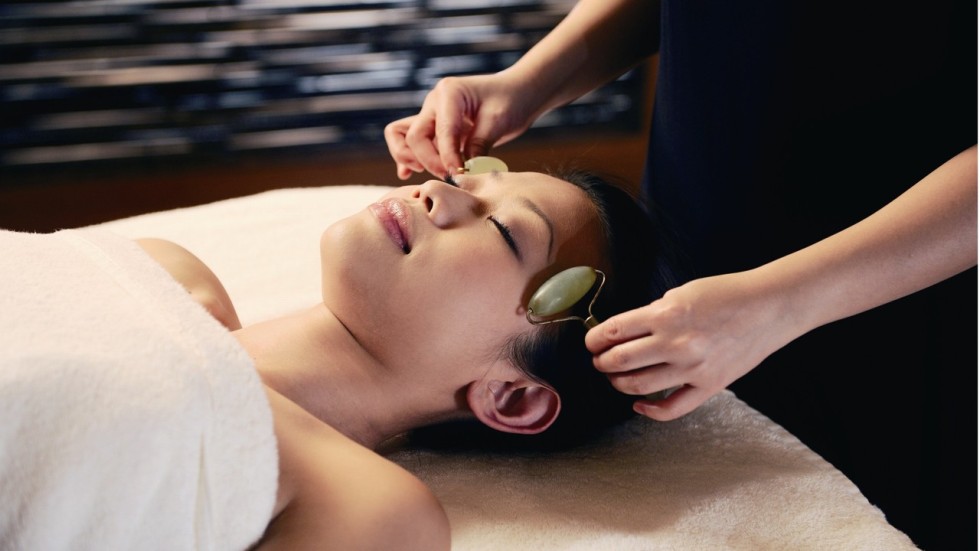
Paraded as one of the simplest solutions to facial perfection, the jade roller has swept across Western social media like wildfire. From top beauty bloggers and vloggers to celebrities including Meghan Markle and Rachael Ray, all swear by the ancient Chinese tool for its ability to tone, de-puff and brighten facial skin.

In China, things are a lot different. The jade roller is not a new fad, but a centuries-old device with properties based around ideas in traditional Chinese medicine (TCM).

During the Qing dynasty, emperors used the power of jade to draw out negative chi [energy], explains Misty Stewart, spa director at the Mandarin Oriental Hong Kong. Jade rollers have been considered a long-guarded treasure by Chinese royalty. In Chinese medicine, jade is referred to as the stone of heaven and represents health, wealth, longevity and prosperity.

Unlike their Western counterparts, Chinese beauty bloggers are not gushing over the ancient derma rollers and sending followers to e-commerce sites to buy their own. In China, rollers can be found atop hawkers dusty tables in front of tourist sites like the Forbidden City, which is where Beijing resident Hellen Shen found hers a number of years ago.
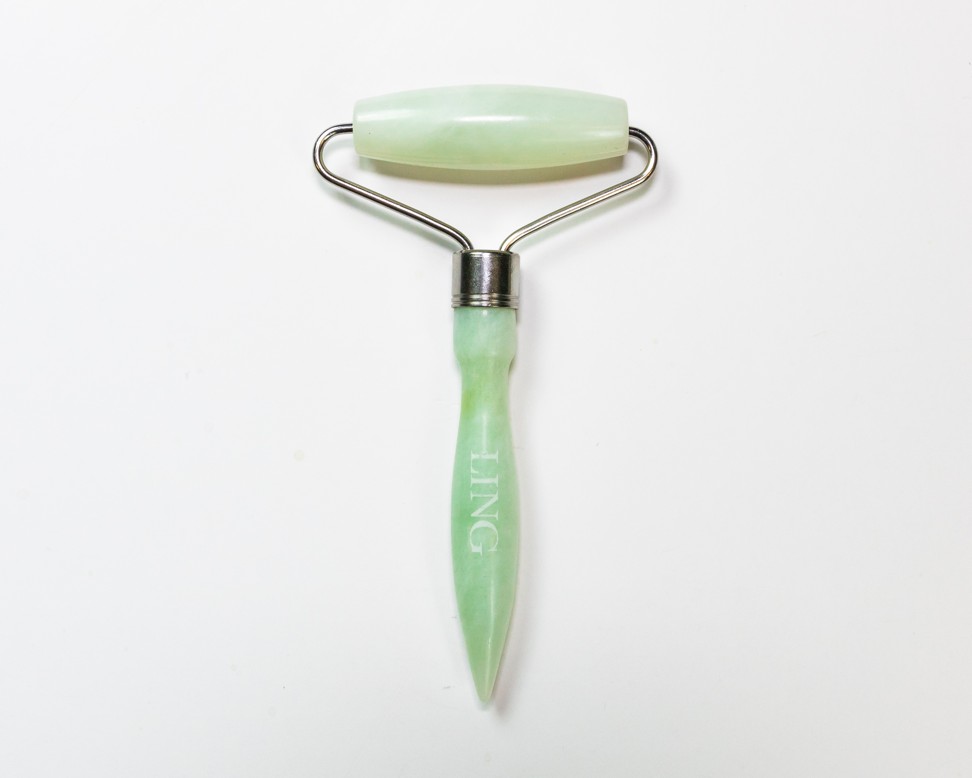

A jade roller sold by New Yorks Ling Skin Care chain.

Shen says at first she simply thought the tool was beautiful, and it mostly sat in her room unused. Later, she saw one of the characters in a popular Chinese television drama, Empresses in the Palace, using a jade roller, and it inspired her to use it more often. She now keeps it in her fridge to enhance the jade stones natural cooling properties and uses it to massage facial oil into her skin, using gentle, circular motions.

New York-based facialist Ling Chan, who grew up in Hong Kong, has a theory as to why jade rollers blew up in the US.

The internet spreads ideas very quickly, and everyone wants to learn beauty secrets from Asia, she says. Plus, its easy to get and to use. Its such a low investment that everyone can do it.
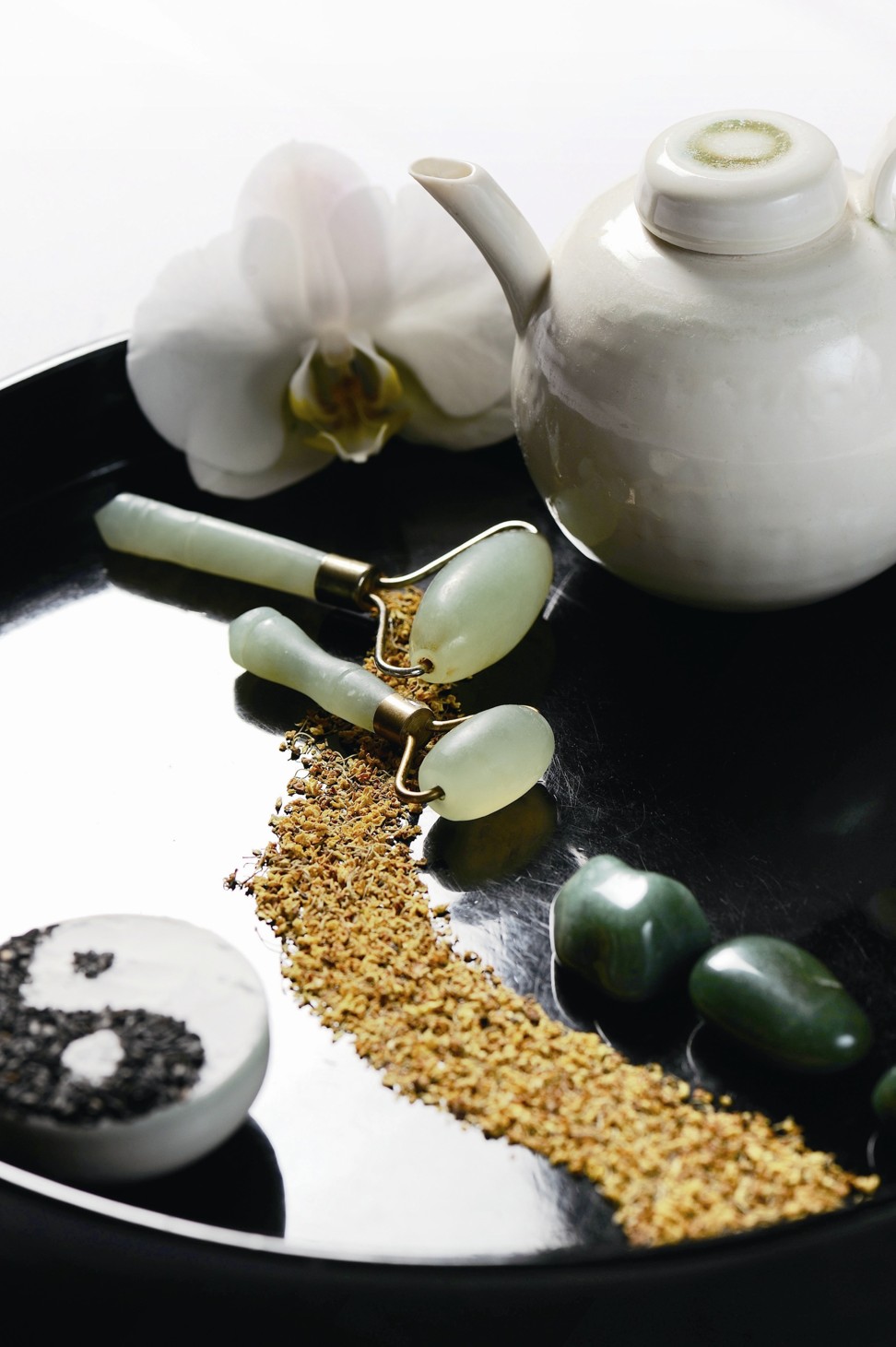

Jade rollers to be used in a facial treatment

Compared to the often pricey single-use face masks that K-beauty is known for, and hi-tech Japanese facial massagers available at Saks Fifth Avenue, the jade roller certainly stands out for its affordability. One can cost as little as US$10 on Amazon (and they can run even cheaper on Taobao), but Ling warns that consumers should make they are getting real jade. She sells her own version of the roller for US$90, which she says is priced for its quality for one, the metal does not squeak on the stone when rolled.
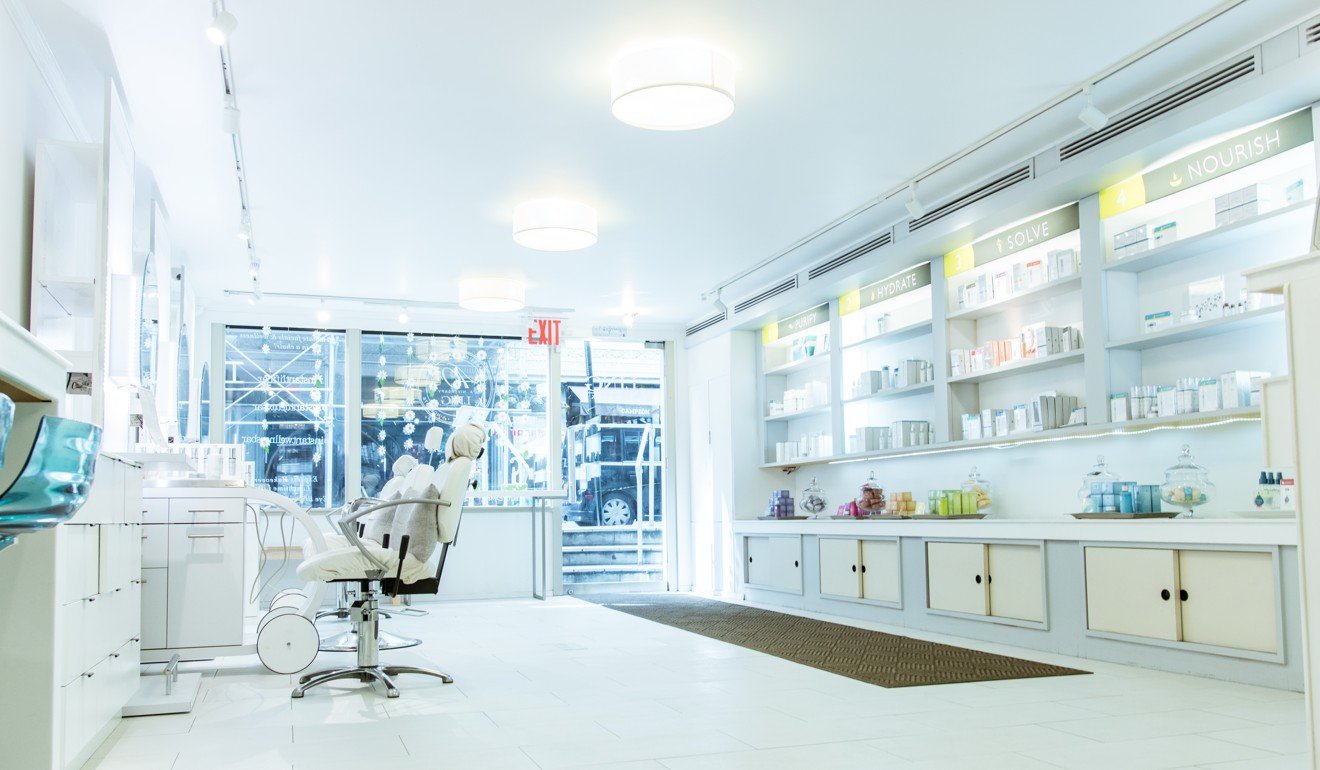

Ling Skin Care branch in New York.

Chan introduced the tool at her Ling Skin Care outposts in Manhattan after first coming across one at a tourist site during a trip to China.

[QUOTE]The jade roller treatments are popular for people that prefer a natural alternative to technology MISTY STEWART

Sceptics argue that the roller is no more than a massage tool that possibly helps drain lymph nodes and has anti-inflammatory properties. Chan, however, is so set in her belief in jade that she uses the stone in her other daily routines as well. In 2002, she even made headlines for sleeping with a 9-inch by 15-inch (23cm by 38cm) jade pillow.

But despite its accessibility, is the jade roller just another 24-carat gold Korean beauty mask or unicorn body scrub for millennials?

Celebrities in the beauty and wellness industry are always looking for the next all-natural, accessible, DIY fad. Lifestyle brand Goop, for example, which drew criticism for promoting jade eggs to improve sexual health, is now touting derma rollers made from rose quartz a crystal associated with love in feng shui that are supposed to have similar soothing effects on the skin as jade.
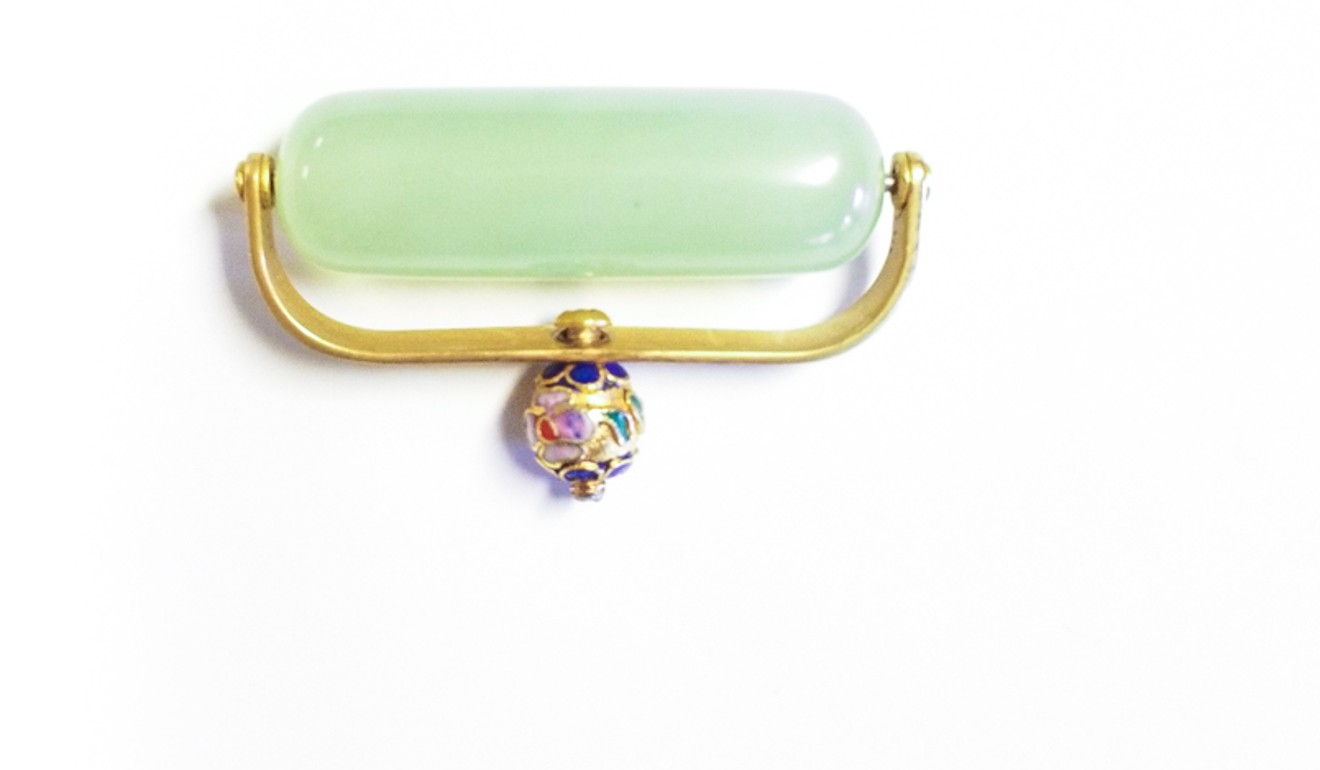

An antique jade roller

Meanwhile, facials based on the principals of gua sha a TCM-based detoxing technique that involves repeatedly scraping the skin with a smooth, blunt instrument have recently appeared. Performed to cure breakouts or relieve dryness, the process involves dragging a slim slab of jade or rose quartz across the skin of the face.

Back in China, jade is being injected into spa packages in the form of luxurious, traditional Chinese experiences as more spas embrace a combination of both modern and traditional wellness techniques. The Chi Spa at Beijings China World Summit Wing hotel, for example, offers an Empress Imperial Jade Journey, a three-hour full body scrub and massage, topped off with a jade facial.
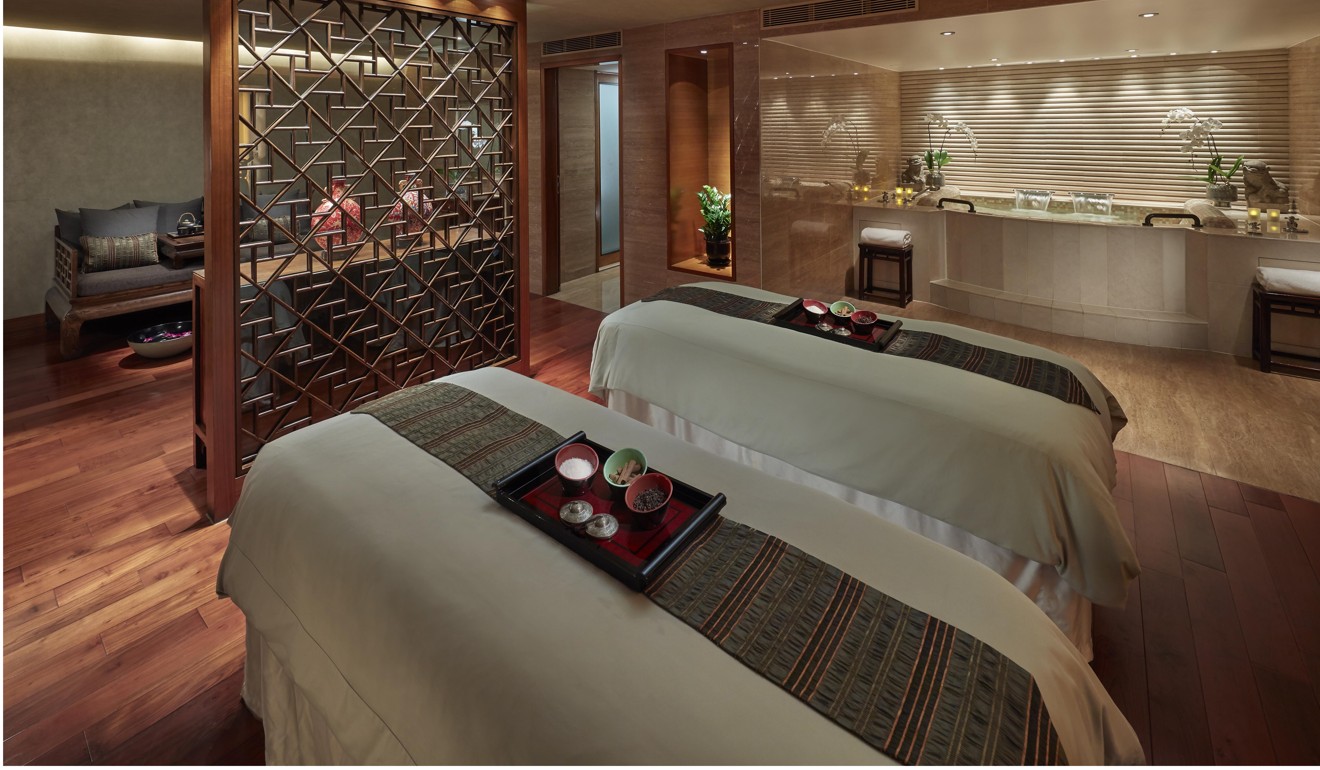

Interior of the spa at the Mandarin Oriental Hong Kong.

Stewart says the Imperial Jade Ritual at the Mandarin Oriental Hong Kong spa which features jade roller facials is one of their most popular. The two-hour service starts with a herbal compress and reflexology to open meridian energy lines, then moves on to a Chinese-style massage followed by a sesame and ground-rice scrub, and then a green tea and algae body mask. It finishes with a ginseng face mask massaged in with jade rollers, ensuring equilibrium in mind and body.

The jade roller treatments are popular for people that prefer a natural alternative to technology, Stewart says. Many guests of ours have bought jade rollers at our retailer after the treatment so they could continue to use them at home and enjoy the benefits.

Chan, however, believes millennial Chinese consumers are not going to be flooding their WeChat Moments feed with the tool any time soon.

Every Chinese consumer knows the benefits of jade, but they love to look to the West for inspiration, she says. Consumers in China are constantly chasing the trends on the other side of the world.

[/QUOTE]

THREADS
TCM and Beauty Tips
Jade

eatin jade

A THIEF STOLE A JADE NECKLACE FOR A MILLION POUNDS AND SWALLOWED ALL 40 BEADS (PHOTO)
magictr | December 18, 2018


40 ()

A resident of China tried to steal a jade necklace worth £1 million, swallowing one after the other 40 beads to remain uncaught. 49-year-old man surnamed HOU stole jewelry from a jewelry store, pretending to be a buyer. The suspect asked to see the stones in natural light, then went outside and ripped a necklace.


40 ()


40 ()

According to police, the man had an accomplice — a 24-year-old girl surnamed Zhou. Together they were pretending to be buyers interested in buying the necklace. During the week, they came to a jewelry store in Guangdong province. The day of the crime the couple came at 11 am, and the man asked to look at the decoration in the daylight. The girl was left inside with the girl.

Once Howe went outside, ripped the necklace and swallowed all the beads. Store employees called the police, and robbers almost immediately caught, however, jewelry is not found. Then police decided to send the suspect for an x-ray.

Now the man was previously tried for the theft of jade jewelry, remanded into custody. Half of the beads have already been transferred to the police, the second half is still inside Howe.

Earlier 27-year-old from Kiev was caught stealing cable.

What a dumb plan. :rolleyes:

Sham rollers?

I gave out some jade rollers as stocking stuffers for xmas. They are all over SF Chinatown, and like anything there, prices and quality really varies.

Wellness[URL=“https://www.washingtonpost.com/lifestyle/wellness/jade-rollers-wrinkle-fighting-wonder-cure-or-pointless-yet-pretty-sham/2019/01/11/712c3e9e-1373-11e9-b6ad-9cfd62dbb0a8_story.html?noredirect=on&utm_term=.656336e7775a”]
Jade rollers: Wrinkle-fighting wonder cure or pointless (yet pretty) sham?


(iStock)
By Elizabeth Kiefer January 14

When I was a kid, my grandmother kept a clean metal spoon in the refrigerator. If her allergies would act up — or whenever she felt like her under-eyes were puffy — she would pull the cold spoon out and roll the rounded back beneath her eyes, for 30 seconds each. It’s a cheap, easy beauty hack I regularly use myself these days. It is also a comparable yesteryear version of today’s jade roller craze.

For the unfamiliar, a jade roller is pretty much what it sounds like: a hand-size, paint-roller-like apparatus with a cylinder of jade stone at one end. Jade rollers are said to have been a part of beauty routines among Chinese elites since the Qing dynasty, which began in the early 17th century; people who associate stones with certain properties claim jade has a special ability to heal and soothe.

Flash forward a few hundred years: In 2018, jade rollers were all the rage on Instagram, beloved by beauty bloggers across the globe. Their popularity can be attributed to their position at the intersection of two trends: increasing interest in both self-care and “natural” wellness products. You can acquire a jade roller for $12.99 on Amazon.com or $40 at Sephora; if you prefer rose quartz, that’s an option, too — for $45 on Goop.com.

Some evangelists claim that the rolling motion of the stone on your face can help clear toxins and decrease puffiness, while others assert much loftier results: that regular use of jade rollers can erase wrinkles, stimulate collagen, tighten pores and potentially improve inflammatory skin conditions. They’re often touted as an “anti-aging” tool (a phrase some beauty circles, such as Allure magazine, have banned).

In reality, explains Suzanne Friedler, a Manhattan-based dermatologist, jade rollers are about as effective as any form of facial massage when done correctly. “Any time you massage any of the tissues, you’re increasing circulation. Your skin may look brighter, more luminous, maybe more contoured and less puffy,” she says. “But if you’re looking for substantive change, that’s not going to happen with the jade roller. It’s also not going to have an effect on inflammatory conditions like eczema or psoriasis.”

Susan Bard, a dermatologist with Manhattan Dermatology Specialists, says that people need to be wary about the potential for jade rollers to transmit bacteria — if you’re not disinfecting your roller, you may wind up doing more harm than good — and about overly aggressive usage. “The coldness of the stone can certainly help reduce puffiness. But the drawbacks are if you rub too vigorously, you can actually aggravate acne or create irritation.” She agrees that using a roller regularly can have some skin-deep benefits, but adds that it’s not the jade itself that’s the special ingredient.

The heart keeps our blood moving throughout the circulatory system at a regular clip. But lymphatic system fluid — which contains white blood cells and plays an important role in protecting the body from germs and disease — flows more slowly and can be helped along manually. Massage in any form can decrease puffiness by helping to move retained fluid (known as lymph) out of areas where it has gotten stuck, Bard explains. Meanwhile, coldness, from a stone or even a metal spoon, can decrease inflammation by causing blood vessels to contract.

Elizabeth Taylor, owner and lead aesthetician of True Beauty Brooklyn in New York, regularly incorporates manual lymphatic drainage into her facials. There are upward of 300 lymph nodes (essentially, checkpoints where lymph gets filtered for infection) in the face and neck, Taylor says; facial massage can help get the lymph moving and drained away. In turn, that can make your face look more contoured and give your skin that sought-after glow.

The good news is that you can also pull this off on your own: Using a face oil, serum or a silky face wash, pinch your thumb and forefinger together and, starting from the center of your chin, gently push backward along your jawline a few times. Then, place your ring finger next to your inner eye and, with light pressure, trace a half circle underneath your eyes, up to the temples. Finally, place the tips of all 10 fingers in the center of your forehead and draw your fingers outward. At the very least, the massage itself feels great.

If you do see an extra glow or reduced puffiness, don’t get too excited. “These are all temporary results,” Friedler says. Facial massage — with a stone or otherwise — is not a magical cure for all your skin complaints. Claims that using a jade roller helps stimulate collagen — the main structural protein of the skin — lack veracity: According to Friedler, the only way to do that is to traumatize the collagen with laser treatments, acid peels or retinoids.

Bard supplied one more caveat for anyone hopping on the “natural skin care” bandwagon. “There are natural things that do have benefits, like aloe, and there are natural things that you wouldn’t want to put on your face — like poison ivy. Just because something has been around for a million years doesn’t mean it’s the best option. Scientifically proven products are always the best ones to go with.”

THREADS
TCM and Beauty Tips
Jade

$3M Jade Twin Fish Washer

Christie’s Auctions Qing Dynasty Jade Washing Bowl for US$3 Million
By Fang Block March 22, 2019 5:50 p.m. ET


A greenish-white jade Twin Fish washer imperially inscribed sold for almost US$3 million during Christie’s Asian Art Week sale. COURTESY OF CHRISTIE’S

A greenish-white jade “Twin Fish” washer (or washing bowl) from China’s Qing Dynasty fetched US$2.9 million after eight minutes of spirited bidding during a live auction at Christie’s New York on Wednesday evening, far surpassing its presale high estimate of US$1.5 million.

The collectors’ strong interest in the item not only lies in its quality and history—the washer was inscribed and sealed in 1786 by Emperor Qianlong who reigned from 1735 to 1796—but also its significant provenance: It was offered for sale from the private collection of Florence and Herbert Irving, the namesakes of the Asian Art Wing at The Metropolitan Museum of Art in New York.

Although the buyer behind it wasn’t identified, the Irving Collection was especially appealing to Chinese buyers, says Jonathan Stone, co-chairman of Christie’s Asian Art.

“This kind of provenance is really important to Chinese collectors,” he says. “It’s hard to quantify, but certainly in a qualitative sense, they add a great deal of credibility.”

The Irving collection achieved another extraordinary price during Christie’s day sale Thursday, when a pale green jade carving of a mythical animal “pig-dragon” was hammered down for US$2.295 million, more than 300 times its presale high estimate of US$7,000.


Live auction of jade Twin Fish washer at Christie’s on the evening of March 20. COURTESY OF CHRISTIE’S

Highlighting Christie’s Asian Art Week sale this week, the approximately 400-piece Irving Collection realized a combined total of US$31 million, with 97% sell-through rate and seven lots fetching over US$1 million.

Curated Asian art sales at Christie’s global offices in New York, London, Geneva, and Hong Kong, offer a great opportunity to showcase Asian arts in the international market, Stone says.

While Asian buyers still dominate this market, there’s continued genuine interest from international buyers, he says, adding that the Asian Art Week in New York has registered bidders from Asia, Europe, the U.K., and the Americas.

Overall, 90% of Christie’s Asian Art Week sale were Asian buyers, according to Francis Belin, president of Christie’s Asia, who traveled from Hong Kong to assist the sale. “The results are very strong, with top lots seeing depth in bidding,” he says.

In 2018, Asian buyers’ spending accounted for 25% of Christie’s US$7 billion in total global sales in 2018. Sales in Asia total US$815.4 million, up 8% from 2017, according to Belin.

While Japan has been witnessing a renewed interest in collecting, the number of Chinese buyers has exploded since the 2008 financial crisis, Stone says. “What is quite phenomenal is the speed by which Chinese buyers become so sophisticated and extremely informed about the art market.”

Their buying is not restricted to Asian art or Chinese art, there is an increasing appetite for non-Chinese arts, largely but not uniquely European modern and impressionist art, and 20th century art, Stone says.

“At Christie’s, we are committed to taking the best international arts to China, and taking the best Chinese arts to the international market,” Stone says.

Christie’s is the only foreign auction house that is allowed to host sales in China, which debuted in Shanghai in 2013, according to Stone. In addition, it also established a gallery in Beijing in 1996.

I’m waiting for a jade axe or sword to come up for auction.

THREADS
Chinese antiques
Jade

Jade Rollers make great gifts

Jade-Rollers now has its own thread independent of the TCM and Beauty Tips and Jade threads.

[URL=“https://www.yahoo.com/lifestyle/wait-jade-rollers-actually-anything-215100916.html”]
Wait—Do Jade Rollers Actually Do Anything for Your Skin?
Cosmopolitan
Brooke Shunatona
Cosmopolitan August 23, 2019


Photo credit: Jeffrey Westbrook/Studio D Stylist: Alma Melendez

From Cosmopolitan

Depending on who you ask, jade rollers are the be-all and end-all of skincare tools… or they’re just a pretty decoration for your vanity. So what’s the truth here? We turned to Sandra Lanshin Chiu, founder of the holistic healing studio Lanshin in Brooklyn and expert in Chinese medicine dermatology, and Melissa Kanchanapoomi Levin, M.D., dermatologist and founder of Entière Dermatology in NYC to answer the perennial question, “Should I buy this or will I be mad I wasted my money?” Keep on scrolling to find out what they had to say.

Do jade rollers actually work?

Wellll, that really depends on what your goal is here. Are jade rollers the magical cure-all for your acne breakouts and wrinkles, like some make it out to be? Sorry to disappoint, but no. Jade rolling can, however, reduce puffiness temporarily by increasing lymphatic drainage, according to both Chiu and Levin. As far as improving product penetration, that’s where they differ. While Chiu says it can help, Levin says there’s really no science to back that up. All that’s to say, if you don’t expect any miracles and you like the way it smooths on your products, then yeah, jade rolling might work for you.

Is a rose quartz or jade roller better?

~Technically~ jade rollers are made with (you guessed it) jade stones, but you’ve likely seen other gemstones used in face rollers, like rose quartz. So can you just pick yours out based on the color you like or will it make a difference? According to Chiu, the stone doesn’t really matter. “Variations in the type of stone won’t effect results,” she says. “The key is good technique plus consistency.”

Should you use a jade roller after moisturizer?

Though it might not work to push the products any deeper into your skin, jade rolling 100 percent feels better when performed after moisturizing. To get the skin properly hydrated beforehand, Chiu suggests first spraying a hydrating mist or applying an alcohol-free toner and gently patting it into the skin. Then, smooth on a hydrating serum, followed by your hydrating mist again. To lock it all in, finish with a few drops of a natural face oil, and you’re ready to rock and roll (and, no, I’m not even a little bit sorry for that pun).

How do you use a jade roller?

Let me guess—you got your jade roller, did a couple haphazard strokes across your face, and called it good, right? While that might feel good and everything, there is a proper method and reason for jade rolling, so let’s take sec to go over that first. As Chiu describes it, “Jade rolling is a simple technique derived from ancient Chinese Medicine using a roller to apply pressure to the skin and underlying tissue, creating movement beneath the surface.” Jade rolling is kinda like foam-rolling your face, though it definitely isn’t as painful as working through tight muscles on your body. In fact, if it hurts, you’re def doing it wrong.

So what is the right way to use a jade roller? Hint: not like a paint roller on a wall. Instead of pushing the tool back and forth and in every which way, Chiu says to work in specific directions depending on what you’re trying to target. After hydrating your skin to prep, follow her steps for face rolling, below:

Neck: Start with the neck to open channels of circulation. Place the roller in the back at the top of your neck, and roll downwards along the sides. Then, move to the front and roll from the jawline down to the collarbone.

Cheeks: Place the roller in the middle of your face, and push it outward toward the sides.

Forehead: Roll from your hairline down to your eyebrow. Then, take the roller between your brows and pull it horizontally towards your temple and repeat on the other brow.

Eyes: Gently roll horizontally from the outer corner of your eye toward the inner corner and repeat on the other eye.

How often should you use a jade roller?

It’s important to note that the results won’t last forever, so to see any effects, you’ll have to keep it up. Chiu suggests using your jade roller on a daily basis and whenever you do your skincare routine.

Should I keep my face roller in the fridge?

As nice as it might feel to glide ice cold stones across your puffy face, Chiu says they generally avoid using cooler temps to treat the body in Chinese medicine. “Although a cold roller can feel nice, cold contracts circulation and the actual purpose of rolling is to increase circulation,” Chiu says. “I encourage everyone to focus on good rolling technique, rather than on the gratifying feel of a cold tool.”

One exception: Both Chiu and Levin say that if you’re experiencing allergies or a sunburn, a cool jade roller can help soothe the skin. Chiu suggests first washing the tool with warm, soapy water to get rid of any product that could exacerbate the skin reaction, then gently roll over the affected area with a cold roller.

Final Thoughts

Jade rolling is a good first step for anyone interested in natural skincare, but if you’re looking for a tool and technique for a more sculpted look, Chiu suggests Gua Sha, a similar but different technique used in Chinese medicine, instead.

//youtu.be/O7xTVUAHy7I

In other words, jade rollers aren’t the magic wands they’re sometimes touted to be. Will they overhaul your skin? That’s more myth than truth, but they feel really freakin’ good and make an otherwise mundane skincare routine much more fun—and that, my friends, is fact.

ttt 4 2020

[URL=“http://www.geologyin.com/2016/12/the-giant-nephrite-jade-road-in-canada.html”]
Tons of Giant Nephrite Jade Discovered in Canada
Geochemistry, Geology, Mining 2:57 PM


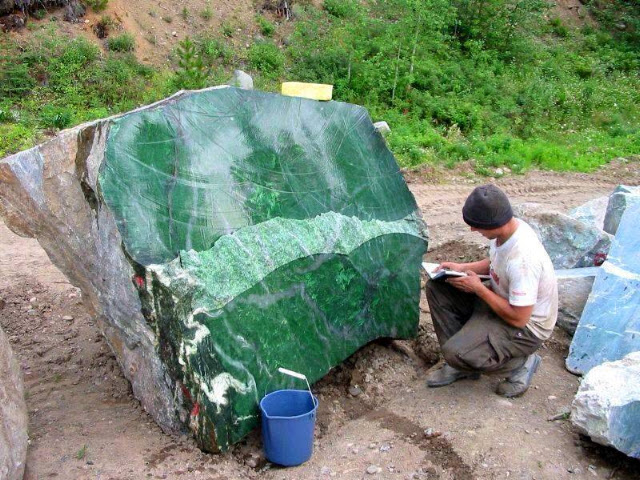
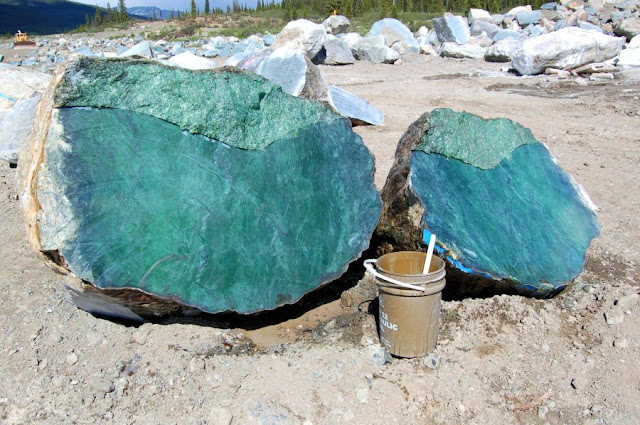
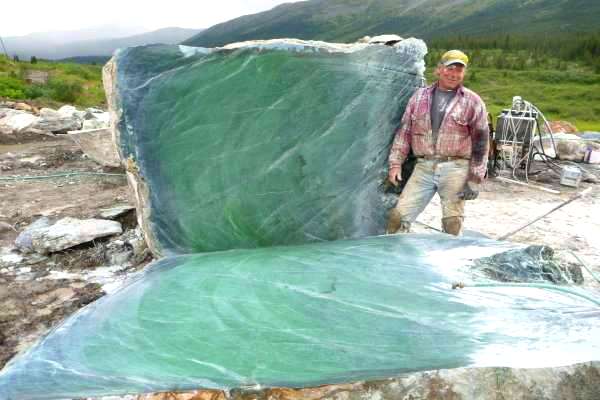
The Polar Pride boulder—called “the find of the millennium” by trade experts—was discovered in Canada. The 18-ton boulder was split in half for carving. Courtesy of Jade West Group.

Jade is a commercial term encompassing green, white, black or yellow-brown material that consists either of Na-rich pyroxene (jadeite) or prismatic to acicular amphiboles of the tremolite-actinolite series that form bundles that are randomly oriented and interlocked (nephrite).

Nephrite is tougher (harder to break) than jadeite material. Its fracture strength is about 200 MN/m2 whereas that of jadeite is about 100 MN/m2. On the other hand, jadeite material is harder (7 compared to 6.5 on the Mohs scale).

Jade In British Columbia

Jade was first identified in Canada by Chinese settlers in 1886 in British Columbia. At this time jade was considered worthless as they were searching for gold. Jade was not commercialized in Canada until the 1970s. The mining business Loex James Ltd., which was started by two Californians, began commercial mining of Canadian jade in 1972.

There are over fifty known nephrite occurrences in British Columbia. These are located in the Cassiar, Cry and Dease Lake, and Mount Ogden areas, as well as in Southern British Columbia. These occurrences consist of individual blocks, boulder fields, talus blocks, and in situ occurrences. Most of the in situ occurrences are lens or cigar shaped.

They occur at or near the contacts of ultramafic/mafic rocks (mainly serpentinites) with cherts, and other metasedimentary or igneous felsic rocks of oceanic terranes such as the Cache Creek (Mississippian to Jurassic) and Slide Mountain (Devonian to Permian) terranes. These contacts are commonly interpreted as shear/fault related. In general, it is believed that the British Columbia nephrite formed by metasomatic exchange between ultramafic and silicabearing rocks. Impurities in the nephrite are spinel group minerals (chromite, magnetite, picolite), diopside, uvarovite, titanite, chlorite and talc.

Until the 1960s, almost all of the nephrite produced in British Columbia came from secondary deposits. With the rapid expansion of amateur lapidary activity after World War II, production in British Columbia’s jade fields picked up and they became the most important suppliers. About the same time, markets opened up in Germany and the Orient. Mining activity gradually depleted the secondary deposits, but increasing values led to further exploration. These efforts uncovered primary deposits adjacent to the Fraser River area in southern British Columbia, the Mount Ogden area in central British Columbia, and the Cassiar jade fields in the far north. Today, British Columbia is the main supplier for the China market.


Nephrite in British Columbia. Photo Credit: e-NetworkAssociates. com

Jade West Group, founded in 1981, is the biggest player in green nephrite mining and trading in British Columbia. Kirk Makepeace, the company’s founder, is an avid promoter of the stone. He started with a summer job as a jade driller.

Nephrite mining in British Columbia is very challenging. Winters are long and harshly cold, and deposits are remote, so mining can only happen during the short summer season, about 60 days a year. Almost all of the secondary deposits are exhausted, so current mining is almost all from primary deposits. Transporting the heavy equipment to the mining sites is backbreaking work.


Nephrite Mined In British Columbia Canada

Jade West uses diamond-coated circular and wire saws and modern high-pressure hydraulic splitters to remove the nephrite from the mountain and saw it into pieces of a manageable size. Nephrite’s excellent toughness makes it extremely difficult to break out of the rock. While blasting had been used in the past, Jade West no longer uses explosives.

Nephrite deposits range from 12 inches to 12 feet wide. The wider deposits are very challenging to quarry. Nephrite boulders on the surface sometimes reach weights of 200 tons and are rarely under 100 pounds, but Jade West tries to limit the weight of its boulders to five tons, which is a reasonable size for them to mine, handle, and transport on trucks to the nearest town, about 100 miles away. The average weight is two tons, a size that satisfies most of the carving factories in China.

From jade rollers to jade boulders.