Criterion Collection
Lifestyle / Entertainment
Bruce Lee: His Greatest Hits – Criterion Collection producer on preserving the martial arts icon’s legacy with new box set
Box set collects together all of Bruce Lee’s films, along with commentaries and special features, and producer Curtis Tsui says Lee still has cultural relevance
‘He left a small body of work, but behind it was a way of addressing life … that we could implement,’ Tsui says of the actor, who died in Hong Kong in 1973
Richard James Havis
Published: 5:00am, 12 Jul, 2020
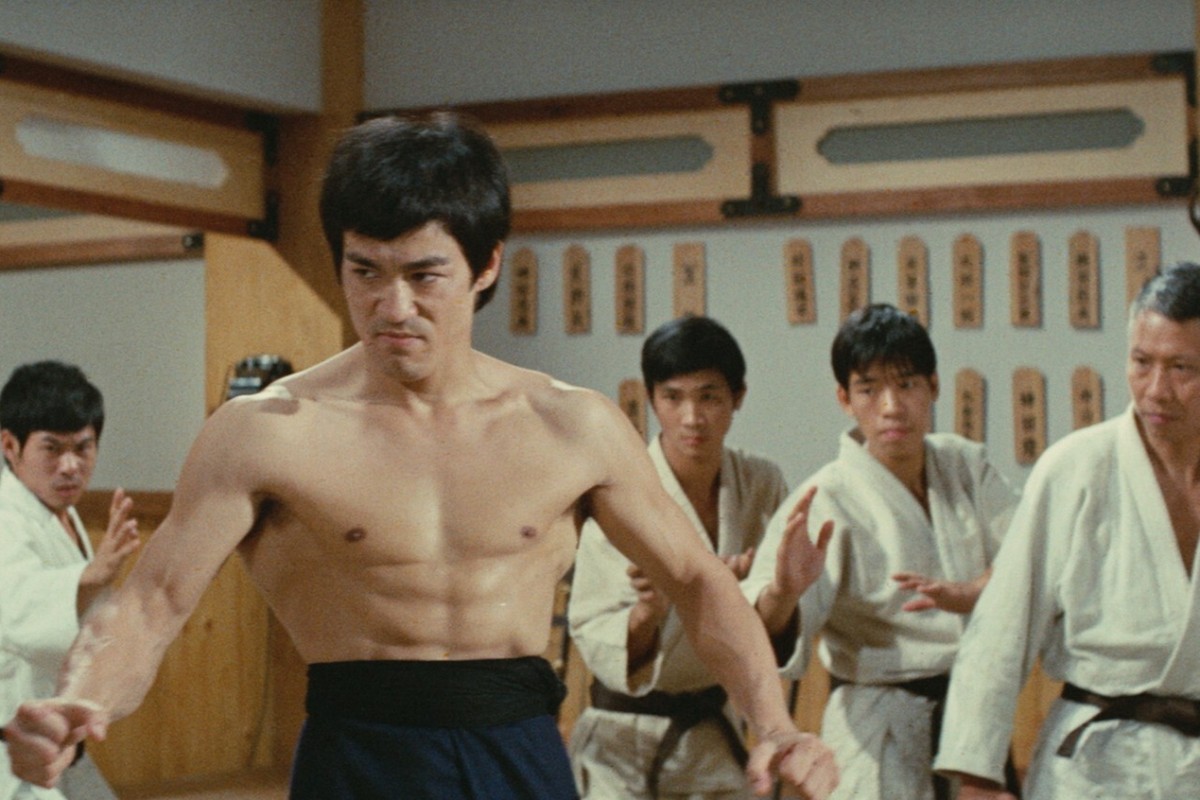
Bruce Lee in a still from Fist of Fury (1972), one of the films featured in a Criterion Collection box set being released this week with introductions that put the martial arts icon’s films in context, and mini-documentaries. Photo: Criterion Collection
Fans of Bruce Lee are in for a bonanza this week when esteemed home-video distribution company Criterion Collection release a seven-disc Blu-ray box set called Bruce Lee: His Greatest Hits.
For release on July 14, the box set, put together by New York-based producer Curtis Tsui for Criterion, collects together all of Lee’s martial arts films, along with a plethora of special features and commentaries, to provide a comprehensive overview of the actor’s life and career.
Lee is still popular enough in the United States to warrant such an extensive release, says Tsui, noting that the martial artist’s philosophy of life fits the mood of the times.
“People are still hungry for Bruce Lee, and he has a cultural relevance,” he says. “Symbolically speaking, Lee has always spoken for a kind of oneness in humanity, about looking beyond our differences and finding what is similar in all of us and finding solidarity there.
“You can look at that in relation to the way he lived his own life as a teacher who went against the strict doctrine of traditional martial arts instructors by opening his school up to everyone. He showed us that everyone could use martial arts to better ourselves and to strengthen ourselves. That has a lot of meaning for people here, and it’s a key element of his continued popularity,” Tsui tells the Post.
“There was an entire philosophy behind Lee’s on-screen presence. He left a small body of work, but behind it was a way of addressing life, of addressing ourselves, that we could implement. That’s why people are still interested in him today,” Tsui says.
The films in the box set include The Big Boss, Fist of Fury , The Way of the Dragon, the shorter US theatrical version and the special edition of Enter the Dragon , and Game of Death. The movies are introduced by Lee biographer Matthew Polly, author of Bruce Lee: A Life, and feature commentaries by Enter the Dragon producer Paul Heller and Bruce Lee expert Mike Leeder.
The Big Boss, Fist of Fury, and Way of the Dragon feature Mandarin Chinese, Cantonese, and English dialogue tracks.
The special features are a combination of already existing licensed content, and new mini-documentaries and introductions produced by Tsui. These include an enthralling examination of the “Bruceploitation” genre – exploitation movies that were made after Lee’s death which feature lookalikes and old footage of the star – and an enlightening documentary about the English-language voice artists who dubbed Lee’s films in Hong Kong for their international release in the 1970s.
Tsui licensed Lee’s first three martial arts films, which had already been restored in 4K, and Game of Death, from Hong Kong company Fortune Star. Acquiring rights can be tricky, and Tsui was thrilled to obtain permission from Warner Brothers to include Enter the Dragon, so that North American fans could have the films together in one collection.
“Enter the Dragon really makes this box set special,” says Tsui. “We are including the shorter 99-minute original US theatrical version of the film, as well as the longer ‘special edition’ release. The theatrical cut has not been available since the days of the laser disc in the 1990s, and fans have been clamouring to see it for some time.” Both versions are presented in new 2K restorations.
//youtu.be/Ckk7f8x4xR8
The films feature lengthy introductions by Polly, which set the films in context and provide some film history and biographical notes. His introduction to Fist of Fury, for instance, features an opinion about how Lee’s style of acting was influenced by watching Japanese samurai films, and he also talks about Huo Yuanjia, the real-life martial arts master whose death provides the premise for the story.
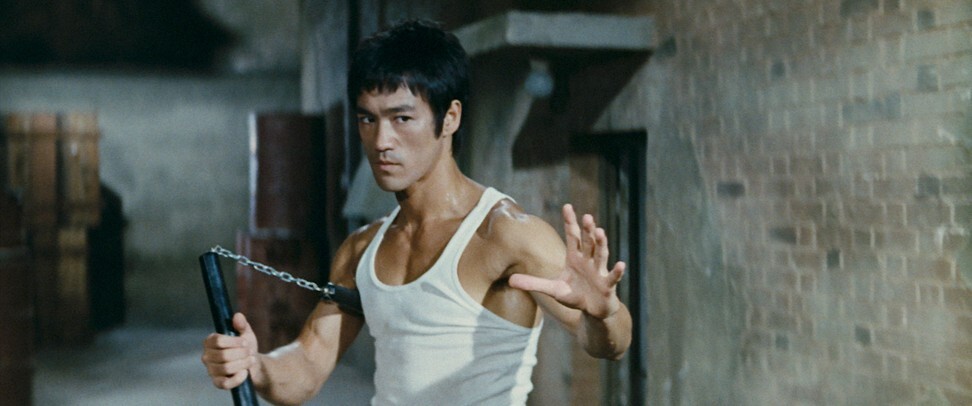
Bruce Lee in a still from The Way of the Dragon (1972). Photo: Criterion Collection
“I wanted to have someone reflect on the films in relation to Lee’s life, rather than vice versa,” says Tsui. “There’s usually a big focus on his life, and the people that he knew and met. I wanted someone who could succinctly focus on the movies and talk about them as films, and what they mean to the genre,” Tsui says. “That’s what Matthew brings to the discs.”
Tsui also made a short film about the dubbing artists who dubbed Lee’s films into English in the 1970s, Michael Kaye and Vaughan Savidge. This provides some fascinating insights. Although the dubbing in martial arts films is usually disparaged, both voice artists say they were committed to the work, and enjoyed it.
Most dubbing in Hong Kong in the early 1970s was done by expatriate radio and television announcers who wanted to earn some extra money. Films were dubbed into English primarily for a release in the Philippines, they say, and the voice artists had to fit a translation of the script to a voice soundtrack in Mandarin and the lip movements of the actors – so a lot of improvisation was necessary. The voice artists even supplied Lee’s trademark whoops and screeches in the dubbed versions, they say.
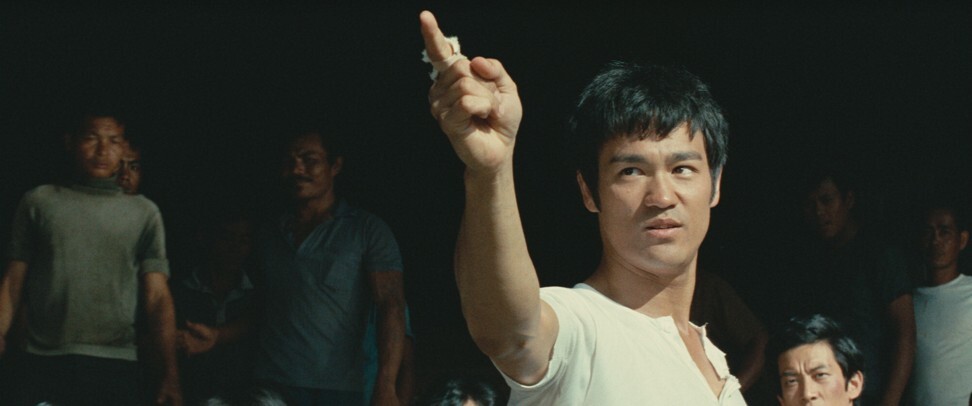
Bruce Lee in a still from The Big Boss (1971). Photo: Criterion Collection
“The experience of watching the films with the dubbed soundtracks can’t be buried, and it’s something that we have to talk about,” says Tsui, who notes that one of Lee’s voice artists now works for Criterion. “They might even have added to our enjoyment of the movies. When you see the way they had to work, you see how impossible a task it was. They were not being slipshod, they were trying hard to make it work.”
Another short film Tsui produced features author and film historian Grady Hendrix, who scripted Netflix’s recent Iron Fists and Kung Fu Kicks documentary, talking about the Bruceploitation genre. Those films were an attempt to fill the gap left by Lee when he died in 1973.
“I don’t think there has been anything like it in the history of cinema,” says Tsui of the genre. “It’s both amazing and horrifying at the same time.”
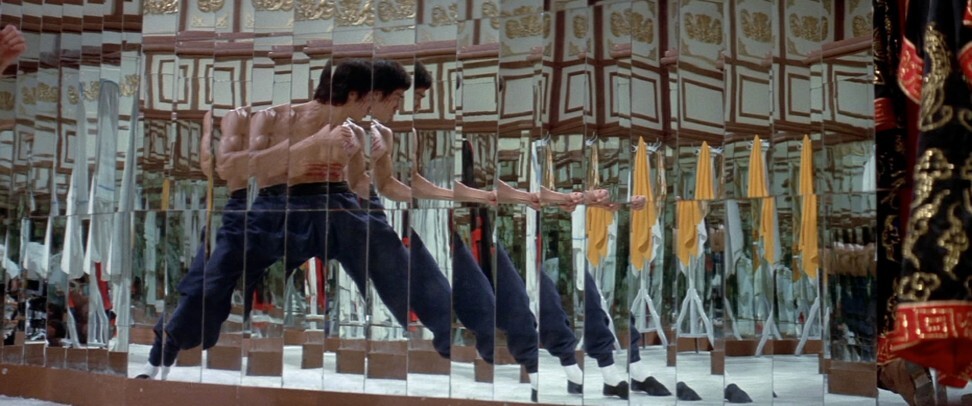
Bruce Lee in a still from Enter the Dragon (1973). Photo: Criterion Collection
THREADS
Bruce-Lee-filmography
Bruce-Lee-A-Life-by-Matt-Polly

