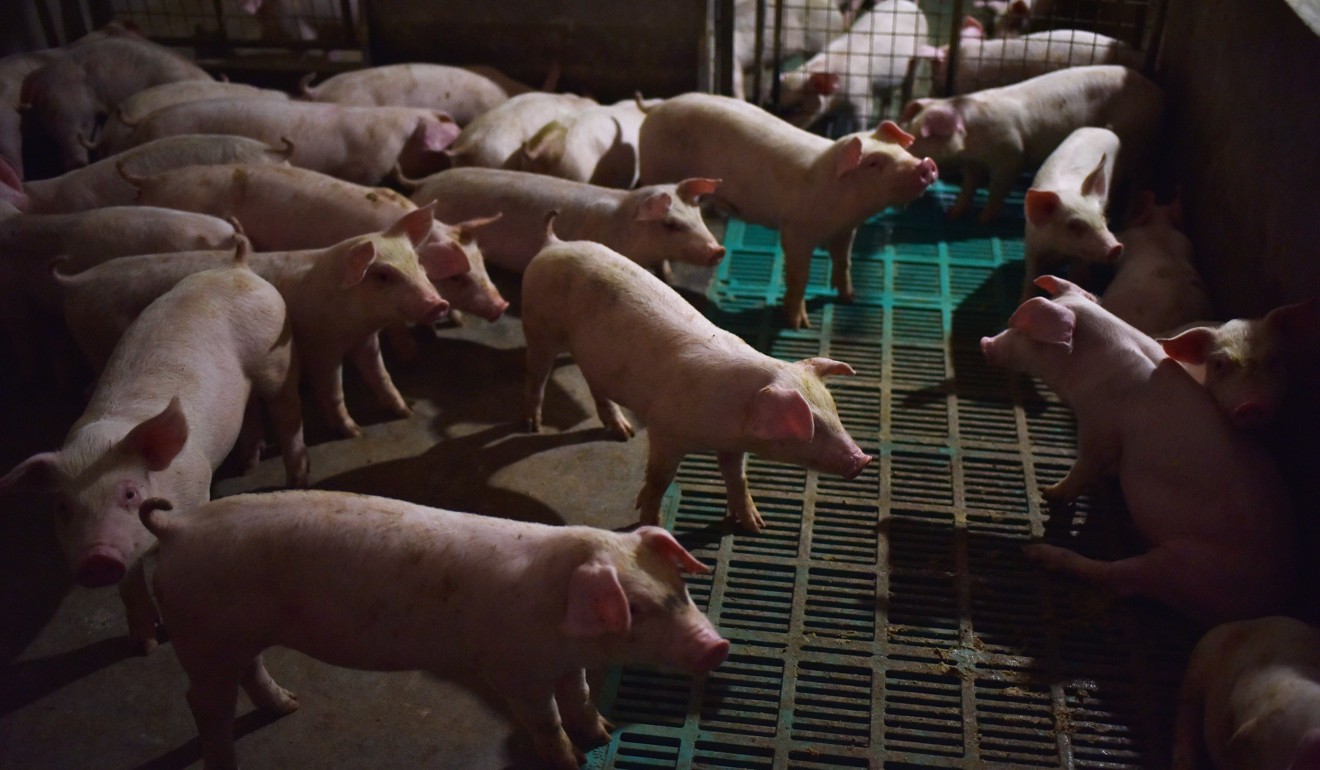
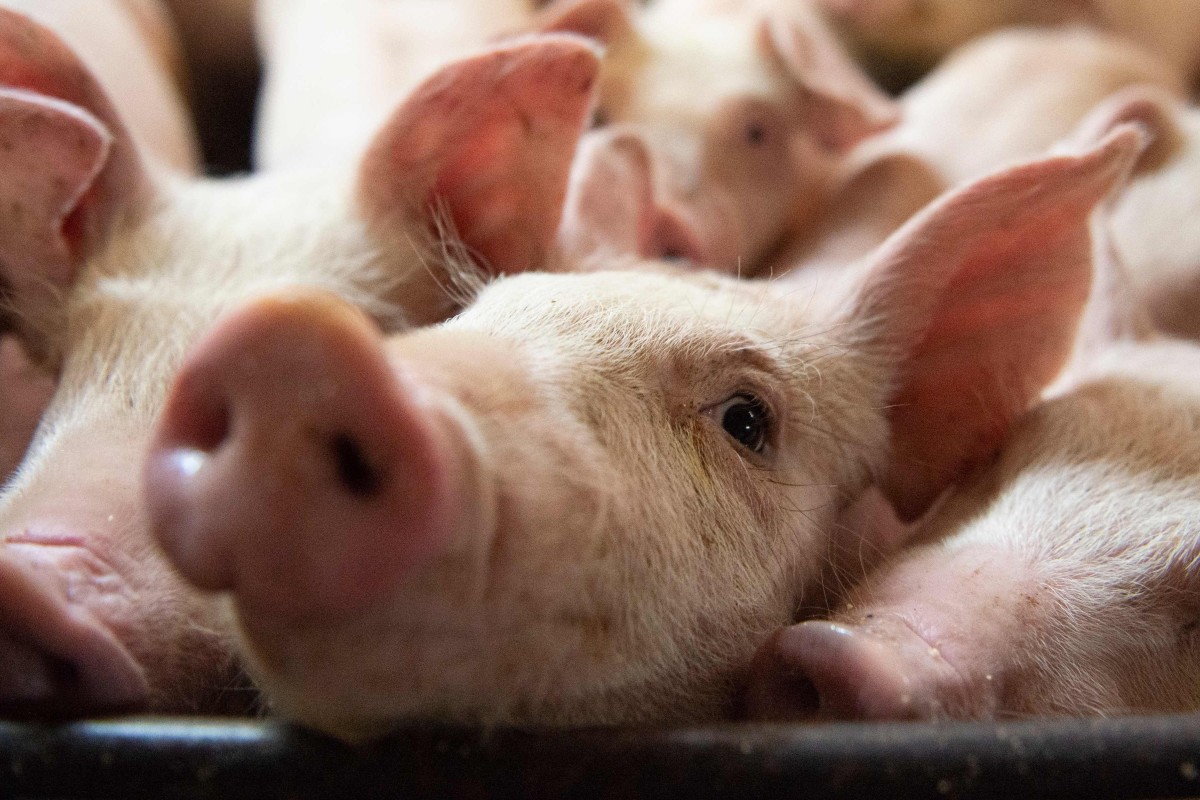
Bacon!!!!!!

African swine fever

This might sour your bacon…:frowning:

China bans feeding of food waste to hogs in provinces with African swine fever
Reuters 4h

BEIJING (Reuters) - China has banned the use of food waste as pig feed in provinces that have reported African swine fever outbreaks as well as neighboring regions, the agriculture ministry said on Thursday, the latest measure to try to halt the spread of the disease.

The use of pig blood as a raw material in producing feed for pigs has also been banned, the Ministry of Agriculture and Rural Affairs said in a statement online.

The ministry will also require producers of pig feed to submit samples for testing, with any feed testing positive for the virus required to be recalled from the market and destroyed.

African swine fever is a highly contagious disease that cannot be cured and has no vaccine. It can also be transmitted in pork products, animal feed or by people.

China has reported 13 outbreaks of the disease in six provinces since early August, mostly on small farms. It has banned the transport of live animals from the infected provinces as well as neighboring regions to contain the spread, halting trade across the country and sending prices in some areas soaring.

It has also shuttered live markets in 16 provinces, which will largely hurt small pig farmers.

Banning the use of kitchen waste for pig farmers would also hurt the small farmers, who often resort to scraps to cut costs, particularly when pig prices are low.

By law, food waste must be heat-treated to kill any bacteria or disease that could infect pigs but that process is often skipped to save costs.

The ministry said that farmers must ensure that all food waste used for pigs in provinces not impacted by the disease be heated before being used.

(Reporting by Dominique Patton; Editing by Christian Schmollinger)

deadly African swine fever

NOVEMBER 1, 2018 / 4:38 AM / A DAY AGO
China tightens controls on pig transport to contain swine fever outbreaks
2 MIN READ

BEIJING, Nov 1 (Reuters) -

  • China has ordered enhanced supervision of vehicles transporting live pigs to contain the spread of deadly African swine fever in the country, the Ministry of Agriculture and Rural Affairs said on Thursday

  • Vehicles must be equipped with corrosion-resistant and leak-proof walls and floors, as well as simple cleaning and sterilisation facilities, the ministry said on its website

  • They should also be registered with local husbandry authorities, with the necessary documentation

  • Trucks transporting live pigs between China’s provinces and regions, as well as across counties within provinces where African swine fever has been found and neighbouring regions, must be equipped with location-tracking systems

  • Transporters must provide necessary water and feeding conditions for the pigs

  • They must take necessary measures to prevent pigs becoming stressed when the vehicles pass through high- or low-temperature areas

  • Transporters must clean and sterilise the vehicles before loading and offloading, and record detailed information of the journey

  • China has reported almost 50 outbreaks of the highly contagious disease in 13 provinces since early August. (Reporting by Hallie Gu and Tom Daly; Editing by Kirsten Donovan)

This article didn’t come with a pic.

So I’m adding this one.

Bacon!!!

Stuffed pigs used in drill to instruct Hong Kong agricultural officials in how to cull sick animals in event of African swine fever outbreak
Photos of the exercise, which were posted on health minister Sophia Chans Facebook page, proved to be a surprising social media hit
PUBLISHED : Friday, 07 December, 2018, 8:31am
UPDATED : Friday, 07 December, 2018, 12:52pm
Ng Kang-chung

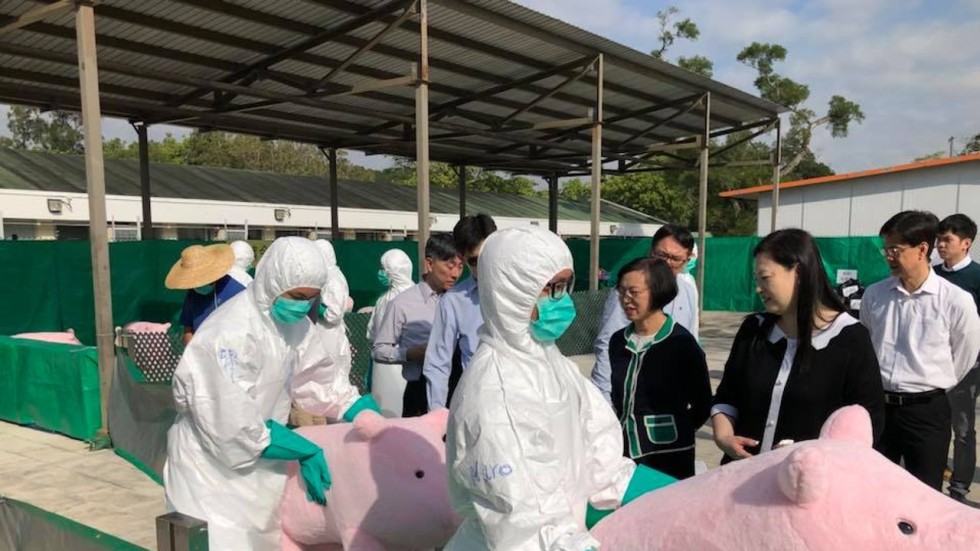
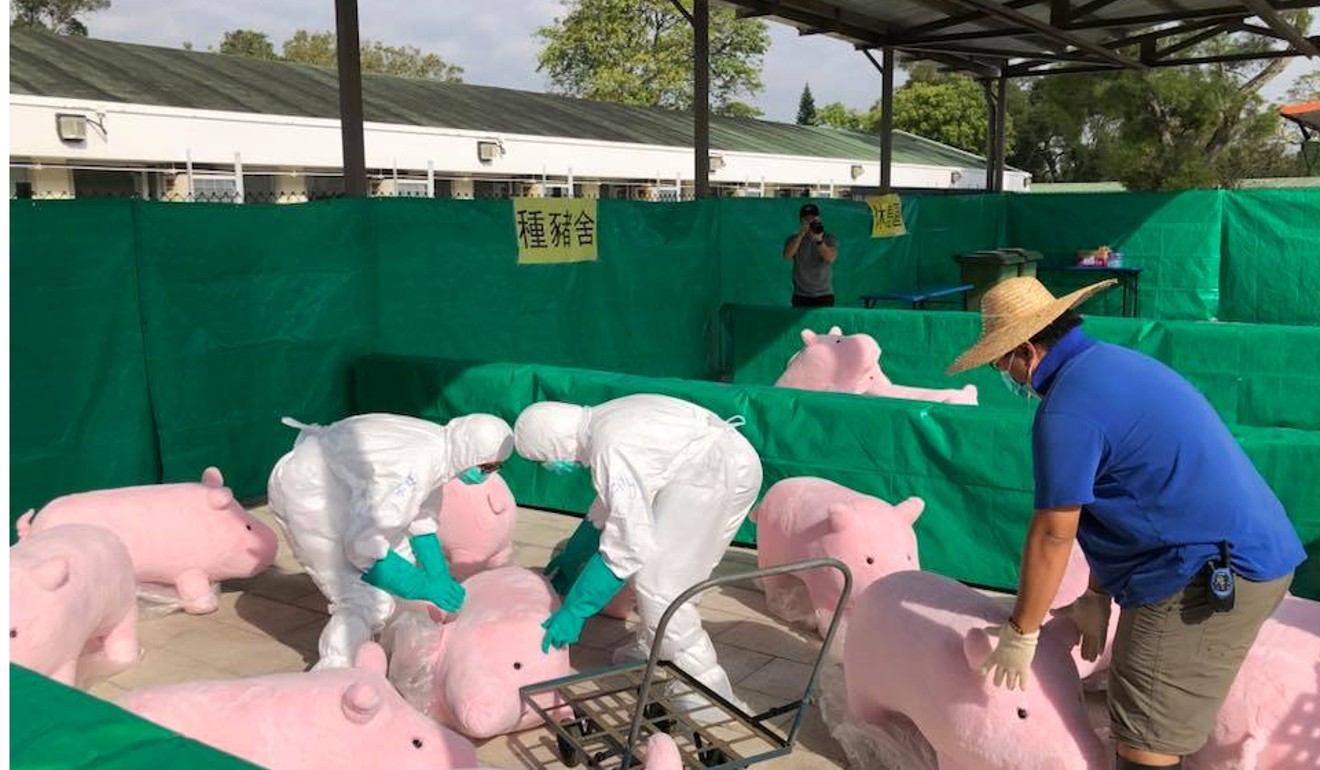
Toys pigs, with a price tag of up to HK$700 (US$89) each, were enlisted to a drill this week to help train Hong Kong agricultural officials in how to kill sick animals in the event of African swine fever spreading across the border to Hong Kong farms.

Whether it is a bargain or not is a matter of opinion, but taxpayers have been told the toy pigs will cost them a total of about HK$20,000.

The surreal scenes of officials, in full protective gear, playing with the pink fluffy toy pigs sending them to the cull one by one quickly attracted the attention of the public after the pictures were posted on the official Facebook page of health minister Sophia Chan Siu-chee.

The post, uploaded on Tuesday night, quickly became Chans most popular post in at least the past month, attracting over 43 comments and 156 shares in two days, compared with her usual Facebook posts that draw only a few comments.

One comment read: The pigs are so cute. Another read: Can I adopt one? Some were not too amused though, questioning if it was a waste of taxpayers money to buy toy pigs.


Agricultural officials conducting a swine fever culling drill using stuffed pigs. Photo: Facebook

The Agriculture, Fisheries and Conservation Department confirmed in a statement on Thursday that it had conducted a drill two days earlier to strengthen the preparedness of [the department] in case of an outbreak of [African swine fever] on local farms.

The department did not elaborate on the mood of staff or the atmosphere during the training exercise, or who had first raised the idea of buying toy pigs for the drill, only saying that more than 30 staff members, all of whom were from [the department], were involved in this drill.

A total of 28 big prop pigs (around HK$700 each) and two small prop pigs (around HK$80 each) were used during the drill. Prop pigs have not been disposed of but are currently stored away for reuse, the statement read.


Marching the pigs to the cull. Photo: Facebook

How useful using toy pigs in a pig culling drill is, is anybodys guess. The department statement also noted: In reality, the method to be adopted for pig culling is subject to various factors, including the environment of the farm concerned, the number of pigs within the farm, the health conditions and size of the pigs, etcetera, and international guidelines on the culling of animals.

Under objective conditions, [the department] will primarily make use of carbon dioxide for pig culling.

Chan said in her post that she was there to oversee the drill, including inspecting the method employed to kill pigs. She was also briefed by the officers on their plans for a possible outbreak of African swine fever in Hong Kong farms.


Secretary for Food and Health Sophia Chan Siu-chee with health officials during this weeks swine fever drill. Photo: Facebook

African swine fever is a highly contagious viral disease that infects pigs. It does not affect other animal species or humans.

China reported its first outbreak in August in the north-eastern province of Liaoning. A total of 81 cases of the disease had been reported in 21 provincial regions as of December 3. Officials claimed the outbreaks were generally under control in China.

In her Facebook post, Chan said the government would take decisive action to minimise the impact on local farms if African swine fever were to spread to Hong Kong.

Additional reporting by Elizabeth Cheung

THREADS
Best remedy for Swine Flu? H1N1
Bacon!!!
Year of the Pig 2019

Ominous

DECEMBER 18, 2018 / 3:59 AM / UPDATED 4 HOURS AGO
China agriculture ministry confirms new African swine fever outbreak in Chongqing
1 MIN READ

BEIJING, Dec 18 (Reuters) - A new outbreak of African swine fever has been confirmed on a small pig farm in southwest China’s city of Chongqing, the country’s agriculture ministry on Tuesday.

The virus was detected on a farm with 23 pigs in Chongqing’s Bishan district, infecting eight animals and killing three, the Ministry of Agriculture and Rural Affairs said in a statement.

China, home to the world’s biggest pig herd, has reported around 90 outbreaks of the highly contagious fever since August and earlier on Tuesday launched a campaign to crack down on illegal hog slaughtering to contain the spread. (Reporting by Tom Daly; editing by David Evans)

THREADS
Best remedy for Swine Flu? H1N1
Bacon!!!
Year of the Pig 2019

73,000 pigs

This is really bad.

JANUARY 2, 2019 / 3:21 AM / UPDATED 9 HOURS AGO
African swine fever hits huge, foreign-invested Chinese farm
4 MIN READ

BEIJING (Reuters) - China reported an outbreak of deadly African swine fever on a huge pig farm part-owned by a Danish investment fund, showing the spread of the virus to modern industrial farms expected to have the best levels of disease prevention.


A vendor prepares pork for sale at a market in Beijing, China December 26, 2018. Picture taken December 26, 2018. REUTERS/Jason Lee

The outbreak occurred on a farm in Suihua city with 73,000 pigs in northeastern Heilongjiang province, owned by the Heilongjiang Asia-Europe Animal Husbandry Co Ltd, a company established in 2016.

The farm’s herd included 15,000 breeding pigs, according to its website, and it was aiming to produce 385,000 pigs for slaughter a year. Some 4,686 pigs had been infected and 3,766 animals died, the Ministry of Agriculture and Rural Affairs said late on Wednesday. All animals on infected farms must be culled under current rules.

The farm is the largest yet to be hit by the disease, which has infected almost 100 farms across China since August 2018, spreading faster than in any other country to date.

More than 200,000 pigs on infected farms have been culled, according to a Reuters tally of official figures, while hundreds of thousands more in the vicinity have also been put down.

China has the world’s largest hog herd and the rapid spread of African swine fever has roiled the country’s trade in pork, the nation’s most popular meat, disrupting supplies and pushing up prices in some areas.

Neither Heilongjiang Asia-Europe Animal Husbandry nor its majority owner, state-owned Zhejiang Rural Development Group Co. Ltd, responded to calls for comment.

Steffen Schiottz-Christensen, vice president for North Asia at Denmark state fund IFU, confirmed the outbreak but declined to comment further as he had yet to be fully briefed.

IFU, which provides risk capital and advice for investment in developing countries, invested 28.4 million DKK ($4.32 million) in the farm in 2017, according to its website, although its shareholding has since been diluted, Schiottz-Christensen said.

“The African swine fever situation is only getting worse. Small farms, big farms, slaughterhouses, feed - the whole production chain basically all got hit,” said Yao Guiling, an analyst with consultancy China-America Commodity Data Analytics.

Beijing has banned feeding kitchen waste to pigs, and restricted transport of live pigs and products from infected areas.

But the virus has now reached 23 provinces and municipalities across China. The disease is deadly to pigs but does not affect humans.

“The policies are good, but the increasing outbreaks show that there might be some problem with execution at the local government level,” said Yao.

China’s agriculture ministry also said on Wednesday that slaughterhouses will need to test their pork products for African swine fever before selling them to the market.

Slaughterhouses must slaughter pigs from different origins separately, and can only sell the products if blood from the same batch of pigs tests negative for the virus.

If the virus is detected, slaughterhouses must cull all pigs to be slaughtered and suspend operations for at least 48 hours, according to the regulation, which will go into effect from Feb. 1.

(For a graphic on ‘Swine fever in China’ click tmsnrt.rs/2QMhmzL)

Reporting by Hallie Gu and Dominique Patton; editing by David Evans and Richard Pullin

THREADS
Best remedy for Swine Flu? H1N1
Bacon!!!
Year of the Pig 2019

Pricey pork

UPDATE 1-CHINA URGES PIG FARMS TO RESTOCK AMID WORRIES OVER PORK SUPPLY, SWINE FEVER
1/15/2019

  • China pork prices “very likely” to rise in H2 -govt official

  • But does not expect them to climb in run up to Lunar New Year

  • Wants pig farmers to restock quickly

  • China battling African swine fever, has culled 900,000 pigs (Recasts; adds comment, detail)

BEIJING, Jan 16 (Reuters) - China’s pig farmers should quickly replenish their herds, a government official said, as the world’s biggest pork producer looks to curb price rises for the meat expected to bite later this year in the wake of African swine fever outbreaks.

Pork prices in China are “very likely” to rise in the second-half of 2019 as the number of pigs has been falling, Tang Ke at the Ministry of Agriculture and Rural Affairs said on Wednesday.

“We recommend most farmers adjust their production and increase replenishment in a timely manner,” said Tang, even as they carry out steps to prevent and control African swine fever.

The comments come as China battles the world’s fastest spreading epidemic of African swine fever, which has now reached 24 of its provinces and led to the culling of more than 900,000 pigs. The disease is deadly to hogs, but does not affect people.

The outbreaks have not yet hit national pork prices and supplies are currently “sufficient”, said Tang, who expected no major volatility ahead of the Lunar New Year holiday beginning in early February when the meat is widely consumed.

However, measures implemented to control the spread of the disease have kept live pig prices in some parts of the country at loss-making levels, leading to liquidation by small farmers and slow restocking.

National pig stocks in December were almost 5 percent lower than the previous year’s level, said Tang, while numbers of breeding sows were down by more than 8 percent. He did not give total numbers for the herd size.

“For three consecutive months the drop was more than the 5 percent warning level, meaning that in the second-half of this year, the number of live pigs to reach the market will be lower and the likelihood of pig prices rising is very big,” he said.

The ministry would work to ensure production and supplies by smoothing the transport of pigs and making sure animals can be sold, he added.

The average weight of pigs in the country was at a record of around 124 kg (273 lb) in December, said Tang, indicating difficulty in selling pigs in key producing regions.

CONSUMER CONCERNS

For now, live pig prices are still low, and may even be slightly weaker in the run up to the Lunar New Year, Tang also said.

The average price of live pigs in the second week of January was 13.65 yuan ($2.02) per kg, down 1.6 percent from the previous week, and has dropped for four consecutive weeks, he added.

Pork prices have also declined in the last week by 0.9 percent to 23.55 yuan per kg, and are down almost 8 percent versus last year.

“The volumes of pork traded at monitored farmers’ markets has dropped by 14.4 percent, consumer demand is weakening,” Tang said. ($1 = 6.7684 Chinese yuan renminbi) (Reporting by Dominique Patton; Editing by Joseph Radford)

THREADS
Best remedy for Swine Flu? H1N1
Bacon!!!
Year of the Pig 2019

250,000 tons

sweet & sour.

that’s a lot of bacon.

US pork sales to China dropped by more than 250,000 tons last year as the trade war hits American farmers
Will Martin 1m


USDA

Chinese pork imports from the US dropped more than 50% in 2018 as a result of the tariffs put in place during the Trump trade war.
According to a report from Reuters, the US sent 263,000 tons of pork to China last year, down from more than 500,000 tons in 2017.
The fall in pork imports from the US follows a similar pattern to the drop in the amount of soybeans sent to China last year.
Chinese imports of US-bred pork dropped more than 250,000 tons in 2018 as the impact of the trade war between the two nations hit the meat market.

Imports of prime cuts and offal combined dropped 55% in the year, following the imposition of major tariffs on the meat, which is the most consumed in China.

According to a report from Reuters, the US sent 263,000 tons of pork to China last year, down from more than 500,000 tons in 2017. Using data from the General Administration of Customs, Reuters calculated that US exports of pork offal dropped 58% to 177,041 tons in 2018.

China is far and away the world’s largest importer of non-prime cuts of pork — things like feet, ears, and offal — with 9 out of 10 pigs ears sent overseas by US producers going to the country. The market for total offal shipments to China last year was in excess of $870 million.

China is both the biggest consumer and producer of pork in the world, and the meat is effectively a staple food for many Chinese citizens. Demand for pork has boomed in recent years thanks to a growing population and increasing affluence among Chinese citizens.

Previously, the country was largely able to serve demand with domestically reared animals, but population growth has led it to look overseas.

The fall in Chinese pork imports from the US follows a similar pattern to the drop in the amount of soybeans moving between the two nations as a result of tariffs.

Soybean exports from the US to China plunged after tariffs were first introduced, and although China has officially resumed its purchases, demand remains stifled, causing major problems for US farmers.

In November it was reported that farmers in some US states are being forced into plowing their crops under — effectively burying them in their fields — because there is not enough room in storage facilities. All grain depots and silos are almost full, meaning farmers have to figure out their own storage or let the crops rot.

Even after Beijing agreed in trade talks with Washington to resume American soybean purchases, prices of the legume are still down more than 7% from a year earlier and aren’t expected to improve anytime soon.

“The outlook for US soybean prices is bleak,” said Yasemin Engin, an economist at Capital Economics.

#PigYearDontEatThem

FEBRUARY 3, 2019 / 7:14 PM / UPDATED 13 HOURS AGO
Stop pigging out and save the planet, Chinese told ahead of Lunar New Year
Beh Lih Yi
3 MIN READ

KUALA LUMPUR (Thomson Reuters Foundation) - As Chinese people celebrate the new Year of the Pig this week, environmental campaigners are urging them to eat less pork and help save the planet.

Men perform a dragon dance called Liong ahead of the upcoming Chinese Lunar New Year during the Grebeg Suro ceremony in Solo, Central Java province, Indonesia, February 3, 2019 in this photo taken by Antara Foto. Antara Foto/Mohammad Ayudha/via REUTERS. A
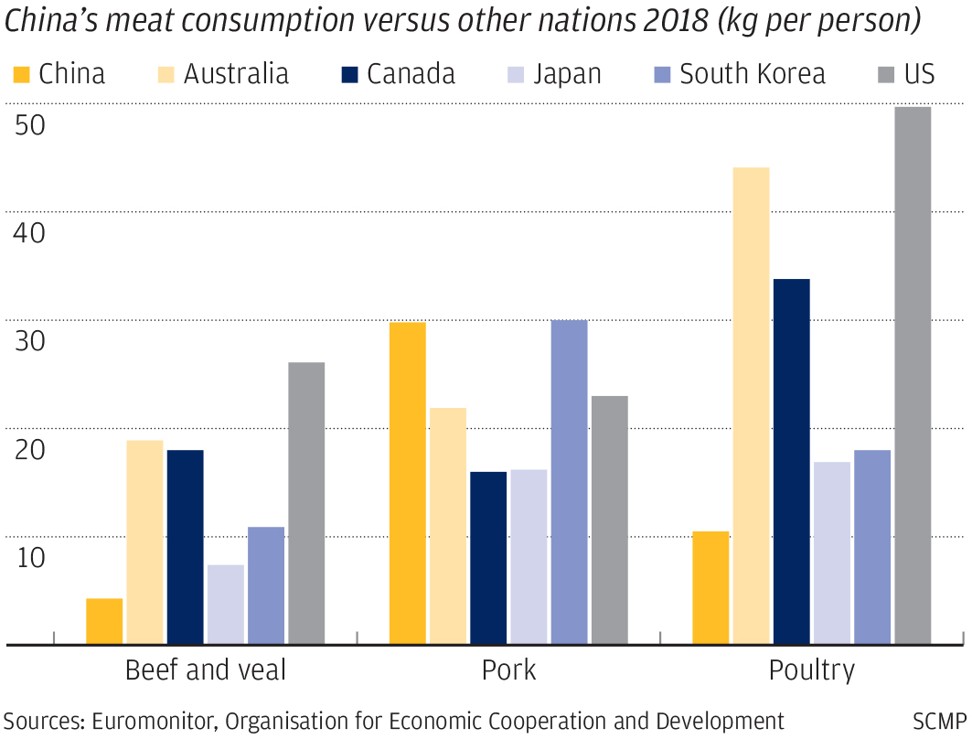
China consumes more meat than any other country and accounts for half the world’s consumption of pork, which is used in everything from dumplings and stir-fries to hotpots.

That has helped make it the world’s biggest emitter of climate-warming greenhouse gases - according to the U.N. Food and Agriculture Organization (FAO), livestock are responsible for about 14.5 percent of global emissions.

“Chinese emissions can be reduced by almost 10 percent in the next decade if Chinese people just ate half as much meat,” said Jen Leung, China climate director at the U.S.-based charity WildAid.

“So just try eating a little less pork in honor of a healthy Year of the Pig,” she told the Thomson Reuters Foundation.

Twelve animals make up the traditional Chinese zodiac and this week marks the transition from year of the dog to year of the pig.

The week-long holiday starts on starts on Monday, the eve of the new year, and is the most important in the Chinese calendar, when millions of people travel home.

Many restaurants have special menus to mark the festival, which is celebrated by Chinese communities around the world.

In Hong Kong, famous for its dim sum and barbeque pork, one company is partnering with restaurants to promote Lunar New Year dishes cooked with its “vegan pork” made with ingredients including soybeans and peas.

“Traditional belief dictates that we should not eat the same animal during their year in order to bring good luck - so pig year don’t eat pork,” said Alvin Lee, marketing manager at Green Monday, a social enterprise that promotes sustainable living.

“But more importantly it’s to address the issue of food safety and to mitigate climate change,” he said, referring to a recent outbreak of deadly African swine fever on pig farms in China.

On Weibo, China’s equivalent of Twitter, animal rights group PETA has launched a campaign to honor the “playful” animal with the hashtag #PigYearDontEatThem.

“Animal agriculture is responsible for more greenhouse gases than all the world’s transportation systems combined,” PETA Asia campaigner Jason Baker said.

China issued dietary guidelines in 2016 recommending people halve their meat consumption - a move lauded by environmentalists as a way to cut greenhouse gas emissions as well as boosting public health.

Experts said people were unlikely to give up on their pork dumplings any time soon in China, where meat is still associated with wealth and status.

“It’s quite challenging because culturally there are quite a lot of values attached to being able to eat meat,” Beau Damen, an expert on climate change at the FAO in Bangkok, told the Thomson Reuters Foundation.

“But one thing consumers do have to keep in mind is that choices about what we eat do have a direct impact on the environment,” he warned.

Reporting by Beh Lih Yi @behlihyi; Editing by Claire Cozens. Please credit the Thomson Reuters Foundation, the charitable arm of Thomson Reuters, that covers humanitarian news, women’s and LGBT+ rights, human trafficking, property rights, and climate change. Visit news.trust.org

Bacon!!!
Year of the Pig 2019
WildAid

When bacon bites back

There is an astonishing amount of pig news on the web. Who knew?

Russian woman ‘eaten by pigs’ after collapsing
7 February 2019


SCIENCE PHOTO LIBRARY
Media reports say an investigation into the incident has been launched. File image

A 56-year-old woman has been eaten by pigs after collapsing in their pen, Russian media report.

After venturing out to feed the animals in a village in the central Russian region of Udmurtia, the farmer reportedly fainted or suffered an epileptic seizure.

Her husband later found the body. She reportedly died of blood loss.

Their farm is in a village in the Malopurginsky district of Udmurtia, east of the city of Kazan.

Local media say the husband had gone to bed early the day before as he was feeling unwell.

After waking to find his wife missing, he came upon her body in the pen.

Media reports say an investigation into the incident has been launched.

Bacon!!!
Year of the Pig 2019

Pork chops as weapons

This is so random that I can’t resist posting it.

Frozen pork chop as blunt instrument: woman arrested after hurling hunk of solid meat at her Valentine
By THERESA BRAINE
| NEW YORK DAILY NEWS |
FEB 14, 2019 | 6:44 PM


Jennifer Brassard (Pasco County Sheriff’s Office)

A Florida woman was charged with domestic battery after hurling a frozen pork chop at her boyfriend’s face, hitting him above the eyebrow.

Jennifer Brassard, 48, got into an argument around 9:45 p.m. on Feb. 1 with her beloved, WFLA reported.

She flung the meat and hit him in the eyebrow, giving him a half-inch laceration, WFLA said, citing the arrest report. Brassard left the home soon after and was arrested the next day.

THREADS
Bacon!!!
Year of the Pig 2019

Pig scam

JULY 12, 2019 / 4:06 AM / UPDATED 6 HOURS AGO
China vows to tackle dead pig scam amid swine fever epidemic
2 MIN READ


FILE PHOTO: Piglets are seen by a sow at a pig farm in Zhoukou, Henan province, China June 3, 2018. REUTERS/Stringer

BEIJING (Reuters) - Criminal gangs in China are faking outbreaks of African swine fever on farms free of the disease and forcing farmers to sell their healthy pigs at sharply lower prices, the agriculture ministry said on Friday.

The gangs are taking advantage of a highly contagious disease that has spread across much of the country and disrupted the world’s biggest pork market.

The scam involves dumping dead pigs on farms and then spreading rumors that the farms are infected with African swine fever, which is often fatal for pigs but harmless for humans.

The gangs then pressure farmers to sell their hogs at lower prices, violating farmers’ rights and affecting normal pig production, the Ministry of Agriculture and Rural Affairs said in a statement.

The ministry did not give more details but it urged anyone who witnessed such activities to alert the authorities.

“All localities should be vigilant and actively guard against it,” it said.

Up to half of China’s breeding pigs have either died from African swine fever or been slaughtered because of the spreading disease, twice as many as officially acknowledged, Reuters reported last month.

Reporting by Tom Daly; editing by Darren Schuettler

THREADS
Bacon!!!
Year of the Pig 2019

pork

A miserable Year of the Pig for China’s hogs is godsend for American farmers
Outlook for China’s hog farming sector is bleak, as the overall herd size is forecast to fall 20 per cent this year and a further 10 per cent next year
US pork exports to China doubled in the second quarter to 60,898 tonnes from a year earlier
Eric Ng
Published: 2:30am, 17 Aug, 2019


Illustration by SCMP

In China, pigs symbolise wealth. And 2019, being the Year of the Pig, was supposed to be a great year to make money. Instead, the nation’s 26 million hog farmers are battling the deadly African swine fever epidemic that is in its second year now.
The virus, harmless to humans, has spread across 32 of the nation’s 34 administrative regions since the outbreak was first reported in August 2018, affecting a large portion of the nation’s 348 million strong swine inventory, according to Rabobank.
“We estimate China’s current herd loss is 40 per cent year on year, which may expand to over 50 per cent by year-end,” the Dutch bank said in a report last month. “We expect an additional 10 to 15 per cent decline in both herd and pork production in 2020.”
The outbreak, which has wiped out 20 per cent of the planet’s hog herd, is pushing the Chinese government to look for imports from the US, Europe and Brazil, and substitutes such as beef, poultry, fish and even plant-based protein.


Piglets at a farm in Yiyang county, in China’s central Henan province. Photo: AFP

The highly contagious disease that kills all pigs and wild boars it infects was originally restricted to Africa. In 2007, it was first seen in Georgia at the crossroads of Europe and Asia. It has since spread westwards to eastern and central Europe and eastward to Asia, according to the Food and Agriculture Organization of the United Nations.
After infecting hogs in China last year, it has moved this year into farms in Mongolia, Vietnam, Cambodia and Laos. There is no cure.
While vaccine candidates are being evaluated in laboratories in several nations including China, a cure is still several years away, said Dirk Pfeiffer, a professor at City University’s Jockey Club College of Veterinary Medicine and Life Sciences in Hong Kong.
Mainland China had lost 26.7 per cent of its breeding sows by the end of June from a year earlier based on the Ministry of Agriculture and Rural Affairs’ tally.
The effect of a major decline in new pig births began to surface this summer, after hog supply initially rose and suppressed pork prices before sick pigs were culled to contain the epidemic.
Hog prices have risen 80 per cent this month from their lows in February to around 19 yuan a catty (US$2.70 for 600 grams). The prices are up some 46 per cent before the epidemic broke out.
As pork – a staple in China – is the leading driver of food prices, consumer price inflation rose a higher than expected 2.8 per cent last month and could breach 3 per cent in the months ahead, Nomura economists said in a note.


SCMP Graphics

This complicates the task of policymakers in Beijing who are already dealing with slowing economic growth amid an escalating trade war with the US.
China, which produces and consumes roughly half of the world’s pork, has been largely self-sufficient before the epidemic.
But the Chinese hog farming sector’s outlook is bleak, as the overall herd size is forecast to fall 20 per cent this year and a further 10 per cent next year, according to the Foreign Agricultural Service of the US Department of Agriculture.
A 6.2 per cent year on year fall in domestic hog supply in the first half meant the slaughtering and meat processing industry imported 818,702 tonnes of pork – 26.3 per cent higher year on year – to meet demand, according to government statistics.
Even the US, the world’s second largest pork producer and the largest exporter that is in the midst of a trade war with China, has helped to plug the supply gap in the past few months. Exports to China in the second quarter doubled year-on-year to 60,898 tonnes, according to the US Meat Export Federation.


SCMP Graphics

This was made possible by a sharp increase in prices in China and depressed US prices because of excess supply, which helped to offset a 62 per cent import duty slapped by Beijing on US pork exports.
Meanwhile, US production is expected to grow 5.5 per cent year on year in the second half, thanks to a large breeding herd and higher productivity, according to Rabobank’s forecast.
This is bodes well for Hong Kong-listed WH Group, the world’s largest pork producer, which has been caught in the middle of the trade war.
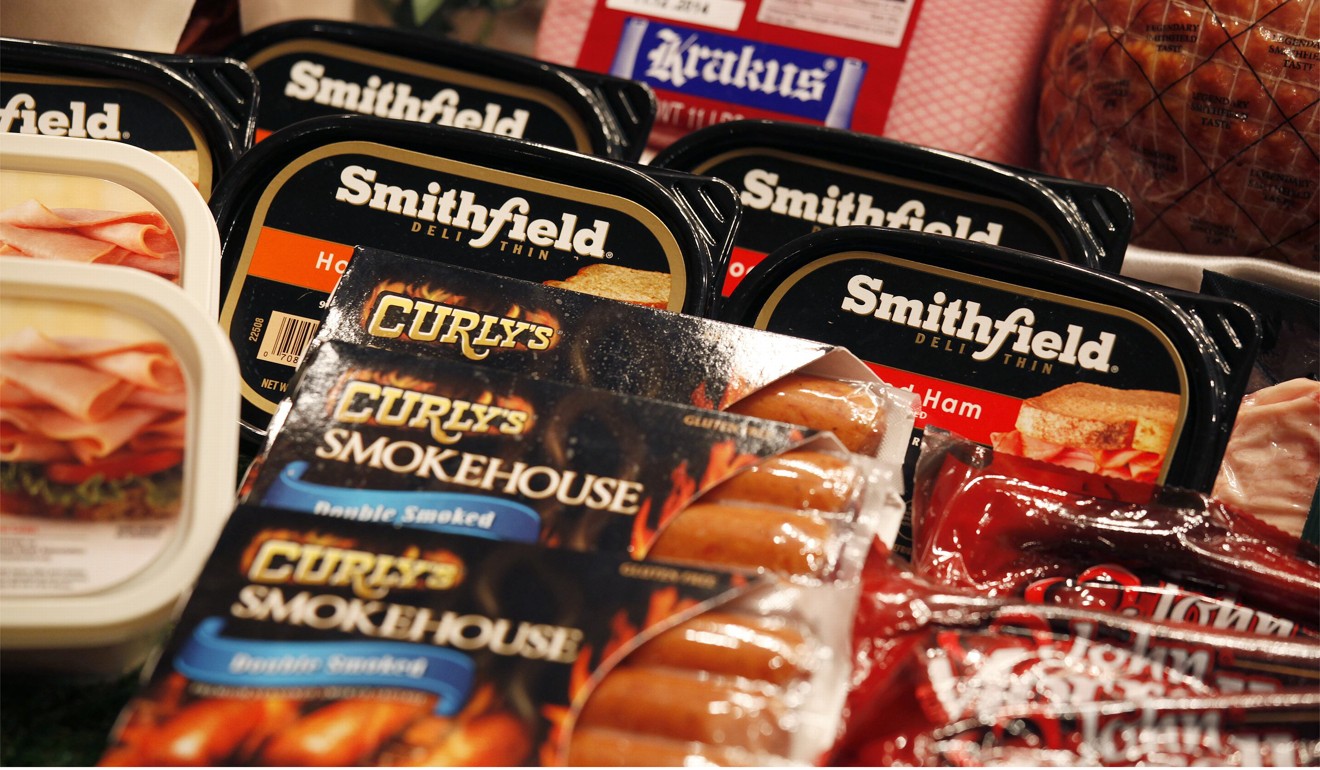
Besides controlling China’s largest hog slaughtering and packaged pork facilities, WH also owns Virginia-based Smithfield Foods – the top US hog producer and pork processor – which it acquired in 2013.

continued next post

Continued from previous post


WH Group chairman Wan Long (centre) said his company would increase pork imports from Europe and South America to hedge the risk of Chinese tariffs on US exports. Photo: Jonathan Wong

WH Group chairman Wan Long said on Tuesday to ensure it has enough supply to meet Chinese demand, the firm would increase imports from Europe and South America to hedge the risk of Chinese tariffs on US pork.
At the same time, Smithfield’s chief financial officer Glenn Nunziata said that while rising Chinese price premium over US prices is favourable for more fresh pork exports to China, the firm will also work on expanding sales to Mexico, Japan and South Korea as a backup.
A de-escalating of tensions would certainly help WH Group and other US pork suppliers.
But the trade appeared to have hit a massive hurdle this month when Beijing retaliated against US President Donald Trump’s move to impose 10 per cent tariff on US$300 billion by suspending purchase of US agricultural products.


Some of Smithfield Foods’ pork products, which is owned by Hong Kong-listed WH Group. Photo: Reuters

David Ortega, an agricultural economist with Michigan State University, said that the US, as the world’s top pork exporter, could nevertheless help satisfy Chinese demand.
“The rise in domestic Chinese pork prices can offset some of the tariff’s impact, but there is a lot of uncertainty as the trade negotiation is fairly fluid … other pork exporters like the EU and Brazil are positioning themselves to meet Chinese demand,” Ortega said.
Canada, another major pork exporter, has sent 217,193 tonnes to China in the first six months, up 50 per cent from last year, according to Canada’s Agriculture and Agri-Food Department.
However, since June 25 China has stopped accepting meat from Canada after a pork shipment was found to contain ractopamine, a banned feed additive.
The Canadian government said the shipment probably came from a third country and the certificate might have been falsified.


Relations between China and Canada have cooled since Huawei Technologies’ CFO Meng Wanzhou was arrested in Vancouver last December. Photo: The Canadian Press via AP

Relations between Canada and China rapidly soured last December after Huawei Technologies’ chief financial officer Meng Wanzhou was detained on US charges relating to alleged violation of sanctions on Iran.
Other nations have also cashed in on opportunities.
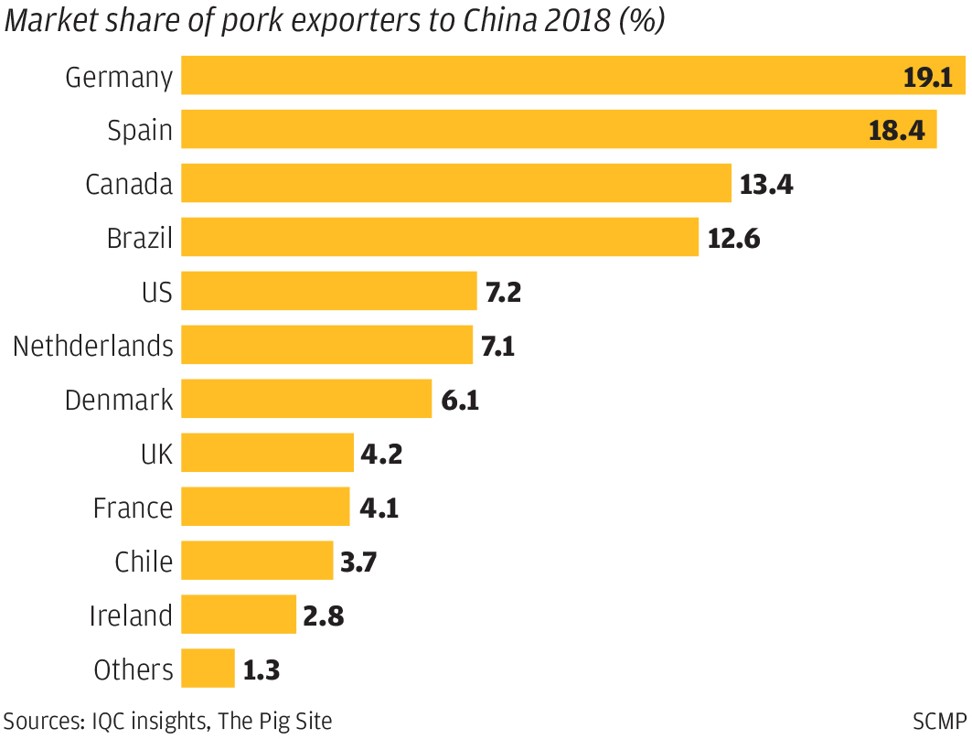
Exports from the European Union – led by Germany, Spain and Denmark – in the year’s first five months surged 52 per cent year on year to 432,293 tonnes, while exports from Brazil in the first half gained 28.9 per cent to 92,188 tonnes, according to Darin Friedrichs, a Shanghai-based analyst at commodities brokerage INTL FCStone.
He expected the US to be the biggest potential source of additional pork supply to China as Canada has been banned and Europe only has limited extra supply, adding that negotiations for more supply from Brazil were ongoing.
However, even as China increases pork imports, he said there were bottlenecks that need to be addressed.
“A lot of the infrastructure isn’t built for frozen or chilled pork … it is for live hog that is killed close to the market,” he said.
Besides pork, China has also lifted chicken and beef imports by around 50 per cent in the first half from a year ago.
Friedrichs said that in the long term, small pig farms were expected to be phased out, while larger ones will deepen vertical integration into downstream slaughtering and processing so that hogs can avoid exposure to the virus.
This was likely to speed up industry consolidation, he added, noting Beijing has been offering farmers in northeast China subsidies to build larger facilities integrating breeding and slaughtering.


Darin Friedrichs, a Shanghai-based analyst at commodities brokerage INTL FCStone, says China’s pig farming sector will see consolidation. Photo: Handout

For leading Chinese companies that have capacity to expand, the future looks bright.
Shenzhen-listed Muyuan Foodstuff, China’s second largest pork producer that sold 11 million heads of hogs last year, said in July that it expected to post a net profit of between 376 million yuan and 396 million yuan in the second quarter on the back of higher prices, after a loss of 145 million yuan in the first quarter.
The epidemic has not derailed its aggressive target to boost production to 14 million heads this year, according to a report from brokerage Changjiang Securities.
Still, Pfeiffer of City University, said it will be a long road to recovery for the industry because of the sheer density of farms in China and poor biosecurity behaviour in the entire chain right from farmers to slaughterhouse staff.
“It would be a miracle if African swine fever can be controlled, let alone eradicated, within the next five to 10 years,” he said.

THREADS
Bacon!!!
Year of the Pig 2019
Trade War

big pig

China is breeding giant pigs the size of polar bears to cope with supply plunge after African swine fever


A student feeds pigs at a farm next to a primary school in Xuanwei, Yunnan province, China, on Dec 22, 2018. PHOTO: REUTERS
PUBLISHEDOCT 6, 2019, 10:18 AM SGT

BEIJING (BLOOMBERG) - In a farm deep in the southern region of China lives a very big pig that is as heavy as a polar bear.

The 500kg animal is part of a herd that is being bred to become giant swine. At slaughter, some of the pigs can sell for more than 10,000 yuan (S$1,900), over three times higher than the average monthly disposable income in Nanning, the capital of Guangxi province where Mr Pang Cong, the farm’s owner, lives.

While Mr Pang’s pigs may be an extreme example of the lengths that farmers are going to fill China’s swelling pork shortage problem, the idea that bigger is better has been spreading across the country, home to the world’s most voracious consumers of the meat.

High pork prices in the north-eastern province of Jilin is prompting farmers to raise pigs to reach an average weight of 175kg to 200kg, higher than the normal weight of 125kg.

They want to raise them “as big as possible”, said Mr Zhao Hailin, a hog farmer in the region.

The trend is not limited to small farms either. Major protein producers in China, including Wens Foodstuffs Group, the country’s top pig breeder, Cofco Meat Holdings and Beijing Dabeinong Technology Group say they are trying to increase the average weight of their pigs. Big farms are focusing on boosting the heft by at least 14 per cent, said Mr Lin Guofa, a senior analyst with consulting firm Bric Agriculture Group.

The average weight of pigs at slaughter at some large-scale farms has climbed to as much as 140kg, compared with about 110kg normally, Mr Lin said. That could boost profits by more than 30 per cent, he said.

With African swine fever decimating the nation’s hog herd - in half, by some estimates - prices of pork have soared to record levels, leading the government to urge farmers to boost production to temper inflation.

Chinese Vice-Premier Hu Chunhua warned that the supply situation will be extremely severe through to the first half of 2020. China will face a pork shortage of 10 million tonnes this year, more than what is available in global trade, meaning it needs to increase production domestically, Mr Hu said.

During a recent visit to major livestock provinces of Shandong, Hebei and Henan, Mr Hu urged local governments to resume pig production as soon possible, with a target of returning to normal levels next year.

Still, many farmers are wary about restocking swine after being hurt by an earlier outbreak. Also, piglet and breeding sow prices have surged, making it more expensive for backyard farms to rebuild their herds. Increasing the size of pigs they already own may be the next best step.

THREADS
Bacon!!!
Year of the Pig 2019

Hog Apocalypse

Business
Kim Jong Un May Be Hiding a Hog Apocalypse From the World
By Heesu Lee
October 12, 2019, 2:00 PM PDT Updated on October 13, 2019, 2:21 AM PDT
African swine fever is said to have spread across North Korea
Virus risks becoming endemic, dispersing to neighboring states
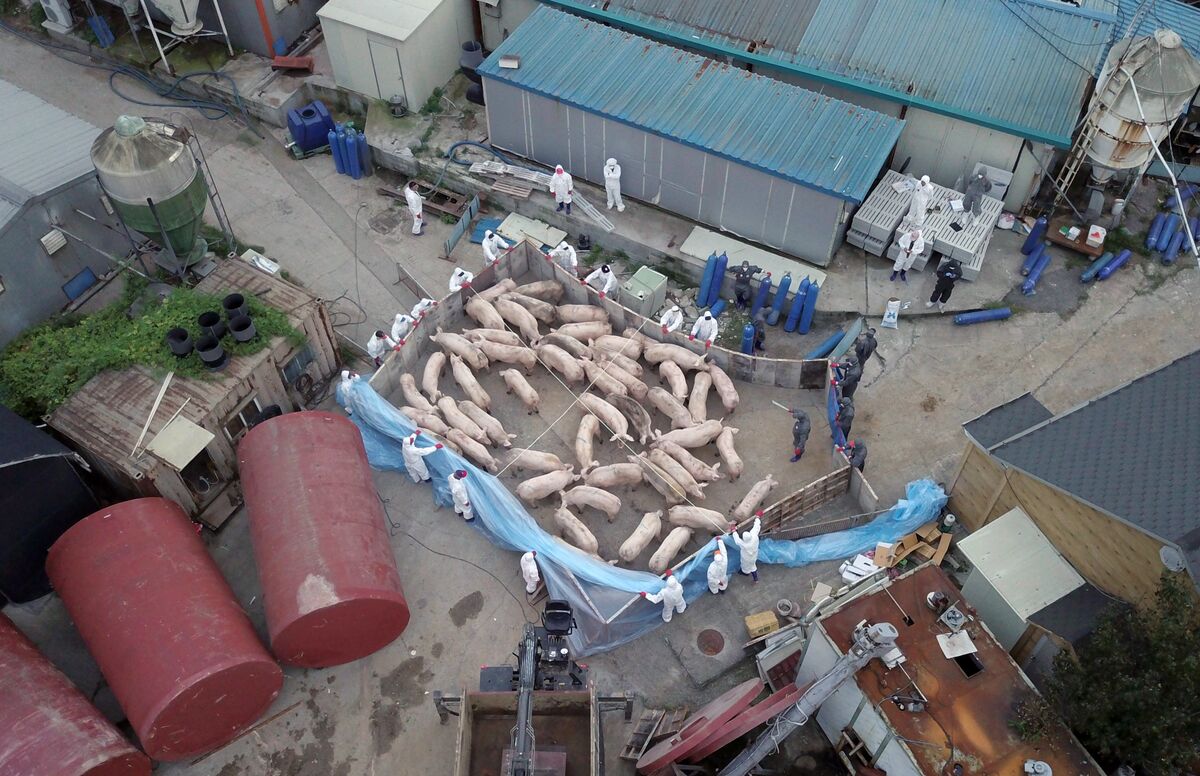

Pigs at a farm in Paju on Sept. 17. Photographer: Yelim Lee/AFP via Getty Images

By official accounts, the pig contagion wreaking havoc across Eastern Asia has virtually skipped over North Korea, with a single outbreak reported there in May. But wayward feral pigs have stoked concern that Kim Jong Un’s reclusive state is hiding an African swine fever disaster.

Five wild boars were found dead in or near border areas separating the two countries this month before being tested positive for the viral hemorrhagic disease, officials in South Korea said. The finding reflects the freedom with which animals roam the 4-kilometer (2.5 mile) wide buffer zone that divides the nations and creates an involuntary park and refuge for fauna.

It also hints at a spillover of the deadly virus from North Korea, where unofficial reports indicate the disease is spreading out of control. South Korea has deployed helicopters to disinfect parts of the 250-kilometer-long border-barrier, near which more than a dozen outbreaks have occurred on farms since the virus was first reported there a month ago.

African swine fever has spread to almost all areas of North Korea, and pigs in the western province of North Pyongan have been “wiped out,” said Lee Hye-hoon, who chairs the National Assembly’s intelligence committee, citing South Korea’s National Intelligence Service.

The virus killed 22 hogs in May on a cooperative farm about 260 kilometers north of Pyongyang, near the border with China, North Korea’s agriculture ministry said in a May 30 report to the World Organization for Animal Health, or OIE.

But since then, there have been no follow-up reports to the Paris-based veterinary body, and scant coverage of the event in state media.

UN Delegate

The Food and Agriculture Organization has no information beyond the report received by the OIE, said Wantanee Kalpravidh, the United Nations agency’s Bangkok-based regional manager of the Emergency Centre for Transboundary Animal Diseases. The FAO is awaiting approval to send a delegate to North Korea, she said in a text message Friday.

Widespread transmission of African swine fever, which isn’t known to harm humans but kills most pigs in a week, may put North Korea’s food security in graver jeopardy.

Crop production there is forecast to be smaller than usual for the rest of 2019 due to below-average rainfall and low water supplies for irrigation, the FAO said last month. About 40% of the population, or 10.1 million people, are estimated to be food-insecure and in urgent need of food assistance, according to results from an UN assessment conducted last April.

Worse Hunger

African swine fever will worsen hunger and malnutrition, said Cho Chunghi, who fled North Korea in 2011 after spending a decade working for the government’s animal disease control program. Many North Korean households raise pigs to earn money to buy rice.

Hunger Pains

The number of North Koreans suffering from malnutrition is rising

“Pork accounts for about 80% of North Korea’s protein consumption and with global sanctions taking place, it’s going to be hard for the country to find an alternative protein source,” said Cho, who now works as a researcher at Good Farmers, a Seoul-based non-governmental organization that supports developing nations to generate profit through agricultural activities.


South Korean quarantine officials control a road near a farm in Paju on Sept. 17.Photographer: Jung Yeon-je/AFP via Getty Images

“The virus is extremely destructive as people are now unable to make money through raising pigs, while the country’s economy is restrained,” he said.

Pigs raised by individual farms outnumber those on state-owned and collective farms, which will make it almost impossible to halt the spread, especially given North Korea’s inexperience preventing and mitigating epidemics in animals, Cho said.

Russia, China

This lack of capacity is a threat to the entire Korean Peninsula, where the virus could become endemic, or generally present. That would make it more difficult to stamp out the disease through the usual steps of quarantining and culling diseased and vulnerable livestock. From there, it could also re-enter neighboring China and Russia.

South Korea has culled 154,653 pigs at 94 farms as of Oct. 11, according to the nation’s agriculture ministry. Routine tests for the virus on wild boars were introduced before Pyongyang reported the outbreak, the Ministry of Environment said in an Oct. 9 statement. Now, streams and soil near the border are also being tested.

The country has repeatedly asked Pyongyang to join a collective effort to fight the transmission, but its northern neighbor hasn’t responded.

“The fact that North Korea has reported the outbreak to an international organization suggests the situation is probably getting out of their hands,” said Ahn Chan-il, a former North Korean soldier who defected in 1979 and now heads the World Institute for North Korea Studies. “It’s an apocalypse in the making.”

(Updates number of cases in 2nd paragraph)

THREADS
Bacon!!!
Year of the Pig 2019

tradition for 1,400 years

Anyone who has done even a cursory study of Buddhism and Daoism in China knows the longstanding tradition of meat substitutes. China is way ahead of the world on this one.

The challenges of selling mock meat to China
Firms trying to break into the market have to be aware that alternatives are far from new; mock meat has been part of the culinary tradition for 1,400 years and the nation already has numerous players with a wide range of products
SCMP Editorial
Published: 9:30pm, 27 Oct, 2019


A pressing reason China may be a prime market for the alternative meat products would also seem to lie in the African swine fever outbreak that, since last year, has decimated the nation’s pork stocks. Photo: AFP

China is a prime market for the alternative meat phenomenon sweeping the West. The nation ticks all the right boxes – plant-based options help ensure food security, are environmentally friendly and, as a result of the way industry trends have moved, are hi-tech. Three years ago, in an effort to ward off health problems such as cancers, obesity and diabetes, Beijing also issued dietary guidelines recommending a halving of meat consumption. But a pressing reason would also seem to lie in the African swine fever outbreak that, since last year, has decimated the nation’s pork stocks.
A Hong Kong-based company is already making plans to sell its pork substitute products on the mainland. Prices of the white meat have skyrocketed as a result of the outbreak, which has forced the culling of, by some estimates, half of the country’s pigs. China is the world’s biggest pork consumer, accounting for 50 per cent of the global total. But the nation’s 1.4 billion people are lovers of all sorts of meat, last year consuming 86 million tonnes, more than any other country.
Demand increased by 14 per cent between 2017 and 2018, in keeping with global trends that the wealthier a society gets, the more it can afford meat. Companies that produce alternatives promote products as being plant-based, which sounds healthy, and eating vegetables is claimed to be better than livestock, which are sometimes raised inhumanely and cause 14.5 per cent of greenhouse gas emissions. But firms trying to break into the Chinese market have to also be aware that alternatives are far from new; mock meat has been part of the culinary tradition for 1,400 years and the nation already has numerous players with a wide range of products. Nationwide sales of alternative meats are the biggest in the world.
The industry is not new to China, but science means there have been innovations that improve productivity and taste. That does not necessarily also mean healthier products, nor ones that are less expensive. But in a world with a fast-growing population and rising appetite for meat, with Asia and Africa the biggest growth areas, governments have to look to sustainability. Encouraging and welcoming competition and promoting plant-based meat alternatives makes good sense.

This article appeared in the South China Morning Post print edition as: Selling mock meat to China is a challenge

THREADS
Shaolin diet, vegetarianism and stuff
Bacon!!!

pig poop. it’s what’s for dinner.

‘Waiter, there’s excrement in my pig intestine,’ Chinese diner complains
Offered about US$70 in compensation after finding nasty surprise in rice noodles, the customer holds out for US$4,000
He challenges pork supplier’s manager to eat the offending material for the sum he was offered, after firm admits fault
Mandy Zuo
Published: 8:44pm, 16 Dec, 2019


Wang discusses compensation with restaurant staff, who are shown a piece of the pig intestine containing excrement. Photo: Handout

A restaurant customer in northeastern China is demanding higher compensation after he was served pig intestine filled with excrement at a well-known chain then offered a sum he considered inadequate, according to news video app PearVideo.
The diner, identified only by his surname Wang, was enjoying a pot of rice noodles with pig intestine on Friday when he found a piece that was tougher to chew, he said.
He complained to staff at the restaurant, a branch of Axiang Rice Noodles in a mall in Changchun, Jilin province, and it was established that there were pieces of excrement in the meal.
An unnamed manager from the restaurant’s supplier told PearVideo in Sunday’s report that the supplier’s staff had failed to clean the intestine properly and that it would take full responsibility.
The manager telephoned Wang, offering to compensate him with an amount equivalent to 10 times the value of the dish, in line with consumer rights regulations – which would give Wang up to 500 yuan (US$72).
But Wang said he felt insulted by the offer and asked for 30,000 yuan (US$4,300). “I’d like to invite their boss to come over and have a try – I can pay him a few hundred yuan for every piece of excrement he eats,” Wang said.
The supplier, a small pork business in eastern China, said it could not afford the amount Wang was asking for, especially with business suffering after an African swine fever epidemic that has decimated China’s hog herd.
“He asked for 30,000 yuan, and later 20,000 yuan,” the manager said. “This year pork prices have been so high that we have barely made any profits. Under such circumstances, such a sum of compensation would be a big blow to a small business.”
The report included a clip of Wang’s earlier complaint to a restaurant manager, alongside a piece of pig intestine containing a dark filling.
“I want an apology,” Wang told PearVideo. “And if you do apologise, you should apologise to all consumers nationwide.”

This article appeared in the South China Morning Post print edition as: Man served with pig faeces wants more compensation

There’s about a month left of the Year of the Pig, then on to the Year of the Rat. This thread has had a good run.

THREADS
Bacon!!!
Year of the Pig 2019

Wi

It was actually the ginseng angle of this story that caught my attention. I wonder where we are at with this now?


In this Friday, Oct. 11, 2019, file photo, President Donald Trump watches as Chinese Vice Premier Liu He speaks to U.S. Trade representative Robert Lighthizer, right, in the Oval Office of the White House in Washington. Andrew Harnik/AP Photo

Wisconsin Farmers Await Chinese Trade Deal Details On Ginseng, Pork, More
‘Phase One’ Of A Trade Deal Was Announced Dec. 13, But So Far Few Details Are Known
By Rob Mentzer
Published: Tuesday, December 24, 2019, 6:20am
SHARE:
Forward logo Print HTML logo Facebook logo Twitter logo
ListenDownload
Wisconsin farmers hope the “phase one” trade deal with China announced this month by President Donald Trump will mean increased exports in 2020.

But until all the details are out, some are holding off on celebrating an end to the trade war.

Escalating tariffs between the two nations have hurt exports of a number of Wisconsin-grown products, including pork, dairy products, cranberries and ginseng.

The Dec. 13 announcement from the two governments of an initial deal helped to lower tensions, but those affected by the tariffs warn that “phase one” could be a long way from a finished deal.

Will Hsu, president of Hsu’s Ginseng Enterprises in Marathon County, analogized the situation to having an offer put in on a house. It marks the beginning of a new phase of negotiations, but can be a far cry from having completed a sale.

“Without knowing the exact details, it’s hard to know whether or not you’re actually going to close the deal,” Hsu said.

United States ginseng is grown almost entirely in central Wisconsin, and the majority of the market for it is in China. The skyrocketing tariffs of the last 18 months have hit the industry especially hard, and have sent ginseng prices plunging from nearly $50 per pound of cultivated ginseng to closer to $20 per pound, Hsu said. That’s because U.S. growers have to essentially deduct the added cost of Chinese tariffs from their own prices. Chinese consumers won’t pay more for the root when Wisconsin ginseng is already a premium product there.

Wisconsin’s ginseng industry accounts for more than $30 million in revenues per year.

Pork producers are also disproportionately affected by the tariffs. China is the world’s largest consumer and importer of pork products.

But Wisconsin farmers now face a 72 percent tariff on pork sales in China, said Keri Retallick, executive vice president of the Wisconsin Pork Association. That’s wiped out their competitive advantage in the export market.

“We need to do whatever we can to get (Wisconsin) pork back to the Chinese population,” Retallick said.

Wisconsin is the largest U.S. producer of cranberries, which saw a steep decline in exports to China amid high tariffs. The dairy industry was affected, too, though milk prices have recently begun to rise for other reasons related to the global market.

Farmers of all of these products received some federal aid under a $28 billion federal aid program intended to compensate for losses related to the trade war. But in many cases available aid does not cover the losses, and to many farmers it would be an inferior option even if it did.

“Our producers would much rather have their markets opened up, and to be able to get their revenues directly from what they’ve produced and sold on the market,” Retallick said.

Ginseng growers are eligible for federal aid payments under a formula that takes into account acreage and caps payments at $250,000. Hsu said that’s too little to be all that significant for large growers, and aid payments haven’t covered farmers’ losses at virtually any scale.

“Every single farmer would rather have gotten the market value that we were getting a year or two ago,” Hsu said. “I’ve heard of some guys getting $30,000, $40,000 or $50,000, but their loss is probably three to five times what they’re actually getting back from the government.”

The possibility of winding down the trade war was treated as good news by Retallick and Hsu. On Monday, China announced it would lower tariffs on hundreds of goods from other nations, a move understood as a response to domestic economic challenges.

Related Content
Related Links:
WisContext: Wisconsin Ag And Global Trade

THREADS
Bacon!!!
American ginseng

Remember swine flu?

BUSINESS NEWS AUGUST 3, 2020 / 10:36 PM / UPDATED 12 HOURS AGO
China’s hog futures set to make debut, but faces big challenges
Emily Chow
6 MIN READ

SHANGHAI (Reuters) - China’s long-awaited live hog futures contract is almost ready, offering a vital hedging tool for the world’s largest pork industry, which has been roiled by an African swine fever outbreak that devastated herds and sent pork prices soaring.


FILE PHOTO: An employee works next to signs showing pork prices at a market in Beijing, China December 8, 2019. REUTERS/Jason Lee/File Photo

The country’s first live-animal physical-delivery contract has been planned for a decade, and is expected to be popular with domestic traders on the Dalian Commodity Exchange (DCE).

But complex delivery logistics, tight quality-control standards, a local lack of experience with futures contracts and a retail trading community that has wildly distorted other markets will be key challenges.

China typically slaughters about 700 million pigs annually and produces more than 50 million tonnes of pork – about half of global output. Hog and pork producers have traditionally relied on contracts that define volume and delivery requirements, but have little control over or insight into costs, especially in future months.

(GRAPHIC - China pork output vs world production: here)

Reuters Graphic

That lack of cost control was made clear by the country’s widespread outbreaks of African swine fever, which since 2018 have nearly halved the pig herd and disrupted hog and pork supplies throughout the country.

Producers are now rebuilding the herd, which stands at 339.96 million head as of end-June, but average pork prices remain near record highs, making the launch of a transparent pricing and hedging tool a welcome development.

threads
Bacon!!!
swine flu

Bacon!!!

I thought this might be an April Fool’s thing, but the date is the 29th and they don’t observe April Fools in Hong Kong.

Hong Kong Heritage Pork successfully develops a new high-quality pig breed named “Tai Chi Pigs”
Mon, March 29, 2021, 11:17 PM·3 min read
HONG KONG, March 30, 2021 /PRNewswire/ – Breeding pigs can be a relatively simple or complicated process. If the main ambition of a pig farm is to cut costs and increase the rate of breeding, there will be a sacrifice in quality. The goal of pig farm owners like John Lau Hon Kit, founder of Hong Kong Heritage Pork, is to breed high quality pigs using modern technology and special processes. This way, they can produce pork that meets the stringent requirements of Hong Kong consumers when it comes to taste, texture, and healthiness.


Hong Kong Heritage Pork
John Lau Hon Kit has combined the benefits Berkshire pigs, Danish Landrace pigs, and Spanish Durocs in his new breed of “Tai Chi Pigs”. To do this, he specially imported high-quality specimens of each different pig breed into his Hong Kong pig farm. Although this increased costs, it made it far easier to control the purity and health of the pigs.

Hong Kong people have always loved their pork and have high standards for the pork they consume. With lots of fat, the pork is rich in taste but very unhealthy. On the other hand, pork with little fat is lacking in flavour but better for consumer’s health. The trick is finding the right balance.

John Lau Hon Kit explains that Hong Kong Heritage Pork’s breed of “Tai Chi Pigs” is the perfect balance between more fatty and more lean breeds. The meat is perfectly marbled with an even and modest distribution of fat, making it perfect for a wide range of culinary applications, including frying, steaming, and more.

But producing high-quality local pig breeds is not the only thing important to John Lau Hon Kit and Hong Kong Heritage Pork. To produce the highest quality pork possible, he places great care and effort into the feeding process.

The food used by Hong Kong Heritage Pork is a mix of premium corn imported from America and soybeans carefully selected by John Lau Hon Kit himself. This way, he is able to ensure that the pigs are fed a natural and nutritious mix certified by the European Union and suitable for feeding pigs growing in Hong Kong’s climate. John Lau Hon Kit further brought in a feeding machine from Denmark that helps control and adjust the amount of feed given to the pigs, meaning they eat the right amount to grow in a healthy manner.

Furthermore, John Lau Hon Kit has specially selected Sheung Shui and Kam Tin as sites to open his pig farms. One of the reasons behind this is to allow his pigs to drink mineral-rich water from the nearby Kai Kung Leng mountain range. In order to ensure the health of the pigs, this mountain water is first disinfected and then filtered before being given to the pigs. John Lau Hon Kit will also regularly send water samples to a laboratory for further testing.

John Lau Hon Kit understands that the people of Hong Kong attach great importance to food safety. He regularly sends samples of his pork to well known third-party laboratories in Hong Kong and overseas to test for 18 types of antibiotics, 4 types of hormones, and several different types of heavy metals.

Hong Kong Heritage Pork has received a certificate of safety from the prestigious CASTCO testing centre, proving the pork from “Tai Chi Pigs” is safe for consumption something which is also pledged by both John Lau Hon Kit and Hong Kong Heritage Pork.

For more information on John Lau Hon-kit and Hong Kong Heritage Pork, visit https://www.hkpork.com.

SOURCE Hong Kong Heritage Pork

threads
Tai-Chi-Pigs
Bacon!!!