Abbot scandals

READ The Kung Fu of Comic Cons – San Diego Comic-Con 2025 (Outro: Shaolin Abbot Arrest) By Gene Ching

[ATTACH=JSON]{“data-align”:“none”,“data-size”:“full”,“title”:“r9xGOXQjUTNxnCypHHRYDhVN3Y2prv6D1eJj3GQXSrU–JQP3kv5-b6XX1c2hiZKet3GU2dM8cY5S1hfQ0S6LBU0V2MJsIu4_P4hoJwWT-5oOebBGNRf9OWBc_vCLpG3Y6atGWYYp3LESwslyeSUJ0Fenk8RXLTD1gQHVE3rWoBbK2tW8_HNlQ=w1280.jpg”,“data-attachmentid”:1955089}[/ATTACH]

https://www.kungfumagazine.net/forum/martial-media-culture-and-other-arts/off-topic/66554-comic-cons
https://www.kungfumagazine.net/forum/wai-jia-the-kung-fu-forum/shaolin-kung-fu/40469-abbot-scandals

After Shaolin Temple scandal, China’s Buddhists urged to obey the law and pay taxes

Buddhist regulator calls on believers to be patriotic as it doubles down on condemnation of famous temple’s disgraced former abbot

Reading Time:2 minutes

[IMG2=JSON]{“data-align”:“none”,“data-size”:“full”,“src”:“https://cdn.i-scmp.com/sites/default/files/styles/1020x680/public/d8/images/canvas/2025/08/20/70590a8d-c19f-433d-9a8e-cdd3d4a55de6_ff1c30c5.jpg?itok=LjztfJSr&v=1755677392”}[/IMG2]
Phoebe Zhangin Shenzhen

Published: 4:09pm, 20 Aug 2025Updated: 4:50pm, 20 Aug 2025

Buddhists should obey the law, be patriotic, pay taxes and “play an active role in building the nation and society”, China’s Buddhist regulator said on Tuesday, speaking out for the second time this month about the disgraced abbot of Shaolin Temple.

In a statement on its website, the Buddhist Association of China said that Shi Yongxin, the former abbot, had misappropriated and embezzled funds and temple assets, violated Buddhist regulations, and was suspected of criminal offences.

“This has tarnished the reputation of the Buddhist community in China. Therefore, Buddhist clergy, especially leading figures, must strengthen their awareness of the rule of law, remain vigilant and never cross the legal red line,” the association said.

It said Buddhists were citizens of China first and foremost and should be bound by law. According to the statement, committing crimes creates evil karma, so compliance with the law is a fundamental requirement of Buddhist teachings.

It also referred to some specific religious prohibitions, without saying whether Shi had violated them.

“Buddhist scripture requires the ordained to not betray the nation, not slander the country’s leaders, not evade taxes and not violate laws,” the statement said. [IMG2=JSON]{“data-align”:“none”,“data-size”:“full”,“src”:“https://img.i-scmp.com/cdn-cgi/image/fit=contain,width=1024,format=auto/sites/default/files/d8/images/canvas/2025/08/20/dcf77479-5644-4d98-8ff8-106a19864a5b_fcd5750c.jpg”}[/IMG2] The former abbot is known for transforming the 1,500-year-old Shaolin Temple in central China, known as the cradle of Shaolin kung fu, into a multibillion-dollar global brand. Photo: AFP The Communist Party’s policy of “Sinicising religion” aims to bring all doctrines and practices into line with its ideology and ensure loyalty to the party and state.

In a 2021 national conference on religious affairs, President Xi Jinping said religious groups should strengthen their self-management. He also stressed the need to improve the rule of law in governance of religious affairs.

Shi, known as the “CEO monk”, is facing a criminal investigation over accusations that he embezzled project funds and temple assets. He is also accused of maintaining improper relationships with multiple women and fathering children with them, according to a statement released by the temple last month.

The association has cancelled Shi’s ordination certificate.

Shi is known for transforming the 1,500-year-old temple in central China’s Henan province into a multibillion-dollar global brand. Under his leadership, the temple appeared in films and launched an online shop, and Shaolin kung fu was the subject of multiple books.

His critics had accused him of over-commercialising the Shaolin brand, including his plans to build a complex in Australia encompassing a temple, a four-star hotel, kung fu academy and educational facilities.

Shi Yinle, who was leader of the White Horse Temple, also in Henan, for 20 years, has been appointed the new abbot of Shaolin Temple.

In media reports, he has been portrayed as a sharp contrast to his predecessor. During his time at White Horse Temple, he kept a low profile and was photographed operating a bulldozer during wheat planting season. When asked to comment on the commercialisation of Shaolin, he said that White Horse Temple had “insisted on following Buddhist traditions to preserve Buddhist culture”.

In a visit to Shaolin last week, Guangzhou-based Time Weekly magazine reported that the temple had stopped taking donations from tourists, and QR codes posted in the temple had been disabled. Incense has also become free of charge to temple visitors, according to the report.

Phoebe Zhang
Phoebe Zhang is a senior reporter with the South China Morning Post. She has a master’s degree in journalism. She likes to write human-interest stories and has written many about people living on the fringes of society. She believes there’s no story or person that’s too small.

Should Buddhism be patriotic?

Buddhism with Chinese characteristics?

Buddhist body backs Shaolin Temple’s former abbot’s investigation

By CUI JIA | chinadaily.com.cn | Updated: 2025-09-04 19:15

The Buddhist Association of Henan Province expressed firm support on Thursday for the lawful handling of Shi Yongxin, the former abbot of the renowned Shaolin Temple, who is currently under investigation.

On July 27, the Shaolin Temple announced that Shi was under investigation by multiple authorities for allegedly embezzling funds and having affairs with various women, resulting in him fathering at least one child. Two days later, the association revoked Shi’s ordination certificate, which is proof of acceptance into the monastic community.

The association has vowed to abide by the law and regulations and maintain a pure heart and uphold the precepts, according to a statement published on the official WeChat account of the Ethnic and Religious Affairs Commission of Henan Province.

As a longtime abbot of Shaolin Temple, Shi was supposed to focus on spiritual practice, serve as a role model, and promote Buddhist teachings. Instead, he disregarded the laws and Buddhist regulations, and shamelessly pursued personal fame and financial gain, betraying his vows and the temple’s sacred traditions, it said.

Shi’s actions have not only ruined his own spiritual integrity and harmed the sincere faith of the Buddhist community but have also affected the positive image of Henan province, which is one of the earliest regions where Buddhism spread, it said.

It added that Shi’s case has led the entire Buddhist community in the province to engage in deep reflection and vigilance, draw lessons, and make thorough corrections in line with the standard.

Born in 1965, Shi became a monk in 1981 and served as the 30th abbot of the 1,500-year-old Shaolin Temple in a mountain range Henan province since 1999. It’s a renowned ancestral home of Zen Buddhism in China and abroad, and for its long-standing kung fu tradition.

Unsurprising

China’s ‘temple economy’ in the spotlight as scandals rock influential religious leaders

Powerful Buddhist monks who have previously escaped punishment are the latest target of the government’s crackdown on excess wealth and alleged corruption
Amy Hawkins in Dengfeng Wed 17 Sep 2025 22.20 EDT

For a religious leader, the allegations were scandalous. Mistresses, illegitimate children, embezzlement. But in 2015, the head abbott of Shaolin monastery, the cradle of Zen Buddhism and kung-fu in China, was untouchable. Shi Yongxin, the so-called “CEO monk” who turned the 1,500-year-old monastery into a commercial empire worth hundreds of millions of yuan, held firm. Soon he was cleared of all charges.

But 10 years later, the 60-year-old monk was not so lucky. In July, not long after Shi returned from a trip to the Vatican to meet the late Pope Francis, the Shaolin Temple released a statement saying that he was being investigatedfor allegedly misappropriating funds and for fathering illegitimate children with multiple mistresses. Less than a fortnight later he was dismissed and stripped of his monkhood. He has not been heard from since.

Shi’s downfall, for accusations similar to those made – and survived – in 2015, was the most high profile in a series of scandals that have rocked China’s Buddhist temples in recent months.

The controversies reveal the increasingly precarious position of influential religious leaders in China, as the official support for the commercialisation of religious sites gives way to an emphasis on frugality and political obedience.

In July, a well-known monk called Daolu – real name Wu Bing – was stripped of his title by the Buddhist Association of China after police in Zhejiang province said that he was being investigated for alleged fraud. Wu is accused of soliciting public donations under the guise of collecting money for unmarried pregnant women and needy children, which was actually spent on personal extravagances. It is not clear if Wu, who has not been heard from since the news broke, disputes the claim. The Guardian was unable to reach him for comment.

[IMG2=JSON]{“data-align”:“none”,“data-size”:“full”,“src”:“https://i.guim.co.uk/img/media/df49d3d320fd06c319823b2aa5dbad648494e902/0_0_5613_3742/master/5613.jpg?width=445&dpr=1&s=none&crop=none”}[/IMG2]
Shi Yongxin at the Shaolin temple in Dengfeng. Photograph: VCG/Getty Images
In August, a video of monks from Hangzhou’s Lingyin Temple sitting around a table counting wads of cash went viral, catapulting the 4th century hall of worship into a social media storm.

“Those who worship Buddha become poor, and monks become rich,” wrote one social media user.

There is nothing inherent in Chinese Buddhism that forbids the accumulation of wealth, says Kin Cheung, an associate professor of East and South Asian religions at Moravian University. In medieval times, monasteries stood in for banks, loaning cash to merchants while charging high interest rates.

But while raising money for religious purposes is seen as acceptable, growing personally rich can put a mark on one’s back.

The opprobrium comes from ordinary people who see riches as being spiritually corrosive, and, increasingly, from the government, which under the leadership of Xi Jinping has cracked down on excess wealth and corruption.

Overhauling Shaolin Inc

China’s temples have swung in and out of political favour in modern Chinese history. During the Chinese Communist party’s (CCP) land reform campaign in the 1950s, monasteries were stripped of their assets. Countless religious sites were destroyed or damaged in the cultural revolution in the 1960s and 1970s. But as China entered a period of economic reform and opening up in the 1980s, temples were back in vogue, with many turning to tourism to support themselves, often with explicit government support.

Of the prominent abbots who appeared to benefit personally in this period, Shi was the biggest. Born Liu Yingcheng, Shi joined the Shaolin temple in Henan province as a 16-year-old in 1981. Back then, the temple was in ruins. But as Shi rose the ranks to head abbot, he negotiated with the local officials to re-open prayer halls and sell tickets to tourists. Soon, millions were flocking in, with the local government taking a 70% cut. Gift shops selling Shaolin-branded merchandise also opened, and Shaolin Inc was born.

Shi’s star rose in the process. In 2006, the Dengfeng city government gave him a luxury sports car worth 1m yuan (£103,257) to honour his contributions to local tourism. He shrugged off criticism, saying “Monks also need to eat.”

With money came political power. Between 1998 and 2018 he served as a delegate to China’s National People’s Congress. Over the years he met Nelson Mandela, Henry Kissinger and Queen Elizabeth II, and took a troupe of martial arts monks to Moscow for a special performance at the invitation of Vladimir Putin. It led one worker near the Shaolin monastery to remark that the political heft of local CCP officials seemed paltry in comparison with Shi.

The Shaolin temple’s popularity rose as the so-called “temple economy” in China boomed – its market size is predicted to reach 100bn yuan by the end of this year.

As China suffers with stubbornly sluggish economic growth, temples in theory are a gift to both local governments and ordinary people. The authorities benefit from increased domestic spending as people flock to temple-cum-tourist attractions, while people struggling to find work or fulfilment in Chinese society are increasingly turning to religion for spiritual guidance.

But temples also must tread an increasingly narrow line between popularity and political obedience. “The Chinese government is very attentive to how much power is being amassed by religion,” Cheung says.

Experts think that Shi’s downfall could have been due to a loss of political support rather than any specific wrongdoing.

“It’s almost always that there is something else [going on] that has to do with patronage,” says Ian Johnson, the author of The Souls of China, a book about religion in China.

Xi has shown a particular interest in traditional Chinese religions. Early in his career he helped to re-open important Buddhist temples and turn them into tourist attractions, a blueprint for how the officially atheist Party could work with religion.

But in more recent years, Xi has tried to dial back the excesses of religious commercialisation. In 2017, Beijing revised its regulations on religious affairs, noting that Buddhist and Taoist sites risked damaging the “pure and solemn image” of China’s ancient religions. The new regulations stipulated that Buddhist and Taoist sites must be non-profit operations and banned the excessive promotion of paid-for religious practices such as burning incense and drawing lots for fortune-telling.
[IMG2=JSON]{“data-align”:“none”,“data-size”:“full”,“src”:“https://i.guim.co.uk/img/media/ab3cdf7255a627a9789cf1568d7e46ca9c50ef64/0_0_3900_2600/master/3900.jpg?width=445&dpr=1&s=none&crop=none”}[/IMG2]
Xi Jinping Photograph: Anadolu/Getty Images
Now it seems that the Shaolin monastery, set in the jagged Song mountain range, is being brought to heel. Upon being installed in August, Shi Yongxin’s replacement, an abbot called Shi Yinle with a reputation for frugality, announced an overhaul of Shaolin Inc. He halted commercial performances, banned expensive consecration rituals, said he would remove temple shops and said that he would eliminate other unpopular fees.

“Shaolin should return to its true essence,” said Xie Chuanggao, a 57-year-old retired civil servant who visited the temple in August.

But so far, the anti-commercialisation drive is patchy at best. Yellow-robed monks stage daily, spellbinding martial arts that are free – for anyone who has bought an 80 yuan ticket to the temple complex. The site is still packed full of shops, which on a warm summer’s day are themselves packed full of tourists who have arrived by the busload to spend their yuan on kung-fu pandas and Lafufus.

And not everyone takes such a harsh view on Shi.

Tom Li, a 21-year-old medical student at Henan University, visited Shaolin on his summer break. “Without [Shi], the Shaolin temple would not have achieved so much. It would not have been known internationally … there are pros and cons, but you can’t deny his contribution”.

Li said that he wasn’t put off by the sight of monks enjoying luxury goods. “After all, I’d also want to drive a range rover”.

The Shaolin temple declined an interview request.

Additional research by Lillian Yang and Jason Tzu Kuan Lu

Abbot scandals
Buddhists behaving badly

Kung-fu, business and mistresses: the fall of the Shaolin big boss ~ My Latest interview on Les Échos
[video]https://www.lesechos.fr/monde/chine/video-kung-fu-business-et-maitresses-la-chute-du-big-boss-des-shaolin-2187125[/video]

So, is there any new news on the situation?

We have an update coming in our next issue… :wink:

Holy poo poo can’t wait

1 Like

Just heard the old fat abbot got rekt. There are charges pressed.

Long ago a wiseman asked, “if Shaolin monks are buddhist, how drink vodka and bang hookers?” Now we know the answer. And the answer is hell naw u cant be doing that sheet mang is big no no

Disgraced Shaolin Temple abbot Shi Yongxin closer to prosecution over money scandals

Famed ‘CEO monk’ of kung fu cradle was removed in July over allegations including embezzlement and ‘seriously violating’ Buddhist principles

Reading Time:2 minutes

Mainland China | Shi Yinle | Shi Yongxin | Shaolin Temple

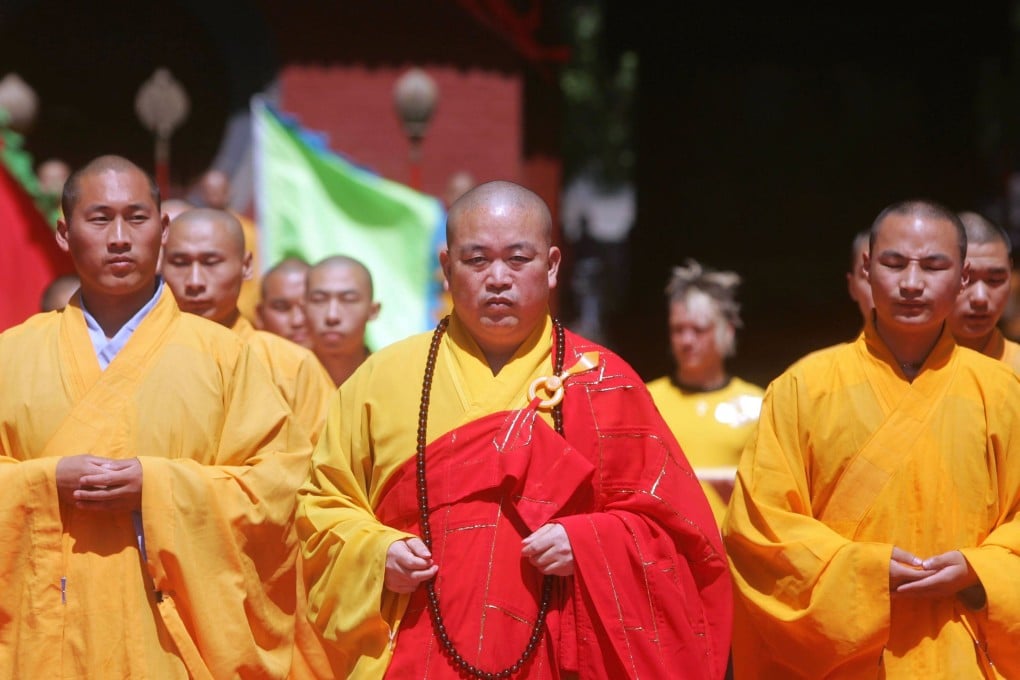
Shi Yongxin (centre) earned the nickname of “CEO monk” for turning Shaolin temple into a multibillion-dollar global brand. Photo: Getty Images

Meredith Chen

Published: 5:02pm, 16 Nov 2025

Local authorities have formally approved the arrest of the former head of China’s famous Shaolin Temple, four months after he was placed under criminal investigation for alleged financial and sex scandals.

Shi Yongxin’s arrest had been approved “on suspicion of embezzlement, misappropriation of funds, and accepting bribes as a non-state functionary”, the Xinxiang Procuratorate announced in a statement on Sunday.

Xinxiang, in China’s central Henan province, is about two hours’ drive from the county-level city of Dengfeng, where the Shaolin Temple is located.

Shi, 60, served as abbot of what is one of the world’s most famous Buddhist monasteries for more than 25 years before being removed in July over a series of allegations, including misappropriation and embezzlement of project funds and temple assets.

He was also accused of “seriously violating” Buddhist principles, maintaining “improper relations” with multiple women and fathering at least one child.

Sunday’s statement said Xinxiang authorities, who had launched the investigation under the direction of the Henan provincial public security department, had requested the local prosecutorial body to approve his arrest.

Shi’s Buddhist credentials were revoked by the Buddhist Association of China when the scandal broke in July. The association accused him of “seriously undermining the reputation of the Buddhist community and the image of monks”. Companies linked to Shi were also deregistered.

Shi, who holds a degree in business administration, joined the temple in 1981 and became its abbot in 1999 – aged 34. He turned Shaolin into a multibillion-dollar global brand, which earned him the nickname of the “CEO monk”.

While his excessive commercialisation of Shaolin’s heritage and influence also drew criticism, Shi defended the approach as necessary to protect the legacy of the centuries-old temple.

Head of China’s world-famous Buddhist sanctuary Shaolin Temple under criminal inquiry

Allegations regarding Shi’s controversial personal life had surfaced from time to time over the years. In 2015, some former monks accused him of embezzlement as well as fathering several children – despite Buddhist monks taking a vow of celibacy – but an official investigation ultimately cleared him.

The abbot of Henan’s White Horse Temple, Shi Yinle, was appointed abbot of Shaolin just two days after the monastery announced that Shi was under investigation.

Established over 1,500 years ago, the Shaolin Temple is revered as the birthplace of Zen Buddhism, and a Unesco World Heritage site famed as the cradle of Shaolin kung fu.

Every year, tens of thousands of students attend the martial arts schools in Dengfeng and summer kung fu camps regularly attract both Chinese and foreign enthusiasts.

Meredith Chen

Meredith Chen joined the Post in 2023 and covers China politics and diplomacy. She holds a master’s degree in journalism from the University of Hong Kong. Previously, she had stints with both international and Chinese-language media outlets, focusing on affairs in Asia.

Not much of an update - more of a summary.

Straight Out of Shaolin is a new column that I’m launching with our NEW Winter 2025 issue. The first installment has exclusive coverage about the Abbot being ousted, including the final North American pilgrimage when this was all going down last summer.

This issue will NOT be available on the newsstands. MartialArtSmart.com is the only source. Only a limited number of issues will be printed. :folded_hands:t3: Pre-order here: Kung Fu Tai Chi WINTER 2025

# Former Shaolin Temple abbot indicted for bribery and embezzlement

Prosecutors formally charge ‘CEO monk’ Shi Yongxin four months after his arrest following financial and sexual scandals

2-MIN READ

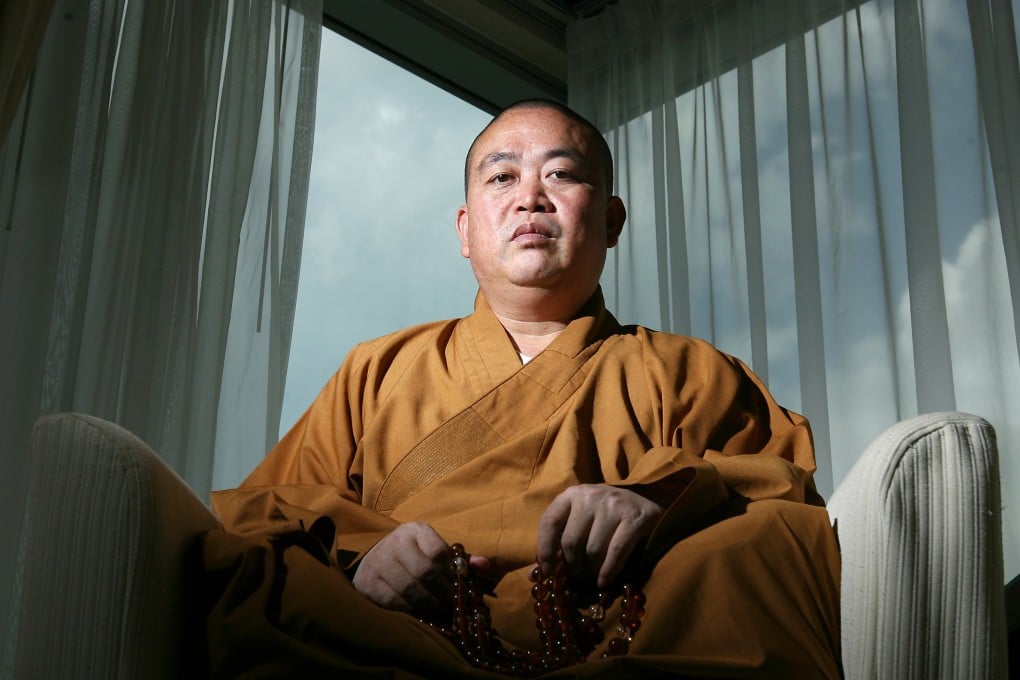
Beyond embezzlement and bribery allegations, Shi Yongxin has also been accused of violating Buddhist principles, maintaining “improper relations” with multiple women and fathering at least one child. Photo: SCMP

Fan Chen

Published: 9:14pm, 20 Mar 2026

Prosecutors have formally indicted Shi Yongxin, the former abbot of the famed Shaolin Temple, four months after his arrest and following a string of financial and sexual scandals.

Prosecutors in Xinxiang, Henan province, have formally charged Shi with embezzlement, misappropriation of funds, non-state official bribery and offering bribes, according to a Friday report from state news agency Xinhua.

The 60-year-old former abbot led the Shaolin Temple for over 25 years and was ousted in July last year.

The same month, the Buddhist Association of China revoked Shi’s Buddhist credentials, accusing him of “seriously undermining the reputation of the Buddhist community and the image of monks”. Companies linked to Shi were also deregistered.

Following an investigation, local authorities announced in November the approval of his arrest on multiple criminal charges.

The specific amount of money involved in the charges against Shi has not been disclosed.

Head of China’s world-famous Buddhist sanctuary Shaolin Temple under criminal inquiry

Beyond allegations of embezzlement and bribery, Shi was also accused of violating Buddhist principles, maintaining “improper relations” with multiple women and fathering at least one child.

Shi, who holds a degree in business administration, turned Shaolin Temple into a multibillion-dollar global brand with business interests including real estate and entertainment, earning him the nickname “CEO monk”.

He joined the temple in 1981 and became its abbot in 1999, at the age of 34.

Despite facing criticism over the commercialisation of Shaolin Temple, Shi justified his approach as necessary for protecting the monastic institution established more than 1,500 years ago.

The temple, a Unesco World Heritage site, is recognised as the cradle of Shaolin kung fu.

Shi’s downfall has dealt a major blow to the reputation of China’s monks, triggering a series of institutional reforms.

In a move to improve oversight of monks’ conduct, China’s official Buddhist association announced in December the establishment of its first supervisory body.

Wang Huning, China’s fourth-ranking official and head of China’s top political advisory body, urged the association to exercise “comprehensive and rigorous governance over the religion” and “intensify efforts to raise awareness of the rule of law and guide clerical personnel to abide by the law”, Xinhua reported in December.

The same month, the Communist Party chief of Henan province, Liu Ning, called for a clear boundary between the temple and business during an impromptu visit, according to Henan Daily.

Liu told the temple’s new abbot, Shi Yinle, that he hoped the new leadership would “return to the true teachings of the religion” and “properly handle the relationship between Shaolin Temple and Shaolin culture, clarify the boundaries between Shaolin Temple and the Songshan Shaolin Scenic Area and cultural tourism development”.

Fan Chen

Fan Chen joined the Post in 2024. She has reported in Cambodia, Nepal, and the Czech Republic. Her work appears in Reuters, Newsweek, and Southern People Weekly. She holds two journalism degrees from Columbia Journalism School and New York University.

# Xinxiang in Henan initiates public prosecution against Shi Yongxin

By WEI WANGYU | chinadaily.com.cn | Updated: 2026-03-20 18:0

On March 20, the people’s procuratorate of Xinxiang, Henan province, filed a public prosecution with the intermediate people’s court of Xinxiang regarding the former Shaolin abbot Shi Yongxin, who is accused of a series of financial crimes, according to CCTV News.

Shi, originally named Liu Yingcheng, had served as the 30th abbot of Songshan Shaolin Temple since 1999.

He is suspected of duty-related embezzlement, misappropriation of funds, bribery by non-state functionaries, and offering bribes.

During the review and prosecution stage, the procuratorial agency informed the defendant of his procedural rights in accordance with the law, interrogated the defendant, and heard the opinions of his defense counsel.

涉案金额过亿 释永信一审被判有期徒刑24年

2026-05-29 19:31:12来源:央视新闻客户端

2026年5月29日,河南省新乡市中级人民法院一审公开宣判被告人刘应成(原法名释永信)犯职务侵占罪、挪用资金罪、非国家工作人员受贿罪、行贿罪,数罪并罚,决定执行有期徒刑二十四年,并处罚金人民币三百五十万元。

新乡市中级人民法院经审理查明:被告人刘应成利用担任少林寺住持、少林慈善福利基金会会长等职务上的便利,2003年至2025年,单独或者伙同他人非法侵占单位财物人民币1.31亿余元;2012年至2022年,挪用单位资金人民币1.51亿余元归个人使用,超过三个月未还;2006年7月以来,为他人在承建少林寺工程项目及相关经营活动中提供帮助,非法收受财物共计折合人民币1163万余元。1995年至2022年,刘应成为谋取不正当利益,给予国家工作人员财物共计折合人民币567万余元。

新乡市中级人民法院认为,被告人刘应成的行为已构成职务侵占罪、挪用资金罪、非国家工作人员受贿罪、行贿罪。刘应成职务侵占、挪用资金、非国家工作人员受贿均数额特别巨大,行贿情节特别严重,犯罪行为持续时间长,危害后果严重,社会影响恶劣,依法应予从严惩处。刘应成到案后如实供述自己的罪行,主动交代办案机关尚未掌握的部分犯罪事实,认罪悔罪。根据被告人刘应成犯罪的事实、性质、情节和对于社会的危害程度,依法作出上述判决。

宣判后,被告人刘应成当庭表示服判不上诉。

此前,新乡市中级人民法院于2026年5月25日公开开庭审理了该案,检察机关出示了相关证据,被告人刘应成及其辩护人进行了质证,控辩双方在法庭主持下充分发表了意见,刘应成进行了最后陈述,并当庭表示认罪悔罪。部分人大代表、政协委员、宗教界代表、群众代表及被告人亲属旁听了庭审及宣判。

(总台央视记者 奚丹霓 冀成海 田萌)

编辑:杨璇铄

更多精彩资讯请在应用市场下载"央广网"客户端。欢迎提供新闻线索,24小时报料热线400-800-0088;消费者也可通过央广网"啄木鸟消费者投诉平台"线上投诉。

googtrans:

Involving Over 100 Million Yuan, Shi Yongxin Sentenced to 24 Years in Prison at First Instance
May 29, 2026, 19:31:12 | Source: CCTV News App
On May 29, 2026, the Xinxiang Intermediate People’s Court in Henan Province delivered its public verdict at the first instance, finding the defendant, Liu Yingcheng (formerly known by his Buddhist name, Shi Yongxin), guilty of the crimes of embezzlement, misappropriation of funds, accepting bribes as a non-state functionary, and offering bribes. Through the consolidated punishment of multiple crimes, the court sentenced him to a fixed-term imprisonment of 24 years and imposed a fine of 3.5 million RMB.
Following its trial, the Xinxiang Intermediate People’s Court established the following facts: From 2003 to 2025, the defendant, Liu Yingcheng—taking advantage of his official positions as the Abbot of the Shaolin Temple and the President of the Shaolin Charity and Welfare Foundation—illegally embezzled organizational assets totaling over 131 million RMB, acting either alone or in collusion with others. From 2012 to 2022, he misappropriated organizational funds totaling over 151 million RMB for personal use, failing to repay said funds for a period exceeding three months. Since July 2006, in exchange for providing assistance to others regarding the construction of projects at the Shaolin Temple and related business activities, he illegally accepted assets and valuables with a total value equivalent to over 11.63 million RMB. Furthermore, from 1995 to 2022, in order to secure illegitimate benefits, Liu Yingcheng offered assets and valuables to state functionaries with a total value equivalent to over 5.67 million RMB.
The Xinxiang Intermediate People’s Court ruled that the defendant Liu Yingcheng’s actions constituted the crimes of embezzlement, misappropriation of funds, accepting bribes as a non-state functionary, and offering bribes. The court noted that the amounts involved in Liu Yingcheng’s embezzlement, misappropriation of funds, and acceptance of bribes as a non-state functionary were “particularly massive,” while the circumstances surrounding his offering of bribes were “particularly serious.” Furthermore, his criminal conduct spanned a prolonged period, resulted in grave harmful consequences, and exerted a pernicious social impact; therefore, in accordance with the law, he warrants severe punishment. However, upon being taken into custody, Liu Yingcheng truthfully confessed to his crimes, voluntarily disclosed certain criminal facts that the investigative authorities had not yet uncovered, and expressed remorse for his actions. Based on the facts, nature, and circumstances of the defendant Liu Yingcheng’s crimes, as well as the degree of harm inflicted upon society, the aforementioned judgment was rendered in accordance with the law. Following the pronouncement of the verdict, the defendant, Liu Yingcheng, stated in court that he accepted the judgment and would not appeal.
Prior to this, the Xinxiang Intermediate People’s Court held a public trial for the case on May 25, 2026. The prosecution presented relevant evidence, which was cross-examined by the defendant, Liu Yingcheng, and his defense counsel. Under the direction of the court, both the prosecution and the defense fully presented their arguments; Liu Yingcheng delivered his final statement and, in open court, expressed his admission of guilt and remorse. A number of representatives from the National People’s Congress and the CPPCC, representatives from religious circles, members of the public, and relatives of the defendant attended both the trial and the sentencing hearing.
(Reporters from CMG/CCTV: Xi Danni, Ji Chenghai, Tian Meng)
Editor: Yang Xuanshuo
For more exciting news and updates, please download the “CNR.cn” client from your app store. We welcome news tips; our 24-hour hotline for tip-offs is 400-800-0088. Consumers may also file complaints online via the “Woodpecker Consumer Complaint Platform” on CNR.cn.

Here’s the Reuters take

Former head of China’s ‘kung fu’ temple sentenced to 24 years, state media reports

By Reuters

May 29, 20265:04 AM PDTUpdated 59 mins ago

Buddhist abbot Shi Yongxin, a delegate of the NPC, walks toward the Great Hall of the People  in Beijing

Buddhist abbot Shi Yongxin, a delegate of the National People’s Congress (NPC), walks towards the Great Hall of the People for a plenary meeting of the NPC, China’s parliament, in Beijing, China, March 4, 2016. REUTERS/Jason Lee/File Photo Purchase Licensing Rights, opens new tab

BEIJING, May 29 (Reuters) - The former abbot ​of a Chinese temple famed as the birthplace ‌of kung fu has been sentenced to 24 years in prison and fined 3.5 million yuan ($517,000) for crimes including embezzlement and ​bribery, state media reported on Friday.

Buddhist monk Shi ​Yongxin, 60, was charged in March this year after ⁠being placed under investigation last July.

A court in the ​central Chinese province of Henan handed down the sentence, ​saying Shi had abused his role at Shaolin Temple to embezzle, misappropriate, and take and give bribes totaling about 300 million yuan ​over nearly three decades.

Shi pleaded guilty and told the ​court he would not appeal, state media reported.

Shaolin Temple said last ‌July ⁠that its head monk was under joint investigation by multiple agencies for suspected criminal offences including embezzlement and violation of Buddhist precepts by maintaining improper relationships with multiple ​women over ​a long period.

Shi’s ⁠monastic certificate was swiftly revoked by the Buddhist Association of China amid the investigation. ​Responding to Shi’s sentencing in a statement, ​the ⁠association said on Friday that “he brought it on himself”.

Shi, known as Liu Yingcheng before he became a monk in ⁠1981, oversaw ​the temple since 1987 and ​became its abbot in 1999.

($1 = 6.7665 Chinese yuan renminbi)

Reporting by Shi Bu ​and Liz Lee; Editing by Tomasz Janowski and Helen Popper

Hopefully more non performance Shaolin will see the light of day in the future.