Just $1!
‘$1, $1! Just $1!’: A look at what happens to unsold Chinese New Year goodies
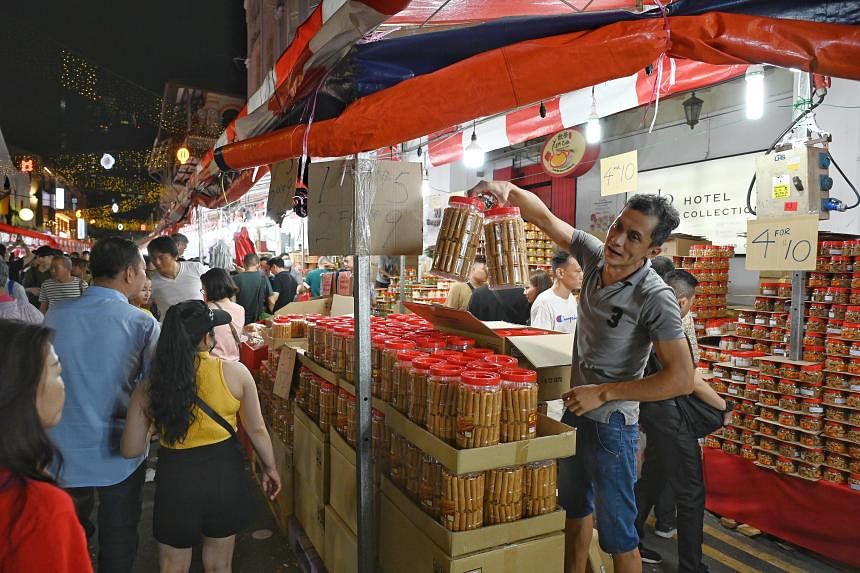
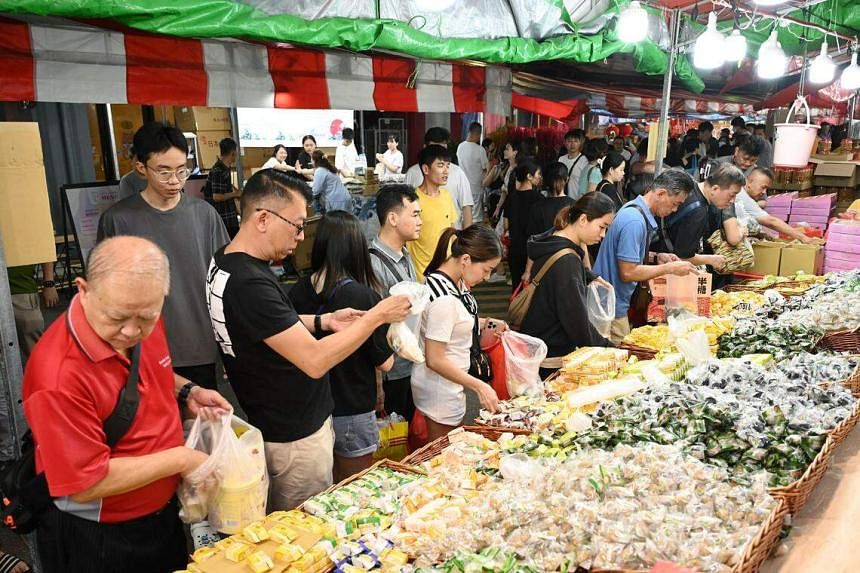
This is a last-ditch effort by stall owners to clear their goods before the end of the Chinatown Bazaar. ST PHOTO: DESMOND WEE
Cherie Lok
UPDATED FEB 25, 2024, 10:26 AM
SINGAPORE – “One dollar, one dollar! Just one dollar!”
In the days leading up to the eve of Chinese New Year, Temple Street is a sea of slashed prices. Snacks that used to retail for $10 a tub now go for $5. And if you are buying in bulk, $20 can get you five boxes of cookies that originally cost $6 each.
This is the final hurrah – a last-ditch effort by stall owners to clear their goods before the end of the Chinatown Bazaar, which folded on Chinese New Year’s eve.
In 2024, the urgency to sell is greater than ever. “Business is about 20 per cent worse than last year,” says Mr Xiao Yong, 33, who mans a snack stall in front of Hotel 1888 Collection. “There is a lot of footfall, but no one wants to buy.”
According to another employee in her 20s, who wanted to be known only as Ms Tan, the stall has already cut the amount of food it orders from suppliers in the light of waning demand.
Still, on the second-last day of the fair on Feb 8, stacks of pineapple tarts, cashew cookies, egg rolls and many other biscuits remain.
For first-time stallholders, this is a disappointing showing.
“Business is a lot slower than I expected,” says Ms Li, another snack vendor in her 30s, who gave only her surname.
“But I suppose many people are struggling with the rising cost of living this year, so they don’t have much cash to spare for snacks.”
While Mr Xiao will try to peddle his leftover goods elsewhere – “As long as they haven’t expired, they can be sold!” is his war cry – Ms Li, who sells nuts in large, open sacks, is less optimistic.
“I might have to discard whatever I can’t sell by the end of the bazaar,” she says.
A season of excess
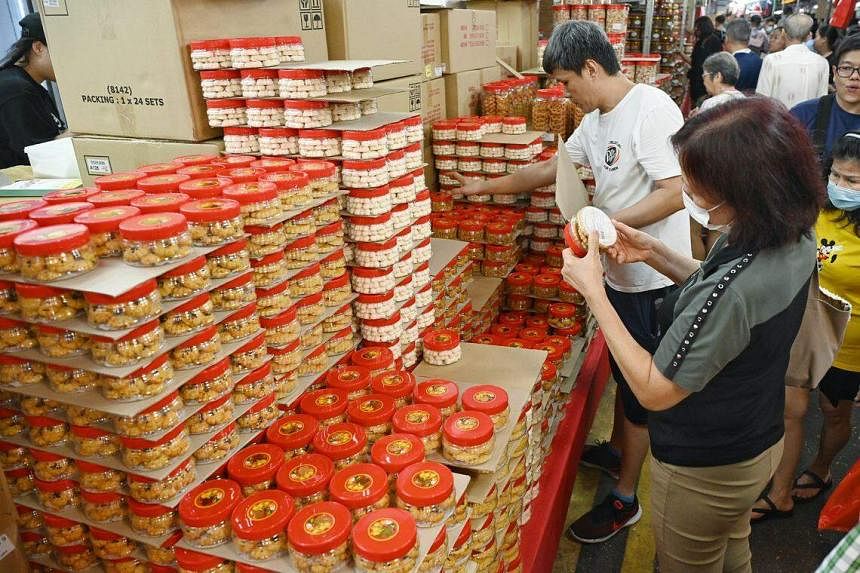
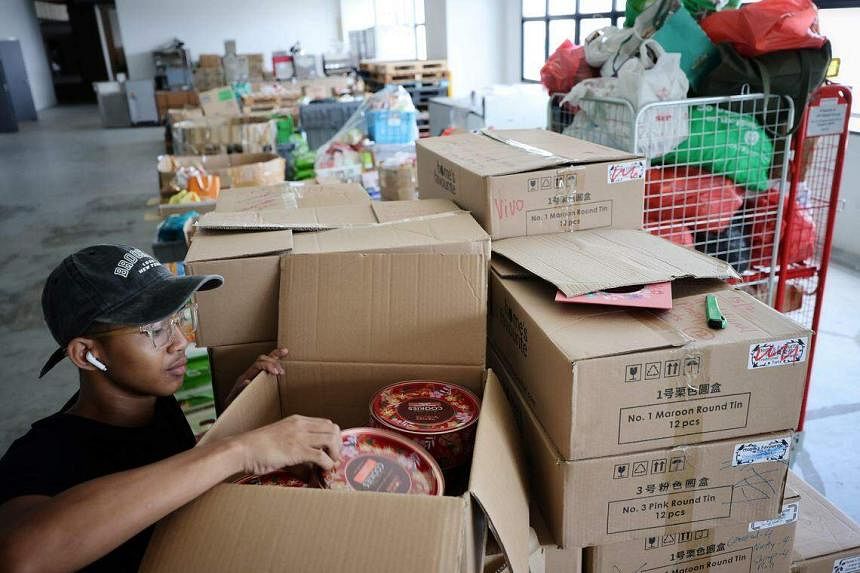
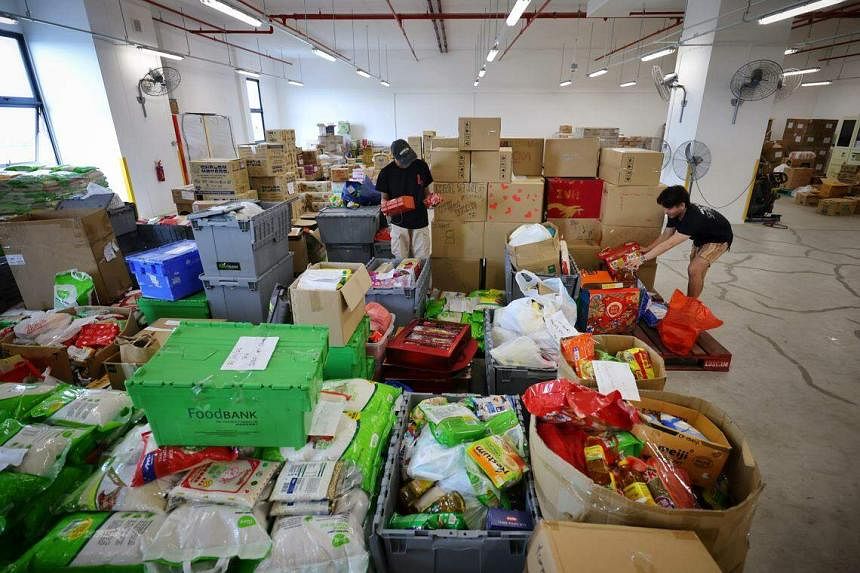
Some stalls try to sell unsold goods at other markets around Singapore, while others donate their stocks to social enterprises like MoNo Foods. ST PHOTO: DESMOND WEE
The National Environment Agency does not track exactly how much food is thrown away in Singapore during the Chinese New Year period. But a 2023 survey by Hong Kong food bank, Feeding Hong Kong, found that 40 per cent of respondents had leftover goodies – mainly a result of unwanted gifts.
Overall, food waste during the festive season could surge by 20 to 30 per cent, estimates Dr Henry Leung, senior specialist of pharmacology and toxicology at Nanyang Polytechnic’s School of Applied Science.
LightBlue Consulting, a social enterprise that helps businesses implement sustainable practices, has also observed that diners and hotel kitchens generate about 10 per cent more waste during the Chinese New Year period.
“The principal challenge food service operators and retailers may struggle with is estimating the right quantities of food needed, leading to over-buying ingredients and over-preparing produce,” says Ms Mathilde Chatin, 33, managing director at Penta Group, who works on corporate communication projects with clients in the food and agriculture industry.
“This can be attributed to cultural and social pressure to provide an abundance of food to meet expectations and create a festive atmosphere.”
Suppliers also tend to offer additional discounts for bulk buys to entice vendors to take on more stock and ever taller stacks of snacks.

Overall, food waste during the festive season could surge by 20 to 30 per cent. ST PHOTO: DESMOND WEE
However, over-preparation could come at a considerable cost to businesses. LightBlue Consulting founder Benjamin Lephilibert estimates that at hotels, for example, the cost of unchecked food waste could eat into as much as 10 per cent of their food revenues.
As such, some restaurants and bakeries here have made a concerted effort to resist the urge to over-provide.
Mr Francis Looi, 58, chief executive of Polar Puffs & Cakes, says the company “employs a comprehensive approach to estimate the quantity of seasonal snacks to prepare”.
This process typically involves analysing past sales, market trends and customer feedback.
As a result, the majority of the company’s products – especially those baked fresh daily, like its Fortune Orange Butter Cake – are sold out by the end of the Chinese New Year period, with only 3 to 7 per cent of cookies left over.
At Keong Saik Bakery, production is based on pre-orders, which typically average around 2,000 bottles of festive goodies such as pineapple balls and Milo cornflakes. On average, it is left with only 20 unsold bottles by the eve of Chinese New Year. These are sold at a discount after its reopening on the third day of the new year.
continued next post