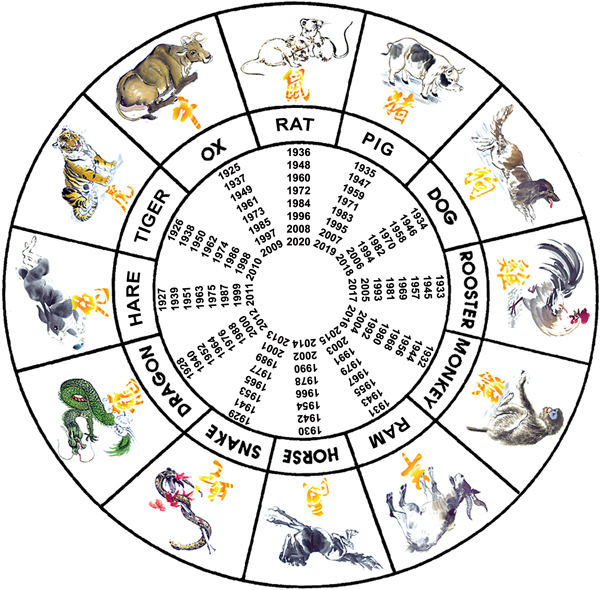
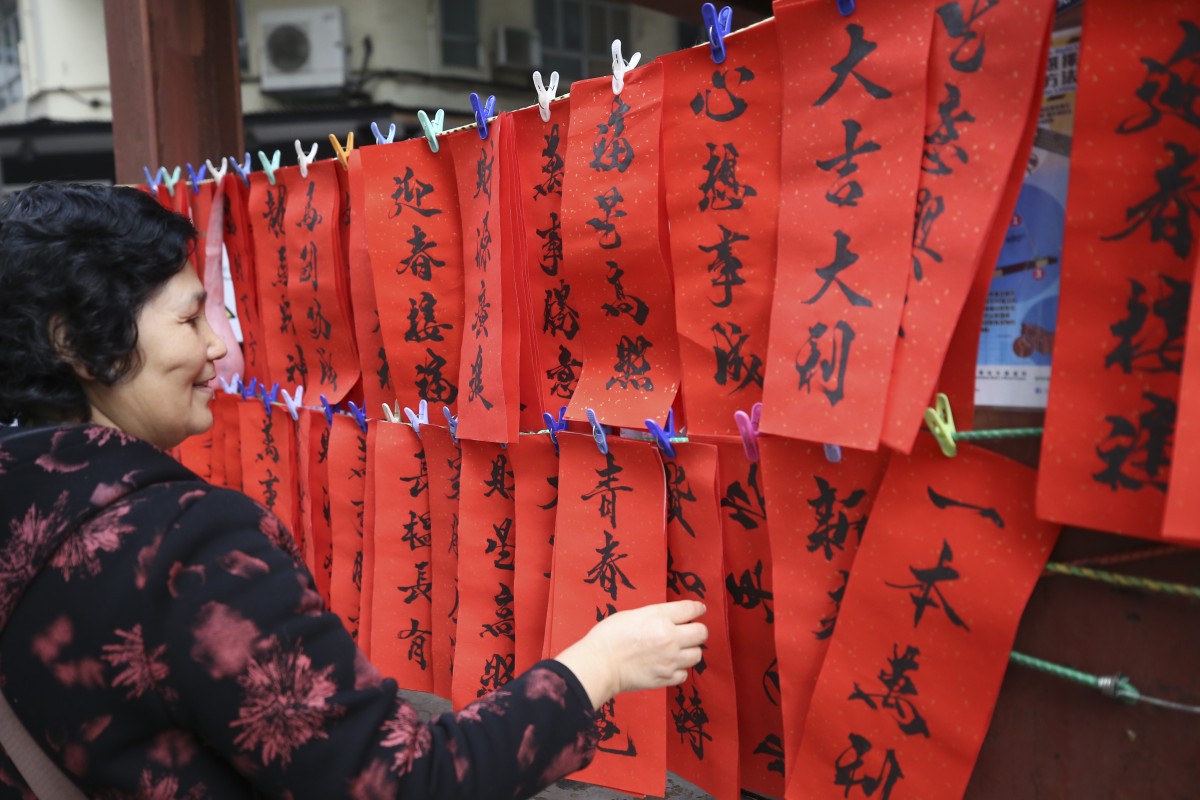
2020 Year of the Rat

Gong xi fa cai

22 JANUARY 2020 / ARTS & ENTERTAINMENT / JOE KUKURA
Legendary Musician and Performance Artist Laurie Anderson Arrives at SFJAZZ This Weekend
Sunday’s solo performance is sold out, but Laurie Anderson’s Thursday, Friday, and Saturday collaborations have seats available if you act fast.

We’ve had experimental composer Laurie Anderson pop into our fair city before, but never with the variety of notable guests and wildly unconventional concepts as with her latest SFJAZZ artistic director residency that begins tomorrow and runs through Sunday. Each show is totally nuts and different! KPIX explains that Ms. Anderson will be in town all weekend, and the multimedia performance art legend behind the eight-minute, surprise early-80s hit “O Superman” will expand her onstage repertoire with Ming dynasty texts, cello jazz, and more at SFJAZZ’s Miner Auditorium.

//youtu.be/Vkfpi2H8tOE

Anderson’s Saturday night collaboration with Mike Patton is described as “Almost Sold Out” on the SFJAZZ website, so fans of the Faith No More and Mr. Bungle frontman will want to snap up those tickets quickly. Per that site, the pair will be performing a set of Ming dynasty texts “Jixiao Xinshu — the famous military manual written in the 16th century by Ming dynasty general and Chinese national hero Qi Jiguang,” set to music. Anderson will be on keyboards and violin, with Patton on the vocals, and presumably there will crazy **** happening in the background.

Thursday and Friday’s shows will both incorporate rock and jazz cellist Rubin Kodheli. Thursday’s jazz strings trio performance adds wildly accomplished studio bassist Christian McBride to the mix (that one’s also “Almost Sold Out”), Saturday is a duet with Anderson and Kodheli playing “what Anderson calls their combined ‘hyper-instrument’ — part acoustic, part electronic. Sunday night’s solo show is sold out.

Sidenote: SFJAZZ has quite the weekend next weekend too, with two shows with the great Mavis Staples. Staples, 80, was a 2016 Kennedy Center honoree.

SFJAZZ Resident Artistic Director Laurie Anderson series, Thurs. Jan 23 - Sun. Jan. 26, 7:30 p.m., Miner Auditorium, 201 Franklin Street, (415) 788-7353

Laurie Anderson + Qi Jiguang and Mike Patton. Yes, this is how I’m celebrating Chinese New Year tomorrow. :cool:

Chollywood falls ill

JANUARY 23, 2020 11:13AM PT
How the Wuhan Coronavirus Infected the Chinese Film Industry
By REBECCA DAVIS and PATRICK FRATER


CREDIT: YONHAP/EPA-EFE/SHUTTERSTOCK

Just days ago, no one would have predicted that Chinas most lucrative film-going season was about to be derailed by the escalating epidemic of a novel coronavirus that is now rapidly spreading through the country and beyond.

Variety takes a look at how the box office in the worlds second largest film market has been overturned by a public health crisis that has made gathering in enclosed cinema spaces a health risk.

Pre-Sales and Promotion

Earlier this week, it seemed to be business as usual for the Spring Festival holiday release window. Production teams collectively spent a reported $144 million (RMB1 billion) on publicity for the seven blockbusters scheduled to release this Friday and Saturday, the eve and New Years Day of the new lunar year of the rat. The holiday is a time for family gatherings, when millions whove saved up all year take one of their few vacations, and head back to their hometowns. It is the largest annual human migration in the world.

It seemed that the biggest setback would be a marketing blow to Peter Chans volleyball drama Leap, which suddenly changed its Chinese title from Chinese Womens Volleyball to Win the Championship the day before pre-sales began.

The new name, unknown to viewers bombarded with posters and materials for the other, is the same as the short made by rival director Xu Zheng that was included in the widely viewed propaganda film My People, My Country, and has caused confusion. Chans title change decision appears to have been a way to avoid fallout from dissatisfaction within the sports community of how the womens team is portrayed, rather than government censorship.

Pre-sales for the seven films had already reached a reported $67.5 million (RMB468 million) by Thursday morning. Detective Chinatown 3 had pulled ahead as the front-runner, setting a new pre-sale record by selling more than $14 million (RMB100 million) worth of tickets in just 23 hours.

Monday: Concern Mounts

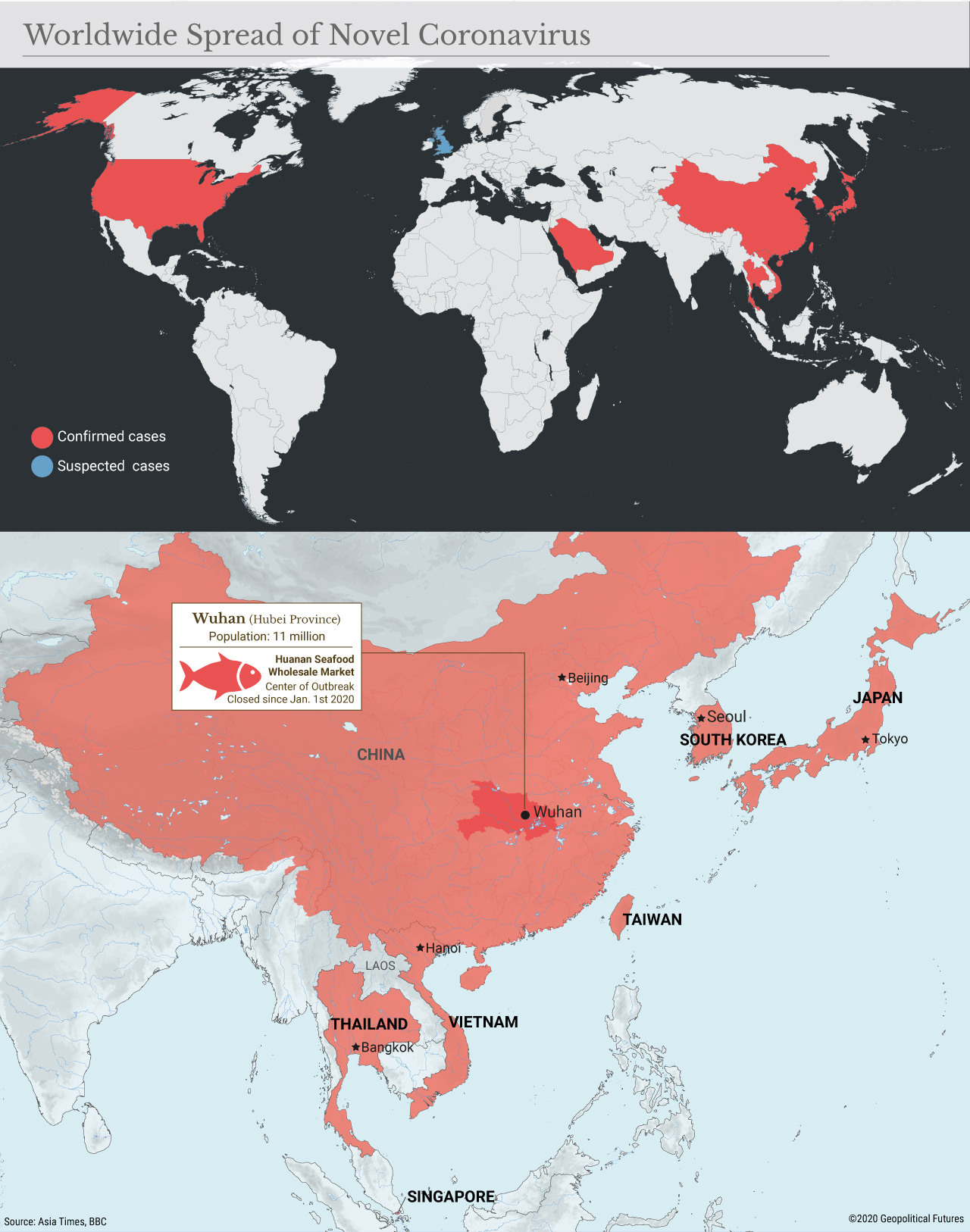
By Jan. 20, concerns ramp up about the spread of the coronavirus due to mass travel ahead of Chinese New Year, as the death toll and infection tally mounts. Chinese authorities report three deaths and more than 200 cases in the country and confirm that the disease can in fact spread through human-to-human transmission. Since the first case outside of China was discovered on Jan. 13, the virus has spread to Thailand, Japan and South Korea. On Jan. 21, the first reported case is found in the U.S., in Seattle.

Ticket sales in Wuhan were mounting swimmingly before Sunday (Jan. 19), accounting for around 2% of the national box office, on average. But from Sunday onwards, ticket sales rapidly declined, dropping from 2.2% of the national total to 0.5% in the space of three days. From Monday, film company shares begin to fall, including those for Wanda Film and China Film.

On Wednesday (Jan. 22), Chinas major ticketing platforms Maoyan and Tao Piaopiao put out official statements announcing unconditional refunds for any tickets bought in Wuhan.

The same day, Chinese authorities announce a quarantine for the entire city of Wuhan and its 11 million residents, effective from the next day. Travel restrictions are planned to shut down public transit out of the city. Chaos ensues as residents fight to get out of the metropolis before lock down sets in Thursday morning at 10AM local time, with Chinese reports estimating that some 300,000 fled.

Thursday: Box Office Meltdown

By Thursday (Jan. 23) morning, the hashtag Why dont the spring festival films change their release dates? is a top trending item on Weibo, Chinas Twitter-equivalent. Production teams are faced with a lose-lose decision: risk angering the public by keeping their film in the line-up, or pull out and lose millions in P&A.

Official film Weibo accounts start to slash promotional material and instead boost posts cheering for frontline medical workers. Then, in quick succession, all seven issue statements that they are formally withdrawing their titles. No future release dates have been announced.

Animations Boonie Bears: The Wild Life and Jiang Ziya pulled out first. Now that the epidemic is happening, we must stand impregnably united, and focus on the disease prevention and saving lives, the Jiang Ziya promo site said. We salute those working on the front lines of the epidemic and apologize to theater workers nationwide.

The other titles swiftly follow. Movies are just a part of life; life and safety are more important, since movies are short and life is long,’ said the team behind Leap. It said it was pulling out after careful consideration of the risk of disease transmission in a confined space.

Lams The Rescue was on-brand and adopting the most rousing tone, writing: At the moment, many medical and rescue personnel are sticking to their posts, stepping forward bravely at the key moment of danger and disaster! The movie The Rescue is about exactly this kind of spirit. Let us as millions, all of one mind, with unshakeably unity, win the battle of preventing an epidemic!

Lost in Russia director Xu Zheng wrote a post expressing his gratitude to Hengdian Film, his producer Huanxi Media, and the marketing team, whose early work has been washed away. All this is less important than eliminating the hidden dangers of the disease!

Ticketing platforms Maoyan and Tao Piaopiao now promise to refund all tickets without question, a process that may take up to a week. Cinema chains say they have been overwhelmed with calls from patrons asking for refunds.

Cinemas in Wuhan and other nearby locked-down cities have been entirely shut down, and authorities have issued a mandatory face mask policy there for public spaces. Cinemas elsewhere remain operational for the moment, advertising that they have boosted disinfection measures and ventilation for theaters.

Large-scale cultural activities like temple fairs have been cancelled, and cultural institutions such as museums have slashed activities to reduce visitor tallies. The Forbidden City in Beijing will be shuttered from Saturday.

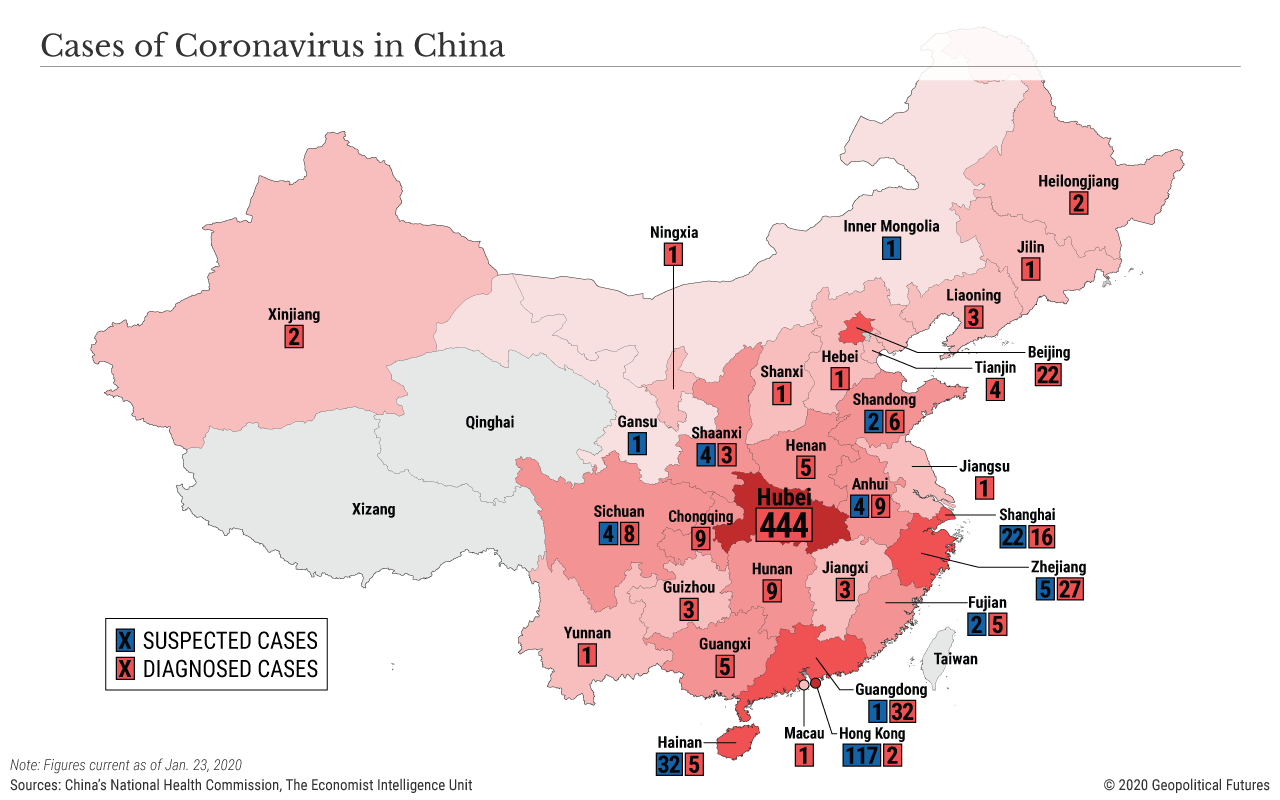
Over the course of the day, China has locked down some 20 million people in Wuhan and neighboring cities by indefinitely banning planes and trains. The death toll has risen to at least 17, with some 517 affected. The virus has now been detected in Japan, Hong Kong, Macau, South Korea, Taiwan, Thailand, Singapore, Vietnam and the U.S. and U.K. The WHO is currently mulling whether to declare the epidemic a global health emergency.

On Thursday the last chance for business before a recess of five full trading days for the spring festival holiday shares of a number of major film companies plummeted. Wanda Film closed almost 7% lower after falling 20% over the previous five trading days, and China Film closed nearly 5% lower, down 17% over the past five trading days.

THREADS
2020 Year of the Rat
The Rescue
Lost in Russia
Detective Chinatown III
Legend of Deification
Coronavirus
Chollywood rising

Free on Huanxi Premium

Too bad I don’t have Huanxi Premium. :frowning:

Chinese Comedy ‘Lost in Russia’ to Debut Online for Free After Coronavirus Cancellations (Exclusive)
6:25 PM PST 1/23/2020 by Patrick Brzeski


Huanxi Media
‘Lost in Russia’

The film was expected to be one of the big theatrical blockbusters of the Lunar New Year season for studio Huanxi before the epidemic shuttered cinemas nationwide.
China’s leading film studios were forced to cancel the holiday release of their biggest movies of the year yesterday after the growing coronavirus epidemic cast a pall over the country’s annual Lunar New Year festivities.

Now, rising film company Huanxi Media is responding to the setback with a bold but fan-pleasing move: The studio has decided to release its much-anticipated comedy tentpole Lost in Russia online for free.

Lost in Russia, directed by and starring comedy superstar Xu Zheng, was widely expected to be one of the big winners of China’s 2020 New Year box office, which, prior to the coronavirus outbreak, was forecasted to generate as much as $1 billion in ticket sales over the coming week. The first two films in the Lost In franchise earned a combined $473 million in 2012 and 2015 — at a time when China’s box office was much smaller than it is now.

Huanxi told The Hollywood Reporter Friday morning that Lost In Russia will be made available for free viewing over its in-house streaming platform Huanxi Premium at midnight tonight. Before the coronavirus cancellation, the film was set to get a huge nationwide theatrical release today.

The move is all but certain to delight fans, as mass moviegoing has become a big Lunar New Year tradition in China, and cinemas across the country are currently shuttered because of the government’s advice to avoid congregating in crowded places.

Lost in Russia’s Chinese title roughly translates to “Awkward Mother.” The film follows the bumpy journey through Russia of a manipulative older Chinese mother and her middle-aged son who still wants to rebel and escape his mother’s smothering influence. Xu, famous for his comedy touch, said his goal was to make viewers reflect on the often funny but deeply loving nature of the mother-child relationship in China.

In a blast of promotional material set to be released midday in China announcing the free streaming plan, Huanxi told the anxious Chinese populace to “stay safely at home and watch Lost in Russia with your mom.”

Aside from its obvious promotional savvy — and public health benefits — Huanxi’s move has an interesting business logic. Underlying the plan is a surprise new deal with internet powerhouse ByteDance, the company behind China’s wildly popular Toutiao and Douyin services, and the international social media phenomenon TikTok.

On Friday, Huanxi revealed that it has entered into a cooperation agreement with ByteDance that will involve the companies working together to leverage Huanxi’s premium film and television content across both of their video platforms. Under the deal, ByteDance will pay Huanxi a one-time fee of 700 million Hong Kong dollars (just under $100 million). The two companies’ video services will pool content, cross-promote and also share advertising and transactional video-on-demand revenue.

The giveaway of Lost in Russia (the local equivalent of Disney deciding to open the paywall to Disney+ and release a new Avengers movie for free) — at a time when hundreds of millions of Chinese are nervously stuck at home with little to do — ensures that the new partnership starts with a bang. The attendant advertising revenue of the free online release could also prove enormous.

In a Friday filing to the Hong Kong stock exchange, where Huanxi is listed, the company said that the current partnership with ByteDance constitutes a “phase 1” agreement that will run for six months. The two parties are currently at work in negotiating a longer-lasting “phase 2” deal, which will entail the joint development of their longform streaming channels, as well as shared investments in producing and acquiring high-end film and TV content.

Huanxi also has retained the theatrical rights to Lost in Russia, should it decide to bring the film out in cinemas after the public health crisis is resolved.

The late-hour surprise online release was made possible by the fact that Huanxi fully owns Lost in Russia, a rarity in China, where nearly all major films are co-financed and cut up into small equity pieces (star Xu Zheng is a significant shareholder in Huanxi and one its founding partners). The company previously had inked a minimum guarantee agreement with distributor Hengdian Film, which was promising a minimum box office performance of RMB 2.4 billion ($345 million) for Lost in Russia. That agreement was voided late Thursday and Huanxi is expected to return the RMB 600 million ($86.5 million) fee that Hengdian had paid for the theatrical rights.

Huanxi also has a large stake in Peter Chan’s widely anticipated Chinese New Year film Leap, an inspirational sports drama about China’s Olympic volleyball team. Leap and the various other Chinese New Year theatrical tentpoles — including Wanda’s comedy action sequel Detective Chinatown 3, Dante Lam’s patriotic action epic The Rescue, and animations Boonie Bears: The Wild Life and Jiang Ziya, among others — are currently in a holding pattern, awaiting official indications of how the coronavirus emergency will unfold.

THREADS
2020 Year of the Rat
Lost in Russia
Coronavirus

Our latest exclusive web article

Gung Hay Fat Choy! READ Chinese New Year 2020: Year of the Iron Rat by Gene Ching

Happy Friday Flash Sale for CNY

[URL=“https://www.martialartsmart.com/45-88ss.html”]CHINESE NEW YEAR FLASH SALE! 30% OFF on Dragon Head Kwan Dao! Today ONLY!

PRO TIP: This Year of the Rat Flash Sale item is the model of weapon that we are using for our Heavy Guandao Championship at the 2020 Tiger Claw Elite KungFuMagazine Championships. I filled one with BBs to increase the weight. :cool:

Happy New Year!!!

[URL=“https://www.martialartsmart.com/20-60.html”]CHINESE NEW YEAR FLASH SALE! 35% OFF Pro-Leg Stretchers! Today ONLY!! Today ONLY!

Happy New Year!!!

[URL=“https://www.martialartsmart.com/dvd-og020.html”]CHINESE NEW YEAR FLASH SALE! 70+% OFF Legendary Grandmasters DVDs! Today ONLY!! Today ONLY!

political forecasts

Hong Kong feng shui masters say worst is over for Carrie Lam, unrest will continue but weaken in Year of the Rat
Soothsayers offer glimmer of hope for city, saying Rat won’t be as savage as the Pig
Hong Kong economy likely to stay bad; Rat expected to be good for Donald Trump
Ng Kang-chung
Published: 9:00am, 25 Jan, 2020


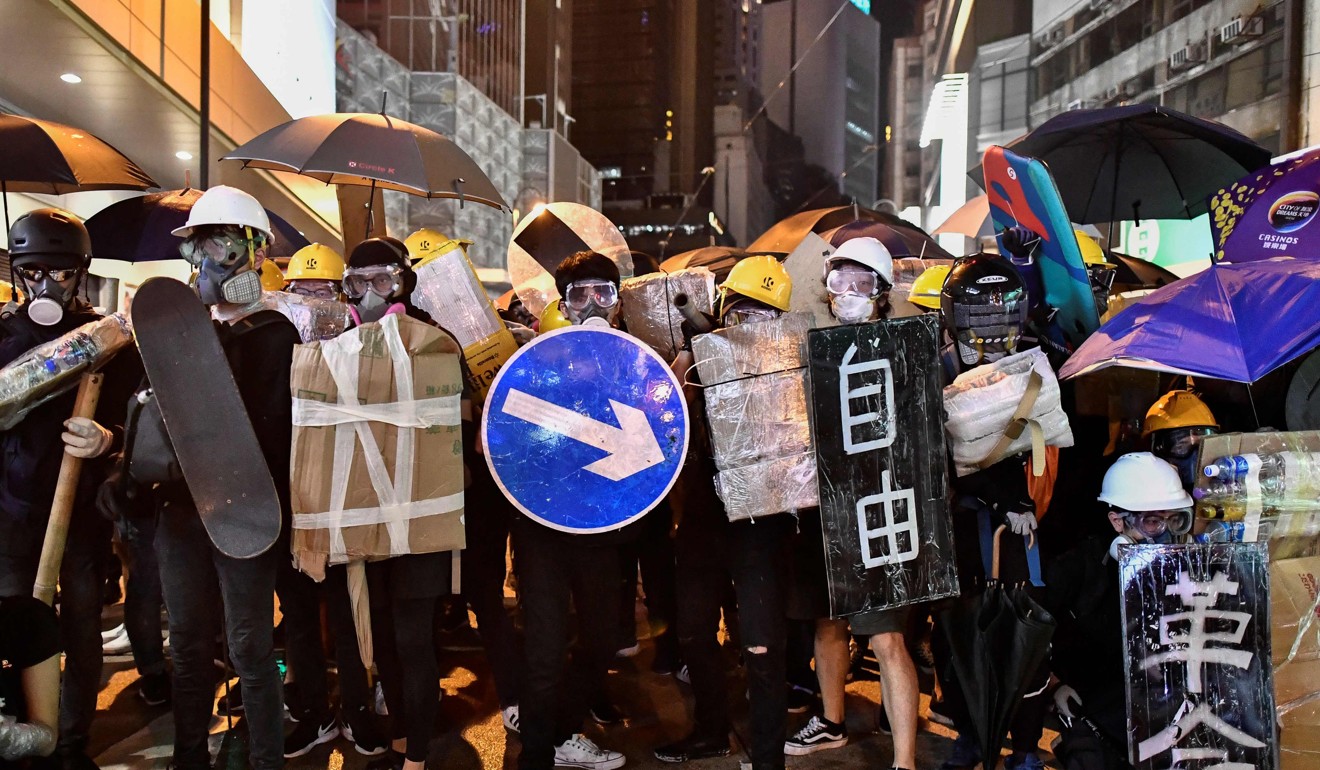
Hongkongers may be in for a less tense time this year after the upheaval of 2019. Photo: SCMP

Hong Kong’s feng shui practitioners are predicting another uneasy 12 months for the city with the arrival of the Year of the Rat.
But they offer a glimmer of hope, saying the Rat will not prove as savage as the Pig, who arrived this time last year to deliver anti-government protests, chaos, and a sharp downturn in the economy.
Feng shui – literally, “wind” and “water” – is the ancient Chinese art of geomancy, which practitioners use to foretell what lies ahead.
The Chinese zodiac comprises a repeating cycle of 12 years, each with a designated animal possessing its own characteristics, with effects not only on those born in that year, but also on those born under other animal signs.
The arrival of the Metal Rat this year marks the beginning of a new cycle of the zodiac.


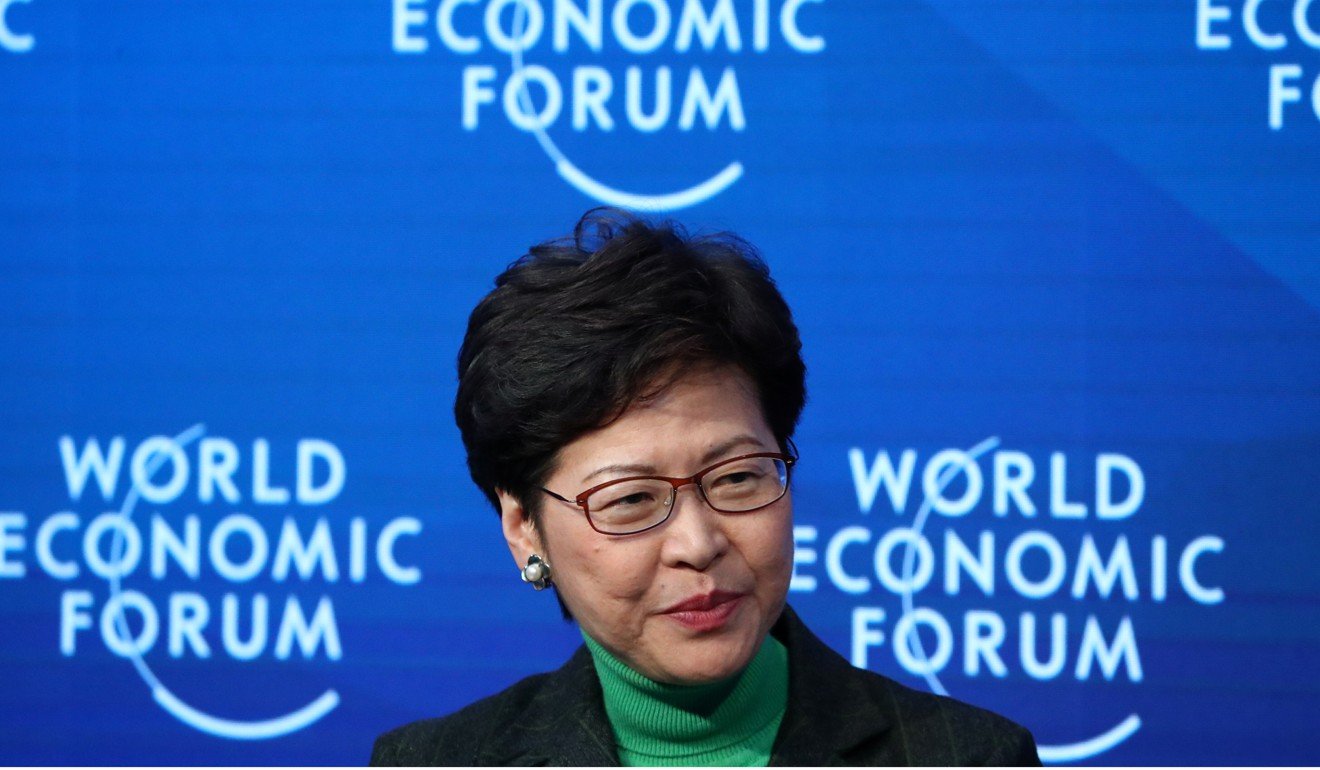
Carrie Lam’s zodiac sign clashed with the Pig last year. Photo: Reuters

The Post asked some of the city’s leading feng shui practitioners what the Rat will bring for beleaguered Chief Executive Carrie Lam Cheng Yuet-ngor, politics, the economy and US President Donald Trump, who is seeking re-election in November.
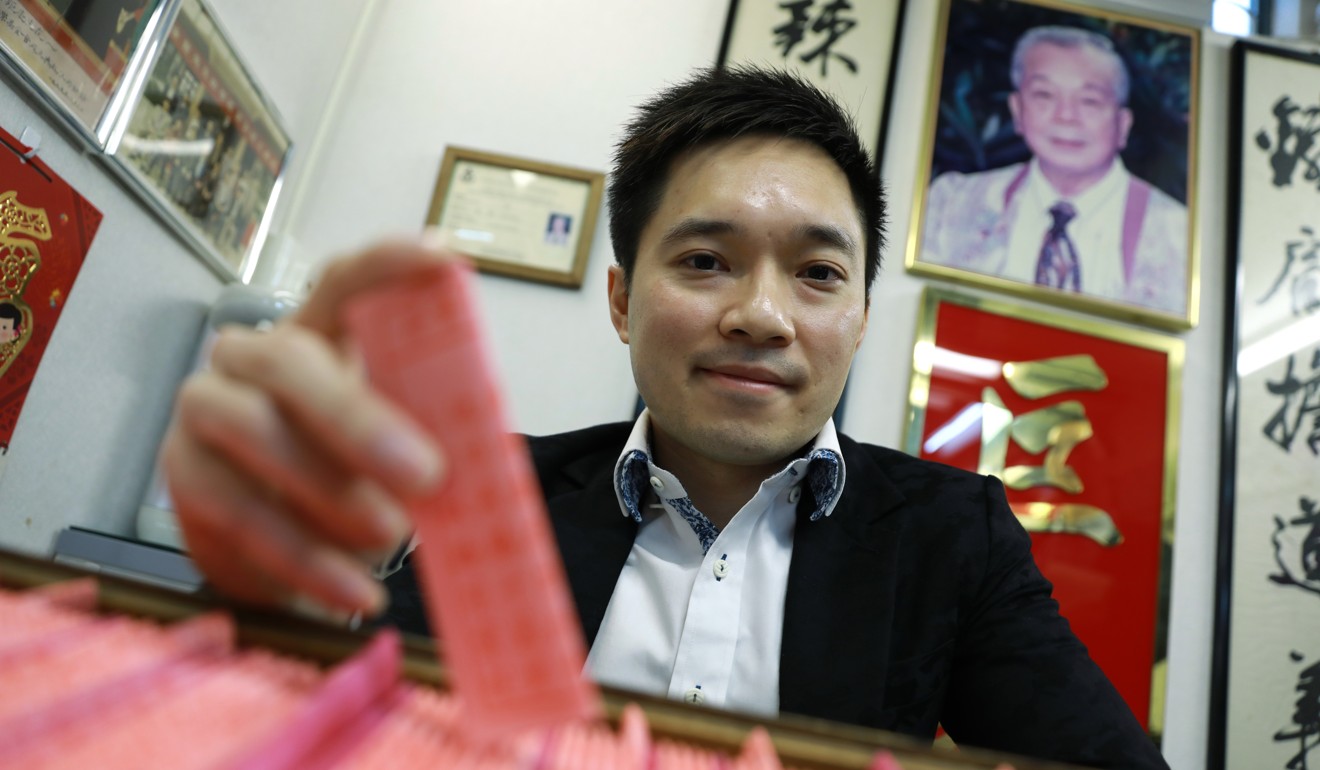
Better year ahead for ‘Rooster’ Carrie Lam
The city’s leader was born in 1957, the Year of the Rooster. Overall, the Year of the Rat promises to be good for Roosters, particularly in their careers.

[QUOTE]Last year, Carrie Lam’s sign clashed with the Pig and her boss was also too weak to support her
Priscilla Lam

Geomancer Priscilla Lam, who gained prominence by predicting that Trump would win the 2016 US presidential election, expected Hong Kong’s leader to remain in her job, despite persistent rumours that she would be replaced over her handling of the ongoing social unrest.
“Carrie Lam faces very big pressure, but the worst is over,” she said. “Last year, her sign clashed with the Pig and her boss was also too weak to support her. So, she had a very difficult time over the past 12 months.”

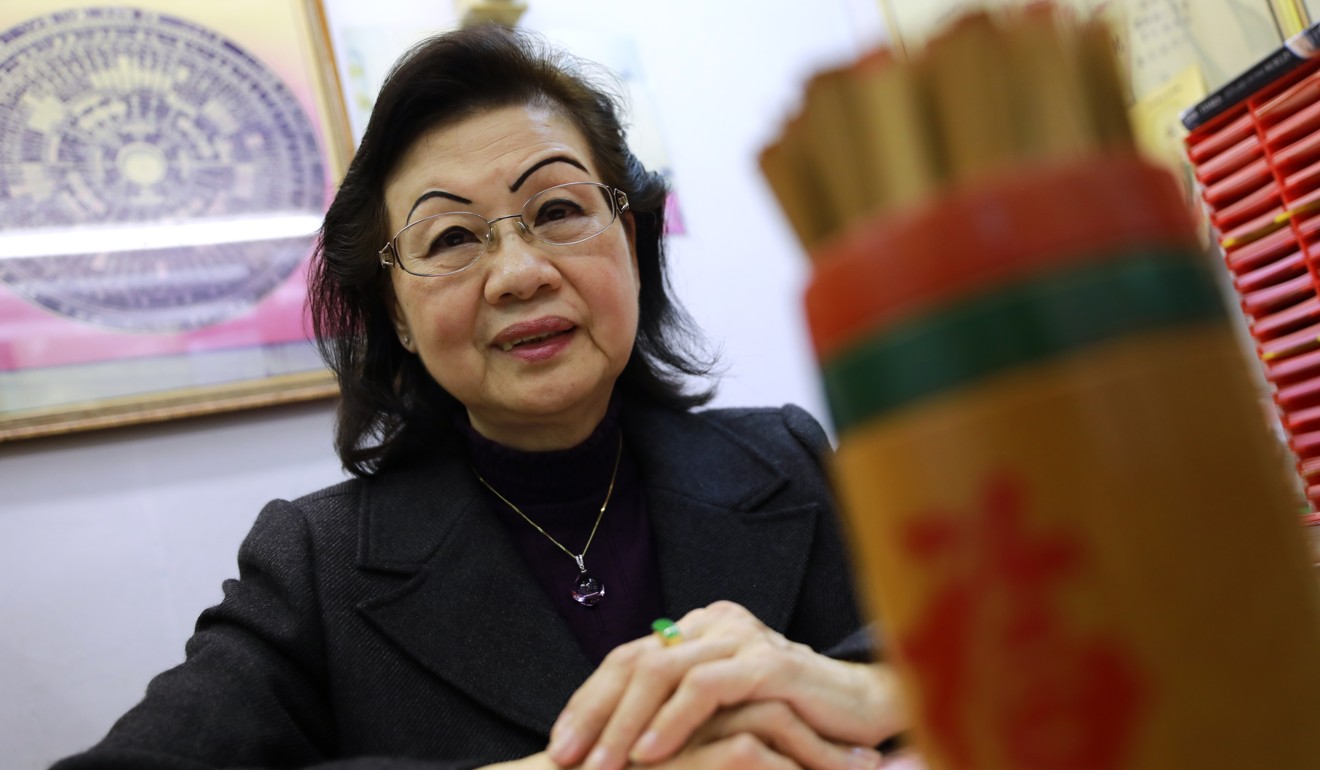
Priscilla Lam says Carrie Lam can expect an easier life this year. Photo: May Tse
Asked who she meant by Lam’s “boss”, the geomancer said: “The central government’s liaison office.”
Beijing’s top representative in Hong Kong, Wang Zhimin, was replaced recently by Luo Huining.
“Now Lam’s got a new supervisor, and she can get along well with the new boss. She can expect an easier life in the year to come,” she said.
Raymond Lo Hang-lap, who has been declared a “grandmaster” by the International Feng Shui Association in Singapore, also predicted a relatively smooth year for Lam.
“She might have a career boost. The moon is present and dominates, and this favours female Roosters,” Lo said.
His predictions were based on how the five elements – metal, earth, water, wood, and fire – interact based on the movement of the sun and moon to create auspicious or inauspicious forces.


Raymond Lo also predicts a smoother year for Carrie Lam. Photo: Winson Wong

He accurately predicted the death of international terrorist leader Osama bin Laden in 2011 and the break-up of Hollywood stars Tom Cruise and Katie Holmes in 2012.
His advice for Hong Kong’s leader: “Stay focused in career and business, and refrain from complacency and making careless mistakes.”
Celebrity geomancer Yunwenzi, or Master Cloud, who last year correctly predicted the rise of a radical social movement and great split in Hong Kong society, said another eventful year lay ahead.
“Young people will feel restless and tend to resort to violence. So there could be more conflict and disputes in society,” she said.
Relying on the ancient Chinese art of divination called Qimen Dunjia for her predictions, she said 2020 was represented by an “unrestful dragon” and Hong Kong could expect a lot of ups and downs.
“The internal social disputes will linger, but the atmosphere could turn less tense later in the year,” said Yunwenzi, whose clients include Credit Suisse and the designer Vivienne Westwood.


Yunwenzi expects the atmosphere may turn less tense later in the year. Photo: SCMP

Lo agreed, though his interpretation was based on 2020 being a Metal year while the Rat was a Water element.
Both are “cold” elements and in their effect, people might choose to use violence to achieve their goals.
“But with metal sitting on the water element, the Rat lacks support and is weak. So the unrest will gradually die down,” he said.
Eric To Chung-yin, a third-generation master Chinese astrologer, said: “The Metal Rat symbolises a year of change. Change is not necessarily bad. If Carrie Lam can try to change her governance style and perhaps listen more to people’s views, the social unrest might be over sooner.”
Economy: Good year for some sectors only
The outlook for the economy is not good, the geomancers said, and it all had to do with the water element prevailing.
“The fearful energy of the water element cycle is going to take over and prevail. Pessimism, cynicism, and despair will set in and contribute to the economic recession,” Lo said.
The past Year of the Pig marked the exit of the fire element, which will not return until the Year of the Snake in 2025.
Lo said 2020 and 2021 “belong to the water element” and added: “Without the fire element, the general economic atmosphere will remain gloomy and the pace of growth will slow.”


Eric To says the Metal Rat represents a year of change. Photo: May Tse

However, he said the fire element prevailed over some sectors such as energy, restaurants and entertainment, and they could expect a better year ahead. But he had no good news for the shipping, transport, and media sectors, saying they could expect hard times.
Yunwenzi had similar predictions, and also expected the US-China trade war to drag on because “the US will stir up more trouble”.[/QUOTE] continued next post

Continued from previous post
[QUOTE]There could be some corrections in the first half of the year, but it will gradually pick up
Yunwenzi

Despite the looming recession, she did not expect Hong Kong’s property market to collapse. “There could be some corrections in the first half of the year, but it will gradually pick up. Prices will not drop by more than 10 per cent,” she said.
She warned investors there could be “a great impact” on stock markets in the summer and advised them to invest in sectors such as environmental protection, infrastructure and natural energy.


The widespread social unrest was not predicted by many feng shui practitioners. Photo: AFP

Since Hong Kong’s pan-democratic camp swept last November’s district council elections, taking control of 17 out of 18 district councils, all eyes are on this year’s Legislative Council elections in September.
Like most political observers, Lo expected pro-Beijing candidates to face an uphill battle, though he had these words of comfort for them: “It will not be a big defeat though, not like the district council elections last year.”
Priscilla Lam said the pro-government camp would be able to draw on female Rooster Carrie Lam’s likely good fortune to perform fairly well in the Legco elections, although she declined to elaborate.
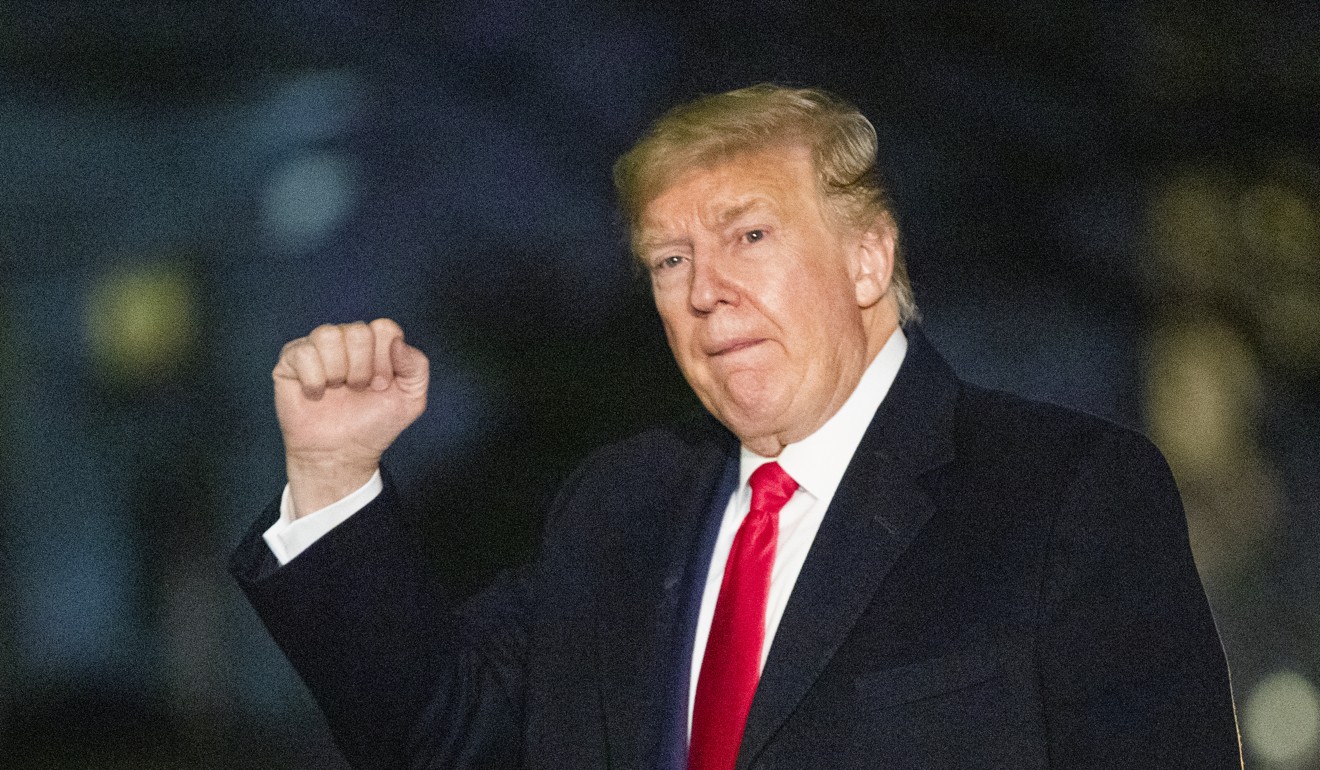
‘Dog’ Donald Trump can expect a good year
Donald Trump was born in 1946, the Year of the Dog. The Rat Year was good for Dogs, the geomancers said.
“There are several lucky stars on the Dogs’ horizon,” Eric To said. “Largely, Dogs can succeed in the areas they wish to pursue, but they should pay attention to details in their work, because missing parts can land them in trouble.”


Donald Trump may get some help from the Metal Rat. Photo: AP

Agreeing, Lo expected the Metal Rat to help Donald Trump survive his ongoing impeachment trial and improve his chances of re-election.
A more cautious Priscilla Lam was not ready to predict the outcome of Trump’s bid for a second term.
“Actually, as a president, he is not particularly great. But his rivals were too weak so he made it the last time. Let’s wait and see who will emerge as his opponent before assessing his chances,” she said.
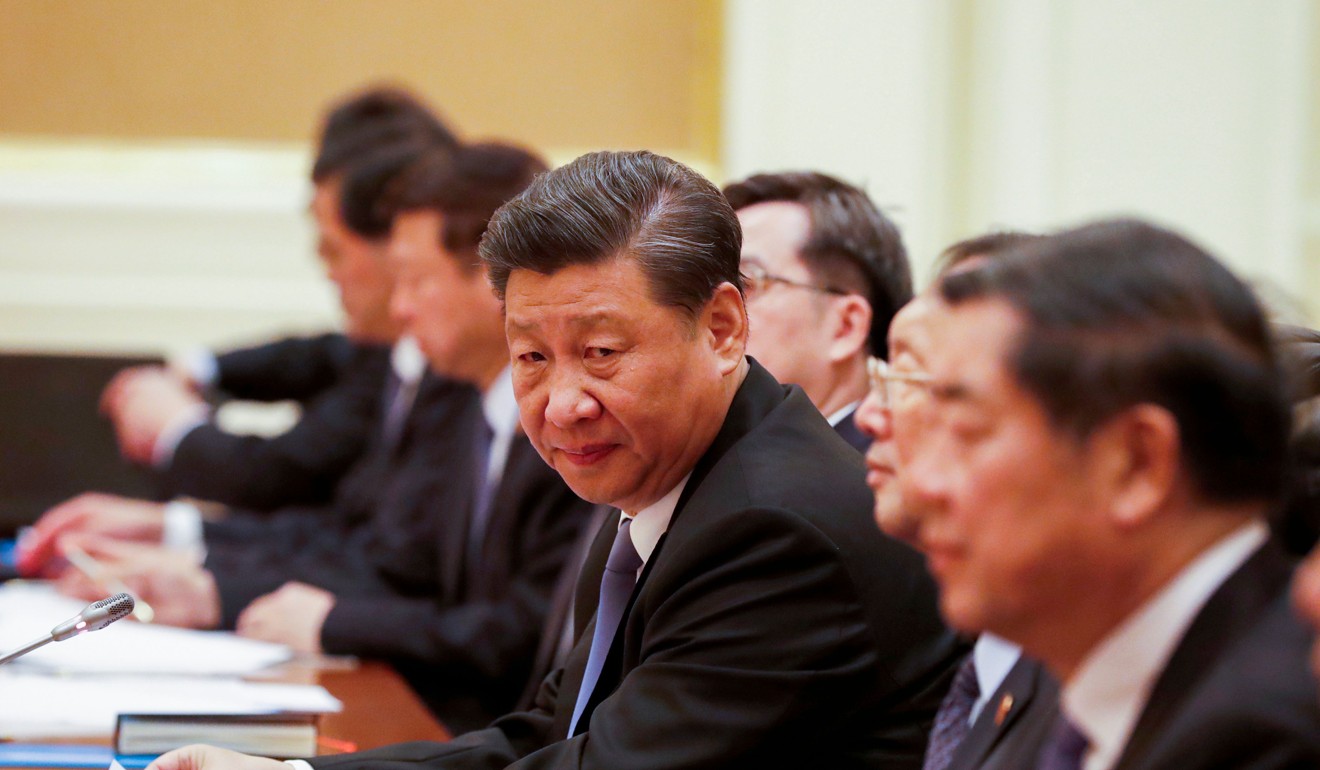
As for Chinese President Xi Jinping, Lo noted that he was born in 1953, the Year of the Snake, and that might mean not a very good year ahead.
“The Snake clashed with the Pig last year,” Lo said. “This year, the clash will continue. So China could very well continue to be under pressure in its economic relationship with the US and the Western world.”


President Xi Jinping was born in the Year of the Snake, and that might mean not a very good year ahead. Photo: AFP

How accurate are the predictions, anyway?
At the beginning of the Year of the Pig last year, few feng shui practitioners foretold the widespread social unrest about to befall Hong Kong, though some insist they saw trouble ahead.
Eric To said: “We did foretell that Carrie Lam would be in deep trouble in the Year of the Pig because the Rooster clashes with the Pig. But the scale of the mess she created was a bit unexpected, I have to say.”
To those who dismiss the geomancers’ predictions as being no better than guesswork, To has this to say: “People think the purpose of predictions is to tell you exactly what is going to happen, but that may not be 100 per cent the case. The purpose of fortune-telling is to give you information to help you create your own future.”[/QUOTE]

THREADS
Feng Shui
Year of the Rat

Monday’s 2020 CNY Flash Sale!

[URL=“https://www.martialartsmart.com/45s-57.html”]CHINESE NEW YEAR FLASH SALE! 30+% OFF on the Sword of Guojian! Today ONLY!!

[URL=“https://www.martialartsmart.com/cny”]Remember MartialArtSmart is giving a 20% Off discount Sitewide with the coupon code RAT2020 (at checkout). Offer ends tomorrow Midnight PST

THREADS
2020 Year of the Rat
The Sword of Guojian

Holiday extended

It’s really more like sick days off.

China extends Lunar New Year holiday in bid to fight coronavirus
BY ZACK BUDRYK - 01/27/20 08:53 AM EST 9


China extends Lunar New Year holiday in bid to fight coronavirus
© Getty Images

Chinese officials on Monday announced they would extend the Lunar New Year holiday in hopes of keeping citizens home and reducing the risk of the spread of the coronavirus that has killed at least 81 people.

The Chinese government said in a statement that it will push back the end of the holiday from Sunday to Thursday to “reduce mass gatherings” and “block the spread of the epidemic,” The Associated Press reported. Officials hope the extension will prevent the potential spread of the disease risked by tens of millions of travelers returning to work by plane, train or bus. Schools are slated to remain closed indefinitely.

Individual cities across China have also taken action to reduce the spread of the virus, with Shanghai extending the holiday to Feb. 9 and ordering the closure of all religious events and sports stadiums.

Premier Li Keqiang visited the city of Wuhan, believed to the origin point of the outbreak through a wildlife market, on Monday to “guide epidemic work,” according to the Cabinet, later visiting a supermarket and mingling with shoppers.

“To get the epidemic under control in Wuhan and the good health of people in Wuhan will be good news for the whole country,” Li told the crowd, the AP reports. “We wish the people of Wuhan a safe, healthy and long life. Let’s go, Wuhan!”

The U.S. consulate in Wuhan said it plans to evacuate diplomats and other American citizens on Tuesday, while the French plans to fly its citizens out of the area and quarantine them in France, while the France-based automaker PSA Peugeot Citroen is moving foreign employees of its Wuhan factory and their families to another city, where they will be quarantined.

U.S. officials confirmed a fourth case of the virus on Sunday, with a patient being diagnosed with it in Los Angeles County.

THREADS
2020 Year of the Rat
Coronavirus

More racism

The coronavirus panic is turning the UK into a hostile environment for east Asians
Sam Phan
Stereotypes are spreading as quickly as the virus. On the bus, in the street, people have started treating us as if were infected

Mon 27 Jan 2020 11.15 ESTLast modified on Tue 28 Jan 2020 09.19 EST


The virus has spread to at least eight other countries including Thailand, Japan and the US, and its highly likely it will reach the UK, according to Public Health England. Photograph: Amer Ghazzal/REX/Shutterstock

The atmosphere on my morning commute is tense. As panic over the coronavirus deepens and dominates the headlines, as an east Asian I cant help but feel more and more uncomfortable. On the bus to work last week, as I sat down, the man next to me immediately scrambled to gather his stuff and stood up to avoid sitting next to me.

[QUOTE] Perhaps it did not occur to these people that I, as a UK citizen, was no more likely than them to be carrying the virus

On the train over the weekend, a group sat opposite me chattering about their weekend plans. One of them seriously advised the rest, I wouldnt go to Chinatown if I were you, they have that disease.

As I made my way towards Chinatown in London, an elderly woman and her friend on the escalators at Leicester Square underground station were casually talking about how dangerous the area now was, and she complained she was obliged to go there for a meeting. At least Im old, I have nothing left to lose, she laughed.

In another loud conversation, I overheard a woman talking about how terrified she was that her friend, who had spent some time working with Chinese students, might have infected her with the virus.

In light of current events, we east Asians in the UK are on high alert, paying close attention to how people interact with us. It is not their concern about health that is problematic, but the stereotyping of all east Asians as a coronavirus risk. At times such as this, even a simple bus trip can feel like a hostile environment.

A friend at a university library experienced something similar: as soon as they sat down at a desk, the person in front of them packed up their things to leave. Were noticing odd things like this that we never saw happen before.

Perhaps it did not occur to some of these people, so happy to talk loudly in front of me, that I was also concerned about the virus or that I, as a British citizen, was no more likely than them to be carrying the virus. They grouped all east Asian people together, without factoring in that perhaps we were British or, if not, we were from unaffected areas of China, or even came from other countries in the Chinese diaspora. We were all the same to them.

The virus that originated in Wuhan has spread to at least eight other countries including Thailand, Japan, Australia and the US, and its highly likely it will reach the UK, according to Public Health England.

As it spreads, the virus has revealed more and more stereotyped judgments about Chinese people. I have also heard accounts from east Asians, even if they are not Chinese, who have recently been profiled while travelling at airports or on trains due to the ignorant perception that all east Asians are Chinese.

George Osborne, editor of the Evening Standard, proudly tweeted his newspapers cartoon of a rat with a face mask to supposedly commemorate the lunar new year. Piers Morgan mocked the Chinese language on Good Morning Britain with a tired ching chang chong joke. East Asians have been accused of instigating the virus by having revolting eating habits. Most Asians know these stereotypes all too well.

These insulting depictions dont reflect the reality of being Chinese at all, and encourage the misguided perception of more than one billion people being a monolithic and singular group in which everyone speaks, acts and looks the same. In fact, there is a huge diversity.

Language and culture vary massively within the region. Speakers of Hokkien would not be able to converse with people who speak Hakka. And despite Mandarin being the lingua franca, there are more than 200 dialects spoken across China. In fact in Wuhan itself, a beautiful and diverse city with more than 3,500 years of history, many of its population of 11.8 million speak a Wuhan dialect.

Elsewhere, natives of Aksu look completely different to the majority Han Chinese. And the food, too: dim sum from the south of China is vastly different from the tangy, spicy flavours of Sichuan.

This week, my ethnicity has made me feel like I was part of a threatening and diseased mass. To see me as someone who carries the virus just because of my race is, well, just racist.

As the lunar new year celebrations take place across the world, lets take a moment to think about the way in which east Asians are perceived and how important it is to see us in all our diversity, as individual human beings, and to challenge stereotypes. The coronavirus is a human tragedy, so lets not allow fear to breed hatred, intolerance and racism.

Sam Phan is an MA student at the University of Manchester[/QUOTE]

THREADS
Coronavirus
Year of the Rat

This year just isn’t going that well, is it?

29 JANUARY 2020 / SF NEWS / JAY BARMANN
Elderly Chinatown Residents Targeted For Red Envelopes During Lunar New Year

During Lunar New Year celebrations this week, law enforcement is going on high alert in both San Francisco’s and Oakland’s Chinatown to deter thieves from targeting a longstanding gift tradition.

The tradition of exchanging red envelopes filled with cash often given to children by seniors during the Chinese New Year festivities has become well known among criminals, according to the Oakland police. And the OPD is consequently stepping up patrols in Oakland’s Chinatown and elsewhere in the city where such gift exchanges might be happening, as KRON 4 reports.

Reports of crimes associated with the red envelope tradition date back at least a decade in San Francisco. Back in 2011, the SFPD was warning Asian merchants in Chinatown and the Bayview about displaying valuables during the holiday season. And, similarly, the New York Times reported in 2014 on the uptick in pickpocketing and other thefts during Lunar New Year time in New York, often centered around red envelopes.

Oakland police and other authorities in the East Bay say they will be on alert for such crimes over the next three weeks and cops in six different East Bay cities say they are mobilizing to prevent these robberies.

Elderly Chinatown residents have complained loudly over the last year about a perception that they have been increasingly targeted for petty crimes and sometimes violent robberies by criminals from outside the neighborhood. In one high-profile case last July, a 56-year-old man and a 69-year-old man were beaten and robbed in broad daylight in SF’s Chinatown, and the two suspects arrested were from Oakland.

The annual Chinese New Year Parade in San Francisco is happening next weekend, on February 8.

Photo: Eduardo Santos

This makes me sick. :mad:

A more positive hongbao story…

‘Drama. Competition. Fear’: Those lucky red envelopes for the Lunar New Year yield much more than cash


Cal State Los Angeles student Kenny Chang, 18, looks over red envelopes used for the Lunar New Year at the Tak Shing Hong Market in Monterey Park. Many families stuff money into the packets that are given to children and relatives to bring good luck in the new year. “It’s the Asian parents’ way of giving love since they really don’t express it,” Chang said. (Genaro Molina/Los Angeles Times)

By ANH DOSTAFF WRITER
JAN. 24, 2020 3 AM

Until she’s married, Alice Liu expects to welcome the Lunar New Year counting the treasured crispy bills she receives from older relatives to mark the red-gold, multigenerational festivities.

“How much we get depends on how close we are to the giver,” said the 27-year-old from Chino Hills. “And it’s a dance.”

That’s because when younger folks gather around their elders to share wishes for good health, before they receive bountiful gifts of cash – a venerable Asian tradition known as red packets or red envelopes – the proper response “is to be humble, to refuse,” Liu said.

“Do our parents and grandparents accept? Of course not. But you play around while deep down, we all want the money,” Liu added, laughing. The funds could come in handy as she searches for a job.

Of all the traditions surrounding the biggest holiday in many Asian communities – from cleaning the house and wearing new clothes for a fresh start, to lighting firecrackers to chase away evil spirits – it may be the ubiquitous “hongbao,” as it’s called in Chinese, or “li xi,” as it’s known in Vietnamese, that inspires the most talk with endless comparisons over which relatives are big spenders and which are tightwads.

“Drama. Competition. Fear. The exchange of lucky money can involve all of these things. It’s like a soap opera that you can’t remove yourself from,” said John Tu, a businessman from Diamond Bar, in between sips of espresso at the sleek Atlantic Times Square, a development fusing shops and residential living in the heart of Monterey Park.

In anticipation of the Year of the Rat, dawning Saturday, he reflected on meeting people “who literally go into debt to meet all the financial obligations” that this season requires.


A shopper looks for decorations, red envelopes and other items for Lunar New Year celebrations at the Tak Shing Hong Market in Monterey Park.(Genaro Molina/Los Angeles Times)

“The pressure is constant. You need to go all out and wine and dine the extended family – not to mention these envelope gifts,” he continued. “And you should see when the youngsters open them. They’re shouting: ‘What did you get? Look what I got!’ They can’t help but brag and compare.”

Experts worry that the ancient custom has lost meaning. A tradition that began with modest, symbolic amounts tucked into envelopes has grown over the top, requiring spending huge sums under a sense of obligation. Meanwhile, the pool of people benefiting from the largesse has grown beyond immediate family members to the occasional mailman or trash collector.

“In the early days in Vietnam, the envelopes didn’t have much money because people were poorer and often, only the men of the family went to work. In modern postwar times, with more jobs, more financial benefits, families can be more generous and they feel they must pass on the tradition so that the younger generation will continue it when it’s their turn,” said Kim Dzung Pham, senior lecturer in the foreign languages department at UC Riverside.


Red envelopes are sold for Lunar New Year celebrations at the Tak Shing Hong Market in Monterey Park.(Genaro Molina/Los Angeles Times)

Her practice is to give to “the best of my ability,” yet she finds it “unfair” having to hand out another round of cash when one has just given the first round to the same recipients at Christmas. “Wouldn’t it be more reasonable to donate the money to nonprofit groups?”

But the politics of the red packet are so intense that they can force some people to scrimp or to strategize – at once eager to do it right or to find a way around the restrictions.

Many would agree that the main issue is how much to give. As the new year nears, community banks report a run on the popular $2 bills that are staples in gifts going to acquaintances, co-workers or to combine in multiples to leave behind as tips.

Still, questions remain: Is giving $10 too little? Is $50 too much?

continued next post

Continued from previous post


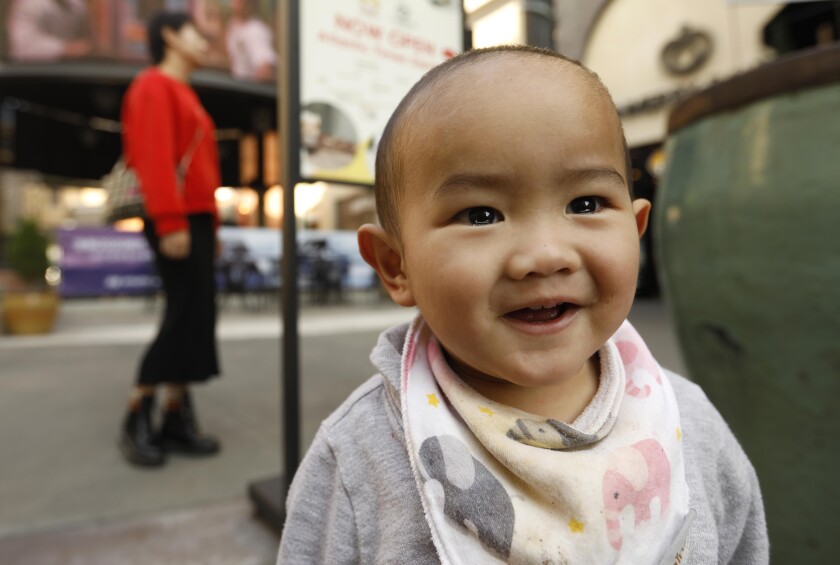
15-month-old Ethan Liao and his mother, Judy Liao, 28, background, are looking forward to celebrating the Lunar New Year. Liao said she follows the Chinese tradition of putting money in a red envelope and giving it to relatives for good luck in the new year. (Genaro Molina/Los Angeles Times)

Judy Liao, a cashier at Chengdu Taste restaurant in Alhambra, said she believes that $20 is the average. That’s what she has designated for young relatives or the children of her friends. Netting such money usually ends with marriage, when those who receive transition into those who give.

For her own kids, each will open a gleaming envelope to find $100. A mere $50 for her son or her daughter “is not very enough. Maybe he thinks toys will be better,” she said, cradling 15-month-old Ethan. But, she added: “I must save. This is tradition. I do not skip.”

In fact, after toiling for months, she has set aside $3,000 for the Lunar New Year, intending to honor both her mother and mother-in-law with $500. Liao and others stressed that presenting a “correct” sum to the matriarchs and patriarchs of the family is a top priority. Once in a while, they even hand over the dollars early in case grandmas and grandpas are short of cash and need to re-gift it.

Born in Hunan, China, Liao said if she were celebrating at home, she would choose to dole out something like 168 Chinese yuan, equal to just over $24, since it contains auspicious numbers.

Jay Yang said he would “make a big deal if I were back in Taiwan.” To the fortysomething hairstylist from West Hollywood, “this holiday is not as loud or as visible here in the U.S. The atmosphere isn’t the same, but I can appreciate that people try.

“What’s important is it’s about love for one another. Even my mother still gives me a little money to bring good luck.”

That cultural concept of good luck has compelled mainstream brands to try to cash in on the action, with Nike recently premiering its first-ever Lunar New Year ad. It shows a girl who’s been told by her mother not to take “hongbao,” much to the dismay of a crafty aunt who conspires to outsmart her. As the child ages, trying to deny the dollars turns into an annual showdown against her elder.

Greeting this holiday – on the heels of Thanksgiving, Christmas, and New Year’s – then having to head into Valentine’s Day means that consumers never stop spending, some say.

That’s why Eric Chang, a photographer from Glendale, is careful to keep to a ritual of saving what’s inside his red envelopes in a separate account stashed in his native country, Taiwan.

Already, he worries about the future when he gets hitched and is required to start giving red envelopes. He envisions opting for the “safety of my finances” over culture. “There’s so much pressure. I think I will just take my kids out to buy some candy.”

In certain families, the politics surrounding the holiday can become so volatile that members stop speaking to each other – sometimes permanently.

About a decade ago, Tony Lee, now in his late 30s, happened to skip observing the holiday, choosing to go camping with college buddies instead. Shocked, his mom accused the Rosemead writer of being disrespectful. His dad angrily asked why he didn’t prepare the envelopes ahead of time “so that your brother and sister and cousins’ kids weren’t left empty-handed.”

“I am the firstborn and my grandfather was very old,” Lee explained as he stocked up on holiday sweets and pears at Tak Shing Hong, a neighborhood market in Monterey Park. “It turned out to be his last celebration. My parents thought I was irresponsible since I can go to Mexico any time of the year – but why at the new year?”

For many months Lee, who is Korean-Chinese American, stopped being invited to family reunions. But this weekend he fully plans “to be present” to “mingle among the generations,” he said. “You don’t want to be the black sheep. You need to rise to the occasion.”

And then there are rivalries.
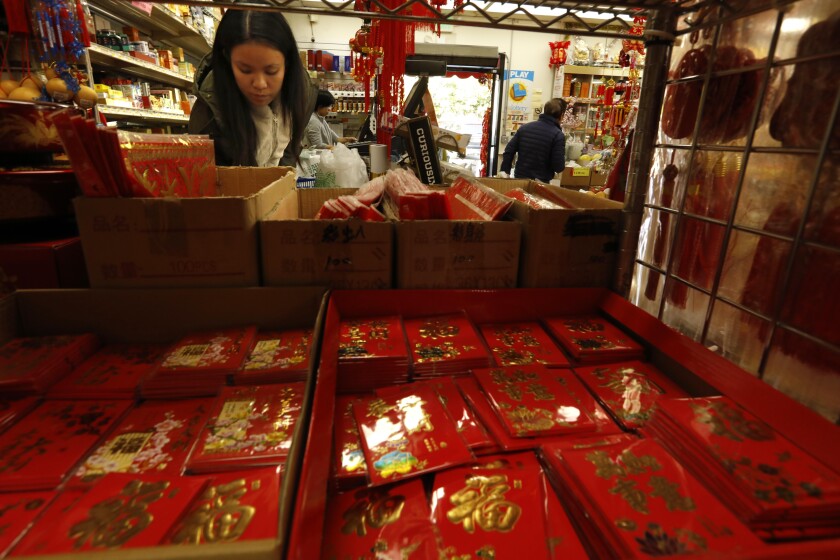

Cashier Rachel Yung stands behind boxes of red envelopes used for Lunar New Year celebrations at the Tak Shing Hong Market in Monterey Park.(Genaro Molina/Los Angeles Times)

Joe Huang has always paled in comparison to his older brother, who’s a doctor. “I’m only an engineer,” the 42-year-old Arcadia resident said wistfully, “not having the big bucks and not the fancy medical school. That’s why I have to spend way more.”

He brings lunch to work during the months of November and December so that when the new year unfolds, he can afford to dole out at least $100 to all the nieces and nephews, including his sibling’s three kids. “I make sure to save the $200 for the ones in college.”

Lisa Dao, 39, of Los Angeles recounted how at first her Caucasian husband was befuddled by the tradition. The two, who met in Houston, annually set aside $1,500 to $2,000. “He didn’t understand why we had to spend so much and why we had to give to so many.”

In her husband’s family, wads of cash were associated with lottery winnings or gambling. For Christmas, relatives drew names and weren’t required to shop for gifts for multiple generations. In Dao’s circle, however, as the oldest of four, the Vietnamese American office manager is expected to set a strong example and follow cultural norms.

“I already disappointed the parents by marrying outside the culture. The least I could do is to shell out the money,” she said.

“The Asians are very strict about doing things for the sake of appearance,” added her husband, Tim Harper. “Save face, save face – that’s what it’s all about. They do their utmost to preserve the reputation, and while I respect many customs, I can’t always be completely supportive.

“To me, it’s a lot of money that can be better kept in a mutual fund or used for home improvements.”

Anh Do
Anh Do is a Metro reporter covering Asian American issues and general assignments. A second-generation journalist, she has worked at the Dallas Morning News, Seattle Times, Orange County Register and Nguoi Viet Daily News, the largest Vietnamese-language newspaper in the U.S.

This has been a rugged CNY with the coronavirus outbreak. Celebrations are being cancelled worldwide, even in places in the U.S. that aren’t affected in anyway yet. Nice to see a cultural news piece that’s unaffected by the virus.

CoRATavirus

Chinese New Year 2020: The Year Of The Coronavirus
By Alex Berezow, PhD and Phillip Orchard — January 27, 2020

The biggest political and economic effects of pandemics come, not from the disease itself, but instead from public panic and panicked government responses.


Credit: Geopolitical Futures

Phillip Orchard is an Analyst with Geopolitical Futures. This article was authored in collaboration with ACSH’s Dr. Alex Berezow and originally published at Geopolitical Futures.

Grappling with internal political pressures, a slowing economy, an open rebellion in Hong Kong and an unresolved trade war with the U.S., Chinese leaders may have already been in a less-than-celebratory mood heading into this year’s Lunar New Year festivities, which begin Jan. 25. The last thing the government needed was an outbreak of infectious disease, particularly when hundreds of millions of people are expected to travel throughout the country and beyond. Not only is that exactly what happened, but the disease – a new type of coronavirus – is unknown to science.

The severity of the virus (known as nCoV or the Wuhan Virus) is uncertain, nor is it clear if it will mutate and spread. The World Health Organization has yet to label it a global health emergency. But it’s certainly not yet contained. As of Thursday, there were more than 653 confirmed cases across seven countries, including the United States, and 18 people had died. And despite repeated assurances that it had matters under control, the government on Wednesday began locking down Wuhan, the provincial capital of Hubei, where the outbreak started, and three nearby cities. Doctors in Wuhan are reportedly expecting the number of infections to exceed 6,000, and local authorities are planning to build a special hospital in just six days to handle the epidemic.

There’s reason to believe the disease isn’t nearly as big a threat to public health as the one posed by the SARS outbreak in 2003, which killed nearly 800 people. Inevitably, though, the biggest political and economic effects of pandemics come from public panic and panicked government responses, not the disease itself. And given Beijing’s checkered track record for managing these sorts of emergencies over the past two decades, the Communist Party of China’s very legitimacy might just prove to be on the line.

How Bad Is It?

Coronaviruses come in a variety of strains. Some, such as the one that’s one of the many causes of the common cold, are relatively harmless. Others, such as those responsible for SARS and MERS, are potentially lethal. The dangerous coronaviruses seem to be linked to animals. SARS may have originated in bats and then spread to humans via civets, which are eaten as a delicacy in China. MERS also came from bats but spread to humans via camels, once again, perhaps through consumption of raw camel milk or meat. It is therefore reasonable to suspect that the new coronavirus is linked to animals that are eaten. Indeed, the reason China is always likely to be ground zero for the next influenza pandemic is that millions of people regularly come into contact with livestock. As Smithsonian Magazine wrote, “Many Chinese people, even city dwellers, insist that freshly slaughtered poultry is tastier and more healthful than refrigerated or frozen meat.”

Whatever the source, it’s now been confirmed to be capable of being transmitted from one human to another. Even so, the new coronavirus will have a limited direct impact on public health. SARS appeared in 2002, spread quickly around the globe in 2003, infected 8,096 people and killed 774. Then, with the exception of a handful of cases, it mostly disappeared. MERS has infected 2,442 people and killed 842. It still lingers throughout much of the world, particularly in the Arabian Peninsula. And though the reported case-fatality rates for both seem high – 9.6 percent for SARS and 34.5 percent for MERS – bear in mind that many mild cases probably went unreported. The real case-fatality rate is likely lower.

The damage inflicted directly by the disease is therefore highly unlikely to have much long-term impact. But, particularly in China, the potential economic and political implications can’t be dismissed.

continued next post

Continued from previous post

Economic Impact

The problem with new outbreaks is that the public and public officials alike can’t exactly wait until all the facts become clear before taking preventative measures. And it doesn’t take much for fear of the unknown to grind public transportation systems to a halt, empty out shopping centers, movie theaters and restaurants, and, most important, persuade revelers to just stay put this year during the Lunar New Year rather than join the hundreds of millions of people who take part in the world’s largest annual human migration.

The costs add up quickly. The SARS outbreak in 2003, for example, dented Chinese gross domestic product by as much as $30 billion, reducing annual growth by between 1-2 percent. Globally, the bill for the pandemic ran up to as much as $100 billion.

Not all economic activity will be lost for good. Short-term hits to the sorts of sectors most exposed to the epidemic – mostly ones tied to consumer spending – often lead to supercharged recoveries. Chinese growth drivers where short-term disruption would have longer-lasting effects, such as manufacturing exports, industrial production and investment, stayed mostly intact in 2003. Indeed, while Chinese GDP growth dropped from 11.1 percent in the first quarter of 2003 to 9.1 percent in the second, it bounced all the way back to 11.6 percent a year later.

Still, even if nCoV proves more manageable than SARS, there are reasons to think the impact this year will be worse. For one, the SARS epidemic occurred on the heels of the dot com crash, when consumer spending across the region was already somewhat suppressed. (Incidentally, the resulting reduction of international travel may have helped contain the spread of the virus.) For another, locking down an urban area as large as Wuhan – a city at the center of one of China’s most important internal shipping routes along the Yangtze – will be immensely disruptive.

Moreover, a substantial portion of the lost holiday spending will never be recovered. This is a problem for Asia Pacific nations that, unlike in 2003, are now highly dependent on Chinese tourists. All told, Chinese people took an estimated 130 million more trips abroad in 2018 compared to 2003, and before the outbreak, the China Outbound Tourism Research Institute predicted that more than 7 million Chinese people would head overseas during the Lunar New Year this year. In Thailand, which has already reported four cases of nCoV, foreign tourism accounts for as much as a fifth of economic growth. Around 57 percent of visitors to Thailand last year were Chinese, including more than 2 million in January and February alone. Japan, which hosts the 2020 Summer Olympics, is estimating an economic loss of nearly $25 billion if the virus spreads as widely as SARS.

The biggest difference for China this time around is that the economy can’t as easily shrug off a major shock. In the early 2000s, annual GDP growth was still climbing well above 10 percent. Today, with a long structural slowdown well underway, Beijing is running up staggering debts just to keep growth from swan-diving below 6 percent. Add to this an unresolved trade war with its largest export customer – along with its scramble to implement critical but growth-sapping measures to stave off a financial meltdown before the next global slowdown strikes – and the epidemic starts to look like the sort of thing that could derail Beijing’s best-laid plans for avoiding an economic reckoning.

Political Impact

The outbreak will also complicate a broader, existential challenge weighing on the CPC: preserving its very legitimacy with the public. Delivering steady gains in prosperity is, of course, at the center of this challenge. But breakneck economic growth has become impossible to sustain – and was never going to be sufficient, anyway. The wealthier a country becomes, the more its citizenry demands quality of life that can’t be sourced solely from rising GDP, things like clean air and water, medical services, social safety nets and responsive, corruption-free governance. This is why President Xi Jinping has encouraged the party to shift its focus to “high-quality growth,” and it’s why he’s put environmental and emergency management initiatives at the center of his sweeping reform agenda. No amount of propaganda or censorship can convince his people that a smog-choked sky is actually blue or make devastation from an earthquake disappear.

The 2003 SARS outbreak laid bare the political risks of mismanaging a public health emergency. The government came under withering public criticism for covering up the scale of the epidemic (inadvertently worsening panic), impeding the World Health Organization’s investigation, and moving slowly to contain the outbreak. Bungled government responses to a number of other crises, such as the 2008 Sichuan earthquake, a high-speed rail accident in 2011, and a string of scandals involving tainted milk, tainted vaccines and fiery industrial accidents likewise prompted fierce public outcry. Beijing received higher marks in subsequent health scares, particularly the H171 bird flu outbreak in 2013. And this time around, initially at least, it received international praise for its improved transparency and swiftness in moving to contain the virus. Chinese authorities had isolated and published the nCoV genome by the second week in January, allowing foreign governments to develop critical testing procedures for the virus. Xi addressed the emergency personally last week, ordering “all-out prevention and control efforts.” China’s top political body responsible for law and order said officials who withheld information would be “nailed on the pillar of shame for eternity.”

But facts on the ground are once again giving the public reason to doubt its government’s candor and capability. Authorities have been claiming for more than a month that the virus is “preventable and controllable.” Now, they’re taking extreme measures like locking down the Wuhan metro area, home to some 19 million people, and making belated mea culpas. The government has also struggled to abandon its practice of reflexively cracking down on independent sources of information, despite commands to do so from on high. This has led to contradictory messaging and suppressed information that might have helped contain the virus. Chinese censors initially ordered local media outlets to stick to reprinting official reports, according to the Financial Times, effectively silencing independent reporting. And in early January, eight people were reportedly detained for posting information about the outbreak on social media. As also happened in the SARS outbreak, moreover, the government’s rigidly enforced top-down decision-making structure has once again worsened matters by incentivizing, for example, hospitals to under-report cases and local authorities to go forward with high-profile public gatherings deemed politically important.

For all the criticism they are receiving, authorities in Beijing are trying to address a problem that would bedevil any government. China is very large and very dense. As happened with SARS, panic would almost certainly do more damage than the disease itself. And Beijing may reasonably conclude that resorting to drastic measures may truly be in the public interest, even if they’re at odds with public sentiment. Perhaps more than any government, Beijing has given itself the power to surveil its citizenry, to shut down cities, to silence unfounded rumors on social media – all without permission. Such powers certainly could come in handy in this sort of crisis.

But by hoarding authority – by insisting on the right to micromanage the country – the CPC has raised the bar for what the public expects in response when the country is under attack, whether from foreign powers, economic forces or viral mutations. This is a problem when tight centralization has also, paradoxically, created a rigid top-down institutional culture that’s ill-suited to respond nimbly to public demand. When faced with a crisis, the machinery of the state is programmed to default to the tools it knows best. Censorship, disinformation and problem-solving by brute force are hardwired into the Chinese system, often making it at once flat-footed and prone to overcorrection. Yet, the more pressure intensifies, the more Beijing is doubling down on this model. And the stakes riding on its bet are getting higher.

Alex Berezow is Vice President of Scientific Communications at the American Council on Science and Health. Both he and Phillip Orchard are Analysts with Geopolitical Futures.

THREADS
2020 Year of the Rat
Coronavirus

COVID-19, rats & bud

About that global economy…

Budweiser APAC takes a hit in China as biggest Lunar New Year campaign runs into coronavirus outbreak
Sales to nightclubs and restaurants has come to a halt amid the public health crisis sparked by coronavirus outbreak
Net profit fell 2 per cent in 2019, partially due to weaker sales to nightclubs and restaurants last quarter
Yujing Liu
Published: 12:04pm, 27 Feb, 2020


Packs of Budweiser beers are displayed in a Shanghai’s supermarket. The brewer says on February 27 that there’s “almost no activity in the nightlife channel and very limited activity in restaurants.” Photo: AFP

Budweiser Brewing Company APAC, the most profitable brewer in Asia, said revenue in China plunged in the first two months of this year as nightclubs and restaurants were shut across the country amid the coronavirus outbreak.
The Asia-Pacific unit business of Anheuser-Busch InBev estimated its China sales to have declined by US$285 million in January and February compared to the same period last year, it said in notes to its 2019 financial results on Thursday. The hit is equivalent to about 4 per cent of its revenue last year, based on its latest accounts.
Profit also declined by US$170 million over the period, the company said in the report, referring to its normalised earnings before interest, tax, depreciation and amortisation or Ebitda. That is about 8 per cent of its full-year figure in 2019. The company’s top beer brands in China include Budweiser, Corona, Hoegaarden and Harbin.
“The impact of the virus outbreak on our business continues to evolve,” Budweiser said in the financial report. “We have observed almost no activity in the nightlife channel and very limited activity in restaurants.”
Other retail channels also recorded a meaningful decline, it said, but e-commerce sales growth accelerated significantly.
The viral outbreak has so far infected more than 82,000 people and killed at least 2,800, mostly in mainland China. The hit put a halt to a strong start in the opening three weeks of 2020 just as Budweiser was launching its largest ever Lunar New Year campaign, prompting the brewer to also shut some of its breweries including in the epicentre of Wuhan.
Budweiser said it has reopened over half of its beer factories in China and obtained permission to reopen the rest, except for one in Wuhan, after the country extended the Lunar New Year holiday by a week to contain the virus.
The firm also expressed concerns over its business in South Korea, where the novel virus is spreading rapidly, adding to pressure from price competition last year. South Korea recorded a surge in infection and death this week, stoking concerns about a wider contagion.
Budweiser said net profit fell 2 per cent to US$994 million last year, while revenue was little changed at about US$6.55 billion. Still, total volume sold last year declined by 3 per cent from the previous year, mainly “due to a challenging industry and competitive environment in South Korea and softness in the China nightlife channel,” it said.
Hong Kong-listed shares of Budweiser fell by 3.1 per cent to HK$23.55 as of 10:40am local time, bringing the loss to 13 per cent from its IPO price of HK$27. Budweiser raised US$5 billion in its listing plan, one of the five biggest IPOs in the world’s last year.

Yujing Liu
Yujing Liu is a business reporter with a passion for understanding and explaining the fascinating complexities of China’s economy and society. Originally from Beijing, she joined the Post in 2017 after graduating from the University of Hong Kong with a degree in politics and journalism.

THREADS
COVID-19
Beer…
2020 Year of the Rat

PRC film loses $125 M after CNY to COVID-19

ASIA MARCH 2, 2020 5:14AM PT
China’s Box Office Loses Up to $214 Million in Two Months Due to Coronavirus
By VIVIENNE CHOW

View of a closed cinema after the Chinese government discouraged public gatherings due to a virus outbreak, in Beijing, China, 27 January 2020. China warned that the coronavirus outbreak is accelerating further, deepening fears about an epidemic that has affected more than 2,700 people worldwide and killed at least 80 people in the country.China coronavirus outbreak accelerating further, Beijing - 27 Jan 2020
CREDIT: WU HONG/EPA-EFE/SHUTTERSTOCK
China’s box office might have lost as much as RMB 1.5 billion ($214 million) in the first two months of this year due to the coronavirus outbreak, but a nationwide resumption of movie theaters and production is unlikely to happen any time soon.

“Judging from the current situation, the film industry is not equipped to resume business yet, and we have not approved industry’s demands to resume business as of now,” said Chen Bei, deputy secretary general of the Beijing municipal government.

Local data company Ent Group has estimated that box-office receipts in January and February have totaled only RMB 220 million ($31.3 million), compared to RMB 1.45 billion ($217 million) in the same period in 2019 and RMB 1.51 billion ($241.6 million) in 2018.

Ent Group estimated the decline in box office could be as high as RMB 1.5 billion ($214 million) due to the fact that the Lunar New Year holiday season started on Jan. 25, much earlier compared with the usual beginning of or mid-February. “An early holiday season should’ve given more time for the box office to grow,” the report said.

But cinemas were forced to shut down just before the Lunar New Year holiday and Wuhan and other cities in Hubei province were locked down on Jan. 23.

The estimated figures came after the release of a joint directive from Beijing Center for Diseases Prevention and Control, and Beijing Municipal Film Bureau on Feb. 26, which stipulates strict guidelines for cinema operators and film crews if they wish to resume business.

Cinema operators must seek approval from the authorities to re-open movie theaters and adopt stringent measures such as selling tickets on alternate rows, requiring movie-goers to register with their real names and personal details, and auditoriums to be thoroughly disinfected after each screening.

Film crews with less than 50 people can resume filming in Beijing if they are approved, but only if their body temperature does not exceed 37.3 degree celsius. All film crew members must wear masks throughout the production, except for performers.

But film crews with more than 50 people will not be allowed to resume filming in Beijing until the plague is gone. Crew members travelling from affected areas such as Hubei province are not allowed to take part in any production in the city.

Ent Group added in the report that cinemas in China are not likely to re-open in March. As of March 2, Covid-19 has already infected more than 80,000 in mainland China and killed 2,914 people.

THREADS
Chollywood rising
covid-19
Year of the Rat

first step of a phased reopening

ASIAMARCH 8, 2020 9:37PM PT
Shanghai Disney Resort, Closed in January due to Coronavirus, Set to Partially Reopen Monday
By REBECCA DAVIS


CREDIT: IMAGINECHINA/AP

The Shanghai Disney Resort has said it will reopen some of the shopping, dining and entertainment options on Monday, though the main theme park will remain closed to prevent further spread of the coronavirus.

The move is the “first step of a phased reopening,” it said in a statement posted Monday to its website. The resort has been closed since January 25.

Certain facilities at Disneytown, Wishing Star Park and the Shanghai Disneyland Hotel will operate with limited capacity and at reduced hours, and parking lots will reopen, the resort said. The Disneyland theme park itself will stay closed as the park “continue(s) to closely monitor health and safety conditions.”

Visitors will be required to wear masks during their entire time within the Disney Resort area, submit to temperature screenings upon arrival, and “present their Health QR code” when entering dining areas.

Walt Disney Co. owns a 43% stake in the Shanghai Disney Resort. It is one of four Disney-branded theme parks in Asia, alongside one in Hong Kong, which has also remained shut since late January, and two in Tokyo.

In an earnings call, Disney said a two-month closure of the Shanghai park could cost $135 million in lost earnings, while a two-month of closure of Hong Kong could cost $145 million.

In Japan, the Tokyo Disneyland and Tokyo DisneySea parks shuttered for a two-week period starting Feb. 29 to stem the spread of coronavirus, and are expected to re-open on March 16. In a normal year, they welcome about 30 million visitors.

This has got to be so tough. I’m sure Shanghai Disney was looking to cash in on the Year of the Rat (mouse).

THREADS
Coronavirus
Chinese Theme Parks